Our December Issue: When God’s Word is Silent

The Gospels don’t tell us what we don’t need to know.

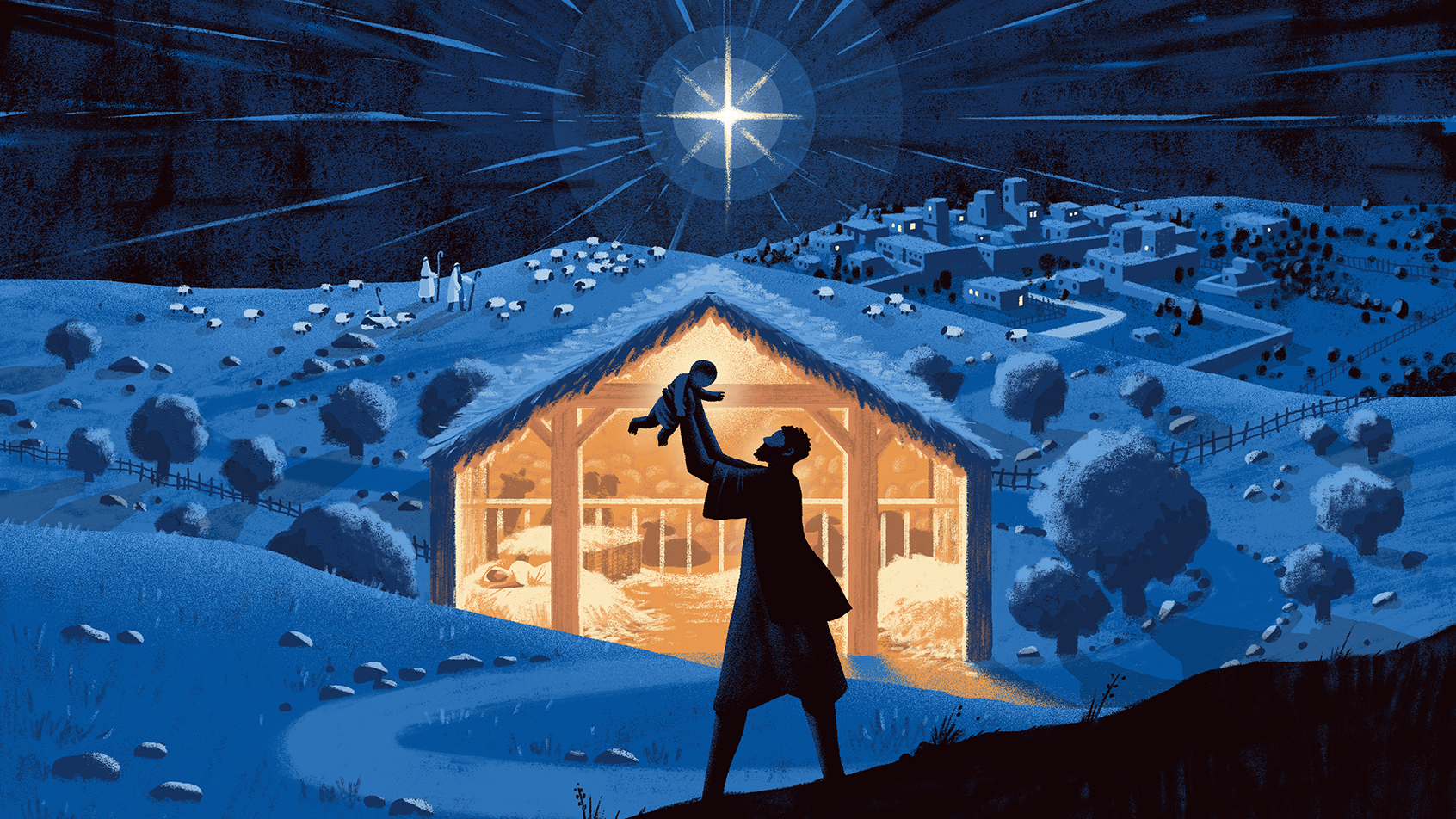
Illustration by Matt Chinworth

The vocation of Jesus and his earthly father, Joseph, has always tempted romantic imaginations. The creators of the streaming series The Chosen, for example, depicted Jesus working as a traveling, Santa-esque toymaker and an installer of wheelchair ramps in Judean latrines, among other jobs. What exactly did Jesus do for a living? As pastor and former Bible translator Jordan Monson explores this month, experts are still sorting it out.

Every year around this time, when lawns sprout nativities and we’re asked again to place ourselves in the sandals of the holy family, we’re confronted with just how much we don’t know about Jesus’ life before he began his public ministry. In preparing this issue, our editors found more questions than answers. How much formal education did Jesus actually receive? Was the manger-born Savior as lowly, socioeconomically speaking, as our Christmas sermons insist? Or was he something closer to middle class? Why do we see so little of Joseph?

If we are honest, we’re bothered that the Gospels are so silent about Christ’s first 29 years. Save for his birth, his dedication, and a preteen instance of running off to study at the temple, the written record is blank. But we excel at filling any void of biblical authority with our own, and we’ve spun some colorful apocryphal yarns. Medieval Britons decided young Jesus must have spent time in England. In the 19th and 20th centuries, various writers on spiritual walkabout in India claimed they had evidence that Christ journeyed there during his hidden years.

More plausibly, Egyptian Christians have long observed mulids, celebrations at sites where Coptic tradition holds the holy family stopped on their flight from Herod’s infanticide. Dismiss such festivals for lack of archaeological or historical evidence, if you must. But don’t miss the faith behind them.

We don’t know why God didn’t reveal more about Christ’s youth. Probably, in part, because the extra material would distract us. And perhaps because sin has made us unable to “know fully” in this life (1 Cor. 13:12). We tasted the fruit of a certain tree in the middle of the Garden, and its branches have partially eclipsed our view of God ever since.

But God did leave something for us in the hidden portions of the narrative: an invitation to faith, to trust him more than our own ability to piece together empirical certainty. It’s an invitation to marvel, to wonder at what the Son of God was like on earth. Of course, we hold the line between fact and fantasy. But there is a power in fantasy, in what ifs, and it can draw us closer to the author of all truth if we allow it. “Blessed are those who have not seen and yet have believed” (John 20:29).

Andy Olsen is print managing editor of Christianity Today. Follow him on Twitter @AndyROlsen.
Also in this issue

The Gospels are silent about most of Jesus’ life on earth. Perhaps no time of year are we more aware of that than during Advent, when perennial questions resurface: When exactly did those Magi visit? What was Christ’s childhood like? His education? Did his family live in relative comfort, or in penury? At the center of all these questions is the void in what we know about Joseph. But what little information we do have offers a lot to explore. Our stories this month reexamine Joseph’s spirituality and the trade he passed on to his son. PLUS: Why there’s still plenty of Christ in Christmas.

News

The Secret to Deradicalizing Militants Might be Found in Middle Eastern Churches

News

We’ve No Less Days to Sing God’s Praise, But New Worship Songs Only Last a Few Years

News

All I Want for Christmas Is a Song that Mentions Jesus

Why I’m Losing My Millennium

Editorial

Visitors to Those in Prison Are Getting Screened Out

This Christmas, Hold on to the Right Things

Testimony

I Used to Run with Drug Addicts and Prostitutes. Now I Share the Gospel with Them.

Sharon Dutra

Old Testament Israel Can Do No Wrong. Except When It Can’t Do Anything Right.

No One Took Christ Out of Christmas

Timothy Larsen

News

D Is for Discipleship. E Is for Eschaton.

News

Gleanings: December 2021

Why We Put Christ Above Clicks

Excerpt

If a Social Issue Matters to God, the Church Should Be Praying About It

John Witvliet

How Archaeologists Are Finding the Signatures of Bible Kings, Ancient Villains, and Maybe a Prophet

Gordon Govier

In 2022, Let’s Take T.S. Eliot’s Advice

Joseph’s Simplicity Was Actually Spiritual Maturity

Acher Niyonizigiye

Reply All

My Boss Is a Jewish Construction Worker

5 Ways Nonbelievers Are Drawn to God Without Knowing It

Interview by Glen Scrivener

Review

Disowning ‘Evangelical’ Is a Denial of Responsibility

Review

A Requiem for the Disappearing Christians of Iraq, Syria, Egypt, and Gaza

Tim Dowley

5 Books on the History of Christmas

Gerry Bowler

New & Noteworthy Fiction

Lisa Wingate

View issue

Our Latest

News

Died: John M. Perkins, Who Lived and Preached Racial Reconciliation

The civil rights leader believed in a gospel bigger than race or self-interest.

The Year of the Evangelical

America prepared for a bicentennial, and religious identity dominated the presidential campaign.

Review

Decoding the Supreme Court

Three books to read this month on politics and public life.

The Bulletin

Cost of Iran War, Quiet Southern Border, and Anglican Church Split

Mike Cosper, Clarissa Moll, Russell Moore

The financial and moral toll of war, immigration slows but ministry continues, and why denominations split.

Review

‘The Secret Agent’ Explores Memory and Authoritarianism in Brazil

Mariana Albuquerque

The Oscar-nominated film reminds viewers to learn from the past—and to share our stories with the next generation.

Q&A: Eric Mason on Ministering to Men and Witnessing in Politics

Interview by Benjamin Watson

The Philadelphia-based pastor discusses how the church can engage Black men and have a biblical approach to government.

Jan Karon Looks Back on 89 Years of God’s Faithfulness

The author of the Mitford Years series married at 14, protested segregation, and wrote her first book at 57.

The Just Life with Benjamin Watson

Michel Lusakueno: Why the World Can’t Ignore Congo

Exploring the sobering connection between modern convenience and human suffering.

Apple PodcastsDown ArrowDown ArrowDown Arrowarrow_left_altLeft ArrowLeft ArrowRight ArrowRight ArrowRight Arrowarrow_up_altUp ArrowUp ArrowAvailable at Amazoncaret-downCloseCloseEmailEmailExpandExpandExternalExternalFacebookfacebook-squareGiftGiftGooglegoogleGoogle KeephamburgerInstagraminstagram-squareLinkLinklinkedin-squareListenListenListenChristianity TodayCT Creative Studio Logologo_orgMegaphoneMenuMenupausePinterestPlayPlayPocketPodcastprintRSSRSSSaveSaveSaveSearchSearchsearchSpotifyStitcherTelegramTable of ContentsTable of Contentstwitter-squareWhatsAppXYouTubeYouTube