Nearly a decade ago, many of us watched in shock as Donald Trump was elected president of the United States. Until that point, it was easy to write off his presidential run as an egotistical attempt to gain fame and power, with circumstances aligned to allow him to win the Republican nomination. But his victory meant that there was a real audience not disturbed by his bravado, sexism, and race-baiting. Academics like me were eager to understand what happened to the country.
Into this breach came the concept of Christian nationalism. Given that an estimated 81 percent of white conservative Christians voted for Trump, it was easy to envision them as the main culprits behind his rise. Several academics (notably Sam Perry, Andrew Whitehead, Philip Gorski, Paul A. Djupe, and Joseph Baker) wrote articles and books on this subject, and as media attention followed, the notion of Christian nationalism quickly caught on among the public.
Our national conversation focused on white Christian nationalism, as the concept may mean something entirely different for minorities. Before long, Christian nationalism was offered as an explanation of both why white conservative Christians voted for Trump and what was wrong with their political activity. But from nearly the very beginning, there have been reasons to suspect it was not a particularly effective way of understanding them or their politics.
The first issue is how the term has been defined. The basic definition of Christian nationalism is that it is “an ideology that idealizes and advocates a fusion of American civic life with a particular type of Christian identity and culture.” Yet academics do not all share the same definition, and they emphasize distinct elements, which makes it challenging to figure out what exactly falls into this bucket. Some theories, for example, emphasize social identities while others focus on symbols.
Many other definitions of Christian nationalism have been published in online articles over time. They include assertions that Christianity defines America, an ideology that Christians should rule, and the notion that the United States is by and for only Christians. Before we can confidently use it to diagnose political movements however, we need to settle on what it is.
Second, there are reasons not to trust the analytical tools often used by academics to assess Christian nationalism, such as a popular scale developed to capture similarities between religious and secular institutions. Several academics have questioned the statistical soundness of these scales, and conservative Christians have rightly argued that agreement with some statements used in the measurements (“The success of the United States is part of God’s plan” or “The federal government should allow prayer in public schools”) does not necessarily make one a Christian nationalist. If the people being described reject that description, caution is warranted when using it to assess their motivations.
That said, conservative Christians have become politically active in ways that are concerning. Some, particularly activists, prioritize political salvation over spiritual salvation and view electoral victories as a key needed to remake society. There is value in finding a term that captures this activism and help us understand politically active conservative Christians and what motivates them. In my work as a sociologist, I have come to believe the concept that best describes the current phenomenon is conservative identity politics.


To understand my view, we must go to the roots of identity politics. Liberal political organizer L.A. Kauffman defines the concept as “the belief that identity itself—its elaboration, expression, or affirmation—is and should be a fundamental focus of political work.”
In the United States, our modern notion of identity politics emerged on the left in response to the backlash against Marxism in the 20th century. As writer and academic Yascha Mounk noted in his book The Identity Trap: A Story of Ideas and Power in Our Time, Marxism had been a major organizing principle for progressive social movements. But support for it was collapsing during the 1960s and ’70s, particularly as the abuses in Communist societies became more apparent. Thus, identity politics became a useful tool for the political left.
Identity politics, to be clear, is different from the Civil Rights Movement, which organized around universal and theological values of equality to push back against the rampant racism and other challenges faced by African-Americans. But over time, identity politics—as defined by Kauffman—did infiltrate civil rights causes, leading many activists to focus on narratives of oppression where concerns of only marginalized groups can be recognized.
Identity politics originally focused on racial minorities, women, sexual minorities, and the poor. In contemporary society, it has expanded to include oppressions, as deemed by activists, based on sexual expression, disabilities, body types, and other criteria. With the rise of the Trump-fueled conservative identity politics, we have now also seen it develop on the right.
related
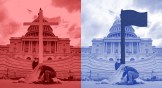

I differentiate modern conservative identity politics from early white supremacy because supremacy was based on maintaining power for the majority group rather than defending a marginalized group, which is how many conservatives—including evangelicals—currently see themselves. A large chunk of Trump supporters, for example, believe white people and Christians are themselves oppressed groups in need of protection. Their critics may recoil at that idea, but whether detractors are convinced oppression exists is irrelevant. A lot of conservatives believe it does, which fosters identity politics.
In my forthcoming book, Identity Politics in the United States, I lay out three pitfalls that comes with engaging the world mostly—or only—through the lens of identity. First, it leads people to use language that dehumanizes those they see as oppressors (such as men, white people, Christians, or the “woke”). Second, it creates a strong tendency to compel agreement and constantly police boundaries among those who want to be in good standing with the group. Third, it leads people to dismiss their own previous moral standards and intellectual commitments to maintain fidelity to a cause.
Personally, I have concluded identity politics, whether on the left or the right, is not an effective way to engage in open discourse or critical thinking. It ushers in ethnocentrism that feeds the polarization damaging our society. It also incentivizes us to seek out solutions for groups we like and ignore the concerns of others when we, as Christians, should seek out solutions that serve everyone—even in a society where oppression creates different concerns for different social or ethnic groups.
When I was doing research for my book, I tested out my theory on conservative identity politics. I designed an empirical online survey and presented it to 38 conservative Christians who are highly supportive of Trump. My goal was to see if they saw their own politics through the lens of Christian nationalism or identity politics. For Christian nationalism, I used language from two sociologists who argue white Christian nationalists think that:
America was founded as a Christian nation by (white) men who were “traditional” Christians, who based the nation’s founding documents on “Christian principles.” The United States is blessed by God, which is why it has been so successful; and the nation has a special role to play in God’s plan for humanity. But these blessings are threatened by cultural degradation from “un-American” influences both inside and outside our borders.
In contrast, I created my own definition of identity politics for the respondents. This was:
Conservative Christians who are active in politics have a vision of restoring traditional moral and sexual values. Those values oppose the humanist values held by progressives who control the media, academia, and the entertainment industry. Thus, culturally, conservative Christians envision themselves as maligned by the larger culture. Those who control the culture have a power that conservative Christians do not possess and use that power to marginalize Christians. That marginalization can come in the form of legal consequences such as Christian bakers who refuse to serve same-sex marriages, or social consequences such as suffering the effects of “cancel culture.” Thus the vision conservative Christians have is that they are a group fighting to improve the larger society but face a powerful deadly enemy who will crush them in order to maintain their culture power.
A little more than half of respondents (21) told me the Christian nationalism statement either absolutely or probably described how they think. But nearly all the respondents (36) said the same about the statement informed by the concept of identity politics. This was a single survey and doesn’t scientifically represent the larger Christian population, but I have done other analysis that has reaffirmed this finding. This means that, among politically active Christians who support Trump, more are driven by elements of identity politics than of Christian nationalism.
I say all of this because those of us concerned about conservative Christians who seem to prioritize politics over the gospel need to be aware of their true motivations. Honest assessments allow for real conversations. Blanket accusations of racism and authoritarianism are often thrown around by academics and pundits in discussions about Christian nationalism. I am not saying these aren’t real concerns – racism and authoritarianism do exist. But making sweeping charges won’t alter the attitudes of activists if they don’t see those things as the driving factors in their political choices.
The conversation around Christian nationalism pathologizes conservative Christians. By the media and many on the left, they are envisioned as uniquely authoritarian and possessing fear and hostility toward outgroups. Since other groups have not undergone the depth of academic assessment that conservative Christians have, we do not have concrete evidence that shows they are different from everyone else.
However, identity politics is featured on the left and the right, and the problems it creates for conservative Christians are not unique to them. My caution is just as relevant for believers supporting progressive causes as it is for conservatives. Instead of falling into the trap of identity politics, both groups need to engage in the public square without surrendering biblical principles and the gospel, which is our ultimate priority.
For conservatives, concerns about anti-Christian discrimination may allow us to have better conversations because, frankly, the current approach is not working. As I look at many of the writings criticizing Christian nationalism, they fall short in accomplishing what they should, in theory, be trying to do: convincing Christians to rethink how they engage politics. Instead, they seem to be more preoccupied with attaching stigma to politically conservative Christians than with finding what exactly makes Trump’s political movement appealing to them, and tackling it head on.
Research indicates that conservatives are not more politically active than other religious groups. Yet since Trump’s election, their activism has grown. The emergence of the late Charlie Kirk’s organization, Turning Point USA, provided a venue that mixed Christian belief with Republican politics. It is appropriate to be concerned with how this type of activism dilutes the gospel. But to truly challenge the movement, we need to do a better job of understanding it.
George Yancey is a professor of sociology at Baylor University and author of the forthcoming book, Identity Politics in the United States: An Exploration of Identity in Red, White, and Blue. He also vlogs on YouTube.