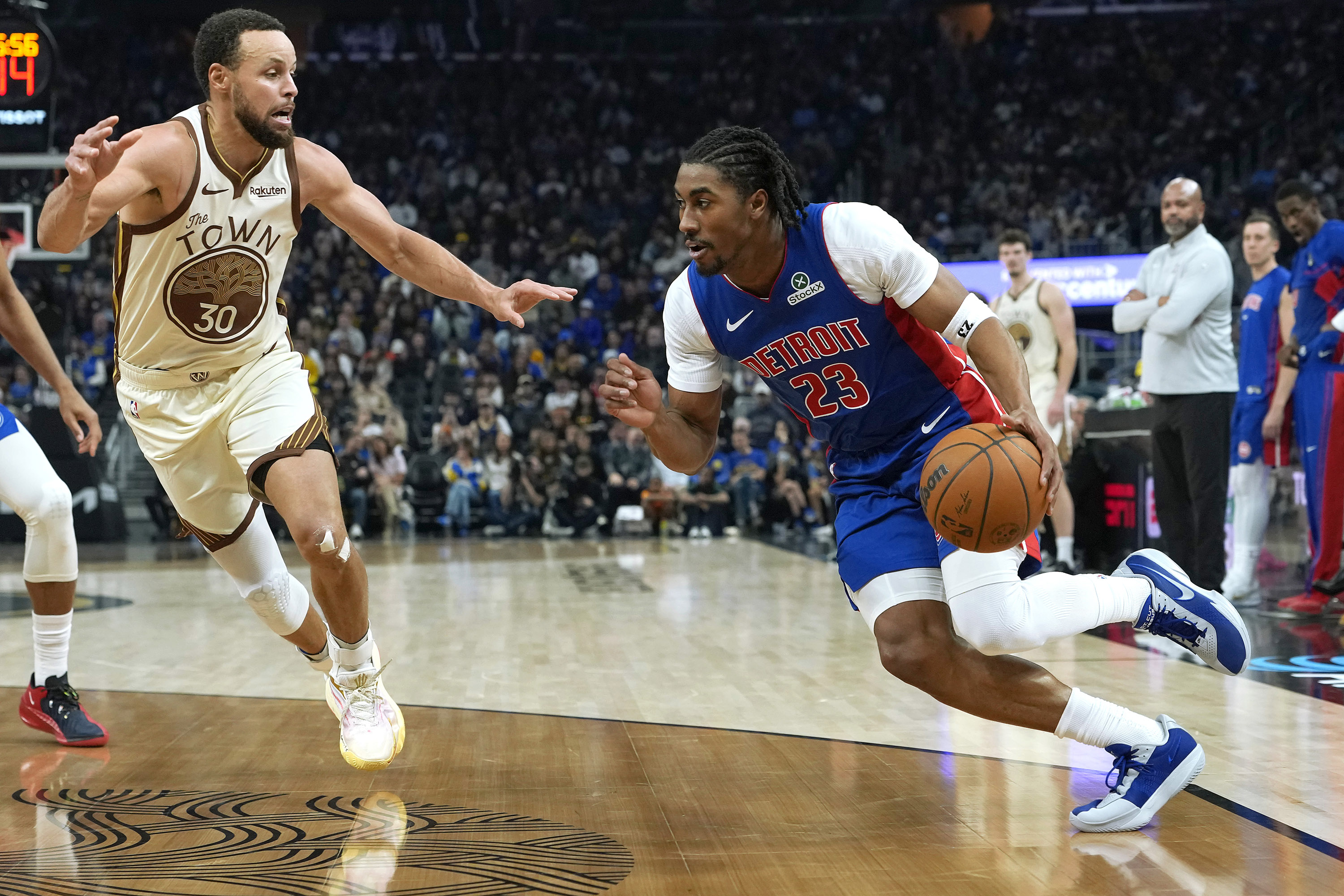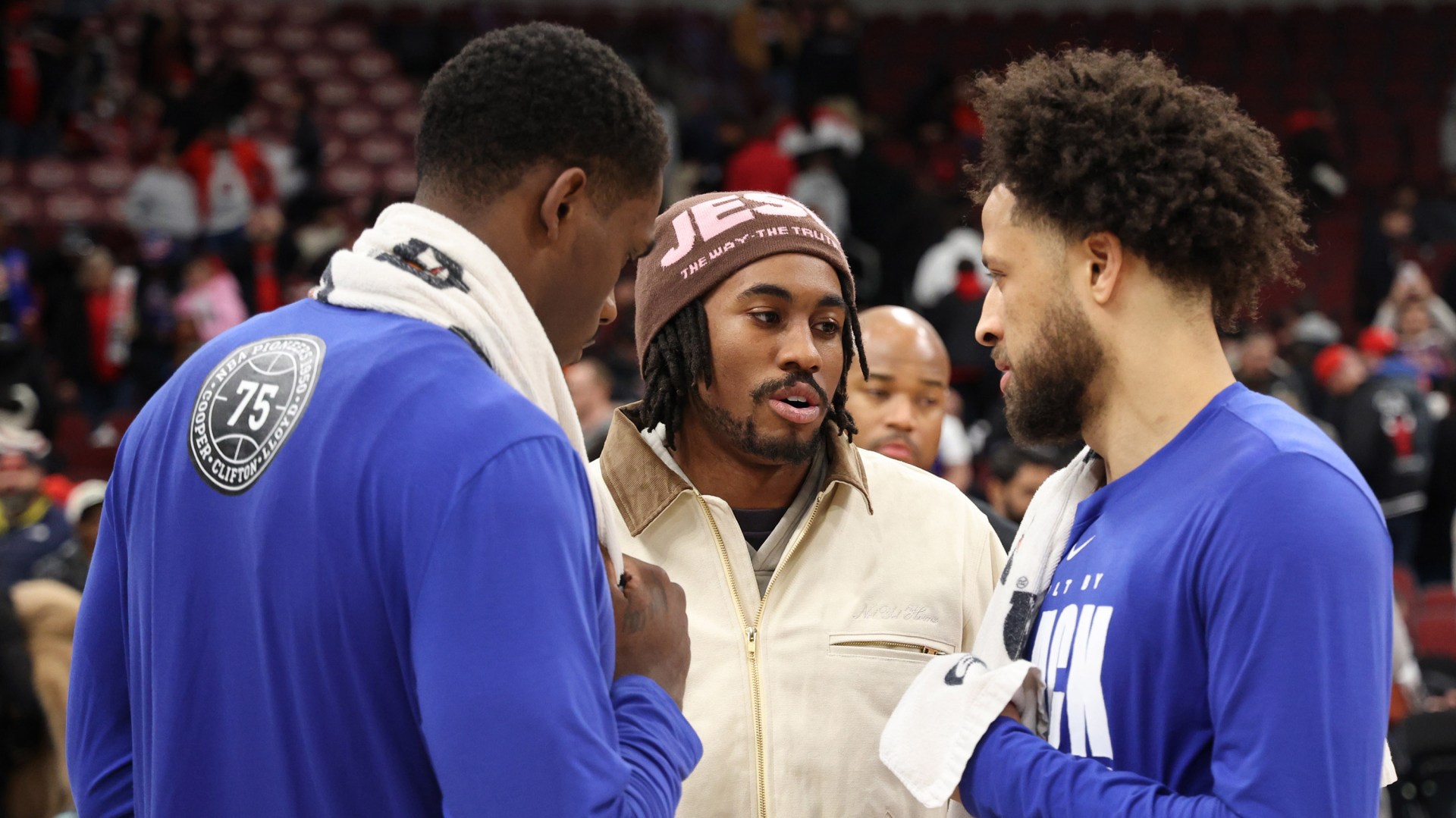
It was the night before Easter, and the shouting began to spread. Street preachers had claimed a corner near Auburn University. As video of their efforts circulated on social media, one preacher in particular appeared to drive interest.
Tall, with twisted locks and sporting a “Child of God” jersey, the man paced and declared the words of Matthew 5:8 (“Blessed are the pure in heart”). Onlookers quickly recognized him as Jaden Ivey, who five days earlier had effectively been ousted from the NBA.
Ivey, 24, was dismissed by the Chicago Bulls on March 30 for “conduct detrimental to the team.” Acquired via trade from the Detroit Pistons not two months earlier, Ivey had posted a string of Instagram videos the day of his release. Streaming from inside his car, he offered what many media outlets quickly branded “anti-LGBTQ+” remarks.
“They proclaim Pride Month in the NBA,” Ivey said. “They say come join us for Pride … to celebrate unrighteousness. They proclaim it on the billboards. They proclaim it in the streets. Unrighteousness.”
Ivey had long been outspoken about his faith. In April 2024, when he strolled into Detroit’s Little Caesars Arena for a game against his future team, the Bulls, Ivey wore a sweatshirt emblazoned with the words Do not fear and an excerpt from Psalm 23.
Fear he did not. Ivey joined the Bulls two years later, and journalists were warned ahead of his introductory press conference that he was “a Jesus guy.” The shooting guard allegedly flipped the script in locker-room interview sessions, asking reporters about their lifestyle choices and personal salvation. On personal livestreams, the former Purdue star spent hours reading the Bible aloud or opining on spiritual matters.
After just a few games with the Bulls, when the team had an abundance of healthy players, Ivey was benched. He downplayed any disappointment.
“I’m not the J. I. I used to be,” he told reporters. “The old J. I. is dead. I’m alive in Christ no matter what the basketball setting is. … Jesus is not going to say, ‘Feb. 19, why didn’t you play, Jaden?’ He’s gonna say, ‘What did you do for my kingdom?’”
More than a year earlier, in an interview with Sports Spectrum, Ivey had credited God for victory over sin, including drunkenness, premarital sex, pornography addiction, and borderline abuse of his wife, Caitlyn. In 2024, while still playing for the Pistons, he ended a press conference by quoting John 14:6, declaring calmly that Jesus is “the Way, the Truth and the Life.” He once autographed his jersey for a young man with a note to “repent and believe in the gospel.”
In short, Ivey’s problematic remarks were perfectly in character. And so in the hours after his release from the Bulls, he seemed perplexed that his Christian messaging was now considered “detrimental conduct”—the reason for his dismissal.
“All I’m preaching about is Jesus Christ and they waived me,” he said during another livestream while boarding a plane out of Chicago. “They say I’m crazy, psycho.”
If Ivey’s professions were permitted before, why not now?
Ivey’s behavior may have simply been the final straw for an organization that had grown tired of his commentary while he was rehabbing from a knee injury; ESPN reported that some team staffers became “agitated” by his “preachy” presence.
But Ivey’s fall may also reflect the unwritten rules of platforming faith in professional sports.
Presumably unrelated to the Ivey drama, the Bulls failed to make the cut for this year’s NBA playoffs. Regardless, the tournament, now entering its second week, will offer ample opportunities for fans hoping to catch stars glorifying God in an era when professing pro athletes seem to be everywhere. Teams poised to make deep runs feature plenty of faith-forward talent, from Detroit Pistons point guard Cade Cunningham (“I get my aura from Jesus Christ,” he said in February) to Boston Celtics coach Joe Mazzulla (whose family kept a request on their home “prayer board” that he would someday lead an NBA team).
Pro locker rooms are far more open to faith than they once were. Rob Maaddi, an Associated Press sports reporter, told CT that in the 1970s, Christian athletes were mostly seen as “sissies,” and “fewer players openly prayed or shared their faith.”
But clearly, teams and fans still maintain boundaries—often invisible—around what’s acceptable. Why do plenty of players get away with talking about God, but some don’t?
Benjamin Watson, who played in the NFL for more than 15 seasons, says that viewers (and team owners) are generally comfortable with athletes who express faith. But there are limits.
“We’ve always seen certain guardrails,” Watson told CT in an interview. “It’s one thing for an individual athlete to thank Jesus for keeping them safe on the field or to honor God for giving them talents or even honor God in defeat by saying their identity is not in winning or losing. That’s personalizing their faith. The rub is always going to be when they start talking about biblical principles that don’t align with an accepted cultural norm.”
More than 55 percent of sports fans are comfortable with proclamations of faith, Watson said, citing a 2025 Sports Spectrum survey. This “brings more fullness to the personality of the people they watch perform.”
The apparent difference in Ivey’s case: His words took aim at people beyond himself.
Matt Forte, a former Chicago Bears running back who hosts Sports Spectrum’s podcast, wondered if the manner and method of Ivey’s delivery overshadowed the principles he was trying to convey.
“I’m not in agreement that big organizations should force their employees to … promote what you promote and join the parade,” Forte said on his show. But “even if we do speak the truth, we need to speak the truth in love.”
Watson, who also hosts the CT podcast The Just Life, says believers—and not only those with large platforms—point to God most effectively by emphasizing their own unrighteousness apart from Jesus.
“We are to stand firm for the Lord, but we don’t hold the world to the same standard,” Watson said. “We still say, ‘This is God’s best for you,’ but we always uphold the dignity of every person. We’re condemned as well. We have to lace everything in love.”
Ivey’s prophetic posture cut across the grain of self-infatuation often associated with the NBA. Ironically, after Ivey’s ouster, he appears in one clip of his street preaching asking a young man whom he will serve—“your father the devil, or your Father who loves you”—to which the passerby replies, “I will serve myself.”
Yet Ivey’s divisive videos sometimes found targets beyond biblical lists of unrighteousness. The former top-five NBA draft pick called Catholicism a “false religion.” He claimed that Golden State Warriors star Stephen Curry, one of the most prominent Christians in pro sports, is “not even surrendered” to God and “don’t know Jesus.”
Ivey acknowledged that some of his family members thought he was “losing my mind,” prompting some ex-teammates and media personalities to question his overall well-being, saying they “hope he gets the help he needs.”
Watson says the messiness of Ivey’s remarks underscores a larger need for Christians to pray for the high-profile believers they root for.
“As a Christian athlete, suddenly you are the poster child for Christians and organizations,” Watson said. “Many times it’s a disservice to the athlete who needs discipleship, mentorship, who may be young in their faith and trying to navigate storms.”
In the immediate hours after Ivey’s exile from the Bulls, people and personalities lined up to defend or destroy the young man’s declarations.
Dane Ortlund, senior pastor of Naperville Presbyterian Church in Illinois, swore off the Bulls as his favorite team, condemning the club for “cancelling … a man who did nothing more than hold to his convictions” in a “tragic capitulation to the spirit of the age.”
Josh Howerton, senior pastor of Lakepointe Church in Dallas, compared Ivey’s stand against Pride Month to Daniel refusing to worship a golden idol.
Two-time NFL MVP Lamar Jackson fired off a string of Scripture-filled posts and said, “I’d rather be canceled by society than rejected by Christ.” He then reported to the Baltimore Ravens’ offseason program with an “I Love Jesus” sweatshirt.
Others offered less sympathy. Former NFL linebacker Emmanuel Acho called Ivey’s words “dangerous” and linked them to mental health issues, then urged Christians to emphasize the “lamb” of God—love, grace, mercy—over “the lion.” Former NBA champion Nick Young took to Instagram and suggested, through laughs, that Ivey’s real misstep was criticizing Stephen Curry.
Joe Cowley, a Chicago Sun-Times columnist who reported on Ivey’s Bulls tenure, was equally pragmatic. “Jesus ain’t paying your bills,” he said on his podcast. “The NBA is.”
Watson feels all the noise was the inevitable result of Ivey’s aggressive public stance: “He becomes a mascot for greedy people.” He said culture warriors and conflict entrepreneurs took Ivey’s controversial words and the Bulls’ decision and exploited them without a care for the man at the center of it all. “They point and say, ‘See, they’re coming for us and they’re coming for your kids.’”
A cold truth that both sides appear to acknowledge in debating whether Ivey crossed the line: Had he simply been more talented at basketball, “the line” may not have existed at all.
After all, athletes’ careers, contracts, and endorsements survive legal and criminal trouble all the time. Owners don’t like firing players who sell lots of tickets. As former NFL player RK Russell put it, the NBA “does not police its players’ beliefs, only how their image affects the NBA’s bottom line.”
Ryan Clark, a former NFL veteran who also cohosts The Pivot podcast, spoke on a recent episode as if addressing Ivey directly: “You don’t have the tolerance that great talent provides you.” Consider Minnesota Timberwolves star Anthony Edwards, Clark said. Edwards’s controversies—including viral comments made about gay men and alleged texts urging a woman to have an abortion—were more easily overlooked given Edwards’s résumé and fan appeal.
“There’s a sliding scale for what’s acceptable,” Watson explained. If a player “wins games for you but is late to curfew a couple times, you’ll put up with it more than you will for the 52nd man on the roster.”
This may explain why Clayton Kershaw, the former Los Angeles Dodgers pitcher, could oppose his team’s promotional night for the Sisters of Perpetual Indulgence, an LGBTQ charity; write a Bible verse on his Dodgers-supplied Pride Night hat; and still retire a beloved West Coast icon after 18 years with the club.
It may also explain America’s fair-weather embrace of Tim Tebow, a brief cultural phenomenon for his avid Christian faith as both a Florida Gators standout and NFL hopeful. Tebow accumulated a hysteric following for his conservative personal values and frequent displays of faith—“John 3:16” eyeblack and steady kneeling for on-field prayer that became a “Tebowing” movement. Yet that same faith became fuel for ridicule when his star faded after only a few seasons in the NFL.
So is there a template for athletes who want to express their faith and preserve their careers?
If so, it probably involves prudence. A day after Ivey’s release, Dallas Mavericks veteran Daniel Gafford was asked to explain a T-shirt referencing faith. He declined to elaborate, saying, “I don’t wanna get waived or anything like that.” (The Mavericks, ironically, launched in 1980 as an NBA model of Christian values, what cofounder Norm Sonju called a club of “wholesomeness and goodness and respect for God and country.”)
Stephen Curry has made at least a few believers with a much less provocative brand of witnessing on the West Coast. Filmmaker Brian Ivie, who partnered with the Golden State Warriors star on a documentary about the 2015 Charleston church shooting, said in an interview that he once thought “evangelicals were like the children of the corn” and he wanted “nothing to do with Christianity.” Ivie partially credits Curry and the way he carries himself for his conversion. “He makes God accessible.”
 Photo by Thearon W. Henderson / Getty Images
Curry has long cited the same two verses—Philippians 4:13 and Romans 8:28—as inspiration. In a 2023 interview, he said he’s “never been one to just bash people over the head with Scriptures or verses or mantras about my faith.”
But his palatability as a public Christian may have as much to do with his three-point shot as it does with his God-blesses-me demeanor.
Joshua Cooley, a longtime Christian sports editor and best-selling author, thinks there’s no denying the influence of star power. But Cooley, who cowrote a memoir of former Philadelphia Eagles quarterback Nick Foles, also pointed to the Super Bowl MVP and outspoken Christian as a model for relatability. The morning after a historic performance to give the Eagles their first Super Bowl win in 2018, rather than flexing for the world, Foles highlighted his flaws, telling reporters: “I’m not Superman.”
“Nick approached it so humbly. ‘I almost quit football. I’m weak. I fail,’” Cooley said. “Athletes could learn from that.”
Watson, for his part, has wrestled with the balance between boldness and discretion. He became a vocal advocate of “protecting life in the womb” while playing for the New Orleans Saints. Many inside the locker room, including coaches and their wives, lent their support; others, like the ACLU, branded him “outspoken and ill-informed.” A decade later, when Watson criticized the confrontational style of the late political activist Charlie Kirk, “it cost me financially—ironically in the same realm where I was speaking.”
There is a fine line, Watson concluded, between speaking truth and speaking too much. Sin is not ended by multiplying words, the Proverbs warn, but the prudent hold their tongues.
Meanwhile, the words already spoken will hang in the air, immortalized online.
On March 30, Ivey paused his post-release livestream, quietly receiving a flight attendant’s request to wrap up his video before departing Chicago. He smiled, rubbed his chin, and offered a few more assurances before signing off.
“All them rings LeBron [James] got, all them rings Michael Jordan got, all them people in the Hall of Fame who don’t know Jesus Christ?” he said from his seat. “It’s not gonna matter on Judgment Day. … And they gonna try to stop me. But I’m not. I’m gonna keep speaking the truth.”
Cody Benjamin is senior news writer at Christianity Today.