Julius Joor lost his cousin on the rainy night of June 13, 2025, as Fulani militants descended on Yelwata in Benue State, Nigeria. Joor, the village head, said attackers “surrounded Yelwata and started shooting and killing people. They forced people out of their homes, poured fuel, and set houses ablaze.” He escaped to a primary school doubling as housing for internally displaced people (IDP), which had police guarding it.
The attack resulted in the deaths of about 150 people, mostly Christians, amid ongoing clashes between Fulani Muslim herders and other ethnoreligious groups over land use, religion, and ethnicity.
Achin Mathias, another survivor of the raid, woke up to the sound of gunshots. He got out of bed and fled to St. Joseph’s Church in Yelwata, which militants didn’t attack since it is near an army camp. Mathias told CT many of the slain had fled to Yelwata from interior villages due to previous attacks. He also lost a childhood friend in the raid.
In the months following the attack, local Christians, including Joor and Mathias, waited for the government to take action. Some church leaders criticized the government’s lethargic response. One Nigerian senator blamed current policies—such as offering amnesty to some terrorists—for enabling the country’s kidnapping and terrorism crises and accused soldiers of running away instead of stopping militant herdsmen.
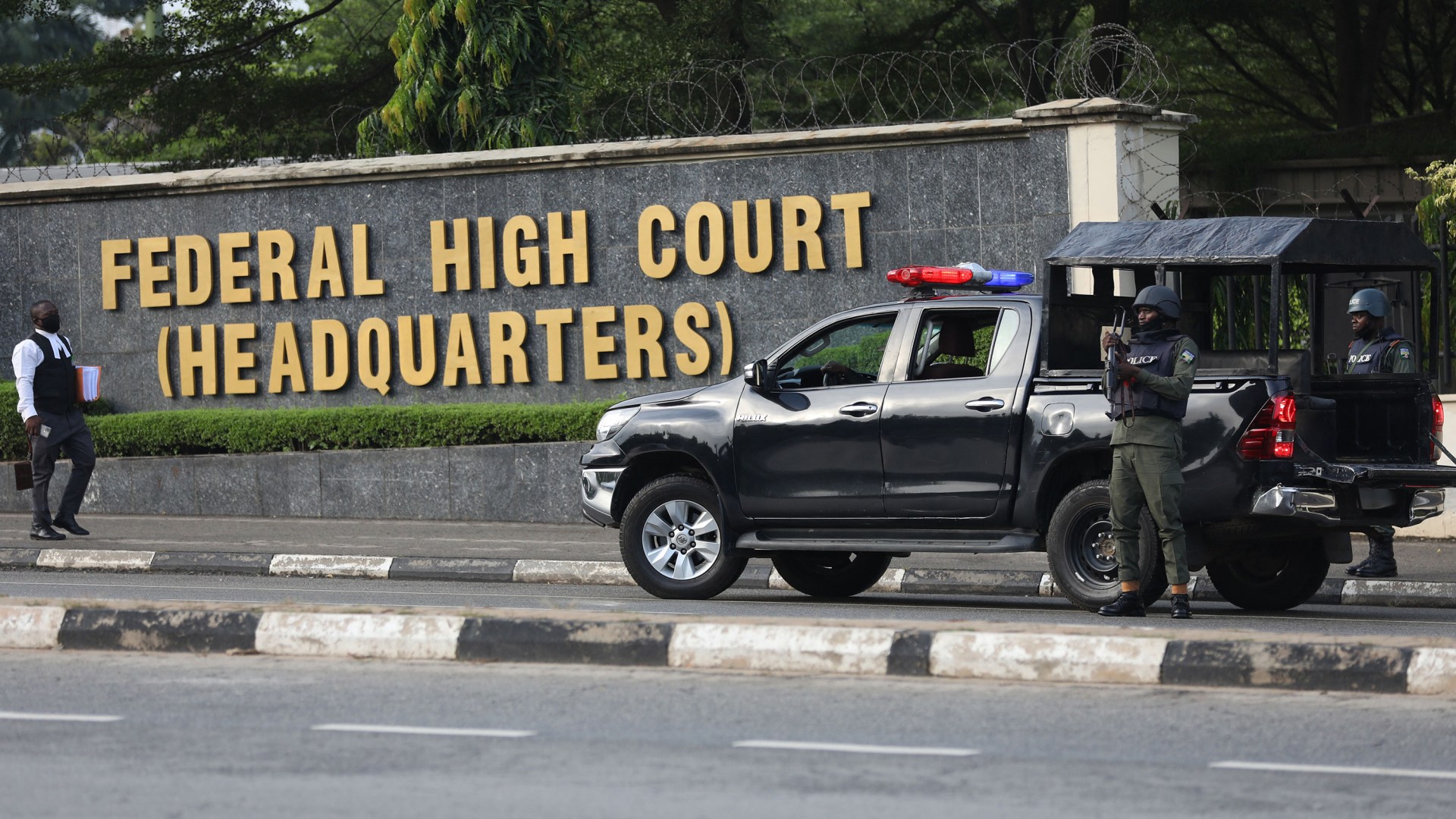
Then on February 1—nearly seven months after the Yelwata attacks—the Nigerian government arraigned nine suspected perpetrators at the Federal High Court in the capital of Abuja. After the arraignment, authorities dispatched a forensic team to Benue to investigate and exhumed 105 bodies from mass graves to gather evidence for prosecution.
Though Yelwata residents expressed hope for better accountability in curbing violence now that the government is prosecuting perpetrators, they also feared that a slow criminal justice system, systemic apathy, and lax policies toward terrorists might thwart justice for their neighbors.
Joor and Mathias told CT they felt relieved the government had arrested some people involved in the massacre, though they said the government should not stop at arraignment.
“[The] government must ensure that the full weight of the law is brought to bear and justice is done,” Joor said.
Despite international pressure to crack down on terrorism, attacks are continuing in Nigeria. A suspected suicide bombing in mid-March killed at least 23 people and wounded over 100 in northeastern Nigeria. On Palm Sunday, gunmen reportedly shouting “Allahu Akbar” attacked the predominantly Christian town of Angwan Rukuba in Plateau State, central Nigeria, leaving 28 dead. A night attack in Jos on March 30 resulted in at least 20 more deaths.
Authorities struggle to bring perpetrators to justice due to inadequate law enforcement and an often-dysfunctional judicial system.
Catching the terrorists in the first place is a challenge. Nigeria has long struggled to mount a response to violent security threats, including attacks targeting Christian and moderate Muslim communities as well as the kidnappings of pastors, schoolchildren, and church attendees. The country’s actions against terrorists are mostly centralized—security forces and army units directed by federal government. State governments don’t have the authority to deploy troops to trouble spots, slowing down responses to violent incidents.
One critic argued that most troops don’t know the communities they’re deployed to well or have a stake in the community, undermining effectiveness. The critic advocated training local security forces.
And once caught, terrorists may not face immediate penalties. Nigeria’s criminal justice system is notoriously slow, which some sociologists say undermines judicial integrity and public trust. One analysis estimated 70 percent of legal cases in Nigeria undergo significant delays. Some cases linger for years.
Sometimes authorities have seemed apathetic toward the prosecution of perpetrators. In 2023, police in Sokoto State allegedly failed to provide proper prosecution for two men accused of lynching Deborah Samuel, a Christian accused of insulting Muhammad the year prior in a WhatsApp group. The courts tried the men for criminal conspiracy and inciting public disturbance rather than for murder, and police officials allegedly skipped court appearances. The magistrate dismissed the case, and the men walked free.
Some victims of attacks and kidnappings told CT they fear the government will grant amnesty to militants. The Nigerian government has tried to rehabilitate insurgents with a 2016 policy called Operation Safe Corridor that aimed at deradicalizing repentant terrorists who have surrendered or been captured. As of March 2025, rehabilitation programs reintegrated 2,190 terrorists who had surrendered or defected.
One Christian woman from Kaduna State, whose brother is still held by bandits, said, “The question of amnesty should not even arise” for perpetrators. “How do you even determine who has repented genuinely?”
She’s one of the many Nigerians who oppose rehabilitation programs, concerned that they may not be effective and overlook victims’ rights. One supporter of rehabilitation, general Olufemi Oluyede, recently defended the policy by citing the parable of the Prodigal Son as a reason to offer a chance for voluntary repentance rather than the death penalty.
Mathias doesn’t support the death penalty, even for those who attacked his home in Yelwata, but he said he fears attempts to rehabilitate and reintegrate militants will result in treating perpetrators better than their victims and encourage future crimes.
Moses Machen, the pastor of Dominion Baptist Church in Bukuru, Plateau State, told me he witnessed three attacks during the three years he pastored a Baptist church in Chirang in nearby Bokkos Local Government Area. On Christmas Eve in 2023, he survived one attack by fleeing to the hills surrounding Bokkos. He credited God’s grace for his escape.
“While it is good that some attackers are prosecuted, [the] government must ensure that the law is followed to the letter in order to ensure justice for the victims,” Machen said, adding that a vigorous prosecution will ensure affected communities receive some closure.
Machen also hopes the government will respond to attacks better in the future. He questioned security operatives’ delayed action during past attacks on Christian communities: “During one of the attacks [in my area], I asked security officers to intervene, but they said they did not have orders to do so.”
Nigeria has one of the most feared and well-funded armies in Africa, which is also known for peacekeeping in neighboring West African countries, according to The New York Times. But it remains ineffective at stopping killings and kidnappings at home. Nigerian outlet News Central TV blamed underfunded police departments, corruption, and the collapse of public trust for contributing to the country’s ongoing insecurity.
Meanwhile, Machen said as victims try to recover their lives, “some of the people are still scattered. The farms the people used to go [to], they can still not go there now because of safety concerns.”
The fallout of attacks and risk of more violence have left livelihoods on the line, especially in rural areas. In Yelwata, Julius Joor said the town has adequate security now, but it doesn’t extend far. Farms just a few miles outside Yelwata remain inaccessible. Land owners fear traveling to their fields due to the risk of attacks: “You cannot go beyond two kilometers; how can you farm?”
Joor said he and his community have no choice but to remain hopeful: “We are crying. We are not government and we do not have power, so we have to be hopeful that we will get justice.”