In the intial hours of the Clinton administration, the brouhaha over the ill-fated nomination of Zoë Baird and the ban on homosexuals in the military abruptly overshadowed discussion of the abortion issue. Yet on the second full day of his presidency, Bill Clinton took action that signals a radically different phase in the abortion debate.
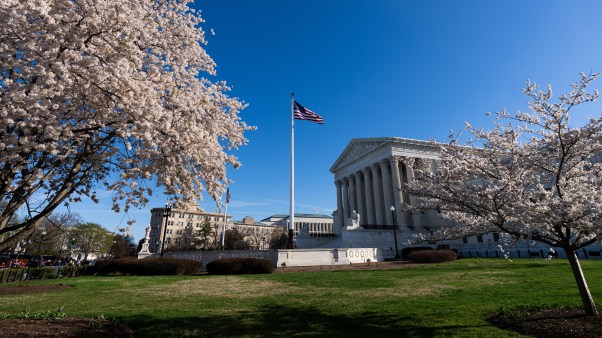
On January 22, the twentieth anniversary of the Supreme Court’s Roe v. Wade decision, the President followed through on his campaign promise and rescinded all abortion-related executive orders that had been enacted in the Reagan and Bush administrations:
• The Title X regulations—dubbed the “gag rule” by critics—which prohibited federally funded family-planning clinics from counseling about abortion;
• The Mexico City policy, which forbade U.S. support for international family-planning organizations that actively promote abortion;
• The prohibition of fetal tissue obtained from induced abortions being used in federally funded research;
• The ban on abortions being performed at U.S. military bases overseas.
Abortion pill review
In addition, Clinton ordered the Food and Drug Administration to review its ban on importing the French abortion pill RU 486 for personal use.
The President said he enacted the directives out of his vision of an America “where abortion is safe and legal, but rare.” But antiabortion leaders say the net effect will be just the opposite. Richard Land, executive director of the Southern Baptist Christian Life Commission, says, “The new President has taken actions … [that] will result in the deaths of untold millions at the hands of abortionists.”
Abortion-rights advocates are jubilant over the new policies. Eleanor Smeal, president of the Feminist Majority Foundation, says, “With a stroke of his pen, President Clinton … changed the abortion debate forever.”
Clinton’s next opportunity to act on the abortion issue could be at the level of the U.S. Supreme Court. The Court has asked the Clinton administration to state its view on whether abortion opponents who block access to clinics should be found in violation of federal racketeering laws.
The National Organization for Women has asked the justices to rule that antiabortion efforts like those of Operation Rescue amount to a coordinated conspiracy in violation of the Racketeer Influenced and Corrupt Organizations Act (RICO). The 1970 RICO law was enacted to fight organized crime.
In January, the U.S. Supreme Court dismissed claims that protesters who blockade abortion clinics violate federal antidiscrimination laws. In a 5-to-4 decision, the high court ruled women seeking abortions are not a class deserving federal protection under the 1871 Ku Klux Klan Act.
Abortion-rights activists are now seeking to overturn the Bray v. Alexandria Women’s Health Clinic ruling in Congress. Last month, Rep. Constance Morelia (R-Md.) and Rep. Charles Schumer (D-N.Y.) introduced the “Freedom of Access to Clinic Entrances” bill that would place stiff federal felony penalties on those who delay entry into a health facility “with the intent of preventing or discouraging anyone from obtaining reproductive health services.” President Clinton has implied he would sign such legislation.
By Kim A. Lawton in Washington, D.C.
‘Pray, Educate, Lobby, Vote’
March for Life marks anniversary of Roe v. Wade.
Although a record antiabortion crowd turned out to mark the twentieth anniversary of the Supreme Court’s Roe v. Wade decision, their mood was more somber than ever because of President Clinton’s vows to eliminate abortion restrictions in the nation.
This year’s March for Life filled the 13-block distance from the White House to the Supreme Court with an estimated 150,000 demonstrators. The January 22 march occurred only two days after Clinton took office. Not only did Clinton promise to do all he could to continue to make abortion available on demand, but as the march took place, he was rescinding several federal restrictions on abortion.
During premarch speeches, Operation Rescue founder Randall Terry drew the loudest applause. Terry said at one point, “We are here to say to President Clinton respectfully that we are for life, and we want him to change his proabortion stand. Don’t hate Bill Clinton-pray that God gives him a repentant heart.” Perhaps Marge Asher, a marcher from Laramie, Wyoming, summed up the movement’s future strategy, saying, “Pray, educate, lobby, and vote.” Following the march, 307 demonstrators were arrested for blocking three abortion clinics in the Washington area.
This year many ad hoc groups marched, perhaps the most unusual being the Prolife Alliance of Gays and Lesbians, a group of homosexuals wearing pink triangles.
Other groups identified themselves as Professional Women for Life, Paramedics for Life, Transformers Ex-Gay Ministry, and Prolife Atheists.
There was, as usual, a counterdemonstration, consisting this year of fewer than 100 proabortion marchers. The most visually striking counterprotesters were a dozen men dressed in drag calling themselves “Church Ladies for Choice.”
By Ross Pavlac in Washington, D.C.