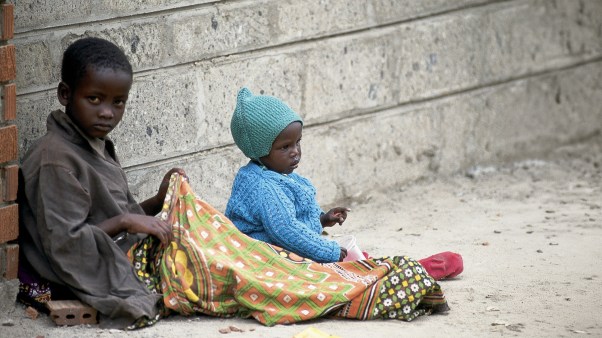
Martha, 16, spots missionary Ronald Villalobos walking late-afternoon rounds through downtown San José’s seedy “Coca-Cola” district. She shuffles across a break in traffic and greets him with a kiss on his thick-bearded cheek. Matted black hair frames her delicate face, smeared in the same grime that covers her hands and baggy clothing. “Will you buy me lunch?” she asks, hanging on his arm. As she and the missionary head toward a diner, Angie, 14, joins them. She too is dirty and hungry and hopes Villalobos, of Christ for the City International (CFCI), can help her.Christian ministries such as CFCI are rescuing street children with the Costa Rican government’s blessing and without concealing their faith.Martha and Angie, both crack addicts, live on the streets of San José. Angie has never attended school and survives through begging. But without intervention, Angie seems certain to suffer the same fate as Martha, who pays for illicit drugs with money from prostitution and theft.One-quarter of Costa Rica’s street children are young girls, according to Ana de Lara of Casa Alianza, a San José-based Catholic outreach to Central America’s street children. Casa Alianza’s campaign against child prostitution has renewed attention to the grim side of this Central American country, often celebrated for its stable government and relative prosperity.
Getting the Street Out
Costa Rica’s National Child Trust, known as PANI, gives a tenth of its $11.3 million budget to nongovernmental organizations that help children, says PANI director Marlene Gómez. Last year, PANI contracted the Salvation Army to help San José’s street children. Most such programs target boys, and often do not address the specific needs of young girls.Abuse at home, not poverty, drives many girls from their families and into the streets. Girls need intensive, personalized assistance in making a fresh start. Martha left home seven years ago after she delivered a baby conceived when her stepfather raped her.”It’s harder to rescue the women because they’ve been seriously abused all their lives, especially by all those closest and most important to them,” says Salvation Army media director Carlos Cháves. For four years, the Salvation Army has operated an eight-month drug rehabilitation center for 38 girls in San Isidro, about two hours southeast of the capital. Last year, the ministry opened two programs for 40 more girls in Cartago, near San José. It operates others for boys and adult alcoholics. The Salvation Army’s goal is “to get the street out of them, rather than just getting the kid out of the street,” says Major Michael Sharpe, who directs the Army’s San José operations. The ministry offers Bible studies and spiritual help to children who sleep in its dormitories, eat in its soup kitchens and undergo its rehabilitation program. Cháves says that while the spiritual aspect is essential to recovery, participation in such studies should not be mandatory.CFCI regularly evangelizes children with testimonies and Bible stories, both on the streets and in its San José office, where many come for help. CFCI missionary Sergio Acebedo became a Christian while serving time in prison. After release, Acebedo received the Salvation Army’s treatment for alcohol abuse. He then became involved in ministry to drug-addicted youth.”To work with children, you’ve got to forgive and go through the inner healing process, not just undergo treatment [for addiction],” Acebedo says. “Not all people, not even Christians, are willing to do that.”PANI allows ministries to introduce street children to Christianity, provided the goal is rehabilitation. Cháves says PANI’s $300 per month per child covers two-thirds of the expenses for facilities, meals, clothing, and staff salaries. The Salvation Army raises the balance.
Feeding Souls
Meanwhile, CFCI aims to complete construction by June on a 12-acre center near San José where 100 girls can undergo treatment for 15 months. The center will be called Renacer (Spanish for “to be reborn”). Resident supervisors and a social worker will run the center. A psychologist and doctor will visit weekly.”Street kids are throwaways [of society],” says Paul Landrey, CFCI president. “They are the very ones that Jesus reached out to. [We] cannot just stand by with our arms crossed waiting for someone else to solve this problem.”The children cannot wait. Missionary Villalobos knows how hard and brutally short street life often is. Last year, he led a Bible study and counseled about 12 street girls, ages 10 to 14, from Martha and Angie’s turf. Now all are dead.Back at the diner, Martha and Angie are so famished that they ignore forks and spoons as they wolf down beans, rice, and chicken. Neither child has had food or a crack fix (which masks hunger pangs) for days. After they finish, Villalobos orders more food. If offered a genuine chance to leave the streets, both girls say, they would take it. Renacer is due to open in June, but that may be too late for some at-risk youth.
Related Elsewhere
Christ for the City International‘s site offers information about short-term and long-term missions opportunities with the organization as well as organizational news and prayer requests.
Copyright © 2000 Christianity Today. Click for reprint information.