
The Old Testament features stories of diverse characters whose lives represent God’s people: Rahab, the pagan prostitute who trusted the Lord and was saved. Ruth, the immigrant with no inheritance who was redeemed by a distant relative and became part of the royal family. Mephibosheth, the “dead dog” from the wrong clan, crippled in both feet, shameful, yet loved on account of someone else and invited to eat at the king’s table forever. Gomer, the serial adulteress whose husband bought her back from slavery. Joshua, the high priest whose filthy garments were replaced with fresh, clean ones.
With this list of characters, it’s no wonder we overlook Obed-Edom. His obscure name is a compound of two other names—Obed, David’s grandfather, and Edom, Esau’s nickname. No doubt, many of us would have to Google him to figure out who he was. Yet he beautifully illustrates what has happened to us—especially us Gentiles—through Jesus.
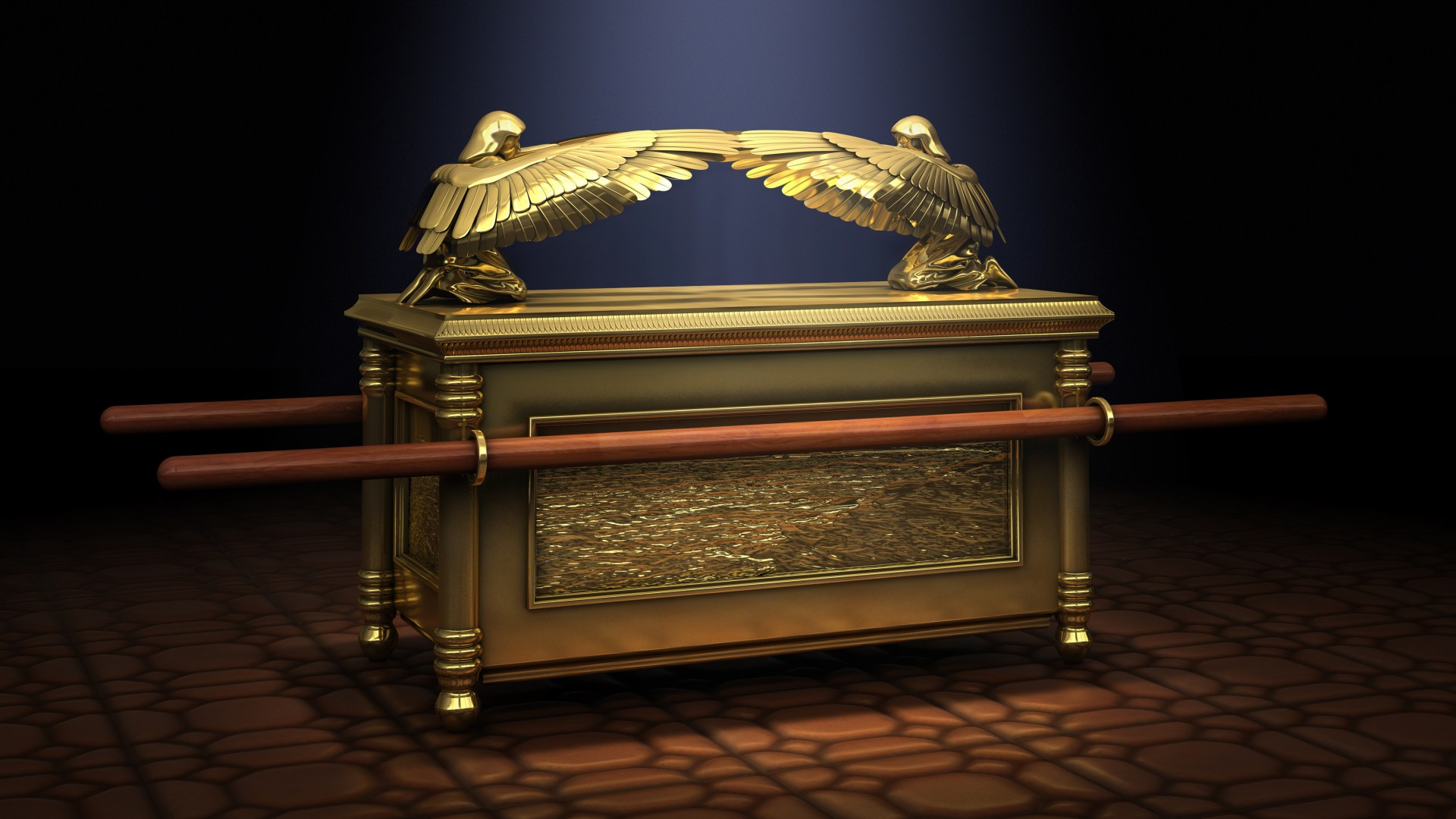
We first come across him in 2 Samuel 6, after one of the strangest stories in the Bible. Uzzah, a Levite, has just been struck dead for touching the ark of the covenant (which was forbidden) and carrying it on a cart (also forbidden). David is terrified. Like a man who has recently discovered he has acquired nuclear waste, he decides that he cannot keep the ark around. So he leaves it in the care of Obed-Edom. It stays there for three months, during which time “the Lord blessed him and his entire household” (v. 11).
So far, the story is remarkable. Obed-Edom is a Gittite. He’s from Gath, not Israel. He’s a Philistine, belonging to the nation that has, for generations, been a thorn in the side of God’s people. Yet because Israel has played fast and loose with the ark, he—a Gentile, an enemy by nature—hosts the dwelling place of Israel’s God. He has the divine presence in his front room. His house essentially becomes a temple. And abundant blessings follow.
That, in Christ, is what happens to us. Though by nature we Gentiles are outsiders, enemies of God, we are given the overwhelming privilege of hosting Israel’s God. We have his presence in our front rooms, so to speak, and have become his temple (Eph. 2:19–22). Every spiritual blessing in the heavenly places is ours (Eph. 1:3–14). We are Obed-Edom.
But there is more to the story. David hears how God has blessed Obed-Edom and is provoked to retrieve the ark. God’s favor toward a Gentile prompts Israel, the rightful home of the ark, to obey. The rejoicing that ensues is extravagant—so much so that David strips down to his linen ephod while dancing. He is admonished by his wife, yet defends himself by promising to become even more undignified (2 Sam. 6:12–23).
That, in Christ, is what happens to Israel via the Gentiles. Paul puts it this way in Romans 11: Because Israel has rejected Jesus, the blessings of God have gone to the Gentiles—so that Israel, when they see how God has blessed the Gentiles, might be provoked to jealousy and thus turn to him. When the presence of God returns to God’s city, the rejoicing that ensues will make David’s ephod look tame in comparison.
The story of Obed-Edom has one final twist. Having hosted the ark, he does not wave goodbye to God’s presence and continue what he did before. Rather, Obed-Edom is brought to Jerusalem, along with the ark, to serve as a gatekeeper and to minister before the ark along with his brothers (1 Chron. 16:4–6, 37–38). In other words, he and his family are treated like Levites. They are included within Israel and are welcomed to worship God alongside Zadok the priest, Asaph the psalmist, and David himself.
And that, in Christ, is what happens to us. When Israel returns to God, and God returns to Israel, he does not leave us Gentiles behind, wistfully waving goodbye. He summons us to join the party, minister before him, and take our place alongside Israel’s priests, psalmists, and kings in worshiping him. No longer will there be Jews (in) and Gentiles (out), or Gentiles (blessed) and Jews (jealous). There will be one people: Gentiles and Jews, Obed-Edom and David, Rahab and Abraham, Moabites and Moses. “Oh, the depths of the riches of the wisdom and knowledge of God!” (Rom. 11:33)
Andrew Wilsonis an elder at Kings Church in Eastbourne, England, and author most recently of The Life You Never Expected. Follow him on Twitter @AJWTheology.