
My neighbor on the flight from Los Angeles to Chicago was a little cagey, but the usual battery of polite airplane questions eventually shook something loose. He’d studied economics in New York. Left Wall Street to do his own thing. Now he moved wherever the wind and good skiing carried him, enjoying the fruits of an algorithm he’d written that flipped online investments hundreds of times an hour and made him wealthy.
My new friend worried a lot about privacy—prudent, I guess, for a man in possession of a virtual mint. He talked about the extraordinary measures he took to conceal his online activity, about encrypting his emails so thoroughly their very electrons must have been exhausted.
I didn’t share his level of concern. “But everyone has something they wouldn’t want getting out,” he said. I probably did, I told him. It just didn’t keep me up at night.
In his book On Tyranny, Yale historian Timothy Snyder argues that a key to preventing authoritarianism is protecting personal privacy. “Authoritarianism,” he writes, “works as a blackmail state, looking for the hook on which to hang you. Try not to have too many hooks.” This wisdom likely underlies much of our view toward privacy in America. Problem is, it presupposes dirt under the carpet. And while we are all sinners and we all fear the day our innermost thoughts would be laid bare before the world, as Christians we should have precious little dirt. The poor choices of which we’ve repented ought to hold little power over us.
I said as much to my seatmate, a non-Christian. He wasn’t satisfied. Neither was I, honestly. Must you have something to hide to value privacy?
Disentangling a Christian stance on privacy from the preferences of an individualistic culture is a tall task. Is there a consistent teaching that applies both to us and the communal culture of Jesus’ time, when everyone knew more of everyone else’s business? When a woman was publicly stoned for adultery and when Jesus hung around the offering box with his followers discussing which coins people were dropping in?
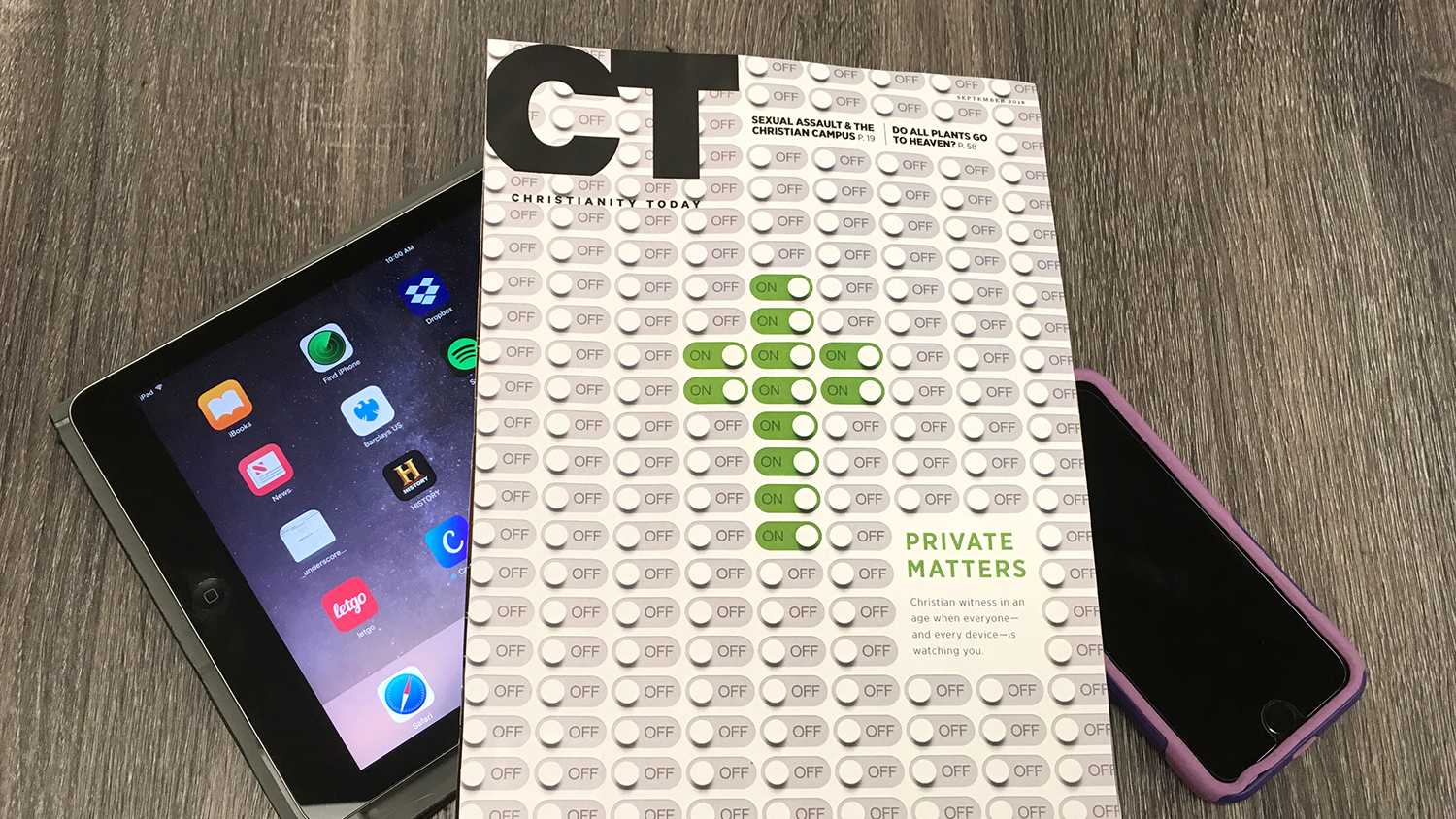
Writer Chris Ridgeway argues in our cover story that Christians should care who knows what about us, but for very different reasons than we might expect. His provocative case for strategic self-disclosure is bound to spark some healthy debate, and I trust many of our readers will lend their voices to a broader, overdue conversation about the theology of privacy. Americans live with unprecedented over-visibility in the virtual world and under-visibility in the real world, and finding a balance between the two will surely require years of thoughtful discussion in the church. We at CT are eager for it, no matter in which world that takes place.
Andy Olsen is managing editor of Christianity Today magazine. Follow him on Twitter @AndyROlsen.