Our May/June Issue: Discerning Good Gossip from Bad

Our sweeping censure of talking behind backs isn’t biblical.

Illustration by Andrea Ucini

In a 1999 interview, Kathleen Norris introduced CT readers to the term “holy gossip,” which she defined as “things I need to know to be a member of the community.” Specifically writing to church communities, the best-selling author celebrated a sort of prying into others’ personal lives that we do in search of ways to offer help and support.

The word gossip, Norris pointed out, is an etymological cousin of godparent. In fact, for centuries, that was its primary meaning in the English language. Even as the term gradually came to refer to certain kinds of information sharing, it was still rooted in ideas of relational intimacy. People within our inner circles are probably more trustworthy stewards of personal details than people without. We tend to make exceptions to this rule—sharing much of ourselves with doctors, lawyers, and counselors, for instance—only when we believe someone’s professional incentives for guarding our secrets compensate for their relational distance from us.

Yet Norris highlighted something important that we have lost in urbanized Western society. There is nothing inherently bad when some parts of our private selves go public. To the contrary, being known is essential to human love and thriving. But our long project to construct autonomous, walled-off lives has left many of us with terribly poor instincts for how to be known. We’re prone to view acquaintances who have special knowledge about us as creepy, even offensive. We swing between bizarre extremes, opting for complete opaqueness in the real world and calculated over-sharing in the online world.

There are still communal cultures—and small towns and sprawling extended families—far less concerned about the lines between what’s my business and what’s everybody’s business. (I have experienced communities abroad where the pastor, noting someone’s Sunday morning absence for the third week in a row, marched the church to the wayward congregant’s front door for a bonus worship service.) But to be healthy, such spaces—and any place where we expect to be more fully known—must assure us that our ordinary human deeds have a half-life, that they will fade into memory over time rather than define us forever. Gossip, then, becomes sinful whenever it robs individuals of this vitally important mercy.

Therein lies the rub today: The pervasive impact of social media has shaken this confidence. As they say, nothing dies on the internet. So in almost every culture, discerning between holy gossip and harmful gossip requires an entirely new conversation. I hope this month’s cover story helps sharpen your discernment, and that in some way it helps our communities recover a measure of the trust they so desperately need.

Andy Olsen is print managing editor of Christianity Today. Follow him on Twitter @AndyROlsen.
Also in this issue

Ministries and other Christian workplaces increasingly require employees to sign non-disparagement agreements and “no gossip” policies. Our cover story this month explores how the Bible describes gossip and how our understanding of it does and doesn’t line up. When does clamping down on rumors help the church, and when does it create conditions for abuse?

Cover Story

Why Defining Gossip Matters in the Church’s Response to Abuse

The Unearthed Conscience of Black Fundamentalism

Daniel R. Bare

Sometimes You Have to Shake the Dust Off Your Feet

‘Be Clean’: Jesus and the World of Ritual Impurity

Jennifer M. Rosner

News

Diversity Advocates at Evangelical Colleges: ‘In Some Ways, You’re Seen as a Heretic’

Liam Adams

News

Pastors Take to the Streets to Combat NYC Gun Violence

Kathryn Watson

News

How Seven Soldiers Carried One Bible into 11 Combat Tours

News

Religious Discrimination Complaints Hit 10-Year Low

News

Gleanings: May 2021

How We Got to the Equality Act

Excerpt

It’s Okay to Let Your Mind Wander During Prayer

Kyle Strobel and John Coe

Log Off and Know that I Am God

Reply All

Editorial

Back Without a Bang: Returning to Church Won’t Be the Celebration We Once Imagined

Let the Little Children Come to ‘Big Church’

Testimony

The Woodstock Generation Swallowed Me Up and Spit Me Out

Gregory E. Reynolds

Michael Lindsay: Our Lives Are Full of ‘Hinge Moments.’ Here’s How We Can Pray and Prepare.

Interview by Angie Ward

Reading God’s Word like a Poem, Not an Instruction Manual

Interview by Jessica Hooten Wilson

Review

Christians Can Learn from Muslims. But There Are Lines We Shouldn’t Cross.

Jaclyn S. Parrish

Review

Christians Should Be in the News Cycle, but Not of It

Daniel E. Ritchie

New & Noteworthy Books

Matt Reynolds

View issue

Our Latest

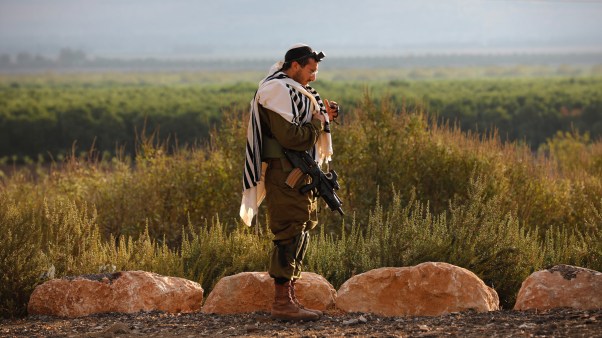
Some Israelis are Turning to Faith Amid Ongoing War

Studies show a renewed interest in Judaism, and pastors report an increase in baptisms.

News

‘We Feel Like We Are Having a Berlin Wall Moment’

A conversation with an Iranian-American Christian on the ongoing conflict and her hope for the future of Iran.

The Bulletin

IDF and Lebanon, Ukraine’s Fears, AI Data Centers, and a Korean Messiah

Mike Cosper, Clarissa Moll, Russell Moore

Israel fights Hezbollah, Ukraine left behind, US builds data centers, and North Korea’s Evangelical roots.

Review

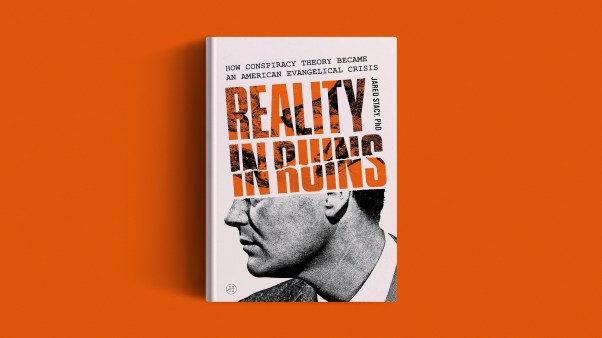
Trashing Evangelicals Is No Way to Fight Conspiracism

Jared Stacy’s new book correctly identifies a serious problem. But his depiction of evangelicalism is overblown and unreasonable.

Teaching ‘the Mystery of Joy’ to Protestants and Catholics

Philosopher Peter Kreeft, like Augustine, gains a reading from both sides of the Reformation.

News

Infanticide Rates Are Dropping in Africa, yet Child Abandonment Continues

Pius Sawa

Many view babies born with disabilities as cursed. Christians are fighting back.

With Bible Translation in India’s Hadoti Language, ‘God Came Closer’

A missionary from south India initiated the translation in the language spoken by millions in southeastern Rajasthan state.

Being Human

Shane J. Wood Helps Us Understand Christ’s Ultimate Victory in a Chaotic World

How can the book of Revelation teach us to embrace our wounds?

Apple PodcastsDown ArrowDown ArrowDown Arrowarrow_left_altLeft ArrowLeft ArrowRight ArrowRight ArrowRight Arrowarrow_up_altUp ArrowUp ArrowAvailable at Amazoncaret-downCloseCloseEmailEmailExpandExpandExternalExternalFacebookfacebook-squareGiftGiftGooglegoogleGoogle KeephamburgerInstagraminstagram-squareLinkLinklinkedin-squareListenListenListenChristianity TodayCT Creative Studio Logologo_orgMegaphoneMenuMenupausePinterestPlayPlayPocketPodcastprintRSSRSSSaveSaveSaveSearchSearchsearchSpotifyStitcherTelegramTable of ContentsTable of Contentstwitter-squareWhatsAppXYouTubeYouTube