
In the heat of summer, a 19-second video from the World Economic Forum gathering in Davos, Switzerland, made the rounds on Twitter (now X). “The big political and economic question of the 21st century will be: What do we need humans for?” said Israeli historian Yuval Harari. “At present, the best guess we have is keep them happy with drugs and computer games.”
Harari’s broader writing suggests he wasn’t endorsing the future he publicly envisioned, and 19 seconds isn’t fair context for his fuller meaning. But whatever Harari’s intent, the question is a pressing one as artificial intelligence technology progresses to more useful stages.
What are humans for? What is AI for? What problem—as author and Grove City College professor Jeffrey Bilbro recently asked in Plough—do we want ChatGPT and other AI toys and tools to solve? And will AI serve us well? Or will we conform to the machine?
I’ve been thinking about this in the context of my own work, because readers keep asking me if I think generative AI programs like ChatGPT will replace journalists. A few media companies, most notably BuzzFeed, have already announced they’ll use AI to pump out digital bagatelles at an even higher volume and lower cost than before. Will more serious outlets that produce hard news and careful analysis do likewise?
At the risk of sounding Pollyannaish, I don’t think so. AI will take over some journalism work, yes, but not the kind we should have been reading anyway. It won’t replace the war correspondent, the reporter at the school board meeting, the omnivorous public intellectual, the conversation-driving personal essayist. My guess is human writers will become a hallmark of high-quality and prestige media (which aren’t necessarily one and the same), much as intensive human service is a hallmark of luxury restaurant and hotel experiences now.
AI, meanwhile, will handle cheap digital news aggregation, scraping facts from human reporting and reassembling them in a stale, low-quality synthesis. It will produce content that is bad—but, crucially, it will be content that was already bad when it was harvested from a human content farm.

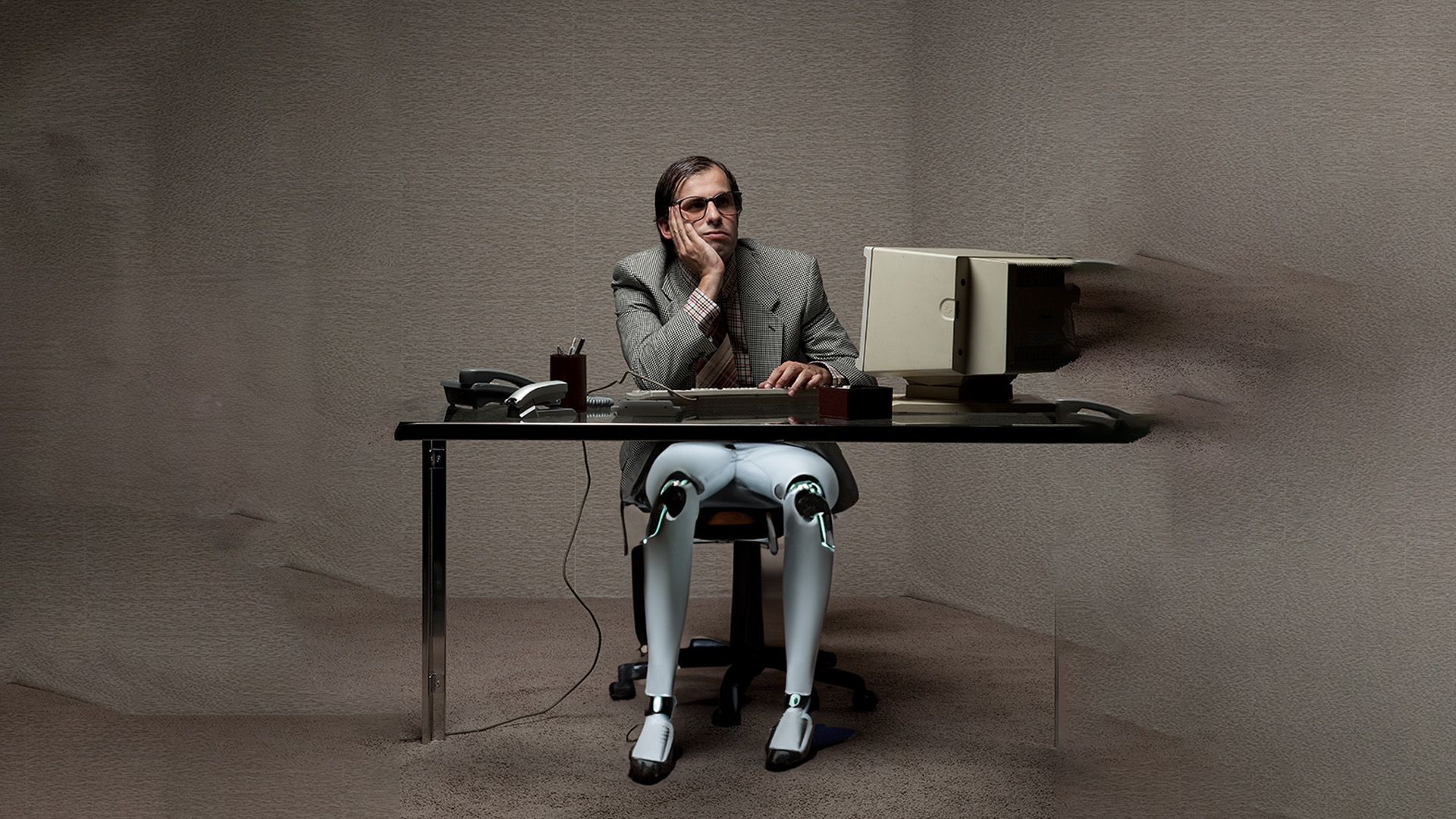
“AI is especially adept at displacing human labor … in situations wherein humans had already conformed, willfully or otherwise, to the pattern of a machine,” Christian tech critic L. M. Sacasas has observed. “Build a techno-social system which demands that humans act like machines and, lo and behold, it turns out that machines can eventually be made to displace humans with relative ease.”
What it means to be conformed to the pattern of a machine in our work will vary, of course, according to the jobs we do. For me, machine-like malformation might look like laziness in language, sloppiness with facts, sleight of hand in argumentation—anything for a shortcut, to increase volume and lessen costs.
In other lines of work, the specifics will differ, but guiding values of ruthless speed, bureaucratic adherence to formulae, ease over expertise, and alienation from normal human goods will be the same. Most machines are morally neutral tools, but they should tend to human needs and patterns, not the reverse.
To be conformed to the pattern of a machine is, I suspect, a characteristically modern way to “conform to the pattern of this world,” which is to say, to be oblivious to God’s “good, pleasing and perfect will,” lacking in “sober judgment,” forgetful of God’s mercy, and lethargic in worship and service alike (Rom. 12:1–13).
Being transformed by the renewing of our minds isn’t newly difficult because of AI and related technologies—as C. S. Lewis put it in Mere Christianity, we were always “in for a rough time” in the process of sanctification, “because we have not yet had the slightest notion of the tremendous thing He means to make of us.” But AI will bring new challenges to the imitation of Christ, new incentives to behave in subhuman ways, strange new ways to malform ourselves.
The promise of AI, as with many machines, is that it’ll free us from human labor to do better things. Some labor is good to skip, but some of it is the “disciplined, effortful struggle,” in Bilbro’s words, that shapes and strengthens us and aids in our sanctification. Bypassing it won’t bring greater freedom but rather a weakness that can lead to vice.