





This edition is sponsored by The Pour Over
The Fittingness of the Virgin Birth
The Bible teaches that Jesus entered our world through a virgin’s womb. Even in an age when opponents of Christianity are often more exercised about morals than miracles, that’s a tough claim for skeptical outsiders to swallow.
In all likelihood, Christians will always need to invest energy in defending the rational basis for affirming the Virgin Birth. And yet, as Rhyne Putman argues in his latest book, Conceived by the Holy Spirit: The Virgin Birth in Scripture and Theology, we shouldn’t lose sight of the rich theological meaning nested in this doctrine, which testifies in profound ways to God’s work of redemption in Christ.
Theologian Patrick Schreiner reviewed the book for CT.
“My favorite parts of the book concern the significance of the Virgin Birth,” writes Schreiner. “Putman argues that it was fitting for Jesus to come to earth in this way even if it wasn’t absolutely necessary.
“There are three reasons for this. First, the Virgin Birth is fitting because it reveals that Jesus is truly human as well as truly divine. Usually, when we think of the Virgin Birth, we emphasize the improbability of a virgin giving birth while downplaying the birth itself. However, treasures reside in both terms. The Virgin Birth is certainly amazing because Jesus was born of a virgin, but it’s equally amazing that God himself was born.
“Second, the Virgin Birth is fitting because it signals Jesus’ uniqueness. It indicates that Jesus, though fully human, is unlike every other human being. He is naturally the Son of God but adopted a human father for himself in Joseph. The Virgin Birth displays Jesus, in the words of the Nicene Creed, as ‘God from God, Light from Light.’
“Jesus’ existence did not begin when human sperm fertilized a human egg. In fact, Jesus did not ever begin to exist, since he has existed from before the creation of the world (John 1:1–3; Col. 1:15–17). The Virgin Birth bears witness to the fact that Jesus’ life didn’t begin at conception like ours.
“Third, the Virgin Birth is fitting because it signals that we are saved by grace alone. Jesus’ coming was not the result of human ingenuity or the forethought of Israel. Like Mary and Joseph, we are simply recipients of God’s favor and grace. It was God’s action that caused Jesus to be born, not the grand plan of humanity. This reminds us that our salvation is based on God’s initiative. We didn’t orchestrate our salvation; it was wrought by God.”
The Surprising Journeys of Christmas Carols
The first time I heard the official anthem of my college, I was confused. Why, I wondered, is the school band striking up the tune of “O Christmas Tree”? Only later did I learn that the popular Christmas carol originated as a German folk song called “O Tannenbaum,” a musical vessel into which dozens of lyrical adaptations have since been poured.
Save, perhaps, for the parodies of “Weird Al” Yankovic, this was my earliest introduction to the notion that song tunes, once written, can launch themselves on unpredictable creative trajectories, spanning continents and centuries alike. In his book Deck the Hall: The Stories of Our Favourite Christmas Carols, Andrew Gant gives an entertaining account of how this process has played out with certain yuletide classics.
CT recently ran an excerpt from the book’s introduction. Here’s how it begins:
“One Christmas,” writes Gant, a UK-based composer and conductor, “I found myself on London’s Oxford Street, admiring the twinkly decorations and listening to a piped version of ‘Jingle Bells.’ In Chinese.
“Our Christmas songs and carols turn up in some surprising places. They come from some surprising places, too. ‘Ding, Dong! Merrily on High’ began life in a French Renaissance dancing manual. The tune of ‘Good King Wenceslas’ was first published in Finland (to completely different words, about priests and virgins, mostly). Certainly, not all of them began life with their seasonal associations attached. Some were born to Christmas, some have achieved Christmas, and some have had Christmas thrust upon them.
“For example, every Christmas, you will find yourself singing a song whose original words were about a dead cow and a delinquent ploughboy. The song was heard in a pub in Forest Green, Surrey, in the leafy commuter-belt fringes of London, by the composer Ralph Vaughan Williams, and it was sung to him by an old man called Mr. Garman. Vaughan Williams found a use for the tune a few years later when he was given the job of music editor of The English Hymnal. He wanted to include a poem by an American bishop called Phillips Brooks but didn’t know (or didn’t like) the tune that Brooks’s own church organist had written for this text back in Philadelphia. So Vaughan Williams helped himself to Mr. Garman’s folk song. The result—’O Little Town of Bethlehem.’
“That’s not the only transatlantic immigrant into our English carol tradition. ‘We Three Kings’ is American. So is ‘Away in a Manger,’ which was first published in the journal of the Universalist movement in Boston. The editors confidently informed their readers that the poem is by Martin Luther. It isn’t: They made that up. They claimed they were celebrating the 400th anniversary of Luther’s birth. They weren’t: They made that up, too (or, at least, got the date wrong).
“‘O Little Town of Bethlehem’ and ‘Away in a Manger’ are both sung today to different tunes on either side of the Atlantic. Many of our best-known carol texts have had many musical partners over the years. Different tunes sometimes represent differences between one denomination and another, or from one village to the next. Sometimes, a carol would be sung to one tune in church and to a different tune in the pub afterward.”


PAID CONTENT
The “Chick-fil-A of news sources” thinks they’ve found a way to help Christians have a healthy relationship with the news.
It’s called The Pour Over, and it has two goals:
• Keep readers informed about the major headlines of the day
• Keep readers focused on Christ
TPO’s 3x weekly newsletter pairs neutral, lighthearted coverage of current events with brief biblical reminders to stay focused on eternity.
Are they hitting the mark? See what you think. Subscribe here for free!
| Advertise with us |
don’t miss
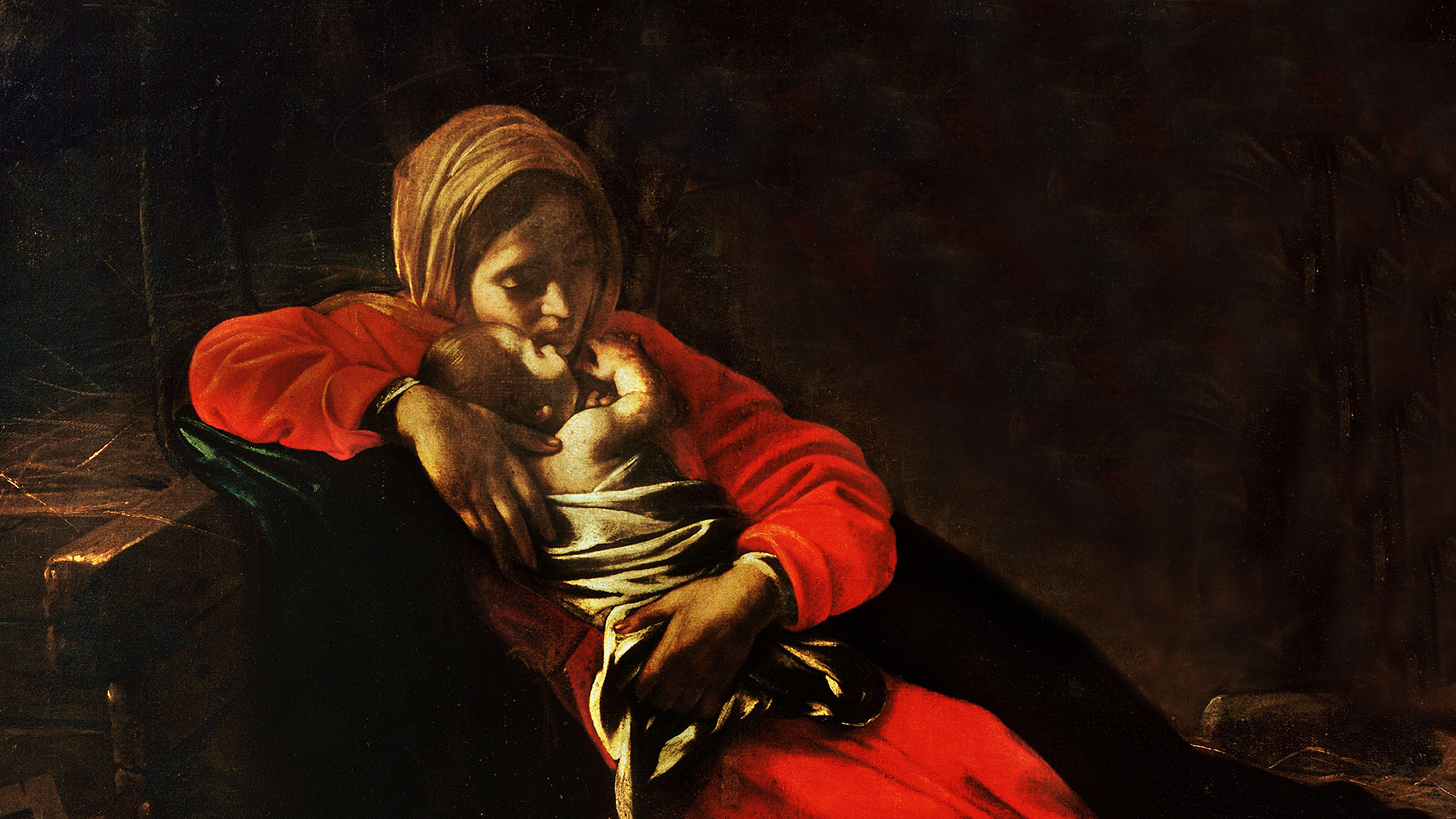
For the last 100 years, conversation around the Virgin Birth has centered on whether it actually happened. Could Mary really have had a child without a previous sexual union? Maybe,…
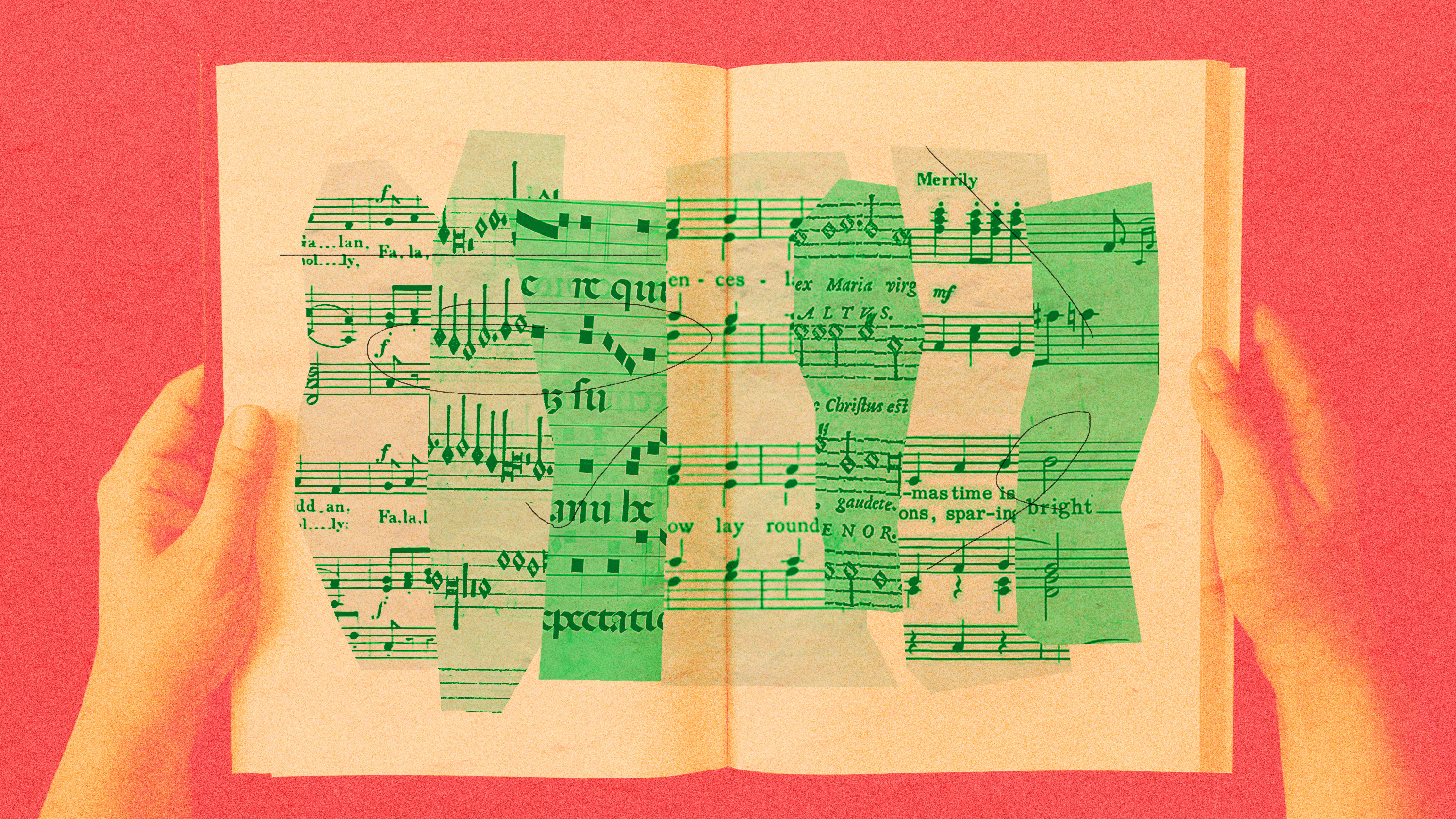
One Christmas I found myself on London’s Oxford Street, admiring the twinkly decorations and listening to a piped version of “Jingle Bells.” In Chinese. Our Christmas songs and carols turn…
DOUBLE YOUR IMPACT TO CHRISTIANITY TODAY
It’s hard to believe that 2024 is nearly over. Will you join the ongoing work to show and tell the world the kingdom of God is near?
With your gift today–matched by generous partners–you will ensure that CT continues as a global storyteller for the Church and perseveres in an unwavering hope to bring together the body of believers across the continents, across the generations, and across the lines that divide us.
Every gift goes to the Christianity Today One Kingdom Campaign and the next season of kingdom impact.

This holiday season, we invite you to share comfort, quiet, or excitement with each person on your gift list. From beautifully illustrated Bibles and devotionals to novels and picture books,…
in the magazine

As this issue hits your mailboxes after the US election and as you prepare for the holidays, it can be easy to feel lost in darkness. In this issue, you’ll read of the piercing light of Christ that illuminates the darkness of drug addiction at home and abroad, as Angela Fulton in Vietnam and Maria Baer in Portland report about Christian rehab centers. Also, Carrie McKean explores the complicated path of estrangement and Brad East explains the doctrine of providence. Elissa Yukiko Weichbrodt shows us how art surprises, delights, and retools our imagination for the Incarnation, while Jeremy Treat reminds us of an ancient African bishop’s teachings about Immanuel. Finally, may you be surprised by the nearness of the “Winter Child,” whom poet Malcolm Guite guides us enticingly toward. Happy Advent and Merry Christmas.
more from christianity today
related newsletters
CHRISTIANITY TODAY WEEKLY: CTWeekly delivers the best content from ChristianityToday.com to your inbox each week.
CT PASTORS: Each weekly CT Pastors issue equips you with the best wisdom and practical tools for church ministry.
CT books
Each issue contains up-to-date, insightful information about today’s culture, plus analysis of books important to the evangelical thinker.
Delivered free via email to subscribers weekly. Sign up for this newsletter.
You are currently subscribed as no email found. Sign up to more newsletters like this. Manage your email preferences or unsubscribe.




Christianity Today is a 501(c)(3) nonprofit organization.
“Christianity Today” and “CT” are the registered trademarks of Christianity Today International.
Copyright ©2024 Christianity Today, PO Box 788, Wheaton, IL 60187-0788
All rights reserved.