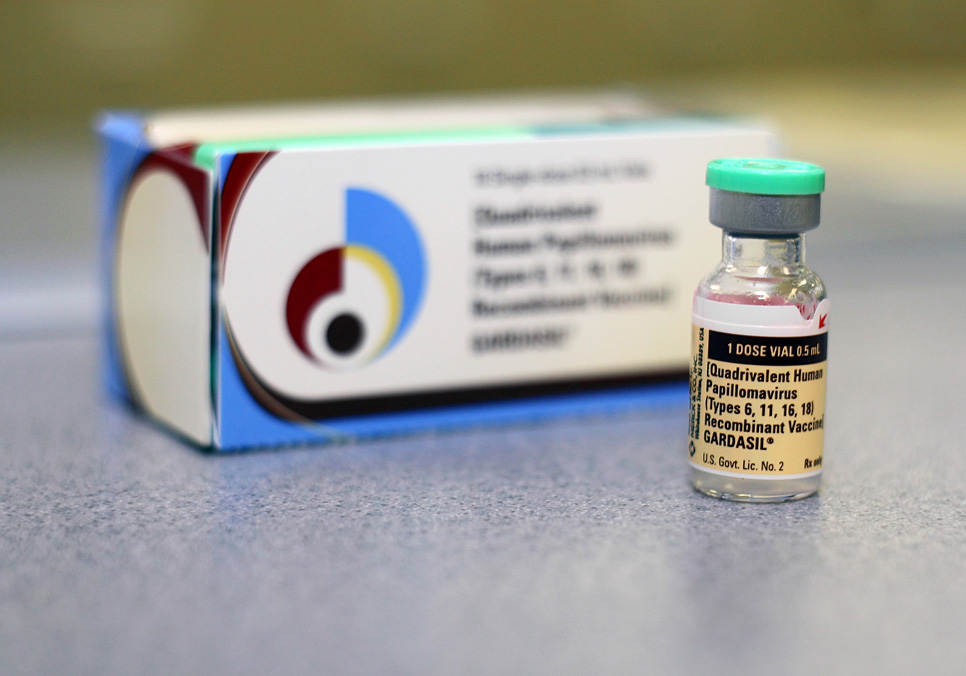
Editor's note: A national study published this month credited the HPV vaccine with significantly dropping the infection rate among U.S. teens. "Infection with the viral strains that cause cancer dropped to 3.6 percent among girls ages 14 to 19 in 2010, from 7.2 percent in 2006," the New York Times reported.
Truth is (if you'll forgive my use of a conversation-starter favored by tweens and teens), I wasn't always a champion of the HPV vaccine. I did, however, eventually change my mind and had all four of my kids vaccinated.
As a number of recent studies show, I'm not alone. More parents are accepting the vaccine after learning about the long-term dangers of the human papillomavirus for both women and men, as Michael Douglas' recent admissions underscored. Though the focus was on girls during the vaccine's early years, insurance companies now routinely cover the cost of the vaccine for both girls and boys, my pediatrician told me.
I didn't really enjoy learning certain intimate details about Douglas' sexual history, but I'm grateful he brought the issue of men and HPV back into the national conversation. Plenty of Americans parents continue to dismiss the need to get their daughters vaccinated and don't even consider the series of shots for their sons.
I was there once. My initial reticence over the HPV vaccine probably comes from how I first heard of it, years ago during a dinner with a few fellow moms. One said that some girls on her daughter's soccer team had approached another mom after learning she was a nurse. These girls were concerned, you see, about some strange warts they'd found in their mouths. When the nurse-mom took a look, she saw what she knew to be signs of sexually transmitted infections.
Warts in their mouths? Suddenly I'd lost my appetite. "And, as for the boys they were with, those warts will be on their – well, you know…" my friend said. "It was human papilloma virus. From oral sex." At the time, my oldest child was in middle school, as were the aforementioned girls. I stumbled over my words. "Wait. What? Who are these girls?"
What had I wanted to hear? That they'd been recently released from a maximum-security juvenile detention center? Nope. They were just regular, young teens who were sexually active. Well, to be precise, they didn't consider themselves sexually active because it was "just" oral sex, not intercourse.
Back then, the last time my son had so much as admitted romantic feelings for someone was when as a first-grader, he told me that he was going to marry Kathy Selden, Debbie Reynolds' character in Singin' in the Rain. Here he was, only a few years later with peers who had STDs.
So, when he was about 12 and the doctor at our pediatrician's office handed me a HPV fact sheet and described the series of vaccines that they offered to prevent infection, I declined. My son wasn't even holding hands with girls, let alone – well, I couldn't even wrap my mind around it. In fact, I don't think he could either. He still desperately tried to bat the conversation away when my husband or I talked to him about puberty or anything even remotely related to sexuality.
A couple of years after declining the vaccine – now the mother of slightly older children whose lives seemed inexplicably more fragile and yet more secure at the same time – I said yes to it. Yes, we'll begin and complete the three-injection series. Yes, yes, yes.
I hadn't succumbed to the inevitability of my sons and daughters having sex in middle or high school. I'd just spent more time getting used to them growing up. I had talked it through more deeply with the trusted pediatricians who have cared for my children since they were tiny. One such doctor is Ruben Rucoba, a pediatrician, medical writer, and father of four whom I've known almost as long as I've been a mother. Dr. Rucoba, whose strong faith helped him survive cancer, is a strong proponent of the vaccine.
"Many parents feel that giving the vaccine is equivalent to expressing consent for their children to have sex," Rucoba said. "I advise them to look at it as a cancer prevention vaccine. The most ardent supporters of vaccination are the mothers who've dealt with cervical cancer themselves. Anybody who has encountered this cancer wants to do whatever they can to prevent it in their children."
Although my own children weren't yet sexually active, teens I knew well and truly respected had made erratic and unsafe choices as adolescents.
"Parents sometimes refuse the HPV vaccine because they maintain that 'If I did my job right, my children won't be having premarital sex,'" Dr. Rucoba said. "This couldn't be farther from the truth: if a teen or young adult is sexually active, that doesn't mean the parent failed. Teens don't always listen to their parents, and that's not the parents' fault. Teens can be impulsive, and they think they are invincible."
Rucoba explained that the vaccines are most effective when given long before sexual activity begins. Even when men and women do not have sexual contact until they're married, parents can't guarantee that their sons' or daughters' spouses will have made parallel decisions. "Are you willing to bet your child's life on that?" he asked.
Truth is, I hope my children will make choices that will allow them to enter into marriage someday as healthy, whole adults for whom their God-given sexuality is a gift, not a source of pain or woundedness.
Truth is, this raising kids thing is tricky.
Jennifer Grant is a regular contributor to Her.meneutics, the author of Love You More and MOMumental, and is currently at work on two new book projects. Learn more at jennifergrant.com.