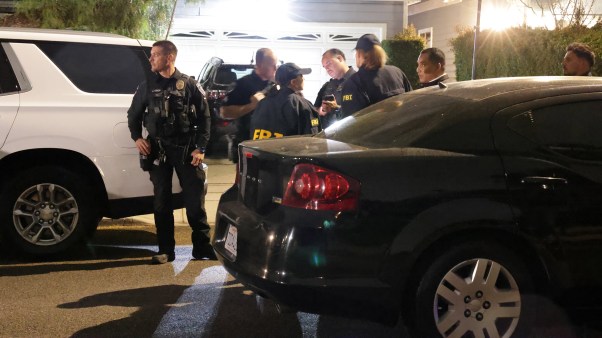
Ten years ago, the United States Army decided to explore a previously forbidden subject: toxic leadership. What they learned could have far-reaching ramifications for their organization, but also for others, including the church.
It all started when then Brigadier General Pete Bayer sought to understand why nearly 30 soldiers stationed in Iraq committed or attempted suicide in 2009. After extensive interviews, researchers found that in each case, the victims served under a leader who classified as toxic. According to the Army's manual, toxic leadership includes:
A combination of self-centered attitudes, motivations, and behaviors that have adverse effects on subordinates, the organization, and mission performance. This leader lacks concern for others and the climate of the organization, which leads to short- and long-term negative effects.
The toxic leader operates with an inflated sense of self-worth and from acute self-interest…. Prolonged use of negative leadership to influence followers undermines the followers' will, initiative, and potential, and destroys unit morale.
This description contradicts the leadership modeled by Jesus and his disciples, which values servanthood, sacrifice, love, and concern for the followers' future. While most religious leaders embody these godly qualities, more than a few of us have encountered ecclesiastical leaders who, according to the Army's description, would be classified as toxic.
Obviously, the consequences of toxic leadership within the military are generally more costly than within the church; the worst church will never equate with the horrors of combat (sexual abuse by priests and pastors not withstanding). Furthermore, though Scripture commands us to be continually transformed into the image of Christ, not one of us will achieve perfection. As such, our expectations of what a leader should be need to adjust accordingly. That said, the Army's willingness to admit that they have a leadership issue that needs to be addressed can embolden those of us in the church to learn how to recognize broken leaders in our own ranks. Our awareness might limit their influence before too much damage is done.
A common characteristic of toxic leaders is their tendency to hoard power and shun accountability. Sir John Dalberg-Acton famously wrote, "Power tends to corrupt, and absolute power absolutely corrupts." If a toxic leader is part of an organization that idolizes and rewards those who wield power, such as the military, they may quickly rise through the ranks, growing increasingly disinterested in partnering with anyone but those they deem equal status.
One way toxic leaders accumulate their power is by systematically ignoring and devaluing dissenting and/or minority voices. Andy Crouch explains in Playing God, "The powerful have a hard time seeing their own power and its effects. We do not see when our exercise of power is cutting off life and possibility for others."
While I doubt that pastors and leaders intentionally hang up the phone on individuals who disagree with them or lack power and influence, that's often what the experience feels like. True diversity–of race, gender, education, and economic means–distributes power and creates a more balanced system. A church that invites a diverse group of individuals to govern it and then affirms their voices prevents toxic leaders from gaining inordinate power in the first place.
If you are part of a leadership team, look around the room and ask the simple question, "Who's missing?" Are the diverse voices of the Body of Christ truly represented by your team? In addition to the "visible" minorities, have you made space for the single parent, the disabled, the elderly, or other folks who are often pushed to the margins?
When a leader or organization begins to exhibit symptoms of toxicity, our voices can serve as a powerful antibiotic. Silence often empowers toxic leaders. (This is not to imply that any abuse of power is the fault of the victim or that speaking up will necessarily go well. It often goes so poorly we may regret that we didn't simply keep quiet.) By raising thoughtful questions–What would be the long-term impact of that change be on our congregation?–and sharing concerns–I don't think those expectations are realistic–parishioners and co-leaders eliminate the possibility of silence being interpreted as agreement.
Though churchgoers are referred to as sheep, not considered the most clever of animals, Scripture encourages us to discern worthy leaders from potential wolves. Untrustworthy leaders typically refuse to admit their limitations and take ownership for how they may hurt people. Toxic leaders tend to blame others for their mistakes, seldom offer sincere apologies, and rarely confess their sins.
If you find yourself cleaning up your leader's messes (programming or relational), making excuses for that leader's poor choices, or defending him or her, it might be an indication that this leader is not worthy of your trust. Christian writer Tiffany Brown-Erickson wrote a series of blog posts on the importance of guarding ourselves against hurtful leadership. She warns, "A wolf is a lethally dangerous thing, and I will treat him as such." Though Jesus calls us to forgive those who wound us, he does not ask us to passively follow them into their dens.
Navigating these waters well is incredibly complex. After all, no one is free from the temptation of abusing power or fully objective as we assess others. That reality should sober and humble us but not deter us from fighting for the health of our churches. In NPR's article, Lt. Gen. David Perkins concludes, "Quite honestly, we owe it to the American public [to do something about toxic leadership]."
Quite honestly, we owe it to the Body of Christ to follow their lead.
Dorothy Littell Greco divides her time between writing, making photographs, pastoring, and keeping three teenage sons adequately fed. She lives and works in the Boston area and is a reluctant Patriots/Celtics/Bruins/Red Sox fan. You can check out more of her words and images at dorothygreco.com andfacebook.com/DorothyGrecoPhotography.