
I remember the first time I heard Craig Keener speak. The world-renowned scholar had recently published Miracles, a two-volume work providing a philosophical, biblical, and experiential case for the supernatural work of God. Most of us assumed he’d aim his comments toward the charismatic crowd in the room and talk about documented healings and people being raised from the dead.
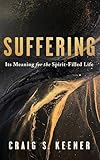
Keener did not disappoint. But he also broadened his work to include the role of suffering as a framework for how those of us who “earnestly desire the spiritual gifts” (1 Cor. 14:1, ESV) must also remember the formative experience of suffering. After all, Jesus said, “If they persecuted me, they will persecute you also” (John 15:20). Keener’s new book, Suffering: Its Meaning for the Spirit-Filled Life, likewise argues suffering is a primary way we experience the Holy Spirit.
While Suffering is not written only for those connected to a charismatic tradition, it is an important book for those of us who are part of movements emphasizing the ongoing work of the Holy Spirit. Why? Particularly in this tradition I share, there is a degree of misleading teaching concerning both the reality of suffering and the ways the Bible instructs us to respond to it. In fact, some Christian leaders, such as Joel Osteen, Kenneth Copeland, and others in the Word of Faith movement, suggest suffering isn’t something followers of Jesus should experience. When someone does suffer, they teach, that person must have disobeyed or displeased God.

But suffering is not always evidence that God is disappointed with us or we have done something wrong. As Keener notes, “Miracles display God’s power more directly, but God also provides testimony by sustaining us in hard times.” Those hard times are precisely what Keener aims to address.
Suffering begins by reminding us of two things: Jesus is worth everything, and there is a cost to following him. So the question for the reader becomes “How much is Jesus worth?” Keener navigates through the Gospels, reminding us Jesus is to be valued above job security (Matt. 4:18–22), residential security (Luke 9:57–58), financial security (Matt. 19:21), family ties (10:37; Luke 14:26), social obligations (Luke 9:60), and life itself (Matt. 10:38). When we experience everyday hardships, we have a chance to cherish Jesus above all else and base our hope not on circumstances but on the assurance that our names are written in the Book of Life (Rev. 3:5).
Jesus, too, speaks of the value of suffering. He tells his disciples, “In this world you will have trouble” (John 16:33), but today we often leave this out of our gospel proclamations. Given the reality of suffering, what has sustained the church through tribulations, trials, and tremendous difficulties? Jesus gives us the answer: He comforts his disciples, saying, “But take heart! I have overcome the world.” For Keener, revival does not simply indicate God’s active presence with corresponding joy and renewal; it can also strengthen the faith of Jesus’ followers in preparation for testing and adversity.
Church history also indicates that many of God’s most powerful actions, often described as revivals, are directly connected to hardships. Keener states the connection: “Sometimes revival comes after hardship, but sometimes it comes to get us ready.” Those in charismatic traditions would do well to take heed. While we spend countless hours praying for revival and teaching on the Holy Spirit’s empowering presence, we need to remember that following Jesus is an invitation to take up our cross and that a cross-shaped life can be where we experience the Spirit’s work—both personally and corporately.
Rather than see suffering as a way to experience the comfort of Christ or the power of the Spirit, many leaders seek influence by enhancing their own platforms, finances, and social success. We see a different picture when we turn to Scripture. Keener provides a biblical understanding of the characteristics of New Testament apostles and prophets, a far cry from platform or wealth. He leans into a better understanding of the people God raised up to influence the church, reminding us that “a key biblical hallmark of such ministry is suffering.”
Likewise, Matthew D. Taylor, in his book The Violent Take It by Force, is also critical of particular movements (such as the Global Apostolic and Prophetic movement or New Apostolic Reformation) because they focus on obtaining power. Suffering is a helpful corrective both to charismatic Christian practices that emphasize revival and success without the Cross and, more broadly, to Western Christianity, which often focuses on glorious victory and happiness.
So how should we think about the relationship apostles and prophets have with suffering and trials? Keener draws out the importance of suffering in the life of the apostle Paul, especially as described in 2 Corinthians. We read that Paul shared “abundantly in the sufferings of Christ” (1:5) and experienced “troubles” that led to him being “under great pressure, far beyond our ability to endure, so that [he] despaired of life itself” (v. 8).
Additionally, Paul provided extensive lists of the sufferings he experienced (4:8–13; 6:4–10). When those in charismatic traditions seek to answer the question “What is an apostle?” they must see it’s clearly marked by trial, persecution, and discomfort, not shiny suits, gold watches, and private jets.


Furthermore, suffering is not simply a Pauline experience; it is also connected to all the New Testament apostles and Old Testament prophets. Apostles suffered, and their ministry was one of hardship. Rich and satisfying? Absolutely! But also costly.
These same New Testament apostolic attributes appear among the prophets of the Old Testament. Keener notes that God used prophets to help prepare his people for suffering: “True prophets often delivered messages about suffering and, especially in times of national disobedience, were forced to experience it themselves.” As James 5:10 concurs, “Brothers and sisters, as an example of patience in the face of suffering, take the prophets who spoke in the name of the Lord.” Many of God’s prophets were killed (1 Kings 18:4; 2 Chron. 24:20–22). Indeed, what matters is less the office and more the general point: Leadership requires suffering as a way to experience the Spirit of God.
Keener’s book is a helpful resource both in how it engages Scripture and in how it challenges us to understand suffering. Keener’s first-rate biblical scholarship displays his learning, but his work also offers significant pastoral wisdom. He inspires believers through stories from the persecuted church, such as Christians who suffer for their faith in Iran or northern Nigeria.
When we suffer, we might wonder what the connection is between suffering and spiritual warfare. Is all suffering simply an attack from demonic forces, or is it more complex? Keener frames his view in a “now and not yet” understanding of the kingdom of God. As we read the New Testament, especially Paul’s statement in Ephesians 6:12, we discover that we are in a clash of kingdoms and that suffering often results from spiritual opposition. Yet whether suffering is a result of the Fall or of spiritual attack, it is an avenue where followers of Jesus can gain a greater sense of intimacy with God as we share in the “fellowship of his sufferings” (Phil. 3:10, KJV). When we suffer, we remember Christ, who suffered for us.
Suffering also engages practical concerns in a gold mine for pastors seeking to shepherd their flocks. Keener dismantles the prosperity gospel while noting how Scripture challenges us both to pray for God’s provision (which is relative) and to be generous. Keener shows us that financial difficulties are common for millions of Christians and that we must realize we are all vulnerable to financial hardships. This shared experience should “motivate us to greater compassion for those in need.”

Generosity is the Christian response to suffering. Suffering will help us frame these hardships as what they are and will empower us to be faithful to Christ, see things in light of his kingdom, and persevere to the end.
This is the crux of Keener’s work. Followers of Jesus can, by the power of the Spirit, endure and conquer. The Spirit-filled life—what all Christians are called to pursue—is a journey not of worldly power but of intimacy with Christ. How are we to suffer? What resources can empower us to trust God? Why does suffering exist? Who is responsible for it? Keener provides thoughtful answers. We suffer for a variety of reasons, and we endure and overcome because we share in Christ’s suffering. Testing produces character and conforms us to Christ’s image, for in Scripture we discover that our present suffering cannot compare to our future hope.
Luke Geraty serves as a pastor theologian at the Red Bluff Vineyard Church in Northern California and hosts The Sacramental Charismatic podcast.
This article appeared in the January/February 2026 issue of Christianity Today as "Suffering Is Part of the Job Description".
Related





Corresponding Issue