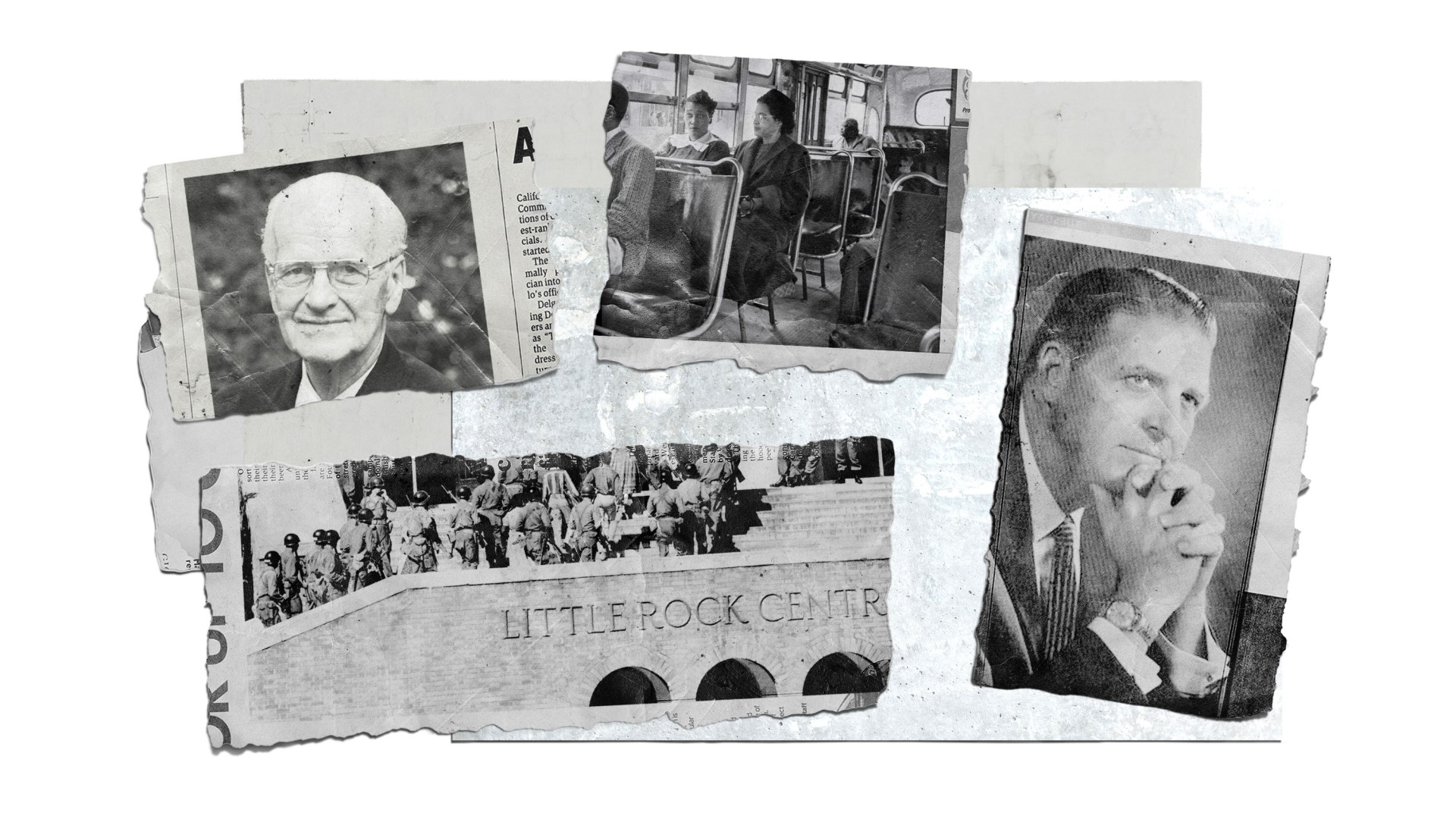
A note was scratched out in longhand on a short sheet of paper imprinted with the heading “Memo from the desk of CARL F. H. HENRY” and attached to a newspaper clipping from the November 26, 1957, Washington Post and Times Herald, page A9, under the headline “Churches Get Racial Warning.” The memo addressed to executive editor L. Nelson Bell read simply, “Nelson— You are more or less our conscience on this race issue —Carl.”
Seventy years ago, as the founding editors of Christianity Today prepared for their first issue in October 1956, they envisioned a heady theological journal addressing difficult cultural issues from a biblical perspective. And Henry, the magazine’s first editor, proposed starting the publication with a series of articles on some of the most volatile issues of the late 1950s: desegregation and racial equality.
But these articles never came to be. Christianity Today’s treatment of the emerging Civil Rights Movement proved how difficult it was to find consensus amid the differing opinions of evangelical leaders of the day.
Henry’s Uneasy Conscience of Modern Fundamentalism, first published in 1947, had been an early call to social engagement for conservative Protestants. Bell, who joined Christianity Today as its founding executive editor, was a former missionary surgeon in China, a highly influential Southern Presbyterian leader, and father-in-law to evangelist and CT cofounder Billy Graham. Each of those roles gave authority to Bell’s views on race, and he opposed mandatory desegregation in favor of voluntary efforts to integrate schools, churches, and other public spaces.

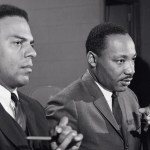
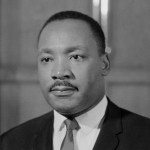
Henry’s plan for that early series called for each editor—Henry himself, Bell, and associate editor J. Marcellus Kik—to address the Civil Rights Movement, which was then centered on the Montgomery bus boycott and the growing national voice of Martin Luther King Jr. Bell had written extensively on race issues for the Southern Presbyterian Journal and viewed the problem in the South as “one of ratio, not of race,” by which he meant that desegregation was more difficult where there were higher numbers of African Americans. Bell was prepared to argue to readers of Christianity Today that “the matter will not be solved by a cold recourse to law.”
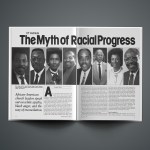
Instead, the plan was scrapped, perhaps due to a desire for a more unified editorial voice. Rather than following Henry’s initial vision of three 1,000-word essays, CT addressed race in scattered articles and editorials in the early years of the magazine.
Indeed, in those first years, civil rights and the international Communist threat were the two most common social issues in CT’s pages. As the Civil Rights Movement organized in the late ’50s and early ’60s, Christianity Today editorials proposed a moderate approach to the growing protest movement over desegregation.
The first editorial on race and civil rights on March 18, 1957, called for the church to “be the Church” and cry against wrongs in the land. But it also argued that “forced integration is as contrary to Christian principles as is forced segregation” and praised the example of segregated Chinese churches in New Orleans. The editors proposed that “churches in which integration is not practiced may be just as Christian as those where it is found.” CT called for the church to stand against injustice and indifference but isolated that call in the middle of a long article that concluded churches, pastors, and laymen need not worry themselves about changes brought about by the Civil Rights Movement.
related
In the September 30, 1957, issue, the editorial “Race Relations and Christian Duty” addressed the showdown over the integration of Little Rock Central High School—a standoff which saw President Dwight D. Eisenhower call in federal troops. It called for the church to take a stronger leadership role in such matters.
A year later, the September 29, 1958, issue published “Desegregation and Regeneration,” which deemed race issues a subset of a greater problem of sin and included an extensive statement Bell had prepared for a conference earlier that year. It described integration as “matter of personal choice, over which the Church has no jurisdiction and into which it should not intrude in the name of Christianity.”
A four-page editorial entitled “Race Tensions and Social Change” in the January 19, 1959, edition presented a position CT editors labeled the “evangelical moderate” stance—an effort to avoid the trap of being either a segregationist or an integrationist.
The editorial suggested both “radicals” and segregationists “have attacked Billy Graham’s ministry,” and described the difficulty an “evangelical moderate” like Graham would face: “Some Southern clergy have linked the Christian cause as firmly to white citizens’ councils and racist politicians as have some northern clergymen to the NAACP and the Supreme Court.”
Pressure was growing for Graham, who had integrated his own revivals beginning in 1953, to take a clearer stand on the segregation question. The editors recommended dialogue across racial lines, guarding against the sin of racial prejudice and not forcing individuals to segregate or integrate if they were opposed to doing so. But this was a difficult position to maintain, as it disappointed those on both sides of the issue.

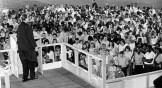
These 1950s editorials sent mixed signals to readers as they combined the hands-off approach that Bell had often championed with the call to social engagement that marked Henry’s work. The 1959 article, for example, paired enjoinders to moderation with an encouragement to ministers to speak up, because “the Church can … prove impotent in social ethics by neglecting [to condemn] race pride within its own house and fellowship.” And that encouragement stopped short of a call to specific action, contributing to evangelicals’ reputation for talking about social involvement while preserving the status quo—namely, a segregated society.
Years later, Henry recalled in his memoir that the magazine was never “in the forefront of the [Civil Rights Movement] for several reasons.” Evangelicals were typically not included in some ecumenical efforts on race issues, he wrote, and deep theological differences prevented cooperation. Accordingly, Henry remembered that “we left the evaluation of Martin Luther King’s call for racial justice to Nelson, who held that King preached not the gospel but a message of social change.”
Henry also recalled that CT’s editorial staff took a stand against the “disrespect for law implicit in mob demonstration and resistance,” preferring legal recourse over public protests. This was an honest measure of where many evangelicals stood in the 1950s. And he offered one additional reason for the editors’ approach in that era: “We saw the race problem—rightly, I think—as one dimension of a more comprehensive problem, and not as the cutting edge of a dramatic social reformation.”
In Bell’s case, however, his outspoken opinions against forced integration reflected Southern white culture and his personal bias. Henry accepted Bell’s rationale and granted him editorial authority for the magazine’s position on the Civil Rights Movement.
The postwar evangelicals had theological and organizational momentum, and Christianity Today was the flagship voice for those efforts. Henry, Bell, and others involved in those early years of CT were never fully comfortable with the Civil Rights Movement and struggled to provide a clear voice for their readers. This early challenge to postwar evangelicalism showed how difficult it was to find consensus on social issues, even with theological agreement.
Michael D. Hammond, a historian of American Christianity, serves as president of Gordon College. He lives with his wife and six children in Beverly, Massachusetts.