In his 12 years serving international students at The University of Texas at Dallas, Daren Clements has done countless airport pickups—driving to Dallas Fort Worth International Airport in his Ram pickup and loading large suitcases into the truck bed. For many students, he’s the first American they ever meet.
But in the past year, he’s also started doing airport drop-offs—leaving students at the airport with the same large suitcases they arrived with years before, waving goodbye as they head home. More are struggling to find jobs in the States due to hiring freezes in tech and finance industries and recent policy changes for foreign workers.
“I have never seen the kind of fear or caution from students as is going on right now,” Clements said. He’s found that many of the students he works with—especially those who come from honor-shame cultures where moving home is viewed as a failure—are struggling with depression. In the past year, he’s referred more students to Christian counselors than ever before.
Two weeks ago, one Indian student who couldn’t find a job in the US or India attempted to take his life, Clements said. In the Dallas area, there has been pushback from residents on the growing number of Indian professionals in the area.
Texas receives the third-most international students in the nation, and these students contribute $2.6 billion to the state’s economy. International workers often fill highly specialized roles, especially in science, technology, engineering, and math industries.
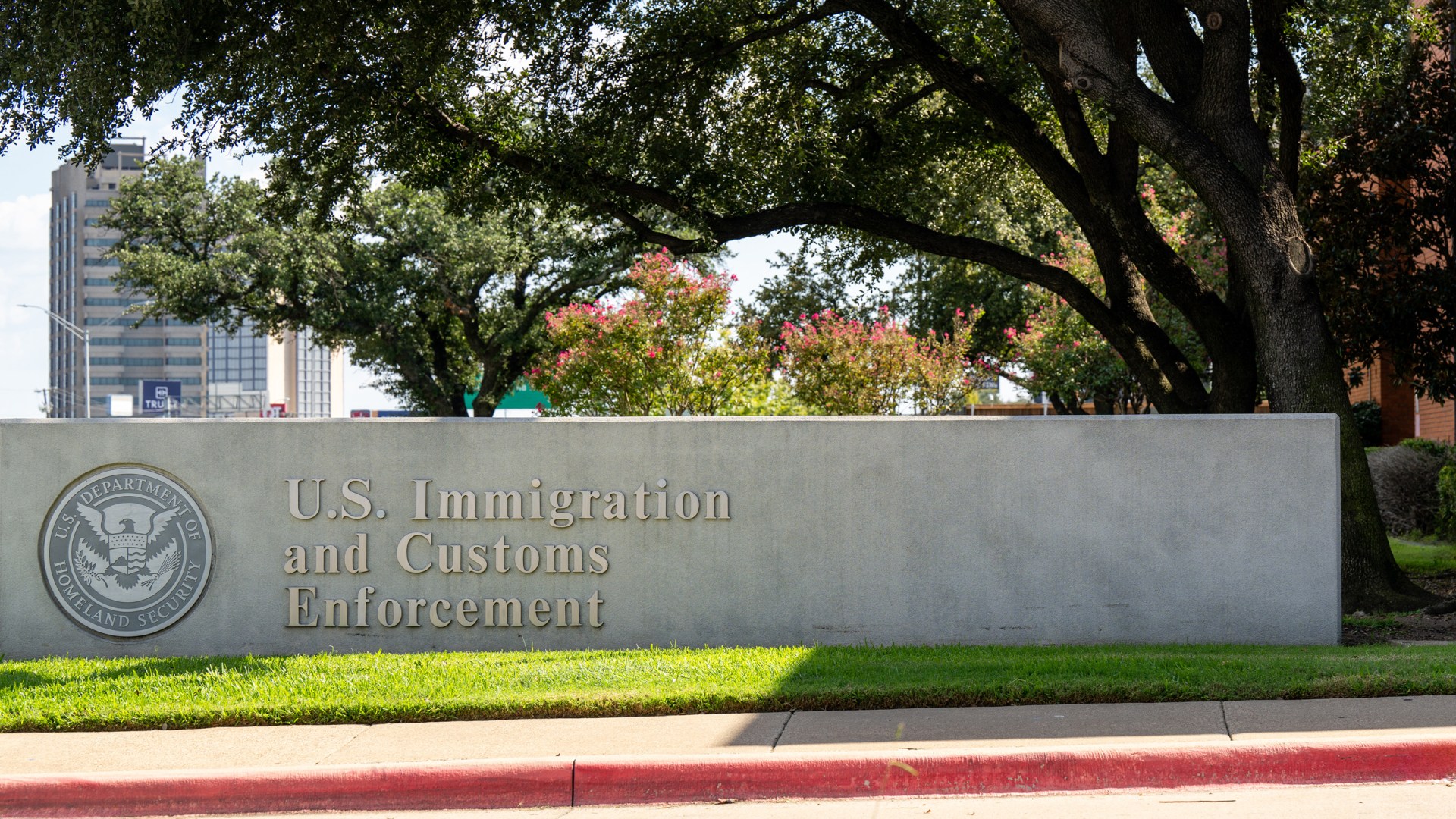
Despite their legal status in the US, international students have been swept up in the Trump administration’s crackdown: Immigration and Customs Enforcement (ICE) detained some international students and faculty for their support of Palestine. The Trump administration also sought to ban international student enrollment at Harvard, a move which a federal judge temporarily blocked. In total, the State Department said it has revoked 8,000 student visas in the past year.
At the same time, the administration added a $100,000 fee for employers on some H-1B visas, which allow foreign nationals in specialty occupations to work temporarily in the US. They also began prioritizing applicants with higher salaries, making it more difficult for international students to find jobs in the US after graduation. The Trump administration is expected to roll out restrictions on Optional Practical Training, which allows students to work temporarily in the US after graduation for one to three years.
In Texas, Gov. Greg Abbott went even further and froze new H-1B visa petitions for public universities and agencies until 2027, stressing the need to “ensure that employment opportunities—particularly those funded with taxpayer dollars—are filled by Texans first.”
For international students like Nompumelelo “Mpume” Hlophe who are looking for teaching jobs or postdoctoral fellowships at Texas public universities, this is devastating news.
Hlophe, who is from South Africa, has lived and studied in the US for the past decade and is now pursuing a PhD in biological anthropology at Texas A&M University. The single mother of a 1-year-old, Hlophe noted that in her field, private jobs require advanced statistical abilities, which she doesn’t have, and because she’s not a citizen, she’s not eligible for most federal jobs.
She wants to be an anthropology professor at her university after she completes her dissertation. But amid all the immigration policy changes, and especially with the latest H-1B visa freeze on public universities, everything feels uncertain.
“Right now I feel like I’m living more on a fear of ‘Oh, when I graduate I might actually have to leave the country and go back to South Africa,’ where before, when I came in, it was like, ‘I have that option whether I want to go back to South Africa,’” Hlophe said.
Hlophe said she understands the governor’s intention of protecting job opportunities for Texans, but at the end of the day, hiring should be skill based: “People get hired because your research is unique and because you’re great in what you’re doing,” she said.
Hlophe is a part of the campus ministry Reformed University Fellowship International (RUF International) and lives with a family she met through the fellowship. She said the prayer and support of the ministry and her church community have been invaluable as she tries to stay focused amid so much change.
“I think that’s why I’m a little bit calm about it, because at the end of the day, I feel like I have a body or community that’s just backing me up,” Hlophe said.
After the COVID-19 pandemic caused a sharp drop in the number of international students entering the country, US colleges experienced a surge in enrollment, surpassing pre-pandemic levels with more than 1 million students. But now the numbers are dropping again. According to The Dallas Express, The University of Texas at Dallas (commonly called UT Dallas) enrolled 5,603 foreign students in fall 2024 and 4,298 in fall 2025, a 23 percent decrease.
The University of North Texas (UNT), which has one of the highest international student enrollment in the state, is $45 million in debt. In a letter to staff, UNT president Harrison Keller said it was in large part due to a drop in international student enrollment. Studies show post-graduation job prospects greatly influence students’ choice of country for higher education.
Even though the governor’s H-1B visa freeze doesn’t directly affect private companies, Clements said it has a “trickle-down effect.”
“I think [private companies] are scared to invest because they don’t see a future with the student when the rules may change next week,” Clements said.
International students such as Catherine Andrews, a 2024 UT Dallas graduate from India, agree.
“I would interview [at] lots and lots of companies, and most of the applications … get rejected because I select the part where I need the visa sponsorship,” said Andrews, who has a master’s in business analytics. She added that companies have said they are looking for long-term hires.
Andrews wanted to study in the US because of its Christian reputation. Four generations ago, a missionary from Philadelphia shared the gospel with her family, and the faith was passed down to Andrews. But growing up, Andrews was surrounded by Hindu friends and longed for a robust Christian community.
At UT Dallas, she joined the campus ministry, International Students Inc., where she met her future husband, Viswas.
In October 2024, while Andrews was still searching for employment, Viswas lost his engineering job. The next day, he found out his parents had been in a serious car crash and would need surgery. He wanted to return to India, but unemployed H-1B visa holders have 60 days to find another job, and traveling out of the US terminates that grace period.
The couple also had a wedding scheduled for two months later in India, which they ended up canceling. If Viswas were to leave the country, he would need to find a new employer and apply for a new H-1B visa in India, which could be subject to the $100,000 fine. Their church in Texas stepped in and threw them a wedding nine months later.
The Andrewses said moving back to India would be a last resort. Despite its difficulties, the US still has the world’s leading tech companies, provides a higher quality of life, and has the best cutting-edge research opportunities. The Andrewses also don’t want to give up the Christian community they’ve found.
International students often find a lifeline in campus ministries. These groups provide a welcoming community, rides to the social security office and to grocery stores, furniture delivery, Bible studies, social events, an introduction to Texan and American culture, and connections to families from local churches.
Noel Coppedge, campus assistant at RUF International at The University of Texas at Austin, said he also sees an increased sense of insecurity among students.
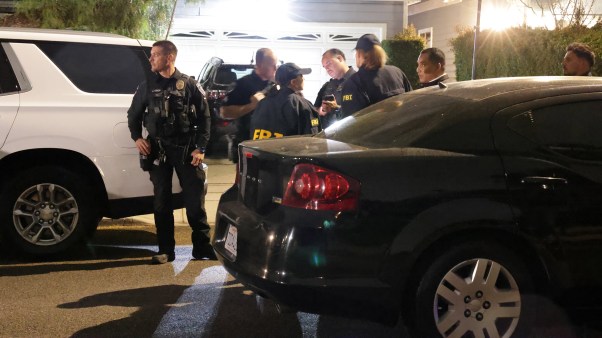
Last semester, ICE took one of the ministry’s Middle Eastern students while she was shopping at the local H-E-B grocery store. She had her papers on her, but the masked agents refused to look at them, saying her detention was a routine check. The agents put her in a van and drove her to a facility an hour outside Austin, where she was detained overnight. She was not allowed to make a phone call. In the morning, they released her without explanation and without transportation back to Austin.
“Whether people have had those exact experiences or not, I know that there’s a common feeling that has been growing in people that ‘Maybe I’m not so welcome. Maybe I don’t want to stay,’” Coppedge said. “I still think many people have the desire to stay, but it’s with a little bit of caution.”
After helping the student who was detained by ICE move into a new apartment, Coppedge asked if he could read a Bible passage with her.
“We just talked about how Jesus cares for the brokenhearted, he cares for women,” Coppedge said. “I just wanted to communicate to her that what has happened to her is not something that Jesus wants associated with himself.”
For that student, there is no question about what she wants to do after graduation. “I just can’t wait to go home,” she told Coppedge recently.
Clements said the crisis students are facing has given the church an opportunity to care for them like never before. International student ministries are providing recent graduates with free housing in church families’ homes, networking, community, emotional support, and biblical hope, he said.
“I’ve never had a more open door to pray over a student than I have right now,” Clements said.
For many students, knowing they are not alone makes all the difference.
Andrews noted that “in the end it all points back [to the fact] that so far God has definitely brought us this far and provided for us, like when we are not having any money at all. And he didn’t [leave] us lonely. He gave us each other to fight for those difficulties, and he gave us church and church family.”