When Iran began severely restricting access to the Strait of Hormuz in early March, Jungle Aviation and Relay Service (JAARS) felt the impact almost immediately. The Christian nonprofit has 48 aircraft and 75 pilots in its alliance and flies missionaries to every major rainforest on the globe.
During the past few weeks, the organization has weathered an “astronomical increase” in aviation fuel costs, according to Steve Russell, president and CEO of JAARS. It’s one of the most significant increases he can recall.
Now, instead of spending $600 an hour on fuel for a turboprop aircraft, JAARS is paying 25 percent more on average—an extra $150 per hour—and facing increased costs for parts and labor due to supply chain disruptions.
“You budget for 2.5 percent or 3 percent for inflation maybe in a year, but not 25 percent. That’s huge,” Russell told Christianity Today.
That’s in addition to the overall increase in operational costs in the aviation industry since 2019 and the tariff challenges JAARS faced last summer. “There are huge impacts that people don’t even imagine would affect missions,” Russell said.
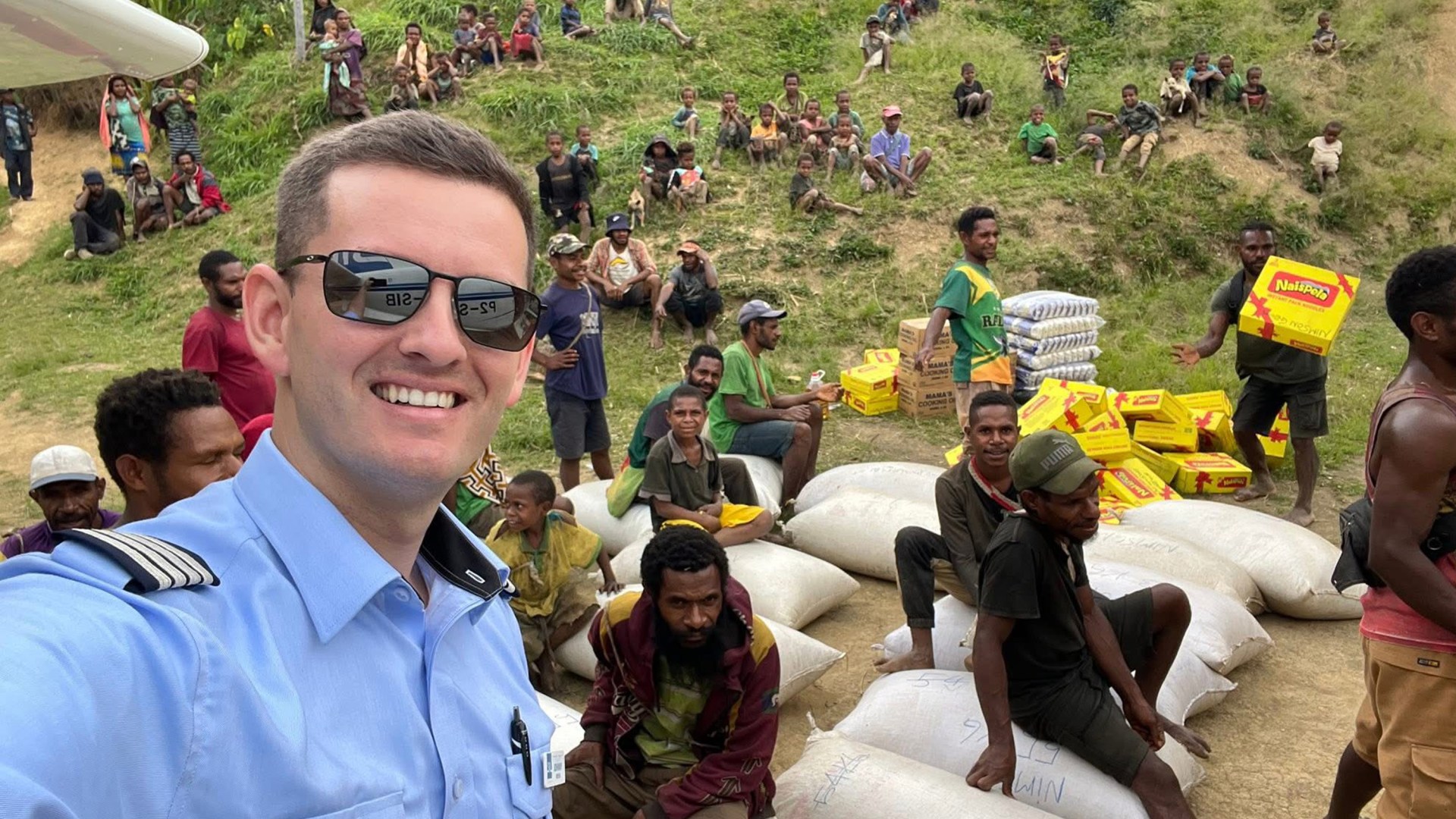
JAARS transports missionary translators into some of the world’s most remote villages where they learn local languages, translate Scripture, and promote literacy. Several weeks ago, Russell sent a memorandum to members of the alliance to begin thinking through, as he said, “an awful lot of issues that normally we might take for granted in times of peace.”
So far, JAARS has not been forced to cut flights, but it is considering asking fuel companies for price breaks and may also reach out to Christians for additional donations.
JAARS isn’t the only Christian ministry facing increased costs related to disruptions in the strait. CT spoke with another aviation ministry and four Christian relief organizations concerned about rising operational costs and how their trickle-down effects could disproportionately affect the world’s most vulnerable people.
Iranian and US negotiators agreed to a two-week cease-fire on April 7 yet failed to negotiate a deal during peace talks in Pakistan over the weekend. On Monday, the US imposed a blockade on Iranian ports in an attempt to choke off Tehran’s oil revenues—raising concerns of renewed fighting.
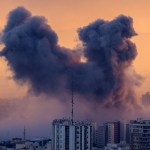
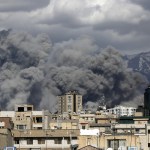
The war began at the end of February after decades of Iranian nuclear and ballistic missile expansion and deadly attacks by Iranian proxy groups on US forces, Israel, and other regional allies. The joint US-Israeli operation has destroyed most of Iran’s navy, air defense system, naval mines, and nuclear industrial base, according to General Dan Caine, chairman of the Joint Chiefs of Staff. It has also “devastated” Tehran’s command and control networks.
Iran responded by attacking oil tankers and cargo ships, laying mines, and charging tolls as high as $2 million for safe passage through the Strait of Hormuz, creating a backlog of ships in the crucial waterway—including 425 oil and fuel tankers and around 20 vessels carrying liquefied natural gas.
Around 20 percent of the world’s oil—sourced from Kuwait, Saudi Arabia, and Iraq—transits through the strait during normal operations.
The conflict has dealt a serious blow to global economies. Willie Walsh, director general of the International Air Transport Association, told The New York Times it will take months for global jet fuel supplies to stabilize—even if traffic in the strait returns to normal levels in the coming weeks—due to disruptions to refineries.
That’s difficult news for mission organizations already feeling the hit to their pocketbooks.
“There are acts of God, and you can budget for those a little bit, but this kind of an issue has a systemic impact, raising costs significantly,” said Chris Palombo, CEO and president of Medicine for All People (MAP) International, a Christian organization that provides medicine and medical supplies to people in 100 countries around the world. “So when will we feel it? We’re feeling it now.”
Palombo said fuel prices have increased 25 to 35 percent, and shipping quotes that were once good for 30 days are now only good for five. Shipments are delayed one to three months—a significant setback for donated medicine with expiration dates or refrigeration requirements.
“We are constantly fighting the clock,” Palombo said. “If you lose a couple of months going from a port to a warehouse to a clinic to a mass unit clinic at the far edges of some country, nine months of usable life just became six or five.”
Much of the medicine MAP receives is donated because of looming expiration dates, he added, noting that MAP hasn’t been able to calculate the future impact of the delays and rising fuel costs. “It’s one of those things we’re going to know retrospectively, and the challenge with that is it’s very hard to plan,” Palombo said.
MAP was already feeling the increased global need for medical care in the wake of USAID cuts, delivering more than $1 billion in medical supplies and medicine last year against an $860 million budget. Increased donations bridged the gap.
Now Palombo is praying for the crisis to end quickly because “the poor suffer disproportionately.” As global conflicts ignite, the needs of the vulnerable increase—but so do shipping costs. Meanwhile, air shipments are not only less efficient because of smaller containers, but also more expensive due to increased demand.
Mission Aviation Fellowship (MAF) also began to feel the impact of Iran’s waterway disruptions in recent weeks. According to Brock Larson, MAF’s vice president of global operations, since April 1, MAF has faced a 67 percent increase in jet fuel in Indonesia, where it has the greatest number of flight operations. In Africa, MAF has observed a 40–43 percent increase in fuel costs.
Larson said fuel costs are MAF’s second or third highest expense behind labor and sometimes maintenance. MAF and its sister organizations operate a fleet of 135 airplanes that serve 1,500 churches, nonprofits, and humanitarian organizations in 37 countries. MAF is currently under budget and able to pay the extra costs, Larson said, but may need to send an appeal to donors if the conflict continues another three to six months.
Compassion International is also seeing rising flight costs and is exercising caution with its travel budget. Yet one of the organization’s primary concerns is the current instability in marketplaces, said Matt Ellingson, Compassion’s principal humanitarian advisor.
“Right off the bat, vendors are going to raise the cost of the things they have on the shelves because they’re not sure when they’re going to be able to be restocked,” Ellingson added.
For instance, delayed fertilizer deliveries could limit future harvests since each planting season requires a different type of fertilizer. This compounds the suffering in sub-Saharan Africa and South and Southeast Asia where people are already very vulnerable. Countries dependent upon Middle Eastern oil are also highly vulnerable, including the Philippines, Bangladesh, and Sri Lanka, he added.
“Fuel rations mean expensive fuel at the pump, but it actually means that day laborers will have less opportunity to work, and they will have to spend more money for their basic needs for their families, and so they’re the ones that will experience the hardship first,” Ellingson said.
Parents could soon be making some difficult decisions between consuming what they have and hoping for a future resolution or withholding food to try to survive a long-term shortage. “I’m a dad, and it always rips me apart,” Ellingson said.
Hannah Chargin, World Vision’s director of advocacy, said many regions of the world are close to entering their planting season. Within 6–12 months, reduced fertilizer application could result in a 5–15 percent decline in harvest yields, triggering sustained price increases, Chargin said.
In Sudan, the crisis could impact access to water. “The country is heavily reliant on borehole drills, and these drills are run by diesel generators that suck the water into tanks,” Chargin said. “And currently, it’s the hot season in Sudan, so when diesel prices rise, that means the price of water increases.”
Adula Gemta, regional director of international programs for World Relief, said the Hormuz crisis has not yet significantly affected his organization, but he anticipates greater consequences if it continues for several more weeks. World Relief’s programs are concentrated in Africa, which relies on Middle Eastern supply routes. His organization maintains some stocks of fuel in warehouses since they use fuel for lighting and transportation.
Fragile countries have limited fuel stock, so a larger fuel shortage may be visible within two months, Gemta added. These countries have increased vulnerability because suppliers can drive up prices. Some parts of Sudan have already seen a 60 percent increase in fuel costs, he said.
Amid the uncertainty around fuel prices, changing shipping lanes, and the rising cost of food, Russell of JAARS finds encouragement in Paul’s teaching in Acts 17:26 about God determining the boundaries of nations.
“These events don’t escape God’s notice,” Russell said. “And if he wants his kingdom to advance, and he wants to use us in the ministry of reconciliation to be ambassadors for Christ, then he will resource his work through his people.”