Judging by current public discourse, one might think the Bible only addresses politics once, in Romans 13. “Let everyone be subject to the governing authorities, for there is no authority except that which God has established,” the apostle Paul wrote (v. 1). But are we to understand this as the only model for Christian political witness? Is Paul’s instruction a universal mandate for believers, even in situations where earthly rulers indeed terrorize “those who do right” (v. 3)?
Peter seems to support this approach when he says, “Submit yourselves for the Lord’s sake to every human authority. … Honor the emperor” (1 Pet. 2:13–17). However, he goes on to emphasize that we should be willing to endure unjust suffering ourselves. Inflicting injustice on others is another question altogether.
One of my heroes is Corrie ten Boom, a Dutch woman who resisted the Nazi regime by hiding Jews in her home and falsifying ration cards to feed them. I read her memoir, The Hiding Place, several times as I was growing up. Keeping the Jews safe required daily deception—a vigilant disobedience to the governing authorities. Her choice to resist the regime resulted in her capture and imprisonment at a concentration camp, where she suffered much. But mercifully, she survived the war and went on to write and speak about the power of forgiving her enemies.
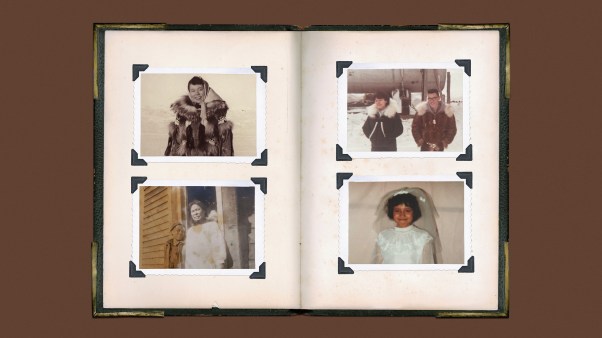
Perhaps her story meant so much to me because my own grandmother, Barbara Brinkman (later Barbara Camfferman), a contemporary of ten Boom, worked for the Dutch Underground. She and her brothers attended clandestine meetings where, with fellow Christians, they devised ways to undermine the Nazis. They kept radios even though Hitler had banned them. They blew up bridges, stole equipment, and forged ID cards. My grandmother broke curfew to deliver messages, rolled up in the handlebars of her bicycle, for Allied soldiers. Once she was detained and nearly arrested.
An American fighter jet was shot down out of the sky above their farm, and the pilot parachuted into their back field. She and her brothers hid him and helped him escape. One of her younger brothers spent the war hiding in the attic of a kind family some distance from home to avoid conscription. For several long years, they all held their breath and did what they could. Miraculously, my grandmother and her siblings all survived the occupation.
They did not submit to the governing authorities. My grandmother resisted repeatedly. Was she wrong to do so? Should Corrie ten Boom have surrendered her Jewish friends to the Third Reich?
Christians, Let’s Stop Abusing Romans 13
I think not. And the Bible offers strong precedent for their resistance—defiant behavior that earned God’s approval. Rahab hid the Israelite spies from local government officials (Joshua 2). Jael violated a clan allegiance by offering hospitality and then murdering an army general for Israel’s sake (Judges 4). Obadiah—a government official himself!—hid prophets of Yahweh in a cave and provided them food and water so the queen couldn’t kill them (1 Kings 18).
Isaiah and Jeremiah wouldn’t toe the party line when it would have been politically safer to say what itching ears wanted to hear. Isaiah was put in stocks and Jeremiah thrown in a cistern—they indeed suffered for doing and saying what was right. Daniel refused to stop praying to Yahweh, and his friends refused to bow down to a state-sponsored idol (Dan. 6:13; 3:18).
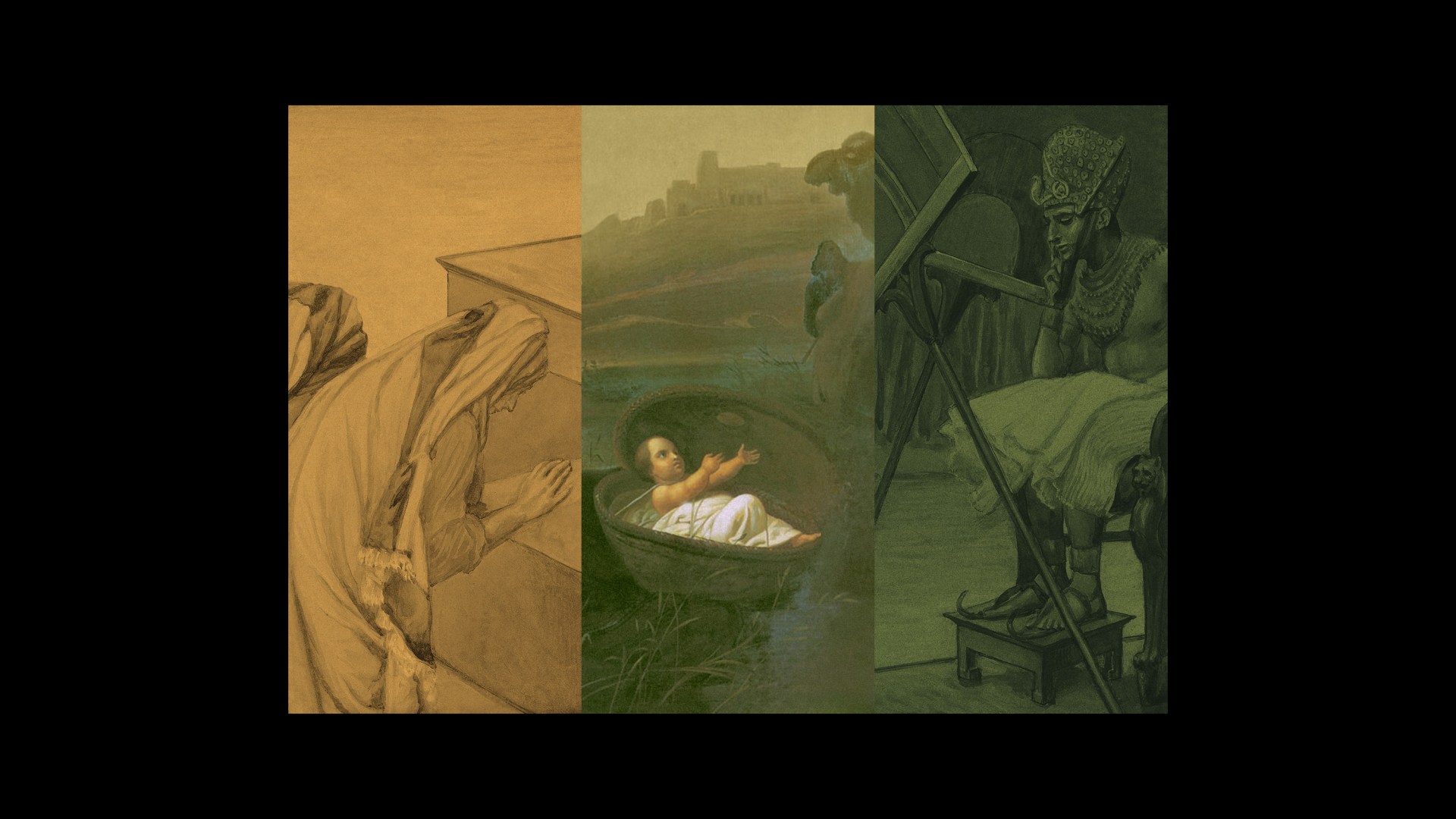
But the women who have captured my heart more than any other defiant Bible characters are the Hebrew midwives in Exodus. Pharaoh tried to enlist their help to eliminate his rivals: “When you are helping the Hebrew women during childbirth on the delivery stool, if you see that the baby is a boy, kill him, but if it is a girl, let her live” (Ex. 1:16). Pharaoh also stoked fear in his nation until the Egyptians felt disgust toward the Hebrew foreigners.
The women refused to comply. At great risk to themselves, they spared the baby boys. Exodus tells us why: “The midwives, however, feared God, and did not do what the king of Egypt had told them to do; they let the boys live” (v. 17).
Were the women afraid of the consequences of their defiance? Perhaps, but their fear of God outweighed their fear of Pharaoh. They understood that the judgment that mattered most was God’s. Their obstinance saved a generation. The text makes clear that God rewarded them for their work (vv. 20–21).
We don’t know much about these women, other than their names, Shiphrah and Puah. But in a story where the villain is never named (“Pharaoh” is a title, not a name), these named women stand out as significant and worth remembering. Scholars debate whether or not they were Hebrew themselves, whether they were the only midwives or the chief midwives, and whether they lied to Pharaoh about the early deliveries or told the truth.
Their retort to Pharaoh exhibits a cleverness worthy of Brer Rabbit or High John the Conqueror: “Hebrew women are not like Egyptian women; they are vigorous and give birth before the midwives arrive” (Ex. 1:19). The word vigorous is related to the Hebrew word that means animal. Pharaoh treated the Hebrews like beasts, and their strength made them impervious to his plan.
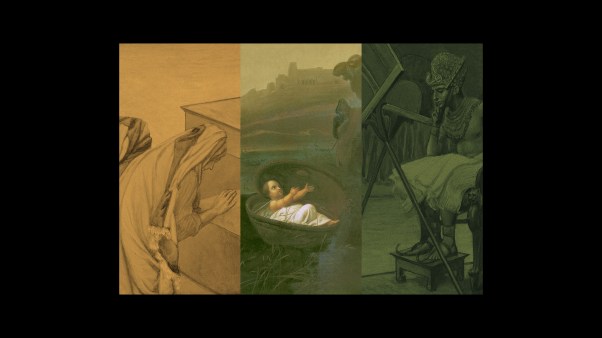
The midwives, Moses’ mother and sister, the daughter of Pharaoh, and her servants, each conspired to defy the king and his orders. Each one worked within her sphere of influence to birth, nurture, and rescue a child under threat of death.
Imagine if they had looked at one another and said, “What choice do we have? The king says we must put him to death.” We would have no Moses, no deliverance from slavery, no trip to Sinai, no Ten Commandments, no Tabernacle. In short, we would have no covenant and no Messiah and no blessing for all nations—at least not in the way the Scripture describes.
Later in Exodus, we discover that the actions of Pharaoh’s daughter anticipated what God would do. He saw the Hebrews, heard their cries, had compassion on them, and sent someone to draw them out of Egypt (2:23–25; 3:7–8). And Moses is like his sister Miriam. He takes his stand on the banks of the Nile to confront Pharaoh on his way to the river and request that he “let my people go” (7:15–16). We can find the same vocabulary in the story of the young girl who negotiated the deliverance of her baby brother (2:3–4, 7). If you want to learn about God in Exodus, watch the women—they behave most like him.

The ethical dilemmas of our own day are no less complex. Do we employ undocumented immigrants? Do we educate them? Do we assist those lawfully present in our country to avoid ICE raids because we are not confident that they will be treated lawfully? Do we vote for a candidate who has pledged to support gender transition surgery for minors without parental approval? Do we take a stance on the wars in Gaza and Iran?
Do we vote for candidates of either major party when both are committed to making abortion more accessible? Do we comply with government regulations that require us to offer services that violate our consciences? Do we align with our president in condemning the pope?
We must develop the moral discernment to know when to invoke Exodus 1 as our model and when to lean into Romans 13—whether the governing authorities are requiring us to disobey God’s commands or to keep them. Knowing good from evil is the most urgent need of our age and of any age.
But as in the beginning, we must seek the Lord for this wisdom and not attempt to define it for ourselves (or let government leaders define it for us) in the spirit of the times. The Scriptures are the most powerful material gift we have—the self-revelation of God that shows us how to embody his character in our worship, in our work, and in our witness. Parroting one verse without reading the whole counsel of God can result in the malformation of our ethics.
Sadly, our collective knowledge of the Scriptures has faltered. We’ve fixated on vague memories from Sunday school or isolated passages that seem relevant for the current moment. We’ve allowed ourselves to be swayed by leaders who cite Bible verses to justify their actions. But we’ve lost the moral discernment that arises from seeing the bigger picture and understanding how the stories are meant to fit together.
Today, we need the courage of the midwives, who feared God more than the king and knew that what Pharaoh was asking was entirely immoral. We’re in desperate need of a renewed scriptural vision and a fresh commitment to participate in work that honors God’s character and God’s mission, no matter what it may cost.
Carmen Joy Imes is an associate professor of Old Testament at Biola University and an author. Her latest book is Becoming God’s Family: Why the Church Still Matters.