This piece was adapted from CT’s books newsletter. Subscribe here.
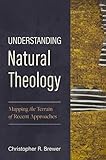
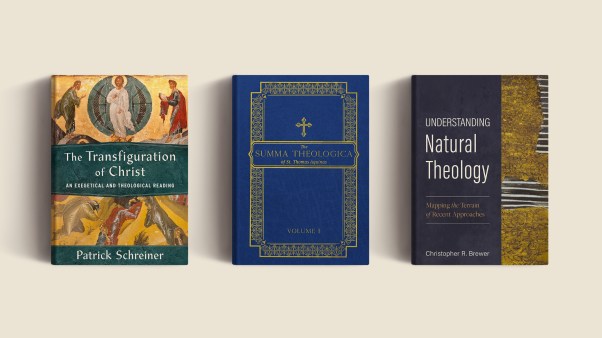
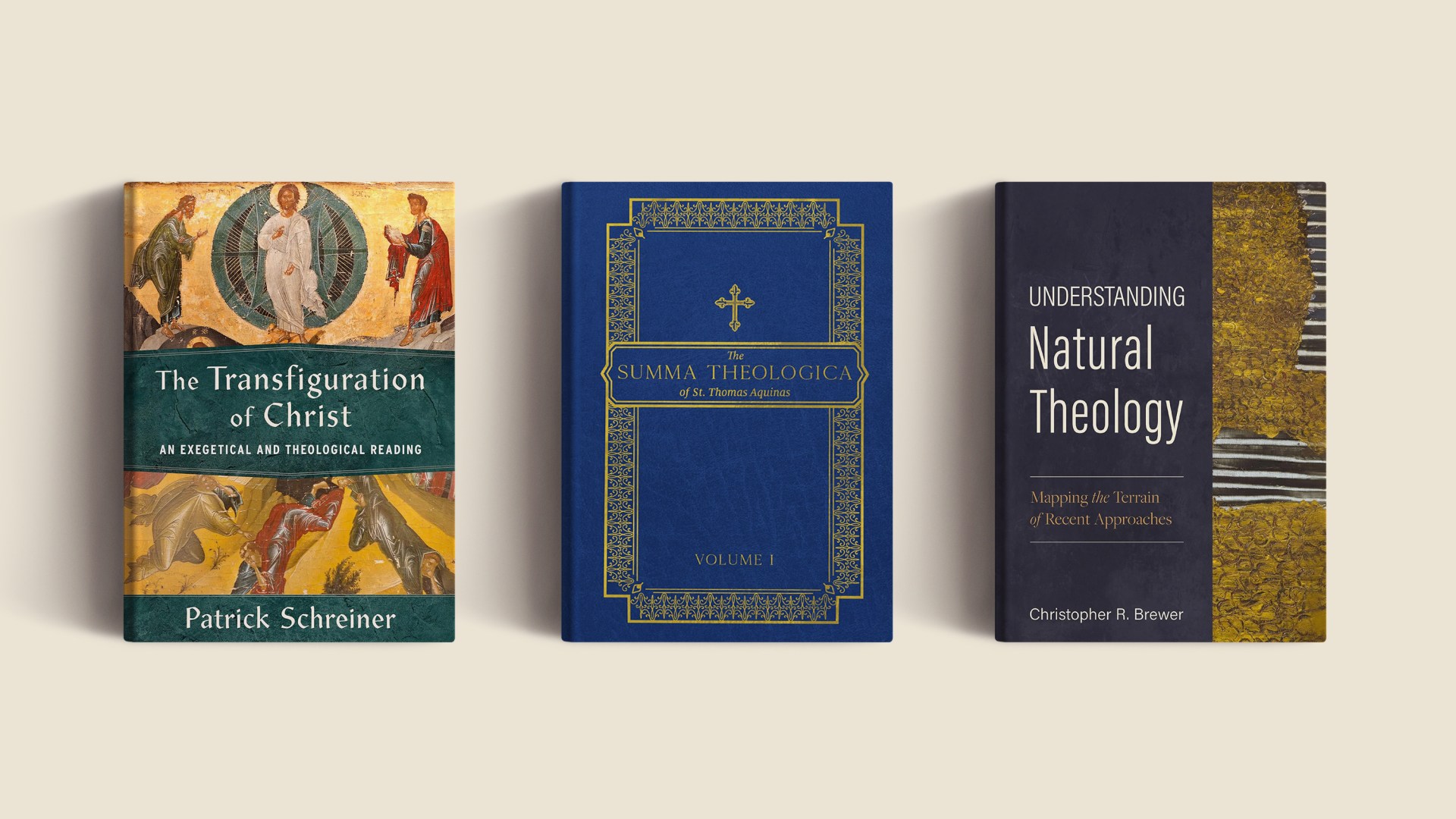
Understanding Natural Theology: Mapping the Terrain of Recent Approaches
HarperCollins Children's Books
224 pages
Christopher R. Brewer, Understanding Natural Theology: Mapping the Terrain of Recent Approaches (Zondervan Academic, 2026)
Works of academic theology often proceed in two parts. Part one clears the ground: It defines key terms, narrates the history of the subject, offers a survey of contemporary debates, and enters into dialogue with a handful of influential interpreters. Part two, which may or may not come in a separate volume, offers the author’s constructive proposal. If done well, the two parts fit neatly together and move seamlessly from problem to solution.
The tragedy of Understanding Natural Theology is that Christopher R. Brewer was diagnosed with terminal brain cancer at the end of part one. As a result, we have his critical appraisal but not his constructive proposal. This leaves us, as the subtitle makes clear, with a map of the current terrain but without a recommended path through it.
The map is detailed and thoughtfully presented. Brewer outlines five views on natural theology in two chapters each: natural theology as (1) informed by natural religion, (2) as proof or argument for God, (3) as signal of transcendence, (4) as Christian natural theology, and (5) as a theology of nature. The key modern thinkers are all there, from Alvin Plantinga and Stephen Evans to Thomas Torrance and Karl Barth. But after sifting through all the definitions, debates, jargon (including “Realdialektik,” “metaxological”), and throat-clearing (“There is, in an important sense, no such thing as ‘natural theology’ but instead only ‘natural theologies’”), the reader wants a path, or at least a guide. Brewer’s untimely death leaves us without it.
Happily, however, we are given a sketch of one. In a brief afterword, Brewer suggests replacing Augustine’s famous “two books” analogy—God reveals himself through his Word and his world—with Gérard Genette’s metaphor of text and paratext. The book of nature is paratextual, like the hallway or vestibule through which we enter the “house” of God’s Word. It “precedes, accompanies, and mediates the text” of Scripture. It would be fascinating to see another theologian pick up this metaphor and write the equivalent of Brewer’s part two.
Patrick Schreiner, The Transfiguration of Christ: An Exegetical and Theological Reading (Baker Academic, 2024)
At its best, exegetical theology is thrilling. If the subject matter is captivating, the exegesis faithful, and the theology both fresh and orthodox, then the results can be exhilarating, fueling worship and wonder in the reader. All of those things are true of The Transfiguration of Christ. Few scenes in Scripture are more theologically weighty than the Transfiguration, and in few cases are the details more suggestive and the interpreter’s work more intriguing. Patrick Schreiner makes the most of this.
Structurally, the book is simply laid out. The central three chapters consider the setting of the Transfiguration (the timing, location, and witnesses to it); the signs that occur (Jesus’ shining face and clothes, the cloud, the appearance of Moses and Elijah); and the saying (“This is my beloved Son, with whom I am well-pleased. Listen to him!”—Matthew 17:5) By engaging with the text extensively, as well with as the numerous Old Testament allusions it contains and the interpretations of the church fathers in particular, Schreiner illuminates the story in dozens of fascinating ways. Yet because the book is relatively short, at just over 150 pages, and is frequently punctuated and clarified with tables and summary paragraphs, it keeps moving without getting bogged down in endless detail.
At the heart of the book is the theological claim that the Transfiguration reveals Christ simultaneously as the fully human messianic Son and the fully divine eternal Son. These categories are not merely introduced centuries later, as the early church wrestled with how to express Jesus’ unique identity; they are latent in Scripture itself, especially (and perhaps supremely) in passages like these. By reading these stories on their own terms, and in dialogue with the descriptions of Christ’s baptism and crucifixion, Schreiner has shed fresh light on each of them. This is a wonderful book.

Picture Jesus: Is He Shiny?
Thomas Aquinas, Summa Theologica (Christian Classics, 1981)
There is something faintly ridiculous about introducing the Summa Theologica (1265–1274) in a couple of paragraphs. It is a mighty work of systematic theology by one of the greatest theologians in the history of the church, a watershed in the development of Catholic doctrine, a bold and brilliant attempt to integrate Christian thought and the best of Aristotelian philosophy, a pioneering work of apologetics that is still studied in universities today, and one of the most influential books ever written in any field. Superlatives abound, and rightly so.
Yet for all those reasons, it can also be very intimidating, and so intimidating that most of us never read any of it. I did not get around to reading Aquinas until I was in my late 30s (and even then, I read an abridged version in the form of Peter Kreeft’s excellent Summa of the Summa). What surprised me when finally I did was how readable he was. His arguments are lucid; his structure is clear; his method is illuminating; he states objections fairly and reasons diligently through them; and his conclusions are always worth wrestling with, even when we totally disagree with them (as Protestants sometimes will).
Most remarkably, he frames issues that would later become highly controversial in ways that reflect a wise and thoughtful balance between biblical truths. On the relationship between divine sovereignty and human agency, for example, he beats John Calvin at his own game two and a half centuries before him. Aquinas’s chapters on providence (I:22) and predestination (I:23) pull no punches on scriptural teachings like absolute sovereignty, unconditional election, and reprobation.
Yet his chapter on free will (I:83) is equally emphatic: “Man has free will, otherwise counsels, exhortations, commands, prohibitions, rewards, and punishments would be in vain.” In this and in numerous other ways, the Summa Theologica is a masterpiece.
Andrew Wilson is teaching pastor at King’s Church London and author of Remaking the World: How 1776 Created the Post-Christian West. Follow him on Twitter @AJWTheology.