In early January, an African refugee named Aboradea called his family to say he was on his way home from work after his night shift. But the young man never showed up. Calls to his phone went to voicemail.
Aboradea’s family—his full name is being withheld for his protection—was frantic.
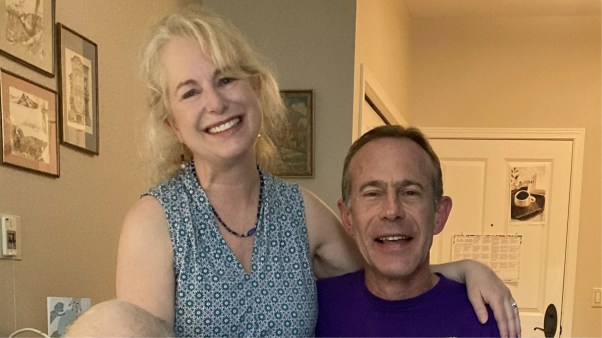
Across town, Michael Forbes was settling into a movie night with his wife and kids. A friend from church, Tim Fletcher, called and told him Aboradea hadn’t come home that day. The two of them immediately drove to the refugee family’s house.
Fletcher and Forbes had befriended the family through a program called Good Neighbor, where teams of churchgoers help refugees resettle over the course of a year. Fletcher and Forbes had been planning to go bowling with the refugee family before their son disappeared.
“This whole experience changed my life,” Forbes said. Now, “this family is family.”
US Christians have come alongside refugees since they began arriving from Southeast Asia during the Vietnam War. Church communities tied to World Relief, a Christian organization that is also a federal resettlement agency, helped resettle Vietnamese refugees even before the passage of the federal refugee program in 1980.
Those church relationships were formalized into the Good Neighbor program about 25 years ago, with the goal of surrounding new refugees with a community to help get them on their feet more quickly.
A local Christian resettlement agency, Arrive, runs a Good Neighbor program in the Twin Cities. The group says its teams have served 554 refugee families in the Twin Cities since it began Good Neighbor in 2001.
After Aboradea’s disappearance, Fletcher, Forbes, and Aboradea’s family obsessively checked the government immigration system that tracks refugees via what’s called an A-number. Nothing showed up to indicate he had been detained.
That night Fletcher, a retired engineer, and Forbes, a middle school teacher, became detectives, sitting with the refugee family in their living room and making phone call after phone call. They checked with area police stations and local hospitals. They called car impound lots.
Forbes was struck by a sense of his privilege—that he could call large institutions and simply ask to speak with a manager and often succeed at getting through, whereas a refugee with limited English likely would not. He and Fletcher depended on children in the refugee family to translate between them and the adults.
When the clock ticked past 11 p.m. and the two men still had no answers, Fletcher and Forbes told the family they would come back in the morning to continue the search. Aboradea’s father had tears running down his face, Forbes said.
Neither Fletcher nor Forbes slept much. The next morning, they picked up some of the family members and drove around looking for Aboradea’s car, retracing his path from work to home.
As they drove, another family member called them—Aboradea had called from the Whipple Building in St. Paul, a federal facility where ICE held immigrants. Over the phone, Aboradea had asked the family member to send Fletcher and Forbes to the detention center. He knew it wasn’t safe for his family, who were also at risk of detention.
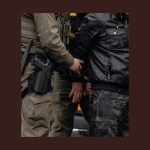
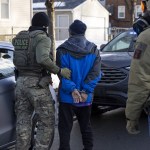
Aboradea later recounted to CT that ICE agents had stopped him on his way home from work and asked if he was a citizen. He showed them his refugee papers, his work permit, and a form that showed his pending green card application. The officers still cuffed him.
“I wasn’t afraid,” Aboradea said, but he doesn’t understand why he was arrested. “I had everything.” He said they wouldn’t allow him to make a phone call. They wouldn’t tell him why he was being arrested.
In the car with Forbes, Aboradea’s father heard the news of his son’s arrest and celebrated that the young man was alive.
Forbes, however, thought, This is not good.
The month prior, Fletcher and Forbes had helped the family make photocopies of all their documents, so they could carry them in a packet and show them to officials like Aboradea did. The Americans thought the documents would protect family members from being detained, but this was a new era.
Aboradea was one of the first refugees arrested as part of the Trump administration’s effort to detain refugees in Minnesota—called Operation PARRIS. CT confirmed the arrest through interviews with the young man, his friends, family, and bystander video of the arrest.
A federal judge, John R. Tunheim, said in a recent ruling that the refugee arrests in Minnesota this year are “a sharp break from more than four decades of agency practice.” Refugees are legal immigrants who generally have waited years, often in camps outside the United States, for vetting and an invitation from the US government to come.
Refugees are eligible to receive a green card about a year after their arrival, but the Trump administration has halted the application process for many. The arrests, according to the Trump administration, are necessary so that officials can re-interview refugees who don’t yet have green cards. But refugee testimonies and court records show that the interviews have been carried out inconsistently or not at all after arrest.
Tunheim temporarily blocked the arrest of refugees, saying the United States had made a “solemn promise” to protect these refugees fleeing persecution: “We assured them that they could care for their families, earn a living, contribute to their communities, and live in peace here in the United States,” he wrote.
Another federal judge in Massachusetts more recently issued a national injunction on refugee detentions, protecting about 100,000 refugees awaiting green cards who are at risk of arrest. But a higher court could overturn these rulings.
Fletcher and Forbes’s church, First Presbyterian Church of White Bear Lake, has a Good Neighbor team of six people connected to Aboradea’s family. It’s a modest church of about 80 people, but they wanted to help immigrants however they could.
“God said … ‘Welcome the foreigner.’ It doesn’t mean Well, that would be kind of a good thing to do. You need to do it, and you may not know what it looks like,” Fletcher said. “God equips people to do God’s work when it’s needed, and that can give you courage.”
Over the previous the year, the church had helped the family with various crises, like when pests invaded their home or they found lead in the windows. Now Fletcher saw those as small preparations for this crisis.
Fletcher, Forbes, and Aboradea’s family members returned to the family’s home after their unsuccessful car search. When they pulled up, neighbors were telling them to hurry into the house: ICE agents had just been there and tried to get inside, but the children refused to open the door.
Forbes and Fletcher told the family they needed to stay indoors. The two Minnesotans drove to Whipple—confidently pulling into the parking lot, slipping between yelling protestors, barricades, and armed agents, and informing federal agents they were there to pick up a refugee who was going to be released.
The agents allowed them in, which was unusual. But after a wait, officers told them Aboradea would not be released that day.
The third day after his disappearance, Aboradea finally showed up in the immigration database: He was in a detention center in El Paso, Texas. His despondent family thought he was about to be deported, an outcome they had never imagined.
Fletcher and Forbes now had multiple missions. They needed to find Aboradea a lawyer to help win his release—a tall order when immigration lawyers were in high demand. They still needed to find Aboradea’s car. And they needed to help the family survive staying home without their breadwinner.
A lead on an attorney appeared quickly, a man connected with the lawyer son of someone in the church, whom Fletcher once taught in youth group. Fletcher called the lawyer and retained him on the spot. We’ll figure out the whole money thing later, he said to himself. The lawyer began filing a case in Texas courts.
Meanwhile, Aboradea’s car had finally been located near a mechanic shop, the keys still inside—along with the family’s EBT card, which they needed for groceries. One of the Good Neighbor team members told Forbes he had “sticky fingers” and could break in (with the family’s permission).
“He said to me, ‘I watched a cop do this a couple weeks ago, I’m pretty sure I can do it,’” recounted Forbes, laughing. While the sticky-fingered church member assessed the car, Forbes went inside to ask the mechanics if they had seen the arrest. They had, and they had recorded video—which they shared with Forbes.
In the footage, which has not been released publicly but which CT reviewed, Aboradea is standing calmly by his car pulled to the side of the road, surrounded by at least eight agents and multiple SUVs. He complies as they place handcuffs on him and put him in an SUV.
As Forbes watched the video, the church member sprung the car open. Forbes drove the car back to the family’s house.
At the home, Fletcher spent hours on the phone with county offices, explaining the situation and trying to find aid for the family that was now without Aboradea’s paycheck.
School was another challenge. Stuck at home, the family’s children could not attend their normal classes. Forbes, whose teaching job is part-time, came every day after work and did schoolwork with the kids before picking up his own children from school.
Two days after Aboradea popped up in the government database in El Paso, he disappeared again. Forbes called detention centers across Texas and New Mexico, trying to locate him. Transfers between ICE detention centers can take days to show up in the system. A family friend tried to visit Aboradea in El Paso but was refused access.
“We don’t know what’s going on,” Forbes remembered.
A day later, the database showed Aboradea in a Houston detention center. Aboradea later recounted to CT that he had been shackled by his hands and feet and put on a bus for the 14-hour drive from El Paso to Houston. They had no breaks until they got to Houston, he said. He felt sick.
The Houston transfer meant the lawyer had to refile all the petitions in Houston and cancel the El Paso case.
But the Houston facility was better than El Paso, Aboradea said later. ICE’s own inspector general has documented the bad conditions at the El Paso facility, Camp East Montana, where three detainees have died since December. According to Aboradea, refugees were housed in the same spaces with criminals; someone told him to stay away from any detainee in a red uniform. (At some ICE detention facilities, detainees are issued color-coded uniforms based on their criminal histories.)
In Houston, Aboradea was able to play soccer to pass the time. The food at both facilities was bad, he said, and he would get freezing cold at night. With no information from authorities, he thought he was about to be deported.
Back in Minnesota, friends and family waited. For ten days, Fletcher and Forbes visited the family’s house every day, helping with logistics and the kids’ schooling.
They prepared for the possibility that Aboradea might be released onto the Houston streets at any moment. Forbes connected with a pastor in Texas, Chris Seay, who leads Ecclesia Houston, a large nondenominational church. Seay said he would be ready to pick up Aboradea if he were released.
“If churches work together, we’ve got quite a network,” Seay said later. “We can get almost anything done.”
The day after that conversation, Aboradea was released—he doesn’t know why but was told that the center needed more space. He was on the street with little more than his cellphone and its dying battery. He managed to get in touch with his family, who alerted the Minnesotans, who alerted Seay, who at that moment was an hour and a half away in Houston’s sprawling rush-hour traffic. Seay called an Uber and sent the driver to the facility, promising a big tip. The driver found Aboradea and brought him to Seay’s home that evening.
Seay ordered a bunch of food from Aboradea’s home country, and they ate. Aboradea did laundry. He figured out some friends from his home country lived nearby, and he invited them over late in the evening for ice cream.
“It turned into a little party,” Seay said.
One of Aboradea’s countrymen asked Seay why Aboradea was arrested.
“I said, ‘I don’t understand either,” Seay said. “It’s so traumatic and so needless.”
Aboradea’s family in Minnesota were anxious to get him back, and Fletcher and Forbes were fired up to go get him. The night of his release, they threw clothes into bags, talked to their spouses, and were on a flight to Houston within roughly three hours.
They called the lawyer to see if Aboradea could fly with them; the lawyer thought not. So Fletcher and Forbes booked a rental car to drive back—from the bottom of the country to the top.
After Fletcher and Forbes arrived in Houston around midnight, they slept just four hours at a hotel, waking at 4 a.m. to get an early start on the 18-hour drive. The hotel front desk staffer, hearing their situation, had bagged up breakfast and had it ready for them on their way out the door.
They rolled up to Seay’s home at 5 a.m. Forbes hugged Aboradea and lifted him off the ground. They thanked Seay and got on the road.
Aboradea fell into a deep sleep for much of the road trip home. In Iowa, they ran into an ice storm, slowing to a snail’s pace.
They made it to Aboradea’s home at 1 a.m. the next day.
Aboradea hesitated getting out of the car, wondering if ICE would arrest people at night. But Forbes and Fletcher accompanied him inside to the happy arms of his family. The family invited the two exhausted men to eat, but they declined.
Though it was a celebration, the ordeal felt like it wasn’t over. What would keep the young man from being detained again? Would the family get their green cards?
“I feel not safe,” Aboradea told CT.
Although the government’s rationale for arresting refugees was to vet them anew, Aboradea told CT he was never interviewed while he was detained. Some Minnesota refugees were, he said, and others weren’t.
“For 11 days, no one even talked to me,” he said.
Before his arrest, Aboradea had been interviewing for a second job. His detention cost him that opportunity. Upon his return, though refugees were still sheltering at home, Aboradea’s original job told him he needed to come back to keep his position. So he went back to work.
The Good Neighbor team organized a volunteer schedule to drive him to and from his night shift for his first week or two back. As he grew more comfortable, he returned to driving himself, and the kids returned to school.
A few days after Aboradea’s return, masked ICE agents came by his house again while he was outside, and he ran inside. A family member texted Forbes a photo. After about 15 minutes, they left.
Aboradea’s family sewed more curtains for their home, for extra privacy.
About Fletcher and Forbes, Aboradea says, “They came to visit my family every day when I was detained, also when I came back. Every day they came here, they bring food, water, and everything. They did a good job.”
Fletcher and Forbes don’t see themselves as heroes.
“We did the normal thing that someone would do for a neighbor in need,” Forbes said. “What’s not normal is what happened to them.”
Now Aboradea is taking online classes on top of working his job, and more family members have gotten jobs to help pay their bills. Fletcher and Forbes hope they can keep building their friendship for years to come.
“I can’t imagine not being connected to that family,” Fletcher said. “I want to take them fishing.”
Forbes added: “I want to be there when they get their citizenship.”