Once upon a time I was a pacifist, and some days I still am. Although I’m a theologian, which means it pays to pretend to know everything about everything, there are still some topics about which I remain uncertain. War is one.
Two factors called my pacifist confidence into question. The first was the weight of Christian tradition. No believer is an island unto himself, and discipleship is not a DIY project. So while the tradition can err, and the church has always had a pacifist strand, the burden of proof falls to the dissenter. The bulk of Christian writing on war is not pacifist, and that shouldn’t be cavalierly dismissed.
The second factor is related to the first: I actually read those writings. And when you take them seriously, not as the faithless baptism of pagan bloodlust but as an honest attempt to interpret the Scriptures for political practice, you walk away impressed. I certainly did.
Just war theory is, roughly, the majority view of Christian teaching across the centuries about (1) the moral conditions that might justify a nation going to war and (2) how a nation might prosecute such a war with righteousness. It’s an extraordinary ethical and political achievement. There’s a reason that its wisdom has seeped into contemporary laws of war, both in America and elsewhere. These laws may be secular, but their theological roots run deep.
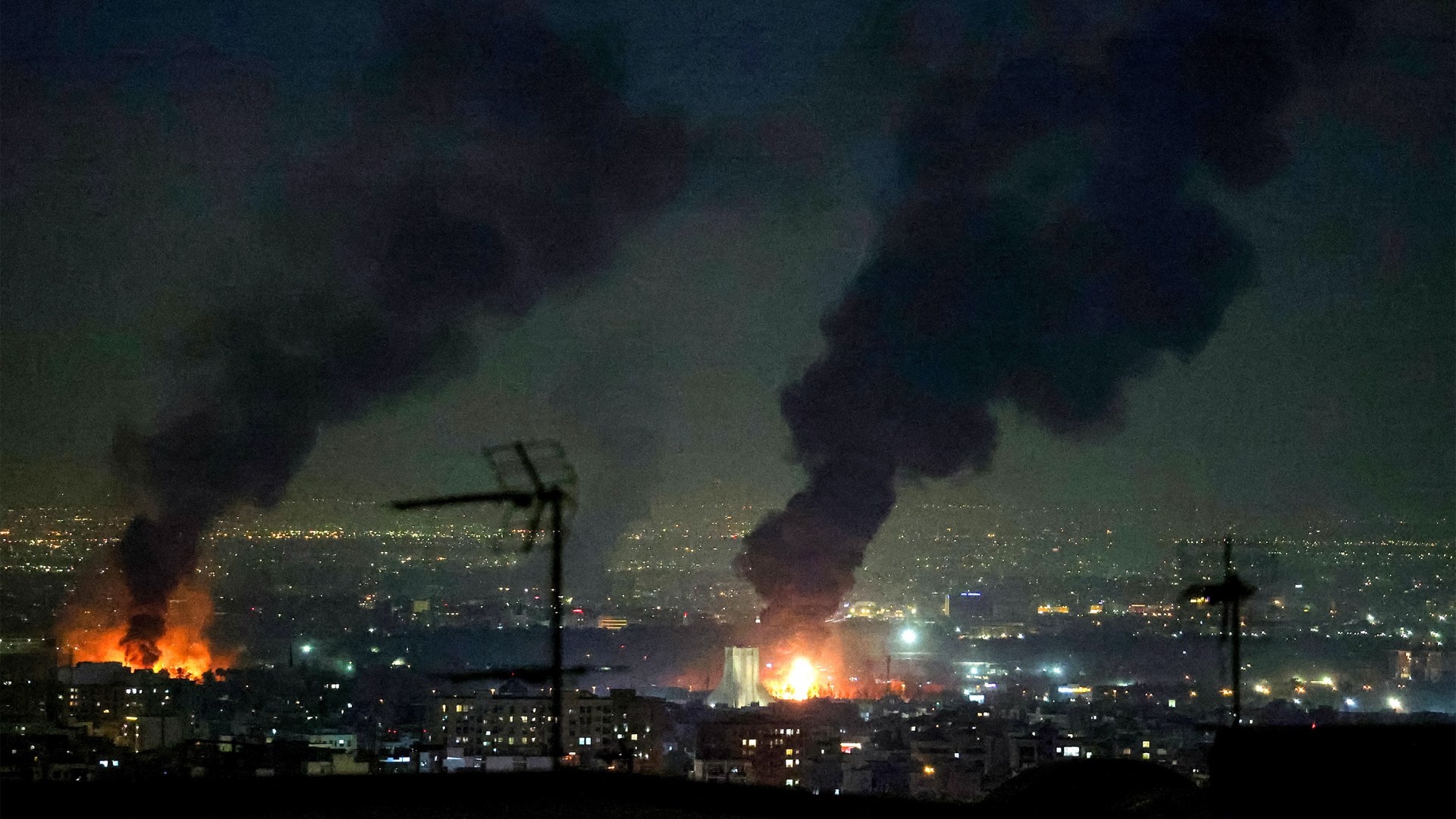
In recent weeks, the principles of just war theory have been raised for all to consider as politicians, pastors, laypeople, and members of the military debate the war in Iran. Even many supporters of this administration and of this war repudiated President Donald Trump’s reckless and immoral statement on April 7: “A whole civilization will die tonight, never to be brought back again. I don’t want that to happen, but it probably will.” Such rhetoric, a casual threat of genocide, is beyond the pale.

Sometimes it’s hard to convince my students that Christian theology matters. But this month, as my Christian ethics class turned to exploring just war theory, all I had to do was point to the news.
Yet as much as this venerable tradition has shaped our thinking and laws, most believers aren’t conscious students of just war theory. Among those who are, my impression is that, for Protestants and Catholics alike, the balance of the debate has fallen against the idea that this war was justified by the theory’s standards. As much as it has been misused to approve unjust conflicts in the past, then, the theory still has teeth. It is not merely an academic artifact. And whether they know the theory’s terminology or not, American Christians are still capable of saying that while some wars might be justified, this one is not.
At its best, therefore, just war theory gives Christians a moral and political toolkit for discernment, and the last two months have shown this toolkit at work. But set aside the particulars of the argument about Iran for a moment, if you can. I want to step back and draw our attention to a feature of the political debate above and beyond the intra-Christian debate.
Here’s what I mean. The Christian debate, when conducted by believers who are not pacifists, is about whether or not this conflict is justified according to the standards of just war theory. If the answer is no, the necessary conclusion—whatever else one thinks of the conflict and the oppressive regime in Tehran—is that the war shouldn’t have been started and ought to be brought to an end as soon as possible. In other words, the shared premise is that just war theory calls the shots.

The political debate is different. Since pressure mounted for the United States to strike Iran earlier this year, it’s been clear that many Americans who support the war don’t accept the principles of just war theory at all. They seem frustrated by its role in the debate, befuddled by Catholics and evangelicals raising concerns and proposing policies that would hamstring the president and the military.
In a recent piece at National Review, commentator Noah Rothman articulates this frustration with admirable openness:
the theological principles [of just war theory] may be beyond me, but those principles appear to be in tension with elementary best practices in statecraft. Surely, the American public would regard the lethargy apparently prescribed by dogma as unacceptable if that lethargy led to an Iran that could not be disarmed with the speed and efficacy that has so far typified this war. Righteous or not, asking any American president to observe that kind of passivity would be asking quite a lot.
Rothman seems surprised and alarmed to discover that just war theory is meant to make war slower, riskier, costlier, and less efficient. No nation, he supposes, could tolerate that, so Washington should prosecute its war without your precious principles, thank you very much.
I find this frankness deeply clarifying. It makes unmistakable both the “elementary best practices in statecraft” and the ineradicably Christian substance of just war theory. The former is about global strategy, national interest, and realpolitik. The latter is about the will of God for upright human action no matter the consequences.
Following just war principles might well leave a nation less secure, for they are not designed to maximize security. They are designed to avoid evil even if good might come from it. The whole point of just war theory is to make war slower, riskier, costlier, and less efficient. Strategic advantage has no traction here.
related


Consider the question of a surprise strike. “Surprise is a substantial military asset,” Washington Post columnist George Will wrote last month. “If the Trump administration had briefed legislators in advance, could it have achieved the targeted killings crucial to its regime decapitation objective—an objective intended to economize violence?”
The context of these comments is the lack of both formal public debate and congressional authorization of the war. Will’s argument is that, had there been a long run-up to a formal declaration of war on Iran, the United States would have lost a key advantage. The possibility of a surgical strike decapitating key political and military Iranian leaders would have been lost.
Maybe, although the weeks of rumor and anticipation before bombs began dropping meant that the war itself was not a surprise, even if a particular strike was. Yet even if Will were right, he is working from a mistaken premise: namely, that the end justifies the means. It does not.
Will self-describes as an “amiable, low-voltage atheist,” but no Christian can think this way. Questions of speed, efficiency, advantage, and “economize[d] violence” simply have no place in a Christian approach to war. If justice requires that we shoulder greater risk or cost in the prosecution of a war, then we have no other choice. Utilitarian calculations promise an end run around what we owe to God and neighbor, but this is a temptation we must resist. Just ends cannot excuse unjust means.
This is a vital principle of politics in issues well beyond war. “The structures and ceremonies of self-government certainly do take away some initiatives from one-man rule and impose burdens on the imperial presidency,” the Catholic writer Michael Brendan Dougherty observed in his response to Will, with more than a little irony. “That’s the point.”


Yes, involving the American people and our representatives in the process of democratic deliberation over going to war—or any policy proposal—is burdensome. Yes, it takes time. Yes, as a result, it is likely to lessen certain strategic advantages. So be it. This is a price worth paying, given the gravity of war and the importance of self-governance. It is exactly why declaring war is the prerogative of the nation’s representative body: to slow it down.
Beware the exhilaration of war, which perennially threatens to override our reason with its own seemingly irresistible logic. That is why just war theory exists: to help us think when thinking is the last thing we feel capable of doing. Its claims on us are not detached from reality. Rather, it is we who lose touch with reality in times of war.
It may feel unfair to have to negotiate an ancient theological theory designed to make war harder. But subjecting efficiency, lethality, and even victory to higher principles is precisely its purpose. It reminds us that even—especially—in wartime, God and God alone is our judge.
Brad East is an associate professor of theology at Abilene Christian University. He is the author of four books, including The Church: A Guide to the People of God and Letters to a Future Saint.