





Wheaton College hosted a colloquium on the book of Deuteronomy in 2015, and we recently published those papers as a book. As we put it together, we hit a problem that has come up in other contexts: Do we call the contributors evangelicals?
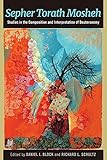
Sepher Torath Mosheh: Studies in the Composition and Interpretation of Deuteronomy
Hendrickson
467 pages
Continental Europeans (of which we had several) distinguish evangelisch, which means “Protestant,” from evangelical, which connotes hard-right fundamentalist. The latter may correlate with the way the North American media and politicos view “evangelicals,” but few, if any, at the table, are comfortable with that position—including the North Americans.
The contributors reflect a broad spectrum of theological and hermeneutical perspectives within evangelicalism, and all subscribe to the statement on Scripture that unites the fellows of the Institute for Biblical Research: belief in “the unique divine inspiration, integrity, and authority of the Bible.” But this statement is very general, neither declaring this to be a distinctly evangelical stance, nor prescribing or delimiting what sorts of hermeneutical approaches are deemed to fall within the label.
The search for a new label to replace evangelical is difficult. So we contented ourselves with describing our hermeneutic, rather than labeling it. Still, identifying the marks of a distinctly evangelical hermeneutic is precarious business, because few represent the paradigm described completely. However, we must begin somewhere.
First, evangelical biblical scholars treat the object of their study as Scripture, not merely as a literary artifact in a museum that may be dispassionately analyzed. Among other entailments, this means that we stand before the text with reverence and awe, and seek to draw from it spiritual nurture and instruction, even as we pursue our textual analysis.
Second, the goal of evangelical biblical exegesis is grasping the life-giving and life-transforming message of the Scriptures. Our primary objective is not historicist determination of the manner or even the contexts in which biblical writings were produced (given the lack of data on these matters our efforts are admittedly speculative), but establishing the authoritative meaning intended by the text.
Third, an evangelical stance toward the Scriptures is typically positivist, rather than suspicious. If the essence of critical scholarship is “the willingness not to take a text at face value,” the essence of evangelical scholarship is first to accept the face value of the text. The Scriptures were not written primarily as riddles, whose true significance is realized by reading against the grain. While the latter has its place and often yields interesting results, establishing the meaning of biblical texts requires reading with the grain.
Fourth, an evangelical hermeneutic is holistic. However the texts were produced, they have been preserved in the canon by the communities of faith as whole documents. This means that, while dividing the text into its constituent sources or redactions may be fruitful, in the end tensions within the text that are often used to identify editorial hands should be treated as essential features of the text, contributing to its final-form message.
Fifth, while not becoming a slave to any single method, evangelical scholars utilize responsibly whatever hermeneutical strategy may clarify biblical texts: source, redaction, form, tradition, lexical, literary, rhetorical, historical, and cultural analyses, as well as speech act theory. These are not methods to be feared, but rather to be harnessed in the pursuit of meaning in biblical texts.
Sixth, evangelical scholars base their conclusions on evidence, which means they treat alternative interpretations with respect (rather than disdain), and they repudiate ad hominem arguments.
Seventh, evangelical scholars view biblical writings (1) within the context of the entire canon, and seek to locate texts they are analyzing within the history of divine revelation, which climaxes in the incarnation, life, death, and exaltation of Jesus Christ as Lord, and (2) within the context of the process whereby the canon was produced.
Given these features, it is not surprising that evangelical scholars often feel a greater kinship with conservative Jewish and Roman Catholic scholars than with mainstream Protestant scholars. For many of us, our faith commitments are primary, and we approach the Scriptures with believing reverence and awe. In the Scriptures, we hear the voice of God, not merely the reflections of human authors.
Daniel I. Block is the Gunther H. Knoedler Professor Emeritus of Old Testament at Wheaton College. Richard Schultz is Wheaton’s Blanchard Professor of Old Testament.
Adapted from Sepher Torath Mosheh, copyright 2017 by Hendrickson Publishers, Peabody, Massachusetts. Used by permission. All rights reserved.







