Religion coverage in The Atlantic is typically well done. The magazine’s coverage of the neutering of religion from The Golden Compass was interesting for the way it treated both Hollywood and the anti-religious themes of the book on which the movie was based. Though the magazine retains the secular, above the fray, attitude toward faith of its New England founding, it also put Philip Jenkin’s article on the New Christendom on the cover in October, 2002, when his book describing the phenomenal growth of non-Western Christianity debuted.
So, the magazine’s March cover story (not yet online) on the literal battle between Christianity and Islam in Nigeria is equally well done, despite some mistakes.
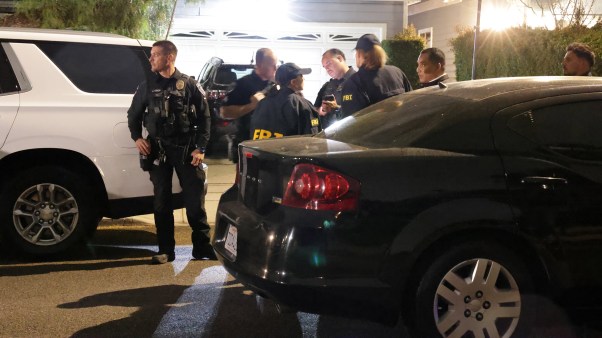
Eliza Griswold – daughter of the former presiding bishop of the Episcopal Church – writes from the town of Yelwa, where an attack that killed Christians in church in 2004 brought on a more gruesome response against Muslims killing hundreds. Yelwa is in Nigeria’s Middle Belt, which, Griswold writes,
marks the fault line between Christianity and Islam not only in Nigeria, but across the entire continent. A satellite image from Google Earth shows the Middle Belt as a gray-green strip between the equator and the 10th parallel, dividing the fawn-colored dry land from the vibrant sub-Saharan jungle canopy. It also separates most of the continents 67 million Muslims to the north from 417 million Christians to the south.
Because of the 20th century explosion of Christianity in Africa, by the year 2050, Griswold writes, the demographic and geographic center of Christianity will be in northern Nigeria, where the country’s Muslims live. This fact makes any tensions in the country religious ones. With 140 million people, oil revenues that never seem to help the people (half of whom live on less than a dollar a day) thanks to government corruption, and a changing regional climate that has wiped out many traditional livelihoods, the country has plenty of tensions.
“Every crisis is automatically interpreted as a religious crisis,” an Anglican archbishop says. “But we all know that, scratch the surface and it’s got nothing to do with religion. It’s power.”
Power, in this democracy (despite massive corruption) is a numbers game. Christians and Muslims compete for numbers – converts. And to do that, they not only use intimidation (Griswold quotes Archbishop Peter Akinola saying that Muslims do not have a monopoly on violence), Christians and Muslims appeal to want what Nigerians need most – prosperity.
Pentecostalism has brought along American prosperity theology. (Griswold doesn’t seem able to separate Pentecostalism from prosperity theology.) And, in the competition for souls, Nigeria’s Muslims have come up with an Islamic approach to making people wealthy.
Griswold suggests that, while violence between Christians and Muslims is still a threat, this sort of competition – non-violent pursuit of winning hearts and minds – is growing.
Hopefully she’s right. The stories of murder, rape, and intimidation (all justified by either side’s scripture) are horrifying. Yet, Griswold doesn’t offer much to hang that hope on other than the story of an imam and a pastor who gave up leading militias to work together for peace. It’s inspiring, but she gives little evidence of their effectiveness. And Griswold, despite her father’s Christian leadership, doesn’t seem to fully understand the Christianity she’s reporting on, much less Islam. For example, she says Pentecostals “share an experience of the Holy Spirit, or the numinous, that offers the gift of salvation and success in everyday life.” (italics are mine. At least she didn’t spell it like Rob Bell.) And Muslims have yet to show that they can treat minorities as equals, instead of “protected” classes or worse.
Still, the article, and it’s companions by Alan Wolfe (on how religiosity really is decreasing with modernization) and Walter Russell Mead (on American evangelical political moderation) are worth reading.