Theology

Why I Changed My Mind on Bible Prophecy and Politics

Columnist

“It is not for you to know times or seasons that the Father has fixed by his own authority.”

The prophet Ezekiel.
Christianity Today March 11, 2026
Illustration by Christianity Today / Source Image: WikiMedia Commons

This piece was adapted from Russell Moore’s newsletter. Subscribe here.

Every time there’s a war or rumors of war in the Middle East, Americans start arguing over prophecy charts again. The onset of the Iran war is no exception. People debate about unverified reports—whether US service members are told they are fighting for Armageddon or whether some US or Israeli leaders expect a third temple in Jerusalem to result from this tumult in fulfillment of dispensationalist ideas about prophecy.

Prosperity gospel preacher John Hagee is still here, arguing from his pulpit that the Iran war is the prompt the Bible predicted for the end times, just as he was doing almost a quarter century ago with the Iraq War. There’s a relationship between how we view the end of the world and how we see the political events around us, but I’ve changed my mind on what that relationship is.

My doctoral dissertation was about how viewpoints on last things shaped evangelical Christian attitudes toward social and political engagement. In agreement with theologian Carl F. H. Henry’s important book The Uneasy Conscience of Modern Fundamentalism, I argued that overly utopian views of the thrust of history led to social gospel activism and thus usually to disillusionment. And I argued that overly pessimistic views of the kingdom of God—that history spirals downward until the sudden, cataclysmic coming of Christ, as in popular premillennialism—tend to deaden concern for social action that isn’t about winning souls to Christ.

I still agree with all of that. An understanding of the kingdom of God as a wholly present reality that can be brought in by human effort ultimately spawns a religion that is about social restructuring at the expense of personal renewal. And an understanding of the kingdom of God as a wholly future promise sees the world as a doomed project, for which the only remedy is for people to be rescued, soul by soul. Where I’ve changed is that I wonder whether, in 21st-century America at least, it’s not so much that end times theology influences politics as the other way around.

With the “kingdom now” category, we’ve had an entire century to see its trajectory. As Henry suggested in the 1960s, some churchgoers who aren’t sure whether Isaiah or Ephesians are the Word of God or not are fully confident about God’s position on energy policy. But these parts of the church tend not to have prophecy charts—unless it’s what “side of history” one should be on as it progresses.

What about the prophecy charts, though? Is that really the opposite problem—that these Christians are too focused on heaven, and their place in it, to be concerned about the things of earth? At least in some eras, the temptation of American Christianity has often been caricatured as a hyperspiritual otherworldliness. Is this why these Christians tend to think of love of neighbor only in the most individual and personal terms? For some, undoubtedly, that is the case. But for most of us, the fundamental problem is not otherworldliness but carnality. It’s not that we love the present world too little but that we love it too much.

What changed my mind on this is, first, how malleable the prophecy charts actually are. Here, I don’t mean the way certain pronouncements about the imminent end of the world have failed so repeatedly. The 1970s or 1980s, we were told, were the “terminal generation” because of the way Ezekiel clearly prophesied the European common market or the Soviet Union’s invasion of Afghanistan. Then the 1990s were the obvious end, because Saddam Hussein was allegedly reconstructing the Babylonian Empire.

When these things turn out not to be so clear after all, none of the prophecy teachers ever says, “Well, I was wrong. Let me go back to the Scriptures and see where I failed.” They usually just move to the next confident set of assertions. But the real problem of malleability isn’t so much the kind that takes years to track.

Instead, the problem is that now we can count on hearing certain answers whenever any political issue arises. For those who use Bible prophecy, the answer to “What will lead to the second coming of Christ?” always lines up with whatever their political tribe supports and can change as fast as that changes.

If the Iran war wraps up soon and the Iranian people finally have a free republic instead of a dictatorship, that will be, for some of these people, clearly the result foreseen in the Book of Daniel. If the war drags on for years, people who support the war will say, “Support the president,” and people who oppose the war will say, “This is the disaster the Bible foretold right before the coming of Christ.”

For some of these people, when the tribe was “America first” with no foreign interventions, that was God sparing the country from the “globalist” New World Order, and it was necessary for the second coming of Christ. And for some of these same people, now that President Trump is intervening in Venezuela and Iran, all this is prophesied, the right thing to do, and necessary for the second coming of Christ.

All of that is human. Very human. All too human.

But it’s more than that. It’s also that many people’s understanding of the kingdom of God seems to have different implications depending on the political or social questions at hand. For some on the “kingdom now” side, ushering in the kingdom meant supporting freedom, justice, and self-determination and denouncing authoritarianism and empire—unless the empire in question was the USSR or the authoritarians were Cuban.

And for the “kingdom future” people, there was always what we could call “the weave.” If the question was prohibition of alcohol, then God calls us to social action, to be salt and light in our world. If the question was Jim Crow, police-state segregation, then God forbids us to be distracted from saving souls by bringing politics into the church. And the same dynamic is at work in the same sectors today. Taking on abortion or gambling is Christians standing up for what is right (and I agree on both of those), but other matters the Bible takes up repeatedly—such as the treatment of the poor or partiality toward people on the basis of their race or ethnicity—are “social justice” and a “distraction.”

And so it goes.

Twenty-five years ago, I argued that an “already, not yet” framework of the kingdom is necessary for Christians to stop choosing between grace and justice, between love of God and love of neighbor, between regenerate hearts and thriving communities. I still think that. What I would change is that it’s not so much that we miss the what of the “already, not yet” but the who.

In what might be one of the most important passages in all of Scripture, Jesus said to his disciples, “The kingdom of God is not coming in ways that can be observed, nor will they say, ‘Look, here it is!’ or ‘There!’ for behold, the kingdom of God is in the midst of you” (Luke 17:20–21, ESV throughout). Jesus himself is the kingdom of God in person. And he tells us not to be shaken by events, not to be conformed to this present age, but to keep looking to him.

Once we get bored by the actual Messiah, we will look for others. Once we lose our awe at the kingdom of God, we will look for other kingdoms. But the Christ of the kingdom frees us—from carnality pretending to be otherworldliness, from fear pretending to be conviction, from Machiavellianism pretending to be worldview, and from tribalism pretending to be community.

The kingdom of God—present already but not yet fulfilled—tells us what to care about (justice, peace, the poor, the vulnerable) while also shielding us from the disillusionment or bloodthirstiness that can come with expecting to have to bring the fullness of that kingdom on our own. As embodied in Jesus, the kingdom concerns us not just with outcomes but with ways and means, even as it prompts humility on how to get to those common goals.

I have no idea what will happen in Iran. I have no idea what will happen in the modern state of Israel. I have no idea whether we have 5 more minutes or 45 million more years before the Apocalypse. Jesus said, “It is not for you to know times or seasons that the Father has fixed by his own authority” (Acts 1:7).

Who needs a prophecy chart when we already have the Way?

Russell Moore is editor at large and columnist at Christianity Today as well as host of the weekly podcast The Russell Moore Show from CT Media.

Ideas

You Don’t Need a Decoder Ring Each Time You Suffer

Two theologians and a psychologist on offering comfort for those in pain.

Several images of sad people in medical settings.
Christianity Today March 11, 2026
Illustration by Elizabeth Kaye / Source Images: Unsplash

“I know God is trying to teach me something. I just can’t figure out what,” Nicole said. She had suffered a devastating romantic disappointment, and she was hurt and angry—angry at the young man who had broken things off and angry at God, even though she was trying to behave in the “right” Christian way. So she had asked to meet me (Liz) for coffee to help her figure out what lesson she was supposed to learn. I worried more about the disruption in Nicole’s relationship with God than about her romantic heartache.

In looking for a decoder ring for her heartache, Nicole, like many of us, absorbed a way of thinking that sounds biblical but isn’t. In fact, “Everything happens for a reason” has become so ubiquitous it has drawn pushback. Kate Bowler’s best-selling memoir of that titlecaptures the common frustration when people offer the platitude as a comfort. The phrase has similar verbiage as Romans 8:28, but it empties the verse of its substance, replacing it with a cheap and easy bumper-sticker theology. Regrettably, it confuses cause with purpose and assumes we can decode God’s intentions.

Asking why God caused or allowed suffering quickly gets us into complex tangles. Often referred to as theodicy, a “defense of God,” this idea names our cultural obsession to find an answer for pain. We might also be surrounded by well-meaning friends who assume sufferers are primarily struggling with why God would allow difficulties and how God is still good when he allows us to hurt. Defaulting to some version of “Everything happens for a reason” is a vague way to imply that God is in control and has good intentions. But it isn’t psychologically or theologically helpful.

As we’ve found in our research, those who suffer are not primarily asking why questions but how questions. We interviewed 81 Christians with past or current cancer diagnoses, and when we asked whether they struggled with why they got cancer, many of them replied, “Why not?” They pointed to the brokenness of the world as the cause of their suffering. Instead of asking why questions, they were trying to figure out how to get through the week. When we assume sufferers have primarily philosophical questions, we may misdiagnose their problems and thus apply the wrong remedy.

In another study, we asked a large sample of practicing American Protestant Christians going through suffering how much they endorsed some of the most popular theological explanations. These included the idea that God exerts control and plans for every detail of our lives (“Everything happens for a reason”); the assumption that obedience to God always results in success, prosperity, and freedom from suffering; and the belief that God allows suffering to cause us to grow. We expected that holding theological beliefs that answered the why question would help mitigate the challenge. But that wasn’t the case.

Most of the proposed theodicies were irrelevant to people’s suffering, and how strongly they believed in a particular theodicy made no difference. Two of the theodicies actually correlated with worse outcomes: The more people believed God controls every detail of our lives and the more they saw God as allowing suffering to make them grow, the more distress they showed. When we try to comfort others by explaining why God allowed their suffering, it may add to their distress. 

This doesn’t mean God never uses suffering pedagogically—Scripture clearly shows that he does (Heb. 12:7–11). But there’s a vital difference between God’s ultimate purposes and our attempts to decode the meaning of each trial. Instead of focusing on defending God’s actions, we should help people to see that God is present in their suffering and will never leave or forsake them, no matter how bad it feels. Even unto death, God remains with them and works to redeem the suffering. 

That doesn’t mean we can’t help those who suffer. Instead of focusing on the why, we can focus on the how and the what for. After all, the Bible says very little about why God allows suffering, but it does provide abundant resources for how to go through it. Questions like “How is God showing up?” or “What might God be up to?” are most helpful. In our interviews, many participants said they cared deeply whether God had a purpose for their suffering.

Saying God has a purpose for suffering neither negates divine sovereignty nor means the point of suffering is a lesson. A believer’s suffering is not meaningless. This is different from saying God has directly caused the suffering, thinks it’s good, or has some immediately discernible purpose. 

A brief theological clarification will help. From Genesis through Revelation, Scripture affirms God as the king and sovereign over all creation. In one sense, as creator and sustainer of this world, God is responsible for all things. His holiness and justice imply that he will ultimately set the whole world right.

In our current place in history, however, the world and our lives are broken and suffering. In handling these tensions, the ancients found it helpful to distinguish between primary and secondary causation: We live, move, and have our being in God (Acts 17:28), so all we do is possible only because of his sustaining presence and power. (God is the “primary cause” of all things.) Yet the ancients also spoke of secondary causation. For example, while terrorists have beating hearts and continue to breathe because God sustains them, that doesn’t mean God thinks it is good when they hijack airplanes to fly into the Twin Towers. God condemns those actions. He is not indifferent to wickedness, injustice, human suffering, and the disruption of justice and peace. We know God is sovereign and opposes greed, infidelity, and abusive violence—but somehow, in patience and grace, God sovereignly allows these actions to occur under his rule. 

The participants in our surveys revealed helpful insights into pastoral care. They saw that God could take their suffering and turn it into something good. This didn’t require them to call the suffering good or to adopt clichés in place of good theology. As one participant said, “Instead of saying, ‘Why is this happening?,’ I said, ‘What do you want me to do with this?’” That turn from asking why to affirming, “God is with me in the suffering, so how should I respond?” made all the difference.

While Romans 8:28 can be a superficial answer to suffering, it is also a pivotal and powerful declaration of God’s intentions. God takes the brokenness of our circumstances (the “all things” of the verse) and makes them useful in his loving purposes. The verse says nothing about causes but much about purposes.

It’s important to look at the verses surrounding Romans 8:28. Verse 29 tells us “good” means becoming like Jesus. Verse 30 shows the arc of God’s actions: calling, justifying, and glorifying. The good stands beyond a solid marriage or a healed body, though we should also bring those goals to our Father. Even becoming like Jesus is not the final purpose of suffering but a necessary step toward the ultimate goal: being drawn into loving closeness with God our Father as beloved members of his family. We see this through the rest of the chapter: Verses 14–18 show the Spirit’s role in revealing God’s fatherly love, and the chapter ends with the assurance of this abiding love, manifest in Jesus’ crucifixion and resurrection, that survives even death.

Romans 8, from start to finish, shows God’s grand and ultimate purposes that he accomplishes through our suffering. More specific purposes are left unexplained. Is he building courage in us? Perhaps. Is he helping us to become more compassionate? Maybe. Is he providing opportunities for us to point our friends and neighbors to his goodness? Could be. 

While it can be helpful to recognize some of the ways God uses our pain, trying to help people find the sole reason for their suffering runs the risk of trivializing it. I (Kelly) recently spent time with an older man who suffers from chronic and immobilizing pain. He told me he had thought his sanctification would slowly improve, especially since suffering is supposed to draw a person near to God. But his experiences have been up and down through the years. Some days were full of spiritual sweetness, while many were filled with wrestling with sin in ways that felt suffocating.

What characterizes those who come through suffering well? Earlier, we noted that most—about two-thirds—of our interviewees did not struggle with questions about why their maladies happened. Two things characterized these people: First, they leaned into God’s loving control over their circumstances, reporting striking experiences of God’s availability and nearness. Second, they had intellectual humility about both God’s reasons and his purposes for allowing their cancer.

Those who weathered their diagnoses best weren’t those who had found “the reason.” They were those who reacted like the participant who concluded this:

God has brought me through this cancer for a reason. And I don’t understand it. I don’t really have an answer as to why I think I got cancer. But do I have a closer relationship now with God? Yes. Do I understand where my home really lies? Yes. It’s not going to matter, because in the end I’m going to be with the Lord. What I think I’m going to need to understand may not be that important when you get there.

This is the intellectual humility—and relational confidence—that carries believers through. This is also why the best preparation for our suffering is not to study philosophical treatments of theodicy but to grow in intimacy with and healthy dependence upon God.

If you’re in Nicole’s position, suffering and searching for the lesson, give yourself permission not to know. God’s purposes may be larger than you can see, longer than your lifetime, or simply not yet revealed. Trust that not knowing the purpose doesn’t mean there isn’t one. What God has revealed is his desire to draw you closer to him—and his desire to be present in your suffering, loving you and working all things (even terrible things) toward the good of making you more like Jesus and in this way helping you experience how “wide and long and high and deep” is his love in Christ (Eph. 3:18). 

Kelly M. Kapic is the author and editor of over 20 books and holds the honorary chair of theology and culture at Covenant College. Liz Hall is professor of psychology at Biola University and associate editor of Psychology of Religion and Spirituality. Jason McMartin is professor of theology at Biola University. The authors’ cowritten book, When the Journey Hurts, releases in April.

Ideas

We Should Demand More from MAHA

Contributor

RFK Jr. and surgeon general nominee Casey Means identify real problems in American health and medicine. But their solutions are lacking.

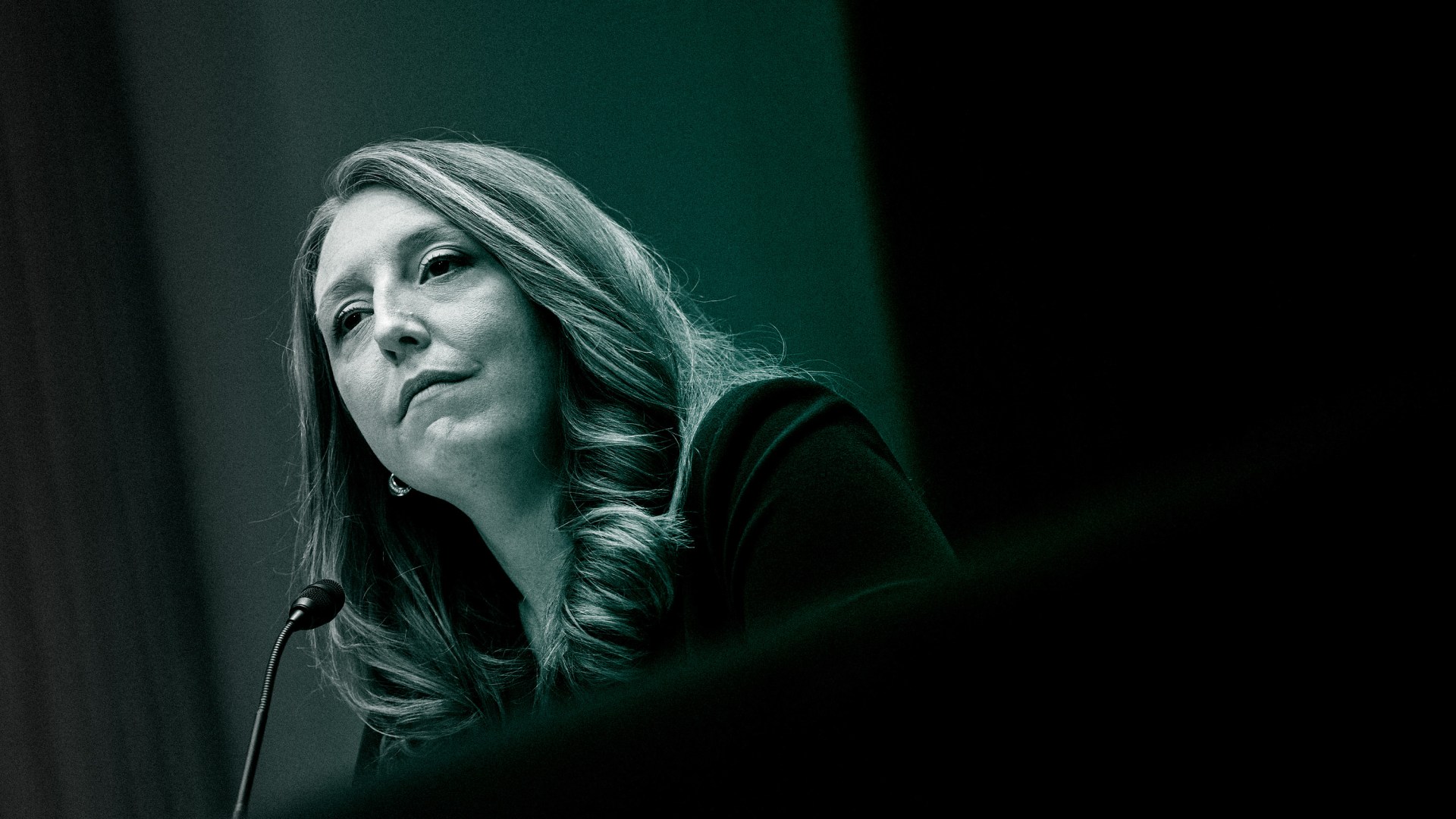
An image of Casey Means.
Christianity Today March 11, 2026
Getty / Edits by CT

President Donald Trump’s nominee to be surgeon general, Dr. Casey Means, has made a lot of good points about the flaws in America’s health care system and our general approach to health and medicine. The Make America Healthy Again (MAHA) movement started by Health and Human Services secretary Robert F. Kennedy Jr. has observed a lot of problems that need to be fixed. Unfortunately, neither Means nor the rest of the MAHA movement has much in the way of solutions.

In Means’s book Good Energy, she writes that many of our health problems today are the result of “too much sugar, too much stress, too much sitting, too much pollution, too many pills, too many pesticides, too many screens, too little sleep, and too little micronutrients.” Some of those things are more dangerous than others, but everyone agrees that too much sugar and not enough exercise are bad. A policy agenda focused on these hazards to our health would be welcome.

Unfortunately, RFK Jr. and the institutional MAHA movement have little to show after a year at the helm.

They’ve goaded individual manufacturers into taking artificial dyes out of certain products—at best a symbolic victory and at worst, in the words of farmer Garth Brown, “playing into the hands” of food companies that got us into this mess. They’ve completely folded on pesticides, yielding to agribusiness advocates within the Trump administration.

They’ve sowed doubt about vaccines. They came out with a new food pyramid that seems to reflect advances in scientific knowledge, but without any other policy directives it’s unlikely to change anyone else’s behavior. If significant improvements in health arrive during the next few years, it’s more likely that the wide rollout of GLP-1 drugs like Ozempic will be responsible than social media posts from the HHS secretary.

Changing health behaviors is critical to getting control over chronic diseases. Means complains in her book that doctors are too quick to prescribe pills when “an ultra-aggressive stance on diet and behavior would do far more for the patient in front of them.” Means, who didn’t finish her ear, nose, and throat residency and doesn’t hold an active license to practice medicine, makes a good point. But has she ever sat with recalcitrant patients and tried an “ultra-aggressive stance on diet and behavior” with them?

Anyone who has practiced primary care medicine, as I have for over a decade, will tell you it’s not as simple as that. In fact, most patients will avoid coming back to your office if you try to be “ultra-aggressive” about any behavior in their lives. Means and RFK Jr. overestimate the power that individual lectures from doctors have on their patients’ choices and habits, which is not surprising considering that neither of them has ever treated chronic diseases like hypertension and diabetes over the long run.

Hyping the dangers of ultraprocessed foods may get lots of views and likes on social media, but it doesn’t tip the scale for a tired mom who just wants an easy dinner for her kids on a Wednesday night in between school and soccer practice. Accusing doctors of prescribing too many pills sounds good, but doctors who are dealing with real people in their offices prescribe pills because they want their patients to get better. What will make a difference, then?

Perhaps the most important thing that can be done at an institutional level is finding ways to make good food cheaper and more easily available. The MAHA movement has long called for a reduction in subsidies for crops like corn and soy that get turned into ultraprocessed food, but so far the Trump administration has not touched those payments, and the price of fresh fruits and vegetables has not changed much in the past year. The Department of Health and Human Services should also work with Congress to improve school lunches, which will require more funding because good food is not always the cheapest.

If we want more intensive lifestyle changes and help for the people most affected by chronic diseases, then dedicated community health nurses are more effective and less expensive than doctors. A lot of MAHA content is directed toward people who have the money to buy pricey organic food. But these nurses and other community health promoters are far better at caring for people who have suffered the most from decades of too much sugar and too much sitting.

Means quit a surgical residency, but her interests seem far more suited to primary care. In fact, I can imagine quite a different path for Means had she simply done her training in a specialty, like family medicine or pediatrics, where it’s still possible (if increasingly unusual) for patients to have continuous, lifelong relationships with their doctors. She very briefly had a boutique “functional medicine” practice where she could not prescribe medications, but in recent years she has focused far more on selling specialty products with unproven health benefits. Would she have pursued a career as a health influencer—including taking psychedelics and using mediums to open herself up to demonic powers—if her medical career had been built around meaningful interactions with patients

I train medical students, interns, and residents nearly every day as part of my work as a family doctor. These trainees, because they have more classroom experience than clinical time treating patients, often come up with diagnoses and prescriptions that sound good on paper but won’t work because they don’t have the wisdom that comes after seeing and treating many patients. They don’t know what they don’t know, and when they’re not carefully supervised, they can do more harm than good. 

Means reminds me of them, demonstrating the overconfidence that comes with a little bit of knowledge and the foibles of a movement better at social media than governing or healing. Americans should demand a better candidate for our nation’s top doctor—and demand more from the MAHA movement as a whole.

Matthew Loftus lives with his family in Kenya, where he teaches and practices family medicine at a mission hospital. His book Resisting Therapy Culture: The Dangers of Pop Psychology and How the Church Can Respond is forthcoming from InterVarsity Press.

Ideas

Hope for Freedom for Iran, but Expect a Mess for America

Staff Editor

Trump rightly campaigned against “endless wars” and nation building in the Middle East. His war on Iran is likely to repeat those very errors.

Smoke rises from a strike on Tehran on March 3, 2026.

Smoke rises from a strike on Tehran on March 3, 2026.

Christianity Today March 11, 2026
Atta Kenare / Contributor / Getty / Edits by CT

Back in the early 2000s, in the final days of the American bumper sticker, there was one that repeatedly caught my eye. It was designed to look like an odometer or the reels on a slot machine—those little wheels with numbers or letters that rotate to track distance or to spell a word. This one had four spots, the first three set to IRA. At the end, a Q was sliding out of the fourth spot, and an N moved into its place.

That slide was slower than many anticipated, but two decades later, the United States is at war with Iran. Anyone of good conscience must hope it all works out for the Iranian people: that civilian lives are scrupulously spared, that the oppressive theocracy in Tehran falls, that a free, safe, and prosperous Iran soon emerges from the rubble.

That’s certainly my hope. But the past quarter century of US foreign policy suggests that it’s a hope in vain and that Iran will follow Iraq in more than mere chronology.

American wars of regime change in Iraq, Afghanistan, and Libya proved bloody, costly, and counterproductive, rife with unintended consequences for the security of the United States and the stability of the greater Middle East. And the broader record of recent US military intervention in the region—in Yemen, Somalia, and Syria—is hardly more encouraging. It’s no coincidence that our last three presidents all campaigned on ending this kind of war.

And what our government is doing in Iran is a war, contrary to what some feckless congressional dissemblers have claimed. Much like former president Barack Obama’s intervention in Libya in 2011, President Donald Trump’s strikes on Iran constitute a war without constitutional authorization, national debate, demonstration of necessity, or a clear endgame. Holding on to hope almost feels like a fool’s errand.

Consider the legal basis for this war—or rather, its absence. The US Constitution vests Congress with the power to declare war, and the 2003 invasion of Iraq was prefaced by intense national debate and a vote to authorize the use of military force. That vote happened in October of 2002, and the invasion began in March of 2003.

This time around, it was apparent for weeks that President Donald Trump was seriously considering strikes on Iran. But he didn’t bother to ask Congress for approval, and Congress didn’t bother with debate.

Only after the war started did our lawmakers muster some action—if it even deserves that name. The Senate voted down a resolution that would have ended the war unless it were explicitly authorized by Congress, but those wastrels in the House truly outdid themselves, voting not to vote by blocking consideration of a nonbinding resolution. These votes largely broke along party lines, as is typical of disagreements on presidential power. Yet even Democratic lawmakers who say they’re opposed to the war show little sign of having spine enough to stop it.

The most prominent dissenter on the Republican side is Kentucky’s Sen. Rand Paul, who sponsored the failed Senate bill. “Americans were not asked if they would bear the burdens of war,” Paul wrote in an op-ed for Fox News. We were merely provided with a social media announcement in the small hours of the morning.

“Because there was no national discussion about going to war, we do not know whether ground troops will be used,” Paul continued:

We have no idea how long the war will last. We have no idea who will lead Iran after the death of the supreme leader. And we have no idea how many casualties the American people are supposed to tolerate. We cannot know the answer to these questions because no one bothered to make the case that war with Iran was worth the sacrifice.

These questions of necessity, purpose, and outcome are not trifling matters. They cannot be brushed aside with the false urgency presidents tend to foster when they don’t want to wait for congressional approval and popular support. (A Reuters/Ipsos poll published March 1 found just one in four Americans back the war.)

Recent comments from Trump indicate he has expansive ideas about Iran. Initially declaring that “all” he wants is “freedom for the people,” he has since added eliminating Iran’s nuclear program (ostensibly “obliterated” in strikes last summer), for Iran to have “no ballistic missiles,” and for “somebody that is rational and sane” to lead in Tehran. In a particularly bizarre moment, he speculated that Iran’s military forces may simply give their weapons to the very protesters they’ve been shooting. And as for timeline, there is none: “I have no time limits on anything,” Trump told Time magazine. “I want to get it done.”

That sounds suspiciously like the “endless wars” and nation building Trump campaigned against—and a boon for what’s left of the Iranian regime. Tehran remains in the hands of hardliners and has no hope of conventional conquest. But it might well be able to pull the United States into another generational morass, another ghastly waste of lives, money, and strength.

Late last month, Vice President JD Vance said there was “no chance” that “we’re going to be in a Middle Eastern war for years with no end in sight.” That too may be a hope in vain. With no meaningful accountability from Congress and a president known to keep every option on the table, we can only wait and see.

In the meantime, the sheer durability of this pattern—of the American people voting for presidents who promise peace, only to have those very presidents start more wars—is discouraging. Hopeless, even. That’s the word I want to use, overwhelmed with a sense of déjà vu here at the end of yet another article about lawless presidential warmaking in the Middle East.

In a sense, perhaps, hopeless is the right word where mundane politics are concerned. “As a dog returns to its vomit, so fools repeat their folly” (Prov. 26:11), and it never serves to put our “trust in princes, in human beings, who cannot save” (Ps. 146:3). These are the passages that keep coming to mind as I follow the news from Iran. What else can I think?

But difficult though it may be amid the rising fog of war, I remind myself—and you—that neither this war nor any war or evil will have the final say. That we can and should look to a day without grimly circular news cycles, without violence and tyranny and strife and lies. That death itself will be destroyed, along with “all dominion, authority and power,” all error and inhumanity and moral sloth (1 Cor. 15:24–28).

We can count on it. And we can look with greater eagerness for the coming of that prince of peace of Matthew 12, who “will not quarrel or cry out,” who brings “justice through to victory,” and in whose “name the nations will put their hope.”

Bonnie Kristian is deputy editor at Christianity Today.

Culture
Review

Review: ‘Project Hail Mary’

CT Staff

Ryan Gosling’s new science fiction movie shows an astronaut who saves the world and dies to self.

Ryan Gosling stars as Ryland Grace in Project Hail Mary.

Ryan Gosling stars as Ryland Grace in Project Hail Mary.

Christianity Today March 10, 2026
Jonathan Olley / Amazon MGM Studios

We modern people have a tendency to give in proportion to what we get. If I reach out to someone else to grab coffee and catch up, I expect that person to initiate next. If I give someone a book recommendation, it becomes the other person’s turn to give me one. If I drive some friends to the airport, then they will (hopefully!) give me a ride when I need one.

Some of these patterns are not inherently bad, but deep friendships—ones that can combat the hollowness of modernity and our own loneliness—require risk and discomfort.

I thought a lot about friendship and sacrifice, puzzling through how to form rooted relationships, in an unlikely place recently: while seated in a movie theater, watching an astronaut and his alien friend save the world.

Project Hail Mary, an earnest science-fiction novel from Andy Weir, author of the hit book-turned-movie The Martian, captured hearts when it came out in 2021. The film will do the same, with a wholesome story, pitch-perfect casting, and gorgeous effects. And it emphasizes exactly what many people need in this moment: the courage to forge true, sacrificial friendships.

The film’s main character, Ryland Grace—a brilliant science teacher who stumbles into a last-ditch space mission to save humanity—doesn’t necessarily start out as the sacrificial type.

At one point, before being pushed to the brink, Grace (played by Ryan Gosling) doubts his ability to put his own life on the line, saying he does not have the gene that would make him brave. Another astronaut retorts, “You just need someone to be brave for.”

Grace finds that someone far out in space: a helpful alien named Rocky, a large spider-y creature with no face and stone-like skin. Together, they model something countercultural and beautiful throughout Project Hail Mary: a friendship that includes sacrifice.

Rocky and Grace meet after having been alone in space for years. They work across interplanetary cultural divides—vastly different languages, gravities, atmospheres, biologies, and assumptions about life and science—to cultivate a friendship while also trying to save both of their worlds.

Defying all odds, they learn to rely on each other. They are vulnerable with each other. They sacrifice for each other. Their survival and the survival of their planets end up in the hands of the other to varying degrees. They give without expectations of getting something in return. Their friendship alters how they view their missions, themselves, and their lives. They show love to one another by dying to themselves.

This is the heart of the film. It’s not a preachy movie, to be clear. It’s completely charming, with the cast easily carrying a high-stakes premise convincingly, grounding its science-fiction elements in truly human performances. Gosling is hilarious, and Sandra Hüller as the stonefaced coordinator behind saving the entire planet humanizes the blunt character Eva Stratt from the book.

Grace is also relatable as an ordinary person picked for an extraordinary task, much like Frodo in The Lord of the Rings. Our hero is flawed, scared, and sometimes stupid, which makes the film all the more entertaining. 

The film’s score is also masterfully done, adapting to various environments subtly so as not to distract the audience while still drawing out the cultural differences between characters. The use of practical special effects instead of CGI to depict Rocky was charming and made for an impressive showing by the artists who worked on the film. The cinematography and visual effects are beautiful. The editing brings humor to an apocalypse.

The story takes place in a not-too-distant future. A strange substance called astrophage is eating the sun’s energy, threatening human life as we know it. Scientists and governments from around the world work together to come up with a solution, and their best option is—well, a Hail Mary.

Literally, they send a ship called the Hail Mary on a one-way mission to another planetary system that is also infected with astrophage but has a sun that is not losing its energy. The astronauts on board are signing up for a suicide mission in a last-ditch attempt to learn what secret this other system knows, hopefully saving the entire human race in the process. 

Christians can find plenty to love in that story line alone, with the mission itself a dim echo of Christ’s saving death that really did rescue the world—although Grace is a very reluctant savior. The film’s exploration of Grace’s friendship with Rocky pushes the theme even further, demonstrating a love that lays “down one’s life for one’s friend” (John 15:13) and carries “each other’s burdens” (Gal. 6:2).

It’s a beautiful sight to behold, especially in an era that has exaggerated the importance of emotional boundaries, transactionalism, and self-care over self-sacrifice.

It is much safer to give only what you expect to receive in return. And in this day and age, we harbor so many reasons to cut off relationships that we are often on edge with new friends. What if I find out my small group leader voted for someone different than I did? What if the person I chatted with at a meet and greet at church has a different stance on vaccinations? What if the person sitting across from me at work or at school uses artificial intelligence in a way I do not see as ethical? 

Emotional boundaries are important, but our overuse of them in forming friendships might inhibit our relationships from maturing beyond offering reciprocal airport rides. Relationships shouldn’t be like objects we review every once in a while under some Marie Kondo philosophy, throwing the ones that don’t spark joy into the trash. 

This is true particularly for Christians: “This is how we know what love is: Jesus Christ laid down his life for us. And we ought to lay down our lives for our brothers and sisters” (1 John 3:16).

Like Grace, we need to learn to see the people around us as worth our lives—and worth dying to ourselves. 

It’s easy to slip into fear: fear of unreciprocated love, of looking foolish, of sacrificing too much. But a friendship based on quid pro quo won’t get much deeper than the surface—it will only get to a point of knowing about people rather than truly knowing them. 

Relationships are how we experience the gospel and Christ through one another. We just need to be brave enough to be known and to know one another. With God’s help, we don’t have to go to outer space to learn how to do it.

Mia Staub is editorial project manager at Christianity Today.

Books
Excerpt

C.S. Lewis on the ‘Solemn Fun’ of Nearing the End

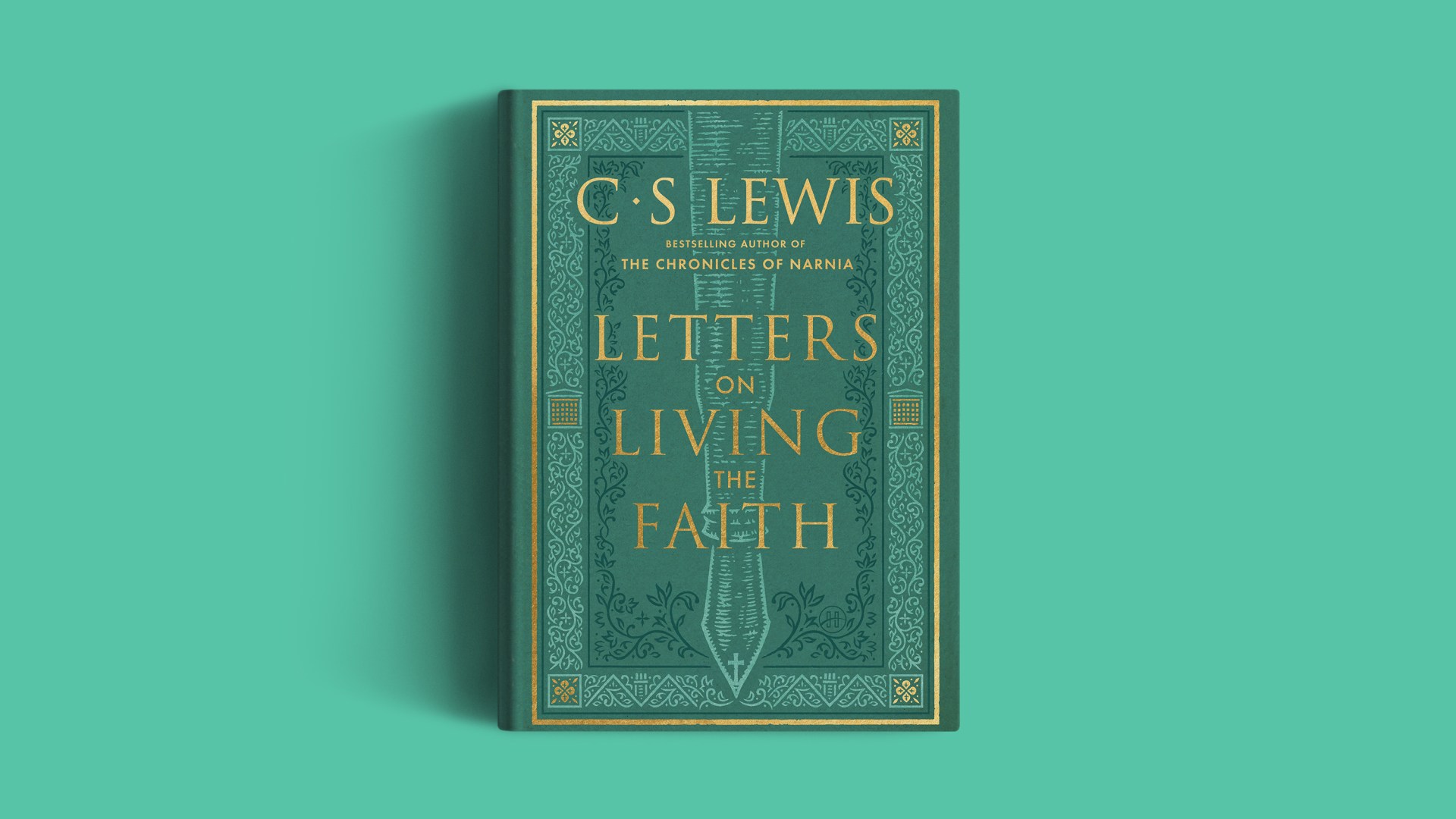
An excerpt from Letters on Living the Faith.

The book on a green background.
Christianity Today March 10, 2026
Illustration by Christianity Today / Source Images: Getty, HarperOne

On facing a possibly terminal illness

TO MARY WILLIS SHELBURNE, JUNE 17, 1963

Pain is terrible, but surely you need not have fear as well? Can you not see death as the friend and deliverer? It means stripping off that body which is tormenting you: like taking off a hair-shirt or getting out of a dungeon. What is there to be afraid of? You have long attempted (and none of us does more) a Christian life. Your sins are confessed and absolved. Has this world been so kind to you that you should leave it with regret? There are better things ahead than any we leave behind.

Remember, tho’ we struggle against things because we are afraid of them, it is often the other way round—we get afraid because we struggle. Are you struggling, resisting? Don’t you think Our Lord says to you “Peace, child, peace. Relax. Let go. Underneath are the everlasting arms. Let go, I will catch you. Do you trust me so little?”

Of course this may not be the end. Then make it a good rehearsal.

Yours (and like you a tired traveler, near the journey’s end) *

*Lewis died about five months after this letter was written. The correspondent lived another 12 years.


Coping with physical and mental decline

TO MARY WILLIS SHELBURNE, JUNE 28, 1963

I think the best way to cope with the mental debility and total inertia is to submit to it entirely. Don’t try to concentrate. Pretend you are a dormouse or even a turnip. But of course I know the acceptance of inertia is much easier for men than for women. We are the lazy sex. Think of yourself just as a seed patiently waiting in the earth; waiting to come up a flower in the Gardener’s good time, up into the real world, the real waking. I suppose that our whole present life, looked back on from there, will seem only a drowsy half-waking. We are here in the land of dreams. But cock-crow is coming. It is nearer now than when I began this letter.


The “solemn fun” of nearing the end

TO SISTER PENELOPE, SEPTEMBER 17, 1963

I was unexpectedly revived from a long coma—and perhaps the almost continuous prayers of my friends did it—but it would have been a luxuriously easy passage and one almost (but nella sua voluntade e nostra pace*) regrets having the door shut in one’s face. Ought we to honor Lazarus rather than Stephen as the protomartyr? To be brought back and have all one’s dying to do again was rather hard.

If you die first, and if “prison visiting” is allowed, come down and look me up in Purgatory.

It is all rather fun—solemn fun—isn’t it? **

*“in His will is our peace”

**C. S. Lewis died on November 22, 1963.

Excerpted from Letters on Living the Faith by C. S. Lewis and reprinted with permission from HarperOne, an imprint of HarperCollins Publishers. Copyright 2026.

Theology

A More Literal View of ‘the Body of Christ’

Scripture’s description of the church is more than a comparison to human anatomy.

Christianity Today March 10, 2026
Illustration by Elizabeth Kaye / Source Images: WikiMedia Commons

I have preached 1 Corinthians 12 more times than I can count. I have preached it at staff retreats with lukewarm coffee and chairs arranged in a circle that no one wanted to sit in. I have preached it at volunteer-appreciation dinners, between the baked ziti and the certificates. I have preached it to a teenager in my office who could not stop crying and wanted to know if she mattered. Every time, I said roughly the same thing: The church is like a body. We all have different gifts. The eye cannot say to the hand, “I have no need of you.” Find your role. Play your part. Do your thing.

All this is true. And nearly all of it is also very thin. It is thin the way a postcard of the Grand Canyon is thin—accurate enough, as far as it goes, but what it leaves out is the depth, the dizzying scale, the holy terror of standing at the edge of something that does not care whether you are ready for it.

For years, I preached Paul’s most radical claim about the nature of the church while reducing it to a motivational poster for volunteerism. I was not alone in this. The phrase shows up everywhere in evangelical life. It’s in our leadership books, our vision statements, and websites. And nearly everywhere it appears, it has been drained of almost everything Paul put into it. At the same time, we find ourselves fracturing along every imaginable line: race, politics, theology, and sometimes even class.  

My aim here is to argue—carefully, and from within the Reformed tradition that I love—that when Paul calls the church “the body of Christ,” he means something far stranger, far more demanding, and far more beautiful than what we have allowed him to mean. He is not merely reaching for a metaphor. He is making a claim about what is real—about who Christ is, who we are in him, and what it means concretely for the risen Son of God to remain present in the world through a people. If that claim is true, it should shake up how we practice church, not eventually but now.

Throughout the New Testament, Paul has a lot to say about the church. To the believers at Corinth, he writes, “For just as the body is one and has many members, and all the members of the body, though many, are one body, so it is with Christ” (1 Cor. 12:12, ESV throughout). So it is with Christ. Not “so it is with the church,” which could have been the analogy. But Paul says Christ.

He had already laid the foundation for this statement six chapters earlier, saying sexual immorality is bad not on abstract moral grounds but based on the body: “Do you not know that your bodies are members of Christ?” (6:15). The argument, however, only works if “body of Christ” is not a mere metaphor. Our bodies truly belong to Christ, and by the Spirit, we are united to the risen Lord in such a way that what we do in our bodies is done as members of him.

It is no accident that between chapters 6 and 12, Paul gives his most-extended teaching on the Lord’s Supper: “The bread that we break, is it not a participation in the body of Christ? Because there is one bread, we who are many are one body, for we all partake of the one bread” (10:16–17). At the table, Christians participate in their union with Christ while remembering his broken body and confessing the life they now share (11:26). 

From here, the conclusion is, again, not a metaphor. “Now you are the body of Christ,” Paul concludes, “and individually members of it” (12:27). Not “you are like a body.” You are the body. A present tense statement of fact about the deepest reality of the existence of the church. Sever any link in that chain, and Paul’s claim thins into illustration.

Paul is equally insistent in Ephesians: “And he put all things under his feet and gave him as head over all things to the church, which is his body, the fullness of him who fills all in all” (1:22–23). John Calvin, no mystic and no sentimentalist, read this verse and wrote something that should stop us in our tracks:

This is the highest honour of the Church, that, until He is united to us, the Son of God reckons himself in some measure imperfect. What consolation is it for us to learn, that, not until we are along with him, does he possess all his parts, or wish to be regarded as complete!

The Son of God, who fills all in all, “reckons himself in some measure” imperfect apart from his church? Yes. Not because Christ lacks anything in his divine nature but because he has chosen, in the mystery of the Incarnation, to bind himself so completely to a ragged, beautiful, maddening community of people that he will not be regarded as complete without us.

Various theologians, spanning from Thomas F. Torrance and Dietrich Bonhoeffer to contemporary academics like Simon Chan, have affirmed this view of the church. Some evangelicals might feel it gets too close to mysticism. But it is incarnational theology carried to its conclusion. The whole meaning of in-carna-tion, to be made into flesh, to be embodied, is that God entered bodily existence. And the force of our union with Christ means this bodily existence now includes ours.

Let me be precise here. To say the church is Christ’s body is not to collapse the distinction between Creator and creature. It is not to divinize the church. Christ is not reducible to the church any more than the head is reducible to the body. That distinction between head and members remains and must remain, or we turn ecclesiology into idolatry.

But saying the church is Christ’s body means, by the Spirit, our visible community genuinely carries Christ’s presence in the world. That’s why the grounds of our unity are not a comparison drawn from human anatomy but a person: the risen, incarnate Son of God.

If we take Paul at his word—and I mean seriously enough to let it rearrange the furniture of our churches, our budgets, and our consciences—several things about our common life come into sharper focus.

First, racial division becomes a crisis of Christ’s body. In Ephesians 2, Paul writes that Christ “has made us both one and has broken down in his flesh the dividing wall of hostility” (v. 14). The reconciliation of Jew and Gentile was accomplished in and through the body of Christ on the cross. To claim reconciliation with God while maintaining division from one another is, in Paul’s logic, incoherent.

But the history of the American church shows people have long tried to resurrect what Christ has torn down. If we really internalized the dividing wall came down in Christ’s flesh, Sunday morning would not revolve around preference or familiarity but would feel, quietly and stubbornly, like a gathering of distinct voices displaying Christ.

Furthermore, reconciliation events and discussions would not sit on the calendar as a program. Instead, we would have a posture of reconciliation. Congregants in the pew would not merely share theological convictions. They would share one another—bearing difference not as threat but as evidence of what crucified flesh had accomplished. And the unity on display would be explained not by affinity, taste, tribe, or strategy but by a Lord killed in the flesh and raised to gather strangers into one body.

We have already seen what this looks like. We can point to one example from 1906, at Azusa Street in Los Angeles. An interracial revival broke out under the leadership of William Seymour, a Black holiness preacher whose parents were once slaves. The revival violated every racial norm of Jim Crow as worshipers of all shades knelt at the same altar. Unfortunately, their gathering did not last. Charles Parham, Seymour’s former mentor, arrived and demanded segregation. Seymour refused and the fracture that followed between the two men persists within Pentecostalism to this day.

That story stays with me because it suggests that the body of Christ, when it functions the way Paul describes, is so disruptive that even Christians will reach for the saw. The story also suggests the Spirit keeps reassembling what we keep trying to pull apart.

Second, if we take Paul at his word, our treatment of the vulnerable becomes a statement about Christ. Here’s one verse that is almost never preached: “The parts of the body that seem to be weaker are indispensable” (1 Cor. 12:22). Paul does not say the weaker parts deserve sympathy. He says they are indispensable. The body cannot function without them.

Research shows nearly one in three parents who have children with disabilities say they left their places of worship because they felt their children were not included or welcomed. The data we have cuts across various religions and isn’t tailored to the church. But it does include responses from Christian and evangelical parents.

Inside the church, the barriers when it comes to disability are often less about ramp access than about imagination: worship services designed with no thought for sensory differences, small groups that assume everyone processes language at the same speed, a theology of gifts that treats cognitive ability as the measure of contribution. When a congregation fails to meaningfully include these members, it is not simply falling short on hospitality. It is essentially telling Christ’s body it can function without parts he has called essential.

Third, Paul’s words make clear that every Christian is already a church member (v. 27). Emphasizing this could shift how people think about local gatherings in an age when attendance is casual and commitment negotiable. A body does not operate on preference or convenience. It does not have members who come and go at the whim of comfort. The presence of its members matters because their absence is felt. When a member withdraws, the body does not simply adjust its programming; it limps. Then, there’s the cost of Christian isolation. A hand that refuses to move with the body is not free. It is paralyzed.

Now, I should say here that this type of theology is costly. It costs us the freedom to choose whose pain we engage with. But the truth is, the pain of Christians already affects us. “If one member suffers,” Paul writes, “all suffer together” (v. 26). The only question is whether I will live inside that reality or pretend it is not true. The latter response is how “the body of Christ” becomes merely a teamwork illustration. But Paul’s real claim asks us to suffer with people we did not choose and regard the weakest among us not as a charity project but as structurally necessary to what Christ has formed.

So how do we then order our common life as though Paul is right? There are a lot of practical things we can do. We can teach church membership as covenant rather than convenience. We can examine our budgets, buildings, and Sunday-morning rhythms for the people who are absent and ask why. We can refuse to treat racial reconciliation as a silo project rather than a matter of the church’s bodily integrity. We can also practice the strangest Pauline conviction of all: that the person we find most difficult to love is not an obstacle to the body’s health but an essential part of it.

If the church really is what Paul says it is, Christ has not left us. He is still present, still embodied. And he has chosen, in the reckless mercy that characterizes everything he does, to be present in and through this fractured, faithful, and foolish collection of people who keep showing up on Sunday mornings and Wednesday evenings, in hospital rooms and around dinner tables. Our churches are the way the risen Christ has chosen to remain in the world.

Thomas Anderson is the pastor of disciple making at Grace Community Church in Fulton, Maryland.

News

Conservative Anglicans Nix Plan to Elect Rival to Archbishop of Canterbury

Instead, Gafcon chose a committee-style leadership as it sought to reorder the communion due to Canterbury’s leftward shift.

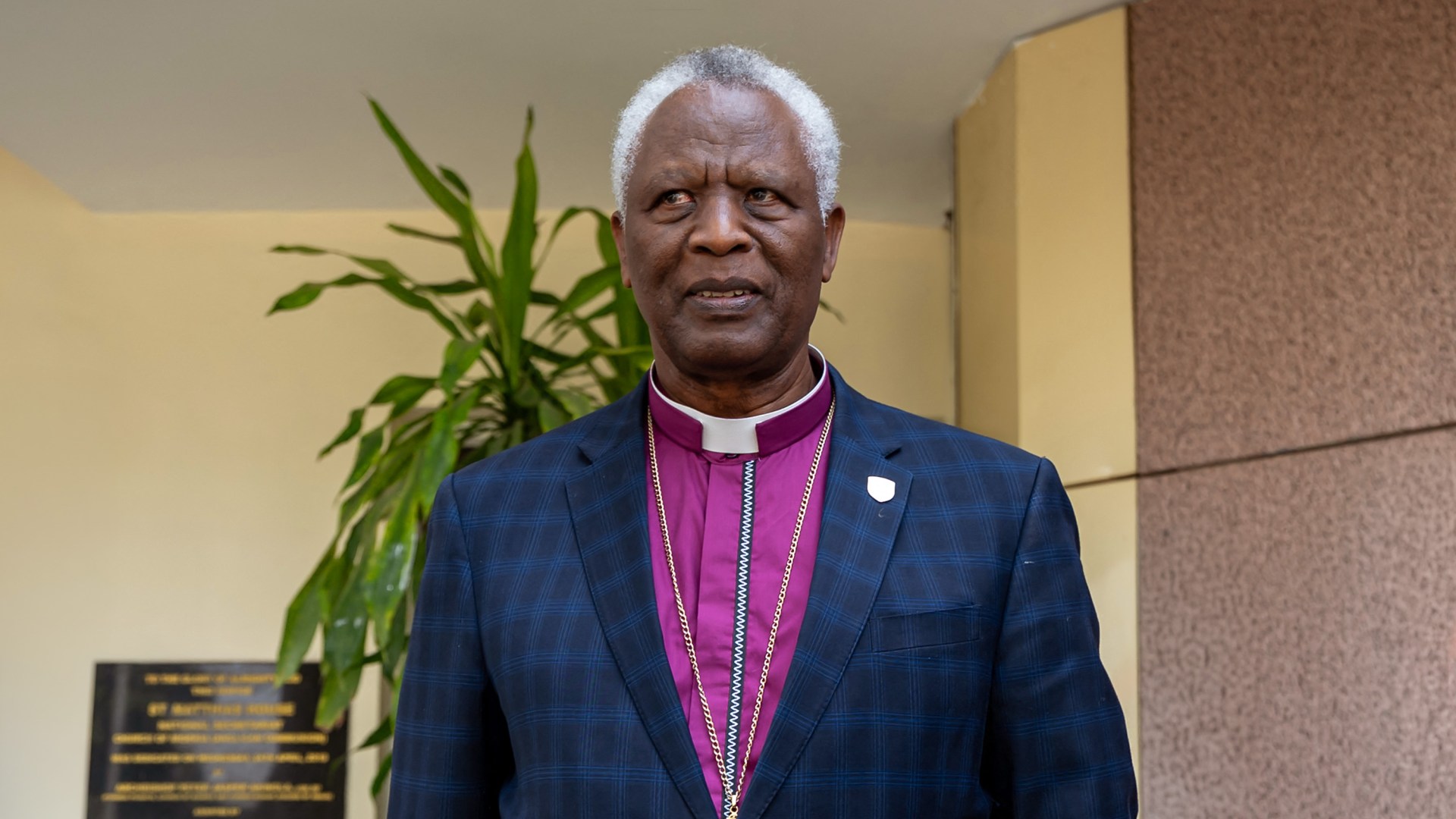
Rwandan Bishop Laurent Mbanda, newly elected leader of the Global Anglican Council, poses for a photograph in Abuja on March 5, 2026.

Rwandan Bishop Laurent Mbanda, newly elected chairman of the Global Anglican Council, poses for a photograph in Abuja on March 5, 2026.

Christianity Today March 9, 2026
Light Oriye Tamunotonye / Getty

Ahead of last week’s gathering of conservative global Anglicans in Abuja, Nigeria, leaders were expected to elect a new “first among equals” spiritual leader to rival the Archbishop of Canterbury due to their opposition to growing liberalism in the denomination.

Instead, due to a “movement of the Holy Spirit,” the Global Fellowship of Confessing Anglicans (Gafcon) decided to adopt a committee-style leadership, Paul Donison, Gafcon’s general secretary, revealed to attendees on Thursday. The newly rebranded Global Anglican Council would include primates (the chief archbishop or bishop of a province), bishops, clergy, and laypeople and would be headed by an elected primate. Leaders unanimously chose Archbishop of Rwanda Laurent Mbanda as its new chairman.

Donison told CT that Gafcon leaders, who largely represent the Global South, made the decision in order to “leave behind Canterbury’s failed instruments of communion” and instead embrace a more democratic system where every province, regardless of size or influence, has a vote.

“Normally in our world, people and institutions cling to the authority and power they have,” Donison said. “In this moment, in a gloriously unprecedented way, the Gafcon primates voted to actually share their power.”

Yassir Eric of Sudan, bishop of Ekkios, a nongeographical diocese for Muslim-background believers, found it humbling to see Gafcon do away with the “first among equals” title and to see leaders willing to sacrifice their power.

“To have some primates, like the Church of Nigeria, which is the largest church that we have here, agree to share power together [with] lay people, bishops and primates, that is actually the principle that is guiding and the humility that I saw in that room,” Eric said.

He noted that Ekkios spans from West Africa to Central Asia, regions with intense persecution and political instability. Most of the people with whom he works do not come from an Anglican background and live in areas where being associated with a Western church can be dangerous. “That’s why we align with the Global South,” he said.

Nearly 350 bishops and 120 lay and clerical leaders from more than 180 dioceses attended the conference, representing 80 percent of global Anglicans, Donison said. Gafcon believes it is not splitting from the wider Anglican church. It argues instead that the Anglican Communion’s “doctrinal and moral departures from the teaching of Scripture”—including on the issue of same-sex marriages—have disqualified Canterbury as the church’s true leadership.

“We are not a new Anglican communion,” said Justin Murff, Gafcon’s press secretary. “We are the Anglican communion reordered.”

Gafcon emerged in 2008 after a coalition of church leaders boycotted the once-a-decade Lambeth Conference of Anglican bishops and instead gathered in Jerusalem as they protested Western Anglican churches blessing same-sex unions and appointing gay and lesbian men and women as bishops. Gafcon also welcomed the Anglican Church in North America into its fold.

Then in 2023, Gafcon rejected recognition of then–Archbishop of Canterbury Justin Welby as head of the communion after the Anglican church agreed to bless same-sex marriages. (The proposal was later abandoned, although the synod said it would reconsider a future proposal.)

Things came to a head last October when the Church of England chose Sarah Mullally as the first female Archbishop of Canterbury. Gafcon said the church had abandoned global Anglicans by selecting a leader who promotes revisionist views on marriage and sexuality, as Mullally had brought forth the motion to offer blessings to same-sex couples.

Mbanda called on churches to choose between being part of Gafcon or the official Anglican Communion, requiring them to stop attending meetings and receiving funds from the church if they joined Gafcon.

Samuel Egesa, a Ugandan bishop, said Scripture clearly defines marriage to be between a man and a woman and Anglican churches shouldn’t be able to openly disobey God’s Word.

“We are saying the future is here,” Egesa said. “[Gafcon] is the original Anglican communion, which actually follows the gospel.”

While critics claim Gafcon rejects Mullally’s leadership because she is a woman, the conservative group counters that what it takes issue with is “whether scripture or contemporary culture governs the life of this church,” Murff told journalists at the conference.  

A majority of global Anglicans believe in male-only bishops, Donison said, yet Gafcon does not have an official position on women’s ordination. Instead it leaves the decision to individual provinces and dioceses.

“This is a secondary matter that faithful Christians disagree on,” he said. “Gafcon’s job is not to solve all the questions for the world but to lead and hold the unity of the faith on the core doctrines.”

The Anglican Communion plans to discuss proposals on how to deal with the disagreements between the Church of England and global Anglican churches at a conference in Belfast in June and July, yet Gafcon has said it would take part. Donison added that Gafcon has no relationship with the Archbishop of Canterbury and would only accept her if “she has a change of heart biblically.”

However, another group of conservative Anglicans, the Global South Fellowship of Anglican Churches (GSFA), stated that they remained in communion with the Church of England. ] Donison noted that Gafcon and GSFA have overlaps and often engage with each other. “We pray for each other and support each other,” he said. “Most of them are actually already in with us. Not all of them are, but for those who aren’t, [our] arms are open wide.”

Eric, the bishop of Ekkios, noted that Gafcon is a good fit for the population he serves. A former Muslim extremist, Eric became a Christian after God miraculously healed his cousin. Since his conversion in 1991, Eric has worked to help Christians converts like himself.

“When we come to know Jesus, we kind of lose everything—community, identity, belonging,” Eric said. “We seek to provide a home for such people. And we don’t fit the structure of Canterbury.”

Eric said members of Ekkios need a community where new converts are cared for and advocated for, a community centered on Scripture and the truth. He likened the church to a mother (umma in Arabic) who embraces and tends a child from the womb.

“When you leave Islam for Christianity, you are looking for an umma,” he said. “And for us, the global Anglican church is our umma. It’s our community, our mother—where we belong.”

News

Texas Ministries Help International Students Face Job Uncertainty

As H-1B visas become more difficult to obtain, ministry workers provide housing, community, and biblical hope.

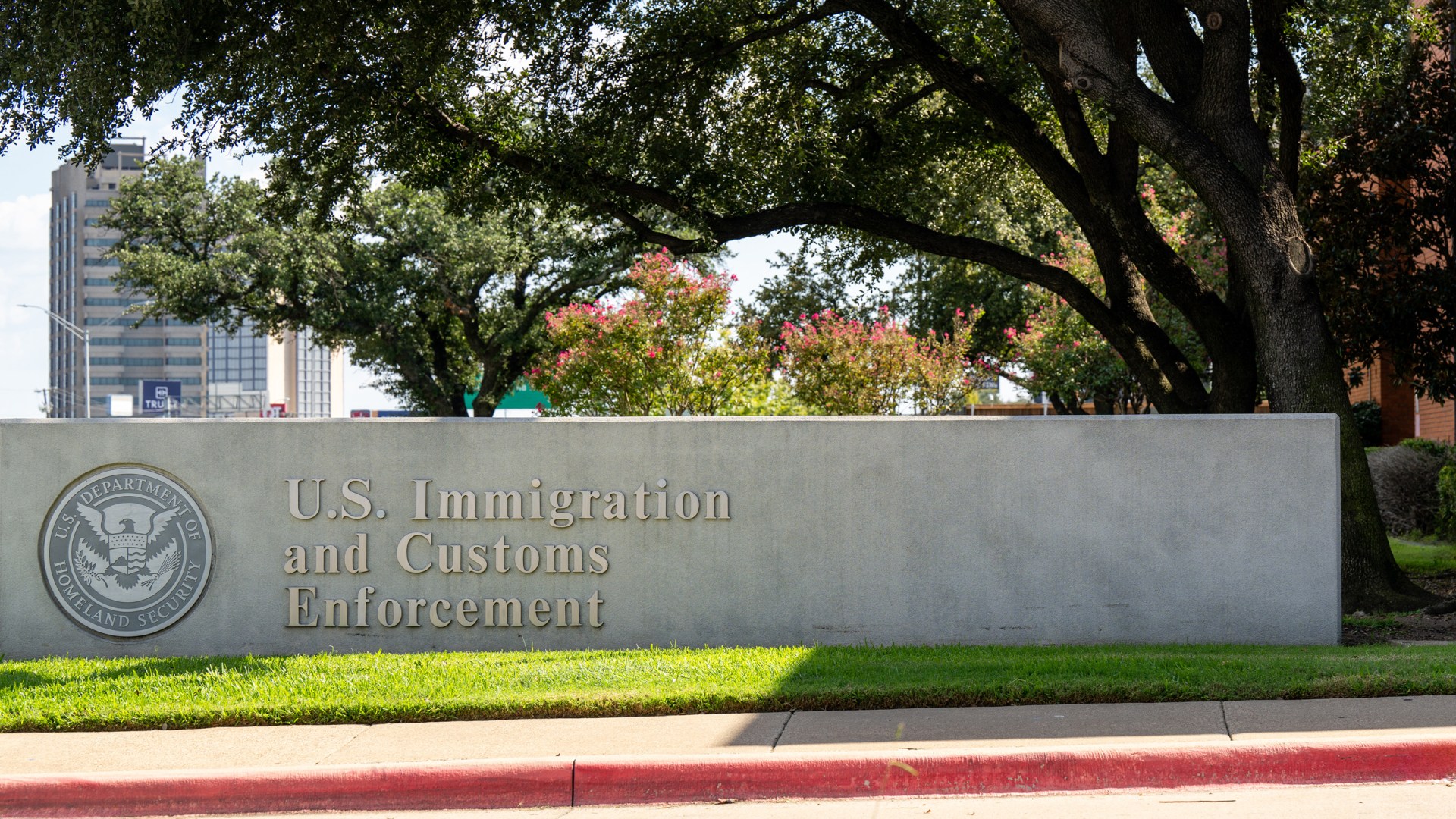
The entrance to a U.S. Immigration and Customs (ICE) detention facility in Dallas, Texas.

The entrance to a U.S. Immigration and Customs (ICE) detention facility in Dallas, Texas.

Christianity Today March 9, 2026
Brandon Bell / Staff / Getty

In his 12 years serving international students at The University of Texas at Dallas, Daren Clements has done countless airport pickups—driving to Dallas Fort Worth International Airport in his Ram pickup and loading large suitcases into the truck bed. For many students, he’s the first American they ever meet.

But in the past year, he’s also started doing airport drop-offs—leaving students at the airport with the same large suitcases they arrived with years before, waving goodbye as they head home. More are struggling to find jobs in the States due to hiring freezes in tech and finance industries and recent policy changes for foreign workers.

“I have never seen the kind of fear or caution from students as is going on right now,” Clements said. He’s found that many of the students he works with—especially those who come from honor-shame cultures where moving home is viewed as a failure—are struggling with depression. In the past year, he’s referred more students to Christian counselors than ever before.

Two weeks ago, one Indian student who couldn’t find a job in the US or India attempted to take his life, Clements said. In the Dallas area, there has been pushback from residents on the growing number of Indian professionals in the area.

Texas receives the third-most international students in the nation, and these students contribute $2.6 billion to the state’s economy. International workers often fill highly specialized roles, especially in science, technology, engineering, and math industries.

Despite their legal status in the US, international students have been swept up in the Trump administration’s crackdown: Immigration and Customs Enforcement (ICE) detained some international students and faculty for their support of Palestine. The Trump administration also sought to ban international student enrollment at Harvard, a move which a federal judge temporarily blocked. In total, the State Department said it has revoked 8,000 student visas in the past year.

At the same time, the administration added a $100,000 fee for employers on some H-1B visas, which allow foreign nationals in specialty occupations to work temporarily in the US. They also began prioritizing applicants with higher salaries, making it more difficult for international students to find jobs in the US after graduation. The Trump administration is expected to roll out restrictions on Optional Practical Training, which allows students to work temporarily in the US after graduation for one to three years. 

In Texas, Gov. Greg Abbott went even further and froze new H-1B visa petitions for public universities and agencies until 2027, stressing the need to “ensure that employment opportunities—particularly those funded with taxpayer dollars—are filled by Texans first.”

For international students like Nompumelelo “Mpume” Hlophe who are looking for teaching jobs or postdoctoral fellowships at Texas public universities, this is devastating news. 

Hlophe, who is from South Africa, has lived and studied in the US for the past decade and is now pursuing a PhD in biological anthropology at Texas A&M University. The single mother of a 1-year-old, Hlophe noted that in her field, private jobs require advanced statistical abilities, which she doesn’t have, and because she’s not a citizen, she’s not eligible for most federal jobs.

She wants to be an anthropology professor at her university after she completes her dissertation. But amid all the immigration policy changes, and especially with the latest H-1B visa freeze on public universities, everything feels uncertain. 

“Right now I feel like I’m living more on a fear of ‘Oh, when I graduate I might actually have to leave the country and go back to South Africa,’ where before, when I came in, it was like, ‘I have that option whether I want to go back to South Africa,’” Hlophe said. 

Hlophe said she understands the governor’s intention of protecting job opportunities for Texans, but at the end of the day, hiring should be skill based: “People get hired because your research is unique and because you’re great in what you’re doing,” she said.

Hlophe is a part of the campus ministry Reformed University Fellowship International (RUF International) and lives with a family she met through the fellowship. She said the prayer and support of the ministry and her church community have been invaluable as she tries to stay focused amid so much change.

“I think that’s why I’m a little bit calm about it, because at the end of the day, I feel like I have a body or community that’s just backing me up,” Hlophe said.

After the COVID-19 pandemic caused a sharp drop in the number of international students entering the country, US colleges experienced a surge in enrollment, surpassing pre-pandemic levels with more than 1 million students. But now the numbers are dropping again. According to The Dallas Express, The University of Texas at Dallas (commonly called UT Dallas) enrolled 5,603 foreign students in fall 2024 and 4,298 in fall 2025, a 23 percent decrease.

The University of North Texas (UNT), which has one of the highest international student enrollment in the state, is $45 million in debt. In a letter to staff, UNT president Harrison Keller said it was in large part due to a drop in international student enrollment. Studies show post-graduation job prospects greatly influence students’ choice of country for higher education.

Even though the governor’s H-1B visa freeze doesn’t directly affect private companies, Clements said it has a “trickle-down effect.” 

“I think [private companies] are scared to invest because they don’t see a future with the student when the rules may change next week,” Clements said.

International students such as Catherine Andrews, a 2024 UT Dallas graduate from India, agree.

“I would interview [at] lots and lots of companies, and most of the applications … get rejected because I select the part where I need the visa sponsorship,” said Andrews, who has a master’s in business analytics. She added that companies have said they are looking for long-term hires.

Andrews wanted to study in the US because of its Christian reputation. Four generations ago, a missionary from Philadelphia shared the gospel with her family, and the faith was passed down to Andrews. But growing up, Andrews was surrounded by Hindu friends and longed for a robust Christian community.  

At UT Dallas, she joined the campus ministry, International Students Inc., where she met her future husband, Viswas.

In October 2024, while Andrews was still searching for employment, Viswas lost his engineering job. The next day, he found out his parents had been in a serious car crash and would need surgery. He wanted to return to India, but unemployed H-1B visa holders have 60 days to find another job, and traveling out of the US terminates that grace period.

The couple also had a wedding scheduled for two months later in India, which they ended up canceling. If Viswas were to leave the country, he would need to find a new employer and apply for a new H-1B visa in India, which could be subject to the $100,000 fine. Their church in Texas stepped in and threw them a wedding nine months later.

The Andrewses said moving back to India would be a last resort. Despite its difficulties, the US still has the world’s leading tech companies, provides a higher quality of life, and has the best cutting-edge research opportunities. The Andrewses also don’t want to give up the Christian community they’ve found. 

International students often find a lifeline in campus ministries. These groups provide a welcoming community, rides to the social security office and to grocery stores, furniture delivery, Bible studies, social events, an introduction to Texan and American culture, and connections to families from local churches.

Noel Coppedge, campus assistant at RUF International at The University of Texas at Austin, said he also sees an increased sense of insecurity among students.

Last semester, ICE took one of the ministry’s Middle Eastern students while she was shopping at the local H-E-B grocery store. She had her papers on her, but the masked agents refused to look at them, saying her detention was a routine check. The agents put her in a van and drove her to a facility an hour outside Austin, where she was detained overnight. She was not allowed to make a phone call. In the morning, they released her without explanation and without transportation back to Austin.

“Whether people have had those exact experiences or not, I know that there’s a common feeling that has been growing in people that ‘Maybe I’m not so welcome. Maybe I don’t want to stay,’” Coppedge said. “I still think many people have the desire to stay, but it’s with a little bit of caution.”

After helping the student who was detained by ICE move into a new apartment, Coppedge asked if he could read a Bible passage with her. 

“We just talked about how Jesus cares for the brokenhearted, he cares for women,” Coppedge said. “I just wanted to communicate to her that what has happened to her is not something that Jesus wants associated with himself.”  

For that student, there is no question about what she wants to do after graduation. “I just can’t wait to go home,” she told Coppedge recently. 

Clements said the crisis students are facing has given the church an opportunity to care for them like never before. International student ministries are providing recent graduates with free housing in church families’ homes, networking, community, emotional support, and biblical hope, he said.

“I’ve never had a more open door to pray over a student than I have right now,” Clements said. 

For many students, knowing they are not alone makes all the difference.

Andrews noted that “in the end it all points back [to the fact] that so far God has definitely brought us this far and provided for us, like when we are not having any money at all. And he didn’t [leave] us lonely. He gave us each other to fight for those difficulties, and he gave us church and church family.”

News

How EMDR—and Drawing Close to God—Helped a School Shooting Survivor

The trauma treatment is growing in popularity. It worked for Ellie Wyse, now in college and seeking to help teens hurting like she was.

A photo of Ellie Wyse
Christianity Today March 9, 2026
Photo Courtesy of the Wyse Family / Unsplash / Edits by CT

Ellie Wyse still remembers the day: May 7, 2019. She was a high school freshman at STEM School Highlands Ranch on the outskirts of Denver, and classes were almost over when the school went into lockdown.

Wyse assumed it was a drill—but then it wasn’t ending. She heard loud noises, and to this day she’s not quite sure whether they were the gunshots from a classroom nearby. She got texts from her mom and others asking if she was okay.

Then a squad of SWAT officers swooped into the room and took her out of the building. It was the scariest moment of her life, she told CT: officers swarming in with large guns and Wyse having to walk out with her hands up.

She and other students were moved from place to place before finally going to a nearby gym to reunite with their parents, who had been waiting for hours. Wyse learned later that one of two shooters in the incident was a friend of hers.

One student was killed, and eight others were injured. During the attack, when the shooters pulled out their guns, student Kendrick Castillo rushed one of them and was killed in the process. His sacrifice enabled other students to subdue the perpetrators.

That day, Wyse’s friendship with the shooter, whose actions she considered “heinous,” also died.

In the days and weeks after, Wyse, a bubbly, laughing, extroverted 15-year-old, grew quiet. She became more scared and anxious about everything.

“I didn’t really notice it on my own—because I was like, Nope, I’m just going to keep pushing forward,” Wyse told CT. “It was my mom who noticed that I really wasn’t okay. She had seen the personality shift.”

At least 398,000 American children have experienced gun violence at school since the Columbine shooting in 1999, and researchers are still assessing how this trauma affects them in the years after.

Wyse felt survivor’s guilt. And she initially struggled with how to feel about her friendship with the shooter.

“Why did I make it out of class and somebody else didn’t?” she said. 

Her mom suggested she try a type of therapy called eye movement desensitization and reprocessing, or EMDR. Wyse was initially resistant but gave in.

EMDR is a therapy supported by scientific research that helps individuals reprocess post-traumatic stress in a safe setting. It is growing in popularity—some families CT interviewed whose children survived the recent Annunciation Catholic School shooting in Minneapolis planned to do EMDR therapy.

Unlike talk therapy, a type of cognitive behavioral therapy that focuses on the mind, EMDR is more body based.

Jessica Cobb, a Christian counselor trained in EMDR, compared the technique to sleeping, where your brain has a chance to process your day. 

In a traumatic moment, “this alarm bell is going off in your brain, and it’s saying, I don’t know what to do with this. And so it holds on to it,” Cobb said. “Your memories get stuck in a raw, unprocessed form that’s full of images and emotion and physical sensations.”

Reprocessing that moment in a safe environment allows a person to gain distance from the memory and makes it less frightening.

In EMDR therapy, a counselor goes through several steps to help a patient prepare to reprocess the traumatic memory. The patient focuses on the memory while doing bilateral stimulation—eye movements, taps, or sounds.

Patients don’t have to describe the traumatic event while doing EMDR. After stimulation, they share about any sensations and negative beliefs that arose from reviewing the memory, such as “I’m not safe”or“I have no control.”

The therapist monitors the patient’s score on the subjective units of distress scale, or SUDS, as the session goes on to see how distressing the memory is. Once the distress reaches the lowest possible score, they work through positive beliefs around the memory, like “I survived” or “I am lovable.”

When Wyse finished her EMDR sessions after about six weeks, she was able to walk into her school without feeling anxious—for her, a huge step forward. After that, she also did talk-therapy sessions.

Traces of trauma remain. Her family has always conducted a big fireworks show on the Fourth of July, and before the shooting Wyse loved to be part of it. The first July after the shooting, she was holed up in her room wearing noise-canceling headphones. She felt horrible, as if she were messing up something fun for her family. As the years have gone by, she’s gotten better at handling fireworks, but she never enjoys them as she used to.

As she processed the attack, she decided to become a therapist to young people herself: “I know what it’s like to be in the classroom, waiting for it to be over, not sure how you’re getting out.”

“I’ve just noticed a gap in care—being a teenager who had experienced trauma and then compounding that with COVID,” she said. “I just saw this huge gap of need for people who really needed extra love and extra support and weren’t getting it.”

Teenagers, she noted, are also dependent on their parents to get therapy and drive to appointments.

Though she was initially hesitant about leaving Colorado and going to a Christian school, she had family friends who were Cedarville University alumni and urged her to try it out. When she visited, she felt at home and applied to study psychology there. She’s now a senior, planning to enroll in graduate school to become a licensed counselor.

Wyse knows taking care of her own mental health will help her be a good counselor. She has been in an improv comedy group the last three years—she thinks being social and trying new activities in community is good for her psychologically. She can still notice when she’s taking a “step back” in her healing process, becoming more socially withdrawn or quiet.

Cobb, the counselor, said patients need supplements to EMDR: predictable routines, emotional regulation tools like breathing and exercise, and supportive relationships from family, friends, and pastors who don’t rush the healing process or judge.

“It’s so important to have trauma-informed schools and churches,” she said.

Some research has shown that people who felt support from religious communities after mass shootings experienced fewer symptoms of post-traumatic stress disorder (PTSD).

After a traumatic event like that, parents should look for signs of PTSD or acute stress, like a child being withdrawn, overly anxious, or prone to nightmares, Cobb said. EMDR practitioners are generally easy to find.

Christian counselors largely support EMDR as a trauma therapy, but some have concerns.

The Biblical Counseling Coalition in 2021 released a statement critical of EMDR, saying the framework was “fundamentally God-less, Christ-less, and Spirit-less,” but conceded it could provide “a limited, important degree of usefulness for some Christians under some circumstances.”

“Scripture is the only source for primary, authoritative beliefs and values. We should be enamored with it, and with nothing else,” the statement concluded. “Other models and methodologies will come and go as the world pays attention to the latest this or the latest that in the marketplace of psychotherapeutic ideas.”

Cobb, a biblical counselor herself, disagrees with the assessment: EMDR is focused on a neurobiological issue and doesn’t replace prayer or Scripture, she said. Christian counselors can incorporate faith-based resources in the EMDR process if they want, she said, like sharing a Scripture when a patient is in a distressing moment.

The point of EMDR is “you can’t do any healing if you aren’t feeling physical safety,” Cobb said.

Wyse thinks using psychological “tools God has given us” is useful, and then patients can go to biblical counseling to work through spiritual issues. As she healed, she said her faith grew.

During her freshman year at Cedarville, she was struggling being away from her parents and Colorado. For some reason she read the book of Ecclesiastes. One verse jumped off the page: “For he will not much remember the days of his life because God keeps him occupied with joy in his heart” (Ecc. 5:20, ESV).

A calligrapher, she wrote the verse down and put it on a board above her desk. Now she has it memorized.

addApple PodcastsDown ArrowDown ArrowDown Arrowarrow_left_altLeft ArrowLeft ArrowRight ArrowRight ArrowRight Arrowarrow_up_altUp ArrowUp ArrowAvailable at Amazoncaret-downCloseCloseellipseEmailEmailExpandExpandExternalExternalFacebookfacebook-squarefolderGiftGiftGooglegoogleGoogle KeephamburgerInstagraminstagram-squareLinkLinklinkedin-squareListenListenListenChristianity TodayCT Creative Studio Logologo_orgMegaphoneMenuMenupausePinterestPlayPlayPocketPodcastprintremoveRSSRSSSaveSavesaveSearchSearchsearchSpotifyStitcherTelegramTable of ContentsTable of Contentstwitter-squareWhatsAppXYouTubeYouTube