Culture

The Religious Roots of Hoosier Hysteria

Indiana’s storied basketball tradition was built on equality and faith—but only for some.

Indiana basketball players
Christianity Today June 13, 2025
Illustration by Mallory Rentsch Tlapek / Source Images: Getty, WikiMedia Commons

It was nearing midnight in Indianapolis on May 31. At the Gainbridge Fieldhouse, home of the Indiana Pacers, thousands of fans decked in yellow filled the stands. They were basking in the glow of securing an Eastern Conference championship, anticipating the team’s first trip to the NBA finals in 25 years.

As Pacers coach Rick Carlisle took the microphone to address the crowd, he knew what fans wanted to hear.

“In 49 states, it’s just basketball,” Carlisle began, “but this is Indiana!”

Carlisle pumped his fist, and the crowd roared.

This is Indiana.

It was the affirmation of a story that Indiana residents tell about who they are and what they value. That identity, Carlisle understood, revolved around the state’s relationship with the sport bringing them together that night.

For more than a century, those caught up in the state’s “Hoosier hysteria” have experienced basketball as a medium to explore questions of identity and belonging; of meaning and purpose; of what defines a place, a home, and a community in a rapidly changing world. The answers to those questions and the origins of Indiana’s basketball obsession—like the sport itself—are closely intertwined with Christianity.

Basketball began in 1891 as a solution to a problem: how to get young men interested in the church.

The game’s founder, James Naismith, was part of a movement scholars call “Muscular Christianity.” A seminary-trained Presbyterian, he was driven by a desire to “win men for the master through the gym.” Naismith created basketball believing it could capture the attention of young men while helping them build Christian character along the way. In just the next year, the game made its way to Indiana, introduced through the YMCA’s Christian leaders and networks.

Fast-forward more than 30 years to 1925.

That March, 15,000 people crowded inside the Exposition Building in Indianapolis to watch 16 high school basketball teams compete in the state tournament, already in its 14th year. Sitting courtside was Naismith himself, invited as a guest of honor in recognition of Indiana’s unique affinity for the sport. “The possibilities of basketball as seen there were a revelation to me,” he marveled afterward.

In three decades, his game had moved beyond its YMCA origins and into the life of communities across the country—with no state more devoted than Indiana.

Indiana’s geography aided its basketball explosion. The state’s small size, flat land, and advanced system of roads made travel easier for players, fans, and statewide newspapers that covered each season with flair. A high school state tournament, created in 1911, gave schools across Indiana’s rural landscape a chance to win glory for their communities.

But those facts alone don’t explain Indiana’s unique relationship with the sport. For the game to move from an enjoyable physical activity to a source of communal identity, it needed to become enmeshed with the cultural narratives embraced by Indiana’s residents.

Christian institutions and ideas from the game’s founding played a key role in this—especially with the team that put Indiana basketball on the national map: the Franklin “Wonder Five.”

Franklin, a town of just under 5,000 people in 1920 located 25 miles south of Indianapolis, exemplified popular notions of small-town America: mostly white, mostly Protestant, rooted in Midwest values of individual initiative, self-discipline, and traditional morality that gave America its strength.

From 1920 to 1922, the Franklin high school team, coached by Ernest “Griz” Wagner and led by star Robert “Fuzzy” Vandivier, ascended to basketball dominance, winning the state tournament three straight years. These two men fanned the flames of Hoosier hysteria while fulfilling the promises of Muscular Christianity. Wagner, a Methodist Sunday school teacher, first developed his coaching chops through the Holy Grail youth basketball league, formed in the 1910s by the town’s Protestant churches.

“He has taught the gospel in Sunday School and lived it in the gymnasium,” a journalist later wrote.

Franklin’s starting five learned the game in that church league, competing for the Presbyterian, Methodist, Baptist, and Disciples of Christ teams.

Their storybook journey did not stop at high school. In 1922, Wagner became the basketball coach at Franklin College, a local Baptist school, and the core members of his team followed him. For the next two years, Franklin College lost just one game while defeating larger schools like Purdue, Illinois, Wisconsin, and Notre Dame. By 1926, when the Wonder Five laced up their shoes for the final time, Indiana was well established as a preeminent basketball location.

“Basketball is in our blood, our life, our soul,” an Indianapolis sportswriter told the Franklin players. “The state looks upon you not as a great five representing Franklin high school and Franklin college but as the very soul of Hoosier athletics.”

The compatibility between basketball and church—highlighted by Franklin’s Wonder Five—was part of the cultural allure of the sport in Indiana.

In Middletown, the 1929 classic sociological study of Muncie, Indiana, scholars Robert and Helen Lynd described a scene that played out when the Muncie Central Bearcats competed in the state tourney. A group of fans who could not make the trip to watch in person gathered at the Muncie High School auditorium, where score updates were announced throughout the night.

“A minister conducted the meeting, opening it with prayer,” the Lynds explained, “and as the tension grew during the game, a senior class officer prayed, ‘Oh, God, we must win. Jesus, wilt thou help us!’”

Later in the book, the Lynds discussed a local pastor who had been asked by one of his congregants if it was right to pray for the Bearcats to win. The fan had prayed for victory, but the team still lost, and he began to doubt God.

“I believe that prayer should be used only in cases where a moral or spiritual issue is at stake,” the pastor advised. “God could favor the weaker team, but that would be unsportsmanlike of God.”

Indiana’s pastors and leaders could not control the sport’s meaning, but they could participate in the public phenomenon it created. They could celebrate and lament the local team’s fortunes. They could present basketball players as exemplars of Christian character—as with Franklin’s Wonder Five, who were praised for their “clean play and good sportsmanship.”

They could also see the sport as a cultural text where, in the rhythms of everyday life, they could ask and explore difficult questions about God and his work in the world.

Basketball offered something else for both the churches and the people of Indiana: the promise of opportunity. The sport was presented as a uniquely democratic enterprise, where every town and village, no matter its size, had a shot to win it all.

Yet it also offered a standard by which the community could be judged. Because the spirit of democracy did not extend to everyone.

In 1923, the year after the Wonder Five won their third-straight high school title, one of the largest crowds in Franklin’s history gathered in the high school gymnasium. They were there to hear a representative of the Ku Klux Klan make his pitch.

Standing behind a table on which an open Bible lay atop an American flag, the speaker told the crowd that the country belonged to native-born white Protestants. He encouraged them to band together against threats posed to their way of life by Catholics, Jews, and African Americans.

Over the next few years, that message resonated with many of the state’s residents. True, there were dissenters, like H. R. MacMillan, a Baptist pastor in Franklin who denounced the klan’s “doctrine of hate.” But the KKK briefly achieved a remarkable degree of influence in Indiana, winning statewide elections in 1924 and extending its power all the way to the governor’s mansion.

The klan’s message resonated in part because an assumed white Protestant superiority was already built into the culture of Indiana, including in the state’s favorite sport. While individual athletes of different races and religions could compete on some public-school teams, until the 1940s, Catholic schools were not included in the state basketball tournament. Nor were the Black schools, like Crispus Attucks in Indianapolis, built in 1927.

The state’s white Protestant residents did not seem to recognize the discrepancy between the democratic ideals they proclaimed on the basketball court and the structure of their society. In Middletown, the Lynds presented basketball gyms as places where political and social divisions could be set aside. “North Side and South Side, Catholic and Kluxer, banker and machinist,” the Lynds wrote, “their one shout is ‘Eat ’em, beat ’em, Bearcats!’”

Year after year, however, those on the margins—like Henry L. Herod, a Black church leader in Indianapolis—pointed out the state’s hypocrisy and asked for full inclusion  in the life of their state. The Black community used basketball as a source of meaning for themselves and also to challenge those who sanctioned the status quo.

A 1932 issue of the Indianapolis Recorder,the state’s leading Black newspaper, included side-by-side editorials, one on the hope offered by “our Lord and Savior Jesus Christ” and the other criticizing the “deliberate failure” by leaders of “Hoosierlands basketball” to include Crispus Attucks in the state tournament.

Efforts like this did not immediately yield results, but over time they began to open hearts and minds. Basketball provided Indiana with a shared cultural text through which those outside the state’s dominant white Protestant culture could call on their neighbors to enlarge their vision of who belonged.

In 1939, The Indianapolis Star, the state’s largest newspaper, organized an annual fan-voting contest of top high school players. With 48,000 votes, nearly 20,000 more than the runner-up, the first “Mr. Basketball” award went to George Crowe, a Black center from Franklin High School. He was coached by the star of the Wonder Five, Vandivier.

In 2025, Indiana’s basketball identity continues to shift and evolve even as it remains rooted in history and nostalgia.

The small-town ideal, represented by Hoosiers, the classic movie depicting the 1954 state championship team from tiny Milan, remains powerful. But the team that won the state title the next year also has its rightful acclaim: Crispus Attucks, led by future NBA Hall of Famer Oscar Robertson.

Pacers star Tyrese Haliburton is a Christian who has highlighted the significance of the Bible and team chapel in his life and participates in the traditional antagonizing of the East Coast, big-city New York Knicks. He’s led the Pacers to a 2–1 NBA Finals advantage over the Oklahoma City Thunder, with game 4 taking place Friday in Indianapolis.

Women have also long participated in Indiana’s basketball story. The first recorded game of women’s hoops in the state took place in 1899. Today, the WNBA’s Indiana Fever franchise features Caitlin Clark, a Catholic from Iowa and arguably the most popular athlete in America.

These benchmarks can be overstated. What happens on the basketball court can be used to obscure injustices or to distort our priorities just as much it can lead us down the path of righteousness.

The origins of Indiana basketball should remind Christians of the opportunities we have to participate in and shape the life of our communities through sports—and to consider whether we are living up to the values we celebrate.

News

SBC Proposals to Abolish ERLC, Amend Constitution Don’t Pass

After the Southern Baptist annual meeting, some messengers are still holding out for change.

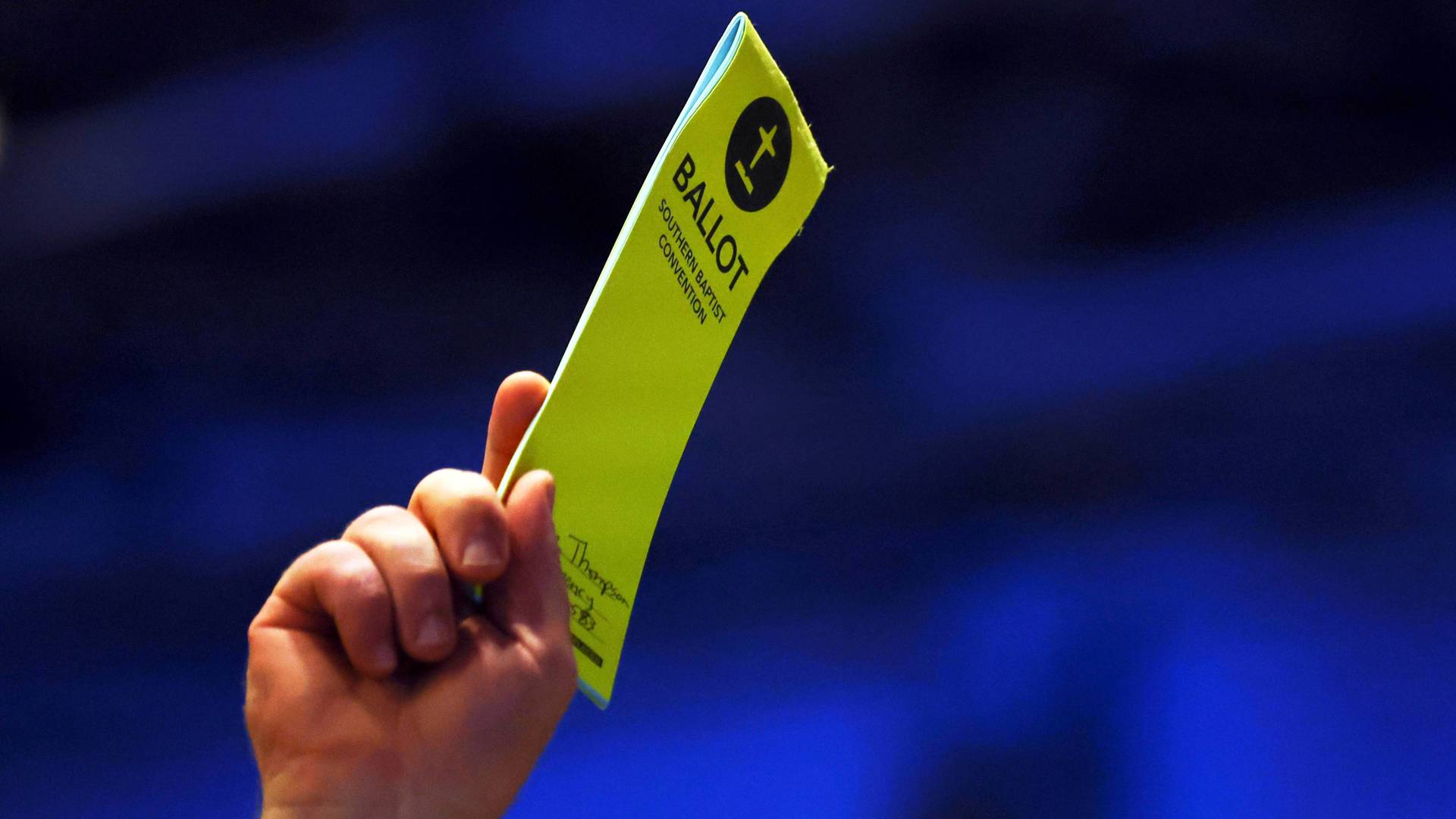
A yellow paper ballot held in the air with a hand

Southern Baptists held their annual meeting in Dallas this week.

Christianity Today June 12, 2025
Richard W. Rodriguez / Associated Press

Southern Baptists didn’t enact major reforms at their annual meeting this week.

They didn’t vote to shut down their long-standing public policy arm, the Ethics and Religious Liberty Commission (ERLC). They didn’t go ahead with a constitutional amendment barring churches with women as pastors. They didn’t adopt sweeping new requirements for financial transparency.

Even with some of the same issues coming up year after year and a significant number of people calling for the Southern Baptist Convention (SBC) to take action, the thousands of blue and yellow paper ballots across a giant convention hall in downtown Dallas didn’t add up to much change this time.

The SBC prides itself on cooperation across differences, so leaders say just being able to work through the proposals without too much antagonism can feel like a win.

“I think it shows the strength of our gospel unity that we can really talk about these things and it not turn into a brawl,” said North Carolina pastor and SBC president Clint Pressley, who presided over the two-day meeting in Dallas with a half smile and slick Southern accent.

But the outcomes mean some Southern Baptists are leaving with lingering questions and a sense of unfinished business.

This was the fourth year in a row that the convention challenged the ERLC and the first time that Southern Baptists got concrete numbers showing how many have lost confidence in the entity, which critics claim is no longer aligned with churches’ political interests.

More than 40 percent of those voting on Wednesday were ready to shut it down.

Results display that the ERLC vote failed to reach a majority.Courtesy of the SBC

“I do feel like there is some misalignment between some Southern Baptists and the ERLC and that needs to be addressed,” said Dean Inserra, a pastor in Florida, during a panel on Monday night.

The sense of rift dates back at least to President Donald Trump’s first campaign and includes the ERLC’s advocacy on immigration, guns, abortion, and other topics over the years. The most vocal critics, including those with ties to the American Reformer–affiliated Center for Baptist Leadership, have reiterated calls for current president Brent Leatherwood to step down.

The chair of the ERLC’s board, Scott Foshie, said that the trustees “hear the voices of those who have concerns” and that they are committed to listening to “both those who support and those who question” their work.

Richard Land, a previous president who led the ERLC for 25 years, had urged the convention to continue to support the entity given the openness Christians have enjoyed under the Trump administration. “We have more opportunity right now to influence public policy at our nation’s capital than we have in my lifetime,” he said.

Most of the crowd at the annual meeting supported the amendment requiring only men serve “as any kind of pastor,” seeing it as a better way than just the faith statement to lay out requirements for affiliated churches. As in 2024, a majority voted in favor, but it didn’t reach the two-thirds threshold required.

Advocates for the measure—put forth by Austin, Texas, pastor Juan Sanchez—wondered what could be done next.

“The executive committee needs to do some work to build trust among our churches regarding our complementarian convictions,” wrote Adam Blosser, a pastor in Virginia and blogger for SBC Voices, adding that Southern Baptists “want doctrinal clarity.”

Blue screen display showing the amendment vote failed to reach two thirdsCourtesy of the SBC

Ahead of the vote, Executive Committee president Jeff Iorg—who inherited ongoing abuse lawsuits when he stepped into the role last year—warned the convention that adding the amendment requiring male pastors puts the SBC at greater risk of retaliatory lawsuits.

In a current lawsuit, judges wouldn’t grant the SBC an ecclesiastical abstention, which allows churches to settle their own doctrinal disputes, and Iorg suggested the criteria’s place in the constitution rather than the faith statement was a factor.

Denny Burk, a biblical studies professor at Southern Baptist Theological Seminary and a pastor in Louisville, Kentucky, was among those who pushed back.

“The platform argued that if our constitution clarifies that the office of pastor is limited to men as qualified by Scripture, then we would be at risk of being sued for defamation,” Burk wrote. “And yet, our constitution already says that cooperating churches must closely identify with our beliefs about pastors. Why would we be in more jeopardy for making it clearer?”

The convention has continued to navigate the fallout of its sexual abuse investigation, and Baptists approved without debate $3 million of budgeted giving to go toward its legal fees.

This is the first time Southern Baptists have appropriated giving dollars for the fees—up until now, the denomination’s Executive Committee has pulled from reserves. Before presenting to the convention, Iorg told the committee the allocation represented around 30 cents for ever $1,000 in tithes at SBC churches.

Other than discussing the ongoing costs of the lawsuits, Iorg emphasized the committee’s role developing training and resources around abuse. He didn’t mention the lapsed plans for a database of credibly accused predators.

Both divides around Trump and the abuse response have put more scrutiny on the SBC over the past several years. But the calls for reform largely haven’t advanced at the annual meeting, indicating that that those debating the issues online and demanding change may not be representative of the 10,000 voting messengers who show up at the annual meeting.

Or the smaller numbers that end up participating in a given vote.

Southern Baptists remind messengers to “be in the room” for major motions. The ERLC vote happened ahead of lunch on Wednesday, but the amendment vote on male-only pastors fell around 3 p.m., just a couple hours before the end of the meeting. 

The levels of support for the amendment this year (61% in favor and 39% against) are roughly the same as in 2024 but represent thousands fewer messengers: 5,600 cast a ballot in Dallas compared to over 8,000 the year before.

Coming out of this year’s meeting, Georgia pastor Griffin Gulledge said he sees that “what Southern Baptists are excited about”—where they take the most eager stands and see the fewest divides—“is missions and ministry.”

Meanwhile, he said, “We are willing to endure talk of reform but can’t agree on what that reform is.”

Ideas

Don’t Hector People About Having Kids

Contributor

Young people who feel anxious and conflicted about marriage and family need a positive example, not a lecture.

Pop art cartoon woman in distress with dripping legos overwhelming her.
Christianity Today June 12, 2025
Illustration by Abigail Erickson / Source Images: Getty

One of the perennial challenges of older generations is providing guidance to younger generations without becoming bitter old scolds. One of the perennial challenges of younger generations is retaining their agency while being open to the wisdom of their elders. 

And perhaps no conversations are more sensitive in these intragenerational dialogues than those concerning marriage and childbearing. Whether elders are warning against the losses of ease and freedom that come with settling down or asking when they can expect grandchildren, the pressure to get it right can be intense. 

For Christians, added pressures come from Scripture and tradition. The Bible clearly teaches that “he who finds a wife finds a good thing” (Prov. 18:22, ESV throughout) and that “children are a heritage from the Lord” (Ps. 127:3). And in many evangelical churches, young people feel a certain expectation to marry young and have children promptly. But at the same time, the world—and often fellow Christians too—pressures young people to be autonomous individuals. Maximize your liberties, they’re told. Trim your responsibilities and pursue pleasures and success

Facing these competing demands, it’s no wonder that many young people feel anxious, confused, and conflicted about their futures, particularly where family is concerned.

Older generations shouldn’t stop offering guidance in the form of deliberate discipleship and mentorship. But at least as vital is offering a vision for the good life in the contemporary world. Young people need to see healthy families. They need a tangible, accessible model to copy in their own lives. They need to learn firsthand that faithfulness and commitment are a joy, not a loss.

This need is urgent, because there’s reason to think younger generations are abandoning the basic institution of society: the family. Birth and marriage rates in America are both in decline, and a recent Pew study showed that American teenagers value career, friendship, and wealth over marriage and children. In fact, they deemed having a lot of money nearly twice as important as having kids. 

It’s possible these teenagers’ goals were deformed by the economic and social anxieties of the COVID-19 pandemic. It’s also possible that they’ve simply been inspired by an expressive individualist culture that prizes personal pleasure over anything else. But whatever their motivations, this intense focus on material success over family should be troubling to the church. 

Scripture’s many warnings about the dangers of wealth make chasing it a deeply fraught goal for our lives. And while it’s possible to turn marriage and children into an idol as well, love for spouse and children is not described, like love of money, as “a root of all kinds of evil” (1 Tim. 6:10). 

Cultivating close friendships and finding an enjoyable career are better pursuits. But for so many young people to rank these above marriage and children also suggests a certain preoccupation with self-actualization. Friends (in our culture) do not make the same lifelong demands that a spouse or child makes, and making career the top priority turns it into a vehicle for personal fulfillment rather than a calling in service to God and others, including family.

Put together, the message reflected in this attention to money, friends, and career over family is the message of our modern world: It’s your job to find meaning, purpose, justification, and pleasure in this life. No one else can do it for you, so do whatever it takes!

If, like me, you find this philosophy deeply unsettling and unchristian, you may be tempted to respond by pointing out its incompatibility with Scripture or even its internal inconsistency. You might want to highlight how this view of life offers hope of existential justification and satisfaction only to forever keep it just out of reach. 

Those arguments are correct and might persuade some. But I don’t think they’re what most Christian young people primarily need. 

I suspect they already understand at an intellectual level that belonging to God precludes certain lifestyles, such as prioritizing money. What they struggle to grasp is what it looks like to live a temperate life in a consumerist culture or a humble life in a careerist culture or a committed life in an inconstant culture. It is our responsibility as older Christians to build that vision with our lives.

You may not recognize this, but you have tremendous influence upon those around you just by virtue of existing in this world. People are watching you to see how you react to adversity, how you resist temptation, how you repent and apologize, how you humble yourself, and how you love others—in short, how you “love the Lord your God with all your heart and with all your soul and with all your mind” and “love your neighbor as yourself” (Matt. 22:37, 39). 

And people are almost always confined to what they can imagine is possible. If a generation’s imagination is populated by examples of terrible marriages, they will struggle to believe that marriage can be a gift from God. If they’re never invited into a family’s home—perhaps your home—to see what a healthy, normal family looks like, they may doubt such families exist. It is within community with other believers that we are exposed to the possibility of the joys of marriage and children.

These joys do not exclude the hardships, of course. I’m not advocating a program of propaganda wherein we trick young people into thinking that marriage and parenthood are simple, painless fun. Our modeling must be realistic about the struggles of communicating in marriage; the difficulties of parenting in hyper-individualist, isolating communities; and the daily, mundane sacrifices that this life requires. Asking a young person into your home to see what life is like with your family does not mean hiding all the messes your children make or, even worse, hiding your children. It means opening the door to show what family life is really like so that it becomes an imaginable good.

Modeling the close friendships that young people want must be part of this as well. Young people are right to want these relationships but often have been wrongly told that marriage and children will make friendships impossible to maintain. A widely read 2023 story at New York magazine, for instance, dubbed children “adorable little detonators” of adult friendships.

That does happen—but it’s not inevitable. What young people need to see are examples of people with families who have good, healthy, close friendships. As parents, we do not have to become insular and neglect our friends. If everything is sacrificed for our children, it communicates to onlookers and to children themselves that choosing family means giving up on friends.

This is a false dichotomy. Yes, it can be hard to cultivate friendship in our time. Everyone is busy and distracted, and our work creeps into ever more of our lives. But young people are right to desire to keep close friendships, because friendship is one of the sweetest gifts God has given us. Those of us who are further along in adulthood can demonstrate—for ourselves and for those watching us—that the intentionality required to create and sustain those friendships while married with children is achievable. 

With all this in mind, I think we need to do two things. First, we must look at our marriages and families and recognize that our actions in those relationships affect more than our immediate loved ones. They affect our entire communities. This is a good thing, but it is an awesome responsibility. Take it seriously. 

Second, we need to invite people in our communities into our lives to see the good of marriage and family. This must be a deliberate choice as isolation becomes the norm, and it makes a pointed counternarrative to the world. 

It may be tempting to look at the priorities of the young and hector them for failing to recognize the value of marriage and family that God has so honored in creation and Scripture. This would be a mistake. What young people need is not a lecture but an example. They need to see godly, healthy families living out our faith in community, over time, and with authenticity, not hiding our struggles but honestly striving to honor God in all that we do. 

They need to see families where the parents are faithful to each other, respect each other, serve each other, and enjoy each other. Families where the children are nurtured, loved, and educated into the fear and admonition of the Lord. And, even as the world promotes the empty freedom of radical individualism, families animated by the joys of friendship, community, and committed service to each other.

O. Alan Noble is associate professor of English at Oklahoma Baptist University and author of three books: On Getting Out of Bed: The Burden and Gift of LivingYou Are Not Your Own: Belonging to God in an Inhuman World, and Disruptive Witness: Speaking Truth in a Distracted Age.

Culture

Worship Music Made with ‘Bubba in Mind’

Barstool conversion rock from artists like Jelly Roll is masculine, country, and faith flavored. Why is it so popular right now?

Three Christian musicians cut out and collaged on a blue background.
Christianity Today June 12, 2025
Illustration by Elizabeth Kaye / Source Images: Getty

When Christian musician Brandon Lake and country–hip-hop artist Jelly Roll performed “Hard Fought Hallelujah” for 75,000 people at a country music festival in April, they stood in front of an LED backdrop, a row of arched “windows” flanking a huge backlit cross.

Before the performance, Jelly Roll told the crowd, “I know that I fall short of the glory of God all the time … but man, I’ve got a heart for God, y’all.” Lake followed up: “Don’t y’all think this is what heaven is going to be like?” Afterward, the two artists posted a collaborative video of the performance to Instagram with the caption, “Bringing church to @stagecoach.”

These days, it does seem like Jelly Roll—a tattooed, bearded performer who fuses Southern rock, country, and hip-hop influences and makes his personal history with drugs and the criminal justice system a central part of his persona—is trying to take his fans to church. Or rather, he’s trying to “bring church” to the places they hang out: bars, festivals, gyms, YouTube.

Jelly Roll has become the leading figure in this wave of what one could call barstool conversion rock: faith-flavored, hopecore, God-finds-us-at-the-bottom-of-a-bottle pop rock recorded by popular male artists. The genre (if we can call it that) is noticeably present on the Billboard Hot 100 and platforms like TikTok, where Alex Warren’s “Ordinary” has been used in nearly half a million videos.

Barstool conversion rock is masculine, vaguely Christian, and at least a little bit country. It sits in a web of crisscrossing cultural threads, including conservative politics, party culture, and evangelicalism. Of the music in this category, it’s too imprecise to say it’s a vibe not a sound, but it does seem like vibes are just as important as shared musical characteristics (of which there are many, even if they aren’t entirely consistent).

“Hard Fought Hallelujah” typifies the trend; it’s a bluesy, country rock arena anthem that showcases both artists’ capacity for gruff belting and worshipful delivery. The opening line of the chorus, “I’ll bring my hard-fought, heartfelt / Been-through-hell hallelujah,” is a triptych that captures the aggression, earnest devotion, and rescued-at-rock-bottom message this music tends to convey.  

Jelly Roll’s other recent singles have a similar energy. He teamed up with Alex Warren on “Bloodline” (“The storm keeps on raging, but don’t you forget / God’s not done with you yet”). The chorus of the song “Amen,” a duet with Black country star Shaboozey, ends with the plea “Somebody say a prayer for me / All I’m asking for is a little mercy, amen.”

Another notable hit is Thomas Rhett’s “Bar Named Jesus,” a down-tempo country ballad, about “a bar named Jesus / Where the light stays on / And there’s no such thing as too far gone” (not to be confused with Rhett’s song “Beer With Jesus,” released in 2012).

Sometimes barstool conversion rock drifts toward pop, exemplified by another Christian music darling of the moment, Forrest Frank, whose song “Your Way’s Better” currently sits at No. 63 on the Billboard Hot 100. Even though he’s known for beats-driven pop and hip-hop fusion, Frank recently collaborated with Rhett on the song “Nothing Else,” which hit No. 4 on the Hot Country chart.

While proximity to country music—in either sound or aesthetics—is a key characteristic of barstool conversion rock, genre loyalty doesn’t seem to be all that important to these artists. Over the past few months, Jelly Roll has performed with Eminem and Nickelback. Brandon Lake recently posted a video on Instagram listing the five genres listeners can expect to hear on his forthcoming album, King of Hearts: country, gospel, rap, pop, and rock.

Perhaps genre is disappearing as an organizing force for artists and audiences in the music industry, overtaken by persona. Listeners no longer see themselves as committed members of a scene; instead, they identify with the artists themselves more intensely than ever in the age of influencer culture. The perception of shared values and worldview is more important than an artist’s bona fides in a particular musical niche. 

Genre may be less of an audience organizer these days, but the industry still markets artists to particular demographics—and by seeking entry into the country market, artists still indicate something about their worldview. In Nashville, both the country and Christian music industries have long signaled to white conservatives that they share foundational values like faith, family, and patriotism. Many Christian artists—including Michael W. Smith, Sandi Patty, and Carman—have aligned themselves publicly with conservative political figures and causes since the Reagan administration. Remember the ferocious reaction from fans after The Chicks’ 2003 comments about George W. Bush?

With the success of Beyonce’s Cowboy Carter, Shaboozey’s “A Bar Song (Tipsy),” and Lil Nas X’s “Old Town Road,” the country music world has changed substantially during the past decade. That change has sparked backlash and spawned internal divisions that seem to be polarizing fans and artists alike. One commentator recently suggested that, in an ideologically divided industry, country artists are increasingly having to choose between “reparative multiracialism” or “reactionary whiteness.”

Though Christian and country music share a geographic center, that doesn’t necessarily mean there are neat and tidy conclusions to draw about the shared values of their audiences. But it does seem that the cultural identity and aesthetic preferences of white country music and Christian music audiences are coalescing in reaction to political and social forces.

Last year, veteran rock band Skillet, who have successfully reshaped their brand across 30 years of active recording and performing, released the song “All That Matters,” a patriotic rock ode to “faith,” “family,” and “freedom.” The video features frontman John Cooper sporting a cowboy hat, which stands in stark contrast with the band’s early Nirvana-adjacent Christian alt-rock. In 2024, Skillet was the fourth most-streamed Christian artist in the world, and their popularity is growing, particularly with young, male listeners.

The idea that we should listen to music made by artists who share our worldview is, arguably, the animating force behind the Christian music industry. Christian music fans have long vetted performers’ morality, beliefs, and life choices. There was a time when Lake would have faced fierce backlash from fans over recording a hit and performing at a secular festival with someone who says he smokes pot to stay sober.

But both Lake and Frank have framed their high-profile collaborations and crossover successes as evangelistic endeavors, leaning into the narrative that “Christian music is taking over.” For former worship pastor Lake, going country is a means of going “seeker-sensitive.” In a recent interview, he said that he wished more worship leaders would program Sunday morning worship music keeping in mind “Bubba”—the guy who sits in the back and doesn’t know what “Holy, holy, holy” means.

Barstool conversion rock invites fans to a self-reflective spirituality that is decidedly nonjudgemental, even irreverent, prompting audiences to pray without asking them to put down the beer in their hand. This bid for attention from the spiritually open could easily land as a ham-fisted attempt to make Christianity seem hip.

But Jelly Roll doesn’t seem to be mixing references to drugs and drinking with faith to posture as the cool Christian uncle. In 2024, he testified before Congress about the fentanyl epidemic, and he often uses his platform to talk about addiction and the dangers of hard drugs.

In an era of male loneliness, this music also foregrounds friendship and camaraderie. Sons of Sunday—the Christian supergroup that includes Lake, Steven Furtick, Chris Brown, Chandler Moore, Pat Barrett, and Leeland Mooring—releases videos of recording sessions that show the men sharing moments of silliness, hype, and reverence. In the music video for “Bloodline,” Jelly Roll, Alex Warren, and a crew of extras stage a goofy singalong in costume in what is supposed to look like a medieval tavern. It’s a self-consciously hokey conceit that swirls social drinking with back-slapping, hugs, and male bonding.

In the midst of near-constant commentary on the mental health of young men, Jelly Roll and Sons of Sunday are tapping into the search for a sustainable vision of masculinity. And unlike the hyper-individualized stoicism and optimization culture on offer in much of the manosphere, this musical cohort seems to be suggesting, “Find God, and find other people too.”

In many ways, music is the perfect vehicle for this message, because singing and writing songs with other people is inherently vulnerable, even for seasoned artists. While the content produced to market this music is carefully curated, it matters that it’s been shaped to display earnest soul-searching in the context of male friendship.

And while some Christians would object to the idea of “bringing church” to a festival or bar on the grounds that the church is the people and not a performance, it does seem like artists like Lake and Jelly Roll are making a sincere case for community.

Barstool conversion rock’s presence on the charts isn’t a sign that Christian music is suddenly “taking over.” Religious language and themes are fixtures of American popular music. It’s worth pointing out that Kanye West and Chance the Rapper have also made Christian music in recent years; country stars like Luke Bryan, Randy Travis, and Dolly Parton have long recorded religious tracks. But barstool conversion rock is meeting a social and political moment with a message and aesthetic geared toward conservative-leaning men. It’s seeker-sensitive, faith-flavored music for the spiritually curious and possibly inebriated. It’s worship music for “Bubba.”

Kelsey Kramer McGinnis is the worship correspondent for Christianity Today.

News

Help Wanted at Christian Camps

Summer experience can be transformative, but many programs find themselves short-staffed.

Christianity Today June 12, 2025
Anderson Schmig / Unsplash

Chef Lance Nitahara can show you how to cook an egg perfectly four different ways, or the best use for nine different varieties of rice, or how to whip up 21 meals for several hundred kids spending a week at a summer camp. 

That last one is an unusual challenge in the world of America’s top chefs, but the Culinary Institute of America instructor and Chopped champion knows what he’s talking about. He spent three years as the executive chef at a large Christian camp and conference center in the Adirondack Mountains. He learned a lot about cooking and teaching cooking—and some more important lessons too. 

Like the true meaning of the gospel. 

“Camp was a stepping stone to take me where God needed me to be,” Nitahara told Christianity Today. “My theology changed over the course of the three years that I worked there.”

Children across America flock to Christian camps every summer. They play games, sing songs, make friends, grow, learn, and deepen their faith. The experience can be transformative. Gregg Hunter, president and CEO of the Christian Camp and Conference Association (CCCA), which represents more than 800 camps nationwide, had an encounter with God at camp when he was 17.

“That changed me forever,” he said. “I’m grateful for the ministry of camp.”

Those experiences are only possible, though, if the camps have enough staff to run. This year, as camps across the country prepared for the summer season, many struggled to find enough workers.

Hunter said the problem is not new but seems to have gotten worse since the COVID-19 pandemic. Although attendance numbers have rebounded in recent years, some camps have had to limit capacity because of staffing shortages. Others have had to cut back on the programs they offer. 

“They don’t have enough workers,” Hunter said.

The CCCA’s job board, findacampjob.com, currently lists hundreds of open jobs, ranging from a director position in Missouri to assistant cook in Minnesota, office manager in New Hampshire, custodian in Colorado, and lifeguard in New Jersey.

The problem plagues both Christian and non-Christian summer camps, according to Henry DeHart, interim head of the American Camp Association. Staffing is challenging because most jobs are temporary and each camp has a wide range of roles that have to be filled.

“Many camps hire staff with a wide range of skill sets—from general camp counselors to camp cooks,” DeHart said. “Other positions require specialized skills and certifications, such as lifeguards or medical staff.”

Camps have often relied on college-age workers, according to DeHart. Those potential employees often don’t seem as attracted to camp jobs as they used to be. Many seem concerned the work won’t be an advantage on future résumés and look instead for summer internships or other kinds of work that will be counted as experience in their fields. 

Hunter said those people are missing the opportunities found in work at a camp.

“We believe that camp is the best first job anyone can have, and we believe it’s a great résumé builder,” he told CT. “It would be nearly impossible, I think, to find an office internship that provides all of these opportunities like a camp can.” 

Staff members can learn leadership, communication, problem-solving, and all the nimble decision-making necessary to come up with great plans and then adjust on the fly.

And then there’s the eternal impact.

“The icing on the cake for me is the opportunity to make a deep, life-altering, spiritual impact on campers, sharing God’s love and being a positive role model,” Hunter said. 

Nitahara was just trying to find a job that would give him a break. After a few high-pressure years in New York City learning to be a chef, he quit in one kitchen and didn’t want to go somewhere with all the same dynamics and dysfunction. 

“I felt like I needed to sort of get away from the world in a way,” he said.

Nitahara found a listing for Camp-of-the-Woods in upstate New York and embarked on a three-year journey that would transform his spiritual and work life. He took the job and found himself in the Adirondacks running a kitchen, teaching kids how to cook, and engaging in deep conversations about Christian theology. 

He and the sous-chefs and others on staff had long conversations about Charles Spurgeon, Jonathan Edwards, and what the Bible said. Nitahara realized he’d always been a kind of “armchair” Christian, taking things for granted but not actively engaging. 

If you had asked him before he went whether he was a Christian, Nitahara probably would have said yes. But in hindsight, he says he was theologically empty.

“That was kind of my impetus for my growth as a Christian,” he said. “I started working with and interacting with a lot of people who were very astute biblically—people who were actually studying the Bible.”

At the same time, he learned a style of leadership that was different than what he’d seen in most high-end restaurants. He could be a gentle and encouraging leader, showing people grace and emphasizing the importance of harmony. 

He also learned that he loved to teach younger people how to cook.

“Most of them had never held a knife before, and I had to coach them through it and teach them 21 meals within the span of about a week,” Nitahara said. 

Nitahara was there for just three years, and that was 15 years ago. But he says that time at camp was crucial for making him into the kind of chef—and the kind of Christian—he is now. You can deepen your faith with a short stint on staff at a summer camp, according to Nitahara. And you can find your calling.

And you can get pretty good at cooking up 21 meals for hundreds of kids over the course of a crazy, fun, sweaty, life-changing week. 

News

Christian Reformed Church to Discuss Professors Who Disagree with Doctrine

Calvin University proposes differences on sexual ethics can be worked out with three-year process of discernment, mentoring, and prayer.

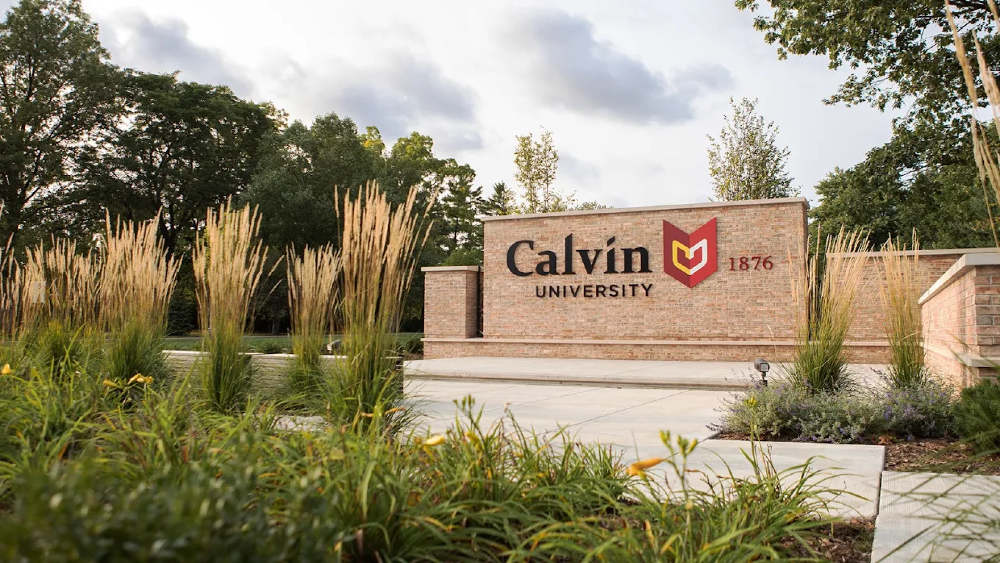
Calvin University sign
Christianity Today June 12, 2025

The Christian Reformed Church in North America (CRC) will consider how Calvin University deals with faculty who have “personal difficulties” with the church’s confessional standards—specifically the standards on human sexuality. 

More than 175 delegates are gathering at Redeemer University in Ancaster, Ontario, on Friday for the annual, week-long denominational synod. The agenda includes at least six overtures to modify the way the CRC handles gravamens, heavy issues where members or church leaders are not in complete agreement with the denomination’s doctrine. Since 2022, that doctrine has included a statement condemning homosexual sex, along with adultery, premarital sex, extra-marital sex, polyamory, and pornography. Last year, the denomination said that leaders of the church, including professors at CRC-affiliated schools, must actively work to resolve their differences and cannot hold their gravamens indefinitely. 

Delegates will hear how Calvin plans to work through doctrinal disagreements. The trustees of the Grand Rapids, Michigan, school have submitted a 27-page report.

The basic tension undergirding the debate is not new, CRC general secretary Zachary King told Christianity Today.

“I think the question is ‘What is the way that our denomination and Calvin University in particular will navigate the tensions between confessional adherence and academic freedom?’” King said. “And that’s been a tension for a long time.”

King said the denomination had a similar debate in the 1990s over issues of creation and evolution. Other common gravamens include issues of infant baptism and questions about predestination. The denomination has long recognized that professors don’t have exactly the same authority as ministers—and there’s even a distinction between seminary professors and those who teach other subjects—but the CRC still wants professors aligned with church confessions. 

“But that push and pull has landed in different places over the course of the decades,” King said. 

The trustees’ plan, going forward, is to give faculty a few years to work out personal reservations. They propose “an initial three-year onboarding period” where faculty members are not required to sign on to all the denomination’s confessional statements. Trustees also say they will allow “some indefinite exceptions only after at least six years of service,” which is the typical timeline to tenure.

The report says that the process will involve a period of discernment and mentoring, with “serious theological study and prayerful consideration.” In the case that an exception is granted, Calvin would “still require alignment of personal and professional conduct” including “teaching, scholarship, advocacy, and public pronouncements, as well as advising, guiding, and mentoring students.”

The plan will also require faculty to sign annually. Previously, leaders in the denomination signed only once. 

Frans van Liere, a history professor at Calvin, said many faculty members have grave concerns about the recent synod decisions. Nearly 150—including van Liere—signed a letter saying the denomination “could undermine the academic freedom of faculty and our standing as a reputable academic institution.” The faculty said that sexuality should not rise to the level of essential doctrine and the synod was “playing into the narrow culture wars’ conception of orthodoxy.”

Van Liere said he was disappointed the synod went ahead anyway, but he thinks Calvin’s report is a good-faith effort to comply with the denomination’s new rules. He’s still unsure, however, how the trustees’ plan to deal with gravamens on sexual ethics will impact faculty. A lot of questions remain about implementation. 

The report does not say how many exceptions will be granted to long-standing faculty, he said, or what aligning “personal and professional conduct” means practically. For instance, would telling students who are struggling with their sexual identity that God loves them as they are be considered advocacy? Van Liere isn’t sure. He believes that Calvin can hold its faculty to ethical standards but that attempting to police pastoral relationships with students and strict-but-changing confessional statements is both dystopian and impractical.

“I don’t know what the outcome is,” he told CT. “But I trust the board of trustees to do the right thing in this matter—to guide Calvin in a way that is good for Calvin.” 

Some faculty members have suggested it is time for the university to break from the denomination. Philosophy professor James K. A. Smith wrote an article for the school newspaper arguing for separation. 

“The denomination’s ethos has changed considerably and drifted away from the ethos we aspire to at Calvin,” Smith wrote. “We can either continue to be the capacious and adventurous Reformed university celebrated in the academy and around the world, or we can continue to be tethered to today’s version of the Christian Reformed Church.”

Ahead of synod, however, leaders at Calvin have rejected that option. A split is not being considered. 

“We remain firmly committed to our covenantal relationship with the Christian Reformed Church,” said university spokesman John Zimmerman. 

According to Zimmerman, the university’s report on its plan to resolve faculty members’ confessional difficulties is evidence of the school’s commitment to the CRC and the fact it is not wavering from its mission or its Christian commitments. 

He declined to comment on how the delegates would receive the report or whether the plan going forward would be met with approval. 

“We believe it is important to allow the synodical process to proceed without presumption about its direction or outcomes,” Zimmerman said.

Denominational leadership also declined to comment on the possible outcomes of the synod’s discussions. King praised Calvin’s trustees for their work on the report, saying the document shows a “deep desire” to commit to both confessional commitments and academic inquiry.

Now it will go to the delegates in Ontario, and they will have a discussion. 

“I don’t know where it will go,” King said. “I’m praying that wisdom and good conversation and openness and the gifts of the Spirit will be part of the conversation and will prevail.”

Inkwell

A Theology of Your 20s

The chiasms used in Scripture helped me see the eternal significance of the in-between.

Inkwell June 12, 2025
"Les joueurs de jacquet backgammon" by Jean Béraud

At 27 (almost 28) on a quiet Monday morning, living at home with my parents, I find myself pondering all that has led me to this present moment. Pulling on a college sweatshirt from the floor of my childhood bedroom. Tiptoeing downstairs for a cup of coffee my dad has already brewed. Staring absentmindedly at the fridge, now a collage of save-the-dates and baby shower invitations. 

The routine feels eerily similar to life at 17, save for a few differences. For one, those hand-lettered envelopes are addressed to me, sent by my friends rather than those of my parents. And for another, I feel far less certain now than I did back then.

At 17, I was absolutely convinced of how life would unfold. I had the resolute conviction that everything—career, marriage, purpose—would fall into place exactly as it should, and on time. I assumed I’d naturally stumble into meaningful work, that I would fall in love effortlessly, that my calling would announce itself with unmistakable clarity. I envisioned my 20s as a decade of steady milestones shared in tandem with friends who were reaching them too.

But somewhere between growing older and the endless stream of weddings, bachelorette weekends, and baby registries slowly chipping away at my teacher’s salary, those great expectations started to unravel. 

While my peers honeymooned in Mexico, I sat through awkward, ultimately unsuccessful first dates. While they earned promotions, I was begging for a classroom with functioning air conditioning. While they bought starter homes, I hunted for discounts at department stores. And all the while, I quietly wondered: What should my life look like in my 20s? 

To complicate an already tumultuous decade, growing up in the South meant that I was raised with the cultural and religious conviction that marriage and motherhood were my destined roles. I assumed that I would be pregnant alongside my sisters, double-dating with my friends, using my late grandmother’s china at dinner parties, and passing down my baby dolls to my own children. 

But as I approached my mid-20s, still arguably young, I found myself neither married nor settled. I struggled to reconcile my present circumstances with the internalized expectations of what my life should be. Even the familiar one-liners rooted in Scripture—God will give you the desires of your heart (Ps. 37:4) or simply Pray about it! (Matt. 7:11)—felt increasingly irrelevant through the unpredictability of life. What was I supposed to do when both the china and the baby dolls lay untouched, gathering dust?

Desperate to escape this awkward in-between—this space between hoping and having—I searched everywhere for the reference photo everyone else seemed to have, the one that allowed them to piece together the puzzle of life with such certainty. But while they committed to careers, marriages, and cities with unwavering certitude, I only grew more hesitant, unsure of what to do or who to become. I kept wondering why the life I had imagined ten years ago felt so far away, and even began to question the questioning itself. I’m almost 28, after all. Shouldn’t I have some of the answers by now? It’s easy to feel like we’ve somehow fallen behind or missed a step in the elusive formula for success.

At the heart of this analysis, what we are really asking is, What do I do in this awkward middle space when the outcomes haven’t materialized yet, and maybe never will? 

Then I found The BEMA Podcast.

Its founder, Marty Solomon, is a theologian who experienced his own crisis of faith in his mid-20s. He too felt as though the spiritual spaces he was a part of offered packaged, systemized theology that didn’t address his gut-level questions. 

In search of something more, he became a student of Ray Vander Laan, an expert in biblical cultural studies. Under Vander Laan’s guidance, Solomon began to read Scripture through the lens of the Jewish perspective with which it was originally written. “I had been taught to view Scripture through a very Western classical theology,” Solomon reflects in the first episode, “and that Western lens bumping up against an Eastern world was where a lot of that dissonance was coming from.”

This notion resonated—so much had been lost when I approached God with assumptions, organizing biblical truth into neat outlines, bullet points, and lists. By attempting to let go of my Western interpretation of my very own existence, I began to embrace the evolving nature of esse—a reality rooted not in fixed outcomes but in discovery.

This framework does not mean truth becomes relative but rather that it is recognized as dynamic, constantly expanding and moving in multiple directions. It is a truth revealed through images, stories, poems, parables, songs, and shifting perspectives, one that guides us toward mastering the art of accepting the ever-unfolding process. 

A chiasm is a specific literary device used in the ancient world that emphasizes the value of this exact process. As a form of parallelism, chiasm is a mirrored structure where the first part of the narrative corresponds with the second, drawing the reader’s attention to its central point, a delicious middle. 

Solomon explains that “when the ancient audience encountered a chiasm, they knew exactly what to do with it”—they would readily identify the pattern that had been meticulously crafted by the author to point directly to the heart of the story. The chiasm is hidden within the text like a treasure waiting to be discovered, offering a richer, more intimate learning experience.

In the West, according to Solomon, we tend to focus heavily on information, emphasizing being told something rather than engaging in independent discovery. As a result, we typically regard the conclusion of a story as its most significant lesson. In contrast, the Eastern perspective understands that the author is intentionally burying something within the narrative for the reader to uncover. In this tradition, the most profound insights are often found not at the beginning or the end but in the center of the story.

A sacred treasure might just lie hidden at the heart of the narrative, waiting for curious minds to find it.

I have been thinking much of chiasms lately, the significance of the middle. There’s something profound about abandoning the need for immediate and clear answers, embracing the raw process of discovery. It’s to get our hands dirty, sinking deep into the big questions and manually unearthing layers of rich thought. It’s no longer about waiting for the end to receive revelation. It’s about tasting the juicy substance of the in-between. The chiasm, where both the beginning and the end converge, is a space brimming with purpose, discovery, and goodness.

So too are our 20s. Sandwiched between the innocence of adolescence and the maturity of later adulthood, we find ourselves frantically searching for ourselves. Rather than desperately reaching toward the milestones we all believe would thrust us to a specified destination, perhaps we gently settle into where we are right now. 

I now welcome the growing pains of this present moment. Though it is challenging, I have found solace in naming the chaos around me, in confessing my disappointments, in expressing my uncertainty. I have become as much of an observer as I am a participant, stepping into the sanctity of simply being, releasing the need for formulaic living. It has been a great wrestle and a great reward.

I’ve lived life alongside many other 20-somethings, most of them also wondering if life is supposed to feel this uncertain, this hallowed, this scarred, this true.

Despite the different phases of life we are navigating—singleness, fatherhood, wifehood, relationship-tied loneliness—we are more alike than we are different. We are all insecure about the direction of our lives; we all long for difference while simultaneously resisting change; we are satisfied and heartbroken, overwhelmed and bored out of our minds.

And if you are asking the same question as me—What should my life look like in my 20s?—welcome. I don’t guarantee that the answer will be the same for all of us, but I do hope that, as we navigate this turbulent, unpredictable decade, we can bare our hearts transparently and join our shaking hands in prayer, in accountability, in communion. In this doubt, in this joy—I’ll meet you there, every time.

Such are your 20-somethings.

Such is being human.

Chloe Rhodes is a writer and educator and a recent graduate of the Columbia Publishing Course in Oxford. She is the voice behind Tuesday/Thursday Lunch Club on Substack, where she explores the everyday and the interior with curiosity and candor.

News

Southern Baptists Vote to Denounce Sports Betting, Endorse Bans on Online Porn

Resolutions call for stronger government regulations on social issues.

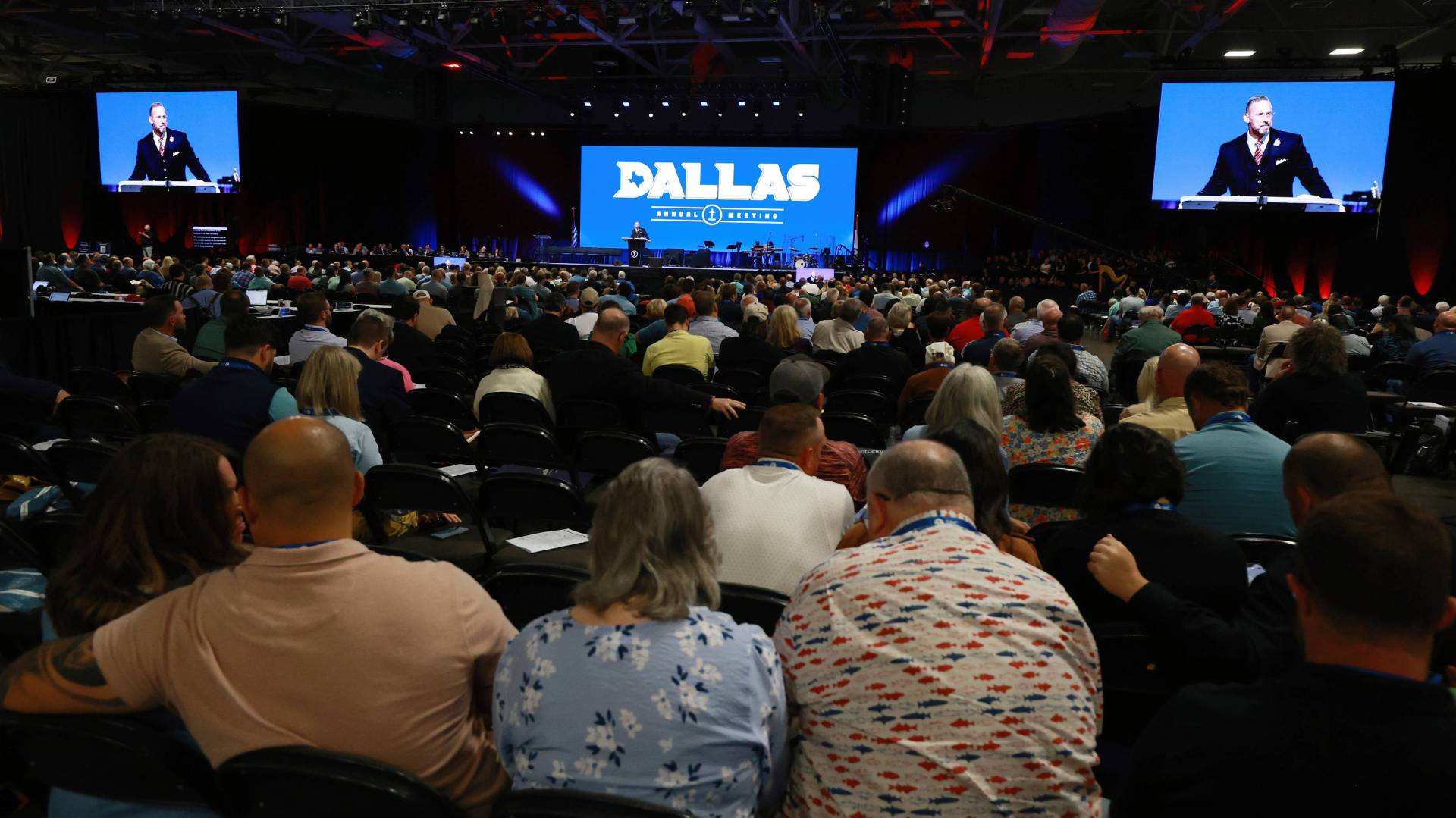
Crowd in convention center with three screens.

Southern Baptists gather in Dallas June 9–11.

Christianity Today June 11, 2025
Richard W. Rodriguez / Associated Press

Southern Baptists remain united in their long-standing opposition to gambling, pornography, abortion, and same-sex marriage, and they’re putting out stronger calls for the US government to ban what they see as sinful and harmful practices. 

On Tuesday at the annual meeting, a slate of resolutions—positional statements meant to represent the position of the Southern Baptist Convention (SBC)—all passed by huge majorities with little to no debate.

Though the SBC’s opposition to gambling dates back to the 19th century, this week marks the first time Southern Baptists voted to condemn sports betting in particular. The new statement decries sports betting as predatory, backs government regulation, and asks Southern Baptists to refuse to participate.

It says the industry “fosters a culture of greed while specifically exploiting and preying upon young adults, the impoverished, and those with addictive personality traits.”

Since a 2018 Supreme Court decision overturning federal bans on sports betting, this form of gambling has blown up to a $13.7 billion industry in the US, with ads infiltrating sports media and broadcasts. Fewer than a dozen states have yet to legalize sports betting, and Texas remains a major holdout.

“Gambling is not a new temptation, but I believe that the advent of online sports gambling raises the stakes considerably on how seriously Christian leaders should address questions around the moral and theological nature of gambling,” Kyle Worley, a Southern Baptist pastor from Texas, wrote last year.

The SBC also passed its most comprehensive call for criminalizing pornography and eliminating it from the internet entirely.

“We urge the United States Congress and state legislatures to enact comprehensive laws that ban the creation, publication, hosting, and distribution of pornographic content in all media … in the ultimate effort to eradicate pornography nationwide,” the SBC resolution read.

The move comes a few weeks after President Donald Trump signed the Take It Down Act, banning revenge porn and digitally altered deepfakes. Southern Baptists commended the law as “model legislation” on the issue and also asked government officials to protect people from future AI-generated porn.

As online pornography becomes more pervasive, more adults in surveys admit to viewing porn, and some research shows that Christians are nearly as likely as Americans overall to see it as healthy rather than harmful.

Yet conservative Christians who have long spoken out against the harms of pornography also have more company. Companies like Pornhub face swelling pushback for allowing abusive material to appear on their sites.

Another resolution favored government restrictions on abortion pills, which have become more common since the pandemic and now account for 63 percent of abortions in the country.

Southern Baptists asked for national and state bans on medication abortion and for the Food and Drug Administration to revoke its approval of the medication mifepristone for abortions. The SBC cited an Ethics and Public Policy Center study, released in April, that found that the medical risks of medication abortion are underreported.

The SBC also approved wide-ranging resolutions on marriage, gender, and sexuality, which included calling for Obergefell v. Hodges, which legalized gay marriage in 2015, to be overturned along with other laws and rulings that “defy God’s design for marriage and family.”

In a Gospel Coalition article published ahead of the Obergefell anniversary this month, SBC resolutions committee chair Andrew Walker argued that even without any political will to overturn the ruling, Christians should hope and try to.

“Secular wins are neither inevitable nor unstoppable nor permanent,” said Walker, associate theology dean at Southern Baptist Theological Seminary. He cited a leveling off in support for gay marriage and concerns around the country’s fertility crisis as “small glimmers” of hope.

Same-sex marriage was not discussed or debated when the measure passed Tuesday, though SBC president Clint Pressley praised Southern Baptists’ clear stances against same-sex marriage and transgender identity in his address to the convention earlier in the day.
The marriage, gender, and sexuality resolution also spoke out against laws that recognize transgender identity, including in sports, and in favor of government incentives for growing families “in life-affirming ways.”

Because SBC pastors and churches operate autonomously, none of the resolutions compel or require action. They are meant to reflect the consensus and convictions of the convention and help Southern Baptists to “think Christianly about urgent ethical issues,” said Walker.

The resolutions reflect some recent areas of focus for the Southern Baptist public policy arm, the Ethics and Religious Liberty Commission (ERLC), which the messengers are once again considering a move to abolish.

Earlier this year, the ERLC issued a white paper on sports gambling as well as a guide for pastors who want to address the topic with their churches. “The gambling industry is rooted in predation, greed, covetousness, and idolatry,” agency staff wrote. “Additionally, the addictive nature of gambling leads to physical, emotional, and relational harm.”

Around 80 percent of evangelical pastors oppose legalizing sports betting, though pastors under 45 are less likely to agree, according to a Lifeway Research report released last year. Over half of pastors say they haven’t felt the need to address the issue with their churches.

The new resolution on sports betting also encourages pastors to educate churches “on the deceptive sin of gambling” and to offer counseling for those who become addicted.

The ERLC also advocated around regulations for pornography, particularly age-verification laws that restrict access to explicit sites, when the issue came before the Supreme Court in January.

“Over the last several years as the ERLC has worked on various proposals and authored an original Supreme Court brief advocating for age verification laws to protect children, we have seen the destructive effects and predatory nature of pornography,” said ERLC president Brent Leatherwood, who submitted the resolution.

News

PCA Releases Results of Its ‘Jesus Calling’ Investigation

The denomination had ordered agencies to determine the “appropriateness” of the book for Christians.

The PCA gathers for a recent denominational meeting.

The PCA gathers for a recent denominational meeting.

Christianity Today June 11, 2025
Courtesy of the Presbyterian Church in America Administrative Committee

The Presbyterian Church in America’s bookstore wouldn’t recommend or sell Jesus Calling, but the denomination doesn’t need to do anything about the best-selling devotional, according to the results of an investigation submitted to the General Assembly.

Last year the Presbyterian Church in America (PCA) ordered two denominational agencies to investigate the “appropriateness for Christians” of Jesus Calling. Now, ahead of the denomination’s annual assembly June 23, the denominational agencies—Mission to the World (MTW) and the Committee on Discipleship Ministries (CDM)—have issued the results of their investigations. 

Neither agency recommended any further action or condemnation of author Sarah Young’s work, although CDM, which oversees the denomination’s bookstore and publications, said it would not recommend the book, instead allowing local pastors to evaluate it. CDM has not offered the book for sale since 2014. 

First published in 2004, Jesus Calling has sold about 45 million copies, making Young one of the most-read evangelicals of the past 20 years. She died 10 months before the PCA voted to investigate her work, but the criticisms of her work from within her denomination were not new. 

Critics said she styled her writing as direct revelation from God. Young called her work “listening prayers,” where she journaled what she heard from God in prayer. Young’s husband, PCA elder Stephen Young, has denied that she saw her work as adding to Scripture, saying she instead wanted to push people to Scripture. 

The Youngs were longtime PCA missionaries in Japan and Australia, and Stephen Young still serves with MTW. The Young family told Religion News Service last year that the proceeds from Jesus Calling went to fund new churches and overseas missions.

Stephen Young will be at the assembly this year with his daughter to see any further outcome of the reports.   

“This process has been really hard and discouraging for our family,” said Stephanie van der Westhuizen, the Youngs’ daughter, in an email to CT. She has monitored podcasts and publications about the dustup to see what might come up at the assembly. “On one hand, I’m thankful my mom did not have to live through seeing this happen. But on the other hand, we are still very much grieving her loss, and we were blindsided by the Jesus Calling overture showing up in the General Assembly last year.”

At that assembly, the PCA tasked the two agencies with investigating Young’s work. 

This month, MTW issued a report that was a few paragraphs long—notable in a denomination where similar reports can go for dozens and even hundreds of pages. MTW concluded it had no connection with the writing or publication of the book and that it therefore had no recommendations regarding the book.  

“The author did not write or publish the book at MTW’s request or with MTW’s involvement, and MTW did not review, edit, or approve the book in advance of its release,” the missions agency wrote in its report, published by the denominational news outlet byFaith. “After MTW’s good faith investigation of the matter addressed by the Overture—bearing in mind the amount of time that has passed since the book was written and published—MTW was unable to ascertain whether the author asked any individuals in MTW to give any counsel regarding the content of the book. To the best of MTW’s knowledge, the author wrote this book independently.”

The MTW report was also warm toward Young: “As an organization, we miss her dearly but rejoice that she’s in the arms of her precious Savior.”

CDM’s report was also only a few paragraphs and emphasized that local pastors should have the final say over recommending books to their parishioners. CDM said it received complaints about the book in 2014 and removed the title from the PCA bookstore.

“Since the devotional life and spiritual maturity of each person are unique, local church elders are best suited to evaluate the spiritual needs and maturity of those considering the book,” CDM’s report said. “Elders should converse with members and recommend alternative or remedial devotional materials as needed.”

Benjamin Inman, the author of the original overture to investigate the book, had wanted the PCA to investigate whether the book violated the second commandment and to potentially repent as a denomination for it—and he noted that the denomination had collectively repented for other sins like “American chattel slavery.” Inman has compared Young’s work to New Age “mediumship practices.” 

Inman’s presbytery rejected the measure, but he submitted it as an individual to the denomination, and the denomination passed an amended version last year.

Not long after the vote, it came to light that Inman had already joined a church in another denomination when he introduced the measure. PCA administration said the vote to investigate Young was still valid because the assembly had amended Inman’s measure. 

“We have had to carry the constant burden of wondering what will happen at the upcoming General Assembly,” said van der Westhuizen. “We have felt helpless, not being able to do anything, but just having to wait and see what happens.”

The book’s popularity has risen since the PCA’s investigation; it was fifth on the Christian bestsellers list when the PCA voted last year and is now number two

News
Wire Story

SBC Survivor Jennifer Lyell Left Behind Detailed Allegations of Abuse

In a deposition, Lyell alleged that her professor and mentor would coerce her into sexual activity, then tell her to repent and never speak of it.

Two demonstrators hold posters with faces of SBC abuse victims including Jennifer Lyell.
Christianity Today June 11, 2025
Peter Smith / Associated Press

In early April, Jennifer Lyell, a former Christian publishing executive, sat for a deposition in a defamation lawsuit filed by her once mentor and professor David Sills.

There she detailed alleged sexual and spiritual abuse by Sills in graphic detail—and insisted he had coerced her into sexual acts without her consent, and then asked her to join him at family meals afterward.

“But he always knew that I never, ever wanted any instance,” she said in an excerpt from her April 10 deposition. “And I always, always tried to stop it.”

Lyell died Saturday after suffering a series of strokes. She was 47. A few weeks before she died, her lawyer filed excerpts of her deposition in a federal court as part of a legal battle over discovery in the defamation lawsuit.

Attorneys for Sills had filed a motion to compel discovery of a number of things, including notes from Lyell’s counseling sessions. Lyell’s lawyers argued those notes were privileged and should not be turned over. The excerpts from Lyell’s deposition, filed as part of the response to the discovery requests, revealed additional details about the alleged abuse by Sills. In excerpts from the deposition, Lyell describes being forced to perform sexual acts despite telling Sills no.

“I resisted—attempted to resist verbally, physically squirming, reasoning, no, all these things,” she said in her deposition, adding Sills would often corner her and not allow her to get away.

The conflict over discovery is the latest chapter in the legal battle between Sills and leaders of the Southern Baptist Convention. Sills, a former seminary professor, has claimed SBC leaders defamed him by including his name in a report on the issue of sexual abuse published in 2022. Sills has admitted to misconduct but claimed it was consensual and denied in court documents that he was abusive.

Lyell, a former vice president of Lifeway, a Southern Baptist publishing arm, was also named in the lawsuit. In 2019, she went public with her allegations against Sills. But few details of the abuse had been revealed until the May 20 court filing. 

Along with abuse, Lyell also described spiritual manipulation by Sills—a longtime missionary and seminary professor—saying she was made to feel as if she had somehow tempted Sills into sexual activity. 

According to Lyell’s deposition, Sills often coerced her into sexual activity while she was visiting his home and while family members were also still in the house. Sills, a family friend and surrogate father figure, would go from being encouraging and parental to abusive and back again, Lyell alleges in her deposition, claiming that not long after forcing her to perform sex acts, Sills would lead his family and Lyell in prayers at the dinner table.

Sills would allegedly tell her to clean her face and to repent for what she had done—warning her that once she repented, she could never tell anyone about what had happened.

“And he would then—very often, when he would finish, like in that example of the oral sex, the hand would come off of my head, and he would say, now, go fix your face and repent,” Lyell alleged in the deposition.

“And then he had rules, such as that after you repent, because of 1 John 1:9, that you can never speak of whatever you’ve repented of, or that’s blasphemous. And so, I was stuck without a way to figure out how to navigate the, all of the confusing and seemingly conflicting dynamics.”

In the deposition excerpts, Lyell said that at first, she blamed herself, saying something “broken” in her was causing Sills to act in an abusive manner. She eventually realized he wanted the sexual activity and she was not causing him to sin, according to the deposition excerpts. 

A mediation session in the Sills lawsuit in late April failed to reach a resolution earlier this spring.

“David Sills denies and has always denied each and every allegation made by his accuser, including the content of the very limited deposition testimony released by counsel. We anticipate that the totality of evidence, once no longer under seal, will once-and-for-all clarify the actual facts,” Katherine Barrett Riley and Shannon McNulty, attorneys for Sills, told RNS in an email.

Court documents also mentioned claims of alleged sexual misconduct involving another woman who had sought spiritual counsel from Sills for her troubled marriage. Sills’s lawyers are attempting to block her from being deposed.

“Plaintiffs moved to prohibit the deposition of that witness, who is expected to testify that David Sills took advantage of her vulnerability after she and her husband came to him for counseling concerning their marriage and manipulated her into giving him oral sex,” according to a document filed by Lyell’s lawyers.

Lyell’s death and the excerpts from her deposition come at a time when the Southern Baptist Convention is convening in Dallas for its annual meeting. During that meeting, which ends Wednesday, SBC messengers will have to vote on how to pay ongoing legal bills from a sex abuse crisis, including Sills’s lawsuit.

The Sills lawsuit is one of three suits, filed by Southern Baptist leaders accused of alleged abuse, against the nation’s largest Protestant denomination.

Over the past four years, the Executive Committee, which oversees the Southern Baptist Convention’s business between annual meetings, has spent more than $13 million in legal fees, depleting most of its reserves.

The committee took out a $3 million loan and put its Nashville headquarters up for sale. Now the Executive Committee has asked messengers to approve a $3 million allocation from the denomination’s Cooperative Program, which funds national ministries and overseas missions for the nation’s largest Protestant denomination. 

Jeff Iorg, president of the Executive Committee, told committee members in a meeting on Monday that there is “an end in sight for these high legal costs.”

“We are not there yet,” he said. Iorg has also told SBC leaders that he hopes the lawsuits will be concluded soon.

“While many have joined me in lamenting this action,” Iorg said, referring to the allocation request submitted to the messengers, “I also believe most leaders understand the need for it and will support it.”

An investigation by the US Department of Justice, which led to about $2 million in legal fees, recently concluded with no charges filed. In March, a federal judge dismissed most of the charges in a defamation lawsuit filed by former SBC President Johnny Hunt.

The Hunt lawsuit and the Sills suit have cost more than $3 million to defend.

The SBC is also appealing a ruling by a Tennessee judge in a defamation case filed by Preston Garner, a worship leader and teacher, who says the denomination’s credentials committee told a church where he’d been hired about allegations of abuse at a former congregation. That disclosure cost Garner his job. The SBC has sought to have the suit dismissed, saying the courts have no jurisdiction over what is an internal religious debate. So far, Tennessee courts have disagreed.

Lyell’s name was not mentioned during the Executive Committee’s meeting on Monday morning nor at a panel on abuse sponsored by the committee later that day. In 2022, the Executive Committee apologized to Lyell for running a news story that referred to her allegations of abuse as an affair.

addApple PodcastsDown ArrowDown ArrowDown Arrowarrow_left_altLeft ArrowLeft ArrowRight ArrowRight ArrowRight Arrowarrow_up_altUp ArrowUp ArrowAvailable at Amazoncaret-downCloseCloseellipseEmailEmailExpandExpandExternalExternalFacebookfacebook-squarefolderGiftGiftGooglegoogleGoogle KeephamburgerInstagraminstagram-squareLinkLinklinkedin-squareListenListenListenChristianity TodayCT Creative Studio Logologo_orgMegaphoneMenuMenupausePinterestPlayPlayPocketPodcastprintremoveRSSRSSSaveSavesaveSearchSearchsearchSpotifyStitcherTelegramTable of ContentsTable of Contentstwitter-squareWhatsAppXYouTubeYouTube