Ideas

At SOTU, Trump Overstates and Inflates Presidential Power

Staff Editor

In his State of the Union marking our 250th year, the president honored athletes, veterans, Sage Blair, America—and himself.

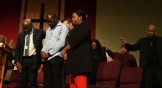
President Donald Trump delivers the State of the Union address during a joint session of Congress at the Capitol in Washington, DC on February 24, 2026.

President Donald Trump delivers the State of the Union address during a joint session of Congress at the Capitol in Washington, DC on February 24, 2026.

Christianity Today February 25, 2026
Pool / Getty

President Donald Trump’s State of the Union address was a speech made for social media, far less the pragmatic information transfer and policy proposal the Constitution envisions than a clip-ready string of personal anecdotes, guest backstories, partisan jabs, and victory laps.

All the best of these moments had one thing in common: They were not about Trump. 

Consider his evident joy over meeting the US hockey team, fresh off triumph at the Olympics and now honored anew with their goaltender’s receipt of the Presidential Medal of Freedom. Or his introduction of two venerable World War II veterans, each 100 this year, some of our last living witnesses of a conflict that remade the world—and America’s role on the global stage. Or his concluding meditation on the remarkable and many-faceted history of a still-young country at its 250th anniversary.

Or consider especially Trump’s profile of Sage Blair, a Liberty University student who “was 14 when school officials in Virginia sought to socially transition her to a new gender,” the president recounted, “treating her as a boy and hiding it from her parents.” Blair’s story is horrifying, a case where no Trumpian exaggeration is needed to make the point. “Surely we can all agree no state can be allowed to rip children from their parents’ arms and transition them to a new gender against the parents’ will,” Trump said. Surely we can. 

But then consider much of the rest of the speech, the parts focusing less on the state of the union—“strong,” as per usual in the post-Reagan era—than on the man at its helm. 

It is inevitable, of course, that presidents will speak of themselves in this address. Yet it is not inevitable that they will figure in the speech as Trump did last night: as a salvific figure who has personally and exclusively solved all our national problems, improving not only on the performance of past administrations but on the entire country’s collective efforts from 1776 to 2016.

Knocking former presidents is a comparison I don’t begrudge him. My own assessment of most of them, particularly recent leaders, would be similarly dim. But Trump’s more sweeping portrayal of the United States as a “dead country” he alone could resurrect is at odds with his tributes to our accomplishments and principles. 

Have we long been, as Trump said toward the end of the speech, “the pinnacle of human civilization and human freedom, the strongest, wealthiest, most powerful, most successful nation in all of history”? Or were we, until Trump just recently fixed us, weak, moribund, poor, and oppressed? Both can’t be true at once.

More important than agreeing on that history, though, is understanding what Trump’s account of himself says of and does to the office of president going forward. We’ve long had an overgrown executive and undernourished legislature in this country. The president is too powerful, and Congress is too feckless, whiny, and self-sabotaging. The powers are not balanced. The checks are not checking.

Trump is by no means the source of that distortion, which well predates him and plays havoc with our Constitutional design. But he does benefit from and exacerbate it—including in this State of the Union address, where he both overstated and inflated presidential power.


The overstatements were Trump’s claim of personal responsibility for goods no president can reliably produce. Presidential policies matter, yes, but they’re hardly all that matters. When President Barack Obama in 2012 told American business owners they “didn’t build” their companies, giving credit to government instead, conservatives and free marketers of all stripes rightly objected. 

This kind of thing is just as objectionable when Trump does it, and he did it a lot in this speech, taking credit for “a turnaround for the ages” on one big, multicausal phenomenon after another. 

And maybe much of that, the parts focused on political and economic issues, can be waved away as standard presidential hyperbole in an election year. But the same cannot be said of Trump’s credit-taking for reviving Christianity in America:

I’m very proud to say that during my time in office, both the first four years and in particular this last year, there has been a tremendous renewal in religion, faith, Christianity and belief in God. Tremendous renewal. … We love religion, and we love bringing it back, and it’s coming back at levels nobody actually thought possible. It’s really a beautiful thing to see.

In these telling lines, Trump foregrounded himself above the murdered activist Charlie Kirk, misrepresented what current polling on American Christianity actually shows, and gave not even a nod to the work of the Spirit or Christ’s church. Surely we can also all agree that if we’re blessed with another Great Awakening in this country—a renewal not of “religion” generically but of “the faith that was once for all entrusted to God’s holy people” (Jude 3)—credit goes to God, not any politician (1 Cor. 3:17).

This kind of overstatement deserves pushback, but at a pragmatic political level, Trump’s inflation of presidential power worries me more. It will only add to congressional atrophy and further executive branch bloat, destabilizing our economy and governance by building huge policies on the flimsy and impermanent foundation of executive orders. 

The most striking example here came in the president’s discussion of how he hopes to levy tariffs in the future, after losing on the issue at the Supreme Court this month:

[Tariffs] will remain in place under fully approved and tested alternative legal statutes, and they’ve been tested for a long time. They’re a little more complex, but they’re actually probably better [than the version the court struck down], leading to a solution that will be even stronger than before. 

Congressional action will not be necessary. It’s already time-tested and approved. And as time goes by, I believe the tariffs, paid for by foreign countries, will, like in the past, substantially replace the modern-day system of income tax, taking a great financial burden off the people that I love.

I too would love it if foreign countries paid our government so much money that the income tax went away. That’s a lovely fairy tale. But here in reality, per our Constitution, major new policies are not to be authored by the president and approved by time, whatever that means. They are to be authored and approved by our duly-elected Congress. 

To put it in Trump’s terms from this speech, running a country on memos instead of legislation is a surefire way to “drain the wealth out of the productive and hard-working people who make our country great, who make our country run.” It is literally lawless. It is no way to continue for the next 250 years.

Bonnie Kristian is deputy editor at Christianity Today.

Theology

What If Aliens Are Real? A Thought Experiment

Columnist

I don’t know how likely extraterrestrial life might be. But no matter what, the truth of Christianity will stand.

An illustration of a flying saucer.
Christianity Today February 25, 2026
Illustration by Christianity Today / Source Image: Getty

This piece was adapted from Russell Moore’s newsletter. Subscribe here.

This is how strange our times are: Last week, two United States presidents engaged the question of whether aliens are real, and it wasn’t even in the top 15 stories of the week. The debate was over not “aliens” as in migrants to a country but “aliens” as in extraterrestrial, nonhuman beings.

Former president Barack Obama sparked the controversy by responding to a question about aliens in a podcast interview and saying that “they’re real” before assuring listeners that there are no underground bunkers studying aliens at Area 51. President Donald Trump then accused Obama of giving out “classified information” and then pledged to declassify government documents on what used to be called unidentified flying objects (UFOs) and are now referred to as unidentified anomalous phenomena (UAPs).

Those discussing UAPs these days are not tinfoil-wearing conspiracists but rather the secretary of state and senior military officials who argue that someone seems to have some kind of technology that American scientists can’t explain. Still, I find it highly unlikely that anything substantial will come out of whatever documents are released. But let’s suppose, for the sake of argument, that science does one day prove the existence of intelligent extraterrestrial life.

Obama clarified a few days later, after his interview prompted questions all over the world, that he was not suggesting he has some inside information about aliens. Just the opposite, he said: “The universe is so vast that” he finds it likely that we are not the only conscious species out there. Some people were disappointed by this. Some of them just want the drama of it all, of course, but some want alien life to be out there because they find the prospect of a lifeless universe in which we are all alone to be a depressing reality at best and an existential crisis at worst.

Others have the opposite view. If next week Trump were to give a speech presenting compelling evidence of extraterrestrial life (as his daughter-in-law speculated he at some point will), some people would be terrified. A thousand movies have anticipated how the world would respond—with some picturing panic, others euphoria, still others world peace wrought by having a common enemy.

But what about your church? What would happen the Sunday morning after this kind of news? Some would have a crisis of faith. After all, no doubt people would opine this means Christianity—along with every other religion—is wrong. We are just a cosmic accident, they would say, since most religions but especially Christianity grant human beings uniqueness in the universe.

And if the news were the opposite—proving that we are alone in the universe—some people would be in a crisis of faith then, too. In that case, they would think our aloneness, in light of such a vast universe, means we are just a speck of matter, conscious for a moment, on a little rock circling a star.

The reason I bring this up is not because I have an argument to make, one way or the other, about how likely alien life might be. What I do know is that even if we were ever to definitively solve the question of whether we are alone in the universe, Christianity would be just fine. And that’s because the question is not really all that new.

The David of the Bible did not know what a black hole was, and he wouldn’t have recognized an elementary-school model of the solar system, much less images from the Hubble Space Telescope. But he could see the sky, and its vastness caused him to feel the smallness and seeming insignificance of humanity: “When I look at your heavens, the work of your fingers, the moon and the stars, which you have set in place, what is man that you are mindful of him, and the son of man that you care for him?” (Ps. 8:3–4, ESV throughout).

In Scripture, God himself often communicates that the known world is far bigger and stranger than what the human mind can imagine, much less comprehend. We need not go into outer space for that kind of insight. We need only recognize how unexplored and mysterious our own oceans are: “Here is the sea, great and wide, which teems with creatures innumerable, living things both small and great; There go the ships, and Leviathan, which you formed to play in it” (104:25–26).

Yet the very same Scriptures reveal human uniqueness. David answered his own question about why we should consider a tiny human significant: “Yet you have made him a little lower than the heavenly beings and crowned him with glory and honor. You have given him dominion over the works of your hands; you have put all things under his feet” (8:5–6). Both these things are true: Humanity is a speck in a dizzyingly large universe—and the heir of all of it.

The writer of Hebrews took the argument a step further. He quoted David and then added that the problem is everything certainly does not seem to be under humanity’s feet. Nature is big and wild and chaotic—and ultimately kills us all. How can we say that humanity matters, much less that it is central? “But,” the writer says, “we see him who for a little while was made lower than the angels, namely Jesus, crowned with glory and honor because of the suffering of death, so that by the grace of God he might taste death for everyone” (2:9).

The Christian claim is this: “The Word became flesh and dwelt among us” (John 1:14), and the Son of God is inseparably united with human nature and thus is “not ashamed to call them brothers” (Heb. 2:11). That was no easier to accept in the first century than it is now. After all, no one in the first century knew what satellites were, but they did know that the cosmos was unspeakably big.

And of this one workman rabbi from Nazareth, the apostle Paul wrote, “For by him all things were created, in heaven and on earth, visible and invisible, whether thrones or dominions or rulers or authorities—all things were created through him and for him. And he is before all things, and in him all things hold together” (Col. 1:16–17).

The gospel has already grappled with the fact that we as the human race seem alone and microscopic. We are “fellow heirs with Christ” (Rom. 8:17) not because we can conquer but because he was crucified. His defeat of death accomplished the promise that boggled Abraham’s mind when he looked at the night sky over Canaan: “Look toward heaven, and number the stars, if you are able to number them,” God said to him. “So shall your offspring be” (Gen. 15:5).

If a spacecraft were to arrive and an alien say, “Take me to your leader,” we might be unnerved. But we would not, as Christians, be facing a dilemma we hadn’t seen before. We have always known there are nonhuman intelligences out there in the created order—principalities and powers, angels and demons. And it was just as stunning in the first century to ask why Jesus died for us and not for them:

For surely it is not angels that he helps, but he helps the offspring of Abraham. Therefore he had to be made like his brothers in every respect, so that he might become a merciful and faithful high priest in the service of God, to make propitiation for the sins of the people. (Heb. 2:16–17)

Paul wrote of bad circumstances and of good, “I know how to be brought low, and I know how to abound” (Phil. 4:12). The same is true here. We know how to be in a universe where there’s no other planet with intelligent beings. And we know how to be in a universe where there is. We’ve encountered phenomena far more anomalous than whatever the Air Force has tracked. The problem isn’t aliens, and it’s not even human fragility. The problem is misunderstood glory.

Even if there’s something out there watching us, and even if it were to ask, “Can anything good come out of Nazareth, or from the little rock to which Nazareth clings?” we still have the same answer we always had: “Come and see.”

Russell Moore is editor at large and columnist at Christianity Today and leads its Public Theology Project.

News

First, Honesty. Then, Multiplication Tables.

We need to know how badly students are failing in math class. Then we must return to the fundamentals.

A child writing math symbols.
Christianity Today February 25, 2026
Illustration by Elizabeth Kaye / Source Images: Getty

In many ways, what happened with math instruction in the United States mirrors better-known problems with how our children have been taught to read. 

As outlined in the deeply reported Sold a Story podcast, American reading instruction shifted from teaching phonics and reading fundamentals through rote practice to a more “vibes-based” approach centered on sight words and “balanced literacy” delivered in cozy classroom book corners. We chose to believe that exposing kids to good books would be enough to teach them to read and to love reading. It didn’t work.

Good books are necessary to make good readers, but they’re not even close to sufficient. Literacy rates cratered across the country as this new pedagogy was implemented. By 2022, National Association of Educational Progress data showed that roughly one third of America’s fourth and eighth graders failed to read at basic level. The pioneer of the balanced literacy movement, Lucy Calkins, fell from grace, and the tide began to turn on reading instruction styles. 

Our trouble with math education is similar. This story hasn’t been as deeply reported yet, but it follows the same cultural trajectory. It even has a similar antihero, Jo Boaler, a professor of education at Stanford University, is seen by some in education as a ”beacon of hope.” But her critics allege that she “made bold assertions with scant evidence” which they feared would “water down math and actually undermine her goal of a more equitable education system.”

Boaler wrote a book called Math-ish that aims to help students find “joy, understanding and diversity in mathematics.” Influential in developing the pedagogical shifts that informed Common Core standards—and even in how teachers are trained to teach mathin states, like Texas, that haven’t adopted Common Core—Boaler aimed to help students experience math instruction more “broadly, inclusively, and with a greater sense of wonder and play.” 

That certainly sounds more delightful than a worksheet—even akin to the reading corners with twinkle lights and beanbag chairs. But seasoned math teachers told me they see it as a dereliction of duty. (The local educators I interviewed weren’t allowed to speak on record per school district policy.)

Students can’t explore the beauty and mystery of math if they don’t understand the fundamentals, said one math teacher. Setting students up for failure because we haven’t taught them the basics isn’t loving and supportive, said another. 

And especially in public schools, as students flounder, gaps in equity grow rather than shrink. Students in families with more financial resources pay for expensive private tutoring to teach the basics neglected in the classroom. Students whose families can’t afford tutors’ rates fall further and further behind. 

I interviewed parents, teachers, and Matt Friez, a member of my school district’s Board of Trustees, to inform this story, and for all their frustrations, they aligned on a lot. While they have real differences of perspective, they all know that fixing math education is a daunting challenge. And they agreed on some initial steps for improvement. 

The first step is honesty. For Ebony Coleman, a local parent who was horrified to discover just how far behind her eighth-grade daughter had fallen in math, this is paramount. Last summer, she began her “Math Ain’t Mathin’” grassroots campaign to make math achievement a high priority for the district. She went door to door and talked to over 100 other parents here in the Midland Independent School District (MISD). She found that only 20 percent of parents thought their children were below grade level in math. In reality, district statistics suggest that upwards of 60 percent are falling behind. 

Coleman wants parents to take greater responsibility for proactively seeking solutions, but she believes that must start with teachers and district administrators being more forthcoming about student performance. (I reached out to Midland ISD for comment but did hear back before publication.) 

Friez agrees. “I want every campus to publish data so that everybody knows exactly what is going on, who is on track and who is off track,” he said, “down to you seeing clear data for your child.”

Armed with the truth, the next step is to focus on the fundamentals. The teachers I spoke with told me they want to see more paper and pencils and fewer Chromebooks in math classrooms, to see their fellow teachers get out from behind their desks and roam the classes, actively monitoring student work and catching computation errors in real time. But with all the other responsibilities and expectations that have been added to teacher workloads and the ways reliance on digital tools has become a professionally acceptable option, these teachers recognize that for some of their colleagues, reverting to an older teaching style feels unrealistic. 

Similarly, parents and students alike want to reduce reliance on video lessons and digital tools and increase high-quality direct instruction. All my sources agreed we must bring back rote memorization of basic math facts like the multiplication tables and other commonly used patterns, like the correlation between common fractions and percentages. 

Rather than simply buying new curricula, one veteran teacher said she’d like to see the district return to a district-wide, collaborative, grade-level approach to lesson planning, something that worked well in the past. In that model, teachers within the district who have demonstrated results in the classroom work together to create a district-wide plan to meet state standards. It includes collaborative lesson planning and in-person teacher training on instructional methods, formalizing and expanding the guidance veteran teachers already give their colleagues when they can. This model helps ensure every student receives quality instruction, even when assigned a less experienced teacher. 

The math educators I interviewed are not naive or in denial about the scope of this problem. They know the task in front of them is gargantuan. When only 30 percent of students in the district are on track in math class, as is the case in Midland, it’s easy to lose heart. 

On the afternoon I met with a group of teachers, we convened in a local coffee shop. When one of the teachers was picking up her latte, she glanced behind the counter and caught sight of a former student, now in his early 20s and a part owner of this new business. 

He came bounding to the front of the café, embracing her in a huge hug. “You remember me!” she said, laughing. “Of course!” he boomed. “You were my fifth-grade math teacher!”

When it came time to leave, she nodded back at him. “There’s so much about the system that is so broken. But I keep working at it because of kids like that,” she smiled. “Look at him now! He owns and runs his own business! He’s a productive member of society! He’s building something good for our community!” 

“I can’t change the world for everyone in the district or the state or the nation,” the teacher added. “But I can do my best to make a difference for the kids God brings into my school.”

This is part three of a three-part series on math education in America. Read parts one and two at these links.

Ideas

Faith Should be Public but Not Performative

Guest Columnist

Christian faith must act on behalf of the most vulnerable, not clutter social media feeds.

An Instagram grid of people in blue and red squares.
Christianity Today February 25, 2026
Illustration by Elizabeth Kaye / Source Images: Unsplash

After the killing of Alex Pretti, Blake Guichet, a popular Christian influencer, resisted the emotional undertow of social media. One of her Instagram posts declared open resistance to what “the internet tell[s] you … to carry.”

“Faceless strangers don’t get to tell you if you’re a good person or not because of the events you do or do not post about,” Guichet wrote—though not incidentally, as Elaine Godfrey at The Atlantic reported, Guichet posted seven times after the death of Charlie Kirk.

Her purported retreat from public political speech, a tactic other influencers like her have taken, mirrors the resignation many of us feel in this civic moment. Our sense of powerlessness grows, and we’re tempted to limit our sphere of care and compassion, even to believe that when we do so, we imitate Jesus, who, according to Guichet’s post, “withdrew when crowds demanded more.” To avoid emotional overwhelm and partisan rancor, we are tempted to abandon public concern for private faithfulness.

This may, in some cases, represent a sober wisdom about the limits of human capacity. But a retreat from grave social matters can also be a dangerous form of self-protection. From William Wilberforce to Harriet Beecher Stowe, from Dietrich Bonhoeffer to Martin Luther King Jr., we see compelling examples of Christian faith that emboldened public dissidence with—and even resistance to—obvious evil.

The question remains: Is their moment ours? And if it is, will their courage be ours too? 

Today’s problem is not, as Guichet argues, the scope of global suffering, even if we succumb to doomscrolling the news and carrying the emotional weight of global tragedy. The problem isn’t that social media demands swift responses, nor is it the moral sifting of said responses. The problem isn’t even the shallow performativity of internet speech that is more committed to rallying the base than persuading the unconvinced.

Although it is wise to turn from online outrage, we cannot, as followers of Jesus, turn a blind eye to the least of our neighbors, whom we love as an act of worship (Matt. 25:45). To do so may indicate we have failed to imagine meaningful public engagement—love, in the name of Christ, performed not simply in “words or speech” but “with actions and in truth” (1 John 3:18).

At this particularly charged American moment, a more widespread problem is resignation to the plight of the refugee, asylum seeker, and immigrant in our midst, those who are being detained and deported without due process. The logic of an inward turn, toward our families and the four walls of our homes, thrives in a society of haves and have-nots. The haves enjoy a privileged isolation from the trauma the have-nots suffer: family separation, jail, and credible fear of returning to their home countries. It’s the have-nots who need our voice.

Many public Christian influencers like Guichet can afford the idyll of a quiet domesticity that men like C. and M. and S., three of my church’s ESL students, cannot. These West African asylum seekers (whose names I’m withholding) entered the United States under a then-legal process, yet they were recently detained after they lawfully presented at their immigration appointments. It’s unclear if and when their cases will be heard in court.

These are law-abiding immigrants with authorization to work. Through no fault of their own, their once-legal status is pulled from under their feet. Their faces represent many others, including at least 10,000 Haitians who sought refuge and employment in Springfield, Ohio, just 90 minutes from my house. This hardworking community, unjustly indicted by smears during the last presidential election, will be vulnerable to deportation if the courts allow the administration to lift protections, as they did in the case of Venezuela TPS holders.

These are not crises of far-flung places. They haunt my proverbial backyard. Should I ignore them?

When neighbors like me do not defend these and others loudly and publicly, when we do not decry our government’s aggressive campaign to terrorize immigrants rather than afford them due process, we cannot believe we represent the heart either of good government or of the God to whom the psalmists pray: “‘Because the poor are plundered and the needy groan, I will now arise,’ says the Lord. ‘I will protect them from those who malign them,’” (12:5). Collectively, Christians must recover our prophetic voice.

When we do not clearly challenge Christian silence that masquerades as virtue, we do not love with sufficient courage. This is not a partisan argument—but it is distinctly political. If politics is the way we speak of our civic housekeeping, everyone has a responsibility to keep the house in order.

Performativity is a word that rose to prominence after George Floyd’s murder and the ensuing protests. In 2021, Merriam-Webster added a new definition to its entry on performative: “made or done for show.” Rightfully, we reject performativity in the name of Jesus, who called out the religious leaders of his day for their blatant sins of hypocrisy. They performed their prayers on street corners. They gave to the needy—but only when a noisy brass band could trumpet their offerings, lest their generosity escape notice. “Truly I tell you, they have received their reward,” Jesus said (Matt. 6:2).

Yet we might misunderstand Jesus’ correction and throw the public good out with the performative bath water. When Jesus called us to pray and give in secrecy (6:3–6), did he forbid public gestures of committed Christian principle? In cautioning us against the insincerity of public spectacle, did he command us to refuse interest in anything other than our private concerns?

I don’t think so. Though performative actions and speech are suspect, public life and speech are not. Jesus was a public figure.

When the chief priests and elders finally seized Jesus, his arrest was a covert operation—an irony Jesus couldn’t help but highlight: “Am I leading a rebellion, that you have come out with swords and clubs to capture me? Every day I sat in the temple courts teaching, and you did not arrest me” (Matt. 26:55). Jesus was never simply a private citizen, and if his revolutionary movement was to be stamped out, Rome understood it would necessitate a private arrest but a public crucifixion, his limp figure hanging as a stark imperial warning.

So too the apostles’ ministry was public. The attention they generated put them in the murderous sights of the same authorities that put Jesus to death. In private homes, the apostles broke bread, and in the public square, they preached and performed wonders and signs. As crowds gathered, Peter loudly and boldly proclaimed the mystery of God made flesh, this Jesus of Nazareth crucified, dead, and buried, then raised on the third day and ascended into heaven (Acts 2).

When public speech put Paul and Silas in prison in Philippi—and the magistrates suddenly reconsidered their rashness, begging the inmates’ quiet departure—Paul was indignant. “They beat us publicly without a trial, even though we are Roman citizens, and threw us into prison,” he said. “And now do they want to get rid of us quietly? No! Let them come themselves and escort us out” (16:37). 

Perhaps some will argue that these biblical examples stand out as apolitical. Critics could argue the gospel is a message of eternal salvation (it is!) and we did not find the apostles in the public square, throwing stones at Caesar’s policies. Yet as Larry Hurtado argues in Destroyer of the Gods, simply claiming the name of Christ was political resistance.

In the Roman Empire, residents were expected to participate in “processions and sacrificial offerings to the guardian god or goddess of the city,” Hurtado writes. “Even in ordinary activities such as giving birth, or eating, or travelling, in the meetings of guilds and other social groups, or in the formal meetings of a city council, people typically offered appropriate expressions of reverence to the relevant divinities.” Discipleship in the reign of the Caesars was always a public affair, as Christians pledged allegiance to a different king.

For a more recent example, in the 19th century, Harriet Beecher Stowe (author of Uncle Tom’s Cabin) and her siblings grew up in a Christian home that underscored the social and political responsibilities of all Christians. As Obbie Tyler Todd details in his recent book The Beechers, “All of Lyman Beecher’s children were certain that the family unit was the building block of American society.” Though Stowe’s public activism against slavery is more widely known today, her older sister, Catharine, was an early and outspoken critic of the Indian Removal Act, which forcibly resettled many Native Americans . Lyman Beecher’s children were raised to understand that Christian faith begged active public involvement in their neighbors’ good.

Catharine and Stowe’s younger sister, Isabella, a suffragist, spoke of the influence of their childhood home on her own social activism: “I date my interest in public affairs from those years between eleven and sixteen, when our family circle was ever in discussion on the vital problems of human existence, [where] the United States Constitution, fugitive slave laws, Henry Clay and the Missouri Compromise alternated with free will, regeneration, heaven, hell, and ‘The Destiny of Man.’” The Beecher family did not always see eye to eye on public policy, but even as they diverged theologically as they got older, the Beecher children agreed Christianity was a matter of not only private conversion but also political responsibility.

My work as a public writer began within the explosion of social media platforms, and until now, I have largely agreed with Guichet’s refusal to “be reduced to whatever this year’s version of a black square on Instagram is.” But as a citizen of this democracy and of the kingdom of God, I can only conclude that public speech and action are becoming more necessary, not less. Silence can be a means of complicit concealment of injustice.

I am not suggesting we take up more social media tirades. Yet Christians must allow their public lives and words to instruct the people of God in the confusion of our moment, when lies parade as truths and vice is mistaken for virtue. Every conversation counts right now, as we seek to do justice, love mercy, and walk humbly with our God (Mic. 6:8). Public—and private—speaking matters for every neighbor, especially those who cannot speak for themselves.

Jen Pollock Michel is an author, speaker, and spiritual writing mentor for Whitworth University’s MFA program. Her most recent book is In Good Time, and her forthcoming book publishing this fall is A Rule for the Rest of Us.

News

Mass Kidnappings Leave Nigerian Churches Reeling

Christian leaders fight to draw attention to the abductions by criminal gangs amid government denial.

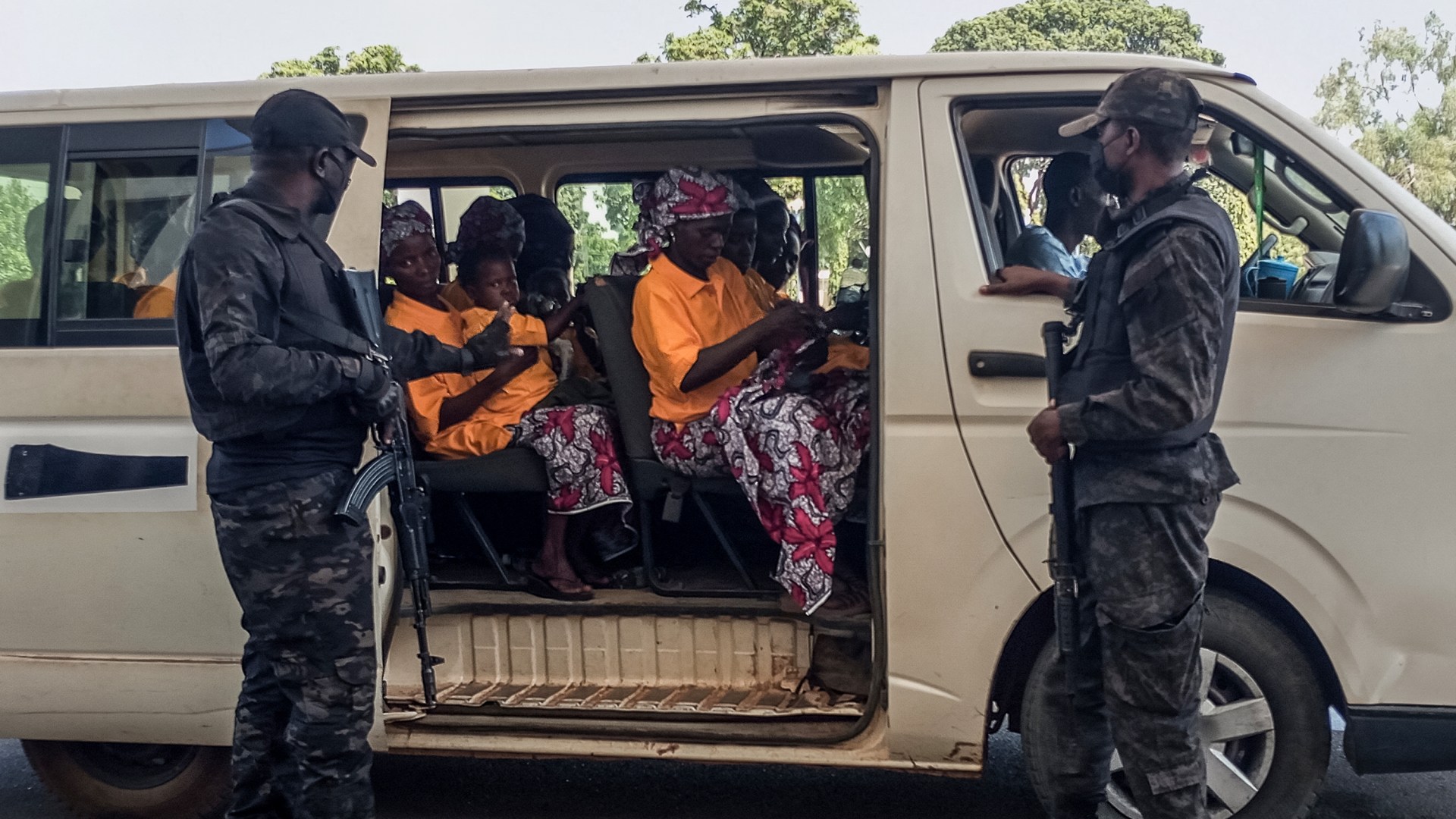
Security officers stand guard next to a bus carrying freed worshipers at the Government House in Kaduna.

Security officers stand guard next to a bus carrying freed worshipers at the Government House in Kaduna.

Christianity Today February 25, 2026
Contributor / Getty

Raymond Na’allah said worshipers were dancing to praise songs and giving tithes on Sunday, January 18 when armed kidnappers surrounded Cherubim and Seraphim (C&S) Church 2 in the Kurmin Wali community in Kajuru Local Government Area, Kaduna State, northwestern Nigeria. Around 11 a.m., a female church member went outside to use the outhouse, saw the kidnappers, and ran back inside, shouting warnings. Worshipers rushed around in confusion, attempting to escape or find places to hide.

Na’allah said the kidnappers had swept through the area, first targeting two other churches in the village—the local Evangelical Church Winning All (ECWA) branch and C&S Church 2’s sister congregation, C&S Church 1—rounding up worshipers as they went. Na’allah’s church was the last stop before kidnappers—who didn’t bother to hide their faces—took their victims into the forest.

In the confusion, Na’allah managed to escape to a nearby house. He hid in the restroom, so the kidnappers didn’t find him. “Maybe because they had already taken so many people,” he said. He watched, agonized, as the young male kidnappers severely beat his neighbors and family members. He said the attackers took captives’ phones from them “probably … to discourage people from trying to escape.”

Kidnappers took 177 people, including 29 members of his family—his mother as well as siblings, nieces, and nephews. Then they contacted him and the other villagers through a representative and demanded 250 million naira (about $186,000 USD) and 20 motorcycles for the return of all hostages.

“Our hope is in God, because where will we see that amount of money?” Na’allah lamented.

At first, the state government and police denied the abductions happened, damaging the already-eroding trust in Nigerian leadership’s ability to address ongoing security challenges.

Kaduna state officials only retracted the denial after the Chikun/Kajuru Active Citizens Congress (CKACC) published the names of the 177 victims in a statement on January 21. The Kaduna governor Uba Sani then visited the area and assured residents that his government is “resolute in its determination to secure the safe and dignified return of all those taken from their homes.” 

Then on January 25, kidnappers snatched six more victims, this time in the town of Maraban Kajuru.

On February 2, the government announced that 80 of the 177 people initially listed as victims from Kurmin Wali had actually fled to neighboring villages to hide but had returned home, according to Reuters. Na’allah’s family members and others remained in captivity, but by February 5, the military secured their release.

Though Christian Association of Nigeria (CAN) leadership disagreed with some aspects of the government’s account—reporting that only 11 victims escaped while 166 had remained missing—it confirmed that the military helped free all abducted church members and no one had to pay a ransom.

The Maraban Kajuru victims remained unaccounted for by last report.

Individual and mass kidnappings have risen across Nigeria in recent years as jihadist groups and criminal gangs turn to abductions as a source of income, with Kaduna being among the worst-hit states. The rise of banditry in the Kajuru and Birnin-Gwari local government areas in Kaduna has intensified since 2016, partly fueled by high youth unemployment and vast savannah forests ideal for bandits’ hideouts. The Nigerian National Assembly passed a law in 2022 to make paying ransoms illegal, hoping to withhold incentives from kidnappers. Still, abductions have continued.

Christians in neighboring states suffer too. As CT covered in September, kidnappers in Kwara State refused to return a pastor to his family after receiving the agreed-upon ransom. He died of a health condition while waiting for his release. Parents in Niger State spent the days leading up to Christmas praying for the safe return of their children after a mass kidnapping at a Catholic school. Kidnappers returned the children after the government threatened to attack them.

The Nigerian government insisted this year it’s working with United States leadership to improve security and reduce violence in the country.

Enoch Kaura, the chairman of the CAN branch in Kajuru Local Government Area said the government knows about the chronic kidnappings and should live up to the responsibility of securing Nigerians’ lives and property. He believes the government should also include community members in the solutions, such as civilian-led intelligence gathering or joint civilian-security force patrols—measures already used in Borno State. “If the locals can defend themselves, I think these people cannot attack them anyhow again,” Kaura said.

As Christians struggle to trust official responses, they rely on prayer.

One Christian woman told CT the kidnappers took her brother and his wife in the Maraban Kajuru raid days after the church attacks. She heard about their abduction on social media then confirmed it by calling a sister-in-law. The kidnappers have now demanded 70 million naira ($52,000 USD) for her brother and sister-in-law’s safe return.

The local government chairman visited her and her parents, retirees aged 81 and 69, to commiserate with them and gather firsthand information about the abductions, but the woman said she hasn’t heard anything since. Waiting for news is painful: “We wake up hopeful, but it is difficult to sustain as the day grows.” 

Her local CAN chapter has organized prayers for the release of kidnapping victims, she said. Because kidnappers are well-armed, villagers like her can’t mount a rescue—they must wait for the government to act or illegally pay ransoms in hopes of getting their loved ones returned.

“We don’t have power to change anything, but we so much believe in the One who has power to turn things around,” she said.

While many still wait, Raymond Na’allah no longer must. Na’allah recalled his days passed in a blur as he wondered how his family members were faring after being taken from Kurmin Wali. He told me his home village no longer feels safe, but he has nowhere to go.

When Na’allah heard the news of the release, he was staying with relatives in Kaduna’s state capital. He recalled that inwardly he wanted to shout and laugh, but he only smiled. Na’allah said he looked forward to returning home and reuniting with his relatives. He added that the governor assured them of adequate protection in the future.

“If government can keep to its promise of ensuring security, then maybe we can return to our farms,” he said.

Though Na’allah and his neighbors avoided paying a ransom this time, their resources are still depleted from the ongoing kidnapping crisis. Na’allah, a farmer, said he is struggling to survive off what remains of last year’s harvest. He sold much of his crop already to help community members raise ransom money for an earlier kidnapping.

The One Kingdom Campaign Spring 2026 Impact Report

CT Partners are making Jesus known.

For 70 years, Christianity Today has lifted high the name of Jesus—helping the Church see Christ more clearly and follow him more faithfully. Through The One Kingdom Campaign, we’ve expanded our reach across continents and generations with in-depth journalism, redemptive storytelling, and global reporting.

But none of this is possible without generous CT Partners. Their support helps CT elevate the stories and ideas of the kingdom of God—encouraging pastors, forming young believers, and reminding Christians that we belong to one kingdom under one Lord.

As you explore this One Kingdom Campaign Impact Report, you’ll see clear evidence of God’s faithfulness at work through this ministry.

The opportunity before us is great. The Church faces cultural change and division—but also remarkable potential for gospel witness. Your support is helping CT tell more stories and equip more leaders.

Download the Impact Report here.

Books
Excerpt

Parents of Prodigals Can Trust God is Good

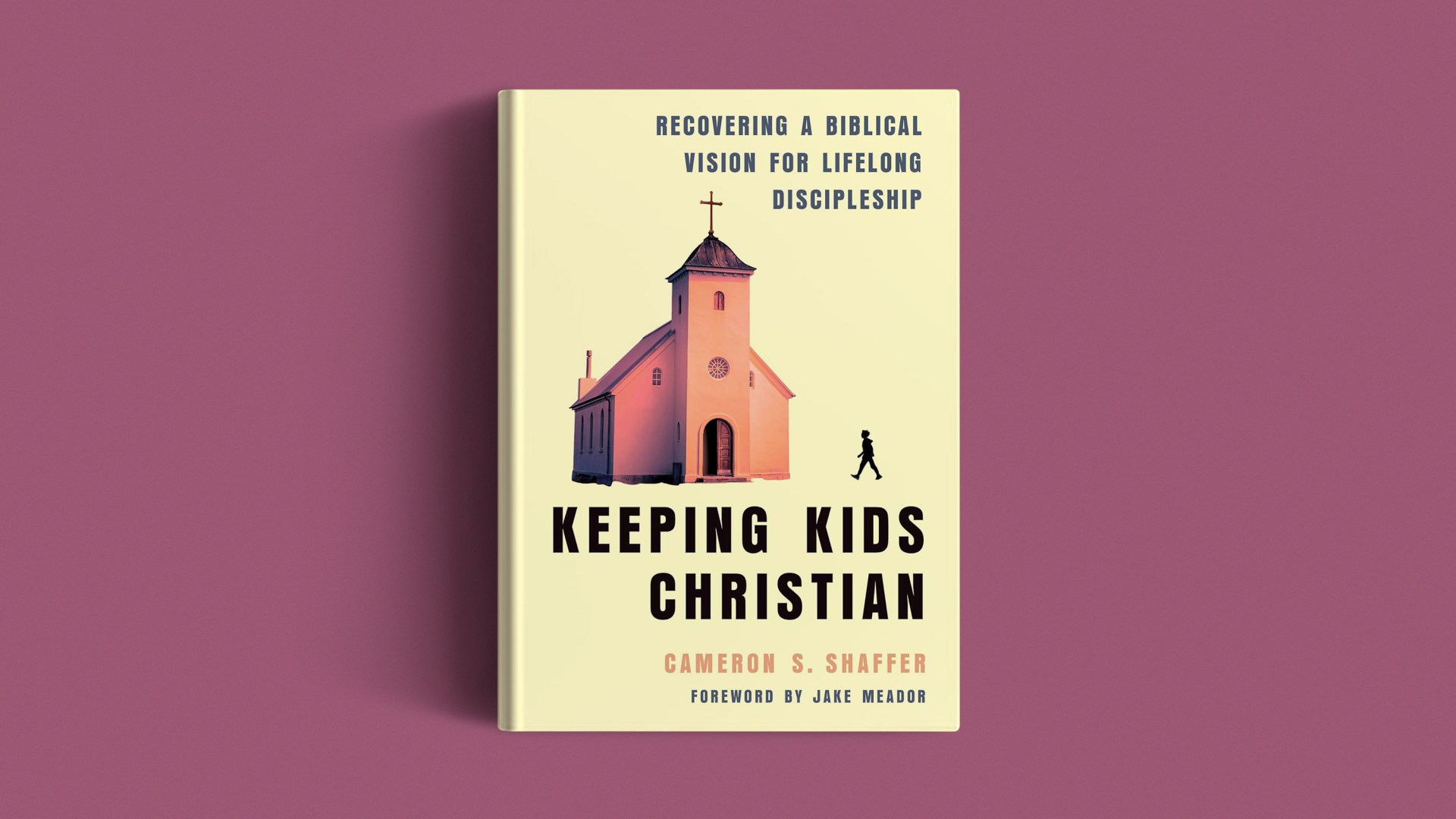
An excerpt from Cameron Shaffer’s Keeping Kids Christian.

The book on a purple background.
Christianity Today February 24, 2026
Illustration by Christianity Today / Source Images: Getty, Baker

One of my theological mentors was a great example of authoritative parenting, and yet two of his three adult children in no way considered themselves to be or lived as Christians.

Once I asked him and his wife what they thought about this, and their response was to point to their kids’ baptisms. This was not a desperate naiveté of the sort when a parent recalls that their kid once said the sinner’s prayer and therefore it meant that no matter how they lived their life and what their belief was, they were actually saved. No, when they pointed to the baptism of their children, they were pointing to the reminder of God’s promise: “Turn to me in faith, and I will be a God to you and your children.”

Their baptism is a permanent reminder of God’s promise to freely offer salvation. They were children of the covenant, and that would never change. Were they Christians? Not in any real sense, but the gift of baptism was a blessed comfort to their parents that God had already acted in their lives and marked them as his own and he wasn’t done with them yet. They may have wandered from the faith, but their story is not over.

This is true whether the kids were baptized as babies or baptized based upon their profession of faith and later abandoned Christianity. The great dechurching has come for the children of all Christian denominations.

And the great dechurching underscores the reality confronting many anxious parents: They can do everything right, or think they did, and their kids still may not remain followers of Jesus.

The hope of God’s people lies in his grace for the kids who have grown. And like with conversion, God’s gifts of the family and church have a role to play in building up the faith of adult children. Even when they have grown up, it’s never too late and no one is ever too far gone from the grace of God.

Parental influence remains the strongest factor in whether these adult children eventually return to the faith, with grandparents also playing a significant role. If pastors and churches desire to see young adults hold on to their faith—and to equip parents to exercise their lasting influence effectively—they must first understand why some kids walk away.

One of the most straightforward ways a transition away from faith occurs is when young adults stop identifying as Christian altogether. They no longer claim the label of Christianity, whether in surveys, conversations, or personal reflections. They may not be hostile to Christianity, but they don’t care about it anymore. This is related to but distinct from another significant shift: when kids cease to live according to Christian teachings, particularly in areas like regular church attendance, prayer, and engagement with Scripture.

While they might still consider themselves Christians in some sense, their lives no longer reflect active participation in the faith community or adherence to its practices. This drift often coincides with entering college or the workforce, where routines and priorities change.

Perhaps the most profound change occurs in those who undergo a process of deconstruction or deconversion. This involves reevaluating their beliefs, questioning long-held assumptions, and ultimately rejecting the faith they were raised in. The internet, with its wealth of information and diverse perspectives, can often play a significant role in accelerating this process.

My observation is that kids who are told they need to be a Christian in order to be a good person are most vulnerable to deconstruction. When they enter into a world full of non-Christians who are good people living fulfilled lives, many of whom are nicer than the Christians they know, it places into sharp relief the moral reasoning of their faith and invites a serious reexamination of it.

Mitigating this goes beyond parents and churches being transparent about sin, grace, and repentance (and therefore addressing hypocrisy) and requires getting the gospel right: Yes, Jesus sanctifies his people and they should improve morally, but the reason to be a Christian is to be rescued from sin and called into the fellowship of Jesus.

In many cases, these doubts and questions were already present during adolescence but were suppressed or unnoticed until the individual gained independence from parental oversight. It is this category of deconstruction and ceasing to believe that most people refer to when they speak of young adults leaving the faith. It represents a deep and often painful break from their religious upbringing.

Theologically, there are three ways we should understand why young adults raised as Christians might leave the faith. One perspective is that these kids never had genuine saving faith to begin with. While they were part of the covenant community, they were never truly united to Christ by faith. Their outward participation masked an inward lack of trust and transformation. As John writes, “They went out from us, but they were not of us; for if they had been of us, they would have continued with us” (1 John 2:19, ESV). As soon as the parental obligation to participate in the life of the church was lifted, they were able to act according to their true convictions. The good news here, of course, is that Jesus saves sinners, even sinners who grew up in church.

A second dimension is that belief is not a static state but a dynamic one. Many deconversion stories involve kids who sincerely believed in Christ during their youth but later moved away from that belief. These were not people who faked their faith or even deceived themselves. They truly believed in Jesus and the tenets of the Christian faith.

While saving faith is rational, its essence is trust in Christ, not intellectual assent or sheer willpower. Faith rests upon Christ as he is offered in the gospel, which means that someone’s earlier belief, even if it later fades, was not nonexistent simply because it didn’t endure.

Their belief was genuine in that it was rational and honestly held in the mind, but it was not a faith that truly rested upon Christ; the person’s mind and emotions may have been in the right spot, but they were never regenerated by the Holy Spirit. Just as belief can waver or change during young adulthood, so it is not permanently fixed in a current state of unbelief for a young adult.

The fact that someone no longer believes now does not mean they are beyond the reach of God’s grace. The sincerity of earlier belief and its current absence are both part of a larger spiritual journey.

The third theological lens is the story of the Prodigal Son, which offers hope for those who have wandered away from the faith. Many young adults enter phases of life where they become skeptical, disengaged, or entangled in sin. Yet the parable of the Prodigal Son (Luke 15:11–32) reminds us that God’s grace is always available, and those who stray can return.

The father celebrates the son’s return as if he had been lost and dead (v. 32) because relationally, that was what he was to his dad—estranged. And living estranged from God is as if we’re lost and dead to him. Returning in repentance is what restores us to life through God’s grace. The good news for parents of prodigals is that God specializes in finding the lost and raising the dead, and no one is beyond his reach.

Many parents do their best to protect their children from the sinful influences of the world—and they should! But sometimes that protection manifests in unhealthy ways, with the values and currents of the world unacknowledged and the curiosity of the kids met with dismissals. When parents impatiently or thoughtlessly pass over their kids’ questions and objections, they don’t prepare them for life outside the home. The faith of a child is like a tree; unless smaller winds blow on them to strengthen their resistance, they will collapse when the big storms hit.

Kids need to have the doubts and questions of their faith met lovingly and directly to build their resolve. For kids who walk away from Christianity, parental influence is often a determining factor in whether they eventually return.

Parents who can maintain a sincere, confident, and routine faith while extending warmth—even to children who have left the faith—create an environment of trust. When adult children feel they can approach their parents without fear of judgment or rejection, they are more likely to remain open to conversations about faith.

Do the children trust that their parents will listen to their experiences and questions without dismissiveness? When kids bring up negative childhood faith experiences, will they trust their parents to be humble and open to the criticisms, even if the parents don’t ultimately agree with them? Will the parents demonstrate care and love regardless of their children’s current beliefs or choices?

This does not mean acceptance or endorsement; it means the same kind of warmth and patience given to the child as a toddler or teenager, though expressed in an age-appropriate way. Even into adulthood, this is what helps kids hold on to and return to the faith.

Encouragingly, parents who fell short during their children’s upbringing can still make a positive impact. By embracing sincerity, warmth, and a listening ear, they can rebuild trust and foster an environment conducive to their children retaining or turning to faith. You never stop being a parent, which means that even empty nesters can continue learning how to parent.

One common danger is reverting to the dynamics of the parent-child relationship from earlier years. Parents must remember that their children are now adults with their own autonomy. Attempting to assert control, dismiss their skepticism, or dictate their faith journey is likely to backfire, pushing them further away. Respecting their independence while maintaining a supportive presence is crucial. Parents should aim to model a faith that is both confident and compassionate, demonstrating how belief is lived out rather than imposed.

Conversion happens by faith and covenant. Sometimes parents are terrible, and by the grace of God he saves their children anyway. Sometimes parents are wonderful and do everything so right that it’s not even “doing” something but just the very essence of their home life, and their kids do not come to faith in Jesus. And sometimes kids don’t stay Christian, and the failure of their parents to raise them well is the worldly cause of their not remaining in the faith.

All three of these are common realities in the church.

We have the reminder that salvation is always by God’s sovereign grace. We live in a fallen world, and doing everything right does not change the arithmetic of salvation. We may have been the very best parents, but that does not save our children. When we do everything right as parents, we are just stewarding God’s blessings well; he works through the normal means of family and church, but salvation is still his gift and prerogative to deliver. We need to entrust our kids to our Father and his provision of salvation through Jesus by the Spirit.

When we fail, God’s grace is powerful. He can work despite our parental failures and save our children. If we did wrong by our kids and they are still in the church, we should be reminded that God worked for their salvation despite our missteps. If we are to serve the church as positive models, we must confront our mistakes through repentance and striving to do better. And when we fail and our kids do not stay Christian, God’s grace—the work of Jesus to save us from our sin and sorrow—remains our hope.

God remains our only hope in life and death, blessing and sorrow, and we need to place the affliction of our kids walking away from the faith in his hands. And we continue to trust the grace of God for our kids. The Holy Spirit goes where he wills, and the children of God are born not of blood but through the blood of Jesus and faith in him.

When the sorrow of our children departing from Christianity confronts us, whether or not we did our best when they were kids, there is nothing better to place our hope in than the grace of God. His grace and purposes cannot be thwarted and will prevail. Our children’s stories are not done, and God is at work. Because of this, prayer for our children can and should characterize our lives.

The hope that the church can provide parents is not the promise that God will assuredly save their children, but that assuredly God is almighty, gracious, and abounding in steadfast love.  Parents of prodigals can trust that God is good and that the gospel of grace remains true even when the kids they love have wandered from the faith.

Cameron Shaffer is the senior pastor of Langhorne Presbyterian Church and serves on the board of directors for the World Reformed Fellowship. Content taken from Keeping Kids Christian by Cameron S. Shaffer, ©2026. Used by permission of Baker Books.

Books
Review

They May Forget Your Sermons, but They’ll Remember This

Reuben Bredenhof’s new book encourages pastors to focus on small acts of faithfulness.

The book on an orange background.
Christianity Today February 24, 2026
Illustration by Christianity Today / Source Images: Getty, P&R Publishing

A scene in the new film Wake Up Dead Man: A Knives Out Mystery offers a glimpse of what a good pastor looks like.

Without giving too much away, I can tell you that the film is about Father Jud Duplenticy, a Catholic priest who finds himself in the center of a murder mystery at his new parish. Father Jud is a prime suspect. His reputation, freedom, and future are at stake, and he does what any reasonable person would do: He tries to clear his name. To do this, he must solve the murder. This leads him to call the construction company that provided burial equipment connected to the crime scene. The call is meant to be a quick, fact-finding conversation, but it doesn’t go as he planned.

On the other end of the line is Louise, the woman who processes orders for the company. To Father Jud’s frustration, she’s chatty and not particularly helpful. As he tries to get off the phone quickly and politely so he can get back to his “real” work, she interrupts.

“Hey, Father, could I ask you somethin’?”
“Yeah, it’s—though, I mean—well, if you can make it quick.” …
“Father Jud, would you, uh—could you—”
“Louise?”
“Oh, God.”
“Louise?”
“Will you pray for me?”

In the brief silence that follows, Father Jud is deciding what kind of pastor he’s going to be. Despite his personal crisis, he does the priestliest thing imaginable: He takes a deep breath and says yes.

Father Jud pauses his plans—as urgent and important are they are—and takes time for this woman who is sharing her heart. For a few spectacularly unspectacular minutes, he becomes fully present to the sorrow of a stranger.

He offers no brilliant words of wisdom. As far as we know, the grieving woman doesn’t have a breakthrough. Yet it is one of the most moving and faithful depictions of the beauty, simplicity, and complexity of pastoral ministry I’ve ever seen in a film.

What does it mean to be a good and faithful pastor? I think it looks like Father Jud. It has little to do with great sermons and nothing to do with big platforms. Instead, it is about interruptions to our grand plans and the choice again and again to see those interruptions as the holy ground of ministry—much like Jesus did.

I watched the film as I was reading The Ministry of Small Things: Wisdom for Those Who Serve the Church. That scene shows us what this book invites pastors into. Rather than offering a vision of leadership built on platforms and influence, Reuben Bredenhof turns our attention to the small acts of faithfulness that are at the heart of pastoral ministry.

It is commendable for pastors to desire to “rise above the ordinary,” he writes, “but we don’t have to be notable or do notable things.” He adds, “In the pursuit of meaningful service for the Lord, we should remind ourselves that oftentimes the little things are the big things.” The late-night phone calls and hospital visits, the conversations that never make it into sermons or annual reports: These are the seemingly small things that end up being a big deal for the people we serve.

Like Father Jud on the phone, the book gently and compellingly insists that the core of ministry is found not in the fireworks but in the unremarkable, easily overlooked acts of presence through which God so often does his deepest work.

Bredenhof is professor of mission and ministry at Canadian Reformed Theological Seminary in Ontario. He previously pastored Reformed congregations in Canada and Australia. Both “hats”—professor and pastor—come through in this deceptively simple book that oozes with thoughtful and hard-won pastoral wisdom.

The Ministry of Small Things is an accessible and practical book on the art of pastoral ministry. It is composed of 30 short chapters, each of which is four to seven pages long. Every entry focuses on a different aspect of pastoral ministry, and all 30 have roughly the same flow. The chapters, with titles like “Just Show Up” and “Be Ready for Surprises,” each include a Bible verse that serves as a springboard. Bredenhof develops the themes through a combination of anecdotes and biblical reflection, ending each chapter with a question for further thought. Some entries resonated with me more than others did, but each offers a nugget of wisdom.

Bredenhof covers a lot of ground, but two key themes emerge. The first is the importance of presence. He writes, “In my eighteen years of being a pastor, I came to learn that a good portion of my work was a ministry of presence. God’s people need you to be there for them, literally.” Woven throughout the pages are example after example of how pastors can and should be present with their people in both joys and sorrows.

On the theme of presence, Bredenhof describes how important it is to be “the predictable pastor.” God’s people should come to expect their pastors to be there. They should know that pastors will visit in the hospital or at home. And, he adds, when pastors do visit, they should have clear and intentional plans to make the best use of the time while also remaining flexible enough to navigate the inevitable surprises.

Bredenhof is aware of the limitations of time, space, and capacity. A pastor can’t be in two places at once. His or her ability to be present really does depend on factors like the size of a congregation and the number of pastors on the church’s team.

The second clear theme in the book is the importance of the Scriptures for the work of a minister. Bredenhof believes the Bible is the bedrock of pastoral ministry. He writes, “This is what ministry is all about, bringing the Word of God to bear on the pressing matters of their heart.”

The book is full of stories showing how God’s Word can do the slow work of transformation. This is why Bredenhof makes the case that Scripture is the most powerful tool and resource for pastoral care. He writes, “No matter how compassionate or intelligent you may be, you cannot [yourself] feed the sheep of Christ effectively, much less tend to their spiritual heartaches and bruises. What you need—and what they need—is the unchanging truth of God’s Word.”

Bredenhof repeatedly encourages pastors to feast on God’s Word and feed God’s sheep with that same life-giving food. If pastors want to love and bless the people under their care, they must first know and love the Scriptures.

As I read this good little book, I’m not sure I discovered anything new about pastoral ministry. That is by no means a criticism or a weakness. Bredenhof’s aim is not originality. His goal is to offer encouraging, convicting, and compelling reminders of what really makes a good minister.

This book encouraged me as a pastor. Still, I want to highlight one weakness and one note for consideration.

The central weakness of the book relates to the author’s treatment of the Holy Spirit.

There is a common and wry criticism of certain corners of the evangelical tradition related to a pattern of downplaying the importance of the Holy Spirit in the Christian life. The criticism is that evangelicals often worship the Father, the Son, and the Holy Scriptures. I think that is an apt criticism of this book.

As a pastor, I affirm so much of what Bredenhof emphasizes in the book. What’s missing, however, is a clear and sustained emphasis on the role of the Holy Spirit in a pastor’s life. In addition to being present and relying on the Scriptures, good pastors also learn how to walk in step with the Holy Spirit as they shepherd God’s people.

For instance, Bredenhof urges pastors to branch out beyond bread-and-butter passages like Psalm 23 and Romans 8 when they encourage parishioners with God’s Word. Instead, pastors should try to share a word that speaks to each individual’s situation. He writes, “To speak a word ‘in season’ requires that we think carefully about the person we are going to visit. We should reflect on their circumstances and consider what might be a needed word from God.” Bredenhof acknowledges the ministry of the Holy Spirit in applying the word to the parishioner’s life but makes no mention of the Spirit in the pastor’s work of discernment. Asking the Holy Spirit for wisdom would certainly help!

Similarly, in his chapter “Ask the Questions You Don’t Want to Ask,” Bredenhof addresses the common situation where pastors feel they ought to press further and dig deeper in a conversation. He describes this intuition as a “gut feeling,” something that is “not quite the tingling of Spiderman’s ‘spidey-sense,’ but more like the prompting of a pastor’s ‘shepherd sense.’” As I read that, I thought, Why not just call this what it is, my brother? This is the voice of the Holy Spirit in our hearts and minds and bodies. Why not give it the right name so we can develop this attunement?

Perhaps, as I suspect, Bredenhof assumes the Holy Spirit is working in ministry. It is still a miss not to spell this out or develop it more fully.

To be fair, Bredenhof is not totally silent on the Holy Spirit. He sprinkles helpful mentions and commendations along the way. But in general, the ministry of the Holy Spirit came across more as seasoning used to add a little flavor than the meat and potatoes of pastoral ministry.

I initially chalked this up to the fact that Bredenhof writes from the perspective of a Reformed tradition that may not talk about the Holy Spirit the same way more charismatic traditions do. But then I read his postscript, in which he shares a key verse that has shaped his ministry from the beginning: “Not by might, nor by power, but by my Spirit, says the Lord of hosts” (Zech. 4:6, ESV). What he writes in the postscript makes clear that he believes the Holy Spirit is indeed what enables anyone to be a faithful and fruitful pastor. I wish he would have said more about the Spirit.

One last point of consideration: Bredenhof does not hide the fact that he wrote his book with men in mind. He doesn’t say it outright, but we can assume as much based on his exclusive use of male language (brothers, his, him, etc.). This is not surprising given that his branch of the Reformed tradition has only male pastors.

This review is not the place to debate women in church leadership, nor do I want this aspect of the author’s theology to detract from the value of the book. Bredenhof’s ideas can still be applied to female pastors.

Overall, The Ministry of Small Things offers a kind of pastoral theology in miniature, where the small things add up and the sum is greater than the parts.

Kevin Antlitz is an Anglican priest at a Pittsburgh church positively overflowing with kids. He and his wife have three children under ten, whom they pray will never know a day apart from Jesus.

News

The Many Factors of America’s Math Problem

Ubiquitous screens, classroom chaos, a dearth of qualified teachers: The reasons our children are struggling in math class are multitude.

A computer and several math problems
Christianity Today February 24, 2026
Illustration by Elizabeth Kaye / Source Images: Getty, WikiMedia Commons

I can tell you the story of how math instruction is failing many students in my town of Midland, Texas. But the problem is far bigger than Midland. It’s the nation’s story—and understanding what steps we can take to fix our math problem starts with understanding what is broken. 

On that question, I found a lot of agreement among teachers, parents, students—and Matt Friez, a local doctor and member of Midland Independent School District’s Board of Trustees. (Midland ISD doesn’t allow teachers to speak on record, and my request for comment from the district went unanswered before publication.) My sources pointed to generational, technological, administrative, personnel, political, and pedagogical factors that together are robbing a whole cohort of children of the math skills they need.

Some problems are unique to this generation. Neuroscientists see alarming trends that indicate Gen Z is “less cognitively capable” than previous generations, with dips in executive functioning abilities and lower working memory. These difficulties correlate with growing up in a highly digital age where information like phone numbers, addresses, and multiplication tables is always at our fingertips and therefore doesn’t need to be mentally stored, processed, and recalled. 

The last decade of educational practices, instead of pushing against this pattern, have only exacerbated it as school-issued screenshave become the norm. And building mental skills is like building muscles: Without practice, we lose capacity.

Classroom dynamics are also newly challenging compared to decades past. Multiple teachers talked with me about the difficulty of getting through a lesson when just one or two students are disruptive. Even low-level behavior problems that don’t merit classroom expulsion can derail a teacher’s ability to deliver quality instruction, and until recently, many districts moved away from firm discipline even as student misbehavior increased post-pandemic. (Midland ISD is working to strengthen student discipline.) 

The difficulties inherent to bilingual classrooms are real too. As teachers, students, and Friez all explained to me, kids who don’t speak English fluently—some of whom have been educated in this district since early childhood—struggle to understand math instruction in an English-only classroom. Low literacy, including among native English speakers, creates a similar hurdle. If students can’t read and understand a word problem, how can they solve it?

Hiring is another pinch point for campus administrators and district leaders. Teacher shortages are a crisis nationwide, and it’s not like you can hold off on teaching algebra until a proficient teacher can be found. Instead, seasoned educators frantically try to fill gaps. One veteran teacher told me she regularly instructs her fellow math teachers in how to get through their daily lessons. Even well-meaning and hardworking teachers, she said, often don’t understand the material themselves, which raises serious questions about the quality of collegiate teacher education programs.

To all this, state benchmark testing pressures educators to “teach for the test,” lest their school lose needed resources. This often looks like introducing new concepts more rapidly than students can handle, rushing on to a new topic before children master the first.

Here in Midland, in an effort to increase classroom accountability and hold students to grade-level standards, our school district has begun requiring daily data reporting from all teachers. Both the teachers and Friez talked about using daily “exit tickets”—short quizzes to check for understanding—with teachers being required to post results at the classroom door for administrators to see. The goal is good, but in practice, it’s just another item on teachers’ already overlong checklists. 

Then there’s the culture wars: Education has become a battlefield in these larger political conflicts. Here in Midland, where it’s not unusual to see election results of 90 to 10, you might expect culture warring to be rare. Yet even here we’re caught up in these fights, guilty of giving more attention and outrage to tribal disputes than the difficult practical work of ensuring our children can do math. Teaching methods and class content have been politicized, judged less for their usefulness than their fit with ideological agendas—to the point that concerns about equity have led some districts to cancel advanced math classes.

And undergirding all these factors is an often-unrecognized philosophical shift in math instruction driven by novel guidance from influential experts and authorities. With the advent of the controversial Common Core instructional standards, which was broadly introduced around the same time national math performance peaked, instructional emphasis moved from “drill and kill” fluency practice to building conceptual understanding. 

If that sounds fuzzy, well, for many students, it is. Classroom time is increasingly given over to complex discussions of math concepts, while fundamental math fluency is neglected. What good is it to understand triangle congruence defined by rotations, reflections, and translations when you can’t multiple 12 times 12 in your head? 

Grade inflation can ensure students make it to graduation day. But with all these forces shaping their daily instruction and classroom experience, it can’t make them competent and confident in math.
This is a difficult conversation for all of us. But it’s also undeniably necessary. “Given the challenges of the political nature of public education, and the fact that we have so many students far behind, it is essential that we operate in the sphere of truth and grace,” Friez told me. And these, he added, are “two bedrocks of Christianity. We must recognize and acknowledge the truth—but just as God gives us all grace when we didn’t earn it or deserve it, we need to extend that same grace to teachers, students, administrators, parents, extended families, board trustees, and everyone when we discuss truths that might not always be pleasant.”
This is part two of a three-part series on math education in America. Read parts one and three at this links.

News

Four Years into the War, Life Goes on for Ukrainians

Even as Moscow weaponizes winter, locals attend church conferences, go sledding, and plan celebrations.

Ukrainian women in a warm cafe.
Christianity Today February 24, 2026
Global Images Ukraine / Contributor / Getty

Nearly every day, Anna Ulanovska hears the whine of Russian drones from her home in the Ukrainian countryside outside Sumy, a northeastern city just 12 miles from the war’s frontline.

Her 7-year-old son has little memory of life before Moscow’s drones—the smaller remote-control quadcopters and the larger Iranian-made Shahed drones—became a constant threat in their region. Missile attacks have repeatedly hit Sumy, contributing to the rising civilian death toll.

“We are under constant pressure here. That’s our reality now,” Ulanovska said. “But we can’t put our lives on hold.”

Amid ongoing stress and trauma, many Ukrainians have tried to preserve a sense of normalcy since the full-scale war began on February 24, 2022. Despite safety concerns, Ulanovska traveled to Kyiv in mid-February for a two-day Christian women’s conference.

She joined seven women from her Pentecostal church, Christ for Everyone, and traveled by bus—avoiding the railway system Moscow has repeatedly targeted in her region. They gathered with about 120 women from across the country to listen to biblical teaching from pastors’ wives and other Christian women. “It was kind of a refreshment for me,” she said.

Back home, Ulanovska sees signs of ordinary life persisting amid the grief and fear of war. Beauty salons remain open. Grocery stores are somewhat busy and well stocked. Children enjoy sledding on freshly fallen snow. Last year, her teenage daughter invited ten friends to celebrate her birthday with bowling and roller-skating.

Anna ShvetsovaCourtesy of Steven Moore
Anna Shvetsova

Anna Shvetsova, chief operating officer of the nonprofit Ukraine Freedom Project, has witnessed similar efforts to embrace life. Her 89-year-old grandmother lives in a small city in the Sumy region and struggles to walk yet still attends church every Sunday—even when the electric grid is down and temperatures plummet. She explained to Shvetsova that to get to church she “just needs to walk 100 meters and then she is able to catch a bus.”

Other examples of normalcy during wartime strike Shvetsova as somewhat humorous. After she returned to Kyiv from a work trip abroad earlier this month, one of her organization’s assistants described how Russian strikes on the energy grid had affected daily life.

“She tells me how they were for four days with no electricity, with no water, and she’s telling me all this, and she has a fresh manicure!” Shvetsova said. In Kyiv, she added, most coffee shops, restaurants, and nail salons continue operating, even during blackouts.

Still, Ukrainians are war weary. Many, including Ulanovska and Shvetsova, are skeptical of ongoing negotiations, which they believe Russia is using to buy time. The United States brokered its third round of peace talks in Geneva last week. Both sides described the negotiations as “difficult.” Kyiv and Moscow remain divided over key disagreements, including territorial concessions and security guarantees.

Russian president Vladimir Putin has demanded Ukraine hand over territory it still controls—roughly the size of Delaware—in the eastern Donetsk region. Ukrainian president Volodymyr Zelensky has suggested the idea of a demilitarized zone instead and called for Western security guarantees to ensure Moscow can’t rearm and seize more of Ukraine in the future.

Some analysts argue the enforcement of effective sanctions can pressure Russia into concessions. “Russia is a gas station with an army,” said Steven Moore, founder of Ukraine Freedom Project and an American Christian who lives in Kyiv. “If you cut off the gas revenue, then the army withers.”

Russia occupies roughly 20 percent of Ukraine’s territory. Since 2024, it only made marginal gains of less than 1.5 percent of Ukrainian land. Yet since the full-scale invasion began four years ago, Moscow suffered between 275,000 and 325,000 battlefield fatalities, more losses than any nation in any war since WWII. 

Ukrainians have suffered immensely, with civilians describing Russian war crimes, abductions, and torture. According to the United Nations, 2025 was the deadliest year for Ukrainian civilians since 2022. Russia fired more than 54,000 drones and nearly 2,000 missiles at Ukrainians cities, killing more than 2,500 civilians.

Moscow has also weaponized winter, striking Ukraine’s energy infrastructure as temperatures plunged to a 16-year low last month.

“In January and February, Russia launched the worst attacks on the Ukrainian electricity grid, and heating systems collapsed because heating cannot work without electricity,” Ulanovska said.

In late January, Kyiv mayor Vitali Klitschko said 5,600 apartment buildings had lost heating and urged residents to leave the city if possible. More than 600,000 of the capital’s 3 million people temporarily relocated. Some who stayed set up tents inside their homes and piled on layers of clothing. 

Some residents fought despair by organizing evening block parties, pooling together their camping grills for cooking, warmth, and conversation. Spontaneous dance parties popped up around the city, and children bundled up to enjoy sledding.

Shvetsova said she left the city February 1 and stayed with her parents in the Sumy region, where they had a wood-burning stove to keep warm. Still, she said they had electricity for only two hours a day—not enough time to charge the battery system she had bought for them. Many Ukrainians are solving this problem by installing solar panels and charging the batteries with generators, she added.

While she was traveling back to Kyiv on February 9, her neighbors called to inform her that the cold had caused the radiator in her apartment to burst, flooding through her balcony and onto the street. She moved to a hotel for several days.

Despite the host of challenges, Ukrainians continue on. Many of Shvetsova’s friends bought high-end batteries and stayed in Kyiv. As Shvetsova walks along the city sidewalks, she hears the hum of generators—lifelines for residents and local businesses.

Her friends serving in the military emphasize the importance of normalcy when they return home on leave. Often they host parties at restaurants. “There is no reason to fight if we give up on celebrations, birthdays, and church,” Shvetsova noted. “What are we fighting for?”

Ulanovska recalled the first day of the war on February 24, 2022. She could see the Russian tanks from her home near Sumy. “If somebody had told me that it would last for this long—four years and it hasn’t ended yet—I wouldn’t believe that we would be able to survive through all these trials and tribulations and attacks, terrible days and nights, and losses,” she said.

Now she looks back and believes God has been with her family, teaching them to trust him even as drones fly overhead. “We’ve started living according to the Scriptures—we don’t worry about tomorrow,” Ulanovska said. “There’s enough for today.”

addApple PodcastsDown ArrowDown ArrowDown Arrowarrow_left_altLeft ArrowLeft ArrowRight ArrowRight ArrowRight Arrowarrow_up_altUp ArrowUp ArrowAvailable at Amazoncaret-downCloseCloseellipseEmailEmailExpandExpandExternalExternalFacebookfacebook-squarefolderGiftGiftGooglegoogleGoogle KeephamburgerInstagraminstagram-squareLinkLinklinkedin-squareListenListenListenChristianity TodayCT Creative Studio Logologo_orgMegaphoneMenuMenupausePinterestPlayPlayPocketPodcastprintremoveRSSRSSSaveSavesaveSearchSearchsearchSpotifyStitcherTelegramTable of ContentsTable of Contentstwitter-squareWhatsAppXYouTubeYouTube