News

Elevation Church’s New College Reflects a Shift in Christian Higher Ed 

The influential megachurch’s new partnership with Southeastern University is an onsite training program for Christian college students.

College students and a church.
Christianity Today March 23, 2026
Illustration by Elizabeth Kaye / Source Images: Getty, WikiMedia Commons

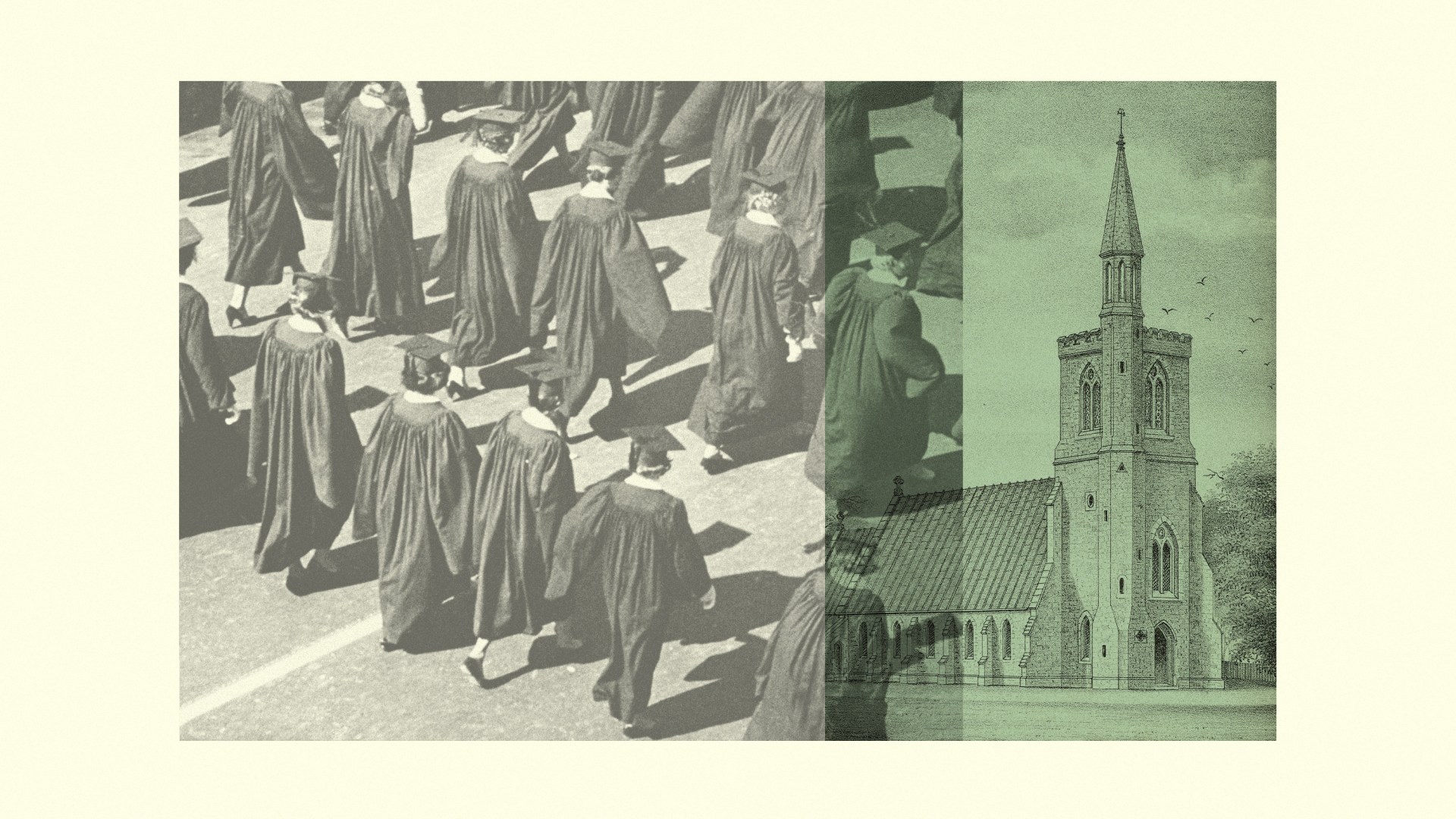
Elevation Church—a multisite megachurch founded by Steven Furtick and based in Matthews, North Carolina—announced the launch of Elevation College in November 2025. The new hybrid institution is for “traditional college-aged students who feel called to ministry and want to earn an accredited degree” while receiving onsite training and experience at the church. Elevation College plans to welcome its first class of students in fall of 2026.

Students who attend Elevation College can live in on-campus housing and participate in practicum courses at Elevation Church, but the degrees will be granted by Southeastern University (SEU), an Assemblies of God–affiliated institution based in Lakeland, Florida. The college will offer both two and four-year degrees, including an associate’s degree in ministerial leadership, a bachelor of science in worship ministries, a bachelor of science in biblical studies, and a bachelor of science in production ministry. According to the Elevation College website, the yearly cost of attendance (including tuition, a site fee, and housing) will be a little over $19,000. 

Steve Saccone, vice president of the SEU Ministry Network, told CT that the launch of Elevation College follows years of collaboration between the two organizations. 

“We believe that there’s nothing like hands-on experience. If you want to be a leader, you have to lead something,” Saccone said. “We feel like we’re restoring that vision, of embedding academics in the local church.” 

SEU has been offering distance coursework for Elevation staff for several years, and Elevation’s production team recently helped the university build a new digital production class for SEU students. According to Saccone, Elevation approached SEU about developing an accredited degree program to supplement its existing apprenticeships and internships. 

Elevation currently has 19 campuses and had an average 17,373 weekly in-person attendees in 2024. Until 2023, Elevation was a member of the Southern Baptist Convention. It left just after two other congregations were expelled over female pastoral leadership, but it did not publicly state the reasons for its departure. 

Its partnership with an Assemblies of God university demonstrates the softening of some long-standing divisions between Pentecostal-charismatic churches or networks and conservative Reformed or Baptist organizations. Both SEU and Elevation are influential institutions in the worship music industry, and their partnership is an example of the ways contemporary worship music and the subculture around it has become an ecumenical space where new alliances are taking shape and gaining power.

Elevation Worship, Elevation’s influential worship artist collective, became a dominant force in the worship music industry in the early 2010s. The group’s 2021 collaborative album with Maverick City Music, Old Church Basement, won a Grammy. Its most recent album, So Be It, features prominent worship artists Brandon Lake, Chandler Moore, and Leeland Mooring. In 2024, Elevation Worship’s music had more than 2.3 billion streams across platforms and 161,243 people attended its “Worship Nights” tour. 

SEU has its own popular worship music collective in SEU Worship. The group includes SEU students, alumni, and staff and is signed to Essential Worship (a Sony label). It has over 2 million monthly listeners on Spotify and was part of the 2025 Winter Jam tour. SEU alum Tiffany Hudson is now one of Elevation Worship’s lead vocalists.

For both Elevation and SEU, the worship music production affiliated with the institutions helps attract attendance and raise public profile. The millions of livestream viewers of Elevation Church’s services have access to professionally produced musical worship and high-energy performances. Students interested in a college where they might get to participate in the production of new worship hits may consider SEU because of the success of its worship collective. 

Service production, trendy worship music, and the popularity of lead pastor Steven Furtick have made Elevation an attractive church home for young Christians who are looking for cultural relevance and emotional intensity. Nearly 8,000 volunteers serve across its campuses on a weekly basis—a large pool of potential students who might be interested in earning a degree or taking a class as they contribute to weekly operations. 

SEU has helped other churches turn their existing volunteer arrangements, apprenticeships, and internships into degree programs. In 2022, it established a degree-granting site at The Belonging Co in Nashville (another megachurch with a worship team turned artist collective that produces its own worship music). It also helped establish degree programs and distance learning partnerships at Vous Church in Miami, Impact Church in Phoenix, and Bayside Church in Sacramento. 

According to Saccone, these church partnerships take shape organically, relying on relationships rather than denominational affiliations. The biggest share of SEU’s church partners are affiliated with the Assemblies of God, but they also work with Baptist, nondenominational, and (Association of Related Churches) ARC congregations.

“We want to partner with the local church,” Saccone said. “We’re not going around policing theology.” 

One selling point of the programs SEU establishes in local churches is that the degrees cost less than traditional bachelor’s degrees from residential private schools. Another is that they allow students to pursue ministry training in the context of the church they want to attend and maybe work for in the future. This kind of context-specific training has value and limitations, say some educators. 

“Church is a great place to get discipleship and leadership training, but it’s not always a great place to improve musicianship,” said Casey Corum, a producer, songwriter, and instructor at Biola University. Corum works with undergraduate students pursuing degrees in music and has worked closely with Vineyard Worship. He says there are tradeoffs students should consider when looking into degree programs that are so closely tied to a particular church. 

“When it comes to music ministry training, I see a lot of value in going to a college or university where you’ll be in classes with the best musicians from all over. You get a different breadth of peer relationships and exposure to different traditions,” Corum said. “I would hope that a worship training experience would provide some depth of training across genres and styles of music.” 

But Corum also noted that students interested in a music degree have good reason to consider less-expensive options like Elevation College. For a church musician who doesn’t have aspirations to play with the New York Philharmonic, in-house training can be a good fit and provides specific instruction and spiritual support that one wouldn’t receive in a traditional (and far more expensive) conservatory-style music program.
He also pointed out that, for young people attracted to contemporary worship music and the churches and collectives that have become its standard bearers, Elevation College may be the ideal place to study ministry, especially in areas like music and production. 

“The model Elevation is teaching toward is transferable, to an extent,” Corum said. Because Elevation’s music has been so widely used in American churches for over 15 years now, its ministry model and musical style both reflects and shapes worship practices outside its 19 campuses. 

Worship Leader Research (WLR), a collaborative of scholars and practitioners studying trends and influential producers in the worship music industry, refers to Bethel, Hillsong, Passion, and Elevation as “The Big Four” but argues that only Elevation has managed to build momentum and grow in musical influence during the first half of the 2020s, while it appears the reach of the other three is waning.

According to Saccone, Elevation College received hundreds of inquiries from interested students in the months after the church announced its program launch. The number of students admitted for fall 2026 hasn’t been made public yet. Students entering the program this fall will be taking online classes paired with practicum work. Elevation College has not yet received approval from the state of North Carolina to allow SEU to hire adjunct faculty to teach in-person classes onsite. 

The past five years have seen a wave of closures of small Christian colleges across the country, but SEU is bringing its degree programs to students in a format that is more experiential than exclusively online programs and more reputable than dubious unaccredited programs such as the now-defunct IHOP University. SEU’s church partnerships are an experiment in lower-cost, hybrid ministry training and theological education. It may be that megachurches are the future of Christian higher ed. 
Books
Review

What Kids Think About God Matters

Three theology books to read this month.

Three books on a brown background.
Christianity Today March 20, 2026
Illustration by Christianity Today

This piece was adapted from CT’s books newsletter. Subscribe here.

Sam Luce and Hunter Williams, How to Teach Kids Theology: Deep Truths for Growing Faith (New Growth, 2025)

A. W. Tozer once said, “What comes into our minds when we think about God is the most important thing about us.” If that is even close to being true, then children need to be taught theology as much as anybody does. This book aims to equip people to do that: to “provide leaders with the principles and practices needed to teach biblical passages and stories to kids with theological conviction and competency.”

The result is commendable in several ways. The writers don’t suggest dumbing down the content; the writers treat children as people who need to know the deep things of God, not just life advice or instructions on good behavior. The writers use questions and (mis)understandings of real, specific children as springboards for talking about particular doctrines. There is a good balance between the conceptual and the practical. The authors highlight the importance of God’s big story in our communication of theology and do not shy away from difficult ideas or passages. They distinguish between central, debatable, and peripheral doctrines and reflect on how to differentiate between them and teach children accordingly. The children’s author in me appreciated these emphases and would love to see them accepted more widely.

At times I found myself puzzled. There is a whole chapter on the difference between “simplifying” the truth (which the authors see as a problem) and “distilling” it (which is their solution), involving distinctions which I found oversubtle and—ironically—a bit complicated. I am not sure why the authors insist that the primary point of the Good Samaritan is not that we should love our enemies, which seems to me to be Jesus’s punch line in Luke 10:37, but that “our enemy loved us.” I also thought the book would include more examples of how we can use visual illustrations, objects, life stories, and humor in our communication, and more reflection on the way Jesus himself used these tools. Nevertheless, there is plenty of wisdom to learn here.


Christopher Ash, The Psalms: A Christ-Centered Commentary (Crossway, 2024)

Christopher Ash has written a masterpiece: a four-volume commentary on the Psalter that is devotional, scholarly, searching, and delightful. Some commentaries aim at academics, some at pastors, and some at ordinary believers. Many of the best combine elements of all three. But Ash has done something remarkable by writing in a way that is well-versed in the scholarly literature and history of interpretation—much of which he discusses directly in the ground-clearing first volume—yet filled with devotional warmth, theological insight, pastoral application, and evident delight in Jesus Christ. My wife and I have been using it for our daily readings over the last year, sharing (and occasionally squabbling over custody of) each volume.

The secret sauce is the books’ Christ-centered approach to interpretation. For Ash, it is not just that the Psalms reveal Christ in a general, typological way. Nor is it that some Psalms are messianic (22, 31, 45, and so forth) and some are not. The key to the Psalter is that Christ is the primary speaker, singer, and prayer of every Psalm, including the laments, imprecations, confessions, and songs of praise. He prays Psalm 51 as the representative head of the church, confessing our sins as they are laid upon him and asking for mercy. He sings Psalm 95 as our corporate worship leader, summoning God’s people across time to join him in celebration and obedience. He prays Psalm 119 as a fellow meditator on the beauty, wisdom, and sufficiency of God’s Word. So when we read the Psalms, we read them not only as our words or those of the original author but also as those of Jesus.

The result is a doxological tour de force. I cannot recommend it highly enough.

Martin Luther, The Freedom of a Christian (1520)

At the end of his life, Martin Luther said all his books could be burned except for two: The Bondage of the Will and The Small Catechism. I think he was wrong about that. For me, his most powerful and compelling work is The Freedom of a Christian, which was written in the maelstrom of 1520 as the Reformation was exploding across Germany, and which set out several of his key ideas in pamphlet form.

It opens with the magnificent paradox at the heart of Luther’s theology (and, he would argue, Paul’s): “A Christian is a perfectly free lord of all, subject to none. A Christian is a perfectly dutiful servant of all, subject to all.” The doctrine of justification by faith means Christians are the freest of kings and priests forever, with no human power over us and no need of any work to save us. That argument occupies the first half of the pamphlet. But that same gospel also makes us servants of all humanity, as Luther shows in the second half: “If we recognize the great and precious things which are given us, as Paul says, our hearts will be filled by the Holy Spirit with the love which makes us free, joyful, almighty workers and conquerors over all tribulations, servants of our neighbors, and yet lords of all.”

The Freedom of a Christian is a short, punchy, and readable statement of many of Luther’s most influential teachings, including the relationship between faith and works, the priesthood of all believers, the marriage analogy for union with Christ, and the oft-quoted idea that although God does not need our works, our neighbor does. If you haven’t read it yet, do yourself a favor.

Andrew Wilson is teaching pastor at King’s Church London and author of Remaking the World: How 1776 Created the Post-Christian West. Follow him on Twitter @AJWTheology.

Theology

Urgency Is Not Faithfulness

A church that quickly reacts to every controversy is echoing the culture, not God’s Word.

An hourglass on its side with flowers growing inside it.
Christianity Today March 20, 2026
Illustration by Elizabeth Kaye / Source Images: Getty, Unsplash

A statement dropped on a Tuesday. I do not remember which Tuesday. There have been many Tuesdays like it. Something breaks into the news: A shooting. A Supreme Court ruling. A pastor’s fall. Within hours, the internet is fully awake.

Soon, we see statements appear. Positions are declared. Silences are cataloged. Lines are drawn. By Wednesday morning, the sorting has already happened, with the righteous on one side, the complicit on the other. By the following week, the algorithm has moved on to something new, leaving behind the usual debris: strained friendships, flattened nuance, and the aftertaste of having just performed something that looked but did not feel like faithfulness.

Most of us have probably seen this happen a million times. As a pastor, I have seen it up close and personal. I have sat in rooms where church staff wrestled over whether we needed to post a statement within 48 hours of national controversies or tragedies. We didn’t lack conviction, but we knew whatever we said would be examined for what it did not say.

One then begins to realize the clock is not really measuring time; it is measuring suspicion. I have watched thoughtful, Bible-reading, Spirit-seeking Christians reduce the work of discernment to the speed of a news cycle. I have done it myself. I have mistaken urgency for obedience, letting the clock tell me when to speak and the crowd tell me what to say. But one day, I opened my Bible to Exodus 34 and met a God whose behavior, by his own description, is slow.

Imagine the scene for a moment. Moses has already seen plagues swallow an empire. He has watched the sea divide and close again. He has climbed a mountain wrapped in cloud and thunder. And still he asks for more: “Show me your glory” (33:18, ESV throughout). It is one of the most audacious prayers in Scripture. And what happens next is not what we might expect. There was no storm. No earthquake. No cosmic display meant to overwhelm the senses. God answered with a description. He passed before Moses and declared his name: “The Lord, the Lord, a God merciful and gracious, slow to anger, and abounding in steadfast love and faithfulness” (34:6).

If you read the Bible long enough, you notice something. Israel returns to this moment again and again. The line echoes through the Psalms, through Jonah and Joel and Nahum and Nehemiah. Whenever the people need to remember who God is, they return here. And one of the first things God says about himself is that he is slow to anger. The Hebrew phrase is erekh appayim, which literally means “long of nostrils.” The image is earthy and human. The God of Abraham introduces himself as someone who draws a long breath before responding and inhales slowly when others would flare with anger.

Scholar Paul R. House wrote that this description of God can serve as an interpretive lens for the entire Old Testament story. Once you see it, it’s easier to notice the pattern everywhere. The centuries between the promise of the Messiah and the coming of Christ are not empty space. They are the long patience of a God who was forming a people and building a lineage that would produce his anointed one instead of merely putting out a fire. Caught between this promise and its fulfillment, Habakkuk cried out, “How long, O Lord?” (1:2, NLT), and God answered with something that almost sounds like a contradiction: “If it seems slow, wait for it. It will surely come; it will not delay” (2:3).

In The Justification of God, John Piper noted that God’s patience is not weakness but power. The one who could end the story at any moment chooses not to, and that choice reveals something about who God is. The Japanese theologian Kosuke Koyama spent years sitting with that same realization and arrived at a conclusion I find disarming. “Love has its speed,” he wrote. “It is a spiritual speed. It is a different kind of speed from the technological speed to which we are accustomed. … It goes on … at three miles an hour.”

Three miles an hour is the pace of a human being walking down a road. Nazareth to Capernaum is roughly 26 miles. At that pace, it takes a bit more than a full workday to make the trek. Jesus has walked that path. But he was rarely in a hurry in all his journeys. He stopped for interruptions. People reached out and touched his cloak. A stranger called his name from the roadside, and he healed. Koyama called this the three-mile-an-hour God.

The phrasing was meant as a critique of a world drunk on technological speed. But it lands just as sharply on the church. As I’ve noted, we have built an ecclesiastical culture that assumes faster is more faithful and the first to speak wins. Yet the God who spoke the universe into being chose to arrive as a baby in an occupied village and spent 30 years in obscurity before speaking a single public word.

There is a word for this kind of slowness buried in the middle of Galatians 5. When Paul lists the fruit of the Spirit, the word he uses for patience is makrothumia. It is a compound word that means something like “long-tempered,” the capacity to take a long time before a flame appears. Paul could have chosen a different word. Greek had hupomonē, which means endurance under hardship. But he chose the word that describes patience with people.

Patience is a discipline. It should not be mistaken for passivity, cowardice, or the absence of conviction. It is simply the refusal to let the person who provokes determine the speed of the response. Said another way, it is the decision to burn at the right moment, in the right way, for the right reason. The hot take rewards immediacy and treats reaction as courage. But makrothumia waits.

In Galatians, Paul does not describe this type of slowness as a personality trait. It is a fruit, which means it grows slowly and quietly over time. The Holy Spirit produces patience the way roots spread through soil. And it is supposed to flow through us toward a society that desperately needs it.

The need, however, isn’t new. Most of us know about the story of the woman who was caught in adultery and dragged before Jesus (John 8:1–11). The crowd had gathered. The religious leaders wanted a verdict from Jesus, and they wanted it quickly.

The urgency was manufactured, designed to force a quick answer under pressure. Condemn the woman and appear righteous, or show mercy and appear soft on sin. But Jesus just bent down and wrote in the dirt. The Gospel writer never tells us what he wrote. Commentators have wondered for centuries. But the silence may be the point. When Jesus finally spoke, the words were simple: “Let him who is without sin among you be the first to throw a stone” (v. 7).

Then, the accusers left—first the oldest, followed by the rest. The woman remained standing with the one person who had the authority to condemn her. And he did not.

Patience here looks like the most powerful presence in the room refusing to let the crowd set the terms. Centuries later, family therapist Edwin Friedman would give language to dynamics like this. After studying families, congregations, and organizations, Friedman observed that anxiety spreads through environments quickly, and once it does, the group orients around the most reactive voices.

Friedman’s prescription for this problem was not withdrawal but what he called a “non-anxious, and sometimes challenging presence.” Essentially, what the group needed was someone who was connected to them but refused to be governed by the volatility around them.

When we approach the Gospels with that language in mind, certain scenes begin to look different: Jesus asleep in the boat while the disciples panicked. Jesus silent before Pilate while the crowd shouted. And of course, Jesus writing in the dirt while the Pharisees demanded a verdict. In each moment he was fully present but not controlled by the anxiety around him. Isaiah named the posture underneath it all: “In quietness and trust is your strength” (Isa. 30:15, NIV).

But our lives are not only personal. They are also cultural. In his book The Prophetic Imagination, theologian Walter Brueggemann warned that our consumer culture depreciates memory and ridicules hope, “which means everything must be held in the now,” either urgently or eternally, seeing the present world as our sole reality.  

When the church adopts that pace, it looks like the culture around it. What appears to be courage becomes compliance with the algorithm’s demand for speed and with the crowd’s demand for a verdict. But a church that reacts at the speed of the culture is not prophesying to it. It is echoing it.

The French philosopher Simone Weil once wrote that “the rarest and purest form of generosity is attention.” To pay attention is to allow a question to remain open long enough for truth to arrive. Discipleship works the same way. Christians who are patient and can hold tension without collapsing into tribal reflex are not made overnight. They are formed slowly, in communities where disagreement does not immediately fracture relationships.

Scripture has always known this. We can see it not only in God’s silences, but in the watchman waiting for the morning and the farmer waiting for the harvest. Fruit does not grow on the timeline of the anxious. It grows in the darkness, patiently, at the speed of roots.

Thomas Anderson is the pastor of disciple making at Grace Community Church in Fulton, Maryland.

News

What to Expect at This Year’s Church Conventions

SBC, LCMS, ACNA, CREC, and Global Methodist gatherings in 2026 will weigh issues including abuse investigations and sexual ethics.

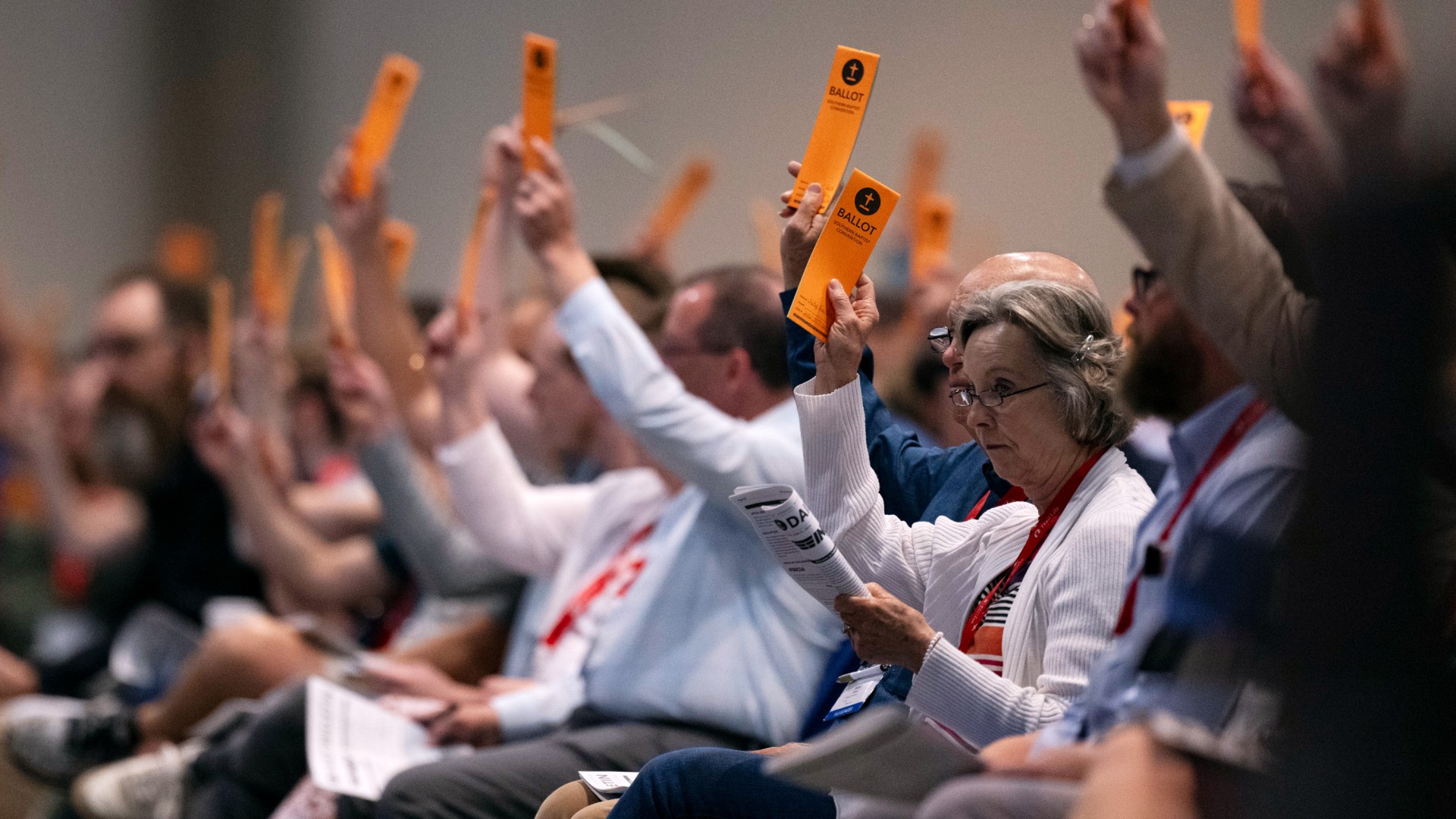
Messengers raise their ballots to vote during a Southern Baptist Convention annual meeting on June 11, 2024, in Indianapolis.

Messengers raise their ballots to vote during a Southern Baptist Convention annual meeting on June 11, 2024, in Indianapolis.

Christianity Today March 20, 2026
Doug McSchooler / AP

Summer is the time for ecclesial gatherings. Between June and September, dozens of denominations representing millions of churchgoers will gather for fellowship, teaching, and conducting business. 

Here are some of the decisions CT is keeping an eye on this summer:

Anglican Church of North America

The ACNA will hold a Provincial Council June 15–19, in Tulsa. One item on its agenda: enacting changes regarding discipline and matters of misconduct. The proposed revisions to Title IV of the ACNA Constitution and Canons would expand that portion of the church law from 11 pages to 48. The revisions aim to provide greater transparency and clarify the investigation process, make it easier to submit a complaint against a bishop, and introduce processes so that not every complaint becomes an investigation.

Amendments to church law, called “canons,” are approved by the annual Provincial Council in June but do not take effect until they are ratified by the Provincial Assembly, which typically meets every five years.  

To make sure these disciplinary reforms can be implemented immediately, the bishops have called for a Provincial Assembly to meet virtually on June 25, one week after the scheduled Provincial Council, to ratify the changes. The ACNA recently acquitted a bishop of misconduct after he neglected to inform congregations that a lay leader in his diocese was accused of molesting a 9-year-old child. The ACNA’s archbishop Steve Wood is also accused of sexual harassment, bullying, and plagiarism and faces an ecclesiastical trial.

Christian Reformed Church

Synod 2026, the annual general assembly of the Christian Reformed Church in North America, will meet June 12–18 on the campus of Calvin University in Grand Rapids, Michigan. Last year’s synod requested that leaders develop and present a 10-year plan for church planting and revitalization. 

Calvin University’s board of trustees will also report to the 2026 synod on how it defines the indefinite exceptions it will grant to professors whose views are not in line with CRC teaching. In 2024, the CRC declared that church leaders, including professors at CRC-affiliated schools, must actively work to resolve their differences and cannot hold their gravamens—significant doctrinal differences with church teaching—indefinitely. 

Global Methodist Church

The GMC recently announced that the new denomination, founded in 2022, has surpassed 7,000 churches globally. Its annual gathering will take place August 30–September 5 in Johannesburg, South Africa. The conservative Methodist denomination formed after its churches dissented from the United Methodist Church over LGBTQ-related issues. Conservative congregations also sought a Wesleyan denomination with lighter, leaner infrastructure and an emphasis on grassroots accountability and ministry connections.

Since its inaugural gathering in 2024, interim bishops have led the GMC. One item on the docket for its 2026 general conference will be electing the denomination’s first full-time bishops. The new eight episcopal bishops will govern the denomination’s 50 annual conferences (regional bodies) around the world. 

A spokesperson for the GMC said the denomination will also establish clergy ordination standards that hold clergy to a high bar while allowing flexibility for global regions with less access to theological education. 

Lutheran Church—Missouri Synod

In 2019, the Lutheran Church—Missouri Synod commissioned a task force to study issues of sexual orientation and gender identity. The group is ready to report its findings and recommendations: The Created Male and Female Task Force will present at the LCMS convention, which is held every three years. The 2026 gathering is July 18–23 in Phoenix. 

Southern Baptist Convention

The Southern Baptist Convention is preparing for its annual meeting, taking place June 9–10 in Orlando, Florida. Josh Powell, senior pastor of Taylors First Baptist Church in Taylors, South Carolina, is set to be nominated to serve as the SBC’s next president.

Powell might not be the only presidential nominee. Tampa-area pastor Willy Rice has announced his intention to seek the role too. In 2025, Rice offered a motion at the convention’s annual meeting to abolish the SBC’s Ethics and Religious Liberty Commission, a public policy organization that advocates for SBC worldviews in the public square. Some politically conservative Southern Baptists oppose the ERLC’s existence, taking issue with its past legal arguments in favor of religious liberty for all faiths rather than just in support of policies favoring Christianity.

The ERLC is currently led by interim president Gary Hollingsworth, after Brent Leatherwood stepped down from the role in July 2025, but the trustees recently announced they have trimmed their list of candidates to eight, with the goal of bringing a nominee to the annual meeting. They also recently published the group’s three commitments. “It is our sincere hope that as the ERLC endeavors to rebuild trust and relationships with churches, our equipping and advocacy ministries will bear eternal Gospel fruit,” the trustees said in a statement. 

Here are some other denominations that will meet this summer:

Assemblies of God

Church of God

National Baptist Convention

Christian Methodist Episcopal Church

Presbyterian Church in America

Progressive National Baptist Convention

News

Q&A: Why Pakistan and Afghanistan Are Fighting and How Christians There Survive

A conversation with human rights lawyer and former diplomat Knox Thames.

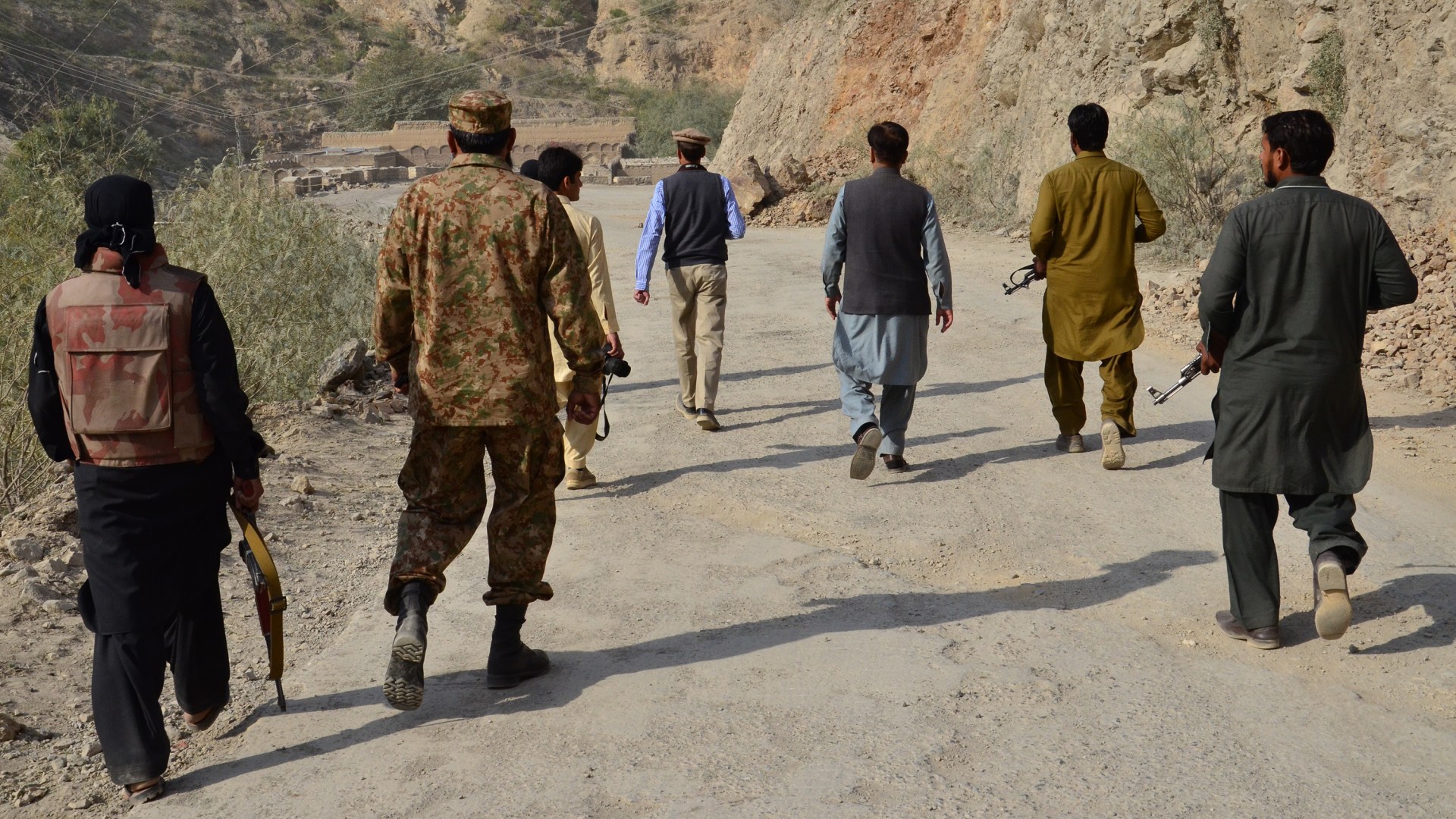
Members of the Pakistan Army on the Torkham Border of Afghanistan.

Members of the Pakistan Army on the Torkham Border of Afghanistan.

Christianity Today March 20, 2026
Muhammad Furqan Photography / Getty


On February 27, the Pakistani government declared open war on Afghanistan’s Taliban government. Massive air strikes have killed hundreds in the days since. To understand the political and religious components of the conflict, The Bulletin sat down with human rights lawyer and former diplomat Knox Thames. Here are edited excerpts from their conversation in episode 260.

How did this war between Pakistan and Afghanistan begin?

It’s deeply ironic for the Pakistanis to complain about terrorists coming out of Afghanistan, because while the US was there, Pakistanis were some of the biggest supporters for the Taliban and other extremists operating against what we were trying to establish—a democratic government that respected women and minority rights. Pakistan was the first country to celebrate the fall of the Afghan government and the return of the Taliban. It’s also tragic because these are two impoverished countries with many challenges. The fact that they’re trading bombs and not goods and services just means that the average Pakistani, the average Afghani, will continue to suffer.

Since the Taliban government has no international relations, Afghanistan has been pretty isolated, with Pakistan being its one outlet to the wider world. The Durand Line, where fighting has recently broken out, is a colonial border that was arbitrarily laid down amidst people groups that were once whole. There’s a historical fight over where the real border between these two countries is, and these skirmishes have been steadily escalating until now. 

Pakistan has nuclear weapons. They have a modern air force. They went toe to toe with India not too long ago, so there would be no competition, military to military. But as we learned the hard way, the Taliban and these terrorist groups that operate in Afghanistan don’t play by the same rules. It would be very easy for them to infiltrate Pakistan to set off explosions and suicide bombs in sensitive government locations. That could be a terrifying next phase of this conflict if cooler heads don’t prevail. 

Ramadan could be a tool to help deescalate. This is the most holy time of the year for Muslims, a faith that is shared on both sides of the border. There are Islamic leaders who are against this extreme violence, who promote peace. Will they be given a platform? Will they be allowed to preach a return to introspection and prayer? We hope for that rather than an escalation to broader conflict with missiles flying in every direction.


Is this conflict related to what we’re seeing right now in Iran, or is it entirely separate?

What’s playing out between Pakistan and Afghanistan is its own universe of history, overlapping ethnicities, and lines drawn by the British when they were the colonial power. Two common threads are, first, a radical terrorist community that operates out of all three countries and is willing to use extreme violence against those who think, pray, or believe differently than they do. And second, the government’s willingness to cozy up to some of those factions and use them as a way to project power in other countries like Pakistan does in India, like Afghanistan has done against the United States. That’s the through line.

The Taliban sees the world through a religious lens. Taliban means “a return to Islamic education.” That’s the framework, a very narrow application of sharia law. It’s how they decide to govern domestically and how they engage internationally.

Pakistan’s not too different. They are more secular, but there is a strong strain of Islamic extremism interwoven into government and laws that also commands how Pakistan engages at home and abroad. They’re two sides of the same coin, playing the same game with these nonstate actors, and both are paying a high price. 


You mention Ramadan. What is the religious landscape of Pakistan?

Pakistan is an incredibly diverse country of 250 million people. It’s overwhelmingly Islamic, but that belies a much greater diversity that’s intra-Islamic, majority Sunni, that breaks into different denominations or sects.

There’s a very large Shia Muslim community as well as a variety of heterodox groups like the Ahmadi community that view themselves as Islamic, but the Islamic establishment doesn’t. In addition, you have a Christian community, a Sikh community, and a Hindu community with an overlay of different ethnicities. Issues of religious persecution are a steady narrative in the daily lived experience of religious minorities in that country. 


You’ve written about a man named Shahbaz Bhatti. Why is he someone Christians should know?

Shahbaz Bhatti was a hero of the Christian faith and a Pakistani patriot. He was a friend of mine, and 15 years ago this month, he was killed by the Pakistani Taliban for speaking out against the country’s onerous blasphemy law. He was willing to give it all for the cause of religious freedom. He was courageous to speak up for his own persecuted Christian community, but also for persecuted Hindus, Sikhs, and others. 

Pakistan has the worst blasphemy law in the world. It empowers individuals to make a claim, a charge of blasphemy, which carries the death penalty. Once the charge is made by an individual, the police are then required to arrest the accused. That arrest begins a legal process that can take years. Right now, there are at least 400 people who are currently in detention under charges of blasphemy. There are actually more Muslims than non-Muslims in detention, because this law has no guide rails. 

Business competitors will levy accusations of blasphemy so that a competitor is in jail or on trial for his life. They can take your property, your home, your business. But it’s the minorities, the Christians, the Hindus, who are even more vulnerable because they don’t have the larger community to fall back on.

When there’s an allegation of blasphemy, usually a mob is riled up. Homes are burned down, churches are destroyed, the victim is arrested, and those who are leading the mob attacks are not. According to my research, Pakistan has more people detained for the crime of blasphemy than all other countries combined times three. It’s a cancer that’s eating away at the heart of that country. Because of the extreme actions terrorists will take to defend it, like murdering Bhatti and other government leaders, politicians are literally scared to death to touch it.

Pakistan’s parliament within this illiberal democracy does reserve seats for religious minorities, but cabinet-level positions are very rare. Bhatti had enough political savvy to make himself relevant to the ruling political party of the day. He brought tens of thousands of people into the streets to protest for equal rights, for no discrimination based on religion or background. President Zardari and his wife noticed this and started to invite him to ally with their political program and, eventually, brought him into government. It was an impressive political feat. 

Bhatti used that position to advocate for religious freedom, to advocate against the blasphemy law, to advocate against his own government’s policies from within the government at the cabinet level.

I remember driving through one of the nicest neighborhoods in Islamabad, and in the middle of it, along a drainage ditch, was a Christian village. That was the only land that they could afford to buy, living in tin shacks. Many Christians were originally Dalits during the colonial period and converted to Christianity, so there is racial discrimination as well as religious. 

While Bhatti was in government, he helped pass a law requiring that 5 percent of all government jobs be set aside for minorities. Because of these religious and ethnic discriminatory tendencies, minorities were left otherwise to sweep streets and clean sewers

Because of that advocacy, there are more Christians, more Hindus getting professional jobs so they can better themselves and their families. Pakistan’s a hard place for anybody, but particularly for Christians and other minorities. The discrimination, the violence, and the legal environment are just so oppressive. When Bhatti was killed 15 years ago, it was a great loss for the country. It was a great loss to the world of religious freedom advocacy. 


The US has worked in Nigeria to assist Christians who are under oppression. Do you see a similar response in Pakistan?

The first Trump administration, which I worked under, named Pakistan as a country of particular concern (CPC), the same designation that Mr. Trump recently announced for Nigeria. This was the first administration to ever do that. It was great and long overdue. I traveled to Islamabad to negotiate with the Pakistanis about how to get off that list of concerning countries. Sadly, the Biden administration didn’t pursue this issue in Pakistan or religious freedom in general.

What’s troubling about the second Trump administration is that when Secretary of State Marco Rubio met with Pakistani officials, he only wanted to talk about a rare earth minerals deal. No mention of persecution. There’s been no action toward the other 12 CPC countries that need to be redesignated either—China, Saudi Arabia, Pakistan, Burma, and others. These are missed opportunities to leverage US influence and this administration to get Pakistan to make these reforms. Unfortunately, I’m not seeing any desire to pick that up anytime soon. 


What concerns the Pakistani Christian diaspora as they look at what’s playing out in their country?

Many Pakistani Christians have chosen to flee to either Thailand or Sri Lanka, two places that they can go without a visa. But once they get there, they get stranded. There are large Pakistani Christian communities in both countries that are living on the margins of society, praying for the day that they could get resettled to Canada, to the United States, to Europe. 

They’re incredibly vulnerable. A whole generation of children are missing out on school opportunities, and they were already vulnerable in Pakistan. There’s not the threat of terrorists wanting to kill them, but there are a host of other concerns about trafficking and child exploitation that run rampant there.

When I meet with the Pakistani diaspora here in the States, that’s what they’re concerned about. They want the US to open up the doors again, to allow the resettlement of these persecuted minorities, even to assist in facilitating their transit to Canada. 

The church in Pakistan is one of the most beleaguered yet faithful I’ve ever seen, because of the environment they must navigate every day. When we talk about saving persecuted Christians, we need to be mindful of them.

When we talk about religious persecution, we of course remember our own, but we also must talk about it holistically. We as Christians stand up for anyone who’s being persecuted, Christian or not. We do this as a witness and testimony of God’s love but also because it helps the Christian minorities in these tough environments show that Christians care about everyone. We don’t segregate others or set them aside. 

In Afghanistan, the tiny church that exists operates underground. I hear rumors that they’re still there, but it’s one of the worst places in the world to be a convert because if that becomes known, it’s hard to get out. It’s instant death. We need to pray for peace in both countries because many innocent people are in harm’s way right now.

News

Turning ‘a Miracle’ into Long-Haul Help for the Homeless

A North Carolina nonprofit is thinking in decades, not days, about sustainable, affordable housing.

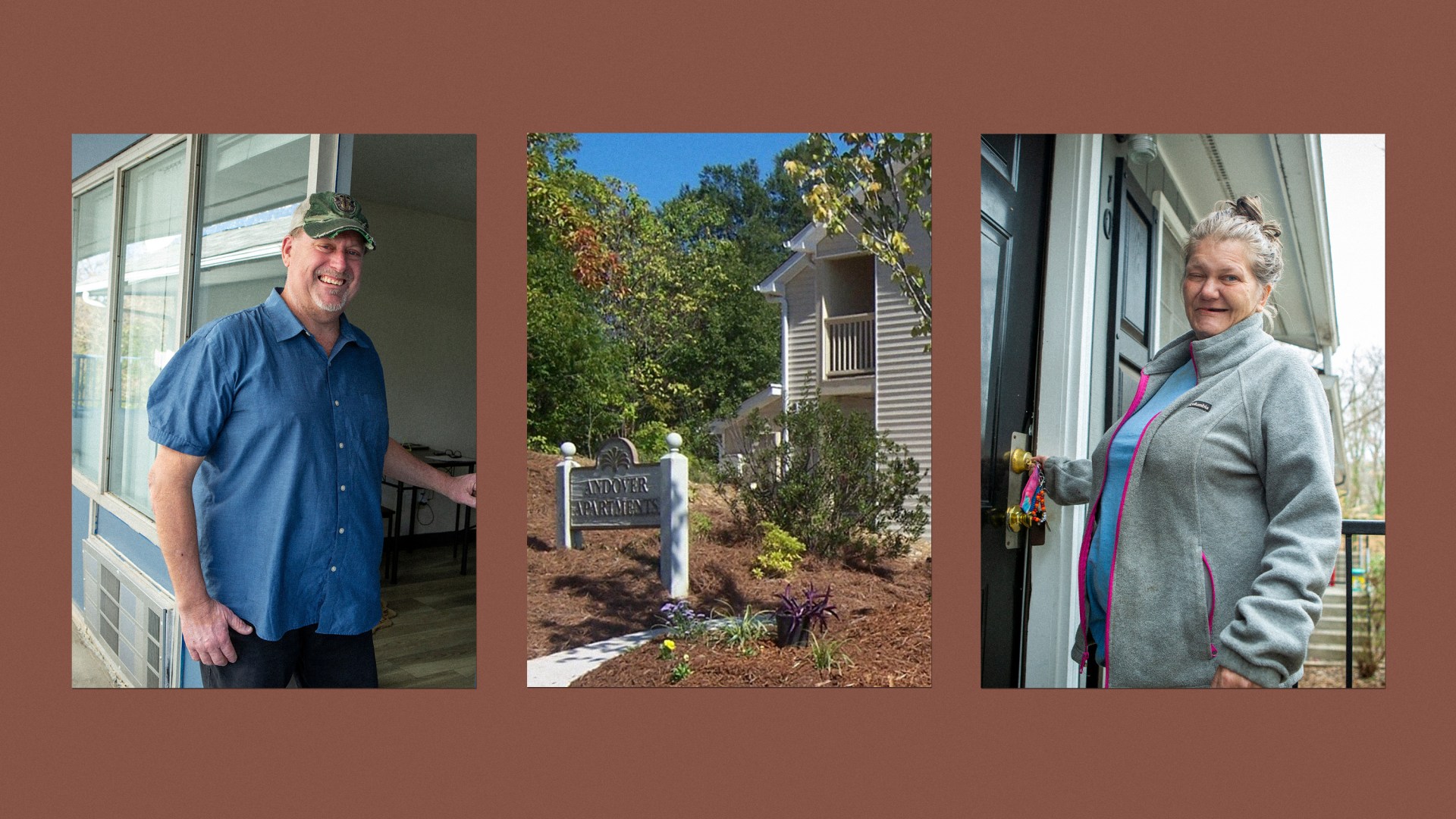
Photos of residents in their new apartments.
Christianity Today March 20, 2026
Illustration by Christianity Today / Images courtesy of Housing for New Hope

Cassandra Burnette never expected to find herself homeless.

A petite, 57-year-old African American woman who chatters to strangers like they’re old friends, Burnette was a manager at a Wendy’s when she lost her job. And though she’d lived and worked in Durham, North Carolina, for more than 20 years, she wasn’t able to find new work. 

Medical history—including neuropathy, chronic pain, and the effects of three past surgeries—complicated her job hunt and made manual labor difficult. “It burns so bad when I walk,” she told me, and the pain has only grown with age. “But I’m getting along.”

When she could no longer pay rent, Burnette was evicted. “I stayed with one of my friends for a while, and they helped,” she said, “and then I went to a shelter.” She spent three months at an emergency shelter run by Urban Ministries of Durham before a case manager there referred her to Housing for New Hope (HNH).

HNH is a local nonprofit focused on providing affordable, sustainable housing to Durham’s homeless population. Beginning with a shelter offering transitional housing for men and gradually expanding its programs and facilities, the organization has been a steady presence in the city since 1992. And there’s been no shortage of housing needs to fill.

Nationally, the Department of Housing and Urban Development (HUD) reported in 2024, homelessness is the highest it’s been in two decades. And here in the Research Triangle—Durham as well as the nearby cities of Raleigh and Chapel Hill—15 years of a boom economy has spiked housing prices. The fair market rent for a two-bedroom unit in Durham County rose from $990 in 2018 to $1,711 in 2026, so high that someone earning minimum wage would need to work more than full-time just to afford rent. Unsurprisingly, homelessness has increased, and more than 40 percent of homeless people in Durham are part of families with children.

Housing for New Hope takes a long-term approach, said Russell Pierce, a bearded and bespectacled former pastor who serves as the organization’s executive director.

Pierce self-describes as a rambler, and my 15-minute conversation with him soon stretched to an hour. His enthusiasm for his work is unmistakable, as is his thoughtfulness. Pierce lights up whenever he considers an innovative way to help Durham’s homeless population.

“You can hear Matthew 25”—Jesus’ exhortation to feed, clothe, and visit those in need—“on a Sunday morning, and you can pretty much knock that whole list out by five o’clock before dinnertime,” Pierce told me. But for more durable work, he added, “I orient around Jesus’ ‘Nazareth manifesto’ in Luke 4. Coming to set the captive free and let the blind see—all those pieces are very long-haul. That is kingdom work in its truest sense.”

Rather than focusing on emergency shelter, then, HNH operates three apartment complexes for people earning less than 50 percent of the area’s median income. Residents can stay for up to two years. The nonprofit also operates two long-term supportive housing complexes for those who have been homeless for at least one year and have a disabling condition (usually a severe, persistent mental illness or substance abuse).

In February 2023, Pierce recalled, HNH had an opportunity to expand those services: Carver Creek, a senior living facility adjacent to an extant HNH property, went up for sale.

“There was some land behind us that wasn’t big enough to build on,” Pierce said. “Carver Creek had extra land that wasn’t big enough to build on. But if you put them together, we would have enough room to build another 45 to 50 units. We realized we could make a whole campus on this 11.5 acres.”

County officials were eager to facilitate the sale, which would allow current senior residents to continue living at Carver Creek at below-market rates. As the lead implementer for HUD-related grants dealing with homelessness in Durham, Housing for New Hope—which is about 50 percent government-funded—was already a known quantity. And the organization’s focus on long-term housing meshed with municipal goals too. 

“To be able to offer someone their own place, the dignity of their own door they can shut, a window?” said Ryan Smith, director of Durham Community Safety Department, at a city-hosted panel on homelessness last month, which Pierce moderated. “Those kinds of things can make a real difference.”

Durham’s County Commission and City Council each contributed $3 million to HNH to buy the Carver Creek property debt-free in August 2023. The process moved quickly—so quickly that Pierce calls it “a miracle.”

After the sale, private donors contributed to the refurbishment of the existing units and development of a new complex on the combined property. Though HNH is not church-affiliated, many of its most enthusiastic supporters are local churches. Four congregations have backed the nonprofit since the early 1990s, Pierce said, and remain among its largest supporters. In addition to financial donations, churches provide essentials kits for residents—which contain kitchen, bed, bath, cleaning, and hygiene supplies—as well as volunteers for events, landscaping, and other needs.

Refurbishment completed at Carver Creek includes updated flooring, lighting, and paint throughout the complex. “I’d like to say our changes are small, but mighty,” said Shanta Addison, HNH director of client services. “It’s a way to show current residents and our community partners how seriously we are taking this process and how much we value the community we serve,” she said, though “we still have a long way to go with upgrading the units.”

After the renovation is finished, Addison and Pierce told me, the next step is determining how to best make use of the additional lot space. Five acres of the combined property will remain a protected forest, but the other acreage could host dozens of new housing units.

“We have this opportunity before us,” Pierce told me. “Do we build up? Do we build tiny home neighborhoods on the site? Because we know that with 100–120 units, we can get more services onsite, and that dramatically increases the likelihood that residents will connect with those services.” Those services include job readiness training, health care assistance, and mental health support.

It’s been 13 months since Cassandra Burnette connected with HNH and moved into an apartment of her own at the organization’s Andover Apartments complex. On move-in day, she was delighted to find her new space already furnished and stocked with basic supplies. Since then, she said, HNH has been an excellent landlord, showing me a recently repaved parking lot as well as the cleanliness of the facility. Earlier that day, she said, an HNH staffer named Renee Holloway had personally driven her to a doctor’s appointment.

“Miss Renee got the van and took me this morning to do that. She’s really good. She’ll do anything for me,” Burnette smiled, saying she hopes HNH can continue its work. “They help you. They talk to you. They give you food and supplies when you need it. It’s wonderful. And the rent is low! You can’t get that treatment anywhere else. I love it here.”

News

From ‘O for a Thousand Tongues’ to ‘The Blessing’

The first Wesleyan hymnal in 30 years seeks to reflect the movement’s history and present.

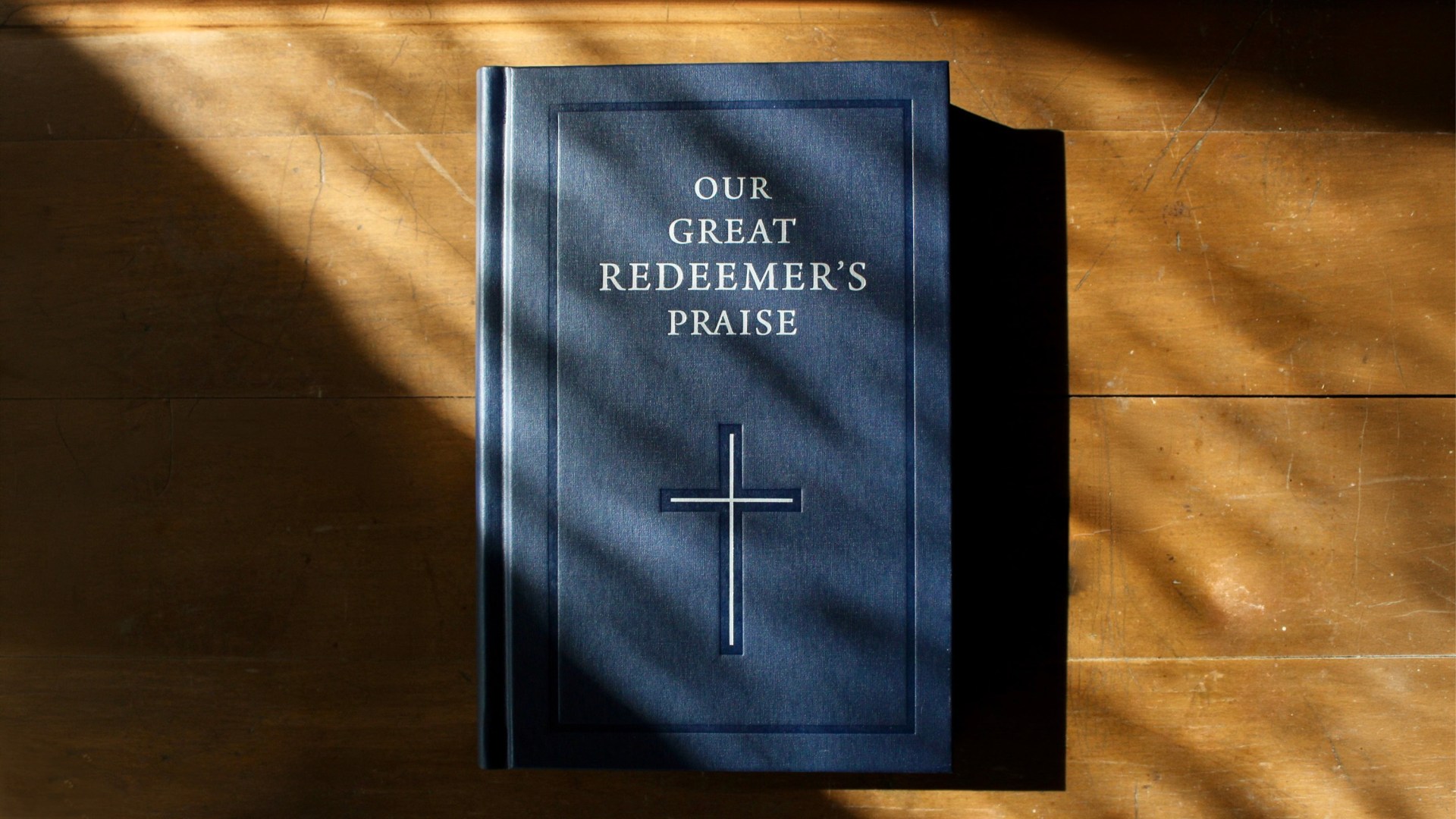
An image of the hymnal.
Christianity Today March 19, 2026
David Walt / Seedbed

In 2019, the United Methodist Church (UMC) approved an exit plan for congregations that chose to disaffiliate from the denomination over its stance on sexuality and same-sex relationships. The subsequent schism led to the loss of 25 percent of its US congregations and the founding of the Global Methodist Church (GMC). Methodist churches that changed their affiliation to the GMC or other denominations have had to reestablish their congregational identities, and in some cases, purchase new hymnals.

Some UMC jurisdictions have directed disaffiliated churches to stop using UMC hymnals. While the UMC doesn’t seem to be enforcing that mandate, many of these churches are eager to find a new hymnal that preserves their Wesleyan roots and allows them to continue singing the songs of their tradition. One resource they are turning to in large numbers is the new ecumenical Wesleyan hymnal, Our Great Redeemer’s Praise.  

“In some cases, churches were forced to get a new hymnal,” said Powers, associate professor of worship at Asbury Theological Seminary and one of the collection’s editors. “But a new hymnal also helps solidify a new identity.”

Our Great Redeemer’s Praise is the first new print edition of an ecumenical Wesleyan hymnal in over 30 years. It is a production of Seedbed, a Wesleyan ministry resource publisher started by Asbury Seminary, which began developing the project in 2019. Copies of the book are now in the pews and seatbacks of churches in a variety of denominations that have roots in the Wesleyan tradition. Published in 2022, the hymnal has now been through five print runs. 

“Interest has far exceeded our expectations,” said Andrew Miller, director of publishing for Seedbed. “Hymnody isn’t dead.”

The majority of churches purchasing Our Great Redeemer’s Praise have left the UMC and joined the GMC. But churches across denominations are purchasing the hymnal; in the United States, the Wesleyan tradition encompasses Methodist denominations as well as the Church of the Nazarene and the Salvation Army. According to Seedbed, some nondenominational churches have purchased the hymnal as well, and individual consumers are purchasing copies for devotional use. 

Matt O’Reilly, lead pastor at Christ Church Birmingham in Alabama (which disaffiliated from the UMC in 2022 and is now part of the GMC), said that the decision to purchase Our Great Redeemer’s Praise for the church was driven in part by the disaffiliation, but also by the community’s commitment to hymnody. Christ Church has a traditional service and a contemporary service every Sunday morning; the traditional service usually sees more attendees (and is growing).

“In the Wesleyan tradition, hymn collections are major theological resources,” O’Reilly said. “In the early days, Methodists weren’t writing systematic theologies; they were writing sermon collections and hymn collections.” 

O’Reilly also said the new hymnal is supporting his church’s move away from screen dependency and toward more tactile, embodied practices in musical worship. “I think the church needs to be ahead of the curve in providing embodied experiences,” he said. “These days, when everything is digital, it’s not bad for us to have a book in hand.”

Seedbed and Asbury Seminary aren’t officially affiliated with either the UMC or the GMC, and Powers said the hymnal is intended for use by any Wesleyan church or community looking for an updated collection of congregational music. 

“The Methodist movement was about singing the faith,” the hymnal’s general editor Jonathan Powers told CT. “And hymnals are an important part of that tradition.” 

In the late 18th century, John and Charles Wesley’s Methodist movement was the catalyst for the widespread production and use of hymnals in England. The first Wesleyan hymnal, printed in 1780, bore the title A Collection of Hymns for the Use of the People Called Methodists. Understandably, it became more commonly known simply as “the large hymnal.” The first hymn in that first edition was “O, for a Thousand Tongues to Sing”—all 18 verses of it. 

The Wesleys, both Anglican ministers, led a revivalist movement within the church, and hymn-singing societies cropped up as followers began seeking opportunities to sing their faith in community, outside of formal liturgical services. 

These societies throughout England helped fertilize an industry, creating demand for more printed hymnals. Methodists, as the Wesleys’ followers came to be known, purchased hymnals for personal use, carrying them to and from society gatherings where they sang verses written by Charles Wesley (a prolific writer who constructed metered verses as a devotional practice) set to preexisting hymn tunes. Many of Charles Wesley’s hymns, such as “Christ the Lord is Risen Today” and “Jesus, Lover of My Soul,” have become beloved congregational songs across denominations in and outside of the Methodist tradition.

“We don’t want to serve just one denomination and tradition. We want [the hymnal] to be Wesleyan,” said Powers. 

To that end, Powers and his team surveyed leaders from churches across Wesleyan denominations, asking which hymns they considered significant to their history and identity and which ones ought to be left behind. 

Powers said respondents suggested omitting patriotic songs such as “America the Beautiful,” which he and the editorial team decided to follow. 

“Someone didn’t want ‘In Christ Alone’ to be included because of its Reformed theology and mention of ‘the wrath of God,’” Powers said. “We worked through that. It’s easy to forget that one of the first questions John Wesley would ask those who wanted to join his society was ‘Do you desire to flee the wrath to come?’” 

The success of Our Great Redeemer’s Praise, the Gettys’ recent Sing! hymnal,and other recently released boutique printed hymnals suggest that interest in singing from books might be growing in the US. Churches and individuals are buying new hymnals.

“It’s amazing to me that people are hungry for the hard-copy hymnal again. This isn’t a tradition that’s passing away,” said Julie Tennent, managing editor of Our Great Redeemer’s Praise. “When I would visit churches and start talking about the project, people’s eyes would light up.” 

There is a wealth of historic hymnody in the Wesleyan tradition, some of which hasn’t been reproduced in recent Wesleyan and Methodist hymnals. Our Great Redeemer’s Praise includes exactly 100 hymns written by Charles Wesley. Powers said that previous volumes have generally included 40 or so. 

“We have more of Welsey’s voice in there,” Powers said. “There is a lot of great music that has been forgotten or lost.” 

Powers mentioned the hymn “Love Divine, All Loves Excelling” as an example of one that hasn’t received the modern attention or reinvention of songs like “Amazing Grace” or “Come Thou Fount” but merits not just preservation but reintroduction to the church. 

“This is a canon of songs that represents who we are, and what we want to pass down to the church,” he said. 

That canon doesn’t just preserve the old; it also contains songs that impacted the church at the time of its compilation. Our Great Redeemer’s Praise does start with the traditional “O for a Thousand Tongues to Sing,” but it ends with “The Blessing,” a contemporary worship anthem that became globally popular during the pandemic

“Ending with ‘The Blessing’ felt like an important way to capture a moment in time,” Powers said. “The hymnal is thoroughly what we are now, and where we’ve come from.” 

Culture

Gospel Matriarch Lucie Campbell Looked To God

Her songs spoke to life’s uncertainties and God’s presence—and taught me how to hope.

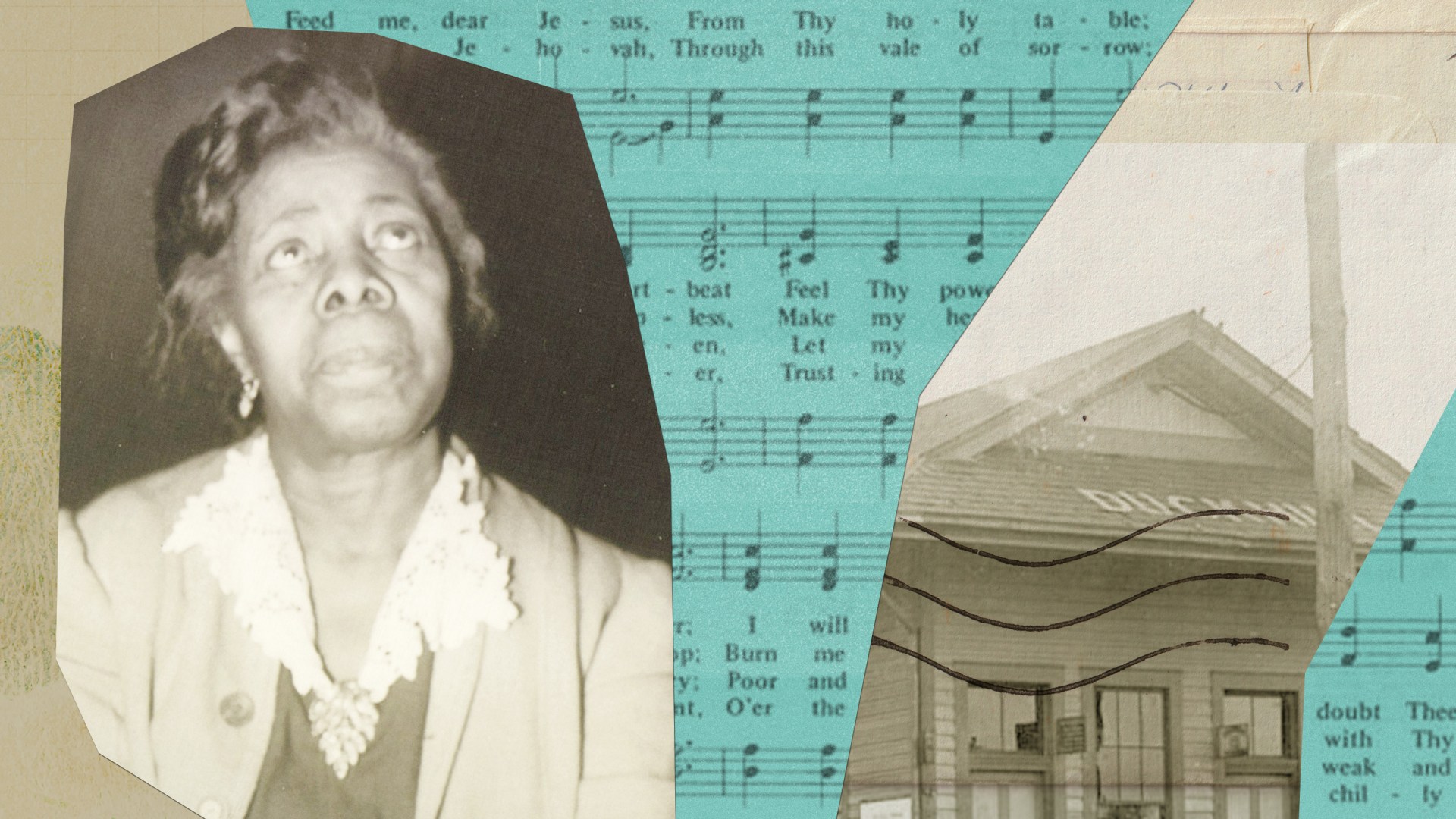
A collage of Lucie Campbell, a song she wrote, and her hometown.
Christianity Today March 19, 2026
Illustration by Elizabeth Kaye / Source Images: WikiMedia Commons, Hymnary.org, Memphis Music Hall of Fame

I grew up in a home where gospel music was always playing. My grandparents raised me in a small town outside Birmingham to the sound of The Caravans and Mighty Clouds of Joy. The music was like the smell of food in the kitchen or the sound of a television in another room. It was sometimes turned up, sometimes down, but the rich harmonies and fusion of the blues, jazz, and soul were never far away.

I didn’t appreciate gospel music enough as a kid. But as my relationship with God grew, I valued it more. It gave me words for experiences I was still learning to name. And I came to treasure that generations of songwriters had left behind words and sounds that captured not only the Christian life but also the experience of African American Christians as they wandered through the proverbial wilderness, where survival required the steady guidance of God. 

When we think about theology, we often think about preachers, scholars, or pastors. In the Black church tradition, however, theology has equally been carried through song. Gospel songwriters translate the truths of our faith into words we can remember long after sermons fade from memory. Preaching is good for explaining belief. But it is songs that have often declared the truth of God’s companionship in the face of harsh realities with no end in sight.

Few songwriters have put together words that communicate such truths as well as the late gospel giant Lucie Campbell did. I consider her one of the genre’s greats, and the feeling seems to have been shared by other gospel singers, like Mahalia Jackson, who took Campbell’s songs and transformed them into new arrangements. Horace Clarence Boyer, one of gospel’s foremost scholars, once said Miss Lucie, as Campbell was often known, was “perhaps the most significant Black church musician we’ve ever produced.”

Personally, I don’t remember the first time I heard Campbell’s words. Nor do I remember the first time I heard her famous song “Touch Me, Lord Jesus.” But the first version that stuck with me was recorded by the Angelic Gospel Singers, whose lead singer reminded me of my grandmother.

Over the years, I heard the song performed by choirs, soloists, and small gospel groups. Initially, I simply appreciated the piano music that accompanied it. But one Sunday morning, I paid more attention to the lyrics:

O bear me thro’ the current;

O’er the chilly Jordan,

O Lord, please lead me, my dear Savior

To my home above.

I often found that Campbell’s words were not abstract theology but a prayer shaped by real human need. Her songs did not avoid hardship. Instead, they spoke directly to the realities many African Americans faced—poverty, loneliness, exhaustion, and uncertainty—while insisting that God remained present in the middle of those realities.

Campbell herself was born in Duck Hill, Mississippi, in 1885. She was the youngest of nine children. Her father worked for the railroad, and her mother worked as a cook. When Campbell was a child, her father died in a railroad accident, leaving her mother to raise their children alone.

The circumstances of Campbell’s early life were not unusual for African Americans growing up in the rural South during the late 19th century. Life was often hard, but her story showed remarkable determination.

As a child, Campbell had an early talent for music. She wanted to play the piano. But because her mother could afford lessons only for Campbell’s older sister, Campbell simply listened and practiced on her own. She graduated high school as valedictorian at the age of 14 and later began a career in education.

Throughout her life, faith, education, and music were closely intertwined. As a teenager, she organized a choir that would eventually grow to a thousand members and sing at the National Baptist Convention. In her early thirties, she was elected music director for the convention and eventually became the first African American woman to publish a gospel hymn, called “Something Within.” She composed more than 100 other songs before she died in 1963.

In Campbell’s imagination, human need was often the place where Christ met his people. Life contains strong currents. There are moments when we feel as if we are being swept forward by circumstances we cannot control. There are seasons when the waters feel cold and uncertain.

Yet I found that her music does not end with those realities. It moves toward provision. In “Touch Me, Lord Jesus,” Campbell pleads with God to be fed “from Thy holy table, / Rain, rain bread from heaven, / Let my cup o’erflow.” In “I Am Not Blessed with Riches,” she writes we may be helpless, but Jesus can turn our night to day. He, after all, is her hope, joy, and comfort. She asks us, “Is he yours?”

When I listen to Campbell’s words now, I hear more than a beautiful gospel song. I hear a teacher of the church helping me remember what God has already done even when the present world feels uncertain. That may be why her music continues to resonate generations later. It beckons us to put our hope in God and still helps us find our way home.

Daylan Woodall is a pastor and religious studies professor whose work focuses on African American Christian history and the Black church. He writes the Substack newsletter Too Hip for the Room

Culture
Review

‘The Faithful’ Celebrates the Women of the Bible

The first episode—and a set visit in Italy—introduced a me to a thoughtful new drama about multidimensional women in Scripture.

Part of the set of The Faithful.

Part of the set of The Faithful.

Christianity Today March 19, 2026
Photo courtesy of Paul Marchbanks

Each year, I teach multiple sections of a course with the unwieldy catalog title The Bible as Literature and in Literature and the Arts. This interdisciplinary offering examines biblical figures, symbols, and principles in their textual and historical contexts, then considers the rhetorical impact of this material when it is woven into modern literary and visual art. When taught at public institutions by academics more convinced of the Bible’s literary merit than its truth value, this type of course can unsettle—even derail—young faith instead of fortifying it.

This outcome is far from inevitable. As hymns and poetic liturgy fill a sanctuary, adorning Scripture with meter and melody, so can faith-laced fiction and imagery swell the imagination with illustrations of the perennial contest between grace and rebellion.

In the hands of a religious skeptic or cynical instructor, a poem by Robert Browning that details a monk’s petty cruelty provides evidence of hypocrisy. The Christian professor, however, points out how tonal contradictions and hyperbole sabotage the first-person speaker’s arrogance: The poem spotlights integrity by framing the consequences of its absence. To the cynic, a Christological work by Catalan painter Salvador Dalí constitutes virtue signaling, a politically savvy cash grab in the wake of a Catholic dictator’s rise to power. For the educator convinced that divine action often eludes our attempts to dissect it (1 Cor 1:18–30), the possibility of God acting in Dalí’s life complicates any facile, scornful conclusions about his work.

Such heavenly intervention underpins the personal narrative of a filmmaker I met last fall during a visit to the Roman set of Fox Entertainment’s The Faithful, a miniseries releasing across the three Sundays preceding Easter. René Echevarria, the showrunner, entered Hollywood in the early ’90s as a screenwriter and editor for sci-fi favorite Star Trek: The Next Generation and quickly became an executive producer. Ever since, Echevarria has gravitated toward shows with equally fantastic premises, including Dark Angel, The 4400, Medium, and Carnival Row. Each show spin yarns about figures with extraordinary abilities whose powers both complicate life and provide it with new purpose.

This creative interest in supernatural possibilities found a new, life-giving channel mid-career when God unexpectedly obtruded into a stressful life sustained by a cigarette addiction Echevarria lacked the time and will to eliminate. Intrigued by the ashes on someone’s forehead one day at the studio, Echevarria wondered what this individual had given up for Lent and what, if he were still a practicing Catholic, he himself might relinquish. The answer arrived immediately, alongside the conviction that the nicotine addiction regularly waking him up in the middle of the night had too strong a hold ever to be shaken off.

And then he heard a voice say, Of course you can, and you will, and you’re going to do it right now.

Not only did Echevarria never smoke another cigarette, that moment also awakened a dormant faith which initially brought him back into the Catholic church, where he and the woman he soon married would baptize their three children. Later, they transferred membership to a small evangelical church outside Los Angeles and read the Bible in new, transformative ways.

Five years ago, Echevarria belatedly revealed his faith to his surprised agent and asked that they look for faith-based projects. The success of The Chosen and House of David had convinced Fox Entertainment to jump on the bandwagon, so it eagerly greenlighted Echevarria’s and Julie Weitz’s proposal for a show foregrounding the experience of women in the Bible.

Echevarria’s faith and avid research, Weitz’s Jewish education, feedback from Christianity Today’s Russell Moore, and assistance from Wendy Zierler (rabbi and professor of modern Jewish literature and feminist studies at Hebrew Union College) combined to create a show shaped by the biblical record and psychological realism. As Weitz puts it, they wanted the show to feel “true and legitimate, not heightened.” The sort of melodramatic excesses, extravagant sets, and military spectacle today’s audiences love are nowhere to be seen. Instead, into the huts and tents of ancient Bedouins, the show’s creators placed imperfect, God-fearing nomads whose faltering steps underscore the power of the one who draws them out of their homelands. The series opens with the story of Abram, Sarai, and Hagar.

During a press conference last month, I asked Echevarria a rather involved question. Noting that Hebrews lists Sarah as one of the storied faithful who “was enabled to bear children because she considered him faithful who had made the promise” (Heb 11:11), I pointed back to the events dramatized by his show which underscore Sarai’s lack of trust in God’s timing. These include feasible extrapolations from the scriptural account, including Sarai’s yelling at God and throwing vegetables from Abram’s altar when no pregnancy is forthcoming, her anger at Abram for not resisting more when she tells him to sleep with Hagar, and her frustration with Abram’s repeatedly uprooting them to move closer to Canaan. Did Echevarria intend to characterize faith, I asked, as an often tortured, complicated process, thereby making the faith of the show’s title appear accessible to struggling humans?

“Yes,” he enthusiastically rejoined. And Weitz elaborated: All three stories in the series consider women “grappling with faith on a human level.”

In the case of Sarai (Sarah), faith is vicarious for quite some time, with Abram (Abraham) serving as the divine proxy in whom she places her belief. Watching from a distance as Abram sacrifices at one homemade altar after another and lacking any revelatory encounters or dreams of her own, Sarai must trust that no delusions addle her husband’s brain. In the show, his romantic devotion to her makes such faith relatively easy. As Echevarria notes, Abram’s peers likely expected him to take another wife when Sarai failed to conceive, yet he refused to consider this option. (A second marriage in the Bible follows Sarah’s death.) Pushed into sleeping with Hagar, Abram acquiesces but maintains, “I have loved only one my whole life.”

Hagar’s experience differs profoundly from Sarai’s. According to Jewish Midrashim, Hagar was an Egyptian princess presented to Sarai as a handmaid by the Pharaoh anxious to get rid of her, an explanation for her presence in Abram’s tribe that the show adopts wholeheartedly. Her status as an ankh-wearing outsider and slave makes it unlikely any Jewish man will pursue her, and she appears to have few friends besides Sarai. Abram deigns to admit she’s beautiful the second time he sleeps with her, but he makes little effort to form an emotional connection. And Hagar demands none, at no point attempting to steal Abram’s affections. Despite her unenviable situation, Hagar proves even-tempered, particularly when compared with the vacillating Sarai.

One might contend that Hagar’s role as occasional narrator centers her own perspective and opinion—arguably the show’s most radical decision. In the screenwriters’ hands, Hagar comes across as kinder, gentler, and more pitiable than Sarai. The show interprets the idea that she “despise[d]” her mistress not because of the contempt Sarai names (Gen. 16:4–5) but because of an understandable desire to raise the child she carries in her womb. An angel of the Lord speaks to Hagar twice, as in the Bible (16:7–13; 21:17–18), and in the show’s conclusion she plays a surprising role that I will not divulge here.

Less surprising is the series’ production value, given the industry’s rush to meet the growing demand for quality Christian programming. Set visits in a quarry near Rome and back in the studio revealed the considerable research undergirding the design of period architecture, domestic goods, and costumes. I was particularly taken by a meticulously carved board game, an ingenious prop deserving mass production and a spot next to Wingspan and Catan on gaming displays.

While committed to never contradicting the biblical record outright, Echevarria and Weitz take expected liberties with the text. They include only events witnessed by the women, and the compact story line omits any mention of Abram’s nephew Lot. At the same time, Echevarria and Weitz invent several plausible moments in their quest to create relatable characters for a mixed audience. In the first two-episode story, these include Sarai’s and Hagar’s signing a clay tablet to formalize their surrogacy arrangement, Hagar’s recommending a grain-based peeing test for determining pregnancy, and Abram’s recounting tales about Noah and Nimrod to his tribe’s children in the manner of “the sagas.”

Teaching the Bible at a secular university has made one thing crystal clear to me. Unquestioned, prejudicial assumptions about biblical gender roles are one of the largest roadblocks for unchurched students wondering whether the Bible is more than a historical and literary artifact. If the first two episodes of this humanizing drama about multidimensional, relatable women prefigure the tenor of the next four, the show will realize the evangelical aim Echevarria repeatedly, joyfully articulated in our conversations: convincing a few skeptics to take their Bibles off the shelf.

Paul Marchbanks is a professor of English at California Polytechnic State University. His YouTube channel is “Digging in the Dirt.”

News

Iranian Christian Freed Nine Months After Border Patrol Arrest

Video of agents arresting him and his wife in Los Angeles went viral, and their church has been praying for his freedom.

Pastor Ara Torosian filmed Border Patrol agents arresting Iranian members of his congregation.

Pastor Ara Torosian filmed Border Patrol agents arresting Iranian members of his congregation.

Christianity Today March 18, 2026
Ara Torosian

After nine months in immigration detention, Iranian Christian convert Reza was freed this week, his pastor Ara Torosian reported. Reza’s church kept track of his exact time in detention: 267 days. 

“We are so happy,” said Torosian, the pastor of the Farsi-speaking congregation Cornerstone West Los Angeles, in an interview with CT. But the pastor is concerned about other Iranian Christians, including in his own congregation, who remain in immigration detention.

Border Patrol agents detained Reza and his wife, Marjan, who are Christians and asylum seekers from Iran, on a Los Angeles sidewalk near their home in June of last year. Torosian captured the arrest on video, which went viral as Marjan had a panic attack and convulsed on the ground during the arrest. (CT withheld the couple’s full names to protect their safety and their family in Iran.) 

The couple had been part of Cornerstone West Los Angeles for about a year before their arrest.

Reza was in detention ever since in New Mexico. Marjan was released after 120 days in detention and was granted asylum, but two different judges were handling the couple’s cases.

Christian groups like Women of Welcome raised an outcry about the arrests because Iranian Christian converts from Islam face arrest, torture, and potential execution in Iran. Torosian said the government lawyer prosecuting the case against Reza did not seem to understand the threats Christian converts faced in their home country. Torosian said Iranian authorities had recently searched the home of Reza’s parents for Christian material but—because they are not Christians—found nothing. That underscored the threat Reza faced, Torosian argued.  

Reza’s church is now praying for other detained Iranian Christians in the US, including a fellow congregant. In addition, two Iranian Christians from a church in Texas are in detention and one is facing deportation orders but is appealing, according to World Relief’s Lauren Rasmussen. 

Reza and Marjan’s advocates said the couple had followed the legal procedures for asylum seekers. Prior to 2025, it was unusual for asylum seekers to be detained while their cases were pending.

In November, Reza was granted “CAT withholding” rather than asylum, which meant he faced a threat of torture in Iran but was subject to deportation to a third country. Reza could appeal the decision.

His lawyers then filed a habeas petition in federal court, which led to his release, said Torosian. 

The release comes as the US has all but ended admission for international refugees other than white South Africans. And now the US is at war with Iran, with the Department of Homeland Security warning of Iranian “sleeper cells” in the US.

This past Sunday, Torosian was two points into a six-point sermon on Luke when he felt called to end his sermon and have the congregation pray. Marjan prayed, along with another family with members in detention. They prayed for America, for Iran, and for detained Iranians, and people wept.

 “Usually my church is not an emotional church,” Torosian said. The next morning, Torosian heard from Reza’s lawyers. 

Upon news of his release, the church sent money to fly him from El Paso to Los Angeles. The church had already established a fund for Christian asylum seekers in need. Torosian said he told Reza he was proud of him for “being a light in that prison.” 

Torosian had promised Reza an Iranian meal on his release, which they scheduled for lunch together on Wednesday in Los Angeles. Torosian canceled his sermon on Sunday for the church to worship, praise God for Reza’s release, and celebrate the Iranian new year, Nowruz. 

“God did amazing things,” Torosian said.

addApple PodcastsDown ArrowDown ArrowDown Arrowarrow_left_altLeft ArrowLeft ArrowRight ArrowRight ArrowRight Arrowarrow_up_altUp ArrowUp ArrowAvailable at Amazoncaret-downCloseCloseellipseEmailEmailExpandExpandExternalExternalFacebookfacebook-squarefolderGiftGiftGooglegoogleGoogle KeephamburgerInstagraminstagram-squareLinkLinklinkedin-squareListenListenListenChristianity TodayCT Creative Studio Logologo_orgMegaphoneMenuMenupausePinterestPlayPlayPocketPodcastprintremoveRSSRSSSaveSavesaveSearchSearchsearchSpotifyStitcherTelegramTable of ContentsTable of Contentstwitter-squareWhatsAppXYouTubeYouTube