How do parents and teachers build resilience in kids?
All cultures have stories that shape them. Children look to adults to learn resilience. If the story we suggest to children is that your chief identity is as a consumer and your main goal in life is individual happiness or having an Instagrammable life, then anything that seems hard and threatens a sense of bliss is something to be avoided. If that’s the story we tell ourselves, our goal will be to be as comfortable as possible for as long as we can.
Does that search for comfort end up weakening us?
If you never stress your muscles or your bones, they become weaker. If we teach kids that the story of their life is to avoid difficulty, they’ll end up weaker. What brings our life meaning—faith, relationships, generative work, the commitment of celibacy or of marriage and parenting—is difficult. It makes your average Wednesday much harder. Just ask any mother of a kindergartner
in this room.
If we agree that the Christian life does not include cheat codes, how do we get our kids not to cheat when it’s common to do so?
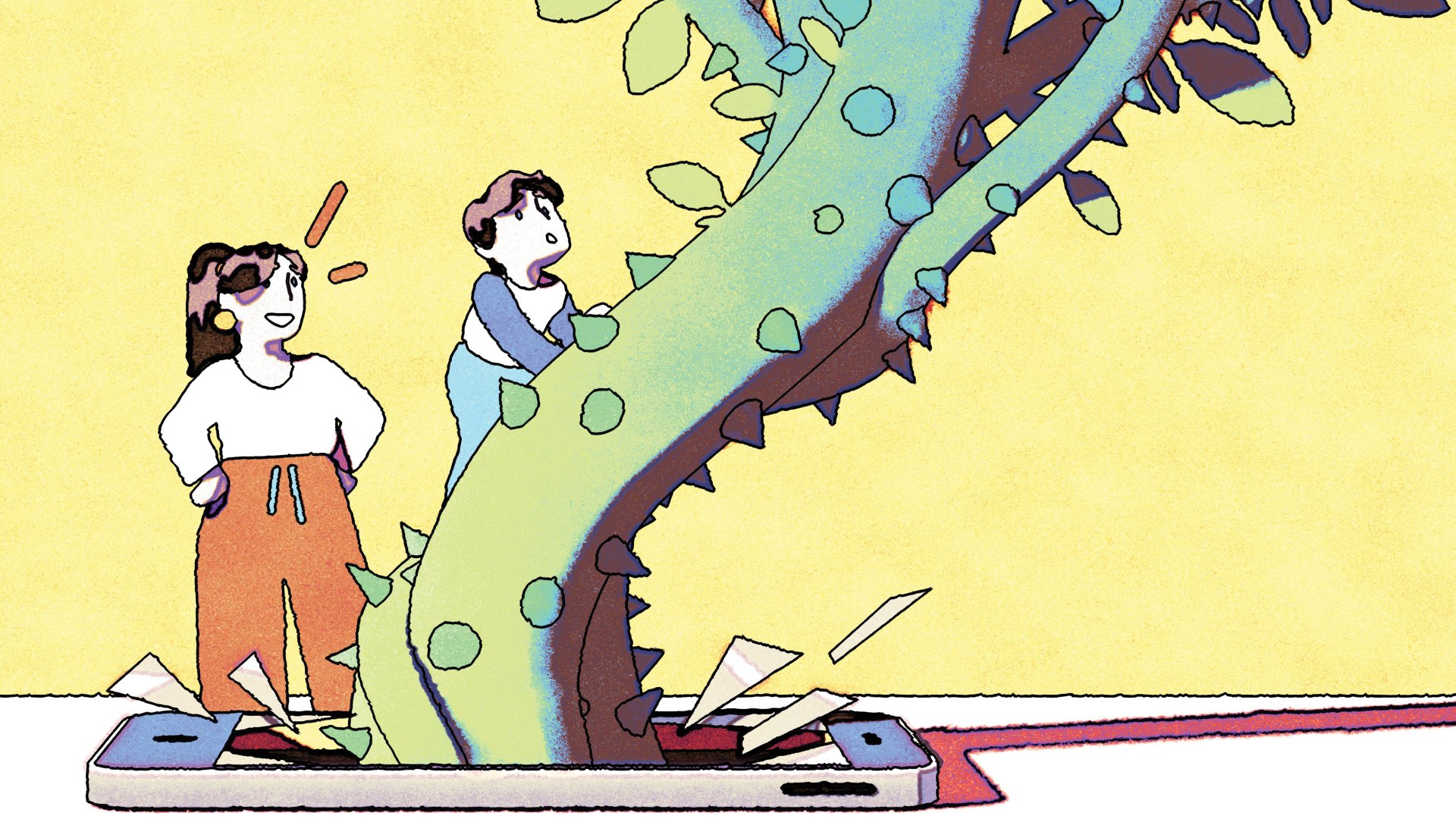
The entire digital experience is aimed at making things as easy as possible in order to addict us to our devices. Corporations keep the barrier to entry low so their products can consume more and more of our attention. We set kids up for being so habituated to instant gratification that we do not give them the muscles to follow a commitment through the long haul. I feel like I’m alarmist when I say this, but I cannot overstate the disaster that is upon us if we lose the ability to sit with difficult, complex ideas and hash them out with people over time and with sustained attention.
In your forthcoming book, you write about Antony, a fourth-century desert monk who nearly died, asking God, “Where were you? Why didn’t you … stop my distresses?” He says God told him, “I was here, Antony, but I waited to watch your struggle.” How do teachers and parents keep from intervening prematurely when they see struggle?
It’s hard to know with an individual kid when to jump in, which is why we need community. The beautiful thing about schools like this is that they’re built to be human-scale.
We’re built to do hard things but not to do them in isolation. We help our kids not by taking away every struggle but by accompanying them as they struggle. When they struggle socially, we can’t just jump in and take over. (As a mother, I know this is hard.) They have to learn to do things on their own. As they struggle, they need roots to help ground them. They need a community. They need to know the name of the trees in their yard or the history of their town. Most especially, they need a church.
recommended


Your book explores how Christian resilience is different from the stoic idea that life is suffering and you bear it.
The Christian idea of perseverance and resilience is born of the idea that Jesus will set all things right, that the reason for resilience now is participation in this eternal story of God making the world whole and right. If life is tragic and then we die and that’s the end of the story, why not spend life on a screen? But if what we do today matters because it participates in an eternal reality, then there’s meaning in today—even in the things that feel hard or heavy. Our future hope changes the meaning of the present.
You describe in your new book one example of the way we should guide children toward excellence in art.
My book is not about resilience in children, per se. But I use this example in the book to discuss how all of us—kids and adults alike—learn from those who come before us. Teachers at my kids’ school do not lay out art materials and let students “decide their own path.” They expose them to artists—Georgia O’Keeffe, Henri Matisse, or Pierre-Auguste Renoir—and ask them to copy their work. They seek to teach them what is good and true and beautiful. It’s harder than just following their own impulses, but it teaches them the craft.
It’s not indoctrination; it’s laying before them a feast. Our culture lays before them the high-fructose corn syrup of the mind: addictive, easy distractions. We need to help them develop a palate for what is good, true, and beautiful. A school does this by exposing kids to classics, to beauty, to lasting truth. You learn art better by mimicking those who have gone before us and then, of course, taking those skills and making your own masterpiece—but not until you’re ready.
How do we teach children about the uses and abuses of artificial intelligence?
The conversation about AI, even among Christians, often goes like this: “Will it be something that cures cancer and helps us live better lives, or will it destroy us?” I want to say instead that, even if it doesn’t destroy us, even if it turns out that good can come from AI, we simply do not understand what we are losing in our social world that we deeply need—things in our everyday social interactions that we don’t even notice. I’m talking about intimate conversation but also the chat with the cashier in the grocery line. Those interactions nourish us in ways we don’t fully understand and will not know until they’re gone and there’s a massive mental health crisis.
That brings us back to resilience.
Technology promises us a frictionless world of ease, but there’s something about the goodness of even a broken material reality—even the hard things in our lives—that make us human. When we become disconnected from that, we will lose
our humanity.
Tish Harrison Warren is an award-winning author and Anglican priest. Her most recent book is What Grows in Weary Lands.
Marvin Olasky is editor in chief at Christianity Today.