Church Life

20 Black Leaders Who Inspired the Church

African American Christians reflect on Rebecca Protten, Vernon Johns, and other thinkers who influenced their faith. 

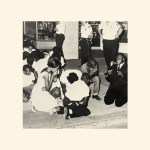
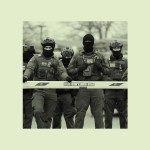
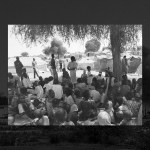
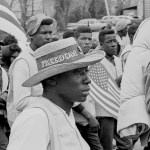
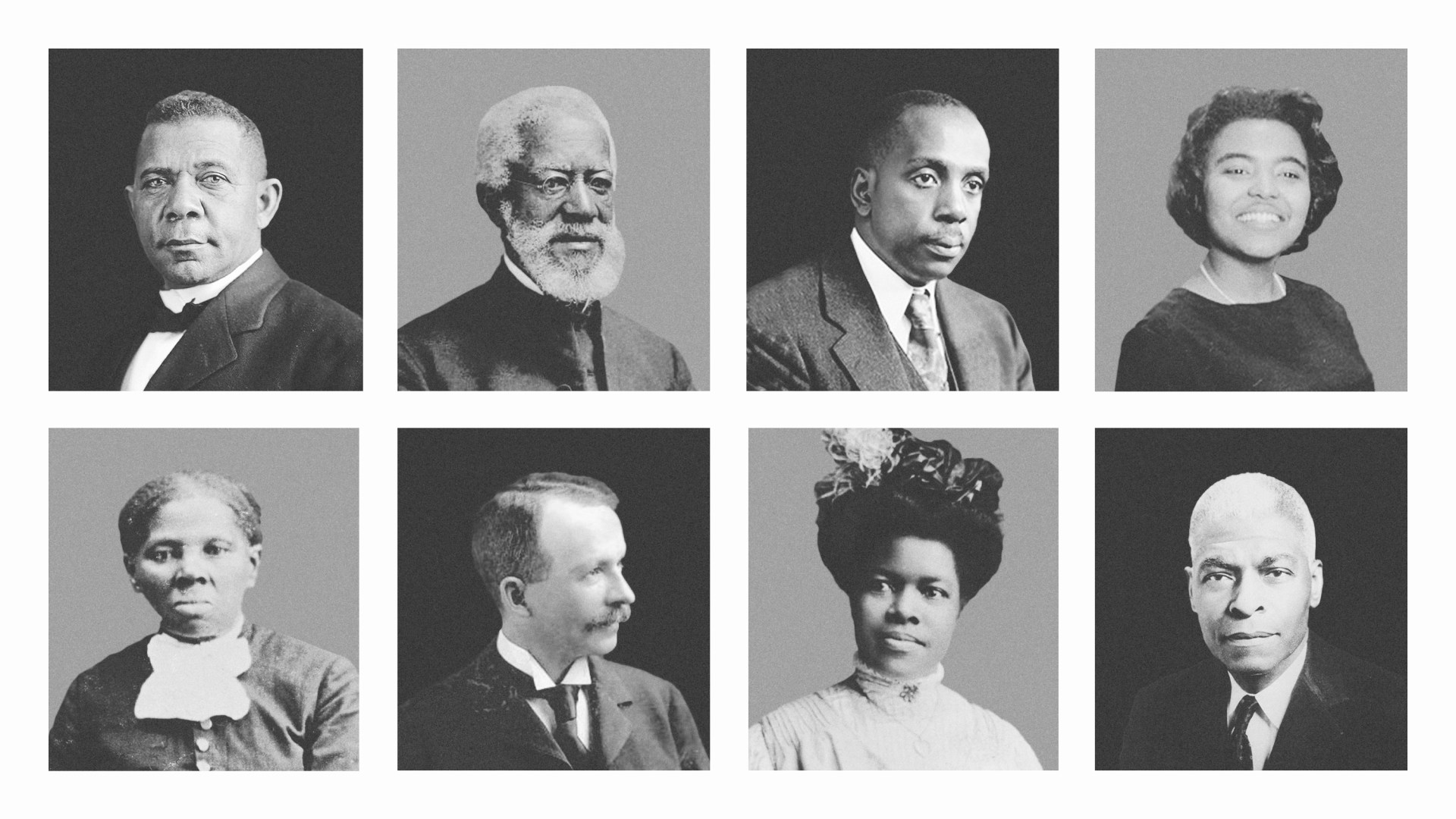
Images of 8 of the black leaders mentioned.
Christianity Today February 12, 2026
Illustration by Elizabeth Kaye / Source Images: Getty, WikiMedia Commons

The Black church and Black Christians have played an indispensable role in shaping American and church history. For hundreds of years, African American congregations have operated as hubs of spiritual formation, community, and activism, fighting for the social change necessary to create a more just society—and helping Christians across the board think more deeply about the Bible, the spread of the gospel, and the call to pursue justice.

In honor of Black History Month, CT asked several African American leaders to share about the thinkers, pastors and theologians who have influenced their lives. Here is what they said.

Rebecca Protten (1718–1780)

Protten, a Moravian teacher and missionary of African and European descent, played a pivotal role in early Protestant missions. She converted through the Moravian movement and became a gifted educator, especially among free and enslaved African women in the Caribbean, where she taught Scripture, literacy, and Christian doctrine. Her ministry embodied the conviction that the gospel transcends race, economic status, and social hierarchy at a time when such beliefs were deeply countercultural. Protten was persecuted with other church leaders for missionary activities and modeled a lived theology of endurance, suffering, and hope in Christ. —K. A. Ellis, director of the Edmiston Center for Christian Endurance at Reformed Theological Seminary in Atlanta

James Earl Massey (1930–2018)

Massey was a pastor-scholar who stood out among his peers and was quite simply, different. He was best known as a holiness preacher whose voice crossed deeply entrenched racial and denominational boundaries—a rarity that’s difficult to grasp today. With near-perfect diction, he defied expectations often placed on African American preachers, combining biblical lessons with practical applications and relating to his listeners while also drawing them to a higher plane of thought. In 2006, Christianity Today named him one of the 25 most influential preachers of the past 50 years. At a time when public trust in pastors has diminished so significantly, we’d benefit from a renewed introduction to a man who so faithfully represented both God and his “skinfolk.” —James Ellis III, Baptist pastor and assistant professor of practical theology at Winebrenner Theological Seminary

Harriet Tubman (1822–1913)

Harriet Tubman has greatly shaped my theology. After I studied and preached from Romans 6, God helped me see the abolitionist—and the call on her life as a prophetic portrait of the gospel—in a new way. She helped people escape physical slavery, and the passage in Romans gave me greater clarity on my own calling as a natural and spiritual abolitionist. As Christians, God has given us the task of spreading the gospel and helping people escape spiritual bondage. Tubman reminds us that we only go back to plantations (in a sense) to help set people free, not submit again to the yoke of slavery. She refused to enjoy the fruits of freedom for herself and withhold that opportunity from others. May that type of heroism, commitment, sacrifice, and love mark my life, and all of ours as well. —Sarita Lyons, author, speaker, Bible teacher, and psychotherapist

Vernon Johns (1892–1965)

Johns grew up poor in Virginia and was able to receive a first-rate theological education, which was rare for his day. He later served as the pastor of Dexter Avenue Baptist Church in Montgomery, Alabama. Martin Luther King Jr., a friend of Johns, succeeded him in the role.  Johns was in many ways a man of contradictions. He preached with insight and intellect, but often in dirty overalls, dispensing pearls of theological wisdom while tracking dirt from the farm into the sanctuary. He spent his ministry as a pastor ruffling feathers and offending the silk-stocking sensibilities of upper-middle-class African American congregations. —Daylan Woodall, writer and senior pastor of First Missionary Baptist Church in Decatur, Alabama

Caesar Arthur Ward Clark (1914–2008)

Clark was a mentor of Martin Luther King Jr. and pastored one congregation—Good Street Baptist Church in Dallas—for 50 years. Clark grew up in Louisiana. There, he encountered racism and poverty, which blocked his chances of being educated until much later in life. But those constraints didn’t stop him from flourishing. He was known for his theological imagination and rich biblicism and became an internationally renowned Baptist revivalist. He had a small stature but left a giant impression on African American preaching and Christianity. —Woodall

Charles Price “C.P.” Jones (1865–1949)

Jones was a pioneer of the Black holiness movement and the most prolific Black American hymnist of all time. He wrote that the Lord encountered him in the late 1890s and said, “You shall write the hymns for your people.” Jones went on to write over 1,000 hymns. His songs are sung primarily in holiness and Pentecostal settings. But I believe that the messages God gave Jones are indeed for “his people”—Black America—and for the global church.  In turbulent times, we need Jones’s prophetic reminder as sung in one hymn: “I will make the darkness light before thee.” —Geoffrey D. Golden, director of worship and arts at The Park Church in Charlotte, North Carolina

Howard Thurman (1899–1981)

Thurman was a 20th-century spiritual luminary who named “the religion of Jesus” as the source of both spiritual and temporal freedom. His pioneering work Jesus and the Disinherited examined the Lord’s life as a member of a marginalized group, positioning Jesus as a model for people who live “with their backs against the wall.” His teachings on nonviolence earned him recognition as a sage of the Black Freedom Struggle, authoring what pastor and activist Otis Moss Jr. described as “the philosophy that creates the march.” Thuman also championed the multiethnic church and saw unity across social boundaries as “the pragmatic test of one’s unity with the Spirit.” —Tryce Prince, writer and director of Abilene Christian University’s Carl Spain Center on Race Studies & Spiritual Action

Nannie Helen Burroughs (1879–1961)

Burroughs dedicated her life to creating educational opportunities for Black women and pursued that ministry through civil rights activism and hands-on classroom instruction. Interestingly, her extraordinary social justice efforts were matched by her commitment to promoting moral improvement in America generally and in her community. Burroughs’s high view of Holy Scripture informed her that an undisciplined, pleasure-seeking lifestyle was just as much of an impediment to true liberation as external injustice was. Today’s Christian would be wise to recapture her willingness to challenge corruption in the American power structure while pushing her people toward a more honest and thorough form of self-examination. —Justin Giboney, president of the AND Campaign

Alexander Crummel (1819–1898)

Crummel was a clergyman, teacher, and missionary who cofounded the American Negro Academy, an organization for Black intellectuals who sought to promote higher education, art, and science among African Americans. Another founding member of the academy was the famous sociologist and writer W. E. B. DuBois. The academy sought to push back against the racism African Americans faced and also reform ethical and moral behaviors within the Black community. —Brian L. Johnson, former president of Warner Pacific University and Tuskegee University

Charles Chesnutt (1858–1932)

Chesnutt was a writer who documented the 1898 Wilmington race riots through his novel Marrow of Tradition. He was a Christian and wrote several novels and essays that communicated biblical themes. The Colonel’s Dream, his most sophisticated novel, tells the story of racial violence in the post–Civil War South through the eyes of a white protagonist. —Johnson

Gardner C. Taylor (1918–2015)

Taylor served for 42 years as pastor of Concord Baptist Church in Brooklyn, where his preaching combined profound theological depth with prophetic clarity on racial justice. Taylor, who is called “the dean of American preaching,” marched alongside Martin Luther King Jr. and maintained relationships across denominational and racial lines—which was rare in his era. He was respected in both Black churches and white evangelical institutions, mentoring generations of pastors and demonstrating that the proclamation of the gospel and the quest for justice are inseparable. Taylor spoke truth that challenged Americans while always pointing to Christ’s redemptive work, refusing to let either the church retreat from justice or activism retreat from the gospel.  —Nicole Martin, president and CEO of Christianity Today.

Prathia Hall (1940–2002)

Hall was a civil rights activist and theologian whose courage and voice shaped both the Civil Rights Movement and the church. In 1962, after white supremacists burned down Mount Olive Baptist Church in Terrell County, Georgia, Hall stood in the charred ruins and prayed a passionate vision of freedom. She began with “I have a dream”—Martin Luther King Jr. heard that prayer, and many believe it inspired his famous speech. Hall organized voter registration drives in the segregated South, survived multiple threats to her life, and later became one of the first African American women to earn a doctoral degree from Princeton Theological Seminary. Her legacy reminds us that the most powerful prayers can echo through generations and movements far beyond their original utterance. —Martin

Clay Evans (1925–2019)

Evans was the planting pastor of Chicago’s Fellowship Missionary Baptist Church. He was unable to speak for the first three years of his life. But his inimitable voice became the trumpet for justice and righteousness in Chicago. In 1966, he defied the edict of then-mayor Richard J. Daley and allowed Martin Luther King Jr. to preach in his pulpit. As a result, institutions that were supporting the construction withdrew financing, which resulted in a nearly decade-long delay in the construction of the church’s new sanctuary. Evans reminds us that standing by the word we preach might cost us more than we had scheduled to pay. —Charlie Dates, senior pastor of Progressive Baptist Church and Salem Baptist Church in Chicago.

Gowan Pamphlet (1748–1807)

After his conversion to Christianity, Pamphlet risked his life to proclaim the gospel of redemption and freedom. He was one of the first ordained Black ministers in the American colonies. And he was determined to challenge church practices that prevented Black people, whether slave or free, from becoming members. He understood the evangelical gospel was for everyone and was thus a forerunner in multiethnic church ministry. —K.J. Washington, lead pastor of New Valley Church in Waynesboro, Virginia


Benjamin Elijah Mays (1894–1984)

Mays has impacted African American theologians by influencing our understanding of the “long civil rights movement.” He trained one of the brightest generations of theologians, many of whom were shaped by his writings on “all of life” theology—the belief that our faith applies to all areas of our lives. Mays engaged the public square and built strong institutions, all for God’s glory. —Washington

George Washington Carver (1864–1943)

Carver is often lauded for his innovation and brilliant mind, but this polymath is rarely recognized as a faithful Christian witness. He refused to claim patents of his inventions because he believed the Lord gave him insights that should not be withheld from others. Luminaries across the globe from Mahatma Gandhi to Franklin D. Roosevelt sought his expertise for their personal lives. His skills were courted by Henry Ford and Thomas Edison. And despite facing discrimination under Jim Crow, he helped Southern farmers by advocating for crop diversification because cotton and tobacco had exhausted the soil. I believe his tombstone states its best: “A life that stood out as a gospel of self-forgetting service. He could have added fortune to fame but caring for neither he found happiness and honor in being helpful to the world.” —Sho Baraka, editor director of CT’s Big Tent Initiative

Tom Skinner (1942–1994)

Skinner was a pioneering evangelist, author, and speaker who bridged the worlds of urban ministry, racial reconciliation, and mainstream evangelicalism. He became a leading voice for a socially engaged, biblically based faith that addressed systemic injustice. He is perhaps best known for his powerful address, “If Christ is the Answer, What are the Questions?” at the 1970 InterVarsity Urbana Student Missions Conference, which challenged a generation of evangelicals to confront racism and poverty. —Jeff Wright, CEO of Urban Ministries Inc.

Melvin Banks Sr. (1934–2021)

Banks was the visionary founder of Urban Ministries Inc. (UMI), one of the largest African American–owned Christian education publishing companies in the United States. After graduating from Moody Bible Institute and Wheaton College in the 1950s, he saw that there was a lack of curriculum that reflected the experiences, culture, and images of Black Christians. In 1970, he started UMI from his basement to fill this void. His work provided biblically sound materials that affirmed Black identity and addressed relevant social issues, all of which bolstered Christian education in Black churches and created a legacy of empowerment and representation. —Wright

Booker T. Washington (1856–1915)

Washington was the founder and president of Tuskegee Institute, a historically Black institution later named Tuskegee University. Washington was a principled Christian leader who advocated for racial uplift, self-determination, and hard work. —Johnson

Charles E. Blake Sr. (1940–present)

Blake was the former presiding bishop of the Church of God in Christ, one of the largest African American denominations in the US. He pastored West Angeles Church of God in Christ, a Pentecostal-holiness congregation in south Los Angeles that I attended as a child. Under his leadership, the church grew from 50 to more than 20,000 members. Blake believed that the Good News addresses both spiritual and physical needs. Because of that belief, he spearheaded many local and international programs, including the West Angeles Christian Academy and a community development corporation. —Chanté Griffin, journalist, author, and artist
Culture

30 Lessons from 30 Years of Marriage

Contributor

After three decades of love, sacrifice, and lessons learned, a marriage instructor offers concrete ways to build a strong marriage.

A silhouette of a couple holding hands
Christianity Today February 12, 2026
Samuel Costa / Unsplash

Tracey and I sailed into marriage three decades ago with considerable wind at our backs. We had dated four years, joined a marriage class, worked through multiple marriage books, and overcome a series of potentially relationship-ending crises, including a death in the family.

All of that wasn’t enough to skirt the storm that nearly swamped us after our honeymoon.

Watching the older relationship of a colleague implode right as our own underwent its first major course correction was both distressing and scary. Distressing, because my friend did not forge an alternative when his wife’s graduate studies presented him with a false binary: to care for his mom in town or pursue his own wife in another city. Scary, because a shared faith, happy dispositions, and teaching jobs at the same Christian school had not proven protection enough for this couple against the arrows of a relentless Adversary.

Their relationship’s sad ending solidified Tracey’s and my determination to privilege our own marriage whatever the future held, to regularly reassess the strength of our bond even as I charged headfirst into the stressors of academia. We also embraced the interdependence God has woven into creation, seeking accountability with other like-minded couples.

Some of what we have learned—and imperfectly practice—through 30 years of marriage follows. Each observation has a pair that elaborates or qualifies its partner, a reminder that no one idea should be taken as absolute.

Family of Origin

  1. The separate pulls of “leave and cleave” and “honor your father and mother” invite us into a dynamic, lifelong tension. Cutting ties to parents to “self-actualize” or more easily pursue the American dream—however we define it—is as troubling as allowing parental opinion to dictate big decisions.
  2. The family-of-origin issues discussed in premarital counseling pop up throughout a long life together. Providing a safe space for spouses to work through new manifestations of the same old issues is a gift.

Change

  1. The advice I offered my younger sister years ago, recorded on a camcorder making the rounds at her wedding reception, is that the person you wed is not the one you wake to a year later: We are always being knit together, even after the womb. Committing to love an ever-evolving person requires flexibility, a willingness to accept unexpected turns not telegraphed by “in sickness and in health.” 
  2. Outside my relationship with Christ, the facets of my identity are negotiable. Oneness presupposes a willingness to change to meet my spouse’s needs.

Conflict

  1. Silence is silver, not golden. The Book of Proverbs reminds us that wisdom knows how to bite its tongue, yes (10:19), but refusing ever to voice your perspective resembles humility only in the short run. Inviting dissent and resolving conflict is far preferable to buried, growing resentment or depression. Iron sharpens iron.
  2. In our dating years, Tracey taught me that timing matters when raising difficult issues. Waiting a few hours to work through a concern—instead of demanding an immediate tête-à-tête and resolution—encourages us to relinquish control, trust God with a potentially lengthy process, and cover the topic in prayer. 

Community

  1. Everyone benefits from relational counsel, whatever their mental health, and therapists provide one among many viable options. Vulnerable small groups, reliable accountability partners, and close friends have blessed Tracey and me with meaningful support over the years.
  2. Discussing fiction with others offers a safe way to broach difficult relational issues without pointing fingers or giving away sensitive information. Book clubs and movie nights allow us to talk indirectly about fraught issues impacting our relationships, laying the groundwork for later dialogue.

Sex

  1. Scheduling sex can feel unromantic to a culture trained by television and film to expect mutually satisfactory, ecstatic encounters born of spontaneous feeling. We have found that regularly setting aside time for intimacy helps prepare us to give our best, to be attentive, patient, and flexible—whatever our current energy levels.
  2. Lovemaking characterized by pleasure and honor—rather than anxiety and shame—requires intentionality. Talking openly about sex every few months helps us reconfigure our efforts and expectations to meet one another’s changing needs as schedules and responsibilities fluctuate.

Walking

  1. Just as taking a walk stirs the creative juices for many facing writer’s block, an extended stroll can provide optimal conditions for problem-solving relational difficulties. Walking together requires finding a shared rhythm, a synchronicity that preserves freedom of movement. We’re less likely to feel trapped when in motion, sustaining engagement and discouraging flight.
  1. It took Tracey and me 20 years to realize we needed to set aside time to discuss logistical matters including scheduling, money, and parenting before our weekly date so they didn’t crop up while attempting to relax together. For the last decade, a midweek “pre-date” walk has protected those precious weekend hours.

Deepening

  1. When we were five years into marriage with our first baby on the way, God revealed that our busy lives had diverged too much into separate, parallel tracks. Setting aside a couple hours every Sunday afternoon for a picnic bookended by prayer, what we called “deepening,” invited regular vulnerability. It also laid the foundation for family time away from the demands of housekeeping once our girls arrived.
  1. Uncertain whether to specialize in Renaissance or Victorian literature in graduate school, I eventually chose the latter because Tracey also loved it. Two years later, my secondary field of interest became Irish fiction, following a shared trip to the Emerald Isle. More recently, we have jointly attended Christianity and literature conferences around the country. Fostering shared interests when possible provides another plank in a seaworthy vessel of marriage.

Adventure

  1. Romance grants unfamiliar pastimes a fresh plausibility when colored by our sweethearts’ enthusiasm, encouraging experimentation with sports, fine arts, games, shows, outdoor activities, and other ventures we might otherwise never attempt. A willingness to at least try—and maybe learn to appreciate—what our spouses love enriches our own experience and improves our understanding of what makes them tick.
  1. Trying new things together can reignite a spirit of adventure. Purchasing ocean kayaks during the COVID-19 lockdown, starting salsa and bachata lessons last year, and recently exploring a new corner of California (“Victorian” Ferndale, highly recommended!) have each renewed romantic passion.

Service

  1. Convinced that our marriage is our most important ministry, Tracey and I try to privilege time together. Before teaching a marriage course, providing premarital counseling, hosting a book club, scheduling a film series, or joining a Bible study, we reset our calendars to protect our relationship. If a crisis makes it clear we have missed the mark, we recalibrate.
  1. Service, like work, can offer us simple affirmation from the people we are helping. Such uncomplicated attention can eventually compete with the more complex, tempered affection of our spouse. Remembering to value the one who sees more facets of our character than those curated ones we show an eager, outside audience is a bulwark against split devotion and infidelity.

Knowledge of the Other

  1. The patience and kindness that open the apostle Paul’s famous definition of love (1 Cor. 13:4) require active listening and observation. Practicing patience is difficult if I am continually surprised by behavioral patterns I have failed to process. Similarly, it’s difficult to anticipate what our spouses will receive as kindness unless we have a rich understanding of their preferences.
  1. Shared experience teaches us much about our spouses’ character, but deciding at any point that we understand them completely prevents us from learning more. Finishing one another’s sentences is less romantic than rom-coms suggest, and it’s often a product of impatience. Better to allow space and time to be surprised by new revelations.

Personality Types

  1. Christ’s constancy (Heb 13:8) does not demand uniform righteousness in his followers. Instead it frees us to exercise the same principle in different ways. Individual expressions of virtues like self-control may differ radically while remaining in line with God’s will. Lacking telepathy, we will never know the many silent choices our spouses make to be faithful to God and keep marriages afloat.
  2. No one’s psyche can be distilled into the categories provided by a personality inventory like the Myers-Briggs Type Indicator or the Enneagram. We are far more than formulas. Such tools do, however, volunteer language and concepts useful for explaining our tendencies to a spouse, particularly when we believe the instrument has nailed some elusive truth about ourselves.

Forgiveness

  1. Keeping “no record of wrongs” (1 Cor. 13:5) becomes more plausible when we consider the biased, highly selective nature of memory. However hurtful a past injury, chances are we played some role in its appearance—which is an inconvenient truth when we cast ourselves as wholly innocent victims. Remembering that everyone processes differently the series of events culminating in a wrong can slow the rush to blame and can facilitate forgiveness.
  2. Forgiving our beloved can feel harder than loving our enemies; the proximity of a spouse salts the open wound. In rare circumstances, forgiveness may require space and time.

Self-Care

  1. The command to love others as we love ourselves implies a vital reciprocity between concern for self and kindness to others. One oft-overlooked benefit of self-care (sleep, exercise, diet, relaxation) is to delay the day our spouses must expend extra resources to care for us. Such self-discipline may even forestall the onset of neurodegenerative disease, a possibility for Tracey and me given our family histories.
  2. No matter how comfortably insular the two of us may become, developing and strengthening other friendships helps us care for ourselves. Humans were designed to be in community. When parental friendships built atop our kids’ camaraderie faded after we became empty nesters, Tracey and I not only bought more two-person board games but also fostered new friendships by hosting Wingspan game nights twice a month.

Trust

  1. The term gaslighting easily flies off young tongues with minimal relationship experience and no contextual awareness of the two films that birthed the concept. Adults overuse the idea too, behaving as though every lie were a malicious attempt to sabotage their mental health. The term’s popularity does, however, underscore an important truth: Trust grants power, power to nurture one another’s emotional well-being—or to poison it. To a great degree, we are our spouses’ keepers.
  2. When our partners can trust us to bear their burdens (Gal. 6:2) and pray for healing following their confession of sin (James 5:16), we provide a tangible reminder of Christ’s mercy. As Elizabeth Barrett Browning observed, “God’s possible is taught by His world’s loving.”

Dreams

  1. Fairness is a useful but imperfect ideal. Once the girls were old enough to express preferences, our family consistently took turns when selecting games, movies, restaurants, and weekend excursions. In marriage, however, a 50-50 mentality can be the death knell to peace and happiness. Demanding that everything be precisely fair invites endless tallying, predicated on the false assumption that two people will ever weigh the same action equally.
  2. Openness about our individual dreams for the future proves easier in the heydays of early romance than after years together have cut ruts in a path that feels inevitable. Seriously reconsidering each other’s long-term goals every few years may alter trajectories and lead to reallocated resources, but it also increases the likelihood of mutual fulfillment years later. Love is not self-seeking.

Extra

  1. At the time of this article’s publication, Tracey and I have actually been married 31 years, so I’ll leave you with an extra, succinct suggestion pulled from Madeleine L’Engle’s A Wind in the Door: “Love isn’t how you feel. It’s what you do.”

Paul Marchbanks is a professor of literature and film at California Polytechnic State University. His YouTube channel is “Digging in the Dirt.” He and Tracey teach a 10-week marriage course for local couples annually.

Theology

Jeffrey Epstein and the Myth of the Culture Wars

Columnist

Some leaders of different political stripes teach us to hate each other, but they’re playing for the same team.

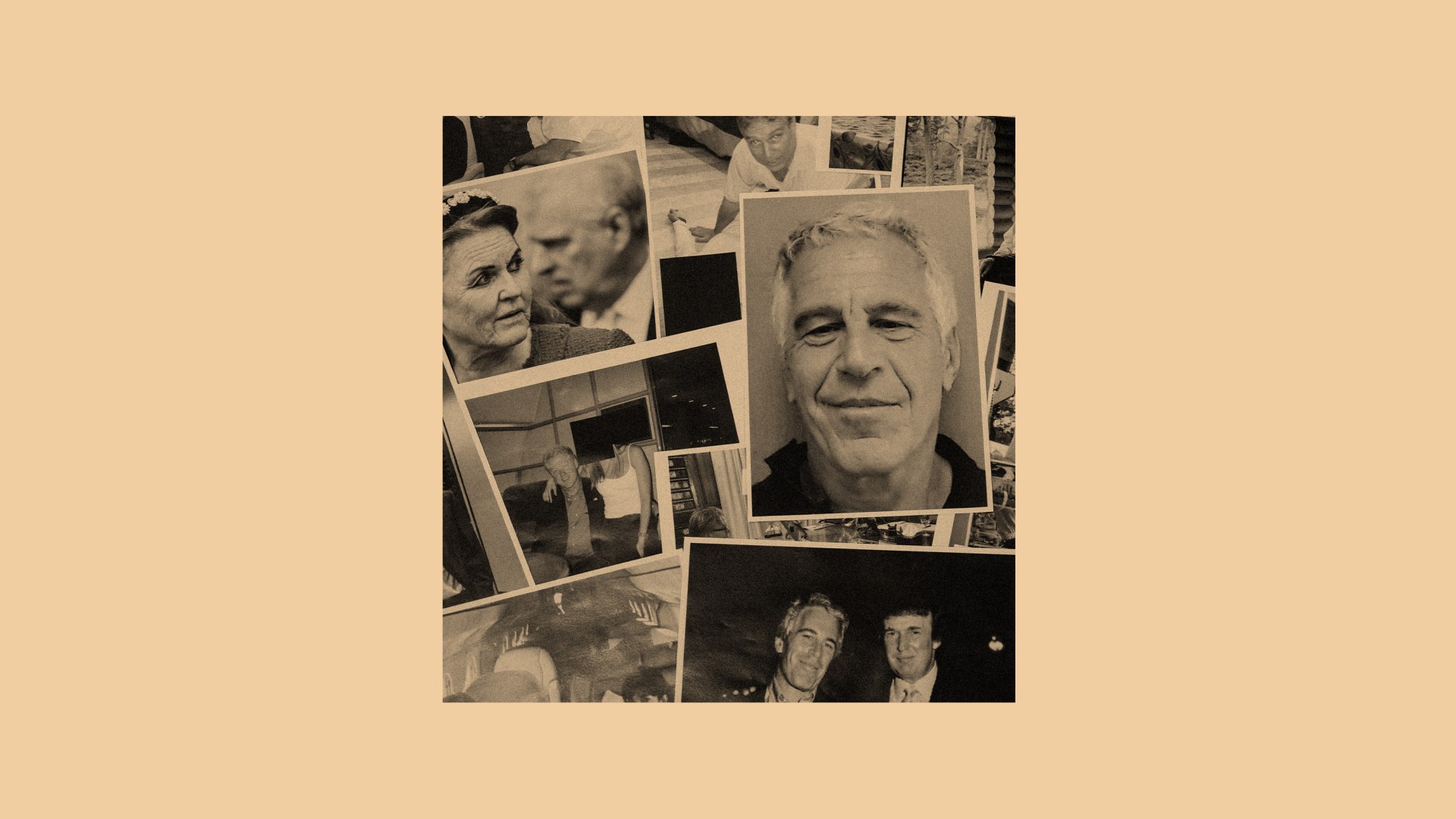
An image of some of the Epstein files.
Christianity Today February 11, 2026
Illustration by Christianity Today / Source Image: Getty

This piece was adapted from Russell Moore’s newsletter. Subscribe here.

People have almost given up on bridging the divides in American life. Republicans and Democrats cannot pass any bipartisan legislation or even watch the same Super Bowl halftime shows. And yet throughout the last two decades of polarization, one figure seems to have discerned the code for bringing both sides of the culture war together. His name was Jeffrey Epstein.

The Epstein files have largely been redacted, with parts of them hidden from us, but we’ve seen enough to know that Epstein and his partner Ghislaine Maxwell were two of the most corrupt and connected sex criminals in American history. Despite how much is still confusing, we can also see this: On at least one important point, the most outlandish theories were right. There really is a global conspiracy of wealthy, elite sexual perverts fleecing the masses. And many of them were people building a following by telling others that there is a global conspiracy of wealthy, elite sexual perverts fleecing the masses.

Reading through the names of those connected with Epstein, one can hardly believe the range listed there. Some were unsurprising: for instance, creepy filmmaker Woody Allen or the man formerly known as Prince Andrew. But even then, the scope is unsettling. Even the Dalai Lama had to put out a statement noting that he was never involved with Epstein. Just as incredible, many of the people listed were partying with those they spend a lot of time telling the rest of us to hate.

Both Donald Trump and Bill Clinton were apparently friendly with Epstein. The New Age syncretist Deepak Chopra is in the documents many times—often with shady, enigmatic phrases—but so are those who accused the pope of New Age syncretism. With Middle Eastern tensions what they are, still the files include both sheikhs and Israelis. All over the files are connections with both left-wing populist provocateur Noam Chomsky and right-wing populist provocateur Steve Bannon. Epstein makes fun of evangelicals yet recommends a James Dobson article.


How can this be?

Maybe one reason is that Jeffrey Epstein figured out the deep, dark secret of this moment: The people who fight culture wars often believe what they say, but the people who lead culture wars often don’t.

The heiress Leona Helmsley, when accused of defrauding the government, famously said in a moment worthy of Marie Antoinette, “Only the little people pay taxes.” Maybe the Epstein class is telling us, “Only the little people have culture wars.”

Chomsky, after all, spent a lifetime arguing that wealth inequality was a moral atrocity, that billionaires in their luxury were taking advantage of the working class. Whatever is later proven about his personal participation, or lack thereof, in crimes, we know already that flying on Epstein’s private jet was not much a problem for his solidarity-with-the-workers-of-the-world conscience.

sign behind Steve Bannon’s seat on YouTube videos of his podcast reads, “There are NO conspiracies, but there are NO coincidences.” Yet in recovered emails, Bannon reportedly told Epstein how he could avoid accountability and put together a populist, nationalist, Catholic, and evangelical coalition—with the implication that it could end the #MeToo movement. He said this kind of coalition could “reverse Alabama,” presumably referring to the rejection of US Senate candidate Roy Moore over allegations of his sexual misconduct with girls.

Referring to the Hollywood-led Time’s Up movement, which argued that men should be held accountable for rape, harassment, and molestation, Bannon wrote to an Epstein already convicted for sex crimes: “This coalition staves off [‘]times up’ for next decade plus.” Even while those in these files sought to mobilize religious people to protect predatory men, Bannon and Epstein in emails reportedly discussed ways to discredit Pope Francis.

The main priority coming out of the Epstein revelations should be justice for the survivors and victims of these crimes and accountability for anyone who participated in them or covered them up. But perhaps we also ought to learn one other thing: that we have all been duped.

Some of the same people on the right who told us culture wars are necessary for sexual virtue and the protection of children could look away when they saw these problems in one of their own.

Some of the same people on the left who told us that the sexual revolution is about empowering women and girls and that the oppressed should be liberated suddenly lost their nerve when the predatory misogynist had their same politics—and a yacht.

Across their political and cultural differences, how can these sketchy figures—almost all of whom have contributed to our cultural state of seeing politics as a religion—pal around this way? The Bible already tells us: “And Herod and Pilate became friends with each other that very day, for before this they had been at enmity with each other” (Luke 23:12, ESV). Their real goal was not policy objectives or cultural well-being; it was power and money and anarchy of the appetite.

Predators know one of the easiest ways to go unseen is to change the moral calculus. As long as we define virtue and vice by a set of political or cultural or “worldview” opinions rather than character and integrity and behavior, they can avert accountability forever.

Holding opinions, after all, is easy. Once a person chooses a tribe, the brain easily adjusts to whatever set of slogans and shibboleths he or she needs to repeat. The pursuit of holiness or even simple human decency and accountability is much more difficult. As long as we can assume that whoever agrees with us on the “defining issues” of the day is good and whoever disagrees is bad, we end up with precisely what we have now: chaos, hatred, a fracturing public order, and the loss of institutions and norms.

People in your church have blocked one another on social media because of how life-or-death important a set of political opinions seems to be. But those who egg them on have not blocked each other. They are laughing themselves all the way to the poolside massage table.

We think we are in the middle of a future-shaping culture war, but the generals of that war are sharing emails making fun of their troops. People look to these titanic figures and assume them to be new George Washingtons or Winston Churchills or even Napoleon Bonapartes or Friedrich Nietzsches when they’re really just Caligulas. They teach us to hate each other on the basis of our red or blue jerseys, but they’re playing for the same team. They incite us to scream at one another over whether we like Bad Bunny or Kid Rock, but they’re listening to their own music.

And worst of all, they are discipling us. They are teaching us to evaluate whether we think fidelity is praiseworthy or weak or whether rape is evil or insignificant on the basis of who’s doing it. They are teaching us to evaluate which children’s screams are worth hearing on the basis of whose side it would help or hurt. The end result is that those who scream about the good of their team and the evil of the other stop believing in good or evil at all. All they come to care about is power.

No man is an island, John Donne told us. But a whole culture can be an island, and that island is Epstein’s.

We don’t have to live this way. We can choose another path. Our country hangs by a slender strand over an abyss. And it might just be that it did not hang itself.

Russell Moore is editor at large and columnist at Christianity Today and leads its Public Theology Project.

Church Life

I Long for My Old Church—and the Tree Beside It

Leaving a beloved church doesn’t mean ever forgetting its goodness, its beauty, and the immense blessing it was in one’s life.

Magnolia flowers
Christianity Today February 11, 2026
Getty / Edits by CT

There was a magnolia tree by a white church on a hill. It was a beautiful tree—tall and green and blooming every year with those massive flowers, so sweet to smell. More than this, it was a hospitable tree. Its branches, always sturdy, started low enough to the ground that even small children could climb up onto the lowest ones.

The less adventurous kids might stay there, sitting with a friend or two, dangling their legs just above the ground. But others did not stop climbing. From those lower branches, they could keep going, up, up, up, to the tippy top of the tree. The top branches would sway a little but still held firm, kindly supporting the brave children who reached them. The tree’s thick leaves and blooming flowers offered the perfect secret fort: An onlooker could barely tell, unless looking closely—or hearing the giggles—that children were up in this tree, growing alongside it, taller by the day.

Throughout Scripture, our story has often been intertwined with trees. Adam and Eve dutifully cared for trees as Eden’s stewards. What would their work have looked like in a garden so blessed that it required no hard labor resembling agriculture after the Fall? Perhaps gentle care was still needed even then. Occasional pruning, maybe, picking fruit in season, or raking leaves to keep paths clear for walking.

We don’t know for certain the nature of their work, but here’s what we do know: It was in the presence of these trees, a cloud of green whispering witnesses, that they met God face to face. And it was under those leaves that a horrible tragedy involving a specific tree resulted in their expulsion.

Ever since, people have cultivated trees with much labor: fruit trees for food, others for wood and shade and other practical uses, and some trees mainly for their beauty. Appreciating beauty is inherent in our nature as image bearers of God. He too, after all, delights in the beauty of his handiwork.

Delight, in fact, is the word that first comes to mind as I think of that magnolia tree by the church on the hill. Every Sunday, as soon as services ended, children would clamber into this tree, ever upward, while parents drank coffee and chatted with each other.

This was the tree that my daughter once climbed at age 3 without my knowing, her first and unexpected excursion of the sort. Once high up in the tree, she peered at the ground and realized she did not know how to come back down. As I scoured the church grounds in circles searching for her, another mom walked past the tree and heard my daughter weeping. She helped her back down to good solid soil, safe and sound.

This was the tree that my eldest son climbed more and more cautiously as he grew older, eventually no longer venturing past the middle portion, wisely judging that it might not hold his growing body. This was the tree too that welcomed my middle son, the most cautious of my children, who never went past the lowest branch but kept coming back to spend time under the leaves.

Whenever we’ve talked about the story of Zacchaeus at home, we remember this tree. Zacchaeus didn’t climb a magnolia, of course (Luke 19:4), but it was a tree much like this one, a good climbing tree, that held the “wee little man” who wanted nothing more than to see the Lord more clearly.

Two and a half years have passed since we moved away from Georgia, from where this tree grows beside the church we called home for seven years. I still cannot bring myself to unsubscribe from that church’s email list. I still read the weekly updates. And that was how I learned recently that, because of continued growth in membership, the church must undergo another renovation. As part of this renovation, the magnolia tree will come down.

Why do I feel this pang of sadness for a tree now 660 miles removed from my front door? Perhaps because my love for that tree is tightly bound up with my love for my former church, its people, and the memories of a life where it was an anchor for my family. We are who we are right now, as a family and as believers, in large part because of our beautiful, formational experiences in that church.

Lamenting churches past—and trees past—is right and good. Sometimes, people leave a particular church not because they needed something else but simply because they were called somewhere else. (Commuting 10-plus hours each way for Sunday morning worship isn’t very practical.) Leaving a beloved church, though, doesn’t mean ever forgetting its goodness, beauty, and the immense blessing it was in one’s life.

In his epistles, Paul writes to church after church that he has known, visited, and often even planted—and then had to leave behind, in some cases never to see again. Clear in each of those letters is his love for those believers and his gratitude for knowing them. Even separated, they continue to occupy his thoughts and prayers for the rest of his life.

“I thank my God in all my remembrance of you, always in every prayer of mine for you all making my prayer with joy, because of your partnership in the gospel from the first day until now,” he writes in opening his letter to the Philippians (1:3–5, ESV). “For this reason, because I have heard of your faith in the Lord Jesus and your love toward all the saints,I do not cease to give thanks for you, remembering you in my prayers,” he reflects in writing to the church at Ephesus (1:15–16).

To be a member of a good church for a season, whether long or short, is a blessing that lasts a lifetime. We love our new church in Ohio, too. It is a cherished gift—a rich tapestry of believers who live out the very best of what the church should be each day.

Nadya Williams is a homeschool mom, a writer, an editor, and the interim director of the MFA in creative writing at Ashland University. She is the author of Cultural Christians in the Early Church and Christians Reading Classics and is books editor at Mere Orthodoxy.

News

Fighting in Nigeria Leaves Christian Converts Exiled

Muslim communities often expel new Christians from their families. One Fulani convert is urging churches to take them in.

A Fulani herder leads his cattle to graze.

A Fulani herder leads his cattle to graze.

Christianity Today February 11, 2026
Michele Cattani / Getty

At dawn one morning in the spring of 2000, Jibrin Abubaker awoke with a start to the voice of a street preacher speaking through a megaphone outside his window. The 23-year-old, who was on a business trip in Jalingo in Nigeria’s Taraba State, initially felt annoyed to have his sleep disturbed.

Yet he listened as Daniel Dangombe, then pastor of a United Methodist Church in Nigeria, declared that Jesus was the only sinless person to walk the earth. “I used to wake up every morning [of the business trip] to listen to him,” Abubaker recalled. “From his preaching, my conversion started.”

Abubakar grew up in a Fulani Muslim family in Daura, a town in Katsina State in northwest Nigeria. Like most Fulani men, he came from a family of farmers and cattle herders. Yet Abubakar’s father didn’t want his only son roaming with the cows, so he enrolled Abubakar in an Islamic school. Abubakar said the teachers there taught him to recite the entire Quran and hate Christians.

“They said it was wrong for us to offer Christians a handshake or eat with their plates,” he told CT. “They were unholy—relating with them was an abomination.”

No Christians lived in Daura then, according to Abubakar. He only began to understand Christianity after hearing Dangombe’s preaching in Jalingo and meeting two Christians, Tevi and Peter, when he searched for Dangombe but couldn’t find him. First, he saw Peter holding a Bible and approached him, then Peter introduced him to Tevi, a Christian evangelist who could better speak Abubakar’s language. Two years later, during another business trip to Jalingo, Tevi and Peter answered his questions about Jesus, leading him to become a Christian.

But changing his religion meant losing his community.

Fulani who convert to Christianity face “extreme discrimination and deadly violence” from their community, according to International Christian Concern. They also face skepticism and isolation from Christian communities. Because of the historical hostility between Fulani Muslim herders and Christian and animistic farmers, Fulani Christians often find themselves caught between their culture and their faith. Of the 17 million Fulani in Nigeria, 99 percent are Muslims—less than 1 percent are Christians.

When Abubakar converted to Christianity, he didn’t tell people about new faith right away. He explained the gospel to his wife, who also became a Christian, but otherwise kept quiet. Still, his actions exposed him. He said he stopped attending Islamic daily prayers and reciting the Quran and instead started attending Evangelical Church Winning All (ECWA), a new congregation of mostly out-of-town, non-Fulani traders and businessmen. He also quit womanizing and seeking revenge when others insulted him.

Abubakar said his in-laws demanded his return to Islam. When he refused, they took his wife and three daughters—then 7, 3, and 1. Abubakar recalled they married off the eldest girl at 12-years-old as the second wife of a Muslim man in his mid-20s. She died in childbirth at age 16. He said he recovered his younger two daughters a few years later but never saw his wife again.

The Muslim community “eventually took everything I owned. My wife, children, house, cows. Everything,” Abubaker said.

Abubakar’s father didn’t confront him about his conversion until members of the Izala society, a powerful Salafi (conservative, reformist movement with Sunni Islam) organization that fights against shirk (unbelief) and operates under sharia law, put pressure on him.

“The Izala guys saw me regularly attending the church,” Abubakar said. “They wondered why a Fulani was going to the church.”

One Sunday in 2008, the Izala whisked him away from church, locking him up in a small, dark police cell for five days. A non-Fulani Christian policeman snuck him bread through the tiny window at midnight, Abubakar told me.

The legal system didn’t protect Abubakar. The Izala took him to the chairman of the Mai’Adua local government area. The head of Daura village, Abubakar’s father, and two other men asked him to denounce his faith. He refused and instead preached the gospel. They then took Abubakar to a sharia court. The judge gave him three days to reconsider. Abubakar’s family and community labeled him an apostate.

Then Abubakar said a relative attacked and threatened to kill him. The next day, a neighbor warned his father of another pending attack, forcing Abubakar to flee to Jalingo with the help of ECWA church members. He sought refuge with Tevi, his Christian friend from the Tiv tribe, and stayed with him for seven years.

Tevi’s hospitality was an exception, Abubakar explained. Because of the violence many Nigerian Christians have experienced from Fulani herders and Islamic extremists, whether over farm resources or religion, Abubakar said many fear Fulani converts are spies trying to infiltrate churches and feed information back to those who wish to harm them.

Joshua Irondi, the senior pastor at International Revival Chapel in Aba, southeastern Nigeria, works with missionaries to the Fulani in the north. He said the gospel is for everyone—regardless of tribe—and that missionaries shouldn’t write anyone off.

“But with the way things are right now, you don’t just see someone on the road and feel comfortable with them,” Irondi said.

Though urban Fulani in Nigeria are more widely accepted and hold high positions in business and government—Nigeria’s late president Muhammadu Buhari was a Fulani from Daura—many Nigerian Christians see nomadic or seminomadic Fulani herders as entangled with terrorists.

Last June, heavily armed Fulani jihadists attacked Yelwata, a farming community in Benue State, slaughtering an estimated 100–200 Christian villagers. According to a 2023 study, more than 60,000 people died when Fulani herders clashed with farmers between 2001 and 2018.

Manasseh Adamu, pastor of an ECWA branch in Zonzon, Kaduna State, north-central Nigeria, has seen the trauma up close. He said residents are sometimes reminded of past pain at the sight of the Fulani herdsmen.

Still, Adamu calls for the church to open its doors: “When people come to us [and say] that they are Christians … we should accept them.”

Abubakar said some Christians began avoiding him when conflict between the Fulani herdsmen and farmers peaked in 2018, even though he had already been a Christian for 16 years by then. He acknowledges the violence perpetuated by the jihadists. Still, the stigma against Fulani Christians grieves him.

Abubakar encourages Christians to welcome them and first listen to their stories. He hopes that if more Christians understood the Fulani and built relationships with them, the violence could end and more Fulani would hear the gospel.

Olu Sunday, president of Royal Missionary Outreach International in Nigeria and Niger, told CT that weak government responses and radicalization have compounded deadly violence and cycles of attacks. He said missionaries are among the few willing to risk building relationships with the Fulani, adding that “they still have open doors in [the Fulani’s] hearts and communities.”

However, Sunday said the Fulani people’s traditional migration lifestyle makes evangelism and discipleship challenging. “Sometimes you get a convert; the next minute they are thousands of miles away,” he noted. “Follow-up is very difficult.”

Abubakar, now a 49-year-old church planter with Calvary Ministries (CAPRO), lets the Fulani come to him. He said he spends time during the week at a veterinary clinic where Fulani herders come to treat their ailing cattle. Herders ask him how he can be both Fulani and Christian.

“From there, a relationship begins,” Abubakar said. He shares the gospel one-on-one when he can.

On Sundays, Abubakar gathers with 12 other Fulani and Hausa—another primarily Muslim tribe—Christians in his church plant in Kishi, where they have created a new community after facing isolation and abandonment by many in their lives. Abubakar said that after losing everything to follow Jesus—only to face rejection and stigma from other Christians—many Fulani converts are tempted to return to their families and Islam to survive.

“The worst thing would be for them to go back,” Abubakar explained. “Sometimes that is the only option they are left with.”

Ideas

New York Legalized Assisted Suicide. What’s Next?

A conversation with physician and ethicist Lydia Dugdale.

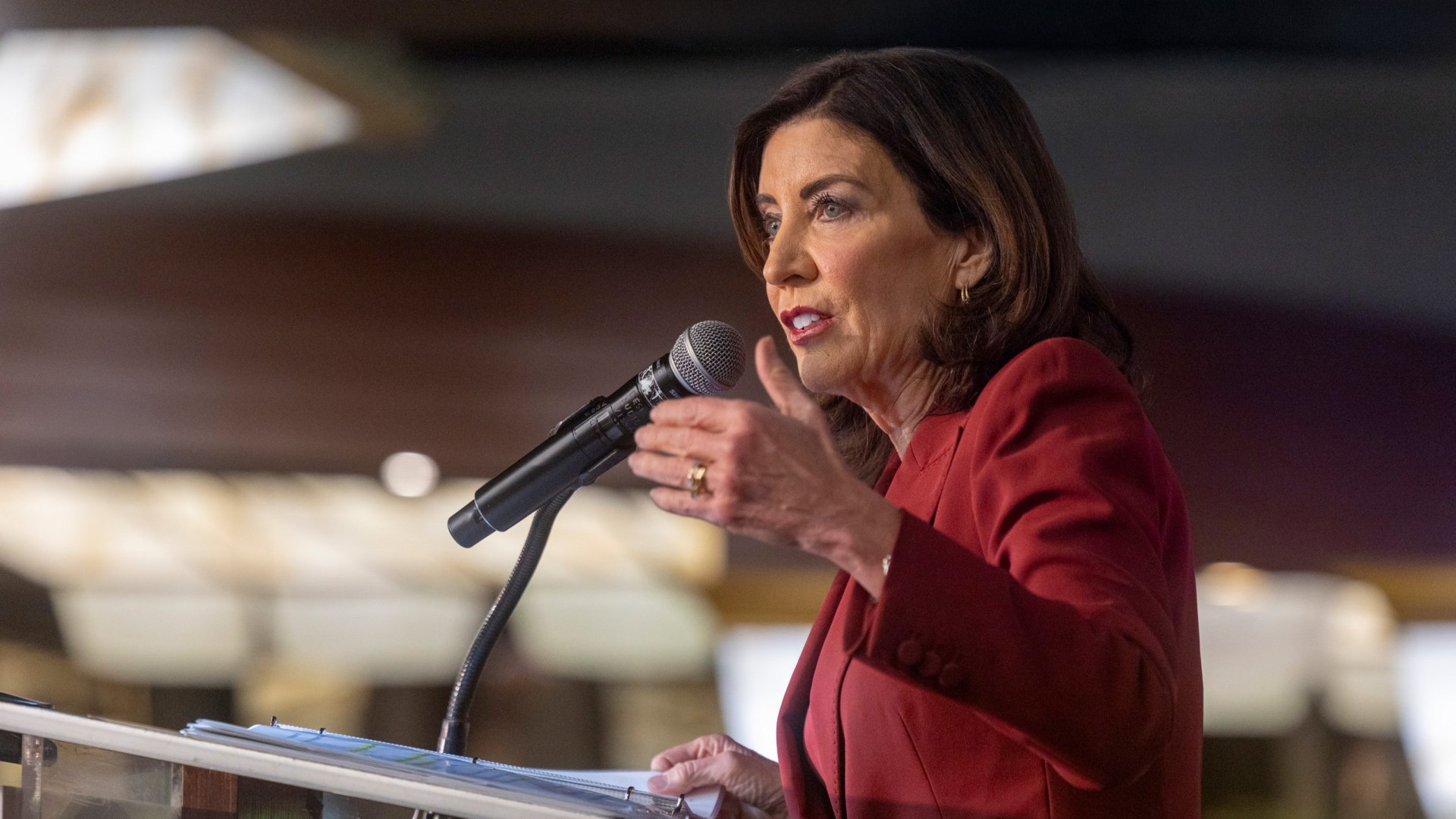
New York Governor Kathy Hochul in Woodbury, New York on January 9, 2026.

New York Governor Kathy Hochul in Woodbury, New York on January 9, 2026.

Christianity Today February 11, 2026
Newsday LLC / Contributor / Getty

On February 6, New York Governor Kathy Hochul signed a bill legalizing medically assisted death, joining Illinois and 12 other US jurisdictions in allowing patients to take lethal medication under certain conditions.

“Our state will always stand firm in safeguarding New Yorkers’ freedoms and right to bodily autonomy, which includes the right for the terminally ill to peacefully and comfortably end their lives with dignity and compassion,” Hochul said. Although the US first faced this debate when Oregon legalized assisted suicide in the 1990s, such laws are becoming more common.

CT reached out to Dr. Lydia Dugdale, professor of medicine and director of the Center for Clinical Medical Ethics at Columbia University and author of Dying in the Twenty-First Century and The Lost Art of Dying. A New York resident and practicing internal medicine physician, Dugdale has followed the New York debates closely.

This interview has been edited and condensed.

My first question is just background on what happened for those who don’t know: What is this law allowing, and how will that impact the medical field? What’s assisted suicide versus euthanasia? And does this differ from what’s happening in Canada?

When it comes to MAID, which is the acronym people use for medical assistance in dying or medical aid in dying, there are two main routes. In the United States, the only route permitted in any jurisdiction where it is legal is lethal ingestion. That involves taking a cocktail of pills, crushing them, forming them into an elixir, and then self-ingesting.

The other route is lethal injection, which requires a health care practitioner to place an IV in the person who wishes to die and then administer a lethal dose of a medication that will ensure death. This is legal in Canada, Belgium, the Netherlands, Luxembourg, Colombia, and several other jurisdictions around the world. But it is not legal in the United States outside of the lethal injection that is used on death row for capital punishment.

New York State has been considering this legislation for about a decade. It’s come before the state government almost every year. When Governor Hochul agreed to sign the legislation in December, she said that it had to have certain amendments to enhance its safety. Those amendments were presented to the governor, who signed them last Friday, which means that in six months, the state of New York will become the next jurisdiction to perform so-called physician-assisted suicide.

The amendments that make it distinct from many of the other laws include a mandatory waiting period of five days between when the prescription is written and when it can be filled. Some jurisdictions have eliminated a waiting period altogether. Other jurisdictions, there’s a 15-day waiting period. Waiting periods were initially seen as a source of safety, and now they’re seen more as an impediment to easy access to these lethal drugs.

Hochul also added something unique out of all of the states where it is legal: An oral request must be made by the patient for MAID, recorded by video or audio.

She’s also requiring mental health evaluations by a psychologist or a psychiatrist of patients who are seeking MAID. I think many will see that as an impediment to access too, because nationwide, there’s a shortage of mental health professionals. But that’s a reasonable requirement, because we know that people who seek to end their lives often do suffer from depression. And if they aren’t being assessed, then we could be hastening death for people who have otherwise treatable depression and don’t really want to die.

The other thing that’s notable for the New York law is that MAID there is limited to New York residents. Vermont and Oregon have opened the doors so anyone who can get to those states could qualify for medical aid in dying.

Can you explain why assisted dying is seen as wrong from a Christian standpoint? The argument for MAID is often the compassion argument: We do as much for animals who are in pain and help them end their lives.

There are many good reasons to oppose assisted suicide.

Arguments in favor of it include the compassion argument, the take-control-of-your body argument—which I think is very, very strong—and an argument for the professionalization of the dying process. So much of our living and dying and giving birth is medicalized and professionalized, and this is just yet another example of that. I think many people don’t understand self-killing as suicide. They think of it as just the medicalization of death, of the actual moment of dying.

But this is killing or aiding a suicide. Every major world religion has a prohibition on the taking of human life, and this certainly falls under that.

But even if we were to get outside of religious arguments, we should have concerns about how marginalized and impoverished patients might feel pressured to end their lives. They recognize that they’re a burden on their family. They don’t want to be a burden. Why not just end it all? Actually, that’s a common question that patients raise even in jurisdictions where physician-assisted suicide is not legal.

Similarly, there are folks with disabilities who feel like they’re constantly having to fight to have the medical system realize that their life is worth living. They also may feel pressured.

There’s also this concomitant problem of an aging population, a lack of caregivers to care for that population, and the enormous costs for caring for the elderly, especially those with dementia, in the last year of their lives. There will be tremendous pressure to try to figure out how to handle these costs, and in jurisdictions where physician-assisted suicide is legal, we already know that people will choose to hasten their deaths rather than to live out their lives because of the costs involved.

So I think we will see, from a governmental perspective, a keen desire to make MAID more widely available and to reduce impediments to access to it to handle this so-called problem of an aging population.

There’s also a well-documented phenomenon of suicide contagion. This has been discussed going back to the 1700s, when it was called the Werther effect. We have seen that when there is a high-profile suicide, other people in a similar demographic will also pursue suicide. And people studying what happens in regions where MAID or physician-assisted suicide is legal find that conventional suicide rises alongside assisted suicide.

When the process of taking one’s life or hastening death prematurely becomes normalized, the culture shifts. People begin to believe it is acceptable to end your life. I’m not saying one causes the other, but there certainly is that correlation.

Another argument I’ve heard is that we should make palliative care more available. Is that something you see as a viable alternative to address these related issues with aging?

That’s a really tricky question. Palliative care is also a version of medicalizing the dying process. Now, insofar as it is available and used prudently, it is a wonderful gift to dying patients and their families because the focus is on holistic care, relief of uncomfortable symptoms, relief of pain. It’s bringing the family together, addressing spiritual needs, et cetera. That’s a wonderful gift. Palliative care is not available everywhere, even in the United States. It’s certainly not available worldwide, but it’s not available in much of rural America.

Historically, palliative care clinicians have been opposed to the legalization of physician-assisted suicide or MAID because they have taken a professional view that it is not their role to hasten death. They’re there just to accompany patients to a natural end. Unfortunately, in jurisdictions where MAID is legal, it is often through the palliative care doctors or in palliative settings, in hospice settings, where MAID is enacted.

And then you get into this difficult situation where patients who might otherwise want to have access to palliative services that focus on symptom reduction refuse those services because they’re afraid that these very same doctors will hasten their deaths. That’s a real problem. So kind of a complex answer to a complex issue.

In terms of the political situation, is this the end of the road in New York? Could this law be overturned, or should we expect a domino effect for other states?

Illinois also legalized about the same time, and they start in September, so I guess New York will beat them to it. But I don’t know that it’s a domino effect.

The reason why I say that is, if you look at a graph from the Lozier Institute of jurisdictions that have legalized physician-assisted suicide, at least 26 states responded to the legalization in 1994—when Oregon legalized its Death with Dignity Act—by passing legislation that made it more difficult to take one’s own life through a medically assisted death. So maybe there’s not quite a domino effect—at least not in more conservative-leaning states.

But many states have passed bad legislation over the years, and here I think specifically about sterilization laws in the early 1900s. Those same states have chosen to overturn what they now consider to be bad decisions. So should New Yorkers move to a position where they recognize the harm that is coming from hastening so many deaths? Yes, it’s always possible to reverse the legislation. I think we always hold out hope.

Last, are you already hearing from doctors or Christians in general about how to respond?

I’ve heard from lots of people just in the last few days, anticipating this as it’s moved through the country and in Canada. Ewan Goligher, my colleague in Canada, has published with CT, and he has a book now that he wrote for the church, How Should We Then Die. And the Canadian context, of course, is more difficult, but I would commend that book to anyone who identifies as a Christian and is trying to make sense of this.

But look, the reality is that mortality is 100 percent, right? All of us will die, and most of us live out our final days engaging the health care system in some way. That means we all will likely have to reckon with the question of legalizing assisted suicide, whether for ourselves or for our loved ones, if we live in jurisdictions where it is legal.

So I think the church needs to read Ewan’s book and do some serious thinking and teaching about this issue. And not just this question of hastening death but, more broadly, how to live and die well. My own work focuses on this, which is really critical for all of us.

For physicians, there’s a lot of trying to make sense of it in real time: How will this be implemented? What conscience protections will there be? Even some people who might not be opposed, necessarily, because of their view on bodily autonomy will still be concerned about what it means to be involved in hastening death. So yeah, there’s a lot of concern right now.

And just since Friday, health care leadership like hospital administrators are trying to think through what this will look like once they’re required by law to provide access come August. Originally, Hochul had said groups that were opposed could opt out, but now the law only says religiously oriented home hospice providers can opt out. So that’s concerning.

Ideas

We Become Our Friends’ Enemies by Telling Them the Truth

Contributor

Our corrupt political and racial discourse teaches us to judge by identity and ideology instead of honestly testing the spirits and assessing the fruit.

A girl on her phone.
Christianity Today February 11, 2026
Cristina Quicler / Contributor / Getty

Sometimes it seems our opinions on the most polarizing issues have been decided for us before we can examine and reflect. 

When a tragedy or cultural rift appears, each faction in American public life rapidly latches on to a consensus opinion. Like smoke from the flaming trash heap of our toxic political and racial discourse, these reactions smother the search for truth well before all the facts are available. 

Unaware or unconcerned about the angles our algorithms and cultural biases are hiding from us, we see the complicated as easy and the unknown as obvious, all conveniently aligned with our preconceived notions about who’s good or evil, oppressed or oppressive. In a flash, we’re foolishly convinced that we know what we cannot know—or at least cannot know yet—like who initiated a stare-down, whether the election was stolen, or if someone deserved to die

And thou shall not get caught on the wrong side of whatever issue is virusing through social media! Even commercial products like Super Bowl halftime shows can become high-stakes litmus tests where one must assent to a meaning assigned by the mob. Don’t let your tribe take any blame. Always accuse the other side of the most sinister motives. Suppress your deeper questions. Accept lies if that’s what it takes to keep your status in your group.

What does this system of perverse incentives, stereotypes, and partiality look like in practice? It looks like conservative officials and influencers conflating protests with riots and dismissing protesters’ causes out of hand. It looks like progressive custodians of culture comparing every other conflict to Jim Crow and daring anyone to question it. It looks like downplaying the violence done by us to exaggerate the violence done by them. It looks like only selectively recognizing immorality and injustice.

Or ask Beth MooreRussell Moore, and J. D. Greear what happens when you refuse to condone colorblind and MAGA myths moving among white evangelicals. We become our friends’ enemies by telling them the truth (Gal. 4:16). In some circles, having the right politics or the right race narrative has become more important than right doctrine and right ethics. Religious heretics may be condoned, but cultural dissidents are unforgivable. We pronounce right and wrong according to identity and ideology instead of honestly testing the spirits (1 John 4:1–3) and assessing the fruit (Matt. 7:15–20).

John the Baptist took a sledgehammer to this kind of thinking. “Prove by the way you live that you have repented of your sins and turned to God,” he exhorted his people. “Don’t just say to each other, ‘We’re safe, for we are descendants of Abraham.’ That means nothing, for I tell you, God can create children of Abraham from these very stones” (3:8–9, NLT).

Here, John was engaged in righteous but dangerous business. He was knocking down a pillar that upheld his people’s sense of uniqueness—maybe even supremacy—to reveal a truth they did not want to see. Telling the descendants of Abraham that their lineage didn’t make them right with God was cultural blasphemy, and in saying it, John modeled the very kind of courage we need. He put himself squarely outside what C. S. Lewis called the “Inner Ring,” instead choosing truth over ease and “conquer[ing] the fear of being an outsider.”

Anything less would have been cowardly, uncaring, and courting corruption. For, as Lewis knew, “Of all the passions, the passion for the Inner Ring is most skillful in making a man who is not yet a very bad man do very bad things.”

Are we willing to follow John’s example? To be shunned and forgo prominent associations to give useful lies a public death? Only by telling the whole truth and enduring the blowback can we effectively do God’s will and be known for our love for one another. 

In the 1960s, Rep. Shirley Chisholm provided a model for us too. Chisholm rejected false and self-serving claims from all parties and all races. When she challenged Black militants, they reacted by calling her a sellout—among other things. “The easiest thing for anybody to do is to label you,” she answered. “I’m not concerned about labels. I’m concerned about what my behavior and my actions indicated to the Black people … [and] whites in this country. I see myself as a potential reconciler on the American scene.”

Last week, I wondered aloud whether conservatives would try to justify President Donald Trump’s demeaning social media post about the Obamas. Some did, but I was encouraged to see conservatives like Sen. Tim ScottSen. Katie Britt, and commentator Erick Erickson take a principled stand against such vile behavior.

It’s tempting to reduce reality to self-serving narratives the size and depth of bumper stickers. It makes our arguments effortless and our opponents easier to hate. But the breadth and depth of Jesus’ grace and the universality of human sin must always complicate such convenient story lines. The fact is our worst enemies are always redeemable—and we ourselves are never free from mixed motives and prejudice.

To renew our public discourse, love one another, and hold ourselves accountable, we must risk ostracism from our own tribes to seek the truth with patience, diligence, and mercy. In the church and politics alike, lying may be the cost of some associations. Bold truth is the cost of discipleship.

Justin Giboney is an ordained minister, an attorney, and the president of And Campaign, a Christian civic organization. He’s the author of Don’t Let Nobody Turn You Around: How the Black Church’s Public Witness Leads Us out of the Culture War.

Theology

We’re Not Made to Outlast Time

At the Korean Lunar New Year, everyone turns a year older. Psalm 103 frames aging as a sign of God’s sustenance.

A clock face in a bowl of Tteokguk soup.
Christianity Today February 10, 2026
Illustration by Elizabeth Kaye

I remember the first time that celebrating Seollal, the Korean Lunar New Year, felt strange to me as a child. That morning, after I ate tteokguk, a soup made with thinly sliced rice cakes, at the family table, the adults around me smiled and said I was now a year older.

But it was not my birthday. There was no cake, no candles, no sense of having earned anything. Yet something had changed.

On February 17 this year, more than 50 million people in South Korea will grow a year older all at once. The logic is not as strange as it sounds: South Koreans traditionally count age not only by individual birthdays but also with the arrival of the first day of the Lunar New Year.

Seollal’s way of marking time finds a parallel in Psalm 103. The psalm neither interrupts time’s movement nor treats it as a problem to solve. Instead, the psalm depicts how time meets people who are already living inside a God-given mercy that has carried them this far.

Many of us begin a new year by seeking to make the most of our time. In this framework, time becomes something to manage well or risk wasting. We look for goals to set, habits to form, or problems to fix.

Yet days slip by as we measure them in unfinished to-do lists. When plans fall short, the feeling that follows this realization is often less like motivation and more like guilt.

We also struggle with time because it rarely stays abstract. Signs of aging appear in ordinary places: faint lines around the eyes or gray hairs that no longer feel temporary.

“Seeing time as a scarce resource makes us desperate; minutes and hours slip through our fingers,” CT editor Isabel Ong writes in a review of the TV show 3 Body Problem. “Even the best moments of love and connection are fleeting.”

Psalm 103 also describes our lives as brief and fragile: “The life of mortals is like grass, they flourish like a flower of the field;the wind blows over it and it is gone, and its place remembers it no more” (vv. 15–16).

The psalm acknowledges what Seollal assumes, that time moves forward whether or not we are ready. Days accumulate. Years pass without waiting for us to catch our breath. Yet the psalm treats time not as an obstacle to overcome but as the environment within which finite lives unfold. Grass grows where it is planted. Flowers bloom according to their season. Neither is asked to last longer than it can.

Eating tteokguk as a symbol of turning one year older during Seollal reflects Psalm 103’s understanding of time as a precious gift we ought to receive in gratefulness to God, rather than a condition with which we wrangle out of fear or despair.

This simple bowl of soup does not mark a personal achievement or a completed milestone. It marks arrival: You have made it into another year, as everyone else at the table has.

Eating this soup does not cause time to pass; it acknowledges that it already has. This is why Koreans have traditionally joked about measuring age in bowls of soup. Each bowl represents a year crossed, not earned. Age accumulates not through individual progress but through a simple, shared ritual. You eat, and the year counts you in.

This perspective of time and aging disrupts our modern-day penchant for control over the length of our days on earth. In Psalm 103, we recognize that God does not evaluate lives in terms of output or accomplishment. Rather, God sets human brevity alongside divine endurance.

Psalm 103 declares, “But from everlasting to everlasting the Lord’s love is with those who fear him, and his righteousness with their children’s children—with those who keep his covenant and remember to obey his precepts” (v. 17–18).

Here, one generation makes room for the next. What lasts is not speed, effort, or careful planning but God’s steadfast love that moves from generation to generation. Human lives remain short, but they are held within a faithfulness that endures beyond any single lifespan.

Scripture returns elsewhere to this pattern of recognizing time as God given and God ordained. Genealogies move forward without commentary. Scripture offers no explanation, no evaluation, no pause to interpret their meaning. Name follows name, generation gives way to generation, and the list continues. Lives are recorded not for their achievements but for their place within a larger, ongoing story.

Biblical festivals operate similarly. The Passover, the Feast of Weeks, and the Feast of Booths return each year by God’s command, not human consensus, and gather people into remembering God’s faithfulness whether or not they feel ready.

Like genealogies, these festivals assume continuity. They locate individual lives within rhythms that precede them and will continue after them. They show how meaning often emerges not through explanation but through faithful return.

Seollal is also marked by family rituals observed by many Korean households, including Christians. Younger family members bow to elders in sebae as a sign of respect, and elders give sebaetdon, or New Year’s money, typically placed in small envelopes and accompanied by brief words of blessing.

Like the biblical festivals, these practices repeat each year at Seollal with little explanation. They are meant not to motivate personal improvement but to remind people that they belong to a familial story that did not begin with them and will not end with them.

Wisdom literature presses this understanding of time further. Proverbs 16:31 calls gray hair a crown, not because age guarantees virtue but because it bears witness to endurance. This proverb does not romanticize aging. It recognizes that our lifespans, with all their physical and physiological constraints, testify that God sustains all our lives year after year.

Seollal teaches Korean Christians to mark the passage of time as this proverb does. Aging is not an individual achievement but something that occurs communally. The year turns, and nothing about your life is neatly summarized or resolved. You sit at the same table with people who have known you longer than you have known yourself. These people remember versions of you that never make it into your own account of who you are now.

Year after year, parents, aunts, and older relatives use the same titles for me: daughter, niece, the youngest. While the years pass, the way they refer to me does not change. There is a comforting familiarity in these conversations, in how we relate to one another in ways that withstand the test of time.

By beginning with togetherness, Seollal also gives tangible form to this biblical vision of God sustaining life. The festival unfolds over several days, often three, during which schools, offices, and businesses close, making room for families to gather and return home.

In this way, we don’t experience time alone. Years gather meaning as we live them alongside others and as we remember and name each other within our shared lives.

Time does not single out anyone at Seollal. It brings people back to the same table, making visible what is usually easy to forget: that everyone has been carried forward into a new year together.

Psalm 103 gives language to this moment when it says God remembers we are dust (v. 14). The psalm recognizes human life as finite and formed, explaining why mercy frames God’s response to us: “As a father has compassion on his children, so the Lord has compassion on those who fear him” (v. 13).

This year, when I eattteokguk again, I will not feel older in any dramatic sense. What I will feel instead is a solid, secure sense of place. God has given me another year, and he has carried me into it with my family (and millions of other South Koreans).

Psalm 103:14–18 helps me to name my experience of Seollal by offering a different account of time. Time is not an achievement measured by progress or productivity. It is a shared gift we receive within the ordering faithfulness of God, who holds human life within time with full knowledge of its limitations.

Time is not a test imposed upon human life but the medium in which life unfolds under a prior divine recognition of finitude. Within this framework, our brief, frail lives are not conceived as self-contained units competing against the clock. As Psalm 103 shows, God draws us together and carries our lives forward in time. That is something we can celebrate and rejoice in as the people of God.

Bohye Kim is a postdoctoral research associate at the H. Milton Haggard Center for New Testament Textual Studies. 

News

Shutting Down an Addiction Supermarket

Even in San Francisco, some change is possible: The Tenderloin neighborhood is improving.

A broken syringe on top of a photo of San Francisco.
Christianity Today February 10, 2026
Illustration by Elizabeth Kaye / Source Images: Getty, WikiMedia Commons

With all the bad news around, here’s one piece of good news: A contender three years ago for the worst neighborhood in America has improved. 

In 2023, San Francisco’s historic Tenderloin, an area just blocks from City Hall, sported homeless encampments with addicts openly inhaling fentanyl through straws. As I walked through the area during a visit that year, I had to navigate around catatonic users, their bodies and arms twisted in the “fentanyl fold,” a position they might hold for 20 minutes or more. Dealers tried to sell me drugs.

Many users were missing teeth. Some were missing pants. Two government-funded “harm reduction” workers came by pulling what looked like a Radio Flyer wagon, calling out in singsong, “Harm reduction! Need anything?” 

It was bizarre. The purported harm reducers seemed like Good Humor ice cream sellers with circus music, except bearing gifts: foil, straws, glass pipes, clean needles, granola bars, bottles of water, and naloxone to counteract the overdoses they were enabling. 

Last month, when I visited again, the Tenderloin was different. Although the results of the San Francisco January 29 PIT count (its biennial survey of homelessness) isn’t published yet, my January 25 Tenderloin count showed only a few dozen men on cardboard, particularly on Jones Street between Ellis and O’Farrell. Some blocks still displayed feces and dead mice but no restless sleepers. Six San Francisco police cars displayed their “Safety with Respect” slogan. 

Homeless men were no longer in front of the bar at 501 Jones with its “Anti-Saloon League San Francisco Branch” sign—it was a speakeasy during the 1920s—or across the street in front of the Golden Gate Cannabis Co. Nor were any in front of Brenda’s French Soul Food on Polk, with its “Beware of Pickpockets and Loose Women” sign. 

Caveat: Come spring, drug sellers and users might migrate back. But public tolerance of them fell in 2024 as even London Breed, then the ultraliberal mayor of San Francisco, declared that “this compassionate citymakes it too easy for people to be out there on the streets using drugs.” She said she was moving out of her “comfort zone” while “thinking about those who died for drug overdoses.” 

The big move came last year when Daniel Lurie, a Jewish heir to the Levi Strauss fortune, viewed in San Francisco as a “moderate Democrat,” became mayor with 56 percent support in San Francisco’s ranked choice voting. His campaign pitch: “We’ve been too lax. We’ve been too laissez-faire. There are families, there are kids walking down these streets every day seeing people openly use—and, frankly, die.”

Lurie as mayor pushed forward a Fentanyl State of Emergency Ordinance that the city’s ruling Board of Supervisors approved 10–1. He ordered anyone city-paid not to distribute fentanyl paraphernalia: “We stopped freely handing out drug supplies and letting people kill themselves on our streets. It is not a basic right to use drugs openly in front of our kids.”

The Board of Supervisors said the city drug policy’s is “the cessation of illicit drug use and attainment of long-term Recovery from Substance Use Disorders.” Supervisor Matt Dorsey, a former drug user, spoke of “reversing years of perverse incentives that have done more to exacerbate problems than solve them.”

The end to “harm reduction” on the streets did not increase harm but did not lower deaths either: The numbers of fatal drug overdoses in 2024 and 2025 were similar. San Francisco voters have supported the new measures, with 58 percent passing a measure requiring drug screening for city welfare recipients and 64 percent voting for felony charges and increased sentences for possessing some drugs if a defendant has two prior drug convictions.

With support from the supervisors, Lurie also strengthened proof-of-residency requirements for homeless people who receive monthly city payments of $714 (for adults without children). His goal is to stop San Francisco from being a “drug tourism” destination and “magnet for the homeless.” (In better days, the Tenderloin—which in 2008 received a spot in the National Register of Historic Places—was instead a magnet for musicians: It had a famous jazz club, the Black Hawk, at which Dave Brubeck, Miles Davis, Thelonious Monk, and others recorded live albums.)

Lurie said his administration would “fundamentally transform The City’s health and homelessness response and break these cycles of homelessness, addiction, and government failure.” We’ll see: Mary Ellen Carroll, director of San Francisco’s Department of Emergency Management, equated the changes in homeless and addiction to a wildfire—“when we sort of contain an area and we see that there’s movement to others.” 

One justification for the laissez-faire approach Lurie decried is “respect for personal autonomy.” Yet if we understand sanity as the capacity to think and act rationally, fentanyl users are insane. They don’t want to die, but the desire for another hit is strong enough to overwhelm sane behavior, even though the high might lower them into a grave. Instead of offering the tools for suicide, Christians and others should intervene to promote real harm reduction.

Three years ago, walking around the Tenderloin, I often saw notes like this one posted on lampposts: “Mimi—5’, 100 lbs.—we miss you terribly. Please call any family member. Please call [phone number].” I saw no such notes last month. 

News

At least 18 Christians Killed in Crackdown of Iran Protests

Iranians hope for US action after the regime in Tehran killed thousands—perhaps tens of thousands—last month.

Iranian protesters gathering on Enghelab (Revolution) Street during a demonstration in Tehran, Iran, on January 8, 2026.

Iranian protesters gathering on Enghelab (Revolution) Street during a demonstration in Tehran, Iran, on January 8, 2026.

Christianity Today February 10, 2026
SOHRAB / Contributor / Getty

When 42-year-old Mohsen Rashidi saw the Iranian security forces shoot his friend, a two-time national powerlifting champion, he didn’t hesitate. He rushed to his friend’s side. Regime forces rushed there too—then beat Rashidi, forcing him to retreat to safety.

Some witnesses said millions flooded streets in 4,000 locations across Iran on January 8–9, including in Isfahan Province, where Rashidi—a Christian convert and father of three girls—joined the protests. At the same time, the government shut down the internet, cutting off Iran from the rest of the world.

After security forces temporarily retreated on January 9, Rashidi returned to his friend, who lay dead on the street. “Then he tried to carry the body,” said Mansour Borji, director of Article 18, a London-based organization focusing on religious freedom in Iran. Borji said families have reported that authorities refused to release bodies unless relatives paid large sums of money.

As Rashidi attempted to retrieve his friend’s body, security forces shot him in the leg. Several protesters took Rashidi to a hospital, but regime agents refused to grant him entry, and he bled to death, Borji said.

Rashidi was one of 11 Iranian Christians whose deaths Article 18 has confirmed in the wake of bloody crackdowns against protesters last month that rights groups say left more than 6,000 people dead. Borji has also heard about the deaths of at least 7 Christians among the Armenian community in Iran. A weeks-long internet blackout prevented many Iranians from sharing the atrocities they witnessed, but as partial connectivity returned, Borji noted, graphic images and details about the deaths emerged. Two officials of Iran’s Ministry of Health told Time that the actual death toll could be more than 30,000, although reporters could not independently verify that number.

If it is accurate, this was one of the worst killings “not only in Iranian history but perhaps in modern history, in just two days,” Borji said. Meanwhile, Iranian officials put the death toll at about 3,100 people.

What began on December 28 as large-scale protests against Iran’s economic collapse quickly snowballed into a nationwide movement calling for the end of the regime. Reza Pahlavi, the former shah’s son, who spent most of his adult life in exile in the United States, urged Iranians to take to the streets “to fight for their freedom and to overwhelm the security forces with sheer numbers.”

On January 8, US president Donald Trump told radio host Hugh Hewitt that if state forces begin killing people as they have during past protests, “we’re going to hit them very hard.” On January 13, only days after Tehran’s massacre of protesters, Trump posted on social media, “Iranian Patriots, KEEP PROTESTING. … I have cancelled all meetings with Iranian Officials until the senseless killing of protesters STOPS. HELP IS ON ITS WAY.” The president said the regime’s “killers and abusers” would “pay a big price.”

Iranians are still waiting for help from the United States. “That’s probably one of the most frustrating aspects of the whole situation right now,” said Shahrokh Afshar, founder of Fellowship of Iranian Christians. He now pastors an online congregation with Farsi speakers from six countries, including four Christians in Iran. He believes Iranians took Trump’s words literally and anticipated an imminent US attack on the regime’s assets.

“Everyone was hoping he would do something,” Afshar said. Some analysts believe the Trump administration is delaying an attack in order to reinforce air defenses in Israel and at US bases in the region. The aircraft carrier USS Abraham Lincoln and three warships arrived in the Middle East last week amid heightened tensions. On February 3, a US fighter jet shot down an Iranian drone approaching the carrier.

Yet the Trump administration appears to be pivoting toward negotiations, engaging with Iranian officials in talks on Friday about ending Tehran’s enrichment of nuclear fuel. “What sort of deal do you want to make with a government that is as bloodthirsty as this?” Borji said. The two countries made little progress toward a deal but agreed to meet again at an unspecified date.

Secretary of State Marco Rubio said negotiations with Iran must also include discussions about the regime’s ballistic missile program, support for terrorist groups across the region, and attacks on its own people.

Meanwhile, Iranians are attempting to find their loved ones and communicate with the outside world. Reports by locals described bodies piled on top of one another, family members missing, the possibility of mass graves, and security forces shooting the injured inside hospitals.

According to the US-based Human Rights Activists News Agency, the regime has arrested more than 50,000 people and severely injured at least 11,000. One of Afshar’s church members in Turkey was concerned about her nephew, whom authorities detained more than two weeks ago. They released him last week, and his father took him to a local doctor, afraid he may have been poisoned in custody. Some unverified reports claim security forces have poisoned protesters before releasing them. Borji said authorities are arresting doctors treating the wounded and lawyers representing protesters.

Afshar said he hadn’t heard from his four church members in Iran for nearly a month, but the Iranian Christians finally connected with each other over local phone lines last week, and two members left Afshar voice messages on Telegram letting him know all were accounted for. “That’s the best they could do,” Afshar said, noting that Tehran continues to limit internet access. One church member told him the regime is arresting Christians and accusing them of spying for Israel or the United States.

According to Borji, Christians are doubly vulnerable when they attend protests. Iranian authorities already target Christians and have sentenced some to ten or more years in prison for participating in or leading house churches. In 2025, security forces arrested 254 Christians—almost double the number from the year prior. Borji said most of the arrests took place after the 12-day war with Israel in June when the regime was looking for scapegoats.

Of those arrested last year, 57 Christians served sentences of imprisonment, exile, or forced labor, and 43 were still serving their sentences at the end of 2025, Borji added. Others remain in pretrial detention.

The arrests have continued into 2026, Borji said. “What is shocking is even during this time, the Ministry of Intelligence is still arresting and sentencing some of these Christians,” he added.

Borji said Iranians are more united in their calls for the US to strike the Iranian government than they have been in the past due to the regime’s increasingly brutal crackdowns. This has created some theological debate among Iranian Christians about civil disobedience and whether Christians should protest their government. Borji said many Iranian Christians have become more outspoken, and he has heard reports of pastors and priests attending protests and expressing solidarity with victims.

Still, the risks loom large. Afshar said his church members in Iran are understandably worried given the recent bloody crackdowns and ongoing arrests, yet their faith is resilient. One church member told Afshar, “I get on the street and share God’s love with whoever I come across, because the people are desperate and that’s the best I can do. That’s the only thing I can offer them.”

addApple PodcastsDown ArrowDown ArrowDown Arrowarrow_left_altLeft ArrowLeft ArrowRight ArrowRight ArrowRight Arrowarrow_up_altUp ArrowUp ArrowAvailable at Amazoncaret-downCloseCloseellipseEmailEmailExpandExpandExternalExternalFacebookfacebook-squarefolderGiftGiftGooglegoogleGoogle KeephamburgerInstagraminstagram-squareLinkLinklinkedin-squareListenListenListenChristianity TodayCT Creative Studio Logologo_orgMegaphoneMenuMenupausePinterestPlayPlayPocketPodcastprintremoveRSSRSSSaveSavesaveSearchSearchsearchSpotifyStitcherTelegramTable of ContentsTable of Contentstwitter-squareWhatsAppXYouTubeYouTube