Ideas

We Are Risking the Legacy of the Civil Rights Generation

Contributor

All is not lost. But Christians must regain our distinctiveness and reclaim our moral clarity.

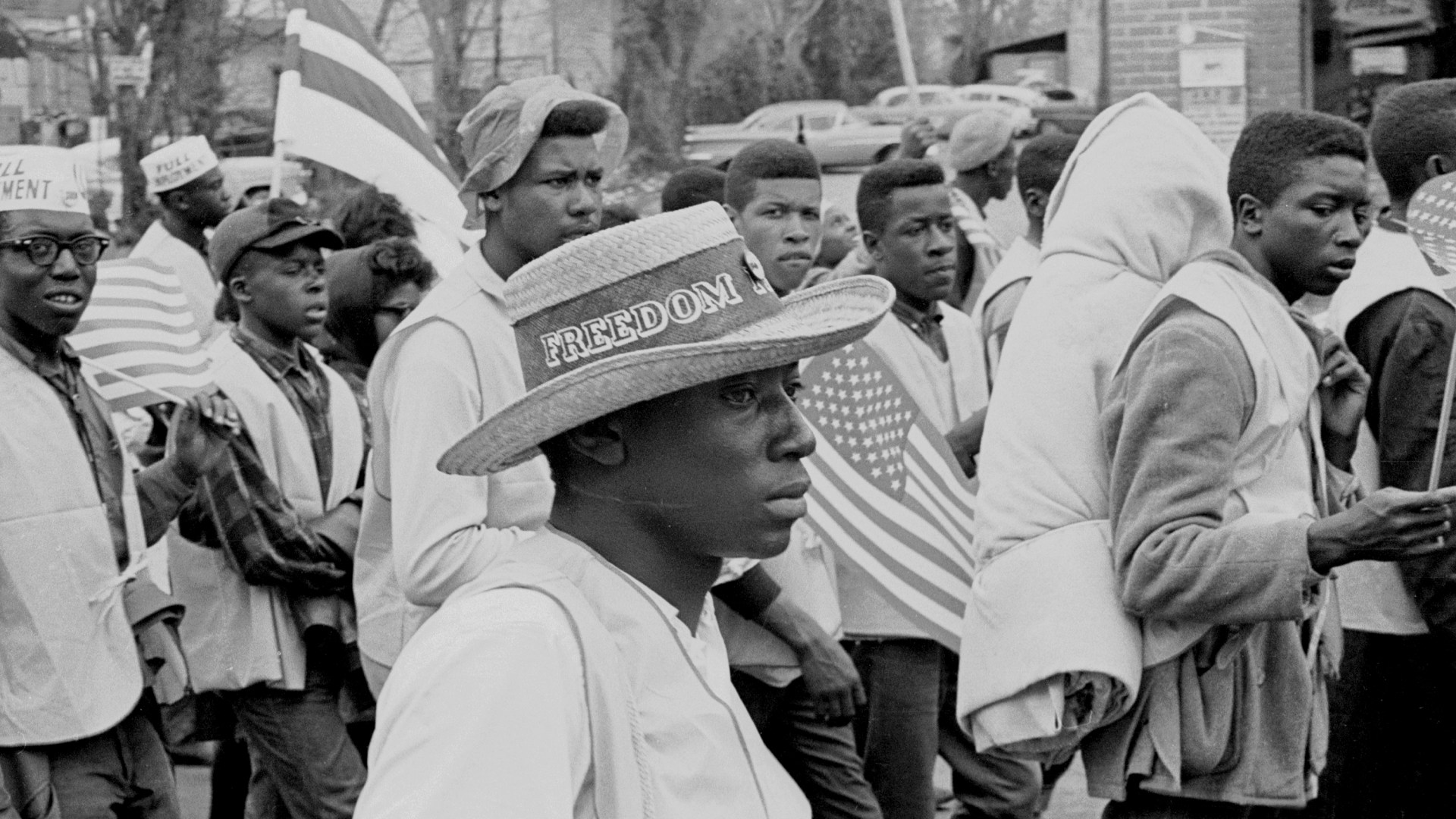
A man with a straw hat walks with others on the Selma to Montgomery marches held in support of voter rights in late March of 1965.

A man with a straw hat walks with others on the Selma to Montgomery marches held in support of voter rights in late March of 1965.

Christianity Today January 16, 2026
Robert Abbott Sengstacke / Getty

Trials dark on ev’ry hand and we cannot understand
All the ways that God would lead us to that blessèd Promised Land,
But he guides us with his eye, and we’ll follow till we die,
For we’ll understand it better by and by. —Charles Tindley

In the song “We’ll Understand It Better By and By,” the eminent pen of the Black Methodist minister and composer Charles Tindley tells how to reconcile the reality of the Christian life to divine mystery. Find peace in the face of unanswered questions, Tindley wisely advises, and contentment even when stricken by struggles without clear meaning. 

As a recent conversation between atheist author Sam Harris and Catholic New York Times columnist Ross Douthat reminded me, atheism often has no place for such mystery. It skeptically denies the existence of God instead of coming to terms with the Creator’s prerogatives and our human limitations. And while the believer ought not give up the search for understanding, we can and sometimes must fill the gaps with faith, trusting that God’s timing is more fruitful than our immediate gratification.

But thankfully, the Christian life isn’t all mystery. God has revealed the truths necessary for a meaningful, just, and moral life (Eph. 3:3–5). Moreover, there are moments in time when God reveals his beauty and character through humanity with striking clarity. There are moments when he blesses us with an unmistakable expression of his ways and his response to human brokenness. On occasion, like Saul’s spellbinding encounter with Christ on the road to Damascus, God melts the fog and shakes us out of our slumber with an inescapably vivid representation of his form in the public square. 

I believe the Civil Rights era was one of those rare moments. Reading about love, humility, courage, and fortitude is one thing, but here, through the Civil Rights generation, God offered the world a living proof of concept. 

For anyone who earnestly wanted to know how to face wickedness, here was God roaring what love of neighbor, love of enemy, and soldiering for the Lord and for liberation look like today. God used imperfect believers as a beacon of moral clarity. We might debate the efficacy of integration and other activism strategies or policy goals, but the Christlike spirit of the movement—and the gospel message in its oratory, demeanor, and tactics—were crystal clear. 

America is still very much in need of that kind of conscience and moral anchor today, not least as this administration makes a spectacle out of the pain of immigrants. However, I can’t help but fear that those who’ve claimed the Civil Rights mantle are squandering that extraordinary legacy. I fear that much of Christian social engagement has taken an ill-advised turn. Our moral clarity has become murky and double-minded. 

One challenge is a loss of Christian distinctiveness. The Civil Rights generation always worked with people who were not Christians—which is good—yet led with confidence and an unapologetically gospel-centered value system. The redemptive nature of their Christian ethic was clearly different from the ethic of contemporaries like Barry Goldwater or Harvey Milk. But much of today’s engagement has become so entangled with secular progressivism that it’s difficult to tell the two apart. 

While justice-oriented Christians tend to be a step or two behind secular activists in their agendas, they’ve adopted their allies’ rhetoric and worldview. I’ve personally had to debate other Christians about why the nuclear family is a good thing and why it’s the center of the extended family, which is also important. If the secular left despises all traditional viewpoints, some Christians are all too inclined to follow suit. If other political progressives treat their political opposition with contempt, some Christians thoughtlessly join them. 

A core part of the problem was captured by theologian David F. Wells in his 1994 book, No Place for Truth: Or Whatever Happened to Evangelical Theology?. In too many Western churches, he said, there’s been a “shift from God to the self as the central focus.” 

Accordingly, some Christians’ public engagement has abandoned a sound theological foundation for a more religiously ambiguous approach focused on self-expression. The freedom to enjoy our God-given, inalienable rights through racial and economic justice has been mashed together with the freedom to indulge the flesh without cultural opposition or critique. The rightful freedom that the Southern Christian Leadership Conference fought to secure has been conflated with the sinful license of the sexual revolution.

This is not the moral clarity of the Civil Rights generation—nor is it an orthodox embrace of divine mystery. When the Christian left authorizes liberties that the Bible clearly prohibits, often sins of the flesh (Gal. 5:19–21), it is not understanding God’s will better by and by. It is jettisoning the authority of Scripture to embrace an ideological agenda.

And once a Christian movement isn’t fully aligned with the Bible, what’s the authority for its work? What dictates its principles? Is it the spirit of the day? Algorithms? Tindley’s song rightly recognized that humanity’s knowledge is incomplete, and, therefore, we’re mistaken in following our own ways (Prov. 3:5–6). Like the Civil Rights generation that followed him, Tindley was committed to following God through his Word and Spirit. Are we?

In No Place for Truth, Wells also called out the inability of some Christians to “think incisively about the culture.” This too remains a timely warning. I’ve found many of my peers are more comfortable being apologists for popular American culture than thoughtfully critiquing its excesses. We’ll defend our favorite influencer from Christian critique but won’t defend everyone else from that influencer’s lewd messages. We’ll call out rappers for aligning with the wrong political group quicker than we’ll call them out for encouraging debauchery. 

Nannie Helen Burroughs, a Black Christian who advocated for women’s rights in the early 20th century, once askedwhat “our brand of Christianity and … the Church [is] for” if we can’t be moved to tackle human degeneracy. Christians cannot refuse to expose the darkness in the culture with love and truth (Eph. 5:8–14). We do not have to neglect biblical standards of personal morality—including chastity, modesty, and self-control—to fight for racial and economic justice.

There is a legacy of faithfulness to preserve here, and it is incumbent on us to preserve it. How could we fail to imitate and honor as excellent a display of God’s character as the Civil Rights Movement? How can we stand to lose the plot of a story told in such bright and definite terms? This kind of fumble is disheartening—but not new. After all, Israel lost the Book of the Law, and disciples denied Jesus while he was still alive (2 Kings 22–23; Luke 22:54–62).

Now as then, all is not lost. But Christians must regain our distinctiveness and reclaim our moral clarity. What we don’t understand should humble us, but when God shines his light clearly in a historical moment, we must seize that understanding, hold on to it, and build upon it. And when we do, God might just use us to shock the conscience of the world by and by.

Justin Giboney is an ordained minister, an attorney, and the president of And Campaign, a Christian civic organization. He’s the author of Don’t Let Nobody Turn You Around: How the Black Church’s Public Witness Leads Us out of the Culture War.
Books
Review

Authority Is Good. But Whose Authority?

Columnist; Contributor

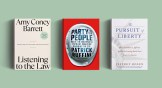
Three books on theology to read this month.

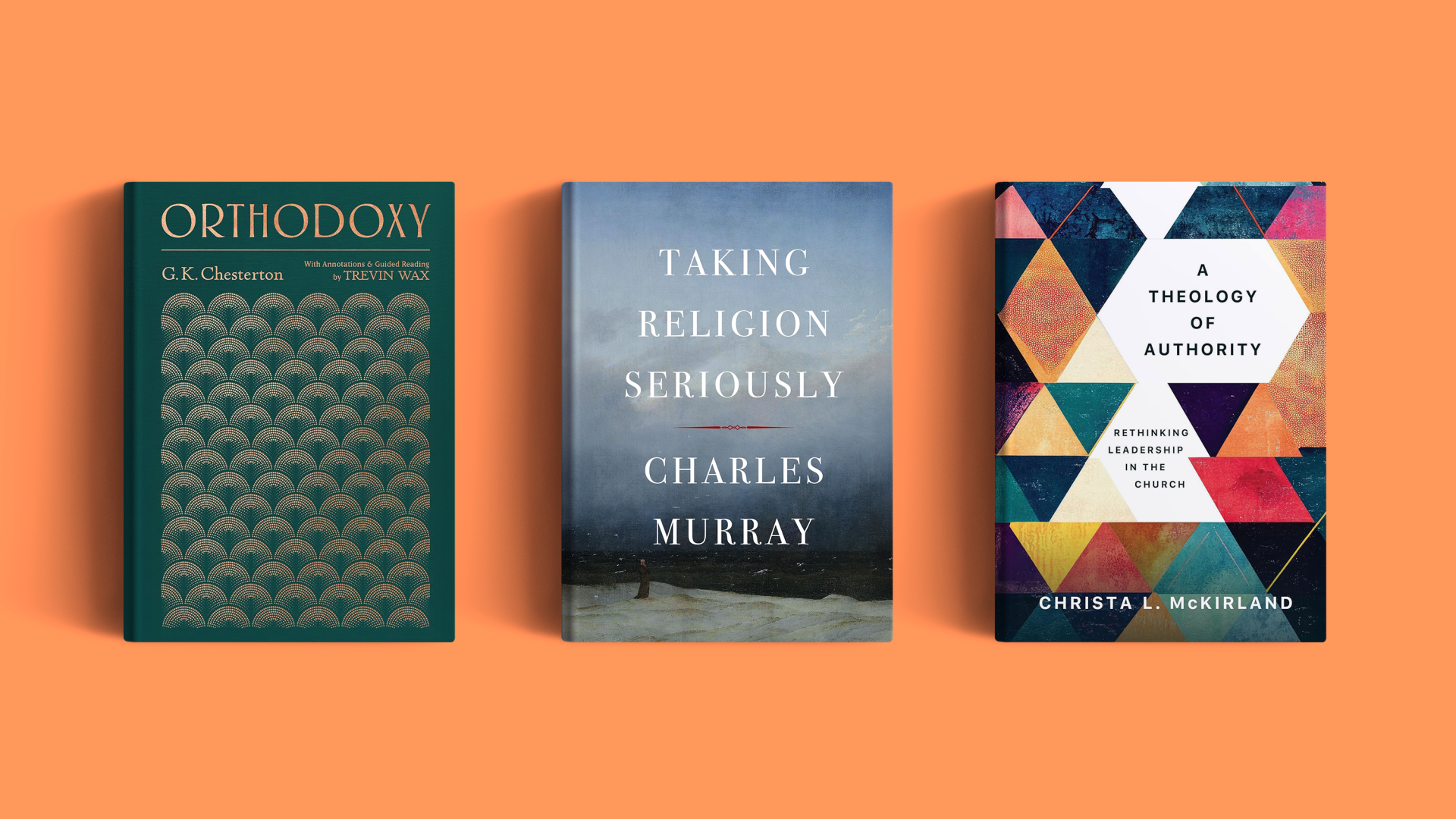
Three book covers.
Christianity Today January 16, 2026
Illustration by Christianity Today

This piece was adapted from CT’s books newsletter. Subscribe here.

Christa McKirland, A Theology of Authority: Rethinking Leadership in the Church (Baker Academic, 2025)

The strongest parts of Christa McKirland’s book relate to the title: “a theology of authority.” With care and precision, McKirland examines a wide variety of ways in which authority functions, from God’s authority over creation to mankind’s over each other.  

A lecturer in systematic theology at Carey Baptist College in New Zealand, McKirland engages seriously with a wide range of biblical examples and contemporary scholarship, makes a host of valuable distinctions about authority—executive and nonexecutive, imperative and performative, epistemic and exemplary, structural and charismatic, and so forth—and gradually assembles an impressively clear recurring diagram that summarises the entire argument. At times I would have expected a stronger link between authority and authorization, with the question of who authorizes whom playing a more prominent role. But her conceptual work is clear, rigorous, illuminating, and helpful.

The weaker parts of the book relate to the subtitle: “rethinking leadership in the church.” Those who share McKirland’s more Baptistic, egalitarian, and democratic convictions on ecclesiology will find reinforcement. For those who do not, however, there is little engagement with the relevant biblical material or counterarguments.

What actually happens when we lay on hands to appoint elders? (Surprisingly, 1 Timothy 5:22—“Do not be hasty in the laying on of hands”—is not even quoted in the book.) Is the authority Paul gives to Timothy to confront false teaching really unique, as she argues, given 2 Timothy 2:2 and Titus 1:9 (which are not quoted either)? How are the Old Testament offices of prophet, priest, and king understood and modified in the New Testament? What implications does all this have for sacramental practice? Guarding sound doctrine? Ordination? Church government? In short, McKirland’s book is a good conceptual analysis of authority combined with an underwhelming argument for a particular view of church leadership. It may divide the crowd.

Charles Murray, Taking Religion Seriously (Encounter Books, 2025)

In some ways, Taking Religion Seriously is an apologetics book that ought not to work. It feels too short and idiosyncratic to be rigorous and too dense for the mass market. The author is a deeply controversial public intellectual who has “yet to experience the joys of faith” and talks more about paranormal phenomena, near-death experiences, and the Shroud of Turin than you might expect.

Much of the book consists of arguments drawn from other writers who have addressed such subjects with more expertise—Francis Collins, Martin Rees, Rodney Stark, C. S. Lewis, Richard Bauckham, Tim Keller, and so forth—and those who have read a lot of apologetics will find nothing here that has not been said before, often better. Yet I loved reading it.

Murray’s arguments are well summarized and the quotations well chosen. He moves quickly and vividly through a series of disciplines including mathematics, physics, history, moral philosophy, and biblical studies. He represents a type of person Western Christians have often struggled to reach with the gospel—a privileged, educated person who has “not felt the God-sized hole” because, as he says, “I’ve been able to ignore it” due to the “unreflective secularism of our age.”

And he writes with disarming humility: “I don’t want to be thought credulous and foolish and get kicked out of the tribe. If you find yourself reluctant to give up strict materialism for similar reasons, try to get over it.” Most of all, it is always delightful to hear how someone came to Christ, even if (or especially if) that person’s journey was very different from our own. The result is intriguing and often heartwarming.

G. K. Chesterton, Orthodoxy (1908)

“I did try to found a heresy of my own,” says G. K. Chesterton in the opening of this magnificent book, “and when I had put the last touches to it, I discovered that it was orthodoxy.”

There are many reasons to adore this book. Chesterton is one of the genuinely great writers of Christian modernity, with an ability to craft sentences and paragraphs that provoke laughter, puzzlement, and wisdom in equal measure. His observations have the familiarity of a stand-up comedian alongside the challenge of a preacher. He is a master of paradox with a purpose, to describe, defend, or debunk. Today, he reads like a critic of modern progressivism despite writing more than 100 years ago. And Orthodoxy is his best work, an apologetic for traditional Christianity that has lost none of its provocative freshness and humor over the last 12 decades.

At its heart is the thrill of Christianity, in contrast to the dullness and torpor of contemporary alternatives. Chesterton’s God is captivating. His doctrine sparkles. His Jesus is every bit as attractive to some and infuriating to others as the one we read about in the Gospels. His ecclesiology is enticing, even when he is poking at exactly the sort of churches I love.

A few years ago, I went through Orthodoxy in a small group with people in my church. They very rarely read old books, let alone old Christian books, and I was delighted by how accessible and fascinating they found it. Do yourself a favor and follow their example.

Andrew Wilson is teaching pastor at King’s Church London and author of Remaking the World: How 1776 Created the Post-Christian West. Follow him on Twitter @AJWTheology.

News

The Christian Curriculum Teaching Civil Rights to a New Generation

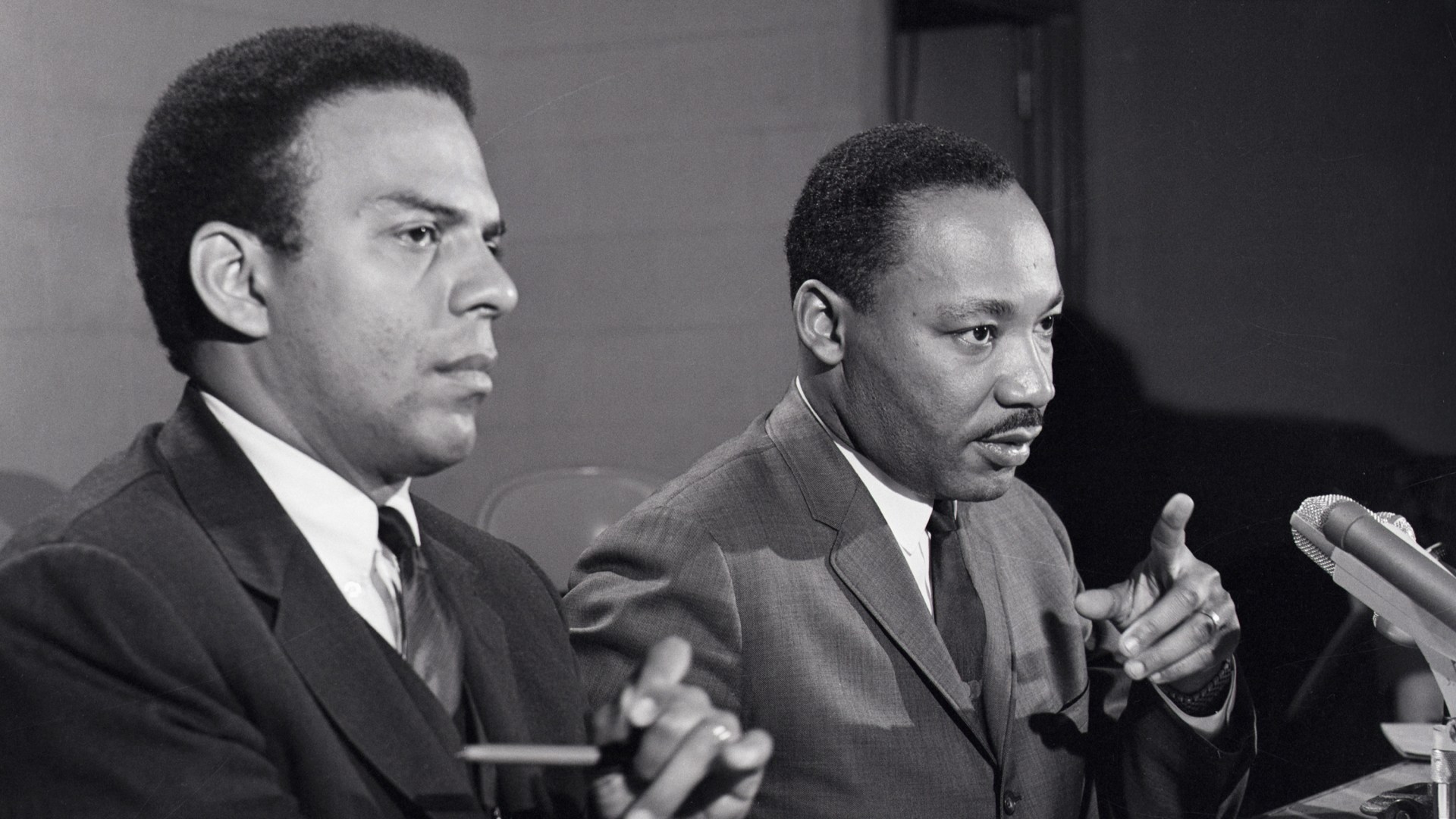
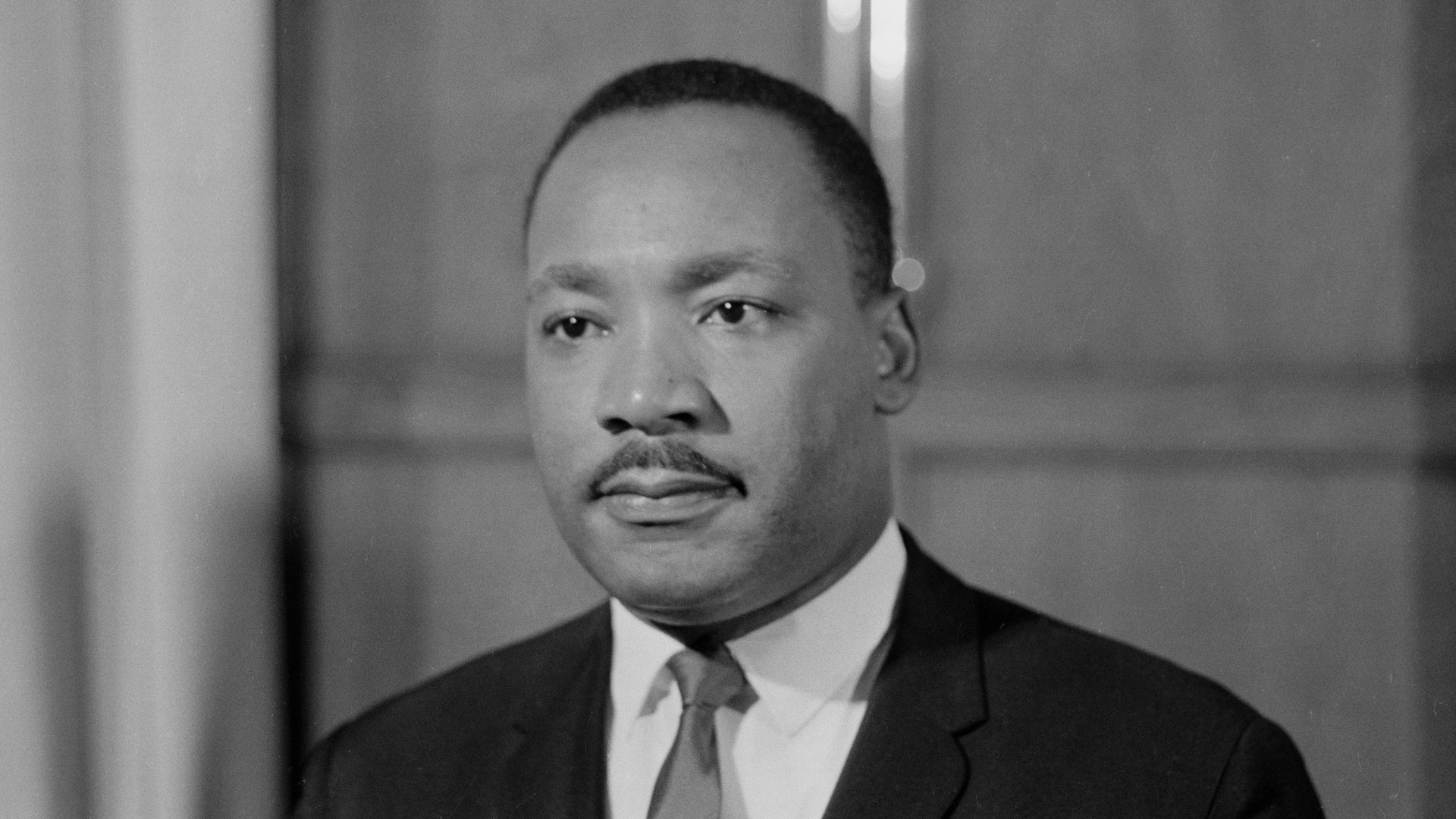
Dr. Martin Luther King Jr. at a press conference accompanied by his aide Reverend Andrew Young.

Dr. Martin Luther King Jr. at a press conference accompanied by his aide Reverend Andrew Young.

Christianity Today January 16, 2026
Bettmann / Contributor / Getty

When civil rights icon Andrew Young was growing up on a diverse square in New Orleans, just 50 feet away from the Nazi Party headquarters, self-defense was a must.

But so was knowing when a physical fight wasn’t likely to lead to a good outcome. His father, a dentist, taught him how to duck and weave. He also gave Young another tip that would help in times of trouble: “Don’t get mad. Get smart.”

Staying cool under pressure would come in handy many times over for Young, a close confidant of the late civil rights leader Martin Luther King Jr. who later served as an ambassador under Jimmy Carter when he was president. 

In 1964, for example, Ku Klux Klansmen beat Young and other civil rights protestors as they marched in favor of racial equality in St. Augustine, Florida. Despite the blows and taunts, the protestors didn’t physically fight back. Young recalls women marchers spontaneously broke into a song: “You can’t make me doubt him. I know too much about him. I got the love of Jesus in my heart.”

At age 93, Young is lending his name and wealth of wisdom to a new program aimed at encouraging young people to take up the mantle of King and other civil rights leaders like himself to be bridge builders in today’s divisive and polarized age. 

The program—called Andrew Young Higher Education Initiative—teaches students about the formative principles of nonviolence, belief in the dignity of human life, and other formative principles of the Civil Rights Movement. It encourages students to wrestle with the central role Christianity played in the movement and challenges them to consider how nonviolent principles can inform our response to today’s challenges. The latter, facilitators note, is increasingly important amid rising political violence

The program was rolled out last summer as a weeklong intensive for college students at Anderson University, a private Christian college in South Carolina. About 50 students from the school participated in the initial launch. This year, the facilitators are aiming to attract 500 participants as they expand their work to other colleges and universities, with a focus on reaching Christian campuses and historically Black colleges and universities (HBCUs). 

“This is a moment where God’s people absolutely have to be an example, because we’re the only ones with an answer,” said Matthew Daniels, a professor of law and human rights at Anderson University and co-creator of the program named after Young. The initiative was also developed by Anthony Jones, the chair of the HBCU Committee of the College Board, which creates and administers standardized tests. 

Daniels and Jones initially developed a guide that is being used by the South Carolina Department of Education to help teachers provide similar lessons. Other states, including Texas and Tennessee, have used South Carolina’s curriculum.

That success led Young to create a Bible Study for K-12 students and published by HarperChristian Resources and Urban Ministries, Inc. Christian rapper Lecrae; United States Senate chaplain Barry Black, who is Seventh-day Adventist; and other Christian public figures are featured as teachers in the program’s curriculum. The Bible study material became the basis for the Ambassador Young Fellowship.

Last year, the Anderson students used the curriculum to learn about the history of the Civil Rights Movement. They also visited King’s house in Atlanta, and, for one of their assignments, authored a version of King’s “I Have a Dream” speech focused on current events.

It’s no secret that biblical principles powered much of the Civil Rights Movement. Young recalls that whenever he wasn’t in some kind of demonstration, everyone “was going to church every day” to learn about nonviolence, listen to preaching, and sing hymns. 

Young still believes the church holds the key for addressing many of the challenges America faces, including a renewal of vitriol he’s seen toward racial minorities in recent years: “It’s really the only force we got,” he told CT. Daniels agrees.

“Students, including those in this program, are understandably and rightly deeply concerned about the world they’re inheriting,” Daniels said. Adults scream at each other on cable news, fight at school board meetings, or shoot up political rallies. Meanwhile, social media embeds divisions even deeper, and the news cycle often trends negative.

“No one is giving [students] a road map for how to fix the problem,” Daniels added. “Our secular cultural institutions are out of answers at best. At worst, they’re pouring gas on the flames.”

Of particular concern is a tide of political violence. In September, Americans witnessed the assassination of conservative political activist Charlie Kirk. Just a few months prior, a Democratic Minnesota lawmaker and her husband were gunned down at their home in a northern Minneapolis suburb. President Donald Trump was also the target of assassination attempts during the 2024 presidential campaign.

Americans are concerned about the trend. Pew Research Center found in October that 85 percent of Americans thought politically motivated violence was on the rise. But it also found that majorities of left-leaning and right-leaning Americans saw the other side as “major problems.” 

Daniels said teachings that are focused on human dignity and worth “inoculate” people against ideas that stoke violence and extremism, something he’s seen firsthand in his work as a human rights advocate in the US and abroad.

“One of the criticisms of us has been ‘Oh, you know, Dr. King, that’s so passé, right?’ That’s kind of like saying, ‘Oh, penicillin, that’s so passé,’” Daniels said. “Yeah, it was invented 100 years ago, but boy do you need it when you’re sick.”

His hope is Christians will be central to these inoculation efforts.

“This is exactly the kind of moment where God’s people are called to greatness,” he said. “That’s what we teach. It’s a call to them to save the nation, nothing less.” 

Ideas

We Have Not Read MLK Enough

CT Staff

Americans have strong opinions about the civil rights leader but often simplistic notions of who he was.

An image of MLK.
Christianity Today January 16, 2026
Jacques Haillot / Contributor / Getty

This piece was adapted from the Mosaic newsletter. Subscribe here.

I don’t remember Martin Luther King Jr. being the paragon of Black leadership in my home growing up. I did not go to church regularly or think deeply about Christianity, where King received a decent portion of his appreciation.

My family’s conversations instead mirrored those of the Black Panther Party. We talked more about Malcolm X, Langston Hughes and the Harlem Renaissance than about the Civil Rights Movement and King. It wasn’t until my teenage years, when my father became a Christian in a Missionary Baptist church, that peace, love, and consideration for neighbors became part of our household lexicon. I was a revolutionary-minded young man with a Swahili name, now asked to love the descendants of colonizers, slaveholders, and cultural appropriators.

My view of King back then was like my view of Jesus: I saw both as honorable men who asked their followers to practice the unconscionable act of loving their enemies. I wanted no part of either. Though I appreciated Jesus himself, I had read and listened to enough to know that many of his followers used his teachings to promote slavery and support white supremacy. Then there was King, who, despite being a decent man, struck me as an obstacle to significant revolutionary change.

When I converted to Christianity in college, my view of both changed. Amazing epiphanies happen once you remove your gaze from propagandistic portraits to their actual words. The more I listened to King, the more my appreciation grew. I came to see there is no weakness in loving your enemy, only weak interpretations of the act.

It’s fair to say many Americans have strong opinions on King with weak information. Many revere him. But nowadays, prominent voices are also unashamedly deconstructing his legacy for their own political ends. As those voices grow louder, we—both as Americans and as Christians—should stop viewing King simply as an “icon to quote” but as a complex man who should be studied and known.

In contemporary conversations about King, there are three prominent portrayals of the civil rights leader: King as the “colorblind reconciler,” the “conscious reformer,” and the “civil rights charlatan.” 

Many who view him as a colorblind reconciler put emphasis on his teachings of love and nonviolence. They see him as a man who not only avoided focusing on race but also wouldn’t dare associate himself with the contemporary antiracist movement and thinkers of today—primarily, according to this camp, because of antiracists’ race-baiting. But much of the public commentary from the political right, where the colorblind view is dominant, can go in different directions. Was King a champion of colorblindness, or was he the architect of destructive DEI (diversity, equity, and inclusion) policies as the late Charlie Kirk and others believed?

Then there is King as the conscious reformer—the view that dominates most of American society. Most Americans believe that King is an earnest leader who instituted significant political and spiritual change and that his prophetic critiques of racism held up a mirror to an immoral democracy. Many also appreciate his criticisms of both militarism and capitalism.

The strongest critique of this view, however, comes from leftists who argue King’s methods of “respectability politics” did not go far enough. Author Harold Cruse, for example, suggested in his book The Crisis of The Negro Intellectual that Black intellectuals like King are equally to blame for the lack of progress in America. Cruse, a Black nationalist, falsely saw King and others as individuals who occupied their hands with picket signs rather than engaging in radical solutions to America’s problems. He goes on to argue that this approach led many Black intellectuals to get what they truly wanted: assimilation rather than revolt.

Lastly, we have King as the civil rights charlatan. In the spirit of Bull Connor, people who hold this view scoff at King’s Christian rhetoric as pure lies from a communist adulterer. They might say they have finally gained the moral clarity to reject the sentimentality of King’s poisonous gospel. As writer Stephen Prager notes in his Current Affairs article, those who hold this view on the political right “are not just trying to alter the record on King—they have begun to make the case to roll back his legacy.” In a nutshell, they are sick of some Americans pulling down their statues, so they will attack yours in return.

I have little patience for this portrayal of King, especially coming from pundits who put their support behind immoral political leaders and extol the greatness of known racists and insurgents while reshuffling history to present them as patriots.

It goes without saying that King was a flawed human who tried his best to call a nation to repentance. It’s highly probable that he lived his own Davidic life as a selfless servant after God’s own heart. His private indiscretions can’t be ignored. However, as my brother Dhati Lewis says, “The Christian isn’t marked by the absence of sin but by the presence of love” (John 13:35). And I believe King had love.

At the age of 26, King led the Montgomery bus boycott and was assassinated just 13 years later. It’s a complicated task to wrestle down the totality of his short life into an accessible ideology. Like King, many of us have changed or altered our views significantly over the course of 13 years. I am embarrassed by some of the things I espoused in my 20s. People could have labeled me many things. But thank God I have reached a new decade to push new ideas, some of which I will probably abhor in my 50s.

So, what then shall we do with the icon we celebrate every January?

When it comes to King being a proponent of respectability politics, Harvard professor Brandon M. Terry would say, “King never entertained the indefensible respectability-politics proposition that blacks must ‘prove’ themselves fit for equal citizenship. His politics are better described as a politics of character.” That said, it is true that King would consider today’s sexual deviancy as a psychological problem. That, in my view, is far from a radical’s position.

When it comes to the view that King was a race-baiter, that is also wrong. King believed all men were created “equal in intrinsic worth” and denounced supremacy of all kinds. “Black supremacy is as bad as white supremacy,” he said in a 1959 address. “God is not interested merely in the freedom of black men and brown and yellow men, God is interested in the freedom of the whole human race.”  Even though he believed everyone was equal, he also noted some individuals “do excel and rise to the heights of genius in their areas and in their fields.” This is far from a cultural Marxist.

King did not wholeheartedly support reparations. But he “proposed a government compensatory program.” He called for a redistribution of wealth in the form of democratic socialism. He often critiqued capitalism, but he stated that communism lacked the “kingdom of brotherhood.” He also believed policies that addressed the poor would benefit the Black population, something that doesn’t fit the profile of a simply docile colorblind reconciler.

It’s easy to say Martin Luther King Jr. was complex. As I’ve been told, you don’t know a book until you’ve read it multiple times. And we have not read King enough. I don’t hope for a moratorium during our latest celebration of his life. But I do hope for people who know little about his actual beliefs to stop speaking with a level of certainty about him.

Personally, even after reading King’s many writings, listening to a plethora of his sermons and speeches, and even writing a musical about the 1968 sanitation workers’ strike which led to his assassination, I still don’t think I properly know King.

But I am confident in saying that the principles he taught and the way he taught them puts him in a class that is second to none. And now more than ever, America needs him. There aren’t many things Americans agree on. If King’s detractors succeed in presenting his public life as a democratic failure, our moral imagination will kick over a pillar that has been upholding an already-faulty house.

Sho Baraka is editorial director of the Big Tent Initiative at CT.

News

Texas Law Aims to Stop Abortion Drugs at the State Line

Neighbors can now sue each other over mail-order drugs. Pro-life advocates are divided on the tactic.

The Texas State Capitol

The Texas State Capitol

Christianity Today January 15, 2026
Brandon Bell / Staff / Getty

Signs and stickers still show up around college campuses. Digital ads appear online, and the occasional billboard brazenly advertises a way to help women become “un-pregnant.”

Dobbs v. Jackson Women’s Health Organization created a path to end almost all surgical abortions in Texas and other states with abortion restrictions, but stopping out-of-state advertisements and shipments of abortion pills hasn’t been as easy. 

In 2023, the abortion pill (typically a two-pill regimen consisting of mifepristone and misoprostol) was already responsible for approximately 63 percent of abortions in America. Since the Food and Drug Association (FDA) loosened restrictions in 2021, a doctor can prescribe the pill from another state and ship it across the border into states that otherwise forbid it.

“We hear that there are staggering numbers of chemical abortion drugs coming into the state,” said Amy O’Donnell, executive director of Texas Alliance for Life.

Although exact numbers are hard to estimate, she said, from the conversations her organization has had with health providers, abortion drugs are clearly prevalent in Texas.

“These drugs are circumventing our laws and harming women and, sadly, taking the lives of unborn babies in our state,” O’Donnell said.

Mailed abortion pills have changed have changed the landscape of the abortion battle nationwide.

“Unfortunately—especially in pro-life states where there aren’t brick-and-mortar abortion facilities—anyone at any time can purchase abortion pills online,” said Sarah Zagorski, senior director of public relations and communication for Americans United for Life.

Particularly troubling is the fact that there’s no verification that the pills are going to the person they were prescribed for.


“She could be buying them for someone else. She could be stocking them, or a predator or an abuser in her life could be buying them,” Zagorski said.

A new law in Texas aims to slow the flow into the Lone Star State. House Bill 7 (HB7), which went into effect on December 4, allows Texans to sue anyone who makes, distributes, mails, or provides abortion pills to people in the state. 

John Seago, president of Texas Right to Life, was a vocal supporter of the bill, which he hopes can become a blueprint for other states.

“Plenty of states have banned abortion, but there have not been strong responses to the new kind of trend after Dobbs of mailing abortion pills directly in the pro-life state, so we are very proud to kind of lead the movement in that direction,” Seago said. 

By opening the potential for lawsuits by citizens, the goal is to stop companies from taking the risk of shipping into pro-life states and doctors from prescribing them to patients there.

The law is unique in that its approach relies on citizens bringing legal action. A lawsuit could be brought by a woman who is harmed by taking the pill, a family member, or simply someone who becomes aware of the pill being mailed into the state.

For instance, Seago said if a woman finds out her partner has purchased abortion pills to try to get her to end a pregnancy, she could file under this law. Or if a woman sends a screenshot to her friend of a website she ordered pills from, that friend could then sue the company that hosts the website.

Critics of the bill, including the Center for Reproductive Rights, have said it encourages Texans to spy on each other.

“It encourages a culture of surveillance, where the things people do in their own homes are fair game for public oversight,” the center wrote.

Seago believes that isn’t a reasonable argument. 

“We’re talking about murder,” he said. “That argument only works if you don’t view abortion as a morally significant action. If I were to report my neighbor for abusing his children, nobody would say I’m being a nosy neighbor. They would say I’m being a good citizen, that I’m trying to protect innocent people in my community.”

He said the same should be true for those who report people involved with illegally shipping abortion drugs.

Seago said it’s important to recognize that this new legislation does not apply to women ordering the pills or licensed physicians in Texas who may be prescribing the drugs for use in miscarriage or other medical emergencies.

“Any Texas physician that’s trying to care for women has nothing to fear from House Bill 7,” Seago said. “This is not targeting them. This is really just targeting those out-of-state doctors and activists that are openly breaking our law and just hoping that they won’t be held accountable for it.”  

O’Donnell said her organization had some concerns about an earlier draft of HB7, concerns such as women’s privacy and the potential to create “bounty hunters” by incentivizing non-injured parties to sue, but Texas Alliance for Life supported the amended version, which ultimately passed.

“The new amended language explicitly prohibits disclosure of their personal and medical information in court filings, and that’s critical,” O’Donnell said. “We want to do everything we can to ensure that women feel comfortable walking into the doors of a pregnancy center.”

In the version that passed, she said women are fully protected, which is why Texas Alliance for Life was able to lend its support. 

“Our goal is always to hold the illegal abortion providers accountable but not to in any way put women under that enforcement,” O’Donnell said.

She said an amendment to deter bad actors was also key. In the final version, financial incentives are restricted. Non-injured parties can receive only $10,000, which O’Donnell said should prevent people from simply spying on women or neighbors, but maintain the rights of women and those close to them to seek compensation from the harmful effects of the abortion pill.

Seago said it remains to be seen how HB7 will fare in courts against shield laws in pro-choice states—laws that protect abortion providers who are acting legally in their states from being prosecuted under another state’s laws. 

Prior to this bill’s passage, an attempt by Texas to sue a New York doctor was dismissed by a judge who cited shield laws.

“Shield laws themselves are a new invention that didn’t exist three years ago,” Seago said. “This is a complete legal fiction that they created: that laws that some activists in blue states created can sabotage the law enforcement of the pro-life state.”

He recognizes the response with legislation like HB7 is also new, but is confident that it will be a strong challenge to shield laws.

Some are not so confident in the strength of HB7. Thomas Jipping, who is a senior legal fellow at the Edwin Meese III Institute for the Rule of Law, said it is an unusual approach.

“To use this to effectively enforce criminal laws is very unusual, and we really don’t have any examples of it to know whether it will be effective,” Jipping said.

HB7 also includes 13 exceptions, including that people can’t use the bill to sue hospitals or physician groups.

“It won’t take much for the other side to reorganize their abortion-pill efforts to make sure that they’re done mostly by these groups, which you can’t use this law against,” Jipping said. 

HB7 attempts to address shield laws by saying they cannot be used to defend against a suit under this law. Jipping said this may not hold up though as one state can’t tell another state how to use or enforce its own laws.

“I don’t think that—at least that provision of HB7—is even constitutional.”

But he said that’s true as well of shield laws, which undermine other states’ enforcement of pro-life laws.

He believes the best approach would be for pro-life states to enforce their own criminal laws and charge doctors from other states who are prescribing drugs illegally. This would likely lead to an eventual court case over the constitutionality of shield laws.

“That, I think, is a more credible kind of realistic approach, because otherwise what we’re left with is all sorts of miscellaneous lawsuits by individuals in one state against individual doctors in another state and with all sorts of complications as to how those cases would be litigated,” Jipping said. 

Jipping said it’s hard to predict what the Supreme Court might consider if a case made it to that level, but a legal battle over abortion shield laws would likely consider the full faith and credit clause of the Constitution, which requires that states give full faith and credit to the judicial decisions of other states.

“If, for example, the Supreme Court would say State B refusing to cooperate or refusing to honor an indictment from State A violates the full faith and credit clause, then that state shield law would be rendered unconstitutional,” he said.

While the full faith and credit clause has always been part of the Constitution, it hasn’t been the subject of a lot of litigation or Supreme Court decisions, Jipping noted, adding that it’s hard to speculate on how the Supreme Court might rule.

Jipping believes, overall, the Texas HB7 has a low probability of being effective.

“I certainly believe that the cause of life requires creativity and innovation, and some of these approaches might appear to be attractive on the surface but in the long run can be more problematic,” he said. 

For instance, if pro-life states use citizens filing suits as a tool to enforce laws, he said Democrat-led states could enact similar legislation to go after issues Republicans care about. 

“We do need to find new ways to defend life in the womb, but they have to be credible and potentially effective,” Jipping said. “That’s a challenge, but I’m glad there are a lot of folks out there who are working on that.”

Sue Liebel, Susan B. Anthony Pro Life America’s director of state affairs, is more optimistic the new legislation in Texas might help.

“I don’t think it’ll stop it, but I think it’s one more thing to add some caution for those bad actors,” Liebel said. 

She said a key factor is whether the cost of the lawsuits will be enough to counter the amount companies and individuals are profiting off the abortion pill: “There’s so much money to be made that the question is, you know, is the risk worth the reward?”

If the bill is successful, Liebel believes it could serve as a model for other states, and she’s heard some are looking at introducing a bill like that in their states’ next sessions.

Louisiana already has a similar law in place. On August 1, 2025, House Bill 575 (HB575) went into effect in the state. Known as the Justice for Victims of Abortion Drug Dealers Act, it allows women who take abortion pills to sue providers from other states who prescribed them. 

Zagorski said an important element of this type of bill is that it empowers women. 

“Realizing that the victim is able to make these claims and make these lawsuits is an important step of empowerment for women, that they do have a recourse in an unjust situation that they experience,” she said. 

As state-level strategies expand, many pro-life leaders believe lasting change must also come at the federal level. Liebel said the best long-term solution would be if the FDA would reverse the 2021 decision that permitted mailing and prescribing abortion pills virtually.

The FDA had promised in September 2025 to look at the safety of mifepristone after new research, including a study of insurance data by the Ethics and Public Policy Center (EPPC), indicated that the harmful side effects of mifepristone were higher than previously reported. The EPPC study found nearly 11 percent of the patients they studied experienced a harmful side effect, including infection, sepsis, and hemorrhaging. 

“With the stroke of a pen, they could at a minimum halt the drugs from being mailed immediately while they’re doing their research review,” Liebel said.

Instead, the FDA has opted to delay the review until after the midterm elections.

That decision did not sit well with pro-life advocates.

“It is glaringly obvious that flawed political calculations are superseding the health and safety of women for those in the White House advising President Trump to stall the FDA’s review of mifepristone,” John Mize, CEO of Americans United for Life, stated in a release. “To avoid political backlash in the upcoming midterm elections, advisors within the Administration are acting on a false premise, that emphasizing the importance of women’s safety and direct in-person consultation with her clinician is a political liability.”

Marjorie Dannenfelser, president of Susan B. Anthony Pro-Life America, called for FDA commissioner Marty Makary to be fired for his handling of the matter.

“The FDA is doing nothing while every single day abortion drugs take the lives of children, put women and girls at serious risk, empower abusers and trample state pro-life laws,” she stated. “The FDA needs a new commissioner who will immediately reinstate in-person dispensing as it existed under President Trump’s first term and immediately conduct a comprehensive study.” 

In the absence of FDA action, pro-life advocates will continue to search for ways to address the issue.

In addition to passing HB575, Liebel said, Louisiana has added mifepristone to its list of scheduled drugs.

“That gives doctors and prescribers a strong warning that the drug has potential downfalls for people with preexisting conditions like ectopic pregnancy or other things that they need to rule out before they get the drug, but it also adds an enforcement mechanism,” Liebel said. “If we catch you trafficking in this drug, now that it’s on the schedule, we have additional penalties that we can add.”

She said several states are also looking at ways to block online sales of the drug.

“It’s actually taken the pro-life movement, the pro-life community, and elected officials who want to enforce this into new directions that we have typically been in in the past,” she said. 

As much as Seago hopes legislation will cut back access to medical abortions, he knows personal relationships will remain key.

In a way, he said, it’s more challenging to combat chemical abortions than it was in the past with surgical abortions, because instead of going to one central location like an abortion clinic, you’re trying to meet individuals where they are, whether it’s the college dorm room or a family home.

College campuses in particular have become a key battleground where pro-choice activists are advertising places to get abortion pills and pro-life advocates are trying to deter them. 

“That’s why we have doubled our efforts on college campuses, because we now need pro-life college students,” Seago said, “not just to be there to engage in conversation and to change hearts and minds but actually to save lives.” 

News

CDC Job Uncertainty Prompts Atlanta Churches to Offer Practical Care

Laid-off employees receive job coaching, prayer support, from local congregations.

The Center for Disease Control headquarters in Atlanta, Georgia.

The Center for Disease Control headquarters in Atlanta, Georgia.

Christianity Today January 15, 2026
The Washington Post / Contributor / Getty

Waves of sirens pierced a quiet summer afternoon at home. In an area with multiple hospitals, sirens are a normal part of life. But this Friday in August 2025 was different—the sirens screamed in from multiple directions for more than 30 minutes, prompting a scan of our neighborhood Facebook page.

An active-shooter situation was unfolding at the campus of the Centers for Disease Control and Prevention (CDC) just one mile down the road as scores of fire trucks and police cars flooded in from city, state, and federal agencies. The shooter, angry about the effects of COVID-19 vaccines, had killed a police officer and shattered more than 150 windows at the CDC’s Atlanta campus.

Thankfully, no employees were injured in the attack that summer day. But the incident rattled an agency already reeling from 18 percent layoffs a few months earlier. The rest of 2025 didn’t fare much better: a public ousting of its director in August, a 43-day government shutdown, and additional layoffs in October. Challenges to reinterpret and reevaluate scientific evidence continue.

One CDC employee summed up these difficult events by paraphrasing Mike Tyson: Everyone has a plan until they get punched in the face.

In the midst of recent upheaval, hundreds of CDC employees, their families, and the surrounding community are taking stock of a challenging year as they tentatively enter 2026. Christians serving in the CDC are grappling with questions about their vocations and the future of public health as they seek to trust God’s provision. And area churches populated with CDC employees are searching for ways to minister to those living through sustained uncertainty. 

Linda Mattocks, 60, had served as a health scientist working in disease surveillance with the CDC for nearly 15 years when she was one of 2,400 agency employees laid off in a reduction in force (RIF) by email on April 1, 2025. 

“My entire branch was eliminated,” she said. “We were notified one day, and most lost network access the next.” She expressed concern about the lost expertise and the lack of transition for those continuing her branch’s work. The group’s data management may have looked extraneous to an outsider, she said, but was necessary to understand where disease was present and how to assess the effectiveness of interventions.

Mattocks, a native of Northeastern Pennsylvania, began her career in mergers and acquisitions as an investment banker in New York City in an industry that “primarily tried to separate people from their money.” But she felt a pull toward a different kind of career that better aligned with her faith and her desire to serve others, so she eventually pursued a public health degree. “You go to work for the CDC because you want to help people,” she said. 

Mattocks was inspired by the way the church has historically used public health measures to serve their communities — from John Calvin’s focus on social welfare leading to the building of hospitals and latrines in Geneva to Austrian monk George Mendel experimenting with peas and discovering the basic laws of genetics. 

As the government makes deep cuts to public health research and initiatives, she asks, Where do we go from here, and does the church have a part to play? “If we say as a society that government has taken on too much and we can’t afford to provide public health, is there still a societal need? And whose responsibility is it if it’s not the government’s?” 

Living in this uncertainty is hard, she said: “I have more questions than answers.”

Within hours of hearing about the CDC layoffs in April, Atlanta pastor Tae Chin began putting together a church event promoted by word of mouth to reach those affected. 

“When grief strikes, it’s important for the church to respond with the loving presence of God,” said Chin, pastor of spiritual formation at Intown Community Church (which is also this reporter’s church), a Presbyterian Church in America (PCA) congregation located just two miles from the CDC campus in Atlanta. “Our immediate hope was for people to feel valued and supported whether they were Christians or not.”

Three weeks later, 30 CDC employees and church members, including Mattocks, gathered over Greek food in an Intown conference room for “Process to Progress,” an evening of sharing stories, resources, and prayer. CDC employees approached the mic in the middle of the room to share stories of being laid off, while others nodded along. The church invited attendees to speak with individuals brought in for support: a financial adviser, a career coach, and several members who had experienced job loss firsthand.  

One woman, a 38-year-old ten-year CDC employee laid off in the RIF, bounced her 3-month-old son on her knee throughout the Intown dinner. 

“There aren’t many job opportunities for people like me,” she said, explaining that she was reworking her résumé to display how public health experience applies to the private sector. The leap from government work to the private sector has proven challenging for many laid-off CDC employees: “We’re all competing for the same jobs.”

She did not have a church home and was invited to the event by a fellow CDC employee. “It’s great they put this together,” she said. “I really appreciate the expertise and knowledge of the career coaches and financial counselors here.”

Intown Community Church senior pastor Jimmy Agan spoke at the Process to Progress event, welcoming the CDC community to the church: “Given our proximity to the CDC and our relational connections, we wanted to give people a place to grieve and to lament.” The 530-member church includes 35 members who work for the CDC or other federal agencies.

He also wanted the laid-off workers, many of whom went into public health with the goal of helping others, to know their work was not in vain. 

“You may be thinking, It’s painful for my career to end this way, but if you went into public health to serve God by serving people, it was not wasted,” Agan said at the gathering.

Just days before the CDC event, Linda Mattocks attended a church service at Intown and sat with a fellow CDC employee who was still employed and shared gratitude about feeling protected. Mattocks marveled that despite the uncertainty she also was at peace: “I am just as protected. God doesn’t love her more and me less—I just don’t know yet how I’m protected.” 

In our politically polarized society, Agan expects pushback for holding events like Process to Progress but sees this outreach the same way he would view other mercy ministries. 

“I think of it like a church helping victims of a natural disaster, where some segments of people are hit harder than others,” said Agan. “And if people are hurting, we want to help.” But he acknowledges it’s likely some will misunderstand the church’s intentions. “We are a purple church in a purple city in a purple state. But we don’t want to let fear keep us from showing love.”

Chin agrees. He’s heard the argument that it’s not the church’s job, that this type of work causes the church to neglect other important things. “But our work isn’t just to represent a truncated version of Jesus’ death and resurrection,” he said. “It’s also to embody the restorative work of Jesus. The church is to image that today so people can taste and see the coming kingdom of God.”

During the extended government shutdown in October, Intown Community Church used its benevolence fund to provide financial assistance for church members who were federal employees and had missed multiple paychecks. “The church reached out with practical support when people were not getting paid,” said Mattocks. “For some, that assistance came at just the right time.” 

She also drew comfort from the weekly prayers of the community group she has attended for the past 15 years and the knowledge that elders and staff were praying for her. Months later, she received surprising news—her entire branch was being reinstated. “The fact that my branch was brought back is clearly an answer to prayer.”

Now, Mattocks is reflecting on the past year and looking ahead: “I continue to approach my work with integrity and excellence and also want to have a different kind of patience to see where things go.”

Challenging times are not unique to the CDC, she said. It’s just a matter of time before we all suffer, she said, and difficulties create an opportunity to build resilience as we trust in God. “Tough stuff has happened before, and it will happen again. But God promises to provide.” 

The coming year offers a challenge to keep serving the church body and beyond, said Agan. “Let’s be ready for when the next disaster hits. Who knows what that issue will be? Let’s offer gospel hope to people hurting, along with practical help, and not be afraid to be misunderstood.”

News

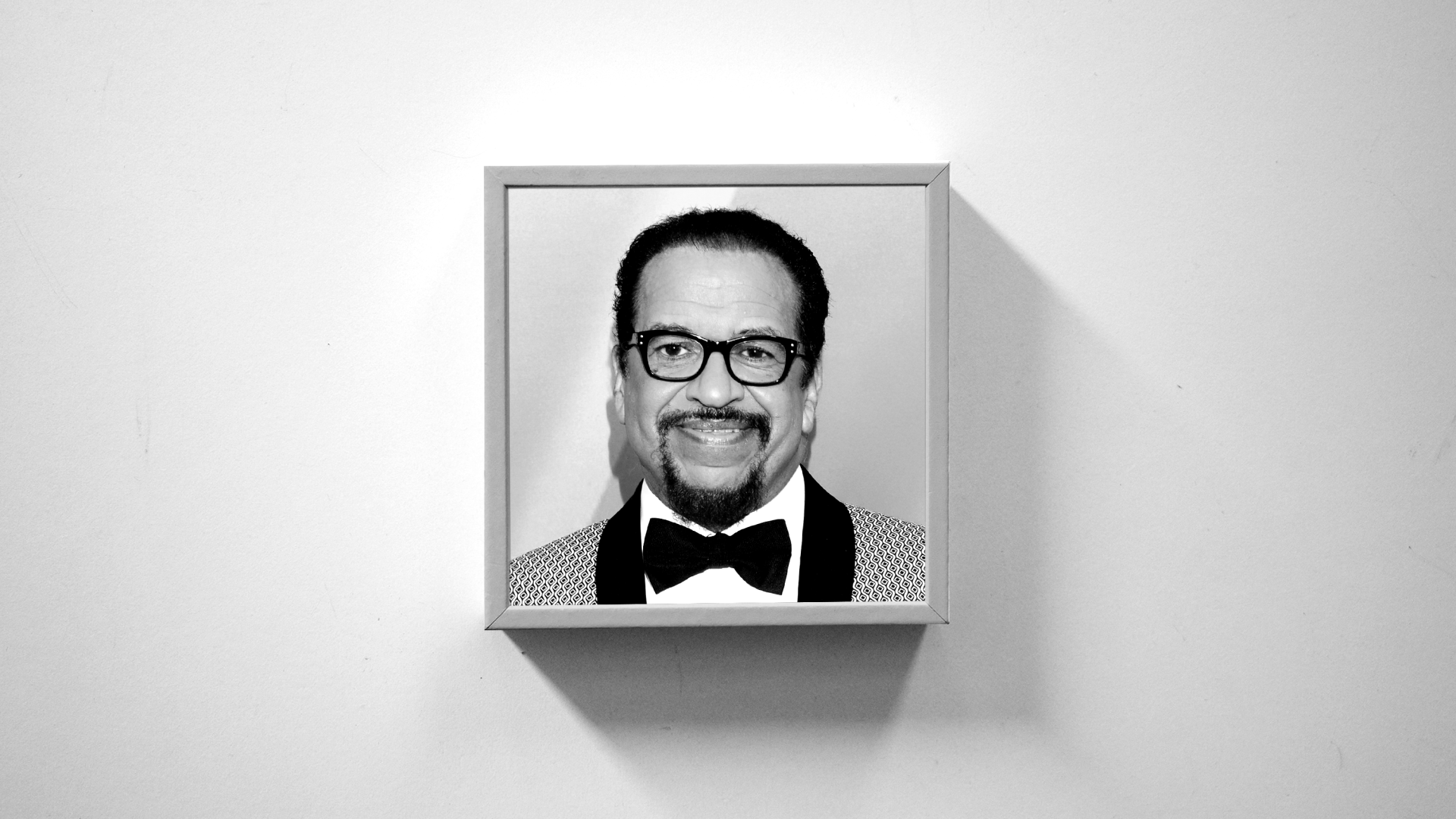
Died: Gospel Legend Richard Smallwood

The composer of “Total Praise” worked with numerous celebrities but put the gospel first.

Christianity Today January 15, 2026
Maury Phillips/BET / Getty / Edits by CT

In April 1996, Richard Smallwood and his choir, Vision, released Adoration: Live in Atlanta. The groundbreaking gospel album featured the anthem “Total Praise,” which Smallwood would later refer to as “the song that changed everything.” Later that year, Whitney Houston performed Smallwood’s “I Love the Lord” in the blockbuster film The Preacher’s Wife. 

By that time, though, Smallwood had already established himself as one of the most influential composers and performers in gospel music. He had been a major figure in the niche for decades, and he was committed to reaching new generations with his music and his message by embracing change. 

“My desire is to stay current. I never want to become dated,” Smallwood said in a 2001 interview. “Music of today still inspires me.” 

Over the course of his career, Smallwood earned eight Grammy nominations, three Dove Awards, and seven Stellar Awards. He was a member of The Celestials, the first gospel group at Howard University and the first to perform at the Montreux Jazz Festival in Switzerland. In 1989, the Richard Smallwood Singers became the first black gospel group to tour the Soviet Union. In 2023, President Joe Biden awarded Smallwood the President’s Lifetime Achievement Award.

Smallwood’s compositional style is marked by rich four-part harmony, intricate orchestration, and irresistible melodies. He helped bring Black gospel music into the halls of Eurocentric university music departments during the 1960s and ’70s, and his works remain widely sung in both congregational and concert settings. 

Smallwood died at the age of 77 from complications of kidney failure on Tuesday, December 30, 2025. 

As a student at Howard University—a historically black university in Washington, DC—Smallwood participated in student protests and sit-ins that led to the inclusion of gospel music in the university’s course offerings. In 1968, Smallwood accompanied student protesters on the piano, playing “from sun up to sun down,” he wrote in his autobiography. 

Smallwood remained a tireless advocate for the gospel music tradition throughout his life, seeking to honor its history and its innovators and keeping it grounded in what he saw as its most important component: the message. 

“The message is the most important thing,” Smallwood said. “I don’t have a problem with the trappings or musical package as long as the message isn’t diluted.” 

Braxton Shelley, the George Washington Williams Professor of Divinity and Music at Yale University, said that one of the through lines in Smallwood’s vast catalog is the commitment to the singing of Scripture. 

“There’s an anthemic character to Smallwood’s catalog because of how focused he is on setting Scripture in song,” Shelley told CT. 

In his book Healing for the Soul: Richard Smallwood, the Vamp, and the Gospel Imagination, Shelley describes Smallwood’s “omnivorous sonic palate,” shaped by classical music, Broadway tunes, and jazz. He says Smallwood spoke often of his affinity for Bach and his early introduction to Rachmaninoff’s Piano Concerto No. 1. 

“Smallwood’s signature synthesis of the Black gospel tradition and a host of musical influences, especially classical traditions, made his pen one of the most distinct in musical history,” Shelley told CT. 

Richard Smallwood was born in 1948 in Atlanta. In his 2019 autobiography, he described his early introductions to an eclectic array of music as well as his difficult home life. He recalled being beaten by his stepfather, an itinerant pastor who eventually settled in Washington, DC, and founded the Union Temple Baptist Church. 

Music was an outlet and a fascination. Smallwood formed his first gospel group as an 11-year-old, gathering neighborhood kids to sing together. One of his early mentors was his eighth-grade music teacher, Grammy Award–winning musician Roberta Flack. 

Smallwood graduated cum laude from Howard in 1971 with degrees in piano and vocal performance. He then served as musical director of Union Temple’s young adult choir, with which he recorded two studio albums. 

In 1977, he formed the Richard Smallwood Singers. Their 1982 debut album, The Richard Smallwood Singers, had an 87-week run on the Billboard gospel chart. The group’s next two albums, Psalms and Textures,were both nominated for Grammy Awards. Smallwood won his first Grammy for his arrangement and production of the song “Rejoice Greatly, O Daughter of Zion” on the 1992 album Handel’s Messiah: A Soulful Celebration

In 1985, Smallwood served as musical director and composer for the Broadway musical Sing, Mahalia, Sing!,based on the life and music of Mahalia Jackson. The musical featured Jennifer Holliday, who had previously won a Tony Award for her performance as Effie in Dreamgirls. Smallwood wrote all of the vocal arrangements and several original pieces for the musical. 

Smallwood’s ability to arrange for both the church choir and the concert hall gave him a singular voice in gospel. Sarah Benibo, a worship leader and former member of the Stellar Award–nominated gospel trio God’s Chosen, told CT that while many remember Smallwood for his elevated orchestrations and colorful harmonies and textures, he had a way of nurturing singers and honoring the human voice. 

“Richard Smallwood both challenged and comforted singers,” Benibo said. “Somehow, he was able to call us higher. He writes so that the voices themselves testify.” 

Benibo credits Smallwood with making contemporary gospel music more accessible for male voices, noting that her gospel ensembles almost exclusively sang three-part harmony before Smallwood’s music began to circulate. Smallwood’s arrangements often divide the lowest vocal line into a high tenor part and a lower baritone. 

“Suddenly, there was a split in the tenor part. That was a game-changer,” Benibo said. “Most gospel music was out of range for most men. It was all written for high-singing tenors. But most men are baritones.” 

Shelley also added that, despite the oft-noted intricacy of Smallwood’s compositions, he was committed to accessibility and singability. 

“The key to Richard’s accessibility is his recognition of the power of melody,” Shelley said. “Yes, there’s a ton of complexity in terms of harmony and counterpoint and accompaniment, but when you look at the melodies he writes, they’re extremely singable.” 

Shelley compared Smallwood’s gift for adapting memorable melodies to that of J. S. Bach, who set simple chorale tunes in fugues and elaborate counterpoint. Smallwood’s melodies, Shelley said, could “wreck a church” even if sung completely in unison. “Richard writes in a way that is reflective of some of the best hymn writing across the centuries. He grounds his song in portable, accessible, memorable melodies. Not cheap melodies.” 

Grammy-winning gospel artist Yolanda Adams wrote in a recent post on social media, “[Smallwood’s] music was faith incarnate—a divine gift that brought heaven to earth and transformed worship around the world.” Smallwood collaborated with Adams on the song “That Name” in 1999. 

In a video tribute, multi-award-winning gospel artist Fred Hammond recalled Smallwood’s kindness and generosity early in his career, before Hammond gained widespread recognition in the industry. “There’s nobody like Richard,” Hammond said. “He was truly the maestro. … I don’t do everybody’s songs, but I do a lot of Richard’s.” 

Smallwood was as committed to ministry as he was to his recording and performance career. In 2004, he was ordained as a minister at Metropolitan Baptist Church in Washington, DC. He was also open about the ways hardship and personal struggles shaped his creative output. He wrote “Total Praise,” one of his best-known songs, as he was caring for his mother, who had dementia and was experiencing declining health. Later in his career, he spoke openly about his own struggles with depression and suicidal ideation. 

Shelley described “Total Praise” as “a window into what Smallwood does,” taking the singer or listener on a journey that encompasses both dissonance and resolution. The song uses the text of Psalm 121, beginning, “Lord, I will lift my eyes to the hills knowing my help is coming from you.”

“People latch onto that song because we all need help,” Shelley said. “We all need to know where our help is coming from. We all have storms. We all need to find peace in them.” 

Smallwood remained dedicated to sharing that message throughout his career. His songs reached millions and were covered by artists like Destiny’s Child and Boyz II Men, but he insisted that everything but the Good News was secondary. 

“This is not about making money,” he said in 2015. “It’s about winning souls and encouraging people through Christ. He takes care of it all.”

Ideas

Stephen Miller Is Wrong About the World

Staff Editor

The homeland security adviser is right that the international arena is anarchic. But a devilish world order is not the solution.

An image of Stephen Miller.
Christianity Today January 15, 2026
Kayla Bartkowski / Getty

The Trump administration is ever more candid about its view of power in the international arena.

Bombing alleged drug smugglers on boats in the Caribbean “is the highest and best use of our military,” Vice President JD Vance argued in September, adding when challenged on the legality of the strikes that he doesn’t “give a s— what you call [them].”

“I do believe in the niceties. I get along with a lot of people,” President Trump told The New York Times earlier this month, acknowledging the value of international law “depend[ing on] what your definition of international law is.” But ultimately, he said, there is but “one thing” that can check his actions abroad: “My own morality. My own mind. It’s the only thing that can stop me, and that’s very good.”

And speaking on CNN the same week, US homeland security adviser Stephen Miller went further, dismissing the international engagement Trump half-embraced. “We live in a world in which you can talk all you want about international niceties and everything else,” Miller said to CNN host Jake Tapper, “but we live in a world … that is governed by strength, that is governed by force, that is governed by power. These are the iron laws of the world that have existed since the beginning of time.”

There’s an important sense in which Miller is right: At a descriptive level, when you get down to it, the international order is fundamentally anarchic. But at prescriptive levels—the level of what the United States should do and be, plus the level of how people who profess to follow the God of the Bible should think—he’s telling a dangerous half-truth.

That the world does run on raw power tells us nothing about how it should run. This harsh reality doesn’t render ethics irrelevant, only difficult and often costly. And Miller’s “iron laws of the world” do not date to the beginning of time but to the Fall, to human rebellion against our own maker. They are devilish.

Now, anarchy in international relations isn’t as dramatic as it sounds. It’s just a recognition that there’s no single organization or person in charge of and meditating between every country on earth. The world is “devoid of any central authority with the wherewithal to protect states from aggression,” MIT political scientist Barry Posen explained in a brief for the think tank Defense Priorities (where I am a fellow). “Without a world government, each nation must look to its own resources to ensure its security.”

So yes, what’s commonly called the “liberal international order” or “rules-based international order” exists, and that’s generally a good thing. It’s a product (however insufficient) of centuries of Christians theorizing about war and justice. But it doesn’t operate with anything like the same force as domestic laws. You can’t opt out of your state’s criminal code or the federal tax code. But countries can and do opt out of—or let lapse or formally exit or simply violate—international treaties and laws.

For example, having seen how Nazi Germany treated prisoners of war, especially Soviet soldiers, I’m glad the Geneva Conventions have set international rules for handling of POWs. But Germany had previously signed the 1929 Geneva Convention on humane treatment of POWs, so how real were those rules?

Now, as then, some of us may aspire to something better. But what the Greek historian Thucydides wrote of international relations 400 years before Christ remains true in practice: “The strong do what they can and the weak suffer what they must.”

The United States is undoubtedly “the strong” in this line. We can invade and occupy other nations. Regime change is a live option for us (though 50 years of failure suggest nation building is not). Our wealth and military might are unmatched; even near-peer nations have substantially lower military spending (such as European allies), smaller nuclear arsenals (China), or more outdated and depleted conventional forces and arms (Russia).

But let’s move past description to prescription: past what is to what should be. Often the US can do what it wants on the world stage. But what should it want?

Most succinctly: the rule of law and peace, so far as it depends on us. War and conquest are failures of foreign policy, not triumphs, and though it’s true that relationships between countries are anarchic, the United States is not. We have laws about matters of war and peace, laws that are binding on the president and vice president and certainly our homeland security adviser.

The framers of our Constitution approached these matters with utmost seriousness. They assigned the power to declare war to Congress rather than the president because of their well-considered and oft-vindicated conviction that no one person is “safely to be trusted” with that authority. Notes on the Constitutional Convention say that George Mason, known as the father of the Bill of Rights, was particularly interested in “clogging rather than facilitating war [and instead] facilitating peace,” and allowing presidents to act solo only “to repel sudden attacks.”

The War Powers Act of 1973 set even more granular law about presidential warmaking, and unlike international rules, that act and our Constitution are not opt-in arrangements for this or any administration. That the world is governed by strength, force, and power does not mean the United States should be.

The rule of law is a fragile and valuable inheritance; amid chaos, we need more of it, not less. This isn’t idealism but prudence, for the reality Miller describes is escalatory and precarious. It is not to be encouraged or accepted but rather fought.

Strong as we may be, the United States will find many imitators if we lead the world toward greater anarchy and violence, and those imitators are unlikely to be our friends. This posture toward power will have unintended and unwanted consequences. We would be fools to jettison the world Mason helped build to revert to the one Thucydides endured.

And that “iron law” of which Miller spoke is not as iron as he claims: God did not create a world governed by force. It is only in Genesis 3, after humanity has betrayed its creator to side with the Enemy, that God speaks of a world characterized by domination, scarcity, pain, hardship, and risk. Time did not begin like this, nor, in Christian conviction, will it end this way (Rev. 21).

Miller is Jewish, so citing Revelation here isn’t quite fair play. But the creation story is shared by our faiths, and so are the Old Testament wisdom books. Proverbs 16 is especially apt.

Even after the Fall, it says, “Better a little with righteousness than much gain with injustice” (v. 8). Even in a reality governed by power, a good king will love truth (v. 13), “detest wrongdoing” (v. 12), and refuse to “betray justice” (v. 10). Even amid global anarchy, God requires honesty and order (v. 11). He makes peace (v. 7); punishes wickedness (v. 4); and condemns violence, plots, and instigation of conflict (vv. 27–30). He knows when we deceive ourselves about the motives of our hearts (v. 2).

Christians and Jews have long debated, both with each other and among ourselves, what it looks like to “give a s—t” in a fallen world: to seek something more solid than niceties, more trustworthy than our own morality, more righteous than bare power. How do you know and fear the Lord when you no longer walk with him in the Garden? What does it look like to seek justice when it’s in such short supply? How do you choose shrewdness alongside honesty, realism alongside mercy? Can we avoid making the perfect the enemy of the good, or even the good enough?

These are old questions, big questions, questions faithful and good-faith people have answered very differently over the years, questions I cannot settle here. Nor do I envy anyone trying to answer them from a seat of power. But whatever the answer may be, it cannot amount to embracing the way of the world that sin has wrought.

“There is a way that appears to be right,” Proverbs 16:25 warns—a way that, in this fallen world, seems sensible, savvy, and secure. “But in the end it leads to death.”

Bonnie Kristian is the deputy editor at Christianity Today.

Culture

‘KPop Demon Hunters’ Helped a Missionary Talk About Jesus

But some believers remain wary of adapting the popular music genre for worship, so Christian K-pop isn’t going up, up, up.

A still from the movie.
Christianity Today January 15, 2026
©2025 Netflix

One hot afternoon in the city of Malang, Indonesia, Korean missionary Ki-Joon Park was walking past a small neighborhood café when he heard a familiar tune: the K-pop hit “Golden” from Netflix’s popular animated film KPop Demon Hunters.

That evening, Park heard the same song again as a group of teenagers hanging out near his church sang it aloud, laughing as they stumbled through the Korean pronunciation of several words in the song.

KPop Demon Hunters took home the best animated feature and best original song for “Golden” at this year’s Golden Globes. Since its release last year, the film has been a runaway success, garnering more than 500 million views globally and becoming the most-watched title in Netflix’s history. It also earned more than $20 million at the global box office last year.
Across the world, the film has expanded the reach of K-pop music, a genre that often comprises a mix of sounds—including pop, hip-hop, electronic dance music, and traditional Korean music—set to energetic dance moves.

The Korean and Korean American Christians CT interviewed appreciate how KPop Demon Hunters’ widespread acclaim has enabled them to share the gospel more effectively. But they do not see Christian K-pop music as a growing genre in contemporary Christian music (CCM) and are wary of incorporating K-pop into worship songs as a means of outreach. 

KPop Demon Hunters has opened up more conversations about the spiritual world in Indonesia, Park said. The film’s use of Korean shamanistic imagery—a demon boy band decked out in traditional Korean hats known as gat, or the mythical haetae, a lionlike creature known as Derpy—has allowed conversations about God and faith to emerge naturally among the young Indonesians he ministers to.

Introducing Christ to people in the Muslim-majority Southeast Asian country has also felt easier thanks to increasing interest in Korean culture, Park said. Once, his church held a summer event in its courtyard where a short-term missions team from South Korea taught local youth simple K-pop dance moves and how to cook Korean dishes.

Still, some believers in other parts of the world are uncomfortable with the film’s repeated references to demonic influences. One Christian school in the UK banned its students from singing the film’s soundtrack to respect people who find the film themes “at odds with their faith.” 

Jaewoo Kim of the Christian nonprofit Proskuneo Ministries does not think that KPop Demon Hunters’ popularity has encouraged more Christian artists to adopt K-pop music styles into their compositions for similar reasons.

Certain elements in the film, like demons, spells, and shamanism, “likely make [Christian artists] feel hesitant to openly draw inspiration from it for their own work,” he said.

Kim melded K-pop music with Christian lyrics in the 2019 rap “I Will Proclaim.” He worked with Korean, Burmese, and Sudanese second-generation youth in Clarkston, Georgia, to write verses in their native languages that drew on Psalm 118:17—“I will not die but live, and will proclaim what the Lord has done”—to encourage young people living with depression and suicidal ideation to find hope in Christ.

Yet Kim, who now lives in Portland, cautions against a wholesale adoption of K-pop in corporate worship. 

“Even if we package Christian truth in popular sounds and distribute it widely, that alone does not advance the gospel,” Kim said. “The content must remain faithful, the medium must serve that content, and the messenger’s life must reflect what is being proclaimed.”

Within South Korea’s K-pop industry, success is often measured more by marketability and image than by personal maturity or communal responsibility, Kim said. K-pop idol mania also enforces narrow beauty standards; treats artists as consumable commodities; and subjects trainees to long hours, intense competition, privacy restrictions, and financial inequities, leading many artists to experience prolonged physical and emotional burnout, he added.

“Churches should not simply appropriate cultural forms without considering the values and demands embedded within the industry itself,” Kim said.

KPop Demon Hunters’ trendsetting soundtrack, which topped Billboard charts and earned five Grammy nominations, also may not result in Christian K-pop music experiencing a corresponding rise in popularity.

Leah Payne, author of God Gave Rock & Roll to You: A History of Contemporary Christian Music, says she will not be shocked “to hear a catchy tune from someone like Forrest Frank about the love of God that bears a strong resemblance to ‘Golden.’”

But Payne wonders whether any Christian K-pop group will catch on, because CCM’s older method of creating faith-based music that imitates pop trends is less prominent now.

In the late 20th century and early 21st century, CCM provided “safe” alternatives to mainstream top 40 music, like how DC Talk was marketed in comparison to Nirvana, Payne told CT. Based on this approach, there “should have been a K-pop CCM alternative a few years ago,” she said. But CCM now focuses mainly on producing music that can be used in worship services, Payne said in a recent interview with the Pittsburgh City Paper.

In South Korea, there is no specific music category labeled “Christian K-pop.” Most Korean Christians see a clear distinction between mainstream K-pop and CCM, even as some CCM artists may utilize K-pop sounds or visuals in their music. Popular K-pop idols who are believers may occasionally sing worship songs at their concerts, but they do so because they want to express their faith, not because they are part of CCM.
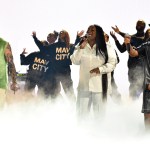
CCM in South Korea partly emerged from the growth of a vibrant church culture between the 1960s and the early 1990s. Youth ministries and worship teams in megachurches like Yoido Full Gospel Church began adopting pop, rock, and eventually full K-pop soundtracks as a way of reaching out to teenagers who were immersed in K-pop idol music.

Brian Kim (no relation to Jaewoo Kim) is part of a generation of Korean artists who normalized CCM in the East Asian country’s Christian music landscape. The Korean American artist and worship leader, who hails from Texas and currently lives in Seoul, is one of the most prominent CCM artists in South Korea.

Kim began writing Christian K-pop songs in the early 2000s, and his 2012 song “God’s at Work” has amassed nearly 3 million views on YouTube so far. More recently, he has spent the past four years training and mentoring a group of young artists in Seoul to equip them for Christian music ministry and gospel-centered missions.

Korean pop culture has experienced a huge popularity boom—a phenomenon known as hallyu or the “Korean wave”—in the past two to three decades. But Kim laments how “the Korean church has lost much of its influence” during the same period. South Korean churches have experienced declining membership amid low birth rates, increasing secularization, and growing skepticism toward religion.

In contrast, he said, more and more young people are participating in K-pop fandoms: organized communities of fans who support artists through concerts, online platforms, streaming campaigns, and shared rituals.

Kim hopes that avid K-pop fans can look to the church to find the loyalty and emotional bonds they currently experience by being part of a fandom. Adapting K-pop music styles in songs that remain grounded in Scripture could be one way to draw people into the church in his view. “The gospel is unchanging, and everything must ultimately return to it,” he said.

Park, the missionary in Indonesia, is hosting a cultural event in Malang later this year that will highlight Korean food and dance. It will also be an opportunity for locals to learn Christian songs in the Korean language.

“Culture may open the door [to evangelism], but the gospel is what we ultimately speak,” he said.

Additional reporting by Isabel Ong

Theology

Christians, Let’s Stop Abusing Romans 13

Columnist

Believers often use the passage to wave away state violence, but that’s the opposite of what Paul intended.

ICE agents
Christianity Today January 14, 2026
Illustration by Christianity Today / Source Image: Getty

This piece was adapted from Russell Moore’s newsletter. Subscribe here.

An ICE agent shot protester Renee Good this week and killed her. Videos record one of the agents cursing her as she died. I knew immediately that many Christians would be morally shaken by this, and rightfully so. And I knew many of them would soothe their troubled consciences with a predictable passage of Scripture, and it isn’t “Blessed are the peacemakers.” Instead, whenever an agent of the state kills a person in morally questionable circumstances, many Christians go right to Romans 13, quoting it before the blood is even cleaned up from the ground.

What people reference when they say “Romans 13” is the argument the apostle Paul makes in that chapter: “Let every person be subject to the governing authorities. For there is no authority except from God, and those that exist have been instituted by God. Therefore whoever resists the authorities resists what God has appointed” (vv. 1–2, ESV throughout). What some Christians draw from this, then, is that whatever the state does in using lethal force (or bearing “the sword” as Paul put it in verse 4) is morally legitimate and those who question it are wrong.

Some Christians quoted Romans 13 to oppose the American Revolution. Some cited it to oppose efforts at civil disobedience, such as the Montgomery bus boycott or the nonviolent resistance to police forces in Birmingham or Selma. And certainly people pull out this passage as a kind of moral trump card to silence questioning when they see the protester as not on their side or the person in power as on their side. That Romans 13 is most often invoked not when the state is acting justly but when Christians feel the urge to quiet their consciences ought to trouble us—not because this habit puts too much weight on biblical authority but because it attacks it.

The problem is not with Romans 13 itself, any more than the cocaine dealer quoting Judge not, lest ye be judged is a problem with Jesus. Should we refrain from quoting Psalm 91 because the Devil quoted it in his temptation of Jesus in the wilderness (Luke 4:1–11)? Not at all. But we also have no excuse for allowing ourselves to use that verse to make the same satanic case.

The Book of Romans did not come to us with chapter and verse distinctions; it was one continuous argument from the apostle. The argument in Romans 13 continues that of chapter 12, in which Paul exhorts the Christians to “rejoice in hope, be patient in tribulation, be constant in prayer” (v. 12) and to “bless those who persecute you; bless and do not curse them” (v. 14). He has just implored these readers not to seek vengeance on those who mistreat them: “Do not be overcome by evil, but overcome evil with good” (v. 21).

Paul then makes a very similar argument to one the apostle Peter makes elsewhere, in which Peter argues that those who are now “sojourners and exiles” should “be subject for the Lord’s sake to every human institution, whether it be to the emperor as supreme, or to governors as sent by him to punish those who do evil and to praise those who do good” (1 Pet. 2:11, 13–14). Peter goes on to apply this posture by telling his readers not to use freedom as a “cover-up for evil” but to bear reproach for the sake of Christ.

Romans 13 makes a very similar case, with Paul writing—as did Peter—to people without badges or guns or even voting rights, telling them they can exist alongside their neighbors even as they wait for the kingdom of God. The powers that be, Paul argues, have a real and legitimate authority, and obeying that authority is not a break from obeying God but an extension of it. That authority exists for something: restraining wrongdoing, protecting the vulnerable.

That neither Paul nor Peter was giving moral carte blanche to the state is obvious not just in other Scriptures but also in their very lives. After all, both were later killed by the sword of Caesar (figuratively in Peter’s case, literally in Paul’s). Was the decree to behead Paul or to crucify Peter therefore morally right? No. Were the Christians who refused to say “Caesar is Lord” and were thus hounded, marginalized, or beheaded sinful in their refusal? Jesus said that, in that case, those who obeyed earthly powers were the ones bringing judgment on themselves (Rev. 14:11–12).

Moreover, the use of Romans 13 as a refusal to question the morality of a use of force is, ironically enough, a violation of the passage. We might well ask, what would Paul have written if Romans 13 were addressed to the authorities rather than to those under their rule?

Well, we actually know the answer, because the same Spirit who breathed out Romans 13 also breathed out John the Baptist’s instructions to tax collectors and soldiers. John told them not to extort money from anyone, implying that they would be held responsible for the misuse of their power (Luke 3:12–14). The same Spirit also favorably portrayed Paul’s interaction with the police who told him and Silas, on behalf of the magistrates, to leave quietly, to which Paul replied, “They have beaten us publicly, uncondemned, men who are Roman citizens, and have thrown us into prison; and do they now throw us out secretly? No! Let them come themselves and take us out” (Acts 16:37).

Paul knew of what he spoke. In his prior life, he had persecuted the church—with legal warrants and the full force of law. He did not see that legality of that action as being in any way an excuse (1 Tim. 1:12–14).

Romans 13 is about refusing to become what oppresses you, not about baptizing whatever the oppressor does. And Romans 13 puts moral limits around what authorities can and cannot do—it tells them to use the sword against “the wrongdoer,” for instance. Paul wrote Romans 13 not to protect the state from critique but to shield the church from vengeance.

To use Romans 13 to automatically justify state violence is not the equivalent of first-century Christians seeing their calling as not to overthrow the empire. To use it that way is more like if Daniel in Babylon had said that the fiery oven is the lawful punishment for civil disobedience against worshiping the king’s image, and therefore Nebuchadnezzar is right that Shadrach, Meshach, and Abednego should be burned alive.

There are legitimate uses of tragically necessary lethal force on the part of law enforcement officers. Watch the video, if you can, and decide for yourself if you think, morally, that this was one of them. But don’t simply turn away from the violence and refuse to ask any questions at all. And if you decide that whatever is done with government power is beyond moral scrutiny, don’t blame Romans 13. That’s not what it tells you to do.

Update (January 16, 2026): An earlier version of this piece stated that Renee Good was shot through the head. A newly released fire-department report says her gunshot wounds were in the chest and forearm, in addition to a possible gunshot wound on the side of her head.

Update (January 23, 2026): An autopsy commissioned by Good’s family reported that she was shot in the head.

Russell Moore is editor at large and columnist at Christianity Today and leads its Public Theology Project.

addApple PodcastsDown ArrowDown ArrowDown Arrowarrow_left_altLeft ArrowLeft ArrowRight ArrowRight ArrowRight Arrowarrow_up_altUp ArrowUp ArrowAvailable at Amazoncaret-downCloseCloseellipseEmailEmailExpandExpandExternalExternalFacebookfacebook-squarefolderGiftGiftGooglegoogleGoogle KeephamburgerInstagraminstagram-squareLinkLinklinkedin-squareListenListenListenChristianity TodayCT Creative Studio Logologo_orgMegaphoneMenuMenupausePinterestPlayPlayPocketPodcastprintremoveRSSRSSSaveSavesaveSearchSearchsearchSpotifyStitcherTelegramTable of ContentsTable of Contentstwitter-squareWhatsAppXYouTubeYouTube