News

Nigerian Christian Schools Fill Gaps for Students with Disabilities

Many public schools can’t offer special education, so churches offer needed resources and community.

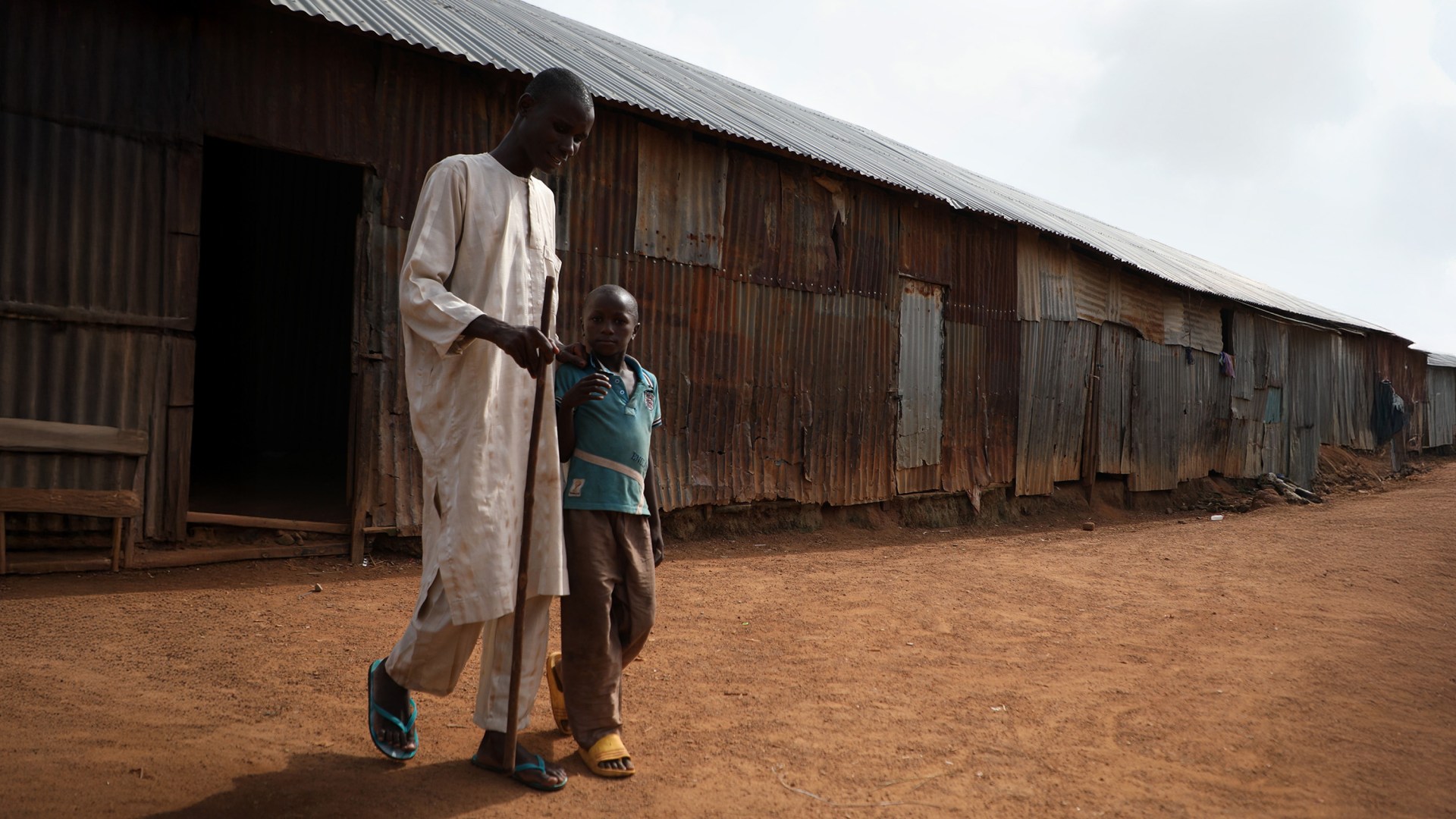
A disabled man walking with a cane and help from his child.
Christianity Today January 12, 2026
Kola Sulaimon / Contributor / Getty

In February 2009, 22-year-old Kenneth Echiche and a friend were picking cashew fruit from a tree near their small village of Ukwortung in Cross River State, Nigeria. As his friend used a stick to shake the yellow fruit from the tree, one slipped through Echiche’s outstretched hands. He’s still not sure how it happened, but he remembers the caustic juice squirted into his eye, causing a burning sensation.

“I did nothing about it because I felt it was something minor,” Echiche said.Three months later, his vision blurred. Unable to afford a hospital visit, his parents tried herbal remedies such as ointment from goat weed leaves and bitter kola: “They were squeezing all manner of herbs in my eyes.”

Doctors later told him the herbal cures had contributed to his blindness. Echiche blamed “ignorance and poverty” for his lost eyesight. Many Nigerians won’t seek help for vision loss until it has advanced too far for repair.

After Echiche’s vision disappeared, his education did too. His public high school didn’t have Braille materials or teachers trained to help visually impaired students. Echiche was already trying to finish his last year of high school, which had been delayed four years due to switching schools and repeating classes several times after his parents’ divorce. Now his blindness made graduation seem impossible. He couldn’t even walk around by himself, let alone complete his homework.

“My world literally went dark,” Echiche said, adding he felt God had abandoned him.

Though Nigeria’s 2019 Discrimination Against Persons with Disabilities (Prohibition) Act entitles every person with a disability to free education through high school—including special education support in public schools—the World Health Organization reports that poor enforcement leaves many students without resources and unable to obtain high school diplomas.

Nigeria has just under 1,200 special needs schools, both public and private, to serve a reported 5 million children, according to the Joint National Association of Persons with Disabilities. Though people with disabilities make up at least 12 percent of Nigeria’s population, they made up less than 1 percent of most universities’ students in 2019. The United Nations estimates 15 percent of each country’s population may have special needs, and 25 percent of any community is affected by them.

Church-run schools and ministries are seeking to bridge the gap and dispel cultural superstitions associated with disabilities. Groups like Evangel Ability Motivation Institute (EVAMI) and Uplifting Our Children Through Support are helping children with disabilities to know their innate worth in God and to find purpose in their lives.

EVAMI’s director, Georgian Ugah, said these schools provide a “ministry of care where the students are given orientation that will help shape their life and strengthen their belief in God.”

Amaka Ude, the mother of an autistic child spent 40,000–60,000 naira (about $28–42 USD) per month on private teachers when she couldn’t find a school with a strong special education program. Because her husband is the director of a federal agency, they could afford it. Yet those living on minimum wage (about $49 USD per month) or an average wage (about $56–84 USD per month) can’t.

Cultural stigmas also hinder education. Some families hide children with disabilities from their communities, fearing neighbors will see them as a symbol of shame. Other children face bullying in school, discouraging them from learning. Echiche said people treated him badly after he lost his sight. When he sat in public places, even in church, people would change seats to move away from him.

“People did not want to share seats with the physically challenged,” he said. Some Nigerians fear blindness could be contagious.

EVAMI is a special education center owned by Assemblies of God Nigeria in Enugu State. Director Georgian Ugah told CT she works to counter common beliefs that God rejects people with disabilities or that disability is punishment from village gods. Ugah starts by teaching children that God doesn’t hate them.

EVAMI helps children work within their abilities by providing tuition-free early childhood education, middle school classes, and job training, she said. Students only pay for books and uniforms. Children who cannot thrive in an academic setting after an initial evaluation focus on training in vocational skills such as tailoring, hairdressing, and shoemaking.

One of EVAMI’s graduates, Paul Godspower, said if EVAMI hadn’t offered him an education, his parents couldn’t have sent him to school: “I thought all hope was lost when I lost my sight, because I had to drop out of school for a while.”

Godspower said in the program he learned basic skills such as moving around safely, washing and ironing his own clothes, and developing self-confidence. He now studies law at the University of Nigeria Enugu Campus.

Still, students face setbacks. Parents might not know how to help their children keep up their learning at home during breaks. Impoverished families can’t afford to pay for private Braille lessons, so children lose some language skills during breaks. Ugah said it’s like starting over every time these students return to EVAMI.

Rosyln Yilpet, administrator of the Christian ministry Uplifting Our Children Through Support in Jos, Plateau State, said the greatest need for people with disabilities is acceptance in their communities. Job skills are one way to make that happen. Yilpet’s ministry trains youth with disabilities for the workforce and persuades local employers to take a chance on hiring them. So far, she has trained 14 students. Eleven have taken advanced apprenticeships with employers in their communities and received job offers.

Yilpet said when churches provide disability education, they show that these children are still “a gift from God, created in God’s image” and born with a purpose.

For Echiche, finding purpose took time. Three months after Echiche lost his vision, a Catholic priest named Ferdi Oma from All Saints Catholic Church recommended him as a student to the St. Joseph’s Centre for the Visually Handicapped in Obudu, a five-hour drive from Echiche’s home. Oma drove him to the school to visit in July.

When Echiche first arrived at St. Joseph’s, he said he felt distressed when he met many of the school’s youngest students, ages three to eight, and learned they were also blind. They didn’t understand why he felt upset for them.

“The children were laughing at me for crying and refusing to eat,” Echiche recalled. He struggled to adjust during the visit—he hadn’t left home since losing his sight. Still, Echiche wanted to finish high school, so he joined the school for the fall term.

Echiche learned to walk with a cane to help him avoid obstacles, cook for himself, wash his own clothes, and read and copy notes in Braille. He said learning to “see again” through his hands by reading Braille gave him access to the Bible. During moments of discouragement, he turns to Scripture for comfort.

He earned his high school diploma and eventually a university degree in mass communication. Echiche, now 39, works as a senior cultural officer with the Federal Ministry of Arts, Culture, Tourism and Creative Economy.

Echiche said before he completed his education, people assumed he was a beggar, especially if he visited an office building. Now he shows confidence, and people treat him with more dignity: “I no longer see those crude levels of discrimination because my level of education has lifted me up.”

He said that as his faith has grown, other people’s reactions to his inability to see began to affect him less. Still, he can’t get a hymnal in Braille, and he hopes the government will make disability laws more enforceable and specific to individual disabilities like vision loss: “Accessibility is still a big problem.”

Books

A Memoir of Exvangelical Anger—but Not for the People in the Pews

Journalist Josiah Hesse discusses his new book on poverty, Pentecostalism, and the politics of the Christian right.

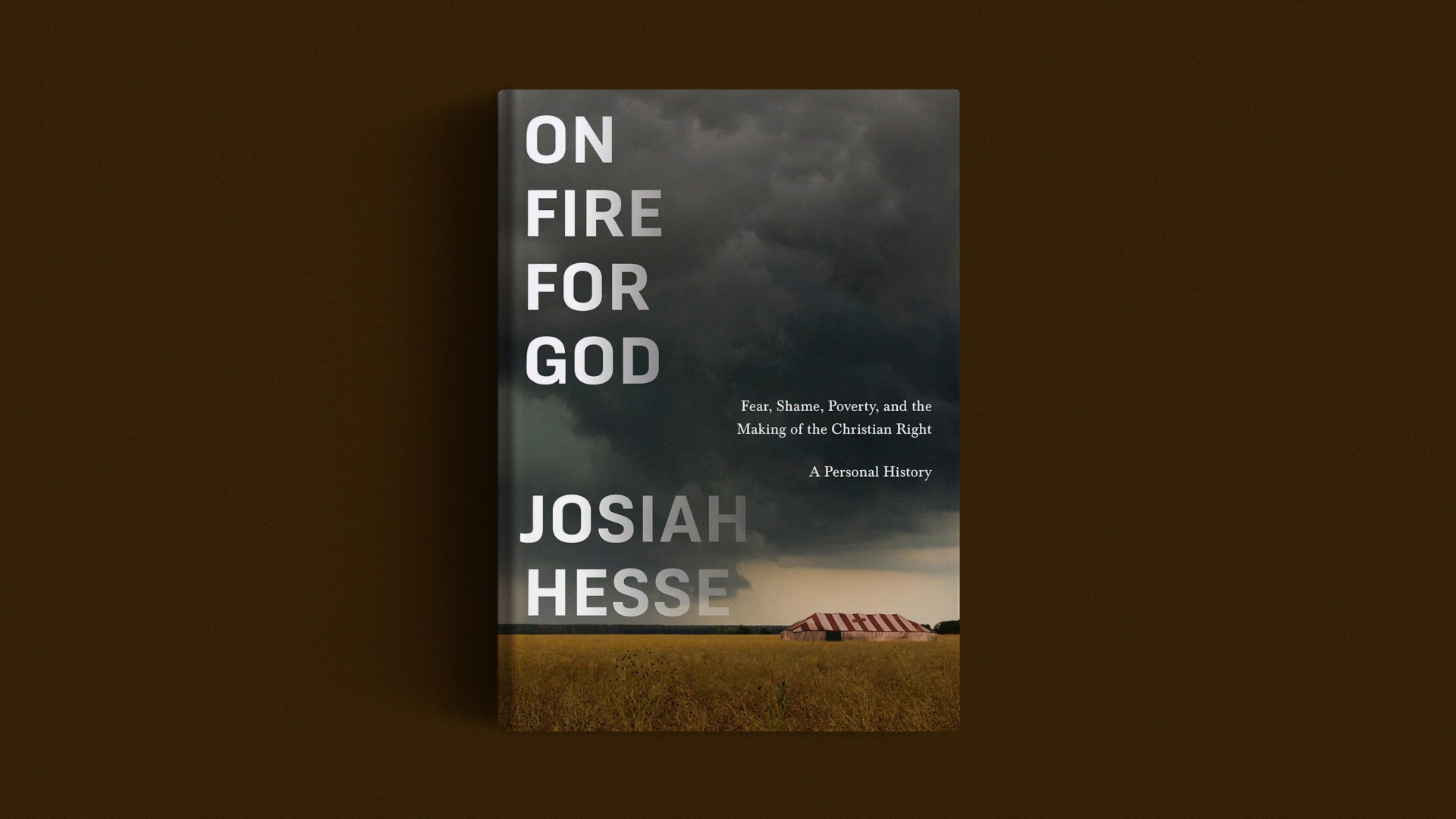
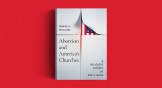
The book cover.
Christianity Today January 12, 2026
Illustration by Christianity Today / Source Images: Getty, Pantheon

Exvangelical memoirs have multiplied over the last decade, so much so that they begin to blur together in my mind. But a new book from journalist Josiah Hesse, On Fire for God: Fear, Shame, Poverty, and the Making of the Christian Right—a Personal History, caught my eye nevertheless. 

Hesse has left Christianity further behind than many memoirists in this class; he speaks frankly of a “desperate yearning for God to not be real, because the Christian God of my youth scared the f—k out of me.” But he also writes with clear affection for his family and his hometown of Mason City, Iowa—a farming community that served as inspiration for the musical The Music Man—and with a poignant sadness about his loss of faith. 

Hesse and I spoke over Zoom about his goals for the book, claims about evangelicalism, and objections to certainty. This interview has been edited and condensed.

Let’s start with your elevator pitch for On Fire for God. What’s the book about, and how did you decide to write it—to make public such a personal story?

I’d written about my experiences with the Christian right via both novels and journalism, but I hadn’t done a deep dive on the history and mechanics behind this culture and political movement. 

When I went home to Iowa to interview friends and family about my experiences and theirs, I realized that everyone had been guarding a wealth of secrets for years, and there was this assumption that the sin and financial problems they’d been struggling with were their own—that these weren’t universal experiences. 

People had been putting on a mask to their congregations and neighbors about their struggles with faith, with Scripture, with theology. They were presenting as though they were happy, content, and financially and emotionally stable. There wasn’t the honesty or vulnerability that should be the hallmark of a congregation, of a church experience—the bonding with one another, the authenticity. I wanted to dig into that on a personal level for myself, my family, my community, but then also on a political and sociological and economic level. I wanted to show how all these forces converged to create this state of hiding from the people around you.

You note at the beginning that you’re using terms like evangelical, Pentecostal, and fundamentalist interchangeably. But surely these differences matter for how people in these groups understand themselves and how they see each other. Think of the cultural differences between Pentecostals and Presbyterians: “holy rollers” and “the frozen chosen.” You wrote that understanding the differences between these groups is unnecessary for the purposes of the book, and I’m curious about your reasoning. What are the purposes that make these distinctions irrelevant?

Well, I wouldn’t say they’re irrelevant, but we’re dealing with a large commercial audience with this book, many of whom would understand the difference between Catholic and Protestant, most likely, but probably don’t understand the difference between evangelical and mainline Protestants. There is a difference from an academic viewpoint, but I don’t know if there is an extreme difference on a personal level. We never really use the terms fundamentalist or evangelical or mainline Protestant. A lot of these groups, in my experience, just say, “We’re Christians.”

We often see the phrase the church. It’s one of the most annoying phrases to me, because I don’t really think there is a church—you wouldn’t say the synagogue to refer to Judaism or the mosque to refer to Islam. We are splintered in many different directions, and I didn’t want to get into esoteric language, like premillennial dispensationalism. 

In my church, we didn’t use the word theology. We didn’t use the word apologetics. I didn’t grow up in a very intellectually sophisticated community when it comes to faith. So I was more concerned with what it looks like in practice for these people, especially when you’re young. And in my experience, our faith was determined by our belief in the infallibility of Scripture. 

I know there’s a lot more flexibility on Scripture or believing in a literal six-day creation or a literal virgin birth when it comes to being a mainline Protestant. But the terminology I didn’t think was as urgent, though it was enough to warrant that author’s note. For most readers, those nuances aren’t really necessary for understanding the takeaways of the book.

This issue of scale is an important one, I think. Your family and hometown history serve as an entry point for broader discussion of political and religious issues. The book is titled as both a “personal history” and a story of “the making of the Christian right.” As a writer, I understand that move, but it seemed to me that the personal history is so distinct that perhaps it’s not as generalizable as you want it to be. 

I’m thinking about your mom’s history with “disassociation and depression” and your dad’s record of substance abuse and affairs, including that particularly vivid episode where he has sex with another woman at church while on meth, with pornography projected on the sanctuary screen. This is all before we come to the distinctives of your childhood church, which you describe as a prosperity-gospel, seed-faith congregation. This strain of Christianity certainly has its following, but it’s pretty far outside the norm, not only for mainstream evangelicalism but even for many Pentecostals. 

All of this suggests to me—as someone still very much inside American evangelicalism—that your background is pretty atypical of this movement. And so I want to press you on whether your story tells us something fundamental about the tens of millions of people grouped together as “the Christian right” or whether it is compelling and interesting and provocative but ultimately unusual—because the vast majority of evangelical dads are just not having sex on drugs in the sanctuary.

I agree with the premise of your question that there is something very subjective about the story that I’m telling. And I tried really hard to be transparent about that while balancing the history and theology. 

I would push back on the suggestion that my story is so atypical, because I’ve known a lot of people who have similar stories. There was so much that I felt had been buried when it came to my family and my community. We saw it with the Hillsong documentaries a couple years ago. We saw it with Jim and Tammy Faye Bakker and the lives they were leading—or Larry Norman. 

It was important to me that these secrets be brought to the surface—not to shame anyone or discredit faith. Really just the opposite. So many of my friends who struggled with addiction have found real solace in Alcoholics Anonymous. They can be honest about how bad things have gotten for them and how they’re struggling and confused. They find catharsis through honesty, vulnerability, and connection.

I wanted to bring these salacious details to the surface to show the reality that a lot of people are living with. We need to deal with these problems first by acknowledging them. I don’t want to be too prescriptive or suggest I’ve got all the answers, but I do want to start a conversation about the reality of a lot of evangelicals—particularly poor, working-class evangelicals. 

One thing I appreciated about the book was that you came to it as a journalist, doing interviews and seeking the bigger picture with historical research. 

If I can take this question of what’s typical a little further, though, you write that as an adult, you realized that your family was not unusual at that seed-faith church, that there were “dirty little secrets” including “substance abuse, violence, [and] affairs” kept “behind the closed door of each family.” In fact, you add that “it would be unfair to single out [your] church for this behavior: such secrets can be found in every church in America, particularly those that espouse ‘family values.’”

And, yeah, of course you can find sin in every congregation. I don’t think anyone would disagree. But the large-scale data I’ve found indicate that religiosity, including church attendance, correlates with lower rates of substance abusedomestic violence, and infidelity. What’s the basis for your claim that every church in America is characterized by these evils?

Well, I wouldn’t say that they are universal in every Christian’s experience or that every church has an overwhelming amount of skeletons in their closet. I didn’t really apply any specific data to that statement.  

But I would push against the data that shows people are happier when they attend church more regularly—or that they’re not having affairs or that they’re not using substances—because those are self-reported polls. A lot of these people are living with secrets, and there are great consequences to revealing those secrets. When you are caught up in the kind of outward-facing, marketing mentality of a lot of these large churches, particularly in the prosperity gospel, there are many incentives to present to the world an image of yourself and your life that isn’t always accurate. 

You can lose your ministry if you’re in a leadership position. If you’re a congregant, you can be shunned by your community, lose your job, lose business opportunities. You can be ostracized. And I know because I’ve seen this many, many times. 

There is, admittedly, a bias in my mind to maybe assume the worst of people. That’s something I was honest about and questioned myself about when I was writing this book. But I feel pretty confident that my perspective has been validated. I mean, you look at a publication like Julie Roys’s Roys Report, and every day there are horrifying reports about church leadership—people who present themselves as moral models.

And I am just pretty cynical about it, admittedly.

I would want to distinguish between what is common and what is too common, and say that things can very much be too common without being common. Not to get into an anecdata battle, but I grew up in many different evangelical churches—we were quite transient—and haven’t experienced anything like this at any of them, across a wide spectrum of denominations and cultures, including self-declared fundamentalists. 

But I think part of why that claim about abuse and affairs caught my eye is because it’s so apparent in the book that you have real sympathy for the people in the pews. Even in your disillusion, you still say these are your people, and you reserve a lot of anger for political and religious elites. 

I also admired your wrestling with how journalists have treated conservative Christians—H. L. Mencken calling fundamentalists “morons” and some contemporary journalists being incurious about the evangelicals they cover. I appreciated your willingness to ask yourself if sympathy, like that mockery, rests on seeing these people as “brainwashed and ignorant.” To my reading, you didn’t answer that question decisively in the book. Are you still wrestling with it?

To an extent, I think we’re all brainwashed and ignorant on a lot of issues. We all have biases and discomfort with having our worldviews challenged. It’s something that I wrestled with throughout the writing of this book, and the narrative was transparent about these struggles. At one point I asked, Am I the Music Man? Am I coming to town to sell these people a bill of goods, to exploit them? I think that’s something we all need to ask ourselves. 

There’s a narrative often echoed back to me by different people in my life and work, and it’s the narrative coming out of right-wing media or evangelical megachurch pulpits. I want to point that out and examine it, but I don’t think that discredits any of these people as human beings who are navigating a confusing world, a confusing human experience. They, like all of us, are worthy of compassion and curiosity and patience and understanding.

Toward the end, you write that you’ve “resisted having any ideology, beliefs, or consistent worldview” and have been “reluctant to orient [yourself] around any kind of essential truth.” I don’t mean this as a gotcha about whether truth exists, but that comes after a string of recent stories in which you have quite strong beliefs and moral certainty. 

You’re honest about your thinking in these moments, and—particularly on Christianity, sex, and poverty—you strike me as someone with confident beliefs, considered beliefs, that are deeply concerned with essential truths about the world, about humanity, about the nature of justice. So I want to push you on this notion that you’re writing from a position of broad secular neutrality that is avoiding these commitments, whereas Christians hold a more narrow, sectarian worldview.

It’s definitely a fair question. I think I pursue objectivity but know that it is going to be elusive. 

In that scene where I’m talking about resisting landing on any specific worldview or ideology, I agree that I have them, but they do feel somewhat ephemeral. I wanted to convey my discomfort with landing on certainty about any given issue. 

That’s because of how devastating it was when my faith slipped through my fingers. It wasn’t anything I rebelled against or consciously abandoned. It was something that seemed to disappear on me. 

It was so hard to go through that, and that’s not something that I want to put anyone else through. I’ve always maintained that I’m not trying to debate anyone out of their faith. I’m not trying to spread atheism. I don’t think it’s an enviable way to view the world.

But whenever I feel the conviction of certainty and clarity, there’s always a journalist in the back of my mind trying to poke holes: Are you sure about that? Could you do a little bit more research? Could you talk to people who disagree with you and maybe find a little bit more nuance? Maybe you’re half right about this point, but there’s a grander perspective. 

I recently watched a movie called Bugonia about a guy who believes the CEO of a company is an alien, so he abducts her. He has these conspiracy theories—but you see that he’s not completely sure. The movie never lets you orient yourself, never lets you settle into a clear narrative of a good guy and a bad guy. 

That resonated with me when it comes to the human experience: No matter how much clarity and conviction you have, there will always be new experiences, new information, new people coming into your life to poke holes in that certainty.

Theology

Happy 80th Birthday, John Piper

Fame didn’t change how the Reformed theologian lives.

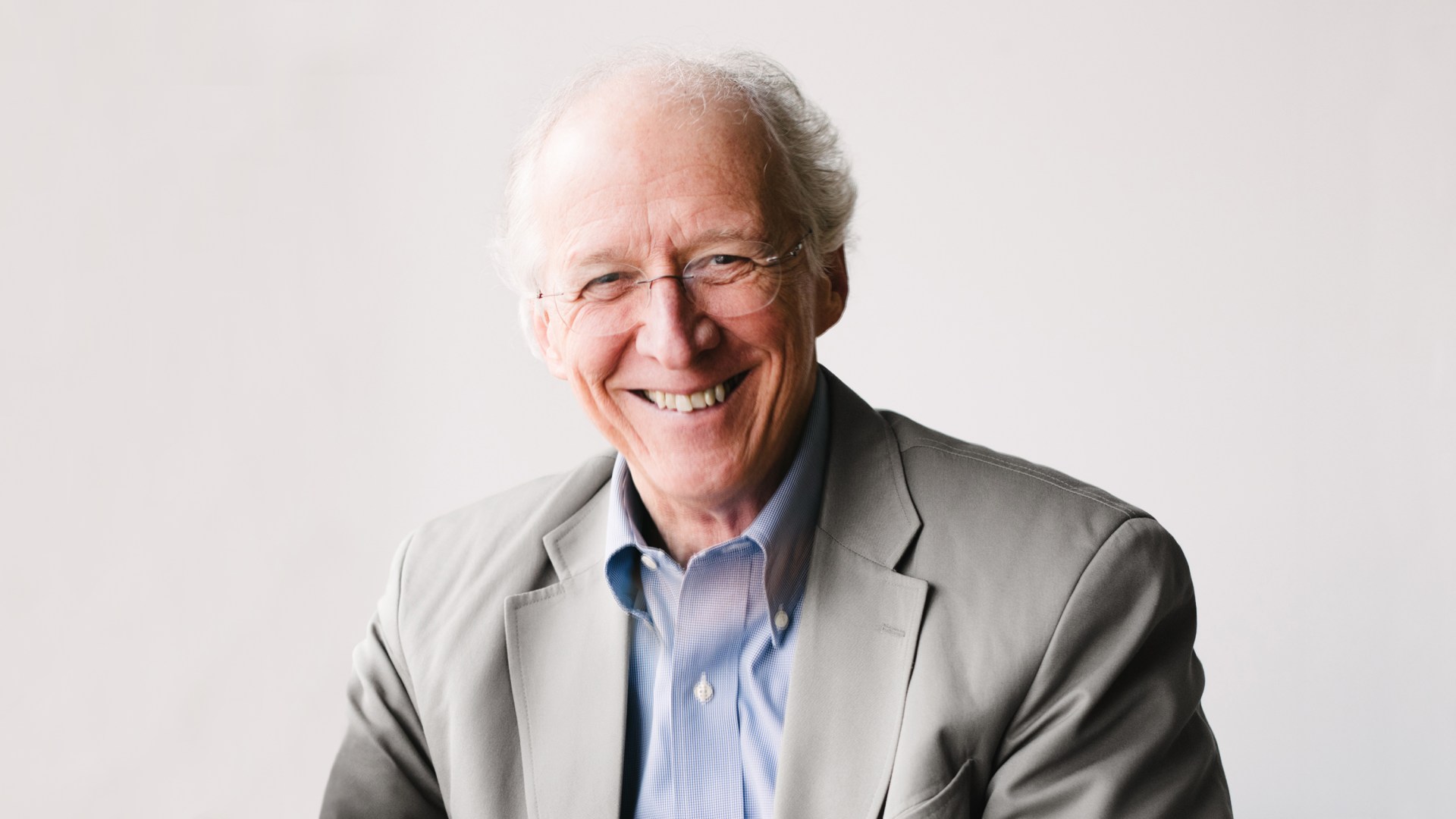
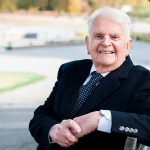
A photo of John Piper
Christianity Today January 9, 2026
Image courtesy of Bethlehem College and Seminary

In July of 1980, 34-year-old John Piper preached his first sermon as pastor of Bethlehem Baptist Church on the eastern edge of downtown Minneapolis. Surveying a sea of gray hair, he retained traces of South Carolina lilt in his tenor voice as he said, “I have nothing of abiding worth to say to you. But God does. And of that Word I hope and pray that I never tire of speaking. The life of the church depends on it.”

Piper’s final sermon at the church fell on Easter Sunday of 2013. The gray-haired, balding pastor, then 67, looked out at a sea of younger faces and explained why this wouldn’t be a typical farewell sermon with personal reflections: “It has been our commitment in all these years together to preach not ourselves but Jesus Christ as Lord (2 Corinthians 4:5). People ought not to go to church to hear the sentiments or the ideas of a man, but to hear the word of God.” 

“Our acts,” he once wrote, “are like pebbles dropped in the pond of history. No matter how small our pebble, God rules the ripples.” Piper, a self-described slow reader and “plodder,” fits well in CT’s Long Obedience in the Same Direction series. As he turns 80 this coming Sunday, January 11, he still teaches and writes full-time—and his ministry has had worldwide effects. 

Piper’s fundamentalist parents were the happiest people he knew. He grew up in Greenville, South Carolina, within walking distance of Bob Jones University, where his itinerant evangelist father served on the board. After Piper’s parents split with Bob Jones’s family over their criticism of Billy Graham in 1957, Piper went to Wheaton College in the 1960s. There he met his wife (Noël Henry from Georgia) and, through an invitation to pray at summer chapel, was healed of a debilitating speaking phobia that had plagued him from childhood.

While confined to the infirmary with mononucleosis, Piper listened by campus radio to chapel expositions by Harold John Ockenga and felt called to the ministry. Then, at Fuller Theological Seminary, Daniel Fuller taught him how to read the Bible by asking questions of the text and tracing its arguments. When Fuller said Jonathan Edwards could both confound a philosopher’s mind and warm a grandmother’s heart, Piper started reading the 18th-century pastor-theologian and never stopped, with Edwards becoming his “most important dead teacher outside of the Bible.” 

After tearful wrestling over the biblical texts, Piper embraced the absolute sovereignty of God and the doctrines of grace. He also put together the building blocks of “Christian Hedonism,” an arresting label for the old idea that only God can satisfy the deepest longings of our soul. Therefore, we glorify God by enjoying him forever. Piper in his breakout book, Desiring God, put it this way: “God is most glorified in us when we are most satisfied in him.” 

A doctorate from the University of Munich, with a dissertation first published by Cambridge University Press, stamped Piper’s passport to academia. After six years of teaching at Bethel College (now Bethel University), he used a sabbatical to write a detailed academic work on Romans 9. During that time he sensed God calling him to the pastorate, as if saying, “I will not simply be analyzed, I will be adored. I will not simply be pondered, I will be proclaimed.”

Over the ensuing decades, Piper wrote more than 50 books and donated every penny of his book royalties to fund his nonprofit ministry Desiring God as well as Bethlehem College and Seminary. As the internet came of age, he made all his audio messages and sermon manuscripts available free of charge.

The outdoors OneDay Passion conference in 2000 was a watershed moment for many students who heard Piper for the first time. In what came to be called Piper’s “seashells sermon,” after a couple who retired early to build a seashell collection, he pleaded with 40,000 college students not to waste their lives

Piper became a mainstay speaker for not only Passion Conferences but also Together for the GospelThe Gospel Coalition, and later the Cross Conference. Along the way, he became a father figure for the Young, Restless, and Reformed movement. Piper’s passionate intensity and earnest articulation could carry a room, but his was not the revivalism of yesteryear. He was not a traveling orator but an ordinary-means-of-grace, local-church pastor who emphasized that his theology of happiness came through suffering, and his theology of glory came through the Cross. He labored to live within the biblical paradoxes of a man in Christ: sorrowful yet always rejoicing, brokenhearted but bold.

Becoming well-known did not change his lifestyle. Piper’s salary stayed under six figures, by his request, for virtually his entire pastoral career. He’s lived in the same nondescript urban house within walking distance of the church for four decades. At the age of 50, he and his wife adopted a daughter after raising four sons. His department-store clothing stands out only because he wears the same thing at virtually every conference. 

At the age of 80, Piper works full-time from his home office, answering questions about the Bible and the Christian life through the Ask Pastor John podcast (400 million episode plays over the past 13 years) and through his verse-by-verse video series, Look at the Book (over 1,300 videos so far, with a life goal of working through all the Pauline letters). He and his wife remain faithful members at Bethlehem Baptist.

In an age too often marked by scandal, failure, and apostasy, Piper has no moral skeletons in his closet. He talks candidly about his patterns of sin and weaknesses. He asked the elders for an unpaid eight-month sabbatical from all public ministry to work on becoming a better husband and father and to do battle against besetting sins like pride and self-pity. For those inclined to put him on a pedestal, he points to his feet of clay. 

In his second year as a pastor, Piper noted that the mercy of God and the sovereignty of God were the twin pillars of his life: “They are the hope of my future, the energy of my service, the center of my theology, the bond of my marriage, the best medicine in all my sickness, the remedy of all my discouragements. And when I come to die (whether soon or late) these two truths will stand by my bed and with infinitely strong and infinitely tender hands lift me up to God.” 

Justin Taylor is the executive vice president of book publishing and the book publisher at Crossway. He has edited and contributed to several books, and he blogs at Between Two Worlds, hosted by The Gospel Coalition.

Culture

What Christian Parents Should Know About Roblox

The gaming platform poses both content concerns and safety risks that put minors in “the Devil’s crosshairs.” The company says tighter restrictions are coming.

A Roblox logo that is half sunny and half dark clouds.
Christianity Today January 9, 2026
Illustration by Elizabeth Kaye / Source Images: Unsplash, WikiMedia Commons

Roblox is getting sued—so far by three state attorneys general and in at least 42 cases brought by concerned parents.

But the platform’s popularity continues to explode. In 2024, some 82.9 million users played every day. The most recent report from Roblox Corporation ratchets that number up to 151.5 million. Nearly 50 million of those users are signed up as under 13 years old. Some are as young as five.

Unlike Rocket League or Super Smash Bros., Roblox isn’t just one universe. It’s a platform of over 7 million “experiences,” all created by users. Players move through various worlds as customizable avatars, sometimes accomplishing tasks or competing in games and encountering other users along the way.

Christians have long been concerned about the risks of popular entertainment, from rock music to wizard books. In 1990, Focus on the Family started the publication that would become Plugged In, which today reviews entertainment from YouTube videos to feature films to flag bad language, violence, and sex.

Roblox is different. Not only does it raise content concerns—it also poses real-life safety risks, as alleged by those dozens of lawsuits. In recent years, bad actors have gained minors’ trust by impersonating other children, convincing their victims to adjust parental controls or move their conversation onto another app like Snapchat or Discord, where they may solicit explicit photos or engage in other criminal behavior.

Predators have exploited the narrative of one Roblox game in particular, Forsaken, to convince children and teenagers they will receive a second life in return for obeying commands like carving a symbol into their skin or undressing in front of a web camera. Over 2 million users have designated Forsaken as a “Favorite,” and the game is often listed in “Top Trending” on the Roblox charts.

Some digital-safety advocates say Roblox is a fundamentally dangerous place for young people.

“There is nothing darkening childhood like internet-connected devices,” said Chris McKenna, father of four and founder of the group Protect Young Eyes. “The church should be leading this conversation. Christian parents should be the most aggressive when it comes to choices of where their kids go online.”

Protect Young Eyes advocates for phone-free schools, puts out how-to guides for setting up parental controls on different devices, and reviews apps popular among children. It rates Roblox as high risk across the board, including on factors like predator risk and nudity risk. McKenna says the platform is unique in that it allows users to share their own creations. Many are innocuous, featuring dragon training, superheroes, track and field, or even Bingo. But others expose minors to explicit material.  

Roblox “prohibit[s] content that depicts sexual activity or seeks real-world romantic relationships” and uses mature-content labels for violence or adult humor. (A nine-year-old can access experiences rated “minimal” and “mild” but not “moderate” or “restricted.”)

Every day, Roblox removes 130 million pieces of content, chat messages, and usernames from the platform for violating their policies. “We work to help over 150 million users have a safe, positive, age-appropriate experience on Roblox,” a representative from Roblox told CT. “Our layered safety systems combine advanced AI, 24/7 human moderation, and collaboration with law enforcement and safety experts to help detect and prevent harm. While no system is ever perfect, we constantly innovate and invest to set the standard for online safety.”

Still, there have been instances of children encountering sexual content.

“If the definition of sin is missing the mark with our choices, our thoughts, and our behaviors, are we putting our children in the Devil’s cross hairs?” McKenna asked. He points to Roblox’s business model—adding users through frictionless onboarding in order to increase in-game purchases like clothing for avatars or special abilities in games—as the reason stricter safety measures haven’t been adopted.

For instance, as it stands, kids who create a Roblox account are asked to verify their age, but can type any number without follow-up confirmation. Without a verification process, a child can start an account as an adult; an adult can start an account as a child. (Roblox plans to tighten this verification protocol in 2026.)

Attorney Melinda Maxson—who represents a Nebraska John Doe in a case against Roblox—has been concerned about the platform’s safety issues for decades. Maxson has represented Roblox-related cases for 20 years, from clients who used the platform in its earliest days (it launched in 2004) to those who allege recently being groomed. All this time, she said, the platform has claimed to be safe for children. But that hasn’t been the case. “There’s a chat function within their experiences that allows perfect strangers to reach out and communicate to other users on the platform,” Maxson said.

Roblox does tailor chat functionality based on a user’s age. The restrictions are complex. Users under 13 cannot access private text and voice chat with other users. However, the “experience” chat feature allows users in the same experience to communicate with other similar-aged users in a public chat, which others can see. In several cases, an adult allegedly used the public chat chat to convince a child to move their conversation to Discord.

Users 13 or older can also type more words and phrases in their chats than those under 13 can. These younger users’ chats are also filtered to prevent personal information from being shared. (All chats, regardless of age group, are filtered for sexual language, harassment, discrimination, threats, and incitements to violence and monitored for attempts to move conversations to another platform. Sending images isn’t allowed.)

Roblox recently announced a soon-to-be-released safety feature that will require age verification—either with AI-enabled facial recognition or ID uploads—for any users who wish to exchange messages. Approved users will be sorted into six brackets and allowed to chat only with users in their age categories and those adjacent. (It seems that a 10-year-old will be able to talk to a 14-year-old but not a 16-year-old.) Intended to limit interactions between minors and adults, the protocol will take widespread effect in early 2026. “We are sharing what we believe will become the gold standard for communication safety,” said the company’s press release.

But “the proof is going to be in the pudding,” attorney Maxson said. “Until we see how it operates and how effective it is, I remain very skeptical because of course they’ve had 20 years to put these types of safety mechanisms in place.”

Bennett Sippel, a researcher for Tech and Society Lab out of NYU Stern and writer for the Substack After Babel, said the verification feature makes progress on one very important issue by preventing predators from accessing children through chat messages.

But once the new age-verification update is in place, it will still be possible (though more difficult) for a teenager to access unfiltered chat with adults. And according to the press release, users of different ages will be able to communicate if they name each other as a trusted connection. Once both parties agree to the pairing using contact info or a QR code, they can access voice chat and chat without filters, “allowing for more natural and direct communication.”

Sippel noted these safety changes are coming after lawsuits as “damage control” rather than as a proactive approach from Roblox. He still has concerns about the platform’s ability to moderate explicit content—in 2022, more than 15,000 experiences were uploaded per day. Roblox may also be a gateway into a gambling addiction, both to gameplay itself and to casino games. (Though gambling isn’t allowed on the platform, it does feature “loot boxes,” random generators that operate like slot machines.) And contact with strangers is risky even if it isn’t explicitly predatory.

“A healthy childhood involves a deep participation in reality—a deep independence and freedom in the real world—and we’ve inverted that,” Sippel said. “We’ve given them free reign over this digital universe and then we’ve overprotected them in the real world, where those real experiences are really what crafts a healthy human being.”

Despite the safety risks, some Christians see digital spaces like Roblox—if precautions are taken—as missional opportunities to express their values or even evangelize. One user created a game in which users role-play as King David or Abraham. Another teaches “The Jesus Story.” The Christian video game company Soma Games recently developed The Wingfeather Saga, a Roblox adaptation of Christian author Andrew Peterson’s popular book series and animated show.

Chris Skaggs founded Soma as well as the Imladris community, an ecosystem of Christians in the game-development industry. Skaggs sees Roblox as a neutral platform, comparable to a toy store—there are items you don’t want your kid to buy, but the store itself isn’t the problem. Games, he believes, can prepare players, some who might never set foot in a church, for the gospel. For him, the 150 million daily Roblox users aren’t a problem; they’re an opportunity for witness.

“It’s not just that good and evil exist but that good is God,” Skaggs said. “There is a deep reality [in The Wingfeather Saga]: … God to Satan to angels and devils, how humanity is fallen … that grace and sacrifice can bring back restoration and renewal. So it’s not just good and evil. It’s deeper than that. You explain where good and evil come from.”

Sometimes, that explanation comes from the same young people adults worry about on the platform. The Robloxian Christians group was founded by Daniel Herron when he was only 11 years old. At one time boasting 54,000 members, the community described itself as a “global youth-led church committed to sharing the love and word of God with all young people online,” offering experiences like God is Love, Home Church, The Nativity, and [TRC] Worship Theatre.

“It’s basically a virtual island hovering in a cosmic stratosphere,” wrote Herron in a description of God is Love, “with a few flowers blooming and a cross draped in a burgundy stole and illuminated from above by glorious rays. Nearby is a stone table with bread and wine. Visitors can hear a piano quietly playing as they pray and discuss their faith with others.”

Herron told CT over email that the church closed in 2023 “after twelve years of ministry on Roblox and as one of the world’s first youth-led online churches.” Herron is now a board member for the Covenant Network of Presbyterians, and he believes Roblox is “a generally untapped platform” for would-be evangelists.

Chris Skaggs, the Christian game developer, does think Roblox needs to enact more safety features. He suggests a companion app that would give parents the ability to oversee their children’s gameplay and to restrict access to certain games.

Currently, if parents create linked accounts, they are able to set parameters on what their children can view on Roblox. Through parental controls, parents can block specific games or users, set screen-time and spending limits, manage their children’s access, and see their children’s top 20 experiences from the last week. Skaggs’s suggestion would step up these monitoring systems, allowing parents to watch recordings of their children’s gameplay, including their chats with other users.

Chris McKenna from Protect Young Eyes thinks kids are better off without Roblox but said, “If you’re going to say yes, at least take some steps to mitigate that risk.” He said children should never play with the chat on, with headphones, or alone. Gameplay should be restricted to certain devices, at certain times of the day, and with certain friends in a closed network. McKenna suggested following what he calls the “seven-day rule”: Before allowing a child to use any platform, experience it for yourself for at least a week.

Bennett Sippel from After Babel suggests Minecraft and Fortnite as better—though not perfect—alternatives to Roblox with better guardrails, and he even more strongly recommends Nintendo games like the Mario series and The Legend of Zelda. He says parents should appeal to collective action in order to move kids off harmful platforms. If several families in a community aren’t playing a certain game, then children will be less worried about missing out.

“No matter how much we try to work as parents to raise [our kids] in virtue and protect their ethics as they grow up, we’re competing with this virtual world that’s really doing quite the opposite,” Sippel said. “Not to get over-hysteric about it, but we pay with our souls. We really don’t want to be paying with our children’s souls.”

Isaac Wood is a journalist who produces narrative podcasts in East Tennessee. His work has appeared in The Dispatch, Civil Eats, Ministry Watch, and 100 Days in Appalachia, among other outlets. He was a member of the inaugural class of the CT Young Storytellers Fellowship.

Books
Review

How Artificial Intelligence Is Rewiring Democracy

Three books on politics and public life to read this month.

Three book covers.
Christianity Today January 9, 2026
Illustration by Christianity Today

This piece was adapted from CT’s books newsletter. Subscribe here.

Rewiring Democracy: How AI Will Transform Our Politics, Government, and Citizenship by Bruce Schneier and Nathan E. Sanders (MIT Press, 2025)

Can an artificial intelligence model run for mayor? In 2024, a Cheyenne, Wyoming, mayoral candidate tried to make that case when he pledged that if he were elected, he’d outsource all decisions to an AI. He came in a distant fourth, earning only 3 percent of the vote.

But that (to my mind, rather dystopian) example explored in Rewiring Democracy: How AI Will Transform Our Politics, Government, and Citizenship is just one data point the authors harness to show how rapidly developing AI technology has an outsize impact on politics and public life.

Voters may know that politicians already use technology like autopen and robocalls, but increasingly, legislators rely on AI tools to email constituents, write speeches, draft messaging and bills, and ask for money.  Cities are using AI to translate public meetings for non-English speakers and optimize traffic signals to reduce traffic. The military wields AI to chart moving personnel and resources. Judges are using it to draft rulings.

Cybersecurity technologist Bruce Schneier and data scientist Nathan E. Sanders argue that because AI is here to stay, liberal democracies must harness it for good. The two writers are optimists about how politicians can integrate technology so the government can become more accessible and responsive to its citizens.

Though the authors acknowledge concerns around AI—they describe the second Trump administration’s aggressive push for AI as reckless—they avoid alarmism. At times, though, I wished for more exploration of not whether technology can do certain tasks but whether it should. Admittedly, I’m biased, but I found the idea of AI replacing certain journalistic enterprises (something they saw as likely) particularly distasteful.

The book did not convince me that embracing AI will make our government more responsive to the actual humans being governed. But the authors present a thought-provoking, succinct, timely exploration. Read it and decide for yourself—just don’t outsource your conclusions to an AI agent.

The Age of Extraction: How Tech Platforms Conquered the Economy and Threaten Our Future Prosperity by Tim Wu (Knopf, 2025)

A handful of massive tech platforms dominating the economy are suffering a serious case of “main character syndrome,” a diagnosis antitrust scholar and former Biden White House official Tim Wu makes in his most recent book. Tech giants have aggressively deterred competition in their determined bid to become final destinations for users, even at the expense of excellence and innovation. Some examples include Facebook acquiring Instagram and WhatsApp and Google acquiring Waze. Amazon, of course, figures largely.

These Goliaths (Wu is not above a biblical metaphor) have trampled competitors and extracted as much data, money, and time from their users as possible. To continue the status quo risks heading down the path toward authoritarianism, Wu argues, fueled by economic frustrations that boil over into anger and resentment.

Wu’s preferred remedy is an old-fashioned one: for everyone to treat these increasingly ubiquitous platforms as public utilities and, accordingly, for the government to take decisive antitrust action when necessary.

In between diagnosis and prescription is a tour through the heady, optimistic days when computing and the internet upended modern society and a look at what lessons we can mine for the present landscape, where generative artificial intelligence looms large. While Wu has crafted an interesting read, his conclusions won’t land for everyone. Besides, the debate over implementation may be moot, at least for now, with an administration that gave prime inauguration seats to Silicon Valley titans.

Destiny and Power: The American Odyssey of George Herbert Walker Bush by Jon Meacham (Random House, 2016)

Was the president within his rights to authorize military action that could lead to war without Congress’s approval? It’s a prescient question today, but it also bedeviled the country circa 1991 with the start of the Gulf War. That is only one of the thorny issues George Herbert Walker Bush faced during his eventful term, and one which Pulitzer Prize–winning biographer Jon Meacham delves into in his account of America’s 41st president.

Access to the former president, his family members, and his diaries pays off in this well-researched work, whether Meacham explores the motivations underpinning 41’s understated personality, examines his struggles in domestic politics, or captures his adroitness during the end of the Cold War.

The length of the book may seem unmerited for a president who served only one term. However, Destiny and Power is a reminder of just how many significant events crowded into those four years. Meacham’s account, while it may be softer than H. W. Bush’s critics would like, does his term justice.

Harvest Prude is national political correspondent for Christianity Today.

News

Kenyan Christians Wrestle with the Costs of Working Abroad

Working in the Gulf States promises better pay, but pastors say the distance harm marriages and children.

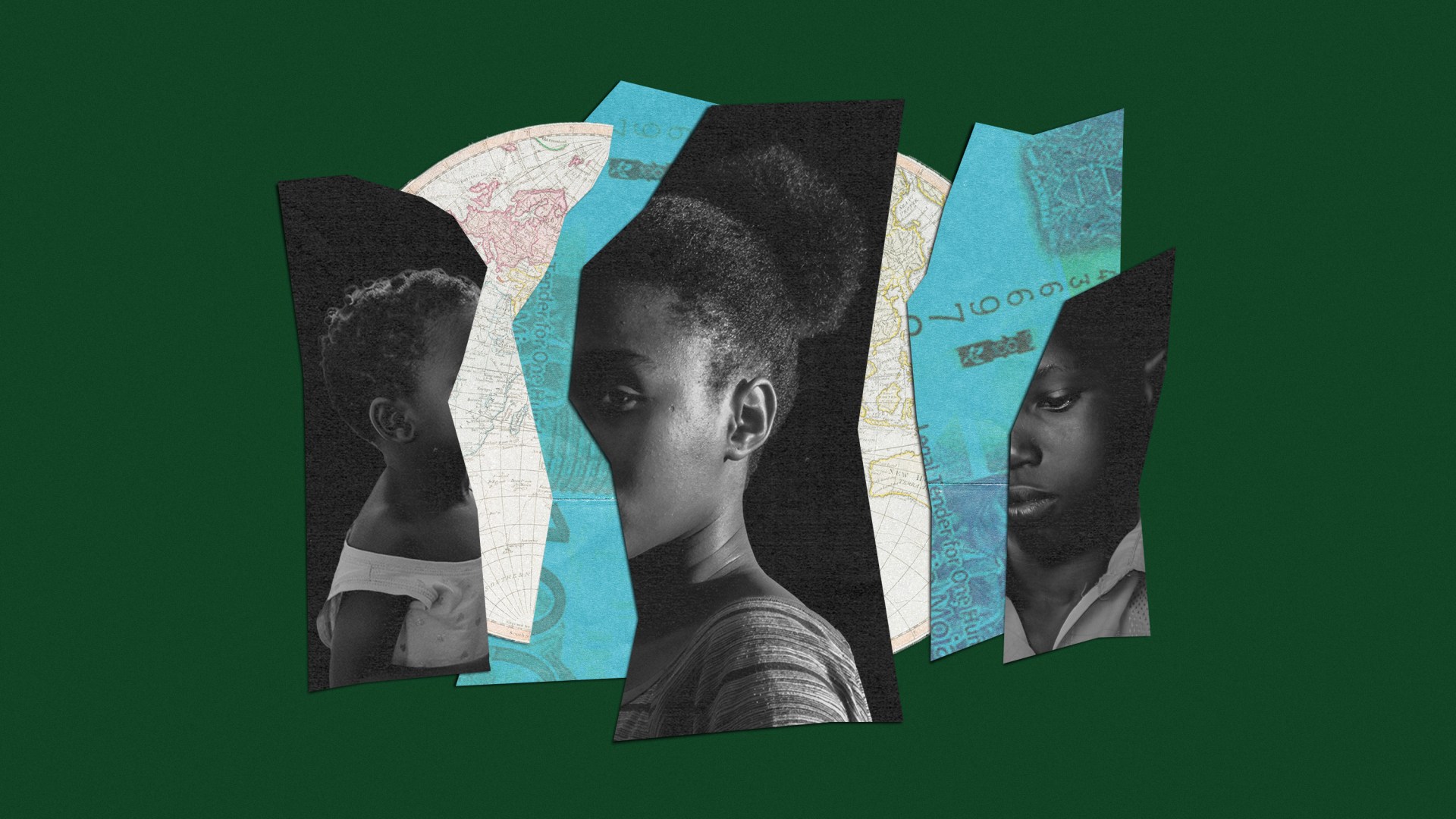
A collage of a Kenyan woman and children, a world map, and Kenyan currency.
Christianity Today January 9, 2026
Illustration by Elizabeth Kaye / Source Images: Unsplash, WikiMedia Commons

Clara Simiyu, a Kenyan mother of two, left for Saudi Arabia in 2022 for a job as a domestic worker in a Muslim household. A year later, she learned from a close friend back home that her husband was having an affair with a woman who visited him on weekends. Instead of spending the money Simiyu sent home on their children’s clothing and education, he spent it on his mistress.

Simiyu, 31, called her father and her pastor in December 2023, telling them she planned to separate from her husband and start Kenya’s lengthy divorce process once she returned from Saudi Arabia in late 2026. Her pastor tried to convince her to reconcile. Simiyu remained adamant.

When she returned to Kitale, Kenya, for a visit in 2024, Simiyu had no place to call home. Her estranged husband had no stable job and couldn’t provide for their children. So she took her daughters—ages four and eight—to live with her cousin. Now she sends money home from Saudi Arabia for their upkeep.

“I miss seeing my daughters grow,” Simiyu said.

Desperation from high rates of unemployment—as high as 67 percent for young adults entering the job market—drives many Christians from poor Kenyan families to accept low-paying jobs in the Persian Gulf states. Most jobs are in hospitality, domestic work, or construction. Demand for female-only domestic jobs in the Middle East is high, so many Kenyan women sign up for short-term contracts—usually one to two years—in these roles. Since domestic workers often live in their employers’ homes, they can’t bring their husbands or children. An estimated 400,000 Kenyans currently work in the Gulf states.

The separations take a harsh toll on their families. Marriages break apart. Families divide over how to spend wages sent home to Kenya. Children left behind with relatives may see their mothers or fathers only on video calls.

Because of this, some church leaders discourage their congregants from working abroad. They say financial success from international work isn’t worth the cost to relationships.

Pastor Joseph Kimaleni of the Full Gospel Church in Trans-Nzoia County, western Kenya, said adultery is common when wives work abroad. He’s seen young couples divorce when wives return to find their husbands have taken mistresses or second wives.

Kimaleni works to bring these broken families back together but wants to stop the problem at its root. When church members tell him they want to work abroad, he advises them not to go, especially if they’re considering work in the Middle East, where migrant workers are treated more harshly than in Western countries. Kimaleni doesn’t even want to pray they’ll get the jobs: “Praying for them to go to those countries is like separating them, and the Bible says what God has put together, no man shall separate.”

He also worries about their children: “When parents separate, it is the children who suffer.”

Kimaleni’s church creates local jobs in hopes of preventing young people from going abroad. The church raises money to offer entrepreneurial youth the capital to start small businesses, such as making fresh juice and snacks to sell to church members on Sundays. Kimaleni encourages church members who own businesses to employ youth from the church. He also connects young men with local building companies, shopping malls, garages, and salons in need of workers.

“This has diverted many of them from going to the Gulf,” Kimaleni said.

Meanwhile, pastor Roslyne Wamalwa of the Newlife Church in Trans-Nzoia County also discourages young women and men from going to the Middle East for work. During her church’s annual youth conference, she teaches young couples what a good marriage should look like, then shares stories of marriages that failed due to spouses working abroad. Though couples often admit they know of friends who have divorced while apart, they still feel pressured to take jobs abroad.

“Poverty pushes them,” she said. Wamalwa advises them to seek God’s will and pray to avoid temptation.

 Wamalwa says she prays for church members determined to go. She asks God to protect them against sexual harassment and give them good employers. According to The New York Times, many Kenyan women returning from domestic work in the Middle East report sexual advances or abuse from male household members. CT has covered similar reports from Nigerian women working in Muslim countries. Many African women do not report this abuse for fear of retaliation or loss of their wages. When they do report physical or sexual exploitation, law enforcement often let abusers go unpunished.

Elizabeth Wanjiku, a mother of four from Kilimani village near Eldoret in North Rift, Kenya, counsels young Christians to think carefully before going abroad. Many unemployed young Kenyans come to her church for prayer or job-skills seminars, where she begins discipling them. Wanjiku has seen work-abroad separations cause many divorces. She has also seen rifts start when family members in Kenya misuse money sent home.

In 2019, Wanjiku stopped her niece Joyce Wangare from taking poison to kill herself after Wangare returned to Kenya to discover her mother had squandered the meager earnings she had sent home over two years working as a domestic worker in Saudi Arabia.

Hoping to lift her family out of poverty, Wangare had asked her mother to buy a small plot of land near Eldoret to construct rental shops that would earn the family a monthly income. Instead, her mother spent the money on luxuries, food, and help for relatives.

“I asked God to give me wisdom to solve the fight, because the daughter was angry, while the mother thought it was her right to use the money,” Wanjiku said. Although Wanjiku helped them reconcile, her niece left home again, going first to Oman then Dubai, never returning home to Kenya again.

Wanjiku advises those who work outside the country to first open bank accounts and save any money they want to invest in the future, sharing only the remainder with family.

“When it’s time for you to come back, you can do the investment you want,” Wanjiku tells them.

In addition to being at risk for divorce and family disputes, Kenyan workers risk coming home with injuries. Others don’t come back at all—316 Kenyans reportedly died working in the Gulf states from 2022 to mid-2024. Christian workers may face especially harsh penalties for violating Muslim law. Women may be punished for being in the company of men they’re not married to, fleeing their employers, having sex with Muslim men (even when they’re raped, or reading the Bible openly.

Clara Simiyu, who is still working in Saudi Arabia, faces pressure to practice her faith quietly. Because she can’t attend church openly, Simiyu depends on her church back in Kenya for emotional and spiritual support. She sends prayer requests to her pastor over WhatsApp or Facebook, knowing he will ask the rest of the church to pray. It helps with the isolation, she said.

Simiyu said she regrets the dissolution of her marriage, believing that if she had stayed in Kitale, her husband would likely have remained faithful. Now he’s living with his mistress, unofficially remarried.

Sometimes, late at night after work, she uses WhatsApp to video-call her daughters: “My phone is my only companion because it is what [allows] me [to] talk to my children.”

When her contract is up, Simiyu plans to return to Kenya and open a hair salon to support her daughters.

“I don’t think I will travel again,” she said. “I need my children closer to me.”

News

The Dangerous Ambition of Regime Change

Is America’s appetite for power in Venezuela bigger than its ability to handle it?

Christianity Today January 9, 2026
XNY / Star Max / Getty / Edits by CT

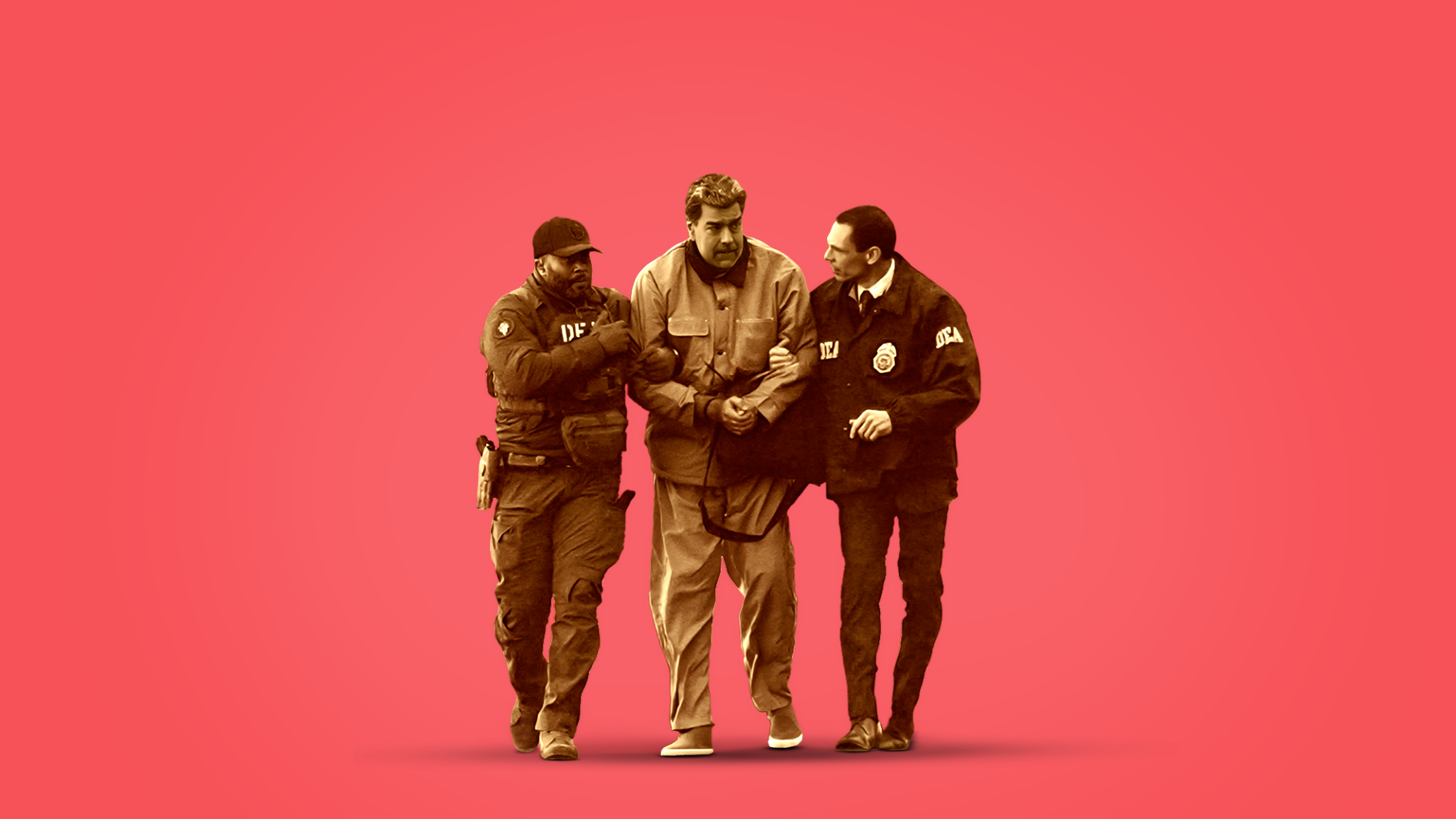
On Saturday morning, the US military captured and extracted Venezuelan president Nicolás Maduro and his wife, Cilia Flores, from the capital city of Caracas. Following their early-morning arrest, Maduro and his wife were flown to New York, where they await charges of drug trafficking and narco-terrorism. 

The Bulletin sat down with senior contributor Mike Cosper, homeland security expert Elizabeth Neumann, and legal expert and New York Times columnist David French to learn more. Here are edited excerpts from their conversation in episode 240.


How did the capture and extraction of Maduro and his wife happen?

Mike Cosper: The operation was led by US Delta Force, a special operations force inside the US Army. As many as 150 aircraft were involved in striking targets in Caracas and providing air support for the operations—everything from information gathering and strike drones to F-35s, F-18s, and helicopters flying special operations and the law enforcement personnel into the city to arrest Maduro. 

The DEA and the FBI were also involved. The administration is treating this as a law enforcement action, not as an act of war, which is why they didn’t involve Congress.

Elizabeth Neumann: This operative has been developed for over six months with a military buildup to pressure Maduro to surrender. The United States’ position was You can leave and, like many famous dictators in history, go enjoy life on a deserted island where nobody can find you, or you can end up in prison in the United States. Which door would you like to choose? Clearly Maduro either didn’t believe that we were actually going to do it or maybe thought his security apparatus was strong enough to keep him safe. 

There were a few strikes with some initial reporting that some civilian targets were hit. It’s not clear if that was intentional. There’s still some fog of war, but for the most part, it appears we targeted very specific sections of Caracas. 


Why would the US engage in such a complex, extensive operation? What’s the purpose?

Neumann: Nicolás Maduro was the vice president under socialist leader Hugo Chávez before he became president of Venezuela. Back in the early ’90s, Venezuela was an up-and-coming country, very successful and wealthy. After the Chávez takeover, Venezuela lost its ability to function in the international world order in a healthy way. Economic challenges hit hard, and the regime is very repressive.

There have been two elections where Maduro lost and stayed in power, using all of his henchmen in various security apparatuses in the government to maintain his power. The United States, along with over 50 countries, does not recognize him as the legitimate president of Venezuela, which is an important distinction because in international law you cannot extradite, arrest, or try the head of a country for things that they’re doing as the head of a country.

The Biden administration agreed that Maduro was not the legitimate head of Venezuela and indicted him in 2020. That is why we’re allowed to go and extradite him to receive prosecution in the United States for his crimes.

When you do a military venture like this, before you do anything, it should be very clear what your objective is. It certainly should be clear when you’re briefing the American public after the fact. The end game is still not clear to me. This has tremendous consequences for the United States and for our allies. 

One of two things is possible. Perhaps those plans exist and nobody wanted to tell the president, so they haven’t been bothering him with those details. I watched that happen in the first Trump administration. Option two is that everybody who knows how to do that is gone. They were either fired through the DOGE process or pushed out because they were not seen as sufficiently loyal. That’s the scarier option to me, that that knowledge doesn’t exist anymore in the US government.

The United States doesn’t do regime change or nation building well. Our track record is abysmal. There are real scars in our collective imagination around what this looks like in places like Afghanistan, Iraq, and Libya. We tried regime change at least 18 times through covert operations during the Cold War to try to disrupt various regimes in Central and South America. None of them worked. In fact, they actually had the opposite effect. They led to authoritarian regimes, destabilized countries and economies, and mass migration flows. Arguably, the reason we have had such mass immigration for the last 40 years is because of what we did during the Cold War.

We could still have done this well if we had a plan of action and could clearly articulate it to the American people and to the world. But the administration can’t seem to get their talking points together, and that does not look good for us internationally when we’re trying to tell Russia not to invade Ukraine or China not to invade Taiwan. We went much farther away than Taiwan is from China and removed the leader. Granted, he was not the duly elected leader, but we removed a dictator from another country and did not go through any of the normal United Nations processes or authorization from Congress. There are ways we could have done this and not have lost the moral high ground. 

Cosper: As a Christian, you want to insist that everything our government does is according to due process. At the same time, you recognize Maduro was a bad dude. 

We don’t know what this new administration is going to be like. Once Maduro is gone, how’s this administration going to rule? How are they gonna treat their citizens? What’s gonna happen to the economy? Venezuela is sitting on the largest oil reserves in the world. Chávez and Maduro were good Marxists. They nationalized the oil industry, and they destroyed it. It crushed the Venezuelan economy, which some analysts have said drove Maduro into the drug industry to find money. 

There’s an enormous opportunity for Venezuela to rebuild, which will take a lot of time. That’s the direction that the reformers in the country want to go. And the reformers won two elections in a row, and Maduro refused to leave. Trump is not supportive of the duly elected government of Venezuela taking office, which could drive some transition around some of these issues right now. Maduro’s people are still in power. There’s motivation to change based on what happened to Maduro, and they certainly don’t want that to happen to themselves. 

Neumann: [Marco] Rubio genuinely wanted Maduro out. He wanted the Venezuelan people to have their freedom. It’s possible that Rubio has one desire, your traditional neocon “We want freedom; we want democracy.” In order to get the president of the United States to buy into a regime-change model, you have to appeal to what he cares about, which might be the oil. Or, we saw Stephen Miller, deputy chief of staff, on the stage at the press conferences. This is also about immigration. All can be true all at the same time.

What is the legal justification for these actions?

David French: The administration’s core legal justification is related to a legal opinion that Attorney General Bill Barr issued in 1989 regarding the invasion of Panama. Manuel Noriega, like Maduro, had been indicted in the United States for drug trafficking. So President George H. W. Bush ordered an operation into Panama to arrest Noriega to end his control over Panama. Barr wrote an opinion that said the FBI can investigate and arrest people who are not in the United States. That’s an important tool in their toolbox to be able to do that.

But then it gets a little bit more dicey. Barr’s opinion says that the president could lawfully order this, empowered by the Constitution’s “take care” clause, even if it violates international law by impinging on another country’s sovereignty. His argument is that an indictment of a foreign leader authorizes a civilian law enforcement effort to arrest, for which the military can be deployed to protect civilian law enforcement personnel as they execute the arrest. This is a dangerous line of thinking. 

Essentially, it says the president on his own authority can authorize the Department of Justice to engage in actions that would violate the UN Charter that we agreed to, at the will and whim of the president and maybe even under the authority of the attorney general.

We’ve had a degradation of our constitutional order before Donald Trump in that legal opinion. Previous violations of the Constitution have laid the groundwork for what we are dealing with now. The legal justification for this action is specious: the idea that you can circumvent all constitutional requirements regarding the declaration and conduct of war by serving up an arrest warrant against a foreign leader. 

If a government in Europe indicted Trump for financial corruption charges related to some of his conduct and overseas business interests, and at a conference the French Legion and French police mow down the Secret Service and take Trump into custody, would we say they just arrested the president, or would we say they just committed an act of war? 

Under every understanding of what war is, that is an act of war. It’s very reasonable to say that the FBI’s extraterritorial jurisdiction does not empower it to engage in acts of war without congressional authorization on behalf of the United States of America. To what extent can FBI action be sanctioned or permitted as law enforcement, even though it would be considered an act of war under international law? 

Neumann: We heard the president call the administration’s national security strategy the “Donroe Doctrine.” It was the Trump corollary to the Monroe Doctrine, which is this idea that we get to basically decide what’s going to happen in the Western Hemisphere. Putin can decide what’s going to happen in his neighborhood. Xi [Jinping] can decide what’s going to happen in his. President Trump has been operating that way for quite some time, but the administration actually put pen to paper and articulated that as their strategy. 

French: If you listen to Trump’s emphasis on oil and oil rights over freedom and democracy, there’s no just purpose in the war. It’s a violation of international law. The Constitution has a structure: The Congress declares war. The president commands the military once war is declared. We have departed and are departing from that at a terrifying rate, and it’s a very dangerous thing for our constitutional structure. 

When voluntary compliance fails and there’s no effective enforcement mechanism, a lot of people start to question whether the law is tangible and real. It gets less and less real to more members of the UN Security Council. The more who depart from the realm of international law, the less international law exists. Already China and Russia don’t care. Of the five [permanent] council members, Britain, France, and the United States have held together the system with spit, bailing wire, and duct tape. If the US leaves the structure, it’s gone, because Britain and France can’t do it in 2025 anymore than they could do it in 1938.

What happens next?

French: No tears should be shed for the end of the Maduro regime. Some of Trump’s best moments in his second term have been in the arena of foreign policy. Some of his worst moments too. I worry that he’s going to get a little bit drunk on his success and push and push until we actually get to the situation that we’ve seen many times throughout history that a great power reaches too far. It’s just wrong to say that Trump is an isolationist at this point. It’s wrong to say that America First is isolationism. It’s much more “We get to dominate the Western Hemisphere.”

The problem with that is did the Western Hemisphere agree to domination? Does Canada agree? This has always been the problem with the spheres of influence. Yes, there are ways in which through clever diplomacy and shrewd policymaking, you can kind of do that dance for a while. That emphasis is never going to work over the long term because you cannot deprive other people of agency indefinitely.

Trump is not emphasizing freedom, democracy, elections, et cetera. He’s emphasizing oil profits and his threat to comply with the current regime in Venezuela. Maduro is horrible, and you can easily imagine a situation in which it would be lawful to intervene in Venezuela over Maduro. But that is not what happened here. That’s why, although I am relieved Maduro’s gone, the ends do not justify the means. And the means are so alarming that they overwhelm the virtuous elements of the ends.

Theology

So What If the Bible Doesn’t Mention Embryo Screening?

Contributor

Silence from Scripture on new technologies and the ethical questions they raise is no excuse for silence from the church.

A Petri dish under a microscope.
Christianity Today January 8, 2026
Natalia Lebedinskaia / Getty

In every generation, the church faces a specific set of challenges. In our time, the great challenges concern new technologies and their intersection with what it means to be human.

Conversations among Christians today are rightly focused on digital technology, above all smartphones, social media, and artificial intelligence. There are other technologies worth worrying about, however. And on the human side of things, I see four fundamental challenges facing the church. So far as I can tell, churches and pastors are unprepared to respond with the urgency and authority demanded by the moment.

Each is distinct, but all are related:

  1. the delay and decline of marriage and birthrates on one hand and the increased rates of indefinite or lifelong singleness on the other; 
  2. the advent of romantic relationships with lifelike chatbots, buttressed by AI-generated, photorealistic pornography;
  3. the widespread availability of cheap cosmetic surgery and other forms of invasive body modification, from Botox injections to semaglutide shots like Ozempic; and
  4. the extraordinary range of new technologies designed to begin or end human life that are already being used by the rich and will increasingly become affordable for the middle class.

That final biomedical challenge will be my primary focus here. On the reproductive side, it includes artificial contraception, surrogacy, and in vitro fertilization (IVF), as well as egg freezing, genetic editing in the womb, genetic screening of fertilized embryos, and artificial wombs.

Not to be outdone, end-of-life devices match these innovations with ever more ingenious ways to dress up self-slaughter in Hippocratic garb. No longer is euthanasia limited to pills or intravenous drugs; step inside a suicide pod and let the slow release of nitrogen gas dignify your death in a therapeutic key. It affirms your autonomy right up until the moment when there’s no you left to claim it.

You can see how these challenges are inseparable from technological developments. But they are also the product of a society both defined and exhausted by alienation, substitution, and self-enhancement. 

Men and women are polarized from each other, failing to pair off and form families. They are, perhaps unwittingly, building lives bereft of siblings and cousins, children and grandchildren, for when the final hour comes. This alienation makes all the more attractive the substitutions of porn, chatbots, surrogacy, and sperm donation—not to mention doctors who administer the final dose instead of priests who administer last rites. 

Yet a lingering desire for connection simultaneously pushes us toward enhancements like Botox to suppress the signs of death or perhaps improve one’s standing in the hook-up apps. Screening fertilized embryos is a kind of enhancement too, if that’s the right word for throwing away children deemed unfit.

Some of these challenges are imminent but not yet present: Artificial wombs have yet to be developed for human use; genetic editing isn’t publicly available; and assisted suicide remains illegal in many states. 

But for the most part they are present-tense realities. They are already with us, and by “us” I don’t mean a handful of elites in Manhattan and Los Angeles. I mean ordinary folks across the country, including those who fill the pews on Sunday mornings. They’re in red counties and the Bible Belt. They’re not on the outside; they’re not “the world.” They’re on the inside; they’re church folk.

And their churches, for the most part, have little to nothing to say about these things. Why?

One reason is simple enough: The Bible doesn’t talk about them. Open up the glossary in the back of your Bible, and you won’t find ChatGPT, CRISPR, or IVF. There are no chapter-and-verse citations for lip fillers, egg freezing, or practical questions like the “right” age to get married or the “ideal” number of children. 

New moral and technological questions require renewed study of Scripture for authoritative guidance. The Bible is not a spiritual FAQ. True, the Bible does answer our biggest questions. But if you live long enough or read your Bible deeply enough, you’ll see that the Bible cannot and will not answer every specific question in advance. It is authoritative in and for all of life, but it doesn’t speak directly or explicitly about every subject. How could it? 

Mature Christians, and especially pastors and whole churches, must therefore be able to give confident scriptural answers to new questions even when overt biblical teaching is lacking.

In the absence of explicit answers, many believers and church leaders reach for vague talk about “discernment” or “conscience” or “the Spirit doing a new thing.” This is often well-intended, and has the ring of Christianese, but in practice, discernment is often little more than a permission slip (Prov. 29:18). It ends up making grave ethical matters into subjects for private judgments born of little more than instinct, however sincere or prayerful. It places pressing questions in the category of adiaphora, or indifferent matters.

And if the message is that a given topic is indifferent to the church, then you can bet that ordinary Christians will assume it is likewise indifferent to God. Which, in practice, means: Do as you please.

This is why I began by saying that churches are unprepared for these challenges. They are unprepared because their doctrine of Scripture is insufficient to the scale of the problem and because baked into this doctrine is an altogether too low view of the church—of its authority as well as the authority of its pastors.

In American churches, these inadequacies were long held at bay by a latent social conservatism—people generally esteemed marriage and children and the social supports that make them possible and desirable. This worked in tandem with a wider society whose most pressing social issues (including divorce and poverty) were directly addressed in Scripture. Thus, a broad consensus could be presupposed among the people.

But now neither our surrounding culture nor our churches are doing the formational work to generate a similar consensus, and technological change has made our questions distant enough from biblical teaching that even pastors feel adrift and unsure what to think, believe, or do.

Consider the question of artificial contraception. Beginning in the 1930s, Protestants (including evangelicals) just about sprinted from restricted permission under limited circumstances to no-questions-asked, near-universal adoption of contraceptive methods. The rationale: The Bible doesn’t expressly forbid it. And if the church must be silent where the Bible is silent, then it follows that the absence of a prohibition functions as tacit authorization. If you doubt me, try telling a group of evangelicals that contraception is wrong and see how they react. (If that’s not enough, follow up by saying the same about vasectomies.)

It usually comes as a shock to learn that this issue was never divisive between Catholics and Protestants during the Reformation; in fact, beginning with Luther and Calvin, all major Protestant theologians were united on the question for a full four centuries. I lack the space to summarize their case, but suffice it to say that the Reformers weren’t taking their lead from Rome and would have been happy to dissent had they seen biblical basis to do so. 

At a minimum, this kind of unanimity for such a length of time (both before and after the Reformation) ought to persuade Protestants today that contraception is a moral and theological question—that its permissible use is not a foregone conclusion unworthy of discussion. Perhaps it also ought to persuade us that the burden of proof lies with those who would permit its use rather than those who side with tradition.

If contraception was the canary in the coal mine for insufficiently examined sexual ethics, IVF is the same for biomedical ethics. The arc of acceptance has run a similar course; the logic follows a kind of “pro-life consequentialism.” Here the idea is that if a technology purports to save or enrich human life, then the ends justify the means. Since it is impossible to demonstrate that the Bible directly forbids in vitro fertilization, and since one end of the process is a human life, many evangelical pastors are at a loss—if they see this as an ethical issue calling for their input at all.

By far the best, most theologically powerful, and most biblically thoughtful case against IVF was written by Oliver O’Donovan in 1984. Begotten or Made? is a little book that packs a punch. O’Donovan, now 80 years old, is a British ethicist, a Protestant, and an ordained pastor. His book is a model of serious moral engagement that avoids easy answers while looking to Scripture and tradition for authoritative help in navigating new biomedical and technological terrain.

To be clear, my purpose here is not to rehearse the full arguments regarding technological interventions like contraception or IVF. It’s to note the perennial pattern that accompanies them: Questions of legality override those of morality; individual autonomy trumps ecclesial authority; the apparent silence of the Bible speaks louder than the testimony of tradition or theological reason. And so, within just a few years, congregations acquiesce to the “inevitable.” What was once unthinkable becomes the norm.

Some Protestants look to Rome for help here. The social teaching of the Catholic Church is indeed an impressive resource for Christians who feel ill-equipped to draw the logical and moral lines from God’s Word to pressing contemporary questions—from labor unions to marriage to bioethics—that cannot be answered with simple chapter-and-verse-citations. Not a few Protestants have crossed over to Catholicism because of this tradition. 

Conversion isn’t necessary, though, to see Rome’s social teaching as a model. It is a standing rebuke to the notion that God is ambivalent about the concrete particulars of our social, sexual, medical, and technological lives. It is equally a rebuke to ideas about the church that would strip ministers of authority, undermine pastoral duty, or leave believers without guidance for these challenges that no one person or couple can handle alone.

God’s people need help. These are the issues that dominate their lives. How can silence be an appropriate response?

It’s true that each of us must pursue the will of God as best we can, in the particular circumstances of our individual lives, in concert with a local congregation, reading the Bible prayerfully with others. But no part of that should lead us to reject or diminish pastoral authority. Without it, we will not live with an absence of authority; rather, we will open up a vacuum that the broader society will all too happily fill. Hence the aforementioned church folk screening embryos, opting for cosmetic surgery, and turning to chatbots for companionship.

For churches to move from silence to authoritative application of Scripture will inevitably be messy. Sometimes pastors will go wrong. 

But what’s the alternative? Once we understand the challenges at hand, is silence not a kind of cowardice? However understandable, it is rooted in fear—of offending people, of repeating the mistakes of the past, of interfering in believers’ private lives. Consider that even though purity culture went awry, we still speak to teenagers about dating (another topic never directly mentioned in the Bible). Why would we be silent on these new challenges?

Let me conclude with a final example: the idea of the “seamless garment.” Among pro-life Catholics, this concept is an attempt to connect issues at the beginning and end of life—abortion and euthanasia—to issues during life’s long middle—family, vocation, labor, welfare, poverty, prison, immigration, and so on. 

There’s no denying that some versions of the seamless garment suffer from sentimentality while others serve to sneak in partisan policy proposals under the banner of moral doctrine. Even so, learning about the seamless garment in graduate school was a minor revelation for me. It helped me step outside of hot-button debates and, from that wider perspective, grasp the full sweep of human life as a tapestry knit by a loving God. 

In particular, it helped me comprehend the law of Moses, the prophets of Israel, the ministry of Jesus, and the church’s tradition as an undivided whole. I came to understand that feeding the hungry, housing the homeless, and caring for single mothers were integral expressions of pro-life commitments, and that affirming this connection in no way detracted from the inviolability of the child in the womb. Given these new challenges around technology and humanity, we need a Seamless Garment 2.0, one that encompasses all I’ve discussed above and more.

I would not presume to tell pastors or fellow theologians exactly what they ought to say. It’s a massively complex range of subjects. But just for that reason, we have to start talking. God’s people are depending on us.

Brad East is an associate professor of theology at Abilene Christian University. He is the author of four books, including The Church: A Guide to the People of God and Letters to a Future Saint.

Church Life

The Chinese Evangelicals Turning to Orthodoxy

More believers from China and Taiwan are finding Eastern Christianity appealing. I sought to uncover why.

Saint Sophia Cathedral in Harbin City, China.

Saint Sophia Cathedral in Harbin City, China.

Christianity Today January 8, 2026
DuKai photographer / Getty

In the late 2000s, as an undergraduate law student in Beijing, Justin Li grappled with questions about justice, morality, and the meaning of life. Atheism felt increasingly inadequate in providing answers to these big questions, and Li became a believer through a campus Bible study shortly after he began attending its meetings.

Li worshiped in an evangelical church that held contemporary services shaped by joyful, fast-paced praise songs. But the upbeat worship music, coupled with his busy work schedule, “made his heart even less quiet,” said Li, who is in his mid-30s.

Then he stumbled upon Ancient Faith Radio, a digital network of broadcasts offering Eastern Orthodox liturgical music and teaching. The melodies he listened to were simple, solemn, and contemplative. “It felt like another world,” he said.

Li began exploring the Eastern Orthodox tradition while studying theology at the University of Oxford’s Wycliffe Hall. He read widely, comparing Protestant and Orthodox arguments about the faith, and found the Orthodox responses “more persuasive than expected.” He joined the Orthodox church in China in 2022.

“There was a deep dissonance between the beauty I found in the writings of the early church and the functional pragmatism of much [of] evangelical church life,” Li said on a Zoom call from a room lined with Chinese evangelical theology books, now flanked by Orthodox icons and a wooden cross.

Li is not the only evangelical of Chinese descent who has turned eastward in recent years. A burgeoning number of Chinese believers find Eastern Orthodoxy appealing because it offers a connection to a historically rooted faith and a richer experience of the spiritual life—aspects that contemporary evangelicalism seems to lack.

Last year, I interviewed seven Mandarin-speaking Christians from mainland China and Taiwan about their conversion to Orthodoxy. My interest in the subject arose out of personal curiosity after I conducted a research project on Chinese Christian communities in Britain four years ago, when I met with several Chinese Orthodox converts who came from evangelical backgrounds.

The seven interviewees with whom I spoke are highly educated, with most holding or pursuing doctorates in fields ranging from theology to physics and history, and are dispersed across Europe, Asia, and North America.

Although all of them first came to faith within evangelical traditions, their shift eastward arose not from any frustrations with evangelicalism but from a deeper intellectual and spiritual search shaped by their academic formation.

In their eyes, the path from Beijing’s bright praise songs to Byzantium’s ancient chants is not a wholesale rejection of evangelicalism but a search for spiritual ground that does not move.

Many of these Orthodox adherents long for historical depth. Because their theological imaginations had been shaped largely within modern evangelical frameworks, many discovered—often for the first time—the vast expanse of early Christian history that lies between the New Testament and the Reformation.

As they read the church fathers, learned about the early councils, and studied how the canon of Scripture was discerned, they asked whether their inherited evangelical structures had adequately preserved the breadth of the apostolic tradition.

Sarah Lin, a believer from Taiwan, encountered the Eastern Orthodox faith through a research project during her graduate studies in the United States. What began as academic curiosity gradually unsettled her spiritually.

As she read Byzantine texts on early prayer practices and monastic devotion, she felt surprised to discover how so many centuries of Christian life and thought had been rendered invisible within the Chinese-speaking church.

Lin also sensed a depth to prayer that she had never experienced before. Previously, she regarded prayer as a response to an “immediate spiritual feeling,” but she now understood that prayer could also be a “formative” experience that would shape her over time.

“Orthodoxy reordered my spiritual life—it taught me to pray before I feel ready and to be formed through habit, not just emotion,” she said.

Besides Lin, nearly every interviewee described a sense of hollowness in the fast-paced, event-driven, emotionally charged worship cultures they grew up in. In contrast, the spiritual disciplines Eastern Orthodoxy emphasizes, such as hesychasm (repeating short prayers), fasting, and liturgy, offered a framework for inner transformation that felt slow, grounded, and deeply embodied.

What these interviewees found compelling about Orthodoxy was not a mystical aesthetic but a different anthropology: the belief that the heart is shaped through habit, not spontaneity.

“In evangelicalism, devotion was often spontaneous or reactive,” Li said. “In Orthodoxy, it is habitual and formational. I do not wait to feel spiritual before I pray. Instead, I submit into prayer and am formed by it.”

Another reason some converts left evangelicalism is ecclesial fragmentation. Several people, particularly those who have lived in the West, spoke about the disorienting variety of doctrines, moral teachings, and worship styles within Protestantism.

For some interviewees, this raised questions about whether “Scripture alone” could sustain a coherent witness across time and cultures. In their view, Orthodoxy was attractive because of a perceived continuity that connected contemporary practice with the first millennium of the church.

Ephrem Yuan, a London-based PhD candidate, experienced his conversion to Orthodoxy in 2022 as a gradual, often reluctant transformation. Like Li, he did not grow up Christian. He became a believer in university, was formed in evangelical contexts, and later sought theological training outside China.

The Chinese evangelical church communities in which he was involved did not seem interested in preserving historic Christian traditions. Chinese theological education often jumped from the New Testament to Augustine to the Reformation, leaving out contributions from the Eastern Church and the seven ecumenical councils.

“This [history] is almost the entire backbone of the church’s first thousand years,” he said. “Yet it is missing from most Chinese Protestant understanding.”

In 2015, Yuan enrolled at Holy Cross Greek Orthodox School of Theology near Boston, where he spent four years studying the Greek language and Orthodox spirituality. Six years later, he founded an initiative dedicated to making patristic and Orthodox resources accessible to Chinese readers. He translated several texts that introduced the church fathers to Chinese believers, and created a YouTube channel for people interested in exploring the tradition.

Yuan’s goal, however, is not recruitment but theological literacy. He envisions a future where young Chinese Christians can read the works of Basil the Great or Gregory of Nazianzus with the same ease as they now read Tim Keller or John Stott.

“The early saints and church fathers give us a spiritual and theological world that is both ancient and alive,” he said. “Even if someone remains evangelical their whole life, they can still pray with the early church, think with the fathers, and worship with the saints across the centuries.”

Orthodox churches in the US have been filling up with new converts, especially conservative young men. But the interviewees I spoke with do not expect a mass movement toward the tradition among Chinese evangelicals, even as they notice rising interest in aspects of Orthodoxy from their peers.

Converting to Eastern Orthodoxy from evangelicalism within Chinese Christian communities comes with certain challenges. When friends learned of Li’s conversion, their reactions were mixed. Some were curious. Others quietly distanced themselves. A few interpreted the couple’s later miscarriages as divine discipline for “leaving the faith,” which revealed to him how deep misunderstandings between Christian traditions can run.

Li remains at peace with his decision to become an Orthodox believer. “People are looking for a faith that is not only true but solid: something that can stand when everything around them is changing,” he said.

A previous version of this piece was published on ChinaSource.

News

Archaeology in the City of David Yields New Treasures

Controversial excavation in Jerusalem reveals new links to the biblical record.

Givati Parking Lot excavations in the City of David in Jerusalem.

Givati Parking Lot excavations in the City of David in Jerusalem.

Christianity Today January 8, 2026
Oren Rozen / Wikimedia Commons / Edits by CT

My quest for the ark of the covenant was abruptly disrupted at 35,000 feet over the Atlantic Ocean. Three hours into our flight to Israel and several hundred miles south of Greenland, the pilot announced that we were turning back to the US because Israel had closed its air space. Israel’s attack on Iran had begun.

Unlike Indiana Jones, I was not searching for the ark as it might exist today. The ark disappeared from the pages of the Bible during the latter days of the kingdom of Judah. 

Instead of the ark’s departure from the Jerusalem temple, its arrival interested me. The arrival of the ark of the covenant designated Jerusalem as the Holy City of God. 

The City of David is archaeologists’ name for the most ancient area of Jerusalem, a narrow ridge that begins near the southern wall of the Temple Mount and descends to the Pool of Siloam near where the Kidron and Hinnom valleys intersect.

Nineteenth-century photos of a bare hillside give little hint that a forgotten ancient city is buried underneath. Archaeologists began working in this area in the late 1800s and are still there to the present day, all while settlements spread across the hillside. But it wasn’t until the 21st century that the City of David became an attraction for groups of pilgrims and tourists eager to see biblical discoveries. 

The organization driving the change is Rabbi Yehuda Maly’s City of David Foundation (often called Elad), “dedicated to revealing and preserving the birthplace of Jerusalem, transforming it into a premier national tourist center.” 

In Jerusalem, such a simple proclamation, like its archaeology, has many layers and can be deeply controversial. In Israel, some see archaeology as a weapon wielded in the same struggle that includes the war in Gaza and the bombing of Iran.

Spurring my quest was a January 2025 news release that prompted memory of a conversation with Rabbi Maly almost 25 years prior. As I recalled that conversation and reviewed the news release, there seemed to be an obvious omission.

In that interview, Rabbi Maly mentioned that Solomon came to the throne and was crowned king in an impromptu ceremony at the Gihon Spring. It seemed then like a non sequitur: a king crowned next to a waterspout and not in a palace or a temple? The incongruity stuck in the back of my brain, but then the penny dropped when the news release arrived.

After my in-flight trip cancellation, I reached Doron Spielman, former Elad vice president and spokesman, via Zoom to continue my sleuthing from a distance and, as researchers often do, discovered more than I initially sought. 

For many years, a portion of the City of David was a nondescript one-acre parking lot outside the Dung Gate that leads to the Western Wall.

As Spielman recounts in his book, When the Stones Speak, the City of David Foundation had a chance to buy the lot in the mid-1990s but couldn’t raise the money. When another opportunity came in 2000, the foundation quickly acquired it. 

The Givati Parking Lot opened to archaeologists in 2007, and the work continues today. I had signed up to be an excavation volunteer with archaeologist Yiftah Shalev for a week during my trip. Instead, Spielman was my excavation guide from afar, describing the unparalleled opportunity to dig deeply into the history of Jerusalem.

“Thirteen different civilizations,” he said. “One hundred feet down and we’re still not at the bottom. It’s like walking through the pages of a book as you’re walking down the staircase. Every floor is another 200 years.”

Over the past 17 years, archaeologists have announced many discoveries from the Givati dig, including gold coins and gold jewelry, among the smaller items. A gold ring has been found in each of the last two years. 

More precious than gold in the ancient world was ivory. In the ruins of a palatial home, destroyed when Babylonians burned Jerusalem in 586 BC, archaeologists recovered fragments of ivory in 2022 that had been inlaid in furnishings—the first time ivory has been found in modern Jerusalem, reflecting the days of Solomon (1 Kings 10; 2 Chron. 9). 

Jamie Fraser directs Jerusalem’s Albright Institute for Archaeological Research, the center for US archaeology in Israel. He toured Givati earlier this year.

He compared previous excavations in the City of David to a series of telephone booth–sized probes scattered across a football field. Suddenly, an opportunity opened to dig up half the field. “In order to find big-scale stuff, you need big-scale excavations,” he said.

Opening up the excavation site further has yielded even larger discoveries. In 2023, researchers were surprised to discover a massive moat, 30 feet deep and 100 feet wide, separating the lower city from the temple and the king’s palace on the acropolis. Though the Bible has no specific indication that such a moat existed, it appears to have been part of the biblical landscape for much of the first millennium BC, going back perhaps as early as the time of King David.

“What blew my mind was the sheer scale of this dig,” Fraser said. “It’s reshaping the way we understand the mechanics of ancient Jerusalem.”

Similarly, that January 2025 news release described remains of an eight-room cultic sanctuary found on the other side of the City of David, within 100 feet of the Gihon Spring. Spielman said this sanctum, as he called it, was actually discovered in an excavation 15 years ago that had started out to uncover the oldest city walls of Jerusalem, from 3,850 years old.

“This is the Middle Bronze II period, roughly the time of Abraham,” Spielman said, “which means when Abraham meets Melchizedek [Gen. 14:18], those are the walls that Abraham saw.”

Within these rooms—which seem to have gone out of use several centuries after the Israelites built the temple and installed the ark of the covenant, around the time of King Hezekiah—were found a small olive oil press and winepress that the Israelites apparently used for rituals. 

In another room, archaeologists found a masseba, a standing stone. Standing stones commonly mark sites of religious significance, such as with the stone Jacob erected following his dream at Bethel (28:18). Givati’s masseba is the only one standing in Jerusalem.

Two of the most important features of any ancient city were a water source and a temple or cultic installation. Now, in Jerusalem, they have been linked together. That suddenly puts flesh on the bones of the biblical story that started my quest.

The drama unfolds in 1 Kings 1. David is in his final days, and his son Adonijah convenes a banquet, anticipating his accession to the throne. The prophet Nathan takes the news to Bathsheba, knowing that Bathsheba’s and Solomon’s lives are in danger. She immediately goes to David, who confirms that Solomon should be king:

He said to them: “Take your lord’s servants with you and have Solomon my son mount my own mule and take him down to Gihon. There have Zadok the priest and Nathan the prophet anoint him king over Israel. Blow the trumpet and shout, ‘Long live King Solomon!’” (vv. 33–34)

To fill in the rest of the story, we have to go back to 2 Samuel 6:16–17, when David, “leaping and dancing,” installed the ark of the covenant in his new capital city: “They brought the ark of the Lord and set it in its place inside the tent that David had pitched for it, and David sacrificed burnt offerings and fellowship offerings before the Lord.”

Archaeologist Scott Stripling, provost of The Bible Seminary in Katy, Texas, has visited the cultic center with Israeli archaeologist Eli Shukron, who directed the excavation. Stripling notes there is a podium in this cultic center with the exact dimensions of the ark of the covenant. He believes the biblical reference to the oil that anointed Solomon and the olive oil press found in the cultic center reinforces the connection to Solomon’s story.

Stripling has been excavating Tel Shiloh, where the ark paused for 300 years in its journey from Mount Sinai to Mount Zion. “We know what’s going on at Shiloh. We understand the temple history. But the little period of David’s tabernacle has eluded us until now,” he said.

Eventually, when Givati has yielded all its secrets, the City of David Foundation plans to erect a multistory visitors’ complex called the Kedem Center. The foundation has a controversial plan to build a cable car that would increase access to the Western Wall and City of David and would terminate on the center’s top floor. 

Doron Spielman said the City of David Foundation is still grappling with how best to open up the cramped quarters of the cultic installation to a flood of pilgrims.

“It’s one of the most important things we are doing,” he said. “That is the origin story of the Bible right there.” 

Scott Stripling noted, “The first verse of the New Testament is ‘This is the story of Jesus Christ, the son of David, the son of Abraham.’ If you have a place where David and Abraham come together, that’s really exciting.”

addApple PodcastsDown ArrowDown ArrowDown Arrowarrow_left_altLeft ArrowLeft ArrowRight ArrowRight ArrowRight Arrowarrow_up_altUp ArrowUp ArrowAvailable at Amazoncaret-downCloseCloseellipseEmailEmailExpandExpandExternalExternalFacebookfacebook-squarefolderGiftGiftGooglegoogleGoogle KeephamburgerInstagraminstagram-squareLinkLinklinkedin-squareListenListenListenChristianity TodayCT Creative Studio Logologo_orgMegaphoneMenuMenupausePinterestPlayPlayPocketPodcastprintremoveRSSRSSSaveSavesaveSearchSearchsearchSpotifyStitcherTelegramTable of ContentsTable of Contentstwitter-squareWhatsAppXYouTubeYouTube