Culture

My New Year’s Resolution: No More ‘Content’

I want something better than self-anesthetizing consumption.

Christianity Today December 31, 2025

In March of 2020, I was trying to finish my PhD while caring for a six-month-old and a two-year-old. Miraculously, I defended my dissertation that month in one of the first-ever virtual defenses at my institution, thanks in part to the availability of content. I limit screen time in our house, but I’m not an absolutist, and that month, I needed something that could hold my toddler’s attention. (A big thank you to Amazon’s If You Give a Mouse a Cookie series.)

Many parents will recognize my dilemma. With a pang of guilt, we turn on the TV to occupy our children’s attention, knowing that when we need to make dinner or talk to the pediatrician on the phone, our kids often need help passing the time. Even acknowledging this reality, we still worry (often appropriately) about how much iPad is too much for our elementary schoolers, and we fret over the time teens spend on TikTok and Snapchat.

Of course, screen time isn’t just a concern for kids. It’s an everybody issue, and we all know it, based on the language we use to describe our scrolling (“mindless”) or Netflix watching (“rotting”). As my toddler watched Moose bake muffins, the pandemic was changing adults’ relationship to content too. Stuck inside and socially isolated, many of us turned to streaming platforms and algorithms not only to engage with ideas, experience art, or unwind with loved ones but also simply to occupy ourselves. Grownups, too, needed color and sound to fill our quarantined days.

The entertainment industry responded to our demand. More podcasts launched during the first half of 2020 than in all of 2019. The number of streaming subscriptions worldwide surpassed 1 billion during the pandemic. Between October 2019 and August 2020, TikTok’s US user count jumped from 39 million to over 100 million.

Pre-2020, we were already watching Instagram clips and YouTube comedy shows. But five years ago, content started to imply something other than entertainment. I’m not the first person to point out how the meaning of the word has changed over the past decade. Content creator is now a recognizable label for a profession that involves simply making things to post on the internet. On social media, “content” can be an advertisement, a funny first-person monologue, a music video, or a Canva-generated text box with an inspirational quote. It’s a catchall for anything you might use to capture attention online.

In the world of content, process and form don’t matter. Any creator seeking views has every incentive to learn only one thing—how to attract and momentarily hold attention. On the consumer side, the term’s ubiquity has eroded our ability to distinguish between different art forms and modes of expression.

As a musicologist, I worry that the content ecosystem is distorting the public’s perception of the value of music. The late philosopher Alasdair MacIntyre wrote at length about human “practices” and the goods internal and external to them. He described the game of chess, for example, as a practice with internal goods (the logical puzzle, the learning process, the relationship with other players, the feel of a rook or knight in your palm) and external goods (winning competitions, becoming a world-famous player, securing prize money).

For an obscure singer-songwriter, the goods internal to making music are attainable simply by doing the making. These goods—the pleasure of hearing and producing different harmonies and timbres, the satisfaction of improving one’s skills on an instrument, or the connection with other musicians during a jam session—don’t rely on external acclaim, recognition, or economic reward. In fact, in MacIntyre’s framework, a musician who seeks primarily external goods isn’t a good musician.


Over the past century, technology has incrementally made it easier to separate consumable music from the process of music making itself. It’s easier to turn music into pure externalities, a straight shot of content. With a tap, you can generate a soundtrack for a video on TikTok or create a viral dance video. You can make an AI-generated Christmas song and hit the No. 1 spot on the iTunes Christian chart.

Not everyone thinks that’s a problem. When I wrote about the AI-generated soul singer Solomon Ray last month, I saw multiple variations of the same sentiment in the comments: If the music is good, who cares if it’s AI-generated?

But we can’t assume that something has value—internal or external—simply because it captures our attention. This will be obvious to parents who have had to think about whether to let their children watch shows like Cocomelon (at least one tech reporter has called AI video-generation platforms like Sora “Cocomelon for adults”). That cartoon may hold my baby’s attention. Does that make it good? No, but it does make it useful—useful to me, the parent who wants my child focused on something. Content is, above all, a tool of the attention economy.

Boosters of platforms like Suno, which generates AI music, are betting that our one-sided relationship with content is so entrenched that we won’t care if we’re listening to a song created by a program that steals, slices, and liquefies music made by human artists. To succeed, Suno needs a user base that does not value the goods internal to the process of music making—learning to creatively voice chords on a piano, figuring out how to play a guitar tuned in DADGAD, or collaborating with another singer. Earlier this year, Suno’s CEO admitted the platform is for people who don’t want to learn to play an instrument or even learn complex production software (and apparently, who don’t care that others learn either).

When we reduce our engagement with art to passive self-occupation, we treat ourselves like little machines that need to plug into a content-powered-battery for a little while. We think we’re getting what we need from a low-stakes Netflix drama or half an hour of scrolling through audio-visual miscellany, and we assume the provenance of what we’re watching doesn’t matter much, if at all. The proliferation of content has been so successful that we rarely think of our media intake as interaction with the creative output of other human beings.

There’s discussion to be had about the distinction (or whether there is one) between art and entertainment. Maybe we shouldn’t take our posture toward middlebrow television dramas so seriously. And what about Roland Barthes’s “Death of the Author”? It’s debatable how central the identity or intent of a creator ought to be to a reader, viewer, or listener.

But at the moment, I’m convinced it’s no less urgent to resist the creep of AI-generated “unserious” media. I don’t want an AI version of The Great British Baking Show as much as I don’t want AI-generated poetry and symphonies.

Whether I’m watching You’ve Got Mail for the 50th time or listening to Igor Stravinsky’s The Firebird, encountering human creativity helps me better know my neighbor—and it helps me know something about God. This is why I find AI Bible content both worthless and disturbing. I want to see and hear how another human being imagines or experiences the divine. Art that depicts biblical stories or figures has value not because of its accuracy but because it is a meeting point between Scripture and the human imagination. The artists are interpreters, illuminators. Their art is meaningful because it represents God’s willingness to reveal beauty, goodness, and truth on human terms.

Through human-generated art, whether in a painting by one person or a film created by thousands, I learn something about my world and the people in it. Human-made art makes my world more legible; AI-generated art makes it murkier.

It doesn’t matter if the neural networks present in AI models somehow reflect the human brain (anyway, philosophers like Mary Midgley argue that these comparisons are entirely invented and incorrectly frame human thought as a mechanized function). If we believe humans are imbued with a unique potential for transcendence, to receive revelation and then participate in creation, AI’s pastiche of output is worthless.


The pandemic and the years after gave us permission to be content seekers, to cultivate a relationship with media that is entirely self-serving, even self-anesthetizing. I’m not saying that contemplating art should always be hard or that it shouldn’t bring pleasure, but just as I hope my kids mature in their relationship with art as they get older, I’m resolving in 2026 to start rehabilitating my selfish relationship with content.

To start, I’m looking for ways to rehumanize the entertainment I interact with—to find an artistic version of “Buy local.” How can I do more to strengthen the communities and institutions in my city that support artists? The pandemic weakened already-shrinking local music scenes, but they are still there. Instead of abstaining from Spotify entirely, I can fill more of my listening time with music made by local musicians. I can show up to hear them play at small shows, cultivating an appreciation for the DIY.

If content in the attention economy is, above all, useful, I want to find ways to subtly resist that system by creating and enjoying art that is decidedly not useful but undeniably good. I do this every week when I sing with my congregation on Sunday morning—church is one of the few places where Americans regularly make music together. The church can be a place where we start to reacquaint ourselves with the varied cacophony of unpracticed human voices singing with confidence. If I know your unfiltered voice and you know mine, we might be less likely to be satisfied with a polished AI facsimile.

If we don’t check our comfort with content now, AI will consume our capacity to recognize the value in human creativity and practices. The CEOs of Suno and Sora are betting against human connection and collaboration. It’s time to start that garage band you’ve been daydreaming about.

Kelsey Kramer McGinnis is the worship correspondent for Christianity Today and the author of The Myth of Good Christian Parenting: How False Promises Betrayed a Generation of Evangelical Families.


Church Life

Plan This Year’s Bible Reading for Endurance, not Speed

Twelve-month Genesis-to-Revelation plans are popular, but most Christians will grow closer to God and his Word at a slower pace.

An open Bible
Christianity Today December 31, 2025
Emmanuel Phaeton / Unsplash

Last year, on January 1 alone, over 3 million people subscribed to one-year Bible reading plans on YouVersion. Millions more downloaded read-in-a-year podcasts; The Bible Recap was the most popular show of any genre on New Year’s Day 2024, and The Bible in a Year with Fr. Mike Schmitz wasn’t far behind.

Old-fashioned paper Bible sales are up in general as well, and around the new year is presumably the most popular month to buy offerings like The One Year Chronological Bible or The Bible Recap 365-Day Chronological Study Bible. Empty checkboxes sit next to chapter numbers, just waiting to be ticked off.

This is all good news, right? Sort of.

Bible-in-a-year plans do offer a clear pathway to daily Scripture engagement. Ideally, they create sustained habits. They encourage readers to move beyond their favorite books and finally tackle tricky ones. For those who succeed, they provide a sense of accomplishment. All good things.

But the plans are also far from perfect, and given their increasing popularity, it’s essential to consider their drawbacks:

  • They prioritize quantity over quality, often leading to shallow understanding and low levels of retention while underplaying the role of meditation and prayer in processing Scripture.
  • They teach us to read Scripture quickly in isolation rather than slowly in church community.
  • They impose human ambitions on a living Word—a Word with its own purposes beyond ours.
  • Participants find themselves tempted by self-reliant pride when they’re keeping up the pace and shame when they fall behind.

Reading too cursorily is better than not reading at all. But in my experience, the latter is often the result of Bible-in-a-year plans, which are rarely completed. As a ministry leader, church volunteer, and Bible teacher, I’ve watched scores of people start January in Genesis—peers, older women, small group members. I can count on one hand the number who’ve made it to Revelation by December.

In the majority of cases, failure to keep the plan led those people to quit reading the Bible daily altogether. Maybe they’d have stopped spending time in Scripture no matter their strategy—that’s possible. But the scale and pace of these one-year plans seem particularly problematic.

YouVersion doesn’t publish completion rates for year-long plans, and download rates for podcasts aren’t particularly helpful information (most plan-beginners subscribe to a new show, meaning every episode is downloaded to their phones whether or not they listen). But in 2014, Bible Gateway did share its Bible-in-a-year statistics with Christianity Today.

Back then, plan participation peaked on January 1 and dropped 30 percent in the first week. By the end of February, reading plan traffic had dropped by a third, and by May, half. These numbers are only slightly higher than the percentage of people who persevere in keeping any given resolution.

Why are so many people quitting? Lots of reasons. Two stand out.

First, the state of reading. Consider the data: More than 50% of US adults haven’t finished a book in the past year, and 22% haven’t finished a book in three years. Less than 9% of American adults read poetry. (One-third of the Bible is poetry.) Approximately 20% of Americans have a reading disability that impairs their ability to read quickly and in large quantities, and 54% of adults have a literacy below sixth-grade level (the NIV Bible is translated at an eighth-grade level).

According to the National Endowment for the Arts, “Reading itself is a progressive skill that depends on years of education and practice.” If Americans aren’t practicing the skill of reading, we cannot expect them to be competent Bible readers.

Podcasts and audio Bibles help in this regard, but they’re not a magic bullet. Other than for folks with reading disabilities, listening likely won’t result in better comprehension and retention than reading printed text. And audio doesn’t address the related crises of declining attention spans and waning critical thinking skills.

Americans aren’t very good at reading, and the Bible is a difficult book to read. Read it in a year? Three chapters a day, every day? The average church attendee is doomed from the start.

One-year plans often do “work” for habitual readers. In their cases, the difficulty of the task is a stretch but not a leap. Personally, I’ve read the Bible in a year three times—but reading is my occupation and I had read most of Scripture at least once before my attempt. Even then, reading in a year was difficult (and I never hit the infamous “just 20 minutes a day” benchmark). Which introduces the next reason most people fail.

The established goal of read-the-Bible-in-a-year plans is straightforward—but in order to achieve it, most readers need to develop a habit of daily reading. Unfortunately, one-year plans aren’t structured in a way that optimizes habit-building.

According to behavioral scientists, habits are made by setting small, easy goals and adjusting those goals incrementally over time. That’s the principle at the heart of the hugely popular book Atomic Habits. As author James Clear writes, “Rather than trying to do something amazing from the beginning, start small and gradually improve. Along the way, your willpower and motivation will increase, which will make it easier to stick to your habit for good.”

Clear’s work also emphasizes the importance of making habits enjoyable by prioritizing systems over results: “When you fall in love with the process rather than the product, you don’t have to wait to give yourself permission to be happy. You can be satisfied anytime your system is running.”

One-year plans divide the Bible into large, equal-sized chunks rather than starting small. They quickly arrive at some of the most complicated books, like Leviticus. And they provide little along-the-way training to help Bible readers become better readers—it’s impossible to both cover the material and offer substantive assistance in 20 minutes per day.

In my experience reading the Bible with Christian college students, most need to stop every two or three verses for explanation. They may need help with theological vocabulary words. They may have questions about God’s character. They may wonder what’s going on when their values bump up against what they’re reading.

But most of their questions are ones of simple comprehension: Who is that again? What did he do? What’s he saying? Why did he say that? Rushing by these clarifications means missing out on even a shallow understanding of what’s happening. Does reading the Bible count as reading the Bible if you don’t know what it means?

I have seen young people fall in love with Bible reading, but reading fast is not the way.

Quick, big-goal plans drain willpower and overemphasize the importance of the stated goal (reading the whole Bible at pace) rather than fostering actual motivation for reading the Word. Readers can’t be satisfied anytime their system is running, because they’re usually falling behind in reaching their goals.

Sometimes it’s a fine idea to sit down and read a whole book of the Bible in one gulp or perhaps to listen to it read aloud that way, as the early church did. But sometimes is the operative word.

Say you want to read more Scripture this year. What’s most likely to work?

Because attention spans are short and habits are still being formed, new Bible readers should start small and go slow. A psalm a day. A gospel read at a manageable pace. Instead of skimming the entire Sermon on the Mount in one day (day 259 of a one-year plan) and moving on, take the text in digestible portions, allowing time to research your questions and consider applications.

Because most people don’t yet enjoy reading the Bible, new readers should integrate Bible reading into activities they do love and celebrate reaching milestones. Read the Bible with your morning coffee. Read it with someone you enjoy being with—a friend, a spouse. Read it on your porch. Read it right after exercise while flooded with endorphins. And then reward yourself for faithfully showing up. Buy a new highlighter or a scone at your favorite bakery. Listen to a favorite song that only gets played when you hit an established goal. Pray a psalm of celebration.

Because reading is difficult for many and the Bible an especially difficult book, new readers should also always seek out teachers—not just online voices but actual flesh-and-blood people who can answer questions in real time. This might look like weekly meetings with a mentor or an organized Bible study at a local church.

I built my appetite for Scripture alongside my grandfather. I followed him to Bible studies and watched his face as he explained the tricky parts to curious church members. He glowed with passion and joy. I wanted to love the Bible like he loved the Bible. Eventually I did.

I learned discipline in Bible reading at a church fellowship hall studying Daniel around white plastic tables. I was a young mother among a dozen retirees. Their dedication to study inspired me to be dedicated too. As the study progressed, I read more and more faithfully.

Over the years, I’ve appreciated booklong reading plans from YouVersion or BibleProject. I’ve read books of the Bible alongside recommended commentaries. I’ve read the Bible in groups using the latest Beth Moore or Priscilla Schirer study. And I’ve read the Bible with my kids.

But nothing worked as well as simply choosing a spot to read, leaving my Bible there, showing up every day with a hot coffee, and giving myself permission to read as little or as much as I wanted to. Some days that looked like ten verses. Some days a whole book. When I miss, I’m not devastated or embarrassed. There are no chapters to make up. Just a hot coffee and the spot on the couch I like and a book I love to read in the presence of a God I love to read about.

When readers have successfully developed both the appetite and discipline required to read the Bible, then it’s time to consider reading the whole thing. Passion and habit will lead the way.

Small goals and slow reading won’t appeal to everyone. Part of the reason yearlong plans are so popular is that they offer a quick path to the desired goal of “having read” the Bible.

Not unlike a bucket list (see all the national parks, eat at all the pizza places in a city, travel to every continent) or Pokémon (catch ’em all), this desire is often at least partly about acquisition and achievement.

Perhaps the first step for the modern American church is to forget about winning and scoring and “having done” a thing, and to learn to love the game—growing in love and knowledge of the Lord, however long that takes.

JL Gerhardt leads Bible meditation at Deep Water. Slow Reading. She’s the author of the audio memoir The Happiest Saddest People

Culture

Strongmen Strut the Stage

Shakespeare offers insights on how global leaders rise and fall.

Christianity Today December 29, 2025
Illustration by Rick Szuecs / Source images: Midjourney / Wikimedia Commons


Once in a while it’s good to step back from day-to-day political dramas and wonder what the greatest dramatist ever would do with contemporary characters. The Bulletin interviewed political scientist Eliot Cohen—professor emeritus at Johns Hopkins University, former counselor of the Department of State, and author of The Hollow Crown: Shakespeare on How Leaders Rise, Rule, and Fall—to learn more about Shakespeare’s perspective on global strongmen. Listen to the whole conversation in episode 201. Here are edited excerpts.

What drew you to write a book about Shakespeare and power?

My wife and I were seeing Henry VIII, and there’s this great moment where Henry VIII’s minister, Cardinal Wolsey, is suddenly deposed and he doesn’t see it coming. He says,

Farewell? A long farewell to all my greatness!
This is the state of man: today he puts forth
The tender leaves of hopes; tomorrow blossoms
And bears his blushing honors thick upon him;
The third day comes a frost, a killing frost,
And when he thinks, good easy man, full surely
His greatness is a-ripening, nips his root,
And then he falls, as I do. I have ventured,
Like little wanton boys that swim on bladders,
This many summers in a sea of glory,
But far beyond my depth. My high-blown pride
At length broke under me and now has left me,
Weary and old with service, to the mercy
Of a rude stream that must forever hide me.

I heard that soliloquy and I said to myself, “I know that guy. I’ve known people in Washington like that.” I was so excited by this.

When you say you know that guy, tell me what that means to you.

I’ve seen what happens to people in high office. You get swollen with pride and ego and a sense of accomplishment. The nature of things is very precarious. And all of a sudden, you fall. You think you’re swimming in a sea of glory, but you are beyond your depth. This is what happens with Wolsey. He’s become wise too late. I’ve seen that happen to a number of people, and one of the conclusions I’ve come to over the course of a fairly long career is that power really is very bad for most people.

We’re living in a moment where we have more than our fair share of Shakespearean figures on the world stage: Vladimir Putin, Donald Trump, Benjamin Netanyahu, to name a few.

I’d prefer more boring times. Shakespeare portrays people, including his villains, with such vividness. Richard III is a fascinating character. He’s evil, and he can teach us a lot about evil people. He orders the big crime, the murder of his two nephews in the tower, and when his subordinate gives him a funny look, Richard says, Let me make myself plain. I want the bastards dead and wish it done suddenly.

A certain kind of authoritarian personality may start by covering their tracks, but then at some point they don’t feel they have to anymore. That was the case with Putin, and for better or for worse, we’re living in a time where these very pronounced characters are having a disproportionate effect on all of our lives.

Shakespeare is focused on personality. He doesn’t particularly focus on ideology. He was living in a somewhat ideological period between Catholics and Protestants, and I think he was being careful not to show his hand. If you made a mistake that way, you could end up in the Tower of London. 

I suspect it’s also because he believes that, at the end of the day, personality and psychology and character overwhelm ideology. We’re living in a populist moment that can be ideological, but it’s also very much about the leader. Shakespeare is telling us to first look at the leading characters and then talk about ideology.

You talk a fair amount about Abraham Lincoln, who saw Shakespeare as his secular Bible, this book that he read and reread and quoted from often.

The two books that shaped Lincoln’s thinking about the world were the Bible and Shakespeare’s works. There are echoes of both in his writing and rhetoric. Shakespeare makes you question yourself and your own motivations and look within. We know that was true with Lincoln. 

There’s this very haunting moment where he’s returning from Richmond after it’s been finally occupied by Union forces, and he begins reciting this passage from Macbeth to his colleagues on this steamer going back to Alexandria and then on to Washington. 

Better be with the dead,
Whom we, to gain our peace, have sent to peace,
Than on the torture of the mind to lie
In restless ecstasy.

Why does that passage resonate with Lincoln? He knows he sent a lot of men off to die. He didn’t doubt the necessity of it. I don’t think he ever really second-guessed himself in the way that some people might, but he felt the penalty that you pay for that.

One of the virtues of Shakespeare is a prod to a certain kind of introspection. Along with deep-seated religious and moral belief, introspection is one of the ways that you come to know and establish yourself as a person.

Shakespeare illuminates that historical moment. Can he shed light on the changes in US politics?

One of the things Shakespeare has to teach us is empathy, and I think that is something sorely lacking now. Empathy is not the same thing as sympathy. Sympathy is “I feel sorry for you. I wish I could make things better for you.” In many cases it is a wonderful attitude to have.

Empathy is “I can imagine what it is like to be you, to really get inside your head and think like you—why you are you the way you are, why you believe and do the things you do.”

There’s this phenomenal soliloquy that Richard III gives before he’s become king where you see the roots of his insane ambition are to be king. His ambition comes from the fact that he’s physically deformed. He knows that he’s repulsive to women, that he’s not a lovable human being at all. Imagine that you really believe you are a completely unlovable person. That takes you to a very dark place very quickly. Shakespeare reveals this vulnerability as an act of empathy for a complicated figure, and he displays that great strength over and over in his work. I think we have lost that. 

The second is this: We live in a world where there’s no particular reverence for actual facts. Everybody gets the right to their own truth. That’s also a path of madness, and Shakespeare speaks to that as well. Many of his characters come to grief because they’re fantasists.

Unfortunately, whether because of social media or other reasons, people want to believe their own truths. Within the American context, you have narratives like the 1619 Project—that the entire American project is fundamentally about slavery. Then you have the Trump administration trying to thoroughly whitewash American history in which there is no Trail of Tears or slavery. That’s rubbish too. Shakespeare reveals the folly of this kind of thinking.

In your book you say that Brutus is right—the murder of Julius Caesar was a savage betrayal—and the conspirators were also right that Julius Caesar was a looming tyrant. There are no simple heroes and villains in Shakespeare. They’re complex human beings.

This is part of what makes Shakespeare so compelling. The characters are always changing. It’s amazing to me: In two to three hours on a stage, you can see a human being evolve in a thoroughly fascinating way. We sometimes miss that, particularly when we talk about political figures. While people’s characters do get formed by the time they’re in their 20s or 30s, they still can change throughout the rest of their lives—and they do.

History

Evangelism and All That Jazz

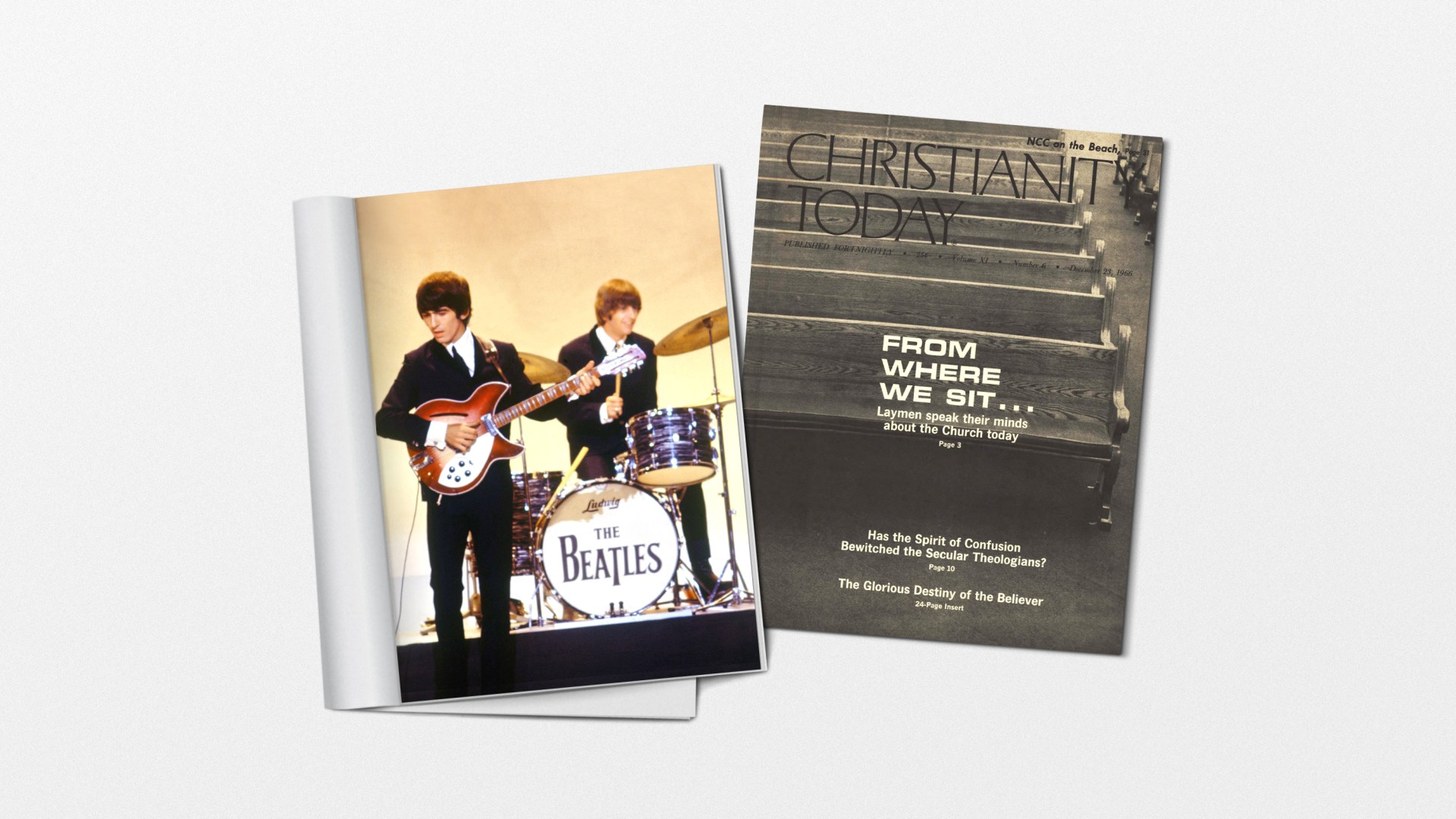
In 1966, CT reported on church activities but also on LSD, The Beatles, and the war in Vietnam.

An image of the Beatles and a CT magazine.
Christianity Today December 26, 2025
Illustration by Christianity Today / Source Images: Getty

CT started 1966 with a review of one church’s attempt to jazz up evangelism

Protestants have tinkered with jazz in worship for years. Now some see it as an evangelistic wedge. … [Presbyterian] pastor Bryant Kirkland said the [Duke] Ellington concerts were “an attempt to establish contact with people normally outside the church” and “churchgoers who are not ministered to by the usual presentations.”

Ellington hoped his concerts would “help to bring people into the fold.” One of his favorite words is “communication,” and he contends that informal words and jazz music can put across spiritual truths to many people when “good English would fly by them like a kite.”

So in New York he permitted publicity, an RCA recording, and a CBS-TV taping for broadcast January 16. … The choirs chanted the books of the Old Testament (nearly inaudible to concert-goers) while tenor sax man Paul Gonsalves screwed up his face with a hard rock solo in his famous Newport Jazz Festival idiom. After a screech solo by trumpeter “Cat” Anderson, Ellington quipped, “That’s as high as we go.” …

The whole bit was more of a maybe than a yes.

Many Protestants had turned against the idea of evangelism and personal confessions of faith in Christ. CT reported the development with concern, surveying the positions of a wide variety of church leaders, starting with Methodists:

Evangelism is the lifeline of Christianity. Since apostolic times it has been hard, controversial work. And it has always produced opposition outside the Church.

Today, however, there is a struggle over evangelism within the Church. Methodists were informed at a recent evangelism conference that revival services are now ill advised, in fact unchristian. The speaker, the Rev. Dr. Edmund Perry, a religious historian at Methodist-rooted Northwestern University, told the Miami Herald’s Adon Taft, “I abhor the notion of individual salvation.”

Traditional methods for proclaiming the good news of the gospel seemed to be fading fast in the late 1960s. CT reported that “there are fewer tent meetings and sawdust trails” and “altar calls in evangelical churches are probably hitting a new low this year.” But other new approaches were emerging

Traditional evangelistic methods based on hit-or-miss, take-it-or-leave-it proclamation of the Gospel are seen to be giving way to more specialized, in-depth approaches. Evangelicals in North America and abroad are realizing anew that deeds are fully as important as words, that positive dialogue is more effective than legalistic argumentation, and that winning converts is not primarily the task of paid clergymen. …

At Daytona Beach, Florida, two Bob Jones University-trained folk singers roamed the sands with an inter-religious entertainment and evangelism team during Easter week. Many hundreds of the 75,000 vacationing college students were counseled, and some (including at least one Hebrew) professed initial commitment to Christ. At Fort Lauderdale, some 250 miles south, where thousands of other students were soaking in the sun, an Inter-Varsity Christian Fellowship team set up an evangelistic effort.

In New York, Pentecostalist youth worker David Wilkerson planned to open a new training program for converts this week. His Teen Challenge organization, meanwhile, has begun holding Saturday night rallies at a theater on Manhattan’s Lower East Side.

In Colorado, evangelist Jack Wyrtzen conducted a three-day camp retreat attended by cadets of the Air Force Academy. A spokesman for Wyrtzen said “many cadets responded to the gospel invitation to receive Jesus Christ as their Lord and Saviour.”

The magazine published a special issue on evangelism and a second on the presentation of the gospel in the inner city—the first issue with a cover printed in color. CT profiled an urban church in Pittsburgh, talked to a Young Life leader reaching out to gang members, and caught up with a Christian college training social workers.  

At Philadelphia College of Bible, a new prong has been added to the long-established ministry to the city. In the new social-work undergraduate curriculum, the college is acknowledging and dealing with today’s inner-city crises.

Concern in this area is not new at the college. It saw extreme inner-city conditions in the second decade of this century, when it began. Since then, through days of prosperity and days of depression, it has consistently ministered to the poor, even before the word “poverty” was rediscovered. This ministry was carried on through the practical-work departments of the two Bible institutes that later merged to form the present college, and it is continuing through the present Department of Christian Service. The “new prong”—the Department of Social Work—will augment the general thrust by training workers for urban areas. …

Christian social agencies very much need born-again workers, especially those who go on to graduate school and qualify to become administrators. State laws more and more are requiring executives to have the master’s degree in social work. Lack of administrators with this level of training often jeopardizes the start or continuation of new agencies and services.

Throughout the year, CT reminded readers that every Christian was called to evangelize, with evangelism being “The Order of the Day.” 

The Church has ever been under orders to evangelize. Are the orders less urgent in this time of apocalyptic siftings and transitions? We claim to see in our domestic and international upheavals, in our plunge toward the abyss of unbelief, an inexorable movement toward the great denouement of the human story; it would thus be tragic if we were to soften the thrust of evangelism in this fateful hour.

Choruses of despair sound from all sides. And why not? One need not be a prophet to discern the signs of the times. …

But why, as evangelicals, should we be surprised at all this? … This is no time to be beguiled by unbelieving scholars who disown God’s Word and dishonor his Son; it is rather a time for men to match the mission of evangelism. In a day of incredible unbelief, those who still believe must fill a vast vacuum.

One sign of the times was the increasing popularity of psychedelic drugs. CT reported on “The LSD Cult.”  

A new cult is making its appearance across North America. The rationale, if it is to be taken seriously, is the bizarre theory of what its proponents call “expanding consciousness.” Principal promotion comes from the attention currently being given to lysergic acid diethylamide, better known as LSD, and other drugs that, taken internally, produce outlandish mental images.

High priest of the LSD cult is ex-Roman Catholic Timothy Leary, 45-year-old psychologist who in 1963 was fired from Harvard University for using students in LSD experiments. He then went on to become the world’s leading exponent of “mind-opening substances.”

“We regard him with the same special love and respect as was reserved by the early Christians for Jesus, by the Moslems for Mohammed, or the Buddhists for Gautama,” said Arthur Kleps in testimony last month before a United States Senate subcommittee. Kleps is identified as director of the “Neo-American Church,” which is supposed to have 500 members and churches in the Northeast, Florida, and California and is spreading.

CT noted the growth of the anti-war movement in the US. Unlike in previous military conflicts, the pacifists weren’t led by Christians

Some have supposed that the protest marches about the war in South Viet Nam were chiefly an evidence of Christian opposition to war. This, however, is a really erroneous judgment. A great many of those who are protesters against the war are openly atheistic, and some are frankly Communists. For example, the leadership of the protest at Berkeley, California, is now known to be admittedly Communist, with no reference to the Christian faith whatever.

CT asked a retired general to explain the US military tactics and make the case that American evangelicals should support the bombing of North Vietnam

The United States is faced with the alternatives of defeating the aggressor by military effort or of failing to do so. The latter would entail national humiliation, loss of prestige and influence in the world, and desertion of the South Vietnamese, who have every right to expect our full support and will be lost without it. It is probable that all of Southeast Asia would then fall to Communist military control. The worst effect, however, would very likely be the effect on the American people. This weakening of the moral fiber would bode ill for the future.

Wars are fought by men with weapons that can destroy life and property. Victory comes when one side destroys the other’s weapons and men faster than it loses its own, thus assuring the ultimate total destruction of its enemy’s forces if the conflict is continued. The greater the applied superiority, the quicker and cheaper the victory.

The prime minister of South Africa was assassinated in 1966. CT reported on his Christian faith and racist policies.

The son of a Dutch Reformed missionary who worshipped regularly at a Reformed church in Rondebosch, a suburb of the parliamentary city of Cape Town … [Hendrik] Verwoerd himself first achieved prominence as editor of Die Transvaler, organ of the then-minority Nationalists, as he backed Hitler to a degree and opposed South Africa’s participation in World War II. …

The succeeding years made Verwoerd a symbol of political success through racism. … In an August 26 cover story, Time characterized Verwoerd as “one of the ablest white leaders that Africa has ever produced. He has a photographic memory, an analytical mind and an endless capacity for work. He is a brilliant diplomat and an inventive politician.”

The full results of such abilities invested in the anachronistic cause of racial separation will only be known at the end of the current worldwide racial revolution.

The Roman Catholic Church entered a period of reform in the late 1960s, following the conclusion of Vatican II. CT editors noted that the church had not changed its position on the authority of the pope but that some Catholics were having “born again” experiences.

From scores of sources around the world reports filter in of priests, nuns, and laymen who have experienced the same kind of religious experience as their counterparts of Reformation and pre-Reformation days. Unlike the Reformers, who were forced out of the church, these modern disciples remain within the fold. Yet they have come to know Jesus Christ in an intimacy that sometimes surpasses the devotion of many Protestants. The reality of their experience we cannot question; the depth of their commitment and the open expression of joy in their newfound faith are good to behold. …

In the midst of change and renewal, evangelicals should reach out with heart and hand to those who, though they are in the church of Rome, are our spiritual brothers and sisters in Christ.

CT reported on Protestant leaders, including an Episcopal bishop who was “full of surprises.” That fall, he demanded the church try him for heresy

The Episcopal House of Bishops attempted to head off heresy proceedings against Resigned Bishop James A. Pike last month by adopting, 103 to 36, a statement denouncing Pike’s conduct and doctrinal statements. The attempt failed, for though Pike’s accusers seemed satisfied, the statement was so abhorrent to Pike that he moved to put trial machinery in motion “to clear my name” …

The committee’s 1200-word statement, which was adopted by the house, rejected Pike’s “irresponsible” utterances, and said “his writing and speaking on profound realities with which Christian faith and worship are concerned are too often marred by caricatures of precious symbols and at the worst, by cheap vulgarizations of great expressions of faith” …

Pike charged that “this House is not interested in theology, but only public relations.” When he raised a theological point he was ruled out of order.

CT also encouraged readers to pay attention to a British pop band named The Beatles. The founding editor of the Methodist Good News magazine reported his experience listening to “the Fab Four”:

The real contribution of the Beatles and of other popular singers to theological dialogue is their songs. Listen to the words. Listen and you will learn how lots of people look at life.

As the father of five children, I have become, perforce, a student of popular music. At latest count, five radios are to be found from the basement to the attic of our parsonage. At almost any time of the day or night, “pop” music (or so they call it) pours from one if not all of these radios.

For a long time I tried to shut my ears to the caterwauling and the frenetic beat, beat, beat. But after a while my middle-aged eardrums capitulated, and I began to listen. What I heard caused me to listen seriously. For the “go-go” music that blares from millions of radios proclaims a popular philosophy of life—and sometimes a theology as well.

Evangelical Christians need to be listening, painful as this suggestion may seem, because pop music reveals what many, many people are thinking; what sort of values they admire; what idols are worshiped by the pagans in our midst. Pop music gives us an important clue to where the action really is—or should be—in our apologetics these days.

Books

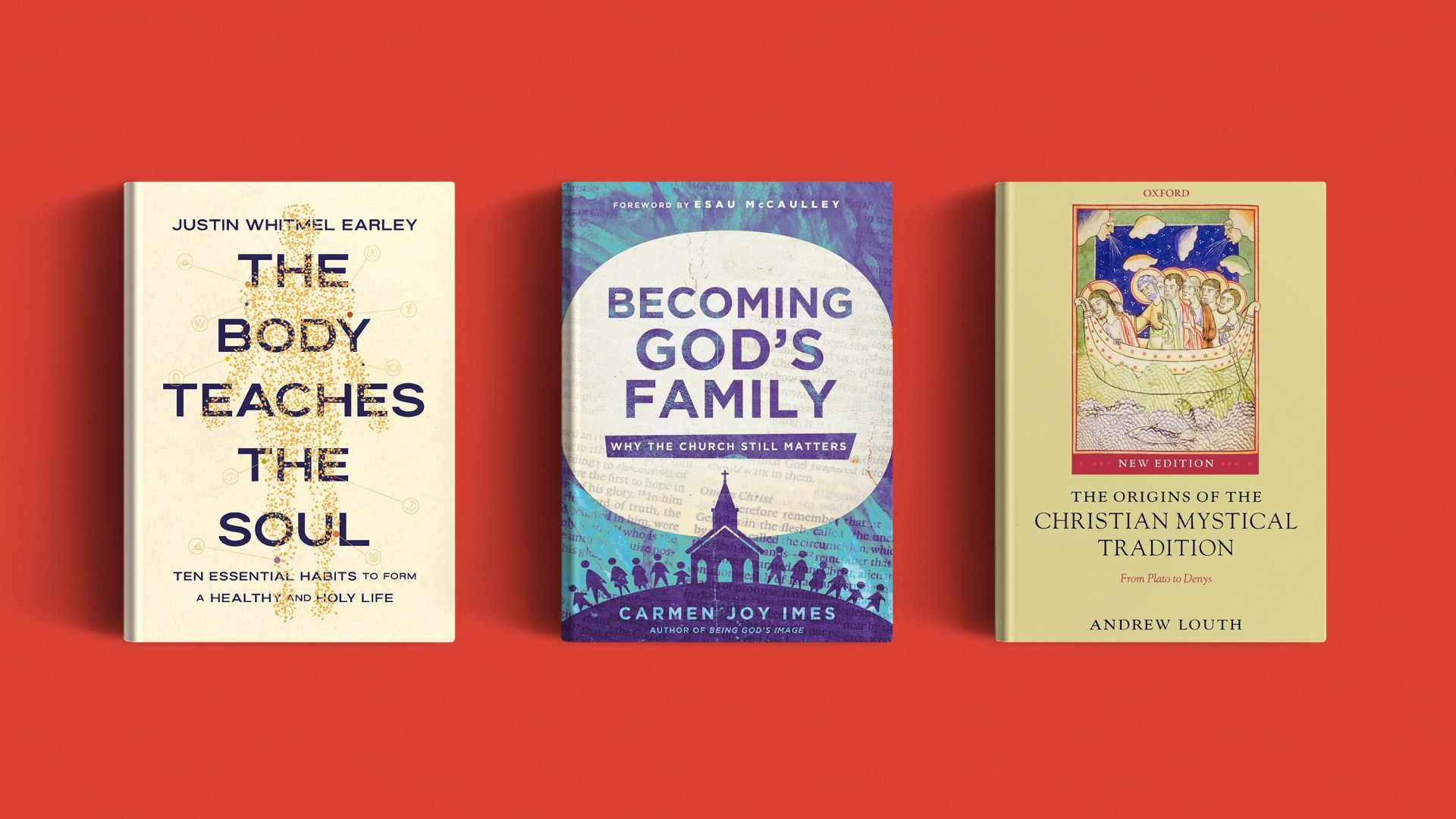
Why The Body Matters

Three books on ministry and church life to read this month.

Three book covers.
Christianity Today December 26, 2025
Illustration by Christianity Today

This piece was adapted from CT’s books newsletter. Subscribe here.

Justin Whitmel Earley, The Body Teaches the Soul: Ten Essential Habits to Form a Healthy and Holy Life (Zondervan, 2025)

When I was in high school, I was taught that the key to spiritual vitality was having a “quiet time,” which meant getting alone with God to read Scripture and pray. I am thankful for this practice, which is still foundational for my life with God. But as I’ve grown older, I’ve also felt the limitations of this approach. Prioritizing contemplation, I’ve often failed to appreciate the significance of my body. Prioritizing personal devotion, I’ve often undervalued the importance of the body of Christ.

Justin Whitmel Earley argues that rather than idolizing or ignoring our physical bodies, we should seek to image God through them. His title is a nod to Bessel van der Kolk’s popular book on trauma, The Body Keeps the Score. Like van der Kolk, Earley frames recovery as a matter of both training and healing. We can “garden” our bodies to lead our souls in the right direction, and this is a matter of attention as much as action. As he puts it, “To live with close attention to your body is to live with close attention to your soul.” To this end, Earley combines biblical reflection with scientific research to prescribe ten domains of bodily attention.

Beginning with breath, he discusses what it means to integrate the brain and shows how exercise can lead to “antifragility” (where stress makes us stronger). Along the way, he gently reorients dysfunctional habits related to food, sex, rest, and technology. But Earley’s book is no endorsement of wellness culture or our endless quest self-optimization; my favorite chapters were about reckoning with illness and remembering death. Sickness and death are unavoidable reminders of a broken world, but also of the Christian hope—“the redemption of our bodies” (Rom. 8:23).

Carmen Imes, Becoming God’s Family: Why the Church Still Matters (IVP Academic, 2025)

If Earley writes to convince readers that the Christian life is “a habit project” rather than a “head project,” Carmen Joy Imes shows that it is also a group project. In her book, she layers a powerful, cumulative case that God’s plan has never been simply to save solitary souls but to gather together a new family “from every nation, tribe, people and language” (Rev. 7:9). Extending the project of two earlier books (Being God’s Image and Bearing God’s Name), she offers a fresh retelling of the biblical narrative, cast in familial terms: family trauma (the exile), family reunion (the coming of Christ), and the family business (making disciples).

Imes is clear-eyed, deftly naming the failures of God’s family, from the mistreatment of Hagar by Abraham and Sarah to the misguided project of Christian nationalism. And yet, she writes with a hope rooted in the gospel, which allows us to glimpse God’s glory “at work in ordinary gatherings made up of all sorts of people.” Imes challenges Christians to find their home in the household of God, where God’s people gather to wait for God to do what only God can do.

Andrew Louth, The Origins of the Christian Mystical Tradition: From Plato to Denys (Oxford University Press, 1980)

Andrew Louth’s book is older and does heavier theological lifting, the sort we might expect from an early church scholar. Nevertheless, Louth’s historical excavation underwrites the arguments of Imes and Earley in significant ways. Tradition is a complicated term, yet there is a reason why Louth’s book is found on theologian Sarah Coakley’s shortlist of essential works of recent theology.

Louth shows how early church fathers wrestled with and resisted the development of a solitary and elitist spirituality, where “God and soul” are the only things that matter. To be sure, these Platonic streams exert a powerful gravity on Christian mysticism, one that lingers to the present day.

Louth concludes that the Fathers undermine “any tendency towards seeing mysticism as an elite, individualist quest for ‘peak’ experiences.” The spiritual (mystical) life is irreducibly embedded in the community of the church, and nourished by bodily practices that orient everyday experiences, not extraordinary ones.

We should keep getting alone with God, as Jesus did (Luke 5:16); but life with God includes so much more than “quiet times.” Spiritual vitality can never be purely “spiritual” or a solitary pursuit. It is something that can only occur as disciples pay attention to their bodies and find their place together in the body of Christ.

Justin Ariel Bailey is a professor of theology at Dordt University. He is the author of Interpreting Your World: Five Lenses for Engaging Theology and Culture.

Church Life

Hark! The Boisterous Carolers Sing

I grew up singing traditional English Christmas hymns. Then I went caroling with my church in India.

Indian drummers.
Christianity Today December 24, 2025
Edits by CT / Source Images: Rajesh Mishra, Unsplash

Last year, my husband and I went Christmas caroling with our church in Bhopal, a city in central India, one Sunday night. We brought along a mini djembe (an African drum) and an egg shaker, thinking we could add a fun percussive element to the singing.

We caught up with the crowd just as they were entering a church member’s home. The group of 30, predominantly teens and young adults, began singing their lungs out and clapping to the thumping of a bass drum.

“Sum sum sum sum sumbhavichallo, sumbhavichallo; Bethlehem goshalaya athu sumbhavichallo,”the carolers belted out with gusto. These Malayalam lyrics declared the miraculous joy of Jesus’ birth: It hap-hap-hap-hap-happened! It happened! In Bethlehem’s cowshed it happened!

More instruments joined in, including my husband with his djembe. Together, as if they could read one another’s minds, the percussionists progressively increased the tempo of the song.

Soon, the carolers broke out in dance. But instead of a gentle choral sway or synchronized choreography, people moved their bodies so spontaneously that I felt like I was in an unrestrained Bollywood-style celebration, like what takes place at local temple parades or Indian festivals like Holi and Diwali.

I had never seen Christians in India dance with such unbridled passion and energy before. “Is it acceptable for churchgoers to dance this way?” I thought to myself, feeling self-conscious and awkward as I attempted to move my body as enthusiastically as my fellow carolers.

There were other challenges: I am not fluent in Malayalam and could not pick up the words of the song and what they meant. The song’s exuberantly upbeat tempo didn’t help either.

Some of my discomfort around my Bhopal church’s caroling tradition probably stemmed from growing up in an Anglican church in the south Indian state of Tamil Nadu. The carols I sang then were all in English, with two- or four-part harmonies and specific stringed instruments accompanying the vocals. We might have lit a candle or clapped a little, but aside from the person dressed as Santa Claus, no one would dance at church.

Glorifying God at Christmastime can feel formulaic: We go to church, sing a few Christmas songs together, listen to a sermon, wish each other “Merry Christmas!” and head home. But glorifying God isn’t always a comfortable or respectable experience. It can be heartfelt and spontaneous, even if it might feel confusing or bewildering at times.

I wonder what the heavenly hosts sounded like when they praised God and said, “Glory to God in the highest heaven, and on earth peace to those on whom his favor rests,” after an angel declared to a group of terrified shepherds that a Savior had been born (Luke 2:8–14).

In my imagination, they probably sounded like an orchestra singing something Handelian. But maybe the angelic company was not as restrained in its praises to God as I had envisioned. They probably worshiped God as loudly as my church friends in Bhopal did. Perhaps they also danced as vigorously as David, the shepherd-king from Bethlehem (2 Sam. 6:14).

Caroling in India—a tradition called “carol rounds”—is a hallmark of the Christmas season. Usually, the singing and dancing begins after sunset and lasts from anywhere from 4 to 12 hours. The carol rounds may also be held over several days or weeks, and sometimes until the New Year.

Church congregations and Christian communities usually create a meticulous itinerary of homes to visit, ensuring that no church member is missed out and that hosts have enough time to prepare their homes to welcome guests.

The carolers often sing songs in the local or tribal languages of their communities. These songs are usually decided beforehand so lyrics can be printed out, and vocals are accompanied by whatever instruments people know how to play.

Only 2 percent of the Indian population identify as Christian, and amid the constant threat of persecution, church leaders also often have to ensure the carolers’ personal safety. In some Indian states, this may include securing permission from village leaders and government officials to go on carol rounds, making safe travel arrangements from one house to the next, and requesting a police escort if necessary.

After singing a few carols at a church member’s home, the family usually offers the carolers something warm to drink, a seasonal snack, or a cash offering for the church.

No one needs to have professional qualifications or skills to be part of the carol rounds. You just show up, ready to sing or dance in ways that extol God—even if people around you feel embarrassed or do not understand why.

As my caroling experience in Bhopal demonstrated, we do not need to construct an elaborate song repertoire to glorify God. All we need is to be willing to express what uncontainable joy in the Lord looks and sounds like. In doing so, we bring to life that vivid, sensorially delightful image proclaimed in Revelation 5: “To him who sits on the throne and to the Lamb be praise and honor and glory and power, for ever and ever!” (v. 13)

Several Indian Christmas carols reflect this powerful, and freeing, perspective on giving God glory. Take the Malayalam carol “Sumbhavichallo” (“It Happened”), which my church sang in Bhopal. The song’s composer, congregant K. S. Samkutty, wanted to communicate the incredulous news of Jesus’ birth in a humble stable through a dynamic, energetic tune. The lyrics’ catchy repetition, coupled with a rhythmic South Indian folk beat, makes this song a popular choice for collective rejoicing in my church. 

Another Indian Christmas carol, “Jishu Gadi Aja Nenju”(“The Lord Jesus is Born”), was originally written in Kui, a language spoken by the Pano and Kandha tribes in the southeastern Indian state of Odisha. My pastor friend Kishore Digal translated it into English last month, as he had fond memories of singing and dancing to the song as a child.

Set to the thumping, rat-a-tat beats of several dalgus (tribal drums), the song urges believers to awaken from spiritual slumber and be jubilant in praising God:

Let us all be joyful today
Today the Lord Jesus is born
We will worship him today …
Rise-up! Rise-up, oh heavy sleepers!
The Light has come that we may see it.
By the sun beams of Jesus,
Follow the path of holiness.
For he has come as the light of the world
And chased the darkness away.

When our worship practices become too familiar or staid—especially at Christmas—we may fail to realize the magnitude of what it means for the son of God to come into this world as a helpless, crying infant. We lose out on understanding the full breadth of emotions and expressions that arise when we fully give ourselves over to glorifying God, whether in private or in public spaces like our churches or neighborhoods.

Songs like “Sumbhavichallo”and “Jishu Gadi Aja Nenju”call us to break out of our spiritual lethargy. They encourage us to participate communally in celebrating Christmas with our brothers and sisters in Christ, just as the heavenly host broke out in praise to God for Jesus’ birth in the Book of Luke. Even if the lyrics and instruments used feel unfamiliar or strange, these songs’ messages are clear: Come and rejoice, for our Savior is here.

The carol rounds that many Indian Christians often participate in are a way to embody the good news of Jesus’ incarnation. We glorify God not only through the words we sing but also through our bodies and our cultures. In doing so, we confess our gratitude and devotion to him and acknowledge his lordship over us. We respond in awe at how he has interrupted the darkness and complacency of our world with Jesus, our Immanuel, just as Mary proclaimed in the Magnificat (Luke 1:46–55).

Glorifying God can look and sound messy. It can be boisterous and disorienting. And it is perfectly okay. I can’t wait to join my church in its carol rounds this year. It’s time I let loose and danced to “Sumbhavichallo.”

Ann Harikeerthan is a writer living in Bhopal, India.

Culture

‘Christian First, and Santa Next’

Even while wearing the red suit, pastors point people to Jesus.

A man wearing a Santa suit.
Christianity Today December 24, 2025
Edits by CT / Source Image: brazzo, Getty

Like many men who retire in their 60s, Bill Beachy grew out his beard, which was fading to white. He spent more time with his grandkids.

One day, his daughter snapped a picture of Beachy—reading glasses slid down his nose, inspecting a toy he was working on—and joked that her dad was turning into Santa.

That’s how Beachy, longtime Methodist pastor and professor at Asbury Theological Seminary, decided to become a professional Santa Claus. For the past ten years, Beachy has worked as many as 15 gigs each holiday season, posing with hundreds of kids and hearing their Christmas wish lists.

Graying pastors can make good Santas. They’re comfortable one-on-one or before a crowd, they’re tender toward kids, and they want to serve their communities. They also love Christmas.

“It’s a lot of fun to see the delight in the children and provide a safe space for them,” he said.

Evangelicals may see an inherent tension in pastors who portray Santa. Many forgo the myth of a man coming down the chimney to bring presents, and view the modern Santa figure as distracting from celebrations of Jesus’ birth.

But men of the cloth who don the red suit see the Santa gig as an extension of their ministry. They offer hope and encouragement to children and intentionally look for chances to point families to the true meaning of Christmas.

In addition to offering spiritual care, pastor Santas develop their own personas—drawing on the wonder of kids and anchoring their characters in the Christian tradition of Saint Nicholas.

In 2012, “Reverend Santa” Steve Lantz, an actor, sports chaplain, and ordained pastor in the Presbyterian Church in America, was hired to play a Santa in a holiday commercial for The Home Depot. Though he was in his 40s at the time, Lantz grew out his beard and realized that at 6’2″ and more than 300 pounds, he looked the part. In 2023, he decided to grow out his beard again and don the red suit.

“I didn’t realize that Santa is a niche market and once you’re in, you’re in,” he said.

Lantz now works several high-profile gigs each season, including holiday festivals at the Miami zoo and Ritz-Carlton hotel in Key Biscayne, Florida. He is also a member, with more than 20 other pastors, of the International Brotherhood of Real Bearded Santas and the Tampa-based Palm Tree Santas, where he’s one of a trio of pastors who participate.

Cameron Reeder first dressed as Santa in 2018, when he was a pastor at World Harvest Outreach in Hartselle, Alabama. He had a white beard, so a friend paid him to play Santa for his kids.

“That was the moment that it became a sideline and later a passion for me,” said Reeder, now 64 and retired from the pastorate.

Reeder enjoys the fellowship that working as Santa brings. He’s part of Cotton State Santas, a group of about 320 Santas working in Alabama. He knows of two other pastors in the group. And the work as Santa has become a family affair too. His wife joins him as Mrs. Claus, and his grandchildren accompany him as elves. 

During his first year working as Santa, Lantz went viral. As he posed for photos at an event at the Ritz-Carlton hotel, a little girl expressed reluctance to sit on his lap. Lantz took the rebuff in stride and assured the girl that she was under no obligation to sit on anyone’s lap. 

The girl’s mother filmed the interaction, and the 19-second clip of Lantz has more than 294,000 likes on TikTok and led to appearances on Good Morning America and other news programs. 

Lantz said the good news of the gospel is that you are not good enough but Jesus is. In his brief interactions with children, he tries to give them a version of that message. 

“I tell them I put them on the nice list not because of who they are but because of who I am [as Santa]. I tell them, ‘Keep making good decisions. I am proud of you.’” 

He also looks for opportunities to tell visitors about the real Saint Nicholas and his deeds of mercy toward the poor. 

He thinks of his work as Santa as a “Trojan horse” for sharing the gospel. He wears a star-of-Bethlehem brooch on the white trim of his hat, and when anyone asks about it, he’s happy to share with them about the first Christmas and the role of the star in pointing the shepherds toward Bethlehem. 

But he has faced detractors too. When the video of his interaction with a child went viral, he was profiled by The Christian Post and Fox News. Reading the comments on those pieces stung, as readers criticized his choice to portray Santa. But people he knows personally have no criticisms. 

“The only thing I ever hear from people I know is support,” he said.

Lantz’s work highlights the tension many Christians feel as they decide whether to invite Santa into their Christmas celebrations and consider to what extent his presence there eclipses the real meaning of the holiday.

“On the one hand, the replacement of Jesus Christ at Christmas by Santa Claus is a sacrilege,” wrote theologian William Lane Craig in a 2015 blog post about whether Christians should let their children believe in Santa. “Santa Claus is obviously a sort of God-surrogate: an all-seeing person endowed with miraculous powers, who’s making a list and checking it twice in order to find out if you’ve been naughty or nice.” 

Craig argues that while lying to children is wrong, parents can teach their children about the historical Saint Nicholas and explain that we pretend the man in the red suit is really Santa Claus.

Cameron Reeder’s red Santa outfit is fancier than the cheap suit he first used, and it now includes a belt buckle with the Nativity scene. If parents do not object, he happily tells children about Saint Nicholas and his gift giving and points to Jesus as “the center of the holiday,” he said. 

For Beachy, secular settings call for a silent witness to the welcome of Jesus in the Incarnation. He does not talk about the real meaning of Christmas there, but when he works an event at or for a church—like the two community-outreach events he will work this season hosted by churches—he’s happy to tell children to ask their parents to read them the Christmas story in Luke 2.

When Beachy works with under-resourced families, he tries to spend extra time with those children.

And in those settings, children sometimes unburden their hearts to the man in red. Reeder said children have “no secrets” with Santa, and he sometimes hears about deteriorating marriages or the death of a loved one.

“For requests like getting mom and dad back together, I will often ask the parent if it is okay to pray with the child,” Reeder said. “I explain that some things are beyond Santa, but God hears us when we pray to him. And he has the answers to life’s toughest questions.” 

Every Santa will encounter children who are skeptical. Lantz said if a family brings several children and the older children do not want to go along with the Santa act, he’ll pull them aside for a little jolly straight talk. 

“I will tell them, ‘Don’t worry about it. I know I’m not real. You know I’m not real. Just don’t tell your little sibling that I’m not real,’” Lantz said. 

Reeder said he uses those opportunities to tell children about Christmas’ true meaning.

Beachy said he sometimes encounters Santa skeptics, and he invites them to pull on his beard. Even if they remain unconvinced, he tells them that “regardless, I love them and believe they are special, and I will definitely visit them on Christmas Eve,” he said.

And when children inevitably ask for a new pet for Christmas, Beachy said he lets them down gently, telling them it’s too cold in the sleigh for animals.

Each season he receives more requests for appearances at events, parades, and photography sessions. One year he was Santa at a local event benefiting St. Jude Children’s Research Hospital in Memphis, where his grandson had received treatment.

But Reeder, whose Santa name is “Santa Cam,” said his clients should know what to expect from him. 

“I am a Christian first and Santa next. So if you get me for a Santa, you are likely to get a touch of the gospel message with me.”

Culture

How Pro-life Groups Help When a Baby’s Life Is Short

Christian groups offer comfort and practical support for expectant families grappling with life-limiting illness.

A newborn baby in the NICU
Christianity Today December 24, 2025
Mayte Torres / Getty

Six years later, Copeland’s stocking is still hung every Christmas.

And every year around this time, his parents, Matt and Taylor Walker, and their other children think about him and his brief life.

Copeland died less than an hour after he was born on December 22, 2019.

“We still look back at those 55 minutes joyfully, and we also still look back at that 55 minutes as a sorrowful experience,” Matt said.

Doctors diagnosed Copeland with Trisomy 18 while he was still in Taylor’s womb. His parents knew before he was born that their time with him would likely be short. While Matt has thought countless times since then about how he might have spent that treasured time differently, he has never once regretted having those minutes.

“There are so many God moments in that, even in the midst of sorrow,” Matt said. 

Had they chosen to abort when they learned the diagnosis, they would have had no time with their son outside the womb.

“We had a choice, and we chose to honor Copeland’s life and to honor God through that,” Taylor said. “And it’s been a tremendous experience for us because of that.”

Before the overturning of Roe v. Wade in 2022, many Americans chose to abort when discovering a pregnancy with a life-limiting diagnosis. A 2015 study of cases between 2005 and 2014 found that 94 percent of people whose unborn child had Trisomy 13, Trisomy 18, or Down syndrome chose to abort.

“A lot of times in those situations, the doctors suggest to abort,” said Amy Ford, founder of Embrace Grace, based in Fort Worth, Texas, and the author of Help Her Be Brave. “They will say things like, ‘It might be easier for you to not have to carry this baby full-term because the baby may not make it full-term.’”

Some state laws are making abortions harder to obtain in these situations. According to the Guttmacher Institute, a pro-choice organization that tracks reproductive rights in the US, 41 states now have some form of abortion ban with limited exceptions. 

According to Guttmacher, 28 of the 41 states that restrict abortion do not allow any exceptions for fatal fetal abnormalities, with four other states allowing exceptions up to 20, 24, or 28 weeks gestation. 

As abortion options diminish, Christian support groups are finding new opportunities to come alongside parents facing difficult times ahead.

Embrace Grace focuses on supporting single and pregnant young women with unplanned pregnancies by connecting them with a church community. The organization trains people to lead support groups and now has a network of more than 1,100 at churches in all 50 states. In 2023, they ministered to 3,880 expecting mothers and fathers, and that number rose to around 5,400 by 2025. 

They also have a campaign that gives “Love Boxes” to expectant mothers. Each box includes encouraging messages; personal stories from other moms; and resources that connect women to local Embrace Grace support groups, where they can receive emotional, spiritual, and practical care.

“Every Love Box represents a moment when a woman is reminded that she is not alone,” Ford said, noting that 150,000 of them have been distributed since 2012. “These boxes are often the first step toward a mom choosing life and discovering a community that will walk with her.”

Ford said that for many, finding out a life-limiting or life-altering diagnosis on top of dealing with the challenges of an unplanned pregnancy can be overwhelming. She believes this is an opportunity for Christians to offer hope.

“We are trying to walk with them and letting them see the bigger picture—that, with God, they have the strength to walk through it and they don’t have to walk through it alone—that we’re in this with them.”

While Embrace Grace’s ministry is for any woman dealing with an unexpected pregnancy, some expectant mothers they care for do receive a diagnosis of a fatal fetal abnormality. Ford is grateful she can point people to other organizations like Abel Speaks, a Texas-based organization that offers life-affirming support for parents walking through a life-limiting pregnancy diagnosis from all parts of the US. 

This support can take the form of counseling, medical connections, or recommendations for a photographer to capture images from their time with their child or on how to plan a celebration of life.

“While we don’t track our work through a political lens, we can say that awareness of our organization has steadily grown in recent years, and as a result, more families are finding their way to us,” said Abel Speaks director of operations Kimberly Bradley. 

The organization has helped close to 700 families since it started in 2018. As of December 10, it had already served 128 families this year.

“Each story is deeply personal, and we are honored to meet families right where they are—providing care, resources, and community in the midst of such a difficult journey,” Bradley said.

Taylor Walker remembers how helpless she felt in the hours and days after learning Copeland’s life would be short.

“There was no one in our community or the church community, our friends group—nobody that had experience with this,” she said. 

So she got on Instagram and typed “Trisomy 18” in the search bar. 

That’s how she found Abel Speaks.

“I was just thrilled when I got off that first call with Kelly [Crawford], the founder,” Taylor said. “It gave me a new sense of hope and peace that we would be okay.”

After Copeland died, the Walkers made a point of keeping his memory alive with traditions such as the Christmas stocking they hang each year. They also became mentors with Abel Speaks so they could help other parents. They are now directors of family care for the organization.

Through the joy and pain they experienced in 55 minutes with Copeland, they’re able to support others.

“We know there are a lot of questions, but having walked this journey and having learned from others as well who have walked that journey, we just want to support them and love on them the best that we can,” Matt said. 

Taylor naturally has a heart for mothers going through what she did.

“It’s so much at first, but I do try to instill that courage in them to know that the life that they’re carrying still has so much meaning and the child was meant for them regardless of any diagnosis,” she said. 

The Walkers said it meant a lot for them to know that other Christians from their church and from Abel Speaks were praying for them, and to have believers point them back to the reason Jesus died—to offer the hope of eternity with him and their loved ones. 

“I remember a few specific conversations in the midst of our deep grief; our pastor was so good to remind us of God’s goodness and the faithfulness through his Son,” Taylor said. “I know that our faith when we were newly grieving was strong enough to hold and stand firm, but I also know the support of our community in that time has made a huge impact in the way we now grieve. 

“I don’t feel like I need to hide it. I feel safe and confident to share my grief with the community, friends, and family and ask for prayers when I am struggling.”

That perspective during trials offers a bigger picture of hope that they share with others.

“It doesn’t make the grief or the loss disappear, but it does shape how they walk through it,” Taylor said.

She said the perspective is in line with Romans 8, where Paul talks about how present sufferings can’t be compared to the glory that will be revealed (v. 18). 

“It’s about having a community that gently reminds you that you’re not alone and that there’s a greater story of redemption and hope even in the midst of heartache.”

For those who are grieving around the holiday season, as they have for the past six years, the Walkers encourage families to continue to speak their child’s name. 

“We know the emptiness that comes when you are gathering around as a family, and you feel like your little one has been ‘forgotten,’” Taylor said.  “We have found that including them in special ways, like lighting a candle in their honor, can be a great way to help family or friends think of them with you.”

In addition to continuing to hang Copeland’s stocking, the Walkers also put up a small tree each year with ornaments they’ve been given or bought specifically for Copeland.

“Our kids love to decorate that one, and it’s always a sweet way to remember him with our living children,” Taylor said. “Copeland’s birthday is on the 22nd, and while it does make the season a little more heavy, it is also a sweet reminder of Jesus’ birth and the gift of his life.“ 

Because of Jesus, they have an eternal hope.

“Matt and I know that we will see Copeland again.”

Culture

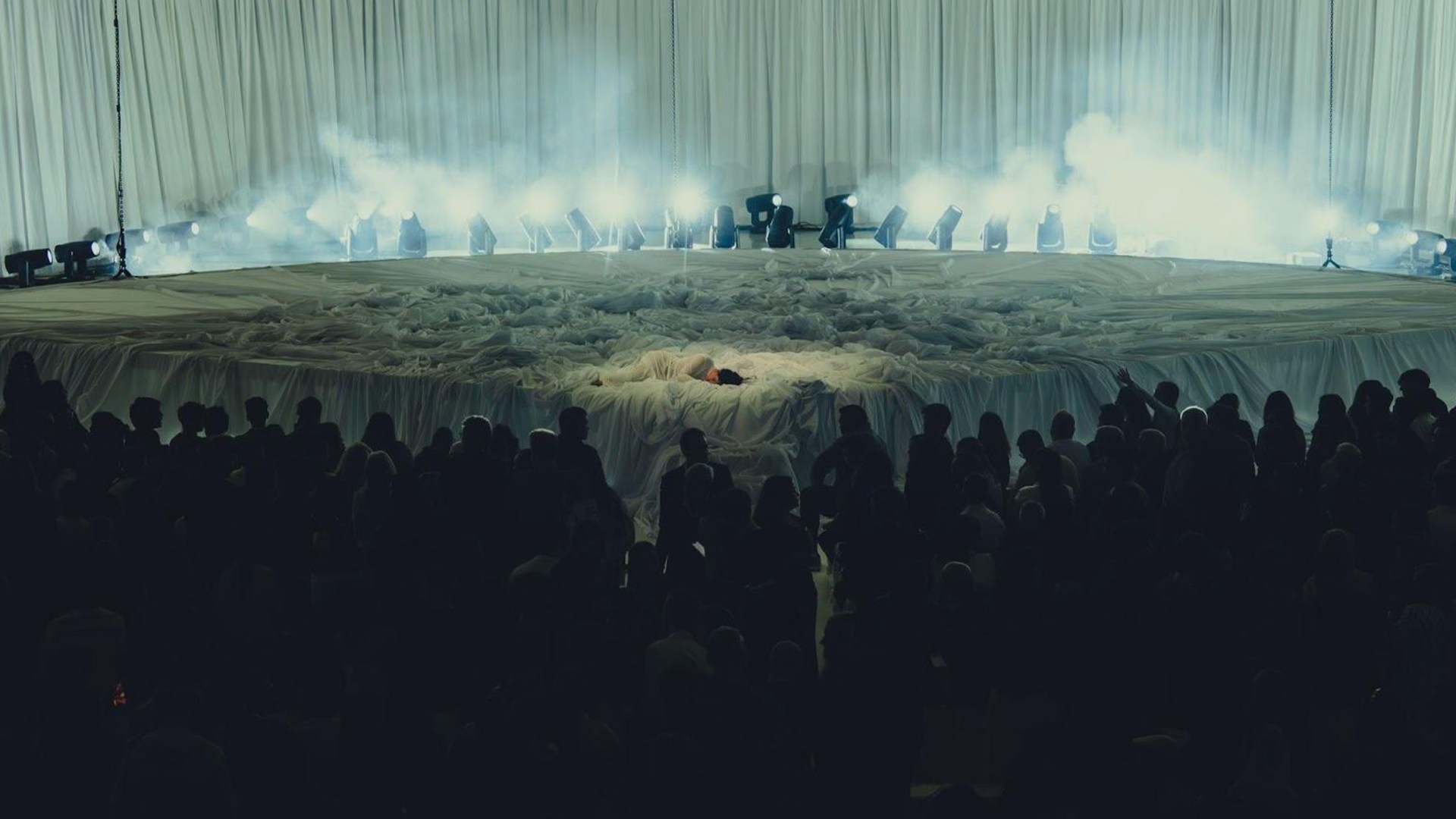
What Rosalia’s ‘LUX’ Reveals About Religion Today

Young women score higher in “spirituality” than young men, but they’re leaving the church in droves. That comes through in recent releases like this one. 

An image from a performance by Rosalia.

Rosalia performing songs from her newest album, "LUX."

Christianity Today December 23, 2025
Copyright © Sony Music Entertainment Canada Inc. All Rights Reserved.

Critics love Lux, the fourth album from Spanish pop artist Rosalía. When the record was released this fall, The New York Times called her singing (in 13 languages!) an act of “practiced mastery,” and Pitchfork raved about the “operatic lament for a new generation, an exquisite oratorio for the messy heart.” As 2025 comes to a close, Lux is appearing on lots of best-of lists.

Lux is exciting, at times breathtaking and surprising. It’s also spiritual. It “harkens back to an older tradition of Christian art,” wrote The Atlantics music critic: “the symphony written for the glory of God.”

The album is filled with religious imagery, with allusions to female saints and sages across cultures and religions. “Berghain,” its first single, references Hildegard von Bingen’s experience of receiving a vision from heaven:

Die Flamme dringt in mein Gehirn ein
Wie ein Blei-Teddybär
Ich bewahre viele Dinge in meinem Herzen auf
Deshalb ist mein Herz so schwer
(The flame penetrates my brain.
Like a lead teddy bear
I keep many things in my heart.
That’s why my heart is so heavy.)

In Jeanne, Rosalía sings from the perspective of Joan of Arc on the eve of her martyrdom:

Je dis adieu
Je m’en remets
À mon Dieu
À ses vœux
(I say goodbye.
I entrust myself
To my God,
To his vows.)

She sings of non-Christian “saints” too: Buddhist nun Vimala, the Sufi mystic Rābiʿah al-ʿAdawīyah and Daoist master Sun Bu’er, as well as the Old Testament’s Miriam.

Religious imagery is nothing new for Rosalía. Crowned with stars on the cover of her second album, El Mal Querer, she looks very much like the Virgin Mary. Some of her song titles include the words liturgia (“liturgy”), lamento (“lament”), and éxtasis (“ecstasy”).

This time, though, the pop artist is making music on another plane. Like The Letters of Saint Catherine of Siena, Lux blurs, if not erases, the line between human and divine love. Often, the listener cannot be sure whether Rosalía is speaking to a lover or to God:

Sei l’uragano più bello
Che io abbia mai visto …
Fai tremare la terra
E si innalzi al tuo fianco
(You are the most beautiful hurricane
That I have ever seen. …
You make the earth tremble,
And it rises by your side.)

She sings these words in “Mio Cristo Piange Diamanti,” a song inspired by the friendship between Clare of Assisi and Francis of Assisi.

Rosalía’s dominating performance—when the album was released, she became the first artist to secure five No. 1 debuts across Billboard charts—is the latest in a recent series of high-brow artistic works to openly, even favorably, explore Christianity.

In 2019, Phoebe Waller-Bridge’s Fleabag season 2 followed the titular character as she fell in love with a Catholic priest who, despite loving her back, chose God (and his vows of celibacy) over her. Two years later, Sally Rooney’s novel Beautiful World, Where Are You depicted two friends mourning the “misery and degradation” of late capitalism and finding something more than inspiration in the person of Jesus. “I am fascinated and touched by the ‘personality’ of Jesus,” writes Alice to her friend Eileen. “He seems to me to embody a kind of moral beauty, and my admiration for that beauty even makes me want to say that I ‘love’ him.”

Lux, too, is suffused with longing for God. In “La Yugular,” Rosalía chants,

Y un continente no cabe en Él
Pero Él cabe en mi pecho
Y mi pecho ocupa su amor
Y en su amor me quiero perder
(A continent can’t fit in Him,
But He fits in my chest,
And my chest occupies His love,
And in His love I want to lose myself.)

On “Sauvignon Blanc,” she seems to embody Matthew 6:21, expressing her desire to throw away earthly riches in order to attain God.

Perhaps these literary and musical shifts aren’t surprising. After all, religion is trending. The Pew Research Center reports that “Americans’ views about religion in public life are shifting” and a “growing share of the public takes a positive view of religion’s role in society.” Even in places known for their rampant secularism, like Silicon Valley, Christianity has seen a resurgence of interest, and church attendance is up.

Across the country, young people seem especially curious. Confidence in their government and economy is low as prices and temperatures rise. In unstable times, people search for a foundation, and Gen Z isn’t exempt. Many are returning to faith in God—or at least they want to talk about God. This is not the “spiritual but not religious” faith of the elder millennial. What we are seeing is a heightened interest in religion in its most ritualistic forms and, specifically, in the God of Christianity.

Yet although Rosalía believes in God, she is not a Christian. Lux, though worshipful at times,is not a worship album. Though Fleabag’s priest chooses Christ in the end, Fleabag herself does not. And Rooney’s Alice hesitates at Christianity’s call to repent and surrender, writing, “I have that resistance in me, that hard little kernel of something, which I fear would not let me prostrate myself before God even if I believed in him.” In all these works, young women yearn for connection with God (or at least with his ministers) and teeter on the verge of transformation. Ultimately, for one reason or another, they don’t take the plunge.

Perhaps there’s a correlation between these artistic depictions and recent surveys of young women showing that, although they score higher in “spirituality” and “attachment to God” than their male counterparts, they are nevertheless leaving the church in droves. Many of these young women cite sexism and dissonance between church teachings and their political views as their main reasons for leaving. Gen Z women are more likely to identify as pro-choice, queer, and nonbinary, making the issues of abortion and LGBTQ rights feel particularly personal.

Some of the dissonance these young women feel is no doubt the result of sinful behavior from Christians—ranging from discriminatory and hypocritical to downright evil. Some of this dissonance comes from the fact that the historic Christian sexual ethic and pro-life stance are no longer givens in Western society, stereotyped as needlessly judgmental and constraining.

Meanwhile, among Gen Z men, there’s been a surge in church attendance. For the first time in a long time, young men’s church attendance outstrips young women’s. The uptick has been reported by some Christian publications as a revival.

It is good that these young men are coming to church. It means that they, like Rosalía and the characters in Waller-Bridge’s and Rooney’s works, see something within Jesus that gives them hope. However, if reports showing a correlation between grievance culture, Christian nationalism, and Gen Z men’s renewed interest in church are true, then the revival is not uniformly encouraging.  

If young men are converting to Christianity because of a desire to protect conservative, Western values, they are missing the point. So are the young women who express a keen interest in Jesus but balk at the restrictions of discipleship.

Both of these groups have some legitimate reasons for their mixed motivations toward Christianity. But true discipleship requires a willingness to surrender all our beliefs, desires, and identities to the “sharp compassion” of our “wounded surgeon”—that gentle, lowly, and altogether holy one we call Jesus. To every generation, he gives a call to death, in order that we may have life.

It’s still rare for young people to come to church, whether in buildings or in literature. What we must offer while they’re here is the call to discipleship. As Rosalía so poignantly sings in “Sauvignon Blanc,” “Mi luz / La prenderé / Con el Rolls-Royce / Que quemaré / Sé que mi paz / Yo me ganaré / Cuando no quede na’ / Nada que perder” (“My light, / I’ll turn it on / with the Rolls-Royce / that I’ll burn. / I know that my peace / I will earn / when there’s no— / nothing left to lose”).

Christina Gonzalez Ho is the cofounder of Estuaries. Joshua Bocanegra  serves with that ministry, which is dedicated to discipling community leaders in a way that is rigorous, Spirit-filled, and holistically healthy.

Books

My Top 5 Books on Christianity in East Asia

Insights on navigating shame-honor cultural dynamics and persecution in the region.

Five book covers.
Christianity Today December 23, 2025
Illustration by Christianity Today

The following books were selected by Kazusa Okaya, a PhD candidate at Durham University and a researcher at the Kyoritsu Christian Institute at Tokyo Christian University.

Christianity first entered East Asia as early as the seventh century, when Nestorian missionaries arrived in China’s Tang dynasty. A second, more sustained wave of missionaries arrived in the 16th century, led by Jesuit missionaries such as Matteo Ricci in China and Francis Xavier in Japan. Catholicism spread to Korea from China in the 18th century, while Presbyterian and Anglican missionaries arrived in other parts of the region one century later.

Today, East Asia displays a striking diversity in its church-state relationships. On one end of the spectrum is South Korea, where roughly 30 percent of the population is Christian and believers often have a strong influence in society, culture, and politics. On the other end is North Korea, which is consistently ranked among the most dangerous places to be a believer.

China remains something of a religious black box, as rapidly growing underground churches coexist with strict state control and persecution. Japan presents yet another contrast as one of the most secular nations in Asia, where Christians account for less than 1 percent of the population.

The five books I recommend below serve as a sampler of Christianity in East Asia from an evangelical perspective. They span several genres, from a missionary memoir and a collection of sermons by persecuted pastors to a historical survey of the faith, an exploration of theological ethics, and an overview of missiology in the region.

Utterly Amazed by Miriam Davis

Missionary memoirs often spotlight the triumphant and the miraculous while skimming over hardship, leaving readers feeling inadequate in comparison or admiring missionaries’ achievements more than the God they serve.

English missionary Miriam Davis’s memoir, which charts her 42-year-long ministry in Japan, avoids those pitfalls. Besides being filled with practical wisdom on cross-cultural ministry, Davis writes with honesty about her struggles and disappointments. She recounts an unofficial engagement to a Japanese Christian that ended painfully under the weight of cultural and familial pressures. She also describes her experience of burnout and the long road to recovery, along with the unsettling sense of not being herself as she returned to ministry feeling less capable than before.

Davis is now an assistant curate at an Anglican church in the UK, but her memoir is an invaluable read for anyone considering overseas missions in East Asia. It also holds relevance for churches and supporters of long-term missionaries. Many missionaries find it difficult to be fully honest with their supporters, fearing that disclosures about loneliness, relational struggles, or exhaustion might put their financial support at risk. Davis’s openness offers a different model, one in which vulnerability is regarded not as weakness but as a place where we can find what she calls God’s “treasures in darkness.”

Asian Church History: Arise Asian Church by Bong Rin Ro

Korean American missiologist Bong Rin Ro is a towering figure in East Asian theological education. He was one of the first missionaries of Asian descent commissioned by missions organization OMF and the first general secretary of the evangelical Asian Theological Association.

Bong’s 2024 publication, available as a free e-book, devotes nearly half its pages to East Asia. This is not a conventionally academic tome; what sets it apart is its unapologetically evangelical and missional lens. Reading it feels less like consulting a detached historian and more like attending a class led by a seasoned missionary, one who recounts the unfolding story of Asian Christianity with passion and conviction.

The book offers details that often fall outside formal academic histories, like snapshots of evangelical denominations, mission organizations, and conferences led by Asian Christians. A substantial, supplementary 258-page volume includes a useful timeline of denominational and missionary movements organized by country.

Still, the book has its limitations. Its evangelical commitments sometimes lead to historical or theological oversimplifications, especially in its quick dismissal of nonevangelical traditions under the broad label of “liberal theology” and the near absence of discussions on decolonial or postcolonial missiology. Despite these caveats, the book remains an accessible and spirited introduction to East Asian Christianity.

Asian Christian Ethics: Evangelical Perspectives edited by Aldrin M. Peñamora and Bernard K. Wong

This volume—a sequel to Asian Christian Theology: Evangelical Perspectives—pursues the same aim as its predecessor: to sketch a framework for Christian ethics from an Asian evangelical viewpoint. It is a helpful resource for missionaries, ministers, and laypeople who are interested in how to live Christianly amid complex multicultural and multireligious norms.

Five of the book’s fifteen chapters are written by scholars from East Asia. They include must-read chapters on filial piety and its grounding in Confucian moral thought. Two authors in the book, Hong Kong theologian Bernard Wong and Korean theologian ShinHyung Seong, address this issue directly, albeit from different perspectives.

Wong urges Asian Christians to move beyond an idealized traditional family structure, which is often patriarchal, to a Christ-centered model that places Jesus as the true head of the household. Seong compares Confucian ethics with scriptural paradigms and contends that Christianity can transform the Confucian notion of filial piety.

Theologian Agnes Chiu, who teaches at China Evangelical Seminary North America, also applies this East Asian emphasis on family relationships in her chapter on political engagement and public theology. Chiu argues that the church can provide supportive networks for public engagement by becoming a surrogate family for believers who are often ostracized by becoming Christians in China.

Ministering in Honor-Shame Cultures by Jayson Georges and Mark D. Baker

The thread of shame and honor runs widely through many East Asian cultures, shaping everything from family dynamics to public behavior. This concept can feel especially difficult to grasp for Western missionaries who are formed in more individualistic cultures and may overlook the relationship between sin and shame.

Georges and Baker’s book illuminates how shame, a concept that appears frequently in Scripture in relation to sin, is tied to identity and not merely to action. Consequently, an Asian understanding of shame offers a valuable lens for understanding the pervasive nature of sin as estrangement from God.

The book has received criticism for its novel approach to the atonement. Some readers also worry that framing the gospel in culturally specific ways may imply that there are multiple gospels: an honor-shame version for the East versus a guilt-forgiveness version for the West. But the authors’ intent is to present the gospel in a way that reveals its beauty through different cultures, like how a diamond refracts light from different angles.

The book’s greatest strength lies in its third section, which brims with thoughtful guidance on spirituality, relationships, evangelism, conversion, ethics, and community within shame-honor contexts. Readers who disagree with some of the book’s theological emphases will still find it helpful in understanding how shame and honor function in East Asian identity and community formation.

Faith in the Wilderness: Words of Exhortation from the Chinese Church edited by Hannah Nation and Simon Liu

This book is unlike any devotional most readers have encountered. It contains a series of sermons written by persecuted Chinese Christians, opening a rare window into the church’s struggles and its spiritual imagination through sermons preached by leaders who minister under constant pressure.

I find it fascinating to encounter these pastors’ varying perspectives on being a Christian witness in the political arena. One sermon boldly denounces preachers who fail to confront falsehood and hypocrisy among government officials, calling out such leaders as prophets who do not speak truth. Another sermon articulates a deeply rooted pilgrim theology, warning Christians not to place their hopes in any political program.

Admittedly, an overemphasis on pilgrimage-related imagery may risk sliding into a kind of Gnosticism—a form of escapism that ignores social suffering. But these pastors turn the pilgrim metaphor into a much-needed corrective for the church, especially against forms of Christianity that tie earthly prosperity or political power to the advancement of the gospel.

These sermons will both encourage and unsettle readers far beyond China’s borders. They invite Christians everywhere to reconsider what faithful witness looks like in their own contexts, and they serve as a powerful reminder to pray for and stand alongside members of the body of Christ who live under persecution.

Check out other top 5 books on Christianity in South Asia and Southeast Asia.

addApple PodcastsDown ArrowDown ArrowDown Arrowarrow_left_altLeft ArrowLeft ArrowRight ArrowRight ArrowRight Arrowarrow_up_altUp ArrowUp ArrowAvailable at Amazoncaret-downCloseCloseellipseEmailEmailExpandExpandExternalExternalFacebookfacebook-squarefolderGiftGiftGooglegoogleGoogle KeephamburgerInstagraminstagram-squareLinkLinklinkedin-squareListenListenListenChristianity TodayCT Creative Studio Logologo_orgMegaphoneMenuMenupausePinterestPlayPlayPocketPodcastprintremoveRSSRSSSaveSavesaveSearchSearchsearchSpotifyStitcherTelegramTable of ContentsTable of Contentstwitter-squareWhatsAppXYouTubeYouTube