News

How Rhode Island Churches Responded to the Brown Shooting

God “draws near to us in our suffering,” local pastor Scott Axtmann preached after Saturday’s deadly attack. Area ministries were active too.

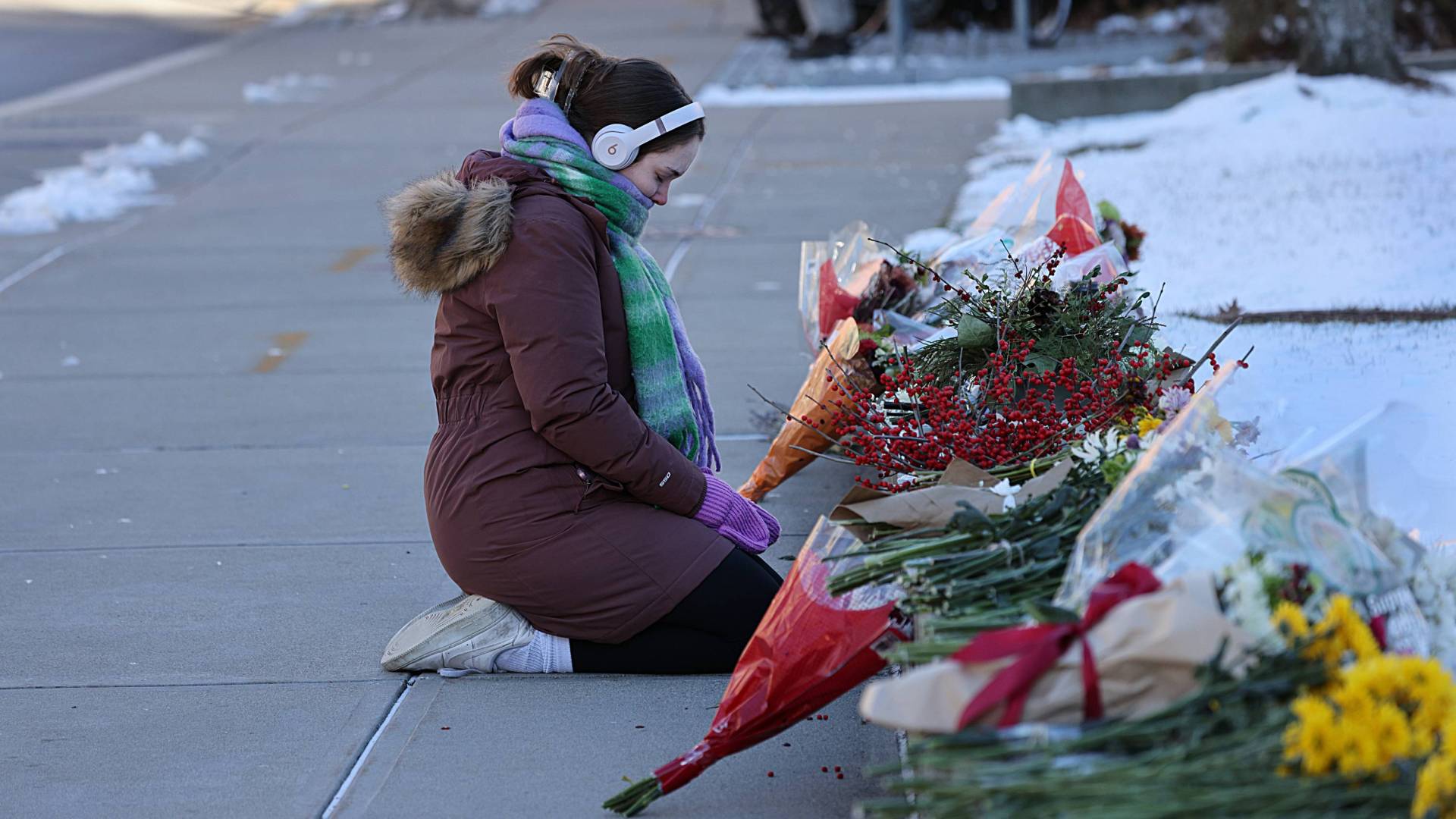
Brown University student kneels in front of a memorial

Photo by Suzanne Kreiter/The Boston Globe via Getty Images)

Christianity Today December 16, 2025

Brown graduate student Maddy Wachsmuth’s first notice of an active shooter on campus came from a GroupMe chat with other Christians. Even before students received official alerts, texts streamed in: “Urgent. Take cover. This is not a joke,” she described.

“It was scary getting messages the whole time,” she told CT. Some updates came from a student barricaded in a classroom. Wachsmuth prayed as she monitored the chat of nearly 300 Christian students and alumni. Later, students gathered at campus ministry leaders’ homes to pray, cry, and eventually eat takeout.

Three days after the shooting, the campus is much emptier between canceled finals, winter break, and a gunman still at large. But faith leaders, pastors, and Brown spiritual faculty are showing up, providing care for those who’ve remained after the attack that claimed the lives of two students and injured nine others.

On Monday, near the shooting’s site, a sign attracted passing students: “Do you need a hug? Prayer? Coffee, a snack? To talk to a trauma pastor or therapist? Place to stay? A ride to the airport? Or anything else? Let us know!”

For hours, therapists, pastors, and other Christians prayed with students and handed out hot drinks. Over the weekend, nearby Sanctuary Church put together 100 care packages for social workers and frontline responders. “Christians [shouldn’t] run from a crisis. They run into it,” said Andrew Mook, pastor of Sanctuary. “[We’re] trying to embody that as much as we can.” 

When Mook heard about the active-shooter situation unfolding, his thoughts flew to the dozens of Sanctuary members who might be in harm’s way. Over the next 15 hours, he and other church members reached out to as many of the students, postdoctoral researchers, faculty, and staff they knew. They set up a virtual prayer room and conversed there all night.

Mook learned later that the shooting left one of Sanctuary’s student attendees in critical condition. Another had a close escape from the lecture hall targeted by the gunman. Students spent the night in lockdown in dormitories or barricaded in university buildings. On Sunday, Sanctuary held a service after consulting with the mayor’s office. After the message, one Brown student shared her harrowing experience with the congregation. 

Other local ministries have also been busy responding. “Just about everyone knows someone directly connected to those who were in the classroom when the shooter arrived,” said Jarrod Lynn, a chaplain at Brown with Athletes in Action, a campus ministry focused on student athletes. “The sadness [and] weight of it all is slowly starting to settle in,” he said.

Christian Union, a campus ministry that serves Ivy League schools, routinely hosts events and makes its ministry center a place students can grab a nap, a snack, and a listening ear. Both murdered students had visited, and one, sophomore Ella Cook, was also a member of Christian Union.

Cook “exuded Christ,” said Kimani Smith, a multisite ministry director with Christian Union. “She was someone who was a sincere believer, and her walk showed it.” The pastor of Cook’s home church, an Episcopal congregation in Birmingham, described her as “incredibly grounded and generous and faithful” and “a bright light.” 

Recently, Cook had also started volunteering at a nearby crisis pregnancy center, according to Jared Cowgur, the lead pastor at BridgePointe Church, which partners with the center. “The tragedy hits close to home,” he said. “The staff at that ministry are understandably shaken.”

The other student killed was freshman Mukhammad Aziz Umurzokov, a scholarship recipient and naturalized citizen from Uzbekistan. Umurzokov was Muslim, Smith told CT, but “he was open to hearing about Christ.” Their encounters, preserved in snapshots in Smith’s camera roll, now strike him as a “divine moment of God allowing us to be a witness.”

Pastor Jacob Van Sickle of Sacred City Church learned about the shooting through a text from a Brown student while at his church’s annual Christmas party in downtown Providence. The party turned into a prayer vigil.

Around 10 to 20 percent of local churches’ populations are college students, most from Brown, Van Sickle estimated, and Cook had visited his church several times. That heartbreaking recognition “brought it closer to home,” he said. “Our students will be mourning in a different way.”

Lead pastor Scott Axtmann at Renaissance Church in the Riverside neighborhood is still hearing from members who had to shelter in place, were in the building just minutes prior to the shooting, or personally knew the victims. On Sunday, he went ahead with his prepared message, which focused on how Christ suffers alongside humanity. 

“He understands. He sympathizes. He suffers with us in our pain,” Axtmann preached. “It’s easy to feel alone in our pain, but the truth is that we are not alone. God is with us. … He draws near to us in our suffering.”

Though the shooter was still at large and she was running on little sleep, Brown student Wachsmuth felt compelled to go to Sanctuary as usual on Sunday. “It’s weird that we’re in this season of Advent,” she said, “longing for the New Jerusalem and longing for every tear to be wiped away. We’re feeling that even more.”
Books
Review

Union With Christ Means A Responsible Life

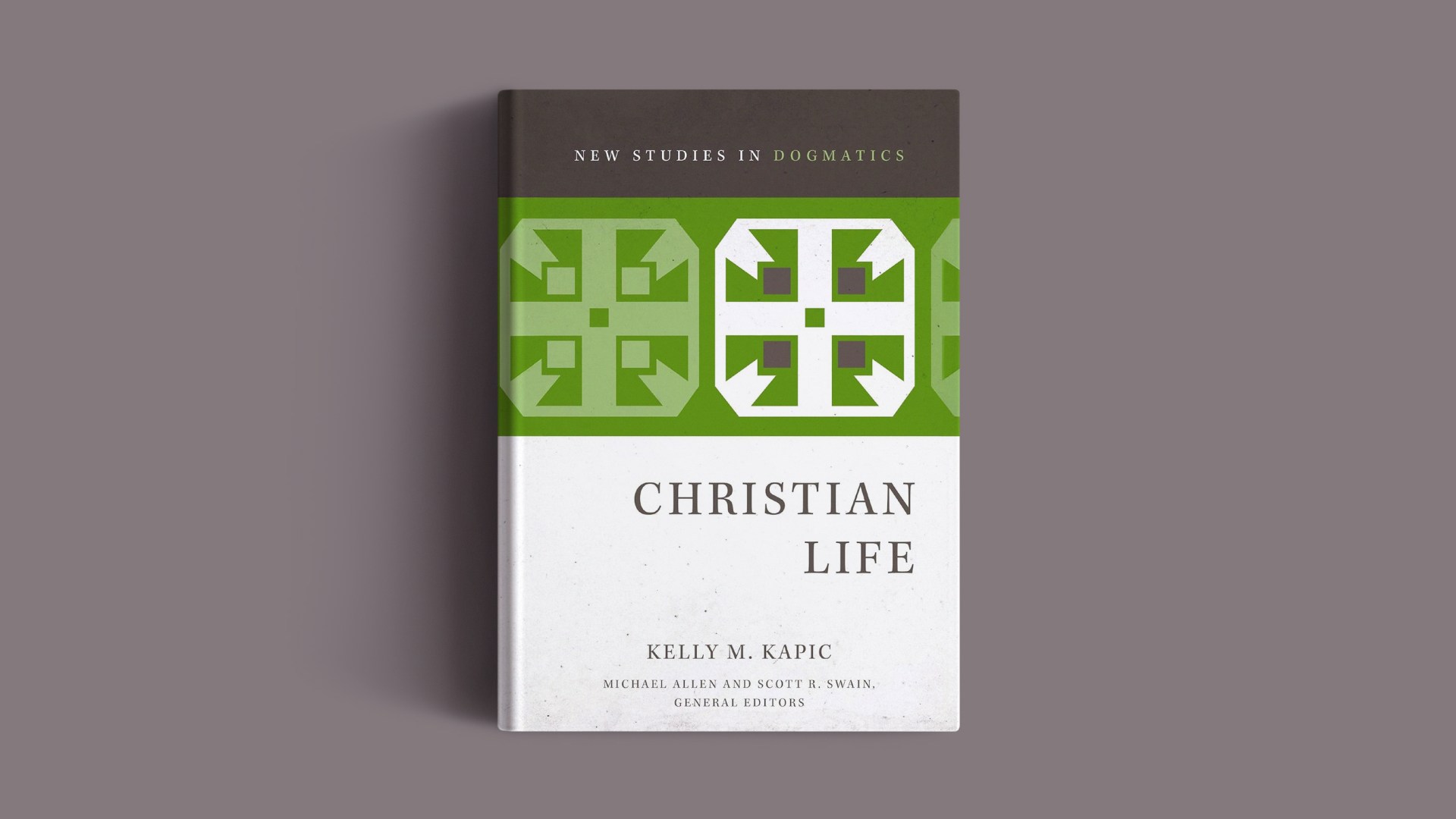
Theologian Kelly Kapic’s new book Christian Life is a corrective to anxious faith.

The book cover.
Christianity Today December 16, 2025
Illustration by Christianity Today / Source Images: Getty, Zondervan Academic

At a time when the word Christian has become a political football thrown about to gain favor and garner power, theologian Kelly Kapic provides a winsome corrective that I believe all Christians, especially American evangelicals, need to hear. In his new book Christian Life, he says the Christian life is “a response to the love of God.” Sounds simple, right? Yet simple is not simplistic.

God’s love is cosmic. It is also richly triune. Kapic writes, “We experience the life-giving power of the Spirit who unites us to the crucified and risen Savior as we learn to rest in the deep love of the Father.” Since the triune God is eternally self-giving, the human response to this love will likewise be the same. Union with the triune God requires a response of self-giving love for others. This is Christian life.

Kapic echoes what recent biblical scholars, such as John Barclay and Teresa McCaskill, and theologians, such as Tom McCall and Willie Jennings, have argued: God’s grace is unconditioned (you cannot earn it), but it is not unconditional (God still expects a response—he wants a relationship). In Kapic’s words, “While God does not need our obedience in order to love us, we who are made alive in Christ are called to participate actively in the Spirit’s work in and through the body of Christ.”  

While many American evangelicals reductively equate Christian belief with assent to a set of doctrines in order to “not go to hell,” this is a far cry from the fullness of Christian life. As Kapic argues, truths about the Father, Son, and Spirit are meant to shape the Christian life, a life growing out of union to Christ, a life that fosters gratitude and responsive love.

If Christian faith is more than doctrinal assent but proceeds from union with Christ and reveals itself through self-sacrificing love, this has implications for how we view discomfort, inconvenience, and suffering.

For instance, in Hannah Nation’s research, believers within the Chinese house church understand unity with Christ to necessitate suffering with Christ. The logic goes like this: Since the servant is not above the master (John 15:20) and because the master suffered, those united to the master will suffer. In a 2025 paper Nation presented at the Evangelical Theological Society, she called such a union “the backbone of public witness” for these Chinese believers. This lived theology does not glorify suffering, but it expects that a broken world will reject a crucified king and those unified with him. The Christian life, then, does not equate material abundance, health, and safety with God’s blessing.

Kapic’s book, like Nation’s work, provides the theological legs on which the Christian life stands. If we are united with Christ’s life by the power of the Holy Spirit, we will embody love—love of neighbor, love of enemy, love of creation, and even love of self. Such self-love, when mediated through this union, means we love ourselves through the Son’s love. Kapic explains, “When we turn from Christ to the ego [self], if we are speaking of Christian life, we are not, in fact, turning from Christ at all.”

Instead, we are relationally constituted; I am now in Christ. Therefore, I am able to more fully love myself since this self-love comes from Christ’s love of me. We can love fully because we have been fully loved. The Christian life is secure because its identity and value come from Christ, so we can run toward others rather than away from them.

Kapic reminds the church that our love proceeds from God’s love. But what is equally important is the way he offers this corrective. He models a winsome charity without falling for extremes. For instance, he neither elevates subjective, personal experience over God’s character nor elevates the objective reality of God in a way that becomes impersonal.

Many evangelical Christians either view personal experience suspiciously or see it as the sole determinant of a Christian life. Kapic presents a mediating position, valuing personal experience while not making it the sole determiner of a person’s faith. He writes that the more we can understand who God is and what he has done for us, the more we will be compelled to live with radical love toward God and others.

Richly experiencing a loving God draws us to worship. The more I read and reflected on the triune God’s immense love and goodness (an objective reality), the more my awe and love for God increased (subjective feelings). I found Christian Life shaping me more into the image of the Son. We are drawn into the life of love of the triune God. The incarnate Son is a human who has fully received the love of the Father and is also God our Savior, expressing the perfect love of the Father on our behalf. By the Spirit of Christ, we can receive the love of the Father and then love others.

Kapic’s book concludes by focusing on the body of Christ, the church, as one of the primary contexts in which Christians learn to love others. While, for many, the reputation of the church has fallen, it is nevertheless vital. We are united to Christ, so we are also united to one another. Our union with Christ matures in the context of the church. When we gather, we participate in Christ’s own threefold ministry: “He as our great Priest, King, and Prophet not only receives our worship but is also the leader of our prayers, laments, and corporate worship.”

As Kapic emphasizes, Jesus is not only the one we worship but also, mysteriously, the leader of our worship. Our union to Christ therefore connects us vertically to the triune God and horizontally to our spiritual siblings. Thus, just as a life of responsive gratitude is nonnegotiable for Christian life, so is participation in the corporate body of Christ.

This understanding of the church as the context of our joint formation pushes against individualism. It recognizes the unifying work of the Spirit, who gives gifts to each member (1 Cor. 12:11) and keeps Jesus central. Kapic emphasizes how the church, especially through local, corporate worship, is meant to shape our Christian lives.

Sunday liturgies ought to foster our communion with God and each other and have a demonstrable effect in our lives. Kapic notes, “If you want to know what people really believe or trust, observe their lives, actions, instincts, and intuitions; pay special attention to their checkbooks and day planners.”

Ultimately, Christian Life is about God’s agency and our response. Kapic draws the life-giving water of Christ from a deep well of theological tradition. Pay heed as he unpacks dense language and concepts. Theology isn’t just for experts. It is crucial to our daily lives, for understanding our identity and place in the world. To know who we are and how to live, we need deep theology, and Kapic draws up the bucket and hands readers a cup.

May Kapic’s Christian Life make readers long for more of Christ’s life-giving water, and may that change us to live out the self-giving life in grateful response to our union with the triune God.


Christa McKirland is dean of faculty and lecturer in systematic theology at Carey Baptist College in New Zealand. Her books include A Theology of Authority: Rethinking Leadership in the Church and God’s Provision, Humanity’s Need: The Gift of our Dependence.

Theology

In Bethlehem, God Chose What Is Weak to Shame the Strong

Contributor

What is true of Good Friday applies to Christmas too.

Baby Jesus and a cross shadow.
Christianity Today December 16, 2025
Illustration by Elizabeth Kaye / Source Images: WikiMedia Commons

At Christmas, incarnation and revelation go hand in hand. God becomes flesh, and God grants us knowledge of himself. In Bethlehem, the immortal Creator of all is manifest in a mortal creature. The Lord shows himself forth in all his works, but in the incarnation, we see the nature and perfection of the one true God with maximal clarity and beauty (Heb. 1:1–4).

To be sure, the Incarnation isn’t limited to Christmas. It begins in the womb of Mary, continues throughout the whole earthly life of Jesus, and reaches its climax at the cross and empty tomb. Even now the risen and ascended Jesus remains incarnate, since he did not slough off his humanity when the Father raised him up to heaven to sit at his right hand. In point of fact, the Lord Jesus will remain human into all eternity. In this lies our hope, for “when Christ appears we shall be like him, for we shall see him as he is” (1 John 3:2). He is the one truly human being who ever lived. Jesus is our brother forever.

Yet for all this, Christmas is the proper moment to dwell on the Incarnation, because the birth of Jesus is God’s own entrance into the world—his transition from hiddenness to openness, from invisibility to visibility, from silence to speech. When the baby cries, God’s Word is with us, a voluble Immanuel in the form of a speechless newborn.

What sign is this? What does it mean that God became an infant? The claim is so preposterous—yet so marvelous—that even with the best of intentions our attempts to understand it go astray. 

One danger is to reverse the terms of God’s humanization by anthropomorphizing God. He’s just like us, we muse. The Swiss theologian Karl Barth coined the phrase “the humanity of God,” and although he did not mean it this way, it can suggest a version of the Christmas gospel that brings heaven to earth in exactly the wrong manner: projecting onto God whatever we think is best about us humans.

If incarnation is about revelation, though, we have to let God tell us about himself, not the other way around. We don’t know God before he introduces himself; we can’t speak on his behalf. And his speech, always and everywhere, is Jesus (John 1:1–18). When we turn the page to Bethlehem, the Lord speaks loud enough for the whole world to hear.

This is why it is fitting to include the Magi in our celebration of the Nativity, even though they were there not on the night of the birth but later, when Jesus was a toddler (Matt. 2:16). The Magi represent Gentiles. They anticipate the coming of all nations to the Lord of Israel, bending the knee and paying homage to the one God and Creator of all (Zech. 8:20–23). “Or is God the God of Jews only? Is he not the God of Gentiles too? Yes, of Gentiles too, since there is only one God” (Rom. 3:29–30).

Another wrong turn comes when we sentimentalize Christmas. I’ll admit that this is next to inevitable, given the mother and baby at its center, but we can at least be aware of the temptation. And it’s worth avoiding for a simple reason: Jesus Christ was born to die. In this he is unlike the rest of us, however brief or painful our lives may be. The Lord was always bound for the Cross, for the anguish of the Passion and the blood-mingled tears of Gethsemane. He was always going to be abandoned, denied, and betrayed by his friends. Whatever else we say of him—hymning him in his peaceful sleep, imagining him nursing at Mary’s breast, admiring the family crèche—we must not forget this.

Finally, while we are right to see humility at Christmas, the question is: What does it mean to call God humble? To be humble is to be lowly, and God is not lowly in himself. Rather, he becomes lowly for our sake. Nor is God weak, though he assumes our weakness to grant us his strength. Nor still is the humility of Bethlehem imposed upon God, as if it manifested an incapacity or lack.

No, the humility revealed at Christmas is the willingness of God, in his infinite love for sinners, to stoop down to our level, regardless of worldly appearances, regardless of the consequences for himself. In this sense we might apply the beloved line from Hebrews 12:2—that Jesus scorned the shame of the cross—to the manger as well. To be found a weakling in a bed of straw is, from the vantage of the powerful, nothing if not shameful. But the Lord scorns the infamy of the high and mighty to join himself to the low and weakly.

As Paul writes, “God chose what is foolish in the world to shame the wise; God chose what is weak in the world to shame the strong; God chose what is low and despised in the world, even things that are not, to bring to nothing things that are, so that no human being might boast in the presence of God” (1 Cor. 1:27–29, ESV). Paul is speaking about the “foolishness” of the Cross (vv. 18–25), but what is true of Good Friday applies to Christmas too.

For this reason, it’s worth stepping back from Joseph and Mary and the shepherds to ask what else the manger reveals of God, especially those things that might not seem obvious from first glance at a baby boy placed among farm animals. I’m thinking in particular of what theologians call the attributes of God: omnipotence, omniscience, and so on. These are what it means for God to be God, characteristics that define God as Creator in distinction from us creatures. They’re true of him in a way that could not be true of anyone or anything else.

Christmas sets God’s attributes in relief in beautiful and unexpected ways. For instance, think again of humility. There is nothing surprising in the weakness of a baby. All newborns are utterly dependent on their mothers for life and sustenance. What is surprising, then, is what the gospel adds to this: namely, the child in Mary’s arms is one and the same as the God who created her and even now sustains her in existence. The nursing babe is none other than he in whom all things hold together (Col. 1:17) and apart from whom nothing has been made (John 1:3).

Only a God with whom all things are possible (Matt. 19:26) can become incarnate in the form of an infant. The old hymn is therefore right to say, “Jesus, Lord, at thy birth!” For God’s “power is made perfect in weakness” (2 Cor. 12:9). When we peer into the manger and glimpse the Christ child, we need double vision. We are seeing weakness, yes, but also the matchless might that made the universe.

Then there’s God’s transcendence. Children sometimes imagine a physical deity who lives in the sky but leaves for a while to come to earth—the way a president might leave the capitol to go abroad for a time—then returns to the heavens, resuming a throne left temporarily empty.

Transcendence describes God’s utter difference from created existence and thus his remove from any and all limitations we take for granted. God shows himself transcendent at Christmas by remaining God even as he takes on our nature. As the church fathers liked to put it, in becoming human, the Lord assumed what he was not while remaining what he was. Jesus isn’t either divine or human. He isn’t a hybrid or a half god, like Hercules, or a “semi-demi-mini-god,” like Disney’s Maui. He’s fully divine and fully human, all that it means to be God and all that it means to be human—and yet a single person, undivided.

He is this, he can do this, because he transcends us. Being absolutely transcendent, he can be absolutely immanent, or near, to us. The one entails the other. In the words of Saint Augustine, God is “more inward than my most inward part and higher than the highest element within me.” If he were otherwise, he would be limited in some way and thus unable to be both our Savior and our brother, both our Lord and our friend, both our judge and our pardon.

In short, Christmas reveals God to be wholly unlike the gods of the nations, beyond myths and legends and idols of every kind. Only the God besides whom there is no other (Isa. 45:5) can become one of us without ceasing to be himself—without leaving heaven vacant. The Lord who sits on the throne also sleeps in Bethlehem. This is the mystery of the Incarnation.

The final attribute I want to lift up is wisdom. Wisdom is another word for God’s knowledge, or omniscience. God possesses complete understanding of everything. He teaches but is not taught. His knowledge, like his power, is limited by nothing and lacks nothing.

That knowledge is not like a computer—or perhaps an AI chatbot, minus the errors and hallucinations. God is not ChatGPT scaled up to have every answer to everything. His knowledge is his wisdom, and his wisdom comprehends far more than a flawless record on trivia night. 

Spoken of God, wisdom means something like the skill of an artist applied not only to the mind but also to actions, plans, and purposes. It means that God always does the right thing, in the right way, at the right time, for the right reason. His actions, in other words, are virtuous; he acts with righteousness without exception.

But he also acts beautifully. God’s wisdom is the movement in the symphony that makes it a masterpiece, the turn in the plot that makes you catch your breath, the unexpected move that in retrospect couldn’t have happened any other way. It’s so apt to the moment, so fitting to the need, that it’s obvious after the fact but couldn’t have been guessed in advance. It’s the father running to embrace the prodigal (Luke 15:20), the Samaritan stopping to help the man by the side of the road (10:33–34), the assumption of Mary that the risen Lord was a gardener (John 20:15).

And God’s wisdom is Christ himself, born in Bethlehem to a virgin from Nazareth. It’s Mary, the last in a line of Israel’s miraculous mothers, from Sarah and Rachel to Ruth and Hannah. It’s Joseph, who like his namesake brings his family down to Egypt for protection. It’s Herod, another Pharaoh intent on preserving his tyranny from the threat of Hebrew boys. It’s angels and animals, fellow creatures from Genesis’ opening chapter who greet the birth of their Creator in a stable. It’s shepherds, who marvel at the pronouncement that Israel’s royal shepherd has finally come.

All these and more fill the divine artist’s canvas, revealing the master storyteller in his incomparable wisdom. Every detail is in its place. Everything in the narrative was preparing for this. And now that we see it, we cannot help but step back in awe and wonder at our God. The Lord is great and greatly to be praised (Ps. 145:3). He has drawn near to his people in their need. With the “multitude of the heavenly host” (Luke 2:13, ESV), the only thing left to do is worship.

News

Religion on Egyptian Citizens’ ID Cards Enables Christian Persecution

The requirement makes it difficult for religious minorities to get jobs, justice, and opportunities. Advocates are pushing for change.

Coptic Christians in Egypt tattoo crosses on their right wrists as a symbol of their faith.

Coptic Christians in Egypt tattoo crosses on their right wrists as a symbol of their faith.

Christianity Today December 16, 2025
Roger Anis / Stringer / Getty

On a September afternoon in an Egyptian city, cars and donkey carts navigate around pedestrians crossing the streets. Locals purchase cuts of meat from a carcass hanging by the road as a dog jumps on top of a parked car for a better view.

A quiet apartment on an adjacent side street provides a reprieve from the daily commotion. It also offers sanctuary for local Christians facing religious-based threats and violence. The apartment is among 20 safe houses Help for the Persecuted operates across the Middle East, North Africa, and Central Asia. Inside, Amira Butros shares over a glass of soda why she fled her home. Christianity Today agreed not to use the real names or locations of Butros and three other Egyptian Christians due to ongoing safety concerns.

Butros previously lived in a spacious two-floor apartment where members of the growing Sudanese refugee community gathered. She hosted a house church, provided English classes, and distributed blankets and other supplies. In early September, her Muslim neighbor broke into her home and physically assaulted her, her mother, and several of the visiting Sudanese, Butros said. Then the man alerted other neighbors and accused Butros of converting Muslims to Christianity.

Local authorities refused to file her complaint because she was a Christian, Butros said. She no longer felt safe in her apartment and contacted Help for the Persecuted to secure temporary lodging. She put her ministry work on hold.

Although Egypt’s Constitution protects religious freedom and criminalizes discrimination, the government seldom investigates acts of violence against Christians. Additional laws strictly limit freedom for religious minorities, creating a system of contradictions.

Religious freedom advocates around the world are urging Cairo to do better. Groups want the Egyptian government to remove individuals’ religions from their ID cards to prevent discrimination.

“We need to create a social movement that will bring greater freedom and religious liberty to the region,” said Shirin Taber, executive director of the US-based Empower Women Media (EWM), which mobilizes religious freedom advocates in the Middle East and Pakistan. “We feel that addressing things like the identity card—but also supporting businesses, artists, athletes, creatives, and content creators—will help advance the movement in the region.”

Egypt’s Christians number more than 10 million—at least 10 percent of the country’s 111 million people—making it the largest Christian community in the Middle East and North Africa. Over 90 percent of the Christian population is Coptic Orthodox, but the government also targets Protestants.

In October, a large Muslim mob attacked a Coptic Christian community in the Upper Egyptian town of Minya. Rumors of an 18-year-old Christian man dating a Muslim woman sparked the violence and led to the expulsion of the Christian family from the village.

Only weeks earlier, US representatives French Hill and Thomas Suozzi introduced a resolution asking the Egyptian government to grant Coptic Christians equal rights and prosecute those who commit crimes against Christians. “As the largest Christian community in the Middle East, the Copts have long endured systemic injustice,” Suozzi noted in a press release.

An Egyptian Christian ministry leader said converts to Christianity face some of the most significant challenges, and local authorities at times enable or encourage the persecution.

For instance, in 2021, Egyptian authorities jailed Abdulbaqi Saeed Abdo, originally from Yemen, for sharing his testimony on a Christian TV channel and participating in a social media group for Muslim-background believers. Authorities released him earlier this year after an international campaign. Now he and his family live in Canada.

When police discover that a member of a Muslim family is attending church, they ask the family and neighbors to pressure the new convert, the ministry leader said. The convert is often forced into hiding.

He added that church leaders can openly preach the gospel inside the church, but it’s illegal to proselytize or hold Christian events outside church grounds. It’s also illegal to change someone’s designated religion on a national ID card from Muslim to any other faith. Converts to Islam face no challenges making a change.

An Egyptian Christian businessman said authorities sometimes check ID cards at Christian conferences and prevent Muslim-background believers from entering due to their stated religion. “If we remove this from ID cards, it will give better opportunities for businesspeople, better opportunities for people to choose their faith, better opportunities for people to live their lives,” he said.

EWM recently launched a campaign to equip Egyptian leaders to advocate for changes to the country’s ID-card legislation. The organization released a report and video explaining the need for the initiative.

Every Egyptian over the age of 16 is required to have a national ID with one of the three recognized religions on it: Islam, Christianity, or Judaism. The card is necessary for many aspects of life, including enrolling in university, getting a job, traveling, and opening a bank account. In 2008, the government granted members of the Baha’i faith permission to leave the religion field empty on their ID cards.

Taber believes Christians and other religious minorities would experience greater freedom if the government lifted the ID-card requirement. “You’ll have a better chance of getting that job, getting enrolled in university, and your child being able to play on the soccer team,” she noted. “Women, youth, and minorities are discriminated against the most.”

Another Egyptian Christian expressed skepticism about the initiative. He doesn’t believe it will bring much benefit because “Egyptian society is highly interconnected” and names often reveal religious affiliation. Christians typically choose biblical names while Muslims draw names from Islamic tradition. Some names overlap. 

Other Egyptians, including Sherif Azer, the director of programs at the Egyptian Commission for Rights and Freedoms, are more optimistic about the initiative’s potential impact. In a September policy brief addressing religious persecution, the Egyptian human rights activist listed ID-card reform among five recommendations for improving religious freedom.

In 2018, Azer criticized Cairo’s failure to pass a parliamentary bill that sought to remove the religion field from identification cards. “Whenever there’s a situation that requires showing your ID … you would be categorized right away,” Azer told Morning Star News.

Yet Taber said she sees “the winds of change blowing” across the region, especially among the business community and educated women. She cited Arab countries normalizing relations with Israel as an example of change “we only dreamed about in the past.” In May, EWM hosted a training in Cairo that educated 90 women about their religious liberties.

Taber’s Egyptian contacts tell her that President Abdel Fattah el-Sisi, who led the 2013 military coup against Islamist president Mohamed Morsi, is open to reform and has opened new churches and attended Christian services.

Yet Islamists and clerics at Al-Azhar, one of the world’s most influential Islamic institutions, frequently block attempts to change the legislation, Taber added.

Taber, an Iranian American Christian and author of Muslims Next Door, will explore these challenges at an EWM-sponsored summit in Malta in March with several senior-level Egyptians officials in attendance. She also plans to bring in members of the Coptic community to foster greater collaboration with Protestants and a more unified response to religious persecution.

Back at the Cairo safe house, Butros looks for a new place to resume her ministry work with Sudanese refugees, many of whom faced worse persecution in Sudan than in Egypt. “We create support for those who have experienced persecution,” Butros said through a translator. “It’s very important I continue my service with these people.”

Taber underscored the importance of addressing persecution while simultaneously doing evangelism, discipleship, and church planting. “If not, you’re just doing it all backwards,” Taber said. “Christ compels us, and he is the Prince of Peace and has given us everything we need to do the work.”

Books
Review

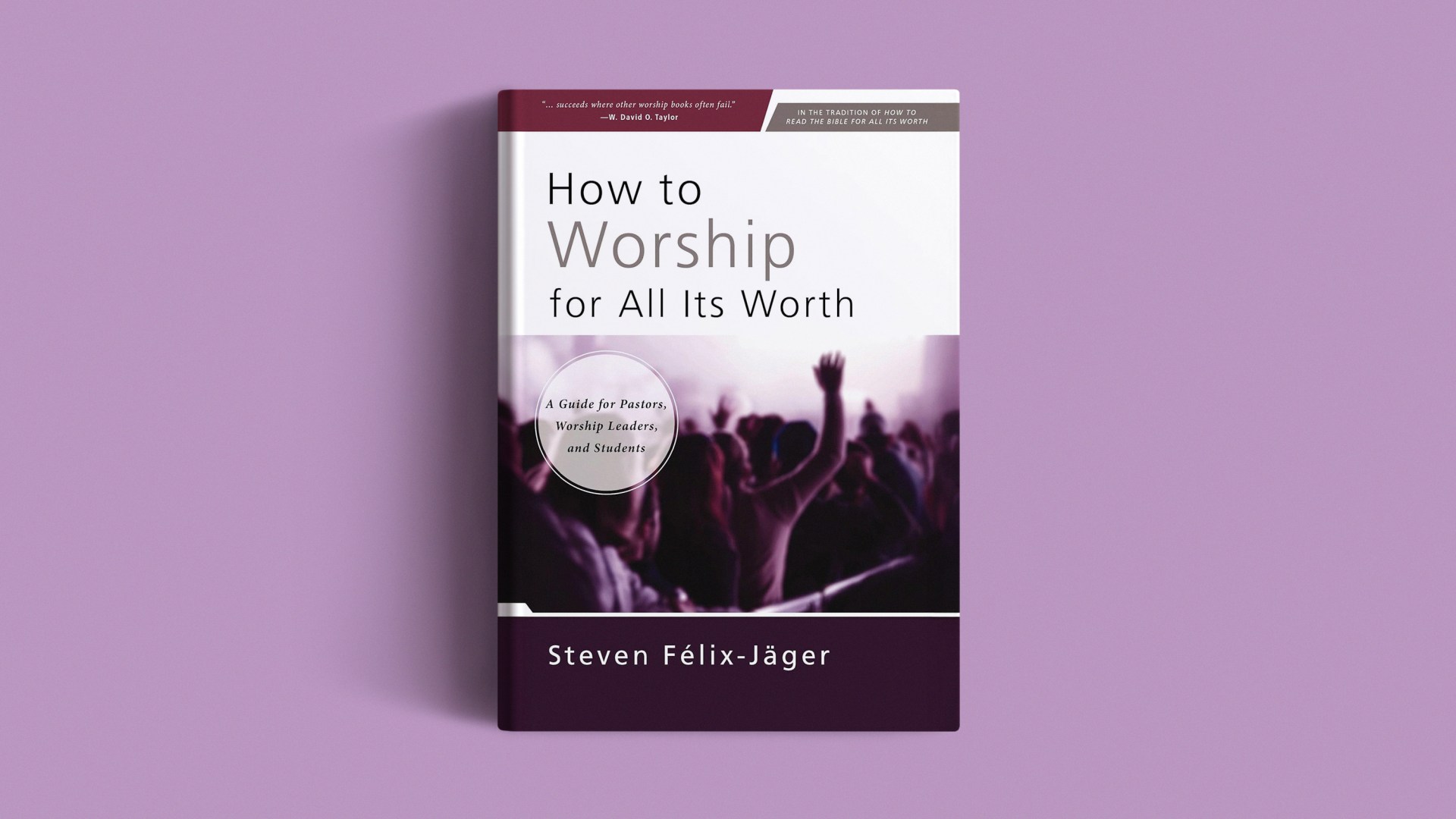
Personal Preference Is No Way to Judge Faithful Worship

Steven Félix-Jäger’s new volume on biblical, aesthetic, theological, and pastoral considerations in worship will serve many churches.

The book cover.
Christianity Today December 16, 2025
Illustration by Christianity Today / Source Images: Getty, Zondervan Academic

“Only one who has mastered a tradition has a right to attempt to add to it or to rebel against it.” This famous line from Chaim Potok’s novel My Name Is Asher Lev captures the fluency required to speak meaningfully into or against a tradition. A tradition must be known, experienced, and even loved before it can be properly judged. Without that depth of understanding, critiques and contributions tend to ring hollow or even false.

While few of us can hope to truly master even one Christian tradition, Steven Félix-Jäger’s How to Worship for All Its Worth helps readers grow in both understanding and appreciation for the ways different traditions worship God. 

Worship is a vast and sprawling subject, and Félix-Jäger wisely narrows his focus to congregational worship and music. Yet within that frame, he offers a rich, accessible guide for encountering the breadth of worship practices across the church.

As an artist, scholar, minister, and educator, Félix-Jäger is fluent in the fields (biblical studies, philosophy, practical theology, music theory, and more) required to seriously and generously engage with the wide range of authentic Christian worship that exists today. Whether assessing the theological merits of the chorus of a contemporary song or explaining Immanuel Kant’s perspective on aesthetics, Félix-Jäger proves himself a faithful guide. He’s the kind of scholar-practitioner who is uniquely qualified to train the reader in how to make good judgments about congregational worship. 

This kind of judgment, he makes abundantly clear, is not a bad thing. To judge in this sense is to critically assess something to determine its value or significance. 

Learning how to make good judgments about worship is ultimately what this book is for. It’s a kind of training manual to help Christians, worship leaders, and pastors critically assess different aspects of worship for different worshiping communities so they can help God’s people worship.  

The book is divided into two parts. The first outlines four principles for how to faithfully design and evaluate worship. The second applies these principles in five case studies, each focusing on a representative church from the Reformed, Pentecostal, Black gospel, evangelical, and charismatic Catholic traditions, respectively.

The first principle is about how to use biblical judgment to assess fidelity to the Scriptures in worship. Here, Félix-Jäger highlights the communal dimension of biblical interpretation. “While every [church] tradition reads the whole Bible, each tradition comes at the text from a different vantage point,” he notes. “Traditions implicitly apply the insights of certain texts over others and receive biblical texts differently depending on their context.”

These differing approaches to the Scripture make for differing worship practices too. For instance, the Reformed Presbyterian Church of North America relies on the “regulative principle,” which holds that worship must be based on explicit commands or examples in Scripture. That’s why these churches they only sing psalms without musical accompaniment. This principle also explains the prominence of the biblical theme of liberation in the Black gospel tradition. 

The worship in these traditions may not be your cup of tea—and fair enough. But not preferring or perhaps even feeling out of place with the style and substance of a worship service isn’t enough to call it unbiblical. 

To fairly judge a congregation’s worship in terms of scriptural faithfulness, then, we can’t use our own church as the standard. Some differences in worship are wrong, bad, or heretical—but many are not. If we can understand each tradition’s worship habits in light of its relationship to Scripture, we’ll often be able to honor and appreciate styles of worship we do not prefer. This is a key insight Félix-Jäger develops in all four principles.

The second principle is about using aesthetic judgment to assess the form and fit of worship. Here Félix-Jäger surveys some of the philosophical foundations of art and touches on the formal elements of music, including rhythm, pitch, and timbre. With this, he gives the reader language to talk about the style and substance of worship practices and whether they fit a particular context. 

Just as it doesn’t make sense to critique punk because it’s not jazz, it doesn’t make sense to critique a Hillsong anthem because it’s not a traditional hymn. Aesthetic judgment is about assessing forms of worship on their own terms and in the contexts where they’re used. 

Next is theological judgment. Here, Félix-Jäger develops Gavin Ortlund’s idea of “theological triage,” which orders theological beliefs according to their significance for the Christian faith. Pinning down what is primary, secondary, and tertiary is often messy in practice, but these are helpful categories for determining which truths should be centered in worship (such as God’s Trinitarian nature) and which are tertiary and should be avoided (like particular views on eschatology). 

The last principle is about pastoral judgment for congregational worship. Félix-Jäger discusses the pastoral work of the worship leader and the formative power of worship music to shape individuals and communities—and it’s here that he gets to the heart of this project. 

Why does biblical fidelity matter? Why is aesthetic fit important? Why does theological emphasis deserve careful planning? Because worship plays a profoundly pastoral function in shaping a congregation’s understanding of and relationship with God. 

In the latter half of How to Worship, Félix-Jäger puts his theory to work, offering ethnographical studies of representative churches from a range of traditions. 

Each evaluation follows the same pattern. Drawing on historical research, interviews with church leaders and members, and participation in the worship services, Félix-Jäger describes the history and distinctives of the congregation in question as well as its denomination or tradition. He also outlines the church’s geographic and cultural context along with its architecture, then evaluates all its elements of worship, from the type of instruments played and song selection to the style of the sermon and the overall vibe of the service. 

As he does this, he renders biblical, theological, aesthetic, and pastoral judgments about each congregation’s worship, ending with commendations and recommendations. Together, the five case studies give a sense of how to judge worship in a structured and charitable way. Combined with a careful and thoughtful writing style, this practical demonstration helps make the book successful in its aims.

Still, let me close with three judgments of my own. The first is a small and mostly stylistic quibble. Throughout the book, certain words and phrases are bolded and defined. Definitions are helpful for a book like this, but I found myself distracted by the editorial decision to define certain terms and not others. Why “Southern Baptist Convention” but not “Roman Catholic Church”? Why “TULIP” but not “Charismatic Renewal Movement”? Why “Bapticostal” but not “born again”? The execution of this feature didn’t quite make sense in a book so defined by its engagement with a wide range of Christian traditions. 

Second, Félix-Jäger has little attention for congregations with a more high-church mode of worshiping—all the smells and bells, so to speak. He does go beyond the Protestant world but chooses to focus on a narrow stream of charismatic Roman Catholicism, which has a good deal of overlap with Pentecostals and Evangelicals. Why not go all-in and evaluate a traditional Catholic parish? 

I understand that Félix-Jäger couldn’t be comprehensive in his scope, and I’m biased as a priest at an Anglican church. But many Christians—including many Protestants and even many evangelicals—worship in more liturgical and sacramental churches. More attention to this type of worship would’ve presented a clearer picture of the global church and a more challenging text case for many readers seeking to evaluate worship according to Scripture, aesthetics, theology, and pastoral concerns rather than mere preference. 

Finally, though he acknowledges that his descriptions are not comprehensive and are shaped by “cultural insiders,” I was often puzzled by the distinctions Félix-Jäger drew. More than once when he identified a supposed difference, I found myself wondering what tradition would not consider it important.

For instance, he writes that an emphasis on the “now and not yet” reality of the kingdom is a distinguishing feature of Pentecostals. While that theme is certainly central in Pentecostal worship, this kind of inaugurated eschatology is also a major emphasis in many other traditions. In fact, the modern articulation of the “already/not yet” framework is rooted in the work of Reformed and evangelical theologians such as Geerhardus Vos and George E. Ladd. Pentecostals may express this theme in characteristic ways, but it hardly makes them distinct. 

Despite these weaknesses, How to Worship for All Its Worth has much to offer as a toolbox for worship practitioners. Its most important tool is a shared vocabulary for talking about worship in ways that rise above personal preference or inherited prejudice. This common language can foster unity and mutual appreciation within the body of Christ. 

I found especially helpful Félix-Jäger’s treatment of flow, defined as “the progression of a worship service, where each element of worship naturally leads to the next.” This is a simple but useful idea that draws attention to how the elements of worship join a narrative and emotional arc that facilitates engagement, encounter, and ultimately transformation—or fails to do so. Churches rooted in more liturgical or sacramental traditions, like mine, may need to supplement this approach to service design with resources tailored to their own dynamics, but the core framework is widely applicable and quite helpful. 

The book also equips us pastors and worship leaders who plan or lead services to bolster our own traditions and build up our local churches. It would be especially valuable at the beginning of a new pastor’s tenure or during a season when a church is seeking to become more hospitable to newcomers. But in any season, this is a worthwhile guide to shepherding God’s people into his presence more faithfully. Is there any task more central to the church’s life than this? 

Kevin Antlitz is a writer and an Anglican priest in Pittsburgh. He previously pastored in Washington, DC, and did campus ministry at Princeton University.

News

Killed: Acclaimed Gospel Vocalist Jubilant Sykes

The Grammy-nominated singer jumped from gospel to opera to spirituals to jazz; he considered it all sacred.

An image of Jubilant Sykes.
Christianity Today December 16, 2025
Illustration by Christianity Today / Source Images: WikiMedia Commons

In 1981, an industry newcomer named Jubilant Sykes released his debut album, Number of the Lord, with Light Records, the same label as gospel legend Andraé Crouch. At the time, gospel music scholar Robert Darden was working as a music journalist in New York, and he remembers the day he listened to that album. 

“This album was different. It was gospel, it was funk,” Darden said. But it wasn’t the style or instrumentation that stood out to him most—it was Sykes’ voice. 

“At that moment, Sykes had the best voice in gospel.” 

Sykes drew acclaim as a rising gospel star—praised for his rich baritone sound, virtuosity, and control—but he didn’t remain in the niche for long. His trajectory from gospel to opera to popular sacred music was a path through the music industry as singular as his voice. 

“I’ve been singing since I was a kid. I wanted to be like Michael Jackson of the Jackson 5,” Sykes said in an interview in 2004. “But these doors are the doors that just happened to open. It’s nothing that I really planned.” 

Over the course of his five-decade career, Sykes lent his versatile baritone voice to contemporary sacred music, gospel, funk, African American spirituals, and contemporary gospel. He received a Grammy nomination in 2009 for his performance as Celebrant in Leonard Bernstein’s Mass and collaborated with a roster of high-profile artists including Julie Andrews, John Williams, Carlos Santana, Josh Groban, and Brian Wilson. He also worked with the music ministry at John MacArthur’s Grace Community Church in southern California and performed on several occasions with contemporary worship artists Keith and Kristyn Getty. 

Jubilant Sykes died on December 8, 2025, in Santa Monica at the age of 71. Sykes died after being fatally stabbed in his Santa Monica home. His 31-year-old son, Micah, has been arrested and investigating authorities say he will be charged with homicide. 

When Sykes’ soprano voice dropped at the beginning of puberty, he started to lose interest in singing. He credits his voice teacher with preserving his love for making music and helping him see the beauty in his deepening voice. In 2002, Sykes told NPR  that his teacher, Linda Anderson, “turned him on to classical music” and instilled in him a love for Bach and confidence in his changing vocal chords. 

As a college student at Cal State Fullerton, Sykes continued singing but didn’t seriously consider a career as a professional singer. Even so, he decided to continue his studies as a graduate student at the University of Southern California, which cast him in a production of George Gershwin’s Porgy and Bess that ended up touring Europe. 

At every turn, Sykes’ stunning baritone voice attracted the attention of teachers and directors, earning him opportunities to collaborate and audition to appear on the biggest stages in the classical music world. In 1990, he performed with the New York Metropolitan Opera as the character of James in Porgy and Bess and went on to appear in venues like the Kennedy Center and Carnegie Hall. 

What made Sykes unusual in the classical music world was his openness to stepping outside the confines of the highbrow. For a period in the late 1990s, he was performing in jazz clubs one night and turning around to perform Beethoven’s Ninth Symphony the following day. His 1981 album blended funk and traditional gospel elements, and he recorded and performed jazz and gospel music even after achieving success in opera. 

Following his time with the Met, Sykes toiled away as a working singer, often holding multiple jobs or working on two or three projects at a time. That versatility made it possible to have a sustainable but demanding full-time singing career. He told interviewers that it wasn’t ideal, but “it’s just the way the chips fell.” 

Robert Darden, now a professor emeritus of journalism and founder of Baylor University’s Black Gospel Restoration Project said that, outside his impact in the opera world, Sykes carried on the tradition of black vocalists like Paul Robeson, who helped preserve and elevate African American spirituals. 

After the Civil War, African American spirituals were at risk of being lost. A vernacular musical tradition, spirituals evolved in slave communities and migrated between them, evolving as they moved. 

“Spirituals were never sung the same way twice, from church to church and plantation to plantation,” Darden said. “After the war, there was a real fear that these traditional spirituals would disappear.” 

To preserve the songs while simultaneously elevating the form, composer Harry T. Burleigh (1866–1949) arranged spirituals as art songs, drawing on European conventions. While these arrangements and subsequent recordings of them by figures like Robeson (1898–1976) made significant changes and additions to traditional spirituals, they preserved lyrics and melodies and helped ensure that the genre would be documented and appreciated as a legitimate form of American art music. 

“Sykes is one of the most recent figures of this tradition,” Darden said. “He, like many African American opera stars, came from the church and heard these spirituals, then recorded them with incredible sensitivity. These versions will move you to tears. They resonate.” 

Sykes’ 1994 album Jubilant Sykes Sings Copland and Spirituals features stirring renditions of music by influential American composer Aaron Copland alongside arrangements of spirituals like “Go Down, Moses” and “City Called Heaven.” With cinematic accompaniment by the London Symphony Orchestra, Sykes’ solo voice carries the words of each spiritual with sensitivity and pathos.  

Sykes said that singing spirituals like “Sometimes I Feel Like a Motherless Child” gives voice both to the horror of the slave experience in America, “the loneliness, the madness and the darkness of it all”—and to enduring hope “that I am never really alone.” 

In 2009, Sykes’ performance as Celebrant in Leonard Bernstein’s Mass, a demanding musical theater work based on the Tridentine Mass, received a Grammy nomination. Throughout his career, Sykes was open about his Christian faith and about his belief that his performances—whether explicitly sacred or not—were all a form of worship. 

“It’s not that one is secular and one is sacred. It all is to the glory of God. Bach said that all music should be in the honor and glory of God,” Sykes said in a 1998 interview. “And I think that’s true.”

Sykes was involved in the music ministry at Grace Community Church since 1978, according to a statement from the church. At Grace, he met his longtime collaborator, classical guitarist Christopher Parkening. The two toured together on and off for over a decade and recorded an album, Jubilation, together in 2007. 

Sykes also collaborated with modern hymn writers and worship leaders Keith and Kristyn Getty—most recently at a concert at the Grand Ole Opry in celebration of the publication of the Gettys’ Sing! Hymnal. 

In a post on Facebook, the Gettys wrote about Sykes’ “ability to find the wonder and extraordinary in the ordinary” and his “unique Christian voice.”  

Sykes carried a deep appreciation for classical music, but he rejected the tendency of the music industry to silo performers. At times, he seemed to suggest that his career might have been easier if he’d picked a lane and stayed there. His eclectic discography and performance career reflect an artist who loved music too much to pick a niche. 

“I have a passion for music, and I probably want to do too many things at one time,” Sykes said.  “I’ve got to take myself seriously enough to work, but not so seriously that I become more neurotic. At this stage of the game, you take [engagements] as they come … and they come by God’s grace.”

Books

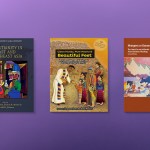
My Top 5 Books on Christianity in South Asia

Wisdom on staying faithful in ministry and navigating multireligious realities in India, Sri Lanka, and beyond.

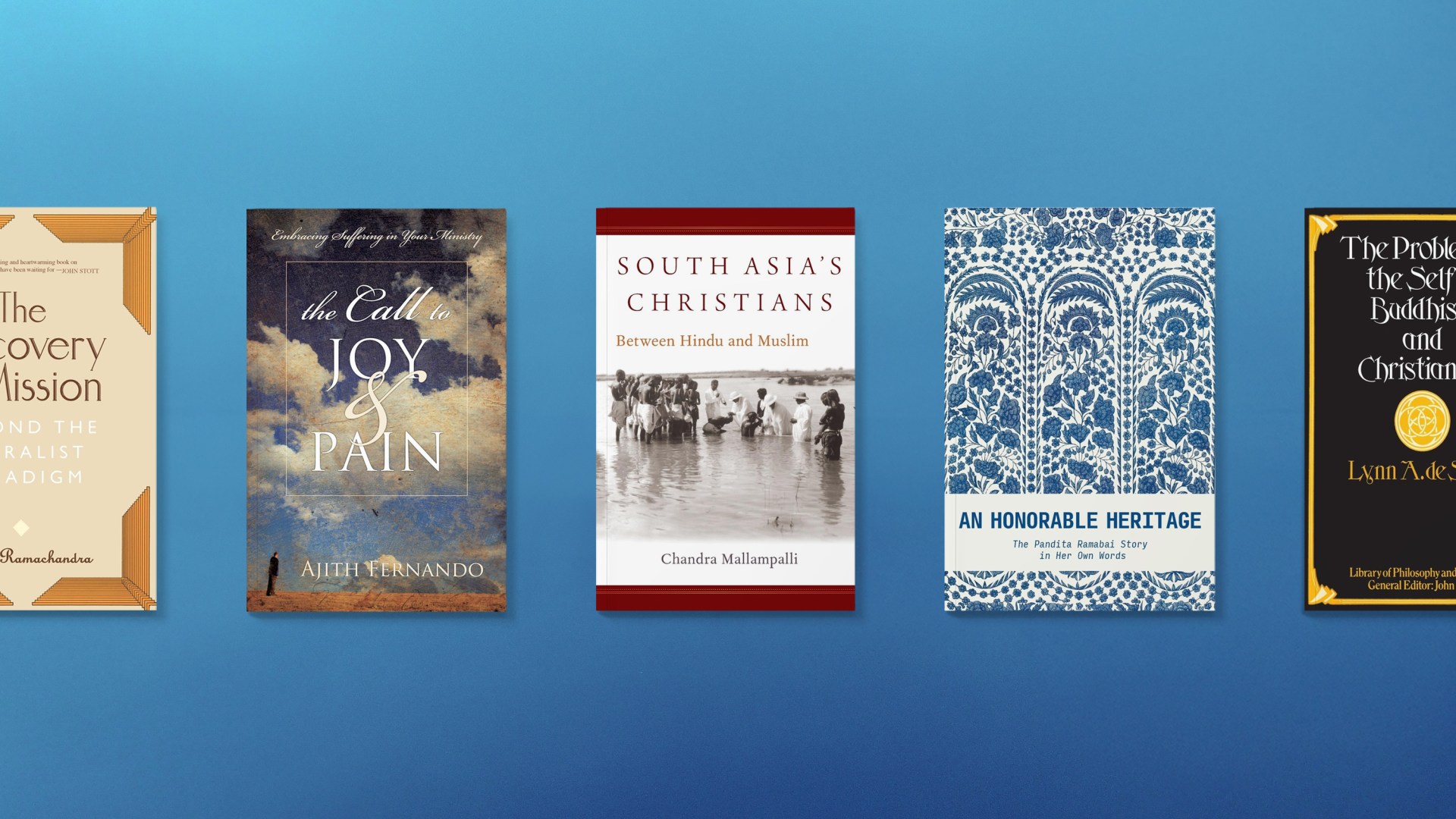
The five books from the article.
Christianity Today December 15, 2025
Illustration by Christianity Today

The following books were selected by Nathanael Somanathan, deputy principal at Colombo Theological Seminary in Sri Lanka.

South Asia’s missional memory reaches as far back as the first century, when the apostle Thomas is believed to have traveled to India and possibly even farther, establishing a church in the northern part of Sri Lanka. However, the verifiable history of missions in South Asia began in the 16th century alongside colonization, when Franciscan and Dominican missionaries first arrived in India, followed by the Jesuits. It was not until the 18th and 19th centuries that the Protestant missions movement emerged, particularly with Dutch colonization in places like Sri Lanka.

Today, the subcontinent is home to paradoxes, syncretisms, and layers of diversity. Religion and culture within countries like India, Pakistan, Bangladesh, Nepal, Bhutan, and Sri Lanka are so deeply intertwined that Christian mission in the region has been both challenging and creative.

Yet Christianity has managed to thrive in its own ways, producing a church that has persevered through persecution and enriched itself through the theological and philosophical wealth of its own resources. Here are some books that showcase this.

South Asia’s Christians: Between Hindu and Muslim by Chandra Mallampalli

A ubiquitous narrative in world Christianity studies today is that the faith is rapidly expanding in the Global South and that the center of gravity in the Christian faith has consequently shifted from North America and Europe to regions such as Africa, Asia, and Latin America. However, studies often overlook a large sector of this new demographic: South Asia.

In this recent monograph, historian Chandra Mallampalli, a second-generation American born to immigrant Indian parents, sheds light on why this is the case. The preoccupation with numerical growth within world Christianity studies has obscured “vital lessons about interreligious encounters and the experiences of marginal people” within South Asia, he argues.

Mallampalli’s historiography focuses particularly on Indian believers whose stories are profoundly shaped by the Hindu and Muslim environments they live in. He weaves a compelling narrative of Indian Christian identities that often exist as religious minorities on the fringes of society. The book covers an impressive range of Christian groups across nearly two millennia, leaving the reader inspired by a Christianity that may not have triumphed in numbers but certainly has in spirit and witness.

The Call to Joy and Pain: Embracing Suffering in Your Ministry by Ajith Fernando

Prominent Sri Lankan theologian Ajith Fernando responds to a common misconception that Christians must not suffer, especially in ministry. Drawing from his experiences as Youth for Christ’s former national director for more than three decades and how he navigated several ministry crises, Fernando relates the themes of suffering and pain to lament, gospel witness, and discipleship. He encourages readers to embrace hardship without losing the joy of serving God.

This book is an encouragement for people on the verge of burnout as they struggle with ministry life, marked by euphoric mountaintop experiences and dark, difficult valleys. Fernando’s thesis can be summarized in this quote: “Something is seriously wrong not when Christians suffer but when they do not have the joy of the Lord.”

The Recovery of Mission: Beyond the Pluralist Paradigm by Vinoth Ramachandra

This 1996 book remains a seminal contribution to mission studies. Ramachandra wrote it as a response to a widespread debate in the field at the time on whether all religious traditions offer a path to salvation and whether interfaith dialogue and cooperation in social work could replace a traditional understanding of mission as evangelization.

The effectiveness of Ramachandra’s critique of pluralism, represented by three of its most influential proponents—Stanley Samartha, Raimundo Panikkar, and Aloysius Pieris—lies in the fact that Ramachandra is an Asian theologian who lives in Sri Lanka and offers insights shaped by this local missional context.

Ramachandra draws on Lesslie Newbigin’s paradigm of mission—namely, the gospel as public truth in a pluralist society—and focuses on the “scandal” of the person and work of Jesus. Throughout, he emphasizes the incarnational implications for mission as an alternative to the pluralist paradigm. The book ultimately points to his conviction that the Good News produces a new humanity—the church—which is integral to gospel proclamation.

The Problem of the Self in Buddhism and Christianity by Lynn A. de Silva

Second only to Hinduism, Buddhism dominates the religious landscape of South Asia, particularly in countries such as Sri Lanka, Nepal, and Bhutan. In this context, Buddhist-Christian dialogue is paramount for fostering mutual understanding and peaceful coexistence. A notable example in this regard is the Sri Lankan Methodist minister Lynn de Silva, who pioneered many conversations between adherents of the faiths. 

In this book, De Silva addresses the challenging question of what the “self” is. He identifies how Christianity tends toward eternalism and Buddhism toward nihilism and coins the concept of anattā–pneuma (non-egocentric mutuality) as a meeting place between the two faith traditions. This concept enriches the Buddhist-Christian understanding of personhood and helps to facilitate a “communal selflessness” in his view. I recommend this book to those interested in the academic study of cross-cultural missions and interreligious dialogue with Buddhism.

An Honorable Heritage: The Pandita Ramabai Story in Her Own Words by Pandita Ramabai

Pandita Ramabai is frequently overlooked for the pioneering role she played in Indian Christianity. She led the 1905 Mukti revivals, where thousands of young girls experienced the baptism of the Holy Spirit, and inspired the subsequent Pentecostal movement that emerged in South Asia.

Here, Ramabai recounts her Brahmin upbringing, her training as a Sanskrit scholar, and how she ended up as a Christian evangelist and social reformer dedicated to women’s emancipation in India. After her parents and sister died of starvation during a famine, young Ramabai was thrown into despair. Later, she encountered several Christians and was baptized, but she only fully encountered Christ when she stumbled upon the book From Death Into Life by 19th-century Anglican revivalist William Haslam while in England. She came to realize that she needed Jesus Christ the person, not just Christianity the religion.  

Ramabai’s autobiography is a must-read for believers of all ages. Her life exemplifies revival, transformation, and hope—dimensions that are inseparable from the Christian gospel and the work of the Spirit.

Check out other top 5 books on Christianity in East Asia and Southeast Asia.

News

Top Women’s Cricket Player Trolled for Her Christian Faith

Christian public figures in India face online attacks and offline consequences for speaking about Jesus.

Jemimah Rodrigues celebrating victory in the ICC Women's Cricket World Cup 2025 Semi-Final match.

Jemimah Rodrigues celebrating victory in the ICC Women's Cricket World Cup 2025 Semi-Final match.

Christianity Today December 15, 2025
Alex Davidson / ICC / Contributor / Getty

Emotions ran high at the DY Patil Sports Academy in Navi Mumbai, India, on October 30, when the India women’s cricket team faced Australia in a nerve-racking World Cup semifinal.

As the crowd roared, cameras zoomed in on Jemimah Rodrigues as she delivered a match-winning knock, leading her team into the finals for the first time since 2017. Tears streamed down Rodrigues’s face as she dropped to her knees in relief.

“Towards the end, I was just quoting a Scripture from the Bible—to just stand still and that God will fight for me,” she said in a postmatch interview, referring to Exodus 14:14. “I have almost cried every day through this tour. Not doing well mentally, going through anxiety. I knew I had to show up, and God took care of everything.”

Despite Rodrigues’s match-winning hit—and India winning the Women’s Cricket World Cup three days later—online commenters hounded her for speaking publicly about Christianity. “Once a rice bag always a rice bag,” wrote one person on X in response to a cricket post. (Rice bag is a derogatory term in India used to describe someone who converted to Christianity for material benefits.) Others used slurs such as “missionary dog.”

Many dragged her family, accusing them of participating in forced conversions. “She continued her conversion racket even in post-match,” posted another X account. “If her father and she continue to do that, Hate is only what you expect.”

The harshest comments targeted her father, Ivan Rodrigues, a junior cricket coach and PE teacher. “Her father was a soul ripper so deserved flak,” a commenter wrote. “Every converter is a soul terrorist. Their kids’ good deeds don’t cancel it.”

This wasn’t the first time the Rodrigueses came under attack for being Christians. In October 2024, Khar Gymkhana—one of Mumbai’s oldest clubs—revoked Jemimah Rodrigues’s honorary membership, following allegations that her father used the club premises for conversion activities.

Dismissing the accusations, he said prayer meetings there were conducted in accordance with club rules and with the club’s full knowledge. Khar Gymkhana’s president called the allegations “politically motivated,” noting that the club committee members’ comments came before elections and they lacked evidence.

Since then, videos of Jemimah Rodrigues leading worship or participating in healing services have circulated online, with netizens mocking her faith and shaming her family.

Although reports about persecution against Indian Christians focus on churches vandalized, pastors beaten, or prayer meetings disrupted, Christian public figures and content creators often face vicious online attacks when they speak out about their faith. That spills into their offline lives when they lose jobs and struggle with depression over the constant barrage of hate.

Beyond terms like rice bag, trolls also call Indian Christians “foreign agents,” claiming their loyalties lie with the West, where Christianity is the predominant religion. Lately, terms such as gorre (“lamb”) and gorre biddalu (“children of the lamb”) in the Telugu language have been used as dog whistles, recasting the Christian imagery of Jesus as a sacrificial lamb into ridicule.

To many Indians, the word converted carries a presumption of force and fraud. Christians are seen as converted, never as believers who chose freely.

In the Hindu nationalist worldview, this is particularly true in the case of Dalits and Adivasis (Indigenous groups), whom they believe are especially vulnerable to Christianity because of their socioeconomic status. Hindu nationalists believe they must protect those groups from Christianity to maintain a Hindu demographic majority.

Those who wear their Christian faith on their sleeve often bear the brunt of this language. Content creator Angelcy Benjamin, who posts humorous reels about her faith journey on Instagram, says slurs are all too common. 

“People ask how many bags of rice my family received to convert,” she said. “I no longer get offended. I am a proud rice bag. My faith only deepens in the face of hate, and my resolve to share the gospel only rises.”

Others’ experience online is not so easy. When content creator Joy Mattu posted a call for prayer and peace after India and Pakistan exchanged missile fire last May, the comments turned vicious.

“I was called Pakistani, foreigner, British agent,” he recalled. Anonymous accounts sent him threats: “Tell me where you live. Even if you don’t, we will track you.” 

He stopped posting on Instagram for a month. “My mother and sister were abused in comments,” he recounted. “It was psychologically draining,”

Some face consequences in their workplace. Smriti—a Christian influencer who speaks about her conversion from a devout Hindu background—lost two jobs within three months. One employer pressured her to resign, while another terminated her.

Meanwhile, podcaster and author John Giftah said he lost two jobs because of his online content. His podcast, Fuel for the Soul with John Giftah, is India’s No. 1 Christian podcast.

“My boss openly said, ‘Give him more work so he cannot make his YouTube videos to brainwash and convert people,’” he said. “In meetings, they mocked my faith.”

The job losses and constant humiliation depressed him to the point of feeling suicidal. He started going to therapy while also finding solace in the Scriptures, especially 1 Corinthians 7:17—“Nevertheless, each person should live as a believer in whatever situation the Lord has assigned to them, just as God has called them.”

Human rights activist and author John Dayal stresses that the language of contempt and digital hate connects to the physical persecution inflicted on Christians.

“It is part of the same continuum,” Dayal said. “Social media is a force multiplier for hate-mongers. They borrow the same vocabulary that has targeted Christians for decades. It is time Christians stand up to the weaponization of hate.”

He believes believers can fight the online narrative by sharing their own narratives.

Research attests to Dayal’s view. As part of a larger Hindu nationalist strategy, the constant anti-Christian rhetoric produces a “wider cultural common sense” and language, rendering violence against Christians a “moral obligation” to save Hindu India. Once it becomes part of everyday digital spaces, it is constantly circulated and recirculated until the stigmatization of Christians is normalized.

Out of the 1,165 instances of hate speech documented by the India Hate Lab 2024 report, 115 of them targeted Christians directly or alongside Muslims. The peaks came during Christian seasons such as Advent and Christmas.

Every time Jemimah Rodrigues and her family became the target of online abuse, she said that they chose to forgive.

“God is our witness,” she told the Hindustan Times. “So, we decided to stay silent, not to prove anything or fight back. We chose to forgive those who hurt us, because that’s what Jesus taught us: to forgive even those who wrong us.”

Ideas

The Case Against VIP Tickets at Christian Conferences

Exclusive perks may be well-intended business decisions, but Christian gatherings shouldn’t reinforce economic hierarchy.

A big group of people separated from a small group of people.
Christianity Today December 15, 2025
Illustration by Elizabeth Kaye / Source Images: Unsplash

When I was younger, my family would take trips to Jacksonville to visit my great-grandma Alice, or Mama. I remember the small profile of Mama’s swollen ankles against the lilac hem of her duster. She was happy to see us. Her sweet, senescent cheekbone touched against the chubbiness of mine as we hugged. The house smelled like my mother’s cooking but somehow better. Mama was always cooking before anyone called, cutting her sweet potatoes as if the stillness of day meant that somebody, somewhere, might be hungry.

The reason Mama knew how to love this way so well was the same reason she prepared a table in an empty house. Mama fed people before she knew who was coming. I didn’t know then that what she was doing was discipleship: she was showing me hospitality without hierarchy.

Mama went on to be with Jesus some time ago, but what she embodied never departed from me. As I grew older, this picture of access made me wrestle with parts of my life where my faith intersected with market realities. As an adult, I have spent a massive amount of my time writing, performing, and traveling as a spoken-word artist. I’ve been in different spaces that magnify God’s presence: youth conferences, Christian poetry events, workshops, and festivals. I’ve also earned my income there.

To gather Christians in large numbers for art, inspiration, and spiritual enrichment, we create events that require a financial structure (i.e., tickets, tiers, passes, and exclusive access) and make the gathering viable. It’s a system shaped partly by calling, partly by creativity, and partly by raw economics. We consider ticket sales, budgeting, travel costs, artist and speaker fees, and overall production value. The gatherings are indeed ministries, but financial imperatives remain at play. How else, after all, would I be able to cover my school’s tuition, groceries, and gas?

At the same time, I have grown to feel uneasy about some things, namely VIP passes and more expensive tickets offering a small number of attendees backstage access, meet and greets, and a host of benefits other attendees don’t get to experience. Christian musicians have received some criticisms for offering a VIP experience. But these tickets are also sold at conferences and other non-musical events, which are my wheelhouse and primary concern here.

While it’s true high-access experiences can subsidize costs for attendees across the board, our quest to generate revenue through these measures is reinforcing existing economic hierarchies and deserves critical thought.

Conferences and sporadic Christian events are not the local church, and I’m not suggesting they should be treated as so. They don’t carry the same covenantal weight, elders, pastoral responsibility, or scriptural mandate of a gathered body. They are not mandatory for Chrisitan formation, nor are they meant to replace the means of grace that shape the everyday lives of believers.

But even while conferences are not church, they are important. Gatherings shape the Christian imagination and our discipleship. And when the spaces that shape us become financially stratified, they risk discipling us into a hierarchy Jesus never modeled (James 2:1-9). My concern is not that conferences cost money; it’s what happens when the cost subtly separates us from each other and determines who can afford to be in some rooms and who can’t (and I know some can’t because they have told me so).

For a couple of years in my life, I traveled with the Poets in Autumn (PIA), a group of Christian poets who toured city to city for more than two months.

People came to see us do something creative and faithful. We performed poetry mostly in churches, where people gathered not just to hear poetry but to be inspired, challenged, entertained, and in some ways discipled—even if they weren’t aware of it yet. I saw firsthand the beauty of those spaces. Attendees who wouldn’t normally be among one another were worshiping together while communities formed in church foyers.

Our tour schedule included a long list of cities where we sold tickets for regular admissions as well as VIP passes. But when the tour reached my hometown of Philadelphia, my senior pastor at the time did something special – he volunteered to cover the entire show. Every seat we had to offer that day would be free. He only had one caveat: Let everybody come in and experience the same thing.

People came out in droves, not just from Philly but from New York City, Delaware, Virginia, even Florida. That night, the building was full. Many were added to the church and found community and a language for what they had been carrying up until this point. It wasn’t perfect, nor was it meant to be a permanent model. But it’s a wonderful glimpse of what took place in Philly for one night, all a result of one person’s generosity.

Some churches might be able to partner with conferences and replicate these types of experiences. However, I’m aware that will be a rare occurrence, so here’s a more sustainable option: “VIP” access doesn’t need to disappear; it just needs to be reframed.

Instead of offering proximity to speakers, teachers, poets and the like, these higher-priced tickets can provide a service. One idea is to honor patrons who chose to spend more, instead of simply rewarding wealth. When Christian gatherings advertise higher-priced VIP tickets, they can tell people those tickets will subsidize costs for other attendees or simply help sustain the ministry. People who purchase VIP tickets wouldn’t get any exclusive access or benefits, but as with charity donations, they can receive thank-you cards expressing gratitude.

There are tradeoffs, of course. Some people pay more only if they know they will get something extra in return. But on the other hand, if attendees who pay a (subsidized) ticket are informed that VIP ticket holders are lowering the cost of admission or sustaining the ministry out of pure liberality, it would spur more appreciation and perhaps a sense of community in the overall attendance.

If tiered tickets remain, let them serve as Mama would, with those who buy them knowing the fullest plate feeds others well. The highest tier will invest the most financially in the body. This type of new model would expand the work of the conferences and ministries instead of the distance between attendees. In other words, the VIP label exists for a good reason—it’s more generous.

Jazer Willis is a poet, writer, and creative theologian studying at Emory University’s Candler School of Theology. His work explores spirituality, memory, and culture.

Ideas

Turn Toward Each Other and Away from the Screen

Contributor

Perhaps technology has changed everything. But God is still here, still wiring humans for connection and presence.

Two students sitting at desks facing each other.
Christianity Today December 12, 2025
Illustration by Elizabeth Kaye / Source Images: WikiMedia Commons

Over the past few Sunday mornings, I was part of a soul-care cohort at our church. Repeatedly, the pastor leading the class would ask, “How is your soul?”

At the start, he gave us a self-assessment to take that left many of us feeling frantic, frazzled by our own answers and our sense of urgency around improvement. Pastor Steve, sensing the frenetic energy in the room, gently called us back to the present, reminding us to slow down, pay attention, and ask God what he wants us to see and how we can invite him here. 

Don’t jump too quickly to trying to solve everything at once, he’d say.

When I write about technology in schools, I often need to give myself the same reminder. This is a conversation that can’t be simplified. We can’t go back to the edtech of the 1990s, to Oregon Trail and typing class (which, ironically, seems to be missing in much of education today) and computers limited as a tool to use then set aside to go play outside. 

As one secondary teacher told me, it’s important that we teach students how to use technological tools—managing projects, checking due dates, and professionally communicating via email—to ensure they are prepared for college and career. Indeed, we all need to learn how to use digital technology responsibly. But it’s become so ubiquitous in primary education that responsibility feels out of reach. 

It’s tempting to either give up and stop resisting or veer into full-blown panic about the academic outcomes we’re seeing in many American schools. How are we supposed to prepare our children for a tech-infused future we can’t comprehend? Do we resign ourselves to a post-literate, post-numerate future where machines do all our thinking?

I’ve spent nearly a decade dealing with school tech as a mother and half a decade considering it on the national scale as a journalist. If those years have taught me anything, it’s that we need to slow down. 

We implemented tech-forward education with little thought for the consequences, dreaming about what could be possible instead of carefully discerning what would be wise. Now we solve each tech problem with a new tech solution, layering program on program and screen on screen and disregarding how poorly many of these solutions play out in real life, at real schools, for real children.

It’s also tempting to point fingers. Responsibility for our school tech woes isn’t evenly distributed, but it’s not the bad behavior of just one group that got us here. Educational technology, or edtech, companies use lobbyists to sell their products to states and schools. Districts buy iPads for kindergartners because, well, everyone else is doing it and it’s one way to manage a too-large class of 26 kids. Teachers use virtual quizzes to save time and assign virtual textbooks because that’s what the school district purchased for them. Students cheat and take shortcuts to get through rote work in glitchy programs on their school-issued devices. And parents are often left in the dark, unaware of or ambivalent about how much time at school is spent on screens—perhaps because we have similar habits ourselves.

Slow down, pay attention, and ask God what he wants us to see and how we can invite him here.

I’m writing this article in an old church turned coffee shop in Battle Ground, Washington. I’m spending a few days out here with my elderly grandfather, caring for him after he took a fall. He is 96 and doesn’t have internet or good cell service at the house, so I used Google to find the closest coffee shop with Wi-Fi. (The glories of technology!) 

I didn’t expect to walk into an old church. But here I am, and on the first Sunday of Advent. Christmas carols are playing from the speaker mounted in the loft where the choir used to sing. It’s a little sad, but as I listen to the girls behind me discuss what passage from 1 John they want to study in their Bible class, I think, God is still here, even if this place looks nothing like what its old parishioners knew. 

Tech has transformed—and in some ways, ruined—my children’s education. Similar to the old church, their schooling looks nothing like what I expected. Sometimes, when I think about it too long, I spin myself into a tizzy, worried and anxious about many things (Luke 10:41). But God is still here too.

The girls behind me settle on 1 John 4: “The one who is in you is greater than the one who is the world,” one reads, sitting on a couch where the pulpit used to be (v. 4). She goes over the whole chapter aloud. 

In sending his only Son Jesus, God “showed his love among us,” it says in verse 9. In Advent, we anticipate that coming: the Word made flesh. Embodied. Incarnational. Not God in a spiritual or digital form, but God who sits at the table and laughs with you. God at a coffee shop, if you will. 

And maybe that is the invitation, the answer to all our worries about tech. People are still hungry for real, human connection. I see that need all around me, and even many who work with technology and love it more than I do see the need too. 

Recently I spoke to Ginger Schantz, who operates a tech education center, Venture Robotics, in Midland, Texas, with her husband, Dann. “The students we have worked with value the relationship more than the technology lessons,” she told me. “The students always want to be around Dann. Yes, they like our gadgets, but the shine wears off after a while and they just like talking to him and the other kids that are there.” 

This is what 1 John 4:7 requires of us: to love one another. In our time, that must include—as often as possible—turning away from the machines and back to the moment. Back to the living and breathing, complicated and curious person sitting across the table from us—or across the classroom.

Last week, I stopped by my daughter’s high school and noticed a series of colorful, student-made research posters hanging in a hallway, a scene more common on an elementary campus than a campus like this. Each delved into the history, geography, and culture of a different country. 

I spent a few minutes chatting with the principal, and when I remarked on how good it was to see that work, the principal told me it was there by popular demand: Last year’s student surveys revealed a weariness with online work, so with her encouragement, teachers were doing more offline again. I imagined the scene in the classroom where those posters were made: students talking as they worked, sharing markers and ideas and jokes. 

Just down the hall was an English room, where my daughter’s class was reading Romeo and Juliet aloud. A few doors past that, in the intro to engineering class, the students were building bridges and testing them for strength, competing among themselves with the good-natured intensity only 15-year-old boys can muster. 

Perhaps technology has changed everything. But walking through the halls that afternoon reminded me that it hasn’t changed what it means to be human. God is still here, still wiring humans for connection and presence. Maybe we’ve gone too fast and too far in the wrong direction, but it isn’t too late to slow down and pay attention, turning toward one another instead of toward machines.

Carrie McKean is a West Texas–based writer whose work has appeared in The New York TimesThe Atlantic, and Texas Monthly magazine. Find her at carriemckean.com.

addApple PodcastsDown ArrowDown ArrowDown Arrowarrow_left_altLeft ArrowLeft ArrowRight ArrowRight ArrowRight Arrowarrow_up_altUp ArrowUp ArrowAvailable at Amazoncaret-downCloseCloseellipseEmailEmailExpandExpandExternalExternalFacebookfacebook-squarefolderGiftGiftGooglegoogleGoogle KeephamburgerInstagraminstagram-squareLinkLinklinkedin-squareListenListenListenChristianity TodayCT Creative Studio Logologo_orgMegaphoneMenuMenupausePinterestPlayPlayPocketPodcastprintremoveRSSRSSSaveSavesaveSearchSearchsearchSpotifyStitcherTelegramTable of ContentsTable of Contentstwitter-squareWhatsAppXYouTubeYouTube