News

From ‘O for a Thousand Tongues’ to ‘The Blessing’

The first Wesleyan hymnal in 30 years seeks to reflect the movement’s history and present.

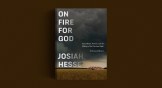
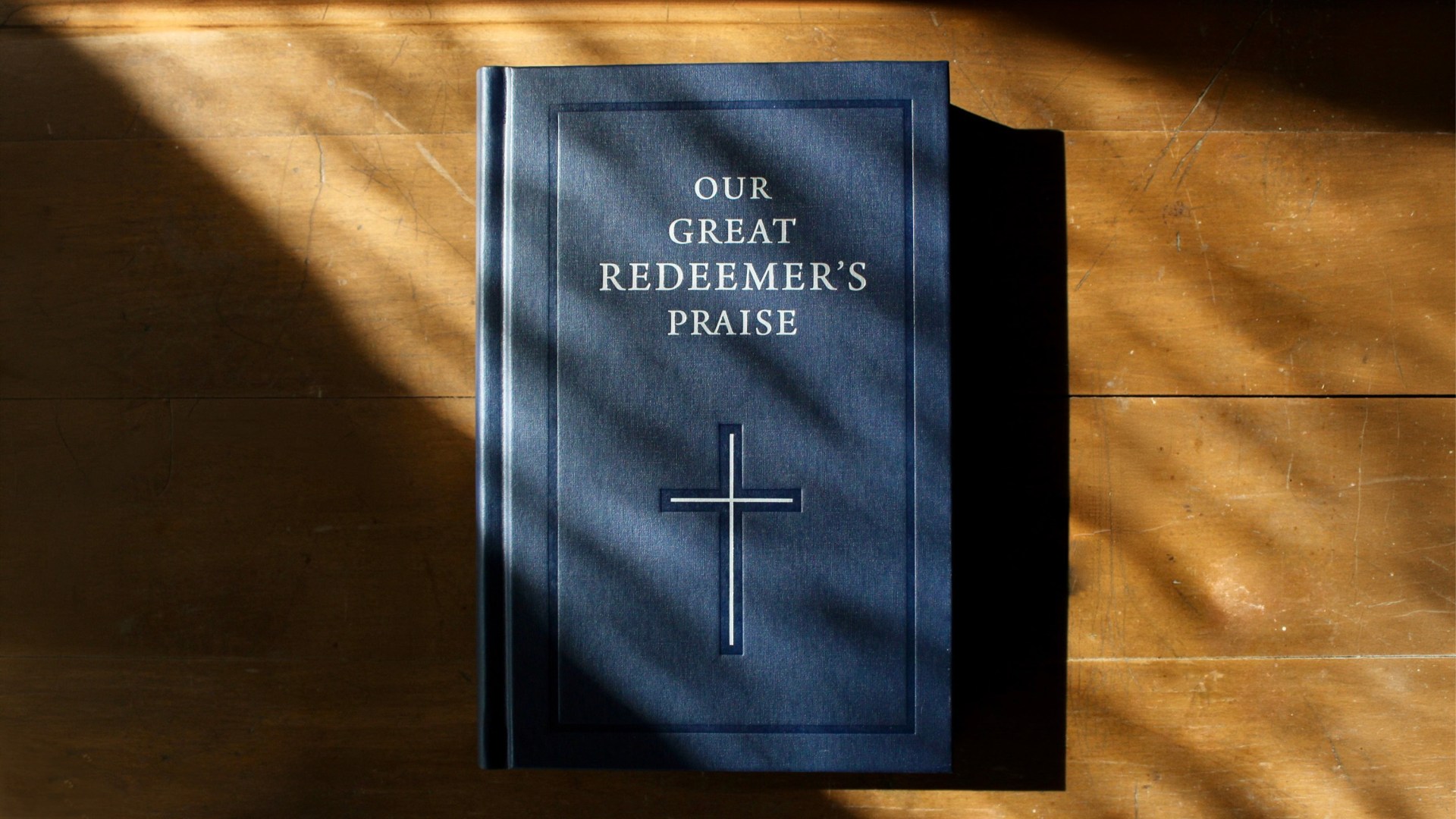
An image of the hymnal.
Christianity Today March 19, 2026
David Walt / Seedbed

In 2019, the United Methodist Church (UMC) approved an exit plan for congregations that chose to disaffiliate from the denomination over its stance on sexuality and same-sex relationships. The subsequent schism led to the loss of 25 percent of its US congregations and the founding of the Global Methodist Church (GMC). Methodist churches that changed their affiliation to the GMC or other denominations have had to reestablish their congregational identities, and in some cases, purchase new hymnals.

Some UMC jurisdictions have directed disaffiliated churches to stop using UMC hymnals. While the UMC doesn’t seem to be enforcing that mandate, many of these churches are eager to find a new hymnal that preserves their Wesleyan roots and allows them to continue singing the songs of their tradition. One resource they are turning to in large numbers is the new ecumenical Wesleyan hymnal, Our Great Redeemer’s Praise.  

“In some cases, churches were forced to get a new hymnal,” said Powers, associate professor of worship at Asbury Theological Seminary and one of the collection’s editors. “But a new hymnal also helps solidify a new identity.”

Our Great Redeemer’s Praise is the first new print edition of an ecumenical Wesleyan hymnal in over 30 years. It is a production of Seedbed, a Wesleyan ministry resource publisher started by Asbury Seminary, which began developing the project in 2019. Copies of the book are now in the pews and seatbacks of churches in a variety of denominations that have roots in the Wesleyan tradition. Published in 2022, the hymnal has now been through five print runs. 

“Interest has far exceeded our expectations,” said Andrew Miller, director of publishing for Seedbed. “Hymnody isn’t dead.”

The majority of churches purchasing Our Great Redeemer’s Praise have left the UMC and joined the GMC. But churches across denominations are purchasing the hymnal; in the United States, the Wesleyan tradition encompasses Methodist denominations as well as the Church of the Nazarene and the Salvation Army. According to Seedbed, some nondenominational churches have purchased the hymnal as well, and individual consumers are purchasing copies for devotional use. 

Matt O’Reilly, lead pastor at Christ Church Birmingham in Alabama (which disaffiliated from the UMC in 2022 and is now part of the GMC), said that the decision to purchase Our Great Redeemer’s Praise for the church was driven in part by the disaffiliation, but also by the community’s commitment to hymnody. Christ Church has a traditional service and a contemporary service every Sunday morning; the traditional service usually sees more attendees (and is growing).

“In the Wesleyan tradition, hymn collections are major theological resources,” O’Reilly said. “In the early days, Methodists weren’t writing systematic theologies; they were writing sermon collections and hymn collections.” 

O’Reilly also said the new hymnal is supporting his church’s move away from screen dependency and toward more tactile, embodied practices in musical worship. “I think the church needs to be ahead of the curve in providing embodied experiences,” he said. “These days, when everything is digital, it’s not bad for us to have a book in hand.”

Seedbed and Asbury Seminary aren’t officially affiliated with either the UMC or the GMC, and Powers said the hymnal is intended for use by any Wesleyan church or community looking for an updated collection of congregational music. 

“The Methodist movement was about singing the faith,” the hymnal’s general editor Jonathan Powers told CT. “And hymnals are an important part of that tradition.” 

In the late 18th century, John and Charles Wesley’s Methodist movement was the catalyst for the widespread production and use of hymnals in England. The first Wesleyan hymnal, printed in 1780, bore the title A Collection of Hymns for the Use of the People Called Methodists. Understandably, it became more commonly known simply as “the large hymnal.” The first hymn in that first edition was “O, for a Thousand Tongues to Sing”—all 18 verses of it. 

The Wesleys, both Anglican ministers, led a revivalist movement within the church, and hymn-singing societies cropped up as followers began seeking opportunities to sing their faith in community, outside of formal liturgical services. 

These societies throughout England helped fertilize an industry, creating demand for more printed hymnals. Methodists, as the Wesleys’ followers came to be known, purchased hymnals for personal use, carrying them to and from society gatherings where they sang verses written by Charles Wesley (a prolific writer who constructed metered verses as a devotional practice) set to preexisting hymn tunes. Many of Charles Wesley’s hymns, such as “Christ the Lord is Risen Today” and “Jesus, Lover of My Soul,” have become beloved congregational songs across denominations in and outside of the Methodist tradition.

“We don’t want to serve just one denomination and tradition. We want [the hymnal] to be Wesleyan,” said Powers. 

To that end, Powers and his team surveyed leaders from churches across Wesleyan denominations, asking which hymns they considered significant to their history and identity and which ones ought to be left behind. 

Powers said respondents suggested omitting patriotic songs such as “America the Beautiful,” which he and the editorial team decided to follow. 

“Someone didn’t want ‘In Christ Alone’ to be included because of its Reformed theology and mention of ‘the wrath of God,’” Powers said. “We worked through that. It’s easy to forget that one of the first questions John Wesley would ask those who wanted to join his society was ‘Do you desire to flee the wrath to come?’” 

The success of Our Great Redeemer’s Praise, the Gettys’ recent Sing! hymnal,and other recently released boutique printed hymnals suggest that interest in singing from books might be growing in the US. Churches and individuals are buying new hymnals.

“It’s amazing to me that people are hungry for the hard-copy hymnal again. This isn’t a tradition that’s passing away,” said Julie Tennent, managing editor of Our Great Redeemer’s Praise. “When I would visit churches and start talking about the project, people’s eyes would light up.” 

There is a wealth of historic hymnody in the Wesleyan tradition, some of which hasn’t been reproduced in recent Wesleyan and Methodist hymnals. Our Great Redeemer’s Praise includes exactly 100 hymns written by Charles Wesley. Powers said that previous volumes have generally included 40 or so. 

“We have more of Welsey’s voice in there,” Powers said. “There is a lot of great music that has been forgotten or lost.” 

Powers mentioned the hymn “Love Divine, All Loves Excelling” as an example of one that hasn’t received the modern attention or reinvention of songs like “Amazing Grace” or “Come Thou Fount” but merits not just preservation but reintroduction to the church. 

“This is a canon of songs that represents who we are, and what we want to pass down to the church,” he said. 

That canon doesn’t just preserve the old; it also contains songs that impacted the church at the time of its compilation. Our Great Redeemer’s Praise does start with the traditional “O for a Thousand Tongues to Sing,” but it ends with “The Blessing,” a contemporary worship anthem that became globally popular during the pandemic

“Ending with ‘The Blessing’ felt like an important way to capture a moment in time,” Powers said. “The hymnal is thoroughly what we are now, and where we’ve come from.” 
Culture

Gospel Matriarch Lucie Campbell Looked To God

Her songs spoke to life’s uncertainties and God’s presence—and taught me how to hope.

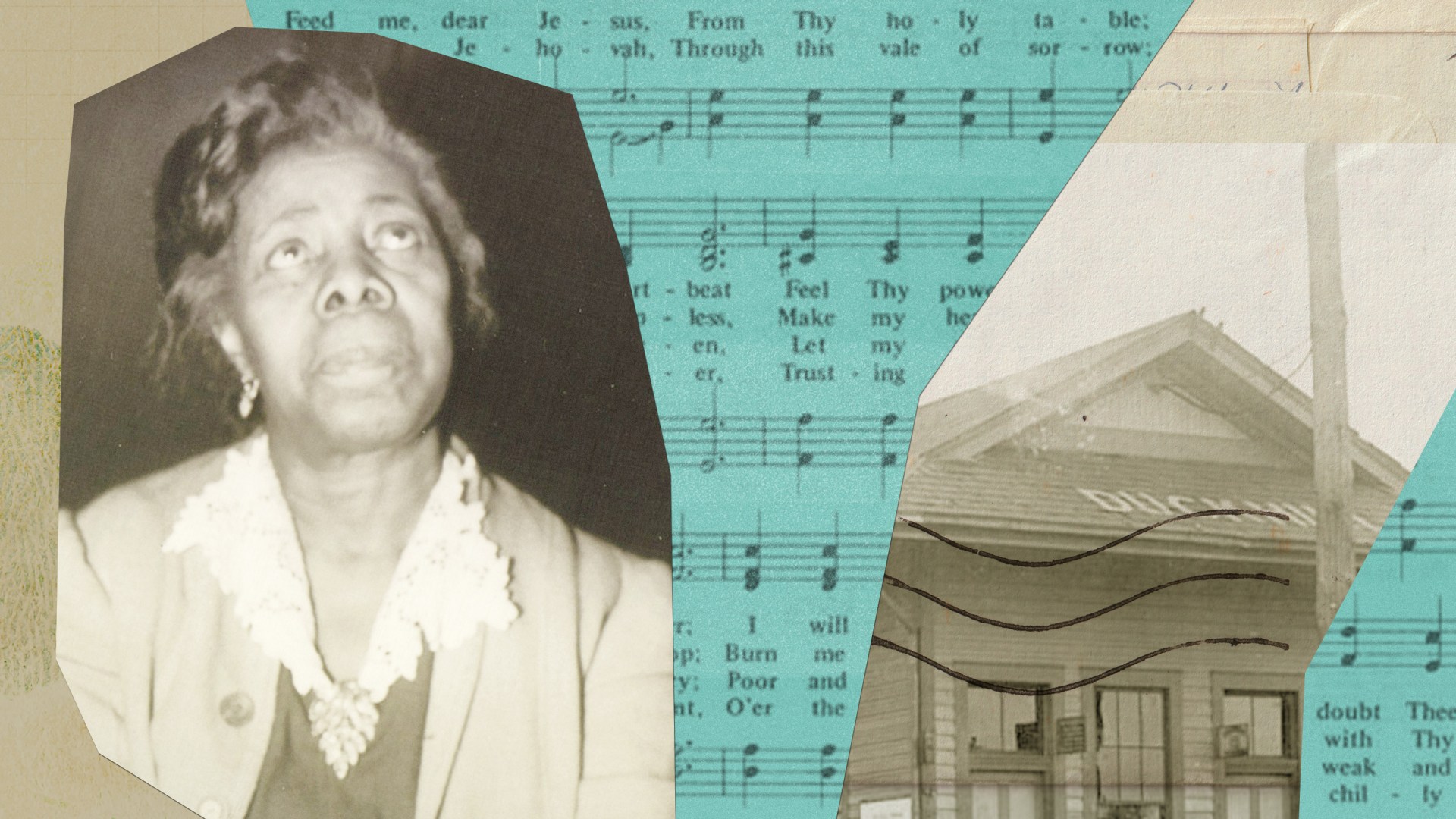
A collage of Lucie Campbell, a song she wrote, and her hometown.
Christianity Today March 19, 2026
Illustration by Elizabeth Kaye / Source Images: WikiMedia Commons, Hymnary.org, Memphis Music Hall of Fame

I grew up in a home where gospel music was always playing. My grandparents raised me in a small town outside Birmingham to the sound of The Caravans and Mighty Clouds of Joy. The music was like the smell of food in the kitchen or the sound of a television in another room. It was sometimes turned up, sometimes down, but the rich harmonies and fusion of the blues, jazz, and soul were never far away.

I didn’t appreciate gospel music enough as a kid. But as my relationship with God grew, I valued it more. It gave me words for experiences I was still learning to name. And I came to treasure that generations of songwriters had left behind words and sounds that captured not only the Christian life but also the experience of African American Christians as they wandered through the proverbial wilderness, where survival required the steady guidance of God. 

When we think about theology, we often think about preachers, scholars, or pastors. In the Black church tradition, however, theology has equally been carried through song. Gospel songwriters translate the truths of our faith into words we can remember long after sermons fade from memory. Preaching is good for explaining belief. But it is songs that have often declared the truth of God’s companionship in the face of harsh realities with no end in sight.

Few songwriters have put together words that communicate such truths as well as the late gospel giant Lucie Campbell did. I consider her one of the genre’s greats, and the feeling seems to have been shared by other gospel singers, like Mahalia Jackson, who took Campbell’s songs and transformed them into new arrangements. Horace Clarence Boyer, one of gospel’s foremost scholars, once said Miss Lucie, as Campbell was often known, was “perhaps the most significant Black church musician we’ve ever produced.”

Personally, I don’t remember the first time I heard Campbell’s words. Nor do I remember the first time I heard her famous song “Touch Me, Lord Jesus.” But the first version that stuck with me was recorded by the Angelic Gospel Singers, whose lead singer reminded me of my grandmother.

Over the years, I heard the song performed by choirs, soloists, and small gospel groups. Initially, I simply appreciated the piano music that accompanied it. But one Sunday morning, I paid more attention to the lyrics:

O bear me thro’ the current;

O’er the chilly Jordan,

O Lord, please lead me, my dear Savior

To my home above.

I often found that Campbell’s words were not abstract theology but a prayer shaped by real human need. Her songs did not avoid hardship. Instead, they spoke directly to the realities many African Americans faced—poverty, loneliness, exhaustion, and uncertainty—while insisting that God remained present in the middle of those realities.

Campbell herself was born in Duck Hill, Mississippi, in 1885. She was the youngest of nine children. Her father worked for the railroad, and her mother worked as a cook. When Campbell was a child, her father died in a railroad accident, leaving her mother to raise their children alone.

The circumstances of Campbell’s early life were not unusual for African Americans growing up in the rural South during the late 19th century. Life was often hard, but her story showed remarkable determination.

As a child, Campbell had an early talent for music. She wanted to play the piano. But because her mother could afford lessons only for Campbell’s older sister, Campbell simply listened and practiced on her own. She graduated high school as valedictorian at the age of 14 and later began a career in education.

Throughout her life, faith, education, and music were closely intertwined. As a teenager, she organized a choir that would eventually grow to a thousand members and sing at the National Baptist Convention. In her early thirties, she was elected music director for the convention and eventually became the first African American woman to publish a gospel hymn, called “Something Within.” She composed more than 100 other songs before she died in 1963.

In Campbell’s imagination, human need was often the place where Christ met his people. Life contains strong currents. There are moments when we feel as if we are being swept forward by circumstances we cannot control. There are seasons when the waters feel cold and uncertain.

Yet I found that her music does not end with those realities. It moves toward provision. In “Touch Me, Lord Jesus,” Campbell pleads with God to be fed “from Thy holy table, / Rain, rain bread from heaven, / Let my cup o’erflow.” In “I Am Not Blessed with Riches,” she writes we may be helpless, but Jesus can turn our night to day. He, after all, is her hope, joy, and comfort. She asks us, “Is he yours?”

When I listen to Campbell’s words now, I hear more than a beautiful gospel song. I hear a teacher of the church helping me remember what God has already done even when the present world feels uncertain. That may be why her music continues to resonate generations later. It beckons us to put our hope in God and still helps us find our way home.

Daylan Woodall is a pastor and religious studies professor whose work focuses on African American Christian history and the Black church. He writes the Substack newsletter Too Hip for the Room

Culture
Review

‘The Faithful’ Celebrates the Women of the Bible

The first episode—and a set visit in Italy—introduced a me to a thoughtful new drama about multidimensional women in Scripture.

Part of the set of The Faithful.

Part of the set of The Faithful.

Christianity Today March 19, 2026
Photo courtesy of Paul Marchbanks

Each year, I teach multiple sections of a course with the unwieldy catalog title The Bible as Literature and in Literature and the Arts. This interdisciplinary offering examines biblical figures, symbols, and principles in their textual and historical contexts, then considers the rhetorical impact of this material when it is woven into modern literary and visual art. When taught at public institutions by academics more convinced of the Bible’s literary merit than its truth value, this type of course can unsettle—even derail—young faith instead of fortifying it.

This outcome is far from inevitable. As hymns and poetic liturgy fill a sanctuary, adorning Scripture with meter and melody, so can faith-laced fiction and imagery swell the imagination with illustrations of the perennial contest between grace and rebellion.

In the hands of a religious skeptic or cynical instructor, a poem by Robert Browning that details a monk’s petty cruelty provides evidence of hypocrisy. The Christian professor, however, points out how tonal contradictions and hyperbole sabotage the first-person speaker’s arrogance: The poem spotlights integrity by framing the consequences of its absence. To the cynic, a Christological work by Catalan painter Salvador Dalí constitutes virtue signaling, a politically savvy cash grab in the wake of a Catholic dictator’s rise to power. For the educator convinced that divine action often eludes our attempts to dissect it (1 Cor 1:18–30), the possibility of God acting in Dalí’s life complicates any facile, scornful conclusions about his work.

Such heavenly intervention underpins the personal narrative of a filmmaker I met last fall during a visit to the Roman set of Fox Entertainment’s The Faithful, a miniseries releasing across the three Sundays preceding Easter. René Echevarria, the showrunner, entered Hollywood in the early ’90s as a screenwriter and editor for sci-fi favorite Star Trek: The Next Generation and quickly became an executive producer. Ever since, Echevarria has gravitated toward shows with equally fantastic premises, including Dark Angel, The 4400, Medium, and Carnival Row. Each show spin yarns about figures with extraordinary abilities whose powers both complicate life and provide it with new purpose.

This creative interest in supernatural possibilities found a new, life-giving channel mid-career when God unexpectedly obtruded into a stressful life sustained by a cigarette addiction Echevarria lacked the time and will to eliminate. Intrigued by the ashes on someone’s forehead one day at the studio, Echevarria wondered what this individual had given up for Lent and what, if he were still a practicing Catholic, he himself might relinquish. The answer arrived immediately, alongside the conviction that the nicotine addiction regularly waking him up in the middle of the night had too strong a hold ever to be shaken off.

And then he heard a voice say, Of course you can, and you will, and you’re going to do it right now.

Not only did Echevarria never smoke another cigarette, that moment also awakened a dormant faith which initially brought him back into the Catholic church, where he and the woman he soon married would baptize their three children. Later, they transferred membership to a small evangelical church outside Los Angeles and read the Bible in new, transformative ways.

Five years ago, Echevarria belatedly revealed his faith to his surprised agent and asked that they look for faith-based projects. The success of The Chosen and House of David had convinced Fox Entertainment to jump on the bandwagon, so it eagerly greenlighted Echevarria’s and Julie Weitz’s proposal for a show foregrounding the experience of women in the Bible.

Echevarria’s faith and avid research, Weitz’s Jewish education, feedback from Christianity Today’s Russell Moore, and assistance from Wendy Zierler (rabbi and professor of modern Jewish literature and feminist studies at Hebrew Union College) combined to create a show shaped by the biblical record and psychological realism. As Weitz puts it, they wanted the show to feel “true and legitimate, not heightened.” The sort of melodramatic excesses, extravagant sets, and military spectacle today’s audiences love are nowhere to be seen. Instead, into the huts and tents of ancient Bedouins, the show’s creators placed imperfect, God-fearing nomads whose faltering steps underscore the power of the one who draws them out of their homelands. The series opens with the story of Abram, Sarai, and Hagar.

During a press conference last month, I asked Echevarria a rather involved question. Noting that Hebrews lists Sarah as one of the storied faithful who “was enabled to bear children because she considered him faithful who had made the promise” (Heb 11:11), I pointed back to the events dramatized by his show which underscore Sarai’s lack of trust in God’s timing. These include feasible extrapolations from the scriptural account, including Sarai’s yelling at God and throwing vegetables from Abram’s altar when no pregnancy is forthcoming, her anger at Abram for not resisting more when she tells him to sleep with Hagar, and her frustration with Abram’s repeatedly uprooting them to move closer to Canaan. Did Echevarria intend to characterize faith, I asked, as an often tortured, complicated process, thereby making the faith of the show’s title appear accessible to struggling humans?

“Yes,” he enthusiastically rejoined. And Weitz elaborated: All three stories in the series consider women “grappling with faith on a human level.”

In the case of Sarai (Sarah), faith is vicarious for quite some time, with Abram (Abraham) serving as the divine proxy in whom she places her belief. Watching from a distance as Abram sacrifices at one homemade altar after another and lacking any revelatory encounters or dreams of her own, Sarai must trust that no delusions addle her husband’s brain. In the show, his romantic devotion to her makes such faith relatively easy. As Echevarria notes, Abram’s peers likely expected him to take another wife when Sarai failed to conceive, yet he refused to consider this option. (A second marriage in the Bible follows Sarah’s death.) Pushed into sleeping with Hagar, Abram acquiesces but maintains, “I have loved only one my whole life.”

Hagar’s experience differs profoundly from Sarai’s. According to Jewish Midrashim, Hagar was an Egyptian princess presented to Sarai as a handmaid by the Pharaoh anxious to get rid of her, an explanation for her presence in Abram’s tribe that the show adopts wholeheartedly. Her status as an ankh-wearing outsider and slave makes it unlikely any Jewish man will pursue her, and she appears to have few friends besides Sarai. Abram deigns to admit she’s beautiful the second time he sleeps with her, but he makes little effort to form an emotional connection. And Hagar demands none, at no point attempting to steal Abram’s affections. Despite her unenviable situation, Hagar proves even-tempered, particularly when compared with the vacillating Sarai.

One might contend that Hagar’s role as occasional narrator centers her own perspective and opinion—arguably the show’s most radical decision. In the screenwriters’ hands, Hagar comes across as kinder, gentler, and more pitiable than Sarai. The show interprets the idea that she “despise[d]” her mistress not because of the contempt Sarai names (Gen. 16:4–5) but because of an understandable desire to raise the child she carries in her womb. An angel of the Lord speaks to Hagar twice, as in the Bible (16:7–13; 21:17–18), and in the show’s conclusion she plays a surprising role that I will not divulge here.

Less surprising is the series’ production value, given the industry’s rush to meet the growing demand for quality Christian programming. Set visits in a quarry near Rome and back in the studio revealed the considerable research undergirding the design of period architecture, domestic goods, and costumes. I was particularly taken by a meticulously carved board game, an ingenious prop deserving mass production and a spot next to Wingspan and Catan on gaming displays.

While committed to never contradicting the biblical record outright, Echevarria and Weitz take expected liberties with the text. They include only events witnessed by the women, and the compact story line omits any mention of Abram’s nephew Lot. At the same time, Echevarria and Weitz invent several plausible moments in their quest to create relatable characters for a mixed audience. In the first two-episode story, these include Sarai’s and Hagar’s signing a clay tablet to formalize their surrogacy arrangement, Hagar’s recommending a grain-based peeing test for determining pregnancy, and Abram’s recounting tales about Noah and Nimrod to his tribe’s children in the manner of “the sagas.”

Teaching the Bible at a secular university has made one thing crystal clear to me. Unquestioned, prejudicial assumptions about biblical gender roles are one of the largest roadblocks for unchurched students wondering whether the Bible is more than a historical and literary artifact. If the first two episodes of this humanizing drama about multidimensional, relatable women prefigure the tenor of the next four, the show will realize the evangelical aim Echevarria repeatedly, joyfully articulated in our conversations: convincing a few skeptics to take their Bibles off the shelf.

Paul Marchbanks is a professor of English at California Polytechnic State University. His YouTube channel is “Digging in the Dirt.”

News

Iranian Christian Freed Nine Months After Border Patrol Arrest

Video of agents arresting him and his wife in Los Angeles went viral, and their church has been praying for his freedom.

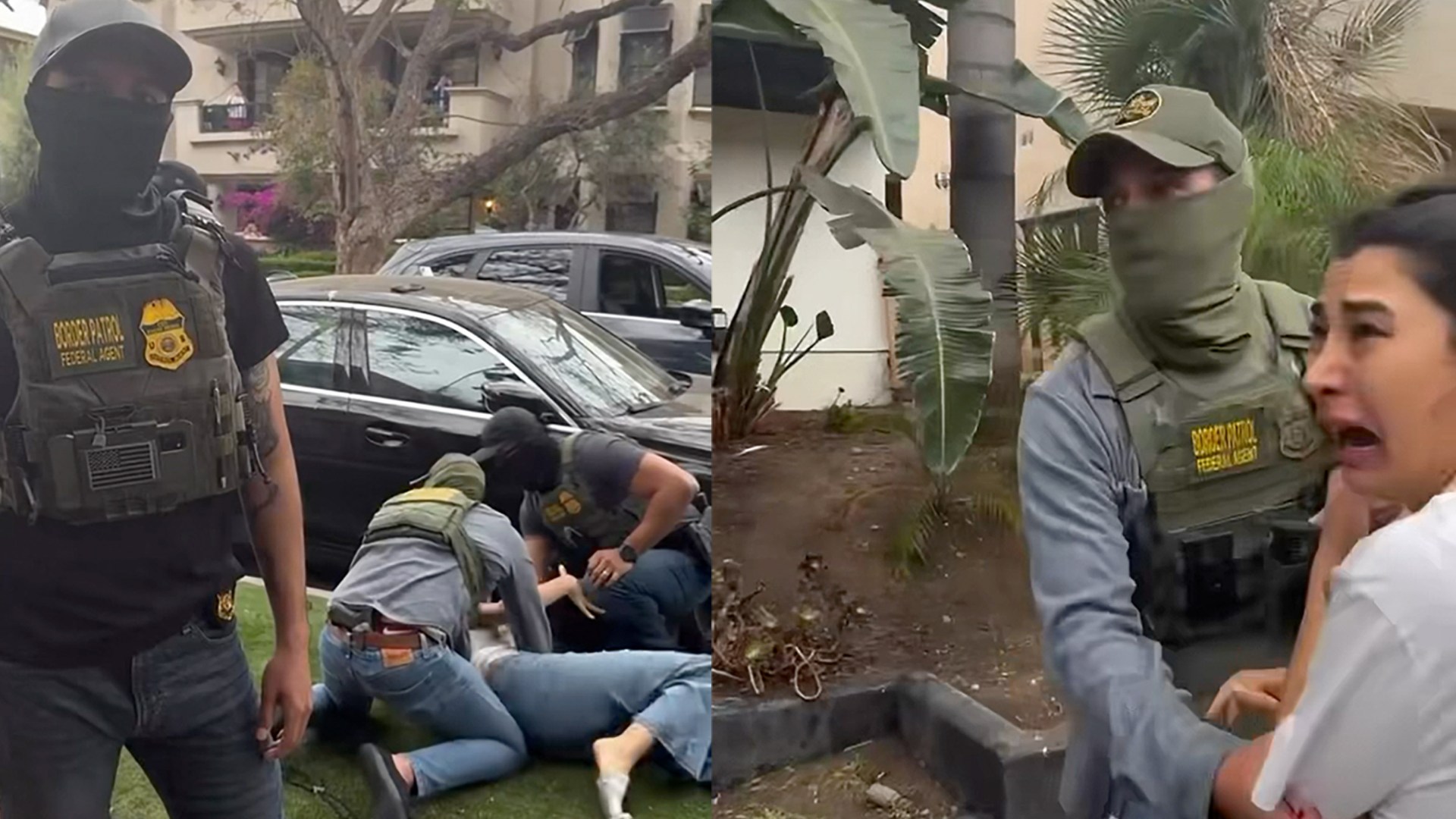
Pastor Ara Torosian filmed Border Patrol agents arresting Iranian members of his congregation.

Pastor Ara Torosian filmed Border Patrol agents arresting Iranian members of his congregation.

Christianity Today March 18, 2026
Ara Torosian

After nine months in immigration detention, Iranian Christian convert Reza was freed this week, his pastor Ara Torosian reported. Reza’s church kept track of his exact time in detention: 267 days. 

“We are so happy,” said Torosian, the pastor of the Farsi-speaking congregation Cornerstone West Los Angeles, in an interview with CT. But the pastor is concerned about other Iranian Christians, including in his own congregation, who remain in immigration detention.

Border Patrol agents detained Reza and his wife, Marjan, who are Christians and asylum seekers from Iran, on a Los Angeles sidewalk near their home in June of last year. Torosian captured the arrest on video, which went viral as Marjan had a panic attack and convulsed on the ground during the arrest. (CT withheld the couple’s full names to protect their safety and their family in Iran.) 

The couple had been part of Cornerstone West Los Angeles for about a year before their arrest.

Reza was in detention ever since in New Mexico. Marjan was released after 120 days in detention and was granted asylum, but two different judges were handling the couple’s cases.

Christian groups like Women of Welcome raised an outcry about the arrests because Iranian Christian converts from Islam face arrest, torture, and potential execution in Iran. Torosian said the government lawyer prosecuting the case against Reza did not seem to understand the threats Christian converts faced in their home country. Torosian said Iranian authorities had recently searched the home of Reza’s parents for Christian material but—because they are not Christians—found nothing. That underscored the threat Reza faced, Torosian argued.  

Reza’s church is now praying for other detained Iranian Christians in the US, including a fellow congregant. In addition, two Iranian Christians from a church in Texas are in detention and one is facing deportation orders but is appealing, according to World Relief’s Lauren Rasmussen. 

Reza and Marjan’s advocates said the couple had followed the legal procedures for asylum seekers. Prior to 2025, it was unusual for asylum seekers to be detained while their cases were pending.

In November, Reza was granted “CAT withholding” rather than asylum, which meant he faced a threat of torture in Iran but was subject to deportation to a third country. Reza could appeal the decision.

His lawyers then filed a habeas petition in federal court, which led to his release, said Torosian. 

The release comes as the US has all but ended admission for international refugees other than white South Africans. And now the US is at war with Iran, with the Department of Homeland Security warning of Iranian “sleeper cells” in the US.

This past Sunday, Torosian was two points into a six-point sermon on Luke when he felt called to end his sermon and have the congregation pray. Marjan prayed, along with another family with members in detention. They prayed for America, for Iran, and for detained Iranians, and people wept.

 “Usually my church is not an emotional church,” Torosian said. The next morning, Torosian heard from Reza’s lawyers. 

Upon news of his release, the church sent money to fly him from El Paso to Los Angeles. The church had already established a fund for Christian asylum seekers in need. Torosian said he told Reza he was proud of him for “being a light in that prison.” 

Torosian had promised Reza an Iranian meal on his release, which they scheduled for lunch together on Wednesday in Los Angeles. Torosian canceled his sermon on Sunday for the church to worship, praise God for Reza’s release, and celebrate the Iranian new year, Nowruz. 

“God did amazing things,” Torosian said.

Theology

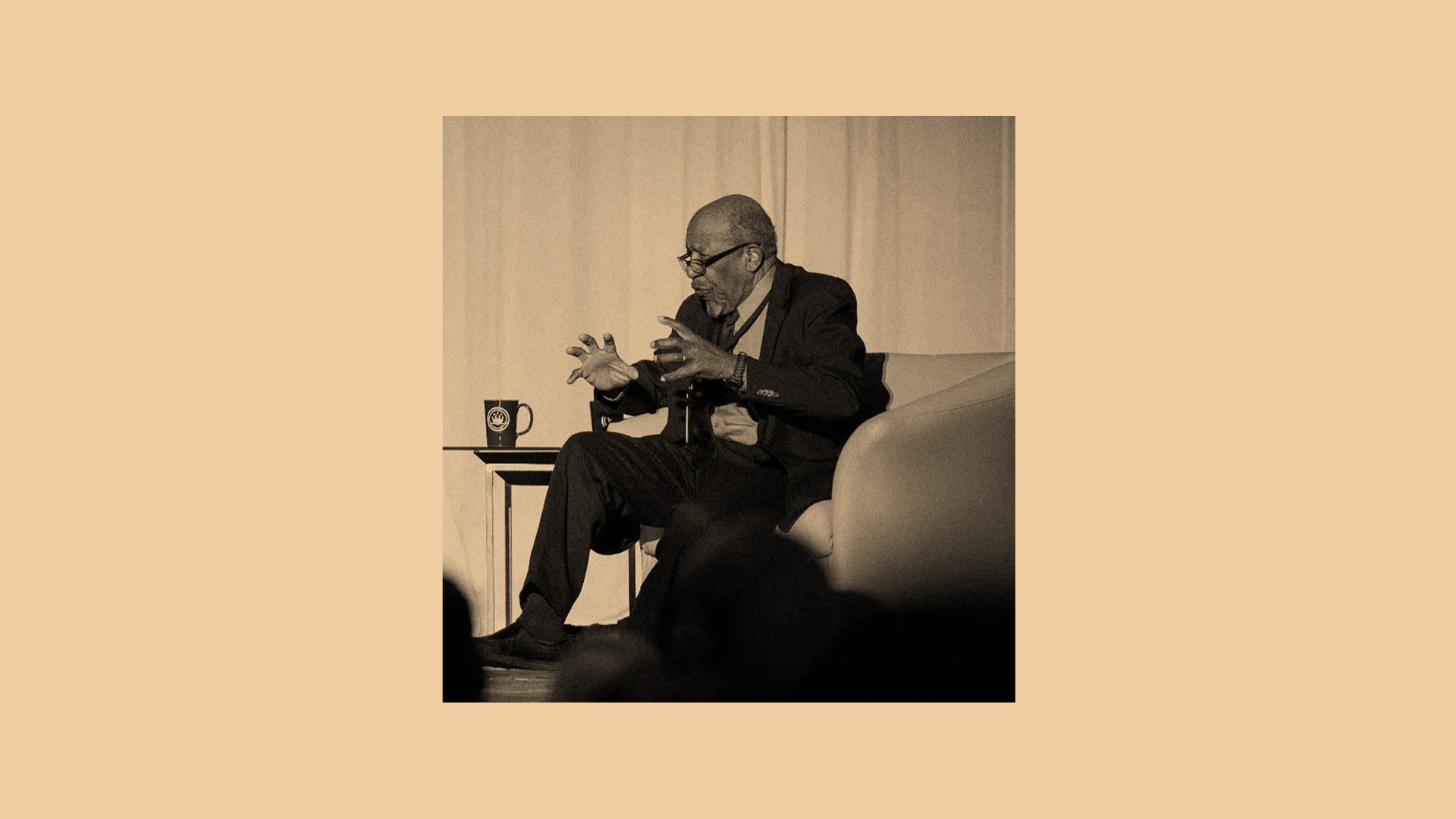
Why John Perkins Stood (Almost) Alone

Columnist

The civil rights leader treated love of God and love for others as inseparable.

John Perkins
Christianity Today March 18, 2026
Illustration by Christianity Today / Source Image: Alli Rader

This piece was adapted from Russell Moore’s newsletter. Subscribe here.

John Perkins died this week, and I can’t believe it.

When I say that, I don’t mean his death was a shock. He was in his 90s. I also don’t mean what we often say when someone we love and respect dies: “I just can’t believe he’s gone.” No, what I find hard to believe is that we were alive at the same time. That’s because Perkins seemed too large for this age.

Perkins seemed to be someone we should read about in history books, not someone we could know. Whenever I saw his face and name on the screen of my pulsing phone in an incoming call, I felt as if I were being contacted by George Whitefield or John Wesley or Martin Luther King Jr. Perkins seemed strange in this time in the world, and that’s because he is as close as we get in the present day to what people meant at one time when they said “martyr.”

He was no martyr the way the word’s been reduced and degraded. The psychological category of martyr complex did not fit him at all. He was a Black Mississippian of one generation, and I am a white Mississippian of another, and I could see what he was up to. He had left our home state, after all, and come back with a burden—to preach the gospel, to see lives changed, to stand up to white supremacy and the oppression of the poor, and to empower people to escape from poverty.

And he did that in the Mississippi of the 1960s—a race-nationalist police state that sought to make examples of everyone who, like Perkins, did not “know their place.” He was beaten, jailed, and hounded in every way possible, but he never yielded. Neither did he give up on what drove him to act in the first place. He never gave up on reconciliation.

After a certain point in the 1980s or 1990s, racial reconciliation became a phrase of deflection for many believers. Many American Christians, often white evangelicals, used reconciliation in reference to race as a way to signal, “We want multiethnic churches but only with white culture, except for an occasional gospel choir” or “We don’t want anyone to use racial slurs, but we also don’t want anyone looking at anything in the Bible that might sound like social justice.”  

Seeing this linguistic trick, some who rightly opposed racial inequality became suspicious of the very word reconciliation. Perkins never did. He would no sooner give up that concept than he would give up the word grace because some television evangelists had used it to excuse their latest sex scandals.

Perkins truly believed what Paul wrote:

All this is from God, who through Christ reconciled us to himself and gave us the ministry of reconciliation; that is, in Christ God was reconciling the world to himself, not counting their trespasses against them, and entrusting to us the message of reconciliation. (2 Cor. 5:18–19, ESV throughout)

To those who wanted to honor civil rights and care for the poor but couch their concerns in vague generalities about “the divine,” Perkins thundered, “Jesus!”

And to those who wanted to keep the Jim Crow mentality, just substituting modern complaints for the language their grandparents would use, Perkins stood with the Bible: “Behold, the wages of the laborers who mowed your fields, which you kept back by fraud, are crying out against you, and the cries of the harvesters have reached the ears of the Lord of hosts” (James 5:4).

Perkins combined preaching the gospel, registering people to vote, advocating for justice and civil rights, and starting neighborhood initiatives to give the poor hope—not only for the life to come but also for escaping poverty now. Yet he never gave up on reconciliation, even with those who hated him.

Perkins refused to treat the greatest commandment (“Love the Lord your God,” Matt. 22:37) and the second-greatest commandment (“Love your neighbor as yourself,” v. 39) as separate options on a multiple-choice quiz.

Some will blanch at the word martyr because it doesn’t seem to apply to someone who passes quietly at home, holding hands with his wife, in the tenth decade of life. Perkins’s death doesn’t seem to fit in the same category as the deaths of those who were burned at the stake or drowned in rivers or fed to lions for their faith. But the term martyr is rooted in the Greek word for witness, and that’s what Perkins was.

A witness, like Scripture itself, is a two-edged thing. Ezekiel saw the idolatries going on in the temple, and God said to him, “Son of man, have you seen what the elders of the house of Israel are doing in the dark, each in his room of pictures? For they say, ‘The Lord does not see us, the Lord has forsaken the land’” (Ezek. 8:12). A witness has seen something and bears witness to it.

In a time when the government has proposed removing language about, for instance, the murder of our fellow Mississippian Medgar Evers being motivated by racism, we need a witness to say, “These things happen in darkness but will not be hidden forever.”

But witness is not only an act of judgment. The Book of Hebrews gives us a series of examples of men and women who were “commended through their faith” (11:39). This commendation was not from other people—indeed, some of these Christians were sawn in two or exiled—but from God, because they “endured as seeing him who is invisible” (v. 27). These are not past-tense examples, the book reveals: “We are surrounded by so great a cloud of witnesses” (12:1). The language of a “cloud” here describes an overwhelming multitude—the kind of assembly Revelation refers to as a “multitude that no one could number” (7:9).

The cloud does not witness to itself but spurs us to “run with endurance the race that is set before us, looking to Jesus, the founder and perfecter of our faith, who for the joy that was set before him endured the cross, despising the shame, and is seated at the right hand of the throne of God” (Heb. 12:1–2).

We could be tempted to think we are in a time of drought, without a cloud in the sky. But witnesses don’t just see something that’s already happened; they also look for something to come. And they sometimes get a glimpse: “Behold, a little cloud like a man’s hand is rising from the sea” (1 Kings 18:44).

Perkins stood with ideas and action and the kind of moral authority that can come only from testing those ideas with his life—standing for something true and loving something real. That’s the kind of witness Perkins was. And that’s what made him seem so strange in this juvenile, demoralized time.

John Perkins was alive. He still is. I believe it.

Russell Moore is editor at large and columnist at Christianity Today as well as host of the weekly podcast The Russell Moore Show from CT Media.

History

From a Galaxy Far, Far Away to Carol Stream, Illinois

CT tracked cultural changes while going through several of its own.

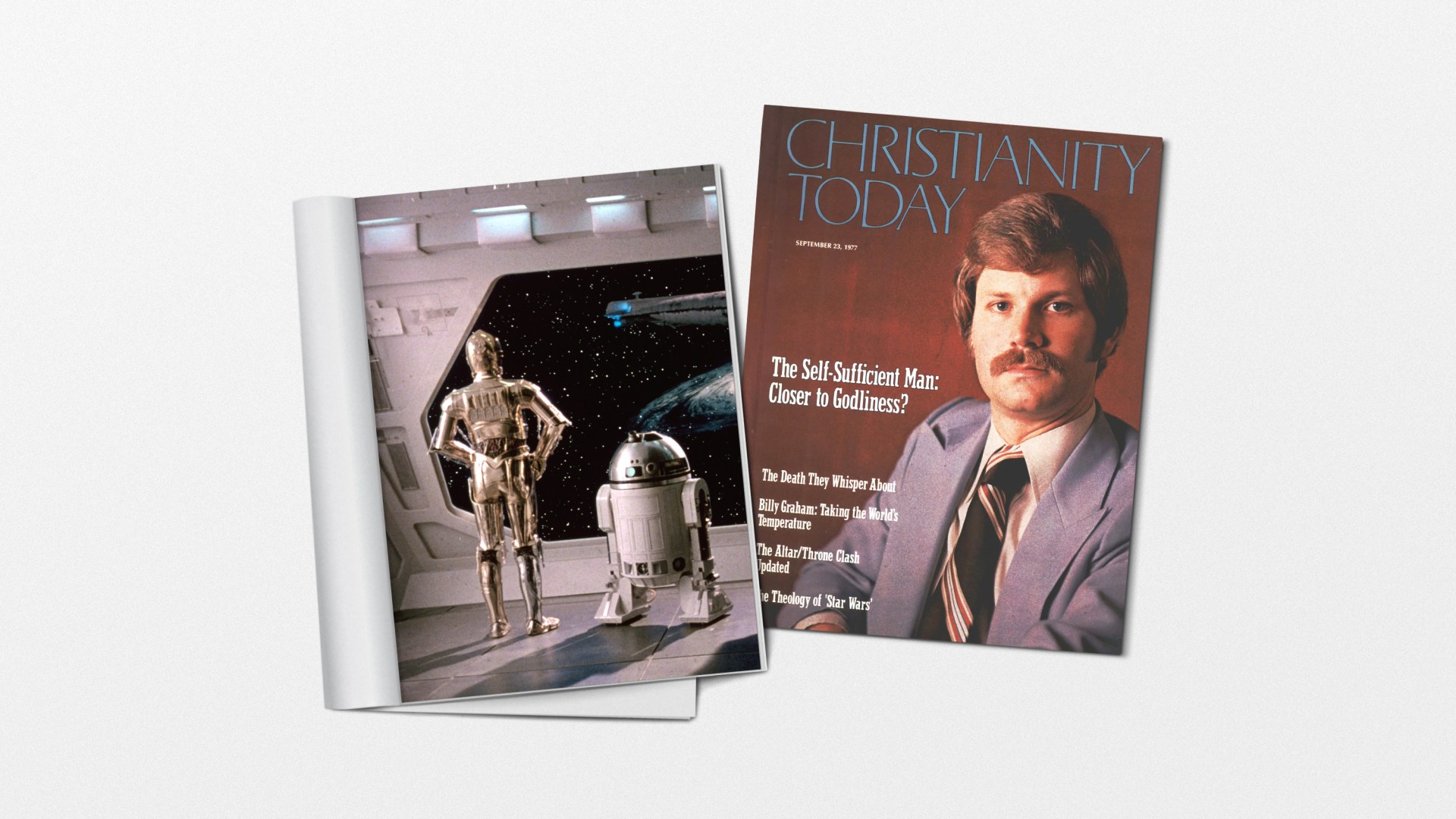
An image from Star Wars and a magazine cover from the CT archives.
Christianity Today March 18, 2026
Illustration by Christianity Today / Source Images: Getty, CT Archives

In 1977, CT asked an evangelical theologian to visit “a galaxy far, far away” and review Star Wars. The Trinity Evangelical Divinity School professor was surprised by Star Wars—“the first work of genuine science fiction to become a film sensation”—and encouraged by its popularity.

The idea in the Star Wars plot is epic, the struggle of good and evil with religious overtones on a cosmic scale. The three male heroes—teen-ager Luke Skywalker, the hardened and yet somehow good-at-heart adventurer Han Solo, and the noble, mature warrior monk Ben (Obi-Wan) Kenobi—have many prototypes in both Greek and knightly epic. … 

To the simplicity of the plot—a tyrannical galactic empire threatens universal rule by terror and mass destruction—is added simplicity of heart. Luke is the pure young knight postulant, Kenobi the old, bruised, yet faithful warrior. And even Han Solo, who appears first as the experienced and cynical man of the universe, is transformed by his contact with the other two—and his admiration for the dynamic, sovereign, virtuous captive princess, Leia Organa—from a perfect knave into another perfect knight. …

A fair measure of the response to Star Wars must result from the fact that it presents, in exaggerated but unmistakably recognizable images, the clash of good and evil, youthful idealism, feminine beauty—and strength—mature manly virtue, and a romantic love-motif that is pure and self-sacrificial rather than carnal and self-seeking. Perhaps few of those who view Star Wars look or act much like Luke, Leia, or Ben Kenobi. But apparently millions—no doubt far more than filmmakers expected—admire them and want to think that there is room for them in the universe.

Another major cultural event happened that summer when Elvis Presley died at his home in Memphis at 42. One CT editor reflected on the moment:

As I grew up it seemed that my peers, male and female, were divided into two camps—those who followed Elvis and those who didn’t. But even those kids who weren’t full-fledged fans, and I was one of that group for a time, were affected by his music. 

He transformed the top forty from the leftovers of the big band and croon era into what we now know as rock. He took homegrown American music—rhythm and blues, the black sound, and gospel—and melded it into a new musical form. He paved the way for the Beatles, and nearly every major rock group today claims to have been heavily influenced by Elvis. It would be too much to say that he created a culture for teenagers, but he certainly epitomized it. Anyone who wants to understand rock music—a pivotal element in the generation gap—must understand Elvis. 

People nicknamed him “Elvis the Pelvis” because of his hard-driving beat and holy roller style movements, which he said he learned in his pentecostal church. But his real contribution was through the blues ballad. … When he sang gospel songs he put feeling into faith, and helped people hope despite a world of sorrows. Perhaps that’s why his gospel albums were his best sellers last month.

The year brought significant change to CT. The magazine relocated from its offices in Washington, DC, to Carol Stream, Illinois. Some readers criticized the move, worrying that CT was giving up its influence in the nation’s capital and retreating to an “evangelical ghetto,” safe in the suburbs. Editor in chief Harold Lindsell acknowledged the criticism with a playful note.

Our mailbag and our telephones have kept us busy discussing the pro’s and con’s of our move to Carol Stream, Illinois. … On issues like this there is always a division of the house—readers, editors, board members—but the board had to make the final decision and did. I’m writing this from Florida, which, at least in the wintertime, I prefer to both Chicago and Washington!

As part of the transition, founding editor Carl F. H. Henry submitted his final CT column

Christianity Today had not a single subscriber, not even an office, when God had led me in 1956 to accept the proffered editorship. On a beautiful California night my wife Helga and I drove, in silence and with clasped hands, to post the acceptance in the last outgoing mail. 

The magazine’s intended audience was clear. Sample issues went to Protestant clergymen of all affiliations, and then to intellectually alert lay leaders who, by keeping abreast of theological trends, might join in the battle for modern man’s wavering mind. … We were a sturdy team, welding evangelical links in a time when liberalism was unraveling and neo-orthodoxy was sounding increasingly discordant notes.

The magazine put a Black Christian on the cover for the first time that summer, promoting a 3,000-word interview with civil rights leader Jesse Jackson.

Q. Do you consider yourself an evangelical?
A. I consider myself an evangelical, but white evangelicals don’t. They shy away from me because of my social activism.

Q. Do you believe in the virgin birth of Jesus Christ?
A. Yes. It can’t be disproved. God is capable of all things. … 

Q. Do you believe in the bodily resurrection of Christ?
A. Well, you know, I do. If that tomb was guarded by military soldiers and they were not able to report that they were overthrown by some element and left, something happened. The disciples would not have lied to the point of each of them being destroyed through some violent death. They not only came back to protect themselves; they came back with enough convictions themselves to be crucified.

Q. Do you believe that Jesus Christ is the Son of God?
A. Oh yes, I do. I don’t believe Jesus is the only son of God. I think God’s world is too big for that.

Jackson wasn’t the most controversial Black Christian that CT caught up with in 1977. That title belonged to Eldridge Cleaver, former leader of the Black Panthers and one-time advocate of violent revolution. He had a born-again experience while hiding from American authorities and considered himself—for the moment—an evangelical.

I am thrilled with the history of the black church and its stability. I feel awed by how magnificent it is. It would be easy to criticize it, but I don’t feel it would be helpful. … When I was in jail, one bishop of the African Methodist Episcopal Zion Church came to see me, and we had some good fellowship. But he was unique. He wasn’t from California. Other black ministers here wouldn’t touch me with a ten-foot pole. Many white preachers, though, came to see me. … 

There are some Christians who need to be more concerned with encouraging new Christians, instead of putting banana peels under their feet. Some people don’t want to accept me into the family of the church. A white preacher, for instance, said I should go to jail even if I am innocent in order to set a good example. That threw me for a loop. A lot of people are going around with their own home-baked theologies.

The magazine continued to voice concern about abortion, calling on President Jimmy Carter to make it a priority to reduce the number of abortions and pass legislation protecting the rights of unborn children. CT also called on Christians to embrace adoption and encourage people to welcome children into their families. 

Here is the answer to the problem of unwanted babies, the alternative to the burgeoning abortion mills of our land! Tens of thousands of couples would gladly welcome these babies into their hearts and homes. … How much better to accept the consequences of pregnancy and then permit the babies to be welcomed into the hearts and homes of the childless! This may be “inconvenient,” but I believe it is the “Christian” way out of a difficult situation.

CT’s biggest concern in 1977 was the health of the American family. The magazine reported that the new president, Jimmy Carter, brought the issue to national attention

“I intend to construct an administration that will reverse trends we have seen toward a breakdown of the family in our country,” he said. 

The surprising thing is not that he spoke those words, but that he is following through on his pledge. In a recent interview he said that the integrity of the family ought to be a factor in almost every program his Administration puts forward. …

One Sunday while his wife was on a diplomatic visit to Latin America, Carter taught a Sunday-school lesson at First Baptist Church in Washington. In it he urged married persons to be faithful to their partners. Even, he added in words reminiscent of the prophet Hosea, when their partners are not faithful to them. 

CT asked Methodist theologian Will Willimon to explain why “Christian marriage has become a subversive activity,” and asked Campus Crusade staffer Phillip Yancey to share his research on marital minefields

I spent a year studying the first five years of marriage, the period when the divorce rate is highest. I began by interviewing nine couples who revealed to me the struggles of their first five years. … Unresolved conflicts oozed open. Often a session intended to gather helpful information for others turned into a plea for help.

Listening to them, I sometimes questioned the whole notion of marriage. We have placed greater demands on marriage now than in previous generations. Besides satisfying the need for asexual relationship, marriage is now being asked to supply needs for comradeship and partnership as well. Added to this is the weight of ideals our romanticizing culture excites in us. It’s no wonder many marriages cannot bear the strain. … 

The Bible at first reading seems to say little about marriage, but I found that God does show us what marriage requires and how we are to exercise the principles that build sound marriages. God himself embodies the ideal.

The magazine also noted a flurry of Christian books on sex and marriage in 1977. Evangelicals were beginning to focus on the family. 

Ideas

What Loving South Africa Taught Me About Patriotism

Attachment to another country didn’t diminish my affection for America. It showed me God’s love for all peoples.

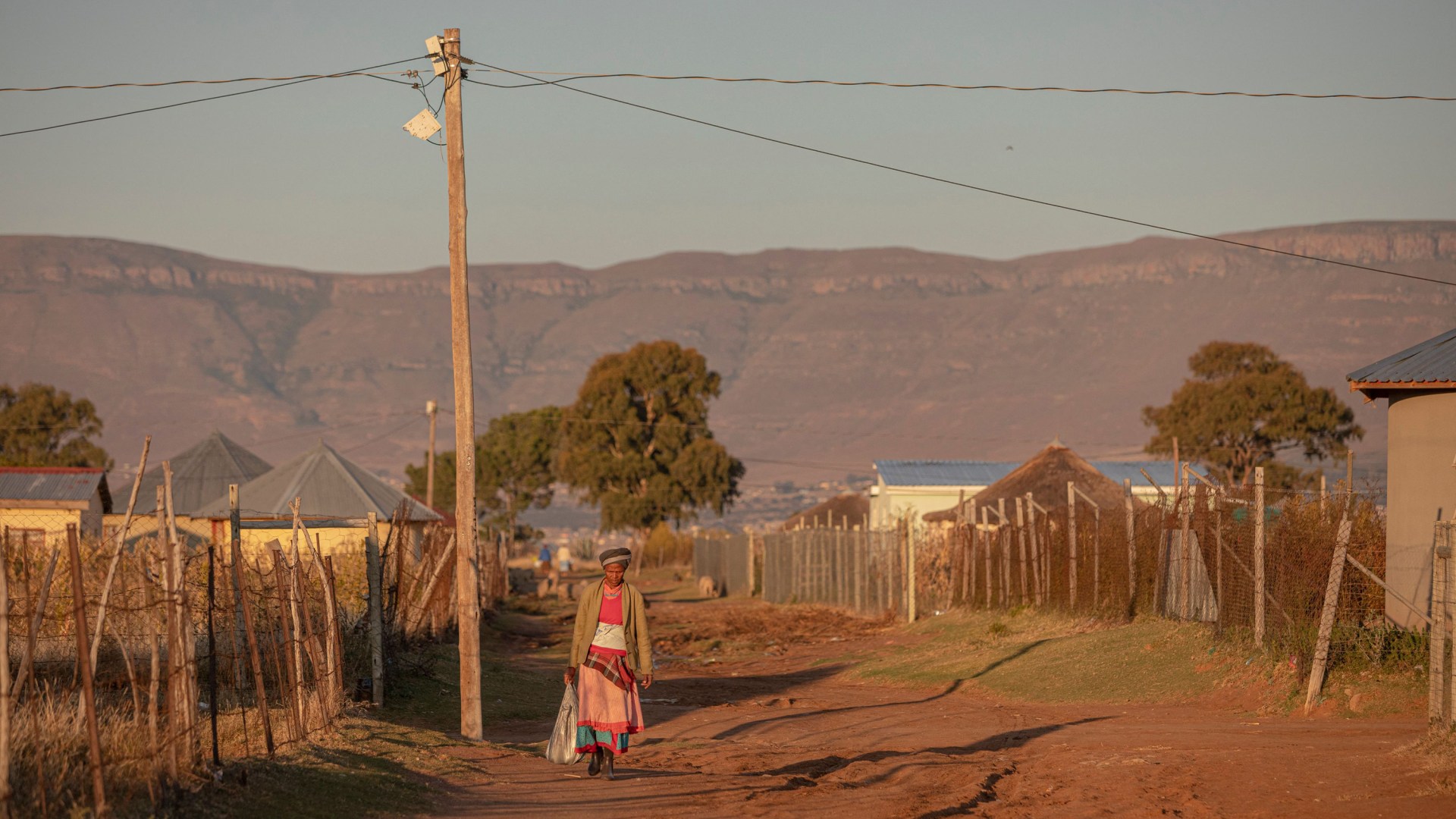
A woman walking on a dirt road in Zingqolweni village in South Africa.

A woman walking on a dirt road in Zingqolweni village in South Africa.

Christianity Today March 18, 2026
Guillem Sartorio / Contributor / Getty

I’m not sure when I first knew I was in love with South Africa.

Perhaps it was the afternoon I stood in a wide field outside Durban, watching an entire village sing a bride down the aisle. Or perhaps it was later, in a Western Cape township church, where a pastor with a scarred leg preached forgiveness for the very people who had tried to break him. Or maybe it was beneath a Limpopo sunset that turned the sky gold.

I only know that somewhere between those moments, my affection deepened into something more complicated and costly.

In 2013, I arrived in a rural town in KwaZulu-Natal, preparing to welcome a team from New York City who would spend two weeks at an orphanage for children whose parents had died mostly because of AIDS. On the ground, my role was organizing the trip and juggling logistics, schedules, and the many details to keep everything running smoothly. Nokubonga, a young Zulu woman studying agriculture, was there for a different purpose: She was working on a fledgling farm project, a loving attempt to make the orphanage self-sustaining.

We shared a tiny cottage set apart from the children’s rows of homes—close enough to hear laughter drifting at night but far enough to feel like guests. Despite a 20-year age difference and an ocean between our cultures, we became fast friends. We shared humor, curiosity, and an appetite for conversations that ranged from politics to nail polish. When she invited me to her “white wedding” two years later, I was honored—and briefly horrified. Did this mean guests were supposed to wear white? In my Southern upbringing, wearing white to someone else’s wedding bordered on felony. I later learned that in South Africa, a “white wedding” distinguishes a Western-style ceremony from traditional African weddings.

Relieved, I climbed into a car with other guests and headed toward the ceremony. When we arrived, I stood in amazement. It felt as though an entire village had gathered. Hundreds of people spilled outward in color and motion: elaborate headdresses, gleaming fabrics, elders leaning on canes, children darting between chairs.

Then a charismatic emcee stepped into the aisle and began calling out in Zulu. The crowd sang, clapped, and rose to their feet. Women released that unmistakable ululation, a rolling, joyful lalalala sound that would have been shushed immediately at any American wedding I had attended. Noise was not disruption here but devotion.

Bridesmaids in turquoise danced down the aisle in synchronized rhythm. Groomsmen followed in sunglasses and playful choreography. When Nokubonga finally appeared, radiant and entirely in white, I cried.

I had traveled before, docking in unfamiliar ports and flying off the beaten path. But at this wedding I was a participant, and I was welcomed as someone who belonged. Standing in that field, swept up in music I didn’t understand and joy that required no translation, I felt something loosen inside me. The scene was unapologetically jubilant. Despite a complicated history, nothing could mute a celebration.

I would later understand that this was my first lesson: Joy here is defiance.

If the wedding taught me that joy can be defiant, Pastor Peter taught me that forgiveness can be as well.

The first time I heard him tell his story, we were sitting in a church sanctuary in the Nomzamo township outside the coastal city of Strand. Peter spoke gently, but the childhood he described was anything but gentle. He was 14 when he joined hundreds of Black schoolchildren protesting apartheid-era school conditions in Cape Town. Police encircled the crowd with barbed wire. Tear gas filled the air. Children scattered.

Peter ran for the fence and tried to climb it. His pant leg caught on the barbed wire, flipping him upside down. A policeman dragged him down, tearing flesh from his leg, which remained tangled in the wire. An older man collapsed dead on top of him, murdered, his blood spilling across Peter.

Rage took root in him, not only toward the system but also toward white people in general. For years, Peter drank alcohol to forget, threw stones at strangers, and witnessed violence nearly every day. Then a white missionary walked through his township. She returned again and again, handing out food parcels, tutoring children, and visiting poor families.

Peter’s certainty crumbled. He returned to school, worked long hours, and attended a church camp in college. There he prayed, and something unexpected happened. A sense of peace arrived, filling his being, giving him purpose.

“Once you’ve received grace,” he told me later, “it’s impossible to keep walking with hatred.”

The scar on his leg remains deep. So does the history behind it. But the church he planted in 2007 now feeds hundreds of locals weekly and educates children, all while Peter mentors younger pastors in his new role as bishop of the REACH-SA denomination (Reformed Evangelical Anglican Church of South Africa) across the Western Cape.

If I had learned from my friends that joy and forgiveness could be defiant, the land itself taught me something quieter: Beauty can soften what still aches.

In Limpopo, 89,000 acres of Bushveld unfolded around me, grassy plains stretching toward a horizon so vast that by night, it seemed to gather every star in the firmament.

Lions rested in the shade. Elephants moved with grave authority. Rhinos and giraffes crossed the dust with ancient patience. At sunset, the sky ignited, scorched gold, molten orange, before dissolving into a darkness so complete it felt almost primordial. One evening, a herd of wildebeests moved slowly across the last ribbon of light, their silhouettes etched in flame. I took photographs, knowing even then the pictures would fail. Some beauty resists capture. It must simply be received.

For a country marked by dispossession and contested land, the bush holds its own deeper truth. It belongs to everyone and no one. It existed before flags and will endure after them.

Since 2010, I have returned nearly every year—sometimes with teams, sometimes with friends, sometimes with just my husband—often staying for a month or more at a time. Through the years, the country stopped feeling like a destination and began to feel like a second home.

Attachment to another country enlarged my loyalties and my sense of shared humanity. For years, that attachment felt uncomplicated.

But relations between the United States and South Africa have grown tense in the past year. The US government froze foreign-assistance funding for the country and prioritized resettlement for white Afrikaners seeking to move to the United States, citing claims of persecution that many analysts and South African officials dispute. Leaders have traded accusations back and forth, and rhetoric has hardened on both sides.

Disagreement between nations is nothing new, and analysts disagreeing about claims of widespread persecution doesn’t discount very real, alarming instances of violence in South Africa. But hearing leaders in the United States, my own country, speak in these ways about a place I had come to love felt disorienting. South Africa is not perfect, but neither is my own country.

I am still an American, and I love my country deeply. But loving South Africa has changed the lens with which I see it. When we speak about another people, we must speak carefully, as if they were listening—because they are. We must refuse to caricature those we disagree with.

Nations are more than the policies, rhetoric, or viral arguments that dominate the news. They are lands steeped in beauty and history, filled with people like Nokubonga and Pastor Peter—and, well, me—everyday people on life’s journey, striving every day and possessing the dignity God has bestowed on us all.

I still cannot name the exact moment I fell in love with South Africa. What I do know is this: Loving another country sharpens your love for your own home. It deepens your gratitude and challenges you to want your country to be better. Seeing another place’s joys and struggles holds up a mirror, showing both what works and what can be improved, without diminishing the beauty of either.

True patriotism is caring enough to see your own country clearly—and to see God’s love for humanity in every other place as well.

Christina Ray Stanton was the short-term Missions Coordinator for Redeemer Presbyterian, NYC for over a decade, and is the founder of Loving All Nations.

Books
Review

Trashing Evangelicals Is No Way to Fight Conspiracism

Jared Stacy’s new book correctly identifies a serious problem. But his depiction of evangelicalism is overblown and unreasonable.

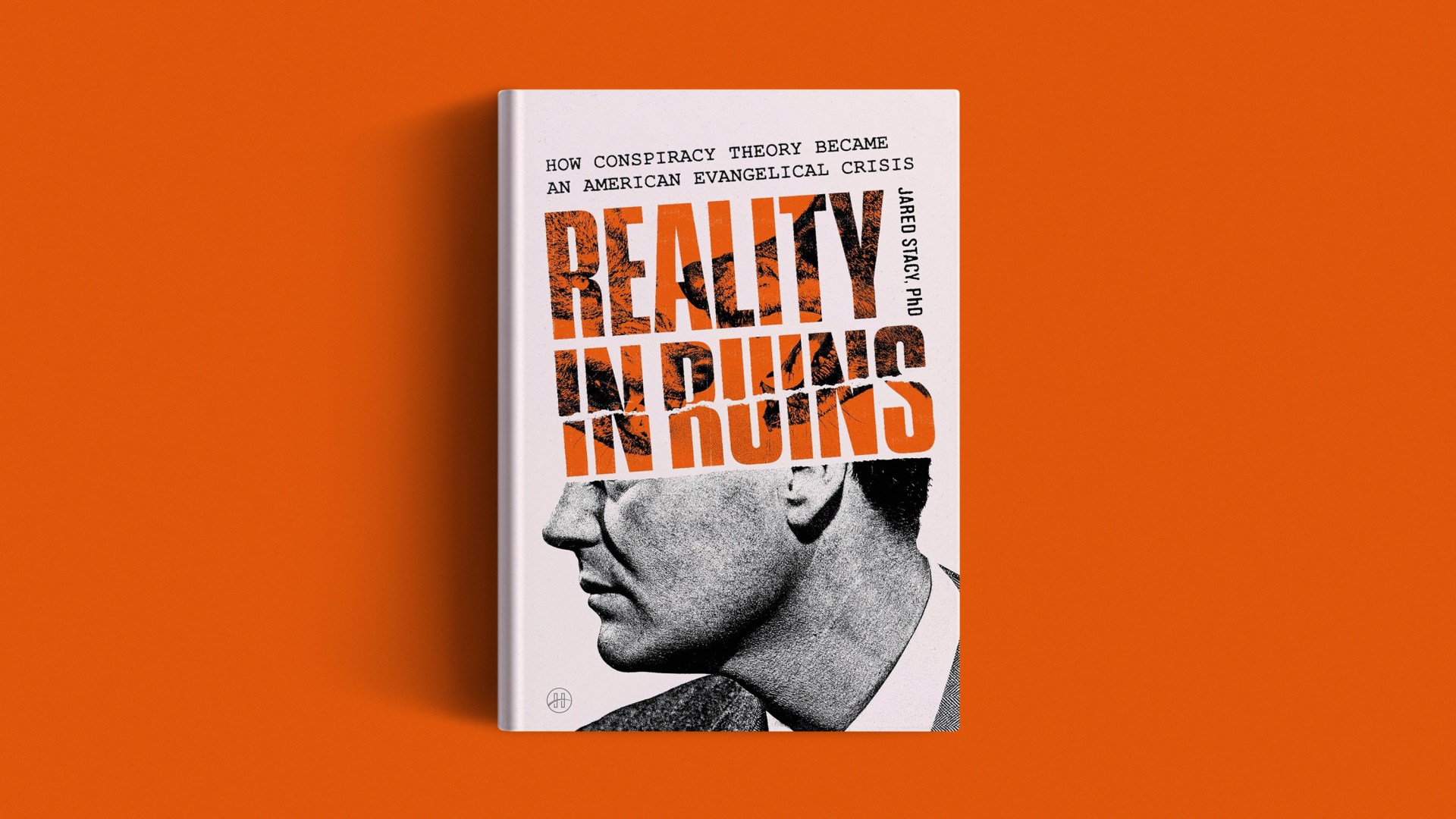
The book cover on an orange background.
Christianity Today March 17, 2026
Illustration by Christianity Today / Source Images: Getty, HarperOne

No good editor will let you start an article with a dictionary definition, which is perhaps the surest sign that a writer has no idea where to begin. But for this review, I must break the rule, because grasping a handful of related terms is vital to understanding the focus of Jared Stacy’s Reality in Ruins: How Conspiracy Theory Became an American Evangelical Crisis—and to understanding how and why it is an unsuccessful book.

First is conspiracy theory, a belief (and its explanation and evidence) that a group of people have secretly colluded in some project or event. The people who collude are conspirators, their plan is the conspiracy, and their thoughts and activities in executing that plan are conspiratorial.

Then there’s the mindset of conspiracism. This is not a discrete theory but an attitude, a comprehensive posture of suspicion that combines cynicism toward enemies and gullibility toward friends. Where conspiracy theories attempt to marshal specific fact claims and chains of evidence, conspiracism relies on leading questions, bald assertions, and bad vibes. 

It’s possible to be a conspiracy theorist without being a conspiracist, provided your theorizing doesn’t expand into a broadly conspiracist worldview. And though a given conspiracy theory may be true—because sometimes conspiracies do happen (like Watergate), and sometimes people do suss them out (see All the President’s Men)—conspiracism is always pernicious, more interested in grievance and power than truth.

Here’s why these definitions matter: The subtitle of Reality in Ruins says it’s about conspiracy theories, and so it is. But it’s also about conspiracies and conspiracism, and Stacy neither distinguishes between these phenomena nor keeps his terms straight. He defines both conspiracy theories and conspiracism as an unjustified, simplistic, comforting “act of storytelling” and uses the two interchangeably. He repeatedly says conspiratorial when he means conspiracist and conspiracy when he means conspiracy theory, in each case mixing up those inside the supposed plot with those who imagine themselves exposing it.

If this were the sole problem with the book, it would be unfair to treat it as anything more than a tragic lapse of copyediting. It is not the sole problem but rather indicative of the whole quality of the work.

Stacy is right to be worried about conspiracism in the church. He correctly grasps the mindset’s real and intelligible appeal, how it flourishes amid modern information overload, takes advantage of Christian instincts to fight evil, and is rarely overcome through head-on, argument-driven confrontation. When he meditates on trust in Christ, Reality in Ruins soars.

But on its primary subjects of evangelicalism and conspiracism, the book falls flat. Beyond terminological sloppiness, Reality in Ruins fails in its aspiration to be gracious to the evangelicalism Stacy has left behind. He traffics in overstatement and ultimately spins conspiracy theories of his own.

Before I come to all that, let me offer two asides. First, I’m not praising the goods of Reality in Ruins merely to cushion the coming critique.

Particularly in the opening gambit against conspiracism and the final quarter of the book, in which Stacy introduces practices of self-interrogation to avoid conspiracist thinking, I repeatedly wrote “good” and “yes” in my notes. He’s right to emphasize that conspiracism tells us primal stories about the world and our place in it, exerting “great force on those for whom the desire to be good and do good are driving factors.” This is more widely appealing—and therefore more insidious—than the classic conspiracy theorizing of The X-Files or Glenn Beck’s chalkboard.

And Stacy is at his best when he contrasts the confusion and suspicion of our data-drowned age with the rest and trust we find in Jesus. The Christian life does not come with a promise of omniscience, Stacy observes. God’s Word as “a lamp for my feet, a light on my path” (Ps. 119:105) often shows us just a little way ahead. The lie of conspiracism, Stacy argues, is that it promises us more control in this life than God himself promises. 

Second, I should mention before I go further that CT appears in this book. “Christianity Today is”—present tense—“a flashpoint for the way the totality of holy paranoia was reinforced by and evolved through the Cold War,” Stacy alleges. “It’s not that conspiracy theory was universally upheld by evangelicals, it’s more that it was never exorcised for reasons of political and economic expediency.” 

His two pieces of evidence are CT publishing the writing of FBI Director J. Edgar Hoover during the Cold War and running an ad for a Conservative Book Club in 1966—an ad to which some CT readers volubly objected. (You can see the ad on the final page of this issue PDF, and reader responses are here and here.)

The ad controversy, Stacy says, “illustrates the way in which this evangelical totality of holy paranoia persists and evolves. The conspiratorial [actually, conspiracist] narrations, charged by theology and contained in a leading evangelical publication for advertising profit, show how a nexus of variables can contribute to its spread.” That is a jargony way of accusing CT of promoting and sanctifying conspiracism to make money.

I’ll leave this matter here, adding only that it’s surprising that Stacy follows this by touting his own history of writing for CT in his author bio on the book’s jacket.

Now to the core of Reality in Ruins. Stacy says that the right way to resist conspiracism, disinformation, and propaganda “doesn’t begin with pointing out where others are wrong” but with examining our own hearts, recognizing that we can’t “change anyone but ourselves” and that “we can only convince through patience and a willingness to dialogue” and to “be dispossessed of our own certainties.” That’s all to the good, but it’s not how Stacy wrote this book.

His thesis is that “conspiracy theory and evangelical Christianity in America run together” and “always have.” And though he occasionally adds a dash of caveat or nuance, much of his language is extreme. It’s certainty about how wrong evangelicals are, over and over again.

American evangelicals have inherited a “disoriented Christianity,” Stacy says, one that “uses the name of Jesus to sanction authoritarian politics in the pursuit of totalitarian primacy.” He calls this version of Christianity “a denial and betrayal of the Word that sustains Christian faith itself,” which leaves us unable to “talk about the living God” and fails to recognize “Jesus as the living Word of God.”

Stacy accuses American evangelicals of “trampling the weak, robbing the poor, and claiming it all in the name of Jesus,” whom he claims we “cannot see” as anything but “a Christian and a white American.” He states that our faith is “deeply rooted in falsehood and violence,” that it “endorses nationalism, authoritarianism, and strains of late fascism,” that it “empowers death,” that it is “marked by denial of the reality that is Jesus,” that it has become an “agent of Disreality” and “the enemy of truth.” According to Stacy, American evangelicals generally have embraced “raging conspiracism” and worship a different god than the God of the Bible. 

I could add more quotes, but you get the gist. Unquestionably there are evangelicals under the sway of conspiracism and doing real harm to their relationships at home, in church, in politics, and online. But Reality in Ruins is unrelenting and overblown, far afield from the experience and thinking of tens of millions of ordinary evangelicals in ordinary churches all over America, people who are normal, kind, and sincerely interested in studying the Bible and bringing you a casserole.

A crucial chapter runs through aspects of American history from the Salem witch trials through Jim Crow to contemporary evangelical politics. Despite this breadth, Stacy musters few actual conspiracy theories originating with or unique to evangelicals, let alone demonstration of pervasive evangelical conspiracism across four centuries.

Other history he mentions is deserving of reckoning, absolutely, but it is a stretch to say it concerns conspiracist thinking. Great Awakening-era anxiety that slaves might revolt, for instance, was less a conspiracy theory than an observation of fact and a reflection of guilty consciences. Likewise Stacy’s recounting of Reconstruction and Jim Crow: There is grotesque evil here—evil in which some evangelicals undeniably participated, while others opposed it—but it is not specifically the evil of conspiracism.

If this is primarily a book about conspiracism, not general castigation of evangelicals, that distinction matters. My inclination, though, is to say it’s primarily castigation. By his own account, Stacy’s perspective is shaped by difficult experiences at church in and around that miserable summer of 2020. That’s a sorrowful and understandable context for his perspective here, but it does not make his sweeping accusations true. 

There are far too many accusations for me to treat them all in detail, but let me address a few. 

An important question for the whole framing of the book is whether American evangelicals are uniquely and constitutionally under the sway of conspiracism or whether we’re just Americans, sometimes falling into conspiracism but more often merely attracted to conspiracy theories as Americans tend to be. (The answer, incidentally, is the latter, and for those interested in the raucous and fascinating history of American conspiracy theorizing, Jesse Walker’s The United States of Paranoia is a sharper, more readable, and more carefully researched book.)

Stacy sometimes recognizes that this national proclivity extends well beyond evangelicalism. The “prominence and popularity of conspiratorial [actually, conspiracist] narratives in themselves do not mark out evangelicals as actually that much different from many Americans who also trafficked in particular conspiracies [actually, conspiracy theories] about specific historical events,” he writes in one such passage. Indeed, “conspiracy theories don’t often originate with evangelicals themselves,” he says in another.

Evangelicals’ specific offense, then, is to “take the content that conspiracy theory generates and set it inside their own theological imagination.” But that’s hardly evidence of the “hermetically sealed world” that’s “impervious” to factual pushback in which Stacy says we live. It’s evidence that evangelicals are Americans—with characteristically American foibles and sins—who take our faith seriously, try to be consistent in our thinking, and sometimes get things wrong.

Or consider the element of class and race analysis Stacy introduces, describing (white) evangelicals as telling scary stories about those socially beneath us. Throughout US history, he charges, “evangelicals in America have always suspected those at the bottom of the social order, on the margins.”

In my experience, evangelicals are far more given to what Walker calls conspiracy stories of “the Enemy Above, hiding at the top of the social pyramid” than stories about “the Enemy Below, lurking at the bottom.” The conspiracy theories I’ve heard from evangelicals over the past 30 years—fantastic tales of the deep state and the New World Order, of Pizzagate and the Clintons murdering people in Arkansas, of birtherism and FEMA camps—are all stories about elite collusion, not threats from below.
Moreover, for much of American history, which Stacy claims as the scope of his inquiry, many evangelicals were those on the bottom of the social order, as historian Nathan O. Hatch has documented—the people “forging moral communities among the poor, the sick, the ignorant, and the elderly.” Our heritage includes many a backwoods fundamentalist, many a rural Bible college, and we still see evangelicals disparaged as stupid and lower-class today. If we’re serious about helping evangelicals avoid conspiracism—and we should be—these details matter. 

Or there’s the question of evangelical ethics, which Stacy argues are “disoriented” and closely linked to our conspiracism. Evangelicals are wrong to talk about and strive to follow Christian values, he contends, because the “knowledge of good and evil” is “off-limits” for God’s people, which means that “there are no values or principles, ‘Christian’ or otherwise. There is only the waiting on and hearing of God’s command.” 

That waiting and hearing doesn’t seem to mean more time in Scripture, though, because Stacy also disapproves of how evangelicals read the Bible, studying it (in part, I’d argue) to discover and apply moral principles. In Reality in Ruins, “biblical worldview” is in scare quotes, and evangelicals are people who always think we’re right because we follow the Bible and others don’t. 

And yes, that’s a risk that comes with a high view of Scripture, and a warning to humility is always welcome. But in reality, Stacy is making the very mistake of which he accuses evangelicals: confusing confidence in Scripture for confidence in ourselves.

The most curious parts of Reality in Ruins, however, are the conspiracy theories proffered by Stacy himself. I counted at least three, all concerned with “Enemies Above.” 

One is about President Donald Trump’s lies regarding the 2020 election. Stacy writes that “it’s little wonder that the Big Lie was so effective among evangelical Christians” because conservative activists and organizations have long colluded to “engineer panic,” then “exploit it” for “a particular purpose. And evangelical Christianity is bound up in this problem.” 
This is a massive and vague allegation of deliberate conspiracy. The simpler and more natural explanation is that many Americans of every political ilk are prone to panic and susceptible to fantastic promises when the most powerful office in the world goes to rivals whom they believe to be immoral and irresponsible.

Second, reflecting on the attendance of tech titans like Jeff Bezos and Mark Zuckerberg at Trump’s inauguration in 2025, Stacy speculates that America’s political polarization is also engineered. It’s a manufactured “feature of digital infostructure,” he speculates, designed so that huge tech companies can “outflank and outmaneuver democratic oversight.” These companies function as “rogue networks (which defy common accounts of oligarchy or autocracy),” Stacy theorizes, threatening “anyone who interfaces with their many products and services.” Swap out a few words and this could be a New World Order diatribe from arch-conspiracist Alex Jones.

Third, Stacy’s discussion of the evangelical response to the murder of Cassie Bernall in the mass shooting at Columbine High School—which later reporting said did not involve a confession of faith—is particularly notable. It neatly fits his own definition of a conspiracy theory: “a storytelling act that (1) claims what it cannot know and (2) goes beyond what it claims.” Here’s Stacy:

This [martyrdom] ethos evolved and expanded, but it was given life by a single solitary commitment: do not let facts get in the way of a good story. The idea of a martyred teenager was, in the end, too compelling for an evangelical culture not only looking for content to narrate its time but also trying to find its footing so as to deliver its gospel with urgency and relevancy. …

These myths of Columbine emerged from a place of deep grief, yes. But there are those who exploited them, propagated them, in youth groups and on radios across America, to give the rising generation a “radical” faith based less on truth and more on perception, on suspicion, on what resonated and worked.

Stacy writes that The Denver Post, a newspaper local to Columbine, corrected the record about Bernall’s death soon after the shooting. But this was in a largely pre-internet era in which a report like that couldn’t have traveled as it could today. How many of the evangelicals sharing stories of Bernall’s supposed martyrdom had any knowledge of that reporting? 

It’s possible to critique the evangelical persecution complex without making unproven accusations of deliberate disregard for the truth—down to the level of the local youth pastor. Stacy is telling a story that claims what it cannot know and goes beyond what it claims.

Reality in Ruins is focused on the unique expression of conspiracism in American evangelicalism, and that is a problem worthy of focus. Conspiracism is a scourge, an active harm to good-faith conversation and cooperation in the church and American society more broadly. Stacy is quite right that conspiracism has “a tragic ability to distort the dimensions of the Christian story,” to divide congregations and deceive their members.

It’s unfortunate, then, that Stacy writes with such vehement rejection of evangelicals and such explicit disinterest in reforming the evangelical movement. “It would be a mistake to assume evangelicalism has the corner on conspiracism,” he says early on. “Especially if the driving motivation for that assumption is to generalize and pathologize, to shore up our own ideological defenses.” That’s exactly right—and why it’s a pity that this book generalizes and pathologizes American evangelicals at just about every turn.

Bonnie Kristian is deputy editor at Christianity Today.

News

‘We Feel Like We Are Having a Berlin Wall Moment’

A conversation with an Iranian-American Christian on the ongoing conflict and her hope for the future of Iran.

Protestors in Canada carry a large Iranian flag as part of a Global Day of Action protest against the Islamic Republic of Iran on February 14, 2026.

Protestors in Canada carry a large Iranian flag as part of a Global Day of Action protest against the Islamic Republic of Iran on February 14, 2026.

Christianity Today March 17, 2026
NurPhoto / Contributor / Getty

In just over two weeks, the US war in Iran has sparked conflict across the Middle East, rattled the world economy, and placed pressure on military alliances. Roughly two thousand people have been killed in the region, and US service members have also been wounded or killed in the conflict.

President Donald Trump has given mixed signals on the war, and it’s unclear when the fighting will end. But in the meantime, many Iranian Christians, including those in the diaspora, are hoping the war results in the toppling of the repressive Islamic regime, which has ruled Iran for decades.

Recently, Shirin Taber, an Iranian American Christian who is an advocate for religious freedom and women’s rights, spoke over the phone with Christianity Today about the conflict. Taber is the executive director of Empower Women Media and offers one perspective on what the road ahead could look like for the Iranian people. This interview has been edited for length and clarity.

The war in Iran is evolving very rapidly. After the US-Israeli strikes, Iran retaliated against many US allies in the region and there are big developments almost every day. What are your thoughts as you’re watching it unfold?

Many Iranian Americans are very supportive of the US-Israeli involvement. I know many Americans, family and friends, who are not and don’t want us to get involved. There are also people in Europe who are protesting the war. But we, as Iranians, support it because we’ve been waiting 47 years to be liberated from a heinous regime. So in many ways, we feel alone. It’s a painful place. A lot of Iranians feel very isolated. We are grateful to Trump and Israel for taking this bold move when most of the world prefers that he didn’t.

What are the top issues that make you supportive of this effort? Is it the prospect of religious freedom in Iran, democracy, or something else?

When I was a child, I lived in Iran with my family, including my American mother. But when the Iranian revolution happened, we lost everything. We had to flee and leave behind our beautiful life in Iran. We had a great home. I had my friends and a little swimming pool down the street. My dad worked with the airlines—he was an executive.

When the revolution happened, my dad lost his job and we also lost our home. We came to the US with our suitcases. And a year after the revolution, my mother died of cancer. Thankfully, we had American neighbors who took care of and helped raise us, which is how I eventually became a Christian.

Iran was very different before the revolution, and I’m holding on to hope that this war can actually reverse what happened to the country. Before 1979, women didn’t have to wear a hijab and we pretty much did whatever we wanted. I could go to the pool and swim with a bathing suit. You can’t do that anymore in Iran.

We don’t know what Iran will look like in the future. A lot of us are constantly checking the news and have sleepless nights. We feel like we are having a Berlin wall moment and thankfully, Ali Khamenei is gone.

What would you like to see next?

Most Iranians I know want Reza Pahlavi, the son of the former Iranian shah, to be president or a transition leader. He’s done the heavy lifting of building an action plan and writing out elements of what would be in a new constitution, which would include religious freedom. The Iranian diaspora is very supportive of him. He called people into the streets for the most recent protests in Iran, during which thousands of people were killed, including my cousin.

It’s very painful. But Pahlavi is the only one whose name is shouted out during protests. He doesn’t have to be president, but if possible, I believe the US should consider putting him into a governing body. A lot of us believe he articulates the best vision for Iran. 

Do you see a world in which there would be more religious freedom in Iran without the Islamic regime being completely dislodged and removed from power by the US and Israeli military?

I don’t trust Khamenei’s son, the new supreme leader, because he was right there with his dad squashing protests. And that’s not just during the recent protest but going back to 2009. I would have been more curious if someone else who is more reform-minded had been selected. So I’m very skeptical. If any changes were to happen under the current regime, it wouldn’t last and things will revert to the way they were, like what happened in Afghanistan.

I will say, though, the younger generation in Iran is sick and tired of it all. So even if the regime stays in power, resistance will continue. But we’re asking, how long should it take for Iran to be liberated? We desire a free, secular, and democratic Iran. People can individually be Muslim, but we don’t want to be a one-state religion. If we have religious freedom, Iranian Jews, Christians, and others can come back to the land.

How are Iranians whom you know in the diaspora navigating the tension of wanting the US-Israeli strikes to succeed but also wanting family and friends in Iran to remain safe?

I tend to be focused more on the endgame. But I have family and friends who are very worried, because they’re getting texts and pictures. My family lives in an Iranian city that’s next to a major military site. It was recently struck, and the strike was so powerful that it knocked all the windows out of these homes in the area. My grandfather, who was Muslim, had a beautiful shrine dedicated to him in the city, and it was also damaged. A lot of my relatives are really sad. They’re going back to the shrine and trying to pick up the pieces.

People who are not connected to the regime are suffering. So there is a mixed feeling of wanting liberation but also being worried about family. 

What do you feel is missing when it comes to conversations about this war?

I would ask our American family and friends to just hold space for us at this moment. Yesterday, I was out walking with a friend, and she was so down about the war. And I said, “Can you just hold space? We’ve suffered for 47 years … and we’ve lost everything.” I think that’s when the coin dropped and she really heard me.

You can have your feelings, and we don’t have to agree. But I’m asking Americans, and Christians in particular, to be mindful of their Iranian neighbors, especially the believers. Check on them and ask how they’re doing.

News

Some Israelis are Turning to Faith Amid Ongoing War

Studies show a renewed interest in Judaism, and pastors report an increase in baptisms.

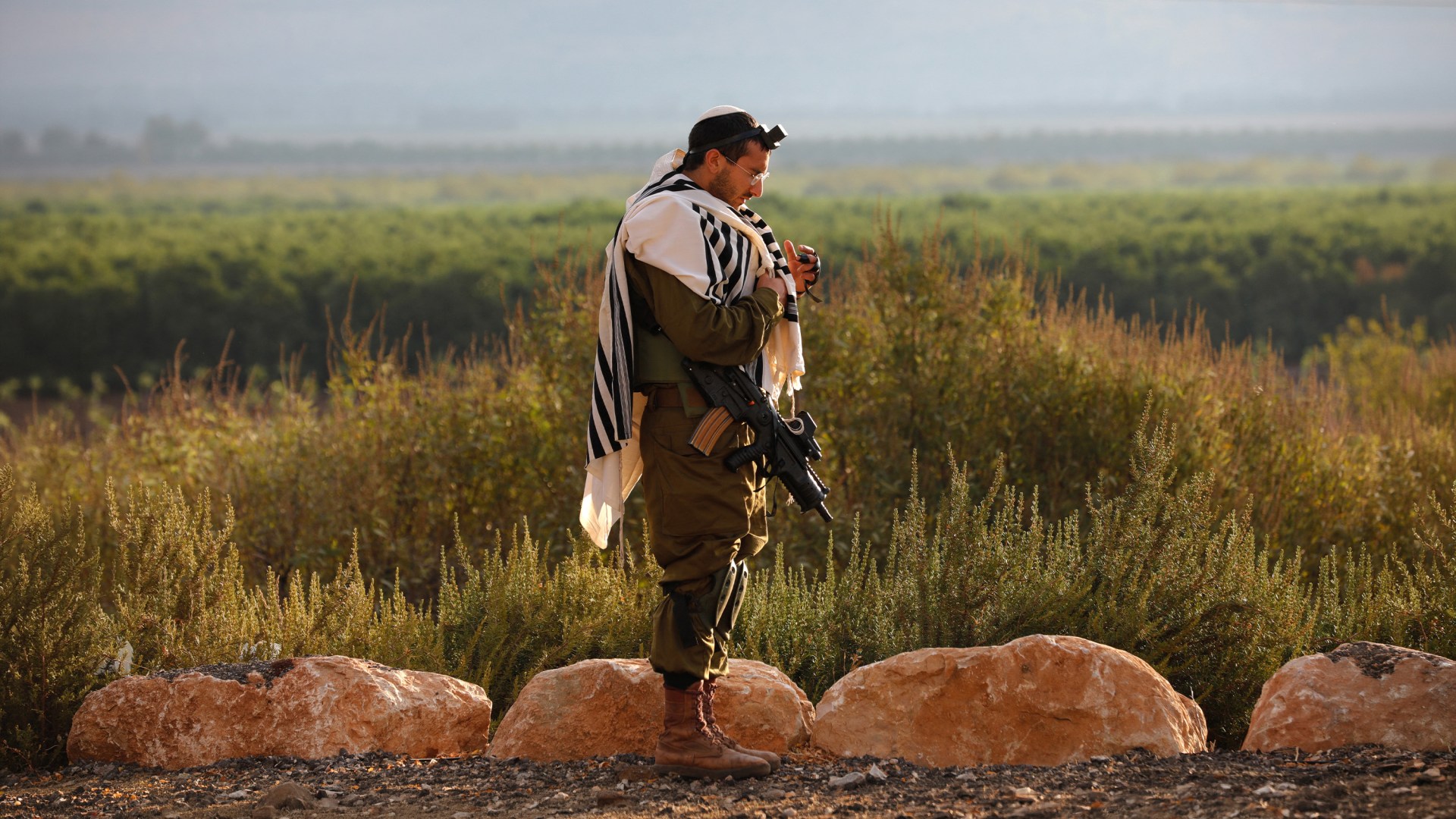
An Israeli soldier prays at a military position in the north of Israel near the border with Lebanon on October 15, 2023.

An Israeli soldier prays at a military position in the north of Israel near the border with Lebanon on October 15, 2023.

Christianity Today March 17, 2026
Jalaa Marey / Contributor / Getty / Edits by CT

The day after the Hamas attacks of October 7, 2023, Elisha Lazarus—a Messianic believer and reservist in the Israel Defense Forces (IDF)—reported to a top-secret base in northern Israel as part of his Iron Dome defense unit. 

The assault caught the nation by surprise, and many in his unit feared Hezbollah would launch a similar cross-border attack from Lebanon. Lazarus saw IDF helicopters circling above and fled with his unit to a bunker seven floors below ground, carved into a mountain. 

There he watched 20 to 25 soldiers line up near a tiny underground synagogue. “All these people that probably haven’t gone in there in the past 20 years—you see them in there praying,” Lazarus told Christianity Today. “There’s a saying: You don’t have any atheists in the foxhole.” Lazarus said that many of the soldiers lined up outside the synagogue acknowledged they were atheists who in that moment felt the need to seek God. 

The Hamas attacks exposed vulnerabilities in ways previous wars had not. For decades, Israel protected its citizens by building bomb shelters and missile defense systems. Yet on October 7, the nation failed to protect them, resulting in the deadliest day for Jews since the Holocaust and igniting a multifront war. 

In April and October 2024, Tehran fired missiles at Israel in the first direct attacks from Iranian territory. Last year, Israeli strikes targeting Iranian nuclear sites resulted in waves of ballistic missiles toward Israel. And on February 28 of this year, Israel and the United States launched a weekslong campaign to degrade Iran’s military capabilities. As of March 11, two Israeli soldiers have died in the conflict, and 13 Israeli civilians.

This conflict has since evolved into a wider regional confrontation with differing perspectives on a timeline for resolution. As Israelis face an uncertain future, many are open to conversations about faith, according to Christians CT interviewed.

“There is a seeking, because when people lose the sense of control in their lives, and they see that it’s not in their hands and death is even imminent at times, they look for God, and they look for answers,” said Lazarus, who is also a content creator for Jews for Jesus.

Recent studies bear out that conclusion. According to a November poll by the Jewish People Policy Institute, 27 percent of Jewish Israelis have increased their religious observance since the war against Hamas began, with roughly one-third reporting they are praying more frequently. Close to 20 percent are reading Jewish Scriptures more often. 

Some Israelis are even exploring Christianity. Aaron Abramson, CEO and executive director of Jews for Jesus, said his staff in Israel has seen increased interest in hearing about Jesus and discipleship in recent years. According to Abramson, last year, the number of people interested in studying the Bible increased by 10 percent compared to the year prior, and 30 percent more people were willing to go deeper spiritually.

Staff members have also observed a steady rise in Israelis professing faith in Christ, including some from ultra-Orthodox backgrounds.

In the year following the October 7 attacks, 25 Israelis accepted Christ through Abramson’s organization. While that number was slightly lower than in previous years, in the war’s second year, professions of faith jumped to 147. 

He doesn’t believe it is a mass revival but rather an “open door and steady response.” Rising antisemitism and regional instability have left many Jewish Israelis “anxious and wondering where their help comes from,” he added.

Abramson said pastors across the country report similar patterns and a steady stream of baptisms—three there, six here, five there. 

David Zadok, pastor of Grace and Truth Congregation in Kanot, Israel, said 15 people—primarily young adults averaging 24 years old—have come to faith in Christ at his church of approximately 160 people since 2023. All are in discipleship programs and regularly attend church, he noted. 

During one of his baptismal classes, he sat between a Jewish soldier from an IDF tank unit and an Israeli Arab of similar age. Two of the 15 new believers are Arab, he noted, bringing the number of Christian Arabs in his church to four. 

Zadok believes part of the spiritual openness stems from misplaced trust. For years, Israelis placed their trust in the “chariots and horses” mentioned in Psalm 20:7. “We have put our trust in our Iron Dome, in our military, in our Mossad, and everything else,” he said. “Within two to three hours [of the Hamas massacre], everything we put our hope in was gone,” he added. 

Zadok said many soldiers have become more religious in the past year or two due to battlefield experiences that have created a “spiritual hunger.” He recalled one Messianic Jewish soldier whose vehicle overturned in Gaza. His machine gun seemed to be miraculously positioned straight into the ground, holding the vehicle just centimeters away from his chest and saving the soldier from certain death. “He really believed it was a miracle,” Zadok said. 

One soldier from his congregation came to faith in Christ after a near-death experience in the wake of the Hamas attacks. Twice, Hamas fired upon his reserve unit while they were positioning with mortars landing less than a football field away. The experience confirmed for him God’s existence and led him to “come to him, surrender, and seek his forgiveness,” he told CT. “I know he protected me before, and if he wills, he will continue to do so. If not, I will simply go to him.” 

CT granted the soldier anonymity due to his concerns about ongoing threats to IDF soldiers and their families. 

The presence of Christian soldiers serving in various IDF combat units has also contributed to the increased interest in God, Zadok noted. He estimates at least 550 believing soldiers are serving, including his 21-year-old son who is currently stationed in Gaza. Israel has around 170,000 active-duty personnel and close to 450,000 reservists.

Zadok’s church delivers Purim packages to Messianic believers serving in active duty and has partnered with other churches to compile a list of 300 soldiers for future package deliveries. Zadok said approximately the same number of Christians are serving as reservists.  

They are often the only believers in their units, Zadok added. That was true during his years as a major in the IDF and has also been the case for his two daughters and his son. Their presence provides opportunities “not just to share the gospel, but to show the gospel and to talk about the hope that they have,” he said.

Christians make up about 2 percent of Israel’s 9.6 million people. 

Lazarus said he is the only Christian in his unit, and during his swearing-in ceremony 15 years ago, he was the only soldier out of 200 who asked to take his oath on the New Testament instead of the Tanakh, or Hebrew Bible. 

He has encountered one other Messianic Jewish soldier during his tenure in the military, yet he said the IDF is accepting of other faiths and traditions. For example, last summer Israel began drafting ultra-Orthodox men—previously exempt from service—while accommodating their religious practices by permitting time for prayer, gender segregation, and strict kosher food requirements. 

Lazarus said many of his military friends have watched his Jews for Jesus YouTube channel. And while he shares his faith during times of both war and peace, he believes this moment is different. Israelis are more open and he wants them to understand the hope he has in Christ. 

His unit reported for duty weeks prior to the Israel-US attack against Iran on February 28, a “heart-dropping” moment when he realized conflict was be on the horizon. “I’m not scared to die,” Lazarus said. “I know about my future.”

Even as he protects his homeland, Lazarus prays for his enemies and the innocent lives on both sides of the conflict. “I’m praying for everybody to know the true peace that Yeshua gives us,” he said. 

addApple PodcastsDown ArrowDown ArrowDown Arrowarrow_left_altLeft ArrowLeft ArrowRight ArrowRight ArrowRight Arrowarrow_up_altUp ArrowUp ArrowAvailable at Amazoncaret-downCloseCloseellipseEmailEmailExpandExpandExternalExternalFacebookfacebook-squarefolderGiftGiftGooglegoogleGoogle KeephamburgerInstagraminstagram-squareLinkLinklinkedin-squareListenListenListenChristianity TodayCT Creative Studio Logologo_orgMegaphoneMenuMenupausePinterestPlayPlayPocketPodcastprintremoveRSSRSSSaveSavesaveSearchSearchsearchSpotifyStitcherTelegramTable of ContentsTable of Contentstwitter-squareWhatsAppXYouTubeYouTube