Books
Review

Art That Probes the Darkness Sometimes Darkens Itself

Andrew Klavan defends the spiritual value of depicting evil. But he often discounts the spiritual danger involved.

A painting of Cain that is fading into darkness.
Christianity Today May 9, 2025
Illustration by Elizabeth Kaye / Source Images: Wikimedia Commons

I don’t watch horror films or read gritty murder mysteries. My favorite detective stories are Alexander McCall Smith’s decidedly tame tales in his The No. 1 Ladies’ Detective Agency series. I simply don’t like the effect that reading or watching graphic depictions of depravity has on my imagination. There’s a reason that Paul enjoins the Philippians to meditate on what is just and pure and lovely (4:8).

But when Christ tells his disciples to be as innocent as doves, he does so only after commanding them to be as wise as serpents (Matt. 10:16). Obeying both of these injunctions requires real discernment. And this is what Andrew Klavan aims to provide in The Kingdom of Cain: Finding God in the Literature of Darkness. As an award-winning crime novelist and screenwriter, Klavan knows plenty about art that probes the depths of evil, and in this book, he reflects on how such art might help Christians discern the light of Christ.

Klavan labors to articulate art’s power to guide our lives east of Eden, helping us live in hope of Christ’s ultimate redemption of all suffering and death. Although these efforts are often unsatisfying, he helpfully focuses readers’ attention on essential questions. He knows that Christian artists shouldn’t take their cues from Hallmark. Instead, by boldly facing grotesque evil, they can help us recognize the sin that marks our own lives.

While murder, as Klavan writes, is the ultimate “denial of [another] person’s reality and an offense against the God who holds that reality dear,” all sin similarly blasphemes God’s good creation. And by confronting us with the twisted, rebellious nature of sin at its most extreme, artists can prod us to recognize and repent of the sins we cherish and rationalize. “When an artist uses his imagination to create a true work of art about murder,” Klavan declares, “he is confronting death with art, making creation out of destruction, containing evil within an act of love.”

This is a stirring and faithful vision for art, but for the most part Klavan fails to articulate how we can distinguish between “true” works of art that frame evil within a redemptive vision and false creations that voyeuristically celebrate or excuse evil.


The book follows a loose, associative structure that begins with three murders and some artistic or philosophical responses to them. Then, in three shorter chapters, Klavan reflects on avenues through which he’s glimpsed the love that harmonizes jangling acts of human disobedience into divine concord.

In 1834, Pierre François Lacenaire brutally killed a man and his mother. Afterward, he set France and all of Europe on fire with his insouciant defense and his self-aggrandizing journals, in which he explained, in Klavan’s words, that “his crimes weren’t crimes, they were a rebellion against [a] cruel society.” Fyodor Dostoevsky based the protagonist of Crime and Punishment, Raskolnikov, on this Parisian, calling him an “enigmatic, frightening, and gripping” man of “boundless vanity.”

But while Dostoevsky sought to understand and expose Lacenaire’s self-justifying logic, others celebrated it. Some, like the 1920s murderers Nathan Leopold and Richard Loeb, saw such flagrant violations of social mores as justified in the aftermath of the death of God. For Leopold, writes Klavan, “the ultimate proof that you were this Nietzschean ubermensch, … the proof that you were beyond good and evil and immune to error, would be to commit the perfect murder.”

In discussing a 1929 play, Rope, inspired by Leopold and Loeb’s crime, Klavan warns that even those who shudder at grotesque murder can justify their own lawless acts as rebellion “against the corruption and hypocrisy of society.” His primary target seems to be progressive liberal elites, the “anxious, educated urbanites” who relish Woody Allen films because they “dramatiz[e] the cultural elite’s attempt to free itself from the logical conclusion of a moral order: the existence of a God who holds the lives of others dear.”

Fair enough, and Klavan singles out hypocrisies likely prevalent among his friends and collaborators in Hollywood: “the activist who dismisses the humanity of the unborn” and “the academic who justifies a terrorist’s slaughter.” Yet he overlooks plenty of examples that might hit closer to home among fans of his show on The Daily Wirea president who praises those who assault police officers and breach the Capitol grounds to protest election results, for instance. As Klavan himself notes earlier, “the terrible gift of Christianity—if it is Christianity true to Christ—is that you cannot accommodate your own sin.”

In the second chapter, Klavan turns his focus to Ed Gein’s 1950s crime spree in a small Wisconsin town. Gein’s perverted rituals with his victims’ corpses, all performed under the noses of his unsuspecting neighbors, inspired crime novelist Robert Bloch to write a fictionalized, Freudian account of Gein. Alfred Hitchcock then bought the rights to this book and made it into his film Psycho.

Klavan reads Psycho as “the tragedy of the age,” a narrative that shows the horror wrought by the lie that we realize our authentic selves in pursuit of our desires. He furthers this point through examinations of Tobe Hooper’s The Texas Chain Saw Massacre, Bob Clark’s Black Christmas, and other slasher films. Klavan clarifies that most films in this genre are “exploitative garbage, featuring half-naked women ripped to pieces for thrills,” which would seem to undercut their value, even if they show the dark side of a culture liberated from repression.

The third murder Klavan considers is the first one chronologically: Cain’s killing of Abel. He briefly mentions John Steinbeck’s remarkable novel East of Eden, which probes the significance of this story. But this chapter mostly takes readers on a whirlwind tour through Lord Byron’s Cain; The Brothers Karamazov; Job; the 1991 movie The Rapture; Albert Camus’s The Rebel; René Girard; C. S. Lewis’s The Great Divorce; and more. Klavan concludes that “the legacy of Cain is murder. It is the attempt to kill the accusing image of God within us and re-create the world in the image of the desires we mistake for ourselves.” And while he rightly asserts that “Jesus is the door out of [this] history [and] into another kingdom altogether,” his digressive tour doesn’t really show how this is so.

The final three chapters are briefer and more personal. Klavan relates how he was brought to faith in part through reading the works of Marquis de Sade, “an atheist sexual psychopath so vicious we named sadism after him.” He realized that without God, no morality can restrain depraved human desires: “Everything else is a facade, oppressive delusions and constructs imposed on us by a society trying to preserve its order and hierarchies. Power is the only reality.” While the original sadist brought Klavan to love the God who gives his body for us, an atheist psychiatrist showed him the power of personal, genuine love to heal his sick and confused soul, and a virtual reality van Gogh exhibit sent him spinning through an imagined survey of Western art.


A persistent source of frustration in reading Klavan’s potted summaries of paintings, books, and films is his assumption that artists merely reflect their culture. If you find a work of art lacking or degenerate, he writes, “don’t blame the artist, blame the spirit of the age.” This is, of course, the villain Edmund’s defense in King Lear when he declares that “men / Are as the time is,” thus rationalizing his murderous deeds. Yet culture is never monolithic; Dostoevsky and Flannery O’Connor situate sin and evil in very different narratives than do Nietzsche or Woody Allen.

Even if a work of art brilliantly reveals “man’s soul in the age through which it is living,” that doesn’t necessarily make it worth our attention. Psycho may portray a “penitent sinner joyfully washing her sins away until she is murdered for the voyeur’s sadistic pleasure by a man dressed up as a woman.” But even if this is “a prophetic picture of the days to come,” I don’t see how that makes it “a work of art indeed” or how I would be edified by watching it.

And how much more dangerous might it be to create such dark narratives? Klavan describes being sucked into sadomasochist pornography while doing research for a character in one of his novels. When the novel was finished, he writes, his connection to this character “snapped,” and his porn addiction abruptly ended too. But he told his wife he was done writing novels: “I can’t keep going into every dark corner of my mind just to get a story out of it. It’s not a sane way to live.”

Of course, as a writer, Klavan can no more stop writing stories than an endurance runner can stop running, but he doesn’t seem to take seriously the dangers his dark narratives may pose to his own soul. The gory spectacles that unfolded in the Roman Colosseum certainly reflected the decadence of the late empire, but Augustine’s Confessions doesn’t condone Alypius’s disordered desire to drink in their violence.

So how might art hold evil within an act of love? Klavan concludes his final chapter with a lovely meditation on Michelangelo’s Pietà and its portrayal of divine love that suffers and dies to rescue straying humanity. He writes:

It is a marble image of the greatest suffering we know of, the saddest thing that can ever happen: a mother who has lost her child, a mother mourning her dead child. … It is God himself who lies there dead. … The world that began with the murder of Abel has evolved into the kingdom of murder, the kingdom of Cain.

Yet perhaps Michelangelo’s art can evoke the divine art for which we hope: “If out of this cosmic catastrophe of injustice, the hands of a mortal man can sculpt such perfect beauty, then what beauty can God not carve out of this sorrowful world in the liquid white marble of eternity?”

The critic George Steiner once claimed that art—and perhaps, in particular, art made by those who hope in Christ—is stamped by Holy Saturday. This is abundantly true of the Pietà. Non-Christians can attest to the horrible realities epitomized by God’s death on Good Friday. Injustice and suffering and meaninglessness mark all our lives. And non-Christians, as Steiner notes, also have analogies to the New Jerusalem: They place their hope in some vision, whether “therapeutic or political … social or messianic.”

But the long hours of Holy Saturday give shape to art that wraps the worst human sin in the form of love. As Steiner writes:

The apprehensions and figurations in the play of metaphysical imagining, in the poem and the music, which tell of pain and of hope, of the flesh which is said to taste of ash and of the spirit which is said to have the savour of fire, are always Sabbatarian. They have risen out of an immensity of waiting which is that of man. Without them, how could we be patient?

Such patience, the capacity to suffer well, is the gift that true art can make from even the worst atrocities. And so Klavan wisely concludes with Michelangelo’s life-giving creation, inviting readers to “linger just a little while and see what happens next.”

Jeffrey Bilbro is professor of English at Grove City College and editor in chief at the Front Porch Republic. His most recent book is Words for Conviviality: Media Technologies and Practices of Hope.

Ideas

Cash Can’t Create Families

Contributor

Government support helps. But the Black church shows good parenting requires the nourishment that flows from intentional congregations.

Christianity Today May 9, 2025

I was deeply engrossed in a book on missional church leadership when my wife, Aziza, went into labor with our first child. We had experienced weeks of false alarms, and suddenly, the moment we were anticipating had finally arrived.

The delivery was, in many ways, an ordeal. My wife wanted to stay at home during the early labor period. But everything I had learned to help her through the process fell flat. Unknowingly, we waited a little too long at home and rushed to the hospital in the dead of the night. As the hours went by, I listened to her agony in deep distress, knowing there was little I could do to help. There was blood, tears, and a bill that took us months to pay.

The experience was neither convenient nor efficient. And it was certainly not cheap. However, it was the best thing that had ever happened to us. It was so transformative, in fact, that we did it five more times.

As a father of six, I have watched with interest and growing concern as America’s policymakers and media personalities explain the nation’s declining birthrate in purely economic terms. For nearly two decades, the number of births per capita in the United States has dropped. Childlessness is on the rise. And as a result, the nation’s total fertility sits well below its “replacement rate,” the level of fertility needed for a population to replace itself.

In an effort to encourage Americans to have more kids, the Trump administration has been assessing several proposals, including a $5,000 “baby bonus” and a medal for mothers who have six or more children. While nothing like this has ever been done in the US, these ideas are not entirely new. They follow a global pattern seen in countries like France, Japan, and South Korea, all of which have poured billions of dollars into similar initiatives. However, they haven’t moved the needle, and the birthrates in these nations continue to fall.

The problem with these purely financial approaches is that they misunderstand the heart of family formation. While the burdens of housing, childcare, health care, and education certainly affect decisions about childbearing, parenting is not merely about finances. Even as economic pressures ease, raising kids will remain inherently demanding. It calls for sacrifice and commitment, and it’s often inconvenient and time-consuming.

Yet there are deep joys within it that come from the hand of God. As parents, the love we have toward our children offer us a vivid glimpse into the type of love God pours out on us. It’s a powerful expression of our humanity, made in the image of a benevolent creator. 

The historic witness of the Black church illustrates the deep bond between families despite severe pressure. Throughout American history, Black families have been formed and sustained under the harshest of conditions. Family life was never easy in slave plantations or under segregation. Nor was it convenient in economically ravaged urban neighborhoods where many still find their home.

Nevertheless, the Black church continually affirmed the biblical truth that “children are a gift from the Lord” (Ps. 127:3, NLT), recognizing the sacredness of life regardless of social status or a family’s financial stability. The church did not merely protest racial injustice; it also created networks of support, cared for parents in practical ways, and nurtured intergenerational bonds. Among other things, Black congregations provided job training and educational programs and served as spaces of refuge while preaching God’s word forthrightly.

Of course, the Black church’s witness is not without its struggles. Black families have faced internal challenges, such as high rates of out-of-wedlock births, marriage disintegration, and patterns of fatherlessness. But even amid these difficult realities, the church has consistently cast a vision of family rooted in love, community, and faith. It has displayed how strong values can hold up a vision of the family even when conditions are far from ideal. And it can offer vital lessons for other communities increasingly facing the same challenges.

In my experience, most churches have long understood that families cannot thrive on subsidies alone. Parenting is a moral and spiritual journey that demands a kind of internal power that can’t be cultivated by government policy. Cash and incentives alone won’t inspire lifelong commitments, but love—for God and his image bearers—can. 

Taking inspiration from the Black church, the broader church can advance a richer vision of parenthood, one that’s based not on convenience but on covenant. Churches must become communities of intergenerational belonging, modeling how to bear one another’s burdens in both practical and spiritual ways. Our role is not merely to lobby the US or any other government for family-friendly policies (though advocacy matters) but to cultivate within our congregations an authentic culture of care.

So what does this look like in practice? As pastors and church leaders, we must teach and embody a vision of family life that rejects the idea that relationships should only be pursued when they are convenient, pleasurable, and cost-effective. We must honor mothers and fathers, not only on special occasions but also by building support systems like childcare cooperatives, mentorship programs, marriage counseling, and family discipleship initiatives. Most importantly, we should build a habit of praying for every family in our congregation and encourage our flocks to do so as well.

All of this reinforces the biblical vision that every family—and person—matters to God and to the health of our communities. This vision does not ignore economic realities. Instead, it integrates financial support with a deeper level of mutual care that can sustain families even when times are tough.

Policymakers also have a unique opportunity. Instead of replicating flawed pronatalist policies, they can offer financial support while championing broader values of interdependence, mutual sacrifice, and respect for life. If they do, I believe any aid our country provides can become far more effective and meaningful. 

As for Aziza and me, we will spend well over $5,000 raising our six children. My wife doesn’t need a presidential medal, but she does deserve unending expressions of gratitude for the sacrifices she’s made as a mother. With six kids running around the house, I may never recover my old reading schedule. But the love we’re building in our family—and with our church community—is well worth it. 

Chris Butler is the director of Christian civic formation at the Center for Christianity & Public Life.

Ideas

Neither Pity nor Pedestal

Staff Editor

Even if a pronatalist proposal to honor mothers in the halls of power is well-intended, it’s missing the point.

Three medals hanging up, but the middle medal is a baby pacifier.
Christianity Today May 8, 2025
Illustration by Elizabeth Kaye / Source Images: Getty

This spring, the Trump administration is reportedly entertaining a “chorus of ideas … for persuading Americans to get married and have more children.”

Some of the proposals are straightforward: cash payments for new moms and a more generous child tax credit. Others are slantwise: earmarked Fulbright scholarships, menstrual cycle education, endometriosis research, and loosened car seat laws.

And then there’s the National Medal of Motherhood, to be bestowed upon women with more than six children.

That idea came via a draft executive order from Simone and Malcolm Collins, two of the most provocative figures in an informal pronatalist coalition of conservative, religious, family-values types and catastrophist techno-utopians. Members of the latter group, the Collinses believe that declining birth rates will prove apocalyptic and that having children is a civilization-saving imperative. 

Simone, now gearing up for her fifth birth, isn’t yet eligible for her proposed medal. But she hopes to have at least three more children, ideally as many as ten. She hones her body for IVF-facilitated pregnancies staggered an even nine months apart, walking on a standing-desk treadmill and eating no-sugar yogurt. Her repeated C-sections are medically risky. But she would be “happy to die in labor,” she says, for the cause of more kids.

Not just any kids, though. The Collinses select embryos optimized for high IQ scores and future health, consenting to have only the children they believe will be genetically superior. Embryos with high risk factors for cancer or schizophrenia, Alzheimer’s or depression or anxiety will not be chosen. This isn’t eugenics, they insist, but polygenics—not ableist engineering but innocuous parental choice.

It’s good that the Collinses, given the size of their platform, are explicitly antieugenics. But, to put it mildly, “polygenics” also gives me the ick. Even assuming good intentions, selecting for eye color or math skills or a sense of humor is a slippery slope at best, a sheer cliff at worst. It would be easy to fall off the edge, to crash away from the Christian conception of human dignity—bestowed merely by dint of being made in God’s image, which very much includes people with low IQs and cancer diagnoses.

The National Medal of Motherhood gives me the ick for related reasons. It’s true that present-day plunging birthrates are a legitimately novel situation in human history. My toddler son may live to see the global population peak and begin a steep downhill slide
But though guilt by similarity is unfair, I can’t help but notice that such honorifics have been awarded before, by the Nazis and the Soviets and other authoritarian regimes. The medal idea isn’t a novel solution to our novel problem. The undertone (really, the overtone) has been Do your civic duty, ladies, and birth the right kind of citizens.

Historical precedent aside, I’ll again assume good intentions (more difficult given some of the white nationalist bedfellows who attend gatherings like NatCon—but I digress). What’s so bad about honoring mothers? I can imagine medal proponents protesting. It’s Mother’s Day! What’s wrong with breakfast in bed, a bouquet of flowers, a nice gold medal for the woman who raised you—especially seven of you? 

In a word: nothing. I have only one kid, but I hope he scribbles a card and gives it to me this Sunday. A medal, though? From the government? It strikes me as an exercise in missing the point.

I’ve been following the pronatalists with interest in the months since I became a mother; these days, I’m feeling very pro-child, mine and everyone else’s. The pronatalist label has baggage (see the aforementioned ick, the Elon Musk “breeding spree,” and goofy ideas like parents getting more votes in elections). But I’m entirely on board with the “pretty unobjectionable” premise, as Elizabeth Bruenig puts it, that “having children is good and ought to be supported by society.”

Reasonable promotion might include cash subsidies or new car seat laws or more infertility research. But at the very least it requires a shift in how we talk and think about mothers: not as martyrs “in hell” but also not as national heroes bedecked with ribbons. 

It seems as if these two cultural caricatures are diametrically opposed. One side has “childless cat ladies” and vacationing DINKs. It has the harried moms of hell themselves, bedraggled and lonely and depleted. On the other: the tradwives, churning butter while wearing lipstick, benevolent and beloved queens of their homes. Also Simone Collins, doing her duty at risk of death. 

But really, these caricatures aren’t as different as they seem. They share the same idea of motherhood as not just sacrifice but self-abnegation, not just difficult but so horrific as to deserve either condescending pity or simpering praise. One side sees moms as less than human, in danger of “losing themselves.” Another sees moms as more than human, heroes to be put on a pedestal. Both are, well, dehumanizing. 

For me—and, I think, for most mothers—neither pity nor pedestals do motherhood justice.

Cringe as it may be to admit, being a mom is a blessing. Often, taking care of my toddler makes me happy. We blow bubbles and eat sandwiches. This week, he learned the word star. But when caregiving is not happy, when I am cradling and rocking and administering medicine, well, there’s joy there, in the rocking chairs and emergency rooms. Calling tantrums and teething “joy” can sound like public relations for parenting. What can I say? I have found motherhood a liberation even in its limitations. In losing myself, I’ve found myself. This is not a pitiable condition.

I shouldn’t be so surprised. We must lose our lives for Christ to keep them (Matt. 16:24–25). It’s more blessed to give than to receive (Acts 20:35). Being “poured out” is not at odds with being filled up (Phil. 2:17–18). 

But having a baby does not a saint make. Motherhood can create the conditions for sanctification, yet it is certainly not sufficient. I’m in some ways more inclined to sin as a parent: I’m newly insular (safety for my baby!) and greedy (money for my baby!). Contrary to what horror stories from pews and airplanes suggest, being a mom still comes with status, praise from old folks in the grocery store and doting aunties at church. That attention makes me prideful and self-satisfied. Imagine if there were a medal thrown in.

Respectability, it turns out, is not a Christian virtue. The prize we’re running for is not civic duty or familial bliss, though we may get those thrown in. It’s the “upward call of God in Christ Jesus,” accessible to all (Phil. 3:14, ESV).

Might that simple truth take some pressure off our conversations about parenthood? Might it even be pronatalist in its realism and faithfulness, understanding children and the women who birth them as neither tools nor burdens? Motherhood needn’t subsume a woman—for better or for worse. Children are a “heritage from the Lord,” not a project to be optimized or imposed (Ps. 127:3). 

Christians are called to care for the vulnerable—which looks more like meal trains for new moms than public accolades. This Mother’s Day, my church won’t do much to mark the holiday, and I think that’s for the best. I know of fellow congregants whose mothers have died, whose mothers abused them, who want children but don’t have them. If caring for them, as they’ve cared for me, means forgoing my from-the-pulpit kudos and flowers, that seems like a small price to pay.

I don’t need commendation from the church or the state. From my child? That’s another story. See the fifth commandment. See Proverbs. To my son—to my husband—take note. I wouldn’t mind breakfast in bed.

Kate Lucky is the senior editor of culture and engagement at Christianity Today.

Ideas

Japanese Evangelicalism Was Once Nationalistic

Contributor

Making Christianity great again by means of political control is tempting. That didn’t work in my country.

A dove on a red background
Christianity Today May 8, 2025
Illustration by Christianity Today / Source Images: Pexels

In the past, I never had any issues with describing myself as an evangelical while living in Japan. But after the first election of Donald Trump as US president in 2016, I struggled to identify with the term, as it became a politically charged label among the Japanese.

My discomfort with calling myself evangelical has only increased since Trump’s second term began. I felt distressed when a Japanese non-Christian friend asked me, “So are you the same kind of evangelical Christian who supports Trump?”

I am not the only Japanese believer who feels alienated from this identity.

Last November, a new Christian wrote a letter to the hosts of a Japanese evangelical YouTube talk show saying she had recently started going to an evangelical church. “But the news tells me that evangelicals are all radical Trump supporters,” she wrote. “Do I also have to support Trump if I become a Christian? I feel scared.”

Less than 1 percent of the Japanese population identifies as Christian, and evangelicals like myself constitute roughly a quarter of that demographic. But when some American evangelicals portray their country as a Christian nation, zealously support a president devoid of Christian piety, venerate their army, and embrace gun ownership, I wonder whether we are speaking of the same group.

The word evangelical now has an uneasy association with American nationalism, an association that has been brewing since Trump’s first term in 2017. This has led to a profound disconnect between Japanese evangelical identity and the perceived political and cultural direction of American evangelicalism.

As much as we Japanese evangelicals have our American counterparts to thank for spreading the gospel to our country, many of us are increasingly frustrated with aspects of American Christianity. We emphatically reject the commingling of the faith with nationalism and strongly advocate pacifism because of our own compromises leading up to and during World War II.

Japanese evangelicalism flourished under the influence of American missionary movements in the 20th century. The 1967 Billy Graham crusade in Tokyo, where around 15,000 people registered commitments to Christ, marked a turning point for Japanese evangelicals. It was the first major interdenominational event that brought evangelical churches together and later catalyzed the establishment of the Japan Evangelical Association (JEA). 

But scores of other American missionaries were ministering in Japan for decades before Graham did. Following World War II, two US-based missionary organizations—Send International and The Evangelical Alliance Mission (TEAM)—planted numerous churches across Japan. Many of these congregations later formed the foundation of Japan Alliance Christ Church, the country’s largest evangelical denomination (255 churches), and the Japan Evangelical Church Association (194 churches).

TEAM missionaries founded Japanese Christian publisher Word of Life Press in 1950, and InterVarsity missionary Irene Webster Smith purchased a house that would later become the Ochanomizu Christian Center, a central office for evangelical denominations and parachurch organizations. Smith also helped Japanese university students form InterVarsity Japan, which is known as Kirisutosha Gakusei Kai (KGK, Fellowship of Christian Students) today.

American evangelicals didn’t just plant churches and institutions in Japan, though. They also shaped and formed the Japanese evangelical mind.

Much of this work took place on American shores as emerging Japanese leaders headed to the States in pursuit of theological education. Later, they returned to Japan to seed and grow Christian scholarship on home soil. Notable evangelicals include Akira Hatori, a Fuller Theological Seminary graduate who cofounded Japan Bible Seminary in 1958, and Susumu Uda, a Westminster Theological Seminary graduate who was one of the founding members of the Japan Evangelical Theological Society in 1970.

American Christian literature also served as a crucial resource for Japanese believers. Many of my Christian friends read Joshua Harris’s I Kissed Dating Goodbye when they were teenagers and devoured Tim Keller’s Meaning of Marriage after graduating from college. The Japanese translation of Millard Erickson’s Christian Theology, first introduced in 2000, is still among the most widely used seminary textbooks today.

Unsurprisingly, Japanese evangelicals have historically adopted many doctrines from American evangelicalism. One of the most important developments was the Statement on Biblical Authority in 1987. This document arose from the inerrancy debate in America, which spilled over to Japan in the 1980s as many Japanese leaders were studying in US seminaries. Deeply influenced by the Chicago statement of inerrancy, Japanese evangelicals likewise declared that every word of Scripture is God-given.

Not everyone appreciated how profoundly American evangelical thought influenced Japanese evangelical Christianity. For instance, in a 2019 article, pastor-theologian Mitsuru Fujimoto criticized American theological imposition and questioned whether Japanese evangelicals were merely “inheriting the problems and challenges of fundamentalism.”

Yet two key divergences between American and Japanese evangelicalism existed. Japan’s evangelicals repudiated nationalism and embraced pacifism, expressing core values formally articulated in JEA’s 2015 statement, which marked the 70th anniversary of World War II:

In post–World War II Japan, there were two pillars on which we evangelical Christian churches, churches believing the Bible to be the infallible Word of God, rallied. The first was the confrontation with liberal theology, which neglected the normative nature and the authority of Scripture. Second was confrontation with Japanese nationalism, which advocated the imperial system and the state Shinto religion, which suppressed and subjugated confessions of faith in Christ being the only Lord during wartime.

The statement’s focus on biblical authority and antinationalism came out of the twin failures of the Japanese church before and during World War II. In that period, theological liberalism had intertwined with nationalism to create a distinctive “Japanese Christianity,” which interpreted imperial conquest as a means of building God’s kingdom.

Prominent 20th-century theologian Danjo Ebina, for instance, viewed the Japanese colonization of Korea as a means of Christianization. In a speech to Korean Christian youth in 1910, right before Japan annexed Korea, Ebina proclaimed that God was building his kingdom by uniting Koreans and Japanese together in the advancement of the gospel.

This desire to marry church and state also seeped into Japanese sanctuaries. In 1941, the government forcefully merged several Japanese Protestant denominations to form the United Church of Christ in Japan. During services, Christians bowed to the imperial palace and sang the country’s national anthem, which was included in church hymnals. These practices stopped only after World War II ended in 1945.

Such nationalistic inclinations emerged due to the “minority complex” that many Japanese Christians held, according to historian Yoichi Yamaguchi. Because Christianity had faced persecution in Japan for 250 years, Japanese Christians at the time felt that they had to play a more active role in contributing to the state to gain a positive reputation.

Things changed after World War II. Japanese evangelicals started pushing back against a militant nationalism that controlled various expressions of the faith in Japan. They adopted an alternative ideology: pacifism. They vowed to serve no master but Christ and to be ambassadors of peace.

After years—or in some cases, decades—of reflection, numerous Japanese denominations began issuing public statements of repentance for practicing nationalistic syncretism and for supporting the war. “Above all, we repent before God the sin committed by our church, of idolatrous worship at Shinto shrines and of devotion to the Emperor,” one public confession, issued by the Japan Holiness Church in 1997, read. “Therefore, we apologize to the other Asian nations and their churches that our mission to these nations cooperated with the war effort, following the path [of] the Japanese war of aggression.”  

This postwar pacifist stance has endured to the present day. For most Japanese believers, seeking peace and opposing nationalism are reflections of our commitment to Scripture. There is no greater authority than Christ (Col. 1:16). Christians are called to be peacemakers (Matt. 5:9) and ambassadors of reconciliation (2 Cor. 5:20) in this broken world. Most Japanese evangelicals do not believe that Christianity can be married to nationalism or that warfare and the tools of violence can be objects of fascination rather than lament.

But on the other side of the Pacific, an unholy alliance seems to be emerging between militant nationalism and evangelicalism—a dangerous trajectory that Japanese evangelicals know well.

To be sure, some American evangelicals have been sounding the alarm on how Christianity and nationalism are incompatible. “Christian nationalism takes the name of Christ for a worldly political agenda, proclaiming that its program is the political program for every true believer,” Paul D. Miller wrote for CT. “That is wrong in principle, no matter what the agenda is, because only the church is authorized to proclaim the name of Jesus and carry his standard into the world.”

I understand and empathize with many American evangelicals who feel that their nation is facing a critical moment in which Christianity is no longer the moral majority. Making Christianity great again by means of political control is an easy temptation, especially when the country’s founding included various Christian elements.

Yet as the Japanese historian Yamaguchi has pointed out, holding on to a minority complex and a desire for political influence was the driving force behind Japanese Christians’ failure in adhering to a nationalistic Christianity before and during World War II.

Hear and heed these warning bells that reverberate from Japanese evangelicals’ painful history—one that seems to be repeating and refashioning itself in American dress.

Kazusa Okaya is a PhD candidate at Durham University and a steering committee member of Lausanne Younger Leaders Generation Japan.

Culture

Israel Houghton Is Praising God—in Spanish

An exuberant album by the veteran recording artist and his wife seeks to steward the centuries-old tradition of coritos.

Israel Houghton singing in Spanish
Christianity Today May 8, 2025
Courtesy of Israel Houghton

When Israel Houghton and his band, Israel & New Breed, released the album Feels Like Home, Vol. 1 in 2021, one track had fans asking for more: “Coritos Medley.” The eight-minute song, featuring a series of linked praise choruses, captured Spanish-speaking listeners, who immediately recognized a style and practice their faith communities have long treasured.

The enthusiastic response to “Coritos Medley” prompted Houghton and his wife, Adrienne Houghton, to consider producing a full album of coritos—short, easy-to-learn praise choruses. Israel is a seven-time Grammy winner and veteran Christian recording artist; his music fuses gospel, jazz, and Latin American influences. Adrienne Houghton (née Bailon) is a recording artist and entertainer who started her career as a member of the pop group 3LW and a lead cast member of the Disney film The Cheetah Girls.

Both Houghtons sang coritos as children—Adrienne in her Hispanic Pentecostal congregation and Israel in his multiethnic church in Santa Fe, New Mexico. Both of them want to see more Spanish-speaking churches embrace the musical tradition today.

Coritos are ecumenical and transnational, sung by both Catholic and Protestant congregations and appearing across the Spanish-speaking diaspora. The history of the corito is complicated, obscured by the fact that the music predates modern copyright systems. Passed down through marginalized communities, the genre has often been carried to new places by displaced groups and immigrants.

“Coritos are simple tunes with repetitive words that people sing by heart,” said Rosa Cándida Ramírez, associate pastor of spiritual formation at La Fuente Ministries in Pasadena, California. “For Latina Christians, coritos are the footprints of faith of our spiritual foremothers and forefathers. They are the songs of the diaspora.”

The coritos tradition is generally vernacular; most worshipers learn the songs aurally, without musical notation or written lyrics. (Recently, though, a hymnal from GIA publishing produced notated versions of some widely known coritos.) In practice, the songs are often arranged in medleys called cadenas, or chains. Musicians and congregations create novel blends of choruses, linked together by musical transitions and sometimes connected by theological themes.

Coritos have generally fallen out of fashion with Latino Protestants, who increasingly use contemporary worship music produced in the US, the UK, and Australia. But Ramírez said this isn’t the first time in recent memory that an artist has sought to breathe new life into them; Marcos Witt recorded and helped repopularize some coritos in the 1990s. More recently, the popular Guatemalan group Miel San Marcos included a medley of coritos on their 2023 album, Evangelio.

Israel and Adrienne Houghton spoke with CT about Coritos, Vol. 1, their personal experiences with coritos, and their hopes for the music they are contributing to the repertoire of the global church. Their responses have been edited for clarity and length.

There might not be a simple definition of this varied, widely used genre, but can you give us a little explainer? What is a corito?

Israel Houghton: A corito is no different than a well-known chorus, in evangelical speak. Think about “Amazing Grace.” These are little one- or two-section songs—maybe a verse and a chorus. They carry so much meaning; they have so much nostalgia and memory attached to them.

As we’ve recorded these coritos, we’re finding out in real time how connective they are, even for people who don’t speak Spanish. They hear a corito and say, “I don’t know what you’re saying, but I want to be a part of it. I want to sing it. I want to dance to it.”

Adrienne Houghton: Growing up in the Hispanic Pentecostal church, we put these songs into medleys so that each one would connect to the next.

Israel: It’s musical Jenga.

Adrienne: Exactly. That sort of medley creating is a really special aspect of these coritos. Like Israel said, they are nostalgic. People have told us, “My grandmother used to sing this song to me before I went to bed.” During the process of putting the album together, we made a list of songs my family and other church members knew. Someone would sing me a voice note and send it over, like, “Oh, remember this one?”

Is Coritos, Vol. 1 primarily recordings of these older coritos, or did you also write some originals?

Israel: There are four original songs. The rest of them are so old that they’re in the public domain now.

Adrienne: They’re so old that we don’t know who wrote them. They were written by a congregation, then passed around. And the odd thing about them is that although a lot of the songs I grew up singing were brought from Puerto Rico to New York, they were also sung in Argentina, Chile, Mexico, Ecuador, and Colombia. How did these songs even get there? We don’t know.

Israel: It really has felt like we are stewards of this tradition. We didn’t want to create something that felt tossed together. You know the difference between walking into a restaurant and tasting something that was microwaved in the back versus somebody’s mama making it.

Among Spanish-speaking Christians both in the US and in Latin America, have coritos been continuously included in worship? Or have they fallen out of use in recent decades? Praise choruses were popular in American churches in the ’80s and ’90s, but they went out of style in the mid-2000s as contemporary worship music evolved. Is there a similar story here?

Adrienne: This project is absolutely helping to revive the coritos tradition. It had kind of disappeared. People weren’t singing them anymore; they would have been considered passé.

Israel: It’s like Extreme Home Makeover in the best way. We’re taking these antiques and going, “Oh my gosh, I haven’t seen one of these in years! Imagine if we polished it up and got the greatest musicians in the world and honored these songs.”

The energy of these coritos is so celebratory and exuberant. One of the complaints I often hear from worship leaders is that they have a hard time finding energetic, upbeat, joyful songs. It’s not really the dominant vibe right now when it comes to popular contemporary worship music. What do you think we lose when we don’t have songs like this in regular rotation?

Israel: I can’t wait to answer this question. I think we have enough heaviness and bad news in the world—minor keys, so to speak. I need these infusions of joy and simplicity. The more I walk with God, the more I require simplicity.

We’re four and a half years removed from a global pandemic, and now we’re wondering, “Can we get our legs back? Can we have some lighthearted moments?”

Adrienne: God deserves celebratory praise. He deserves a whole fiesta of worship, and that’s what we were able to do with this project.

On our first clip of the song “Coritos de Fuego,” the main comment was, “I wanna be in that room.” I want to be in a room like that, where people are worshiping God with their whole hearts and dancing and singing.

Adrienne, you mentioned growing up singing these songs, and it sounds as if coritos are part of a vernacular, word-of-mouth tradition. That strikes me as an inclusive approach to worship for children. Could you talk more about the formative power of these songs in childhood?

Adrienne: I joke with my mom that I know the Bible melodically, because of songs. I’ve been in services where a preacher is about to read the Word of God and I can finish the Scripture because I know a song with that verse in it. When we sing these songs, we are literally singing the Word of God. When children are memorizing these songs, they are learning the Word of God.

We have a two-year-old son who can sing almost all of “Coritos de Fuego” [a song from the album], and I now have a son who will forever know those verses. Those things stay with you. I sometimes deal with a fear of flying. I’ve been on airplanes, and songs will come back to me in scary moments.

It’s such an honor and privilege to give these songs to the next generation because I know the impact they have had on my life. When you plant those seeds in your children, they never depart from them.

Many primarily English-speaking Christians do not sing translated worship songs; they’re used to having their own music translated for other people. Do you think you’re going to translate some of these songs into English?

Israel: I went into this project knowing I wanted to write a song or two that, when we translate it into English, it’s just as effective. Then when someone asks, “Where did this song come from?” we can say, “It’s a song from Latin America.” We have some attempts at that on the record, like the song “Digno.”

That would be the ultimate bridge right there—to be connecting people across languages and generations.

News

Boko Haram Ripped Apart Her Life. A Decade Later, It’s Still Torn.

A Christian widow stranded in a displacement camp works and prays for a better future.

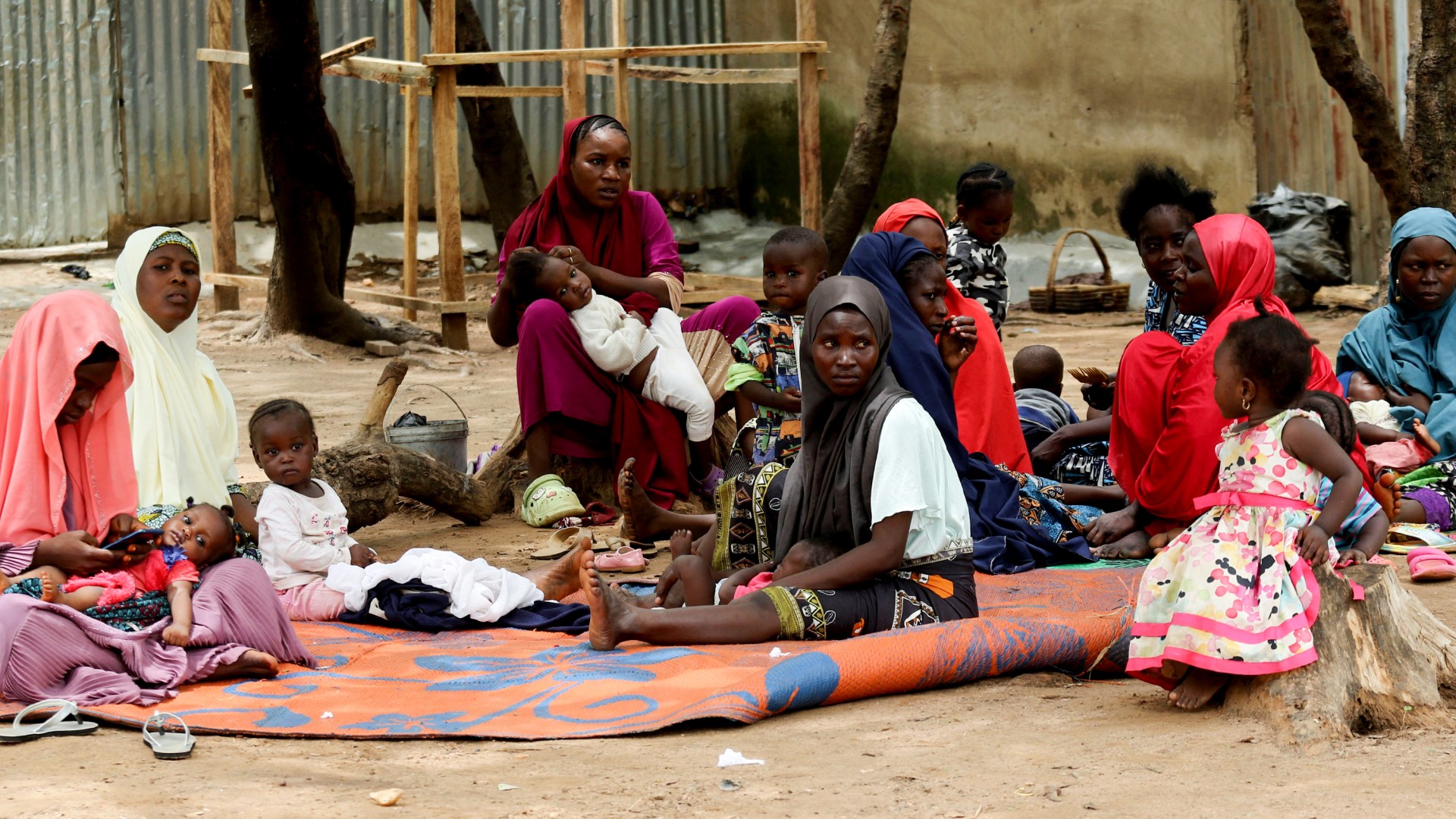
A group of civilians sits on the ground at Durumi Internally Displaced Persons camp in Nigeria.

A group of civilians sits on the ground at Durumi Internally Displaced Persons camp in Nigeria.

Christianity Today May 8, 2025
Anadolu / Getty

Each morning, Jennifer Abraham wakes up before dawn, her breath visible in the chill morning breeze. She picks up her worn wooden broomstick and dustpan to tidy three 15-by-20-foot classrooms, where 500 children ages 6 to 12 will cram in for the day’s lessons. They are in Durumi camp, one of the 18 makeshift shelters set up for Internally Displaced Persons (IDPs) in Abuja, Nigeria. Forty-year-old Abraham stoops as she sweeps plastic bags, crumbs, and dried mud from under old desks and wobbly chairs. “This is how I survive and feed my family,” she said.

In the sprawling Durumi camp, residents face harsh living conditions. Half-roofed, poorly maintained apartments leave the camp’s 2,900 residents exposed to heat and rain—the aftermath of a partial demolition of Durumi in late 2022. The children are thin, their skin pale and fragile from malnutrition. Safe water can come at a cost, and residents scrape by with meager resources.

“There is not enough to go around,” Abraham said.

The lack of toilets forces residents to defecate in the open, putting them at risk for health hazards like cholera and diarrhea. With more than 3.3 million IDPs reported to live in Nigeria, camps like Durumi struggle to meet residents’ basic needs.

Survival in the camps may become even harder for IDPs like Abraham as United Nations aid organizations begin to pull out of Nigeria due to slashed budgets and as US foreign aid cuts create uncertainty among nonprofits. Funding from Nigeria’s National Emergency Management Agency has also dried up.

Under-Secretary-General Tom Fletcher of the UN’s Office for the Coordination of Humanitarian Affairs warned in a letter of “a wave of brutal cuts” driven by a nearly $60 million funding shortfall for 2025. Meanwhile, Nigeria’s government is attempting to make up for a drop in health aid from the United States by approving $200 million in health-related spending. In 2023, the US provided more than $600 million in health aid.

Local foundations in Nigeria, such as Buni Yadi and Betharbel, can’t keep up with growing needs. The continued influx of people fleeing Boko Haram attacks—as well as giving birth within the camps—puts extra pressure on already-stretched resources.

Abraham remembers life before Durumi—when funding shortfalls didn’t threaten survival. She grew up in Nigeria’s northeastern state of Adamawa surrounded by vibrant traditional celebrations and bustling markets. She married Abraham Musa, an Ascot Petroleum Company employee, and built a family with four children—Susan, Margaret, Favour, and Miracle (now 21, 19, 17, and 13, respectively)—in Gwoza, a town in the neighboring state of Borno.

Their lives took a sudden turn when Boko Haram insurgents attacked Gwoza and its surrounding towns in 2014. The insurgents abducted women and children, burned houses, shot and killed hundreds of civilians, and pursued escapees into the bush.

“We left everything behind,” Jennifer Abraham recalled. “Women ran with their babies on their backs. Families were scattered, and some were never united again. For days we hid under trees in the bush, sometimes sneaking into nearby houses to quickly prepare a meal.”

Abraham and her family spent weeks on the run, fleeing hundreds of kilometers away to Durumi. She thought they would rebuild their lives there, but tragedy struck in August 2015 when a group of unidentified men ambushed her husband near the camp. He died in National Hospital Abuja five days later.

“Fleeing Gwoza was painful. But losing my husband was worse. He was my strength in this camp,” she told Christianity Today.

Since then, Abraham has frequently changed jobs—doing everything from trading to cooking to cleaning—to provide for her children and pay for their education. Two of her daughters have graduated from high school and are waiting for college.

“Whenever I feel like giving up, I remember my children,” she said. “My life is more meaningful because of them.” After her husband died, her children became her source of strength. But sometimes even that strength is threatened.

Health care has always been minimal. Nurses and doctors from nonprofits paid periodic visits to the camps with drugs and immunizations for babies. Now their visits have almost disappeared.

In early April, Favour fell ill with malaria, a life-threatening disease common in the camp’s mosquito-infested environment. The hospital turned her away after learning Abraham couldn’t pay the fees.

“I couldn’t afford the drugs this time,” Abraham said. She watched her sick daughter at home, praying for her recovery.

Like many others in the camp, Abraham worries about the loss of resources and how to rise above life in the camp. She doesn’t expect to return home to Gwoza since Boko Haram insurgents continue to attack communities in northern Nigeria. But Abraham said she is determined to leave the camp someday and build a happy home her husband would be proud of.

“I don’t know when,” she said, “but soon, God help me. Soon.”

News

Aid Cuts Could Disrupt Historic Drops in Child and Maternal Mortality

With clinics shutting down and orphanages filling up, Christian health workers worry about worsening health outcomes in Africa.

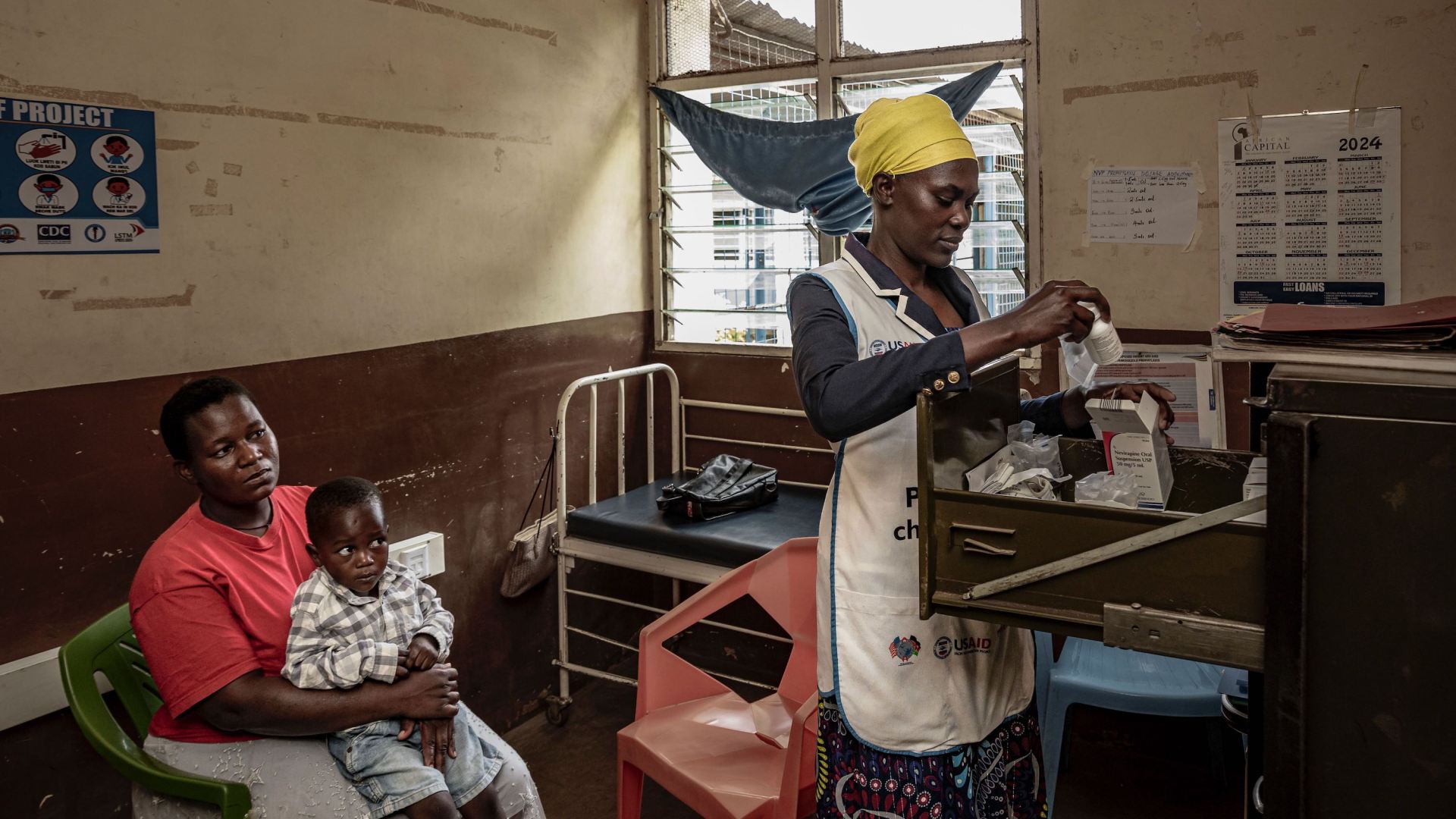
A mother and child await treatment in April at a Kenyan clinic that treats HIV/AIDS. Many such clinics are shuttering after USAID cuts.

A mother and child await treatment in April at a Kenyan clinic that treats HIV/AIDS. Many such clinics are shuttering after USAID cuts.

Christianity Today May 8, 2025
Michel Lunanga / Getty Images

A community health worker in Uganda, after losing his US-funded salary in the foreign aid cuts, continued doing his health-outreach work as a volunteer—and in a rural community he found a very sick child with HIV who had stopped receiving the antiretroviral treatment that keeps him alive and prevents potentially fatal infections from treatable diseases.

The child’s parents had died of HIV, and he had no way to afford transportation to get tested for what could be tuberculosis, according to the Elizabeth Glaser Pediatric AIDS Foundation (EGPAF) which oversees the health worker who found him.

“Just a few months ago, we would have been able to activate, to jump into motion: ‘Here’s this child, what do they need?’” said Catherine Connor, the vice president of public policy at EGPAF, in an interview with CT. EGPAF is a major implementer of the President’s Emergency Plan for AIDS Relief (PEPFAR).

“Instead, we’re stuck, and the tools are no longer there,” said Connor.

Declines in maternal mortality and the mortality of children under five represent some of the biggest health care improvements in the modern era. Globally, fewer children die before their fifth birthday now than any time on record—dropping from 9.9 million deaths in 2000 to 4.8 million in 2023, with the burden of death disproportionately in sub-Saharan Africa.

But nonprofit leaders and Christian health workers now worry the vulnerable populations their organizations worked so hard to protect will suffer worse outcomes as a result of the sudden cutbacks under the Trump administration.

Without the funding their programs had been promised, fewer children under five are getting vaccinated, fewer young patients can access treatment for diseases like HIV/AIDS and malaria, and fewer women are receiving maternal health care, the nonprofit staff reported to CT.

Orphanages in countries with fragile safety nets have started to take in more children, as the children’s biological families can’t provide food and care, according to Christian nonprofits in the field.

In Malawi, one of the poorest countries in the world measured by GDP per capita, both the maternal mortality ratio and the mortality rate for children under five have been cut in half since 2010, according to the World Bank.

“Soon Malawi will start seeing an increased number of under-five mortality rates, an escalation of infections addressed by immunizations, and increased births of children with various medical problems that are prevented through access to vaccines by pregnant women,” said Howard Kasiya, health coordinator for the Evangelical Association of Malawi, one of the country’s largest networks of Christian denominations and organizations.

The association had received US funds to promote HIV testing and prevention through churches. That money’s gone now. In Malawi, 70 percent of rural health care comes through Christian clinics and hospitals, so churches there are deeply integrated in health care for the poor.

Faith-based organizations, local governments, and other nonprofits try to mitigate the cuts, and some donors have stepped up to give.

Shirati Hospital, a Christian hospital in Tanzania, is working to raise $5,000 a month to keep its HIV-positive patients, including children, on medication after the US significantly reduced its HIV funding, according to Dale Ressler, who runs the US-based Friends of Shirati.

In South Sudan, a young nation with a fragile health system and regular food shortages, World Relief centers treat children suffering severe malnutrition. They function as pediatric hospitals, offering 24-7 care from doctors and nurses.

The government contract that funded the salaries for staff at the centers came to an end during the aid freeze this year, so World Relief had to decide which programs it could sustain and which would have to close.

“If you close a stabilization center, you are literally going to be unhooking children from IVs and sending them home,” said Emily Chambers Sharpe, who oversees these health programs at World Relief.

The organization opted to pay staff for now to keep the pediatric units open. Leaders aren’t sure how long World Relief can sustain that cost on its own, and they hope the government will restore some of its funding.

In response to questions about cuts to maternal and child health funding, a State Department spokesperson said in an unsigned statement to CT that the agency is reorienting foreign aid to focus on US national interests.

“This transition is focused on improving accountability and strategic coordination—not eliminating our commitment to vulnerable populations and allies,” the spokesperson stated, listing ongoing support for Uganda’s Ebola outbreak, HIV care and treatment, and emergency assistance in conflict zones.

“Critical, life-saving programs have continued uninterrupted,” the spokesperson said, “as we strengthen how, where, and why we deliver humanitarian aid to ensure it serves those who need it most.”

Aid workers told CT that if the government cuts had not been so sudden, they and local governments would have had time to prepare. The wholesale disruption of systems means a bleeding pregnant woman may no longer have ambulance service to get to a hospital or blood bank. Or a faith-based clinic may remain open to see a sick child but have no way to transport the patient to a facility with the right lab tests.

“Children who experience treatment disruption die much faster than adults,” said Connor, testifying at a recent congressional hearing on PEPFAR.

“I do think we can expect to see increased mortality rates, increased infection, and increased despair if things aren’t corrected,” she said.

The US cut salaries it had financed for many local health workers, which means less outreach and fewer screenings for life-threatening diseases.

“Children don’t bring themselves to the clinics, so you have to find them with their mothers, or you do screening in the community, which is not a priority right now,” Connor told CT in an interview last week. “It’s a recipe for pediatric mortality to go up.”

Faith-based organizations were often the ones focused on orphans and vulnerable children projects under the US Agency for International Development (USAID). Such projects were subject to cuts because they aren’t considered lifesaving. But they are “such a heavy driver of whether these children live or die,” said Connor.

Even though the health cuts have only been in place a few months, some orphanages are already filling up in Malawi, Gabriel Walder, the CEO of the Christian nonprofit Alliance for Children Everywhere (ACE), told CT. ACE works on reunifying children in orphanages with their families through local churches in Zambia, Uganda, and Malawi.

“It’s an ecosystem. … We’re seeing shuttering of services while the scope of the need is increasing,” said Walder.

Even worse, his organization still hasn’t received reimbursement for work it completed last year under its first contract with USAID. It’s smaller than World Relief or World Vision—just a $2.1 million budget—so the organization didn’t have the capacity to bounce back from the missed payments. 

“All the work of ACE continues, but at a much smaller scale,” said Walder.

Many evangelical health organizations also support family planning services (e.g., contraception), which were cut. In Malawi, such cuts will lead to “increased unwanted pregnancies with related increased abortions” and “increased maternal deaths,” said Kasiya.

Courts continue to debate legality of the executive branch cutting congressionally appropriated funds. Aid workers hope some funding could be restored but realize it might not be a priority.

“There are still people in Congress and the State Department … that understand the value of this work,” said Connor from EGPAF. But she’s not sure “how that gets put back in motion after such severe disruption.”

Congressional Republicans raised concerns about 21 abortions that happened in Mozambique under PEPFAR during the Biden administration, in violation of the US law that prohibits foreign aid from funding abortions.

But these cuts to maternal and child health care project a much wider death toll. The disruptions to PEPFAR could cause 1 million children to be infected with HIV by 2030, nearly 500,000 to die, and 2.8 million children to be orphaned, according to a new analysis published in The Lancet medical journal. Some portion of PEPFAR appears likely to be preserved, but Republicans who control Congress now are debating what to keep.

“PEPFAR … cannot and should not be forever,” said HIV/AIDS scientist Mark Dybul, who built PEPFAR under George W. Bush, at a recent congressional hearing on the program’s future. “It is very possible to begin a transition process” to countries taking on their own HIV care.

But he urged a controlled reduction rather than “a rapid retreat that will be a total failure for us on every front.” He added that the elimination of so many USAID positions meant less oversight of remaining aid programs to see that money is spent properly.

“The unfolding reality is that the vulnerability of children is going a lot higher because of the lack of access to services,” said Walder, “because of the shuttering of foreign aid.”

Theology

Love in the Ruins of 2025

Columnist

How Walker Percy’s 1971 end-times novel predicted our current insanity—and how it just might point the way out.

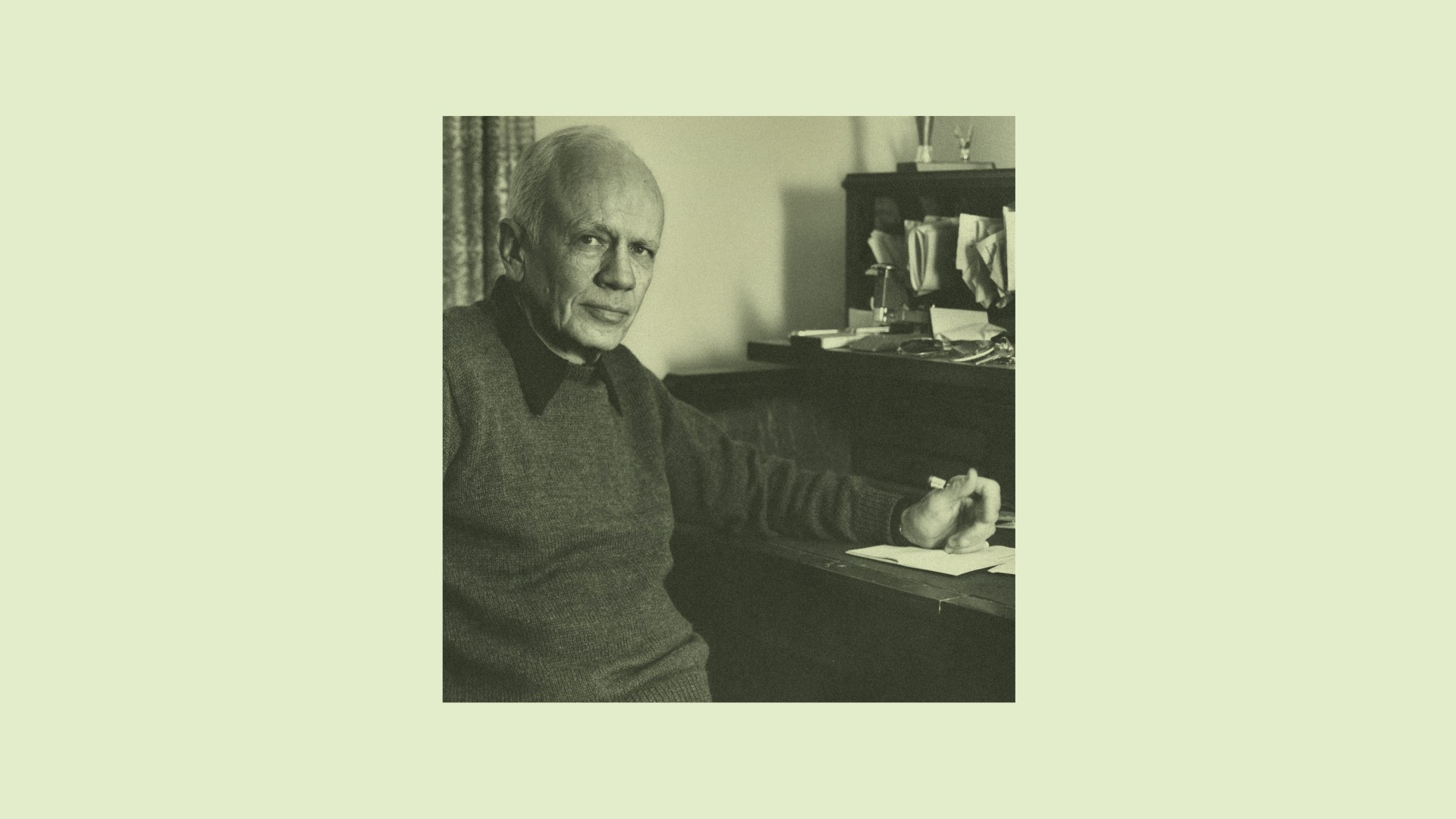
Walker Percy sitting at his desk in his home in Covington, La.

Novelist Walker Percy at his home in Covington, La.

Christianity Today May 7, 2025
Historic New Orleans Collection, 1980.27.23

This piece was adapted from Russell Moore’s newsletter. Subscribe here.

If you’ve ever looked around at the chaos of the current moment and wondered, “Who could have seen this coming?” I have an answer: Walker Percy.

Percy, an American writer, died 35 years ago this week—long before Trump, Twitter, TikTok, or transgender sports debates. But more than half a century ago, he eerily foresaw something like 2025, in which technology, tribalism, and spiritual emptiness converge. If we’re to find our way through the madness, maybe we should listen to what he had to say.

“A serious novel about the destruction of the United States and the end of the world should perform the function of prophecy in reverse,” Percy wrote of his 1971 novel, Love in the Ruins: The Adventures of a Bad Catholic at a Time Near the End of the World. “The novelist writes about the coming end in order to warn about present ills and so avert the end.”

Love in the Ruins is a kind of Narnia, except the children walk through the wardrobe into a post-Christian West with no Aslan in sight. The central threat isn’t nuclear fallout or alien invasion but a nation fractured along the lines we now call red and blue America.

In this “time near the end of the world,” the country is split into a right (self-identified as “Knotheads”), driven by resentment toward minorities and rage at elites, and a left fueled by ideologies of sexual liberation and secularism. Religion becomes politics; politics becomes religion.

The protagonist is Tom More (yes, named after that Thomas More), a psychiatrist, sex-addicted alcoholic, and lapsed Catholic living in a Louisiana suburb after the spiritual and political collapse of America.

More observes that there are left states and right states, left towns and right towns, even left movies and right movies. The center is gone. The younger generation, he says, are would-be totalitarians: “They want either total dogmatic freedom or total dogmatic unfreedom, and the one thing that makes them unhappy is something in between.”

Families are fractured by politics, churches by ideology. More’s Catholic church splinters into three: a booming “American Catholic Church” in Cicero, Illinois, defined by right-wing politics and celebrating “Property Rights Sunday”; a “death-of-God” progressive church, where priests monitor sexual response in scientific labs; and a tiny, irrelevant remnant still loyal to Rome—now politically unintelligible in a world ruled by ideology.

Two characters survey the news:

“There are riots in New Orleans, and riots over here. The students are fighting the National Guard, the Lefts are fighting the Knotheads, the blacks are fighting the whites. The Jews are being persecuted.”

“What are the Christians doing?”

“Nothing.”

The collapse in Love in the Ruins is not just political or cultural—it’s personal. The world is falling apart because people are falling apart. The underlying issue is a civilization that no longer knows what a human being is for. That’s a question politics cannot answer, yet politics has become a surrogate religion for people without a deeper anchor.

Percy’s vision is strikingly familiar: a society beset by mental illness that seems tailored to political tribe.

“Conservatives have begun to fall victim to unseasonable rages, delusions of conspiracies, high blood pressure, and large-bowel complaints,” More observes. “Liberals are more apt to contract sexual impotence, morning terror, and a feeling of abstraction of the self from itself.”

More invents an “ontological lapsometer,” a device meant to diagnose and correct psychological imbalances—massaging rage out of right-wingers’ brains and anxiety out of left-wingers’. It’s treated as a technological fix for what ails us. But More knows better.

The deeper problem is that people now see themselves either as angels—disembodied, limitless, with pure will—or as beasts driven by appetites and enemies. We see it now too. Tech billionaires promise artificial intelligence chatbots to supply friendships we no longer cultivate, authoritarian ideologies rise again, and many political and religious leaders defend or ignore it. The center does not hold.

Percy recognized that religion often seems helpless in such moments. He imagined scientists walking home from the lab on a Sunday morning, passing a church where the door is ajar and a preacher says, “Come, follow me.”

How do the scientists respond? Percy suggested they wouldn’t reject the invitation—because they’re not in the kind of predicament that allows them to even hear it.

“The question is not whether the Good News is no longer relevant,” Percy wrote, “but whether it is possible that man is presently undergoing a tempestuous restructuring of his consciousness which does not presently allow him to take account of the Good News.”
 
So what do we do? The answer is not utopian schemes or dystopian despair. It is, paradoxically, to move deeper into the crisis—until we can feel what’s missing. As Percy put it, the goal is to recover the self “as neither angel nor organism but as a wayfaring creature somewhere in between.”

That requires humility. We can’t fix the world or ourselves. The novel ends not with More’s invention saving the day but with its failure. What was meant to heal only deepens the wound.

And yet More finds a way forward—not through grand solutions but through the small, human steps of humility, connection, and grace. Even recognizing his lack of contrition becomes its own kind of mercy. He stops trying to save the world. He starts to live.

We can begin again only when we are willing to be asked—and to answer—the question “What are you seeking?” In this way, catastrophe becomes the precondition for hope.

Only when we realize we are not “organisms in an environment” to be perfected—or to perfect others—can we begin to feel our cosmic homelessness, which might just point us home. Only when we see that we are in the ruins can we begin to look there for love.

Maybe the world is falling apart. Maybe it always has been. But that doesn’t mean you have to fall apart with it.

Russell Moore is the editor in chief at Christianity Today and leads its Public Theology Project.

News

Inside the Crowded Hospital Full of Congo’s Rape Victims

Dr. Denis Mukwege, a local pastor and surgeon, is a tireless advocate for women and children suffering through war.

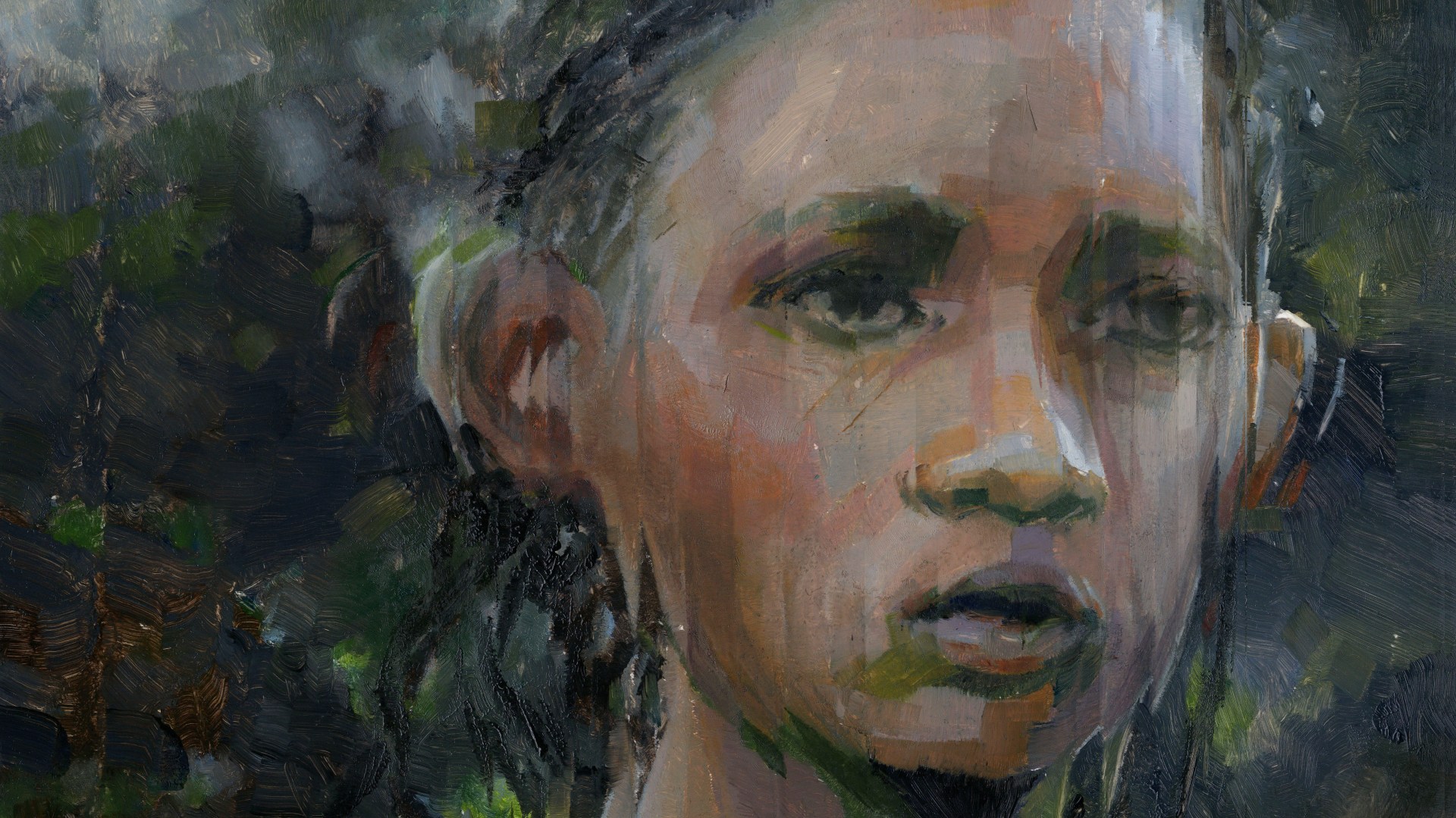
A young girl painted with shaky brushstrokes

Illustration by James Lee Chiahan

Graphic Content Warning: The following article includes discussion of rape and violence.

If you want to meet Dr. Denis Mukwege, you wake up before the sun and ride to the outskirts of Bukavu, dodging sewage gullies and potholes on the dirt road leading to a gated entrance.

Once inside, the first thing you hear at Panzi Hospital in the Democratic Republic of the Congo is a chorus of women, their songs filling the morning air, announcing that chapel has begun. 

From teenagers to the elderly, they line covered walkways around a courtyard edged by tidy flower beds. Some keep time with tin shakers. Others hold sleeping babies or nurse infants. One patient, perhaps 10 or 12 years old, wraps a flowered pagne to hold her newborn to her back. 

“Climb the mountains,” the women sing in Swahili. “Call Jesus, and he will act.”

Mukwege founded Panzi 26 years ago after serving as medical director at a mission hospital that was destroyed by rebels fighting the Congolese army. The ob-gyn built the new hospital to help mothers deliver babies more safely. But his first patient was a woman who had been raped. Many more rape survivors followed. The doctor realized his calling had shifted.

At sunup on this day, with rebel forces again closing in, the women sing of faith and hope. They are among the most recent casualties in what is arguably the deadliest armed conflict since World War II. The violence is centered in Congo’s eastern provinces, near the Rwandan border. Panzi sits on the outskirts of Bukavu, a city of more than 1 million people and the provincial capital of South Kivu. 

After nearly an hour of music, a local pastor shares a message on the “fear nots” from Isaiah 41, weaving between French and Swahili. He concludes, “Don’t be afraid. No one has the last word in your life but God. Walk with God.” 

For more than 30 years, war has ravaged South Kivu’s population. Outside forces, including Rwanda and Uganda, support rebel groups in a pitched battle that’s mostly about monopolizing Congo’s trove of raw minerals essential to technology.

China controls much of the mining and trade, and the United States has pledged millions toward a new export corridor from eastern Africa to the Atlantic Ocean. The AI-fueled thirst for new chip technology runs on cobalt—and the world’s top producer of cobalt is Congo. 

Other conflicts get more headlines, but the war here has strong ties to US and global interests, if measured only in smartphones. Yet many in the developed world know little about this conflict that’s caused more than 5 million deaths and untold atrocities—including widespread sexual violence. Now, Mukwege is on high alert as the region seems poised for another horrific spiral.


On a recent visit to Panzi Hospital, 185 of its 450 patients were receiving treatment for sexual violence. Over the years, Panzi’s doctors and nurses have treated more than 70,000 women for injuries resulting from rape. 

Bonjour, maman,” Mukwege says, smiling and pausing to chat with a mother as she’s helped along the sidewalk.

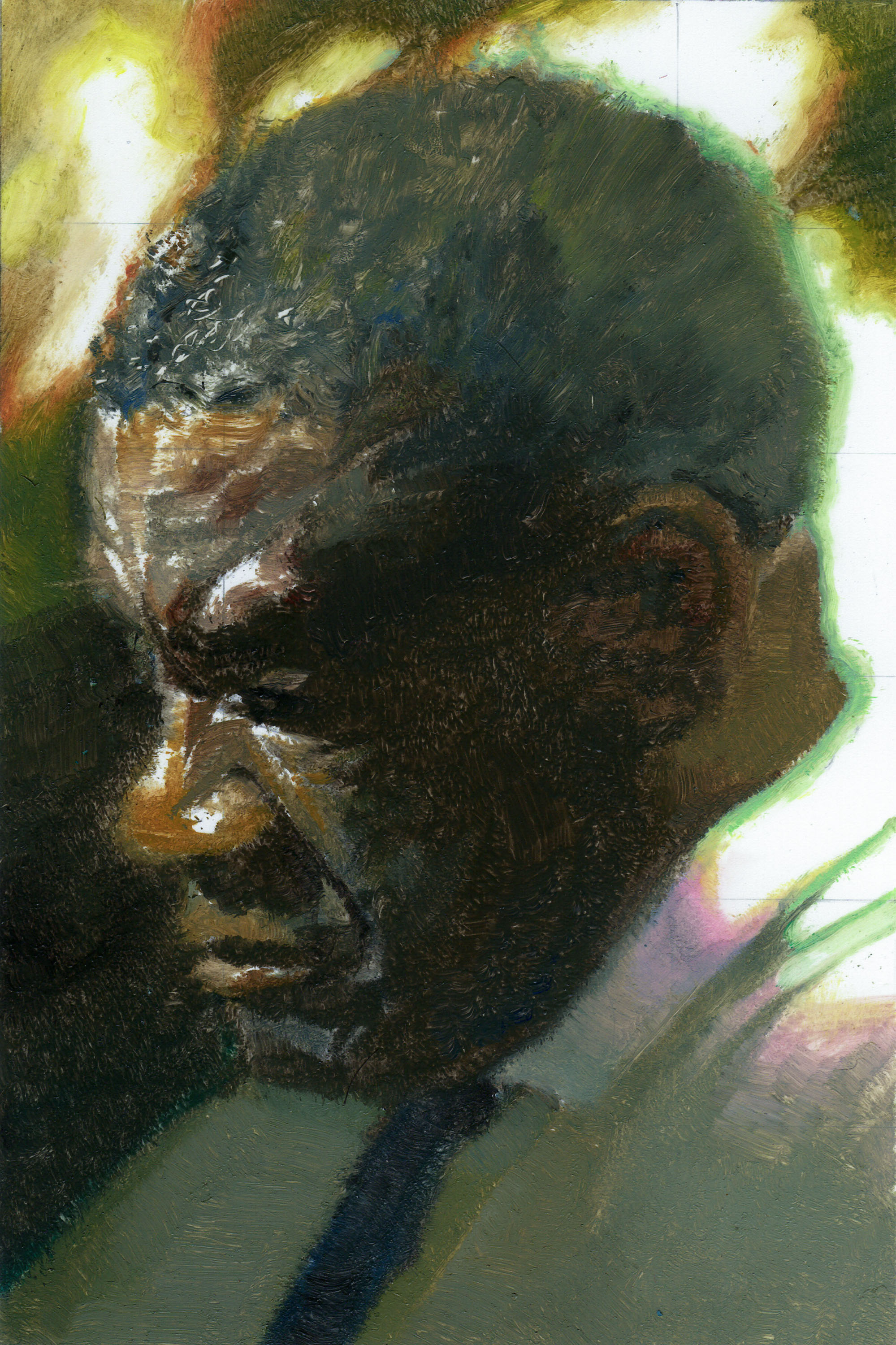
The doctor won the Nobel Peace Prize in 2018 for his work at the hospital and for bringing global attention to the brutality in Congo. The doctor, who turned 70 this year, is in surgery two days a week and works closely with a team of 50 doctors and more than 100 nurses.

Mukwege was born here in Bukavu, a hilly city hugging the shore of Lake Kivu, just south of the equator. His father was the city’s first Congolese Protestant pastor, and Mukwege is a pastor at his parish church. The third of nine children, he nearly died at birth after a neighbor cut his umbilical cord with a dirty knife. Mukwege has spent his life improving medical care for Congo’s women and children.

He has long worked in the shadow of war. In 1996, Mukwege was the medical director of Lemera Hospital when it came under attack from Congolese rebels and the Rwandan army at the start of the First Congo War. He had left the hospital, 50 miles south of Bukavu, to pick up supplies and returned to discover the rebels had executed three nurses and killed 30 patients in their beds. The soldiers looted the hospital, which had been built by the Swedish Pentecostal mission in the 1950s and run by missionary doctors who’d mentored Mukwege until he took over in 1991. War left the hospital in ruins. 

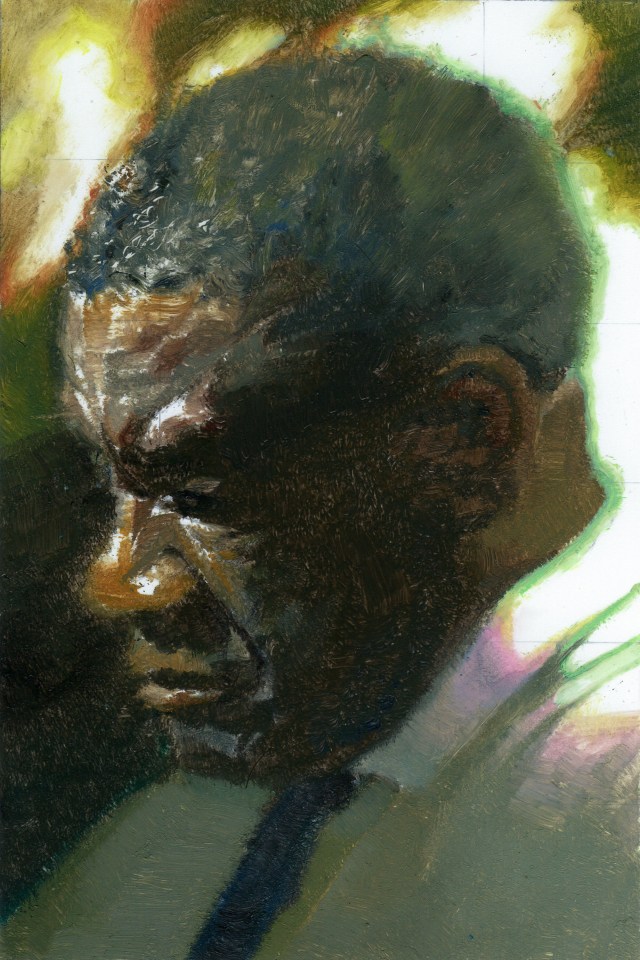
Portrait of Denis MukwegeIllustration by James Lee Chiahan
Denis Mukwege

When he started planning a new hospital to improve maternal care, he secured land in the Panzi neighborhood from his Pentecostal denomination. When the first patient arrived in 1999, she was not a mother in labor but a woman who had been shot and raped by five men. In the first three months of operations, 45 women arrived with injuries from rape. “There was no time to think about, let alone celebrate, the official opening of the hospital,” Mukwege recalled in his 2021 book, The Power of Women: A Doctor’s Journey of Hope and Healing.

Mukwege initially handed off surgeries to a more experienced Finnish doctor. Over time and against Mukwege’s will, he became an expert at caring for survivors of rape. He learned how to surgically repair bladders, genitals, rectums, and other organs damaged not only by male penetration but also by wooden stakes, guns, or other objects. He learned how to treat fistulas—tears between the vagina, bladder, and rectum that won’t heal and lead to crippling pain and leakage, often leaving women ostracized and alone. He learned how to save organs after women were shot in the pelvic area. And he became an expert at identifying the geographical regions where women were attacked just by looking at their wounds. Militias in one area held women to flames, in another area shot them, and in others used bayonets in what appeared to be ritualistic rapes.

Mukwege recalled the horror of those earlier years in his 2018 Nobel lecture. He described an 18-month-old child coming to Panzi Hospital by ambulance after being raped. Mukwege found the nurses sobbing when he arrived. He told the dignitaries assembled in Oslo, “We prayed in silence, ‘My God, tell us what we are seeing isn’t true.’”


The Nobel prize brought the doctor global fame, but his deep local roots make him a beloved figure in Bukavu, where his image appears on buses and billboards. At the hospital, he stands out in a white scrub coat and pants, a head taller than most patients.

The women call him “Papa” and stop to share their troubles with him. On this day, his schedule includes patient consultations, surgery, and meeting with the ambassadors from Germany and Sweden.

Mukwege and Panzi Hospital continue to draw international attention to sexual violence. These horrors spread during prolonged conflicts, and not only in Africa. Rape and sexual torture were prominent features of the October 7, 2023, attacks by Hamas on Israel. Russian soldiers in Ukraine’s Kherson region sexually assaulted women ranging from 19 to 83 years old, according to a UN inquiry. 

Over the past decade, human rights monitors have documented scores of rape cases committed by M23 rebels, who now control most of eastern Congo, as well as by Congolese army soldiers. One UN report stated that rape is “a daily reality from which Congolese women gained no respite.”

Rape as a feature of conquest is an ancient evil. Instances are recorded in the Book of Genesis and are outlawed in the Book of Deuteronomy, with provisions to protect female victims (Deut. 22:22–29). 

Survivors of rape can also experience a sort of living death that plagues them for years after the initial crimes are committed. The physical trauma is often followed by stigma that isolates survivors from husbands, families, and communities. It may make childbirth impossible or impossibly painful. And when soldiers aren’t punished, sexual violence becomes an epidemic. 

The M23 rebels who are committing many of these crimes are part of a Tutsi-led movement backed by Rwanda. They have been advancing this year, battling Congolese forces while leaving thousands dead and more than half a million displaced.

The rebels captured Bukavu in February. In the following weeks, the hospital remained operational, treating injuries and gunshot wounds and delivering 110 babies—a sign of life continuing.

Living under persistent threat isn’t sustainable, Mukwege says. And he isn’t afraid to confront the devastating truth: The powerful entities that plunder the country’s natural resources are to blame for this epidemic of rape. A Belgian surveyor in the late 1800s called this region “a geological scandal” because it’s so rich in prized minerals like cobalt, gold, diamonds, and tin.

Bukavu is 1,000 miles from the capital, Kinshasa, and many of its outlying areas are unreachable by road. That, plus lush geography, allows illicit mineral trades to flourish. Accomplices include neighboring countries and the bottomless global appetite for technology.

Congo’s cobalt and other minerals are essential to powering electric cars, mobile phones, and laptop computers. When sourced directly from Congo, they’re labeled “conflict minerals” subject to disclosure (in the US, tech companies must file with the Securities and Exchange Commission). But most of these minerals are exported via Rwanda to China, the leading consumer of cobalt. The Chinese own mines in Congo outright, and M23 rebels control key areas surrounding the mines.

China—and US-based tech companies relying on Chinese factories—skirts the conflict minerals label by using Rwanda as a transit point for smuggled minerals from Congo. Much of Rwanda’s gold, its largest listed export, also is smuggled from Congo. 

Rwandan forces under now-president Paul Kagame entered Congo after the 1994 Rwandan genocide to rout Hutu génocidaires who sought to escape justice. But Rwanda has stayed for the lucrative trade, with about 4,000 Rwandan troops supporting M23 rebels in the latest offensive.

“Congo is, almost literally, a gold mine for Rwandan businesses,” writes Jason Stearns, senior fellow and founder of the Congo Research Group. “Such profiteering is made possible by the M23, which keeps Congo’s state too weak to stop the theft.” 

War in Congo has become a racket, says Mukwege, “a kind of mafia organization at the international level. Our resources make others rich, while people here can be killed at any time. They can die of starving. We have cities that don’t have water, without law and security. It’s not something done by hazard; it’s done to put people in a situation where they have no choice.”

Mukwege ran for president in 2023 and lost. After making a name for himself advancing what he calls holistic care, he now wants to promote holistic justice. He wants to see rapists and their supporters brought to trial. And he wants to believe the world will take notice.


All these things weigh on Mukwege as he sits down in his office after chapel, flanked by a Bible and a model of the female reproductive organs. “You can feel the responsibility here. It never goes away. If you keep silent, if you don’t talk for them and support them, you become complicit in what is going on. And things are not improving.”

Last year, Mukwege traveled to Silicon Valley to meet with leaders of US tech companies. He says he asked them, “Why do you prefer to get minerals you need from armed groups who are raping and killing people?”

Mukwege’s not interested in boycotting technology. He says it’s about cleaning up supply lines and clearing out foreign-backed militias. He wants those down the supply chain to comprehend the connection between consumerism and what his patients endure.

“We can build bridges, find opportunities for peace, and get minerals and mining clean. Now, it is a dirty business,” he says. “We have to find new leverage to push our politicians.” Mukwege pounds the desk as he talks, frustrated that he sees the problem up close every day and it never becomes less than a horror, while for the rest of the world it’s normalized.

In 2018, he shared the Nobel Peace Prize with Nadia Murad, the Yazidi activist who survived sex slavery at the hands of ISIS captors in Iraq. The award signified new recognition of the problem of sexual violence, he thought.  Instead, “nothing changed, and you have the impression that on the international level, no one cares.” Seven years later, he wonders if the world order has simply grown comfortable with elevating money over humanity. But Mukwege says Christians have a responsibility to care because “this is a thing that destroys families, that destroys churches.”

“I know that God is God, and God is there even if you are going through terrible things. But how can I talk here about the church while women can be raped at any time and not protected?”

Rape survivors at the hospital—who should be focusing on their recovery—face daily fears of violence from M23. As the fighting reached Bukavu earlier this year, the hospital faced “devastating” new violence, it said in a statement, with numbers of sexual violence cases tripling some days. Built as a 125-bed facility, the hospital is often filled far beyond its capacity. Construction is underway on an ambitious project to expand the campus to a regional medical center and teaching hospital.

Alongside caring for rape survivors, Panzi is a referral hospital with general surgery, an emergency wing, HIV treatment clinics, and a busy maternity ward. The hospital delivers about 3,000 healthy babies a year—and achieves a 99 percent live birth rate in a country with one of the worst infant mortality rates in the world.


Panzi is often the only hope for the region’s rape survivors. “Mukwege is the only surgeon within thousands of miles who has the ability to offer treatment,” said Dr. Deborah Rhodes, a leading breast cancer specialist from the US who has trained doctors at Panzi. Too often, she said, “there is nowhere else to go. Patients sometimes walk 5, 10, 15 days to get to the hospital.”

Mukwege has learned that he and his team may not solve the problem of rape, but they can give the survivors hope—and reasons to live.  The staff’s own endurance is tested repeatedly by the prevalence of young patients. In recent months, Mukwege and other doctors treated an eight-year-old rape survivor and one who was just six months old. The infant was raped while her mother was hanging laundry. The mother heard her screams and found her daughter wrapped in bloodied blankets. Doctors at Panzi had to give the baby anesthesia to examine her. Dr. Neema Rukunghu, Panzi’s deputy medical director, was on call that day.

The baby’s parents were “deeply traumatized,” Rukunghu says. Panzi is providing therapy and counseling for them. Doctors worked with police, who identified the perpetrator, a soldier who’d just left the Congolese army. In every case possible, Panzi provides DNA sampling and other evidence. In this case and many others, Rukunghu says, the suspect has disappeared.

Can a child so young recover? “For now, yes, she has healed well,” says Rukunghu, who is herself a mother with young children. “But she is very young, and with this kind of surgery… When she’s a teenager, will she get periods normally? What will we tell her about what happened? And how will that affect her psychologically? These are the things we don’t know. What we do know is that in each case the trauma goes on.”


Some survivors recuperate alongside other patients in the hospital’s general wards, as a way to avoid further stigma. Still, a dedicated wing for those needing special care is usually full, and sometimes women must sleep two to a bed.  Large windows, covered in sheer curtains woven with delicate flowers, suffuse this long room with light. Most of the women in the 40 beds are receiving care or sleeping. A whiteboard by the nurse’s station lists patients. Two are 14 years old and three are 16. One of the girls has a fever; she’s bleeding and anemic. She’s also pregnant.

This teen is one of a growing number of second-generation rape survivors, Rukunghu explains. The girl’s mother waits outside the entrance to the ward. Rukunghu remembers treating her as well, and she speaks with her softly.

About a third of Panzi’s sexual assault survivors are under legal age—18 years old in Congo. Yet girls under 18 make up three-quarters of the pregnancy cases at Panzi that are due to rape. Inside, one of the teen rape survivors rises slowly from her bed to greet Rukunghu, or “Doctor Nene.” She smiles, wearing a dress patterned with bright blue and green flowers.

“She came here with a very large wound, and she was totally traumatized,” Rukunghu says. A month after she had surgery, “It’s amazing now to see her in a dress, to see her laugh.”

Besides surgery and wound care, patients receive post-exposure prophylaxis, which is medication to prevent transmission of HIV and other sexually transmitted infections.

The hospital campus adjoins facilities run by the Panzi Foundation, which provides psychosocial counseling, legal help, skills training and crafts, a school and daycare, and halfway houses for patients who cannot return home.  Long-term patients are assigned a maman chérie—a female volunteer who provides companionship and safe physical touch, an important step toward healing from sexual trauma. Outdoors, these volunteers work with women at picnic tables under a covered patio, weaving baskets and watching movies after lunch. Those in recovery have meals here too. Common areas and communal activities, Rukunghu says, are key to the recovery process.

When Rhodes first learned about the prevalence of sexual violence in Congo and about Panzi’s work, she was employed at Mayo Clinic. She and a team of three surgeons and an operating room nurse from Mayo took vacation time to travel there, bringing new equipment to support surgeons like Rukunghu. “I would not say my work was changed by my time at Panzi,” Rhodes said. “I would say my life was changed. Everyone who went would say that.”

Rhodes worked alongside Mukwege from dawn until as late as midnight, “and what they are able to accomplish with basically no running water, it’s just extraordinary,” she said. “It’s a test of extreme innovation, adaptation, and dedication.” 

Rhodes came away realizing, she said, that Mukwege was certainly one of the great surgeons in the world. But very few surgeons have made the sacrifice he’s made to provide services that would be completely unavailable without him. 

What keeps Mukwege going, he’s quick to say, are his faith and his patients. “I can tell you that the women of Congo are very strong,” he says. “I can’t imagine how they can go through these terrible things and still every morning stand up and say, ‘I want to go on and take care of my family. I want their future even if mine seems over.’”


The workday doesn’t end for Mukwege so much as shift. In late afternoon he changes into a dark business suit, white shirt, and street shoes to attend a worship service at his Pentecostal church across town. He does this most weekdays and is there on Sundays when he is not traveling, aides and visitors like Rhodes confirm. 

On this Wednesday evening, Mukwege spoke to a congregation of about 500 people. He read Scripture and led prayers that included speaking in tongues. He remained on the dais throughout three hours of worship, joined in singing, and introduced a visiting Belgian pastor who gave the sermon that night. Afterward, the doctor greeted friends before returning to the hospital compound in the dark. He was one of several doctors on call for overnight emergencies. 

Mukwege and his wife, Madeleine, moved from their home across the city to live inside Panzi’s gated compound after the doctor escaped an assassination attempt in 2012. Armed men waited for his arrival outside his home while others held two of his daughters inside at gunpoint. They pulled him from the car and appeared ready to shoot him when his longtime bodyguard came from behind the house to stop them. They shot and killed the bodyguard instead, and he collapsed on Mukwege, who says he then passed out. He woke covered in blood, thinking it was his own. The gunmen, perhaps believing they’d killed the doctor, had freed his daughters and taken off.

Mukwege has made other enemies too. Denouncing both Rwandan and Congolese leaders, he’s received multiple death threats. Yet each time these messages or plots become public, his Congolese neighbors turn out in the streets to support him.  

After all these years fighting on behalf of survivors of sexual violence, the doctor has not lost his sense of horror or need for prayer. Even on a casual walk across the hospital campus, he pauses in conversation to eye the gates, wary of rebels and army soldiers closing in. 

Late in the day, his voice cracks and fades as he talks. “When people call or knock on our door to say, ‘We have an emergency,’ and you see it is a baby,” he says, “you don’t have any idea [how it is possible] she can be raped, all her bowels outside. All you can say is, ‘Lord, help me.’ It is unbelievable. Why can this happen?” The next minute, his face softens and his eyes turn bright, because tomorrow is another day. “When I arrive in the mornings and the women are saying, ‘Hello, Papa,’ they want to come with their problems and issues. It’s a blessing for me.”

He implores the global church to pray and to act. And he vows to keep fighting the evil that has overrun his homeland and filled his hospital with patients. “To lose hope? Then I just finish and leave. I’m not ready to do that. I know this country and the people here. … We have people who believe in God, who believe that things can change.” 

Mindy Belz is a freelance writer and the editor of Christianity Today’s 2024 Globe issue.

addApple PodcastsDown ArrowDown ArrowDown Arrowarrow_left_altLeft ArrowLeft ArrowRight ArrowRight ArrowRight Arrowarrow_up_altUp ArrowUp ArrowAvailable at Amazoncaret-downCloseCloseellipseEmailEmailExpandExpandExternalExternalFacebookfacebook-squarefolderGiftGiftGooglegoogleGoogle KeephamburgerInstagraminstagram-squareLinkLinklinkedin-squareListenListenListenChristianity TodayCT Creative Studio Logologo_orgMegaphoneMenuMenupausePinterestPlayPlayPocketPodcastprintremoveRSSRSSSaveSavesaveSearchSearchsearchSpotifyStitcherTelegramTable of ContentsTable of Contentstwitter-squareWhatsAppXYouTubeYouTube