Books
Review

Today’s Christians Can Learn from Yesterday’s Pagans

Classicist Nadya Williams argues for believers reading the Greco-Roman classics.

An image of the book cover.
Christianity Today December 2, 2025
Illustration by Christianity Today / Source Images: Getty, Zondervan Academic

Around 650 years ago, the grandfather of English poetry wrote a poem about the fall of Troy. Unlike Homer and Virgil, his ancient predecessors on the subject, Geoffrey Chaucer chose to pen a romance. As befits a tragedy, his hero, Troilus, dies in battle, abandoned by his lover, Criseyde.

What follows is strange. Troilus’s soul leaves his body, rising above the fields of death. From this vantage point he witnesses the erratic stars, the wide spaces of heaven, and most of all, the insignificance of his own life. He laughs at this conclusion to all his woe and continues on his way to wherever the god Mercury will send him next.

The poet’s voice now enters as Troilus heads off to wherever virtuous pagans go after death. “Swich fyn!” he laments. “Such an end!” to Troilus’s great and wasted love, to his lusts and nobility. Chaucer directly addresses his audience: “O yong e fresshe folkes,” he writes, you are the image of God, and this world is a passing fancy. Seek not its feigned loves, its useless pagan gods and rites, its wretched appetites. Settle your affection on Christ. The poem ends with a prayer to the Trinity.

All true. But Geoffrey: If this is your foreboding lesson, why waste time and talent recounting the Trojan tale at all?

Nadya Williams’s accessible new book Christians Reading Classics takes up the same question Chaucer provokes, the same that early Christian writer Tertullian asks of reading pagan literature: “What indeed has Athens to do with Jerusalem?” Athens here stands in for the pagan art and learning of Greece and Rome before Christ’s salvific death and resurrection. As Williams states forthrightly, that art and learning need the Cross.

But in response to Tertullian, she argues that the relationship also goes the other way. Ancient writers who did not know the Lord can still offer us Christians great, humorous, ugly, and beautiful truths.

Christians Reading Classics sets out as an explicit apologetics for Christians reading the Greco-Roman classics, and it puts Williams’s experience as a former classics professor on full display. She makes no assumptions about readers’ depth of knowledge, carefully elucidating the biographies of figures like Plutarch or Aristophanes and even offering a glossary of unfamiliar terms. Lifelong learners, homeschooling parents, and students desiring context for their theological, literary, and historical studies will especially appreciate her pacing.

Organization also aids this apologetic project. Williams proceeds chronologically, a welcome choice for a book that brims with perhaps-unfamiliar names and places: Readers start in Homer (around the eighth century BC) and end in Boethius (who died around AD 524). Along the way, Williams keeps her history fresh by means of surprising pairings of genre and theme. A scandalous Athenian murder trial illustrates principles from Aristotle’s The Art of Rhetoric. Ancient cookbooks accompany warfare manuals. This approach offers breadth to readers who may be familiar with the big epics of the ancient world—The Odyssey, The Aeneid—but less conversant with smaller works, no less influential but more obscure. Aside from presenting glamorous battle heroes, the ancient world had its more homely and familiar texts, from recipes and gossip columns to bawdy comedies and political speeches.

Williams concludes each chapter with a look forward to our own times and an accompanying spiritual reflection. Chapter 7 begins in the women-centered tragedies of Aristophanes and ends in a moving contrast with Mary’s song of praise. The longing of Cicero, the “new man” in lineage-obsessed Roman society, speaks powerfully to our own scraping and striving despite our truer identity as “beloved children” of God.

Sometimes, these lessons from pagans are painfully relevant. On “How to Be a Good Man Under a Bad Emperor,” first-century historian and career politician Tacitus strikes particularly close to home. As Williams writes,

Bad emperors, Tacitus knew, were common; good ones were the exception. And this raised an important question for a historian who cared about role models: How can one remain a virtuous man under bad emperors? What is the cost of such virtue? And why is a virtuous life—and a possible untimely death because of it—worthwhile in a world that has dramatically different values? The very few heroes in Tacitus’s works are repeatedly men who put character and virtues first.

We Americans also live in an empire. What are the demands upon those of us who long to follow Christ here and now? How can we, like Tacitus’ infrequent heroes, practice virtue under vicious leadership? Christians Reading Classics follows the old paths of Ecclesiastes in unflattering but honest encouragement. There is nothing new under the sun. Our times are not more unprecedented than anyone else’s times.

“Jerusalem without Athens is ignorant of the physical and spiritual dangers of this world,” Williams writes. Lacking the witness of a world without Christ, we easily grow complacent or take things for granted. It is easy to slide into the reigns of the Neros or Galbas documented by Tacitus or become ensnared in the empty pursuit of reputation sought by Achilles or Agamemnon or fall prey to disillusionment and despair like Hesiod.

Williams’s other answer to Tertullian is more than a warning. It serves as an invitation to remember again how Christ and his church burst into the world in answer to timeless human longing.

When we read the pagan classics side by side with the Bible, especially the Gospels, something extraordinary happens. We are able to get closer to the world of the earliest converts to Christianity and can understand them better. In the process, we see why someone might turn their back on the cruelty of Zeus and seek the welcoming love of Christ. Thus, during our reading our own faith also grows.

These works made up the cultural universe of early Roman Empire believers. It is within their framework that ancient men and women encountered the transformative love of Jesus, like Troilus emerging into the heavens to look down at his limited loves and small piece of earth, laughing that reality was more expansive and beautiful than he had known.

The historical church felt the shock of this revelation better than we do today. It’s why Virgil, the great Latin author of The Aeneid, was the fittest guide to lead Dante through Hell and Purgatory in The Divine Comedy. He couldn’t accompany the poet through Heaven—only someone who loves Christ could do that. But he did know the pain of a world without Christ and, equally, the sharp desire for something beyond human capacity. We would do well to relearn the contours of that longing, to follow Virgil’s lead once again.

Grace Hamman is the author of Ask of Old Paths: Medieval Virtues & Vices for a Whole & Holy Life and Jesus Through Medieval Eyes: Beholding Christ with the Artists, Mystics, and Theologians of the Middle Ages. Learn more about her work at gracehamman.com.

Books

The Christianity Today Book Awards

Our picks for the books most likely to shape evangelical life, thought, and culture.

Several book covers and the CT logo.
Illustration by Chris Neville

One of the great pleasures of our work at Christianity Today is getting to spend so much time with books—with the scholarly discoveries, impassioned arguments, and pastoral encouragements shaping evangelical intellectual life today.

Every year, we honor a small subset of these books in our annual CT Book Awards. Publishers submit books for consideration in one or several of our categories. Top contenders are reviewed and ranked by dozens of expert judges, including theologians, pastors, novelists, and other influential thinkers. A select group of our editors considers a handful of books for the Book of the Year and Award of Merit winners, reading in full a few titles that speak particularly to our moment.

This year, two books rose to the top in their responses to wider cultural narratives that threaten the truth, peace, and purity of God’s people. In a Western culture where institutions generally and the church particularly have fallen out of favor, we’re delighted to award the Book of the Year spot to Brad Edwards’s debut book, The Reason for Church: Why the Body of Christ Still Matters in an Age of Anxiety, Division, and Radical Individualism.

Our Award of Merit goes to Robert S. Smith’s The Body God Gives: A Biblical Response to Transgender Theory. Smith critiques the central claim of transgender theory—that the sexed body is separate from the gendered self—and lucidly points readers to the truth that we receive the bodies God gives as gifts.

May the books you encounter below prove valuable resources in your own life of the mind.

—CT editors

Book of The Year

The Reason for Church: Why the Body of Christ Still Matters in an Age of Anxiety, Division, and Radical Individualism by Brad Edwards (Zondervan Reflective)

The past few years have seen a curious pattern of skeptics announcing a newfound respect for Christianity or even converting outright. Is this revival or something like it? Perhaps it’s too soon to say. But it’s not too soon to say that the time was right for The Reason for Church. Brad Edwards’s incisive yet gracious book is apt for this moment—in which even many Christians imagine they can do without the community and obligations of a local congregation—and its call of steadfast commitment to the body of Christ will always be needful and true.

—Bonnie Kristian, deputy editor

The Reason for Church lucidly melds the vertical and horizontal reasons for going to church. There individuals learn about God, who already knows each name, and our neighbors, who often do not—nor do we know theirs. The popularity of Wendell Berry books is partly due to the yearning many of us have for small towns. Brad Edwards shows how, amid urban anonymity and suburban individualism, churches are the indispensable small towns centered on a steeple.

—Marvin Olasky, editor in chief

In a cultural moment shaped by isolation and division, Brad Edwards reminds us that God’s design for his people is essential for our flourishing and our witness.

—Scott Pace, professor of preaching and pastoral ministry at Southeastern Baptist Theological Seminary

Award of Merit

The Body God Gives: A Biblical Response to Transgender Theory by Robert S. Smith (Lexham Academic) | CT review

The Body God Gives is an expansive and compassionate book detailing how gender is grounded in biological sex. Smith has done his homework: He engages with secular gender theorists, highlighting where transgender theory has gone off course. In a world that says we are self-defined, Smith’s book makes the biblical position credible to outsiders.

—Ashley Hales, editorial director, features

Robert S. Smith has read widely among Christian and non-Christian authors on transgender issues and his response is prophetic, pastoral, and compassionate.

—Andrew Ike Shepardson, apologetics professor at Denver Seminary

Apologetics and Evangelism

Winner

The Body God Gives: A Biblical Response to Transgender Theory
by Robert S. Smith (Lexham Academic) | CT review

Award of Merit

Walking Through Deconstruction: How to Be a Companion in a Crisis of Faith by Ian Harber (IVP) | CT review

Finalists

The Gospel After Christendom: An Introduction to Cultural Apologetics edited by Collin Hansen, Skyler R. Flowers, and Ivan Mesa (Zondervan Reflective) | CT podcast episode

Every Believer Confident: Apologetics for the Ordinary Christian by Mark J. Farnham (P&R Publishing)

Biblical Studies

Winner

Jesus and the Law of Moses: The Gospels and the Restoration of Israel within First-Century Judaism by Paul T. Sloan (Baker Academic)

Paul Sloan’s thesis—that Jesus came heralding the restoration of God’s people—reframes how many have long understood (and taught about) his relationship to the law of Moses. Through careful and comprehensive analysis of Jesus’ legal teachings and interactions with his interlocutors, Sloan helps us to understand these as intramural debates over how to keep the law “in light of the dawning of the eschatological age.” Biblical scholars regard this book as an important—even field-shifting—contribution.

—Jeannine Hanger, associate professor at Talbot School of Theology, Biola University

Award of Merit

The Genuine Jesus and the Counterfeit Christs: New Testament and Apocryphal Gospels by Simon J. Gathercole (Eerdmans)

Finalists

Paul, Apostle of Grace by Frank Thielman (Eerdmans)

Thinning the Veil: Encountering Jesus Christ in the Book of Revelation
by Shane J. Wood (IVP Academic)

Bible and Devotional

Winners

Reading the Psalms as Scripture by James M. Hamilton Jr. and Matthew Damico (Lexham Press) | CT review

Reading the Psalms as Scripture transforms casual psalm reading into careful treasure hunting, equipping readers to discover the rich coherence underlying Scripture’s hymnbook.

—James Coakley, professor of Bible, Moody Bible Institute

Everything Is Never Enough: Ecclesiastes’ Surprising Path to Resilient Happiness by Bobby Jamieson (WaterBrook) | CT review

A slow, searching exploration of modern life in conversation with the words of Qohelet (the “Preacher”), Everything Is Never Enough engages with Ecclesiastes through an honest, personal style, incorporating scholarship while remaining accessible. This is a very rich book indeed.

—Claire Smith, women’s Bible teacher and author of God’s Good Design

Award of Merit

The Well That Washes What It Shows: An Invitation to Holy Scripture by Jonathan A. Linebaugh (Eerdmans) | CT review

Finalist

Rhythms of Faith: A Devotional Pilgrimage Through the Church Year by Claude Atcho (WaterBrook) | CT essay

Children

Winner

The Good Shepherd and the Stubborn Sheep: A Story of God’s Redemptive Love by Hannah E. Harrison (Zonderkidz)

This book hits the humor mark with a bull’s-eye! Children will reach for it again and again to be taught and tickled through the perfectly illustrated emotion of a wayward, willful sheep. The Good Shepherd and the Stubborn Sheep is saturated with the truth of God’s long-suffering love, a reminder for young and old that we can never outrun his reach and redemption.

—Bonnie Rickner Jensen, author of Bible Stories for Kids and other Christian children’s books

Award of Merit

Painting Wonder: How Pauline Baynes Illustrated the Worlds of C. S. Lewis and J.R.R. Tolkien by Katie Wray Schon (Waxwing Books)

Finalists

Jesus Our True Friend: Stories to Fill Your Heart with Joy by Sally Lloyd-Jones (Zonderkidz)

We Sing!: Teaching Kids to Praise God with Heart and Voice by Kristyn Getty (Crossway)

Young Adults

Winner

The Outsider: Ruth: A Retelling by Katy Morgan (The Good Book Company)

Katy Morgan’s third biblical retelling brings the Book of Ruth to a primary school audience with care, color, and fidelity. Scripture’s 4 pages become 158 without distortion. The added scenes, inner thoughts, and supporting figures feel historically plausible and serve the core themes of loyal love, providence, and the God who keeps his people through famine, grief, and risk.

—Mel Lacy, executive director of Growing Young Disciples

Award of Merit

Embergold by Rachelle Nelson (Enclave Publishing)

Finalists

The Gospel-Centered Community for Teens: Study Guide with Leader’s Notes by Robert H. Thune and Will Walker (New Growth Press)

The Song of the Stone Tiger by Glenn McCarty (Bandersnatch Books)

Christian Living and Spiritual Formation

Winner

Ask of Old Paths: Medieval Virtues and Vices for a Whole and Holy Life by Grace Hamman (Zondervan Reflective)

In the medieval world, our ancestors compared the soul to a garden. In Ask of Old Paths, Grace Hamman provides the reader tools for cultivation—holy watering cans, soul shovels, sin pruning shears—and gives us discernment on which weeds to pluck and where to give fertilizer.

—Alex Sosler, associate professor of Bible and ministry at Montreat College

Award of Merit

A Teachable Spirit: The Virtue of Learning from Strangers, Enemies, and Absolutely Anyone by A. J. Swoboda (Zondervan Reflective)

Finalists

A Heart Aflame for God: A Reformed Approach to Spiritual Formation by Matthew Bingham (Crossway)

The Big Relief: The Urgency of Grace for a Worn-Out World by David Zahl (Brazos Press) | CT review

Church and Pastoral Leadership

Winner

The Reason for Church: Why the Body of Christ Still Matters in an Age of Anxiety, Division, and Radical Individualism by Brad Edwards (Zondervan Reflective)

Award of Merit

Making Disciples: Catechesis in History, Theology, and Practice by Alex Fogleman (Eerdmans)

Finalists

Accessible Church: A Gospel-Centered Vision for Including People with Disabilities and Their Families by Sandra Peoples (Crossway) | CT review

Rebranding the Church: Restoring the Image of God’s People in the World by Eric Mason (Multnomah)

Culture, Poetry, and the Arts

Winner

Art Is: A Journey into the Light by Makoto Fujimura (Yale University Press)

Makoto Fujimura’s latest offering is part memoir, part artist statement, threaded with theology as creative practice. He deliberately eschews a linear argument in favor of constructing his text as he does his Nihonga paintings: with slow, allusive layers that glimmer differently in different light.

—Elissa Yukiko Weichbrodt, professor of art and art history, Covenant College

Award of Merit

Scrolling Ourselves to Death: Reclaiming Life in a Digital Age edited by Brett McCracken and Ivan Mesa (Crossway)

Finalists

Drawn by Beauty: Awe and Wonder in the Christian Life by Matthew Z. Capps (B&H Academic) | CT review essay

The Discipline of Inspiration: The Mysterious Encounter with God at the Heart of Creativity by Carey Wallace (Eerdmans)

Fiction

Winner

The Collector of Burned Books by Roseanna M. White (Tyndale)

The Collector of Burned Books masterfully unites historical realities with the personal drama of its characters. Centered around the Nazi occupation of Paris, the novel explores the censorship of literature and the resistance which the written word can provide not only to fascism and tyranny but also to the harmful stereotypes which even those on the correct side can fall into.

—Anthony Cirilla, associate professor of English, College of the Ozarks

Award of Merit

What the River Keeps by Cheryl Grey Bostrom (Tyndale)

Finalists

From the Valley We Rise by Elizabeth Musser (Bethany House)

The Light on Horn Island by Valerie Fraser Luesse (Revell)

History and Biography

Winner

The Beechers: America’s Most Influential Family by Obbie Tyler Todd (Louisiana State University Press) | CT review

As the Beecher clan preached to packed halls, crusaded against alcohol, led abolitionist societies, authored best-selling books, and campaigned for human rights, they lived out their shared belief in the moral power of the person to change both self and society. The Beechers excavates the deeper roots of this holistic gospel—one equally devoted to individual hearts and civic justice.

—James Strasburg, associate professor of history, Hillsdale College

Award of Merit

Abortion and America’s Churches: A Religious History of “Roe v. Wade” by Daniel K. Williams (University of Notre Dame Press) | CT review

Finalists

The Wars of the Lord: The Puritan Conquest of America’s First People by Matthew J. Tuininga (Oxford University Press) | CT review

Katharine Barnwell: How One Woman Revolutionized Modern Missions by Jordan K. Monson (B&H Publishing) | CT essay

Marriage, Family, and Singleness

Winner

Good News for Parents: How God Can Restore Our Joy and Relieve Our Burdens by Adam Griffin (Crossway)

In Good News for Parents, Adam Griffin addresses parents with the good news of the gospel as he takes the fruit of the Spirit and applies it to common parenting struggles. He reminds mothers and fathers of the real and moment-by-moment grace of God available in the face of what can feel like the often-impossible task of raising children.

—Heather Davis Nelson, Christian counselor and author of Rest: Creating Space for Soul Refreshment

Award of Merit

Disrupted Journey: Walking with Your Loved One Through Chronic Pain and Illness by Nate Brooks (P&R Publishing)

Finalists

Households of Faith: Practicing Family in the Kingdom of God by Emily Hunter McGowin (IVP)

The Deep-Rooted Marriage: Cultivating Intimacy, Healing, and Delight by Dan B. Allender and Steve Call (W Publishing)

Missions and the Global Church

Winner

Pieces of Purple: The Greatness, Grit, and Grace of Growing Up MK by Michèle Phoenix (independently published)

This book is a profoundly relevant resource for families who have global ministry experience. It’s a must-read for anyone who has lived internationally and those related to such a person, especially for teenage and adult children with these experiences who are navigating identity and belonging.

—Brian A. DeVries, president, Mukhanyo Theological College

Award of Merit

Serving God Under Siege: How War Transformed a Ukrainian Community by Valentyn Syniy (Eerdmans) | CT review

Finalists

Satellite Ministries: The Rise of Christian Television in the Middle East by Febe Armanios (Oxford University Press)

Reviving Mission: Awakening to the Everyday Movement of God by Linson Daniel, Jon Hietbrink, and Eric Rafferty (IVP)

Politics and Public Life | CT review

Winner

The Dignity of Dependence: A Feminist Manifesto by Leah Libresco Sargeant (University of Notre Dame Press) | CT review

As the subtitle suggests, The Dignity of Dependence is indeed “a feminist manifesto.” But don’t let that label determine your expectations. Leah Libresco Sargeant’s latest work is a bold yet levelheaded reimagining of what feminism can be at the same time as our market economy, professional norms, and dominant visions of the good life marginalize women—not merely through flawed theory that casts the male as default and the female as “other” but also through the practical exclusion of those who care for the vulnerable. By the book’s end, readers may find themselves asking how Sargeant’s vision ever ceased to be common sense.

—Joel Looper, author of Another Gospel: Christian Nationalism and the Crisis of Evangelical Identity

Award of Merit

Called to Freedom: Retrieving Christian Liberty in an Age of License by Brad Littlejohn (B&H Academic) | CT review

Finalists

When Politics Becomes Heresy: The Idol of Power and the Gospel of Christ by Tim Perry (Lexham Press) | CT review

Citizenship Without Illusions: A Christian Guide to Political Engagement by David T. Koyzis (IVP Academic)

Theology (Academic)

Winner

Prophet, Priest, and King: Christology in Global Perspective edited by Michael S. Horton, Elizabeth W. Mburu, and Justin S. Holcomb (Zondervan Academic)

This book has the very tough task of trying to socially and ethnically contextualize the wonderful, biblical truth that Christ is prophet, priest, and king across a global context. Without ever succumbing to the temptation to revert to sloppy politicized and ideological interpretations of this wonderful theme, these authors have succeeded in showing how Jesus’ profound fulfillment of these Old Testament roles has resonated throughout the world in amazing ways, across time and cultural differences.

—Marcus Johnson, professor of theology, Moody Bible Institute

Award of Merit

Contesting the Body of Christ: Ecclesiology’s Revolutionary Century by Myles Werntz (Baker Academic) | CT essay

Finalists

Joining Creation’s Praise: A Theological Ethic of Creatureliness by Brian Brock (Baker Academic)

Walking the Way of the Wise: A Biblical Theology of Wisdom by Mitchell L. Chase (IVP Academic)

Theology (Popular)

Winner

The Cost of Ambition: How Striving to Be Better Than Others Makes Us Worse by Miroslav Volf (Brazos Press) | CT review essay, CT podcast episode

Miroslav Volf offers a profound critique of competitive striving through a rich theological and philosophical lens. His writing is lucid, humane, and timely, inviting readers to reimagine ambition through the way of love.

—Tara Beth Leach, senior pastor, Good Shepherd Church

Award of Merit

Becoming God’s Family: Why the Church Still Matters by Carmen Joy Imes (IVP Academic) | CT essay

Finalists

The Nicene Creed: What You Need to Know about the Most Important Creed Ever Written by Kevin DeYoung (Crossway)

Raised in Splendor: The Hope of Glorification for a Secular Age by Jason B. Alligood (B&H Publishing)

Books

Beyond the CT Book Award Winners

20 more suggestions from our editor in chief.

A layout of several books.
Christianity Today December 2, 2025
Illustration by Christianity Today

Today CT celebrates great Christian books—and we can also learn from others. Here, two-by-two, are capsule comments on 20 books published by non-Christian houses in 2025 that educated me.

Historic Figures

Molly Worthen’s Spellbound: How Charisma Shaped American History from the Puritans to Donald Trump (Forum) walks us through four centuries of mystery history: Some leaders gain followers by charm, but charisma is more powerful—and sometimes rational explanations for success fall short. | Listen to Worthen’s conversation with Russell Moore, and read an original essay she wrote for CT this year.

Gems of American History (Encounter) by Walter McDougall affectionally profiles pioneers from William Penn and Benjamin Franklin to the Wright brothers.

Society and Religion

In Broken Altars: Secularist Violence in Modern History (Yale University Press), Thomas Albert Howard contrasts the “passive secularism” of the First Amendment, which worked well in the United States for two centuries, with antireligious “combative secularism” and murderous “eliminationist secularism.” | Read CT’s review.

Cross Purposes: Christianity’s Broken Bargain with Democracy (Yale) by Jonathan Rauch analyzes “thin Christianity,” 20th-century modernism ashamed of its core, and “sharp Christianity,” 21st-century Christianity in which politics edges out theology. | Read CT’s review and listen to Rauch’s conversation with Russell Moore.

Thinking About Individuality

Tomer Persico’s In God’s Image (NYU Press) traces the revolutionary idea that arose from the Bible and shaped Western civilization: Each human life is significant, and we are not just part of a clan. | Read CT’s review.

In The Age of Choice: A History of Freedom in Modern Life (Princeton University Press), Sophia Rosenfeld urges us to rethink both the promises and limitations of choice in a culture becoming cancerous. | Read a CT essay that draws on Rosenfeld’s work.

Wrestling with God

Eminent Jews (Henry Holt) by David Denby tells of the aggressive comedy of Mel Brooks, the torment of Leonard Bernstein, and the angst of Betty Friedan and Norman Mailer.

In Taking Religion Seriously (Encounter), formerly agnostic scholar Charles Murray explains how he came to believe in God. | Read CT’s review.

Rich and Poor

Kim Bowes in Surviving Rome: The Economic Lives of the Ninety Percent (Princeton) Iiterally digs deep into artifacts to tell the stories of day laborers, slaves, farmers, and even pimps working the gig economy two millennia ago.

Class Matters (PublicAffairs) by Richard D. Kahlenberg shows how we can have diversity at universities while reducing discrimination and recrimination.

Proclaiming Liberty

Bennett Parten’s Somewhere Toward Freedom (Simon & Schuster) reveals how the Union Army’s 1864 march from Atlanta to Savannah “evolved into a profound religious experience” as 20,000 former slaves followed the soldiers.

In Last Seen: The Enduring Search by Formerly Enslaved People to Find Their Lost Families (Simon & Schuster), Judith Giesberg details how couples separated by slave sales strove to reunite.

War and Tragedy

Iain MacGregor’s The Hiroshima Men (Scribner) describes the making and use of the first atomic bombs, the cost in lives for both Japan and the United States, and the way Japan’s leaders finally stopped sacrificing their people. 

Rafael Medoff in The Road to October 7: Hamas, the Holocaust, and the Eternal War Against the Jews (Jewish Publication Society) lays out the long sorrow.

Baseball and Life

Jane Leavy offers ways to increase baseball action in Make Me Commissioner (Grand Central), such as by topping off outfield walls with 18-foot-high Plexiglas, NHL arena style.

Will Bardenwerper’s Homestand: Small Town Baseball and the Fight for the Soul of America (Doubleday) argues that minor league ballparks are still places where community grows, with “evening shadows advancing toward the infield as that familiar feeling of serenity slowly swept over us.”

Please, Mr. Postman

Stephen Starring Grant’s Mailman: My Wild Ride Delivering the Mail in Appalachia and Finally Finding Home (Simon & Schuster) reports with humor and compassion his time as a rural letter carrier.

In Love, War, and Diplomacy: The Discovery of the Amarna Letters and the Bronze Age World They Revealed (Princeton), Eric H. Cline explores the mail some pharaohs received from 1360 to 1334 BC.

Dinosaurs and Birds

King Tyrant (Princeton) by Mark P. Witton is an authoritative book for adults about Tyrannosaurus rex—and its pictures of dinosaurs in combat can fascinate children as adults read to them at bedtime about the bad old days.

Roger Pasquier’s Birds at Rest: The Behavior and Ecology of Avian Sleep (Princeton) is far more peaceful.

Marvin Olasky is editor in chief of Christianity Today. Since 2022, he has reviewed both general and Christian books in a monthly free newsletter, OlaskyBooks. You can sign up here.

News

Trading TikTok for Time with God—and Each Other

Some young Christians embrace lower-tech options.

Several smart phones and analog devices.
Christianity Today December 2, 2025
Illustration by Elizabeth Kaye / Source Images: Unsplash, Pexels

Young adults “do have a desire for an unplugged life,” said Luke Simon, a youth codirector at The Crossing in Colombia, Missouri, as we spoke about his own generation—Gen Z—and Gen Alpha. 

“Technology is the way they’re viewing the world,” the 24-year-old said, so much so that choosing lower-tech options or going analog feels like the equivalent of going off grid. It’s an alternative lifestyle.

But many young people are making such choices. The Wall Street Journal has reported a surge in flip phones, digital cameras, and CDs, alongside a growing interest in Luddite clubs and collective action groups like Time to Refuse, where Gen Zers collectively delete apps.

It seems everyone is talking about how smartphones have made us less mentally agile, and experts like Jonathan Haidt continue to sound the alarm on their association with poor mental health. But what are digital natives doing about it as they enter adulthood? And for Christians, how do these types of technology choices affect the faith of younger generations?

Molly Stevenson, a benefits advisor in Washington, DC, remembers a time when you could get to the bottom of your social media feed. Today, part of her interest in using film and digital cameras instead of her smartphone is the attention it requires. 

On a recent trip to Peru, Stevenson, who is 27, took only a handful of pictures of Machu Picchu, waiting for the light to be just right. “I had the whole day, and only two of them turned out, and that’s okay.” She found that lower-tech options tend to slow down time: When she looks back at the photos days or weeks later, she feels they bring back memories, as opposed to viewing digital photos on her phone immediately after taking them. In her church small group, they talk about social media as a “socially acceptable drug.” 

Julianna Graeber, a recent graduate of Liberty University living in New Jersey, said using point-and-click cameras produces more aesthetically pleasing photos without as many filters or apps. Playing vinyl records also constrains her options so that “you have to listen to the whole album and not just skip through songs.” 

Our attention is not only divided but also dumbed down. Lane Brown, in a New Yorker Magazine  article called “A Theory of Dumb,” reported that “recent shifts suggest we’ve crossed a kind of threshold. In June, the Reuters Institute noted how social media is now Americans’ main source of news, surpassing legacy outlets for the first time. Worldwide, TikTok is a trusted news source for 17 percent of people.

This shorter attention span has consequences for how we understand vocation. Graeber, who is 22, found her attention had evaporated so that she could no longer read fiction like she used to. It provided a reckoning as a writing major: “If I believe that I’m serving God and my purpose is to give back to him with those gifts, I am responsible for my attention span to be able to read and write.” A school-sponsored monthlong digital fast allowed her to see her tech overuse not just as a bad habit but as tied to her vocation and love of God. 

Ciara McLaren, an American Christian living in London (who also writes on analog life), started a Lenten fast by putting her iPhone in a drawer and choosing a Nokia 2780 phone instead. While the 28-year-old has missed out on some things (she didn’t get the instantaneous news of her sister’s engagement, for example), she said, “It just makes me more determined to build a life closer to the people I love, and to visit in person as much as possible.” The space for clear thinking and prayer make up for the desire to always be connected. 

While not eschewing all technology, many Gen Zers are showing an interest in choosing more humane forms. Rather than bowing to the need to feel constantly connected, these subtle shifts—to vinyl records, point-and-shoot cameras, and WiFi-only e-readers—are a way to reclaim attention. 

Covenant College chaplain Grant Lowe shared how some students are opting for dumbphones like the Light Phone and Wisephone. Some use Brick, which markets itself as a “digital wellness tool that blocks distractions and makes your phone a tool again,” he said. “Some students are downloading Google extensions that allow users to customize their YouTube pages, removing reels and all suggestions, freeing them from all-too-effective targeted algorithms.” 

These lower-tech choices allow for a renewed focus on God and others. Twelve years ago, when Lowe banned cell phones from Covenant’s thrice-weekly chapel services, he was prepared for pushback. “Instead,” he said, “it was met with a standing ovation that I’ve always believed was a communal sigh of relief—to have a place they can together be free from technological distraction, if only for 35 minutes.”


Cutting down on distractions and screen time also seems to have mental health benefits. Graeber commented she was “making herself sick” by being constantly plugged in. Largely eliminating social media “brought my anxiety levels down significantly.” 

Another Gen Z creative, Sophie Jouvenaar, noted the challenges of early phone adoption: At “11 years old, I got a phone, which almost immediately opened the door to predators and cyberbullying from my school peers. As a result, I really struggled.” 

The online environment also opened up opportunities for a photography career at 17. Still, at 22, she had to take a break from her work because social media deteriorated her mental health. She moved back in with family and learned to speak with God and read his Word. 

Now 24, Jouvenaar has realized not only her need for slower forms of technology but also for Christ. Her photography is a testament to her lower-tech commitments, and she finds clients “through real-world interactions, word of mouth, emails, even posters and business cards.” 

“The benefits of these ‘lower tech’ alternatives allow me to really consider how I work and who I want to work with,” she said, “rather than swimming in the mad panic of posts, DMs, and likes.”

One consideration for those who are considering lower-tech options is the desire to stay relevant in the job market. Daniel Coats, a marketing communications coordinator at Cal State Fullerton, thinks it’s possible to stand out in a crowded marketplace without embracing every tech advancement. 

Coats was a late tech-adopter, yet he has found that he’s “strong as a social media writer because the mechanics of writing don’t really change and you can adapt to the mediums as they come up.” While he’s curious about the implications of AI for his job, he’s also confident that the skills he uses at work and in his local church will remain relevant. 

Most of the Gen Zers I spoke with discussed tech usage or digital fasts with their friends, but it didn’t seem to be a primary component of discipleship in their churches. Sometimes it was only acknowledged as a common problem or, at times, as a specialized area of study.

Patrick Miller, a pastor at The Crossing, mentioned that as awareness of the shaping power of technology grows, there’s “a much higher willingness to engage with disruptive practices designed to recapture [Christians’] love of God over their love of the machine.”

Miller has seen practices like a digital fast or setting your phone to grayscale to be effective. He has limited his own social media usage, noting that “the incentive structures of social media are almost antithetical to a local pastor’s calling. What does well on social media is what is invective and angry and shocking. And that is the opposite of what a pastor should be.”

Joshua Heavin of Christ Church Plano in Texas also noticed how his offline habits were shaped by his online smartphone usage. As curate for pastoral care, he said the smartphone takes away from a “disposition of hospitality” and “erodes his capacity for such a way of life.”

Our digital addiction may be a revolt against the reality that “we are finite, and often frustrated with the particular place, people, and situations that have been given to us, and that in the end that we are not self-made,” noted Heavin.

“We spend an enormous amount of time imagining ourselves in the past with regret or nostalgia, or in the future with anxiety and fear, but we are very rarely present in the one place where God comes to us by his Word in Spirit: in the present,” Heavin said. “But if we can receive it, we will perceive that our particularity is a gift, and the particularity of Jesus Christ is the mystery through which the whole cosmos is renewed.” 

Gen Z’s analog attempts may help us begin to recover not only the reality but also the pleasures associated with our finitude. We need to do so together, across generations, Heavin says: “It is much more realistic and doable to live such a life in a community who shares that common goal than to attempt it all alone.” 

Ashley Hales is CT’s editorial director of features. She serves on the board of Covenant College.

Culture

Synthetic Love Will Tear Us Apart

When we outsource intimacy to machines, we become what we practice. And we’re practicing the wrong things.

A heart with lots of cracks in it.
Christianity Today December 1, 2025
Illustration by Elizabeth Kaye / Source Images: Unsplash

This December, OpenAI’s ChatGPT will roll out an overhaul with access to “erotica for verified adults.”

The backlash to Sam Altman’s October announcement on X was swift. Billionaire investor Mark Cuban warned the move would likely backfire, predicting that parents would abandon the platform rather than trust OpenAI’s age-gating verification. The National Center on Sexual Exploitation (formerly Morality in Media) called on OpenAI to reverse its decision, citing the “real mental health harms from synthetic intimacy.” California assemblywoman Rebecca Bauer-Kahan accused the company of choosing profits over the lives of children.

Altman claims this move is an attempt to loosen the restrictions that made ChatGPT less enjoyable for users. He insists the company is simply trying to honor their principle to “treat adult users like adults.”

Altman’s critics are right to worry. Yet the debate that immediately erupted on X has stayed technical, focusing on the failures of guardrails like age gates and parental controls. In Altman’s erotica clause, if you have age verification plus consent and choice, then you’re an adult and you do what you want. But that’s not adulthood—that’s adolescence with a credit card.

No one seems to be asking the larger question: What does it mean to treat adults like adults?

Technology alone can’t answer this question. We need wisdom. Rather than see adulthood as simply reaching a particular age, the apostle Paul describes adulthood in 1 Corinthians through the language of mature love: “When I was a child, I talked like a child, I thought like a child, I reasoned like a child. When I became a man, I put the ways of childhood behind me” (13:11). For Paul, it’s self-sacrificing love—not unconstrained liberty—that marks maturity.

Adulthood isn’t about reaching a certain age and gaining the freedom to live for yourself. Adulthood requires turning outward: learning to love others by dying to self and taking responsibility for both yourself and others.

It’s hard to grow into an adulthood marked by self-sacrifice for the sake of others, though, when our devices form us away from these virtues. Today, millions are already connecting with AI chatbots in what Russell Moore calls “the illusion of relationship and sexuality without covenant, without genuine reality at all.” Character.AI reports that users spend an average of two hours daily with their AI chatbots.

Young people are especially hooked. The company just recently moved to ban teenage users after reports of emotional harm and dependency. Common Sense Media found similar patterns: Young users turn to chatbots for comfort or romantic connection only to wind up more isolated. With these so-called companions, users reach for self-satisfaction without self-sacrifice.

Pornography has always promised satisfaction without work or commitment. It has also always been an early tech adopter—helping VHS beat Betamax and testing the limits of broadband long before Netflix and Hulu showed up. And although only approximately 4 percent of websites are pornographic, searches for online porn account for 13 percent of all web traffic and nearly 20 percent of mobile searches. In a US sample, around 11 percent of men and three percent of women self-reported being addicted to pornography.

Porn didn’t just follow the technology. It refined it. It taught us how to buy and sell the desires of the flesh. And the AI revolution doesn’t appear to be any different.

We can’t wait for OpenAI to become moral. But we can decide what kind of adults we’re going to be.

We can’t exercise adult responsibility if we’re not formed into people capable of it. Theologian Thaddeus Williams captures this dynamic: “We become the most like whatever we most love. Our objects of veneration have a way of defining the scope and contours of our soul’s formation (or de-formation).” Our daily habits bend our loves in one direction or another. And habits of synthetic intimacy—micro-doses of pleasure without presence—are shaping us into worshipers of self.

Philosopher Esther Lightcap Meek takes the idea of formation further. Real knowing, she argues, requires real presence. It involves our whole selves—mind, body, will, emotion. The formative habits of AI erotica don’t simply warp our desires but also how we understand the world. It teaches us to treat others as simulations and ourselves as gods.

This impulse isn’t new, of course. The early Gnostics wanted a faith without flesh. They treated the body as a burden to transcend instead of as a gift to be redeemed. You can see the same instincts at work in the age of AI, where connection is offered without the cost of embodied relationship. It’s the illusion of communion without the call to self-denial. But sacrifice and friction are required for growth into mature adulthood.

When we’re presented with sinful options, the maturing Christian response is clear: Choose what’s real. Choose embodied presence, not digital simulation. After all, the Christian story is concrete. To save us, the Word became flesh. The Incarnation insists that love can’t stay abstract. It must be embodied.

Jesus didn’t simulate presence. He listened, forgave, broke bread, washed feet, bore burdens, suffered scars. Jesus, too, embodies a mature adulthood—not one of simulation and age verification but of walking in the way of wisdom and self-control. As just one example, when the Devil offered him shortcuts to glory, Jesus refused, choosing instead to trust his Father (Matt. 4:1–11). In the wilderness, he showed that denying yourself isn’t a type of self-rejection: It’s freedom from the lie that life can be found apart from the goodness of God.

This is the pattern Jesus shows us: Refuse the easy path because there is a true one that leads to life. Real freedom—and adulthood—is found not in mindlessly satisfying our whims but in being freed from the lie that these desires can be satisfied by lesser loves.

C. S. Lewis understood this. In The Great Divorce, the damned don’t choose hell. They shuffle there, step by step, one small compromise at a time. They become ghosts, gradually hollowed out by preferring shadows until they no longer have a taste for real substance.

That’s the real danger—not the sudden corruption of the soul but a gradual habituation that turns us into ghouls.

Altman will sell us the shadowlands and call it adult freedom. But if algorithms have shaped our desires, worship can reshape them. Jesus paid the price to purchase our freedom—not freedom to indulge our desires but freedom from sin and to have our desires transformed so they lead to an abundant life (John 10:10).

Adulthood always requires more than a checkbox. It demands wisdom. 


Chris Poblete is a writer, editor, and communications consultant for churches and nonprofits. He previously pastored a church plant in South Orange County, California, and served as editorial director for CT Pastors at Christianity Today. He is the author of The Two Fears.

Ideas

Blaming Women Harms Us All

When we fail to protect and honor women like Jesus, we all lose.

Christ and the Adulteress by Peter Bruegel

Christ and the Adulteress by Peter Bruegel

Christianity Today December 1, 2025
WikiMedia Commons

Jesus loved women. During his earthly reign, he healed (Matt. 8:14–15; 9:20–22), protected (John 8:1–11), and taught women (Luke 10:38–41; John 4:1–26) from all walks of life. They were his friends, disciples, and supporters. Women were among the last to leave his crucifixion and the first to spread the good news of the resurrection (Matt. 27:55–56; 28:1–10).

Following Jesus’ lead, the first-century church also valued women and empowered them to serve alongside men in key leadership roles: Phoebe, Junia, and Priscilla are all commended by Paul (Rom. 16:1–16). Though this represented a fundamental change from Jewish tradition, it is congruent given Jesus’ treatment of women and that the Holy Spirit descended on everyone during the miracle of Pentecost, confirming the gospel’s radical inclusivity. The early church seemed to grasp that men and women would need to partner together if they hoped to bring God’s justice and shalom to the world.

Unfortunately, it didn’t take long for some church leaders and theologians to revert to pre-Christian thinking regarding gender equality and oneness in Christ (Gal. 3:28). Tertullian (AD 155–220), a Christian convert and influential apologist, charged women with Christ’s death in De Cultu Feminarium: “You are the devil’s gateway; you are the unsealer of that (forbidden) tree; you are the first deserter of the divine law; you are she who persuaded him whom the devil was not valiant enough to attack. You destroyed so easily God’s image, man. On account of your desert—that is, death—even the Son of God had to die.”

His harsh critique follows a familiar pattern of blaming women for suffering, pain, and the presence of evil. This pattern is visible in all cultures and predates Jesus by thousands of years. We can see an example in the Book of Genesis when Eve and Adam fall for the Serpent’s temptation and share the forbidden fruit, and sin, enmity, and death enter the world. When God confronts Adam, the man deftly shifts all responsibility for their actions (Gen. 3:6) onto “the woman you put here with me,” the same woman he had previously rejoiced over, poetically describing her as “bone of my bones” (3:12; 2:23).

Though ancient and widespread, blaming women is both counterproductive and unjust. It’s also a form of misogyny. Putting it in this larger context allows us to recognize that misogyny is part of a calculated attack against women that attempts to thwart God’s plan for all of us to image the Godhead in collaborative partnership.

The familiar definition of misogyny—the hatred of women—is not comprehensive enough to help us identify the many ways it manifests in North America. In For the Love of Women, I explain this term as “a persistent, insidious belief that men’s wants, needs, and experiences are more important than women’s and that political, religious, and social systems, as well as intimate relationships, should uphold this principle. These belief systems subsequently influence the laws, practices, and ethos of a given culture.”

Practically speaking, this “fuels discrimination, sexism, and other forms of unjust or biased treatment due to women’s biological sex.” When we trace this plot line, we can discern that it’s detrimental for all of us. By categorically subordinating women, we make it more difficult to see them as equal image bearers and value them as beloved daughters. If, as Scripture indicates, we all bear God’s image and are all equally loved, then deeming women less than men is an affront to God and contradicts his declaration that the pinnacle of creation is very good.

One of the most effective ways to subordinate and thereby diminish women is by blaming them when bad things happen—even if those bad things are outside their purview or have harmed them. This is not to say that women are categorically blameless. The gospel makes it clear that we’re all sinners and calls us to honestly and humbly admit our sins (James 5:16; 1 John 1:8–10). However, in both secular and faith-based settings, there’s a disturbing pattern of shifting blame onto women.  

Adam’s choice to point the finger at Eve rather than refute the Serpent’s lies or own his contribution has echoed through history. We can hear that reverberation when pastor Mark Driscoll accuses women of trying to control men and usurp their authority, when a rapist claims his victim was asking for it because of what she was wearing, when teenage girls are blamed for men’s lustful thoughts, and when a high-ranking Southern Baptist Convention official refers to SBC sexual abuse survivors’ claims as “a satanic scheme to completely distract us from evangelism.”

Blaming women contradicts the gospel’s inclusion of women and compromises our ability to bring God’s restorative justice to the world. It is a form of false witness that discredits women and paints them as untrustworthy.

Further, when men refuse to take responsibility for their mistakes, they never address the injustice at hand. For instance, by accusing sexual abuse victims as the problem, SBC officials allowed perpetrators to continue their criminal activities and failed to facilitate healing for the survivors. While many pastors care well for abuse victims, others blame abused wives by claiming they’re not submissive enough and fail to help them move into safe spaces or hold their spouses accountable. Such leaders then give abusers permission to keep abusing and are thus complicit for any future harm that befalls these women and children.

If we hope to end injustice against women, the practice of indiscriminately blaming women must stop. Additionally, men will need to use their power and authority to protect women—not control or subordinate them—and to ensure that they thrive.

Jesus’ interactions with women reveal what this could look like. He didn’t blame women, even those who violated religious or social norms. When he encountered men preparing to stone a woman caught in adultery, his response exposed their hypocrisy, shattered conventional patriarchal customs, and called both her accusers and the accused to repentance (John 8:1–11). When the woman who had suffered from chronic bleeding grabbed his robe, rather than rebuke her, he heals her and commends her faith (Luke 8:43–48).

Jesus shows us how to untie the misogynistic knots that have bound all of us: by unconditionally loving and respecting women. If our goal is to become more like Jesus and bring peace, healing, and restoration to the world, we need to follow his example.

Dorothy Littell Greco is the author of three books, including For the Love of Women: Uprooting and Healing Misogyny in America. You can find more of her work on her website and Substack.

Theology

Our Prayers Don’t Disappear into Thin Air

Why Scripture talks of our entreaties to God as rising like incense.

Christianity Today November 28, 2025
WikiMedia Commons / Edits by CT

Some prayers find their way back quickly, like sunlight glancing off water. Others seem to drift into the distance and never return. I have lived in this in-between space, repeating the same words until they grew thin, until they were less speech than breath.

I have prayed for loved ones whose lives were slipping away, sometimes from across the world and sometimes only a few steps away. When they were beyond my ability to hold or help, I found myself grappling with a great sadness. Did God hear my prayers?

King David struggles with the same question in Psalm 141, imploring God to hear him when he says, “May my prayer be set before you like incense” (v. 2). The Book of Revelation extends this imagery of what our pleas to God look like when John sees the four living creatures and the 24 elders holding golden bowls filled with incense, “the prayers of the saints” (5:8, ESV throughout).

In a time when we do not offer incense to God, why are these Bible verses important? How do they shape and inform our understanding of prayer?

Scripture’s descriptions of prayer as incense are startling in their materiality. Prayer is not an abstract idea but a weighty substance, something offered to God wholeheartedly and with abandon. It rises and fills the spaces we inhabit.

For years, I thought of prayer as sound, something spoken, heard, and gone. I imagined it rising like breath on a winter morning, visible for a moment before dissolving into the cold.

But over time, I began to realize that my prayers did not disappear when the words ended. They seemed to remain, as if silence itself had learned their shape. Even the prayers I never spoke aloud, the ones too tender or confused for words, felt somehow suspended in the air.

Perhaps prayer was never meant to vanish into emptiness but to dwell in the unseen places between our lives and God’s presence, like the smell of sweet incense: invisible, persistent, and real. 

Like David and John did, we can come to view prayer as incense, a sacred entreaty to God that rises toward him with the fullness of what we carry. Such a view reminds us that prayer is not a thin gesture but a real offering of our lives before the one who receives us.

The early church carried this vision forward. They understood prayer not merely as a religious symbol but as participation in communion with God. The heart that honors God becomes “an odour of a sweet fragrance,” theologian Clement of Alexandria wrote. Prayer, as Clement said, is an offering shaped not by ritual form but by the orientation of one’s life toward God’s presence.

Yet long before this perspective of prayer as incense became theology, Israel had a living, breathing example of it in the tabernacle.

In the courtyard, where the altar of burnt offering stood, the air would have carried the metallic tang of blood smeared on the horns of the altar (Lev. 4:7) and the acrid smoke of burning flesh. It was the scent of life given, reconciliation made visible.

Inside the Holy Place, priests burned sacred incense—made of aromatics like stacte, onycha, galbanum, and pure frankincense—on the golden altar, using coals from the altar of burnt offering. The golden altar stood before the curtain that hid the ark of the covenant, marking the boundary of the Most Holy Place (Ex. 30:34; Lev. 16:12).

The tabernacle was never perfumed into comfort. Rather, it was thick with life and death. Two scents rose in that sacred space: the sweetness of incense from the inner room and the pungent smell of sacrifice from the courtyard. They burned on separate altars, yet their scents met in the air so that anyone near the tabernacle would breathe both at the same time.

The sharp scents in the tabernacle were not meant to please the senses but to tell the truth: that reconciliation was not a pleasant idea but a costly reality, marked by the smells of what had been burned—not a display of divine cruelty but a way for a broken people to see the cost of restoring what had been broken.

That same rawness still belongs in our prayers. We do not bring perfect words, only what is true: our fears, our failures, our desire to rise again after what has undone us. The God who met Israel in the haze of blood and fire still meets us in our unvarnished petitions and pleas. He doesn’t require us to utter pretty, polished prayers. 

We may no longer burn offerings or lift bowls of incense, but our every prayer still begins with the same longing: to be seen, to be forgiven, to be made whole, to be near the God who remembers.

If our prayers are to rise like incense, as David wrote in his psalm, can we be confident that God receives them? Here our hearts often stumble. We pray and wait, and when silence stretches long, we begin to wonder if God has turned away. Perhaps he is distant, disinterested, or displeased with us. Some of us imagine that our unanswered prayers prove his absence.

But the God who receives our prayers is not fickle or forgetful. He is undivided, without shadow or doubleness, unchanging in his faithfulness, sincere in his welcome. As Augustine wrote, “God can be thought about more truly than he can be talked about, and he exists more truly than he can be thought about.”

To pray, then, is not to send words into an empty sky but to entrust them to a Presence who does not turn away, a Presence who keeps listening long after we have stopped speaking, who holds even our silence as part of the conversation.

Even when our petitions falter, when all we can offer is the quiet ache of being alive, our prayers are gathered by the God who does not forget. The distance between heaven and earth is still measured in prayer, where the incense of human longing rises to the God who answers before we call (Isa. 65:24).

We live in an age that wants to perfect even prayer, an age that believes anything can be automated, simulated, or optimized. Artificial intelligence can compose psalms, translate sacred texts, and even mimic devotion in its tone.

But AI cannot ache. It cannot wait. It cannot love the God it addresses. It does not know what it means to live before God with a wounded heart or to hope in a promise not yet fulfilled. It cannot bear the tension of unanswered prayers or learn faith through endurance.

A machine may generate the words of faith but not the life behind them, professor Alastair Roberts wrote for CT. It can replicate the structure of devotion but not the heart that prays. Prayer is not the crafting of words but the offering of ourselves as creatures formed by the Word, Roberts reminds us.  

Recognizing that our prayers are like incense to God keeps us embodied, vulnerable, and dependent on him. Prayer is not a task but a relationship, the slow work of love in a world that runs on algorithms and immediate gratification.

When we regard prayer as incense, we develop a keen awareness that it is not a sound that fades but a scent that remains, like smoke that clings to everything it touches. We stay human, imperfect, and alive, reaching toward the God who remembers every quiet supplication we make. Even when words fail, the Spirit himself “intercedes for us with groanings too deep for words” (Rom. 8:26).

Let our prayers rise to God like sweet incense, filling our spaces with the knowledge of his nearness. Some prayers leave the world looking unchanged. Some leave us with questions we carry for years. But they all remake the hearts that pray and reshape the lives woven into these prayers.

History

From Outer Space to Rome

In 1962, CT engaged friends and enemies in the Cold War and the Second Vatican Council.

An image of an astronaut.
Christianity Today November 28, 2025
Illustration by Christianity Today / Source Images: Getty

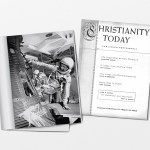
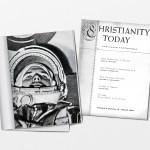
The United States sent its own man into space in 1962. CT published a 5,000-word article, “John H. Glenn: An Astronaut and His Faith.” 

When the Friendship 7 space capsule landed with a splash and a sizzle and Lieutenant Colonel John H. Glenn, Jr., clambered out, American Christians had special reason to take heart. Not only had their prayers for Glenn been answered, but the nation had a new space hero. And for once at least the hero was not a smart-alecky ham with a long record of marital strife. 

Throughout the world the word had gone out that Glenn and his family are devout Presbyterians and faithful churchgoers. They represent an American Christian home in the best tradition. Theirs is clearly not a head-in-the-sand Christianity, but a very practical faith.

“But are they born again Christians?” some evangelicals were asking. “Have they actually experienced regeneration?” …

The most publicized church in the world in 1962 has been the Little Falls United Presbyterian Church of Arlington, Virginia. Its minister, the Rev. Frank A. Erwin, has played a key supporting role in the Glenn space drama by virtue of the fact that the astronaut and his family have worshipped at Little Falls since 1958. … 

The Glenns exercise their faith in their home as well. During evenings when the father is home, they have family Bible reading together. One of their favorite traditions at Christmas is to bake a birthday cake for Jesus.

Evangelical Press Service quoted a minister friend of the Glenns as saying, “There’s no doubt about it. John is a born-again Christian.”

The minister’s father was said to have been used of the Lord to lead John Glenn’s father to Christ many years ago, “and the conversion of the entire family soon followed.”

Astronaut Glenn, however, is not known to refer to a specific conversion experience, but Erwin warns that this is not to be construed as reason to question his genuine Christian commitment.

While attention was turned skyward, CT also asked about the possible discovery of life on other planets and what that would mean, if anything, for Christian theology. 

Do intelligent beings exist on Venus with her dense clouds and relatively moderate temperatures? Do the “canals” of Mars witness to human engineering as Percival Lowell maintained? And what of the other planetary systems throughout the universe, and of the other island universes, the spiral nebulae, which are scattered across the inconceivable vastness of space? Has man any right to assume that intelligent life exists solely on his “small and insignificant planet”?

… Should other worlds possess other sinful beings—which seems improbable—the fact is hardly disruptive of evangelical theology. To suppose that there are other inhabited worlds, even thousands of them, does not detract in the slightest from the value of the soul in this one. “Man is not less great,” said Scotland’s James Orr, “because he is not alone great. If he is a spiritual being,—if he has a soul of infinite worth, which is the Christian assumption,—that fact is not affected though there were a whole universe of other spiritual beings.” In such circumstances the atonement of our Lord is not less significant because it occurred in this world for the redemption of mankind. The “good news” would be as welcome on Venus or Mars as upon the farthest reaches of the earth.

Back on Earth, humans were grappling with the reality of sin in the US capital. Violent criminals preyed on tourists, and Washington, DC, seemed incapable of stopping them. 

The crime rate in Washington is as ugly as the Nation’s Capital is beautiful. Week-end robberies and other attacks on both visitors and local citizens have become almost commonplace. Major crimes abated somewhat during the first five weeks of 1962, but the number of gunpoint robberies alone more than doubled, totalling 46; and 222 other robberies also stepped up the 1961 tally. Widows, young wives, the aged, business men, diplomatic personnel—none seems exempt or safe from these hoodlums who yoke and attack their victims in private and public buildings or in parking lots. Recently, as its special project of the year, a women’s service group imported nine specially trained dogs to augment the city’s canine police corps. Some area public schools offer judo classes for girls.

Representative Martha W. Griffiths (D.-Mich.), who lost her contact lenses in a purse-snatching in front of her home, rightly pronounced it “disgraceful that a woman cannot walk unmolested in the shadow of the Capitol.” She is a former criminal court judge in Detroit. A Washington attorney told us that for several years he has been reluctant to walk five blocks from his home to Sunday night church service.

Many evangelicals were appalled when the Supreme Court ruled that the First Amendment prohibited school-mandated prayer in public schools, but CT was not:

Evangelical opinions were mixed. … Some were gratified that a blow had been struck at a least-common-denominator type of religion. As the days passed, however, support grew for the view that the position on church-state separation implicit in the Supreme Court action was—as Christianity Today had editorialized (July 20, 1962)—both defensible and commendable. … 

The National Association of Evangelicals issued a 1,295-word statement by its executive committee. The statement noted that Justice Black’s majority opinion “carefully avoided striking down the prayer on the simple grounds that it is a religious activity within a governmental institution. Instead the prayer in question was called unconstitutional because it was written and sanctioned by an official government body … We do not take issue with the point of law on which the majority of the Justices ruled. Indeed if this has served to uphold the constitutional stipulation that church and state must be kept separate we commend the Court for its sensitivities to the dangers involved in even the most minute intrusion upon religious freedom by any agency of the government.” …

The president of the Southern Baptist Convention, Dr. Herschel H. Hobbs, said that “what appeared to me to be a tragedy is now clear to me to be one of the greatest blessings that could come to those of us who believe in the absolute separation of church and state.” … National Association of Free Will Baptists called for a constitutional amendment that would permit voluntary, non-sectarian religious exercises in public schools. … The Baptist General Conference in America deferred action on similar proposals at its annual convention in Muskegon, Michigan.

CT considered another religious division when theologian Karl Barth visited America. The magazine published four separate pieces on the “almost oracular” Barth. 

Barth struck hard from the opening minutes for the autonomy of evangelical theology. Whereas all other theologies start out from man, evangelical theology is unique as a science dealing with the response of faith to the speaking of the God of Abraham, Isaac, and Jacob. Having its origin thus solely in the action of God, evangelical theology must recognize no other rule than that of the Word. Since it consists exclusively of study of the response of faith that is given and evoked by the Word it derives its procedures exclusively from the character of that Word and consequently has no reason for squaring itself with the many systems that start out with man. It is to stand totally aloof to them; its justification and commendation are from God and not from man.

The editors liked some of what they heard from Barth in 1962, but were nonetheless suspicious that his evangelicalism was not exactly evangelicalism as they would want to present it.  

At a luncheon in Washington, Barth made no speech but invited questions. Editor Carl F. H. Henry of Christianity Today, noting that newsmen were present, asked if the saving events of the first century, particularly the bodily resurrection and virgin birth, were of such a nature that newsmen would have been responsible for reporting them as news—that is, whether they were events in the sense that the ordinary man understands the happenings of history.

Barth replied that the bodily resurrection did not convince the soldiers at the tomb, but had significance only for Christ’s disciples. “It takes the living Christ to reveal the living Christ,” he said.

Barth thus shied away from emphasis upon apologetic evidences and refused to defend the facticity of the saving events independently of the prior faith of the observers. 

The biggest religious news of 1962 was the start of the Second Vatican Council, which would eventually lead to sweeping reform in the Roman Catholic Church. CT viewed the Vatican gathering of Catholic leaders with a mix of curiosity and skepticism

What effect its debates, decrees, and declarations will have upon the unresolved tensions of our fear-ridden nuclear age is, at this stage, unpredictable. Though answers will understandably vary, we may ask which of the council’s actions seem most significant, and why. … 

In his opening address at the present council … Pope John XXIII made special mention of the change of posture assumed by the church toward theological errors and those who hold them. “At the outset of Vatican Council II,” he declared, “it is evident as always that the truth of the Lord will remain forever. … The Catholic Church, raising the torch of religious truth by means of this Ecumenical Council, desires to show herself to be the loving mother of all, benign, patient, full of mercy and goodness toward the children separated from her.”

Today, then, men are urged to engage in polite dialogue with their “separated brethren,” for though there are serious doctrinal differences at the root of all ecclesiastical divisions, the theological disagreements are but the tragic result of sixteenth-century mistakes, misunderstanding, and misinformation about the Roman Catholic Church. … 

… Will separated brothers seek to achieve a practical synthesis of their opposing theologies and emerge from their confrontations confessing but one faith and pledged to but one sovereign Head, the Lord Jesus Christ? And can such a practical synthesis of theological viewpoints ever produce what Pope John describes as a “visible unity in truth”?

CT did find some aspects of Catholicism admirable, including a willingness to believe the historic Christian creeds.  

This council, as no other event in modern church history has done, calls us to a new understanding of dogma for the Church. This will become very evident when on October 11 more than 2,000 bishops confess the Nicene Creed, not as a beautiful liturgical formula, a venerable document of the past, but as the confession of the truth which they must defend with their lives and for which they are prepared to shed their blood, as probably a number of them will do. They confess it as the great ecumenical creed which does not belong to the Roman Church only, but which is the common possession of East and West (despite the controversy about the filioque), of Rome and the churches of the Reformation. Why is such a confession impossible at a full assembly of the World Council of Churches? It is worthwhile to ponder this question. 

That fall, the Cold War escalated and came perilously close to a full-scale conflict. The Soviet Union tried to set up nuclear missiles in Cuba. The US responded with a naval blockage and waited with bated breath to see if the Communists would respond with force.

For a few precarious days last month, the world seemingly hung on the nuclear-oriented edge of war. The human race underwent one of its biggest scares.

How did the Christian clergy face the crisis? What did church leaders have to say? What kind of help did they offer? 

… Dr. Eugene Carson Blake complained the church did and said very little.

Declared Blake, stated clerk of the United Presbyterian Church in the U.S.A., in a Reformation Festival of Faith at Binghamton, New York:

“We’v’ve been worried about the possibility of ending all cultures, the end of the world. … But has the church said anything?

“Not very much. Not very much.”

CT was dismayed by the apparent growth of a pacifist movement. While the magazine rejected allegations that Christian pacifists were secretly Communists, editors nonetheless felt they were playing into Soviet hands. 

Sometimes the churches and the Communists seem to be saying much the same thing. The disturbing fact, however, is how Communist strategists fit the peace program of the churches into their own program of class hatred and world revolution. When peace-literature, including occasional essays in church and Sunday school publications, takes the same line as is found simultaneously in Communist organs, then our distress must surely deepen. Communist sympathizers often manipulate U.S. public opinion on disarmament and peace and war into propaganda serviceable to the Soviet leaders, men whose temporary goals coincide at points with the announced goals of American pacifists.

CT published a Connecticut Senator’s strong warning against “illusions” of peaceful coexistence with Communism and his call for the liberation of Cuba—and the world.

I believe that Cuba is not only a place where we can seize the initiative and strike an effective blow for freedom; I believe that the security of our nation and of the hemisphere make it essential that we embark upon this initiative without delay and without equivocation. I believe that freedom can be restored to the Cuban people if we are prepared to give our unstinting support to the Cuban forces for liberation, in Cuba and abroad, and if we are prepared to invoke the Monroe Doctrine to proclaim a partial blockade directed against the shipment of Soviet military equipment and personnel to Cuba.

And if we act successfully in Cuba, it will have an impact that goes far beyond the confines of our hemisphere. I think it no exaggeration to say that the restoration of freedom to the Cuban people might very well mark the beginning of the end of the slave empire that the Kremlin has built up in Europe and in Asia.

Books
Excerpt

You Know Them As Fantasy Writers. They Were Soldiers Too. 

An excerpt from ‘The War for Middle-Earth: J.R.R. Tolkien and C.S. Lewis Confront the Gathering Storm, 1933–1945.’

The book cover on an orange background.
Christianity Today November 28, 2025
Illustration by Christianity Today / Source Images: Getty, Thomas Nelson

Halfway through the Great War, on November 30, 1916, a small group of European leaders managed to attend the funeral of Franz Joseph, ruler over the Austro-Hungarian Empire. In a ceremony scripted by the emperor before his death, the grand cortege carrying his coffin halted outside the Capuchin monastery in Vienna, where all the Hapsburg emperors were laid to rest.

The herald, speaking on behalf of the dead emperor, knocked on the monastery door.

“Who is knocking?” shouted the abbot inside.

“I am Franz Joseph, emperor of Austria, king of Hungary.”

“I don’t know you.”

Again the herald shouted: “I am Franz Joseph, emperor of Austria, king of Hungary, Bohemia, Galicia, Dalmatia, Grand Duke of Transylvania, Duke of—”

“We still don’t know who you are,” interrupted the abbot.

At this moment, the herald fell on his knees and in front of all assembled declared, “I am Franz Joseph, a poor sinner, humbly begging God’s mercy.”

“Enter then,” the abbot said. And the gates opened.

The funeral symbolized an outlook already in an advanced stage of decay by the early 20th century. Settled beliefs about the religious dimension of human life were becoming unsettled. Assumptions about good, evil, and morality seemed to have vanished into the killing fields of the 1914–18 war. By the end of the conflict, the emotional and spiritual lives of millions of ordinary Europeans were caught up in a no man’s land of doubt and disillusionment.

Two of the most influential writers of the 20th century, J. R. R. Tolkien and C. S. Lewis, were soldiers in the Great War. They fought in the trenches in France, in what one contemporary called “the long grave already dug.” They emerged from the mechanized slaughter of that conflict physically intact, but just barely.

No man could pass through the fires of the Somme and Arras and remain unchanged. For Tolkien, his war experience left an enduring sadness. Yet he also found that his imaginative cast of mind, his early taste for fantasy, was “quickened to full life by war.” For Lewis, the conflict deepened his youthful atheism—the growing conviction that if God existed, he was a sadist. Paradoxically, the war years also launched Lewis on a spiritual quest, a desire for “Joy” which ultimately led him on a remarkable journey of faith.

The lives of these two men intersected as they were launching their academic careers at Oxford University. They soon formed a bond that, given the reach and influence of their novels, must rank as one of the most consequential friendships of modern times.

There was nothing inevitable about it. Tolkien was a devout Catholic, Lewis an Ulster Protestant and lapsed Anglican. At their first English faculty meeting, they circled each other like tigers in the wild. Yet they soon discovered that they loved many of the same things: ancient myths, epic poetry, and medieval stories of honor, chivalry, and sacrifice.

The horror of the First World War had instigated a cultural backlash, setting loose forces that tore at the moral and spiritual foundations of Western civilization. Both men were determined to fight back. They formed the nucleus of a group of like-minded writers, all resolved to establish a beachhead of resistance amid the raging storm of ideas.

But barely 20 years after surviving what was the most devastating conflict in history, Tolkien and Lewis would watch in anguish as new forces of aggression gathered and dominated Europe’s geopolitical landscape. The onset of the Second World War utterly transformed not only their lives but also their literary imaginations. Their most beloved works—including The Hobbit, The Lord of the Rings, The Screwtape Letters, Mere Christianity, and The Chronicles of Narnia—were conceived in the shadow of this conflict.

“Talent alone cannot make a writer,” observed Ralph Waldo Emerson. “There must be a man behind the book.” Behind the extraordinary works of Tolkien and Lewis stood a cloud of witnesses: individuals whose contributions to the literary canon of Western civilization provided inspiration for their epic novels. Both authors instinctively looked to this inheritance and were nourished by it in wartime.

As a result, they acquired something that our modern era has mostly abandoned: perspective. Rooted in the great books of the Western tradition, they knew where to look for wisdom, virtue, courage, and faith. Intimate knowledge of the past braced them for the crisis years of 1933 to 1945. In this, they reinforced each other’s best instincts. “My entire philosophy of history,” Lewis once told Tolkien, “hangs upon a single sentence of your own.”

Could an entire philosophy of history be summed up in a single sentence? Which one? Lewis is citing a passage from The Lord of the Rings, in which Gandalf explains to Frodo Baggins something of the ancient struggle for Middle-earth. “There was sorrow then, too,” the wizard says, “and gathering dark, but great valor, and great deeds that were not wholly vain.”

The lives of Tolkien and Lewis were already embedded in this story when another disastrous war unleashed upon the earth a storm of human misery. “Middle-earth, I suspect, looks so engagingly familiar to us, and speaks to us so eloquently,” writes biographer John Garth, “because it was born with the modern world and marked by the same terrible birth pangs.” We cannot fully appreciate the achievements of these two remarkable authors until we understand their historical context and the deep awareness it gave them of life’s sorrows.

Yet suffering is only part of their story, held in check by something stronger: gratitude. The Roman statesman Marcus Tullius Cicero called this quality “not only the greatest of virtues, but the parent of all the others.” Like no other authors of their age, Tolkien and Lewis used their imagination to reclaim—for their generation and ours—those deeds of valor and love that have always kept a lamp burning even in the deepest darkness.

Joseph Loconte is an author, historian, and filmmaker. He serves as Director of The Rivendell Center in New York City.

Culture

May Cause a Spontaneous Outburst of Festive Joy

8 new Christmas albums for holiday parties, praise, and playlists.

Several Christmas album covers.
Christianity Today November 28, 2025
Illustration by Christianity Today

It’s time—time to banish the KPop Demon Hunters soundtrack from my house with an updated playlist of Christmas music. 

Each year, as I start sifting through new Christmas releases, I start to worry—What if I can’t find enough? What if there’s nothing all that interesting?—but that foreboding feeling quickly melts away. So many musicians are still writing new Christmas songs and rearranging old ones. 

Yet this was the first year I’ve had to navigate an alarming amount of AI-generated Christmas music. AI-generated Christian artist Solomon Ray is at the top of the iTunes chart with a new Christmas album, and Amazon Music’s list of forthcoming holiday releases is at least half AI music. 

Maybe that’s why I gravitated toward albums that feel human. I found myself captivated by Andrew Osenga’s warm, textured voice, Sarah Willis’s experimental classical–Latin jazz fusion, Victory Boyd’s understated arrangements of carols, and Rend Collective’s trademark combination of folk and unironic enthusiasm.

I’ve heard so many versions of “Silent Night” and “Feliz Navidad,” but musicians are interpreters who can always find something new to say in a song. I think I have a new appreciation for that gift this year. 

Christmas Hymns, Victory 

Detroit-raised singer and songwriter Victory Boyd has a voice that will immediately pull you out of the holiday music lull. She possesses singular warmth and interpretive sensibility; she is a magnetic vocalist, sometimes compared to Tracy Chapman and Nina Simone. 

On Christmas Hymns, Boyd brings her R & B, soul, and jazz fusion to ten familiar songs, starting with a sparse, tender arrangement of “The First Noel” that showcases her expansive range. Listeners might expect that gentle, quiet energy to crescendo throughout the album, but it doesn’t. Boyd chooses to offer an album of hymns on voice and guitar, each one slow and contemplative, inviting attention to the well-worn lyrics and the quality of her voice. 

The final track, “O Come Let Us Adore Him,” feels like an earnest invitation to rest and worship and adore; Boyd softly closes the album with a greeting, “Merry Christmas.” 

It’s Almost Christmas Collection, Praytell (Jon and Valeria Guerra) 

Jon Guerra, a cerebral singer-songwriter whose 2023 album Ordinary Ways received critical acclaim, performs as the duo Praytell with his wife, Valerie. The Guerras recorded It’s Almost Christmas ten years ago, but this new collection isn’t a glorified rerelease. The updated version has twice the number of tracks, adding new selections such as “Wonderful Christmastime,” “It Came Upon a Midnight Clear,” and “Silent Night.” 

The string orchestrations on the album shimmer; Valerie Guerra is a violinist, and the Guerras’ knack for arranging shows up in both the lush orchestral underlays and the deft use of solo string lines. The 24 tracks on the album offer spirited renditions of “Rockin’ Around the Christmas Tree” and “Frosty the Snowman” alongside devotional songs like “Lord Remind Me,” a call to reflect on the Incarnation as a source of hope: 

When I hear the news and hear another war has begun 
And I wonder if God’s on the side of either one
I hear bullet, nail, or handcuff, he bore all of them 
And in the light my heart’s as dark as anyone’s 
Lord, remind me 

She Composed: The Holidays, Chloe Flower 

Chloe Flower might be the only classical musician who can say that she has collaborated with Celine Dion, Lil Baby, Meek Mill, 2 Chainz, Nas, and Cardi B. Some call her the “Millennial Liberace”—she’s glamorous, virtuosic, and dramatic, and she’s long had an interest in elevating the work of female composers. 

Her new album is a collection of arrangements of winter and holiday works by female composers, who so often get overlooked in the world of classical music. “I’ve heard so many versions of ‘Sleigh Ride’ and [George Frideric] Handel’s ‘Messiah, HWV 56,’” Flowers said in an interview earlier this month. “But there’s actually so many women-composed holiday music out there that haven’t been given the opportunity to be performed.” 

If you’re ready for some instrumental holiday music beyond Handel’s Messiah and Tchaikovsky’s Nutcracker Suite, Flower’s new album may be a good addition to your seasonal playlist. “Dance of the Caribou” is a cinematic piece for piano and orchestra, with sonic sparkle added by prominent sleigh bells. The album features two versions of “Snow Song” by Florence Price, the first African American woman to have her work performed by a major American orchestra. 

Christmas Hymns, Andrew Osenga 

Andrew Osenga, former member of The Normals and Caedmon’s Call, has a gift for making simplicity sound lush. The selections on Christmas Hymns are modestly arranged for guitar, occasional piano, and voices, but the layers of each sound and their treatment fit together to create something that enfolds the listener. 

Osenga whispers more than he shouts; “O Holy Night” is barely sung. I found myself thinking of the winter nights I’ve murmured that song to a baby or drowsy toddler in hushed tones.  

(I’m aware that there are two albums on this list titled Christmas Hymns, but I can promise that listening to both won’t feel redundant. They are both meditative and decidedly non-hype in flavor. But this year, I welcome the invitation to slowness, meditation, and whispering hope.)

A Very Laufey Holiday 2025, Laufey 

Icelandic singer and songwriter Laufey (Laufey Lín Bing Jónsdóttir) has garnered acclaim for her eclectic jazz-classical-pop music, winning Best Traditional Pop Vocal Album at the 2024 Grammy Awards. Her voice is perfectly suited to an album of Christmas jazz and pop standards, so if you’re looking for something holiday-party-ready, this is for you. 

Laufey’s smooth vocal delivery shines on the first tracks, “Santa Claus Is Comin’ to Town” and “Santa Baby.” Her gift for vocal and instrumental arranging is apparent throughout the album, especially on tracks like “Christmas Dreaming,” which features close vocal harmonies and string interludes. It’s a little schmaltzy, but it’s easy to forgive because, first of all, these are Christmas standards, and second, Laufey has made it her mission to reinvigorate interest in classical music and jazz among those who might otherwise write off the genres as relics. 

Christmas in Belfast, Rend Collective 

Since 2012, Northern Irish group Rend Collective has been releasing worshipful songs with folk and Celtic inflections. Fans flock to their concerts because of the group’s infectious enthusiasm and joy; they’re a Christian group that doesn’t take itself too seriously. 

The playfulness (and dare I say, fearless cheesiness) of the song “Christmas in Belfast” exemplifies the lightheartedness that Rend Collective has become known for. Thirty years ago, Christian bands would have been advised to avoid singing about celebrating in pubs and throwing back pints, but here, Rend Collective gives us a Christmas drinking tune. And why not? 

There’s also a driving instrumental arrangement of “Carol of the Bells” and a stomp-and-holler folk rendition of “Feliz Navidad.” 

The final track’s title is “A Spontaneous Outburst of Festive Joy,” a guitar-driven, wordless jam session that closes the album with what feels like the beginning of something. A voice calls out transitions between sections of the song, and the instruments linger on suspensions and build toward a climax that never really arrives. It evokes the kind of hope we feel every Christmas as we celebrate an arrival in the midst of our already and not yet. 

Cuban Christmas, Sarah Willis and Sarahbanda 

Sarah Willis is a French horn player with the Berlin Philharmonic. This album is a compilation of original Latin jazz arrangements. If you’re wondering how those fit together, I don’t blame you. In 2020, Willis released the first installment of the three-album Mozart y Mambo project, which showcased arrangements of Mozart’s works fused with Cuban dance rhythms. Since then, Willis and her “Sarahbanda” have been making music that combines classical orchestration with Afro-Cuban style. 

Cuban Christmas is a vibrant collection of festive renditions of holiday pop standards (“The Christmas Song,” “White Christmas,” “Feliz Navidad”) and classical works like selections from Tchaikovsky’s Nutcracker Suite and the “Allegro” from Bach’s Brandenburg Concerto No. 3. 

The album showcases Afro-Cuban rhythm and grooves; listeners will hear mambo, salsa, rumba, and so on underlying and reframing recognizable tunes. 

It’s an album that you might put on for a party then find yourself tuning into again every once in a while—“Wait, the ‘Dance of the Sugar Plum Fairy” doesn’t usually have a groove.” 

The Advent Sessions, Caroline Cobb 

Singer and songwriter Caroline Cobb’s live Advent album is the perfect accompaniment for the dark winter days leading up to Christmas Eve. It’s restrained and lyrically rich, showcasing the versatility of Cobb’s voice and her ability to bring power, sensitivity, grit, and lightness. 

The album opens with “We Wait for You,” a mid-tempo ballad full of poetic images of a broken, expectant world: 

A broken mirror, painted black 
There is no light reflected back 
Thorns grow up where there was green 
All sorrow, shame and broken things
Paradise has barred its doors 
It’s guarded by the flaming swords 
We can’t go back, we can’t go back

“Pave Every Road (Isaiah)” is an upbeat, blues-inflected folk-rock track with a simple, repeated refrain: “I see the sun rising.”

The album closes with “The Year of His Favor (Isaiah 61),” a simple and reflective meditation on a prophetic text, with a triumphant bridge that invites the listener to pause on this hopeful vision of justice and the coming kingdom: 

The broken dance, the blind will see
The sick are healed, the mute will sing
The dead alive, the sinner free
The kingdom’s here, at last, the King!

Listen to selections from this year’s Christmas releases:

And catch up on some of our previous picks:

addApple PodcastsDown ArrowDown ArrowDown Arrowarrow_left_altLeft ArrowLeft ArrowRight ArrowRight ArrowRight Arrowarrow_up_altUp ArrowUp ArrowAvailable at Amazoncaret-downCloseCloseellipseEmailEmailExpandExpandExternalExternalFacebookfacebook-squarefolderGiftGiftGooglegoogleGoogle KeephamburgerInstagraminstagram-squareLinkLinklinkedin-squareListenListenListenChristianity TodayCT Creative Studio Logologo_orgMegaphoneMenuMenupausePinterestPlayPlayPocketPodcastprintremoveRSSRSSSaveSavesaveSearchSearchsearchSpotifyStitcherTelegramTable of ContentsTable of Contentstwitter-squareWhatsAppXYouTubeYouTube