News

Papua New Guinea Adds the Trinity to Its Constitution

And other news from Christians around the world.

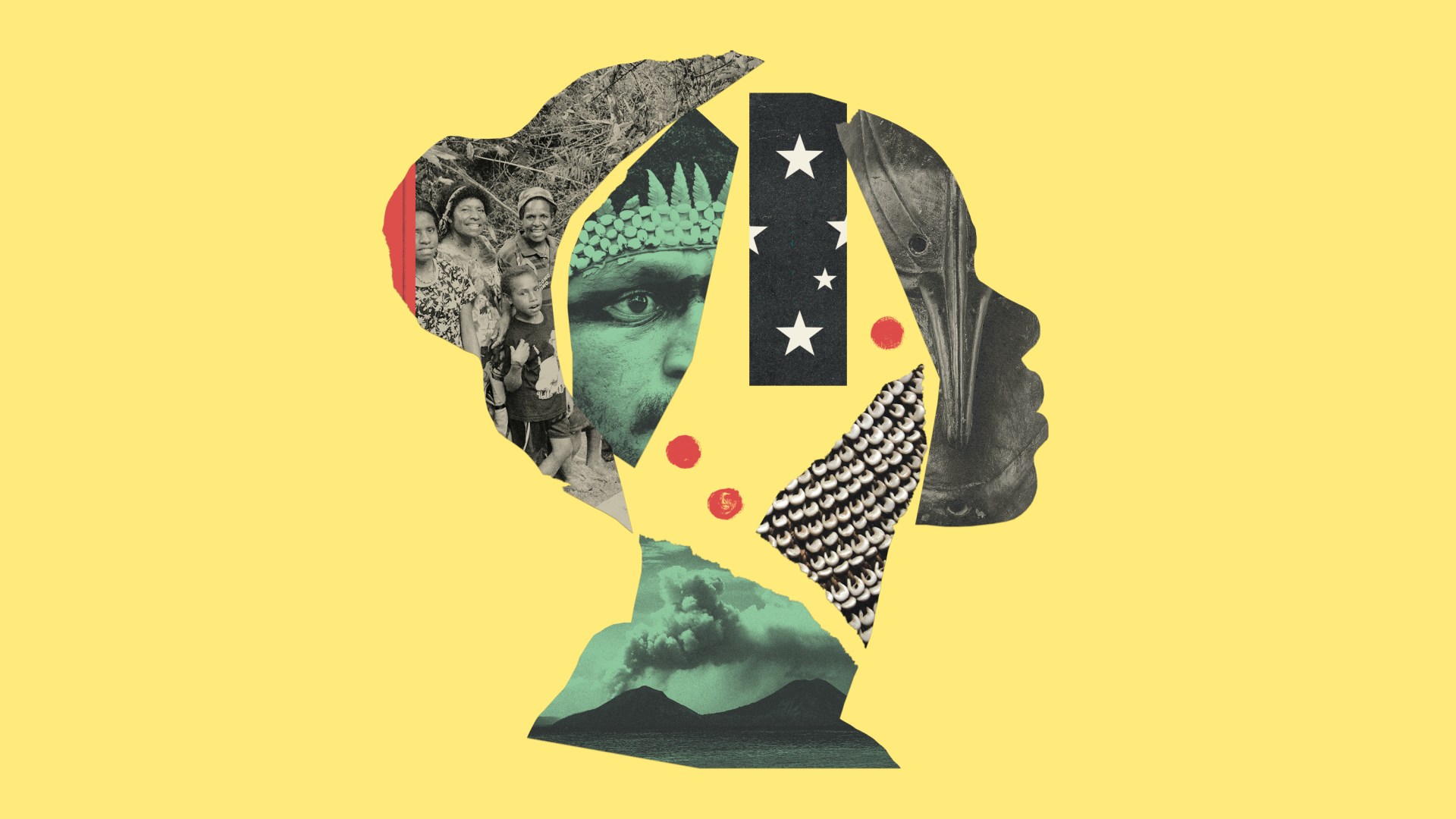
digital collage with elements from Papua New Guinea

Illustration by Blake Cale

Papua New Guinea is officially a Christian country. The preamble to its constitution has been amended to “acknowledge and declare God, the Father; Jesus Christ, the Son; and Holy Spirit, as our Creator and Sustainer of the entire universe and the source of our powers and authorities, delegated to the people and all persons within the geographical jurisdiction of Papua New Guinea.” Prime Minister James Marape, a Seventh-day Adventist, said Christianity is an essential anchor for the country’s national identity. Some Christian leaders there have expressed hope that the change will help bring national harmony and advance efforts to end violence and corruption. Others, such as Catholic bishop Giorgio Licini, warn it will likely lead to disillusionment. The constitutional change has not altered guarantees of religious freedom.

United States: Pastors paid better than roofers, worse than therapists

The US Bureau of Labor Statistics reports that the average hourly wage for American clergy is $30.64. For comparison, chief executives earn an average of $124.47 per hour; human resources managers earn $74.39; funeral home managers, $40.77; marriage
and family therapists, $33.04; roofers, $26.85; short-term substitute teachers, $20.95; and fast-food cooks, $14.31. Individual salaries, of course, vary widely.

United States: Library has visitor No. 2 million

The Billy Graham Library in Charlotte, North Carolina, welcomed its 2 millionth visitor. Gabriel Salstein, a 17-year-old from Florida, wasn’t even born when the museum opened in 2007. But he wanted to see it after reading the evangelist’s autobiography, Just As I Am, and his parents agreed to take him, his brother, and his sisters over their summer break. Graham’s son Franklin, who currently heads the Billy Graham Evangelistic Association, said that when the library was built, he had no idea how many people would want to come and “see how God used a North Carolina farmer’s son.”
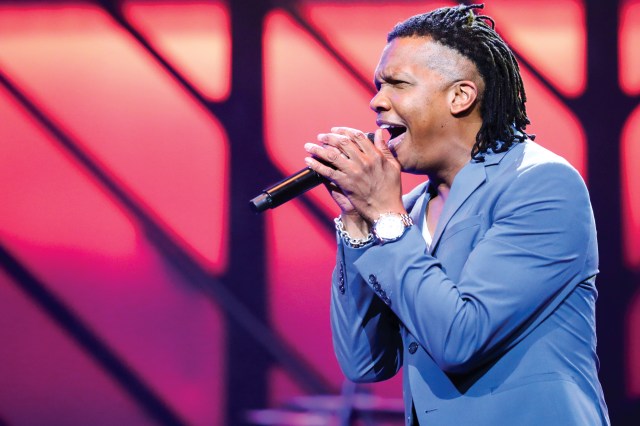
Photo of singer Michael TaitIcon Sportswire / Getty
Michael Tait of Newsboys

United States: Michael Tait confesses abuse

Former Newsboys frontman Michael Tait confessed to abusing drugs and alcohol and touching men “in an unwanted sensual way.” The statement was posted to Instagram days after multiple men came forward with allegations that Tait sexually assaulted them while he toured with the chart-topping Christian band. Tait said he would dispute some of the details but the accusations “are largely true.” Industry insiders say there were widespread rumors about misconduct, but band members and Newsboys owner Wes Campbell deny any knowledge. Capitol Christian Music Group has dropped the Newsboys, and the K-Love radio group has stopped playing its music.

Honduras: Pastors’ murders go unsolved

An association of pastors is accusing public prosecutors of “institutional apathy and negligence” in the face of staggering rates of violent crime. Honduras had an average of five homicides per day in the first six months of 2025. The Association of Pastors of Tegucigalpa and Comayagüela said more than 35 ministers have been killed since 2013 yet no charges have been filed. 

United Kingdom: Historic typos preserved

The Church of England dedicated £260,000 (about $350,000) to preserve hundreds of historic religious artifacts, including a Bible known for its typos. Printer John Baskett’s 1717 edition of Scripture famously labeled the parable of the vineyard in Luke 20 as “The parable of the vinegar.” Some of the money for the historic preservation projects comes from the UK national lottery.

Sweden: Moral standards trump labor law

A Swedish court ruled that a Pentecostal church in the city of Västerås had the right to dismiss its pastor on moral grounds, even if he did not break any laws. Daniel Alm, a prominent evangelical leader in Sweden and former head of Pingst FFS (Pentecostal—Free Congregations in Collaboration), confessed to inappropriate relationships with two women but compared his misconduct to speeding. The church argued that even if sexual harassment could not be proven, the work of a pastor requires moral integrity. This is the first time labor law has been applied to a nonstate church. 

Spain: Friends tell friends about Jesus

The majority of new Christian converts in Spain first heard the gospel from someone they knew and trusted. A Lausanne Movement working group surveyed 170 people from nonevangelical families who have converted in the past 15 years and found few responded to street preaching, public events, or Christian media. Evangelist José Pablo Sánchez, one of the Christian leaders involved in the survey, said the results confirm “relationships have always been and will continue to be the key to evangelism.” Churches are encouraged to create more social spaces where Christians can share the gospel “in a contextualized manner.”

Tanzania: Pastor says government silences critics, gets silenced

Government officials closed an evangelical church in the commercial capital of Dar es Salaam after the pastor, who is also a member of parliament, preached against human rights violations. Josephat Gwajima said in a Sunday sermon at Glory of Christ Church that authorities have wrongly detained and disappeared critics of President Samia Suluhu Hassan and the ruling party, Chama Cha Mapinduzi (Party of the Revolution). Tanzania’s most prominent opposition leader has been charged with treason, and others have been jailed and deported. Gwajima is also a member of the ruling party but has supported those calling for election reform. He reportedly went into hiding after his church was deregistered.

Russia: Global Methodists become more global

Four more regional groups have joined the Global Methodist Church, under the leadership of Moscow-based bishop Eduard Khegay. Half the denomination, which was formed in 2024 out of a split with the United Methodist Church, is now outside the US.

News

Where USAID Funded Evangelical Ministry in Africa

Before Elon Musk slashed America’s humanitarian spending, here’s where some of it went.

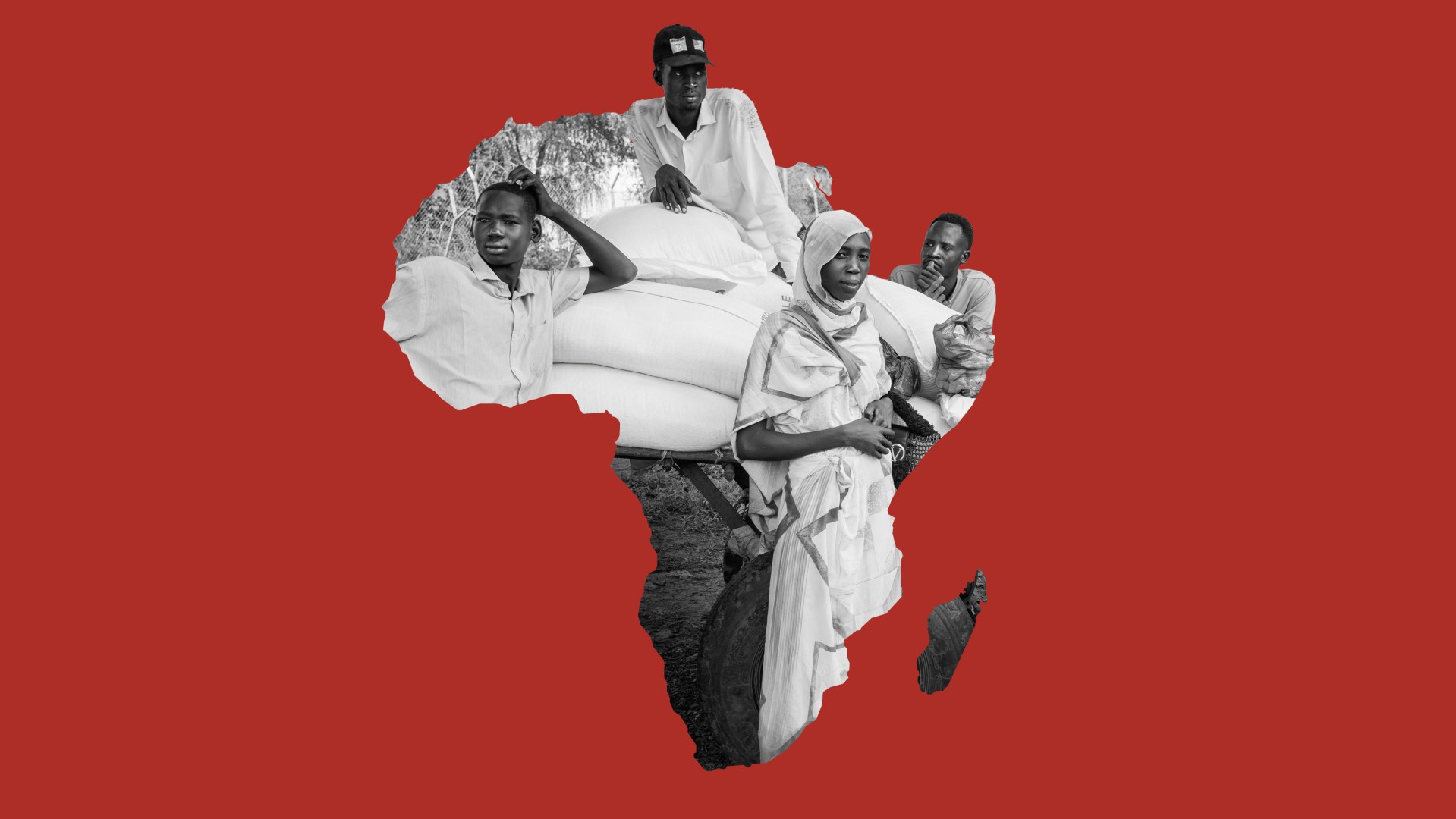
Illustration by Christianity Today / Source Image: Guy Peterson / AFP / Getty

In January, Elon Musk and others working for President Donald Trump’s administration swiftly dismantled the United States Agency for International Development (USAID), the humanitarian arm of American foreign policy. Musk and other Republican officials criticized the roughly $35 billion agency as wasteful and corrupt. Less than 20 percent of USAID programs have survived the purge, and some of those that remain are reported to exist only on paper.

Evangelicals have also questioned and criticized American aid, for example, when money went to promote LGBTQ rights or the distribution of condoms. But at the same time, USAID has underwritten the work of many household-name Christian groups, including World Vision, Samaritan’s Purse, Catholic Relief Services, Operation Blessing, International Justice Mission, Mercy Ships, and Food for the Hungry. If a Christian in America gives to a charity working abroad, chances are the ministry was also supported by federal dollars.

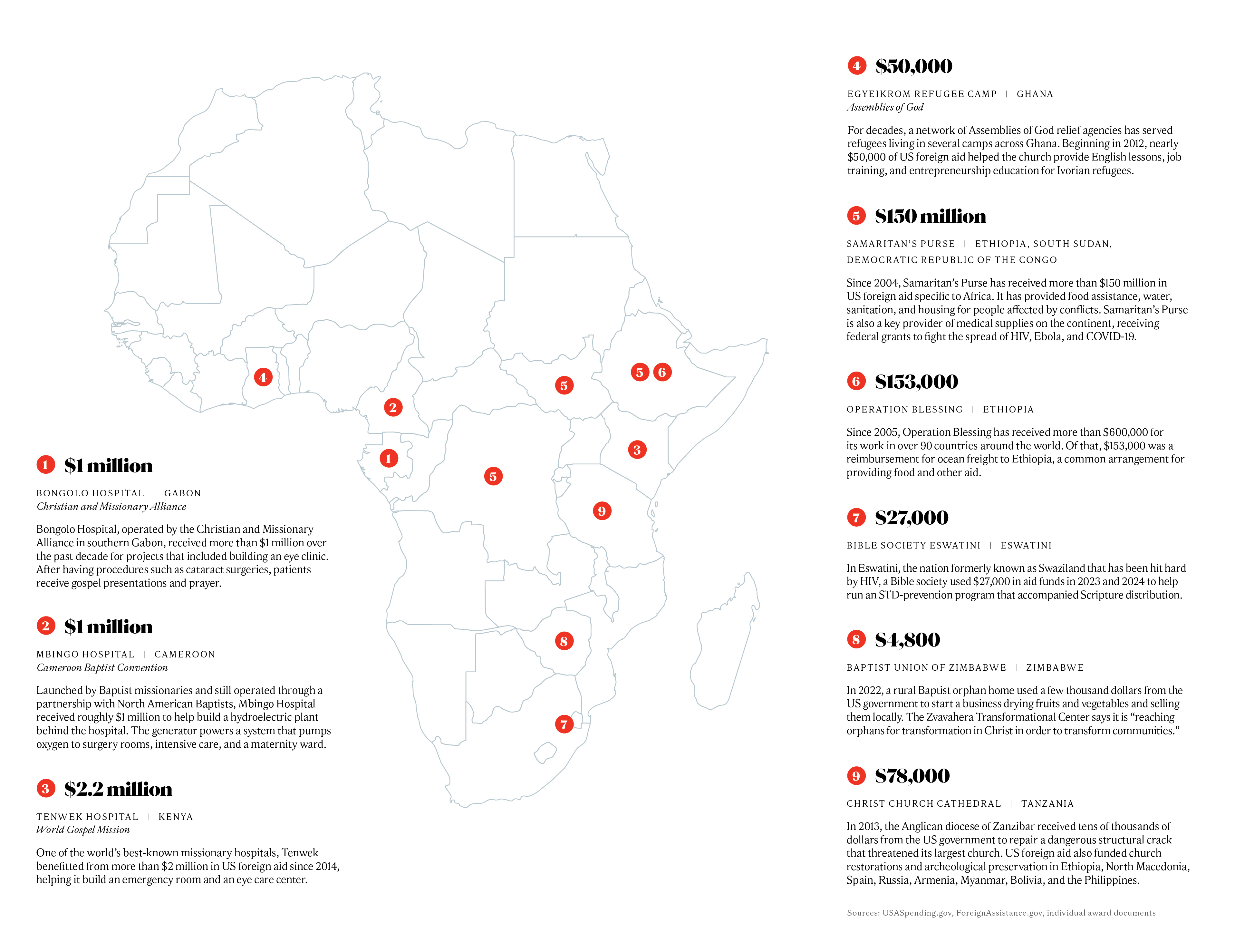
But the foreign aid also goes beyond big names. The grassroots faith-based organizations that formed the foundation of PEPFAR (the US initiative to combat HIV/AIDS around the world), for example, were funded by USAID. CT analyzed government databases to review USAID grants in Africa since 2000. The results offer a sampling of how local church groups, denominations, and evangelistic ministries directly benefitted from the humanitarian spending that Musk, Trump, and their departments have slashed.

Sources: USASpending.gov, ForeignAssistance.gov, individual award documents

Africa Map USAID
Culture

‘Contempt of Beautiful Things’

Caravaggio’s cinematic realism and psychological depth did more than unsettle taste in his own time.

Portrait of Caravaggio as Bacchus

Self-Portrait as Bacchus by Caravaggio

Christianity Today September 3, 2025
Rizzoli Skira / WikiMedia Commons

This article began as a review of Caravaggio 2025, a blockbuster exhibition of the artist’s work that ran earlier this year in Rome. From March to July, the show drew almost half a million visitors from all over the world. Its curators gathered 24 paintings from five countries, presenting an evolutionary arc from Caravaggio’s earliest known works, Self-Portrait as Bacchus (1593–1594) and Boy Peeling Fruit (1592–1593), to his last painting, The Martyrdom of Saint Ursula (1610). Walking into each of the four rooms of the exhibit felt like eavesdropping, witnessing conversations between works that were reunited or meeting for the first time.

There’s lots to analyze about the curators’ decisions. But as I’ve tried to write a straightforward evaluation of the Caravaggio show, I’ve found myself at a loss for words. The pieces I saw have been haunting me since I spent time in their presence over the summer. To quote the late 17th-century French painter and art critic Roger de Piles, “True painting is what attracts us and, as it were, takes us off guard, and it is only through the power of the effect it produces that we cannot help but go up to it, as though it had something to tell us.” Perhaps the question is less “How successful was this exhibition?”and more “What do these paintings have to tell us today?”

It’s hard to imagine how polarizing Caravaggio once was. Today, his name and work are cultural icons, from the design world to television.

But in his time, Caravaggio sparked an iconoclastic rejection of beauty as it was then understood. The art historian Gianni Papi has noted that Caravaggio’s work remains the single-greatest revolution in the history of Western art. His realism infused biblical narratives with the personal, political, and social context of 17th-century Rome.

This realism divided other artists. As one biographer notes, “The painters then in Rome were greatly taken by [Caravaggio’s style]. … The young ones particularly gathered around him, praised him as the unique imitator of nature, and looked on his work as miracles.” Meanwhile, established painters “never stopped attacking Caravaggio and his style.” This biographer takes the side of the old guard, remarking that Caravaggio had “suppressed the dignity of art, … and what followed was contempt for beautiful things, the authority of antiquity and Raphael destroyed.” One of Caravaggio’s rivals similarly quipped that “some people thought that [Caravaggio] had destroyed the art of painting. … He did not have much judgment in selecting the good and avoiding the bad.”

To understand what riled up these Caravaggio commentators, it’s helpful to look at some specific works. The Cardsharps (1596–97) secured the painter his first major patron. Alongside The Fortune Teller (1599), it appeared in the first room of the Rome exhibit. Together, these works departed from the moralizing of Northern European genre painting, where tavern brawls, gamblers, and rogues typically served as warnings against vice. Instead, Caravaggio avoided overt didacticism, endowing each figure with psychological depth and ambiguity, crafting scenes that resist simple lessons and draw viewers into the complexity of human behavior.

The Cardsharps by CaravaggioKimbell Art Museum / Wikimedia Commons
The Cardsharps by Caravaggio

In The Cardsharps, a well-heeled young man is cheated at a card game by two threadbare sharps. The fraying clothes and frenzied expression of the two tricksters highlighted Rome’s cruel socioeconomic realities. Their desperation visually bookending the scion’s cool indifference troubles an easy read; Caravaggio stages a drama that elicits empathy for all its characters. The meticulous rendering of figures and details defamiliarizes stories and characters we thought we knew. 

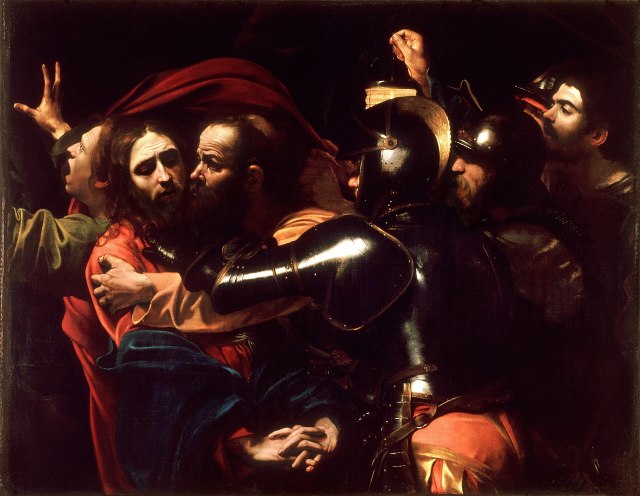
It’s a strategy he would later extend to his biblical narratives, rendering them with an immediacy that collapses the distance between sacred history and contemporary life. In the exhibit’s third room hung The Flagellation of Christ (1607), David with the Head of Goliath (1609–1610), Saint John the Baptist in the Wilderness (1604) and The Taking of Christ (1602), a moderately sized canvas made claustrophobic by the roil of bodies and movements at its center. Judas leans toward Christ to kiss him while three soldiers, clad in immaculately detailed 16th-century armor, reach forward to seize him. A disciple flees toward the left side of the painting, raising his arms and screaming into a darkness rendered thicker than mere night.

Entering from the right side of the canvas is the artist himself, transfixed by the arrest, holding high the source of the painting’s light. The cacophony never subsides, held in suspension by Caravaggio’s life-size framing of the three-quarter figures. Despite being almost half a millennium old, the work continues to transmit the tension and terror of the scene into the body of the onlooker.

Including himself as the torchbearer casts Caravaggio as accomplice and invisible documentarian. Traditionally, when painters of his period included themselves in their scenes, they would lock eyes with the viewer, offering a knowing gaze: “I see you looking at my work.” But, as Michael Fried elaborates in his book The Moment of Caravaggio, Caravaggio’s self-portraits were more sophisticated—in this case forever suspending the artist as witness and seeker, absorbed and involved in the event with the theologically rich implication that he is an accomplice in the betrayal of Christ.

The Taking of Christ by CaravaggioNational Gallery of Ireland / Wikimedia Commons
The Taking of Christ by Caravaggio

Facing this painting, on the other side of the room, a youth holds up an object in a pose similar to the lantern bearer’s—except the object in hand is not a light but Caravaggio’s decapitated head. David with the Head of Goliath is one of Caravaggio’s most famous pieces. Set across from The Taking of Christ, it seems an attempt to make atonement for a murder Caravaggio committed in 1606, forcing him into exile.

In both paintings, the figure of Caravaggio is witnessing a death. In the first painting it is the impending death of Christ; in the second it is his own. Saint John the Baptist in the Wilderness and The Flagellation of Christ accompany these two paintings, making a foursome that seems less like singular masterpieces and more like a montaged meditation on longing and agony.

Caravaggio’s cinematic realism and psychological depth did more than unsettle taste in his own time. They shattered the prevailing logics of beauty and painting. Centuries later, his canvases still refuse to let beauty become a mere ornament to ideology or market trends. His rejection of the merely beautiful was not nihilism but a perspective that included a prophetic turn toward the complexity and mystery of something truer. 

In the weeks since I’ve seen the exhibit, I’ve found myself meditating on the late pope Francis’ remarks on the role of art: “Neither art nor faith can leave things simply as they are: They change, transform, move and convert them. Art can never serve as an anesthetic; it brings peace, yet far from deadening consciences, it keeps them alert.” Caravaggio’s paintings still keep us alert—not just to beauty but to the unvarnished truth that beauty must serve.

Christian Gonzalez Ho is earning his PhD in art history at Stanford University and is the cofounder of Estuaries.

Books
Review

There Are No Goats—or GOATS—in God’s Kingdom

How Christians should understand our cultural fascination with debating the “Greatest of All Time.”

A gold trophy with Jesus inside.
Christianity Today September 3, 2025
Illustration by Elizabeth Kaye / Source Images: Getty, WikiMedia Commons

In the Gospel of Mark, we read of a time when Jesus and his disciples were traveling through Galilee on their way to Capernaum.

Jesus had recently brought three of his disciples with him on a mountain to witness his transfiguration. Afterward, he went about teaching, healing, and performing miracles.

He also listened. When Jesus and his followers arrived at their destination, he asked them, “What were you arguing about on the road?” (9:33).

In the next verse, Mark records that “they kept quiet because on the way they had argued about who was the greatest.” Jesus responded by teaching about life in the kingdom, giving them a different conception of greatness: “Anyone who wants to be first must be the very last, and the servant of all” (v. 35).

Compare that scene with American life today, where people enjoy arguing about the GOAT (greatest of all time) in various endeavors. Among sports fans like me, this is an especially popular activity. What should Christians think about this contrast—between Jesus shutting down and reframing a conversation about greatness and our culture indulging in it as a pastime?

Zev Eleff didn’t write his new book, The Greatest of All Time: A History of an American Obsession, with that particular question in mind. Yet it does provide a helpful starting point to consider why we talk so much about “the greatest” and what we mean when we do.

A historian who specializes in American religion and Jewish studies, Eleff also serves as the president of Gratz College in Pennsylvania. His academic background is apparent in his book, which engages with scholarship on fame, celebrity, and popular culture. At the same time, his writing has a compelling narrative flow. You don’t need to be a scholar to follow along.

Why a book on greatness? To Eleff, conversations about greatness provide a forum for people to “discuss their ‘ideal’ values and make meaning of their personal lives.” By exploring shifting ideas about “the greatest,” Eleff believes, we can see and understand changes in American life and culture.

To make his case, Eleff moves chronologically through modern American history, from the dawn of the 20th century to the present, analyzing selected people and events (plus one cartoon mouse) to consider rival approaches to defining and conceiving of greatness.

He makes an important point early on when he contrasts “greatness” with “fame.” In his telling, the obsession with greatness emerged in response to modern mass media and the rise of celebrity culture. These changes turned far more people into public figures than ever before, leading to a “fame inflation” that devalued the significance of being widely known.

In this environment, people needed a category to identify the most important and influential figures within the ranks of the famous. “Greatness” did the trick.

While Eleff could have done more to engage earlier conceptions of greatness—this was hardly a new concept, after all—he is right to note that modern consumer culture changed the ways people defined being great.

Several other key points stand out in Eleff’s wide-ranging analysis. In his chapter on the “Hall of Fame for Great Americans,” established at New York University in 1900, he highlights the difficulty of building consensus around a shared definition of greatness.

Another chapter, on the trio of Thomas Edison, Henry Ford, and Albert Einstein, looks at a common tendency in American culture: taking someone who has achieved success in one area of life and then trusting that person for expertise or guidance in all areas of life. Eleff quotes G. K. Chesterton’s complaint, made in 1930, that in America, “men and women who have achieved eminence in one field feel themselves fully qualified to be leaders in other unrelated ones.”
In his chapter on the rise and fall (and rise) of Charlie Chaplin, Charles Lindbergh, and Mickey Mouse, Eleff traces the fickleness of greatness, revealing how quickly the public can turn against its heroes. Modern greatness, he shows, rests atop the shifting sands of public opinion.

There’s also a unique pairing of Babe Ruth with Franklin and Eleanor Roosevelt as figures of nostalgic greatness in the 1950s, and then a chapter on countercultural greatness in the 1960s, featuring Muhammad Ali and The Beatles.

Taken as a whole, The Greatest of All Time offers an engaging historical narrative with fascinating vignettes and details. For readers broadly knowledgeable about the contours of American history, this is a fun book to read.

But while Eleff’s analysis has plenty of insight, it sometimes oversimplifies to a frustrating degree. To give one example: Eleff argues that, apart from the 1950s, American conceptions of greatness linked to the idea of change. Being a great American, by this standard, meant being a change maker.

Fair enough. American culture and folklore often tap into a powerful mythology of progress that tends to value change. But Americans also express a countervailing desire for stability amid change, for heroes who represent some ideal notion of the past.

Eleff’s own examples point to this. In his chapter on the Hall of Fame for Great Americans, he briefly discusses the debate over whether to include Confederate general Robert E. Lee. Many Northerners on the voting committee opposed his candidacy, arguing Lee should not be considered a great American. He was a traitor to the country who led a treasonous rebellion.

But white Southerners propped him up as a great man—not because he changed the world for the better but because he symbolized the old order of the region’s slaveholding past. To them, Lee represented honor and dignity, a commitment to their version of traditional values. Ultimately, the Southern perspective won out. Lee received enough votes to put him in the Hall of Fame.

When Eleff argues that American greatness was always associated with change making, he’s zeroing in on one version of greatness, the one most closely associated with the general-interest magazines and newspapers where he finds much of his source material. He would have strengthened his arguments by giving more nuanced attention to the alternative ways that Americans—shaped by region, race, ethnicity, religion, and more—thought about and envisioned greatness.

Eleff closes his book with reflections on the state of “greatness” discourse today. He cites basketball star Michael Jordan as “the last greatest of all time,” lamenting that the concept, like fame in the early 20th century, has lost its value. He argues that we’re witnessing a “run on ‘greatness,’” the byproduct of a fragmented, polarized culture with a glut of people claiming to be the greatest in this or that pursuit.

Eleff has a point that we throw around the GOAT label far too easily. Yet I do not think the concept has lost its value. In fact, I think the popularity of “greatness” conversations is one reason Christians should be invested and involved in lending them added depth.

There are three contributions I think we’re well positioned to make.

First, if we return to the way Jesus talked about greatness, we can reject any ambition to strive for higher status over another person. When Jesus’ disciples debated who was the greatest among them, they were arguing over who would claim the positions of greatest prominence and status in his kingdom.

His rebuke and redefinition should ring in our ears today. If greatness is about “lording over others,” if it involves assigning greater worth or value to one person over another by comparing accomplishments, then we’ve embraced a worldly perspective. And this is true even if we’re calling our pursuit of higher status “servant leadership.”

Second, we can draw from the classical virtue of magnanimity, or “greatness of soul,” which Christians have adapted and revised over the centuries.

Philosopher Sabrina Little has written helpfully about this virtue. Understood in a Christian framework, magnanimity provides an aspirational vision that calls us to step out in courage, to face challenges, and to grow into our gifts and talents while honoring God and other people. As Little writes, “We can strive for greatness in ways that do not devalue others.”

Finally, while recognizing that greatness should encompass our character as well as our craft, we can continue celebrating great human achievements, particularly in creative cultural activities like music, sports, movies, architecture, literature, and more.

This is especially important in our age of AI generation. Rightly understood, celebrating human creativity is an opportunity for celebrating the God who created us. It invites us to consider our embodiment and to reflect on what it means to be made in God’s image.

It also encourages us to remember our dependence on one another. To say that basketball great Stephen Curry is “the greatest shooter of all time” is to place him in conversation with a community that stretches across time. It means recognizing that Curry’s greatness depends on the players who came before him and that he, in turn, will shape those who come after, including whoever emerges as the next “greatest.”

In this way, conversations about greatness provide opportunities for considering not only our possibilities but also our limitations as time-bound creatures.

Eleff’s book is very much aware of these limits. As we’ve seen, he emphasizes how conceptions of greatness are malleable, shaped by the social and cultural conditions of particular eras.

At the same time, we should remember that people themselves shape the cultural and social conditions around them. We are not resigned to passively accept or reflexively reject the versions of greatness present today; we can articulate and promote a constructive vision of our own.

While The Greatest of All Time is not designed to offer that vision, it does provide an intriguing narrative that can help us think more deeply about the conceptions of greatness our culture embraces—and the better versions we might promote in our own communities.

Paul Putz is director of the Faith & Sports Institute at Baylor University’s Truett Seminary and author of The Spirit of the Game: American Christianity and Big-Time Sports.

News

Nigerian Anglicans Push Back Against Politicians in the Pulpit

But it’s hard to say no to donations.

An African pastor at the pulpit
Christianity Today September 3, 2025
Mart Production / Pexels

Izuchukwu Ezidimma attends regular Anglican church services in Nigeria. He has never gone to a political rally. But he has experienced a church service that was both. 

Ezidimma recalls the vicar inviting Onyeka Ibezim, deputy governor of the southeastern state of Anambra, to the pulpit. Ibezim greeted the congregation, promoted the governor and his political party, and then donated millions of naira to the church. (One million naira is about $650 USD.)

“This happens often. But I never made any efforts to speak up. I kept my disappointments private,” Ezidimma said. But the head of the Anglican church in Nigeria doesn’t want that to happen anymore.

On July 6, Federal Capital Territory (FCT) minister Nyesom Wike organized a thanksgiving service at Saint James Anglican Church in Asokoro, Abuja, during which he solicited support for Nigerian president Bola Tinubu and denounced their political opposition. The church’s vicar, Ben Idume, described Wike as a child of destiny and an Anglican man shining the light of God. Wike responded he was a member of all churches and all mosques and may worship God in any of them.

“The incident emphasized that the matter was important for the church [bishops] to sort out,” said Korede Akintunde, communications director of the Anglican church in Nigeria. “People can’t come to church—either as politicians or government officials—and turn the church to a campaign ground.”

On July 11, the Church of Nigeria (Anglican Communion) published a guideline prohibiting politicians from delivering political speeches in their churches. The primate, Henry Ndukuba, signed the statement days after another political church service in FCT. According to Ezidimma, cutting political ties jeopardizes the church’s funds, power, and societal influence: “It took courage for the primate to come up with this. People are not conscious that this should not be.”

In Nigeria, roughly split 50-50 between Christians and Muslims, religious identity can influence electoral choices and political alliances. Politicians leverage religious sentiments to mobilize support and obtain clergy endorsements.

Nigeria’s political parties often seek to maintain unity by nominating candidates from both religions for high national offices—a Muslim and a Christian as president and vice president. But in 2023, the ruling All Progressive Congress opted for two Muslim candidates. This prompted popular pastors to endorse the Christian candidate, Peter Obi. Some feared an Islamization agenda.

Pastor Adeola Ogundele of Sovereign Grace Community Church Abuja isn’t worried, though: He argues the parties are made up of people, not ideologies, and voting should be a matter of conscience.

“The church is not called by God to listen to the world. The church is called by God to speak to the world,” Ogundele said. “Unfortunately, what you have in our nation, Nigeria, is a reversal of these roles. The interests of the world are now the interests of the church.”

He also spoke of guarding the pulpit from financial enticements: “The church must not give its platform to politicians whose simple interest is to advertise and promote their own interest.”

The Nigerian Electoral Act 2022 criminalizes vote buying or undue influence, including donations to religious institutions intended to sway voters. But intent is difficult to prove.

In February, the Rivers State governor, Siminalayi Fubara, announced a donation of 500 million naira ($326,000 USD) during a service at St. Cyprian’s Anglican Church. Fubara said he wanted to donate to help fulfill a portion of the church’s “visionary and commendable activities.”

“Money is a huge factor. As long as these political actors will bring money, it will be very easy to yield the church’s platform for campaigns,” Ezidimma said.

Governor Charles Soludo of Anambra State urged Anglican clerics to question the source of money donated to their churches and to combat an excessive pursuit of wealth in the Nigerian society, especially among youth: “When the church turns a blind eye to the source of donations, it loses its moral authority and becomes part of the problem.”

In 2024, former vice president Yemi Osinbajo, who is also a pastor at the Redeemed Christian Church of God, spoke similarly.

Some pastors have begun rejecting these donations. In June, the senior pastor of the Pentecostal church Dunamis International Gospel Centre, Paul Enenche, rejected a 30 million naira donation ($20,000 USD) from the Kebbi State governor, Nasir Idris, during a church outreach crusade. Enenche refused the money, saying, “Government money should be used for government projects, and government things should be used for government things, and church money should be used for church things, not mixed together.”

Pastor Judah Olorunmaiye of Rhema Chapel International Ogbomoso, also Pentecostal, commended Enenche’s decision and decried the church’s excessive focus on materialism. Olorunmaiye told CT the Nigerian church must reject money from “questionable sources” and stop treating money as its primary asset: “You cannot use Satan’s weapons to build God’s kingdom.”

The Anglican church’s new measures permit only licensed clergy to speak from the pulpit. Politicians may address the congregation only from a designated platform after receiving guidance about church protocols. “Guests must be clearly informed that the Church is not a platform for promoting partisan views or political propaganda,” the denomination’s statement said. It also prohibits church officials from eulogizing or exalting “any guest in a manner that might bring the Church into disrepute.”

“The church is not excluded from engaging with the government, but we won’t endorse candidates,” said Princewill Ireoba, a director in the denomination. He encourages Christians to examine the character and track records of candidates: “When the right people are in governance, it benefits everyone. But the church’s role is to guide, not to dictate.”

News

Study: Gen Z Now Leads in Church Attendance

But American churchgoers average only two out of every five Sundays.

Young people praying worshiping Elizabethton TN
Christianity Today September 3, 2025
Roger Bailey / Believers Church

Churchgoers between the ages of 18 and 28 attend church more frequently than their older siblings, parents, or grandparents. A new study, part of the State of the Church research initiative from Barna Group and Gloo, found a post-pandemic surge among Gen Z churchgoers over the age of 18.

Today, when people born between 1997 and 2007 go to church, they attend, on average, about 23 services per year. Churchgoing Gen Xers, in contrast, make it to about 19 out of 52 Sundays, while Boomer and Elder churchgoers average just under 17, Barna found. 

Millennial churchgoers, born between 1981 and 1996, attend 22 services annually, up from a previous high of 19 in 2012.

The Barna study, released today, calls this a “historic” and “generational reversal.” 

“The fact that young people are showing up more frequently than before is not a typical trend,” Daniel Copeland, Barna’s vice president of research, said in a statement. “This data represents good news for church leaders and adds to the picture that spiritual renewal is shaping Gen Z and Millennials today.”

Barna’s research, based on 5,580 online surveys done between January and July, does not look at the overall decline of the number of people going to church in America, however. A recent Pew Research Center study found that just 45 percent of adults under 30 attend religious services—a number that seems to have dropped nearly 20 points in 10 years, although comparisons are inexact. 

It is possible that the frequency of Gen Z church attendance has increased in the last five years because less-committed, less-regular churchgoers have simply stopped going. Perhaps the ones who still go, are more likely to go more.

Older generations, meanwhile, are going to church less frequently even when they still attend, Barna’s data shows.

“In our collective memory, we have this memory that people attended church every week—twice on Sundays, Sunday school, and midweek services. The data is telling us there has been a shift,” Barna CEO David Kinnaman told CT. “The data helps us recognize the elephant in the room: When people are in church, they’re going about every two out of every five weekends.”

Barna’s study found that churchgoers born before 1946 are attending, on average, 11 fewer services in 2025 than they did in 2000. Churchgoers born between 1946 and ’64 are at church 7 fewer Sundays every year. That’s between one and a half and three months of skipping church.

And large numbers of older people have stopped going altogether. Although Pew says direct comparisons are problematic because polling has shifted from phone calls to internet surveys, a 2007 study showed that about 22 percent of people over the age of 65 seldom or never went to church. In the most recent survey, that number was up to 40 percent. 

If that’s right, then 18 out of every 100 senior citizens quit participating in religious services sometime in the last two decades.

“One of the larger trends in social research on religion that we see is a winnowing the wheat from the chaff as nonpracticing Christians are tiptoeing toward identifying as ‘nones,’” Kinnaman said. “That’s one reason it’s so remarkable to see younger generations saying, ‘I don’t think we’ve given religious communities enough of a chance.’”

When COVID-19 restrictions lifted, many churchgoers seemed to reevaluate what they wanted to do with their Sunday mornings. 

Barna found that Gen X attendance returned to pre-pandemic levels—and increased slightly from start of the century. Today, Gen X churchgoers average 1.6 services per month.

Millennials’ church attendance has also gone up, according to Barna. Today, churchgoers between the ages of 29 and 44 average 1.6 services per month—going to church about six or seven more Sundays per year than they did in 2000.

Barna researchers think this data will confirm the intuition many pastors have about shifting demographics, with younger people coming more often, and average attendance rates, how often people show up. The study notes that many pastors feel frustrated by irregular attendance and find it hard to build momentum in their congregations. 

At the same time, the church-tech company Gloo wants Christian leaders to see new possibilities.

“These shifts in church attendance open the door for leaders to innovate,” Gloo president Brad Hill said. “Churches that prioritize relational touchpoints and digital engagement—through text, social media and other online tools—can better reach younger generations where they already are.”

Kinnaman hopes the data will help church leaders be proactive and encourage them to focus on how they can best meet people’s spiritual needs.

“The fabric of congregational life is changing,” he told CT. “We really need to grapple with the learning needs, the content needs, of younger generations and how we’re structuring discipleship and teaching calendars and building communities when people are at church two out of every five Sundays.”

News

The 2025 Christianity Today Compassion Awards

Meet CT’s inaugural class of winners—seven organizations doing good work in the name of Christ.

Photos by Hannah Yoon / Maddie McGarvey

In this series

From 2006 to 2021, I had the joy of supervising another Christian magazine’s annual compassion awards. Reporters and I sought recommendations and made site visits that resulted in profiles of 120 Christian ministries—homeless shelters, medical clinics, prison programs, and much more.

I loved honoring Christians who for years had loved their neighbors without receiving much pay or publicity. We gave groups small financial awards. Some readers gained inspiration to start their own projects or support those already active.

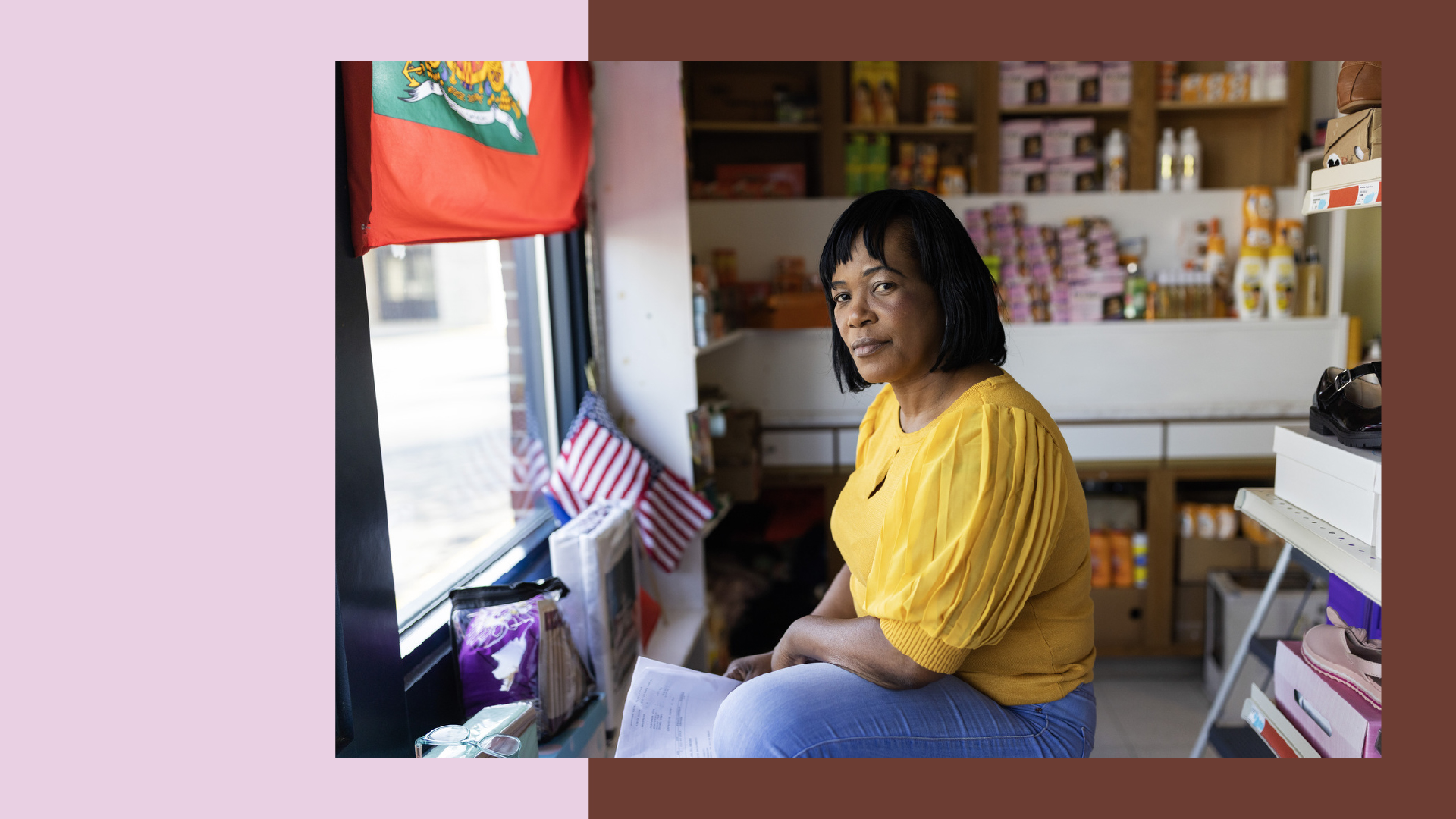
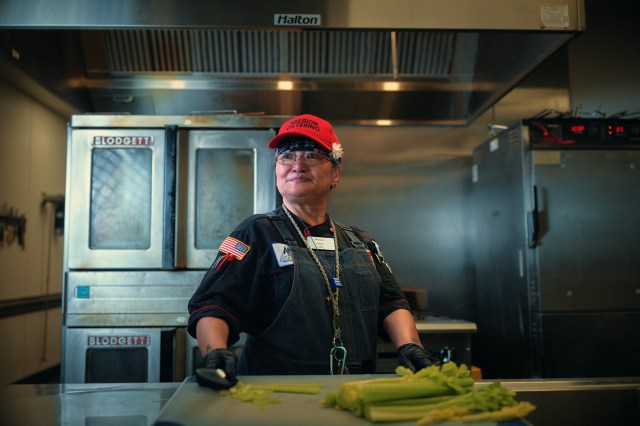
Now, Christianity Today is giving these awards a new home. In the following pages, you’ll read about seven Christ-centered ministries across the US. These groups will receive $2,000 each to continue to serve their neighbors. Given their past performance, I trust they will find ways to multiply the dollars and the impact.

Historian Demetrios Constantelos noted that, nearly two millennia ago, Christian compassion became known for “transcending sex, race, and national boundaries. Thus it was not limited to equals, allies, or relatives, or to citizens and civilized men, as was most often the case in other ancient societies.”

That’s the common denominator for the seven uncommon efforts profiled in the following pages. Four of them focus on a major 2025 pressure point: transcendence of ethnic and national boundaries.

Last year, some politicians falsely accused immigrants in Springfield, Ohio, of eating pet cats. Our first article takes us inside a Springfield church to show us what Haitian immigrants are really doing—in this case, working hard to learn English while their children play in the church gym.

The stories that follow are not PR spin. Some document hardship, like a legal dead end that a client of an immigration advocacy group faced during our journalist’s visit. Others confront cultural problems, like the high attrition rates and distrust that continue to plague a Christian school serving low-income boys. But these stories also highlight hope. One organization that helps refugees displays its Christ-centered mission on a whiteboard—a handwritten reminder to all who enter that Jesus is a refuge for asylum seekers. Another profile highlights the stark contrasts in America, taking us from the stunning glory of the Garden of the Gods to a stunningly wretched street in Colorado Springs. 

The last report focuses on a challenging outreach in nearby Aurora, Colorado. Christians walk the streets, inviting young immigrants to learn about the good news of Christ—while offering all kinds of tangible help to their families.

Our reporters eyeballed ministries and profiled ones that model Christian compassion. The ministries depend on churches, volunteers, and individual donors. They deal with problems that have an undersupply of solutions. They grow bottom-up through community efforts. They move beyond easy answers and tribal affiliations.

Historians may one day wonder whether 2025 was a year of cruelty or compassion. The former rightly gets attention. The stories behind these awards provide reliable evidence of the latter.

Marvin Olasky is the executive editor for news and global at Christianity Today.

News

Rebuilding Broken Walls with The Nehemiah Foundation

After rumors tear apart a community, churches join in serving immigrants.

Photography by Maddie McGarvey

In this series

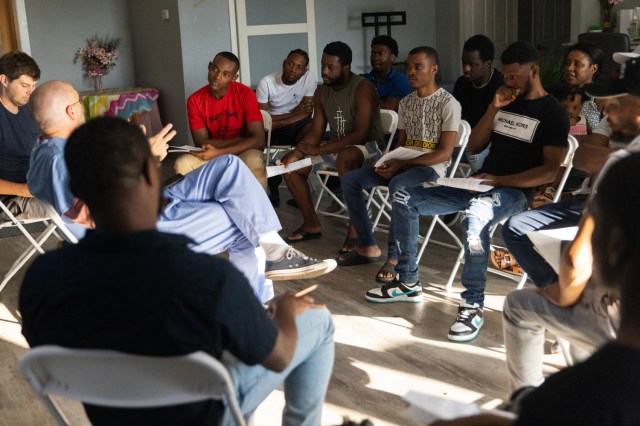
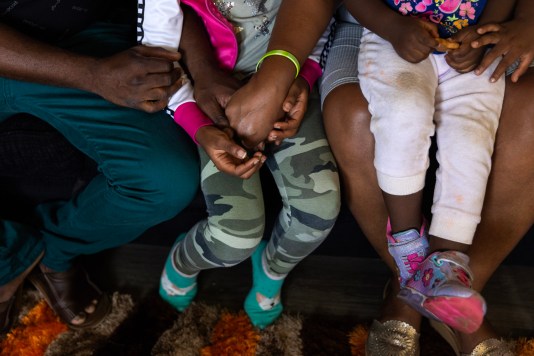
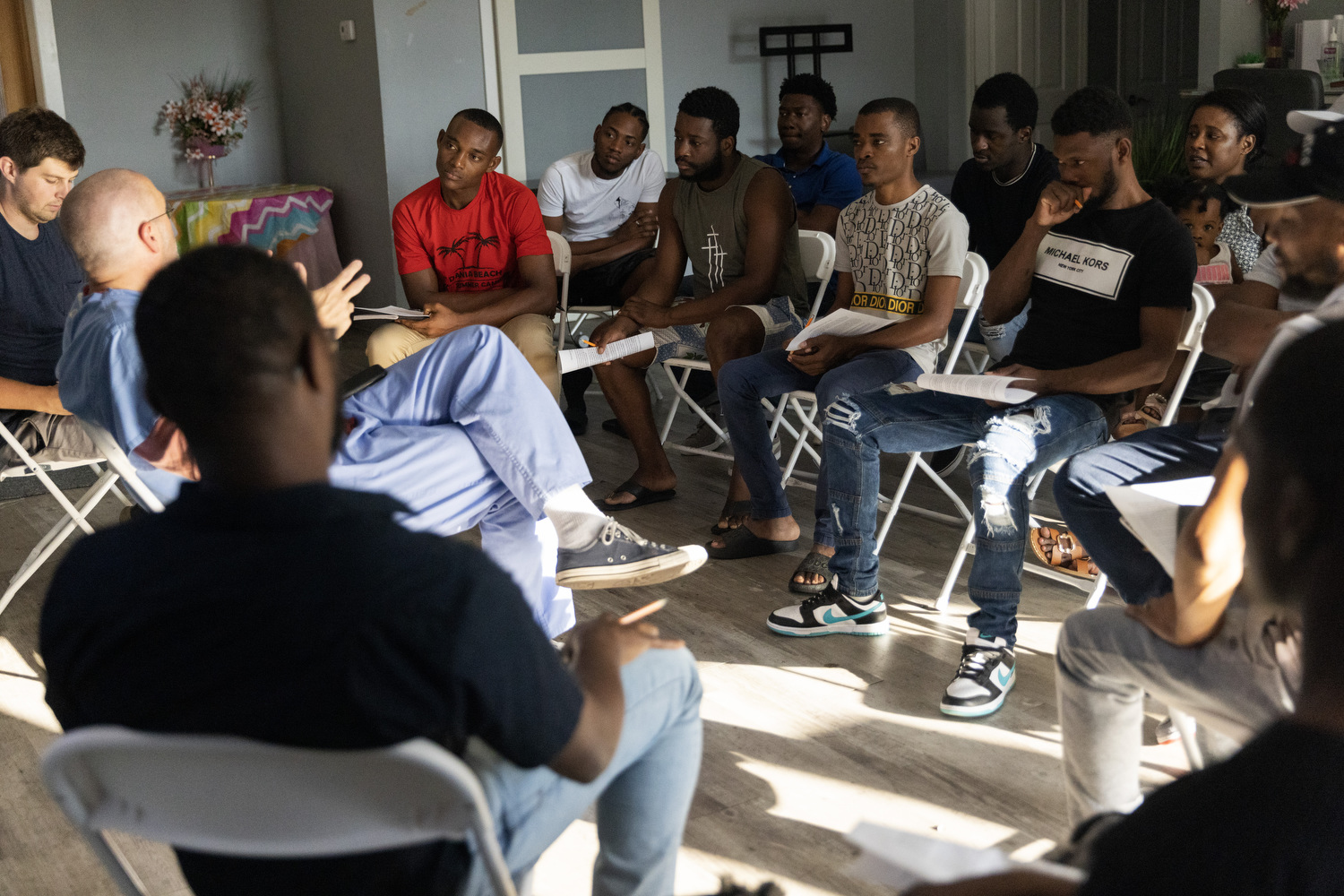
One recent evening at a Springfield church, 70 Haitian immigrants hurried inside to classrooms where they were learning English. Some brought their children. “Bienvenue!” said Tami Carter as people came into the church lobby and were separated into classes based on their English proficiency.

Carter is a staff member at The Nehemiah Foundation, which for 33 years has paired Springfield churches with local nonprofit ministry
partners. Its task in a city of 60,000 is to help coordinate resources, passion, and people to work on citywide needs including housing and addiction recovery.

The group is currently assisting 15,000 Haitian immigrants fleeing violence in their home country. They are living in the US legally with Temporary Protected Status.

Most came to Springfield to find work. Some long-term residents were happy to welcome hard-working newcomers, since the city had been in a long population decline. But the recent influx of thousands of people with different cultural backgrounds put stress on local schools, police, and other public services.

Then, last September, presidential candidate Donald Trump and his running mate JD Vance spread false rumors that Haitians in Springfield were eating local pets. Trump and Vance alleged that a Haitian had “murdered” a local child in a car crash (it was an accident) and that Haitians were spreading diseases.

The day after Trump made his claims, Springfield’s city hall received a bomb threat. Staff members at Nehemiah’s offices a block away remember how many such threats their tight-knit city eventually navigated: 33.

During a prayer walk that the foundation helped organize for the city during that heated September, helicopters buzzed overhead and dogs sniffed for bombs. The Nehemiah volunteers, as they prayed for the city, wore T-shirts that said “Bringing Heaven Here.”

“It felt very surreal,” said Amy Willmann, executive director of Nehemiah Foundation, who had been planning a pilot program for church-run classes in English. She recalled that after the pet-eating lies, someone meowed at her Black pastor. But the 20 local churches of many denominations that had agreed to carry out the pilot weren’t deterred.

Though Haitians stayed away at the start, 83 adult students eventually enrolled, and the program was a success. “Our boast is in the Lord,” Carter said. “He has all this planned.”

At the end of the pilot, Nehemiah surveyed the students to ask if they should continue the program and got a yes. This spring the organization launched a full 26-week version of the classes. More than 100 church members from around the city volunteered to teach or to provide childcare two nights a week. Others helped with planning and oversight.

“It’s an opportunity to take the negative press and, while the world is still watching, reflect what happens when the church steps up and says there is a better kingdom,” said Jeremy Hudson, pastor of Fellowship Church, one of the city’s largest evangelical churches.

Haitian immigrants attend an English class at the church attached to the Haitian Community Help & Support Center on August 27, 2024 in Springfield, OH.Photography by Maddie McGarvey
Haitian immigrants attend an English class at the church attached to the Haitian Community Help & Support Center.

The English classes in Springfield include childcare because they are following a time-tested model from Festa, a larger Christian organization providing ESL classes in nearby Columbus, Ohio. Festa had found that a lack of childcare was a barrier to adults attending class, especially for women. It now provides dinner, childcare, and transportation. And its work has blossomed.

Festa trained Nehemiah volunteers, and Nehemiah took on aspects of Festa’s safety system. Volunteers go through background checks and have a badge to show it. Each person working in the program wears a brightly colored T-shirt so students know who to ask for help, and also so organizers know if someone is there who shouldn’t be.

Given the bomb threats and Trump’s threats of deportation, safety remains a concern even for legal immigrants like the Haitians in Springfield. When Nehemiah staff members announced new language classes to one Haitian church and said there would be building security, the congregation broke into applause.

Nehemiah’s long relationships in the community have helped build a strong program. The Clark County Literacy Coalition has advised Nehemiah on honing its program with sensitivity to literacy levels. Local health department and emergency management officials share information about tasks like how to find local doctors or detect a gas leak.

Rebuilding Broken Walls with The Nehemiah Foundation

A Haitian flag is displayed on a home in Springfield, OH on September 17, 2024.

1 of 3

A Haitian flag displayed on a home in Springfield, Ohio.

Photography by Maddie McGarvey

The Delva family at their home in Springfield, OH on October 4, 2024.

2 of 3

The Delva family at their home in Springfield, Ohio.

Photography by Maddie McGarvey

The Delva family outside of their home in Springfield, OH on October 4, 2024.

3 of 3

The Delva family outside of their home.

Photography by Maddie McGarvey

Log in or subscribe to view the slideshow.

Haitian “cultural ambassadors” also advise the language program. Bernadette Dor-Dominique, a Haitian American who translates as needed for Nehemiah’s ESL students, has helped the program develop “a welcoming environment to make them feel loved,” she said. “We are in it together.”

Many Haitians worry about deportation. Dor-Dominique, who was a police officer in Haiti, said, “There’s no safe place in Haiti for anybody.” Depending on what happens with US immigration policy, Springfield may not be the answer either.

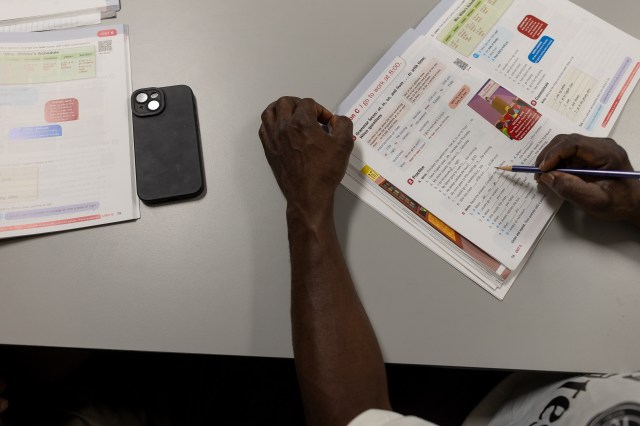
But on one evening in a Springfield church gym, children from Haiti played soccer, gulped down sports drinks, and gobbled up peanut butter crackers. In the church’s classrooms, their parents practiced their English and bent over workbooks­—a serious commitment, with several hours of class twice a week. Halfway through class, the students, including a local Haitian pastor, took a break for tea, coffee, snacks, and conversation.

A water tower in Springfield, OH.Photography by Maddie McGarvey
A water tower in Springfield, Ohio.

For some Haitians here, English isn’t their second language but their fourth. In a higher-level class, one teacher discussed cultural questions: Is lengthy eye contact acceptable in the United States? One young student, who clearly had a grasp of both the language and culture of the US, said with a smirk, “It’s not demure,” referring to a phrase from a TikTok trend.

In the meantime, some of the American church volunteers are learning Creole, and others like Kristi Leeth are teaching English classes for the first time. Leeth paused during a break while Haitians and others from around the world laughed together. “I want [these immigrants] to know there are people in our community who are glad they are here,” she said.

Emily Belz is a senior staff writer for Christianity Today.

News

Incentivizing Life Change at Springs Rescue Mission

A homeless shelter helps short- and long-term guests find housing and purpose.

Photography by Kris Cheng for Christianity Today

In this series

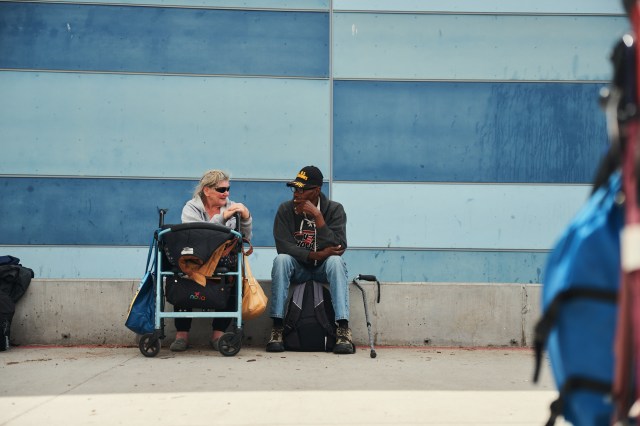
Just west of Colorado Springs, the park known as Garden of the Gods features soaring red sandstone formations. At 6,400 feet above sea level, it’s one of the loveliest places in America. Just south of downtown squats one of the ugliest. If the garden hints at the glory of God, Las Vegas Street on a Wednesday at 6:30 a.m. proclaims the wreckage of humanity.

A grizzled man wearing a Mountain Dew T-shirt sits slumped over on a bench. A man and a woman sleep under a blanket next to hypodermic needles, Budweiser cans, a ramen bowl, and a crumpled bag of barbecue potato chips. A man who has overdosed is lifted onto a stretcher and then into an ambulance. But that’s outside the gates of the 15-acre Springs Rescue Mission (SRM) at 5 West Las Vegas Street. Inside is a four-story welcome center topped with a tall cross. Behind that are Next Step shelters for those trying to leave homelessness, plus a barracks—row upon row of cots in one enormous room—for those who have decided to stay homeless but would like clean sheets for the night.

Between those buildings stands the dining hall, which at 7 a.m. serves up a bacon-and-eggs breakfast for those enrolled in the Next Step program. At 7:15, those not in the program sit on the clean, grassy lawn. At 8, they shuffle into the dining hall for a cold continental breakfast.

While they eat, staff members in the barracks move the beds and bring in chairs, in which about 100 men and women will spend their day, slouching before two big-screen televisions showing crime dramas.

In a nearby building, two dozen staff members and ex-addicts are celebrating a graduation from the Next Step addiction recovery program.

Photography by Kris Cheng for Christianity Today

At the ceremony, new graduate Brian Gilliam compared his meth and psych-ward past with his reformed and reverent present: “Thank you, God, for your peace and your joy. You loved me even when I made excuse after excuse,” he prayed, adding. “God gave me another chance to be a man. A couple of times I got kicked out of here, but more and more I want to be light to somebody instead of a vessel for disobedience.”

The addiction recovery and Next Step programs depend on private, church, and foundation funding. The ministry originated in 1994 when Marilyn and Paul Vyzourek, who had overcome their own drug and alcohol addictions, brought bagged lunches and old clothes to people sleeping under bridges and in parks and later put four beds in their basement.

SRM grew for two decades and in 2015 developed an agreement with city officials who recognized that tourists want swept streets, not street sleepers. SRM provides beds for the unhoused, and the city pumps in local money plus federal funds. Now, one-fifth of SRM’s $11 million budget comes from government grants, all of which support one-night stays at the SRM campus, which features a bronze sculpture of Jesus and Bible verses on some walls.

That funding creates controversy, as does SRM’s decision to offer better meals to those who enter a program. At a city council meeting last year, council member David Leinweber asked about the differential treatment. “Is that compassionate?” he said. 

The mission’s then-CEO, Jack Briggs, responded that letting people settle into victimhood with no hope to change their lives is not compassionate: “We gently incentivize them to improve their mental, physical, and spiritual health, as well as their prospects for employment and housing.”

Gentle incentives include getting the same bed every night versus a random assignment. On a typical day, Next Steppers have a dinner of chicken and vegetables. One-day-at-a-timers get beef broth with noodles—not great, but better than junk food and life as a junkie on Las Vegas Street. Everyone gets safety (all residents  must go through metal detectors), a private shower time (with soap and shampoo provided), laundry time, and a storage bin.

It takes a long time to help a person in long-term homelessness to straighten out. SRM has found that the promise of pie 18 months later is ineffective with those who for years have focused on where to get daily bread. No one needs to offer a profession of faith to gain benefits, just a commitment to take one small step toward working and having a home. 

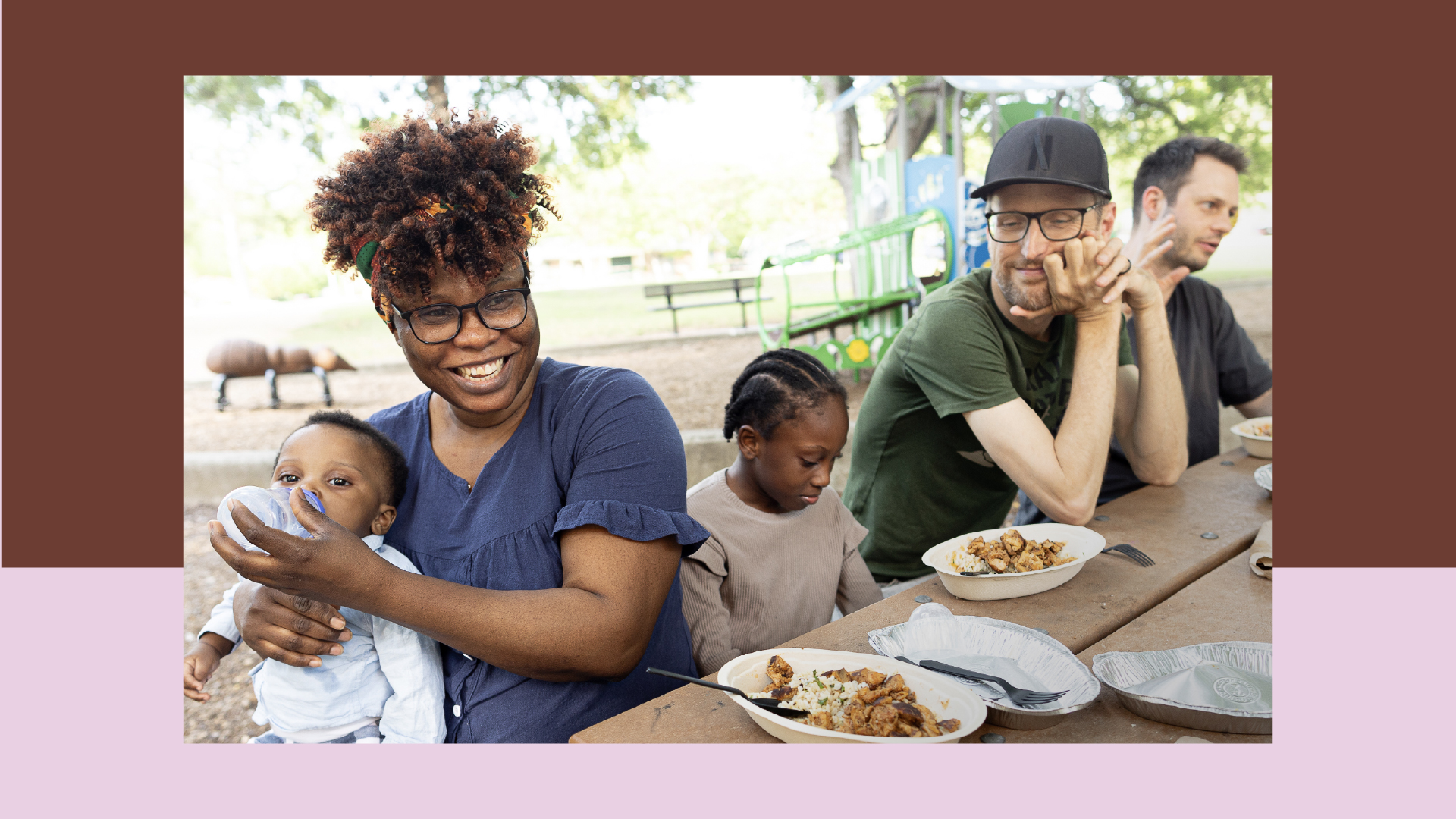
Colorado Springs serves as the headquarters for Focus on the Family, Compassion International, and several other evangelical groups, which gives Christians more political influence than they have in some other cities. Local officials, though, speak of SRM’s program as one that benefits both church and state. SRM sees about 220 people a year move into transitional or regular housing. Thousands come briefly, but at least they’re temporarily safe. Overall, SRM says it saves governments $12 million per year in medical, policing, social work, and other costs.

Some evangelicals criticize SRM because it does not require residents to attend chapel. That was standard in traditional urban missions, where beds and meals went only to those who listened to a sermon. But a formative SRM document declares, “God is the one who transforms. Therefore, when guests make bad choices, it’s up to God to work with them. It’s our role to help in the project, not own it.” 

Other evangelicals criticize SRM because it houses those still in addiction next to recovering addicts. But in one dinner discussion, Next Step participants said such closeness helps addicts see that a better life is possible.

Meanwhile, the dinner line for the unhoused snaked across the courtyard. It included 90 weather-beaten men, one wearing a “Never Too Much Bacon” T-shirt, another complaining that his fifth wife had just kicked him out. It also included 29 women, most with visible tattoos, one who kept talking about how she needed to sell her plasma the next day.

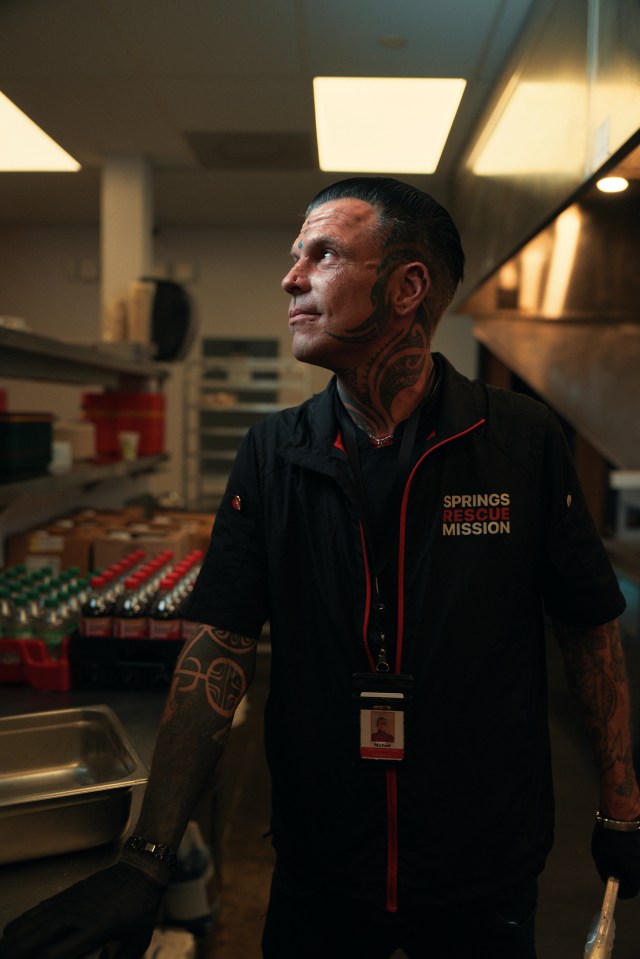
One SRM staff member, Ronnie Hammers, retired from his job in the Midwest and moved to Colorado Springs eight years ago. He volunteered with SRM for a year and then joined the cause.

“I originally thought you could snap your fingers and change things,” he said. “I’ve learned that doesn’t work. I’ve also had to overcome the other tendency: playing God by thinking someone is unable to change.”

Marvin Olasky is the executive editor for news and global at Christianity Today.

News

Hurdling Cultural Barriers at More Than Welcome

Asylum-seekers find opportunity and refuge in Christ.

Photography by Melanie Grizzel for Christianity Today

In this series

Insulated tumblers, coffee mugs, and sparkling waters litter a worktable on the second story of an apartment unit turned office in Austin, Texas. Eight people fill the workspace, bobbing up and down with a carbonated energy more akin to a frenzied live auction than a Monday afternoon office meeting.

“Are they on West 32nd Street?”

“I took a bed to someone down there … Achmed, or Ahmad?”

“Are they coming to class? They’re on the spreadsheet.”

“Who put them on the sheet? Does it say if they need a ride?”

“I think they have five to seven kids, so transportation will be—”

“Oh, Lord, provide more drivers!”

Scrawled on a whiteboard is the organization’s vision: “Helping refugees and asylum seekers find refuge in Christ through the love of the Church.” The nonprofit’s name, More Than Welcome, expresses its hopes for how immigrants will feel in their new home. During the meeting, More Than Welcome staff members—who hail from Austin as well as Congo, Rwanda, and Burundi—applaud as they celebrate an immigrant’s recent decision to follow Christ.

The staff meeting continues with prayer for a Muslim arrival from Burkina Faso who has expressed distrust toward anyone who might try to convert her. There’s a knock at the door. The woman has dropped by unexpectedly to meet with a caseworker. Gasps and more prayers follow as the staff thanks God for leading the woman back to the office.

Another new arrival needs a desk, a washer and dryer, and a lawyer to help start her asylum process. A different immigrant family has a baby in the hospital. Someone from More Than Welcome will deliver fresh clothes.

The organization sprang from the passion of Alliance Samuragwa, a former asylum seeker from Burundi. His megawatt smile, sturdy 6-foot-1 frame, and rotating uniform of hoodies belie a broken past.

As Hutu and Tutsi factions warred in Burundi in 2014, police murdered Samuragwa’s closest friend and tortured Samuragwa for four days, leaving him for dead on the banks of the Ruzizi River. He was spotted by a family friend, and his parents rescued him. His family pooled their resources, securing a US student visa for him and a one-way flight to America. He was 22 at the time.
There are still burn marks on his arm and thigh and a jagged scar on his scalp. “Resentment is part of the journey,” Samuragwa says, “but I thank God, knowing it’s a miracle I’m alive. And now I have empathy for what the families we serve have been through. He led me here for a purpose.”

Refugees and asylum seekers both enter the United States legally, though refugees receive more government support. As an asylum seeker, Samuragwa had only a suitcase with some clothing and his grandfather’s Bible. He found a couch to sleep on in a stranger’s home. Assembly line work and Uber driving paid the bills as he connected with other immigrants and recruited new friends to help meet their needs. 

More Than Welcome now has seven full-time staff members and more than 100 volunteers from 30-plus churches.

Refugees take English classes that include a Bible story and discussion. Staffers and volunteers provide childcare during classes, donate housewares and clothing, transport participants to appointments and grocery stores, help them find legal and medical aid, and read notices that come home with schoolkids or in the mail.

Longtime volunteer Amy Riesterer recalls one refugee saying, “I have to go to the bank, I have all of these checks.” Riesterer had to explain that they were “those fake promotional checks you get in junk mail.”

The work is chaotic. Scattershot systems track clients, volunteers, English class attendance, transportation needs, and so on. Adding to the lack of organization are the inherent difficulties that arise in multi-language, volunteer-heavy environments: Asylum seekers are transient, language barriers make texts and phone calls clunky, and volunteers sometimes withdraw their commitments on short notice.

Some volunteer hours are spent sorting through unusable donated junk instead of fulfilling more pressing needs. For all its zeal, the small staff finds itself playing catch-up on policies and procedures as they navigate frequent crises.

Staffers hope to formalize their family match program, pairing immigrants with church community groups to help newcomers navigate life in the States. Soon, they’ll implement small group therapy sessions for immigrant women to process trauma.

Back at the office, a weary Burmese mother robotically bounces a 10-month-old baby on her lap as an interpreter tells More Than Welcome staff about the woman’s unsafe domestic situation. The organization has helped clients escape violent spouses and work out plans for meeting immediate and long-term needs.

They wrestle with finding the balance between supporting and enabling. They’ll cover one month of rent in special cases, but some—like survivors of domestic abuse—might need more help. Samuragwa envisions acquiring apartment complexes where More Than Welcome could provide housing, jobs, and other services to newly arrived families. He wants to expand to other cities and is developing a five-year plan with the organization’s board.

That’s long-term work. For now, on one Tuesday afternoon, a volunteer helps a 16-year-old Pashto Afghan immigrant learn to drive. Across town, a team visits a 71-year-old Rwandan woman named Margue. She serves Coke Zero and raises her head heavenward, loudly thanking God in Kinyarwanda, her native tongue, for sending visitors to her home.

Katie Gaultney is the administrator of the Zenger House Foundation.

Apple PodcastsDown ArrowDown ArrowDown Arrowarrow_left_altLeft ArrowLeft ArrowRight ArrowRight ArrowRight Arrowarrow_up_altUp ArrowUp ArrowAvailable at Amazoncaret-downCloseCloseEmailEmailExpandExpandExternalExternalFacebookfacebook-squareGiftGiftGooglegoogleGoogle KeephamburgerInstagraminstagram-squareLinkLinklinkedin-squareListenListenListenChristianity TodayCT Creative Studio Logologo_orgMegaphoneMenuMenupausePinterestPlayPlayPocketPodcastRSSRSSSaveSaveSaveSearchSearchsearchSpotifyStitcherTelegramTable of ContentsTable of Contentstwitter-squareWhatsAppXYouTubeYouTube