News

ERLC President Steps Down Amid Southern Baptist Discord

After four years under Brent Leatherwood, SBC pastors look for a leader to rebuild trust in its public-policy arm.

Brent Leatherwood

Brent Leatherwood at the SBC annual meeting in 2025.

Christianity Today July 31, 2025
Roy Burroughs / Baptist Press

Pamphlets with a photo of Brent Leatherwood alongside House Speaker Mike Johnson dotted thousands of gray chairs in the Dallas meeting hall where the Southern Baptist Convention (SBC) gathered in June.

Leatherwood, the president of the embattled Ethics and Religious Liberty Commission (ERLC), spoke from the US Capitol lawn in a promotional video touting Southern Baptists’ lobbying efforts in Washington. He pleaded with the convention to allow its public-policy arm to continue its work.

Ultimately, it was enough for the ERLC to withstand calls for its elimination and for Leatherwood to keep his job.

For seven more weeks.

Leatherwood stepped down Thursday, the culmination of a tumultuous few years when growing numbers of Southern Baptists saw him and the ERLC as out of line with their own political stances and everyday church life.

ERLC board members accepted his resignation and thanked him for his leadership during a divisive time, appointing chief of staff Miles Mullin as acting president in the interim. Leatherwood—a 44-year-old church deacon who previously worked for the Republican Party in Tennessee and on Capitol Hill in DC—did not cite a reason for his departure, only that it was “time to close this chapter of my life.”

“His resignation from the ERLC is a sign of how difficult it is to represent Southern Baptists in the political sphere … and to do it in a time of polarization in the convention,” said Griffin Gulledge, pastor of Fayetteville First Baptist Church in Georgia and a leader with The Baptist Review.

At the SBC’s annual meeting this year, 43 percent voted to abolish the ERLC. The proposal didn’t pass, but the split showed dwindling confidence in the entity. Even Albert Mohler, president of The Southern Baptist Theological Seminary, had spoken up in an interview to voice his “grave doubts about the utility of the ERLC.”

The ERLC’s most vocal detractors consider the entity’s activity as evidence of broader liberal drift in the conservative denomination, calling out positions on immigration and guns. Other pastors saw Leatherwood’s ERLC as detached from the 47,000 local congregations that make up the SBC.

In the weeks since the annual meeting, Leatherwood stayed hard at work as the ERLC saw major news unfold: a string of Supreme Court rulings at the end of June and the congressional budget reconciliation bill in July. Both included moves toward a longtime ERLC aim of defunding Planned Parenthood.

Amid all the public responses to political happenings, Leatherwood prepared another statement for the ERLC board: his resignation.

The trustees had discussed Leatherwood’s future at ERLC before. Last year in July, he faced online backlash for calling Joe Biden’s decision to drop out “a selfless act.” The next day, the ERLC’s former board chair erroneously declared that Leatherwood had been fired—only for the ERLC to retract the announcement since the decision came without a formal vote.

In the SBC, the convention votes in trustees for each entity, and the trustees oversee entity leadership.

Even among ERLC supporters, many left the meeting in Dallas last month assuming that if the ERLC gets to stay, it’ll have to make changes—likely starting at the top.

“The messengers to the SBC annual meeting have signaled with their ballots over the last couple of years that trust has been breached and must be rebuilt,” said Andrew Hébert, a pastor from Longview, Texas.

Former ERLC presidents drew from their theological and pastoral backgrounds to speak into current issues; Leatherwood brought public policy know-how that positioned him well in DC but, to some, made him feel less connected with the people in the pews.

“I am praying that the trustees will choose someone who understands the churches of the Southern Baptist Convention and can wisely represent their concerns in the public square,” said Hébert. “Policy experts can be hired, but the leader of the entity must know how to engage with pastors and churches.”

Much of the criticism directed at the ERLC predates Leatherwood, back to Russell Moore’s “never Trump” stance during his tenure leading the entity nearly a decade ago. (Moore now serves as editor in chief of CT.) And Moore’s predecessor, Richard Land, said disagreements over the ERLC’s work are “inevitable” but its work remains crucial.

Senator James Lankford, an Oklahoma Republican and a fellow Southern Baptist, recently thanked Leatherwood for his engagement in Washington.

“He has a very challenging task to be able to speak for us without speaking for us,” Lankford said at an ERLC event during the SBC annual meeting, underscoring the independence of Southern Baptist churches. “He’s everywhere. He’s speaking out about abortion, about adoption, about international religious liberty. … He’s out there working on it.”

Leatherwood, in his earlier appeals, defended the significance of having a Baptist voice in Washington and downplayed his own stances. “This is not about me,” he said in a video. “This is not my entity but yours,” he told the convention crowd.

Leatherwood’s children survived the 2023 Covenant School shooting in Nashville, and some Southern Baptists objected to his advocacy for a state law to restrict guns from people deemed a threat to themselves or others. The ERLC also faced ongoing criticism and defended itself against accusations of being pro-amnesty for its advocacy around refugees and involvement in the Evangelical Immigration Table.

The SBC operates as a convention bringing together independent churches rather than a hierarchy, so individual Southern Baptists often disagree on approaches to political and cultural issues and how the convention should engage.

In recent years, leaders beyond the ERLC have grown their platforms and resources to engage Southern Baptists around political and cultural commentary. Mohler at Southern Seminary discusses current events on his popular Briefing podcast each weekday. The Center for Baptist Leadership, a group within the SBC that wants to see conservative revitalization, offers articles and podcasts, saying it aims to “serve as a better Baptist voice in the public square.”

After Leatherwood’s resignation, Mohler said, “Southern Baptists will be grateful to Brent Leatherwood for the investment of his life and work through the Ethics and Religious Liberty Commission,” and extended prayer for him, his family, and “the future and faithfulness of the commission itself.”

Scott Foshie, the chair of the ERLC board of trustees, called Leatherwood “a consistent and faithful missionary to the public square.” A fellow trustee, Mitch Kimbrell, cited the pro-life advances made under Leatherwood, including defunding Planned Parenthood and donating 40 ultrasound machines to pregnancy centers.

Leatherwood’s statement said, “It has been an honor to guide this Baptist organization in a way that has honored the Lord, served the churches of our Convention, and made this fallen world a little better.”

Mullin, the ERLC’s current vice president and chief of staff, will take over for Leatherwood in the meantime. Before the ERLC, Mullin worked in Christian higher education and taught church history; he holds a master’s degree from Southeastern Baptist Theological Seminary and a PhD from Vanderbilt University.

The board has not yet announced a search committee to find Leatherwood’s replacement—a tough ask given the $3.3 million entity’s contentious place in the SBC today. “Even as your smallest institution, we attract outsized attention and scrutiny,” Leatherwood told the convention in June.

“A lot of people are wondering if there’s anyone who can navigate the pressures of this job or withstanding the daily brunt of well-funded antagonists,” said Gulledge. “Whoever the trustees choose to lead the organization in the future must be committed to doing the hard work to rebuild the relationship between the ERLC and the churches and pastors it represents.”

This is a breaking news story and has been updated.

News

India Army Dismissed Christian Officer for Refusing Religious Rituals

A Delhi court ruled the lieutenant disobeyed his superior’s orders by not taking part in Sikh and Hindu worship.

Indian army soldiers from a Sikh regiment.

Indian army soldiers from a Sikh regiment.

Christianity Today July 31, 2025
NurPhoto / Contributor / Getty

When Samuel Kamalesan, a Christian officer in the Indian Army, asked to not take part in certain Hindu and Sikh rituals in his regiment’s weekly religious parades, the army dismissed him without a trial in 2021. Left without a job and cut off from military benefits, Kamalesan challenged his termination in the Delhi High Court, claiming it violated the right to freedom of religion guaranteed to every citizen by the Indian Constitution.

This June, the court ruled that the dismissal was justified, claiming that choosing his religion above the lawful command of his superior was an “act of indiscipline.”

The court further emphasized that officers like Kamalesan have an additional responsibility to foster bonds and unity in the troops. Yet some legal scholars questioned how that requirement for religious bonding fits in a secular country like India.

“When someone is removed from the forces for not participating in religious rituals (because it would lead to destroying the unity), is it not an acknowledgement that there cannot be any other bonding agent apart from religion?” Sri Harsha Kandukuri, a legal researcher, wrote in The News Minute.

Some Christians decried the ruling. A. Santhanam, a Jesuit lawyer, told Crux that the dismissal “constitutes religious coercion and undermines India’s secular character” and said that “no authority or order can compel someone to act against their beliefs—such coercion amounts to a form of violence.”

A current member and a former member of the Indian Army told CT they had not faced the coercion Kamalesan had experienced. As a minority in the military, Christians decide based on their personal consciences how to engage with the dominant Hindu or Sikh religious rituals that are a part of military life.

During colonial rule, the British recruited soldiers into either class regiments (each one made up of a single ethnic group) or class company regiments (each one made up of a mix of religions and ethnicities). The British believed that recruiting from a single ethnic class would foster a sense of communal pride, which in turn would make it harder for the troops to unite and fight against the British.

Recruiting extensively from the Sikh, Rajput, and Gorkha communities, the British officers considered these groups “martial classes” that were biologically more suited for the military and warfare.

After India gained independence from Britain, the government tried to remove class-based recruitment, but single-class regiments in the Indian Army remain prevalent. Religion serves an important motivational function in the army. For instance, the war cries of some regiments are slogans invoking Hindu deities or verses from Sikh holy texts. Each regiment has designated religious teachers to lead the troops every week in worship known as “religious parades.”

Despite the deep-rooted presence of religion and ethnic divides, the Delhi High Court in its judgement maintained that the Indian Army is a “secular institution” and that officers should place troop morale over their religious convictions, reiterating the popular principle in the Indian Army that “my religion is my soldier’s religion.”

Kamalesan, who joined the army as a lieutenant in 2017, was part of the 3rd Cavalry Regiment, an armored regiment that uses tanks and predominantly recruits Hindu and Sikh soldiers. The regiment has a mandir (Hindu temple) and a gurdwara (Sikh temple) on its premises but has no church or Sarv Dharm Sthal, a shrine where people of all faiths can worship. For instance, a Sarv Dharm Sthal in a regiment with Hindu and Christian soldiers might have both the Bible and Hindu sacred texts, along with sermons from different religions taking place one after the other.

Leading a troop of about 20 Sikhs, Kamalesan was required to join weekly religious parades, as well as religious festivals. Kamalesan claimed in his petition to the Delhi High Court that he was willing to “remain present with his fellow troops in the temple courtyard,” take off his shoes and belt, put on a turban with clean hands when necessary, and “view the rituals in the inner shrine.”

All he sought exemption from was entering the innermost part of the gurdwara or mandir when Sikhs and Hindus performed rituals like puja (prayers), arti (waving a lamp in front of a deity), or havans (burning sacrifices in front of a deity).

Yet the commanding officer of the regiment refused and forced Kamalesan to participate. Soon after, Kamalesan’s superior initiated disciplinary action against him. According to Kamalesan’s petition, his superiors harassed him—verbally abusing him, mocking his faith, and threatening to end his career. They also subjected him to military punishments, including placing him on nighttime guard duty without sufficient rest, causing sleep deprivation.

Kamalesan’s superiors also prevented him from getting promoted, the petition said. They barred the Christian lieutenant from taking any upskilling courses needed for advancement. His annual evaluations contained negative remarks about his religious beliefs. And despite passing the requisite exams, Kamalesan watched as his juniors got promotions and he remained at the same rank.

Officers told Kamalesan that if he agreed to join in the religious rituals, even if it meant prostrating halfway before the idols, they would lift all the restrictions and sanctions against him. The petition also said they sent him to counseling sessions with the pastor of the local church, other Christian officers, and religious teachers, who tried to explain to him the necessity and rationale behind these religious rituals.

When Kamalesan’s superiors saw no change in his stand, they issued a show-cause notice in 2019 ordering him to explain his “acts of misconduct.” While he filed complaints, authorities rejected them.
In March 2021, Kamalesan received a final notice that the Indian Army was dismissing him permanently without pension or benefits. Military court denied him the chance for a trial because his superiors claimed his case was sensitive since it involved religion.

Although the Delhi High Court supported the military’s decision, the Indian Constitution allows Kamalesan the right to appeal to the Supreme Court.

A 31-year-old Christian soldier from a Northeastern regiment was surprised to hear about Kamalesan’s experience. Although he had served in the military for the past decade, he said he had never seen any commanding officer force soldiers to perform religious rituals. CT granted him anonymity, as speaking out on these issues could cost him his job.

“In our regiment, we are never forced to bow down before idols, apply tika [a paste of vermilion or sandalwood applied on the forehead], or eat food offered to idols,” he said. “We are only expected to attend both Christian and Hindu sermons.”

He serves in a regiment with personnel belonging to a mix of religions, and the religious parades take place in a Sarv Dharm Sthal.

Despite the freedom in his regiment, the soldier does not always shy away from eating food offered to Hindu idols, known as prasad. “While taking prasad, we always tell ourselves and others, ‘Why avoid it? Even if it’s food offered to their gods, we still have our true, living God,’” he said. “But even then, sometimes we take it and sometimes we leave it.”

Brigadier Neil John, a former Christian army officer, said that he participated in all religious parades and rituals—including bowing before idols, doing arti, and eating prasad—during his 33-year tenure, as he believed it was part of his duty. He said that Paul’s message in 1 Corinthians 8 about eating food sacrificed to idols guides his conscience, as “an idol is nothing at all in the world” and “there is no God but one” (v. 4).

He believes that no matter what religion military leaders come from, once they are part of a regiment, they must stand with their troops and worship the divine—regardless of what forms their gods take—to maintain morale.

Yet he feels that the punishment against Kamalesan was exceedingly severe.

“Religion is very personal. A mandir parade is a parade where the unit commanding officer is attending; therefore, all below him attend,” he told CT. “But to compulsorily expect individuals of other faiths to follow rituals and practices intrinsic to a particular religion is rather harsh.”

News

When Praise Is Power, Secular Songs Are the Enemy

Christian artists and influencers draw from a theology of worship as battle to warn about music’s dark side. 

Two toy soldiers holding earbuds.
Christianity Today July 31, 2025
Illustration by Elizabeth Kaye / Source Images: Getty

When Doechii’s song “Anxiety” went viral at the beginning of the summer, thousands of social media users participated in the dance trend, posting videos of themselves shimmying back and forth to the lyrics “Somebody’s watching me, it’s my anxiety.” 

Then, Christian content creators jumped on the “Anxiety” bandwagon—to rebuke the song. Some warned that “anxiety is a demonic spirit”; others posted musical rebuttals. One creator posted a video in which he claimed that the song is “demonic” and gave him sleep paralysis. 

Their claims resemble warnings about 1980s and ’90s rock music from fundamentalists like Bill Gothard and Jim Logan. But the new wave of Satanic Panic over popular music doesn’t stem from fiery preachers in suits—this time, it’s Christian influencers and musicians stoking alarm. 

Meanwhile, popular worship music from charismatic outlets like Bethel Church has recentered power and spiritual warfare. The theology, in turn, escalates fears about what music can do, or rather, what music can be used to do: Christians who view their worship as a weapon become more likely to see music as a weapon that can be used against them

Music affects human hearts and minds. But is it a weapon that evil forces use against listeners? 

Bethel holds to a “theology of encounter and presence” and sees musical worship as “a means to carry out revival in our world,” according to Emily Snider Andrews, executive director of the Center for Worship and the Arts at Samford University. Andrews said that, in Bethel’s framework, musical worship is an “infiltrating” force for Christians to “invade society” and build “kingdom culture.” 

The lyrics of the song “Revival’s in the Air,” for example, speak of coming culture change (“Revival’s in the air; / Catch it if you can” and “The dawn is breaking”). And the song “We Make Space” invites God to “invade, take over this space” and “surround, engulf.” 

These ideas and beliefs extend beyond Bethel. Popular worship leader and songwriter Rita Springer hosts a podcast called “Worship is My Weapon.” The song “Sevens” on Brandon Lake’s new hit album calls listeners repeatedly to “ready the weapon of praise.”

Todd Korpi, dean of digital ministry at Ascent College, said that beliefs about the power of musical worship vary in “Spirit-filled” traditions. But in general, he said, Christians in charismatic or Pentecostal communities share the belief that “when we sing together, we come into alignment with one another” and that there is real power in that “all-encompassing unity.” 

Former Bethel worship leader Sean Feucht is a prominent example of an artist who explicitly frames worship as culture war. Most Bethel collaborators aren’t as combative but still believe in the power of musical worship. And beliefs about its wonder-working power—like the ability to manifest literal “glory clouds” of gold dust above a singing congregation—are common. 

In addition to encountering a theology of worship that treats praise as power, a generation of young Christians and spiritual seekers are finding a chorus of online voices theorizing about the spiritual power of music and warning about its dangers.

Recently, Christian rapper Hulvey told podcaster George Janko that his “spirit will feel disturbed” when listening to some secular hip-hop music. Author and hip-hop artist Jackie Hill Perry has speculated that some secular music succeeds because the producers have help from demons. 

Theatrical preachers are performing mass exorcisms and reanimating conversations about spiritual warfare and demonic possession. Some Christian influencers declare that “secular concerts are demonic rituals,” and others post that, the closer they get to God, the more unbearable secular music becomes to listen to. 

The popular podcast Girls Gone Bible recently featured a guest who suggested that Satan is musical in nature and that demons can “sing through” musicians when they are drunk or high. 

“If you know anything about the spiritual realm you know large artists like [Taylor Swift] are operating in darkness,” one influencer posted on Instagram, talking about why she doesn’t let her daughters listen to Swift’s music. Instead, she says, she “blasts [Forrest] Frank.”

Now, as Christian music’s popularity is growing, some artists and influencers are seizing the moment to reassert the niche as a spiritually safe and nourishing space in an otherwise dark entertainment industry. 

Christian musicians claim that they are making music using God’s tuning, suggesting that sonic frequencies can positively or negatively affect bodies and minds. Other artists post that audiences can replace “toxic” secular music with their faith-based songs. 

Charismatic Christians have historically read biblical narratives about music—such as the story of David playing the harp to soothe King Saul in 1 Samuel 16:23—as evidence that there is something particularly powerful about the medium. 

“We have passages describing Paul and Silas singing in prison or Miriam and the women singing in Exodus,” said Tim Larsen, professor of theology at Wheaton College. “Charismatics will read these as saying that there is a spiritual efficaciousness to praise. And there seems to be a strong connection between music and the prophetic.”

Larsen suggests that music is one of many channels for the spiritual that Christians can point to in Scripture, but that superstition arises when believers start to see the vehicle itself as having special power. 

But not all charismatic Christians see music the same way. In the Vineyard movement, a neo-charismatic association that grew out of Calvary Chapel in Costa Mesa, California, worship leaders tend to emphasize music as a channel for individual intimacy with God rather than a vehicle for collective empowerment or breakthrough.

“In practice, music has a sacramental quality in that it can be filled by the real presence of God,” said Caleb Maskell, associate national director of theology and education for Vineyard USA. He added that the sacramental understanding of music doesn’t stem from belief in the mystical power of music. “In reality, it’s the people who are filled with the presence of God.” 

Adam Russell, director of Vineyard Worship USA, said that over the past 20 years, he has seen a movement in contemporary worship music away from intimacy and toward “intensity.” 

“My Pentecostal brothers and sisters have a really strong sense that when we worship, we’re doing something apostolic or bringing the kingdom,” said Russell. “But in Vineyard, we’re not about bringing the kingdom; we’re discovering the kingdom. It’s already been sown. We’re not here to enforce it upon culture.” 

Maskell and Russell contrast Vineyard’s view of the power of musical worship with the theology articulated in lyrics about praise as a weapon or the act of worship as warfare. According to Russell, Vineyard has been criticized in the past for producing sentimental “love songs to Jesus,” but that emotional earnestness without a battle mentality is what sets it apart and keeps music in its proper place theologically.

“Some people might say that Vineyard songs are a little sappy,” said Russell, “and maybe so. But that’s been our superpower: to sing directly to Jesus, from the heart.” 

Examples of less “sappy” and more militant songs are easy to find these days, including at least three ranking among the top 100 sung in churches. Bethel Music’s “Raise a Hallelujah” includes the lyrics “My weapon is a melody” and “Heaven comes to fight for me.” It’s an anthem about singing “hallelujah” in the presence of the Enemy to drive out darkness.

Elevation Worship’s hit song “Praise” features the lines “Praise is the water / My enemies drown in” and “My praise is my weapon. / It’s more than a sound. / My praise is the shout / That brings Jericho down.” Similarly, the chorus of Phil Wickham’s “Battle Belongs” frames prayer and worship as a fight (“When I fight, I’ll fight on my knees / With my hands lifted high”). 

In Vineyard churches and at Bethel, encounter with the divine is a goal of congregational singing. Vineyard emphasizes intimacy and introspection; Bethel emphasizes inbreaking and victory. The latter tends to grant more agency to the act of singing, but worshipers in both circles believe that musical worship does something

Maskell said musical worship that tries to summon God to act is misguided. “Worship as intercession is about drawing close to the presence of God in my own life and relationships, not ‘God, do things to other people,’” he said. 

But scholars see a fine line between keeping music in its proper place theologically and dismissing its potential to be an agent of spiritual formation. 

Korpi said that charismatic Christians generally take seriously the “formative power” of media, including film, music, and literature. There is a difference between avoiding, for one’s peace of mind, lyrics or images that depict immorality and attributing invasive, corrupting influence to them. 

Panic about the potential dangers of certain kinds of music is rooted in the belief that if Christians can mobilize music as a weapon of spiritual warfare, music can also be used against them. Preachers and politicians who railed against hidden messages in rock or heavy metal during the ’80s stoked fear that music could invade listeners against their will, opening a door for evil into the mind or soul. 

Christians who see musical worship as ammunition in a spiritual war are primed to see music as a tool of their enemies. And when it’s easier than ever to access an endless stream of music to accompany daily life, Christians understandably want to understand its potential impacts on their emotional and spiritual well-being.

But the view that music can serve as a hidden inroad for spiritual oppression or the demonic is one that sows fear, said Larsen, cautioning that this kind of “magical thinking” verges on gnosticism. “Gnosticism promises hidden knowledge. Discipleship is about obvious, simple knowledge,” said Larsen. “Paul says, ‘Eat what you want and give thanks to God, and trust that he will protect you.’”

Books
Review

Remaking God’s Image in the Image of Secular Society

A religion scholar’s assumptions about historical progress distort the legacy of a central Christian doctrine.

A hand reaching towards its reflection in the mirror
Christianity Today July 31, 2025
Liubava Fedoryshyn / Pexels

[Correction: This article has been amended to better reflect the religious beliefs and scholarly arguments of Tomer Persico, the author of In God’s Image.]

Few ideas have changed the world as profoundly as the doctrine that all human beings who have ever lived bear God’s likeness. In Genesis 1:27, when God creates the first people, we learn that he painstakingly created them “in his own image.” Of all living beings, only men and women bear the very image of their Creator.

From the earliest days, this idea had profound implications, especially when compared with how other ancient civilizations viewed human beings. Put simply, the ancient world saw all people in stratified terms. Depending on a complex set of factors (always subject to change), some people were more valuable than others, more important than others, more powerful than others.

As documentary evidence attests, often in harrowing fashion, some people could be killed without their deaths being avenged or the murderers prosecuted. This pattern occurred during periods of war, but it could also prevail in peacetime, when the law deemed some people unworthy of its concern. Such was, in particular, the plight of widows, who had no one to pursue justice on their behalf.

In the Roman Empire, to use one example, this stratification was an obvious fact of life, an essential aspect of Roman social relations. Aristocratic, freeborn male Roman citizens were at the top of the social pyramid, with the emperor, of course, above all others. Women were seen as inferior to men, although freeborn (and especially imperial) women had some perks. (They could even own property, if they had at least three children.) Still, the earliest Roman legal codes noted women’s “levity of mind,” strongly implying a need for male guardianship at all stages of life.

And then there were the freeborn or freed urban poor. They were free in theory, but in a society that had no social safety nets, their lives were often short and unhealthy. At the bottom of the pyramid were the enslaved. Brutally conquered in Rome’s wars and sold at the empire’s many markets, they did not even legally own their own bodies.

All this is well-known and documented by historians, ancient and modern. So what difference did Christianity make in this world, and why? These questions bring us back to the doctrine of the imago Dei, which made Christianity the great equalizer—a faith that treasured all people unconditionally. The New Testament Gospels and Epistles routinely note the equality of all believers before God. Christ repeatedly interacts with people dismissed as utter outcasts by Jews and Romans alike.

The first believers strove to live the principle of the imago Dei. Early chapters in the Book of Acts give a striking depiction of communal life in the Jerusalem church, where commitments to sharing everything in common stood out as contrary to Roman norms. Similarly, the early martyrs Perpetua and Felicity, a noblewoman and her slave, defied Roman class distinctions by enduring imprisonment for their faith together, under the same conditions. Kyle Harper, a historian of the ancient world, has noted the revolutionary expectation in early Christianity that men and women would be held to the same standards of sexual purity.

The imago Dei’s influence did not stop in antiquity. Over two millennia, it has shaped the moral and ethical principles taken for granted in much of the Western world, as historian Tom Holland contends in his book Dominion. (In this essay and in my own recent book, I show how Christian beliefs about human dignity taught us to hate genocide.) Old Testament theologian Carmen Joy Imes has now authored three books on the revolutionary nature of the doctrine of God’s image for understanding the Old Testament and the church today.

And yet secularism uncomfortably coexists with religion in the modern world. The “Great Dechurching” is proceeding apace in America. Meanwhile, in most European countries, less than 10 percent of the population attends church services on any given Sunday. In Israel, where I spent part of my childhood, none of my classmates or friends regularly went to the synagogue, and public attitudes toward religion remain ambivalent.

Even in a secularizing landscape, the modern discipline of history has proudly claimed to model itself after the hard sciences, with their ideals of objectivity. Yet scholars bring moral and cultural assumptions to their research, which inevitably influence both the questions they ask and the answers they find. (One University of Chicago historian described the quest for objectivity as a “noble dream.”)

Religion scholar Tomer Persico arguably lets assumptions get the better of him in his latest book, In God’s Image: How Western Civilization Was Shaped by a Revolutionary Idea. The book revolves around Persico’s conviction that Christian beliefs about individual human dignity have bent the course of history toward secularism. Some of his claims could be construed as positing the superiority of secularism to religion. Early on, Persico writes, “Secularism does not simply entail the dwindling power of organized religion, but new perceptions of liberty and ethics. Democracy is not only a more or less efficient system of governance, but an expression of a new understanding about the value and significance of human life and about the source of legitimate authority.”

What exactly does Persico claim in this book? The chapters are remarkably disconnected, cherry-picking evidence and arguments without a clear rationale. If he gestures toward any clear thesis, it might be described like this: Modernity has been inimical to belief in God, and one driver of this secularization is the very individualism entailed in the conviction that each person bears God’s image.

Early chapters contrast ancient ideas about liberty with Christian alternatives, charting a shift toward people thinking of themselves as individuals rather than members of families and communities. Subsequent chapters discuss the religious wars that threw Europe into turmoil after the Reformation, as well as the political philosophy of John Locke, who theorized about maintaining civic peace in societies where people disagree about theology. As Persico sees it, the rise of religious diversity in Western societies opened the door for secularization to occur.

In chapter 5, “Meaning,” Persico reaches his underlying goal: depicting modern secularism as an outgrowth of Christian ideas about God’s image in humanity. The story of humanity rejecting religion, he concludes, is “the culmination of a millennia-long process of development, which began with the idea that all human beings were created in the image of God.” Does the arc of the universe really bend toward atheism as an essential companion to modern liberalism?

For Persico, belief in the imago Dei helped lay the groundwork for an “individualistic, liberal, and secular” culture that would evolve beyond it. As he elaborates,

By the nineteenth century, the concept of human dignity was no longer embedded in the image of God but instead negated it in the name of a secular conception of humanity. We thus explore atheism as an ethos and analyze secularization not as a process caused by the scientific revolution or driven by technological progress, but as a moral imperative. Religion was rejected in the name of personal autonomy and a wish to become fully human.

Persico’s use of the passive voice obscures agency. By whom was religion “rejected in the name of personal autonomy”? Whose “wish to become fully human” involves this outright and dramatic rejection of belief in God? Persico seems to assume that these statements describe the outlook of every rational person.

Persico is Israeli, and it’s possible the secular dynamics of life in Israel have profoundly influenced his assumptions. He has trouble imagining a state where commitments to God and democracy productively coexist. In fact, some statements in the book appear to dismiss the idea that contemporary Christian believers would regard the development of democratic ideals as anything but lamentable.

Consider, for instance, this aside at the end of his introduction:

Adherents of such belief systems would answer “no” to the question with which this book began—whether anything truly significant has happened over the past few centuries. For them, history is but a record of the suffering and upheavals between creation and redemption; the mighty shifts that humanity underwent with the dawn of the modern era are merely additional hurdles that the Lord of History has thrown in the way of true believers, who must grit their teeth and plow ahead without accepting change.

I suppose this means Persico wouldn’t be convinced by books like Sarah Irving-Stonebraker’s recent Priests of History: Stewarding the Past in an Ahistoric Age, which regards historical knowledge as an aid to strengthen faith rather than a “hurdle” to overcome.

All of this makes In God’s Image an incredibly frustrating read. Leaving aside the poor writing and argumentation—clunky and overly long sentences, illogically organized chapters, selective use of material—Persico shows little awareness that any intellectually serious person might take Christianity seriously, apart from any philosophical support it might lend to the rise of secular societies. Instead, he peppers the book with insinuations about the inevitability of human progress away from belief.

Ultimately, this book counts as a cautionary reminder about the assumptions some scholars bring to discussions of belief. Since the days of Herodotus, good historical writing has required an openness to be led by evidence—and a willingness to be proven wrong. Intellectual honesty demands no less.

Nadya Williams is the author of Cultural Christians in the Early Church and Mothers, Children, and the Body Politic: Ancient Christianity and the Recovery of Human Dignity.

News
Wire Story

Republicans Accuse Christian College of Violating DEI Ban

Following Trump’s executive order, Nashville’s Belmont University faces scrutiny for its “Hope, Unity, and Belonging” program.

Brick campus buildings with columns, trees, grass, shown from overhead

Belmont University in Nashville, Tennesse.

Christianity Today July 30, 2025
Justin Sullivan / Getty Images

A prominent Christian college in Nashville, Tennessee, has hired an outside consultant to review its policies after politicians allied with President Donald Trump complained the school was violating the White House’s ban on diversity, equity and inclusion—commonly known as DEI—at colleges that receive federal funds. 

In mid-July, US Rep. Andy Ogles, a Tennessee Republican, wrote to Secretary of Education Linda McMahon, asking her to investigate Belmont University’s “Hope, Unity, and Belonging” program, which he claimed was DEI in disguise.

“Belmont University, like all universities, must understand that if they persist in promoting racist DEI programs in violation of their students’ rights, they will be defunded,” wrote Ogles in his letter, which cited Trump’s executive order.

DEI programs have become commonplace in America’s college and universities, especially in the wake of protests after the death of George Floyd in 2020. But in April, Trump issued an executive order that labeled DEI programs as discrimination. 

Ogles asked McMahon to “initiate an immediate compliance review” of Belmont and to report to Congress about any other “rebranding” of DEI programs at other colleges. The letter also accused Harvard, George Mason University, American University, and Northeastern University of similar rebranding.

April Hefner, Belmont’s vice president for marketing and communications, told Religion News Service that the school had launched an independent compliance review.

“While we make every effort to ensure compliance and continue to maintain our belief that Belmont complies with all applicable laws, we take seriously the concerns that have been raised,” a statement about the review read. “With this in mind, we are bringing in an external partner to initiate an independent compliance review.” 

The review will look at any potential issues that have been raised by changes in federal or state laws and address those issues “thoroughly and responsibly,” according to the statement.

Once a Tennessee Baptist college—it agreed to split from the denomination in 2007 after lawsuit—Belmont describes itself as a “Christ-centered, student-focused community.” The school hosted presidential debates in 2008 and in 2020, when Trump debated Joe Biden during the COVID-19 pandemic. The school also has close ties to Nashville’s music industry and opened a medical school last year.

Ogles’s letter was prompted by videos shared by conservative activists, including Charlie Kirk of Turning Point USA, in which a Belmont staffer described the Hope, Unity, and Belonging program as “just DEI” and said that there were undocumented students on campus. The video led politicians and activists to call for an investigation.

Republican US Senator Marsha Blackburn also sent letters recently to three Tennessee universities, including Belmont, accusing them of concealing their DEI programs. “Renaming woke-DEI programs to circumvent compliance and public scrutiny degrades the educational experience of your students and the trust placed in institutions of higher education like Belmont,” Blackburn wrote to Belmont President Greg Jones.

She added: “This administration has been very clear: postsecondary education programs funded by the federal government should benefit American citizens—not illegal aliens.”

Department of Homeland Security Secretary Kristi Noem has also been critical of Belmont, alleging earlier this month that the school is obstructing immigration law by having undocumented students on campus. A Belmont spokesperson declined to address Noem’s comments, instead pointing to the school’s statement. 

In a video update, Ogles said that he is a fan of Belmont and that his daughter applied to the school.

“I want to sing their praises, but I also have to hold them accountable, and this wokeness is in violation of President Trump’s executive order. Like Harvard, Belmont will be held accountable if they don’t correct course,” he said.

Ogles, who has close ties to businessman Lee Beaman – a member of Belmont’s board— called DEI “radically un-Christian.”

Belmont cited the school’s commitment to Christian faith in its statement. 

“We remain committed to our core Christian identity and providing the highest quality educational experience for our students.” 

Theology

How a YouTube Atheist Helped Me Out of Cynicism

Columnist

Public debates about God often hinge on syllogisms. Alex O’Connor unexpectedly reminded me there’s more to truth than that.

Alex O'Connor on Youtube
Christianity Today July 30, 2025
Illustration by Christianity Today / Source Images: Youtube

This piece was adapted from Russell Moore’s newsletter. Subscribe here.

When a Christian friend texted me an interview with Alex O’Connor, I expected my reaction to be an eye-rolling “Can you believe this guy?”

O’Connor—whether technically atheist or agnostic—is one of the most prolific YouTube/podcast skeptics of religion today. More than once, the algorithms have fed me video clips of the 26-year-old cynically dismissing the “superstitions” of Christians and the Bible. So I expected more cynicism, but then was surprised to realize that I was actually the cynical one. The clip moved me and prompted me to examine my own heart.

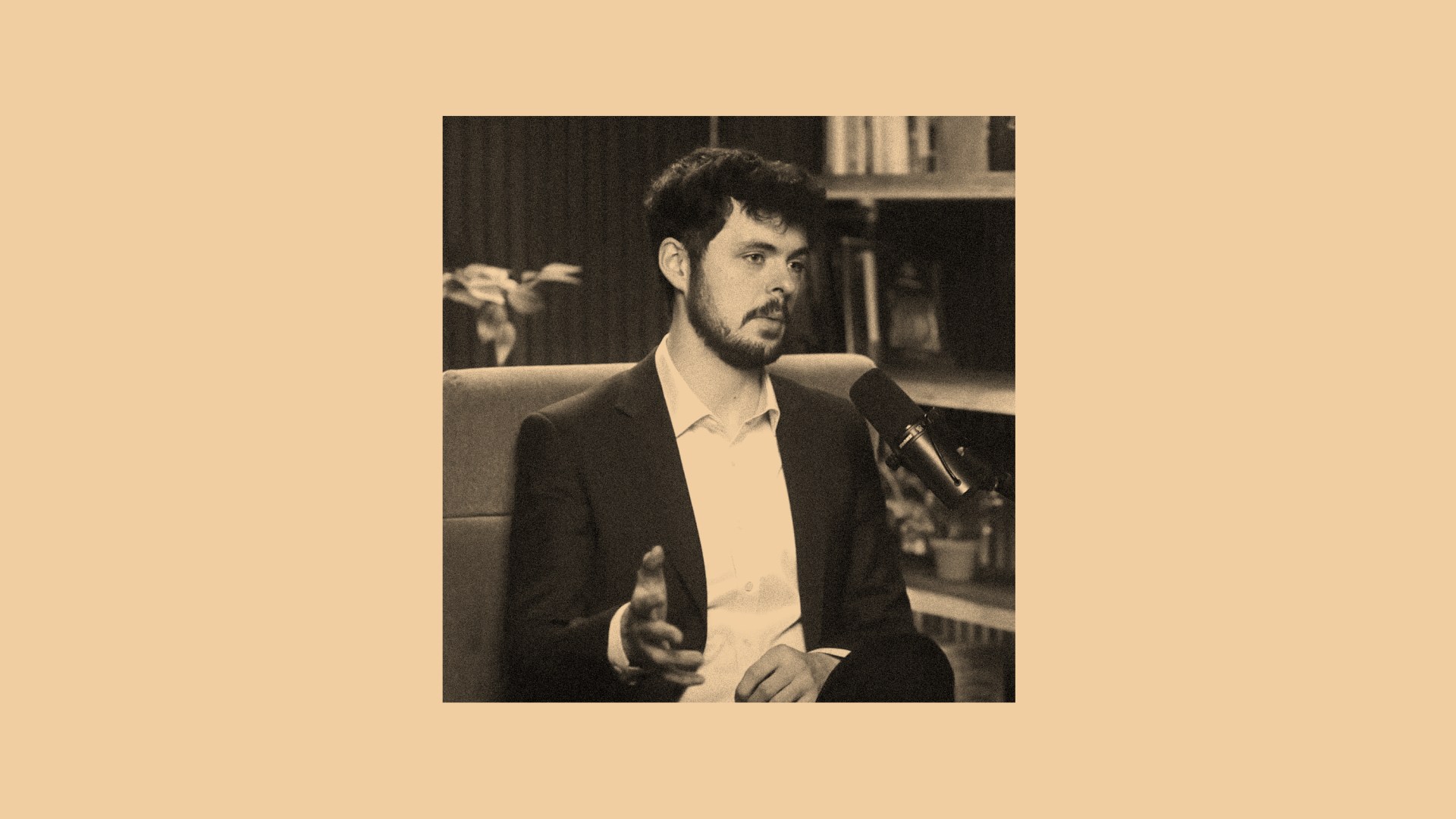
O’Connor, host of the Within Reason podcast, with over a million subscribers, was in conversation with host André Duqum on the Know Thyself podcast, which seems to be on the New Age side of the “spiritual but not religious” spectrum.

In the clip—excerpted from a much longer conversation—O’Connor displayed a kind of vulnerability quite rare for a person who has built his platform on confidence and rationalism. He confessed a pull toward cynicism, and said he didn’t like where it had taken him:

The person who looks at everything with a sharp edge and tries to debunk and criticize everything—it’s easy and it’s doable and I’ve certainly been there. I know in my family, when I was living at home, it was sort of constant. And you can always fall back on this idea of “I’m just trying to get to the truth. You said something I don’t think is true, and I’m just asking you a question. I’m just trying to understand your view.”

“But sometimes it is just inappropriate to do that,” O’Connor continued. “The intellect is like a knife or a chisel that you can use to tear away at false stuff, but you’re supposed to do it in the service of creating sculpture. You’re supposed to be bringing something out of whatever you’re chiseling away at.”

“If you take that chisel and just knock it all the way down through,” he said, “then you end up with nothing. … It’s like somebody trying to understand the Mona Lisa by looking through a microscope at the paint strokes.”

O’Connor then pointed to the famous philosophical thought experiment of a patient named Mary, who has lived all her life in a completely black-and-white environment, having seen no color at all. She’s been given voluminous factual information on the color blue, “about the wave length, about the effect it has on the consciousness—everything that could be even known and written down onto paper about blue.”

“The question is, when she steps outside of that room and looks at something blue, has she learned anything?” O’Connor asked. “And intuitively the answer is yes. Surely there is something that you can know that is not reducible to words on paper.”

O’Connor confessed that thinking this way—recognizing forms of knowledge that are non-propositional—is not easy for him, trained as he is in syllogisms and argument. But he recognized that there’s more to truth than what can be quantified and measured:

I think C. S. Lewis once wrote about how he realized that the problem with his worldview before he became a theist was that he was being asked to take the things that are most unnatural to him—numbers, abstraction—and say that’s the true thing, the thing that’s really there: the math, the syllogism. Whereas the thing that was most real to him—the narrative, the feeling, the experience—that’s the thing that’s wrong and fake and we should be suspect of. It seems like it was kind of the other way around.

This certainly isn’t any kind of conversion story. O’Connor will no doubt be back at the syllogisms this week in cyberspace. He is not at all backing down on his vision of a world without God. But consider the courage it took for him to say what he said—knowing that someone like me would say, “Aha! See! I caught you!”

Yet to do that would take cynicism on my end too. It flattens O’Connor to a collection of arguments rather than seeing him as a human who can image back the mystery of a personal God, a complicated person who can remind me of the things that matter most. Perhaps O’Connor had been cynically trapped in his syllogisms, but my first expectation of him was cynically trapped in somebody’s algorithms.

That’s the problem with so many of our public debates about God and the meaning of life—for Christians as well as for non-Christians. Most of the time, we are just giving Mary another set of facts about the wavelengths of blue.

To some degree, that’s what we must do. Paul debated the skeptics at the Areopagus and in the court of Agrippa. We are dealing, after all, with matters of a God who entered history in space and in time in the person of Jesus, and this “has not been done in a corner” (Acts 26:26, ESV throughout).

At the same time, God is not reducible to syllogisms and testing. If “in him we live and move and have our being” (17:28), then to examine him the way we would quarks or quasars would require godlike perspective, the ability to stand outside of and thus be able to interrogate the one who says, “I am who I am” (Ex. 3:14). The perplexity before a mystery we cannot comprehend is not an obstacle to our discerning the ultimate but rather a necessary first step.

That’s why the vision of God revealed in the Scriptures is quite different from the way we debate God as just another political or philosophical or cultural dispute in order to find who’s the winner and loser of the argument.

The message is to “taste and see that the Lord is good” (Ps. 34:8). When we ask, “Can anything good come out of Nazareth?” the message doesn’t give us statistics but instead says simply, “Come and see” (John 1:46). We can’t do that standing from the outside, examining good tidings of great joy the way one would a thing or a concept.

As Christians, we lose sight of this. We become cynical, and that cynicism is easy. In a time like this, it can be mistaken for a sign of intelligence. If I assume that everyone is fake, everything is a scam, then I will turn out to be right much of the time. And I will protect myself from the kind of vulnerability in which a Christian can sometimes admit doubting and an atheist can sometimes admit wondering. That leads us to joylessness, to a lack of wonder and awe, without which we cannot remove the veil that shields us from the glory of God (2 Cor 3:18).

Sometimes we get a little glimpse of how hardened we’ve become, how little we expect the Spirit to move in us or in others. Every once in a while, though, someone reminds us. Sometimes, at least once for me, that’s an atheist on YouTube.

Russell Moore is the editor in chief at Christianity Today and leads its Public Theology Project.

Ideas

The Silicon Valley Revival Has Momentum. Next Comes Maturity.

Personal spiritual formation should impact the apps and algorithms we export and the company cultures we create.

Blue circuit lines with a gold glow in the middle.
Christianity Today July 30, 2025
Illustration by Elizabeth Kaye / Source Images: Getty

A recent surge in media coverage—from The New York Times to The Atlantic to The San Francisco Standard—describes a fresh and unexpected curiosity about Jesus among tech workers, founders, and investors. Faith-based gatherings are happening in corporate offices. Prominent leaders are speaking openly about their religious commitments. Public spaces are filling up with worship.

Throughout church history, we’ve seen that movements of God have often begun with similar flashpoints—moments of widespread visibility, cultural disruption, or public repentance. Think of the first Great Awakening, incited by the fiery preaching of Jonathan Edwards; the Azusa Street revival, birthed by one prayer meeting that eventually became three services a day for over three years; or the youthful energy of the Jesus People Movement, which eventually swept through California.

In our efforts with a faith-and-work ministry here in the Bay Area, we’ve been exploring what faithful followers of Christ can do to turn this momentum into maturity. How can leaders in this region respond with both excitement and discernment to what’s being reported? The stakes are high. Because the innovations and companies here often shape how the rest of the country and world lives and thinks, this moment might signify a new, more expansive work of God than we can imagine.

Discipleship in this context must be both theologically grounded and vocationally engaged—not just for personal faithfulness but as a way of stewarding the outsize cultural influence of this region.

In Silicon Valley, we find a unique and contradictory combination of post-Christian disillusionment and pre-Christian openness, hostility toward religion and curiosity about Christ, and fascination with the new alongside a longing for something lasting. Many of us are transplants, drawn to this place of promise where a single idea can change the world. Nothing seems impossible with so much energy and innovation in the air—but at the same time, everyone is weary and running on fumes.

The concept of exilic discipleship, first coined by faith-and-work leader David Kim, offers a helpful framework for addressing these particular cultural realities. Kim describes exilic discipleship as prioritizing “a posture of listening, discernment, and loving engagement with the surrounding community informed by the biblical paradigm of exile.” Others have written about the biblical concept of exile as a helpful framework for Christians in a world that doesn’t share our values.

To understand what exilic discipleship looks like, it’s helpful to study the stories of some of the believers we’ve encountered through our ministry.

One of our board members rose through the ranks in senior product roles at major tech companies, including Meta, Yahoo, Amazon, Roku, and Intel.

While building digital experiences to drive streaming engagement, she grappled with challenges familiar to many Christians in Silicon Valley. At one point, her role required her to optimize for increased viewer screen time, a key product metric. At the same time, as a mother of two young children, she was actively limiting their screen time at home. How does one stay faithful when professional success seems to conflict with personal convictions?

Living as an exile means embracing this constant state of tension. Your internal identity comes into regular conflict with the external demands of your environment. As the old hymn proclaims, “This world is not my home.” And yet Christians are constantly tempted to acculturate by allowing their identity to be shaped by external factors.

The biblical character of Daniel provides an archetypal example of exilic living. Somehow, he managed to succeed in his professional role of making an evil king successful while maintaining a deep sense of personal integrity. We often say, “If Daniel could work for Nebuchadnezzar, you can work for anyone.”

This kind of exilic discipleship requires a humble recognition that there are no easy answers, no simple ethical formulas to fall back on. One believer we know has been censured by human resources for inviting coworkers to a Bible study at her home. After a lengthy process that nearly cost the Christian her job, she continued with the study but stopped inviting coworkers to attend. Another felt terrified to discuss spirituality with his coworker, then discovered over a casual lunch conversation that the coworker and her spouse had been asking ChatGPT to summarize books of the Bible in the evenings.

Rather than leading with either outrage or withdrawal, we seek to help Bay Area Christians cultivate humility, resilience, and a posture of creativity. We want to be engaged but not assimilated, confident but not arrogant, prophetic yet patient.

The goal is not merely survival in a secular workplace but faithful influence—Christians who are equipped to shape company cultures, influence product decisions, and cast a redemptive vision for work and innovation.

The Bay Area reveres a particular kind of Silicon Valley street smarts. We celebrate founders who disrupt systems, hackers whose instincts see options no one considered before, and investors who risk big and win even bigger. Respect is earned through fast-paced failure and success.

And yet while this region is filled with people who can build, scale, and optimize, the bigger challenge is knowing what is worth creating in the first place. How can our work lead to the flourishing of communities? What would it look like to build not just what’s possible but what’s good and true?

We often imagine discipleship as taking place primarily in churches and small groups. But in the Bay Area, skepticism toward institutional religion runs deep: 41 percent of people consider themselves religious while 65 percent consider themselves spiritual. Even though people are hesitant to show up in churches, spiritual curiosity is emerging in unexpected places—in particular, the workplace, with its pressing questions about artificial intelligence, privacy, dignity, and personhood and its demands on employees’ identity, purpose, and worth.

Through discipleship that meets people where they are—in labs, incubators, and boardrooms—workers discover not only the credibility of Christianity but also its relevance to vocation. But this doesn’t happen automatically. It requires, once again, exilic discipleship, a kind of personal spiritual formation that gets expressed in real-life decisions about ethics and leadership.

We hope and pray that this reported momentum is only the beginning in the Bay Area. But we also know that the spark of excitement around Christ that has been lit here can only be kept flickering by the slow, relational, often-invisible work of discipleship—the kind that transforms not just what people believe but how they live, lead, and love. When this happens, exilic disciples will bring the presence of Christ into every workplace.

Maybe that’s the real story unfolding in the Bay Area: not just that people are becoming curious about Christ but that exilic discipleship is already happening—quietly, faithfully, and redemptively.

Of course, the big question isn’t what’s happening now. It’s what might come next.

What if the Bay Area, renowned for its innovative spirit, also became recognized as a place where we Christians learn to navigate the unique tensions of work in the modern age? What if, in addition to exporting apps and algorithms, we also distributed redemptive leadership, theological depth, and vocational integrity?

We believe that’s the story God is writing. And he’s just getting started.

Denise Lee Yohn is a keynote speaker and author on brand leadership. Paul Taylor is a longtime pastor serving as the director of Unify for Transforming the Bay with Christ. Together, they cofounded the Bay Area Center for Faith, Work & Tech.

Church Life

Meet the Indian Gen Z Christians Who Love to Rap

“I knew then this wasn’t entertainment; it was ministry.”

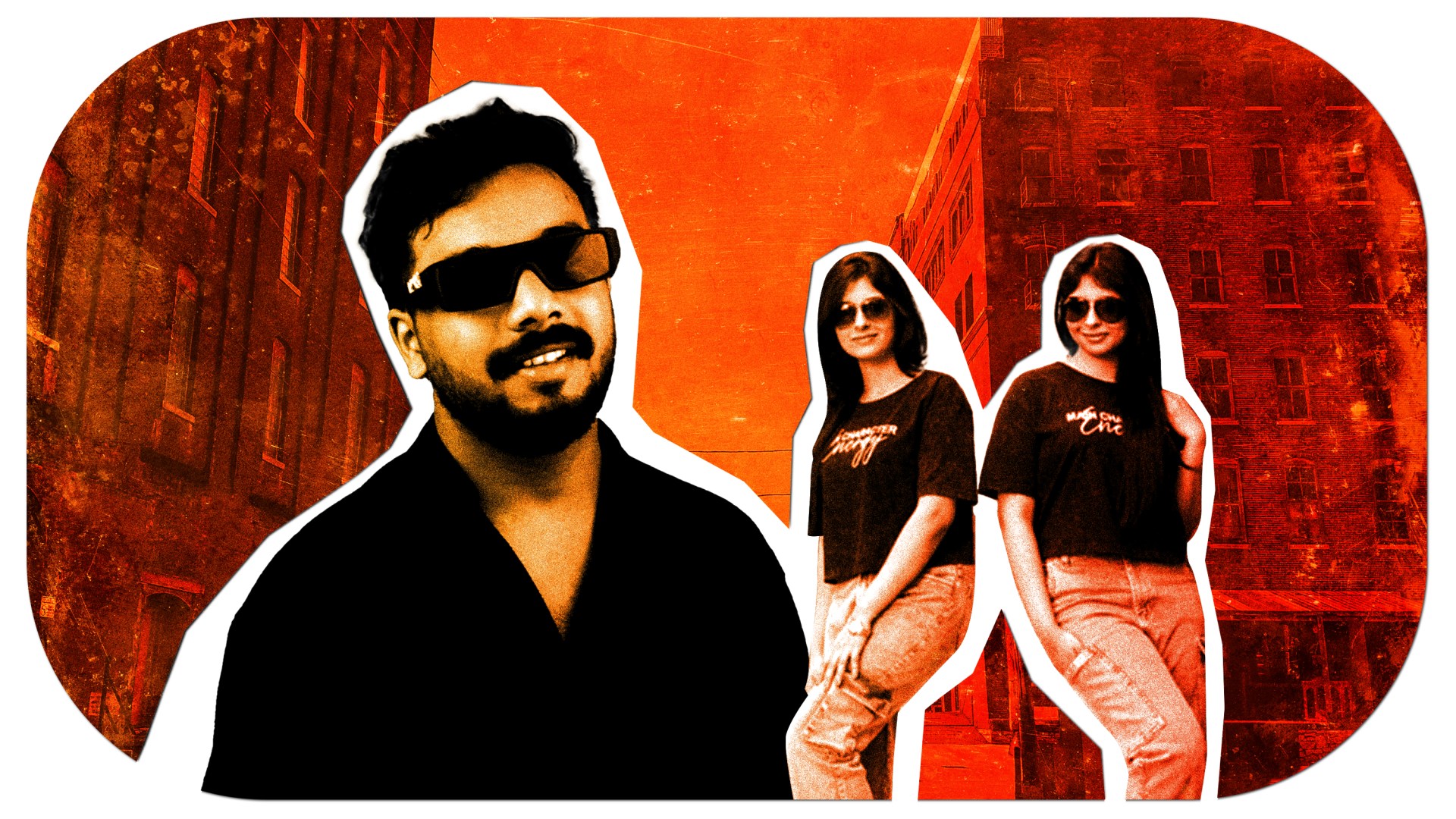
Indian rappers, Joel Salvi and Varsha and Sherin.

Christian Indian rappers, Joel Salvi (left) and Varsha & Sherin (right).

Christianity Today July 30, 2025
Illustration by Mallory Rentsch Tlapek / Source Images: Unsplash, Youtube

On a humid evening in June 2019, 18-year-old Joel Salvi stepped onto the stage inside a dimly lit Catholic church in Pune, a city in India’s Maharashtra state, as nearly 50 teenagers filled the pews, murmuring with anticipation. The moment the beat dropped—deep, thumping bass vibrating the church walls—Salvi grabbed the mic. Rapping in Hindi, he launched into “Mera Khuda Aayega” (“My God Will Come”), his voice cutting through the air with urgency and conviction. With every verse, he urged the crowd to turn to God in moments of despair, as he proclaimed that even in disappointment, the Lord remains faithful.

Afterward, he remembers a young man approaching him in tears. “He felt seen and loved by God for the first time,” Salvi said. “That moment wrecked me. I knew then this wasn’t entertainment; it was ministry.”

Salvi, who comes from in a Christian family in Pune, grew up listening to American Christian rappers such as Lecrae, KB,  Propaganda, Tedashii, and Sho Baraka (who is also the editorial director of CT’s Big Tent Initiative). In 2019, Salvi started writing and performing his own rap songs in churches and Christian concerts.

Today, Salvi is part of the growing number of Christian hip-hop artists in India. With distinct Indian rhythms, languages, and experiences, the pioneers of the art form are pushing against Christians more accustomed to traditional worship-band music, as well as facing the growing anti-Christian sentiment in the Hindu-dominated country. Using social media platforms and rapping at youth group meetings, these artists hope to influence a new generation of Christians.

“I grew up immersed in rhythm and poetry, but it was Christ who gave it purpose,” Salvi said.

India was first introduced to hip-hop in the 1980s through break-dancing films like Beat Street, and it grew in urban hubs like Mumbai, Delhi, and Chennai. In the early 2000s, homegrown artists like Bohemia, Baba Sehgal, and Yo Yo Honey Singh localized hip-hop with regional dialogue and exposure in Bollywood films. More recently, gully rap, a socially conscious style of rap that started in Mumbai, is growing in popularity with rappers like Divine and Naezy.

By 2023, about a third of India’s top 50 songs on the audio streaming platform Spotify were hip-hop, and more than 70 percent of the country’s hip-hop listeners are Gen Z.

Varsha and Sherin Peter, twin sisters who also go by the name Hosanna Twins, said they first discovered the genre through Indian rappers Honey Singh and Raftaar in 2012.

“We were fans, but we sang devotional songs at school,” said Varsha, recalling the Christian school she and her sister attended.

The daughters of a pastor, they decided to start rapping themselves, fusing beat-driven verses with the gospel message. They performed their songs at youth group meetings, churches, and schools. In 2018, Varsha and Sherin released their first single, “Yeshu Naam” (“Jesus’ name”).

Varsha remembers that many in the Christian community were initially shocked to see girls rapping—most well-known rappers in India are male—but others were curious. The sisters viewed the novelty as an opportunity to introduce young people to Jesus.

Their father, Lambert Peter, pastor of Assemblies of God Prarthana Bhawan in Delhi, was also skeptical. Members of their church criticized their endeavor, thinking the music form was unfamiliar or worrying about rap music’s association with sex, drugs, and violence. Others believed worship music should have traditional choirs or acoustic sets.

“I used to think, How can the Lord be glorified through these things?” Peter said. But seeing how rap engaged and transformed young hearts, he embraced it: “God’s name can be glorified through hip‑hop too.”

Today, the sisters are often invited to perform at church youth group meetings and camps, where they seek to encourage Gen Zers, many of whom are dealing with high levels of stress and anxiety, to trust the Lord. For instance, in another popular single, “Kyun Darna”(“Why Fear?”), they sing about God’s presence in both the easy and the hard times. “He is my song in sorrow, in illness, in worries, in adversity,” they rap in Hindi.

The sisters, who now have 13,000 subscribers to their YouTube channel, are each pursuing a master of divinity while leading Hosanna El Shaddai Ministry, a youth outreach in the slums of Delhi, an area notorious for crime, drugs, and prostitution.

“Rap culture is not growing in church fast, but where there’s youth, there is interest—and the church is beginning to understand our culture,” said Lambert Peter, who is now a big supporter of his daughters’ group.

Other Christian rappers, many of whom also rap in Hindi and English, have drawn a following online, including Raushan Bhairamadgi (or RJBMADZ), Roshan Tony, Joy Punekar, Isaac Dailey, Sheldon Bangera, and Prabhu Pammi (who raps in Telugu).

Yet Salvi is one of the best established, with nearly 50,000 followers on Instagram. His first song to go viral, “Yoddha”(Warrior), is based on the verses in Ephesians 6 about putting on the armor of God. Since its release in 2022, the song has garnered over 550,000 views. The exposure led other artists to approach Salvi to collaborate. A year later, he released his first self-produced album, Repent, on YouTube and Spotify.

While the Christian hip-hop movement is steadily growing “online, on the streets, in colleges,” Salvi noted, rapping doesn’t provide a fixed flow of income. Although sometimes the shows he performs at are sponsored, sometimes they aren’t.

Still, he sees the value in his ministry, as he hopes to reach young people all over the country through collaborating with Christian rappers across regions and languages, including Tamil and Marathi. He sees a future where Christian rappers and the church work together to produce songs in more Indian languages.

From his position as a Christian influencer, Salvi noted the importance of accountability; he regularly attends his local Assemblies of God church and meets with spiritual mentors. He said he feels responsible for his followers and makes sure that his song lyrics and social media posts are grounded in the Scriptures.

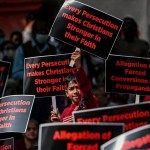
Beyond seeking acceptance within the church, Christian hip-hop artists exist in an environment where persecution is increasing. In 2024, Christians in India faced 834 attacks nationwide, a jump from 734 a year earlier, according to a report from the United Christian Forum. The actual number is likely much higher, as many may not report due to fear of retaliation. The Evangelical Fellowship of India documented 640 verified incidents in 2024, including 4 murders, church vandalism, forced conversions, and wrongful arrests.

In this context, Christian hip-hop artists see their music as a tool of protest. The Hosanna Twins have positioned their music as gospel‑based resistance to persecution and injustice. Their songs, including “Yeshu Naam” and “Kyun Darna,” contain lyrics about standing firm in Jesus amid societal criticism and spiritual threats.

The sisters have faced this firsthand, as they often receive hateful comments on their YouTube videos calling them anti-Indian or “rice-bag” Christians (a slur alleging they converted for material gains) and blaming them for forcefully converting Hindus to Christianity. Initially, the sisters said, reading the comments would upset them, but as they continued their musical career, they decided to focus on producing quality music and ignoring the comments.

Meanwhile, in Christian rappers RJBMADZ and Suraj Sahoriya’s “Mera Yeshu Yeshu” (“My Jesus Jesus”), they sampled a song that Hindu nationalists turned into a viral meme several years ago to mock Christianity. The artists used the song to rap about the power of God to forgive sins and to save. “Why shouldn’t I sing the name of Jesus? / Why shouldn’t I think of only one name?”

Salvi noted that although his songs don’t mention the persecution directly, he tries to infuse his songs with both “lament and hope.” For instance, in his song “Godfidence,” he raps in Hindi:

Let them say anything; it doesn’t matter.
Whether you hate me or love me,  I know
I will keep walking on God’s path because
The heavenly God sees my heart.

As rap grows in popularity among young people, Christian rappers hope that more will encounter Jesus as they come across the artists’ music online.

“Hip‑hop could be a weapon for truth, healing, and revival,” Salvi said.

Ideas

Jesus People and the Vibe Shift

Contributor

Half a century ago, established churches looked askance at young men newly interested in Jesus. Let us welcome and exhort them today.

Jesus making a 'peace' sign with his fingers.
Christianity Today July 30, 2025
Illustration by Elizabeth Kaye / Source Images: WikiMedia Commons, Pexels

When the hippie movement began in the mid-1960s, it seemed a curiosity. What were the Californians up to this time? 

The rest of the nation was much as it had been throughout the prior decade: staid, traditional, religious, happy to be home from the war and growing young families. But what began as an outgrowth of the smaller beatnik movement spread beyond its (in)famous San Francisco intersection

Soon, college kids across the country were coming home for Thanksgiving with ideas so revolutionary they made the Jazz Age look like a chaperoned prom. The counterculture went mainstream, the sexual revolution was well underway, illicit drug use was increasingly normalized, and the proportion of irreligious Americans—though still small—doubled in a decade.

But then something curious happened: Hippies began to become Christians or, as they put it, “Jesus People.” 

I’ll return to the history in a moment, but first let me tell you why it’s relevant now. As I think about American Christianity’s present “vibe shift”—think apologetics on The Joe Rogan Experiencereports of rising Bible salesa simmering revival among young men, and rumors of new interest in liturgy, tradition, and what the prophet Jeremiah called the “ancient paths” (6:16)—I can’t get the Jesus People out of my head. 

They were both innovative and reactive, breaking with extant churches and popular culture alike. They both influenced the establishment and became the establishment, and I can’t help but suspect their history offers lessons as we consider what the Spirit might be doing in the American church today.

When the Jesus People came to Jesus, they didn’t meet him in prim and proper churches. They didn’t hear about him from collared priests. They learned of Jesus through peers—peers who looked the part. They studied Scripture outside, hair flowing in the wind. They hitchhiked to music festivals. They even worshiped with that instrument of folk singers and pot smokers: the guitar! Some new converts were miraculously healed of drug addictions. Others struggled on, but there was grace for that. Jesus was catching the fish, and the cleaning would come with time.

For some Christians, this was all very uncomfortable. They worried these newcomers were engaged in a distraction, a concession to the counterculture, even a kind of syncretism. The right way forward, some churchgoers thought, was basically to go backward: to shirts and ties, crewcuts and hymns and all that they signified.

But the Jesus People pressed on, and their creative cross-pollination between Pentecostalism, evangelicalism, charismatic Catholicism, and popular culture brought new energy into the American church. Scholar Alvin Reid has found that the Jesus People movement increased baptisms in the Southern Baptist Convention (SBC) more than any other force in history. 

And the SBC was hardly alone in benefiting. If you’ve ever sung along to contemporary worship music, traveled on a short-term mission trip, or been influenced by a campus ministry, you too are likely downstream of the Jesus People.

The movement’s influence wasn’t only cultural, though. With time, it was institutional as well. The enthusiasm of the Jesus People brought a new generation into leadership roles in local churches and, eventually, in many of the most influential and active Christian—and particularly evangelical—organizations in the world. While other branches of the church saw their numbers decline, especially among the young, the Jesus People helped evangelicalism grow, its numbers peaking in the mid-’90s at about 1 in every 3 Americans. The Jesus People movement’s effects are so significant that many scholars believe it should be considered a fourth great awakening, ranked among prior iterations of large-scale American revival.

Now, about today. In some ways, the Jesus People movement was the opposite of the shift we’re seeing now. It was a progressive movement, in tune with popular culture and sensitive to those outside the church. Early projects included homeless ministries and drug rehabilitation outreaches. You might say its flavor was less Romans and more James.

The current vibe shift is more conservative in politicstheology, and lifestyle alike. It’s more interested in catechism than outreach, less James and more Romans. But like the Jesus People, it’s a great movement toward Christian faith. And also like the Jesus People, it’s disproportionately male

Though church leadership has been predominantly male for centuries, at the lay level, this kind of male enthusiasm is a rare thing in Christian history. Indeed, one of the earliest critiques of Christianity came from the pagan philosopher Celsus in the second century. Reeking with misogyny, he sneered that Christianity was a religion not for properly educated men but for women and children.

Our faith’s welcome to women and the powerless is a good thing, to be clear. The Gospel of Luke opens with Mary praising a God who “has brought down rulers from their thrones but has lifted up the humble,” who has “filled the hungry with good things but has sent the rich away empty” (1:52–53). And to this day, Celsus’ charge rings true in many churches. Our faith has nearly always been majority female.

When a revival movement skews male, then, that’s noteworthy. And though the dust hasn’t settled yet, this vibe shift looks like a change substantially among young men—with wide social and political implications. In the past four years, Democratic pollster David Shor said in March, “young people have gone from being the most progressive generation since the baby boomers, and maybe even in some ways more so, to becoming potentially the most conservative generation that we’ve experienced maybe in 50 to 60 years.”

Insofar as this means a revival of churchgoing in America, a return to Scripture, and a rejection of progressive doctrines, we should welcome it. Gen Z Christians who are part of this vibe shift are rejecting ideologies that paint certain races or classes of people as inherently righteous or wicked. Whether they realize it or not, this is a revival of the theology of the imago Dei.

And Gen Z’s consideration—even embrace—of biblical sexual ethics is particularly important. It unites them not only with generations of Christians who have gone before them but also with Christians in the Global South today. It draws them nearer to both the past and the future of the church. As G. K. Chesterton wrote in Orthodoxy, tradition is “the democracy of the dead.” And that vote is a landslide.

On all these matters of faith and practice, older Christians like me should take care to avoid repeating the mistakes the established church made when the Jesus People came around. We should welcome the good of this vibe shift and encourage zoomer Christians bringing a new dedication to their faith.

But we should also give the same reminder that the early church gave a young and zealous Paul: Yes, go and teach good doctrine, but please do “remember the poor” (Gal. 2:10).

As Gen Z swings conservative, it is vital that a biblical understanding of justice is not lost. God commands his people in every generation to “learn to do right; seek justice. Defend the oppressed. Take up the cause of the fatherless; plead the case of the widow” (Isa. 1:17). Attention to injustice is not a progressive cause, and callousness toward the poor and outcast is not a conservative virtue. The Old Testament prophets make this inescapably clear for Christians, as did Jesus (Luke 4:18–21). He is the vine, and we are but the branches. It’s by abiding in him that we bear fruit (John 15:5).

The young men newly coming to church are not yet mature—they need exhortation as much as encouragement. But they are seeking Christ. I pray we’d walk alongside them, love them, and challenge them to read the Prophets alongside the Epistles, to practice pure religion and match faith with deeds (James 1:27, 2:14–20), to be more Peter in Caesarea (Acts 10) than Peter at the fire (Matt. 26:69–75).

Jesus is catching the fish. The cleaning will come with time.

Jordan K. Monson is the author of Katharine Barnwell: How One Woman Revolutionized Modern Missions and is a professor of missions and Old Testament at Huntington University.

Apple PodcastsDown ArrowDown ArrowDown Arrowarrow_left_altLeft ArrowLeft ArrowRight ArrowRight ArrowRight Arrowarrow_up_altUp ArrowUp ArrowAvailable at Amazoncaret-downCloseCloseEmailEmailExpandExpandExternalExternalFacebookfacebook-squareGiftGiftGooglegoogleGoogle KeephamburgerInstagraminstagram-squareLinkLinklinkedin-squareListenListenListenChristianity TodayCT Creative Studio Logologo_orgMegaphoneMenuMenupausePinterestPlayPlayPocketPodcastRSSRSSSaveSaveSaveSearchSearchsearchSpotifyStitcherTelegramTable of ContentsTable of Contentstwitter-squareWhatsAppXYouTubeYouTube