Culture

Nicholas Carr on AI Doctors and Internet Edgelords

The author and tech journalist joined the Russell Moore Show to discuss what we stand to lose when we embrace artificial intelligence.

A humorous illustration based on Michelangelo's "The Creation of Adam". Adam holds a cellphone, ignoring God while a red heart symbol floats above the phone.
Illustration by Ronan Lynam

Author Nicholas Carr joined The Russell Moore Show to talk about how technologies that promise to connect us are instead damaging our relationships and our ability to make sense of the world. This excerpt from their conversation appeared first in print. Listen to the entire episode after July 9. This interview was edited for clarity and length.

A portrait of Nicholas Carr and Russell MooreIllustration by Ronan Lynam
Nicholas Carr and Russell Moore

Russell Moore: A lot of people think of technologies (such as AI and social media) merely as tools. One of the arguments that you make in your book Superbloom is that the way we use these technologies changes our experience of the world. 

Nicholas Carr: One of the big points that I try to make in the book is that human beings grew up in a physical world, in a material world. We are profoundly ill-suited to living our lives, particularly our social lives, online.

We thought that being able to communicate with a much broader set of people more quickly in much greater volume would expand our horizons, would give us more social context, a deeper understanding of each other.

What we’ve seen is that we are overwhelmed by the communication that we thought would liberate us. And it turns out that a lot of our social identity hinges on being in physical places with groups of people. That doesn’t mean we can’t extend that with telephone calls and letter-writing and everything. But human beings are very much dependent on being together in the physical world. 

Until social media came along, you’d go out and you’d be with one set of people. Maybe it would be your classmates in school, or your coworkers at work, or your family. Maybe it would be a group of friends going out to a restaurant. You’d socialize there and you’d learn about one another. And then you’d separate, and there would be time when you were by yourself. You could think back over what just happened and about your relationships. You would have downtime, in which you could organize your thoughts, question yourself, and relax for a little while—because there is a stress involved in socializing. And then you would go on to another place at another time with another group of people. And it’s through these physical interactions that we expand our empathetic connection to other people.

RM: That makes me think of the ideal paradigm for church life that we have had over many generations: A group of people who are gathered together some of the time and then are doing their own spiritual work apart from that, and then gathering back together for acts of service or mission.

NC: And it’s both the being together and the being apart that’s important. When you transfer social life onto the internet and you interact with people through screens, then the rhythm of your life, the tempo of your life, is completely different. You can socialize all the time because the social world is there in the form of your phone, which we’ve trained ourselves to carry all the time.

It’s not just one set of people you’re interacting with. It’s everyone. It’s people you go to school with, people you work with, your parents, your children, your friends, anonymous crowds of commenters online, and so forth. All the socio-temporal divisions, the space and time divisions that are inherent to living and socializing in the real world, in the physical world, are simply decimated.

A lot of the antisocial behavior, the rudeness, the polarization of views, and the shunning of other people that we see online comes from the fact that our lives have lost their connection to space and time.

RM: One of the things that I’ve noticed for some time now in evangelical Christianity is a group of young men who don’t seem to aspire to be preachers or pastors or even scholars in the way that previous generations would have aspired to those things. They want to be “edgelords” on the internet. One of the ways to do that is to post something really shocking in the hopes that people will react to it. And you can see these young men become more extreme, sometimes to the point of Nazification. 

I thought about that phenomenon as I was reading your book. You quote sociologist Sherry Turkle about this digital way of life as an “anti-empathy machine.” And what we have seen is that empathy itself is viewed as a sin, a fake virtue. What does technology do to our ability to have empathy?

NC: One of the great strengths of human beings is how adaptable we are. We can adapt to different situations very well. But adaptation doesn’t necessarily make you better. You can adapt to an environment in a way that makes you less empathetic, less sympathetic, angrier. When you have people saying that empathy is an enemy, I think that’s a manifestation of how people adapt to the online environment. Empathy gets in the way of promoting yourself, getting attention, being an edgelord.

One thing Turkle pointed out is that empathy is a complex emotion, unlike anger and fear, which are primal emotions that come from lower down in the brain and are triggered immediately. Empathy is something you learn how to feel, and it requires attentiveness to other people—trying to get inside their heads and understand them. One thing that online life steals from us is attention. Because we’re constantly overloaded with new messages, new information, we simply don’t have time to back away from the flow and say, “Let me think about whether this is important. Let me just pay attention to this person.”

When you’re constantly distracted, constantly shifting your attention rather than focusing it, not only do your thoughts become more shallow—because deep intellectual thinking requires concentration and focus—and not only does it affect your intellect. I think it affects your emotional capabilities too. You start to lose these deep, difficult, complex emotions that take time and attentiveness, and you revert to instinctive emotions like anger, fear, and belligerence. We see a lot of that online, and it is very concerning that people start to say, “Well, empathy wasn’t important anyway.” People are expressing the fact that they have destroyed their ability to experience empathy, so they say it’s not important anymore.

We see this on the intellectual side too, where people say, “I don’t need to read books anymore. I don’t need to focus on one thing for a long time. That’s just a waste of time. I need to process information as quickly as possible.” In adapting to our new environment, we start to take on the qualities of that environment.

RM: It makes me think of the way Jesus taught with parables in the Gospels. There was this sense of getting people to a point of perplexity: What does the father do when the son who has insulted him comes back home? Who was the neighbor to the person beaten by the side of the road? It’s almost required that we think this through and feel this through. And then Jesus turns it around and flips it on the person who’s hearing and reveals that it’s a completely different way of thinking.

I’m finding more young Christian students and others who really want to work on their spiritual development but say they don’t know how to read a text. They don’t know how to get lost in the Gospel of Mark or in the Book of Jeremiah. That’s the time we’re in, right? 

NC: That’s absolutely right. Just as it takes time to learn how to feel complex emotions like empathy, you have to learn how to pay attention. This is one of the most important things in childhood education, because kids are naturally distractible. And so are adults. Being able to focus your mind on something important—maybe it’s what you’re reading, a conversation you’re having, or a work of art—is something that has to be learned and practiced.

We are not teaching kids the skills of managing their own minds. Instead, we give technology sway over our attention. We say that whatever comes up next on the phone is what I’m going to pay attention to. We’re not training kids how to manage their own conscious minds, which is essential to choosing what you want to do at any given moment. As adults, we’re losing that ability as well. We’re letting the technology make critical choices about what we think about rather than making those choices ourselves.

RM: I have found myself in some version of the following conversation countless times over the past several years: A group of religious leaders will say, “Look, Martin Luther used the printing press, and the Reformation exploded. Billy Graham used the newly emerging technology of radio and television. And if we’re going to engage with the generation to come, churches have to be able to do that via artificial intelligence.” But I haven’t yet found anybody who is doing that in a way that’s compelling to me.

A Roman Catholic group created an AI priest, Father Justin, who ended up being defrocked, even though he’s not real, because he became a heretic pretty quickly. What they assumed would be a delivery system that could help people with counsel and advice from their religious point of view ended up suggesting that baptisms can happen with Gatorade. You’re dealing with a technology that isn’t just a communications tool.

NC: Yeah, communication technology used to be just a transmission technology—people on one end, whether it was a telephone line or a broadcasting system, creating some kind of content and getting it to other people at the other end. It was just a transportation network for information. With Facebook and its algorithms and YouTube and TikTok with their algorithms, suddenly the machinery takes on an editorial function. It starts choosing what content to show or not show to people.

With AI, the machinery is going to take on what we long saw as the fundamental role of human beings in media systems, which is creating the content. So suddenly you have the network—the machinery—creating the content, performing the editorial function of choosing which pieces of content which people will see and then also being the transportation network.

When this happens, you have to start to wonder about the motivations of the people in the companies operating the networks, because suddenly they’re in a position of enormous power over everyone who is going onto these systems to socialize, to find information, to be entertained, to read, or to worship. We’re entering a world that we’re completely unprepared for and haven’t really thought about, because we’ve always assumed that ultimately it’s people who are creating the information that we pay attention to. With AI, that assumption goes out the window.

One of the dangerous possibilities is saying, “Well, it’s okay, we should just go with the flow, because at least AI can give us what we want really quickly and efficiently.”

So why sit down and struggle with writing a toast for my child at his or her wedding? Why sit down and write a sermon from scratch? Why write a letter to a friend when you can just plug the desired outcome into a machine and it’ll pump out adequate material very, very quickly?

I think that’s extremely tempting in many different areas. But in the end, what it steals from us is our own ability to make sense of the world and express understanding of the world. The ultimate effect is this flattening of humanity.

RM: One of the things that people will often point to as an upside of chatbots, for instance, is that people are sometimes reluctant to tell another person the truth when it comes to their mental or physical health. There have been studies that have shown a person will reveal how much he or she is drinking more accurately to a chatbot than they will to their doctor. 

NC: I’ve been emphasizing the negative consequences of an overdependence on technology. That doesn’t mean that the technology can’t be useful when applied to a specific problem. If you have algorithms that look at medical x-rays, they can sometimes spot things that human radiologists can’t. What you need is both a deeply informed human doctor to look at an x-ray and the assistance of a digital algorithm. They can work together.

The dangerous thing is if hospitals, or the companies that run hospitals and are looking to cut costs, simply say, “We can get rid of the doctor because doctors are expensive. And the machine’s pretty good at this.”

This is what can happen in all sorts of areas. It may well be that a chatbot can play a role in therapy or in medical situations in some ways, but I think you still need the deeply trained and deeply experienced professional to play the central role. The danger is to say, “The machine’s good enough, and it’s much cheaper and less time consuming than actually having human interaction. So we’ll just go with the machine.”

If you look at where American society stands today, it’s pretty clear that we have a crisis of loneliness. I’m not saying that computers and smartphones and social media are the only cause of that. I think it’s a very complex phenomenon that’s been going on for quite a long time. But this idea that you can socialize simply by staring into a screen ultimately leads to a mirage of socializing that actually leaves people lonely.

Nicholas Carr is a best-selling author who writes about the human consequences of technology.

Russell Moore is editor in chief at Christianity Today and the director of the Public Theology Project.

Ideas

When We Make Intelligence in Our Image

From Genesis to generative models, human creativity can echo the Creator’s design.

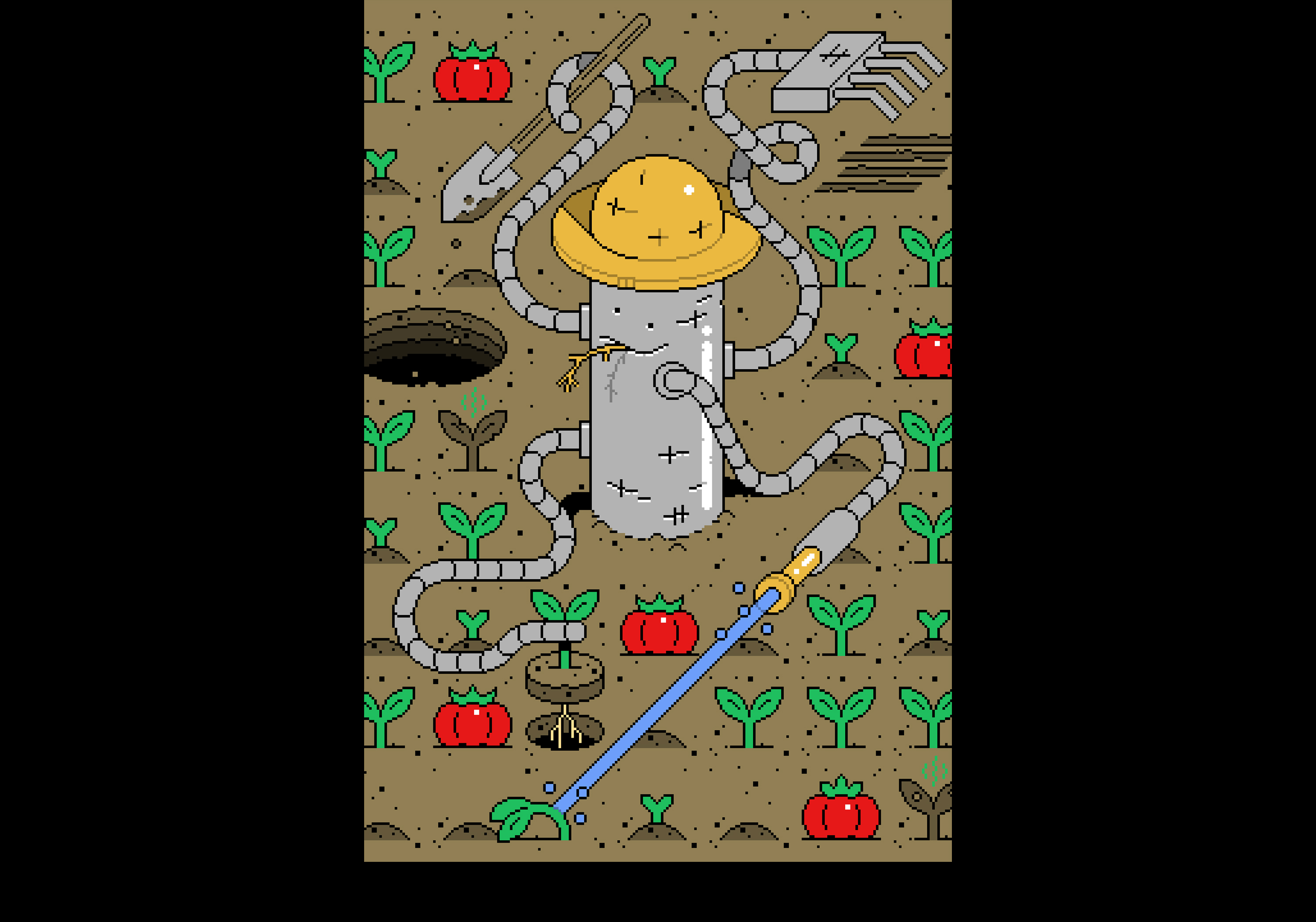
A digital scarecrow tending to the land and watering a crop.

Illustration by Nick Little

The rise of artificial intelligence presents a dazzling array of philosophical and ethical questions. What is intelligence? How does it differ from consciousness and personhood? Is AI the simulation of activities of intelligent beings or the creation of a new kind of intelligent being? Will certain AI bots become so sophisticated that these beings have emergent brain states similar to animal or human brain states, and if so, what are our moral obligations toward them? 

It also presents distinctly theological questions. Is the development of AI an act of hubris or idolatry, or a reflection of the image of our Creator and a fulfillment of our calling to bring order and fruitfulness to the world? What would it mean to align AI technologies toward human flourishing in a manner that reflects a Christian concept of what it means to be human? 

Given the pace of the AI revolution, Christians cannot afford to be late to this conversation. Fortunately, the biblical narrative and Christian theology have much to say on these topics. They yield a vision of technology that’s neither utopian nor catastrophist but is rooted in a complex and critical view of what it means to be human, to be sinful, and to join with God in the cultivation and restoration of all things.

A Christian theology of technology should begin with the beginning. Humans, as the crown of God’s creation, were made in the image of their Creator and charged to fill and steward the earth (Gen. 1:28). The God who brought forth abundance and order invited humans to “keep” and “till” the Garden (2:15, NRSV) and thus join him in that work—what we often call the creation mandate

And while we often imagine Eden as pretechnological because of an implied absence of “toil” (3:17), there’s no reason to suppose its gardeners could not have used simple agricultural tools (say, a hand shovel or pruning hook) in their cultivation of the natural world before the Fall.

After Eden, the biblical narrative describes agricultural technology in Cain’s farming (4:2), civil engineering in the construction of the first cities (v. 17), and metallurgy as Tubal-Cain “forged all kinds of tools out of bronze and iron” (v. 22). In the primordial narratives of Genesis 1–12, we see both positive and negative uses of technology. The ark was advanced seafaring technology for which Noah was given a divine blueprint, and it served an indispensable role in the preservation of life (6:14–20). The Tower of Babel was constructed using technological innovation (in brickmaking, 11:3–4), yet it resulted in the scattering and fragmentation of humankind.

Later, in Egypt, the Israelites participated in monumental works of engineering and architecture (Ex. 1:11). In the wilderness, they took great care in following God’s direction as they selected building materials and textiles for the ark of the covenant and the tabernacle (Ex. 25). The Mosaic Law advanced agriculture and public health. Military warfare in Israel’s early history involved things like iron chariots (Judges 1:19), missile weapons (1 Sam. 17:50), and advanced weaponry (2 Chron. 1:14–17). Under King Solomon, the Israelites applied their technological craftsmanship to the construction of a grand temple that reflected the glory of God (2 Chron. 3).

While the Hebrew Bible is primarily a story of God’s covenantal relationship with a family that becomes a people, it also illustrates how those people employed the technologies of their time to serve their common human vocation to steward and cultivate the created world as well as their specific calling as bearers of the Word and worshipers of God.

In the New Testament, we read that Christ was a tekton and the son of a tekton (Mark 6:3; Matt. 13:55), which was a craftsman or builder. Not only does Jesus affirm the intrinsic goodness of God’s creation in the Incarnation, but his earthly vocation exhibits the value of the technologist as one who makes new things and restores broken things. Later, Paul supported his ministry through tentmaking (Acts 18:3), and Lydia’s profits from a dyeing technology provided resources for ministry (16:14). And of course, the spread of the gospel in the early church was facilitated by Roman roads and rapidly improving technologies of seafaring, navigation, writing, and bookmaking.

At the same time, some ancient technological artifacts and methods were ethically complex. The same weapons that protected God’s people could be used against them; sometimes the Israelites found themselves at a technological disadvantage (1 Sam. 13:19–22). The same tools and skills the Hebrews used to craft the tabernacle and the temple were used to make idols (Ex. 32:2–4). From the Tower of Babel to the tower that collapsed at Siloam (Luke 13:4), technology could be built for the wrong reasons or built poorly to disastrous effect. Even the cross on which Jesus hung was a kind of technological weapon designed for destruction, a cruel instrument used to instill fear over a population and control their behavior. 

As the message of the church spread, Christian theologians soon developed a theological lens for technological work. (As I’ve written previously on these topics in The New Atlantis, I am indebted to the writings and lectures of my former professor and mentor, Diogenes Allen.) 

The Cappadocian fathers served artisans or craftsmen (tekhnîtai) in their congregations, and they wrote about the meaning and purpose of the technical crafts (tekhnai) in making the earth more orderly and beautiful. In his work On the Human Condition, Basil of Caesarea spoke of God’s artisanship and how we are artisans in his likeness when we join him in his purpose of restoration. In their commentaries on Genesis, many church fathers, from Basil to Ambrose to John Chrysostom, remarked on Adam and Eve’s “garments of skin” (Gen. 3:21) as a kind of primitive technological artifact and thus God as the first technologist.

In medieval times, Hugh of Saint Victor made the case that technology (in Allen’s thinking) has the potential to be spiritual. That is, the mechanical arts inquire into the natural order God ordained and thus into the mind of God himself. They also can restore right order, in which humankind is not subject to the natural world but steward over it. Hugh’s follower Godfrey even argued that the work of the technologist cultivates skills of patience and attention, which can benefit the life of prayer. Hugh’s work in his Didascalicon set the pattern for many later thinkers who saw the mechanical arts as essential to restoring paradise.

In On the Reduction of the Arts to Theology, Bonaventure described the mechanical arts as instruments of divine love and neighbor love. Artisans must study the order God created to craft their works, and this study shapes not only their knowledge but also their character. They produce objects that are noble, useful, and agreeable, bringing about a beauty that points to God. If it is remarkable that God could create a natural object such as a tree, how much more extraordinary that he could create beings with the insight, creativity, and will to craft useful and beautiful things with which to serve their neighbors and glorify their Creator?

Medieval Christians showed how technology could alleviate the more painful aspects of people’s labor. Monastic communities developed innovations in agriculture, animal husbandry, and sanitation, leaving more time for prayer, scriptural meditation, and the preservation of biblical and other classical texts. Monasteries also refined the technologies of writing and bookmaking in ways that made Bibles smaller and easier to transport, which were helpful for missionary purposes.

That is to say nothing of the printing press, which made the Bible available to far more people. Or steamboats, trains, and planes that carried missionaries to the far corners of the globe. Or medical and public health technologies that churches and ministries have used to alleviate suffering. Or mass media such as radio, television, and the internet, which have carried the gospel further still. 

At the same time, we need to note that all of these technologies leave complicated legacies. The agricultural advances that let nomads settle in cities led to new powers of disease, despotism, and inequality. The same roads and sea routes that delivered missionaries and trade goods delivered armies for conquest and plunder. The same printing presses that produced Bibles also produced Mein Kampf. Automobiles, nuclear technology, televisions, computers, the internet—we can all name the benefits as well as the detriments.

From antiquity, Christianity has provided a theological framework that embraces the complexity of technology. It encourages innovation as a reflection of God’s creativity and imbues it with purpose—to join him in making creation beautiful and plentiful and hospitable to life, as well as in serving those around us.

But it is also mindful of the brokenness of sin that exists at the heart of humankind. We tend to make tools of productivity into weapons of plunder, to transform what was made to glorify God into instruments that exalt and enrich ourselves, and even to fashion objects of worship and devotion. As we shape technologies, our technologies shape us—which can lead to either pride, domination, and idolatry; or purpose, beauty, and service.

Where does artificial intelligence find its place in this story? For the most part, AI is similar to other revolutionary technologies. The ingenuity it represents is a divinely given gift. Insofar as AI serves the good, it reflects our nature as beings made in God’s image and our vocation to join in the cultivation and restoration of the world. 

Humans are already using AI to diagnose diseases and develop novel medicines, fight human trafficking and find missing children, make crops more productive and businesses more efficient, improve education, explore the cosmos, and even decipher animal languages. AI “accelerationists” are not wrong to believe that AI could lead to extraordinary discoveries in fundamental sciences and life-altering advances for human civilization. 

And as with many other technologies, the power it possesses for good is proportionate to the power it possesses for destruction. We have all witnessed in recent decades how AI algorithms have turned social media into massive engines of addiction, polarization, and dysfunction—while concentrating staggering wealth in the hands of a few technocrats. It remains to be seen how artificial intelligence will impact labor markets, the struggle between democratic and totalitarian regimes, information warfare, kinetic warfare, and matters of mental health and family cohesion. AI “safetyists” are not wrong to be concerned that, if we fail to align artificial intelligence with human flourishing, we could find human civilization twisted into something far worse than it is now.

Whether AI differs from other technologies on a categorical level depends on what it is. Many practitioners today envision that, as artificial intelligence models become more sophisticated, more “general,” or more “agentic,” they will need to be recognized as a new kind of being. Some of my friends in Silicon Valley speak of submitting themselves to an AI superintelligence that will guide their lives far better than they can—which sounds an awful lot like worship.

If it’s ever proven that humankind has created new intelligent beings, this would indeed open new fields of theological inquiry. Would these new intelligences be like animals that deserve humane treatment or like human beings who merit protections and rights? Would we be misappropriating God’s own prerogative to make intelligent beings or expressing our identity as beings made in his image? What if the intelligence we created rebels against us in the same way we rebel against our Maker? Would man and machine live out their own version of Genesis 1–3?

As interesting as these scenarios are to imagine, I’m skeptical that they will ever be realized. There is a kind of instability in the term intelligence itself. Sometimes we use the term to refer to a capacity for certain activities: A human, animal, or machine is intelligent if it demonstrates the ability to learn, adapt, and solve problems. Other times we use the term to refer to a being: A supreme intelligence or extraterrestrial intelligence is a being who demonstrates these capacities. 

In his seminal 1980 essay, “Minds, brains, and programs,” the philosopher John Searle refers to “weak AI” as a simulation of intelligent processes and “strong AI” as the actual possession of a mind. Strong AI, he asserted then, is a confusion. A computer simulation of consciousness does not produce consciousness any more than a computer simulation of a hurricane produces wind.

I tend to agree with Microsoft theorist Jaron Lanier’s assessment that AI in the grander sense is, at least presently, more science fiction than science. What we call artificial intelligence today may be better understood as a new form of social collaboration. We draw on more sophisticated algorithms of data consumption, pattern recognition, and statistical prediction based on larger and larger information sets. These algorithms are powerful and may alter the course of history. But there is no concrete evidence that improving the simulation of intelligence could ever make the leap to creating intelligent beings.

Christians have particular reason to be skeptical that machine algorithms will ever approximate or compete with human personhood. While animals are conscious and possess varying amounts of intelligence, they are not persons in the rich biblical sense. To be a human is to be a God-breathed union of body and spirit, indissolubly connected. It is to be irreducibly relational, made for fellowship with God and with one another. 

We can only be who we are meant to be when we rest our faith in the one who made and sustains us, when we are reconciled to God through Jesus’ saving work on our behalf. We are capable not only of intelligence but also of love and loneliness, grief and doubt, anxiety and joy—and we are meant to be caught up in families, communities, and covenantal relationships. We are also made to be stewards over the works of our hands, not subject to them.

It is ultimately an impoverished view to believe that intelligence is reducible to its behaviors or a being is indistinguishable from its simulated activities. A corpse can be manipulated to embrace a person, but this does not mean it loves the person. Photographs of a child can be thrown into a box and shaken, but this will never produce a child.

As the Vatican noted in “Antiqua et Nova” in January of this year, 

AI cannot possess many of the capabilities specific to human life, and it is also fallible. By turning to AI as a perceived “Other” greater than itself… humanity risks creating a substitute for God. However, it is not AI that is ultimately deified and worshipped, but humanity itself—which, in this way, becomes enslaved to its own work.

This is the danger: that we should repeat the sins of the Tower of Babel or the golden calf, making the works of our hands into symbols of hubris or objects of adoration.

For all these reasons, we should be careful not to anthropomorphize or idolize artificial intelligence. Instead, we should welcome it for what it is—a reflection of God’s creativity in us that can lead to both extraordinary destruction and extraordinary good. And we should get about the business of making sure it’s the latter.

Timothy Dalrymple was president and CEO of Christianity Today from 2019 to 2025. He is leaving CT to serve as president of the John Templeton Foundation.

Books
Review

We Want What the World Can’t Give

How Ecclesiastes diagnoses our doomed quests for happiness.

Several people enjoying a leisure moment at a beach club.
Illustration by Meredith Miotke

As a writer, David Foster Wallace is probably best known for his gargantuan novel Infinite Jest—the copiously footnoted book many fans have started but struggled to finish.

But I first encountered Wallace through his essays. In college, I spent many evenings veering between audible belly laughter and choking back tears while absorbing classics like “Consider the Lobster” or “Brief Interviews with Hideous Men.”

Bobby Jamieson’s new book Everything Is Never Enough: Ecclesiastes’ Surprising Path to Resilient Happiness transported me back to those days. In particular, it called to mind one of my favorite Wallace essays, “A Supposedly Fun Thing I’ll Never do Again.”

The “fun” thing that Wallace had found disappointing was spending time aboard a cruise ship, an experience he chronicled in 1996 for Harper’s Magazine. The essay is both hysterical and moving in its anthropological insights. After cataloging the ship’s dizzying list of delights—the food, fashion, festivities, and the like—he asks a passing but vital question: “Is this enough? At the time it didn’t seem like enough.”

Summarizing his time aboard a floating paradise, Wallace writes:

There is something about a mass-market Luxury Cruise that’s unbearably sad. Like most unbearably sad things, it seems incredibly elusive and complex in its causes yet simple in its effect: on board the Nadir (especially at night, when all the ship’s structured fun and reassurances and gaiety ceased) I felt despair.

Something of that same paradox—existential despair amid bountiful sources of delight—comes through in the question Jamieson, a pastor and author, poses at the outset of Everything Is Never Enough: “Shouldn’t you be happier?” Given all the blessings life has to offer—especially in advanced Western societies—the answer might seem obvious. Yet Ecclesiastes is relentless in proclaiming that none of it brings lasting satisfaction.

 Jamieson will not leave his readers to wallow in despair, however. His book, built upon the wisdom of Ecclesiastes, delivers on the promise of its subtitle by offering a path toward resilient happiness in an unhappy world.

Throughout the book, Jamieson proves an invaluable guide to navigating a confusing and often dispiriting ancient text. In particular, he distinguishes himself in three ways: by clarifying the structure of Ecclesiastes, by articulating a deep understanding of human happiness, and by keeping Christ’s redemptive work firmly in view.

First, consider Jamieson’s exegetical blueprint for Ecclesiastes. Biblical scholars often disagree on how to interpret this book, even on basic matters like establishing the author, determining when it was written, and mapping its basic contours—to say nothing of the enigmatic pronouncements that fill its pages.

To understand Ecclesiastes, Jamieson argues, we should envision a three-story building. On each floor, we confront different questions, emphases, and views of the world. Everything Is Never Enough follows this three-story model, with the first 11 chapters examining the first floor, the next eight heading upstairs, and two climactic chapters giving the view from the top.

In Jamieson’s telling, Qohelet—the mysterious figure commonly credited with writing Ecclesiastes—remains on the first floor for most of the book. Here, his “far-seeing eyes take in the whole of human life,” as he “weighs the merits of work, sex, food and drink, wealth, power, and many other possible sources of meaning and satisfaction. He finds them all wanting and pronounces them all ‘absurd.’ ”

Qohelet only ascends to the second floor on a handful of occasions—“seven, to be precise,” as Jamieson argues. Here, he “surveys the same territory, considering many of the same subjects.” Yet “he sees something astonishingly different.” Certain things that had struck him as absurd on the ground floor are now revealed to be gifts worth savoring.

The third floor is visited even more rarely. As Jamieson writes, Qohelet “comes here only a few times, gives no warning before he does, and never stays long.” After venturing upstairs, he returns with “two crucial reference points: one, fear God because, two, he is going to judge all that you do and all that everyone ever does.”

Just as a three-story building remains intact even as the individual stories have different layouts and afford different views, the perspectives of Ecclesiastes cohere despite the outward tension between them. We learn something about the inherent limits of earthly life. We learn something about the gifts of contentment—and even the joy—we can experience within those limits. What holds it all together is the importance of fearing God, who reveals himself as the sole source of durable satisfaction through the limits and gifts alike.

As he guides readers through Ecclesiastes, story by story, Jamieson exhibits a mature and nuanced view of human happiness. This stands in stark contrast to the shallowness that pervades so many visions of the good life in contemporary culture.

To see this shallowness on full display, simply browse the self-help section of an average bookstore. The titles housed there often rely on upbeat exhortations and tidy formulas, avoiding any kind of deeper reflection on the good, the true, and the beautiful. By presenting happiness as easily within our grasp, such books set us up for disappointment when securing their promises proves harder than expected.

Everything Is Never Enough does not suffer from such shallowness. In one especially moving chapter titled “Enough,” Jamieson gets readers to consider one important reason we struggle to find happiness in this life. In short, God has planted desires within us that this life can’t fulfill. As Jamieson writes:

The problem with stuffing the vastness of eternity into the cramped compartment of the human heart is that it doesn’t fit. What God has put inside us guarantees an enduring mismatch between what we want and what this world can give…. The human heart is pierced with a hole that lets in the infinite. That is why all the finite goods that our toil gains fail to satisfy.

Jamieson’s insistence on the futility of our quests for happiness can bring about a measure of disenchantment. Occasionally, I found myself frustrated by sections in the book about the first floor of Ecclesiastes, where everything—money, sex, power, you name it—is judged worthless and absurd. Jamieson’s gloomy refrain—“It will not satisfy”—can grow wearying.

Overcome by exasperation, you might exclaim, “Fine, I get it. These things will not ensure happiness. So what will?” But here is where we encounter the beautiful irony of Everything Is Never Enough: By continually bumping up against these dead ends, we open ourselves to the possibility of paths we hadn’t considered.

Only after the book left me thoroughly discontented could it finally turn on some lights in my soul. If it seems repetitive, then this is a mark in its favor. Your soul needs to have the point driven home: The things of this world will ultimately come up short, even if—as the second-floor perspective reveals—they are good.

Once you recognize the absurdity of obtaining happiness on your own terms, you can appreciate another ironic lesson Jamieson emphasizes: Happiness can never be earned or bought. It can only be received. In each of the first 11 chapters, which spend pages unfolding the disheartening reality of what won’t lead to lasting happiness, he offers a sentence or two suggesting what will.

A few examples illustrate how Jamieson reframes happiness as something we receive from God, who gives from the plenitude of his own life.

About the ideal of control, he writes, “Happiness comes not from controlling your life but from realizing that everything you care about most is entangled with forces beyond your control.” About the pursuit of money: “Happiness comes not from building a contingency-proof cocoon of money around your life but from seeking and sharing what money can’t secure.” About the lure of power: “Happiness comes not from making it to the top but from love that won’t rise on the way up, fall on the way down, or desert you at the bottom.”

When we learn that “happiness can’t be taken by the world because it wasn’t given by the world,” we can laugh at the vanities and absurdities that might otherwise drive us to despair. And we can better appreciate that “every source of happiness in [our lives] is a comet, trailing celestial glory that discloses an origin beyond all [we] can see.”

I worry that some readers of Everything Is Never Enough will interpret Jamieson’s conclusion, titled “Pierced from Above,” as a “Jesus juke” of sorts—a cheap evangelistic trick that makes the book feel like a bait and switch. I will put it frankly: This is simply not true.

In fact, the book would be incomplete without it. Jamieson’s goal across his exploration of Ecclesiastes is to help us discover a depth of happiness this world cannot shake. To do that goal justice, Jamieson needs to make Ecclesiastes’ concerns his concerns.

Yet Ecclesiastes is not an isolated piece of literature. It is a vital book within a larger canon. We can’t grasp its full significance without following its echoes across the entire redemptive arc of Scripture. That arc, of course, bends toward fulfillment in Jesus Christ, who alone can offer the abundant blessings for which we yearn (John 10:10).

Up to this point in the book, Jamieson has convincingly argued that our hearts never wash up on the shore of satisfaction because they were built for infinity. Yet that insight could easily lead to hopelessness if not for an astonishing fact: Infinitude has taken on flesh and dwelt among us. Because of Christ, there is real hope that our hearts may find the rest that feels so out of reach.

In resolving the aching frustration that pervades so much of Ecclesiastes with the ultimate fulfillment found in Christ, Jamieson guides his readers to something far greater than temporal happiness. I feel confident that Qohelet himself would have been pleased with the outcome.

Ronni Kurtz is an assistant professor of systematic theology at Midwestern Baptist Theological Seminary. He is the author of Light Unapproachable: Divine Incomprehensibility and the Task of Theology.

Church Life

Should Christians Avoid Writing with AI?

CT advice columnists also weigh in on a break from ministry and what to do about friends who are cohabitating.

An illustration of a man sitting at an office desk, while his computer autonomously types a message.
Illustration by Jay Cover

Got a question? Email advice@christianitytoday.com to ask CT’s advice columnists. Queries may be edited for brevity and clarity.


Q: I’m concerned that if I use artificial intelligence to write, I’ll miss out on growth that comes from doing the work myself. Is this alone a legitimate reason for Christians to avoid AI in creative processes? Also, what about more explicitly spiritual or theological work? Should preachers disclose when their sermon is generated by AI? What if it’s just AI-polished or AI-copyedited? —Curious in California

Karen Swallow Prior: Your question addresses two separate but connected topics: the craft of writing and the ethics of writing.

First, just as with spiritual growth and maturity, the craft of writing offers no shortcuts. AI might be a useful tool in some cases, but it can never replace one’s own knowledge and skills. Similar to using a spell checker, you have to know enough of the craft to recognize whether or not a tool’s effects are correct and good.

Second, in terms of ethics, sources should always be acknowledged. Failure to cite any source (beyond what is common knowledge) constitutes plagiarism, which sadly is prevalent even in the church. Citing sources gives credit where credit is due and offers transparency regarding the authorities to which you’ve appealed. (Citations don’t need to be formal but can be passingly mentioned, as is usually done in sermons and speeches.) Would you be willing to cite AI as a source in your work? If not, ask yourself why not.

Moreover, because AI increasingly relies on copyrighted material taken without the authors’ permission, in using AI, you may be stealing someone else’s work, even if you don’t know whose work it is.

Finally, these two issues can be considered together in connection to your purpose in writing. If you are simply compiling previously existing information, then do so and credit whatever sources you choose. If, however, you write to create something new or to refine your thinking, then AI likely hinders that work.  

Karen Swallow PriorIllustration by Jack Richardson

Karen Swallow Prior lives in rural Virginia with her husband, two dogs, and several chickens. Following a decades-long vocation as an English professor, Karen now speaks and writes full-time.


Q: I’m a solo pastor and would love to keep pastoring, but my wife needs a break from ministry life for health reasons. However, I don’t have an alternative line of work to fall back on, and we need income. I wonder whether churches with vacant pulpits are willing to hire a pastor in a situation like mine, where the spouse won’t be involved. Do you have advice for ministry families like ours? —Muddled in Missouri

Kevin Antlitz: From one pastor to another, I commend you for prioritizing your family. Far too often, pastors sacrifice their families for the sake of “the ministry.” This is a grave error. Without idolizing family, ensuring your family is in a position to thrive should be one of your top priorities. This should also be a priority for the church!

Working as a pastor is such a great and unusual vocation. I don’t know of any other job that takes into account a person’s family as much as churches can do with pastors, if they so choose. 

And given the nature of the job and the biblical qualifications for such a position (1 Tim. 3:1–7), this makes sense. However, the healthiest churches and pastors have a clear sense of boundaries over what is expected of a pastor’s family. 

Before assuming you must leave your role, why not speak with your wife and the church leadership to see if your work can be reimagined? There may be a way for you to continue doing your work but with different rhythms for this season.

If they are unwilling or simply unable to accommodate this, then I think the wise move is to find another way to earn your daily bread. The Lord will honor this, and managing your household well will make you eminently qualified to take another pastoral role in the future.

Kevin AntlitzIllustration by Jack Richardson

Kevin Antlitz is an Anglican priest at a Pittsburgh church positively overflowing with kids. He and his wife have three young children who they pray will never know a day apart from Jesus.


Q: I have a few friends who know and follow Jesus—and live with their boyfriends. This is so normal in today’s culture that it’s become “normal” in many Christian communities too. But as their friend, what should I do? I’m afraid to call them out for fear of being too prudish or worrying too much about the speck in my sister’s eye. —Iffy in Indiana

Kiara John-Charles: It’s sad and discouraging when we see brothers and sisters in Christ following secular culture’s standards for relationships instead of God’s will (Rom. 12:2). However, you can stand firm in your convictions without fear of seeming prudish, knowing that God honors obedience and the desire to live a holy life
(1 Cor. 16:13–14). Your example of a different approach to relationships serves as a powerful witness to God’s purpose for our lives.

Commit to praying for your friends, understanding that your prayers are powerful and effective (James 5:16). Ask God to reveal his truth to their hearts and guide them toward a life that honors him. 

Whether you should directly address the issue may depend on the depth of your friendships. Sometimes God is already working in someone’s heart, and approaching a conversation too soon can be a misstep. Have you ever talked together about faith in the past? If you have a history of good, tough conversations, your friends might be receptive to your intervention here.

If you do sense God leading you to speak, take time to reflect on your intentions. Ask questions, and make sure you have your facts straight. You have a perception of your friends’ relationships with God and their boyfriends, but you may not have all the information. And ultimately, it is the Holy Spirit’s job to bring change from the inside out (John 14:26; 1 Cor. 3:6–7). 

Kiara John-CharlesIllustration by Jack Richardson

Kiara John-Charles is an LA native with Caribbean roots and a love for travel and food. She works as a pediatric occupational therapist and serves at her local church in Long Beach, California.


Readers Say Yes to Church Kitchens

And other responses to our March/April issue.

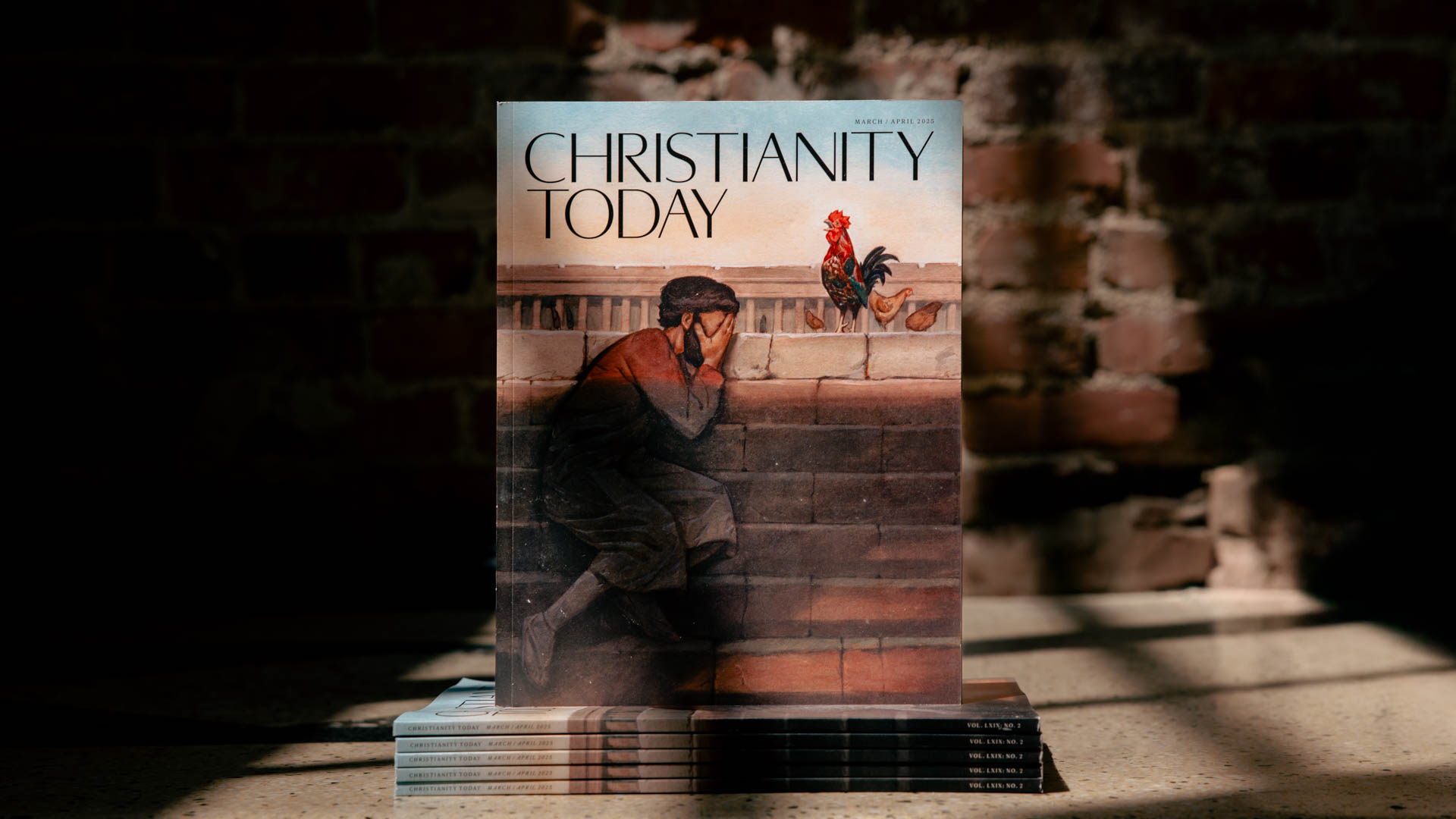
Photo of CT's March April issue on a brick background with direct sunlight casting shadows from a window.
Photography by Abigail Erickson for Christianity Today

Church Kitchens Get Chopped,” wrote Daniel Silliman in a news article for our March/April issue (p. 77). The architects he interviewed said that newly built or remodeled spaces might have a “sink and coffee pot” or a café serving coffee and pastries, but no expansive countertop or industrial ovens.

“Makes me sad,” lamented one Facebook commenter. “I remember being in the big, beautiful kitchen at [my church] watching my mom and my Aunt Joe Ann help prepare big meals for church events and for people in need. Servant-hearted people doing good work. I think the church is missing out by not doing this anymore.”

Of course, many are still fighting the kitchen decline. “Not at my church, thank goodness!” said another person on Facebook. “Our church has quarterly Sunday potlucks, where you eat things you never see in restaurants, and we have Wednesday night dinners most of the year.” A third wrote, “We use our kitchen all the time. We paid off the mortgage and made a big dinner for the congregation of danish meatballs, rice, veggies, salads.”

For some churches, kitchens are essential to ministry. A reader shared: “One of the churches in our county was burned by an arsonist. They chose to rebuild the fellowship hall with a kitchen first and save money to do the sanctuary in the future. They wanted to be able to serve the community in addition to their worship services, and a fellowship hall fits both needs.”

What is clear is that church space, including kitchens (or their absence), affects church culture. “When I read your story, I thought of something I read years ago about the introduction of the bowl and how that changed civilization,” wrote Gene Kruckemyer of Sanford, Florida. “Before the bowl, people would eat what was individually cooked over a fire, or on hot rocks, or not cooked at all. But the bowl introduced communal cooking and eating, bringing people together … just like the church kitchen.”

Kate Lucky, senior editor, culture and engagement

Faithful Remnants p. 32

A great article addressing the prophetic witness of the Japanese evangelical church. We may not be many in number, but numeric growth is not the only way God is glorified.

@KazusaOkaya

There is so much life in that 1 percent that it eclipses anything I’ve found in the Western church. I am still moved by the level of devotion, trust, and perseverance I found among Japanese Christians. It’s no surprise that Japan has been the spiritual birthplace of so many sojourners to its shores, myself included. Take heart; God works powerfully there.

@lee.angesy

Keller’s Hope for Renewal p. 50

Collin Hansen writes that “we can unite as Christians around an apologetic method grounded in biblical theology and adorned with spiritual fruit.” When theological purity is cited, it is very often followed by a call to apologetics. However, the emphasis on apologetics causes unintentional problems. Apologetics is a method of defending one’s viewpoint from alternate viewpoints and often gives rise to an exclusionary orthodoxy. It is not a method for listening to and learning from other voices. It is all about tradition-centric content control, whether Reformed, Catholic, Presbyterian, Baptist, Methodist, or Eastern Orthodox.

Tim Keller dreamed of a unifying vision for Christianity. I don’t believe a unifying vision for the kingdom of God will be realized through any one tradition’s apologetic. It needs to make room for followers of Jesus who may be questioners, doubters, those reconstructing, and those who may not agree with the majority of the faithful. Very simply, the ultimate sign of a unifying vision is being the “beloved community”—those who embody what Jesus said are the two greatest commandments upon which “all the Law and the Prophets hang” (Matt. 22:40). This is the “spiritual fruit” of unity.

Martin Willow, Champlin, MN

Justin Brierley Does the Unbelievable,” p. 56

[Brierley’s] program helped me a lot during the college years and the subsequent quarantine. The discussion helped me see more perspectives and increase my faith in the gospel.

@michaelliepr

The Ideal Church … Building p. 79

Church architecture matters. While the church isn’t the building, and believers can gather anywhere, having a dedicated place for worship and discipleship is important. What we believe about the church’s purpose, mission, and the authority of Scripture should shape how our churches look. People long for what is timeless, not trendy, because they long for the timeless God. The modern church should take the hint. Bring back the center pulpit. Let in natural light. Turn off the complicated production. Recover the regulative principle of worship. Remember the means of grace—Word, prayer, and sacraments. Spend less time chasing trends and more time preaching the Bible.

@MenYouMatter

I’m glad it doesn’t have to be one or the other. Meeting in a more “modern” facility now, I miss gathering in a space that conveys the holiness and grandeur and beauty of God and the gospel, just as I miss gathering in a mud hut in Uganda and on the floor in a Central Asian flat.

@KingdomGuy1

I find traditional churches often feel cold and uninviting. Wooden benches! And too formal. A big multipurpose space with partitions and so on is practical and can be made to look nice—traditional, even—if that is what is desired. We should recognize there is no exact model in the Bible for how church should be.

Ronald Eccles

News

What Algorithms Have Brought Together

Christian singles aren’t going to church to find life partners. They’re swiping on the apps.

A digital engagement ring
Illustration by Simone Noronha

The first time Alex Entz saw his future wife, she was behind a paywall.

The popular dating app Hinge had deemed Leanne Brady a “standout” match for Entz—an attractive, compatible, and compelling person. So it put her in a special, separate category. Entz had to decide whether to shell out $3.99 for the chance to talk to her.

He didn’t pay.

It worked out anyway. A few days later, Brady’s profile showed up in his regular feed. This time, Entz responded, and they matched. They started to chat and hit it off. Today, the couple is married.

The Entzes are devout Christians and believe God wrote their love story. But like 57 percent of people under 30, they also have an algorithm to thank for bringing them together.

They never found it easy to trust the algorithms.

Many Christians in America feel the same way. But for singles looking for love, opaque code that materializes potential partners without explanation increasingly seems like the only choice. Data shows that only about 15 percent of people find a romantic partner through their friends. About 10 percent meet at work or through coworkers. Almost nobody marries their high school sweetheart anymore, and vanishingly few marry someone they met in college. Church is one of the least common ways to connect. Only around 3 percent of Americans in a romantic relationship say they met at a religious event. 

That leaves the internet, according to Stanford University sociologist Michael Rosenfeld, whose research tracked how couples met from 1940 to 2021. 

That doesn’t mean singles are happy about their new matchmakers, though. And it doesn’t mean they believe the algorithms will find them love.

Christians who put a high priority on their faith may have a particularly tough time finding partners on the apps who feel similarly. Historically, evangelicals have been slower than others to venture online for romance, according to Barna Group research. When they do start swiping, many find the algorithms’ methods don’t quite work for them. They have to tinker with settings and try different strategies to find people they would even consider as a potential life partner.

Before Leanne Brady matched with Alex Entz, for example, she matched with lots and lots of people that she didn’t find compatible. 

She hadn’t completely filled out her profile when she first joined Hinge, skipping some biographical categories, including religion. When she went back and checked the box saying she was a Christian, her number of matches—and dates—fell dramatically.

“It was so discouraging,” she said. “People just weren’t swiping on me.”

She made more changes and, over time, developed a theory about what worked best on the apps based on her own experience. It’s hard to argue with her results.

Your first picture on a dating app profile should be a solo shot, she decided. Good lighting, big smile, aiming straight at the camera and potential matches. The second shot should be one with friends. But it should be obvious who you are, and ideally you should be doing an activity, like posing after a 5K mud run. For the third, choose a photo where you’re dressed up for a formal event, like a wedding. The last one can be goofy and show your personality.  

Brady’s last photo showed her doing a karate chop at Jackie Chan, the martial arts star, at a wax museum. 

That was the one that caught Entz’s attention, along with her megawatt smile and her intentionality about expressing the importance of her faith in her profile. He liked that a lot.

Entz was going through the same process of navigating the algorithms. If anything, for him it was more intense. Men have to wade through bots and fake profiles; when the women Entz saw were real women, they didn’t seem to want what he wanted. 

“Basically every stereotype about the apps is true. The bad ones,” he said. “If you are a person who considers himself average, not a six-foot-tall Adonis… you might just have to work a bit more at it.”

Entz is an economist, so he attacked the problem as systems of inputs and outputs. He tried tweaking each of them to see if they would give him different results. In some ways, the apps were all the same. But in others they varied widely. 

“Hinge was the most serious, Coffee Meets Bagel was probably the most religious, Tinder was the most frivolous and pointless,” he recalled. Another popular app, Bumble, he described as a “total misfire.”

Entz experimented with his profiles, making little adjustments to try to connect with serious Christians who shared his beliefs, put a high priority on their faith, and wanted to make it a big part of their lives. He rarely went more than a few weeks without changing everything around just to get the algorithm to give him some better matches.

The exact details of different algorithms and how they work are not publicly available, but most seem to use “collaborative filtering.” That means the apps consider what users say they prefer and also the way people interact with profiles, developing additional metrics of unstated preferences. How someone clicks, swipes, and even just pauses in the app all becomes data that the algorithms use to filter the feeds of options. 

That makes sense. If you are a conservative Republican who automatically rejects anyone who identifies as a Democrat or a moderate in their dating profile, the algorithm will show you more of what you want, even if you don’t mark yourself “Republican.” Soon your feed will populate with women or men sporting MAGA hats. The same is true in reverse: If you’re a liberal Democrat, the algorithm will sort you that way whether you state a preference or not. Soon you’ll never have to look at someone who supports Donald Trump. 

A growing political divide between men and women—a divide that is also showing up in the American church—is likely exacerbated by algorithm-created silos on both online dating and social media platforms.

“We’re seeing a segregation in online content that young men and young women are exposed to, and a lot of it portrays the opposite sex in a relatively negative light,” said Daniel Cox, survey director at the American Enterprise Institute, a Washington, DC–based think tank. “If that’s what you’re going to use to inform your views about dating and relationships, that will have fairly long-term impacts on whether you even want to have a partner, or if you want to get married, or if you want to have kids with someone.” 

The algorithms learn what attributes someone does or doesn’t want to be shown and takes that into consideration as they filter options. They also appear to learn what everyone else does and doesn’t want to be shown. If one person’s profile gets a lot of interaction—clicks, comments, views (or whatever metrics the apps use), their value goes up, and that profile is shown to more people. Or the other way around: If a profile doesn’t generate much response, the algorithms respond accordingly and show it in fewer and fewer users’ feeds.

This may sharply limit the opportunities someone has to connect with potential life partners. Saying you are a committed Christian will filter out a lot of people you want to filter out, but it might also make your profile so unpopular that basically no one sees it.

This is a common enough concern for people of faith that some apps promise to make things easier by putting religion front and center.

Upward, for example, allows users to not only say that they’re Christian but also specify their denomination, state their dating intentions, and even upload a faith statement. 

“Upward removes the mystery of ‘Is my potential date as serious about their faith as I am?’ ” said Rachel DeAlto, a dating expert at Upward. “Members are opting in on that very principle… to find someone that matches their faith values.”

According to Upward (which is owned by Match Group, the same company behind Hinge, Tinder, Match.com, OkCupid, and many other dating apps), Christians are most likely to search for people on Sundays between noon and 5 p.m.

Some marriage and relationship experts wonder, though, if Christians could find more ways to connect on Sunday mornings. They worry that churches and Christian leaders haven’t done enough to help people find suitable partners.

According to a Barna survey, only 7 percent of churches have any kind of ministry for single people. Many churches aren’t large enough to do something like that successfully. Others don’t see the need. The rapid rise of dating apps may have given churches the impression that “someone else is solving the problem” of connecting single Christians, said J. P. De Gance, coauthor of Endgame, a book about the need to strengthen families.

“Churches leave that entire playing field unoccupied. Nobody’s on that field for our churches,” De Gance said.

His nonprofit, Communio, is trying to help. The group has organized events at 180 Protestant and Catholic churches, including swing dancing, pickleball, softball, and axe throwing.

“We have such loneliness and nihilism around us,” he said. “This is the great felt need of our moment.”

Some young Christians feel in-person meetings are better not because there’s an increased likelihood of finding someone compatible but rather because they worry about the side effects of being on dating apps.

John Shelton, policy director for Advancing American Freedom, tried a number of apps before he met his wife, Katelyn. He found they encouraged a “shopping” mentality that he didn’t like. Instead of interacting with a person as a person—a sister in Christ, a beloved child of God—he was asked to start with a list of things he wanted.

Katelyn Shelton had similar concerns, so she never joined the apps. But her friends’ stories of searching for romantic partners online always reminded her of being in middle school, when she and other girls would write endless lists of what they wanted in a future husband. As adults, they could do the same thing, just with the help of an algorithm. 

“The high curation… all these different parameters—the height, their interests,” John said. “It makes it more fraught.”

The couple met and connected offline, outside the Supreme Court, at the most romantic of events: a Southern Baptist Convention Ethics and Religious Liberty Commission (ERLC) briefing. 

John describes their love story as “hybrid,” since the internet did play a role. John, who interned for the ERLC, noticed Katelyn, one of the next crop of interns, in a photo on X. He found out they both had divinity degrees. That, plus another guy’s obvious interest in Katelyn, gave him a push to ask for her number. Fast-forward, and the pair now has four children.

Jessica Greensmith would like to see more of those kinds of in-person connections. The Christian mother of four has hosted matchmaking events since a women’s conference in 2023. One of the sessions asked people to think about “who in our church community is actually overlooked?”

She thought of the single Christian women she knew who were discouraged and exhausted from the dating scene. After a brainstorming session, she decided to host speed dating events with her cousin. 

“I just became really annoying, where I would ask everyone I know, ‘Do you know any really solid single believers that you think should be at this event that we’re doing?’ ” she said. 

Over the course of ten months, they organized eight events to help single Christians meet and connect. The speed-dating-style events had some competition mixed in. Singles carved pumpkins for a contest or tried to identify types of wine. There was a website, but no algorithms. The women used it to track referrals and potential matches. 

Greensmith’s fourth pregnancy caused her to push pause on official matchmaking, but she still has a heart for singles around her. She said married Christians can sometimes hesitate to step into a matchmaking role because they worry about causing offense. But she’s found that single Christians often respond with gratitude to being set up in a low-pressure environment. She can take credit for at least one engagement so far.

But there aren’t matchmakers in every congregation, and most churches are not organizing pickle-ball tournaments or speed-dating-pumpkin-carving events for interested Christian singles. 

Most are left to navigate the apps, tweaking their profiles again and again in hopes that the algorithms will finally work for them. 

That’s what happened to Alex and Leanne Entz back in 2021. He changed his profile, she changed hers. Leanne’s profile moved into Alex’s main feed, where he could appreciate the picture of her karate-chopping a wax Jackie Chan and see that she wanted “a guy who will bring me chocolate and go to church with me on Sunday.”

He messaged her, she replied, and less than a dozen messages later, he asked her out on a date. 

After all his trial and error with the algorithms, this is Alex Entz’s strongest bit of advice: Move from online to in-person as soon as you can. 

“Waiting is for suckers,” he said. “Write that.”

Their first date was on Halloween. They didn’t dress up, but their rooftop restaurant reservation featured a DJ wearing a terrifying Joker costume and blasting music so loud that Leanne struggled to hear Alex. None of that seemed to matter. 

The two got married in August 2023. They are expecting their first child this fall.

The Entzes see beauty in the way God brought them together—even if they are still surprised that God used an algorithm. 

“I could not have anticipated the way that God has mapped out my life,” Leanne said. 

But she also thinks it couldn’t have been planned any better.

Harvest Prude is a political correspondent for CT.

Books
Review

When Pseudoscience Swallowed Scripture

In the heyday of eugenics, too many Christians lost their moral and theological bearings.

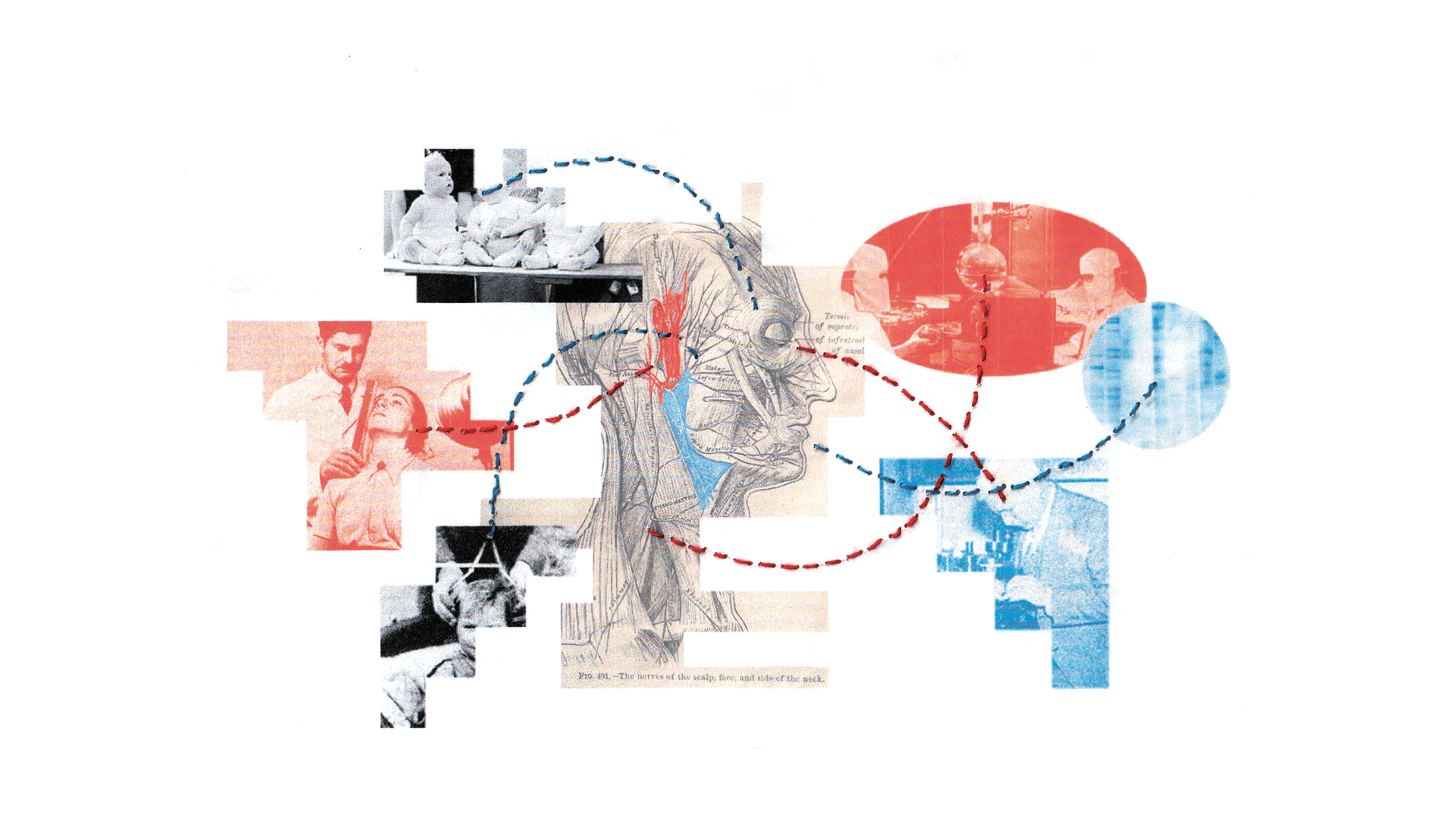
A digital collage combining a scientific illustration of the human body with photos of doctors and researchers.
Illustration by E S Kibele Yarman

Around a hundred years ago, America’s pastors received a curious invitation. A prominent national organization proposed putting their pulpit skills to the test. But the judges wouldn’t reward displays of biblical fidelity or apologetic brilliance. Instead, formal honors (and cash prizes) would flow toward preachers willing to walk a precarious theological tightrope.

Christianity affirms God’s image in all people. This makes it an awkward fit with the notion that some image bearers, deemed drags on society, should cease being fruitful and multiplying. Yet the sermon contest inspired pastors across the land to twist themselves into pretzels, which must have delighted its sponsor: the American Eugenics Society.

From a contemporary perspective, it boggles the mind that prominent eugenicists would court religious allies. Most perplexing, perhaps, is the fact that their overtures did not return void.

In her 2004 book Preaching Eugenics: Religious Leaders and the American Eugenics Movement, cultural commentator Christine Rosen (currently a senior fellow at the American Enterprise Institute) asks why Christians were pulled into this grotesque orbit. Her answer lies in rediscovering a time when eugenics occupied the cultural mainstream.

In its early-20th-century heyday, the movement gathered a loose but formidable coalition of scientists, reformers, and public officials who sought “rational” control over family formation. Worried that unchecked breeding would “pollute” the gene pool, they envisioned humanity’s finest specimens of health, intelligence, industriousness, and character crowding out their supposed inferiors. Leaders spoke frankly about racial purity, cataloging favored and disfavored traits that mapped with suspicious ease onto favored and disfavored groups.

This eugenic impulse had its softer and sterner forms. Some proponents thought education, moral suasion, and public policy nudges could suffice to stop the “unfit” from reproducing. Others recommended government coercion. If the diseased, dissolute, and other “defectives” wouldn’t gracefully exit the stage, they said, the state would have to yank them off by force.

Under the hardliners’ sway, elected bodies launched campaigns of involuntary sterilization and restricted interracial marriage, among other abuses. Over time, eugenics became a byword for crude ethnic chauvinism and pitiless assaults on human rights, all underwritten by junk science. Nazi Germany supplied a chilling exclamation point, clarifying where the whole sordid business could lead. 

Early on, however, eugenics supporters didn’t sound like cruel sadists. They espoused high-minded, humanitarian sentiments, sunnily investing science with near-limitless potential to spur social betterment. Christians inspired by social gospel thinking who already traveled in these progressive circles were primed to lend sympathetic ears and voices.

As Rosen notes, her book mainly concerns the church’s “modernist” (or liberal) wing rather than the fundamentalist opposition that arose in response. It revolves, then, around characters I typically hold in low esteem, like arrogant social engineers and Christians who discern God’s kingdom unfolding in every trendy cause. I’ll admit to an undignified relish at the prospect of watching these types embarrass themselves.

And sure enough, Rosen delivers a parade of lowlights. Consider Albert Edward Wiggam, a lecture-circuit fixture who fashioned an updated Ten Commandments, complete with zeitgeisty appeals to “The Duty of Measuring Men” and “The Duty of Preferential Reproduction.” Or the sermon contest participant who mocked one family maligned in eugenicist circles as symbols of intergenerational dysfunction. “Surely,” he claimed, “the Kingdom can never come in all its fullness among a people descended from the Jukes.”

Yet Rosen balances cringeworthy moments with more generous appraisals. She credits most Christian eugenics supporters with acting in good faith. She acknowledges that they grappled with serious social problems. And she argues plausibly that liberal pastors restrained more radical bedfellows. 

These moderating tendencies manifested along a key axis of eugenics debate over the relative influence of heredity and social environments. Many eugenicists imagined propensities for criminality or philandering passing from parents to children as mechanically as eye color. Pastors often questioned that deterministic view, even before real genetic scientists buried it.

Liberal pastors’ scientific skepticism had a moral corollary. Some hereditarians denounced welfare and charity, believing they wasted resources on people locked in genetic prisons of deficiency and vice. But these pastors continued promoting compassionate outreach, believing a humane society could lift lower classes up rather than weeding them out.

Despite these grace notes, I finished Preaching Eugenics in a censorious mood. Not because of Rosen herself, who clearly abhors eugenic quackery even as she pursues historical objectivity. Rather, because the church, for all its benevolence toward the eugenically “unfit,” could have been bolder. It could have taken a sledgehammer to the whole misbegotten project—namely, the doctrine of original sin. Often tainted by its association with dour pessimists and puritanical scolds, this doctrine is in fact profoundly ennobling. As with affirming that all people bear God’s image, affirming our common fallenness puts us on a radically equal plane. It defeats any attempt to mark some as unsuitable for life together—and condemns any aristocracy assigning itself that task.

Scripture says plenty about traits that further or frustrate individual and social righteousness, of course. We’re called to fight disorder and decay. But to adapt Alexander Solzhenitsyn’s penetrating words, the line between fitness and unfitness runs through each person’s heart.

The central characters in Preaching Eugenics betray little awareness that the figures they anoint as civilizational prototypes are cut from the same warped timber as everyone else. In a couple instances, Rosen notes the fretting that attended studies documenting low birthrates among descendants of the Mayflower pilgrims. Had the fretters read Romans 1? Did they suppose that American folk heroes somehow stood apart from the rest of sinful humanity? 

Rosen quotes one contest entry that epitomizes the eugenicist delusion. Reinterpreting the Good Samaritan story, the preacher fantasizes about an age when Christians won’t have to comfort victims because robbers won’t be born in the first place. It’s all too reminiscent of present-day murmurs about abortion lowering crime rates, biotechnology’s seductive vision of custom-designed offspring, or dark rumblings on the outer fringes of immigration and fertility debates.

In Deuteronomy 7, as Moses prepared the Israelites to the enter the Promised Land, he issued a humbling reminder: God chose them out of love, not because they were mighty or meritorious. What qualifies us to choose our neighbors any differently?

Matt Reynolds is senior books editor at Christianity Today.

Theology

God Remembers in Our Dementia

Alzheimer’s has robbed my mother of her memories. But in Christ, both she and I are not forgotten.

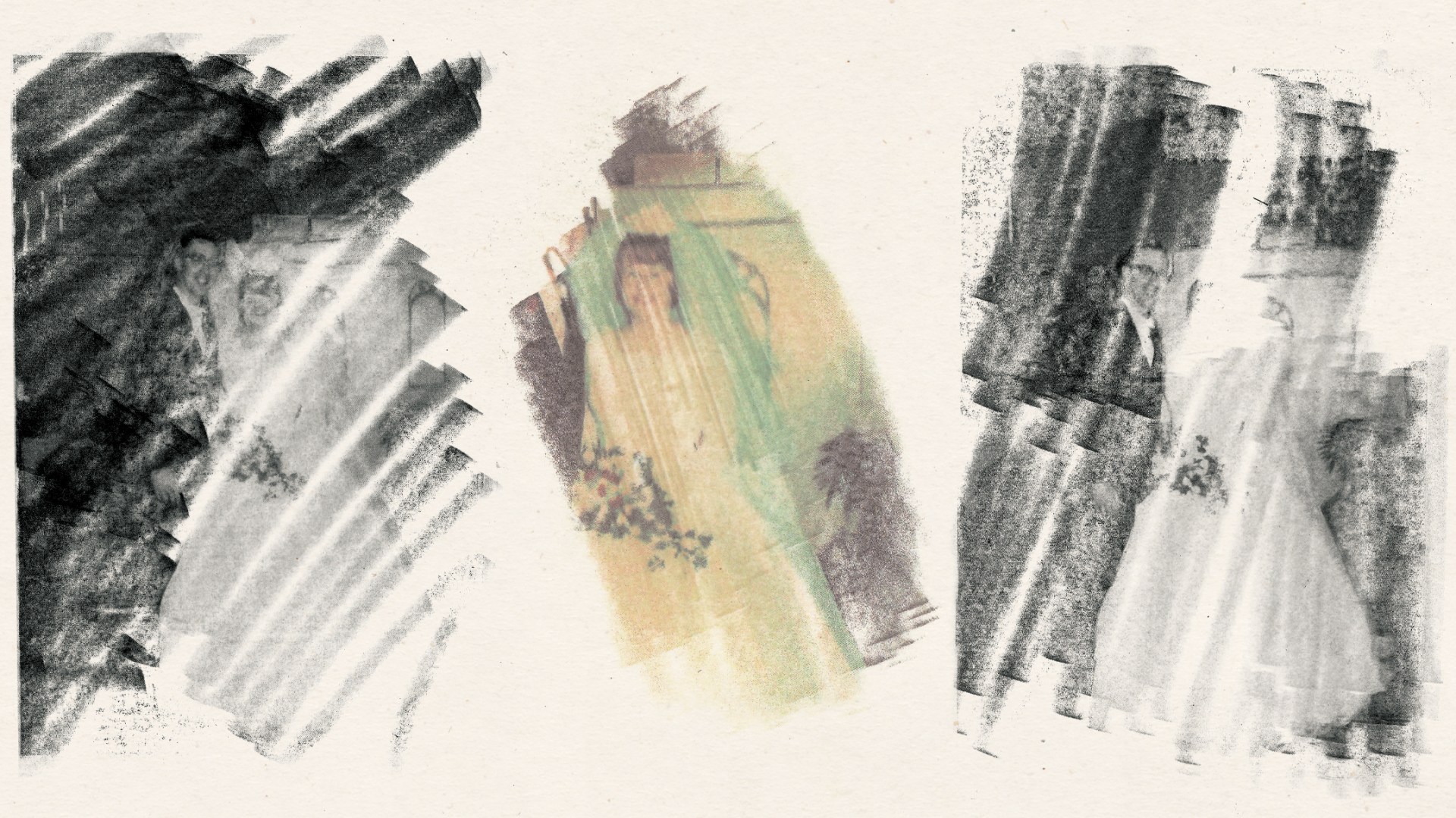
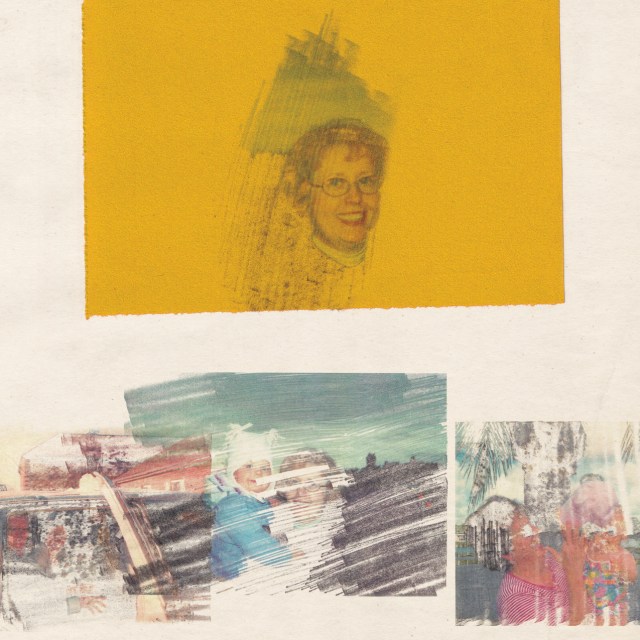
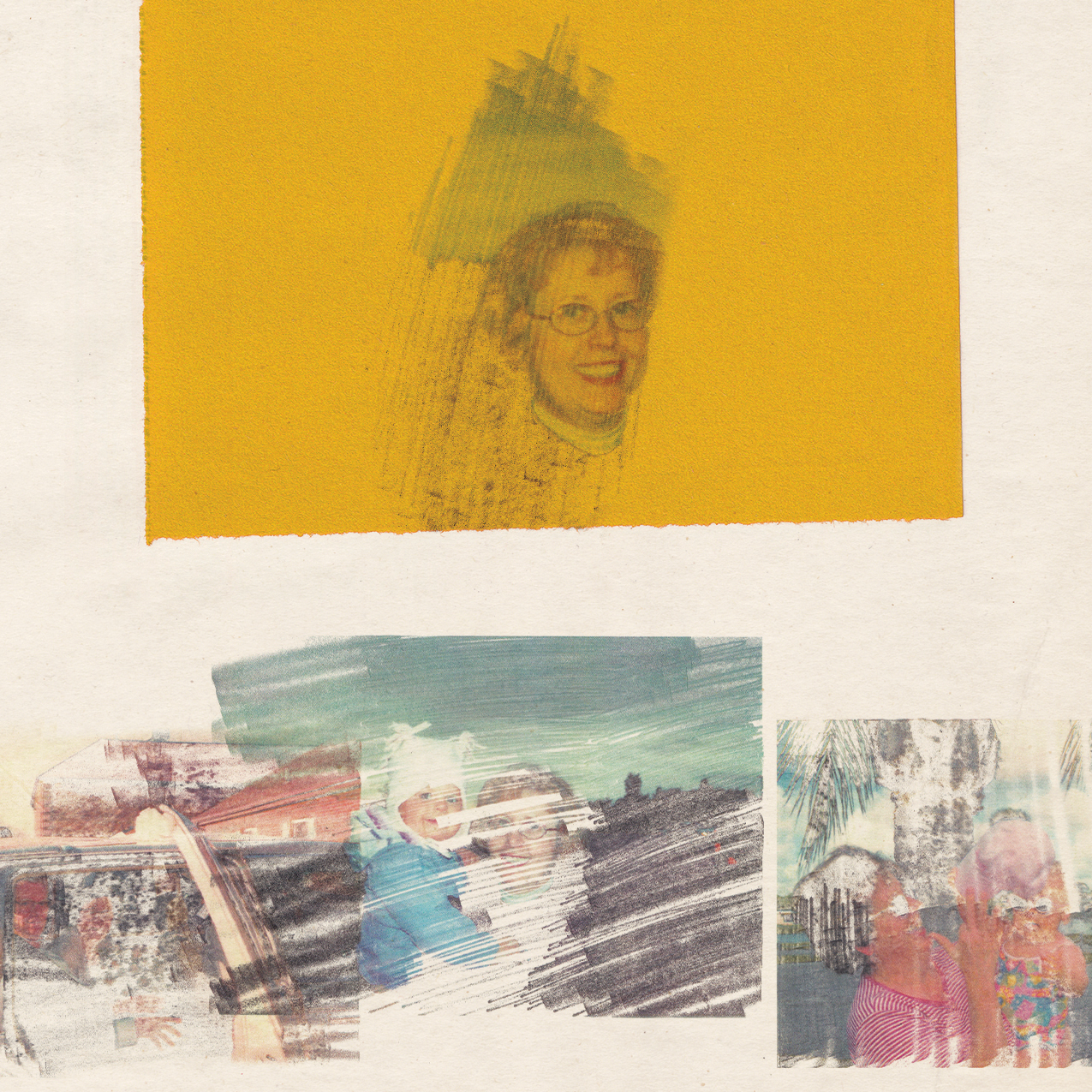
Sketch marks revealing family photos
Illustration by Vanessa Saba / Source Images: Courtesy of Jen Pollock Michel

Waving goodbye, I watch the glass doors close. On the other side, my mother stands red-faced, tears streaming, in the lobby of her assisted living community. Our family has a habit of damming up grief, but this is a pain neither of us can contain. I am crying too.

I leave my mother like this on the day I am tasked with delivering difficult news. On the advice of her physician and care team, my mother—officially diagnosed with Alzheimer’s two and a half years earlier—will be moving to the memory care floor. The move means admitting that she can no longer safely live without assistance. It means her Alzheimer’s is taking her into the deep end.

Everyone agrees this is the right choice, but that doesn’t ease my conscience. Am I acting prematurely to agree to the life-altering arrangement? Even after some desperate internet searches, it’s clear there is no objective measure of my mother’s readiness for the next level of care. The fog of my indecision mimics her own descending darkness, and I pray for a sign. It isn’t granted.

Thinking back now, the emotional truth of my mother’s disease had been plain long before her formal diagnosis. As many clinicians believe, dementia can creep in stealthily through the decades, diminishing function and often transforming personality.

After my husband, kids, and I moved to Canada in 2011, leaving my mother and stepfather in the US, the first signs of dementia showed up as passive, long-distance neglect.

Given the complications of cross-border shopping and shipping, my mother began to beg off buying Christmas and birthday presents for my children. So I dutifully ordered gifts on her behalf. When she complained about the geographical distance between us, I proposed, then arranged, her travel plans to visit us in Toronto. Every Sunday afternoon when I called, she sounded surprised, saying, “It’s been a long time!” The log of my resentments grew long in those years.

Then, in the summer of 2021, we visited my parents at their senior living community in Columbus, Ohio. It was our first time seeing them after 18 months of pandemic separation.

Dementia, as a clinical diagnosis, is largely a disease of deficit—impairments of memory, orientation, judgment, and executive functioning. During that weeklong visit, those deficits made their pathological presence known through excess, taking on a discomfiting pitch. The kitchen table was buried under months of unsorted mail and unpaid bills. The cabinets housed illogical quantities of hoarded items. In the refrigerator, Styrofoam containers of half-eaten food from the community dining room formed a blockade of spoilage and stench.

Was the clutter a symptom of my mother’s caregiving fatigue, given my stepfather’s deteriorating health? Or did it suggest something more sinister?

When I ventured to tell a neighbor that we were growing concerned for her, the woman—a longtime acquaintance from church—looked at me with knowing pity. “I think there are many who share your worries about your mother,” she said. I polled others discreetly, hoping for dissent, but that sentiment was only repeated.

Then, less than a year later, my step-father died—the same week we closed on a house in Cincinnati. I took control of all my mother’s practical affairs, and we left our life of 11 years in Canada to repatriate to America, moving my mother into a new senior living community eight minutes from our house.

Each time we invited her over for weekly dinner, she took to repeating, “I can’t believe we’re so close!”

At first, I corrected her. I wanted a little credit—and felt she owed me more than a little thanks. In truth, I was angry.

If I’m being honest, I do not know whose story this is. My mother and I are not the separate selves we imagine ourselves to be. Our stories were tangled from the womb, where boundaries between mother and baby are difficult to establish. In that secret place where God knit my inward parts, I drew life and breath from my mother’s body, and her health was my health. Is it still?

Over the past two and a half years, I have turned to science to puzzle together what’s happening to my mother. I am anxious to know, because dementia could quite possibly happen to me as my mother’s genetic heir. I want rational reassurances that I will not succumb to her disease. But I have yet to find any.

A 2025 Nature Medicine study states that US adults over age 55 have a 42 percent lifetime risk of developing dementia. One researcher told The New York Times that 6 million Americans are currently diagnosed with dementia. In 2060, that’s predicted to be 12 million.

I learn that, for all the technological advances we have made in medicine, we have made little progress in slowing the progress of dementia and other neurodegenerative diseases.

Although we’ve identified the genetic markers and observed (postmortem) the amyloid brain plaques and tau tangles often characteristic of Alzheimer’s patients, we also know that neither is a sure predictor of the disease. The widely accepted amyloid hypothesis, for example, has been more recently questioned by science reporter Charles Piller in his book Doctored: Fraud, Arrogance, and Tragedy in the Quest to Cure Alzheimer’s. Piller reports improperly enhanced photos of brain tissue appearing at least 80,000 times in scientific literature. That’s to say that, for decades, we might have been building a research house of cards.

I grow anxious about my own forgetting, certain on the worst days that any gap in my memory portends doom. I take up piano; I exercise religiously; I listen to the news in French. All of it is an effort to ward off the deterioration of my brain’s higher cortical functioning, the rationality without which it is hard to imagine existence. After all, I tell myself, studies show how healthy habits can improve cognitive functioning for at-risk populations.

Sketches photos of Jen Pollock Michel's familyIllustration by Vanessa Saba / Source Images: Courtesy of Jen Pollock Michel

I wonder if my mother also tried to keep her faltering memory at bay. As a trained nurse, she once read popular medical literature touting the health benefits of blueberries, red wine, and daily movement. But if she had early anxieties about her cognitive decline, she never confided them to me.

Surely Alzheimer’s is the crooked line in Ecclesiastes 1:15 that can’t be made straight. There will be no healing for my mother this side of the veil. The darkness of dementia descends, and we cannot penetrate it.

“Do I have Alzheimer’s?” my mother asked me three times in the first year after her diagnosis.

Always, I told her the truth: Yes. I offered my answer plainly, as a dignity, even if the truth was terribly grim. She’d cry, and I’d put my arm around her shoulders.

But sometimes I fudge the truth now. I tell myself it’s for her sake. Like when she asks me, “Who is this man?” pointing to the loose photo lying on her table. Again.

“That’s my brother, David.”

“Is he still alive?”

I shake my head. His suicide at the age of 25 is now mercifully forgotten.

“How did he die?” she asks.

“In a car,” I reply, a partial truth.

“Oh,” she says with concern, though not grief. “He was too young to die.”

As my mother’s ability to tell her own story diminishes, I am becoming the keeper of her memories, for better or for worse. And as I tell her story—to you and to others—I realize I might also be telling my own. If I now beg God for mercy on her behalf, am I not, at least in part, pleading for myself?

Of the four apocalyptic horsemen of disease—diabetes, heart disease, cancer, and neurodegenerative conditions—dementia is the most feared, says Peter Attia, author of Outlive: The Science and Art of Longevity. Dementia is spoken of as a robbery of the mind, a theft of the self. Attia admits that his patients “would rather die from cancer or heart disease than lose their mind, their very selves.”

I watch as my mother’s days grow increasingly confined; she spends more and more time in bed. I would be lying if I said it was easy to believe what theologian John Swinton asserts: “Lives that are touched by profound forms of dementia have meaning and continuing purpose.” It seems blindly idealistic in the face of something so devastating.

What good can God intend for these days that travel the short distances from bedroom to bathroom to dining room to activity room? What good can God intend for my mother to forget her two previous husbands, her son, her grandchildren, and occasionally even me?

The story of forgetfulness is written in the unraveling of my mother’s once-capable life, but for her part, she expresses very little fear over the loose threads. After our routine lunch at my house after church, I dial her oldest friend and hand her the phone.

“Well, hey, Sis!” my mother says.

She is having a good day, and the conversation lasts longer than normal. At one point, I even overhear her thank the Lord for her good health.

On the October day we tell my mother she is moving to the memory care unit, her caregiving team and I sell the change with clever half-truths. There are so many more activities! There are wonderful new people you’ll get to know! We describe the “concierge” services that will soon be available to her: laundry, housekeeping, weekly manicures.

My mother is, at first, nonplussed. Our efforts at spin are, I think, largely successful—until the two of us are back in her apartment later that afternoon, and the stark truth of it all crashes in.

“What’s wrong?” I ask when she turns toward me sadly, an empty hanger in her hand.

“It’s just so much change all at once,” she says. “Why does everything have to keep changing?”

When I remember that moment now, it strikes me how much I hear echoes of Jesus’ words to Peter, foretelling the kind of death the disciple would face:

Very truly I tell you, when you were younger you dressed yourself and went where you wanted; but when you are old you will stretch out your hands, and someone else will dress you and lead you where you do not want to go. (John 21:18)

As the glass doors close between us when I leave later that day, I’m comforted that, at the very least, hers is a kind of end that Jesus himself knows.

The losses of dementia strike at the very capacities we are tempted to consider most deeply human: our language, our thinking, our memory. But rather than seeing it as a totalizing story of loss, the gospel invites us to consider the goods that flourish in the context of human weakness.

As much as we wish it were not so, we cannot straighten the crooked lines of human disease. Some sufferings are inexplicable this side of the eschaton. But we can remember that God is present with us, working out good, even in our most profound experiences of suffering.

I see God at work as my mother and I are engaged in a holy, human task: she in the dying, I in the giving of care that makes her dying easier.

Dementia, at the very least, reminds us of what it means to be human. We are fragile, finite creatures. We cannot self-exist or self-sustain. We depend on God for our very lives, but we are also deeply dependent on each other to offer the companionship and care that helps us both live and die.

Those losing their memories are teaching us about our mutual need, and those like my mother, who have cultivated a lifetime of deep faith in Jesus, are quietly inviting us into the way of the saint.

Amid the crumbling ruins of my mother’s mind, grace still finds her in the forgotten places. Some truths are rooted so deeply that even dementia fails to yank them up. Each time an old hymn is sung at church, for instance, she joins the chorus for at least a few bars. Even if her song of hope is weakened in the land of forgetfulness, God still hears.

Recently, when we pick my mother up for church, as we do each Sunday, I see a tender bruise of blue above her eye. My first thought is that she fell—one symptom of dementia. When I reach out my hand to touch the bruise, though, it smears: eyeshadow.

She doesn’t remember putting it there. As I wipe her face, she gives herself peaceably into my hands. That submission is a gift I don’t take for granted. I receive it, and I pray for gentler hands. Having practiced presence with her these last two years, I am thankful I can now receive my mother as she is, honoring the best memories of who she once was.

These days, when I stoop to zip my mother’s coat, I go all the way down and kneel, the way she must have once done for me when I was little. I’ve come to assume it as a posture of prayer, saying the words of a liturgy from Every Moment Holy, Volume II:

Let me love well this one who suffers. Let me again and again choose love in each moment, so that through every small act of care and mercy the practice of love becomes a liturgy and a habit by which you are forming in me a compassion that cannot be learned any other way, save by the giving of myself in long service to another.

As I pray, I craft a new vision of my mother, myself, and the story we’re living together.

Genes are not the only thing my mother has given me. I remember how every morning, as a child, I would shuffle down to the kitchen and find her head bent over her Bible in prayer. She faithfully prayed for me on the days I didn’t know how—a generational gift of surpassing worth—and now I pray for her.

Even though she may have forgotten those mornings, and someday I may too, God will not. And when she and I awake someday into the new world, God will wipe away each tear as we remember.

This is the story we are both living: tragic, but not left unredeemed or unrecorded. From the very beginning, before we drew our first breath, in God’s book were written the days that were formed for us, every one of them. Our story is, in the end, his.

How precious are the thoughts of God; how vast the sum of his remembering. Today, it is enough for me to know this, both for myself and for my mother.

Jen Pollock Michel is a writer and speaker. Her books include In Good Time: 8 Habits for Reimagining Productivity, Resisting Hurry, and Practicing Peace.

News

Evangelical Report Says AI Needs Ethics

And other news from Christians around the globe.

Collage in the shape of the Swiss cross emblem with elements of digital technology, currency, mountains, and stock charts inside of it.

Illustration by Blake Cale

The Swiss Evangelical Alliance published a 78-page report on the ethics of artificial intelligence, calling on Christians to “help reduce the misuse of AI” and “set an example in the use of AI by demonstrating how technology can be used responsibly and for the benefit of all.” Seven people worked on the paper, including two theologians, several software engineers and computer science experts, a business consultant, and a futurist. They rejected the idea that Christians should close themselves off to AI, as that would not do anything to mitigate the risks of the developing technology. The group concluded that AI has a lot of potential to do good, if given ethical boundaries and shaped by Christian values such as honesty, integrity, and charity.

France: Cults cause concerns

The French government is warning about the growth of cults after an annual report showed an 111 percent increase of abuse in religious minority groups from 10 years ago. The National Council of Evangelicals in France said it stands with the government in opposing “any behaviour that is contrary to fundamental freedoms and respect” but also asked officials to be aware of “the risk of stigmatization” for religious minorities.

Norway: Medieval documents double-checked for women’s work

Women produced at least 110,000 medieval manuscripts, according to a new analysis of texts that survived in European monasteries and universities. Some of the women wrote their names in the colophons, such as Birgitta Sigfursdóttir, a nun in Norway who asked readers to pray for her. Others just used the feminine form of the Latin word for scribe. The scale of women’s contributions had not previously been studied.

Liberia: Global Methodist leader jailed

Police arrested Global Methodist leader Jerry Kulah for his involvement in a dispute with the United Methodist Church (UMC) over a church building. Kulah helped lead about 20 percent of congregations out of the denomination in a dispute over sexual ethics. The UMC in Liberia has reaffirmed its opposition to same-sex marriage but remains connected to the UMC in the United States. 

Kenya: No politicians in pulpits

Anglican Archbishop Jackson Ole Sapit has ordered priests to stop allowing politicians to speak to their congregations. Clergy may acknowledge them if they are present, but nothing more, Sapit said. He made the announcement at the consecration of a bishop in Nairobi, where the governor, the leader of an opposition party, and a former deputy president were all reportedly expecting to speak. Sapit previously forbade priests from announcing the size of politicians’ donations. “What we give to God, we don’t have to tell human beings,” he said. President William Ruto has made his evangelical faith central to his political image.

Ghana: An expensive hole

Plans for an interdenominational national cathedral seem doomed now that Nana Akufo-Addo is no longer president. The country spent $58 million on blueprints and digging a hole in the ground.

China: Closing loophole on religion

The Chinese government has imposed strict new rules on the religious activity of foreigners. Starting May 1, Christians from outside China may only worship at approved venues and even then will need written authorization. Government officials claim this is an issue of national security. The Communist-controlled government has been cracking down on missionaries for years, but now there is “almost a complete prohibition” on missionary work, Bob Fu, founder of Christian nonprofit ChinaAid, told CT. Evangelical leaders in China said they expected ministry to continue regardless. God “laughs at restrictions,” one of them told CT, “and so do we.”

Indonesia: Guilty of condemning Christ’s hair 

A social media influencer has been sentenced to nearly three years in prison for a video telling Jesus to cut his hair. Ratu Thalisa, a transgender Muslim woman with hundreds of thousands of followers on TikTok, was critiquing contemporary gender expectations. Multiple Christian groups filed complaints with police, and the court found Thalisa guilty of spreading hate online. The influencer is one of more than 400 people who have been sentenced under a controversial law criminalizing “incitement to discrimination, hostility or violence.” Most of the people sent to prison have been convicted for insulting Islam.

South Korea: Bible finally finished

The Korean Bible Society celebrated the completion of the New Korean Translation after 13 years of work. Thirty-six biblical scholars from a variety of denominations worked to translate its original languages into contemporary language, using modern vocabulary, shorter sentences, and consistent transliteration of proper names.

Argentina: New school for evangelicals

The first evangelical university in Argentina opened in Buenos Aires, founded by Assemblies of God pastor Osvaldo Carnival. The opening ceremony was attended by government officials and political leaders from across the country. The Universidad Evangélica del Cono Sur will offer accredited undergraduate degrees in theology, technology, and media production.

United States: No freeze on ICE in churches

A federal judge refused to block immigration officials from making arrests in churches. Places of worship and education have long been considered unofficial sanctuaries, and both Democratic and Republican administrations have instructed Immigration and Customs Enforcement (ICE) agents to avoid them. President Donald Trump decided to change that in his second term. His administration announced in January that “criminals will no longer be able to hide in America’s schools and churches.” A legal immigrant named Wilson Velásquez was pulled out of a Pentecostal church and deported later that month. Since then, 27 Christian and Jewish groups have sued the government, saying the policy change violates their religious freedom. According to the judge, however, churches are not being specifically targeted. 

United States: Guardrails take effect

Fourteen LGBTQ-affirming ministers lost their Church of God (Anderson, Indiana) credentials. The holiness church is anti-creedal and has not historically expelled ministers for theological deviations from traditional teaching. The general assembly adopted a manual with new stipulations about orthodoxy in 2017. General director Jim Lyon said they were “necessary guardrails” and ministers should “defer to the larger Body’s understanding of biblical boundaries defining faith and practice.”

News

Rise of the Thinking Machines

The development of artificial intelligence explained by experts in the field.

An illustration of a digital apple in a pixelated style.

Illustration by Nick Little

The history of artificial intelligence (AI) can be traced back through ancient literature and philosophy, where deep thinkers imagined intelligent machines and artificial beings. 

As a technical discipline, the field of AI began in the mid-20th century. In 1950, British mathematician Alan Turing proposed the idea of a machine that could simulate any human intelligence, conceiving the now-famous Turing test.

Just six years later, at the 1956 Dartmouth Conference, computer scientists John McCarthy, Marvin Minsky, and Claude Shannon coined the term artificial intelligence, laying the foundation for modern AI research and development.

In the decades that followed, AI went through cycles of optimism and disappointment—often referred to as “AI winters,” when progress floundered due to technological limitations and overhyped expectations. Still, significant strides were made in expert systems in the 1980s and machine learning techniques in the 1990s.

The 21st century proved to be a new era for AI, fueled by massive data availability, advances in computing power, and breakthroughs in neural networks. In 2012, a deep learning system built at the University of Toronto dramatically improved image recognition, sparking renewed interest in AI. Tech giants quickly adopted these methods, driving rapid developments in natural language processing, computer vision, and robotics.

Today, AI is embedded in everyday life—from virtual assistants to recommendation algorithms—and continues to evolve quickly. As it grows more powerful and integrated into society, discussions about ethics, safety, and human-AI collaboration have become more crucial than ever. 

artificial intelligence (AI) 

A human-made computer system that can emulate or exceed human thought and perform complex tasks of reasoning, decision-making, communication, and creation.

algorithm

A defined, sequential set of instructions that a computer program follows to solve a specific problem or complete a task. The algorithm works step by step, following code written by humans. For example, when Netflix recommends a show based on your viewing history, it is using an algorithm. Algorithms are often informed by machine learning. 

machine learning

A system that can identify patterns, learn from data, and improve its performance. Machine learning can adapt through an automated process and make decisions without being explicitly programmed for every possible scenario. Large language models (LLMs) are a type of machine learning, trained on vast amounts of text to recognize patterns and respond to natural-language prompts in a contextually appropriate way.

generative AI

An artificial intelligence model that uses its training data and learned patterns to create original content, such as text, images, or music. Generative AI relies on statistical patterns and associations, not step-by-step instructions, to fulfill user prompts. Chatbots such as ChatGPT, Grok, and Claude are examples of generative AI.

agentic AI

An AI system that operates with autonomy, enabling it to make decisions, take actions, and interact with its environment to achieve specific goals. Agentic AI can initiate tasks, adapt to changing circumstances, and pursue objectives independently, not simply responding to external prompts or following instructions. Self-driving cars are an example of agentic AI.

Ali Llewellyn and Nick Skytland are futurists and technologists with experience spanning space exploration, ministry, and church planting. They work at the intersection of faith and AI and are coauthors of What Comes Next?

Apple PodcastsDown ArrowDown ArrowDown Arrowarrow_left_altLeft ArrowLeft ArrowRight ArrowRight ArrowRight Arrowarrow_up_altUp ArrowUp ArrowAvailable at Amazoncaret-downCloseCloseEmailEmailExpandExpandExternalExternalFacebookfacebook-squareGiftGiftGooglegoogleGoogle KeephamburgerInstagraminstagram-squareLinkLinklinkedin-squareListenListenListenChristianity TodayCT Creative Studio Logologo_orgMegaphoneMenuMenupausePinterestPlayPlayPocketPodcastRSSRSSSaveSaveSaveSearchSearchsearchSpotifyStitcherTelegramTable of ContentsTable of Contentstwitter-squareWhatsAppXYouTubeYouTube