Books
Review

Why a Democracy Advocate in Putin’s Russia Didn’t Fear Death

Alexei Navalny’s memoir testifies to the political power of the Resurrection.

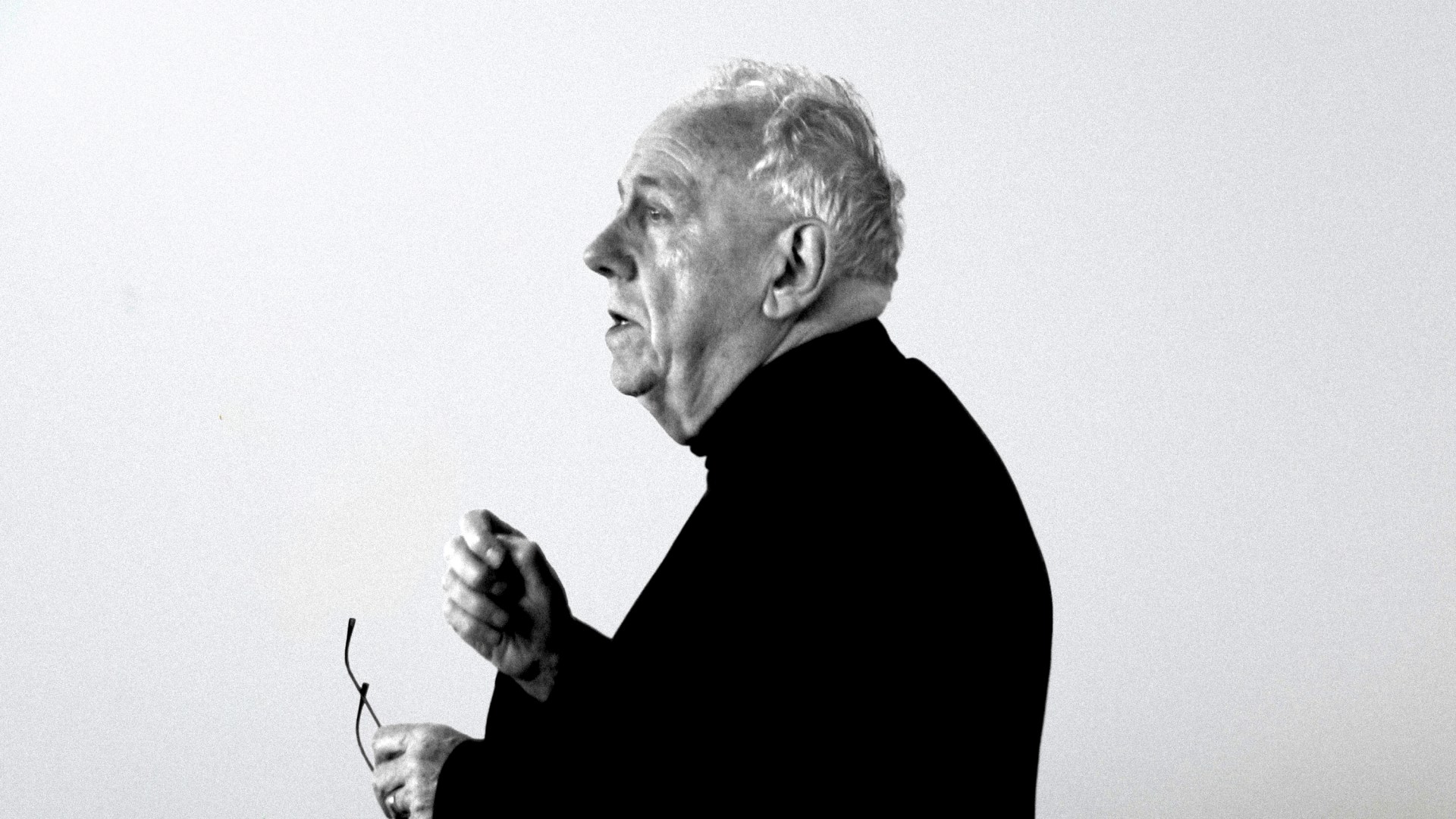
Alexei Navalny on a background going from light to dark
Christianity Today March 26, 2025
Illustration by Christianity Today / Source Images: Getty

Alexei Navalny is dead. And yet he lives.

He lives to trouble Vladimir Putin, the authoritarian strongman of Russia who may have had the advocate for democracy killed a little more than a year ago and who definitely had him poisoned before that.

Now Navalny is gone, but not gone enough for Putin. There are still those connected to him, including the Russian Orthodox priest who buried him and the lawyers who represented him.
There are still those inspired by him and the way he exposed Putin’s greed and corruption. They are willing to get arrested laying wreaths in Navalny’s memory at monuments to the victims of Soviet oppression, and they appeared at his funeral, defying authorities with chants of “We are not afraid.”

And there is his best-selling memoir, Patriot.

The cover shows his face staring out, refusing to look down, look away. Refusing to just be dead.

Navalny lives in another way too. He lives in the sense the apostle Paul spoke of in 1 Corinthians 15, as one who was sown perishable but will be raised imperishable, was sown in weakness and dishonor but will be raised in power and glory, with a mortal body that puts on immortality with Christ. He lives as one who believed in the Resurrection.

This is, in fact, how Navalny concludes the memoir, which one of his political allies called his gospel.

“Are you a disciple of the religion whose founder sacrificed himself for others, paying the price for their sins?” Navalny asks himself at the end. “Do you believe in the immortality of the soul and the rest of that cool stuff? If you can honestly answer yes, what is there left for you to worry about?”

The answer is clear: not death. Patriot testifies to that confidence from its opening sentence—“Dying really didn’t hurt”—to its final statement of faith in Jesus, who Navalny trusts to “take my punches for me.” This is the memoir of a man who is convinced that “the saying that is written will come true: ‘Death has been swallowed up in victory’” (1 Cor. 15:54).


For Navalny, the political part of this victory and the religious part are not unrelated. Yet the relationship between them is also complicated. He did not think that the religious could be reduced to the political, nor that the political could transubstantiate into the religious. Faith and political works are separate, as he understood them, but also always interconnected.

Seeing Navalny work this out is one of the most interesting parts of Patriot, though not one that most reviewers have focused on. The memoir is a powerful piece of writing. Patriot starts as an autobiography, recounting Navalny’s experience of being poisoned for anti-corruption activism and then circling back to his childhood outside Obninsk, a restricted-access city where the first Soviet nuclear reactor had been built. One of his vivid memories was seeing scientists and soldiers, including his father, scramble in response to the Chernobyl disaster 700 kilometers away.

“It was obvious the regime was hiding something, which meant it had something to hide, but you couldn’t say that openly,” Navalny writes. “In 1986, it hadn’t occurred to anyone that the Soviet Union and its vast apparatus for controlling thoughts and words would shortly cease to exist.”

The lies would be swallowed up by the truth, though, and Navalny tells the story of his awakening to the lies—a coming-of-age story—and his political education when the authoritarian regime collapsed. At first, tasting freedom, he put his energy into pursuing cars, dreaming of driving a Mercedes, a BMW, or a Chevy Tahoe. He wanted to be a successful lawyer and a cool dude.

But ultimately the corruption that came with the collapse of communism turned him into an advocate for democracy and good government. Which turned him into an opponent of Putin.

The former spymaster came to power in 1999, when Navalny was 23. Putin got promoted from intelligence-service director to deputy prime minister and then acting prime minister in a single day. He was made full prime minister that same month and acting president later that year—all without a vote. Putin passed laws making it harder for people to oppose him at the ballot box, used state media to promote himself, and took advantage of the war on terror to win election in 2000.

That was the start of Putinism, which one Russian observer at the time called the “final stage of bandit capitalism.”

Navalny saw it that way too. “One thing I really was sure of,” he writes in his memoir, “was that the Putin regime was founded on corruption.”

Patriot recounts the lengths to which Navalny went to expose that corruption and try to organize an effective opposition. He talks about political party meetings, public debates, shareholder activism, protest rallies, the discovery of the internet, and especially blogging. (There’s a lot on the thrill of blogging.)

Navalny was not ultimately successful. Putin’s government responded by subjecting him to criminal cases, politicized prosecution on trumped-up charges of embezzlement, and then prison.

The final part of Patriot is Navalny’s prison diary, an account of the minutia of incarceration that feels like an update to the Soviet-dissident classic One Day in the Life of Ivan Denisovich. Navalny describes the maddening bureaucracy of prison, the endless transportation between different cells, the sense of passing time, the sense of losing time, emerging friendships with fellow inmates, and the constant companion of hunger.

In the process, he discovers his faith. The political activist writes about faith not in terms of arguments but more as, to borrow a description from one of Augustine’s sermons, “a great jar in which you can receive a great gift.”

Navalny learned prayers as a child, spending summers with his Ukrainian grandmother, who also had him secretly baptized. When he had a daughter of his own, he realized he wasn’t an atheist. At some point he started to cross himself whenever he passed a church, a practice his friends and fellow activists regarded as wildly old-fashioned, superstitious, and gauche.

He didn’t disagree. In fact, he saw something about the gaucheness of religion—the uncoolness of Christian life—that attested to its truth.

In one scene in the memoir, Navalny recalls how an older prisoner who never really spoke to him gave him a prayer card with an angel on it. This was not a beautiful icon but kitsch. The prayer was written in a pseudo-Slavonic script, and Navalny jokes that “there seems to be a consensus that angels and archangels alight more readily” when there’s an old-timey font.

He received the card, however, as a sign. There was something about the incongruity, the aesthetic poverty, the complete uselessness of this item that in fact made it powerful. Navalny, by faith, rejected the valuation of authoritarianism.

It is no accident that, before this, he had taken to memorizing the Sermon on the Mount in Russian, English, French, and Latin. It is only a little more than 100 verses, he writes, and “if I was constantly going to find myself standing in line looking at a wall or a fence, I might as well learn it by heart.”

Navalny came to identify deeply with the Christian values of Jesus’ sermon. He grew to really believe that “everyone who hears these words of mine and puts them into practice is like a wise man who built his house on the rock” (Matt. 7:24).


Of course, the commands Jesus gave are wildly impractical in our world. Billionaire Elon Musk was right when he noted that it is dangerous, for example, to turn the other cheek. “If you’re facing sort of a predatory threat, and that threat is stronger than you,” Musk said, “you will just get, you know, executed.”

That is, sure enough, what happened to Jesus. That’s what happened to most of the disciples too. One can imagine Peter nodding along from where he hung upside down on his cross. “Love your enemies and pray for those who persecute you” (Matt. 5:44) is not good political strategy and not what strong people do.

Navalny’s friends and colleagues tried to tell him this too. He notes they discouraged him from talking about his faith in the final statements the Russian government allowed him to make before sentencing. And they were right, Navalny admitted, that such a statement wouldn’t “work.” He would seem, instead, like someone who had “gone nuts.”

But he did it anyway.

“Really, Your Honor, I’m not sure anymore what to talk about,” Navalny said in one statement, recorded in the memoir. “Do you think, perhaps, we should talk about God? And salvation? … The fact is, I’m religious.”

The fact is, he was “nuts” in the sense of rejecting political logic, authoritarian logic, the logic of gaining and maintaining power. Because of his faith, he could continue to advocate democracy and oppose Putinism even when the regime made it incredibly clear that he could not and would not win.

Navalny knew the inevitability of his own defeat, even his own death. But he also knew the truth of Easter, the truth that Christ has died (past tense) but is risen (present) and will come again (future).

That had consequences for his politics. He could disregard the fact that he would lose. He could not care that his course of action would likely lead to execution. He could start his memoir with the statement that dying didn’t really hurt.

“Faith makes life simpler,” Navalny writes. “My job is to seek the Kingdom of God and his righteousness, and leave it to good old Jesus and the rest of his family to deal with everything else.”

Daniel Silliman is senior news editor at Christianity Today.

Ideas

Ukrainian Children Are Not Expendable

Bureaucratic efficiency is no excuse for ignoring the vulnerable.

A stuffed animal bear in rubble
Christianity Today March 26, 2025
MirAgareb / Getty / Edits by CT

During times of war, the most vulnerable always pay the heaviest price. Women and children face unique vulnerabilities in the midst of crisis and conflict, and Russia’s attack on Ukraine in 2022 has proved no different.

Over the past decade, Russia has forcefully transferred almost 20,000 children from Ukraine to Russia and Russian-controlled territories. International awareness of the crisis only spread at the start of the war. At the time of capture, children ranged in age from 4 months to 17 years old and have been subjected to political reeducation camps and military training.

The United States is in active conversations with Russia and Ukraine to accept a short-term hiatus from the conflict as both sides negotiate a longer-term peace plan. One of Ukraine’s conditions is the return of the children “illegally deported to Russia and thousands of civilians detained in Russian prisons.”

Concurrent with the US peace deal negotiations, Elon Musk’s Department of Government Efficiency (DOGE) has stopped funding for Yale University researchers who are helping locate the abducted Ukrainian children. The team at Yale used “open-source technology including satellite imagery, social media and Russian publications, to trace the lost children and share their findings with the Ukrainian authorities to help them locate the abducted minors.”

Hundreds of Ukrainian children were illegally placed for adoption in Russia or placed in Russian families. In at least one case, the Yale researchers say, Russia’s government reissued the child’s birth certificate, “changing the child’s name and place of birth.” Many of these children have families. Abducted Ukrainian children have also been physically abused, separated indefinitely from their families in Ukraine, and given inadequate access to food and care.

Perhaps most monstrously, Russia “targeted vulnerable groups of children for deportation, including orphans, children with disabilities, children from low-income families, and children with parents in the military.” To this day, Russia has refused to offer a list of children taken to Russia and their whereabouts—as mandated by international law—and has concealed its forced deportation and illegal adoption of children from Ukraine.

Most egregiously, US lawmakers have “reason to believe that the data from the repository has been permanently deleted.” At a time when the US is pushing for a peace deal, the alleged actions send a chilling message—that the plight of these innocent children is expendable in the name of bureaucratic efficiency.

During President Donald Trump’s most recent phone call with Ukrainian president Volodymyr Zelensky on March 19, Trump asked about Ukraine’s missing children—including the ones who had been abducted—and promised to work closely with both Ukraine and Russia to ensure those children were returned home. I’m hopeful this signals that vulnerable children will be a top priority in a peace deal with the Kremlin.

Scripture speaks about the “quartet of the vulnerable”—the Old Testament’s emphasis on caring for the poor, widows, orphans, and foreigners—those in special need of protection and justice. We should care about the stolen Ukrainian children because each of those children bears God’s image and has been a victim of a crime. The heart of the Father is attuned to the suffering of the vulnerable—and so must we be as his hands and feet.

At its core, one of the fundamental responsibilities of government is to safeguard the well-being of the most vulnerable members of society, ensuring they are protected from harm and never reduced to pawns in political or ideological struggles. A just and moral society recognizes that the rights of children must be upheld with unwavering commitment, prioritizing their safety, stability, and opportunity to thrive.

As I’ve watched the war in Ukraine unfold over the past three years, I’ve been keenly attuned to the suffering of the children. I was adopted as an infant from Eastern Europe, and I have five siblings and a cousin also adopted from Eastern Europe. I’ve spent over 12 years working in child welfare, helping craft and advance public policy that puts the best interest of the child first.

When I worked on Capitol Hill, my boss led the Congressional Coalition on Adoption—Congress’s largest bipartisan, bicameral caucus. We led international congressional delegations to educate members of Congress and their staff on laws intended to protect children from trafficking and abuse. Our desire was for the US to be a global leader in protecting the smallest members of society.

The suffering of Ukrainian children is near to my heart partly because that part of the world is my birthplace and my heritage. Perhaps my body holds preverbal memories of my homeland and its neighbors. But I’ve also watched with a broken heart because I’ve dedicated my career to public policy that protects those experiencing vulnerabilities. Children must never be used as bargaining chips in any negotiation.

The Geneva Convention gives children special protection status during war, and deportation or forced transfer of a population is against international law and could constitute crimes against humanity.

The United States can seek efficiency without sacrificing the protection and safe return of abducted children. Ukraine’s children must come home without preconditions, and President Trump and Secretary of State Marco Rubio must continue to ensure that vulnerable children remain a top priority in peace conversations.

We must not turn a blind eye to the plight of stolen Ukrainian children.

Chelsea Sobolik serves as director of government relations for World Relief. Previously she worked for the Ethics and Religious Liberty Commission and on Capitol Hill. She is the author of Called to Cultivate: A Gospel Vision for Women and Work and Longing for Motherhood: Holding On to Hope in the Midst of Childlessness.

Ideas

Immigration’s Complicated Costs for My Town—and My Soul

Border regions like mine have absorbed so many new residents so quickly. I want to welcome them and to be honest about what I see.

A collage of scenes from Texas and immigration.
Christianity Today March 26, 2025
Illustration by Christianity Today / Source Images: Getty, Wikimedia Commons

I notice it most when I go to Walmart: the way it feels as if I’ve entered another country. A week or so ago, I looked around as I pushed a cart through the store. Though I’m more than three hours from an international border, almost no one around was speaking English. 

These Spanish-speaking employees and customers alike mostly aren’t of Mexican descent, as the West Texas Hispanic population generally used to be. Instead, they’re Cuban, Venezuelan, and Honduran, recent arrivals who brought new cultures and dialects with them when they moved to town.

I don’t think it’s evidence of racism to admit that these trips to Walmart can be disorienting—and if they’re disorienting for me, how much more so for a 70-year-old who can’t find an English-speaking employee to help her locate the mayonnaise? It’s okay to be surprised by the effects of the rapid population shift we’ve experienced in the span of a few years here in Midland, Texas, as we’ve grappled with a massive influx of immigrants. It’s even okay to be disconcerted.

The reflexive retort from many on the progressive left to that kind of concern, should our elderly Walmart shopper muster the courage to voice it at all, is that she’s a bigot for daring to complain. But she’s not wrong that our town is evolving. She’s not wrong about the reality playing out before her eyes. And if she is not taken seriously by sober-minded leaders, she may become an easy target for unscrupulous politicians and pundits who want to turn that disconcert into something darker.

Can most of us agree that the national dialogue about immigrants swings between absurd extremes? That both politicians’ rhetoric and public responses have reached a fever-pitched frenzy? After years of what some have argued is a functionally open border, we’re now deporting Iranian Christians to Panama and Venezuelans to El Salvador. As Christians, how do we respond to this chaos and confusion?

On the one hand, the Bible seems to me to be inescapably clear about how Christians are to respond to foreigners: “When a foreigner resides among you in your land, do not mistreat them.The foreigner residing among you must be treated as your native-born. Love them as yourself, for you were foreigners in Egypt. I am the Lord your God” (Lev. 19:33–34).

And yet law and order matter too, of course. As a Christian in a border state who has long felt the scriptural command to show compassion to immigrants, I’m trying to find the moderate middle, grounding myself in the reality I see with my own eyes as I develop a more nuanced perspective on immigration. Over the last few months, I’ve tried to pay more attention to the high cost of mass migration for communities like mine that absorb so many new residents so quickly—and I’ve been looking for that cost not only on the surface, where political debates tend to dwell, but also on our very souls.

As I’ve paid attention to the world around me and the world within, I’ve learned that the challenges posed by shifting demographics and culture are real and meaningful and worthy of consideration. But they pale in comparison to the spiritual consequences of allowing illegal immigration to run unchecked. The closer I look at this brokenness, the more I realize that God tells us to care for the stranger (Heb 13:2) and to follow the laws of the land (Rom 13:1) precisely because it is only in this middle space where we all—local and stranger alike—find abundant life.

It isn’t only at Walmart that I notice the shifting demographics of my community. I see it in the public schools my children attend. Late last month, my eldest daughter came home saying that a friend of hers from school had missed class because “his mom was getting deported.” At first, she said, she’d thought he was joking, but in the weeks since, I’ve seen her worrying, wondering if it is true. “Surely he has a grandma or someone to live with, right, Mom?” she asked later. “I mean, he’s still coming to school every day. How would he get there if he didn’t have a ride?”

And my daughter’s too-close, too-young introduction to the intricacies and dysfunction of the US immigration system isn’t the only impact immigration is having on her education. Though the district doesn’t release data on students’ immigration status, we’ve seen an influx of non-English speakers in the last few years. 

In 2019, Midland Independent School District had 3,133 English language learners enrolled; in 2025, we have 5,728. That’s a nearly 83 percent increase in six years—83 percent more students who are not native English speakers, more than 2,500 children who in some cases arrived not even knowing how to say hello. 

Due to zoning and resourcing decisions, these students often end up clustered at a handful of schools. Their presence isn’t a problem, and it’s arguably not adding to taxpayers’ fiscal burdens. After all, through a complicated revenue system funded by property taxes (which Texas residents pay regardless of immigration status when we pay rent or mortgages) our school district receives funding for each student enrolled. 

But this large and rapid addition to our school system is inarguably complicated—and again, it’s not racist or anti-immigrant to say so. The academic needs of a child who doesn’t speak English are drastically different than the needs of those who speak English as their first language. I want our schools to meet these new students’ needs and care for them well. But I can also see that the strain of trying to meet their needs without neglecting the students already here is pushing a precarious system over the edge. We are dealing with poor school performance, frustrated teachers, and disgruntled parents. 

For many families in the Midland area with children in one of the schools that have absorbed these students, the single most identifiable pinch point comes at 3:00 p.m. on weekdays. It may seem like a small thing, but new immigrant parents unfamiliar with the highly orchestrated customs and mores surrounding the American Elementary School Car Pickup Line are prone to cutting in and cutting off, a sure-fire way to exasperate the locals. Is that as important as how you teach all these children math? Of course not, but like a pebble in a shoe, it is a real irritation nonetheless.

There are other, larger, more expensive complications too. A friend of mine who works in an area hospital—an immigrant herself—told me she sees a recurring pattern: People come across the border and go to the ER complaining of chest pains or arm numbness and get a battery of tests to rule out myriad health concerns. Then they head back to Mexico with their medical records and a clean bill of health in hand, leaving US taxpayers to foot the bill. 

“It’s almost like they have a playbook explaining what they need to say to get free health care in the US,” she told me. She was quick to add that she doesn’t judge—that there’s no way to instantly know who has a real emergency and who doesn’t, so the Hippocratic oath compels her and her colleagues to care for all without question. 

Her impression is that this practice is less common among more recent waves of migrants from Central America than it is among Mexicans with Texan families, who can cross the border with relative ease. But that’s a distinction lost on your average American taxpayer, and it’s certainly not a distinction teased out by our governor, who leads a state where residents pay hundreds of millions of dollars every year to cover the treatment of uninsured migrants.

Another one of my acquaintances owns an oil-field service company. His competitors often hire undocumented workers, paying them below market wages and leaving them unprotected in dangerous jobs by failing to properly train and outfit them with the necessary safety equipment, like monitors to alert them to deadly H2S gas. “The immigrants are expendable to them,” he told me. 

These practices also hurt his business because he can’t compete with lowball bids from companies paying unfair wages. He’s frustrated less by the flood of illegal immigrants in our community than by the locals who profit off them. As a small countermeasure, he’s begun to offer free oil-field safety trainings in Spanish to educate workers other companies left unprepared.

Living where I do, encountering immigration stories as I do, it is impossible for me to swing to one political extreme or the other on this, to countenance the absurd reductions of complicated realities that I hear from left and right alike. 

It is just not true that any concern about the cost of immigration expressed by conservative border communities is racist—a fact some on the left only seem to realize when large numbers of migrants get deposited in their cities, at which point talking costs suddenly becomes reasonable.

But it’s also just not true that the people speaking Spanish at Walmart might knife you in the parking lot—that immigrants are disproportionately murderers, rapists, and “bad hombres,” as President Donald Trump tends to claim. They’re overwhelmingly normal people, also there for mayonnaise. Many have been given legal permission to stay in the country while they pursue asylum claims, and they deserve due process

Here’s where I’ve landed in my months of paying attention: I want to welcome immigrants, but I also want to be honest about the meaningful costs borne by our schools, hospitals, and small businesses and about the demographic shifts that make what was once familiar seem a bit foreign. And as I’ve paid closer attention, I realize that maybe most of all, I want to take care and responsibility for how living here and now is shaping my soul.

What if the greatest cost to a community—or a nation—that allows immigration to run unchecked is not about money or medical care? What if the way we’re handling immigration runs the risk of dehumanizing us? What if it’s making it harder for us to imitate Jesus?

What if it makes us callous toward the people delivering our DoorDash and cleaning our houses and mowing our yards and picking our strawberries and butchering our meat? What if we grow ever more entangled, often in ways we don’t even notice, in economic systems that benefit us at their expense? And what if, when we do start to notice, we blame the victim instead of admitting that this arrangement does not—and should not—sit well with our souls?

In 2023, I wrote at CT about my conservative pastor friend who likes Trump’s border policies and also cares for migrants. The argument I made then remains true two years later. Both sides of our politics use migrants as political fodder, doing little to resolve the immigration crisis, perhaps because our whole culture has come to rely on the fruits of migrants’ ill-paid labor, including the labor of children. Individually, we do not know how to change any of this, so we pretend we do not see, like the travelers who passed the injured man before the Good Samaritan came along (Luke 10:25–30).

God has harsh words for those who live in comfort by “grinding the faces of the poor” (Isa. 3:15). A commentary on this verse from the Theology of Work Project says, “The exploitation of the poor for the advancement of the social elite was a breach of God’s covenant claims on his people to be his people.”

God’s people “were called to be different from the surrounding and competing cultures,” the commentary adds. God knew what they did not: that exploitation doesn’t only hurt the exploited. “Whoever is pregnant with evil conceives trouble and gives birth to disillusionment,” as David wrote. “The trouble they cause recoils on them; their violence comes down on their own heads” (Psalm 7:14, 16).

A few weeks ago, I sat in a ramshackle building alongside the Rio Grande river in Juárez, Mexico, where I’d traveled with a friend of mine who is an out-of-town reporter, as well as two local pastors, one of whom helps runs the shelter we visited.

From the shelter, I could see across the river to El Paso, a block and a world away. Sitting in a circle inside the shelter were about 30 migrants, mostly Venezuelan, who shared stories about their multimonth journeys through Central America. Many had been kidnapped by drug cartels and held for ransom. Now they worry that if they are captured by again, they will be killed because their families have nothing left to pay. 

We asked if any of the women had experienced or knew someone who had experienced sexual assault on the journey north. Every single one raised a hand. 

We asked them if they thought all immigrants should be allowed entry to the US (No! Of course not. No country could handle that) and who should be kept out (gang members and criminals, to start). 

We talked about their frustrations (So many people in America think we are all criminals, but we aren’t) and how they all still hope against hope to enter the United States in the coming weeks. 

Considering how impossible their circumstances now seem, we asked why they still wanted to cross the border. Work. “What kind of work do you want?” we asked. Anything, they said. We’ll do anything. The gravity of this weighs heavily on my heart: People this desperate are far too easy to exploit.

As I’ve pondered all this, I’ve been convicted to look for greed and gluttony in my own life. I like cheap strawberries and cheap meat, and I don’t want to pay higher prices to cover higher wages for the people who pick my berries and work the slaughterhouses. But maybe I need less meat and fewer strawberries?

I’m tempted to click “Buy It Now” on anything that strikes my fancy on Amazon. But I’ve started to notice the immigrant driver who drops the package at my door. What kind of wages is he making, and what is Amazon’s use of his labor doing to the mom-and-pop businesses right down the street?

I know I can’t single-handedly solve the immigration crisis, enact comprehensive immigration reform, or change these economic systems. My grocery store won’t notice if I’m buying fewer strawberries. I can’t affect Amazon’s bottom line. I’m not a member of Congress. 

But I can tell the truth that a more orderly and humane immigration system would be good for US communities—tense and straining under the weight of new arrivals—and good for those who so desperately want to come here. I can notice that as we dehumanize immigrants and use them for our own ends, we chisel out a deeper trough between God and ourselves—and I can try to help others notice it too.  

And I can get honest about the ravenous desires of my own heart and the people I use to fill them. I can recognize my temptation to greed and gluttony and admit these are not isolated, internal sins that affect only me. I can admit they often come at the expense of those who have less. 

Carrie McKean is a West Texas–based writer whose work has appeared in The New York TimesThe Atlantic, and Texas Monthly magazine. Find her at carriemckean.com.

Books
Review

Overdiagnosis Is a Medical Problem—and a Spiritual Problem, Too

Side effects may include needless worry, loss of agency, and inadequate explanations of human hardship.

A sad man with pills all around him
Christianity Today March 25, 2025
Illustration by Mallory Rentsch Tlapek / Source Images: Unsplash

“I have now been a doctor for over thirty years and a neurologist for twenty-five of those,” Suzanne O’Sullivan writes early in The Age of Diagnosis: How Our Obsession with Medical Labels Is Making Us Sicker. “In recent times, I have grown particularly worried for the large number of young people referred to me with three, four or five pre-existing diagnoses of chronic conditions, only some of which can be cured.”

I am not a doctor and indeed have no medical expertise. But I imagine there are few people in my position—an American, a millennial, the mother of school-age children—who have failed to notice what O’Sullivan more intimately sees: that diagnoses are on the rise.

There’s a certain delicacy in discussing this, a delicacy O’Sullivan acknowledges. Outside the unconstrained bombast of television talk shows and hot takes on social media, out here in the normal world where it still matters how we speak to and about one another, this is a difficult subject to broach for those of us without medical credentials. Certainly, I have neither the standing nor the appetite to question a single diagnosis.

But I do question the society-wide rise in diagnosis and the assumption in so many medical contexts that more screening, more testing, more diagnoses, and more treatment are always best. O’Sullivan questions all this too in a book that is at once fascinating and informative—and surprisingly relevant to leaders in today’s church.

More illness, less stigma, or overdiagnosis?

O’Sullivan isn’t unusual in encountering more patients with more diagnoses. The bare fact that diagnoses are proliferating—and for some conditions, proliferating rapidly—is not in dispute. The question is why this escalation is happening, and O’Sullivan posits three possible explanations.

It could be that we are simply sicker than we used to be: prone to inactivity, awash in microplastics, beset by the anxieties of modern life. Or it could be that we are no sicker than before but more willing and able to recognize and treat illness as medical technology advances and social stigmas decline.

There’s truth to both explanations, O’Sullivan grants, but ultimately she puts more weight on a third:

It could be that not all these new diagnoses are entirely what they seem. It could be that borderline medical problems are becoming ironclad diagnoses and that normal differences are being pathologised. These statistics could indicate that ordinary life experiences, bodily imperfections, sadness and social anxiety are being subsumed into the category of medical disorder. In other words: we are not getting sicker—we are attributing more to sickness.

There are two related problems here: overdiagnosis and overmedicalization. As O’Sullivan defines it, an overdiagnosis is technically “correct,” but it “does not benefit the patient and may arguably do harm.” By overmedicalization, she means the habit of giving medical labels to “ordinary human differences, behaviour, and life stages,” like treating normal “ageing, poor sleep, sex drive difficulties, menopause, and unhappiness” as illnesses to be medicated, perhaps for life.

Because the logic of overmedicalization is easier to grasp, O’Sullivan devotes most of her attention to overdiagnosis (which itself can encourage more overmedicalization). Throughout the book—which explores conditions as different as Huntington’s disease, cancer, autism, ADHD, Lyme disease, and long COVID—she emphasizes a core distinction: whether a diagnosis is narrowly correct or genuinely beneficial.

O’Sullivan lists a litany of assumptions that might seem preposterous to question:  “that any diagnosis is better than no diagnosis; that tests are more accurate than doctors; that test results are objective, immutable truths; that early intervention is always for the best; that treatments that work for one set of people will work equally well for others; that diagnosis is something fixed and definite; that pre-emptive testing is the surest way to long-term health; that more knowledge is always for the best.”

But the book mounts a compelling case for skepticism toward that received wisdom, pairing expert explanation of how various tests function with stories of patients from O’Sullivan’s own practice and beyond. The book details how some diagnostic criteria have expanded to sweep in people exhibiting no well-established symptoms of their ostensible disorders. It tracks how patients are hurried along to testing and intervention of dubious necessity, notwithstanding the clear risks to their peace of mind. And it laments that few in the medical profession have paused the rush of technological progress to ask, Could this do more harm than good?

What we know and how we experience it

As it surveys overdiagnosis in various fields of medicine, The Age of Diagnosis always takes patient suffering seriously. As a neurologist, O’Sullivan makes a point of validating psychosomatic pain alongside more familiar psychological and physical disorders. “Psychosomatic” does not mean “fake.” In all the cases she explores, even those where her skepticism of the patients’ diagnoses runs high, her compassion is clear. “The struggles are real,” she says; it’s just that “medicalising them may not be the solution.”

The stakes are high because inappropriate medicalization is risky. We may be tempted to shrug at overdiagnosis. Perhaps it’s unnecessary, but if it’s reasonably correct and if the patient wants it, what’s the harm?

The harm, as O’Sullivan writes, is that applying a diagnostic label is not a small or neutral act. It can reshape our self-conception and personal identity, rewrite our expectations for the future, and even—through the complex and imperfect interplay of body and mind—generate symptoms we otherwise would not have experienced, on balance reducing quality and even duration of life.

Simply “knowing you are at high risk of a disease could change how you use your body and how much you trust it,” O’Sullivan argues. “Worry and uncertainty creates fertile ground for the misinterpretation of every normal illness and bodily change. A medical label is not an inert thing.”

The book never explicitly discusses epistemology, that branch of philosophy concerned with knowledge and how to acquire it. But O’Sullivan is raising essentially epistemic questions: What can we know about our bodies and their futures? What should we want to know? When are we deluded about the extent of our understanding? How should we act on what we do understand? And how does the knowledge available to those in the modern West—so far beyond what much of today’s world, to say nothing of our ancestors, can access—influence us in ways we may not even recognize?

It is tempting to think we should always know as much as we can. It’s tempting, too, to envision modern medicine delivering that knowledge as surely and comprehensively as any hard science does. The Age of Diagnosis poses an incisive challenge to both notions. It asks readers to consider that good intentions are not the same as good outcomes and that more (or more high-tech) medicine is not necessarily the better alternative.

O’Sullivan is not a tech skeptic; in fact, my one substantive critique is that she is much too blasé about teen screen time. Nor is she reflexively critical of elite expertise or institutions. She is a doctor who wants to do right by her patients and has come to understand that doing right may sometimes mean doing less.

A book for every pastor

Again and again in the patient stories she shares, O’Sullivan raises the matter of how to care for people as they experience the ordinary hardships of human life. Overmedicalization has expanded disease definitions, she argues, “so that over time, people who would once have been considered healthy are drawn into the disease group.”

That may seem well outside the pastor’s purview, and no doubt it is where some diseases are concerned. Seminary doesn’t give you any special expertise in discerning signs of cancer or determining what blood sugar levels qualify as prediabetic.

But with other conditions, particularly those affecting behavior and mental state, O’Sullivan’s insights hold vast relevance to pastoral ministry and the larger work of the church. In fact, I would recommend this book to any pastor in the United States, and particularly pastors of churches with large populations of children and young adults. The Age of Diagnosis can equip pastors for tasks of both exhortation and encouragement.

Pastors are not doctors, of course, and they should have all due humility about physical and mental health care. But they should hesitate to bench themselves when they encounter physical, mental, and emotional distress. In some cases, what’s intended as deference to medical expertise may actually be abdication of pastoral responsibility toward suffering with some spiritual component.

The effects of such abdication can be far-reaching and deleterious. “The words we use to describe our suffering make a huge difference to how it is perceived,” O’Sullivan says. Attributing distress exclusively to internal biological pathologies (rather than, say, behavioral or spiritual responses to external stressors) may feel validating for people. It tells them their suffering is real, and often it is real.

But it may also unintentionally tell them that they have no agency over that suffering, that it is solely about chemicals and entirely separate from the state of their souls. “I fear that a view that talks too much about internal biological processes makes people passive victims of their medical disorder which takes away their control,” O’Sullivan warns. “A person who believes they are incapable behaves as if they are incapable, which provokes others to treat them as if they are incapable, and so the cycle feeds back into itself.”

Christians must be willing to reach for medical explanations and treatments when needed. Yet as people who believe in spiritual realities and the necessity of the church, we should be open to spiritual and relational explanations of suffering too. Pastors can’t change people’s brain or blood chemistry. But they can exhort those who are suffering to examine and change how they behave, how they think about themselves, how they respond to the difficulties and evils we will all encounter as aging people in a fallen world.

As for encouragement, O’Sullivan suggests that this, more than medication or other treatment, is what many patients fundamentally want when they seek a diagnosis. Several times throughout the book, in what reads like an unintentional echo of biblical language (like Mark 16:18, KJV), she speaks of patients’ deep gratitude for doctors who take the time to “lay hands” on them.

“Society has a general lack of caring institutions, except for medical facilities,” O’Sullivan observes. “This means that physical illness is always prioritised and so it is more straightforward when distress is expressed as a medical problem,” which will bring “a person under the jurisdiction of one of the few institutions available to offer support in a crisis.”

But there is another institution to offer such support—a very common institution, an institution with no bills or fees, an institution open to all comers, diagnosed or not. It is the church. And indeed, Christians reading O’Sullivan’s concluding comments can justly relate them to an absence of pastoral care, good theology, faithful practice, and thick church community:

People are struggling to live with uncertainty. We want answers. We want our failures explained. We expect too much of ourselves and too much of our children. An expectation of constant good health, success and a smooth transition through life is met by disappointment when it doesn’t work out that way. Medical explanations have become the sticking plaster we use to help us manage that disappointment.

And now the public and medical professionals are caught in a folie à deux [or “shared psychosis”] that we are struggling to acknowledge. There are many more questions put to medical professionals than we can actually answer. Worried people come to see us all the time hoping for a coherent explanation for their problem. We feel our patients’ needs and are relieved if we have an explanation to give. It may be that what some of those people really wanted was reassurance, but increasingly, the answer seems to come in the form of a label.

I am grateful to live in the age of modern medicine, the time of vaccines and anesthesia and antibiotics. I recently read a remarkable history of the plague as it moved through the United Kingdom in the mid-1300s, and it is sobering to grasp just how clean, safe, and healthy our lives are compared to those of our forebears. Whatever our rightful frustrations with our medical and insurance systems, we objectively have it very, very good.

Yet medicine is not the only answer to human woes—far from it. The Age of Diagnosis is right to caution us against overreliance on medicine’s still-imperfect remedies, to insist that sometimes we are not depressed but sorrowful, sometimes not clinically fatigued but overworked and underpaid, sometimes not hyperactive but undisciplined, sometimes not sick but sickened by sin (or the sins of our neighbors). I have already bought a copy for my church.

Bonnie Kristian is editorial director of ideas and books at Christianity Today.

News

In Bombed-Out Kharkiv, Ukrainians Live Under Russia’s Constant Threat

As spring arrives, skeleton buildings, numb or indignant people, and religious life remain.

A damaged apartment after a rocket attack in the city of Kharkiv in Ukraine.

A damaged apartment after a rocket attack in the city of Kharkiv in Ukraine.

Christianity Today March 25, 2025
Anadolu / Getty

The once-thriving neighborhood of Northern Saltivka in the Ukrainian city of Kharkiv, 20 miles from the Russian border, is now mostly a ghost town. It took the brunt of Russia’s early offensive into Kharkiv in 2022.

Saltivka’s apartments were built during the Soviet Brezhnev era, mid-1960s to mid-1980s, known for the cold, gray architecture that many Americans have seen in movies and documentaries. Now, almost all the buildings are skeletons, with many bones broken. Nearly every window is shattered. Many are boarded up. Others remain as frames, either totally empty or with shards of glass.

This residential area included a school building, the remains of which are now fenced off—but a large hole in the ceiling shows where bombs fell. Abandoned, dirty swings and children’s playthings in small fields between the buildings make the cold reality of what happened here more haunting.

That I was able to view the devastation is the result of the stunning counteroffensive culminating in November 2022 that restored Ukrainian control of the city. In Kharkiv, only four days into the invasion, a mix of Ukrainian troops, police officers, and local militias killed most members of an elite Russian unit. Residents at that time saw it as a community victory, with the complete liberation of Kharkiv still months away.

Less than a mile from the apartment buildings, Russian bombs in 2024 destroyed the Ukrainian equivalent of a Home Depot and killed at least 16 people. Russian propagandists claimed the hardware store had been used to repair tanks. Bombardment continues: In virtually every Kharkiv neighborhood, damage to buildings, blown-out windows, holes in the sidewalk, and bullet holes in fences are common.

And yet life goes on. The hardware store was in the same parking lot complex as a modern mall that looks like an American one—and when I was there earlier this month, it was very much open for business. Another mall, only a block away from a municipal building badly damaged by Russian bombardment, was packed with people.

Religious life also goes on. On a cold and wet Sunday, I visited Anunciation, a stunningly ornate red and white building with gold trim and icons inside, which remains under the theological authority of Orthodox patriarchs from Moscow. Attendance was 150–200 despite physical dangers and the politically fraught split between Moscow-oriented churches, widely thought to be compromised by Putin’s government, and the Orthodox Church of Ukraine, recognized by the bishop of Constantinople and now followed by a majority of Ukrainians.

Parishioners at this church, though, didn’t seem to be thinking about church division. One young woman, Tanya, said, “I go because the choir is mesmerizing.” Nobody mentioned church politics. From a different denomination, evangelical pastor Ivan Rusyn told me he read the work of Holocaust chronicler Elie Wiesel, who questioned where God was during the killing of 6 million Jews. Ideas that God was there alongside the innocent, Rusyn said, “were very helpful to me, personally.”

As I left Kharkiv, an air-raid siren went off. Residents didn’t take much notice of it. Some seem numb to the constant threat. Others are indignant about Russian leaders and consider them or their apologists in the same way Jeremiah prophetically viewed adversaries in his day: “They dress the wound of my people as though it were not serious. ‘Peace, peace,’ they say, when there is no peace. Are they ashamed of their detestable conduct? No, they have no shame at all; they do not even know how to blush” (6:14–15).

News
Wire Story

After Thousands of Deaths and Kidnappings, Nigerian Christians Call on US to Recognize Their Persecution

“No one desires that their country is in the list, but putting Nigeria back there should encourage the government to act.”

Christianity Today March 24, 2025

Nearly four years ago, the Biden administration removed Nigeria from a list of countries whose threats to religious freedom are of “particular concern,” but continued attacks on Christians and other religious groups by Islamist militias have prompted calls from local faith leaders and members of the US Congress for the designation to be restored.

In Africa’s most populous nation, a deadly cycle of violence has unfolded for several years, with Christian clergy and laypeople as well as moderate Muslims falling victim to murder and kidnapping. The Christian nonprofit Open Doors recently reported that in 2024 some 3,100 Christians were killed and more than 2,000 kidnapped in Nigeria.

Last week, US Rep. Chris Smith of New Jersey, chairman of the House Foreign Affairs Subcommittee on Africa, held a hearing on religious freedom violations in Nigeria that included testimony from Catholic Bishop Wilfred Anagbe of the Diocese of Makurdi, in central Nigeria, and Family Research Council President Tony Perkins, a former US Commission on International Religious Freedom commissioner.

Anagbe accused the Nigerian government and police of not taking action to stop the violence, and he told the subcommittee that in addition to killings, kidnapping and rape, Christians are routinely denied public office. “We live in fear, because at any point it can be our turn to be killed,” the bishop said.

Perkins appealed to the White House during the hearing to reassert “country of particular concern” status on Nigeria under the International Religious Freedom Act that allows the US president to impose economic penalties.

“The US should apply targeted economic sanctions on Nigerian officials that are complicit in religious persecution,” he said, adding that trade and security agreements should be used to pressure the government. Perkins also called for the Trump administration to name a new ambassador for international religious freedom.

In Nigeria, John Joseph Hayab, a Baptist minister and chairman of the Christian Association of Nigeria in 19 Northern States, told RNS, “No one desires that their country is in the list, but putting Nigeria back there should encourage the government to act.”

According to Hayab, the violence in Nigeria is not limited to Christians, and the designation would awaken the government to act for justice and give equal rights to all, such that no sect is treated as superior to another.

“All the people who have died should not have if the government had acted. I think it would encourage the government to wake up. I hope it does so before it’s listed,” said Hayab.

The Nigerian government has rebutted the claims of targeted killing of Christians, saying that while previous reports by the US Congress had led to Nigeria’s designation as a country of particular concern, the security challenges were complex and not rooted in religious persecution.

“The ongoing security challenges stem from criminality, terrorism, and communal clashes, particularly conflict between farmers and herders, which have been exacerbated by climate change, population growth and competition over land resources,” the Ministry of Foreign Affairs said in a statement.

Of Nigeria’s nearly 229 million people, Muslims comprise 53.5 percent, while 45.9 percent are Christians. The violence is largely the work of two groups—the extremist Islamist militant Boko Haram and its splinter factions, and a range of militias or bandits linked to Fulani herders, Muslims who have waged a campaign of land grabs against Christian farmers in the fertile, and more Christian, “Middle Belt” of central Nigeria as the Fulanis’ grazing land has dried up over the past decades.

In August, the Observatory for Religious Freedom in Africa reported that the little-known Fulani Ethnic Militia was carrying out most of the killings in Nigeria.

The militia, according to the August 29 report, has organized along ethnic and religious lines, carrying out attacks and abductions without resistance from the Nigerian security services. Although both Christians and Muslims are victims of the violence, Christians have endured most of the violence as attackers burned their homes and farms.

Over the last four years, the militia has killed over 55,000 people and carried out over 21,000 abductions in the North-Central Zone and Southern Kaduna, the report said.

Bishop Oliver Dashe Doeme of the Catholic Diocese of Maiduguri, in the northeastern corner of the country, backed relisting Nigeria as a country of concern.

“Let it be so that the world can know this is what we are going through. The naked truth is that Nigeria is on the brink of collapse,” he said in a telephone interview.

Calling Christian persecution “our daily experience,” the bishop said, “We have a government that is not functioning very well, and that is why these criminals move about terrorizing innocent citizens, including priests who are supposed to be highly respected. Let the world know. The Western world has been quiet about our experience here.”

Catholic Church leaders say that 145 priests have been kidnapped in the last 10 years, 11 of whom were killed; four are still missing.

In the latest incident, a 21-year-old seminarian and a priest were kidnapped March 3 in the Diocese of Auchi, in Edo state. The priest, freed 10 days later, said the seminarian had been killed. Another Catholic priest, from the Diocese of Kafanchan, was found murdered on March 5.

“They don’t see the priests as anything,” said Doeme. “They do not respect them, and that is why they are being abducted here and there, and some of them killed.”

He added, “But, then, we are people of faith and we do not give up our hope.”

Culture
Review

Would You Die for a Friend?

The enormously popular adult animation “Ne Zha 2” tries, and fails, to grasp what sacrifice truly entails.

Twin towers in China are illuminated with Ne Zha and Ao Bing from the film, Ne Zha 2.

Twin towers in China are illuminated with Ne Zha and Ao Bing from the film Ne Zha 2.

Christianity Today March 21, 2025
VCG, Getty

This week, the Chinese animated film Ne Zha 2 beat Star Wars: The Force Awakens to become the fifth highest-grossing movie ever, making $2.08 billion in the international box office. The milestone comes a month after it gained the title of highest-grossing animated film of all time.

The film, which is based on traditional Chinese folklore and has Buddhist and Daoist influences, follows the rebellious demon-child Ne Zha as he overcomes his fate to emerge as a hero who defeats evil celestial authorities. Released in January in China and a month later in North America, the film engrossed viewers with its flashy, fast-paced action, stunning visuals, and slapstick (sometimes crude) humor. The sequel quickly surpassed the original Ne Zha film, which was released in 2019.

The story features the theme of sacrifice in the character of Ao Bing, Ne Zha’s enemy-turned-friend. Christians may notice the relationship is a shadow of the greater sacrifice found in Christ, which is even more awe-inspiring than what is portrayed in Ne Zha 2. At the same time, we may find the results of our own sacrifices less satisfactory than the victory that Ao Bing and Ne Zha achieve by the time credits roll. (Warning: spoilers ahead.)

In the film, Ao Bing and Ne Zha are destined to be rivals from before their births. Ao Bing’s father, the Dragon King, stole the Spirit Pearl, formed from the positive celestial energy of the universe, and placed it inside his own son although it was meant to be given to a reincarnated Ne Zha. Ao Bing is then charged with a mission to defeat Ne Zha and prove himself as the true bearer of this celestial power.

As he grows up, Ne Zha is shunned by his town for his brute strength and demonic nature. Ao Bing spends most of his time isolated under the water. The two become friends after an unexpected encounter by the sea when they unite forces to defeat a monster.

Yet when ferocious, fire-breathing dragons from Ao Bing’s clan attack Ne Zha, Ao Bing turns against his people to protect his friend from harm, even giving up his life.

“I took your place as the Spirit Pearl,” Ao Bing tells Ne Zha. “I deserve this. If my sacrifice can bring you back to life, then it’s a fair price to pay.”

“Who asked you to?” Ne Zha responded. “Don’t you dare die!” But his pleas are in vain as Ao Bing takes his final breath, asking his father to spare Ne Zha and his hometown.

Ao Bing’s sacrifice is reminiscent of what Jesus says in John 15:13: “Greater love has no one than this: to lay down one’s life for one’s friends.”

Yet Ne Zha 2 doesn’t end there. Ao Bing comes back to life as Ne Zha helps him rebuild his flesh and live again with a new body. After a misunderstanding drives them apart, the friends finally reconcile and unite in battle.

As in all the best stories, good wins in the end. Justice reigns. Oppressors are brought down. A hopeful future awaits.

But would Ao Bing still choose to die for Ne Zha if they had remained enemies? 

Ao Bing’s sacrifice is commendable, but it also seems like an effort to rectify a wrong. Ao Bing sees his death as a way to make up for his father’s theft of the Spirit Pearl at his birth. He decides to give up his life because he sees something good in Ne Zha—something he thinks is worth dying for.

Scripture, however, demonstrates the kind of sacrifice that goes beyond what mythical characters like Ao Bing can possibly offer: a sacrifice freely given for people who are undeserving.

“Very rarely will anyone die for a righteous person, though for a good person someone might possibly dare to die,” the apostle Paul writes in Romans 5:7–8. “But God demonstrates his own love for us in this: While we were still sinners, Christ died for us.”

I remember how mind-boggling these verses felt when I first heard them as a college student in China. How could God die for us, want to reconcile with us, and befriend us while we were still his enemies? We are people who fall short of his glory, unable to reach the holiness he requires.

What Jesus did sounded unsettling to me when I realized that he hung on bloodied nails for people who mocked and ridiculed him. Soldiers beat and flogged him. They pressed a crown of thorns onto his head. They crucified him. Yet despite all this, he said, “Father, forgive them, for they do not know what they are doing” (Luke 23:34).
Unlike what happens in Ne Zha 2, the reason for sacrificing your life for another doesn’t always make sense. The sacrificial love Jesus displayed on the cross ought to leave us stunned and amazed, as Jesus chose to give his life for people who were once against him, including you and me.

Sacrifice is also a means by which the characters in Ne Zha 2 prevent injustice from spreading. Deceitful, manipulative, and hypocritical characters in the film exploit others for their own gain, yet Ne Zha, Ao Bing, and their allies risk their powers and their lives to defeat the evil Wu Liang Xian Weng, monarch of the celestial realm, and his cronies.

Victory over wickedness occurs by the end of the film, but in the real world, sacrificing our time or energy to fight for justice might seem futile and even foolish. We clench our fists and grit our teeth when we see how despots and tyrants bulldoze over others, using their power to reap ill-gotten gains for themselves. We feel small and powerless to prevent any of this from happening.

Like Asaph in Psalm 82:3–4, we cry out to God: “Defend the weak and the fatherless; uphold the cause of the poor and the oppressed. Rescue the weak and the needy; deliver them from the hand of the wicked.”

At times, we cannot help but wonder: Is sacrificing our lives for the greater good really worth it if evil simply triumphs again and again?

Ne Zha 2 answers this question in an idealistic way. It gives us the resolution to the problem of injustice that we hope and wish for, and it reveals a natural yearning within us to see justice prevail. The film does not talk about what happens when reality fails to meet our expectations. But Scripture provides sound wisdom on talking to God when injustice, whether in our personal lives or in our neighborhoods, cities, and churches, inevitably arises.

In Scripture, the prophet Habakkuk wrestles with these questions when it seems God is allowing bad deeds to go unpunished: “Your eyes are too pure to look on evil; you cannot tolerate wrongdoing. Why then do you tolerate the treacherous? Why are you silent while the wicked swallow up those more righteous than themselves?” (1:13).

Habakkuk asks God all his tough questions and deep sorrows because he knows and trusts that God cares. He believes that God sees the terrors and struggles of the vulnerable and the brokenhearted. He knows that God does not ignore injustice. God is a just God, and one day, he will set things right.

Like Habakkuk, Christians are all involved in the slow and painful work of rectifying injustice in the world today. No matter how burdensome and tiring it can be to fight against wrongdoing, God assures us that our souls can find rest. “Do not fret because of those who are evil or be envious of those who do wrong; for like the grass they will soon wither, like green plants they will soon die away,” David declares in Psalm 37:1–2.

As the Book of Revelation depicts, the Lamb of God who gave his life for us will one day usher in perfect justice, a future for his people, and the ultimate victory of good over evil. Until then, we work and wait in expectation and hope.

Yixiao Ren is a freelance journalist based in New York City.

Theology

Firm Faith Doesn’t Require a Closed Mind

Christians should be known for embodying the virtues of curiosity and epistemic humility.

A collage of a brain and an open window.
Christianity Today March 21, 2025
Illustration by Elizabeth Kaye / Source Images: Unsplash, Wikimedia Commons

“Should a Christian have an open mind?” When a student raised that question in class, I did not know how to answer at first—I felt caught between two competing convictions.

On one hand, “open-mindedness” seems to run contrary to the Christian doctrine of the narrow road. Shouldn’t Christians be characterized by our unchanging, unshakeable faith? The letters of Paul repeatedly remind us to “stand firm,” holding tightly to truth amid doubt and confusion. Isn’t open-mindedness just another name for weak faith?

On the other hand, the Bible has a lot to say about humility. Our understanding is so small, and the ways of God and his creation are so vast. Should this not demand that we hold our views loosely? Isn’t closed-mindedness just another name for intellectual pride?

Making matters more complicated is the fact that well-intentioned and thoughtful Christians give very different answers to my student’s question.

Religion professor James Spiegel describes open-mindedness as “a midpoint between two intellectual vices, a sort of apex between the valleys of dogma and doubt,” and calls it “an especially important virtue at this time in history.”

On the other hand, Burk Parsons of Ligonier Ministries writes confidently, “As the closed-minded, Christ-minded faithful we must join arms against the satanic pluralism of our day.” This attitude is not uncommon among biblically faithful Christians.

What do we make of this? Should Christians be regarded for our intellectual openness or renowned for our resolute resolve?

Then again, what if there is no contradiction between unshakeable faith and intellectual humility? In the Bible, we see a compelling picture of life characterized by faith in the person of God and an openness to correction in our finite understanding of the world.

Too often, Christians are known for rampant stubbornness and intellectual pride. In our well-intentioned pursuit of faithfulness, we have left behind something essential to the Christian life: deep humility, which requires a certain kind of open-mindedness. In our praise and pursuit of a firm faith, we must not neglect the virtue of biblical epistemic humility.

In order to do so, we must first draw a clear distinction between two kinds of curiosity.

For much of church history, curiosity has been considered a dangerous vice. Often associated with pride and vanity, curiosity has been blamed for some of humanity’s greatest sins. In a certain sense, even the first sin of Adam and Eve could be blamed on curiosity. After all, the Serpent tempted Eve with the promise that her eyes would be “opened” and that she will “be like God, knowing good and evil” (Gen. 3:5). Was it not an illicit longing for forbidden knowledge which doomed humanity?

This theme is echoed elsewhere in Scripture. Paul warns Timothy against the inevitable temptation for people to “turn their ears away from the truth and turn aside to myths” (2 Tim. 4:4) and cautions the Ephesians against being “tossed back and forth by the waves, and blown here and there by every wind of teaching” (Eph. 4:14).

In light of these biblical warnings, influential Christians have likewise denounced the dangers of curiosity. Augustine writes in his Confessions that “curiosity makes semblance of a desire of knowledge” and identifies his own struggle with lust as a manifestation of sinful curiosity.

In The Imitation of Christ, Thomas à Kempis speaks of those who are “led by curiosity and pride … whilst they neglect themselves and their salvation.” Such people, he warns, are likely to “fall into great temptations.”

There is great wisdom in these warnings. Given the corruption of the human heart, curiosity can lead us to places we ought not go. As Joseph Samuel Exell and Thomas Henry Leale put it in their commentary on Genesis, “It is dangerous to the interests of the soul to indulge in the vain curiosity of knowing the evil ways of the world.”

Insofar as curiosity is an expression of pride and a vessel for temptation, it is certainly right for Christians to caution against this kind of open-mindedness. There is much evil against which we should resolutely close our hearts and minds.

There is, however, another kind of curiosity: the kind of open-mindedness that exists as an expression of humility and an acknowledgment of our own limitations. Scripture praises this posture, while warning against the arrogance of stubbornness and intellectual pride.

As the Bible attests, God’s people are not known for our responsiveness to input, receptivity to change, or willingness to listen. In fact, if anything can be called our most consistent trait across the millennia, it is probably our hard hearts and stubborn minds.

“I have seen this people, and behold, it is a stiff-necked people” (Ex. 32:9, ESV). So says the Lord to Moses when the people of Israel make for themselves a golden calf to worship in place of the God who brought them out of Egypt.

“All the house of Israel have a hard forehead and a stubborn heart” (Ezek. 3:7, ESV). Here, the Lord warns Ezekiel that the people will not listen or change their ways.

“Because I know that you are obstinate, and your neck is an iron sinew and your forehead brass” (Isa. 48:4, ESV). With these words through the mouth of Isaiah, the Lord further illustrates the hardheartedness of his people.

In ancient Hebrew thought, the heart and mind are not siloed off from one another as the centers of emotional and intellectual faculties. The heart is understood as the center of a whole person, including the intellect. As Puritan theologian John Owen puts it, “Generally, [the heart] denotes the whole soul of man and all the faculties of it … as they all concur in our doing of good and evil.”

When the Hebrew Scriptures describe humanity’s perennial hardness of heart, they describe not merely an emotional or spiritual reality. This describes the deep intellectual stubbornness of the holistic human condition. We insist on believing that we know what is true, real, and good, and we constantly resist all attempts to change our hearts and minds.

In other words, we are all inclined to be closed-minded people.

This stubbornness is precisely what God promises to deal with in the new covenant promised in Ezekiel 36: “I will give you a new heart and put a new spirit in you; I will remove from you your heart of stone and give you a heart of flesh” (v. 26).

This is the hope found in the new covenant: that in place of our hard hearts, we will be given soft, responsive ones. The good news of the gospel is that we can be transformed, reborn, and renewed—and in our renewal, we can become a people marked by humility, obedience, and readiness to listen and to be changed.

Yet we have found plenty of ways to continue the time-honored tradition of obstinacy and hardheartedness which defined the people of Israel. To make matters worse, we can convince ourselves that this stubbornness is a fruit of the Spirit rather than a weakness of the flesh. We do this whenever we confuse intellectual stubbornness for firmness of faith.

In his essay “On Obstinacy in Belief,” C. S. Lewis describes the difference. Christian faith is a matter of relational fidelity: deep trust in the goodness of God that is rooted in intimate familiarity with his character through the ages. When we learn to lean on this trust, we are not displaying closed-minded obstinacy. We are merely trusting, in much the same way that a child trusts a parent despite having limited understanding.

This kind of virtuous trust is not the same thing as intellectual stubbornness. A refusal to consider the possibility of error in one’s own judgment is not an admirable expression of faith but a dangerous expression of arrogance. In other words, there is a clear difference between epistemic arrogance and relational trust.

What does this mean for our inquiry into open-mindedness? It means that the Christian call to unwavering faith is by no means contrary to a spirit of intellectual humility. As the author of Hebrews instructs us, we can “hold unswervingly to the hope we profess, for he who promised is faithful” (Heb. 10:23, emphasis added).

The firmness of my faith ought not be rooted in my immovability or the stubbornness of my worldview but in the undying faithfulness of the one who loved me and gave himself for me. Gazing in full trust at Christ, we can be entirely consistent with the biblical definition of firm faith while also embracing the kind of soft-hearted humility commended in Scripture.

In his book The Intolerance of Tolerance, D. A. Carson points out that Christians have better cause than anyone to regard our intellects with suspicion and anticipate that we are likely to get things wrong. “We who are Christians have the most powerful reasons for living the self-examined life. We have little credibility when we urge a certain epistemic humility on the part of secularists if we ourselves are not characterized by humility.”

If we are to be characterized by epistemic humility, we must start with how we approach our own theology.

Over 20 years ago, Al Mohler challenged Christians to practice “theological triage” as an expression of spiritual and intellectual maturity. By this he meant wisely ranking various doctrines and ideas according to their relative importance and our level of certainty. Not every doctrine is of “first-rank” importance, and not every interpretation needs to be grasped with white-knuckled ferocity. Gavin Ortlund has also written about this.

Let me be very clear: The Christian faith is built on a set of specific historical and theological propositions. Without confessing the articles of faith and believing absolutely in the real life, death, and resurrection of Jesus, there is no Christianity. The call for humility is not a call to abandon the pillars of our faith and embrace postmodern skepticism.

Instead, a thoroughly biblical understanding of epistemic humility means rejoicing in a relationship with the eternal God and trusting that his vast and timeless knowledge far exceeds our own. I may not be certain about many things, but I have decided to follow Jesus, the only begotten Son of God, because he has given me good cause to trust him. In fact, I would do well to trust him more than I trust myself.

Jesus himself presents a remarkable example of this kind of humility. He alone had every right to approach life with absolute unmitigated certainty in the fullness of his knowledge, and yet he sought the will of his Father and submitted to the uncertainties of life in human form. Luke tells us that he “grew in wisdom,” listening to the priests and asking questions as a boy (2:52). He taught with divine authority but openly confessed that there were things he did not know which he left in the capable hands of the Father (Matt. 24:36).

If our Lord Jesus possessed and expressed this kind of humility, what excuse do we have?

In light of all this, I feel I can answer my student’s question with a bit more confidence. Yes, a Christian should have an open mind, if the term is rightly understood.

To be an “open-minded” Christian is to allow God to do what he promised: to replace my heart of stone with a heart of flesh—alive, responsive, and growing. It is to commit myself to seeking the truth, even if that means changing my mind when I turn out to be wrong.

By the grace of God, our hard and stubborn hearts can be brought to life. Let us not resist the humbling work of the Spirit in our lives. We must approach the throne of God with hearts softened and heads bowed, in imitation of Christ’s own humility.

Benjamin Vincent is a bivocational pastor and teacher in Southern California. He serves as assistant pastor at Journey of Faith Bellflower and as the department chair of history and theology at Pacifica Christian High School in Newport Beach, California.

Culture
Review

Does Beauty Need to Be Enforced?

An ambitious but flawed new film from A24, “Opus” wonders whether good things can speak for themselves.

John Malkovich as the legendary pop star, Alfred Moretti, and Ayo Edebiri as the young writer, Ariel Ecton, in Opus.

John Malkovich as Alfred Moretti and Ayo Edebiri as Ariel Ecton in Opus.

Christianity Today March 21, 2025
Anna Kooris / A24

There’s a long-running joke that those who can’t do, teach. The appropriate analog for the recently released Opus might be that those who can’t make, criticize. The debut film from director Mark Anthony Green invites its audience to explore this long-running tension between artist and critic—with a horrific twist.

Opus offers committed performances by its stars and compelling music by hitmakers Nile Rodgers and The-Dream. Ultimately, it’s hampered by underdeveloped insights—though it’s here that we find intriguing questions for the Christian about whether beautiful and true things need to be defended or whether they can speak for themselves. 

The movie centers on legendary pop star Alfred Moretti, played with pitch-perfect weirdness by John Malkovich, who’s resurfaced after a near 30-year absence with the announcement of  a new album called Caesar’s Request. In advance of its worldwide release, a handful of invitations to hear the new album go out. One is delivered to journalist Ariel Ecton, played by Ayo Edebiri.

Ariel—and her tagalong, slightly boorish editor—aren’t the only members of this doomed weekend party. Six members of the media—including a paparazzi photographer, radio shock jock, magazine editor, talk show host, and social media influencer—are invited inside a reclusive desert estate. Devotees clad in blue (“Levelists,” named for Alfred Moretti’s philosophy of art making) attend to the guests’ every need as, bit by bit, the new album is unveiled. The guests are closely surveilled, treated to lavish and sometimes bizarre entertainment. Moretti presides, clad in diamond brooches and crushed velvet. Apparently, there’s more to the man than his music.

As in Willy Wonka’s factory, one by one, guests of the wonderland begin to vanish. Through Ariel, we start to learn the place’s secrets. Is this a new cult? Just a deeply devoted fandom? No spoilers here.

What’s clear is that Moretti’s connection to each of these invitees is not random. Each of them belongs to the critic class who have made their living, in part, off lampooning and critiquing him, even as they admire his work. Mocking his baldness or odd behavior, they’ve distracted the public from the substance of his art. Meanwhile, their articles and radio segments are derivative, not offering anything new but riding on the coattails of what he’s already made.

By contrast, the Levelists have found in Moretti not a topic of conversation but a standard bearer. Their devotion, at times painful, isn’t to fame or money or success but to excellence itself. They pursue athletics and sculpture, painting and fine cuisine, even taxidermy, at the highest level. This common commitment to virtuosity binds their community together and ultimately pulls the movie forward toward its violent twist ending.

Long before that end, Opus’s major theme is obvious. Admittedly, it’s a little cliché. The parasitic relationship between critic and artist is one which others long before Green have tackled. The creatives are the great ones, paying humanity’s debt to the universe by producing beauty. Critics, by contrast, get in the way of artists offering their gifts to the world. Critics are pitifully dependent on artists; in one of Opus’s banquet scenes, the guests chew on a common loaf of bread provided by their patron. Their eventual suffering is a repayment for their crimes of judgment.

Great art goes into that world disrespected—but it doesn’t take this disrespect lying down. As Moretti puts it, “Royalty, even at the mercy of peasants, is still royalty.” For him, art making is an act which makes mortals into gods and must be venerated as such.

Here, though, the film seems unsure about how to best honor the art it adores. On the one hand, it implies, great art will find its audience without coercion. Levelists tell story after story of willingly leaving their old lives behind just to be a part of the vision. There are no social media campaigns for Moretti’s work—only the long-haired manager Soledad Yusef (played wonderfully by Tony Hale), who posts adoring rants on YouTube. There are no attempts to make Moretti relatable; at every juncture, he doubles down on the esoteric and arcane.

On the other hand, there’s a fragility to the mythos, one that the Levelists are continually propping up. Despite Moretti’s consistent insistence that he cares only for the art, his bus’s license plate reads CLAP4ME. His acolytes indulge his bad jokes and theatrics with applause. The compound itself is far from inviting, surrounded by miles of desert and barbed wire. There is an undercurrent of needfulness; good art requires not just itself but a captive audience. At the end, it’s evident that beauty cannot be valued in a brutal world without willingness to shed blood.

There are many places for criticism of Opus to land. The script is flat and cliché at times; it follows the well-trodden road of other A24 studio films interested in the relationship between violence and stardom; it frequently leans too heavily on the performances of Malkovich and Edebiri. But one of the places where the film shines is in a tension oddly overlooked by reviews so far: whether there is power in beauty alone or whether it must be supported by force.

Christians have debated this for centuries, wondering whether the holy fools, monastics, and beleaguered small communities—all devoted to sanctity and holiness—were enough. Does not something as grand as the gospel require all the tools we have at our disposal to draw attention to it? Might not we risk making use of the tools of Beelzebub to fight Beelzebub?

In Opus, art represents something like divine power, flashy glory which demands respect. The mysteries of the gospel are also pearls of great price—but they’re buried in a field, lying in wait for us to sell off all we have to obtain them. In both cases, commitment is required; sacrifice is necessary. But when it comes to the gospel, finding the great treasure is its own reward and needs no crowd to honor the gemstones.

In fact, the crowd will likely reject them. Consider ancient Christians who, faced with the demand to surrender their copies of Scripture, chose martyrdom. It was not that the gospel isn’t precious but that there is a right way of honoring great things: giving one’s life, not taking another’s, never resorting to coercion or violence.

Is the very power of God enough to create its own witness apart from compulsion? It’s a concern far more serious than one ambitious but flawed horror film can take up.

Fyodor Dostoevsky said that “beauty saves the world.” By this, he meant that beauty would remind, inspire, and move us to leave behind our pettiness for something greater. Perhaps. But as Opus reminds us, that which is great, true, and beautiful will always have its critics. The question is whether those critics should be loved or destroyed.

Myles Werntz is author of From Isolation to Community: A Renewed Vision for Christian Life Together. He writes at Taking Off and Landing and teaches at Abilene Christian University.

Apple PodcastsDown ArrowDown ArrowDown Arrowarrow_left_altLeft ArrowLeft ArrowRight ArrowRight ArrowRight Arrowarrow_up_altUp ArrowUp ArrowAvailable at Amazoncaret-downCloseCloseEmailEmailExpandExpandExternalExternalFacebookfacebook-squareGiftGiftGooglegoogleGoogle KeephamburgerInstagraminstagram-squareLinkLinklinkedin-squareListenListenListenChristianity TodayCT Creative Studio Logologo_orgMegaphoneMenuMenupausePinterestPlayPlayPocketPodcastRSSRSSSaveSaveSaveSearchSearchsearchSpotifyStitcherTelegramTable of ContentsTable of Contentstwitter-squareWhatsAppXYouTubeYouTube