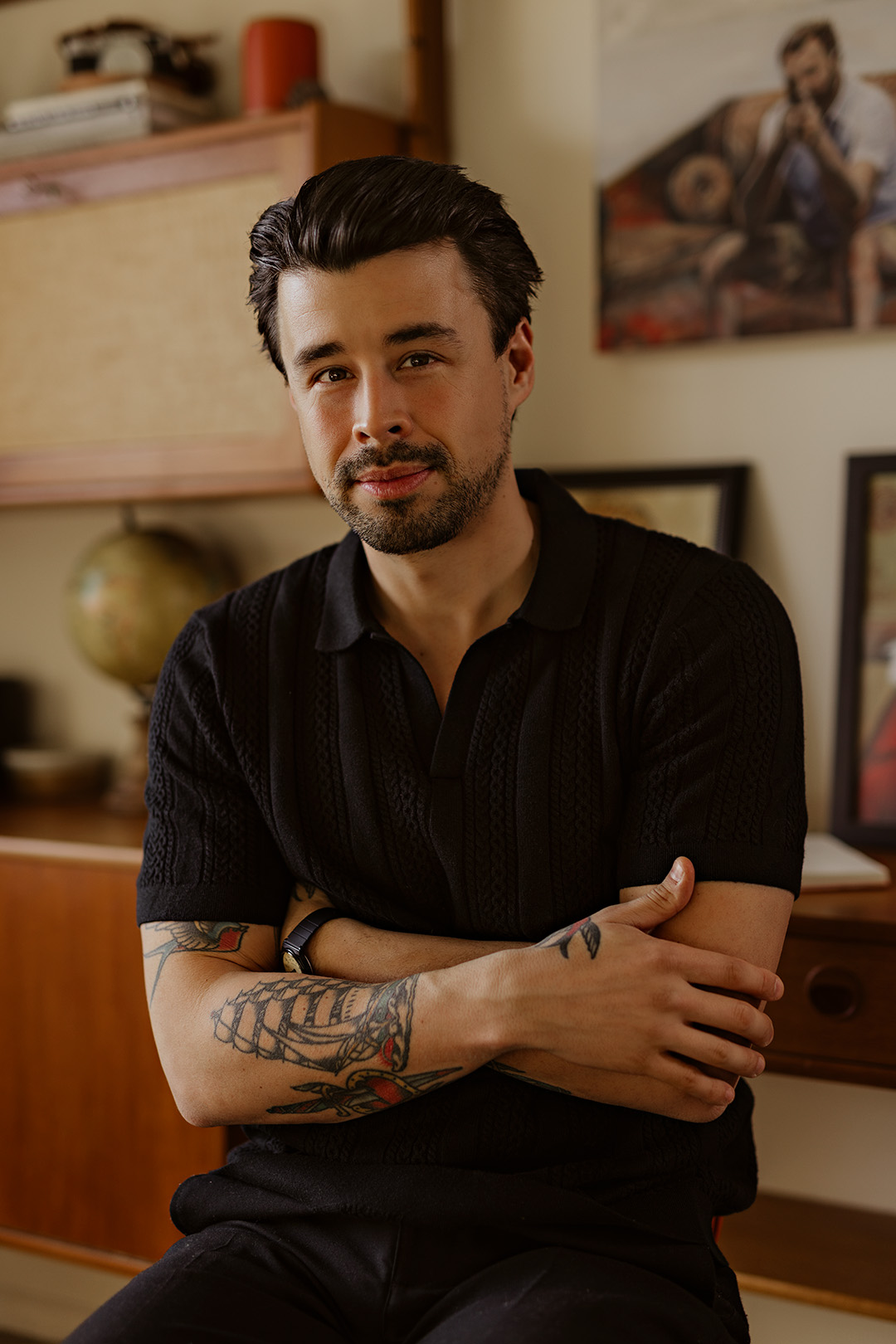
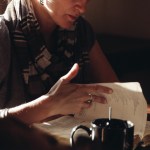
portrait of Josh Nadeau with folded arms against a gallery wall and bookshelf.
Testimony

A Good Pair of Lungs

How burst pulmonary arteries opened my eyes to the gift of an ordinary life in Jesus.

Christianity Today February 25, 2025
Photography by Tanya Goehring for Christianity Today

There are golden days. Days which glow in our memories with a warm amber; days that etch themselves onto our hearts and pump life through our bodies; days that, when we close our eyes, we can see flash before us, like photo slides in old projectors.

The day I almost died was one of those days. Almost.

I can close my eyes and picture my wife, Aislinn, smiling over our morning coffee. She’s having decaf because she’s pregnant. The summer sun is pouring in on horizontal stripes over the coffee table, and birdsong floats in through the open windows.

Church starts soon, so my wife is doing her hair and makeup, and our bathroom is warm from plugged in straighteners or curlers or something—I don’t know. I’m sipping at my second cup of coffee, and then it’s time to go. She’s in a blue-and-white striped linen dress. You can see the bump of her belly, our little guy, and we’re walking out of our apartment to the car, smiling, hand in hand.

Idyllic. Postcard kind of stuff.

Church is that summer slow: people on vacations, shorter sermon, everyone trying to keep cool. It’s one of those services you take for granted, normal and ordinary and routine, and when it’s done, we’re off for lunch. Aislinn has a craving for pad thai, and our favorite place in the city is on the water.

When I close my eyes, the photo slide flashes, and I can see my wife’s bright blue eyes. I can see her hair falling over her shoulders in little waves. There are plants hanging on the patio, and the summer heat loosens the air-conditioned tightness of our skin, our plates of noodles steaming.  And with my eyes closed, I can hear our laughter as we talk, dream, and imagine what it’ll be like to have our first child, to be a mom and dad.
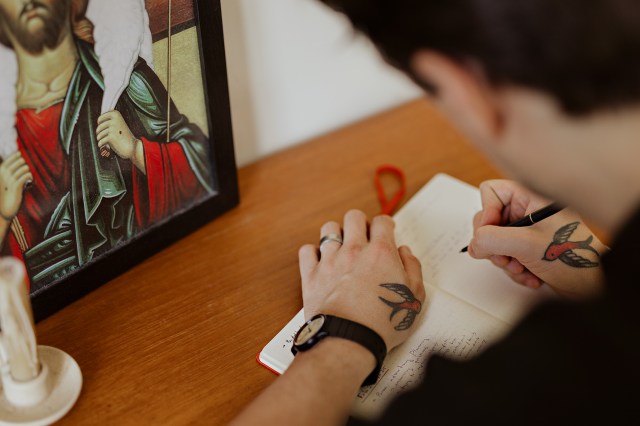
Photography by Tanya Goehring for Christianity Today

Aislinn is getting that late first-trimester sleepy, so when we’re done with our lunch, we drive home. She takes a nap, and I read. I watch afternoon fall into evening in the stretching shadows of the trees outside; the warm honeys of late day fill the room.

Aislinn wakes, and as we settle down to watch a movie, we start kissing—the joy of everything that life is, that it might be, expressed with our lips and bodies. I stand up, taking off my shirt, but then I have to clear my throat. I feel something on my tongue. I reach in, and when I pull my fingers away, they’re covered in blood.

My wife looks at me and her eyes widen. I run to the bathroom and cough into the sink, frothy red pouring from my mouth.

“Call 911!” I sputter. She’s already dialing.

I scramble for the waste bin, and my wife tells me no ambulances are available.

We run out of the apartment to our car, me cradling the garbage can, coughing and spitting phlegm and clots and bright red. I can smell the tin. And my wife drives, praying out loud, “Oh God, please, no …”

She runs a red, horn blaring, and when we get to the emergency room, she rushes inside, one of my oversize shirts draping her, telling a nurse we need a doctor. I’m still coughing, and the bin has a pint in it.

They wheel me into a room, and I can hear them over my spitting, over the beeps of machines, calling to rush the emergency doc to my bay. While we’re waiting, my wife has her hand on my head and shoulder, and she’s praying, crying, the bump of her belly brushing my arm.

A nurse asks me questions about the pain, my family history, and puts an IV in. I’m rushed to a CT scan, and they send my blood away to be tested. They take an x-ray, and they tell me they’ll update me on the results.

And then we wait, the two of us. Well, three, if you count the baby.

There are days, unforgettable days, etched into our bodies and minds. This was one of those days.

We wait there, in that chasm between joy and despair, between the golden hope of a firstborn son and the dark shadows of the valley of death. And we wonder why.

O God, why?

I pray, whispering, as I walk to the bathroom—every breath a reminder that something is wrong, every cough still streaked with blood.

Lord, I don’t want to die. Inhale. I want to see my son. Exhale.

The next few days are a blur. My mom flies out, and I go through every test, trying to find some diagnosis. I have scans and procedures and have to be intubated, then put on a ventilator.  

“You’re scheduled for an angiogram,” my pulmonologist tells me, “to map out the artery systems in your lungs.”

That first angiogram is for the mapping. The next three are to save my life.

I have to be awake for these surgeries. They cut into my femoral artery and send a catheter up, and when they get all the way into my lungs—to the arteries that burst—they tell me to hold my breath while they embolize the ruptures. I have to be awake because, as it turns out, you can drown in your own blood.

Aislinn stays with me every night, and every night we weep and pray for an answer—a diagnosis, some pathway forward, a reason why.

Lots of things fall into place when you face death. All these things at the edges of life—muddled questions, doubts and fears, hopes and dreams—they crystallize. Everything gets illuminated by a clarity that only desperation brings.

I stare at my wife as she naps because she was up all night, and I think about all that we wanted out of life—and how fleeting it all is, a breath in the wind.

And Jesus speaks to me there on that bed, telling me I’ve been blind to how much I’ve needed him.

Right now, I think, my every breath depends on you, and I might not get another one. But a month ago, I needed you just the same. And there, at the edge of life and death, clarity sets in.

Each day, 34 years at that point, was a gift—whether I realized it or not, whether I gave thanks for it or not. With my eyes closed, with the sound of death’s tattered robes billowing, all that really matters is how much I need Jesus.

Hot tears run rivers down my face, and I pray for a miracle.

Aislinn sits up. She looks at me with sad eyes and reaches for my hand. There’s no trumpet sound, no opened heavens, no audible voice, but in that moment, there’s a bit of calm. In between the beeps of the monitors, Aislinn and I feel some semblance of rest. There are no answers, no diagnoses, no promise that things will get easier—only a peace that passes understanding.

I couldn’t place it then, but I can now. Jesus healed a blindness in me that day while I lay dying. I had been unable to see the beautiful, ordinary, everyday gift of life. While my outward body was wasting away, inwardly, I was being renewed. New eyes. I passed through blindness to the hazy cloud; to a glass, dimly. And one day, I will see face to face.

I was in that hospital for 21 days. I lost over two liters of blood and almost died three times. At the end of those three weeks, I signed my release papers.

It’s been on my mind every day since then that my life is a gift from Jesus, one I might not have had—a gift enjoyed most deeply in relationship with the giver.

And on my mind every day, when life feels boring, or I lose my temper, or I have some excuse for apathy and cynicism, I remember: To live is Christ. If I remain in the body, then all I have is by him and for him.

If I close my eyes, even now, there’s a flash of a warm August sun. I’m holding my wife’s hand, and we’re walking together out the sliding doors of the hospital.

Our car pulls up to take us home. And my wife and I, we drive off together, back into a holy, ordinary life.

Idyllic. Postcard kind of stuff.
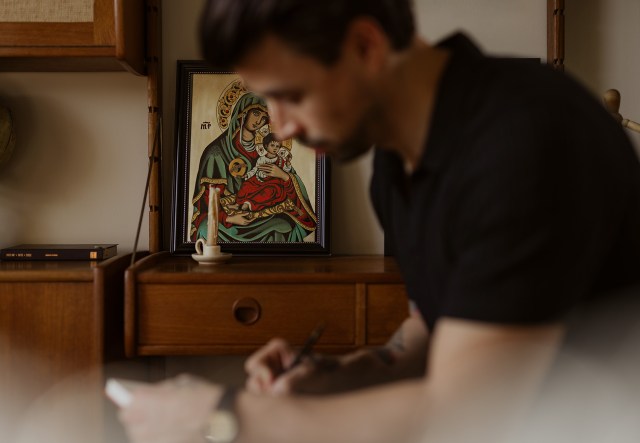
Photography by Tanya Goehring for Christianity Today

Josh Nadeau is an artist and writer from the West Coast of Canada. He writes at Every Day Saints and is the author of Room for Good Things to Run Wild: How Ordinary People Become Every Day Saints.


News

At the World’s Largest Gathering, a Search for Salvation

A one-time Kumbh Mela pilgrim in India finds true cleansing in Christ.

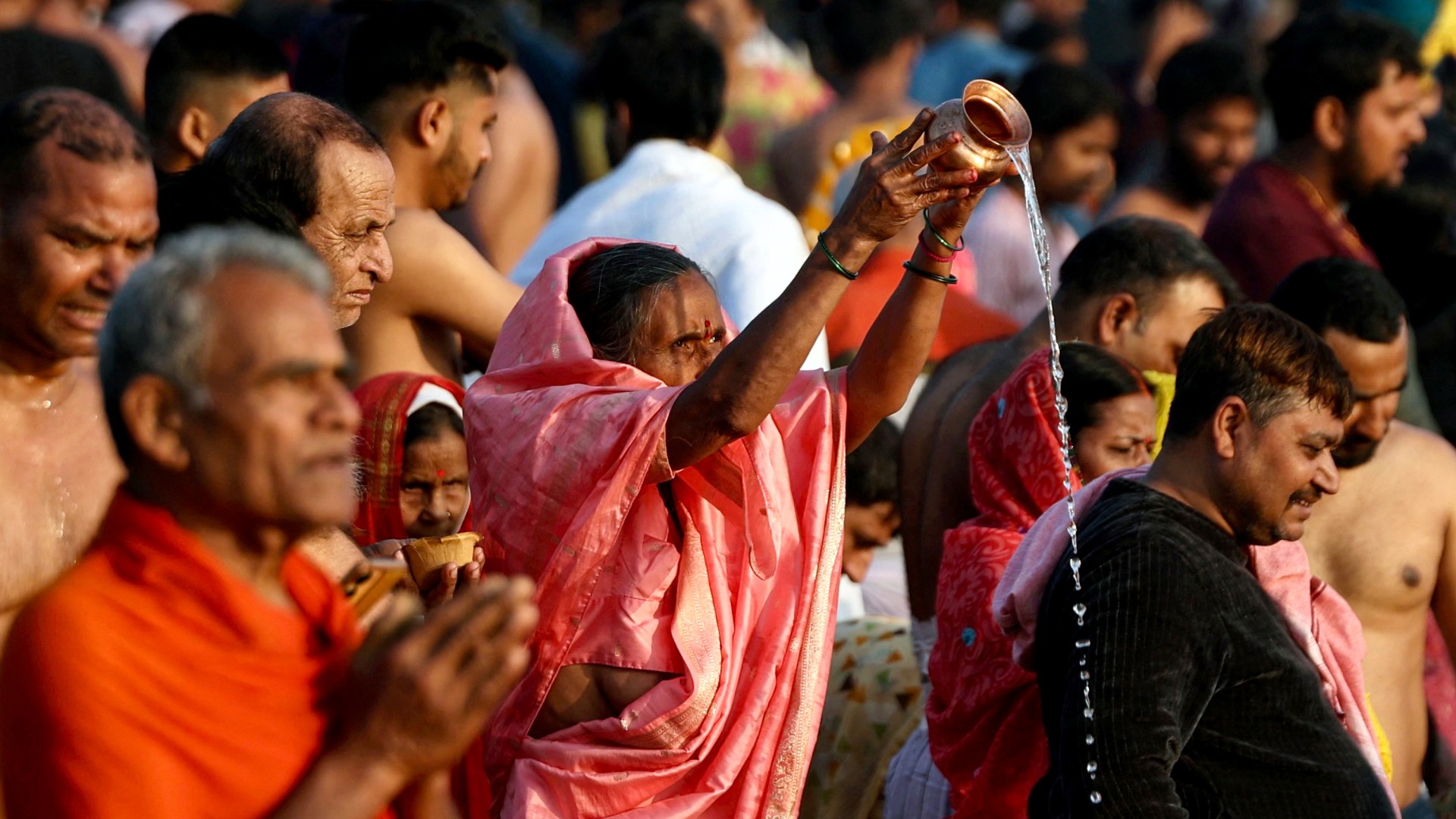
Pilgrims pray before taking a holy dip in Sangam during the Maha Kumbh Mela festival.

Pilgrims pray before taking a holy dip in Sangam, the confluence of Ganges, Yamuna and mythical Saraswati rivers, during the Maha Kumbh Mela festival.

Christianity Today February 25, 2025
Niharika Kulkarni / Getty

At the age of 11, Kumar journeyed 125 miles south from his home of Gonda to Prayagraj, Uttar Pradesh, India, to plunge into the freezing water at the confluence of three sacred rivers. He saw it as a chance to wash his sins away. (CT only used his last name due to security concerns.)

The fog was thick that morning in 2013, and the water so cold that when he stepped in, “my legs felt like they were being cut off,” Kumar recalls. He and hundreds of millions of other Hindu pilgrims were gathered at the Sangam for Kumbh Mela, the world’s largest human gathering.

Kumar, desperate to end the chaos that plagued his family, attended the gathering with his father’s friend. As the oldest of six siblings, Kumar bore the weight of his household’s struggles—his alcoholic father, his mother whom his family believed was possessed by demons, constant fighting between his parents, and severe financial problems.

With the other pilgrims, Kumar performed arti and puja—a sequence of offerings and prayers made to a deity—and desperately sought divine intervention for his family’s problems. When he stepped into the water, “I anticipated supernatural peace to dawn upon me, but nothing of that sort happened,” he recalls.

This year, Kumar didn’t join the 500 million pilgrims making the trip to Prayagraj for Kumbh Mela, a 45-day festival that ends on February 26. His life took a dramatic turn eight years earlier, when an old friend invited him to church and he “found the peace I had searched for in the holy dip of Prayagraj.”

Today, he is a witness that no water can cleanse sin, only the shed blood of Christ.

This year’s version of the celebration, called the Maha Kumbh, only occurs once every 144 years due to a rare alignment of Jupiter, the sun, and the moon. Hindu believers consider this configuration a powerful amplifier of spiritual energies during ritual bathing and offers an opportunity for karmic cleansing and spiritual renewal.

According to Hindu mythology, Kumbh, meaning “sacred pitcher,” is based on a celestial struggle between demigods and demons over divine nectar that grants immortality. During the struggle, drops of this nectar fell at four sacred sites across India: Prayagraj, Ujjain, Nashik, and Haridwar. These sites now host the pilgrimage in rotation every 12 years.

Apart from taking a dip in the river, pilgrims join in elaborate prayer rituals and follow processions of ash-smeared sadhus, ascetics who have renounced worldly attachments. Devotional songs fill the air while attendees engage in spiritual discussions and watch religious theater performances on the 4,000-hectare festival grounds, equivalent to the size of 1,600 football fields.
Every act at Kumbh Mela carries deep spiritual significance, from the lighting of ritual fires to the floating of clay lamps (diyas). Helicopters shower rose petals on the devotees to welcome them.

Religious organizations operate free food distribution centers to feed the devotees daily, but most of the pilgrims—especially those who stay for more than a week—buy their own food and cook in parking lots.

To deal with the massive gathering, the local government spent 75 billion rupees ($865 million USD) to develop Prayagraj’s infrastructure and 15 billion ($173 million) to prepare the festival grounds. Yet during the pre-dawn hours of January 29, a massive crowd broke through barricades at the river, leading to a deadly stampede that claimed 30 lives and injured 60 others. The incident occurred during Mauni Amavasya, one of the bathing days when nearly 800 million devotees were expected to take the holy dip.
Another tragedy followed at the New Delhi Railway Station on February 17, where another stampede claimed 18 more lives—including five children—as pilgrims rushed to board Kumbh-bound trains. Fires also broke out in the temporary tent cities housing the pilgrims, and a gas cylinder explosion on January 19 ignited a blaze that consumed at least 40 thatched huts. No one was injured.

Still, Kumbh continues to draw enormous crowds. Uttar Pradesh Chief Minister Yogi Adityanath reported that, on February 14, more than 9.2 million devotees participated in the festival. The overall attendance, which passed 500 million, exceeded the combined population of the United States and Russia.

Kumar, now 23, expressed relief that none of his acquaintances attended this year’s Maha Kumbh. “People don’t respect their parents and care for their families but go to pilgrimages to wash their sins and come back and indulge in the same sins again,” he said.

For one Christian leader in India who converted from Hinduism and did not want to be named because of concern for his safety, Kumbh Mela is a festival that points to the world’s need for Christ.

“Taking a dip in the Kumbh acknowledges sin and the need for cleansing,” he explains. “This recognition of human brokenness and the need for divine intervention bridges our faiths.”

While Kumbh devotees seek purification from sin through ritual bathing, Christian faith points to Jesus Christ’s blood as the source of true cleansing from sin, he said. This contrast deepens when considering the Hindu concept of karma.

Traditional Hinduism teaches that people don’t have sin at birth, but their karma determines what they will become in their next life cycle. Performing good deeds alone can’t save a person, “only breaking free from these cycles [of birth and rebirth] altogether achieves that,” he said. “Yet at the Kumbh, we witness a different ideology: the belief that ritual bathing can wash away sins.”

He wishes that “Hindu brethren knew that Christ’s blood can wash away their sins and free them from all cycles they can think of,” he said. The Christian message of grace “fulfills the deepest longings expressed at the Kumbh—the desire for genuine cleansing from sin and true spiritual freedom.”

Kumar found this truth four years after his trip to Prayagraj when he walked with his friend into a church that gathered half a mile from his house. After giving his life to Christ, Kumar—who had been forced to leave school in second grade to provide for the family—returned to his studies with renewed purpose and graduated high school with good grades.

His family and community intensely opposed his conversion, yet through persistent prayer and living a life consistent with the gospel, he gradually earned their respect. Neighbors who once opposed him now seek his counsel and prayer.

His family, who had once driven him to seek cleansing in the Kumbh’s waters, also experienced healing. Kumar said that the demons left his mother as he prayed for her. His brother, four sisters, and parents have become Christians.

Kumar now ministers in the nearby villages, telling people about Jesus, the living water. As anti-Christian sentiment rises in India, he notes that carrying a Bible or Christian literature has become too dangerous. Instead, he says, “I carry the Word of God in my heart, which no one can snatch from me or confiscate.”

News

Mexican Ministries Help Migrant Families Stuck Over the Border

Second of a two-part look at current border life.

Immigrants stuck in Reynosa, Mexico, hoping to eventually make it across the border to the U.S.

Immigrants stuck in Reynosa, Mexico, hoping to eventually make it across the border to the U.S.

Christianity Today February 25, 2025
John Moore / Getty

Read part one of our border ministry series here.

Mario Xoca and Meg Flores of Isaiah 55 Ministries in Reynosa, Mexico, described the determination of the immigrants they help by telling of two Honduran brothers, Dorian and Magdy Mendoza, who traveled through Mexico to try to gain entry to the United States.

The brothers rode on top of the freight train “La Bestia” (the beast), a dangerous experience for hundreds of thousands in past years. Dorian fell off the train and was presumed dead. Magdy reluctantly continued to the US, made it across the Rio Grande, and ended up in Houston.

A third brother, Keleth, who had stayed behind in Honduras, then decided to cross Mexico on the same train and get off where his brother fell. He looked and looked and located Dorian, whose foot had been amputated. But they traveled on, came through Reynosa, and joined Magdy in Houston.

Ever since Donald Trump took office on January 20, even more determination has been necessary. Despite the current halt on border crossing, migrants like the Mendozas continue to head north, but they must now “remain in Mexico,” hoping for a path toward asylum in the US.

With immigrants unsure of how to proceed, many churches on the Mexican side of the border are opening their doors to provide shelter and meet other needs.

Xoca grew up in a Presbyterian church in Mexico and now pastors Camino de Fe (Path of Faith), a Reformed church of 60 members that meets in Isaiah 55 Ministries facilities.

In 1998, Xoca began work in Reynosa as a computer science engineer, and from 2007 to 2016, he was an IT manager for an automotive company with four factory plants in Reynosa. Then he felt called to plant a church. It wasn’t long, he said, before he learned, “as a church you can’t be on the border and not be involved in immigration.”

Flores is a deeply involved member of Xoca’s church. Along with other Isaiah 55 staff members, she teaches a weekly Bible, art, and science class for 30 children aged 5–11 in a Reynosa colonia (neighborhood). Staffers and volunteers converted an abandoned house near the Rio Bravo (the Mexican name for the Rio Grande) into a vibrant community center with bright walls displaying children’s artwork.

Now, kids who grew up in Reynosa, along with new arrivals, arrive early for class, racing each other up and down the street and calling out, ¿Cuánto tiempo queda? (“How much longer?”).

Once Flores and her team open the gates, they lead the kids in games and then transition to classes. “A lot of chatter, yelling, and energy, but it’s a joyful chaos,” she said.

Pleasant and unpleasant odors alternate: sometimes the smell of the neighbors’ grilled chicken business, sometimes the stink of trash burning at the dump. Cars pass by with speakers blaring advertisements for tortillas, purified water, or gas for cooking.

But some of the students hear none of that; Isaiah 55 helps not only many immigrant children but also Reynosa residents who are deaf, as well as their parents. Instituto Isaías 55 introduces children to Mexican Sign Language, through which they learn Spanish and receive an education based in Christian understanding.

The Bible class ends with questions, and the kids clammer to be chosen to answer. At the end of class, kids line up for a snack and head out to the patio to play. Many of these children do not attend school; these classes provide their only education.

In past years, migrant children usually stayed in Flores’s classroom for only a week or two until their families had the opportunity to cross into the United States. Now, their stay has no end in sight.

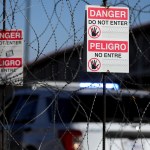
Another unknown is what the militarization of the border will mean. Thousands of US soldiers are now putting wire barriers in place, another sign that the “remain in Mexico” policy is likely to be long-lasting.

Some stuck in Reynosa, with limited resources and the threat of cartel extortion, try to draw strength from wisdom contained in the Spanish expression Al mal tiempo, buena cara: “In bad times, put on a good, brave face.” 

News

Supply Chains Break and Hospitals Shutter After USAID Freeze

Christian donations can only do so much to fill the gap when facilities grapple with layoffs, scarce drugs, and unanswered questions.

A man in Kenya reads the newspaper about the impact of President Donald Trump's cuts to USAID.

A man in Kenya reads the newspaper about the impact of President Donald Trump's cuts to USAID.

Christianity Today February 24, 2025
James Wakibia / SOPA Images/ LightRocket via Getty Images

A 300-bed Christian hospital in Eswatini has largely stopped seeing patients. Staffers at a Christian maternity clinic in Côte d’Ivoire are watching HIV drugs rapidly disappear from their shelves and do not know where to acquire more even if they can raise money for them. Students at a Christian nursing school in Malawi lost the scholarships that helped them afford tuition and meals.

In the month since President Donald Trump’s executive order freezing foreign aid shuttered the US Agency for International Development (USAID), lifesaving care mostly remains cut off around the world, despite court orders and promised waivers.

Across Africa, hospitals, clinics, and nonprofits have scrambled to raise or redirect money on their own, but administrators know emergency fundraising isn’t a reliable way to cover operation costs. In the short term, many just want to keep vulnerable patients on tuberculosis medicine or antiretroviral drugs (ARVs) for HIV, or keep their staffs paid.

Programs on the ground reported to CT that they have not received any new disbursements from USAID and can’t get answers from the US government about if or when funding will resume.

Over the weekend, the Trump administration placed almost all USAID staffers on leave and fired at least 1,600. Even if the State Department were to absorb some of USAID’s work, as the administration has outlined, it’s unclear how billions of dollars’ worth of programs would be resumed and overseen without staffing.

In Tanzania, a Christian clinic treating 300 children with HIV had to put USAID-funded staff on leave and has been scouring for funds to cover ARVs for its young patients, whose immune systems are particularly vulnerable without drugs to keep HIV at bay.

The clinic is part of Shirati Hospital, historically a Mennonite mission hospital. Dale Ressler, an American, serves as executive director of Friends of Shirati, which raises private donations for the hospital.

Ressler has been in touch with the doctor in charge of the clinic about how to keep medicines going for the children. In the past few weeks, Ressler was able to raise $10,000 for ARVs, he said. But the medicines are hard to find, with supply chains broken by the USAID shutdown.

The $10,000 should be enough for three weeks of treatment for its patients. Still, Ressler said staff members at the clinic were preparing to talk to the children about the possibility of the drugs running out.

“Some of the smaller ones won’t necessarily understand,” Ressler said. “Children 12 and up will know the risks. They’ve been told every month their whole life, ‘If you don’t take [the medicine], you’ll die.’”

Certain projects around the world received waivers to continue operating despite Trump’s stop-work order—particularly HIV testing and drug distribution through the President’s Emergency Plan for AIDS Relief (PEPFAR).

Yet none of the HIV treatment programs contacted by CT said they had received funds since then, so groups that proceed must do so in good faith, hoping the US government will pay them for the contract work.

The New York Times reported that Phoenix, the system for disbursing money to partners in the field, remains shut down, and the acting USAID administrator has argued in court that the ongoing freeze in funds is justified.

Reuters exclusively reported last week that the administration had approved $500 million in PEPFAR funding, but if that money is coming, it hasn’t made it to many health facilities yet.

The funding freeze has halted operations at The Luke Commission (TLC) hospital in Eswatini, a small landlocked nation in Southern Africa. A 300-bed Christian hospital with about 700 employees, TLC specializes in surgeries and critical care and treats HIV, tuberculosis, and snakebites.

The Christian hospital— whose services are free to patients—leans heavily on USAID, with about $7 million of its $21 million budget coming from the US government, according to the latest tax filings. Consistent aid payments helped when other sources of funding were unpredictable, said Echo VanderWal, executive director of TLC.

“If I could describe [USAID] for us in two words, it would be ‘faithful friends,’” said VanderWal in an interview. When other parts of the health care system shut down during the pandemic, the USAID country director called VanderWal every day to ask how the hospital was doing.

But VanderWal thinks a shakeup of US aid could be good. She has seen how projects from US agencies and other foreign aid can be redundant or feed corruption.

“The need for accountability and transparency and integrity in global aid is long overdue,” she said. “I’m devastated that it’s happening like this.”

TLC leaders asked its US donors if it could redirect funds to tuberculosis and HIV medicines so patients wouldn’t lose access to the lifesaving drugs. Since the USAID shutdown, the hospital is mostly doing drug refills. The hospital has laid off some staff members, and others aren’t getting full salaries.

The COVID-19 pandemic left the facility in financial straits. During the pandemic TLC had a heavy patient load and made a significant investment in an oxygen plant. As a result, the hospital had already reduced some services before the USAID cut.

“I do not believe that America is going to give nothing to foreign aid,” VanderWal said. “I believe they are going to invest in a continued legacy of compassion to the world. … Possibly it’s going to be structured differently. I sure hope so.”

The frozen aid may have eliminated some wasteful programs, but it also cut PIM, a Christian maternity clinic in Côte D’Ivoire, specializing in mothers and children with HIV. The clinic treats 5,800 patients, according to Kip Lines, executive director of CMF International, a Christian mission organization in the US that supports PIM. The HIV medicine keeps a pregnant mother from passing the virus to her baby.

Run by Ivorians, the clinic was part of PEPFAR and received USAID funding. It had a signed contract with USAID through 2025 and was not prepared for the freeze.

The ARV distribution network in Côte D’Ivoire also shut down with the freeze, said CMF’s Lines. (CMF does not receive USAID funding.)

Without the network, the clinic isn’t sure where to procure ARVs.

“Even if the State Department said today, ‘Yes, we’re re-funding this program,’ none of the organizations that received the USAID funding locally are in operation,” Lines said. “They let their staff go. The offices are closed.”

CMF reached out to ACONDA VS-CI, the organization that oversees drug distribution, and got no response. ACONDA’s social media presence halted in late January, with its last post a recruitment for staff to fight HIV. CMF’s staff on the ground said the organization had shut down. ACONDA did not respond to an inquiry from CT.

When HIV funding disappeared in January, CMF asked US churches to raise money for the clinic’s operating costs, particularly the salaries of clinic staffers who would have to be laid off otherwise.

Churches responded by supporting the salaries in the short term, but the bigger fundraising need going forward is for the ARVs, which cost about $30,000 a month, if the clinics can acquire them.

Last week CMF was able to send $10,000 for ARVs to PIM, and Lines said the clinic was “buying them wherever they can find them.”  

The emergency funding is helpful, but Lines wonders: If PEPFAR isn’t operational again in a few months, will PIM have to shut the clinic down?

In some places, the funding freeze is threatening efforts to make countries less dependent on foreign aid.

Malawi, one of the poorest countries in the world, has long struggled with a shortage of health care workers. It has among the world’s lowest numbers of nurses per capita.

In recent years, USAID sponsored a scholarship to support nurses-in-training at Nkhoma Hospital, a rural mission hospital now run by Malawian Christians.

Most of the 350 students at Nkhoma College of Nursing and Midwifery pay their own tuition, but a USAID scholarship program supports a cohort of 20 nurses who need assistance. Some are the children of subsistence farmers, the first in their families to attain this level of education. 

These 20 nurses were halfway through their three-year education when the funding freeze hit last month. The students were ready to start their semester, but the school received word that they would receive no funds for their tuition or their room and board.

The students were crying, saying they had nowhere to go, said multiple staffers at the school. Food is scarce now because it’s the time of the year Malawians call “hunger season.” Proceeds from a previous year’s crop are dwindling, and the next season’s maize crops aren’t harvested until May.

“Students, they cannot go home and say, ‘Give us maize and give us some food,’” said Rose Mazengera, one of the Malawian administrators at the nursing school. At the hospital, the doctors see more children with malnutrition during this season.

Nkhoma Hospital is already stretched thin serving a poor rural population and did not have money to cover the students’ fees and food.

In one letter to the school, reviewed by CT, a nursing student asked for a few months to pay his tuition, saying he had planted maize and would be able to harvest it in May in order to pay the school by June. “This is my only source of getting the fees,” he wrote.

In desperation, the school’s leaders sent a request to African Mission Healthcare, a foundation that has supported mission hospitals, to help keep the nurses in school. The foundation agreed to cover this semester of tuition for the 20 nurses.

But the school’s administrators don’t know if that support will continue. Before the shutdown, US government support felt reliable.

The freeze “came to us as a surprise and a shock,” said Newton Kamchetere, another nursing school administrator. “If their training is interrupted or curtailed, in the near future we will have deficiencies in terms of health care workers. … It will have a huge impact in the long run.”

It’s a compounding crisis too: Some nursing students who weren’t receiving the scholarship relied on family members working on USAID-supported projects to help pay their tuition.

“We are always grateful for the things the US government has been doing in Malawi … especially with HIV,” Mazengera said. But she expects the funding cuts will increase the mortality rate for children under 5 years old, a key health indicator.

“I’m just hoping and praying some of these things can be reversed,” she added. “It is a thing which needs God’s intervention.”

Last week in Nkhoma Hospital’s daily chapel, Kamchetere delivered the message and talked about Paul’s words in 1 Corinthians 12:26 about the church as a body.

“When the other part of the body suffers, we should all be concerned—we need to help one another. I have seen that working,” Kamchetere said. “May the good Lord open other doors so at the end of the day we will alleviate the poverty and suffering.”

News

Pepperdine Calls Foul with Netflix Trademark Infringement Lawsuit

Basketball players wear Pepperdine's blue and orange uniforms during a game.
Christianity Today February 24, 2025
Oliver McKenna / Icon Sportswire via Getty Images)

Pepperdine University sued Netflix and Warner Bros. over a new sitcom that features a fictional Los Angeles basketball franchise whose branding resembles Pepperdine’s NCAA Division I team, the Waves.

The school—which is affiliated with the Churches of Christ and is a member of the Council for Christian Colleges & Universities—claimed trademark infringement and argued that the show’s messaging runs counter to Pepperdine’s values and reputation.  

“Without our permission, Netflix continues to promote Running Point, a new series that has misappropriated our trademarked name, the Waves, our colors, blue and orange, our hometown of Los Angeles, and even the year we were founded as an institution,” said Sean Burnett, Pepperdine’s senior vice president and chief marketing officer.

Created by Mindy Kaling and premiering on the streaming service this Thursday, Running Point stars Kate Hudson as the new owner of the Waves, with Chet Hanks, Brenda Song, and Max Greenfield in the supporting cast.

According to the lawsuit, filed February 20 in US District Court in California, the logo and branding for the show’s team is too close to Pepperdine’s.

“Defendants’ ‘Waves’ share the exact same name, use strikingly similar branding, have the exact same color combinations (blue, orange and white), promote the player number of Pepperdine’s well-known mascot and year of the university’s founding (37), and are in the same city, along with several other similarities,” the lawsuit said. 

The university, located in Malibu, 29 miles from downtown LA, has a trademark on the mark WAVES that it uses for athletic gear, marketing, sports facilities, and other public displays, the suit said. 

Pepperdine has used the Waves as its team name since the beginning; the university’s first president recommended it as a way to differentiate Pepperdine’s teams from others with animals as mascots. The school adopted blue and orange as its colors to represent the Pacific Ocean and the state of California.

Its NCAA athletic program includes eight men’s and nine women’s Division I teams, including its basketball teams. The men’s basketball program at Pepperdine has competed 13 times in the NCAA tournament and has sent 18 alumni to play professionally in the NBA.

Pepperdine said in its filing last week that its reputation will be “irreparably harmed” by the use of its trademarked logos and branding in Running Point because of the show’s foul language, sexually explicit content, references to alcohol and illegal substances, and violent altercations. (The show carries a TV-MA rating.) The suit also references a clip from the trailer that shows Hudson’s character posing topless with a pair of basketballs. 

These messages and images run counter to Pepperdine’s Christian values and would hinder its ability to pursue its mission and recruit students, faculty, and athletes, the suit said. 

Staff from the university attempted to contact Netflix and Warner Bros. through phone calls, email correspondence, and a cease-and-desist letter but were not able to reach a satisfactory agreement, the suit said.

Spokespersons for Netflix and Warner Bros. did not immediately respond to a request for comment from Christianity Today.  

Pepperdine is seeking injunctive relief that would prevent Netflix and Warner Bros. from using its trademarks or any other marks that are “confusingly similar” to Pepperdine’s in Running Point.

Church Life

He Remembers Our Frames

A reflection on Psalm 103:14 for Ash Wednesday.

Reflections on Ash Wednesday.
Illustration by Keith Negley

Psalm 103:14

In Eden, everything was a hallelujah. Good! Very good! God said (Gen. 1:1–31). Though brown and gray, even dust was a dappled speck of glittering life. Grand as the mountains. Majestic like whales. For even the tiniest fleck which clung to the hidden underside of Adam and Eve’s broom was cherished and celebrated, a treasured gift from God (Prov. 8:26).

Have you ever seen a snow-laden valley blanketed in soft white? When untouched and gleaming in the sunlight, before any human boot has pressed its mud-mixed imprint into it? In Eden, dust was associated with untouched beauty like this. All gleaming light. No muddy boot.

However, when David writes this psalm, he is a long way from Eden and innocence. His sins are many. He’d been sinned against too. He was dust. Not innocent and colorful, but what dust had become. Like all other created goods, dust was now twinged by death. Dingy, the dignity of its tiny fleck in Eden was gone. In the fallen world, tiny flecks are flicked. No one sees dust, and if one does, he tries to rid his room of it.

For out of it you were taken;
for you are dust,
and to dust you shall return. (Gen. 3:19, ESV)

Dust was once Edenic (out of it you were taken). Now dust signals death (to dust you shall return).

When we sin as David had, we wonder about how God remembers us. Will God forget the dignity he gave us, or remembering our frailty, will he shun or abandon us?

In Psalm 103, David describes God as one who remembers and who is merciful and gracious (Ps. 103:4, 8). God is slow to anger and abounding with steadfast love, the kind of love no one can take from us (Ps. 103:4, 8, 11, 17).

As one who remembers, God banishes condemnation when we repent. Look to any horizon in any direction, and all a sinner will see is the shining light of the forgiveness of God (Ps. 103:11–12).

For God is like the most compassionate father (Ps. 103:13). Slow to anger, merciful, gracious, abounding with love, this Father is delighted when remembering the dignity of the one he loves. Such a Father would never give a scorpion or snake to one dearly loved who needs an egg or bread (Luke 11:11–13). On the contrary, such a compassionate Father would use his bold strength to gently brace, fiercely protect, and sacrificially guard the vulnerable child he loves. As a compassionate father who is good, God remembers our frame. He remembers that we are dust.

Whenever I’ve been with parents as they hold their little or grown children in their children’s last moments on this earth, compassionate and loving parents cradle them, speaking words of lifelong love. They remember their loved one’s frame. They cry, in Jesus, declaring the existence of a love that somehow overcomes even this death of deaths.

By faith, they know that it is not the Grim Reaper who comes for their loved one. It is the God who created and remembers their child that comes.

It is not death winning in those last breaths but death taking its last stand.

Remember, in this world, it is not death that is steadfast but divine love.

This divine love, mentioned four times in this psalm, remembers not only that we are dust in death, but also that it was with dust he had given us life.

He knows our frame. He remembers.

So when ash is smeared on our foreheads today, we confront a difficult truth. Death as dust is a scene in our story that we cannot escape. Sorrows for sins against us. Repentance for our own contribution.

And yet, in Christ Jesus, death as dust has never been and will never be the truest thing about us. Death has an enemy. His name is Jesus Christ.

When we receive ashes on our heads today, we declare by faith that death will die. Because death could not hold Jesus in the grave, dust will rise again, recovered to the glory given it in Eden and all the more in the new kingdom that awaits us.

This is why when the earliest followers of Jesus thought of death, they declare it their last enemy (1 Cor. 15:26). They learned to see this enemy outflanked at every turn by God’s steadfast love in Christ Jesus, from which nothing, not even death, can separate us (Rom. 8:38–39).

Our God is our great rememberer. He remembers our frames, that we are dust. Held by him, we hope.

Zack Eswine (Rev. PhD) serves as lead pastor of Riverside Chruch in Missouri. His books include The Imperfect Pastor and Wiser with Jesus. He writes at The Good Dark (thegooddark.substack.com) and is cofounder of Sage Christianity with his wife, Jessica.

Church Life

Introduction

Reflections on Lent, meditations on Holy Week, and celebrating Easter.

Illustrations by Keith Negley

The days leading to the Resurrection of Jesus Christ (the Lenten season) are some of the most significant of the year for many Christians in a variety of theological traditions. Whereas the Advent season is celebrated as a time of joyful anticipation, Lent is traditionally practiced with a sense of sober observance, characterized by repentance, self-denial, and an awareness of our sinful humanity that led to Christ’s atonement of our sins. While it is right and good for Christians to enter into a time of somber reflection as we look to the Cross, we don’t want to forget that this is a road with a joyful conclusion—the resurrection of Christ.

For this Easter and Lenten season, we will begin a journey down The Road to Joy.

The imagery of a road can evoke visions of sun-drenched stretches through the desert, tree-lined paths through the woods, or lonely highways traveling through the middle of nowhere. As we journey onward, we are met with numerous challenges as we get closer to our desired destination, but we press on courageously, convinced that it will have been worth it when we reach the end.

In some ways, this echoes our salvation stories, where we experience the sobering yet sanctifying reality of Christ’s death in our lives while never losing sight of the hopeful joy that his resurrecting power provides as we draw nearer to him, our desired destination. I pray that as you spend time reading and meditating on these hopeful reflections, your heart will be freshly renewed as you remember the one who endured the Cross, for the joy that was set before him.

Ronnie Martin is Director of Leader Care & Renewal for Harbor Network, and Pastor-In-Residence at Redeemer Community Church in Bloomington, IN. He has written several books, including In the Morning You Hear My Voice (B&H, 2025), and co-hosts The Heart of Pastoring podcast with Jared C. Wilson.

Church Life

If Anyone Would Come

Self-denial is an essential step on the road to joy.

Reflections on the first Sunday of Lent.
Illustration by Keith Negley

Matthew 16:24

The road to joy, for Jesus, ran through Jerusalem. It was a path of self-denial, sacrifice, and death—before it was the passage into joy, redemption, and glory.

So it is for all who would follow in his steps. To walk with Jesus is to take the way of the Cross. To enter his kingdom is to knowingly and willingly choose the joy of self-denial.

How can we say the “joy” of self-denial? True joy doesn’t take the long way around pain; it doesn’t take a shortcut toward glory. True joy moves through hardship. True joy goes with Jesus through Jerusalem. The way is narrow, and the gate is small, but freedom and joy await the disciple who stays on the path.

Jesus said, “Whoever wants to be my disciple must deny themselves and take up their cross and follow me” (Matt. 16:24). This is rightly understood to be one of Jesus’ most intimidating challenges. But it is also one of his most subversive invitations. “Get off the road that leads to death,” he’s saying. “Choose instead this unexpected way to the good life—through denying and dying to self.”

Indeed, our denial is an essential step in becoming like Jesus. Dallas Willard wrote that “a shift toward self-denial is needed to reorder the … human self in subordination to God. … Christian spiritual formation rests on this indispensable foundation of death to self and cannot proceed except insofar as that foundation is being firmly laid and sustained.” What is the self-life that is being denied and laid down? It is the old self which needs to be put off. It is the old life that wasn’t so appealing anyway.

To deny ourselves and follow Jesus is the most freeing and wonderful thing; it is to let go of what wasn’t working in the first place. The new, selfless life that takes its place is the truly good life—a new heart devoted to God, a life of honesty, vulnerability, acceptance, friendship, communion, and purpose.

To be sure, self-denial is not the same as self-rejection. Self-rejection occurs when the soul says to itself, “See, everyone was right. I’m an awful person. I’m a failure and a mistake.” Self-rejection also says, “I am not so secure in myself, so I must rise and prove myself, must fight and defend myself.” This is not the way of Jesus, and it’s not self-denial. It is a rejection of what God has made and declared good. How do we know when we are practicing self-rejection and not self-denial? Self-rejection leads to shame, hiding, and self-criticism. It also makes us critical and demanding toward others. (We’re critical of others when we believe God is critical toward us.)

Self-denial, on the other hand, leads to a joyful submission to the Father. It is the freedom to reject the ways of the world—its anger, greed, and envy. Self-denial is an active choice to become like Jesus in his radical inner simplicity and wholehearted devotion to the Father. It is what the late Tim Keller called a “blessed self-forgetfulness.”

And unlike self-rejection, self-denial frees us to love and serve others purely. (We’re merciful toward others when we believe God is merciful toward us.)

Self-denial, then, is both the most difficult thing in the Christian life and the simplest. Laying down our lives can’t happen just once; it’s a complete surrender we make moment by moment, every day. Only if we truly embrace Jesus’ self-denying, non-defensive death on the cross can we believe we are accepted into his Father’s delight.

Yet in this tension of challenge and invitation, remember who supplies the strength and wisdom for a life of self-denial. It is Jesus. He provides all we need to follow in his self-giving love—namely, his Spirit. As we abide in him, walking by his Spirit, we come out with complete joy (John 15:11).

In a world consumed with earning, showing, and defending, self-denial seems like a radical and dangerous thing. But in the right-side-up kingdom of Jesus, it is the safest, simplest, and happiest place. In him, we lack nothing and have everything. Will you receive it? Will you deny yourself, take up your cross, and follow Jesus into full and eternal joy?

Lord Jesus, thank you that you are with me. I did not choose you, but you chose me and appointed me to die to myself and take up your life. Grant me your strength and wisdom to choose this life, not just once, but every moment. My life is yours. Lead me, by your Spirit and your self-giving love, into everlasting joy.

Jeremy Linneman (DMin Covenant Theological Seminary) serves as lead pastor of Trinity Community Church in Columbia, Missouri. He’s the author of Pour Out Your Heart: Discovering Joy, Strength, and Intimacy with God through Prayer. Jeremy and his wife, Jessie, have three sons.

Church Life

I Have Calmed and Quieted My Soul

Our management strategies for anxiety are not enough. Let us hope in God’s presence and power.

Reflections on the second Sunday of Lent.
Illustration by Keith Negley

Psalm 131

In our life with God in this world, we often need to sit quietly and be honest with ourselves. What worries and anxieties are occupying our minds and governing our behavior more than they should? Sitting quietly is difficult.

We don’t like what happens when we do. All the ghosts and goblins from below, which we have so effectively silenced in the hurry of each day, suddenly come to the surface. When we are still, we often scroll. We scroll through algorithms available to us for the silencing of the inner panic. But when we resist the scrolling, we are often left with lingering pains, insecurities, and thoughts that worry us and, more than we realize, control us.

While we may be effective at managing our interior lives, our management never leads to healing. At best we can numb our pain with our distractions, but the Book of Psalms offers a different path. In the presence of the Lord, we acknowledge these pains and worries, allowing them to come to the surface. The good news, however, is that the Lord never brings things to the surface that he doesn’t intend to heal.

“Oh Lord, my heart is not lifted up; my eyes are not raised too high; I do not occupy myself with things too great and too marvelous for me” (Ps. 131:1, ESV).

There are many things we can offer up to the Lord and say, “This is too much. Only you can carry me through.” There are a lot of things that shouldn’t concern us, and worrying about them never makes things better. It only diminishes us. Jesus gives us examples of worrying about money, possessions, and what tomorrow may bring (Matt. 6:34).

But even more, I wonder if we might need to offer to God the management of our interior lives and emotional entanglements. There might be wounds from friends, intimates, and family that linger and torment us, creating a sustained inner dialogue that simply rehearses the pain over and over. There might be moments of humiliation and failure at work or in our marriages that make us shrink back and cringe at ourselves. Our management strategies haven’t brought healing or resolve, only lingering pain, and like cancer, the wounds only grow and fester.

Let us sit quietly with the Lord, being honest with him and ourselves, saying, “Oh Lord, I recognize I don’t have what it takes to heal these wounds. They control me more than I control them. They are too great for me.”

“But I have calmed and quieted my soul, like a weaned child with its mother; like a weaned child is my soul within me”(Ps. 131:2, ESV).

For an infant, dependent upon a mother’s milk, every meal is an emergency, every hunger pang a panic. Only after the consistent experience of being fed, never going without care and attention, does a child learn that when hunger comes, it’s going to be okay. Food has always come, and it will come again. The infant can sit in her mother’s lap without groping and grasping because she has grown an instinct of being settled, even when the feelings of neediness and hunger arise.

While an infant grows an instinct of being settled, we must be intentional about it. “But I have calmed and quieted my soul.” I am intentionally seeking God’s presence, taking a deep breath, and remembering all the times he has been my help. As an infant cannot feed herself, neither can we appropriately heal our wounds and emotional entanglements.

Our management strategies have left us like unweaned children, groping and grasping, anxiously seeking out ways to feel safe in this world. Every emotion is an emergency and every pain a panic. Growing in spiritual maturity requires remembering we have never gone without care and attention from God. When the pain and sadness come, it’s going to be okay. The Spirit has always been near, and he will be near again.

“O Israel, hope in the Lord from this time forth and forevermore” (Ps. 131:3, ESV).

We must be honest with ourselves. At times our interior entanglements and worry have governed our lives more than we’d like to admit. We are tossed to and fro by our anxious thoughts, and our own management strategies haven’t been effective. In fact, they have distanced and desensitized us from the experience of God’s presence and love for our healing and renewal. Let us seek the Lord, opening ourselves to him, hoping not in our self-management but in his presence and power. From this time forth and forevermore, lay your management strategies and safety schemes down. Hope in the Lord and his goodness.

John Starke is lead pastor at Apostles Church Uptown and lives with his wife, Jena, and their four children in New York City. He is the author of The Possibility of Prayer (IVP) and The Secret Place of Thunder (Zondervan).

Church Life

Rejoice in Our Sufferings

Dwelling with Jesus means viewing our trials through a new set of eyes.

Reflections on the third Sunday of Lent.
Illustration by Keith Negley

Romans 5:3–5

Rejoice in suffering. It may sound ridiculous, if not offensive, especially to those of us walking through the very real fires of life. For most, to rejoice in life means trying to remove as much of our hardship as possible. And to be clear, we shouldn’t be weird people who actively pursue suffering. Life isn’t some kind of bizarre spiritual CrossFit where actively punishing ourselves somehow brings us closer to God.

Still, one of the most astounding implications of dwelling with Jesus is that we can now view our suffering through a new set of eyes. It may honestly feel like a mystery that takes the whole journey of life to fully unpack. But when suffering occurs—and for all of us it’s not an if but a when—we recognize God’s invitation to enjoy his very real presence with us.

Paul was writing to a people like us who experienced the hard things of life—a people who faced the sort of challenges leading them to understandably question all these wonderful doctrines of salvation that Paul had written about. Like some of us may ask, “If we’re really doing all this gospel-centered life right, should life be this hard?”

Paul’s reply: actually, yes.

Part of working out our salvation is growing in awareness of the Lord’s presence. Absolutely in those moments when we’d naturally expect to feel his presence, times of sweet communion or satisfying moments of ministry when there’s absolutely no doubt that God really loves us. It’s right to savor and enjoy God in those times, but not just in those times.

Working out the profound implications of Good News is learning to trust the presence of Christ with us in all things—even those horrible things that keep us up at night drowning in the sorrow of helpless tears.

Again, we don’t celebrate suffering itself. Rather, we boast “in” our afflictions. That’s a critical distinction. We’re not masochists who think pain itself is good. May we be compassionate people who grieve with those who suffer very real pain. Because into that grief, we can also offer real hope. Hope that even if we may never fully understand the “why” of suffering—at least on this side of glory—knowing the “who” invites us to trust in God’s character. To trust that there is a divine meaning to the hard things we endure, meaning that even lets us rejoice believing that we are being shaped to reflect his good glory to our world.

Our suffering produces endurance. As a runner training for a marathon has to believe, those grueling practice runs are building endurance for the race. Knowing your aim can help give meaning to what may feel like torture.

And this endurance produces character. I chuckle when newlywed couples offer marriage advice. Not that it’s unhelpful, but there is a weight girding the wisdom offered by couples who’ve endured through long, hard years together and come out stronger. Character isn’t developed like heating up a quick dish in the microwave; it requires the slow cooker of life that sometimes doesn’t even look like it’s cooking.

And demonstrated character then leads to hope. It’s important to recognize that the nature of hope is that we don’t yet have what we’re longing for.

Persevering in hope can make you feel silly, but this journey of hope grows our trust in who God is. Even as it feels like so many other promises of our world ultimately disappoint, God will never let you down.

This isn’t just sweetly sentimental. God’s love is an on-the-ground, dirt-under-the-nails kind of presence. It’s the demonstrated love of a Savior suffering on a real cross that speaks hope into the darkest of places.

It’s the kind of hope where you discover that even if everything else in this world feels like it’s against you, God is for you, and that’s enough.

In the countercultural ways of God, suffering isn’t just something to be endured, but the mystery of his loving hands forming us in beauty. Trust that God loves you like this, and even if your hands are trembling, rejoice in your suffering.

Dan Hyun finds joy in equipping the church to experience God’s presence in cultivating a deeper passion for reconciliation, justice, and mission. He is the founding pastor of The Village Church in Baltimore and author of The Bible in 52 Weeks.

addApple PodcastsDown ArrowDown ArrowDown Arrowarrow_left_altLeft ArrowLeft ArrowRight ArrowRight ArrowRight Arrowarrow_up_altUp ArrowUp ArrowAvailable at Amazoncaret-downCloseCloseellipseEmailEmailExpandExpandExternalExternalFacebookfacebook-squarefolderGiftGiftGooglegoogleGoogle KeephamburgerInstagraminstagram-squareLinkLinklinkedin-squareListenListenListenChristianity TodayCT Creative Studio Logologo_orgMegaphoneMenuMenupausePinterestPlayPlayPocketPodcastprintremoveRSSRSSSaveSavesaveSearchSearchsearchSpotifyStitcherTelegramTable of ContentsTable of Contentstwitter-squareWhatsAppXYouTubeYouTube