Ideas

Threatening Profound Evil Trivializes That Evil

President Donald Trump and Pete Hegseth speak often of Christianity—but they seem to have no interest in its vision for just warfare.

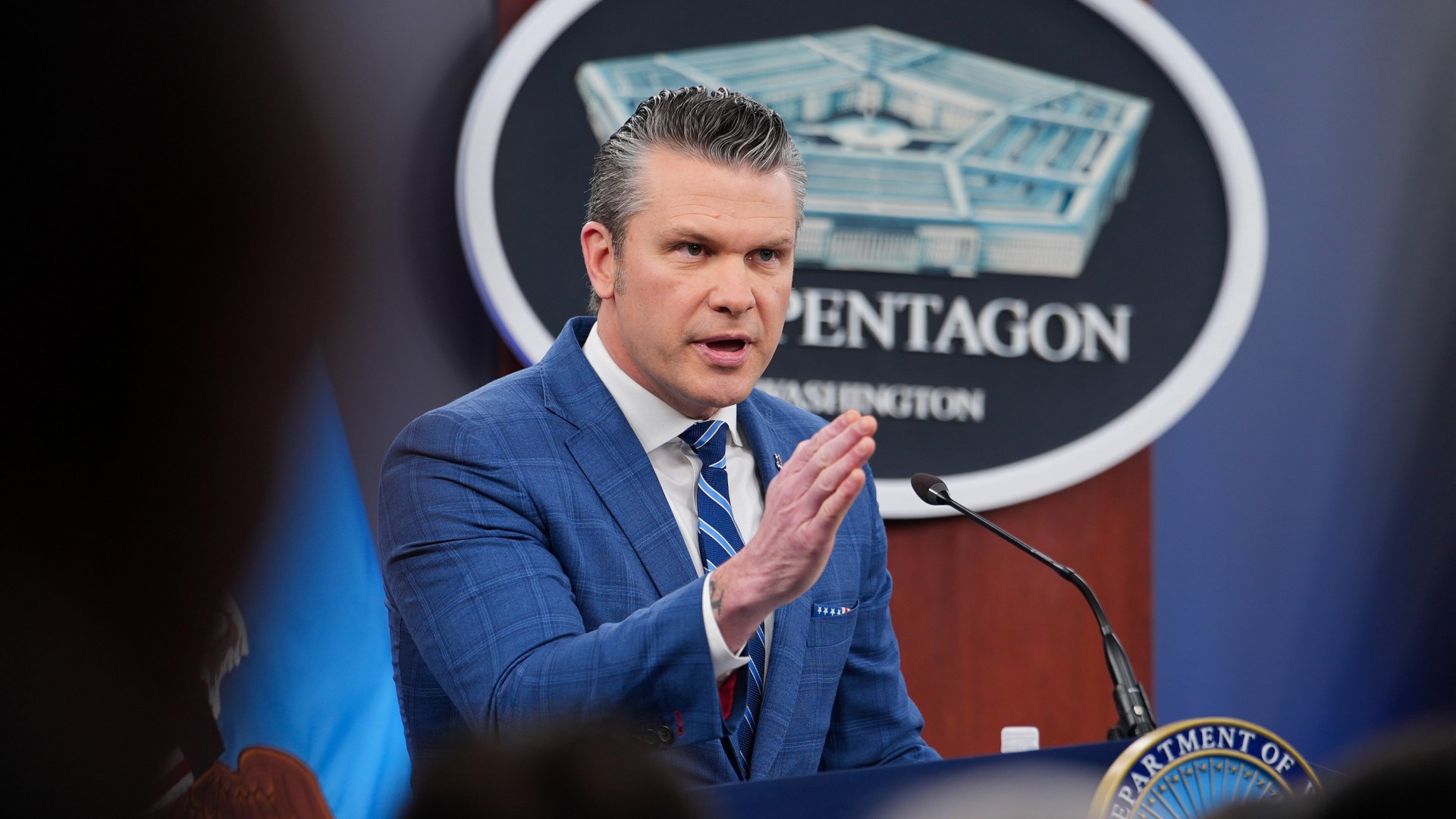
U.S. Secretary of War Pete Hegseth speaks during a press briefing at the Pentagon on April 08, 2026.

U.S. Secretary of War Pete Hegseth speaks during a press briefing at the Pentagon on April 08, 2026.

Christianity Today April 10, 2026
Andrew Harnik / Staff / Getty

The US war in Iran is on pause, at least of this writing. An unstable cease-fire could end next week with a resumption of hostilities—or, potentially, with the conclusion of this war. The one silver lining of a conflict initiated without a clear or consistent rationale is that it can wind down the same way.

But even if peace comes that soon, American Christians can’t pretend we haven’t seen what our leaders have done this spring. Ours is no longer a government interested in haggling over the finer points of just war theory, a Scripture-shaped standard of ethical conduct in warfare, to defend a military intervention. It is instead flirting with dispensing with that standard altogether, using the language and symbols of our faith while ignoring its substance.

For nearly all of American history, our presidents and their staff spoke of military decisions in language and reasoning deeply shaped by just war theory. An idea developed by Christian thinkers for centuries, the theory requires those who make war to assess its justice both before and during fighting. For a war to be just, theorists like Thomas Aquinas have argued, it must be waged by the right authorities for the right reasons and in the right way, particularly where innocent civilians are concerned.

Christian critics of the theory argue that its terms are too flexible and imprecise. For example, CT’s Bonnie Kristian has written that just war theory “can all too easily function less as a limit than as a malleable justification for whatever we’ve already decided to do.” And while the abuse of moral concepts does not invalidate their proper use, Kristian is correct to say that politicians have often employed the categories of just war theory in service of manifestly unjust wars. 

That very malleability makes all the more shocking those moments when leaders don’t bother with just war theory at all—when they make no attempt at an ethical argument and instead explain their plans in nakedly immoral terms.

President Donald Trump took this path the day after Easter, when he announced on social media that “a whole civilization will die tonight, never to be brought back again.” This threat of death not only of enemy combatants but of an entire country is unmistakably a threat of genocide and a violation of the agreement against genocide the United States signed in 1948. 

You don’t need an exhaustive knowledge of just war theory to know that genocide is well outside its bounds. This threat merits the most strident and serious moral condemnation, for the very act of threatening such profound evil trivializes that evil. And Iranian civilians had good reason to worry that this was not mere bluster, because that threat came as the culmination of a long train of disregard for both the principles of just war theory and US law.

After Trump himself, Secretary of Defense Pete Hegseth is the most prominent figure here. He speaks often of Christianity and has led prayer services at the Pentagon. In one of those meetings, Hegseth prayed for violence “against those who deserve no mercy.” At a press briefing in mid-March, he promised “no quarter, no mercy for our enemies.” And this past fall, Hegseth said that under his command, the armed services would be marked by “no more politically correct and overbearing rules of engagement, just common sense, maximum lethality and authority for warfighters.”


Though it’s certainly strange to invoke a “merciful and forgiving” God (Dan. 9:9) in support of one’s intention to deny mercy to others, there’s no legal definition of “no mercy.” The threat of “no quarter,” however, is a legal phrase. Under conditions of no quarter, defeated enemy combatants aren’t taken prisoner or offered the chance to surrender. They are simply killed. 

Because soldiers who have surrendered are no longer combatants, their deaths are not the same as battlefield deaths. Killing them is murder—according not only to just war theory and the Hague Convention of 1907, which the US signed and ratified, but also to the Department of Defense’s own Law of War Manual. “It is forbidden to declare that no quarter will be given,” the manual says. “Moreover, it is also prohibited to conduct hostilities on the basis that there shall be no survivors, or to threaten the adversary with the denial of quarter.”

For US troops to follow through on Hegseth’s threat of no quarter would violate the Pentagon’s own rules. And, as scholar Oona Hathaway of Yale Law School recently noted, the declaration itself is wrong: It may make an enemy more likely to fight to the death and therefore make the battle more brutal than it needs to be.

Unfortunately, these comments are neither untypical nor unprecedented for Hegseth and the administration he represents. Hegseth came to Trump’s attention by lobbying for pardons and clemency for several US servicemembers for actions including killing former enemy combatants after they no longer posed a threat. 

And last year, Hegseth dismantled the Pentagon’s Civilian Harm Mitigation and Response program, which was designed to prevent civilian casualties during American military interventions, acting over the objections of military officials including the chair of the Joint Chiefs of Staff. Since then, the preliminary findings of a Pentagon investigation reportedly say the US is likely responsible for the February strike on an Iranian girls school that killed at least 175 people, most of them elementary-aged schoolgirls.

Trump and Hegseth seem to want to wage war unencumbered by the task of protecting the dignity of human life. But that task is not about “politically correct and overbearing rules” or any other boogeymen of Hegseth’s imagination. Its source is the very Christian faith Hegseth has so often praised within the Pentagon. Just war theory is a distinctly Christian moral innovation that we must not discard. 

Justin R. Hawkins is an ethicist and postdoctoral researcher at the Columbia University Irving Medical Center.

Books
Review

Are Christians Rude Dinner Guests?

Three books on politics and public life about the common good, ISIS brides, and Ronald Reagan.

Three books on a blue background.
Christianity Today April 10, 2026
Illustration by Christianity Today

This piece was adapted from CT’s books newsletter. Subscribe here.

Amar D. Peterman, Becoming Neighbors (Eerdmans, 2026)

The driving idea of Amar D. Peterman’s book is that, for too long, Christians have been rude dinner guests, and that needs to change.

Using the metaphor of a shared table where folks come potluck-style with their various offerings, Peterman argues that Christians often miss out. Either they’re boycotting the table out of fear they will be compromising their beliefs, insisting on hosting every time, or monopolizing the conversation rather than listening. Worse, some bring poison to the potluck!

Becoming Neighbors: The Common Good Made Local invites Christians to say yes to joining our proverbial neighbors at a shared table where “you never know what’s going to arrive” but everyone’s contributions are welcome. The goal, after all, is that everyone is filled, or gets to a state of flourishing. Toward this end, Christians have many worthwhile dishes to offer.

Though Christians hold that true flourishing is impossible without Christ,  Peterman’s concern is that we should be able to treat our neighbors with lovingkindness, even when others do not embrace our faith. Peterman ties his thesis to the many significant moments in Jesus’ ministry that took place around a table and to the challenge Christ offers in the parable of the Good Samaritan. The idea of reframing a relationship with the public square into neighborly love is expressed beautifully at many points.

At times, Peterman overly relies on hypotheticals and generalizations. The journalist in me longed for the crispness of specifics (Which politicians are abusing our faith’s precepts, which pastors are pounding pulpits, which churches are making LGBTQ people feel unwelcome?). Leaving out such examples is only likely to either confirm people’s prior assumptions or alienate skeptics.

The book also contains questionable theological descriptions. For example, Peterson uses nonmale pronouns for God. In one instance, the Holy Spirit is referred to as “she.” Another example—grammatically bewildering more than anything else—is when Peterman substitutes “Godself” rather than he/him pronouns (“Why does God humble Godself to the form of creation?”). This is an inconsistent tic, though, since Peterman also uses male pronouns to describe God. On balance, these weaknesses make me hesitant to recommend it unreservedly.

Azadeh Moaveni, Guest House for Young Widows: Among the Women of ISIS (Random House, 2019)

With the Middle East once again in the headlines, I’ve found myself thinking of journalist and academic Azadeh Moaveni’s book Guest House for Young Widows: Among the Women of ISIS, which was a pick several years ago for my book club that prompted one of its liveliest discussions.

The book attempts to unpack what would compel women to emigrate from all over the world to join the Islamic State, following the lives of 13 Muslim women who were recruited or compelled to join Abu Bakr al-Baghdadi’s caliphate. Moaveni doesn’t justify terrorists or excuse those who were culpable in the caliphate’s atrocities, but she aims to challenge stereotypical media narratives of bloodthirsty ISIS brides.

One of the most valuable contributions of Moaveni’s portrayal is how she takes the role of religion seriously, particularly the appeal to religion in propaganda campaigns that led some young women astray. One example is teenager Nour, from Tunisia. After she became more interested in religion and decided to wear a headscarf, her high school suspended her, and she headed down the road to radicalization.

The latter part of the book explores the dystopian life under ISIS, from whippings for running afoul of dress codes to how quickly wives found themselves widowed due to the high casualty rate of their fighter-husbands.

One of the book’s tenets is that Western culture and Islamophobia helped lead to ISIS recruitments. While there’s no doubt that the cultural and societal alienation some of these women experienced contributed to their joining ISIS, I found Moaveni’s description of other explanations in the lives of these women more helpful in understanding the phenomenon.

Bob Spitz, Reagan: An American Journey (Penguin Press, 2018)

Bob Spitz’s portrayal of Ronald Reagan does what a good biography should, especially for those of us who are particularly nosy—that is, it traces the whole package of the profiled, from familial background (an alcoholic father and devout mother) and religious influences (Catholic and Disciples of Christ) to romance and marriage (in Reagan’s case, marriages) and underlying personal motivations (overweening ambition).

The boy known as “Dutch” always had a taste and flair for stardom: He acted in school plays, played football, and became a local hero by rescuing over 70 people while lifeguarding a swimming hole close to his hometown of Dixon, Illinois.

He’d grow into a Hollywood star, but his acting chops weren’t up to snuff post–World War II, when Hollywood films called for more nuance and grit. However, he found other roles through which to play a part, such as his involvement in the Screen Actors Guild. A pivot to television, and then to being a spokesman for CBS’s General Electric Theater, gave his speechifying talents greater berth and gave him a taste for politics.

The book spends over half of its nearly 800 pages on Reagan’s pre-presidency life, and that is where Spitz’s work absolutely shines. His coverage of Reagan’s political career, however, from his treatment of Reagan’s time as governor to his time in the Oval Office, falls comparatively flat. Important contemporary political figures like Margaret Thatcher or Soviet leaders receive scant mention, and some signature policies were underwhelmingly covered.

Those looking for a good, if not exhaustive, overview of Reagan’s years in office will find that Spitz covers both the successes and failures of the 40th president. And as I do not expect biographers, particularly of politicians, to be hagiographers, I judged that Spitz struck that balance well.

Harvest Prude is national political correspondent at Christianity Today.

News

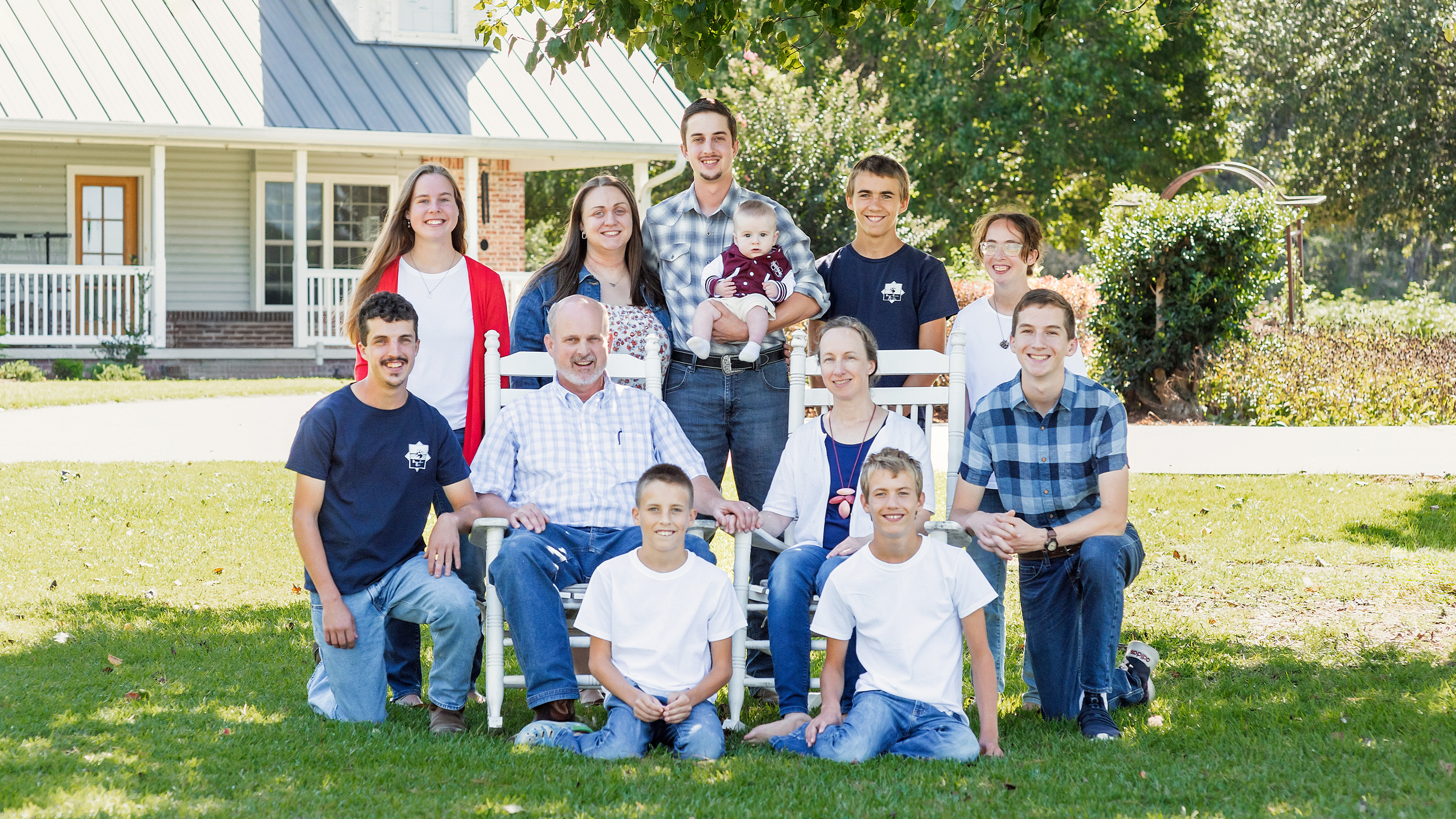
The Mississippi Farmer Who Helped Resettle 150 Ukrainian Families

As the US makes it more difficult for refugees to stay, Rodney Mast and his church community are rallying around their new friends.

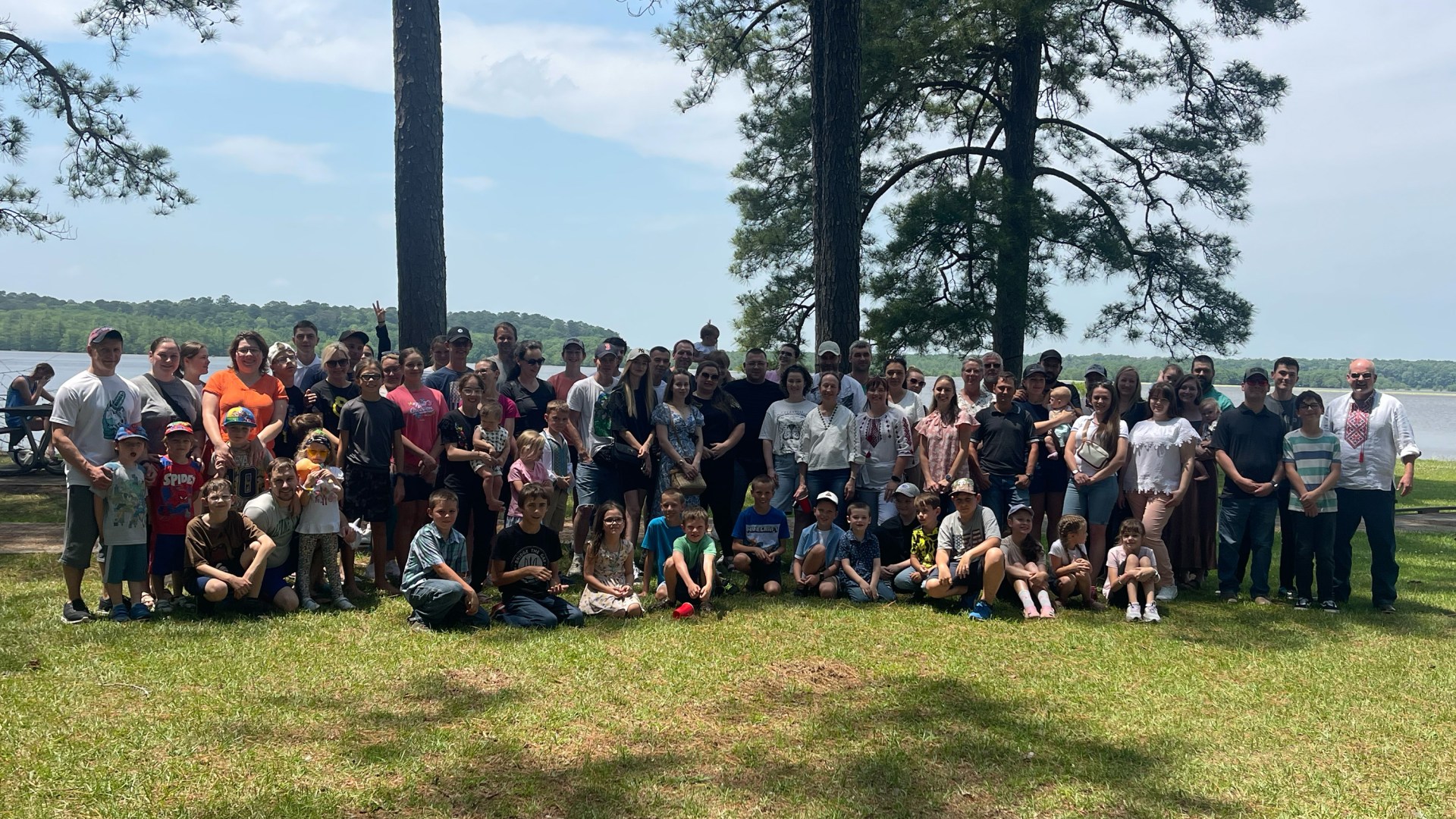
A monthly social gathering of Ukrainian families and volunteers in May 2024 at Noxubee Wildlife Refuge near Starkville, Mississippi.

A monthly social gathering of Ukrainian families and volunteers in May 2024 at Noxubee Wildlife Refuge near Starkville, Mississippi.

Christianity Today April 10, 2026
Image courtesy of Rodney Mast

Late March is corn-planting time, and from 4:30 a.m. to 10 p.m. every day, Mississippi farmer Rodney Mast hums along in his John Deere tractor, hundreds of unsown acres spread before him and a can of Planters peanuts by his side.

“This is the time of year that farm boys live for,” said Mast, who lives in Crawford, Mississippi.

But there’s more to Mast than meets the eye. On top of his tractor, two small flags ripple in the wind: one American and one Ukrainian.

Mast has helped more than 150 Ukrainian refugee families resettle in the US—24 of them in the rural Golden Triangle area of northeast Mississippi. 

“If five years ago, ten years ago, someone would’ve told me that I would have created a little Ukrainian community here in Mississippi, I would’ve practically laughed,” Mast said.

Mast is a third-generation farmer, but his family has left behind a legacy of more than crop raising. 

Mast’s grandparents moved from Indiana to Mississippi in the 1960s to help with racial reconciliation in a deeply divided post–Jim Crow South. Mast said his grandmother cared for sick neighbors and taught literacy classes for Black women. His grandfather provided jobs for their husbands on his farm, always treating them like equals. Mast said this example instilled in him a passion for cross-cultural ministry. 

His farming background also uniquely prepared him to “do the task in front of him,” which is how his efforts with refugees began, he said.

“We have to do whatever the crop is demanding, whatever the weather gives us,” Mast said. “We have to adjust and roll with the punches.”

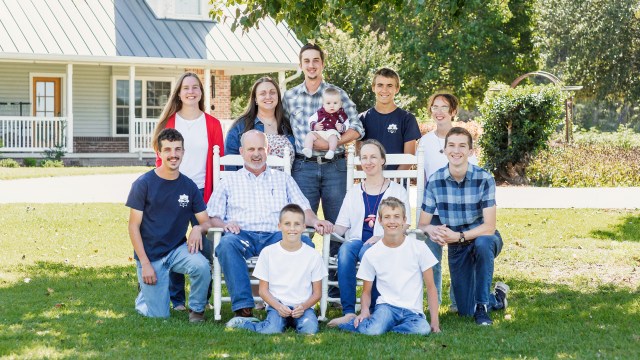
Rodney Mast with his family, including his daughter-in-law, grandson, and adopted Ukrainian sons, taken by one of the Ukrainian refugees.
Rodney Mast with his family, including his daughter-in-law and grandson. Photo taken by one of the Ukrainian refugees.

In December 2018, Mast and his wife, Christine, hosted a child from Ukraine for six weeks through International Host Connection, a nonprofit that connects orphans with US families. This led to their 2019 adoption of three boys from Ukraine. The organization asked Mast to serve on its board, and when war broke out in February 2022, he traveled to Poland to oversee the evacuation and resettlement of orphans. He returned to Poland in June of the same year and, after making sure the orphans were situated, shifted his efforts to help Ukrainian families.

On April 21, 2022, the Biden administration created the Uniting for Ukraine program, which allowed an individual in the US to sponsor a displaced Ukrainian family for a period of two years. Mast researched videos about the program, thought it looked “pretty easy,” and proceeded with the paperwork. 

While searching social media groups for potential Ukrainian families to match with, he had two criteria: eagerness to work and respectfulness. 

The first family the Masts sponsored had five sons. Mast and his wife, parents of eight children themselves, immediately connected with them. “Our hearts went out to them,” Mast said. The family arrived that August. 

Since then, Mast said he has become a “middleman and mentor” to hundreds of sponsors in the US, connecting them with Ukrainian families and providing resources and guidance as they navigate the process.

But sponsorship is only the beginning. It takes a village to care for these families, and Mast said the response from his community has been “overwhelming.”

Churches and individuals across northeast Mississippi rallied to support the newcomers. Ahead of their arrival, Mississippians donated clothes and household items and decorated apartments. Once the Ukrainians arrived, these Americans showed them how to enroll their children in schools, accompanied them to the doctor, and helped them open bank accounts and obtain phone plans.

Mast’s church, Redeemer Church in Starkville, Mississippi, has an average weekly attendance of 12–15 Ukrainians and hired a Russian translator for its sermons. Way of the Cross church in nearby Brooksville puts Russian text on the screen, and Emmanuel Baptist Church in Starkville has a Russian Bible study. 

“It’s sweet and good when people outside of their familiar culture are mingled together under the banner of Christ,” said Kevin Shoemaker, head pastor of Redeemer Church.

Halyna Yefimenko, a young mother from southern Ukraine, arrived on September 9, 2023, at the tiny Golden Triangle Regional Airport with her husband and two sons. She was eight months pregnant. Waiting to greet her was the Mast family as well as her family’s sponsors, who drove them to their new home—fully furnished with donated furniture, beds made, pictures on the wall, and even groceries in the fridge.

Their sponsors organized a housewarming party for them, which families from the sponsors’ church, Way of the Cross, attended, bringing gifts and welcoming them to Mississippi. Church members also threw her a baby shower and were present at the birth of her child. Yefimenko was blown away.

“We have probably never received so much help in our lives,” Yefimenko said. She added that the example of their love strengthened her faith. “I believed in God before in Ukraine too. But when I moved here and met these people and I saw how they believe in God, my faith [has] become more strong.”

Kseniia Yermakova, who goes by Ksu, is an Orthodox Christian from Sloviansk, a small city in Eastern Ukraine eight miles from the frontline. Mast’s generosity and care deeply impacted her as well.

On the day the war began, February 24, 2022, Yermakova, who was living in Kyiv at the time, received an early-morning phone call from her best friend. “What do you hear?” the friend asked. As they were speaking, Yermakova saw and heard a missile slice through the sky. In that moment, she said, she understood the war had begun.

She and her now-husband fled on foot to her in-laws’ home in a suburb of Kyiv, not knowing it was occupied by Russians. The couple decided they couldn’t hide in the basement and wait for a missile to bury them with debris, so they fled to central Ukraine, Yermakova recalled. Her best friend left for the US, where Mast helped her resettle in Mississippi. She begged Yermakova to come too.

“We believed in Ukrainian victory so much that we thought that we are safe in our own country,” Yermakova said. 

But in 2024, Yermakova and her husband began talking about growing their family and didn’t want to have a baby in a city with perpetual shelling. They decided to move to the US, and her best friend sponsored them. Through Uniting for Ukraine, even parolees could sponsor other families if they had sufficient financial means.

Yermakova’s parents and grandmother still live in Sloviansk despite her constant pleading for them to move to a safer part of Ukraine. Just two weeks ago, a Russian bomb destroyed her grandmother’s home. Her grandmother survived only because she had gone outside for a few minutes. 

“I’m calling my mom every day to find out if they are still alive,” Yermakova said. 

Yermakova said she carries a lot of sadness with her, especially for her family still in Ukraine, but continues to be impressed with the kindness of Mast and others in her small Mississippi town. Mast lent Yermakova and her family money for their resettlement process, helped them find their apartment, and provided furniture and household items.

“People here are [warm hearted], and they are generous, and they are ready to help,” Yermakova said.

Yet even after arriving in the US, the hardships have continued for Yermakova and thousands of other Ukrainian refugees. In the first month of his second presidential term, President Donald Trump halted the Uniting for Ukraine program. While Ukrainian refugees in the US are eligible to apply for re-parole, the US Citizenship and Immigration Services’ (USCIS’s) slow processing times have forced Ukrainians out of legal status—and out of the country. Many have no home to which they can return. USCIS also increased fees for approved re-parole applications to $1,000 per person, which poses a great financial challenge for refugees, especially large families.

Mast has witnessed firsthand the toll this has taken on the Ukrainian community.

“They weren’t wanted there; they aren’t wanted here. They don’t know where to go,” he said.

Refugees are allowed to apply for re-parole six months before their current parole expires. Because of the long wait times, Yermakova applied even earlier, although USCIS noted that filing earlier would not result in a faster decision and could result in denial. Her family’s parole expires April 19, and with it her husband’s work permit and driver’s license.

They’ve heard nothing so far except that their case is still being processed. The family is exploring other immigration routes, including work visas and asylum. If those pathways aren’t possible and their parole isn’t renewed in time, they have no idea what they’ll do next. 

Mississippians continue to rally around these families, joining calls with lawyers, lending money for fees, extending prayers, writing letters to USCIS pleading their Ukrainian friends’ immigration cases, and organizing social events, like an annual crawfish boil, to build community. Mast travels regularly to Washington, DC, to advocate for Ukrainian interests, including the Ukrainian Adjustment Act, which would provide a pathway to permanent residency for parolees in the US.

Vika and Bryan Jones from Emmanuel Baptist Church help Mast coordinate social events for the Ukrainian community. Vika, a Kazakhstan native, speaks Russian, the first language of many Eastern Ukrainians. She often acts as a translator for the refugees, including Yefimenko when she was at the hospital giving birth. The Joneses urge Americans not to forget the plight of Ukrainians.

“The war is still going on there, but it’s not new anymore,” Vika Jones said. “So I feel like people think ‘Oh, [Ukrainian refugees are] fine’ and everything, but they’re still struggling.”

Supporting Ukrainian refugees is part of the biblical mandate to love your neighbor, Mast said.

“God has very unique plans in our lives,” Mast said. “One thing I would express to other people that wonder, ‘How do we get involved in something like that?’ I don’t know. Just do the task that’s in front of you. Help the person that is nearby, and see what happens.”

News

Two States Test a New Pro-Life Law

Pro-lifers have just won legislative victories to restrict abortion pills in South Dakota and Mississippi. But will the laws work?

A gavel and pink and blue pills.
Christianity Today April 10, 2026
Illustration by Elizabeth Kaye / Source Images: Getty

Nearly two out of every three abortions in America today use pills. 

These “chemical abortions,” as they are often called, are especially popular in states that prohibit abortion clinics. Last month the Guttmacher Institute released survey results showing that in 2025, women in states with abortion bans were more likely to obtain abortions by ordering abortion pills through telehealth providers than by traveling out of state to obtain either a chemical or surgical abortion.

These numbers are why contemporary pro-life activists have made stemming the flood of abortion pills into pro-life states one of their chief causes. One of the most significant pro-life legislative campaigns this spring, for instance, which has the support of Students for Life Action, is to get conservative state legislatures to pass laws restricting the distribution of abortion pills. 

This proposal, which has been introduced in multiple conservative states, targets abortion providers by allowing the state attorney general to take legal action against those who unlawfully send abortion-inducing drugs into the state. One variation of the proposed bill would also allow women who use abortion pills, as well as their family members, to also bring lawsuits against the abortion pill prescribers. 

The proposed legislation specifically exempts women who obtain abortions through drugs from being prosecuted, so activists have marketed it as a mainstream pro-life effort—rather than an “abortion abolitionist” approach—that will save unborn lives and protect women from telehealth abortion providers who cannot assist their patients in emergencies or other serious health complications from the drugs. 

But even in strongly Republican, heavily pro-life states, the proposed legislation has faced substantial obstacles. Last year, Republican senate leaders in Oklahoma refused to bring one such bill to a floor vote even after it passed in the state house of representatives by a vote of 77–9. Students for Life Action blamed this defeat partly on the actions of one abortion abolitionist state senator who tried unsuccessfully to amend the bill to allow women who obtained abortions to be criminally prosecuted, a politically unpopular measure that divides pro-life Republicans. 

This year, the mainstream of the pro-life movement—which advocates for legal protection for the unborn that penalizes abortion providers, but not women who obtain abortions—has been better prepared. 

In March, the governor of South Dakota signed into law a measure making it a felony to market or distribute abortion pills in the state. And this month, the Mississippi state legislature passed a bill (which the governor is expected to sign into law) that would allow those who prescribe or provide abortion pills to be sentenced to up to ten years in prison. 

Because abortion is already illegal (and unavailable) in both South Dakota and Mississippi, observers expect these bills to be used primarily against out-of-state telehealth providers. But some legal scholars say it’s unlikely that out-of-state abortion providers can be successfully prosecuted under these laws. 

“I think lawmakers are imagining this will be primarily used against doctors or drug manufacturers in blue states,” Mary Ziegler, a scholar of abortion policy at the University of California Davis School of Law, told ABC News. “But it will be much harder for prosecutors to actually get those people into court than it will be for them to get someone whose partner has these drugs.”

Eight states (California, Colorado, Maine, Massachusetts, New York, Rhode Island, Vermont, and Washington) have “shield laws” in place that specifically protect medical providers of reproductive and abortion services from being extradited to another state, and other ten states have similar laws that generically protect medical personnel without specifically mentioning abortion. Telehealth abortion providers from one of those states who faced lawsuits in Mississippi or South Dakota could simply refuse to show up in court and rely on their own state to protect them from further prosecution.

The federal government could override these varying and competing legal situations by making telehealth prescriptions of abortion pills illegal. The government legalized this practice only in 2021, during the Biden administration, and the Trump administration has continued that policy.

The federal government could also restrict the sale of abortion pills more broadly. But that seems unlikely in the near term, as the Trump administration’s Food and Drug Administration expanded these sales by approving a new version of the abortion drug mifepristone last October.

For now, in the absence of federal regulation, these state governments are trying to restrict abortion pills on their own—but whether their efforts will be enough to overcome the legal challenges of prosecuting out-of-state providers is far from certain.

Daniel K. Williams is an associate professor of history at Ashland University and the author of Abortion and America’s Churches.

Ideas

The Iranian Church Persists

Amid war, some Christians are evangelizing, preparing food for neighbors, and displaying other acts of generosity.

Iranian soldiers, rubble, and a person praying.
Christianity Today April 10, 2026
Illustration by Elizabeth Kaye / Source Images: Getty

Let me tell you about Yahya, whose real name I am withholding for his safety. He’s a leader in Iran’s house church movement, a Christian from a Muslim background, and a husband and father to a young family. Like many other Iranian Christians, Yahya has paid the cost of being a believer under the Islamic regime. He has been interrogated, detained, abused, and may soon be summoned to serve a long prison sentence for his Christian ministry. And now, like the rest of Iran’s 93 million people, he is a citizen of a nation at war.

“Life is hard,” Yahya told my team and me recently when we briefly spoke to him through voice messages that were interrupted because of a weak internet connection. But we are continuing. And the Lord is showing his glory.”

These were not just empty words. At a time when many Iranians are afraid to travel inside the country, Yahya had just returned from a trip to several remote villages, where he had gone to serve the poor, share the gospel, and offer Persian New Testaments to curious residents. Five people gave their hearts to Christ over a few days.

Many other believers are also choosing to shine Christ’s light amid the war, which was largely paused on Tuesday under a fragile, two-week cease-fire. I hear the stories of these believers in the work I do every day at Elam Ministries, an organization that aims to strengthen churches in Iran and beyond. Even in this season of fear, turmoil, and uncertainty, Iranian Christians continue to be resilient, courageous, and hopeful. And each story brings a prayer of thanks to my lips.

The Iranian church was prepared for this moment because it has endured many trials. Since the 1979 Islamic Revolution, Muslim apostasy has been anathema to the country’s ruling clerics. They insist Iranians from Muslim backgrounds must not be exposed to Christian teaching. The regime permits Iran’s ancient Christian communities—the Armenians and Assyrians—to worship in their minority languages. But Persian-speaking churches have been increasingly persecuted, particularly because many members are converts from Islam.

In the early decades after the Iranian Revolution, authorities martyred eight key Christian leaders. They threatened and eventually closed churches offering Persian services. In the ’90s, the regime banned Iran’s Bible Society. And today, it is against the law to sell or use the Persian translation of Bible.

Pushed underground, Persian-speaking Christians now meet only in house churches, facing constant threats of raids, arrests, interrogation, torture, and prosecutions that often end in prison. Yet many still choose to follow Christ.

Courage like Yahya’s—continuing ministry despite a pending prison sentence—is common. Countless brothers and sisters have stood firm under persecution while praying for and witnessing to their persecutors. When I asked one couple why they are ready to suffer for Christ, they said, “Because we have tasted and we have seen.”

Many Iranian Christians demonstrated this legacy of courage during other recent hardships. First came the brief but intense war with Israel (and the US) in June 2025. During that period, the underground church felt the same shock and fear as the wider population. Still, we heard many continued meeting for worship. Some opened their homes to those fleeing major cities. Others walked the streets to pray, even as bombs fell. Some found faith during the 12 days of war.

Then, earlier this year, Iran faced dark days when government forces killed thousands of unarmed Iranians. The crackdown left countless wounded and traumatized. Christians went into hospitals to pray with the wounded. They visited grieving neighbors. They offered comfort and shared the message of Jesus whenever possible.

Now, amid war, we see the same pattern play out. Through gaps in the internet blackout, I hear that many house churches are still meeting despite government checkpoints increasing the risk of being searched and arrested. Recently, a team member told me about a group of 9 Christians who continued to meet amid the chaos and violence. Friends and family members noticed the peace the Christians had and wanted to know more. They then joined the group, which has grown to 21, demonstrating the evangelistic work that has made the Iranian church among the world’s fastest-growing Christian movements.

Courage often finds its expression in action, and the generosity our organization sees on the ground is one example. In the early weeks of this war, a relatively new convert contacted his pastor and said he wanted to give his tithe to poor Christians in other cities. The pastor suggested to send money to a poor family caring for a grandfather with a disability in a distant city.

A few days later, members of another house church traveled independently to the same city to share the gospel and ended up at that family’s home. The church members reported the family told them, “We had completely run out of money, but then, at exactly the moment we needed it most, help arrived.”

We see the same Spirit-inspired outward focus in house church leaders, such as Parvin and her husband, Amir (again, not their real names). The couple lives in a heavily bombed area. But when our team suggested relocating to a safer place, they gently declined. “We want to stay and help people,” Parvin explained. “And if the situation allows, we also want to share the gospel.”

Since the start of the war, Parvin has been preparing basic food parcels for families in her neighborhood. Prices have been rising rapidly amid an already-devastated economy, and many are struggling to make ends meet. One parcel went to a single mother raising a child with disabilities. The woman had been anxiously wondering how to make her money last until the end of the month. “When she saw how God had provided for her, she started crying,” Parvin said.

The Iranian church is courageous, generous, and growing through a commitment to witnessing. This does not mean the church is perfect, nor that every Iranian Christian is perfectly or consistently courageous, generous, or bold. Believers in Iran are, like us, fallen human beings who must rely daily on God’s grace to be conformed to the image of his Son. Moreover, the church faces the same challenges as any rapidly growing Christian movement, such as ensuring good order, accountability, and orthodoxy. The additional challenge of persecution can also sometimes result in the scattering and isolation of believers.

Harder days may be coming for Iran, and more than ever the country’s people will need the church to shine as an embodied witness to the love of Christ. A lot of uncertainty lies ahead: While there could be greater freedoms for the Iranian people, there are also many dark possibilities.

The regime, though wounded, could cling to power and become more repressive. A deadly persecution of Christians and other minorities could follow. In recent decades, Iran has persecuted the underground church but has avoided widespread executions for apostasy, partly due to international scrutiny. But that could change.

If the Islamic republic remains, it may seek out those whom it views as the enemy within. House church Christians—which the regime already erroneously labels “Zionists”—would be easy targets. Some prominent Christian diaspora leaders have openly sided with opponents of the regime, such as Reza Pahlavi, which could make Christians appear as dangerous foes. History shows believers have been executed as enemies of the state during upheavals, including in the French, Russian, and Communist Chinese revolutions. Iran could follow a similar path.

The global church should pray against this outcome and be ready to support our brothers and sisters in the country. Here is how we can respond:

First, I believe we should shift our focus from geopolitics and place it on the church. It is easy to become preoccupied with Washington, Tehran, and the shifting dynamics of power. Yet Scripture consistently directs our attention elsewhere. In the Gospels, the Epistles, and Revelation, God works his purposes most decisively through Christ and his church.

Many Christians inside Iran are keeping this focus. Whatever the outcome of this war, people like Yahya believe what Iran needs most is the kingdom of God. Their identities and loyalties are tied to the heavenly, eternal kingdom rather than the rise and fall of earthly ones. They challenge our own walks with Christ: Are our own identities and loyalties firmly grounded in our heavenly citizenship?

Second, we should commit to sustained and informed prayer. Praying for protection, courage, unity, and continued growth among believers in Iran is one of the most meaningful ways to stand with them in whatever lies ahead.

Third, we should support practical efforts that strengthen the Iranian church. This includes providing Bibles, leadership training, and pastoral support—quiet, faithful investments that enable believers to endure and grow under pressure. Even in these difficult days, hope remains for Iran because, as Yahya told me with a quiet conviction, “The church in Iran is alive.”

David Yeghnazar is executive director of Elam Ministries. Born in Iran, his family has served the Iranian church for three generations.

News

When Parents Pay for a Child’s Violence

The father of a school shooter was convicted of murder. What is lost and gained by the new precedent?
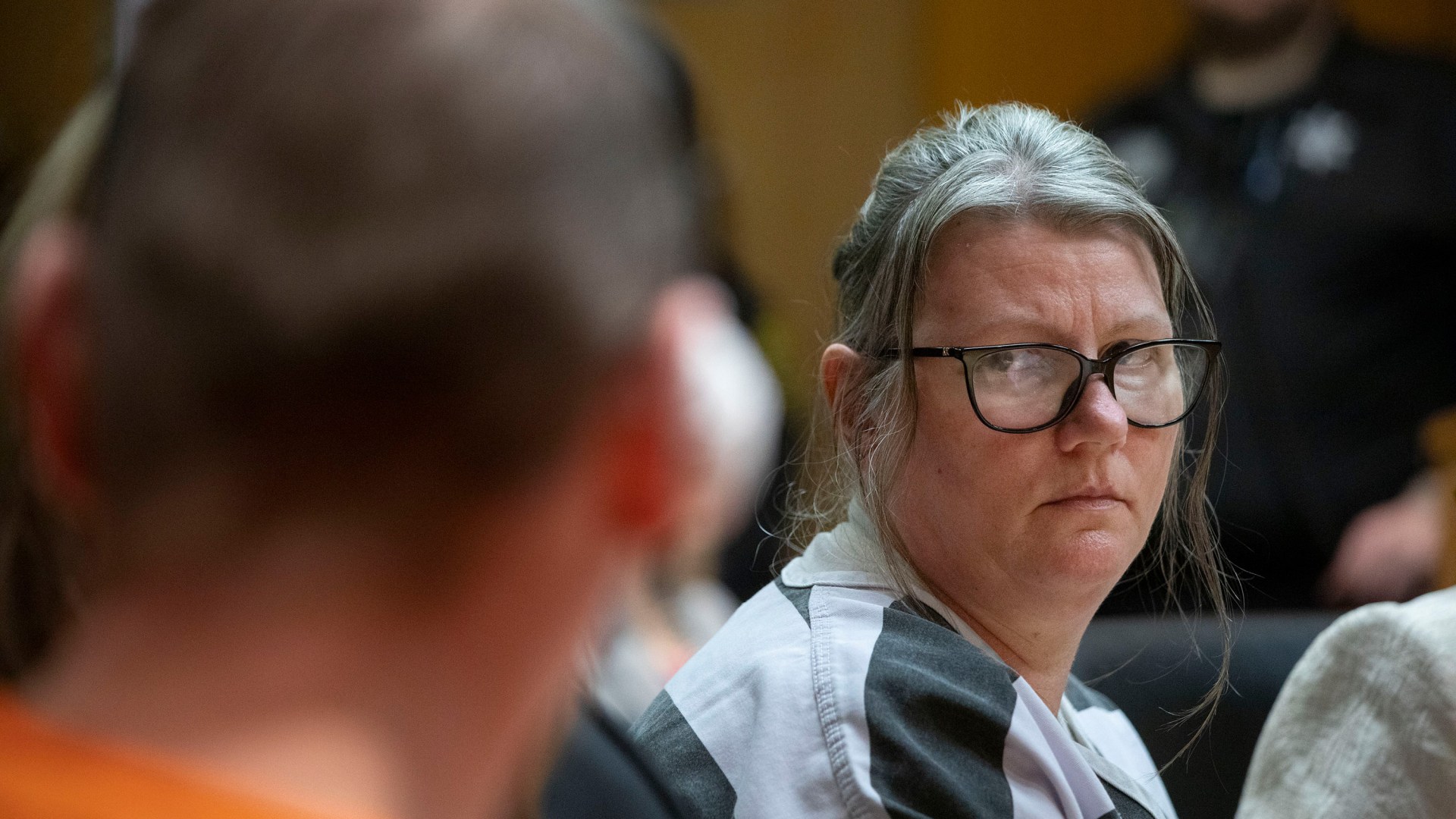
Jennifer Crumbley looks at her husband James Crumbley during their sentencing on April 9, 2024 in Pontiac, Michigan. They are the first parents in U.S. history to be criminally tried and convicted for a mass school shooting that was committed by their child.

Jennifer and James Crumbley, the first parents in U.S. history to be convicted for a school shooting committed by their child, during their sentencing on April 9, 2024.

Christianity Today April 9, 2026
Bill Pugliano / Stringer / Getty

In 2006, Marie Monville was living a quiet life in Lancaster County, Pennsylvania. That changed on October 2, when her husband walked into a one-room Amish schoolhouse nearby in Nickel Mines and opened fire.

Charles Carl Roberts IV, a milk truck driver, shot ten girls ages 6 to 13, killing five before taking his own life after a police standoff. His motives remain unclear. In the hours that followed, Monville sat in her parents’ home trying to make sense of what had happened.

Then the Amish came.

Monville’s father went outside to meet them and found they approached with forgiveness, offering comfort and inviting Monville to grieve alongside them.

That moment reshaped her life.

“My life has been so tremendously positively impacted by the fact that this was a community who wasn’t trying to hold me responsible for Charlie’s choices,” Monville said. “They were just as concerned about me as they were about their own community members.”

Such responses are rare in the aftermath of mass violence. They may become rarer still as American law redraws the boundaries of responsibility.

In 2024, authorities reported 14-year-old Colt Gray had entered Apalachee High School in Winder, Georgia, with a semiautomatic rifle. Four people were killed in the shooting that followed—two students and two teachers—and nine others were injured.

The case drew national attention not only because of Colt Gray’s age—making him potentially the youngest perpetrator in a school shooting of this scale in decades—but also because of what followed.

On March 3, a Barrow County jury convicted his father, 55-year-old Colin Gray, on 27 criminal counts related to the shooting, including second-degree murder, cruelty to children, and involuntary manslaughter. Colin Gray has not yet been sentenced but could face decades in prison.
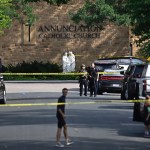
Colt Gray’s trial has not been scheduled yet, but his father’s verdict signals a push to hold parents criminally responsible for their children’s violence. The push raises legal questions. For Christians, it also raises scriptural ones.

In Deuteronomy 24:16, Israel’s law draws a clear boundary around guilt: “Parents are not to be put to death for their children, nor children put to death for their parents.” Ezekiel 18:18 reiterates this, saying a father does not bear the burden of sin for his son, and vice versa. All people bear responsibility for their own sin.

Yet Scripture also acknowledges that the consequences of sin rarely remain confined to one life—and there are often penalties for negligence. In Exodus, Israel’s laws dictate that if an ox kills someone, the owner is liable for the death only if there were warning signs the ox would do so, bringing biblical liability beyond the threshold of intentions. 

Scripture also calls parents, particularly fathers, to raise their children in godly discipline and not to provoke them to wrath (Eph. 6:4). How people prompt their children to respond to the world around them is important—especially in the Gray case. 

Consequences of sin ripple outward through families, communities, and generations. Modern courts are not applying biblical law, but cases like Colin Gray’s pose a question: Who is responsible for a mass shooting, and where does the ripple begin? 

According to reporting by The Washington Post, Colt Gray had a family life full of neglect and abuse as well as a shrine to a mass shooter in his bedroom—and the FBI had investigated him a year earlier for online threats. Months before the attack, his father gave him the rifle used in the shooting as a Christmas gift.

The teen’s final text to his father before the shooting read, “I’m sorry, it’s not ur fault.”

The jury disagreed, returning a verdict in less than two hours.

Mass shootings have increased over the past two decades. The Rockefeller Institute of Government reports that the annual average has more than doubled over the past 30 years, from 9.4 incidents between 1995 and 2005 to 19.5 between 2015 and 2025.

The Gray case is the second major instance in which a parent has been held criminally responsible for a child’s role in a mass shooting. It follows the 2021 attack at Oxford High School in Michigan, where 15-year-old Ethan Crumbley killed four classmates.

His parents, Jennifer and James Crumbley, were later convicted of involuntary manslaughter after prosecutors argued they ignored clear warning signs and failed to secure the firearm they purchased for their son. Each received sentences of 10 to 15 years.

Before those cases, parents were occasionally charged for providing access to firearms or for neglect, but they were not charged with crimes as severe as manslaughter or murder.

Touro Law Center professor Jolie Zangari, a legal scholar who has studied parental criminal liability in cases of youth violence, said the Gray case may mark a turning point but does not introduce a fundamental change in the law.

She said both the Gray and the Crumbley cases involved an unusual level of parental awareness of their children’s struggles along with decisions to buy firearms for them. In most cases, Zangari said, parents are not fully aware of the extent of a child’s mental health issues or access to weapons.

“Part of me thinks now this will open up additional prosecutions, but I also think this is a massive wake-up call for parents,” Zangari said. “We can simply wonder how many parents now have chosen to lock up their guns … how many parents may perhaps think twice about purchasing guns for their children.”

Zangari said she views the verdict as a positive development and similar legal arguments could extend beyond parents in rare cases, perhaps to spouses or school administrators, depending on what others knew and how they acted.

Justin Heinze, a University of Michigan researcher who studies school shootings, said the recent cases target “egregious lapses in parental responsibility” rather than introducing a broad new standard.

While Heinze’s work focuses on prevention, such as school preparedness, early intervention, and firearm safety, he said the prosecutions may still have an effect.

“I do think [these cases] communicate more clearly the importance of secure [firearm] storage,” Heinze said. “Hopefully this raises some awareness.”

Twenty-six states have some form of safe storage law, holding adults accountable if children gain access to unsecured firearms. The threat of murder charges, however, marks a significant escalation.

For Monville, the legal shift raises a different question: Could forgiveness be dismissed in favor of justice? 

“My hope would be that [Colin Gray] comes to know God and finds that place of forgiveness … to forgive his son, to forgive himself, and to reach out to those his son impacted,” she said.

Monville left the legal diagnosis to the courts, saying if parents have committed crimes, like neglect, they should be prosecuted. Beyond the courtroom, she said, she hopes Gray’s prosecution does not take a key element from him: his humanity. 

“This is somebody’s life,” Monville said. “It’s not just a story that we’re going to look at today and forget about next week.” 

Mass shootings are often senseless, and Monville fears families craving justice will try to find solace in arrests and clarity through convictions, losing the concept of mercy and forgiveness from which she has benefited. 

“We want to be able to figure out how to make it fit,” Monville said. “We want a resolution sometimes to something that just doesn’t have one.” 

After the Nickel Mines shooting, Roberts’s mother, Terri Roberts, developed close relationships with Amish families, including regularly visiting and helping a survivor who was disabled in the attack. Terri Roberts later wrote about her journey through grief and forgiveness before her death in 2017.

Monville has followed a similar path, becoming a speaker and mentor. None of it, she says, would have been possible without the Amish community’s response. Although she was not culpable for her husband’s actions, she had to go through a personal process of forgiveness as well, letting go of bitterness and shame.

“I want to be who God created me to be and live the life that he’s called me to, regardless of these circumstances,” she said. “I cannot do that if I allow unforgiveness to take hold inside of my heart, because it’s going to permeate everything.”

Donald Kraybill, a leading scholar of Amish life and former director of the Young Center for Anabaptist and Pietist Studies at Elizabethtown College in Lancaster County, said such forgiveness is rooted in the example of Christ.

“They would be quick to say it’s not easy,” Kraybill said. “And yet it’s what Jesus calls them to do, despite the pain.”

That commitment does not negate justice, he added. Rather, Amish communities often entrust ultimate judgment to God. In the years after the shooting, some Amish told Kraybill the tragedy unexpectedly amplified their witness across the globe.

“I remember one saying, ‘We could never do this as a missionary,’” he said. “‘If we tried, it would take years. Here it happened overnight.’”

Weeks after the 2006 shooting, the Amish tore down the schoolhouse, burying the epicenter of the tragedy. Today, the site is a pasture with grass, trees, and ribbons tied to fence posts.

Though books, films, and even a play have revisited the event, nearly 20 years after the shooting, Kraybill said many Amish no longer want to speak about it.

“They told me, ‘We’ve put this behind us,’” he said. “‘It’s been in God’s hands for a long time.’”

News

Nigeria Prosecutes Suspects of 2025 Christian Massacre

Survivors hope for justice in the trial of nine men accused of the slaughter of about 150 Christians in Benue state.

Members of the Nigeria police force are seen outside the Federal High Court.

Members of the Nigeria police force are seen outside the Federal High Court.

Christianity Today April 9, 2026
Kola Sulaimon / Getty

Julius Joor lost his cousin on the rainy night of June 13, 2025, as Fulani militants descended on Yelwata in Benue State, Nigeria. Joor, the village head, said attackers “surrounded Yelwata and started shooting and killing people. They forced people out of their homes, poured fuel, and set houses ablaze.” He escaped to a primary school doubling as housing for internally displaced people (IDP), which had police guarding it.

The attack resulted in the deaths of about 150 people, mostly Christians, amid ongoing clashes between Fulani Muslim herders and other ethnoreligious groups over land use, religion, and ethnicity.

Achin Mathias, another survivor of the raid, woke up to the sound of gunshots. He got out of bed and fled to St. Joseph’s Church in Yelwata, which militants didn’t attack since it is near an army camp. Mathias told CT many of the slain had fled to Yelwata from interior villages due to previous attacks. He also lost a childhood friend in the raid.

In the months following the attack, local Christians, including Joor and Mathias, waited for the government to take action. Some church leaders criticized the government’s lethargic response. One Nigerian senator blamed current policies—such as offering amnesty to some terrorists—for enabling the country’s kidnapping and terrorism crises and accused soldiers of running away instead of stopping militant herdsmen.

Then on February 1—nearly seven months after the Yelwata attacks—the Nigerian government arraigned nine suspected perpetrators at the Federal High Court in the capital of Abuja. After the arraignment, authorities dispatched a forensic team to Benue to investigate and exhumed 105 bodies from mass graves to gather evidence for prosecution.

Though Yelwata residents expressed hope for better accountability in curbing violence now that the government is prosecuting perpetrators, they also feared that a slow criminal justice system, systemic apathy, and lax policies toward terrorists might thwart justice for their neighbors.

Joor and Mathias told CT they felt relieved the government had arrested some people involved in the massacre, though they said the government should not stop at arraignment.

“[The] government must ensure that the full weight of the law is brought to bear and justice is done,” Joor said.

Despite international pressure to crack down on terrorism, attacks are continuing in Nigeria. A suspected suicide bombing in mid-March killed at least 23 people and wounded over 100 in northeastern Nigeria. On Palm Sunday, gunmen reportedly shouting “Allahu Akbar” attacked the predominantly Christian town of Angwan Rukuba in Plateau State, central Nigeria, leaving 28 dead. A night attack in Jos on March 30 resulted in at least 20 more deaths.

Authorities struggle to bring perpetrators to justice due to inadequate law enforcement and an often-dysfunctional judicial system.

Catching the terrorists in the first place is a challenge. Nigeria has long struggled to mount a response to violent security threats, including attacks targeting Christian and moderate Muslim communities as well as the kidnappings of pastors, schoolchildren, and church attendees. The country’s actions against terrorists are mostly centralized—security forces and army units directed by federal government. State governments don’t have the authority to deploy troops to trouble spots, slowing down responses to violent incidents.

One critic argued that most troops don’t know the communities they’re deployed to well or have a stake in the community, undermining effectiveness. The critic advocated training local security forces.

And once caught, terrorists may not face immediate penalties. Nigeria’s criminal justice system is notoriously slow, which some sociologists say undermines judicial integrity and public trust. One analysis estimated 70 percent of legal cases in Nigeria undergo significant delays. Some cases linger for years.

Sometimes authorities have seemed apathetic toward the prosecution of perpetrators. In 2023, police in Sokoto State allegedly failed to provide proper prosecution for two men accused of lynching Deborah Samuel, a Christian accused of insulting Muhammad the year prior in a WhatsApp group. The courts tried the men for criminal conspiracy and inciting public disturbance rather than for murder, and police officials allegedly skipped court appearances. The magistrate dismissed the case, and the men walked free.

Some victims of attacks and kidnappings told CT they fear the government will grant amnesty to militants. The Nigerian government has tried to rehabilitate insurgents with a 2016 policy called Operation Safe Corridor that aimed at deradicalizing repentant terrorists who have surrendered or been captured. As of March 2025, rehabilitation programs reintegrated 2,190 terrorists who had surrendered or defected.

One Christian woman from Kaduna State, whose brother is still held by bandits, said, “The question of amnesty should not even arise” for perpetrators. “How do you even determine who has repented genuinely?”

She’s one of the many Nigerians who oppose rehabilitation programs, concerned that they may not be effective and overlook victims’ rights. One supporter of rehabilitation, general Olufemi Oluyede, recently defended the policy by citing the parable of the Prodigal Son as a reason to offer a chance for voluntary repentance rather than the death penalty.

Mathias doesn’t support the death penalty, even for those who attacked his home in Yelwata, but he said he fears attempts to rehabilitate and reintegrate militants will result in treating perpetrators better than their victims and encourage future crimes.

Moses Machen, the pastor of Dominion Baptist Church in Bukuru, Plateau State, told me he witnessed three attacks during the three years he pastored a Baptist church in Chirang in nearby Bokkos Local Government Area. On Christmas Eve in 2023, he survived one attack by fleeing to the hills surrounding Bokkos. He credited God’s grace for his escape.

“While it is good that some attackers are prosecuted, [the] government must ensure that the law is followed to the letter in order to ensure justice for the victims,” Machen said, adding that a vigorous prosecution will ensure affected communities receive some closure.

Machen also hopes the government will respond to attacks better in the future. He questioned security operatives’ delayed action during past attacks on Christian communities: “During one of the attacks [in my area], I asked security officers to intervene, but they said they did not have orders to do so.”

Nigeria has one of the most feared and well-funded armies in Africa, which is also known for peacekeeping in neighboring West African countries, according to The New York Times. But it remains ineffective at stopping killings and kidnappings at home. Nigerian outlet News Central TV blamed underfunded police departments, corruption, and the collapse of public trust for contributing to the country’s ongoing insecurity.

Meanwhile, Machen said as victims try to recover their lives, “some of the people are still scattered. The farms the people used to go [to], they can still not go there now because of safety concerns.”

The fallout of attacks and risk of more violence have left livelihoods on the line, especially in rural areas. In Yelwata, Julius Joor said the town has adequate security now, but it doesn’t extend far. Farms just a few miles outside Yelwata remain inaccessible. Land owners fear traveling to their fields due to the risk of attacks: “You cannot go beyond two kilometers; how can you farm?”

Joor said he and his community have no choice but to remain hopeful: “We are crying. We are not government and we do not have power, so we have to be hopeful that we will get justice.”

Ideas

To Write Well Is Human

Contributor

Using AI to write is a disordered and deforming means of fulfilling a good desire. The church must offer something better.

A pile of blurry green digital-textured books.
Christianity Today April 9, 2026
Illustration by Elizabeth Kaye / Source Images: Unsplash

A major publisher recently pulled a new novel for a novel reason: a strong suspicion that the book was at least partially written by a generative artificial intelligence app. This is likely to become an increasingly common pattern in the world of trade publishing, and new research suggests AI-generated writing is widely infiltrating American newspapers.

I’m seeing the same pattern firsthand as an editor for Mere Orthodoxy, a contributor to many other publications (like CT), and the director of a master’s degree program in creative writing. I’ve had conversations with multiple frustrated editors from a wide array of publications—large and small, Christian and secular—about the dramatic rise in article submissions they believe to be written with AI. Even publications that don’t pay writers are running into this issue!

Editors now must spend time playing AI detective. This technology is often hailed as a time saver, but it’s taking up editors’ time.

Other writers have already made compelling arguments against using AI in writing and editing, so I won’t rehash those here. Instead, I want to address related questions I’ve not seen sufficiently considered: What does this explosion in AI writing mean for the church specifically? And how should we train Christian writers in the age of AI? 
Before I come to those questions, though, two observations. First, the popularity of AI-generated or AI-assisted writing is in part evidence of a good desire: to write. 


Whether they hope to produce novels, poetry, or essays, many people who write using AI want what writers have always wanted: to take perfectly ordinary words and turn them into something extraordinary. There’s something transcendent and soul-moving to beautiful writing, no matter the genre or shape of the piece, because writing—as other creative endeavors—reflects our basic nature as image bearers of God. Just as our God is a creator, we have a desire to create things of beauty, including with our words. 

This desire is good, but as with so many good and godly human desires after the Fall, the means by which we seek to fulfill it can become disordered. Using AI to generate text is just such a disordered means. Often, it is used in a lie, an attempt to pass off words you did not write as your own. Even if you aren’t plagiarizing—stealing from—another human writer, you are lying to your readers. Many people who use AI to write understand this, I think, which is why they tend to hide it, much like Adam and Eve hid from God after their transgression in Eden. 


Even when writers are open about the AI functions they use, however, the practice remains deceptive—not about the text but about the author. It presents the writer as the kind of person who could produce the insights or arguments on the page while skipping over the time, work, education, or other formative experiences needed to actually make such a person.

This brings me to my second, related observation: Those who turn to AI for writing are seeking help to become better writers, but they’ve chosen a terrible teacher.

I am convinced that many writers who resort to AI would figure out a way to fulfill their vision themselves, without AI assistance, if they had the time and resources to do so. They use AI because they lack the ideas or tools or basic know-how to write on their own. AI offers them a way to create something, but it typically produces subpar work and, more to the point, conveys no real or durable skill. A chatbot can write unlimited essays for you, but it cannot develop moral or aesthetic intuitions for you, because that requires the labor of your own mind and training of your own habits.

So many people have a good desire to write and easy access to a disordered means of fulfilling that desire. This will affect our politics, of course, and indeed our whole civilization. But what about the church? 

As Christians, we are called to love God with all our soul, heart, mind, and strength (Luke 10:27). Using AI to write robs us of opportunities to fulfill this commandment. With enough use over enough time, it will reduce our capacity to read the Bible, to reflect on it, and to teach and preach it to others

The loss here is particularly great for pastors, who must present God’s Word to their flock. The now-ubiquitous availability of AI writing tools presents them with a constant temptation, the promise of a quick fix for late nights of work and the natural slowness and inefficiency of the human mind. It takes time to think, sit with a text, and think even more before penning a sermon—but that time is itself the work of pastoring. It is formative. It is what makes you the kind of person who can offer wise and biblical guidance to a flock.

For the church, then, AI writing is a direct assault on the moral character and growth of believers. It presents a formational threat to Christians, an invitation to take the easy path in our creative work, and in the process deforming our creativity altogether. In this regard, AI in the church may be the culmination of what theologian Carl Trueman describes as the “desecration of man” in his new book by this title.

So how do we train Christian writers in this context? Even if our answers to this question aren’t groundbreaking—none of the resources I’ll mention in a moment are new—we must be ready with answers. 

Faced with a good and godly desire being fulfilled in a disordered way, the church is right to offer something better. “Which of you, if your son asks for bread, will give him a stone? Or if he asks for a fish, will give him a snake?” Jesus said. “If you, then, though you are evil, know how to give good gifts to your children, how much more will your Father in heaven give good gifts to those who ask him!” (Matt. 7:9–11) God’s people can help foster the good gift of creativity by training writers well.

Much training is already available for Christians who want to grow as writers. To name just a few examples, local libraries often offer free workshops, classes, and accountability groups for amateur writers. For pastors and those who write resources for the church, The Gospel Coalition offers writing cohorts led by well-published writers and editors. For those seeking a formal degree, Christian master’s programs (like the one I direct) pair students with writing mentors who help them develop a book-length project in their genre of choice, in service to the church.

Predictions abound about the skills and careers that AI will render obsolete, and perhaps those predictions will prove true. But good thinking—the foundation of good writing—will always be necessary, if not for the economy than for our life in the church, with each other and before God. However the technology develops, this anthropological truth will remain: To write well is human.

Nadya Williams is a homeschool mom, a writer, an editor, and the interim director of the MFA in creative writing at Ashland University. She is the author of Cultural Christians in the Early Churchand Christians Reading Classics and is books editor at Mere Orthodoxy.

Theology

The Bible Doesn’t Justify War Crimes

Columnist

Old Testament warfare ultimately points us to the Cross, where God’s justice and mercy meet in Christ.

U.S. President Donald Trump answers questions during a press conference on Iran on April 06, 2026 in Washington, DC.

U.S. President Donald Trump answers questions during a press conference on Iran on April 06, 2026 in Washington, DC.

Christianity Today April 8, 2026
Illustration by Christianity Today / Source Image: Getty

This piece was adapted from Russell Moore’s newsletter. Subscribe here.

As of my writing this, the United States and Iran have agreed to a two-week cease-fire. Earlier this week, the president posted a profanity-laden Easter message promising that Iranians would be “living in Hell” if they did not reopen the Strait of Hormuz. After that, he threatened to wipe out “a whole civilization” in what would have been at best a war crime and at worst a genocide. Regardless of whether the cease-fire holds, we have crossed a scary threshold in American life. And in this flurry of words, there is one Christians especially should not miss: hell.

Back in the days of hippie counterculture, a song by John Lennon asked the world to envision world peace. All we had to do was “imagine there’s no heaven.” “It’s easy if you try,” Lennon told us—and indeed it is, in this world red in tooth and claw. The result would be people all over the world uniting as one, Lennon sang, “living for today.” The song was silly and utopian and brings to mind how easy it was for Joseph Stalin and Mao Zedong to imagine that above them was “only sky.”

Now we face a mirror image of all that, and it has a bit more truth to it: Imagine there’s no hell. And if there’s not, bombs away.

What’s more is that some of those justifying or looking away from the possibility of war crimes use the Bible to make their claim. One person, in telling me he supported the carpet-bombing of entire civilian populations, told me we would be no less justified in doing so than Joshua was in taking out the Canaanites in the Land of Promise. We can expect to hear that language more in the days to come, whether in the Middle East or elsewhere, whenever someone wants to advocate in a social media attention economy for what any previous American generation would have seen as war crimes.

But that’s not true.

I write those words as someone who is not the least bit embarrassed about Joshua. One of my first sermons was on 1 Samuel 15:33, which says, “And Samuel hacked Agag to pieces before the Lord in Gilgal” (ESV throughout). And I would preach it today exactly the same way. I have no sympathy whatsoever for those who suggest the Old Testament version of God is bloodthirsty and immoral. Instead, I agree with the assessment of Marilynne Robinson: “A great many of us feel an emphatic moral superiority to the God of Abraham, Isaac, and Jacob. This is surely bizarre, since to say the least Jesus shows no impulse at all to dissociate himself from him.”

The problem is not with Joshua but with those who do not read the Bible and then hide behind it to justify what it condemns. This is precisely the problem the Orthodox Presbyterian scholar Edmund Clowney identified in those who try to apply the Bible as a jumble of chaotic examples to follow rather than one coherent story line held together by Christ.

“Dreadful consequences have ensued when blindness to the history of revelation was coupled with the courage to follow misunderstood examples,” Clowney wrote. “Heretics have been hewed to pieces in the name of Christ, and imprecatory psalms sung on the battlefields.”

Joshua against the Canaanites and Samuel against the Amalekites fit into the flow of redemptive history. They were part of a covenant nation with specific revelation from God for those entrusted with the sword of his justice. It is not immoral for God to take life. He holds every breath, and when he takes it away, we die (Ps. 104:29). But it is immoral for someone to take the life of another innocent human being (Ex. 20:13)—even more so when the murderer pretends to speak for God (1 Kings 21:8–19).

The warfare of Joshua and of the kings immediately following him was the warfare of the anointed, those tasked with carrying out God’s judgment, precisely for the purpose of demonstrating what God’s ultimate justice would look like. The warfare of the Old Testament points us not toward future armies of Christian jihadists but to the Cross, where God’s justice and mercy meet over Jesus himself (Rom. 3:21–26).

As Clowney noted, the task of judgment has now been handed to another Joshua: the Lord Jesus Christ. He did not tell us to use a sword—he specifically disarmed the church by telling Peter to put away his weapon (Matt. 26:52–54). Instead, he gave us “keys” (16:19) through a gospel that warns of judgment but offers mercy.

That’s why the apostle Paul applied the language of warfare specifically not against “flesh and blood” (Eph. 6:12) and specifically not to earthly violence (2 Cor. 10:3–4) but to the proclamation and embodiment of the gospel. The Old Testament’s command to the covenant nation to “purge the evil person from among you” now applies not to the civil authorities but to the church, not to physical violence but to spiritual discipline, not to the outside world but to the inside (Deut. 17:7; 1 Cor. 5:1–13).

There is a place for the sword of justice in maintaining order, but God has carefully limited who can carry it, how it can be wielded, and whom it can strike (Rom. 13:1–6). Anyone who claims to speak for God in using means of violence he has forbidden claims an anointing in conflict with Jesus himself—meaning it is, quite literally, anti-Christ. To speak for God where God has not spoken is to take his name in vain. To speak for him to justify what he has forbidden is even worse (Deut. 18:15–22).

Those who would use the Bible to justify setting no moral restrictions on war (other than the power to carry it out) treat the Scriptures much the way a prosperity-gospel evangelist treats the promises of blessing, fertility, and abundance to Israel in the Old Testament. In both cases, the arguer bypasses Christ and goes directly to the believer, as though the blessings and curses were not mediated through the goal to which they pointed: Christ and him crucified (Gal. 3:10–14).

To apply the warfare of Joshua or Saul to the United States or any other military is akin to seeing Solomon’s concubines as an example to apply directly to our own marriages, an option Jesus specifically denied (Matt. 19:3–8).

But in line with the Bible, those who wield the sword are held accountable for the use of it. And that means the language of hell is quite relevant. We can do in God’s name what he forbids only if we really do not believe that he is there, that we will stand in judgment before him. In other words, to do this evil, we must be convinced that there is no hell. When we take that bargain, we had better be right. Otherwise, there’s quite literally hell to pay.

War is complicated, and often it generates morally ambiguous questions with which we must wrestle. Targeting civilian populations and wiping out entire civilizations are not among those hard dilemmas. War is not hell, but war can make us hellish. And the way we wage war can send us there.

Let’s pray for those who make these decisions and for those who must bear the consequences. But let’s also pray for souls. Those who sing “Onward Christian Soldiers” must ever ask in what direction they’re marching.

Russell Moore is editor at large and columnist at Christianity Today as well as host of the weekly podcast The Russell Moore Show from CT Media.

History

The Rise of the Religious Right

CT called for caution as evangelicals flocked to vote for Ronald Reagan.

An image of Ronald Reagan and a magazine cover from the CT archives.
Christianity Today April 8, 2026
Illustration by Christianity Today / Source Images: Getty, CT Archives

CT has always argued that Christians should be active in the public square and that the Bible has relevant things to say about contemporary life, including politics. But in 1980, editors expressed concerns about simplistic applications of Scripture at the ballot box.

There is no biblical text to tell us which candidate should be president. There is no chapter that contains an economic blueprint for the international economic order in the 1980s. … That does not mean that Christians should derive their economic and political views entirely from secular theories. There are biblical principles that have profound importance for our politics.

Certainly the application of those biblical principles to concrete situations today is an extremely complex task. People equally committed to biblical principle disagree strongly over specific social programs. That disagreement among Christians is legitimate and healthy.

But Christians ought to be willing to regularly discuss these conflicting proposals with those who disagree with them in a spirit of prayer, openness to the Holy Spirit, and unconditional submission to God’s Word. The more deeply our politics are grounded in biblical principles, the more Christian they are.

Founding editor Carl F. H. Henry returned to the pages of the magazine to warn evangelicals about bandwagons and the risks of partisan politics. 

Resurgent evangelical interest in politics is to be welcomed and commended. Yet some observers fear—and with good reason—that this involvement may eventually become as politically misguided as was the activism of liberal Christianity earlier in this century. … 

The grassroots multitudes are calling for leaders of godly character and commitment in national affairs, and for an end to the erosion of biblical values. Complicating the present election debate is the emergence of several evangelical groups professing to provide scriptural guidance for the evangelical community. 

Jerry Falwell’s Moral Majority promotes corporate prayer in public schools, as does Leadership Foundation, whereas the Baptist Joint Public Affairs Committee along with the National Council of Churches resists it. Coalition for Christian Action, Christian Voice, Christian Embassy, and lesser known groups all actively support politically conservative candidates. Heartened by the impact of prolife forces and the Supreme Court’s decision against welfare funding of abortions, evangelical groups hope to expand their campaign against liberal misperceptions of the good. …

Many evangelicals are intellectually unprepared for energetic social engagements. They do not discern the connections between theology and ethical theory and strategy. They wish to go beyond mere negative criticism of controversial ecumenical commitments, yet are largely cast on nonevangelical initiatives.

The magazine offered its own “energetic social engagements” on several important issues in 1980, including the ongoing energy crisis, caused by a drop in Middle East oil production. The president of Moody Bible Institute discussed how Christians should respond

The energy problem should remind us that human solutions have human limitations. We are in a dying world. But how can Christians respond to the energy crisis? First, they should look to God to bring them through the stormy seas that may lie ahead. Our confidence is in the Lord, come what may. He is sovereign, and he can be trusted.

Second, Christians need God’s help to be examples to the world. Wasting energy is as much an act of violence against the poor as refusing to feed the hungry. Since we know that what we have is out of proportion to what other people have, it should make us uncomfortable, motivated to take action.

Americans debated alternatives to oil and coal in 1980, including nuclear power. CT asked an evangelical engineering professor to weigh in

Evangelical faith demands that the consequences of sin be taken seriously. … We will avoid the idea that Eden can be planted in the world without turning to impale ourselves on the flaming sword in a doomed attempt to reenter Eden. We will accept the cursed and temporary status of our earth and work within those limitations. We are at last ready to realize that an infinite growth of both population and living standard is impossible. … 

The realistic appraisal of human nature found in Scripture provides an important part of our protection against abuse. Humans can never be expected to be perfect, and the rule of law is our defense against inevitable consequences. This constructive approach leads to what one might describe as Christian environmentalism: regulation in which continual watchfulness is applied to all our organizations, especially those that are commercial. This watchfulness is institutionalized through government, but when government becomes the agent of romantic environmentalists, its regulation becomes negative and destructive, for it tries to reach the impossible ideal of a risk-free society.

But government regulation can be constructive when it is not chasing an impossible ideal. Considerable gains have already been made in this direction by the environmental movement. As a result, a substantial cleanup of air, water, and land is now under way, involving every industry.

Another big issue was stopping government funding for abortion. CT reported on the legal battle over the Hyde Amendment.

Prolife groups cheered the Supreme Court’s June 30 decision upholding the constitutionality of the so-called Hyde Amendment. Named for its original sponsor, Congressman Henry Hyde (R-Ill.), the four-year-old measure bans Medicaid financing of all abortions except those necessary to save a mother’s life, or in cases of promptly reported rape or incest.

The Supreme Court rejected a January lower court ruling by New York Federal District Court Judge John F. Dooling, Jr., who said the amendment violated the constitutional rights of poor women. While acknowledging a woman’s right to abortion, the Supreme Court declared that this freedom does not give a woman the constitutional claim to money to pay for the abortion. …

When in force, the Hyde Amendment would cut from 300,000 to about 2,000 the number of abortions paid for annually through federal aid. About 1 million abortions are performed every year in the U.S.

Not every issue facing Christians at the start of the new decade was so serious. In a regular column addressing ministers’ questions, CT ran a piece on the importance of pastors getting exercise

Everyone knows the physical benefits of running. Increased energy, lowered risk of heart attack, and reduced weight head the list. The mental benefits—self-confidence, relaxation, and that unspeakable “runner’s high”—are touted from a hundred magazines and books. Those benefits are real and reason enough to keep me going, but as a pastor I have additional reasons to run.

Running humanizes a pastor. So often my people meet me only on spiritual grounds. … On Sundays I am wearing a robe that proclaims my status as ordained, and during the week I am properly attired as befits my reverend dignity. It is easy for them to think that I am a spiritual being inhabiting only a spiritual world. But when they know I run, they realize there is at least one very physical part of me. They may think that my head is in the clouds, but they know my feet are pounding the ground. That knowledge can help bridge the gap that so many church customs tend to establish.

It is hard for me to look ceremonious and holy when I am straining to finish a run. My hair is sticking out wildly, my face flushed, and my shirt drenched. More than once one of my people has seen me in that condition. Their response is to shout and wave. Then they make a special point to tell me they have seen me. Part of the joy in their retelling of the encounter is the tacit statement, “You may fool some of the people by looking so cool and dignified in your black robe, but I have seen the real you.”

CT also found time to praise The Empire Strikes Back and rave about Bob Dylan’s latest album, Slow Train.

“Slow Train” is more than a testimony to Bob Dylan’s completion into the Christian faith: it is a call into the bars, into the streets, into the world, to repentance, to “the man on the cross … crucified for you. Believe in his power, that’s about all you’ve got to do!” …

Bob’s new album is a special success: not only for him personally, as God will contrive to work through him as a person; but also musically, as it reaches for the shadows. It beseeches a decision from the hardest hearted, the one who is hardest to find, the outlaw—that one who never committed himself for fear of being hurt. It is an inspiration to all brothers and sisters.

The magazine published a review of Dallas, the most popular soap opera on prime-time television. A Wheaton College professor argued that the show brought “images of evil back into focus.” 

J. R., the eldest Ewing brother on the TV show Dallas, has become, as they say, “a legend in his own time.” … J. R., like his literary ancestors, is evil: unmitigated, unabashed, pure evil. He, as they, often wears the disguise of virtue, but the audience can always count on the dramatic irony of his corrupt intentions; we know he’s out to pervert and destroy everybody. The more his villainy suggests the diabolical, the more mysterious he becomes. And mystery is in short supply on television—real mystery, not merely suspense.

He is so very attractive because he makes the fictional cosmos of Dallas multidimensional; by his presence he lends the show the structure of Christian cosmology: heaven and earth and hell. And this is what makes the show so unusual (at least before its offspring were born) and so likeable.

In the real-world drama of the election, Republican candidate Ronald Reagan won decisively in November, taking majorities in 44 of 50 state contests. CT commended Religious Right leaders for motivating and mobilizing evangelicals, but also sounded a note of warning. 

We must acknowledge an important role played by Jerry Falwell, Pat Robertson, James Robison, and other representatives of organizations representing politically conservative segments of evangelicalism. We commend them for getting Christians to register and vote; these are clear Christian duties. 

For the first time in half a century, evangelicals generally became involved in a national election. They registered, took sides, worked actively to select candidates they preferred, and voted their choice. And the politically conservative evangelical vote was significant. Particularly in the South and in contests below the level of presidency their votes sometimes proved decisive.

Having said this, however, we must caution politically conservative evangelicals against taking too much credit for the outcome of the election. American evangelicals are a minority in a pluralistic society. Certainly conservatives among them could not alone have elected Mr. Reagan. He had to draw on other groups as well. He came to power partly because he increasingly took a moderate stand, allaying fear that he was an extremist. …

God is not going to work miracles just because of Christian influence in or on the White House. Conservative evangelicals must not place their hope in a “quick fix.” Mr. Reagan will not bring the millennium to America, nor will he restore an imaginary golden age of an earlier day. We should neither expect nor demand this. The wheels of state grind very slowly.

It is not humanly possible to change a social structure overnight. Immense pressures will be placed on Ronald Reagan, and on occasion he will yield. Some compromises are necessary and wise; evangelical Christians should prepare to accept them. Other compromises are harmful. The wisdom of American evangelicals will become evident as they learn when to work with and support a president who makes compromises for the common good, and when to stand up and be counted in opposition because that boundary of the common good has been crossed.

Looking ahead, CT tried to suss out what the election triumph meant for the future of the country and the witness of evangelicals.

Ronald Reagan’s election day sweep raised the hopes of many evangelical Christians for a more conservative, moral course for the country. …

Some Christian lobbyists already predict that a bill granting income tax credits for private school tuition will now have the votes to pass, as will a bill taking jurisdiction over prayer in public schools out of the hands of unfriendly federal courts. 

Somewhat less certain are the odds for the long-stalled antiabortion amendment to the Constitution. The November 4 election brought in a majority of prolife senators and congressmen, but a constitutional amendment requires a two-thirds majority in each house to pass, before it can be sent to the President for his signature and then on to the states, where 38 legislatures must ratify it. “Clearly, we don’t have two-thirds of the Senate now,” said Paul Weyrich, a Washington-wise lobbyist for conservative and religious causes. 

The Reagan floodtide will likely bring many forward for a share of the credit. … Pollster Lou Harris, who most accurately forecast the Reagan victory, attributed it much more to a broad repudiation of the Carter policies than to any call to arms by the Christian fundamentalists. … That accords with the August Gallup Poll, which found that most evangelicals’ views on most of the issues are about the same as everyone else’s.

addApple PodcastsDown ArrowDown ArrowDown Arrowarrow_left_altLeft ArrowLeft ArrowRight ArrowRight ArrowRight Arrowarrow_up_altUp ArrowUp ArrowAvailable at Amazoncaret-downCloseCloseellipseEmailEmailExpandExpandExternalExternalFacebookfacebook-squarefolderGiftGiftGooglegoogleGoogle KeephamburgerInstagraminstagram-squareLinkLinklinkedin-squareListenListenListenChristianity TodayCT Creative Studio Logologo_orgMegaphoneMenuMenupausePinterestPlayPlayPocketPodcastprintremoveRSSRSSSaveSavesaveSearchSearchsearchSpotifyStitcherTelegramTable of ContentsTable of Contentstwitter-squareWhatsAppXYouTubeYouTube