News

When ICE Comes to Church

In Atlanta, immigration agents arrested a Honduran man outside the church he helped plant. Is it an isolated case or the start of a trend?

ICE agent

An Immigration and Customs Enforcement agent detains undocumented immigrants in Los Angeles in 2015.

Christianity Today January 31, 2025
John Moore / Getty Images

When federal agents took her husband away, Kenia Colindres was fasting. It helped her listen for God, which she had been doing ever since she came to America.

Fleeing gangs in 2022, Colindres tried to listen to God along the more than 2,000 miles her family traveled from the coast of Honduras to the edge of the United States. She tried to listen as she and her husband, Wilson Velásquez, crossed the border illegally with their three children, turning themselves in to US authorities and requesting asylum. She tried to listen as she watched uniformed men cinch GPS-tracking ankle bracelets to the heads of families: to young men, to mothers traveling alone with their children, and to her husband.

“I always looked for God,” Colindres said. “I couldn’t separate myself from him.”

Immigration officers advised Kenia and Wilson to get a lawyer, and they assigned the family a court date—years away—to present their asylum case to an immigration judge. With that settled, Kenia knew what God wanted them to do next: find a church.

They landed at a Pentecostal congregation in suburban Atlanta, where the family had moved in with relatives. As they knit themselves into the church community, Wilson applied for a work permit and got a job wrestling tires six days a week at a llantera—a tire shop—near their home. He came home exhausted but always made a point before bedtime to sit with his children, ages 7 to 13, and ask about their day. How was school? Were you good for your mom?

After a year at the church, Wilson and Kenia joined a promising young pastor and a team of congregants to plant a new congregation. Iglesia Fuente de Vida started meeting in an aging shopping plaza in Norcross, about an hour from their home. Outside of Wilson’s work and the children’s school, the church became the family’s world. Several days a week, they worshiped in a windowless room decorated with two bouquets of roses at the front. They helped on the music team.

Kenia felt Wilson was the kind of good man a church needs. She bragged about her husband: his attention to detail, the way he asked if she needed groceries, the way he picked the items up on his way home from work and stuck them in the fridge without being asked. She thought he had a gift for hearing from God and relaying prophetic wisdom.

Sundays, Wilson’s only day off, were their best days. “We woke up with joy,” Kenia said. They looked forward to eating at a restaurant after church, then escaping outdoors to a park.

Last Sunday, January 26, the kids poured milk over bowls of cereal while Kenia scrambled eggs for her husband and stirred his coffee. As was her custom, Kenia fasted for breakfast. “On Sundays I try to make sacrifices,” she said.

Her sacrifices were only beginning.

Media accounts largely agree about the day’s events: At roughly a quarter past noon, an usher standing in the church entrance saw a group of Immigration and Customs Enforcement (ICE) agents outside and locked the doors. Wilson was listening to the sermon when his phone rang with an unknown number. When he silenced it, his ankle bracelet—known in Spanish as a grillete, or shackle—began buzzing. His phone rang a second time, and Wilson rose, flustered, slipping out the back of the sanctuary. The usher met him and said there were agents in the parking lot, asking for Wilson by name.

Moments later, Kenia’s phone flashed with a message from her husband: Come outside.

Running into the daylight, Kenia found him handcuffed in the back of a law enforcement vehicle. “What’s happening to my husband?” she asked the agents. Her mind raced to make sense of the scene. Wilson had made all his required check-ins at an Atlanta ICE office. He had the government’s permission to work and had an appointment on a court docket. He was deported once nearly 20 years ago—a significant strike on an immigrant’s record—but otherwise had no criminal record.

The agents told Kenia they were looking for people with ankle bracelets, then they drove Wilson away.

Back inside, her pastor, Luis Ortiz, tried to reassure his congregation. He encouraged everyone to be calm, he told local media. “But I could see the fear and tears on their faces.”

After the service, Kenia lingered a while in a daze. When she finally went home later that afternoon, she closed herself in her room and prayed through sobs: “God, take control of my husband’s life.”

“It’s disrespectful, what they did,” Kenia told CT in Spanish. She doesn’t know why ICE would arrest her husband at church. “With the bracelet they could find him anywhere.”


Wilson’s arrest appears to be the first reported ICE raid at a church in President Donald Trump’s second term. It came five days after the administration revoked a policy that, for 13 years, had ordered ICE officers to avoid making arrests at houses of worship and other “sensitive locations,” including schools, hospitals, and parades.

News that some of the country’s safest spaces would no longer be safe for undocumented immigrants—or, in Wilson’s case, even for those who could produce a valid Social Security number—electrified fears of what might come next. School districts emailed staff with instructions about what to do if ICE came knocking. Pastors of churches with immigrant majorities phoned lawyers and one another: If they knew a parishioner was in the country illegally, could they be complicit in something? Could they keep running food pantries?

Beneath the questions runs a fundamental anxiety nagging at many pastors: Can churches with immigrants remain the kind of welcoming communities they once were?

Churches in the United States have a long history of entanglement with immigration enforcement. In the 1980s, hundreds of churches formed networks to protect migrants fleeing political violence in Central America. The Sanctuary Movement, as it called itself, drew the ire of the Reagan administration. Immigration authorities—then known as the Immigration and Naturalization Service, or INS—never arrested migrants inside houses of worship. But they did send paid informants to spy on churches sheltering migrants.

The government arrested dozens of church leaders in Texas and Arizona, ultimately convicting eight of them for criminal harboring. The trials sparked protests outside INS offices across the country and made for bad optics. Since then, the Department of Justice has not prosecuted any churches for providing sanctuary.

Other buildings have seen less deference. Even after the Obama administration’s 2011 ICE memo formalized protections for sensitive locations, agents routinely made arrests near schools and even at school bus stops. During the first Trump administration, officers entered hospitals pursuing low-priority cases. In 2017, for example, Customs and Border Patrol officers arrested two undocumented parents at a Texas hospital while doctors were treating their infant son.

That we know of, ICE agents have never entered a church to make an arrest—but they’ve come close. In 2017, ICE arrested undocumented men leaving a church shelter in Alexandria, Virginia. That same year ICE agents, staked out in a church parking lot, spooked a congregation in Sacramento, California.

During the Obama administration and the first Trump administration, more than 1,000 churches—mostly mainline—pledged to join the New Sanctuary Movement, offering to shelter undocumented migrants from deportation. No one knows exactly how many immigrants took advantage of them, but stories abound. In 2019, ICE threatened some immigrants taking refuge in churches with fines of up to half a million dollars (it eventually backed off on the fines).

Not all Christians offering sanctuary are trying to shield people from ever being deported, said Alexia Salvatierra, a professor of missions and theology at Fuller Theological Seminary who cofounded the New Sanctuary Movement. She acknowledges—as many immigrant advocates acknowledge—that many undocumented immigrants have no legal right to residency. The New Sanctuary Movement, she said, aims to buy time for people being denied due process to resolve what may be legitimate claims. They might, for instance, have credible fears of political or religious persecution that would permit them to stay in the US. Or certain immigrants may have temporary permission to be in the country and simply need time for legislation to pass that would allow them to remain permanently. That’s the case for “Dreamers,” immigrants who were brought to the US as minors. Legislators have been trying to create a pathway for citizenship for them since 2001.

“There were certain people who had a deportation order, but there would be a legal remedy for them if they could get deferred deportation and fight their case over time,” Salvatierra said. “Some of those people, it made sense for them to live in churches or to live with families that were connected to the church to allow them the time to be able to fight through this broken system.”

Since Trump regained office, some pastors have spoken out and again offered up their buildings for sanctuary. It’s not clear whether ICE will enter churches. Earlier this week, lawyers representing a group of Quaker churches sued the Department of Homeland Security to protect houses of worship from immigration raids. The lawsuit emphasizes the First Amendment’s guarantee of religious liberty: “Enforcement deters congregants from attending services, especially members of immigrant communities.”

A similar argument is now before the Supreme Court of Texas, where a Catholic nonprofit is fighting the state’s efforts to shut it down for providing food and shelter to undocumented migrants, which the charity says Christ commands his followers to do.

A win for the nonprofits in those cases could thicken the legal armor for immigrant congregations. Contrary to public perception, churches, in the cold logic of the law, offer less protection against arrest than a private residence.

“You have more constitutional rights at your house,” said Katie Taylor, an attorney at Neighbors Immigration Clinic, a church-affiliated legal group in Lexington, Kentucky. “If you’re at your house, you do not have to open the door for ICE [agents] unless they have a warrant from a judge for your arrest, which they pretty much never have.”

Thus, ICE agents generally target public locations—including restaurant dining rooms, lobbies, break rooms, and outdoor spaces—where they can operate without a warrant. In Chicago and other cities roiled by the Trump administration’s early deportation push, immigrant-frequented business districts have gone into hibernation.

“We’ve talked to congregations and pastors about things like, if you are open to the public, you can’t stop ICE from coming in,” Taylor said. She tells pastors to consider ways to make their churches more private, such as screening who comes and goes during gatherings. “This isn’t ideal for places of worship, but what does it look like if you lock your door and you buzz every person in through some kind of alarm system? Because then if ICE shows up, you don’t have to buzz them in.”

That’s what Wilson’s church did—it had a keypad door lock and someone standing watch. All that failed to prevent his arrest, but it at least prevented officers from grabbing him inside, surrounded by family and friends. Many churches are going further to make worship safer for undocumented parishioners, stripping service times from websites and signage.

“We’re recommending that people don’t publicize group gatherings” if they are a known immigrant congregation, Taylor said. She is skeptical that ICE will begin bursting into worship services, given public relations risks, but this week the administration ordered some ICE field offices to make at least 75 arrests a day. Taylor says they cannot achieve that by pursuing violent criminals alone, as Trump has said he would prioritize: “I’m not going to tell someone not to go to church. But if they’re worried about immigration status, if ICE does actually have to hit these quotas, we think they’re going to start targeting obviously Hispanic gatherings.”
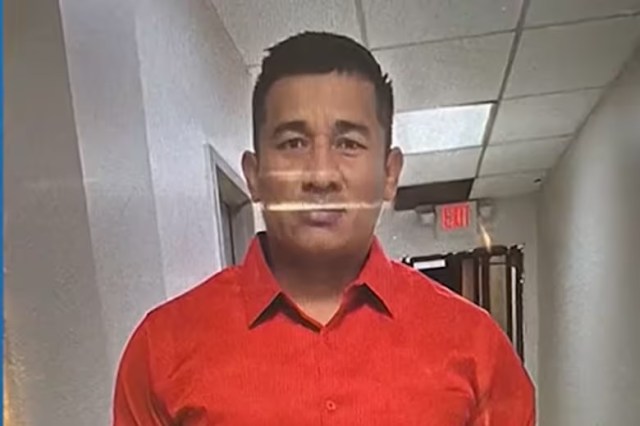
Wilson Velásquez. Photo courtesy Kenia Colindres

Kenia is still going to church, though she balks when asked what time their services are now. She says the congregation is trusting in God and believes nothing more will happen to them. She is technically at risk of deportation herself, but immigration authorities in principle avoid deporting both parents at once and leaving children stranded.

“We’re under God’s covering,” she said. “We pray that the Lord has the last word and does his will, not our will.”

The night after Wilson’s arrest, Kenia was at home, answering questions in Spanish from two reporters. When one of them, independent journalist Mario Guevara, got up to leave, she offered him a stack of fresh tortillas and cheese that her mother had just made. Guevara was starving, but he demurred. He did not want to take bread from this woman who had just lost her breadwinner. Kenia insisted.

She spoke with her husband on Tuesday. He called her from the Stewart Detention Center, 160 miles south of her near Columbus, Georgia. He said ICE planned to deport him, and the family would need to find an attorney who could handle detention cases—an expensive specialty they had no idea how to afford. Wilson also said he planned to preach to fellow detainees the next day. God had told him to have faith and to persevere—and men around Wilson needed to know God like he knew God.

Kenia doesn’t know how, but she believes Wilson will come back to her. She believes, in the end, that all this will be a testimony to God’s goodness, and that because of it “a lot of people will come to the feet of Christ.”

Until then, she is just trying to listen for God. “He knows why things happen,” she said.

“I’m praying that God open doors and touch the hearts of these police. And for Trump—I bless him, right? I pray for him and as a church we bless him.”

Andy Olsen is senior features writer at Christianity Today.

Ideas

You Can’t Hustle Your Way to Holiness

Grinding for God is not a gift of the Spirit, and it just might be making our souls even sicker.

A speed gauge with it pointing to a turtle
Christianity Today January 31, 2025
Illustration by Mallory Rentsch Tlapek / Source Images: Getty

I’m what some would call a competitive person. I hate losing more than I like winning. As I tell my 6-year-old son before his soccer games, “Have fun today. But remember: Winning is more fun.” My wife doesn’t like it, but it’s true.

I like striving for excellence and cultivating discipline. I want to be the best—to out-train, outwork, and outcompete the competition. This drive and aversion to losing has been helpful in almost every area of my life. I mostly like this trait that I have. But in the life of faith, I also think my drive to be the best can make me the spiritually worst.

As I scroll through the social media world, I’ve noticed a new generation of influencers, mostly men, who target men like me. I’m a millennial, and it seems my algorithm wants to capture and capitalize on my attention—selling me on a “rise and grind” mentality that, at first, seems rather winsome.

David Goggins, a retired Navy SEAL known for his ultra-athletic feats, promotes a 75 Hard Challenge that includes a diet, daily exercise, reading, and a daily picture. It’s part discipline, part self-help. The purpose is to commit to something hard and do it every day.

Andrew Huberman, a neuroscientist and professor at Stanford, has a viral podcast where he popularizes research on human performance and mindset growth—everything from when to eat and exercise to the benefits of cold plunges. I’ve seen Andy Elliott, a sales and business coach, calling guys out to take off their shirts and shame their fat away. Or, in another video with less cussing, Elliott tells people to pray, “God, break me of my weaknesses.”

The list could go on: Ryan Pineda on buying real estate and making lots of money. Kris Krohn waking up at 4 a.m. to listen to a book on double speed, cultivate a mind palace, and whisper affirmations to his wife, who works out next to him on the treadmill. Alex Hormozi, who tells us how to breathe better with his famous nose strips—and also be successful with side hustles. Many of these people use faith or Christianity to talk about what they do, too.

It seems like these guys are making a lot of money (and they will charge you a lot of money to help you). They promise that wealth will give you the life you want.  People are paying, and they are paying attention—especially young men.

At their best, this new crop of gurus recognizes the embodied realities of life. You can’t think your way to health. Sometimes men, especially Christian men, need to get out of their heads into the concrete world around them.

These gurus teach that sunlight is good for your health, so get outside. Rhythms are formative, so be sure you develop good ones. Money is valuable, so try to work hard to earn it. They can call young people to a higher standard and infuse aimless young people with purpose and discipline.

Such messages are not absent from the Christian faith, either. “Train yourself to be godly” (1 Tim. 4:7) writes the apostle Paul, using the Greek word that shares a common root with the word gymnasium. And elsewhere, he commands “Work out your salvation” (Phil. 2:12). He also uses warfare language when encouraging the church in Ephesus to put on the armor of God in order to stand against the schemes of the Devil (Eph. 6). Win! Discipline! Fight!

But underneath these modern messages is also a deeper, more distorted desire: There’s always more to do, more to read, more money to make, more experiences to have, more people to beat. Life is set up for the grind. Perform. Do better. Money is power, so get some. And what young people can’t know yet is that this mindset leaves you exhausted.

In Christianity, we call upon a higher standard of grace, which has nothing to do with our effort or striving.

You can’t hack your way to holiness because holiness is slow work—a “long obedience in the same direction” as Eugene Peterson said. Formation is less about productivity and more about stillness. This way of life requires discipline, but it’s a discipline of absence, not performance. The battle cry of formation isn’t necessarily “Fight for the Lord!” but “The Lord will fight for you; you need only to be still” (Ex. 14:14).

These words don’t excite my Western sensibilities. I want to be deserving of what I get.

Deserving is such a powerful American word. It’s fair and just. It’s the standard of success. It’s one reason why the monastic tradition recommends not pursuing a contemplative life until after 40. Before then, we’re too ambitious. Our desire to be productive is too strong to seek the face of God.

A problem with these online mentors is that I don’t know if they consider death. (There’s even a popular Netflix documentary of a guy who thinks he can defeat death.) They love youthfulness because they love life, and youthfulness is synonymous with life in the modern world. Here’s the tough part: We’re all headed toward death. We’re on our way to aging, wrinkling, weakness. And if we don’t get comfortable with the slow deaths now, then we’re going to have a hard time aging later.

In a letter from the Catholic monk Thomas Merton to the Catholic social activist Dorothy Day, he wrote about struggles and being misaligned and what to do about it. The word perseverance comes up—getting through all life’s challenges and still going. Here’s what Merton writes:

Perseverance—yes, more and more one sees that it is the great thing. But there is a thing that must not be overlooked. Perseverance is not hanging on to some course which we have set our mind to, and refusing to let go. It is not even a matter of getting a bulldog grip on the faith and not letting the devil pry us loose from it—though many of the saints made it look that way.

In my competitive nature, I want to hang on. I want to fight. I want to win. I want to be a saint that doesn’t let go of his bulldog grip. In my work life, this mentality is effective. I can work my way to success. But in my soul life, my strength may be my weakness. Trying hard is often not the way to holiness.

Merton goes on:

Really, there is something lacking in such a hope as that. Hope is a greater scandal than we think. I am coming to think that God … loves and helps best those who are so beat and have so much nothing when they come to die that it is almost as if they had persevered in nothing but had gradually lost everything, piece by piece, until there was nothing left but God. Hence perseverance is not hanging on but letting go. That of course is terrible.

The apostle Paul said something similar in 2 Corinthians 11–12. Instead of boasting about his spiritual pedigree and experience to the Corinthian church to prove his legitimacy, he brags about his failures and weaknesses: imprisonments, lashes, danger, hunger, thirst.

The reason for this is that ever since God told Paul, “My grace is sufficient for you, for my power is made perfect in weakness,” Paul made up his mind to “boast all the more gladly about my weaknesses, so that Christ’s power may rest on me” (2 Cor. 12:9).

For Paul, perseverance involved letting go. Formation was submission. His weakness proved God’s power, which means the scandal of perseverance is this: Even in the emptiness, God loves us.

“We are not what we do. We are not what we have. We are not what others think of us,” writes Henri Nouwen. “Coming home is claiming the truth. I am the beloved child of a loving Creator.” We are God’s beloved children no matter how well we hold on to faith, no matter what fitness hacks we accomplish, no matter what level of income we have, and even no matter what routines we establish.

So in those moments when you’re exhausted from the hustle and you feel like you’re at the end of your proverbial rope, God is there, and you are still his beloved. This is a terrifying truth. But it’s also really good news.

Alexander Sosler is associate professor of Bible and ministry at Montreat College and an assisting priest at Redeemer Anglican Church in Asheville, North Carolina. He is the author of A Short Guide to Spiritual Formation: Finding Life in Truth, Goodness, Beauty, and Community, the 2024 winner of Christianity Today’s Christian Living Book of the Year.

News

A Lebanese School Brought Christmas Cheer. Then Came the War.

How the historic evangelical institution served a reeling Shiite community.

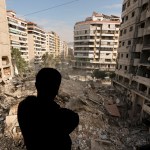
National Evangelical School of Nabatieh (NESN) damaged in the war between Israel and Hezbollah.

National Evangelical School of Nabatieh (NESN) damaged in the war between Israel and Hezbollah.

Christianity Today January 31, 2025
Edits by CT / Source Images: Getty / NESN

The predominantly Shiite city of Nabatieh in southern Lebanon once boasted the nation’s largest Christmas tree, erected to symbolize good relations between local Muslims and the tiny Christian minority of only 20 families.

The local evangelical school—with a 99 percent Shiite student body—had celebrated the holiday for years, and in 2018 it built a 100-foot wrought-iron conic structure topped with a radiant star. (The use of natural firs or pines is uncommon in Lebanon). Several of the hundreds of students, parents, neighbors, and dignitaries in attendance wore Santa hats. Many had trees in their homes and gifts to open on Christmas day.

Earlier that December, Ahmed Kahil, the Hezbollah-affiliated president of the municipality, continued the annual tradition of erecting a smaller tree in the souk, the traditional marketplace and heart of the city. And at both events—alongside Shadi El-Hajjar, the principal of the National Evangelical School of Nabatieh (NESN), heads of other private schools in the city, and various government and religious officials—Kahil wished Christians a Merry Christmas.

Lebanon’s economic crisis made 2018 the last year NESN could afford to erect its massive Yuletide construction. But over the following years, elementary school classrooms still featured Christmas trees, students exchanged secret Santa gifts, and teachers enjoyed the annual holiday dinner. “If Christmas isn’t found in your hearts,” the school reminded, “you won’t find it under a tree.”

NESN celebrating Christmas in 2018 with an 100-foot wrought-iron Christmas tree.National Evangelical School of Nabatieh (NESN)
NESN celebrating Christmas in 2018 with an 100-foot wrought-iron Christmas tree.

But there was no Christmas celebration in Nabatieh last month, after over a year of war between Israel and Hezbollah. On October 8, 2023, the Shiite militia launched rockets into Israel in support of Hamas following its attack that killed 1,200 Israelis and took around 250 hostages. The subsequent daily missile exchange drove tens of thousands from the border regions of both nations.

A year later, most of Nabatieh’s 80,000 residents fled their homes as Israel intensified its military campaign against Hezbollah. On October 16, an Israeli missile killed Kahil and 10 others at the Nabatieh town hall as they coordinated the daily distribution of food and medicine to the 200 families who remained in the largely evacuated city.

Initially, NESN stayed open for its 1,400 students. Located 35 miles south of Beirut and only 7 miles from Israel, the historic evangelical institution won local respect over the years by offering a nonreligious but values-based educational environment that consistently ranked among the top high schools in Lebanon. The September 2024 pager attack delayed the start of the academic year, and the exodus from the city eventually shifted education online. But within a week NESN opened its doors as a shelter for the locally displaced.

Over the course of the war, its staff stood by the Shiite community, including one who rescued Kahil’s colleague after the October 16 strike.

“When you see your hometown destroyed and the damage at the school,” Hajjar said, “you have to ask: Why is this happening to those who are not involved?”

A safe haven

In the early stages of the war, Nabatieh mostly avoided Israeli targeting. But each time a missile hit the surrounding area, the sound of blasts sent students scurrying under their desks. Parents called NESN to take their kids home. Yet after a few weeks, the war became the community’s new normal as Hajjar convinced families the safest place for students was at school.

Outside the school was a different story. On February 14, an Israeli missile killed Mahmoud Amer, a NESN kindergarten student, his mother, and five other civilians in their homes. The IDF targeted the apartment below, where Ali al-Debs, a Hezbollah senior commander, was present at the time. Israel accused Debs of masterminding a cross-border terrorist attack nearly a year earlier that injured a civilian. NESN held two days of mourning for Amer and offered his family a full K-12 scholarship for Hussein, his 3-year-old brother. The school’s annual Ramadan bake sale fundraiser gave them an iPad.

As the war continued, NESN grieved other victims in its community. According to the principal, an Israeli missile killed the sister of a kindergarten teacher living next door to the IDF target, while another attack killed the school nurse’s brother, a medic affiliated with Hezbollah. Four teachers lost their homes, collateral damage in a war that has resulted in $1.5 billion in losses for the city of Nabatieh, according to a World Bank report.

On October 12, Israel bombed the souk and other targets in Nabatieh, including a building next door to NESN. The home belonged to the parents of the local head of the Hezbollah-affiliated Mustafa school network, though no one was there at the time, Hajjar said. The resulting shockwave blew out the school’s windows and knocked doors off their hinges. Inside, it damaged computers, projectors, and air conditioning units. In the parking lot, chunks of cement blocks hit buses and vehicles, covering the asphalt and warping the permanently grounded iron base of the Christmas tree.

About 30 displaced individuals were sheltering at the campus, where they received daily provisions from municipality officials. All but a few left the school after the blast.

Mahmoud Amer, a kindergarten student at NESN, was killed by an Israeli missile.

An acclaimed school

American Presbyterian missionaries founded NESN as a school for girls in 1925, in a building rented in the souk from a Shiite sheikh. Although for decades the missionaries maintained a reading room for the public—alongside community facilities for a chess club and volleyball court—they did not build a church in Nabatieh. Instead, they focused on an educational mission and relocated to the city’s 400-year-old Christian quarter in 1948. But the school always celebrated the birth of Jesus.

“I was shocked to discover how Shiites loved Christmas,” said Hajjar, who became principal in 2013. “Families choose our school because of this spirit, no matter what party they belong to.”

Muslim parents originally accepted Bible teaching at the school, though very few people accepted the faith. Yet many came to appreciate the school’s English language instruction and access to Western culture. In 1972, the school screened Nabatieh’s first public cartoons—Tom and Jerry. Today, the school is owned by the local Presbyterian synod and is part of the Association of Evangelical Schools in Lebanon.

At that time there were 100 Christian families in Nabatieh, but many fled the city along with their Shiite neighbors when Palestinians established control of the south and attacked Israel during Lebanon’s 15-year civil war, which began in 1975. The school persevered but relocated temporarily to the city of Sidon about 20 miles away in 1982 when Israel invaded Lebanon to subdue the militants and occupied Nabatieh for the next three years.

During the civil war, Shiite neighbors intervened when Palestinian militants detained local believers. And when other Shiites moved into deserted Christian homes, they assisted returning Christians in reclaiming their property. But with the rise of Hezbollah, a surge in Islamic ideology compelled NESN to drop its Bible curriculum.

Chamoun Assaf, a PE teacher and one of the 10 percent of the staff who are Christian, said that Palestinians had once detained his father. As an adult, he worked to remove land mines from the civil war and volunteered with the Red Cross. But when he joined NESN, he enjoyed a short walk to school every morning instead. His great-grandfather had moved to Nabatieh in 1890, so Assaf knew his neighbors well.

In October, Israeli missiles hit at least 15 Christian-owned homes in his neighborhood, including one 10 feet from his own, Assaf told CT. Another demolished a 100-year-old building next to the Assumption of Mary Catholic Church hall. Israel issued its first evacuation order for Nabatieh on October 3, but Assaf and his Shiite wife, Lina—there are 17 local mixed marriages, he said—had already left two weeks earlier.

During the war, Israeli spokespeople stated that the missiles targeting Nabatieh struck military installations and arms depots near civilian buildings. Assaf said he does not know if this was true: He has hundreds of friends in the Shiite community, and even their families are unaware if their relatives are militants. He doubts the souk could contain heavy weaponry. As it is a popular area, everyone would have noticed.

He does know Hezbollah was present in the forests surrounding the city. An amateur hunter, Assaf recalled encounters in the woods where suddenly a fighter appeared and asked him to leave. But he gave every assurance that city leaders were not soldiers. He played volleyball with Kahil every week.

“Maybe in some places they are hitting Hezbollah,” Assaf said. “But why did they hit my neighbor?”

A municipal bombing

Assaf’s brother, Nimr, is the municipality’s sole Christian on its 21-person council. Nimr was not at the office on the day of the October 16 bombing, but his colleague, Sadek Ismail, who personally distributed aid to a remaining Christian resident, was just beginning daily operations. The missile killed him instantly.

At the time, Ali Shokor, the NESN high school superintendent and a Shiite, was drinking tea with other members of the al-Talaba emergency services volunteer group directly across the street from city hall. His teammate, Abbas Fahd, had just left to join the relief effort when they were startled by the deafening sound of a plane overhead. Within seconds a missile struck the outskirts of Nabatieh. Items spilled out of cupboards as the workers scurried to an interior room. Almost immediately, the next blast hit the city office building.

Glass had shattered everywhere. As Shokor stepped outside, in a state of shock, he noticed that the explosion had started street fires and broken pipelines, which spurted water onto the streets. His adrenaline kicked in.

Shokor rushed through the municipality’s still-upright gate and found Fahd with council member Khodor Kodeih, injured but alive. They had been standing in the parking lot between an ambulance and distribution vehicle, shielded from the worst of the blast. But the overhead structure had collapsed upon Kodeih, and Shokor helped to free him.

Shokor spent the next day at the government hospital in unofficial mental recovery, trying to regain his nerves while being too afraid to move about or sleep anywhere else. He had founded al-Talaba in 1986 and had refused to evacuate in every war since. This was the first time he thought he might die.

But the second day after the attack, he felt emboldened. Gathering his team, Shokor told them, “We do the same things as everyone else in the municipality. Israel could have killed us at any time—but didn’t. God ordained that we should live and continue to serve. Let’s get back to work.”

As a Muslim, he learned much about the Christian spirit of sacrifice over the years at NESN, but his longstanding motivations—learned as a boy scout—had always been humanitarian.

Obtaining necessities for the 92 families he helped in the city became more difficult after the souk was destroyed. Shokor was still afraid during subsequent trips to Sidon in his American-made GMC ambulance, where he would drop off evacuating families and then return with supplies. Israel had struck such vehicles before, suspecting they carried militants under the cover of charitable work. But with each trip, his confidence grew. Al-Talaba, which means “students” in Arabic, was not registered with any political party. He felt safe.

But so had many who affiliated with Hezbollah, including its share of council members. Kahil, for example, had pledged to stay in Nabatieh when thousands were evacuating. While the Geneva Conventions forbid targeting civilians in international conflicts unless they take a direct part in hostilities, the Red Cross and the United States have different standards for what might allow Israel to go after Hezbollah’s nonfighting members. The European Union, meanwhile, distinguishes between the Shiite movement’s political party and its military wing—which it labels a terrorist organization.

Shokor avoided transporting the wounded to Nabatieh’s Hezbollah-linked hospital. Instead he brought Kodeih to the city’s governmental health center, which then transferred him to the American University of Beirut Medical Center in the capital. Kodeih was unable to move for a month, recovering from fractures in his back, left leg, and pelvis.

A muted Christmas

On November 27, the cease-fire declaration spurred many Hezbollah supporters in Beirut to flood the streets, waving the group’s green-and-yellow flag. Though the terms required the militia to withdraw from Lebanon’s southern region, they had provided stiff resistance to the Israeli ground invasion. Israel’s air attack decimated Hezbollah’s senior leadership and its military arsenal, yet Hezbollah considered simply surviving a victory.

Hollowed-out Nabatieh was far more somber. Though the cease-fire came in time for Christmas, Kodeih told CT the city was not able to commemorate the holiday or put up a tree in the ruined souk. In mid-December, a diminished municipal council elected Kodeih as president. By early January, seeking to encourage hope, officials put up posters declaring that the city would come back more beautiful than before. Reconstruction, however, has been slow.

At times grimacing in pain, Kodeih condemned the “tyrannical raid of the Zionist entity,” using a widespread Arabic rendering to avoid saying the name of Israel.

“The Messiah”—he used a shared designation for Jesus rather than choosing between Christian and Muslim names for him—was weeping over the martyrs. Though the common prophet is “in our hearts” and intercedes for all, he said it was not appropriate for the municipality to celebrate when so many in Nabatieh are mourning. His assistant, equally solemn, wore a head covering with a pendant of Kahil draped around her neck.

Kodeih’s remarks were measured and monotone. Christmas would return next year. Muslims and Christians were one people. NESN was a respected school. And there were no militants, he said, present in Nabatieh. But he smiled at the mention of his children. The family had a tree in his home and planned to exchange presents.

Elsewhere in the city, the Christmas spirit suffered. For years, a local carpenter had feted the Greek Catholic sanctuary with an ornate crèche, drawing admirers from Christian villages around Nabatieh. Muslims would come also, seeking divine intercession then and throughout the year. But this December there was no display. The carpenter had evacuated Nabatieh to safety.

Shokor had a tree in his home but also did not celebrate the holiday this year. His father was a Shiite cleric who loved Christmas, giving gifts and placing figurines of Joseph, Mary, and baby Jesus in the living area. Muslims generally do not portray prophets in visual form but do believe in the virgin birth. Shokor followed his father’s traditions, including at his family-owned restaurant. He had welcomed customers the previous Christmas despite the war, but business was scant. He would wait and see if the cease-fire held before opening again.

Shokor did propose seasonal decorating at NESN as a statement of normalcy. The high school had reopened for some in-person classes a week before Christmas. But elementary students did not return until early January, as repairs were still ongoing. Teachers were also distracted, having to both prepare lessons and scramble to fix their own damaged homes.

Back in 2023, Hajjar, NESN’s principal, had been defiant. His holiday message told students the Christmas spirit was contrary to war and terror, restating the reasons for an evangelical school to exist in a Shiite city. The message of love and compassion builds bridges between communities, he said, in a Lebanon often torn by sectarian division.

But during the recent holiday season, he was depressed, taking medication to sleep at night and finding comfort in his three dogs. He feared the school might close if parents were unable to pay their fees. He was angry and frustrated—but he ended each day with a prayer of thanks. From Christian faith, he had forgiven those who attacked his beloved city.

“I believe God will hear this prayer,” Hajjar said, “and put it on his agenda.”

Theology

Is Feng Shui a Harmless Practice or Spiritual Danger?

Asian Christian leaders evaluate whether the ancient Chinese philosophy is neutral or has dark otherworldly impacts.

A stylized image of different types of furniture.
Christianity Today January 31, 2025
Illustration by Elizabeth Kaye / Source Images: Pexels

Property prices may often fluctuate, but one contributing factor remains constant in Lim Lian Hong’s eyes: the influence of feng shui

For 40 years, Lim has worked as a property valuer in Malaysia. Whenever he speaks to Chinese clients, one of the foremost things on their minds is whether their future homes have good qi, or energy. 

Also known as Chinese geomancy, the concept of feng shui originated in China and has its roots in Daoism (Taoism). Feng means “wind” and shui means “water,” and the term connotes the belief that arranging furniture in a particular way at home, choosing the placement of a home’s entrances and exits, and creating an ideal external orientation can promote a good flow of qi. 

Lim’s customers are often looking for addresses with the lucky number 8 or a location on the eighth floor of an apartment building; the Mandarin pronunciation of eight, ba, sounds similar to fa, the Chinese word that describes accruing wealth. 

Potential homeowners or the feng shui masters they hire may also study a house’s interior layout, examining a bagua map to evaluate the energy levels of a home. Shaped as a square or rectangle, each of the nine areas of analysis on the map represents a particular aspect of a person’s life, like family, finances, fame, relationships, or career. When overlaid onto the floor plan, the bagua map can indicate areas of improvement that increase the qi within a space. 

Lim, who worships at Full Gospel Assembly in the city of Petaling Jaya, has had firsthand experience with how this philosophy is incorporated into everyday life. Once, his office manager called renovators in to change the position of the door because he felt this would improve his fortunes. When a new office space opened, his boss told him not to arrive at a certain time to prevent bad luck from entering. 

In many parts of Asia, the Lunar New Year is a popular time for people to implement feng shui–related advice in hopes of enjoying greater prosperity. For example, this Year of the Snake, one Hong Kong–based feng shui consultant recommends people pay more attention to the west corner of their homes to “enhance” career and educational growth and use copper coins to minimize bad energy. 

Other common ways to achieve good feng shui year-round include placing a water feature in a home’s entrance to attract good fortune or hanging a mirror in the dining room to “expand” the family’s capacity for affluence. 

A person can experience the benefits of feng shui—most often in the form of material gain or career advancement—when he or she balances yin and yang energy well, blocking negative qi and allowing positive qi to generate. 

Most of the leaders CT interviewed say that Christians in Asia have adopted some feng shui principles in the way their homes are designed or arranged, whether consciously or otherwise. But they also warned against Christians utilizing feng shui without careful consideration, because the concept contains spiritual beliefs contrary to Christianity. 

In China, the government branded feng shui as superstition and persecuted feng shui masters during the Cultural Revolution. Tolerance toward the practice then grew in the ’80s, and nearly half of Chinese adults now believe in feng shui according to a Pew Research Center report from 2023.

In Indonesia, the major newspaper Kompas regularly features articles on feng shui in its lifestyle and trend columns. In Singapore and Malaysia, businessmen and property agents regularly consult feng shui masters in hopes that the properties they buy or sell will bring them success. In the Philippines, feng shui masters issue fortune predictions every Lunar New Year and sell charms or objects to improve one’s well-being and riches.  

Iconic city landmarks, such as Singapore’s Fountain of Wealth, were also built with this theory in mind. The circular fountain’s jets of water intentionally flow inward to represent the riches that are poured into a person’s life. (Outside of Asia, feng shui has also influenced the design of iconic buildings, like the Louvre in Paris and the Sydney opera house.) 

Filipino Chinese Christians are attracted to feng shui because they are pragmatic, said Stewart Young, a retired history professor in the Philippines. They often have a mindset of “whatever works. … It doesn’t hurt you to try,” said Young. 


The muddling of boundaries between the practical and the spiritual may make it hard for Christians to discern whether they are veering into feng shui territory or not. Some believers might think feng shui is harmless or neutral since it often suggests common-sense tweaks to improve a home’s overall appeal, said Kwa Kiem-Kiok, associate professor at Singapore Bible College. 

For instance, people may install water features in their homes not because water can counter evil forces but because they like “the restful sound of tinkling water,” Kwa said. 

A feng shui master may also advise a person to change the orientation of some furniture to face a particular direction to “bring you luck and quicker promotion,” said a house church pastor in Shanghai who is not using his name for security reasons.

This might very well boost a person’s job prospects, possibly because that person receives more sunlight and gets better sleep. But the problem is that feng shui imbues certain furniture arrangements with a “mystic power” to engender a positive impact, he said. 

Some who were once steeped in feng shui beliefs have rescinded them after accepting Christ and recognizing darker spiritual forces at play behind this philosophy. 

In his 20s, Yuen Po Seng, a pastor at Every Nation Church Gateway in Kuala Lumpur, Malaysia, started practicing feng shui to help him advance in his life and career, he shared in a 2021 sermon. 

But immersing himself in feng shui only made Yuen feel more burdened and stressed. He kept consulting a feng shui master before making big life decisions and constantly wondered if it was a favorable time to do something. 

When Yuen gave his life to Jesus, he decided to stop practicing feng shui. “I just felt that God has revealed to me that I need not have to struggle in life on my own,” he said. 

Feng shui is a pseudoscience that relies on spiritual forces, argues Daniel Tong, the Singaporean author of A Biblical Approach to Feng Shui and Divination

Early feng shui arose from observing natural science: the geographical landscape, the moon’s gravitational impact, and the rising and setting sun. Today, it draws primarily from ancient Chinese philosophies like qi “rather than scientific observations and facts, resulting in practices more akin to the supernatural,” Tong told CT.  

Feng shui also privileges self-autonomy rather than reliance on God. “It is humanity seeking to control [and] manipulate its own life and future,” Tong said. 

Harnessing qi through attaining good feng shui implies a dependence on our physical environments for spiritual well-being, said Amos Winarto Oei, the public theology lecturer at Sekolah Tinggi Teologi Aletheia, a seminary in Lawang, Indonesia. This clashes with the Christian understanding of God’s sovereignty and provision, he said. 

Oei grew up in an Indonesian Chinese family and experienced how feng shui was deeply embedded in certain cultural customs. At Lunar New Year, he was prohibited from throwing anything outside, as doing so would supposedly dispose of any fortune in the house. The kitchen in his home was always situated right at the back of the property because his family believed this would prevent any wealth from leaving his home. 

But Bible verses like Isaiah 45:7 (ESV), where God declares that he makes well-being and creates calamity, reflecting God’s control over all aspects of life, challenges the belief that physical arrangements can alter one’s fate, Oei said. 

And when envisioning what their homes can look like, believers can consider imagining them as holy spaces instead. 

In Deuteronomy 6:6–9, God commands Israel to write his commandments on “the doorframes of your houses and on your gates.” During Lunar New Year, some believers’ homes may display spring couplets with Christian themes on their doorposts, Kwa said, bearing phrases like “The Lord watches all those who enter this place.” 

Kwa’s pastor husband is also regularly asked to perform house blessings for new homeowners. One of the main reasons for doing so is to perform a spiritual cleanse, as a home may have been previously owned by someone who worshiped other gods. Other Singaporean pastors suggest doing office blessings as a way to counter feng shui practices in the workplace. 

In John 14:2, Jesus describes how his Father’s house has many rooms as an assurance of God’s abundant, everlasting love and presence. Feng shui principles that extol a clean and orderly home may contribute to a welcoming environment, but a believer’s ultimate focus is to create a space that reflects God’s love and grace, Oei said, rather than relying on superstitions or spiritual energies.

Young, the retired Filipino professor, lived in a home situated at a T-junction in New Jersey many years ago. His family’s Chinese friends would tell them it was one of the least auspicious places to live in. According to feng shui, the flow of qi gets crossed and confused at a junction and may cause people to face indecision and feel stuck in life. 

Young and his family responded by quoting Scripture: “The one who is in you is greater than the one who is in the world” (1 John 4:4). They prayed over their house and dedicated it to the Lord. They invited church friends over regularly and held Bible studies and gatherings at Thanksgiving and Christmas. Some people said that they felt “so peaceful” every time they visited. 

Lim, the Malaysian property valuer, continues to encounter feng shui concepts daily in his work. While he believes that Christians should not indulge in feng shui or consult its practitioners to “bless” their property, he thinks it is “foolish” for believers in Asia to be ignorant of the concept, especially if they want to sell their homes at a good price or increase their value.

“The Bible says we must have wisdom,”  Lim said. “So we use wisdom to govern our lives.”

News

Shaky Israel-Hamas Cease-Fire Deal Worries Families of Hostages

Meanwhile, a pastor near Gaza looks to an uncertain future.

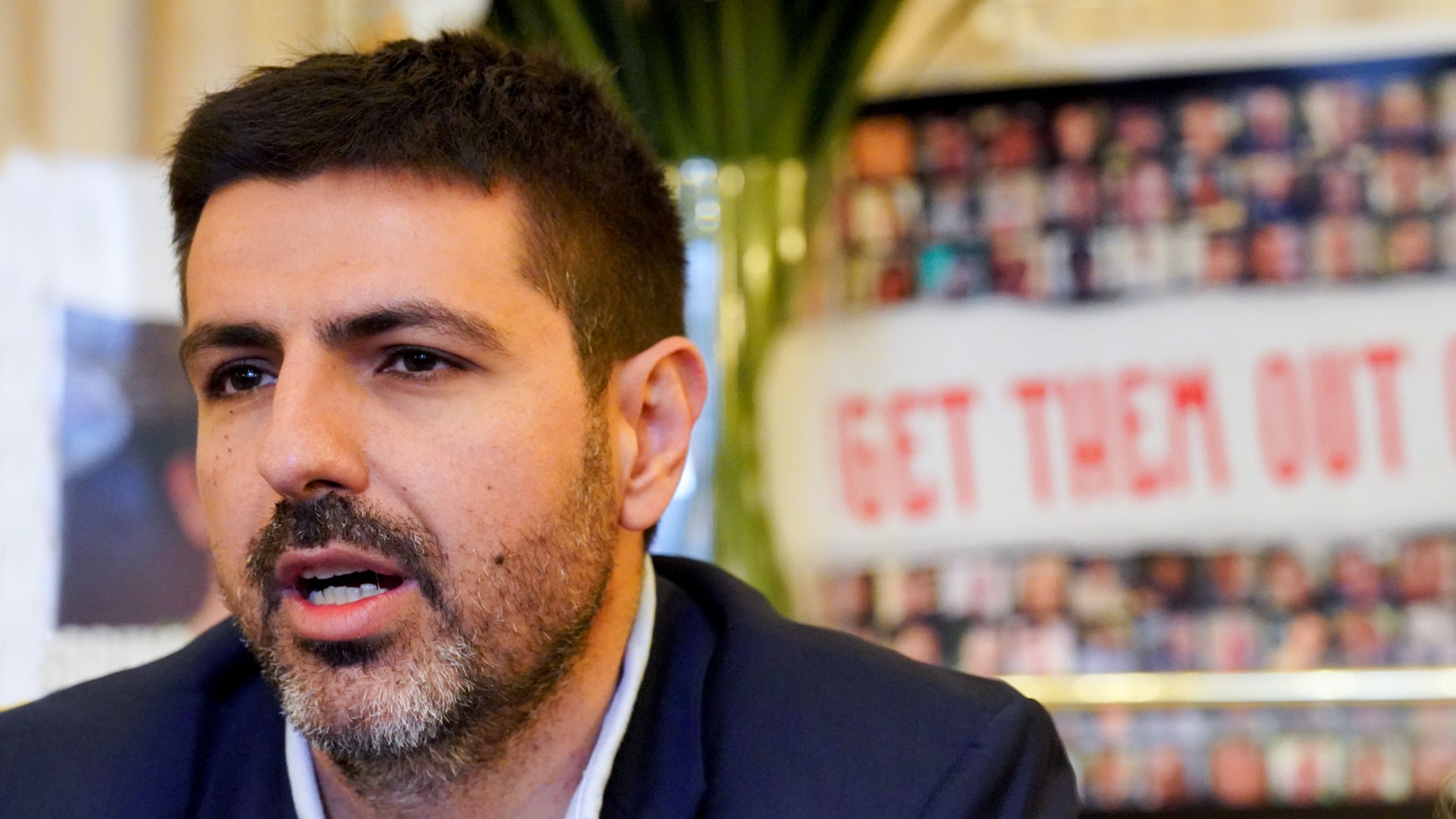
Michael Levy, whose brother was taken hostage in Gaza, speaks during a press conference with family members of seven hostages at the Embassy of Israel in London.

Michael Levy, whose brother was taken hostage in Gaza, speaks during a press conference with family members of seven hostages at the Embassy of Israel in London.

Christianity Today January 31, 2025
Jonathan Brady / PA Images / Getty

On October 7, 2023, Michael Levy received devastating news: Hamas had murdered his sister-in-law and taken his brother hostage in Gaza, leaving Levy’s young nephew without his parents. Now, after nearly 16 months of lobbying for the release of his brother and the rest of the 251 Israeli hostages, Levy is allowing himself to feel for the first time.

His brother, Or, is one of the hostages scheduled for release during phase one of the cease-fire deal, implemented on January 19.

But his brother is slated to return home during the latter end of the 46-day truce, and Levy is concerned Hamas will delay or change the terms of the deals, unraveling the cease-fire. “That’s part of what they do,” Levy told CT. “It’s emotional terrorism.”

Hamas postponed by more than 24 hours its posting of names for phase one—an agonizing wait for family members of hostages. And during the second exchange on January 25, Hamas initially sent home only three of the four Israeli women on its list, causing Israel to push pause on the return of Palestinians to their largely destroyed communities in northern Gaza—evidence of the cease-fire’s fragility.

On Thursday, the third exchange turned chaotic as Palestinian mobs chanting support for Hamas formed around the freed hostages. Hamas freed eight Israeli and Thai hostages—including the missing female hostage—yet the Israeli government announced it would delay the release of 110 Palestinian prisoners until cease-fire mediators could guarantee safe passage for the released hostages. Later in the day, Israel said it received reassurances and released the prisoners.

Another Hamas surprise: Last week, it notified Israel that 8 of the 33 hostages scheduled for a phase one release are dead, complicating the hostages-for-prisoners arrangement which requires Israel to release between 30 and 50 Palestinian security prisoners—some serving life sentences—for each live hostage.

Thus far, Levy has reason to believe his brother is still alive.

This correspondent first spoke with Levy in December 2023 while visiting Tel Aviv’s Hostages Square, where thousands gather weekly. His face was somber as he navigated the crowds with a T-shirt and sign displaying his brother’s photo.

Since then, Levy has appeared before 15 governing bodies, including the United Nations and Congress. His primary message: Put more pressure on Qatar, Iran, and Egypt, countries with the ability to force Hamas into concessions. But cease-fire talks repeatedly stalled until recently.

“When Trump came to office and said he is not playing games, we had a deal,” Levy said. “If that would have happened months ago, we could have saved so many lives.”

The cease-fire is also a beacon of hope for Palestinians who have suffered immensely during Israel’s 15-month campaign to eradicate Hamas. The Palestinian civilian death toll is estimated to be in the tens of thousands, with more than 80 percent of the population internally displaced.

But Hamas still wields significant power in Gaza, and that’s not good for Palestinians or Israelis, said Michael Beener, pastor of a Messianic congregation in Sderot, a city less than a mile from Gaza.

“We want our hostages home,” he said. “But from another side, there’s a kind of uncertainty in our city.”

The agreement requires Israel to withdraw its troops to a small corridor bordering Gaza, creating an opportunity for Hamas to regroup and rearm.

Since 2007, Hamas has fired tens of thousands of rockets into the city of 30,000 and proclaimed Sderot the “city of death”—prompting Beener to name his congregation City of Life.

Sderot is frequently dubbed “the bomb shelter capital of the world,” but the city’s safeguards weren’t enough to save some residents from Hamas’s brutal October 7 slaughter—a terrifying experience for the Beener family. “The terrorists were under our window, and we could hear them killing people on the streets,” Beener said.

He wondered how Israel and the international community plan to root out the remaining Hamas strongholds after all the hostages are released. “We pray for the Gazans, and we know that they are people,” Beener said. “But the terrorist system is a problem for everyone.”

News

Trump Nixes Federal Funds for Youth Gender Transitions

Evangelical ethicists and advocates say the administration’s moves are “desperately needed” to combat the growing acceptance of trans identity and treatments at younger ages.

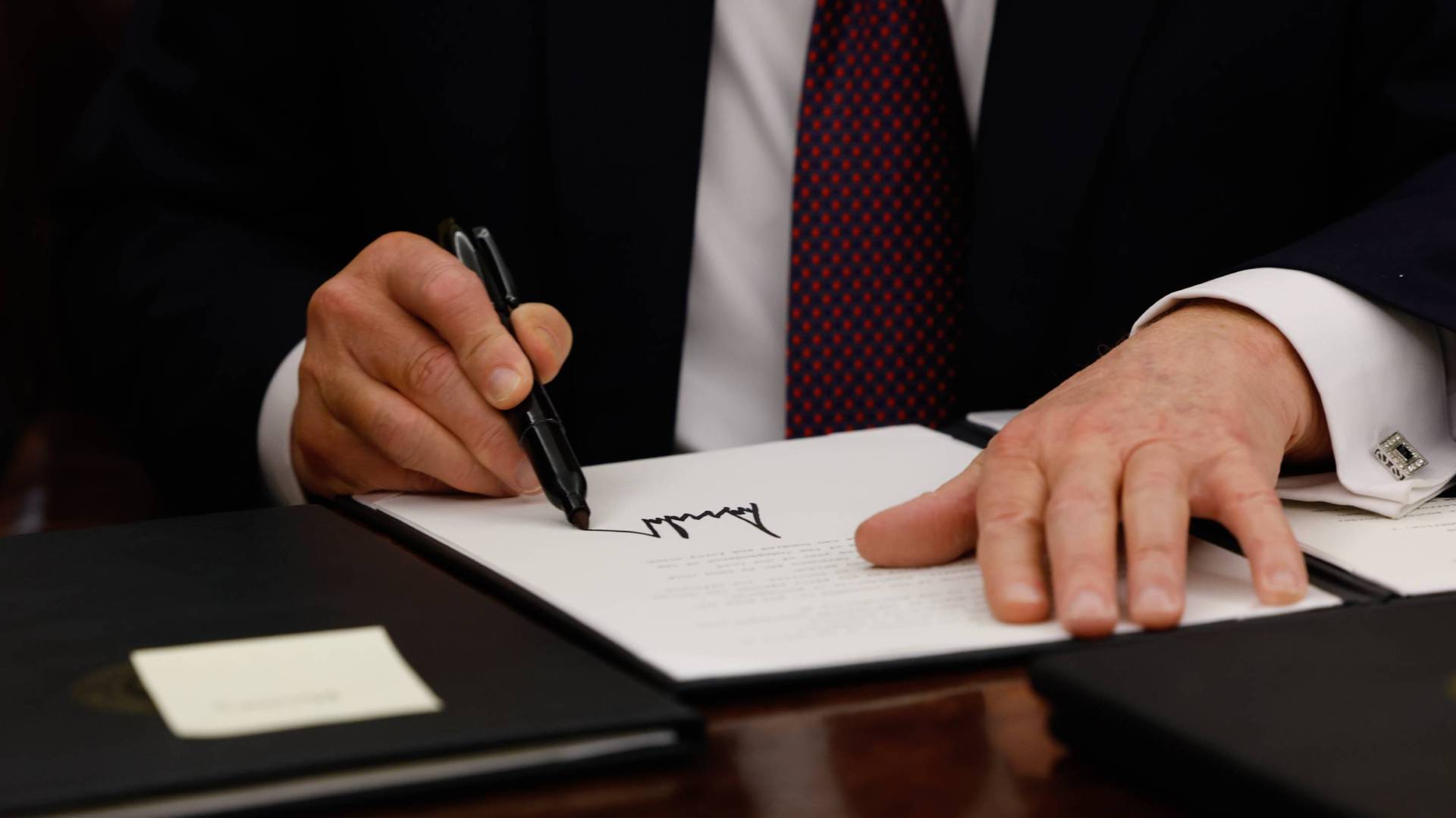
Trump signs executive order with a marker
Christianity Today January 30, 2025
Anna Moneymaker / Getty Images

Evangelicals who have worried about the uptick in gender-identity confusion among youth applauded President Donald Trump’s executive order banning federal funding of gender transitions for minors as a “refreshing return to sanity.”

The January 28 executive order “protecting children from chemical and surgical mutilation” stated that the United States “will not fund, sponsor, promote, assist, or support the so-called ‘transition’ of a child from one sex to another, and it will rigorously enforce all laws that prohibit or limit these destructive and life-altering procedures.”

“The federal government is showing its commitment to protecting children from radical gender ideology that has devastated countless lives,” said Matt Sharp, senior counsel at the conservative legal group Alliance Defending Freedom (ADF). “Not a single dollar should be spent to facilitate or push vulnerable kids towards experimental, often irreversible, drugs and surgeries.”

The order will restrict federal research and education grants to institutions that provide gender-transition treatments to minors. It also will cut government funding of such treatments for minors through Medicaid, military insurance plans, and other forms of federal health insurance.

Previously, the Biden administration had opposed surgical interventions for minors but still backed what it called “gender affirming care” in other forms, such as puberty blockers and hormone therapy.

After signing the order, Trump posted on Truth Social that such treatments had “already ruined far too many precious lives.”

In the executive order, the Department of Justice is directed to “prioritize enforcement of protections against female genital mutilation” and combat “deception of consumers” about “long-term side effects of chemical and surgical mutilation.”

Evangelical ethicists praised the order, including Ryan Anderson, president of the conservative Ethics and Public Policy Center.

Anderson, the author of When Harry Became Sally, has argued that it violates medical ethics to tell children they are not their biological sex and to use treatments to disrupt their natural development. He blamed ideology for driving medical decisions that he said remain experimental and, in children, cannot be reversed. 

The order also drew affirmation from the Southern Baptist Convention’s Ethics & Religious Liberty Commission (ERLC).

Trump’s action “is desperately needed in an era when culture is consumed by the fiction of gender fluidity,” ERLC president Brent Leatherwood said. “So-called ‘gender transition’ procedures, which were funded and celebrated by the Biden administration, go against God’s design for gender and sexuality and perpetrate permanent, detrimental harms against children, both physically and psychologically.”

Trump repeatedly emphasized transgender issues during his campaign, referring to “left-wing gender insanity” as child abuse and promising executive orders instructing federal agencies to stop all programs affirming the notion of gender transitions.

He acted quickly once in office, bringing up a federal only-two-genders policy in his inaugural address. He signed an executive order the same day defining male and female as biological realities determined at conception and ordering federal agencies to maintain that definition of gender.

Trump also pledged to ask Congress for “a law prohibiting child sexual mutilation in all 50 states.”

Individual states have enacted bans on procedures for minors and faced legal pushback; the US Supreme Court heard oral arguments last month in a dispute over a Tennessee law that bans youth from receiving medical treatment to facilitate transitioning.

In Congress, Missouri Republican senator Josh Hawley introduced legislation January 29 that would allow individuals harmed by gender-transition procedures as minors to sue people and institutions that participated in the transitions. The US House of Representatives passed a bill earlier this month that would ban transgender athletes from competing in women’s sports at federally funded schools.

Some observers have wondered whether political actions opposing gender transitions—especially for minors—could signal a shifting cultural consensus on the issue. ADF’s Sharp thinks so.

“Instead of being a global outlier,” Sharp said, “America will now ‘follow the science,’ like the U.K. and other European countries have done, to ensure that we are identifying safe and effective ways to help kids who experience distress over their biological sex.”

Norway, Finland, Sweden, and the United Kingdom are among European nations that have backtracked on policies regarding treatments for children who struggle with gender identity. The Norwegian government’s Healthcare Investigation Board recommended in 2023 that adolescent hormone therapy and gender-reassignment surgery be labeled as experimental and not supported by sufficient medical evidence. Finnish and Swedish health authorities made similar recommendations while the UK put gender-dysphoria treatments for minors on hold during a review.

LGBTQ-affirming Christians and other advocates have opposed the Trump administration’s moves, saying they discriminate and target transgender Americans. But conservative evangelicals say more work remains to be done.

According to the Colorado Springs–based Family Policy Alliance, only 23 states have passed adequate laws to protect children from transgender medical treatments.

“We thank President Trump for keeping his promise to lead in protecting children at the federal level,” said Family Policy Alliance president Craig DeRoche. At the same time, “we still need members of Congress and legislators in the other 27 states to make these protections permanent.”

Ideas

A Discipleship of Discomfort

President & CEO

Wellness is temporary, and comfort is fleeting. But the peace that comes from following Jesus through sacrifice will last.

A man sleeping with a rock for a pillow
Christianity Today January 30, 2025
Illustration by Mallory Rentsch Tlapek / Source Images: Getty, WikiMedia Commons

“Everyone says we should just get married, but we’re comfortable as we are now. Besides, we’re not even close to being ready for kids yet.” 

The woman who told me this is 27. She’s a Christian and was raised in a nurturing home, and we were talking about her plans after grad school with her longtime boyfriend. They’ve been together for more than six years—practically live together. She knows that sleeping together before marriage is not what God wants for her, but she also knows marriage and children take work. It’s more than she thinks she can handle.

This conversation was not the first time I’d heard a Zoomer or younger millennial express this kind of concern. Marriage, kids, and even other relationships strike them as too much of a challenge.

They enjoy friendships—but only if they don’t require too much effort or sacrifice. Marriage is palatable—but only if it adds to their happiness and comfort. And children? Well, everyone knows having kids is taxing on every part of your life, so they’ll put that off as long as they can. They’ve watched other generations suffer and have decided to choose comfort over hardship and personal well-being over communal sacrifice. 

But younger generations aren’t the only ones shunning discomfort. It seems many people of every generation—and not only in America—have come to believe that ease, comfort, and well-being are (or should be) the default of daily life.

Entire markets are responding to this trend. The global wellness industry reached nearly $7 trillion in 2024 and is expected to hit $9 trillion by 2028, almost double what it was as recently as 2019. 

This rising aversion to discomfort has even affected the clothes we wear: Comfort clothing and loungewear continue to grow in popularity. We’re buying what feels good over what looks nice. Companies that specialize in athleisure have begun to focus on multifunctional designs that allow you to go from work to the gym to a night out without needing to change. Gone are the days of having to unbutton a rigid waistband if you overeat. Soft joggers are acceptable at church, at dinner, or even at work. 

Much of this may seem spiritually and morally neutral—does God really care that you like to wear joggers? But our inundation with creature comforts and self-care contributes to a wider shunning of all kinds of dis-ease. It is increasingly normal to shun the complexities of relationships that might push us beyond our cozy caves. 

And caves they are, as the desire for comfort coincides with increasing social isolation. Obsessed by our own comfort zones, we increasingly repel anything and anyone who might make life more difficult. Marriage requires perseverance. Kids are costly. And friendships ask for sacrifice. Why not just get a dog?

The problem with this way of thinking isn’t simply that it keeps us from having meaningful relationships or getting married or having children—though it can do all that. The deeper problem is that this way of living stands at odds with the way of the gospel. In a world that caters to our ease and happy feelings, the calling of Christ can feel like an invitation to scrape sandpaper on your skin or to sludge around with water in your socks. 

And following Jesus is often difficult. You cannot live as if comfort is king and simultaneously declare that Jesus is Lord.

Jesus says, “Whoever wants to be my disciple must deny themselves and take up their cross and follow me” (Matt. 16:24). This is not a call to take up a pillow and comforter and lay down in a warm space in the kingdom. On the contrary, it is a call to willingly sacrifice your comfort, your personal thriving, and your sense of ease for the sake of God’s call. 

But while physical wellness is temporary and comfort is fleeting, the peace that comes from following Jesus through sacrifice will last. In fact, it is the only kind that will last.

As church leaders, we do the world a disservice with altar calls that invite new believers into an easier life with Jesus and discipleship programs that promise your best life now with Christ. The message we must convey is that a life with Christ requires that we give up everything to follow him.

But herein lies our joy: What we lose in the world is nothing compared to what we gain with Christ. What we sacrifice of ourselves for Jesus pales in comparison to what we gain in fellowship with him. In an age consumed by temporary comforts, we carry the assurance of eternal peace that stems from union with and obedience to Christ as Lord and Savior.

What might it look like for you to trade in worldly wellness for a deeper—if more demanding—spiritual peace in union with Christ? What sacrifices is God calling you to make to secure the consolation that comes from being in his will? There’s nothing wrong with enjoying comfort or wanting wellness. But our comfort, well-being, and ease cannot come at the expense of the sacrificial call of the gospel.

Nicole Massie Martin is chief operating officer at Christianity Today.

News

In a Bible Publishing Boom, All Scripture Is Profitable

Expanded offerings and new audiences are driving double-digit sales increases.

A shopping cart full of Bibles.
Christianity Today January 30, 2025
Illustration by Elizabeth Kaye / Source Images: Getty

There’s no such thing as too many Bibles for Tim Wildsmith.

The colorful editions are neatly stacked on shelves in the background of his YouTube videos, where Wildsmith continues to review new editions to add to his collection. He has premium Bibles with thick paper, leather covers, and stitching; study Bibles with special commentaries and scholarly features; and even the God Bless The USA Bible released by Lee Greenwood and backed by President Donald Trump.

More of Wildsmith’s followers are loading up on new Bibles too. Last year, Wildsmith’s viewers purchased 8,000 Bibles through his affiliated links—twice as many as in 2023.

“There’s higher levels of anxiety and doubt, and so people often think, I’m going to find a Bible,” Wildsmith said. “People are looking for a sense of peace.”

The Nashville pastor and author isn’t alone in seeing a drastic increase in Bible sales. According to data from the book tracker Circana Bookscan, Bible sales increased by 22 percent in the US through the end of October 2024 compared to the year before, while total US print book sales only increased by less than 1 percent in that same time frame.

A whopping 13.7 million copies were sold in the first 10 months of the year, compared to 9.7 million sold in 2019, according to Circana Bookscan. The development has left the industry surprised, delighted, and perplexed. 

For years, Christian publishers have expanded offerings for savvy Bible readers, showcasing the value of print editions as Scripture becomes more accessible in digital formats. Yet Bible makers aren’t sure what it is about this moment that is driving demand.

“We’re very aware that we’re not causing this trend,” said John Kramp, senior vice president of the Bible division at HarperCollins Christian Publishing, which includes Zondervan and Thomas Nelson. “We’ve been publishing Bibles for a long time, and what we’re experiencing now is really exceptional and encouraging. It’s across the industry.” 

At Lifeway Christian Resources, the Southern Baptist publisher that prints the Christian Standard Bible (CSB), along with the King James Version (KJV) and the New American Standard Bible (NASB), Bible sales were up 30 percent in 2024 compared to the previous year, according to Andy McLean, publisher for Bibles and reference at Lifeway.

No single Bible or translation is fueling the surge in sales. Demand has increased for pricier Bibles, Bibles for women and kids, study Bibles, and many other types, Kramp said. Zondervan, a division of HarperCollins Christian, prints the New International Version (NIV), and another division, Thomas Nelson, prints the KJV and the New King James Version (NKJV), among others.

Amy Simpson, a publisher in the Bible division for Tyndale House Publishers, said that Tyndale has seen an increase in sales for Bibles across multiple languages, including English, Spanish, and Portuguese. 

Some of the recent sales uptick comes from regular Bible readers purchasing more Bibles—wanting to add a journaling Bible, a wide-margin Bible, or a large-print Bible to their study repertoire—but Bible experts also cite a growing interest from a new group of people who are curious, anxious, and eager to learn.

“People who are not necessarily churchgoers or even professing Christians are interested in the Bible in particular as a result of their sense that contemporary society has an emptiness to it,” said J. Mark Bertrand, who runs a Bible design blog. “The ideology that has been prevalent feels like it’s teetering, and an increasing number of people are willing to say that.”

Young people, in particular, appear to be buying Bibles in greater numbers compared to other age groups. According to the American Bible Society, young adults are more likely than any other age group to say that they’ve increased their Bible reading in the past year: 21 percent of Gen Z respondents said their Bible use had increased, compared to 16 percent of Boomers and 11 percent of millennials. 

“One of the things we do know from the data is that when people experience disruptions in their life, they are more open to exploring their faith and exploring the Bible,” said John Farquhar Plake, the chief innovation officer with the American Bible Society. “When people are facing something they’ve never faced before, they often ask the question ‘Does the Bible have any wisdom for me?’”

Buying a Bible in a new season or as a start to the New Year can be aspirational, as the American Bible Society has found in its research on Bible engagement: Americans are less likely to read the Bible than in past years, but most say they wish they did. “People want to think they’ve been reading the Bible more, whether or not they really have been,” the American Bible Society’s report stated.  

According to its 2024 report, more than half of Americans wish they read the Bible more. Even among people who interacted with the Bible less than three times a year, more than a third said they wished they read Scripture more. 

Somewhat paradoxically, the rise in sales of print Bibles comes at a time when digital access to the Bible has never been easier or more ubiquitous. With a simple tap on an iPhone or a quick Google search, anyone can scroll through the Gospel of John or follow a digital Bible-reading plan.  

And yet people continue to be drawn to print versions of Scripture. Wildsmith, the Bible review YouTuber, said the demand for print Bibles may stem from people’s digital fatigue, their desire to escape the hyperconnected, scattered nature of online life. 

“Everything we do is online now, and I know that I get distracted if I read the Bible on my phone,” he said. “There’s something helpful about having a physical copy of the Bible where you cannot be online. You can just be immersed in the text and the book itself.” 

People are also drawn to print Bibles over digital versions because the former can be customized with beautiful, luxurious designs, Wildsmith said. He has seen an increase in demand for premium Bibles that can cost hundreds of dollars, ones with features such as higher-quality paper, goat-skin covers, raised spine hubs, and perimeter stitches. 

“The Bible I’m going to put in the hands of a friend who wants to read the Bible is not a cheap paperback, glued binding,” Bertrand said. “It’s going to be an object that they won’t easily get rid of.”

Publishers agree that the trend of rising sales will likely continue in 2025. Many of them plan to launch new Bible versions this year, such as a new daily devotional Bible for moms or a color-coded study Bible that uses colors to highlight Bible verses that focus on key scriptural themes. 

“We’re in a golden age of Bible publishing,” Bertrand said. “It’s never been as good as it is.” 

Culture

Bryan Johnson Is Going to Die

Staff Editor

Stewarding our bodies is different from trying to control them.

Bryan Johnson exercising while eating cereal in the documentary, Don't Die

Bryan Johnson in the documentary, Don't Die: The Man Who Wants to Live Forever.

Christianity Today January 30, 2025
Netflix

Bryan Johnson isn’t the first person to fantasize about living forever, and he won’t be the last. The tech guru turned wellness “expert” has made headlines over the past two years for reportedly spending $2 million annually on his health. More specifically, he is trying not to die.

In the appropriately named documentary Don’t Die, which Netflix released earlier this month, Johnson chronicles his obsession with anti-aging data. Each day, he measures his body weight, fat percentage, muscle mass, and hydration levels. He claims to carefully source and test his food and tracks every calorie he consumes. His regimen, written by an algorithm, includes taking 50 pills a day and eating all his meals before noon.

Johnson described his project—not only a personal lifestyle but also a marketable collection of capsules and powders—to journalist Bari Weiss as a provocative experiment: “Can I slow down my speed of aging to the greatest extent of any human on the planet? And can I then eliminate all the sources of death? Can I become the most Don’t-Die person in human history?”

While he has a devoted following at a time when alternative medicine and the longevity movement have become more mainstream, Johnson is still an outlier. He allegedly broke up with his fiancée after she was diagnosed with cancer, and he siphoned blood plasma from his minor son in order to fight the aging process. (Spoiler: It didn’t work.)

Fundamentally, Johnson is an entrepreneur. He found his next profitable social experiment and uses his immense wealth and privilege to spend 24/7 on an existence that makes the rest of us roll our eyes. But even if most don’t buy what he’s selling, Johnson seems to be a true believer. He makes sure he’s in bed at 8:30 p.m. nightly. He evangelizes to others: You, too, can prolong your life—or at least improve it. You can be in control of your future.

“We all know what it feels like after a phenomenal night’s sleep, after exercising really well,” he told Weiss. “Like you just feel lucid and clear and energetic and all the amazing things about consciousness.”

I don’t blame Johnson for some of his healthy habits. My husband and I have attempted to track our biodata—from macronutrients and sleep quality to stress and menstrual cycles—over the past few years by using wristbands similar to the ones Johnson uses. We also take some of the same supplements: magnesium (for sleep and recovery), collagen (for hair and skin health), and L-theanine (sleep and mood). We’ve stopped short of a plant-based diet and red-light therapy.

I find that physical stewardship of our bodies is a spiritual discipline. A good night’s sleep, when possible, can help us be better employees, parents, and church members. Exercise and nutrition can help us serve the Lord into our old age, if he wills. Both our souls and our bodies are under the lordship of Christ and should be oriented toward serving him.

The apostle Paul gets at this when he writes in both a metaphorical and a literal sense about the Christian life: “Now everyone who competes exercises self-control in everything. They do it to receive a perishable crown, but we an imperishable crown. … I discipline my body and bring it under strict control, so that after preaching to others, I myself will not be disqualified” (1 Cor. 9:25, 27, CSB).

Paul reminds us that while our physicality should not be rejected in a gnostic sense, it must also at times be disciplined. Bodies, though created in God’s image, don’t always know what is best for us. We crave sugar and chemicals and choose laziness over fitness. Rather than letting our cravings or sloth or frenetic energy master us (1 Cor. 6:12), we can understand our bodies as temples and gifts, given to us to steward for our benefit and for the service of others.

But while stewardship is one thing, complete control is another. Johnson’s experiment is the pinnacle—or maybe the Frankenstein’s monster—of a society obsessed with autonomy and personal agency. (Not to mention physical beauty: Johnson has increasingly taken measures to look younger as much as become younger in his organ functions.)

The Don’t Die project is nothing new; dreams of immortality are as old as Genesis 3. The possibility of living forever, godlike, makes the Serpent’s temptation successful (Gen. 3:4–5). In Greek and Roman mythology, eternal life was both a gift and a curse, depending on its form. Tithonus was granted immortality but aged indefinitely. Heracles died, but his soul lived forever with the gods.

“‘Don’t die’ is the most fundamental of all human desires,” as Johnson said to Weiss, adding later: “I think the irony is that we told stories of God creating us, and I think the reality is that we are creating God.”

We’re not just playing God by trying to prolong life. In dark irony, Blueprint (Johnson’s organization) and the longevity movement coexist alongside a crusade to make dying not impossible but easier. Assisted dying bills in Western countries are becoming increasingly common. (The right to die has been legalized in Canada and potentially will be in the United Kingdom.)

Though one movement encourages life at all costs, another death on demand, both have an underlying logic of control. If we decide to die, we want the option to do so on our terms. But when we don’t want to die—when the diagnosis leaves us not resigned but indignant—we want more years at any cost.

“Some of the most agonizing and tragic deaths I’ve faced as a doctor are those of patients who adamantly refuse to acknowledge their mortality,” Columbia University ethicist and doctor L. S. Dugdale writes. “They desperately latch onto every bit of available technology to delay the inevitable, regardless of whether it causes more harm than good.”

Anyone with a chronic or terminal illness, a disability, or a diagnosis of infertility knows deep down that we are not in control of our bodies. Even Johnson has minor health problems.

Our bodies are temples that deserve respect but not machines to be optimized. We can honor God with our bodies rather than using and abusing them (1 Cor. 6:19–20), but the balance takes wisdom: seeking nourishment while resisting vanity, practicing both healthy habits and contentment while living in circumstances outside our control, offering ourselves as living sacrifices to our families and churches while caring for our bodies as holy dwellings for the Spirit.

The longevity movement has one thing right: Our bodies are hurtling toward death, unmistakably a cruel result of the Fall. The great gospel hope we are promised is that Christ will return to defeat it. In the meantime, we will not escape. (Sorry, Bryan.) But nor should we nihilistically embrace it. We can become good stewards of our created bodies and know that we look forward to a resurrection where our physical shortcomings will be healed.

Kara Bettis Carvalho is ideas editor at Christianity Today.

addApple PodcastsDown ArrowDown ArrowDown Arrowarrow_left_altLeft ArrowLeft ArrowRight ArrowRight ArrowRight Arrowarrow_up_altUp ArrowUp ArrowAvailable at Amazoncaret-downCloseCloseellipseEmailEmailExpandExpandExternalExternalFacebookfacebook-squarefolderGiftGiftGooglegoogleGoogle KeephamburgerInstagraminstagram-squareLinkLinklinkedin-squareListenListenListenChristianity TodayCT Creative Studio Logologo_orgMegaphoneMenuMenupausePinterestPlayPlayPocketPodcastprintremoveRSSRSSSaveSavesaveSearchSearchsearchSpotifyStitcherTelegramTable of ContentsTable of Contentstwitter-squareWhatsAppXYouTubeYouTube