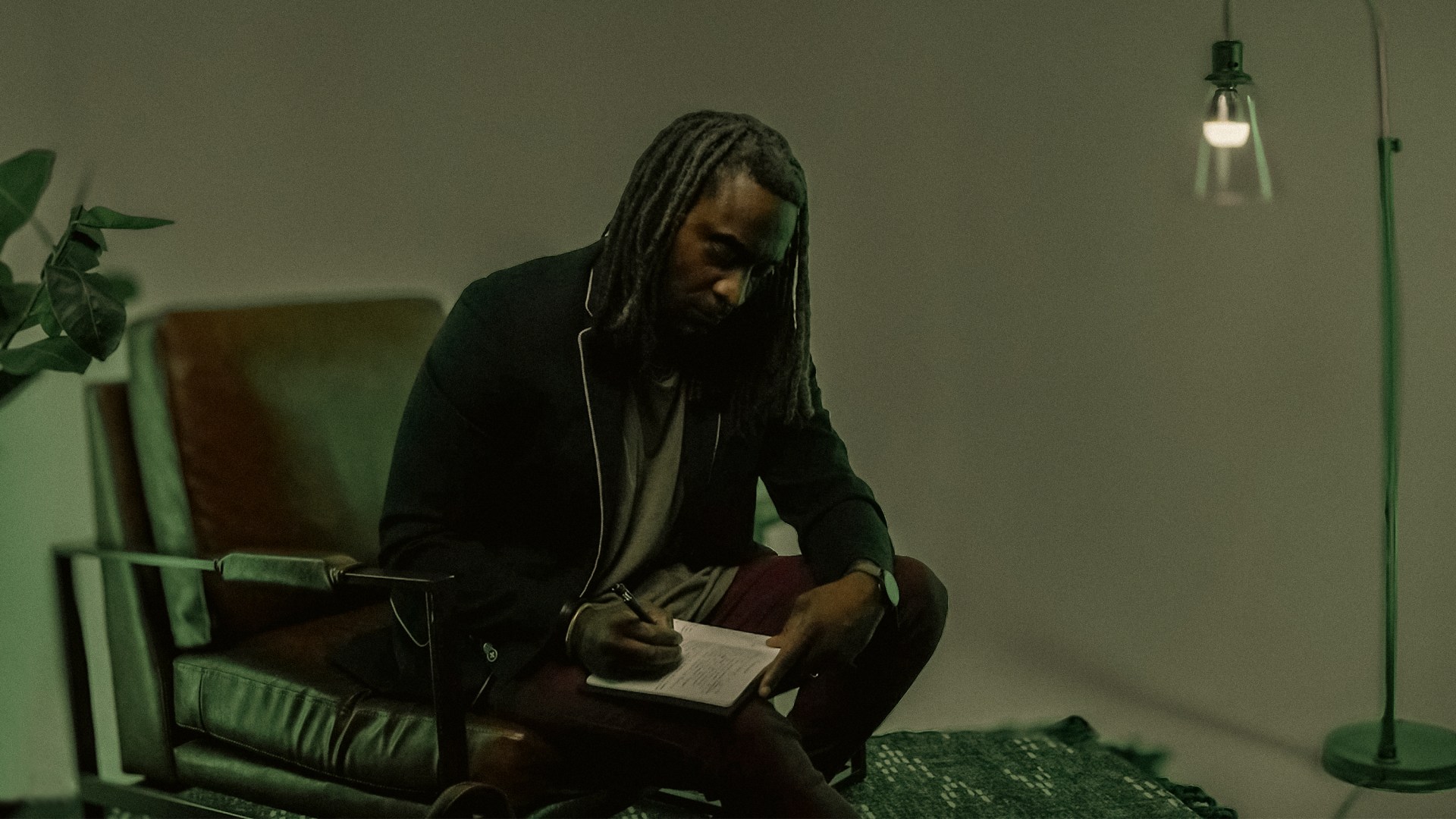
A photo of Tanya Glessner
Testimony

To Guard Against the Monsters in My Life, I Became a Monster Myself

A lifestyle of violence and addiction nearly destroyed me, but it brought me to the foot of the cross.

Christianity Today May 29, 2024
Courtesy of Tanya Glessner

I grew up in Kansas City, Kansas, in a home filled with chaos. Home was an ever-changing address, with my parents’ fights the only constant. My dad enjoyed his plethora of drugs, and my mom enjoyed pushing his buttons and being the victim. They finally decided to call it quits when I was 11 years old, but not before I got some startling news: The man I had called my father wasn’t really my father.

My grandma revealed the truth to me in an angry, drunken stupor right before breaking the news of the divorce. It was absolutely crushing. I had grown up with two younger half-brothers from my mom and the man who I thought was my dad. But now I learned that I also had two younger half-sisters on my biological dad’s side. I couldn’t help taking this revelation as a message that I was unwanted and didn’t belong. This paved the way for a series of poor choices that led me to the foot of the cross.

My biological dad made minimal effort to see me before he died of cancer in 2008. After my parents’ divorce, I lived with my mom and two younger brothers. She continued to choose men who were prone to addiction and violence. When they turned those violent tendencies on me, I decided it was better to become a monster than to let myself be devoured by one.

I started beating girls up at school and being rewarded at home for my victories. I was eventually expelled, leaving me to complete my schooling that year in the mental health ward of a hospital. Once I returned home, I ran away repeatedly and would stay with friends until their parents turned me away. My mom, having had enough, sent me to live with my grandma in Fort Scott, where I started my freshman year of high school.

But I was kicked out soon enough after a confrontation with my teacher, and I finished the school year elsewhere. During my sophomore year, I moved back home, and my mother and I got along like rabid dogs. When my 16th birthday came along, I went to school, dropped out, went home, packed my bags, and moved in with a friend in Fort Scott. This lasted about two years before I started bouncing back and forth between there and Kansas City.

My mother’s mirror image

Over the next 20 years, I gave birth to two sons of my own and married a man that was the sum of every man I had ever known. He was wild, abusive, addicted to anything that made him feel good, and promiscuous. I became the mirror image of my mother, mastering the art of pushing my husband’s buttons and then playing the victim, always convincing myself I could change him. It took over a decade before I realized I could never win this war. Finally, I filed for a divorce and decided to leave him for good.

At first, I handled everything well. I went to work, raised my boys, and occasionally had a girls’ night out on weekends when the kids were with their dad. I kept myself busy to keep my focus off the unbearable emotional pain I had pushed far below.

Eventually, though, it made its way to the surface, and I began to unravel. Girls’ night turned into every weekend. Every weekend turned into a meth addiction, which caused me to lose my job. Now bills were piling up, and I had to find a way to make money without disrupting my addiction.

I made a phone call to a friend I grew up with in Kansas City, who helped arrange a source of meth I could sell. Everything moved quickly from there. Within a few months, I was making a few thousand dollars a day and spending it just as quickly. My house was a revolving door of addicts, boyfriends, guns, and drugs. I started using the needle and decided it was best to send my children to live with my grandmother.

After a boyfriend broke both of my wrists, I had a lawyer draw up papers leaving my children to my grandmother in case something worse happened. I knew I was either going to end up dead or in prison. My addiction took precedence over everything in my life. At this point, all I wanted to do was die, but that was all about to change.

Making amends

Three years into my addiction, I found myself at a complete stranger’s house, suicidally depressed, injecting a needle filled with a large amount of meth into my vein. As the needle fell to the floor and landed in the old carpet like a dart, I collapsed to my knees on the verge of losing consciousness and cried out to God to save me. I wasn’t prepared for how he would choose to respond.

As a child, I had attended various Catholic and Christian schools alongside public schools, and my grandmother was a strong Christian believer. Perhaps, having spent so much time with her, I knew in that desperate moment that salvation could only come from God.

A few weeks later, I stopped at a house to drop off some drugs. When I arrived, I saw a woman I had bad history with, so I confronted her and put her in the hospital. I was arrested a week later and found myself facing 21 years in prison, so when I was offered a plea agreement of 8 years, I gratefully accepted it.

After spending three months in county jail, I started attending the ministry group organized by a local church for inmates. Toward the end of one service, I approached one of the church members. We prayed together, and I accepted Jesus Christ as my savior.

I received a Bible and some reading materials, which I delved into eagerly. I read the Bible so frequently that the pages started to wear out, and I had to carefully tape them back together. I found solace in verses like Jeremiah 29:11, which speaks of God’s plans for his people, and 1 John 3:18, which speaks of expressing love with actions rather than mere words.

As I sat in county jail, my mind began to recover from the effect of all the drugs. I found myself overwhelmed with remorse for what I had done, and I wanted the opportunity to make amends with the woman I had hurt. I slid my back down the cold, white cinder-block wall and adjusted my orange jumpsuit. I pulled my knees into my chest, clung to my Bible, looked up with tears running down my face, and asked God to make the way.

The next morning, an officer pulled me into the hallway to inform me that my victim had just been arrested. Because of my good behavior, he said, the authorities didn’t feel it was fair to ship me to another county to be held until I was sent to prison. Instead, they would let me decide whether I wanted to be housed with this woman or relocated to another jail. My head spun in disbelief, because this is not something that happens normally! I knew right then that God had heard my prayer, and this was my opportunity to put up or shut up.

As my victim entered the jail pod, you could see the fear all over her face. She went straight into her cell and crawled up into her bunk. I gave her a few minutes and then made my way over to her door. I told her she was safe and invited her to eat with me. In the following weeks, I managed to reconcile with her. We both expressed our apologies and started setting aside time every day to explore the teachings of the Bible.

We exchanged Scripture passages that resonated with us and even marked, signed, and dated our favorite verses in each other’s Bibles. Occasionally, I still glance at those pages, and it never fails to bring tears to my eyes, witnessing to how God worked within the confines of that jail. I’ll always cherish the memories of how God started to mend my brokenness. It’s incredible how he turned the devil’s plan to destroy me into something positive, spreading waves of healing to everyone around me.

I spent the next seven years in prison, earning all my good time. The experience was overwhelming, but I used the time to grow closer to God, and I established a godly reputation among the prison staff and my fellow inmates. I became a leader of a women’s Christian ministry inside the prison, and I started prayer groups in the dorms. Women sought me out for guidance, friendship, and prayer. I also tutored women for their GEDs, filed their taxes, and cut their hair. God used me in countless ways and continued to grow me in the process.

God never wastes a hurt

I was released in 2020, and, soon afterward, I married my high school sweetheart, who works as a paramedic. Adjusting to his schedule took some getting used to, as did the experience of being a stepmother. During my husband’s absence for 48-hour periods, I readily assumed various responsibilities.

Each morning, I diligently woke up to prepare breakfast and lunch for the children before driving them to school. I assisted them with their homework, accompanied them to their sports activities, and provided care when they fell ill. It was important to me to create a healthy routine as a family.

During this period, I also started rebuilding other relationships in my life, including the one with my brother Canaan. We didn’t have many opportunities to talk while I was in prison, so it felt good to reconnect with him.

He was employed as a millwright and journeyed across the globe for work, which meant I didn’t have the chance to see him frequently. However, we made sure to stay connected through phone calls and occasional text messages to let each other know we cared.

Fortunately, he managed to join me for Christmas during my first year out of prison, and it was truly special to share that time with him. I recall making a conscious decision not to take any pictures that Christmas because I wanted to immerse myself in the present moment, rather than being preoccupied with my camera. Little did I know this decision would later bring about regret.

In May of 2021, my brother was found dead in a Colorado hotel room from a fentanyl overdose. He was away on a job when he died. We had been planning his 38th birthday party, but now we were planning his funeral.

After dealing with the initial impact of my grief, I decided I wanted to do whatever I could to help families that might be suffering in the same way. I began mentoring incarcerated men and women as well as recovering addicts in my community. I sponsored a fundraiser to bring awareness to issues of mental health, addiction, and the relationship between them.

I also wanted to help diminish the stigma attached to seeking mental health services. We seek medical help when our bodies fail, so why wouldn’t we seek other kinds of help when life seems overwhelming? As part of this calling, I recently accepted the position of president on the board of directors for the Salvation Army and Compassionate Ministries in Fort Scott.

God never wastes a hurt. He is using my past to brighten others’ futures. I pray that God will continue to use my words to give voice to those who need it. When he pulled me out of the darkness, he gave me one hand to cling to him, and one hand to pull someone else out.

Tanya Glessner is the author of The Light You Bring, a memoir, and Stand Up Eight, a collection of personal testimonies. She has also published several daily prayer journals and is currently at work on a daily devotional.

Theology

How to Face the Headlines with Hope

The Papua New Guinea mudslide is yet another reminder that our world is not as it should be. But take heart! Christ has overcome the world.

People dig through debris at the site of a landslide in Papua New Guinea.

People dig through debris at the site of a landslide in Papua New Guinea.

Christianity Today May 29, 2024
Emmanuel Eralia / Getty

Family members sit atop boulders, weary from lifting rocks to search for bodies. Men with shovels bend under the weight of sorrow and effort as they work to leave literally no stone unturned. Disaster has struck again: A massive mudslide in Papua New Guinea on Friday morning buried an estimated 2,000 people alive, covering dozens of homes and an elementary school.

By now, it seems safe to assume that anyone not yet rescued from under as much as 26 feet of debris has died. I flip from story to story, looking for more information, but eventually I have to stop. I’m starting to feel claustrophobic myself, imagining a roar of mud and rock waking me from my early morning slumber.

I had an all too similar experience with the video of the bridge collapse in Baltimore earlier this year. As I watched, I remember realizing I was holding my breath. The night lights of Baltimore glittered in the background. It was almost cinematic—I might have mistaken the scene for the beginning of a 1980s rom-com, the city shot right before the credits roll—were it not for the dark silhouette of the ship hitting the bridge, reminding me of the truth: There were trucks and workers on that bridge as it fell. I couldn’t see their faces, but I was watching people die.

And it’s not just Baltimore and Papua New Guinea. Over the past year, as producer of CT’s news podcast, The Bulletin, I’ve been exposed to many tragedies from afar. I’ve read photographic essays about Ukrainians who retrieve dead Russian bodies from the battlefield, scrolling through to get the gist and trying not to linger on the graphic images. I’ve read accounts of school shootings and racially motivated crimes and had to pause for a deep breath. I’ve scanned reports of famous personalities who’ve died and felt the familiar twinge of distant sadness. And I myself am no stranger to death.

Yet for all that, sometimes when I encounter tragedies like these, a thought flits across my mind: It could have been worse. I stop myself short, embarrassed. Have I become indifferent and callous? Or have I simply seen too much?

I’m not alone in wondering. As early as the 1970s, researchers began to raise an alarm about how visual depictions of violence could be detrimental to viewers, especially children. After seeing violent footage of the 9/11 attacks or school shootings, for example, research subjects reported greater distress than those who had only heard or read about the same events.

These results were hardly a surprise. Participating, even vicariously, in the suffering of others can bring great pain, anxiety, and sometimes lasting trauma. If a death in one’s own family could destroy a small, known universe, how can the human mind comprehend loss on a far larger scale?

Separation by pixels only makes so much difference. We don’t need to be flesh-and-blood witnesses for suffering to make an indelible mark, and our digital media environment is designed to make us witnesses of tragedy daily. Doomscrolling past one troubling headline after another can lead to increased feelings of frustration, worry, and despair. Is it any wonder three in four Americans say they’re “overwhelmed by the number of crises facing the world right now”?

The constant stream of local and global suffering we see on our screens can leave us weary, numb, or disillusioned. We may let lapse the kind of presence and care to which God calls us. Desensitized, we learn to gloss over “smaller” tragedies, letting only mass casualties provoke our sorrow, instituting a hierarchy of grief and forgetting the gravity of every marker of sin and death in this broken world.

Both science and Scripture confirm that God never designed us to be Atlas, carrying the whole world’s suffering on our shoulders. Jesus came to bear that weight for us (1 Pet. 2:24). Yet God did create us to “carry each other’s burdens, and in this way … fulfill the law of Christ” (Gal. 6:2). He formed mirror neurons in our brains so that even at the cellular level we could understand one another’s pain. He commanded us to comfort each other from the wellspring of comfort we ourselves have received (2 Cor. 1:4)—a task that, admittedly, can seem almost impossible amid a continual onslaught of bad news.

So how do we fulfill the commandment to love our neighbor as ourselves when we’re not sure we can bear their stories of sorrow?

In my work at The Bulletin and beyond, I’ve benefited from advice from author and therapist Aundi Kolber, who encourages us to protect against an uncharitable numbness by caring first for ourselves. “When Jesus says, ‘Love your neighbor as yourself,’” Kolber told me in an interview, “we have to recognize the wisdom of ‘yourself’ is included there.”

Practically speaking, that means scrutinizing my media intake, creating time limits for engagement, and resisting the tendency toward consuming media in isolation. Kolber recommended reading or listening to the news as a “single-minded” activity, not as part of our regular multitasking routines. This lets us attend to our bodies’ responses of anxiety or discomfort while “witnessing from a place of dignity and integrity.”

For others, different boundaries may be more helpful, according to our personalities, our wounds, and the individual capacities with which God has equipped us. On a recent episode of The Bulletin, host and CT editor in chief Russell Moore noted that some Christians may need to step back from media consumption for a season to instead engage deeply with Scripture. For others, said cohost Mike Cosper, a conscious differentiation between public and personal life may be helpful.

Whatever practical changes we make to our media habits, though, it will still be difficult to bear witness to the suffering of the world, to sit with the statistics about the war in Gaza, stories of gun violence, or testimonies of racial injustice. Our tenderness to tragedy will prove more durable if it’s anchored in community lament.

In lament, “we sensitize and strengthen our hearts,” writes singer-songwriter Sandra McCracken. Whether in a Sunday morning worship ritual of the prayers of the people, a Wednesday night prayer service, or a special gathering for a specific tragedy, corporate lament offers us an outlet for the emotions that might otherwise overwhelm us.

Together, we name injustice and tragedy and place it within the greater narrative arc of God’s redemptive faithfulness. We are reminded that God cares about the headlines, that he reigns over all worldly leaders (Dan. 2:21), that not even the “smallest” tragedy escapes his notice (Matt. 10:29). It is here, says author Sheila Wise Rowe, in grieving and growing with others, that we discover “our pain and anger are transformed and mobilized from expressions of despair into signs of hope.”

In all this, one thing is sure: God calls us to respond to suffering. As I scan the headlines each week, preparing a new episode of The Bulletin, I try to scrape off the calluses that build up on my heart.

When my eyes catch on a story that details great hurt, I often pray, Come quickly, Lord Jesus (Rev. 22:20). When I read statistics about disasters, I pause to remember that each number represents a name, a person for whom Christ died. As I scan the unfamiliar faces in newspaper pictures, I call to mind those faces I do know—family and friends in need, folks I support in grief care groups. We’re all bound together in our longing for redemption in the midst of a broken world, and I ask God to “break my heart for the things that break the heart of God.”

Finally, I look for ways to act, whether through a donation to a faraway cause or direct care in my community. I may not be able to offer a cup of cold water to a Ukrainian widow, but I can send funds overseas and care for widows in my church. I may not be able to solve the conflict in the Middle East, but I can seek to be a peacemaker in my workplace and in my neighborhood. Even in the face of the very worst news, I am not powerless—and God is not powerless either.

“In this world you will have trouble,” Jesus told his disciples. “But take heart! I have overcome the world” (John 16:33).

Across the millennia, we offer a heartbroken amen. This world is not as it should be, as each day’s headlines make clear anew. But those headlines need not send us into despair or make us cower in protective indifference. Though sin, death, and the devil make the news, Christ has overcome them all.

Clarissa Moll is the producer of Christianity Today’s weekly news podcast, The Bulletin.

Books
Excerpt

‘I Thought I’d Be Further Along by Now’

An excerpt on risk, worship, and spiritual growth from The Expectation Gap: The Tiny, Vast Space between Our Beliefs and Experience of God.

Christianity Today May 29, 2024
Illustration by Elizabeth Kaye / Source Images: Getty, Unsplash

We often think we should be further along in our life of faith than we actually are. This tendency is connected to how we read the Bible, how we compare ourselves to others, and then how we reinforce these dynamics in our faith communities.

The Expectation Gap: The Tiny, Vast Space between Our Beliefs and Experience of God

I want to point out upfront that it is quite possible that we should be further along. I am not suggesting that we get lazy and stop worrying about spiritual growth. I am proposing that our attempted solutions to this gap are the fundamental problem. The gap may be real, but our solutions are often fruitless.

Many of us spend too much spiritual energy—and, frankly, guilt—trying to be something God did not ask us to be. We then spread that expectation around our faith communities and perpetuate the cycle. If we can notice the attempted solutions, and therefore the stuck cycle we are in, and get off that treadmill, we can open our souls to an encounter with God that can cause growth.

Let’s start by looking at the way we relate to the Bible. We each bring many assumptions to our reading of Scripture. We project our assumptions onto the page and read those assumptions back from the page, thus reinforcing our stuck patterns. Assumptions are always easier to see in others than in ourselves, and when we’re confronted by our own assumptions, it can be arresting or even threatening at first. When we look at the dynamics between Jesus and the Pharisees, much of their hostility was because Jesus was rummaging around in their assumptions, threatening what they thought they knew about Scripture.

We could explore many assumptions related to our reading of Scripture, but I want to focus on those that relate to the spiritual progress we’ve made in our faith. Let’s begin with a well-known story from the New Testament—Jesus’s invitation to Peter to walk on water:

Immediately Jesus made the disciples get into the boat and go on ahead of him to the other side, while he dismissed the crowd. After he had dismissed them, he went up on a mountainside by himself to pray. Later that night, he was there alone, and the boat was already a considerable distance from land, buffeted by the waves because the wind was against it.

Shortly before dawn Jesus went out to them, walking on the lake. When the disciples saw him walking on the lake, they were terrified. “It’s a ghost,” they said, and cried out in fear. But Jesus immediately said to them: “Take courage! It is I. Don’t be afraid.”

“Lord, if it’s you,” Peter replied, “tell me to come to you on the water.”

“Come,” he said.

Then Peter got down out of the boat, walked on the water and came toward Jesus. But when he saw the wind, he was afraid and, beginning to sink, cried out, “Lord, save me!”

Immediately Jesus reached out his hand and caught him. “You of little faith,” he said, “why did you doubt?”

And when they climbed into the boat, the wind died down. Then those who were in the boat worshiped him, saying, “Truly you are the Son of God.” (Matt. 14:22–33)

One helpful aspect of systems theory—the science of healthy and unhealthy relationship patterns—is the way it teaches us to notice the whole rather than the individual. On our own, we are prone to look at one person in a story and relate to that one person, but systems theory’s gift is that it helps us gain a more holistic view.

An individualistic approach to this passage might ask, “How can I step out in faith this week? What is Jesus beckoning me to do?” A systems approach says, “Wait just a hot minute—11 of the 12 disciples stayed in the boat. They still benefited from witnessing something astonishing, and they all ended up worshiping Jesus.”

In this story, most of Jesus’ disciples—92 percent, to be precise—did not step out in faith at all. In fact, they sat in the boat and watched as their impetuous and bold friend stepped out. Is the only right interpretation of this story that Peter was the good disciple and all the others were bad? Maybe rather than trying to be like Peter this week, we should try to be like one of the other 11. This week, less Peter, more Thaddaeus. Perhaps we could start a campaign: #TeamThaddaeus.

We tend to assume we must always be like the main character of any Bible story. But the reality is we will grow in Christ sooner once we accept that we are very much like ourselves, and none of us can—or should—always be like the main character of any given Bible story.

If you are prone toward action like Peter was, then go for it. You may well be a personality type that is energized byrisk. You may also be prone to act first and think later.

But what if you are the kind of person who, when invited to do something new or risky, first creates a spreadsheet to assess all options, along with a cost-benefit analysis? By the time you’re done listing all the risk liabilities, a soaking-wet Peter and a laughing Jesus are back in the boat with you. Is that bad? Can you love spreadsheets and risk mitigation plans and still walk by faith? Or must we all be like Peter all the time? What is it about us humans that draws us toward carrying the pressure and guilt of thinking we really should be someone else?

This leads to a second vital point. If we look carefully at this text, it ends with all 12 of the disciples worshiping Jesus in astonishment. Maybe the text is more about being astonished at Jesus than it is about us taking a faith risk. Maybe the central point of this story is Jesus’ power, not Peter’s faith steps. Those of us in cultures that place a high value on performance and improvement are prone to see every story in the Bible as “something I need to work on,” but much of Scripture is actually designed to help us worship our astonishing God. In other words, maybe Peter isn’t the main character of this story; maybe it’s Jesus.

What if most of the stories in the Bible are designed to primarily evoke a worship encounter with God rather than a self-improvement task list? We would do well, particularly those of us in production-based cultures, to be suspicious of our relentless need to improve and grow. If we’re reading the text with our minds always thinking we have something to work on, we may be missing the heart of God. Maybe God is less concerned with our improvement and more concerned with our worship.

The text clearly shows we can stay in the boat, watch our friend almost drown, and still end up worshiping Jesus. Now there is a sermon waiting to be preached! “Friends, this week, I don’t recommend stepping out in faith. I recommend staying in the boat and watching your friend take steps. You’ll end up worshiping Jesus either way!”

Steve is the author of Managing Leadership Anxiety: Yours and Theirs and The Expectation Gap. He is the founder of www.capablelife.me and has served in a variety of pastoral roles for 26 years, the majority of those years as a lead pastor.

Taken from The Expectation Gap: The Tiny, Vast Space Between Our Beliefs and Experience of God by Steve Cuss. Copyright © 2024 by Steve Cuss. Used by permission of Zondervan. www.harpercollinschristian.com

Books

Boy Meets Girl, Fans Meet Jesus?

As Christian romances make their way to theaters, their writers are seizing opportunities for evangelism.

Christianity Today May 29, 2024
Illustration by Mallory Rentsch Tlapek / Source Images: Getty / WikiMedia Commons

This spring, Someone Like You, based on the Christian romance novel by author Karen Kingsbury and produced by the newly formed Karen Kingsbury Productions, was released in theaters across the US and Canada. The movie—a tale of grief, romance, and a secret frozen embryo sister—grossed about $5.9 million.

Kingsbury’s accomplishments as an author and movie producer are impressive and, in many ways, singular. Over 25 million copies of her books are in print. Someone Like You was a New York Times bestseller.

But Kingsbury isn’t alone in her success. Female writers—romance writers in particular—dominate the Christian fiction market, claiming eight spots on the top-ten author list in 2023.

Since the mid-20th century, opportunities for these women who write—first in Christian bookstores, then on television, and now in movie theaters—have been expanding in response to growing audience demand. Along the way, these evangelical women have gained a kind of religious authority, crossing over from sentimental fiction to biblical interpretation and theology. Hidden behind paperback covers and movie posters picturing prairie scenes and happy couples, these texts deliver serious evangelistic messages for Christian women to consume and share with others.

The roots of Christian romance can be traced to authors like Grace Livingston Hill and Eugenia Price. But the genre as we understand it today really began with Christy (1967), Catherine Marshall’s story of a young woman in the Great Smoky Mountains. As secular romance novels became more sexualized in the 1970s and ’80s, women began to look for faithful alternatives. With Janette Oke’s Love Comes Softly (1979)—Marty moves out West, marries a single father, finds community, and grows in faith—the genre was established. According to Reading Evangelicals, Love Comes Softly sold “an average of fifty-five thousand copies a year for twenty years.”

In the decades since, authors like Oke, Beverly Lewis, Francine Rivers, and Kingsbury have been writing love stories imbued with Christian themes. Though romance is at the heart of these novels, their plots also take on real-world suffering, including suicide (Love Comes Softly), abandonment (The Shunning by Lewis), abuse and assault (Redeeming Love by Rivers), and grief (Someone Like You). The spiritual support they offer is particularly relevant to readers who’ve experienced similar hardships. Characters pray and get saved, worship and read the Bible. Endings are happy—and redemptive.

From the outset of the genre, Christian romance has had missional intentions. Many novels today include back-of-the-book discussion guides with Bible passages and devotional prompts. Oke has stated, “I see my writing as an opportunity to share my faith. … If my books touch lives, answer individuals’ questions, or lift readers to a higher plane, then I will feel that they have accomplished what God has asked me to do.” Kingsbury has defended Christian stories not just as escapes but as an “unbelievable force” in our faith journeys.

But Christian romance hasn’t only had success in print—a good thing for the industry, given declines in Christian book sales. For decades now, these texts have been adapted for television. Christy was a CBS miniseries from 1994 to 1995. Titles like the Love Comes Softly series (beginning in 2003), Hidden Places (2006), The Shunning (2011), and The Bridge (2015) became made-for-TV movies on the Hallmark Channel, appealing to audiences looking for heartwarming programming. More recently, Hallmark has produced television spinoffs of When Calls the Heart (2014–2024) and When Hope Calls (2019–2021), offering expanding storylines created within Oke’s oeuvre.

Now, Kingsbury has taken the book-to-television strategy one step further. After releasing four made-for-TV movies with Hallmark, she opened her own production company in 2022. Karen Kingsbury Productions released The Baxters on Amazon Prime in March, the month before Someone Like You hit theaters.

Christian romance novels aren’t exclusively sold in Christian bookstores; the Hallmark Channel, though certainly family- and faith-friendly, isn’t an exclusively Christian network. But for Christian romance writers, the move to streaming services and movie theaters does represent the biggest opportunity yet for more mainstream attention—and for expanded ministry.

Rivers’s 2022 Redeeming Love, a retelling of the Book of Hosea, models the kind of attention Christian romances might achieve as they move to theaters. The movie adaptation earned only an 11 percent positive rating from critics. But it also achieved a 95 percent positive rating from viewers and opened fourth in the box office its opening weekend. (Someone Like You found critics and viewers in closer alignment—a 46 percent positive rating from the professionals and a 96 percent positive rating from audiences.)

For both Rivers and Kingsbury, these creative projects are meant to do more than impress critics or make money. They have evangelistic goals—not just providing clean entertainment for women who are already Christians but drawing in secular audiences. Indeed, both authors have highlighted the opportunity for fans to take their non-Christian friends to the movies. Kingsbury has even offered crowdfunded tickets through her “Share the Hope” campaign.

Here again, discussion questions and reading guides make evangelistic intentions explicit. Rivers put out two study guides just prior to the release of her film—A Path to Redeeming Love: A 40-Day Devotional and Redeeming Love: The Companion Study. The story of Redeeming Love, she says, is “meant to bring people to Christ, and … to offer a tool for us to share our faith with people who don’t know Jesus at all.”

For her part, Kingsbury offers both a six-part discussion series and a seven-part Bible study on the Someone Like You website. Connecting passages of Scripture with plot points in the film, the Bible study discusses difficult personal themes like the loss of Kingsbury’s brother and the health challenges of her son (he portrays Matt Bryan, one of the film’s male leads). Through the study, Kingsbury addresses an audience of readers who intimately know her work, offering a space for longtime fans to experience spiritual growth.

But her discussion questions are doing something different. Here, Kingsbury speaks to a non-Christian viewership, addressing their concerns about grief and betrayal, forgiveness and peacemaking. “What questions have you had about God?” she asks. “What is your source of truth?”

Someone Like You has left theaters but will remain available for group events through the Faith Content Network. This platform provides access to the movie and its digital resources until streaming becomes available later this fall. With five additional novels listed as “coming soon” on Kingsbury’s website and the announcement of a second film, it seems her mission across multiple mediums is only just beginning.

As Christian romance writers bring their stories to film and streaming platforms, so too are their opportunities for evangelism expanding. With trust in pastors declining and church attendance plummeting, authors like Kingsbury might occupy a unique and unprecedented position—trusted by longtime readers and drawing in new viewers, casting the Christian story as relevant and compelling, hoping that “boy meets girl” becomes “fans meet Jesus.”

Emma Fenske is a third-year PhD student in the History department at Baylor University. Her research centers on recovering the cultural, political, and theological identities of evangelical women through mass media and pop culture.

Inkwell

The Unexpected Consequences of Mysticism

An alluring buzzword that should not be taken lightly

Inkwell May 26, 2024
A view from a villa, with a woman seated at a fountain and an avenue of statues by Samuel van Hoogstraten

MY SISTER SAYS her favorite weather is the moment just before a storm where the earth rolls and yawns with thunder. When she was little, she would ride her bike in looping circles in front of the house while the air crackled and the green trees shook silver, ignoring calls to come inside before the sky purged itself of electricity. She revels in that moment of cosmic surrender, where it all finally comes crashing down.

That affection for the full-bodied chaos of cleansing is a little sliver of mysticism in my sister. The natural world, her imagination, and the joy of the presence of God all met in each arc of her bicycle. I’d venture we can all picture some version of this, the wild innocence of mysticism caught in real life. Mysticism is a siren’s call to the modern Christian contemplative and I am not immune to its allure. It’s fashionably, tastefully eerie. In a world allergic to uncertainty, mysticism extends an invitation to come and sit awhile with what we do not understand, to peer into luminous darkness and encounter a God who is bigger than not only our answers, but our very questions. Mysticism calls forward with a crooked finger from the shadows of Medieval monasticism and affirms our wonder, our doubt, and our imagination. But mysticism is not all wisps of incense and a poetic sense of agnosticism. To dabble in mysticism is to dabble in suffering.

Medieval mystics pursued a method of contemplation often categorized as the “Mystic Path,” a three-step process of purgation, illumination, and union. Practicing ascetics would strip themselves of all detritus preventing their understanding of and intimacy with God. God would respond by illuminating their minds and souls with the presence of Christ, leading them to a final, loving union with the anguished Lord. The imagination is mysticism’s weapon of choice for cutting down the divide between the material and the divine, but that imagination finds purchase in the body, both ours and Christ’s. The imagination becomes sacramental in the mystical life.


JULIAN OF NORWICH depicts her mystical experience of Christ’s pain and subsequent reflection in her Revelations of Divine Love. Julian appeals to God for three requests: to suffer, to understand the suffering of Christ, and to physically receive his wounds. Her passionate love for Christ moves her to request physical suffering as a means of intimacy with Christ. Julian’s prayers for agony are answered in a debilitating illness which leaves her desperately gazing at a crucifix while the room darkens around her, stripped of any thoughts but those of the man on the cross. She describes an illumination of her mind as Christ imparts his “familiar love” to her, giving her deeper understanding of this love and his nature. The body of Christ is both the means to and the end of her communion.

Given the affective nature of mystical theology, it is unsurprising that the process of sanctification would be experiential more than cognitive. However, it is important to recognize that Medieval mystics viewed suffering as consequential to a desire for Christ more than a motivation in and of itself. Furthermore, they emphasized the loving suffering of Christ over their own pain. Contemporary scholars theorize that the mystic propensity for suffering was a response to a Medieval world where mortality haunted ordinary life; that a culture riddled with pain, sickness, and hard work resulted in theologies to make sense of them.

We have not erased suffering from modernity, but we inoculate ourselves from it by sensationalizing it in media and romanticizing it in history. We are inundated with casual grief and yet woefully unprepared to weather or articulate it. Even suffering that finds its method and measure in the body of Christ is a daunting and perilous endeavor. But that craving for that gasping moment of cleansing, the first cacophony of downpouring rain, runs back deep into the world’s story, into the very marrow of what it means to be human. In small ways, we revel in the notions of spring cleaning, grueling endurance runs, a good cry, and drastic haircuts. The purgation plays a counterpoint melody to the shimmering charm of materialism, chanting, “if you just get rid of this, everything will be fixed.”

Mystic purification looks different. It is a subtraction by addition. In order to cleanse ourselves, we take on the suffering of Christ. As simple as those words are, that much harder is the task. So how do we do mysticism now? In embracing the benefits of mysticism, how do we safely chart a course through this element of Christ’s suffering in our bodies and imaginations?


FOR INSPIRATION, I turn to the other place where we discover Christ in our bodies and imaginations: the arts. Art has midwifed human suffering for millenia, but what would it look like for art to escort us through suffering as a means of grace? The arts lend methodology to imagination, giving us audio-visual language for the transcendent. From my first middle school role as a scruffy orphan, theatre has been the art that shepherds my spirituality. The word becomes flesh first onstage and is enacted in my body, as it does in its fullness when I cup the Eucharist in my hands on Sunday. My theological questions have always met a kind of resolution when I step into a dusty, paint-scented theatre, begin stretching, and let my thoughts escape through my limbs. So as I mused over mystic suffering one autumn afternoon, among a smattering of page numbers and browser tabs, I eventually asked the stage.

Aristotle describes proper tragic theatre as creating a release of spiritual and emotional toxicity called katharsis, which translated means purgation. He says, “Tragedy, then, is an imitation of an action that is serious, complete, and of a certain magnitude… effecting through pity and fear the proper purgation of these emotions.” Ancient theatre arose from a mimetic instinct to re-enact cosmogonic myths and embody ritual, but the specific structure of Greek tragedy was designed to communally release grief and evil more than simply entertain. Like the Mystic Path, the plays elicited emotions in their audience which prompted physical responses, and through this process, the griefs and impurities–called miasma–were cleansed for the community.

In addition to this, Aristotle requires tragedians to include what he calls a “Scene of Suffering” in their dramas, which he defines as “a destructive or painful action, such as death on the stage, bodily agony, wounds and the like.” Witnessing and communally experiencing suffering through the imagination offered Greek populations a healing method of emotional purgation. The involvement of the audience exceeded mere viewing, incorporating their reactions and responses into the performance the same way liturgical church services involve the congregation.


YOU MAY BE piecing together the realization that had me gasping in the silent library that October afternoon as I pored over Julian’s story: The Passion of Christ fulfills the requirements for an Aristotelian tragedy. Tragedy hinged on a scaffolding of rules, one of them being the three unities: time, place, and action. Our tragic hero Christ faces a reversal of fortune from the Last Supper to the cross which spans twenty-four hours within the city of Jerusalem, meeting these requirements and leading us to the Scene of Suffering which the actor and spectators share like Eucharistic bread and wine. Aristotle fittingly writes that a tragedy will “thus resemble a living organism in all its unity.” So does our salvific tragedy gasp for breath on the cross.

“For the Passion was a noble, glorious deed performed at one particular time through the action of love,” writes Julian, offering further evidence that understanding the Passion as a healing theatre accurately communicates the mystic experience of transformation. Mystics beginning their path turned to the suffering body of Christ to purge themselves of unrighteousness; actors and spectators entered the theatre laden with fear and anger they wished to expunge through the performance. As the mystics ascended the stair steps of the crucified Christ, they were simultaneously stripped of their sin and given love of God, which led to suffering of their own. The audiences of Greek tragedies were encouraged to weep and mourn from their seats in the amphitheater, to enter into the suffering onstage. Thus cleansed, the mystics savored a painfully glorious intimacy with God. The Greeks exited the theater, healed of their miasma and unified as a community–a further connection with the mystics, who were also moved to love for their neighbors as a consequence of divine intimacy.


THERE IS SOMETHING transformational, healing, and unifying about experiencing pain through performance. Performance creates a sacred space that simultaneously provides intimacy and detachment, through which the suffering of salvation can be endured and explored in such a way that the spectating mystics leave the process healed, beautified, and brought near to the feet of Jesus. Aristotelian performance theory offers suffering a skeleton, a liturgy for us to journey through as we taste mysticism in modern life. When mysticism asks us to enter into Christ through our imaginations, and we feel unmoored in the painful darkness, theatre teaches us how to make sense of the mystery without demythologizing it. We learn to pray in Greek tragedy.

Christian theology is often a study in reversals, where the last are first and suffering somehow leads to restoration. The Mystic Path invites us to the theatre of God, where tragedy heals and darkness becomes light. Julian’s words echo the declarations of Isaiah 53, where the prophet cries, “With his wounds we are healed.” Entering into the death of Christ baptizes us in a suffering that affirms the truth of our cleansing through his demise. Together we descend the steps of an amphitheater, laden with aching evil, and sit while we watch that ache enacted for us on the body of our Tragedian, somehow making us well.

Carolyn Etzel Branch is a current graduate student at Duke Divinity School, pursuing a Master of Divinity with certificates in Theology & the Arts and Anglican Studies.

Inkwell

They Open Us

Inkwell May 25, 2024
Photography by Sylvia Bartyzel

—After Pappas [ΝΙΚΟΣ ΠΑΠΠΑΣ]

Because of this poetry, which, like the Gospel
opens us to waves of unexpected dangers
and elations, which bids the condemned to loosen
his tie as he ambles to the wall to be shot,
and woos meandering millions yet to notice
the brother or sister teetering on the cliff,
compelling that we reach out a hand, deliver
those wretched, belovéd ones to safety, at least,
to momentary safety and, in that moment,
a passing sense that they are not alone; because
of poetry’s vertiginous capacity
to center one’s attention on what might make us
whole, and what might break us, spanning the desolate
hours as well as the blessed, and laving with honey
both corpses and the morning toast, even as it
raps upon the door, unrelenting in its claims;
because of this poetry, rising from the souls,
the ancients of every land, the generations
thereafter, all the radiant host, both famous
and obscure, offering their breath to the flowing
chorus circling the spheres, giving voice to every
exultation, every desolation, ever,
we raise our heads, and do not shirk, obliged to sing.

Scott Cairns is the Director of Seattle Pacific University MFA in Creative Writing. Author of forthcoming Lacunae: New Poems (Paraclete Press, November 2023) & Correspondence with My Greeks (Slant Books, 2024).

Culture

Mad Max Does Genesis

Furiosa begins with a retelling of the biblical Fall. After its apocalypse comes something new.

Christianity Today May 24, 2024
Courtesy of Warner Bros. Pictures

One of the first lines of dialogue in Furiosa: A Mad Max Saga is a question: “As the world falls around us, how must we brave its cruelties?”

Across its 148-minute running time, Furiosa offers various responses to that inquiry, presenting a post-apocalyptic set of scenarios bound in blood, gasoline, and bullets. Ultimately, the film settles on hope—however foolish it may seem—as the only way forward. The desolation of what’s old, it insists, can make a way for ‘all things new” (Rev. 21:5).

George Miller returns to direct this spinoff and prequel to his thunderous 2015 epic, Mad Max: Fury Road. That film took place over the course of three days and two nights; Furiosa occurs over almost two decades, told in five pulse-pounding chapters. Miller takes his time exploring the transformation of an innocent young girl into the liberation warrior we find in Fury Road.

We first meet an adolescent Furiosa (Alyla Browne) with her mother (Charlee Fraser) in their home, the Green Place of Many Mothers. The rest of the world is a barren wasteland, ravaged by the compounding effects of climate change and nonstop warfare. The Green Place, by contrast, is a literal Garden of Eden, rife with foliage, wildlife, and fresh water. In a playful riff on the Genesis story, Furiosa opens the film by picking a ripe peach from a tree.

All too soon, paradise is lost. Marauders kidnap Furiosa, seeking to bring knowledge of the Green Place to their leader, Dementus (Chris Hemsworth), a cruel and histrionic warlord who dreams of plundering the abundance for himself. Unable to save her daughter, Furiosa’s mother gives her a peach pit to remember home by and urges her to find her way back. From the moment Furiosa is forced into Dementus’s muscled coterie, she schemes and fights to return to the garden.

This extended allusion to Genesis sets the stage for Furiosa’s surprising spiritual heft. In this incendiary, “post-Fall” world, to live is hell and to kill is gain; evil is real, and redemption is desperately sought. Apocalypse is now—but that might not be all bad.

The word apocalypse, especially in movies, often connotes wanton destruction, horror, and violence with no end in sight. But the word’s origins are more nuanced. The Greek word apocalypsis is frequently translated as “a revelation.” In biblical times, apocalyptic literature served “as an intensified form of prophecy.” Critic Alissa Wilkinson and scholar Robert Joustra expand on this idea in How to Survive the Apocalypse: Zombies, Cylons, Faith, and Politics at the End of the World. The apocalypse, they write, “renews as it destroys; with its destruction it brings an epiphany about the universe, the gods, or God.”

Apocalypses create realizations that can only come with razing. The disruption they cause is not change in and of itself; but it does provide the foundations for change to be built upon. Apocalyptic revelation—even revelation of injustice, misery, and sin—is always an invitation to build something new.

Held captive and forced to serve different warlords, Furiosa realizes that the tyrants she’s ruled by have no desire to do anything new with the apocalypse they’ve been given. The vile men waging war for the planet’s resources, including Dementus and Immortan Joe (Lachy Hulme), merely recapitulate the same cruelty and barbarism that led to the world’s destruction in the first place, hoarding scarce goods for themselves rather than imagining a more communitarian alternative. When Furiosa is captured by Dementus after one of her many escape attempts, he sneers at her: “Where were [you] going, so full of hope? There is no hope!”

At the film’s climax, Dementus and Joe wage a scorched-earth war, launching the full brunt of their forces at each other. Instead of shooting a typical action scene, Miller frames this battle as a montage; it’s not clear who’s winning, or even whose army belongs to whom. The carnage caused by two small-minded rulers is both brutal and meaningless.

As Furiosa ages (actress Anya Taylor-Joy steps in to play the older character), her weariness and despair deepen. And yet she also realizes that true tragedy would be resigning herself to fatalism. Resolving to move forward without “the old ways” of revenge and malice, she puts aside corrupt cravings for power and commits to different motivations. The world won’t be saved by repeating what’s been done before. And apocalypse alone isn’t sufficient; she’ll have to take action.

When Jesus began his earthly ministry, his gospel was so radical as to be considered destructive by the powers that were. His message of an upside-down kingdom (Matt. 20:16), his radical solidarity with those who were overlooked and oppressed by the empire (Mark 2:15), went against the dominant worldviews of his day. Even his closest disciples rebuked him; even they did not understand his teachings (Mark 8:30–33). It was easier for them to imagine Jesus’ deliverance working within the framework they already knew; they couldn’t envision how transformative and total Jesus’ vision for the world would be.

Whether Jesus was healing on days of his choosing (Luke 6:6–11) or dining with society’s outcasts (5:27–3), his seeming disregard for the law was not transgression for transgression’s sake. He came to be a greater fulfillment of those laws; his radical amplification of their commands—including extending the definition of who one’s “neighbor” is—was an invitation to a new way of living.

This invitation is the same to the believer today. The work of bringing God’s kingdom does not end simply when we get rid of evil, but rather when we build better things in its place. And (without spoiling too much) it’s exactly this kind of building that the last scene of Furiosa evokes.

In Furiosa’s final standoff with Dementus, he sardonically commends her for learning the lessons of brutality and resilience he’s taught. “I’ve been waiting for someone like me,” he says as Furiosa faces him. “We’re just two evil bastards in the wasteland. … We are the already dead.”

This comparison gives Furiosa pause; she realizes that she’s seeing what she could become. While her arc won’t be complete until Fury Road—she creates a utopia where the captives are free (Is. 61:1), the hungry are fed (Matt. 25:35), and the stranger is welcomed (Deut. 10:18)—by Furiosa’s end, we see the beginnings of her revelation.

Oftentimes, after a climactic action sequence (in particular, a standoff between Furiosa and some raiders that takes place on a truck under siege) Tom Holkenborg’s rattling score decrescendos to a whisper. We’re left with the ambient sounds of the desert, the scorching sun upon the sands, and scraps of blue sky peeking through the smog and smoke.

In these moments of quiet beholding, the words God spoke to the prophet Isaiah come to mind: “See, I am doing a new thing! Now it springs up; do you not perceive it? I am making a way in the wilderness and streams in the wasteland” (43:19). Possibility may persist in our own wastelands, if only we’d have eyes to see and ears to hear. Not all is dead here. We plant our peach pit, and wait for it to grow.

Zachary Lee serves as the Managing Editor at The Center for Public Justice. He writes about media, faith, technology, and the environment.

Pastors Will Try to Spare South Africa’s Tense Elections from Violence

Oscar Siwali is mobilizing conflict mediators as the country goes to the polls. He only wishes his organization could train more.

Election posters from various political parties displayed on poles in Pretoria, South Africa.

Election posters from various political parties displayed on poles in Pretoria, South Africa.

Christianity Today May 24, 2024
Themba Hadebe / AP / Edits by CT

Oscar Siwali remembers watching Nelson Mandela’s triumphant walk as he left prison after 27 years. In 1990, as the young pastor of a Baptist church, Siwali saw himself as an evangelical focused on winning souls and tending to his flock’s spiritual needs, not needing to prioritize political concerns. Nonetheless, he shared the pride of his people’s successful anti-apartheid activism that demanded “Free South Africa Now,” an outcry that inspired worldwide solidarity.

But just three years later, a far-right white nationalist assassinated Chris Hani, a leader of the South African Communist Party —an attack that threatened to derail South Africa’s transition from the oppressive white-minority rule to a democratic government that represented the entire country.

When Hani’s murder threatened to unleash a civil war that South Africans had labored so many decades to avoid, Siwali, like fellow Christian leader Archbishop Desmond Tutu, realized his faith compelled him to action. He began to preach peace in his sermons and to talk to those who had taken to the streets.

“I saw a different way of the work that I was called into, where I wasn’t just in service from the pulpit,” Siwali said. “That was truly my first revelation in seeing the importance of the clergy being out there, engaging with people … and [figuratively] taking that pulpit and placing it in the center of a community.”

In 2013, Siwali founded SADRA, a faith-based organization that trains people of all ages and backgrounds to be conflict mediators in their communities. It also has special programs for local church leaders, whom SADRA believes can be most effective in areas prone to violence and political tension because of the widespread respect they engender. SADRA is the only faith-based organization contracted with the Electoral Commission of South Africa (IEC) to train election mediators and observers, and its current mission is ensuring that South Africa’s May 29 elections do not culminate in violence.

While the African National Congress (ANC) has held power since Mandela became president in 1994, with Matamela Cyril Ramaphosa seeking reelection, simmering discontent and power ambitions have birthed new political parties. Currently, as many as 300 parties are vying for the presidency, each vowing to fulfill the sweeping promises of liberation and equality espoused by the anti-apartheid movement.

Meanwhile, a new generation of younger leaders has emerged, impatient with and frustrated by the elders who have led a nation of high unemployment, high domestic violence, and low wealth redistribution. Further complicating the election is the inclusion of independent candidates for the first time. (Citizens do not vote directly for president; rather, the winning party selects the nation’s next leader.)

Church leaders are on high alert that their nation could violently implode, particularly if people do not believe the elections were fair and corruption-free. Last month, for instance, pastors met with political leaders to pray and to strategize how to avoid bloodshed in KwaZulu-Natal, South Africa’s second-most populous state, which is predicted to have a highly contested vote.

“Almost all of the people I know working in mediation and peacekeeping are gearing up for the national elections,” Siwali said. “Respected people in communities need to be able to watch over and be the eyes of society to make sure the counting is done properly and also be a neutral voice if tensions take place.”

CT talked with Siwali about his goal of training 5,000 church-leader mediators to work the elections, why so many feel frustrated about the state of their country, and how those outside the country can help.

How do South Africans generally feel about the state of their country?

For some time, the focus in South Africa was on working toward democracy and resolving the clear conflict between black and white people. The conflicts have now become about the lack of quality government service delivery and people not seeing the democratic dispensation that they had been waiting for, the freedom that people had been singing about.

At SADRA, we often hold community dialogues, and you’ll hear people saying, “I had seen on television in some countries that when freedom comes after war, the poor now live in big homes. The blacks take over the homes of the whites. But in our country, white people still live in the same homes that they lived in, and the blacks still live in the tin shacks that we live in. So, did freedom actually come?”

Some people even say, “Who said we wanted democracy when what we actually wanted was freedom?” They trusted the political leaders, but the leaders were not communicating that they weren’t getting the “freedom” they wanted because we have not been to war. It’s usually in countries that have been to war where you will have people who were poor taking over companies and homes from the rich. That’s not what has happened in South Africa because we’ve taken a peaceful journey in attempting forgiveness of each other and in working toward building a nation.

What is at stake in this election?

We’ve never had a national election with so many controversies like this. Former president Jacob Zuma has broken off from the ANC and started the uMkhonto weSizwe Party. The ANC lost their effort in court to bar him from using this name, which is from a tagline long associated with the party.

Zuma has already done two terms as South Africa’s president and cannot legally become president a third time. He could potentially get a third term if his new political party wins, because he would be with a different party. Also, Zuma is facing a trial for corruption and was arrested previously, and they are trying to determine if that arrest would disqualify him from being president.

The potential for conflict is high no matter the results. Some candidates have threatened to drive the country into chaos if they don’t win. There have also been a lot of political assassinations that have taken place over the years. In this context, we are training church leaders to work as conflict mediators and election workers for peace, with the understanding that anything imaginable can happen.

How do Christians tend to vote?

South African Christians are not a homogenous group. For instance, you have Christians in the ANC, the South African Communist Party, and the Pan Africanist Congress.

We have European churches and American-planted churches, but indigenous churches are the largest. They are Pentecostal and charismatic, with sometimes a mixture of African traditions and Christianity. Because of their size—Zion Christian Church has 12 million members and Shembe Church has between 5 to 6 million—they tend to attract politicians seeking blessings and political support.

How many mediators have you trained?

In the past year, we’ve trained more than 1,300 church leaders, and in the last seven years, we’ve trained more than 3,000. Our dream is to train about 2,000 additional mediators, looking at specific provinces where the level of violence has been higher, such as KwaZulu Natal and the Eastern Cape. The former president and the ANC are from KwaZulu Natal so the state KwaZulu is divided, because you now essentially have two ANC parties there.

SADRA’s trained mediators have been hard at work in the election preparation process in all provinces. Mediators are helping to facilitate conversations between the IEC and community leaders. Specifically, in three communities, there would have been no election registration had SADRA mediators not intervened. In each community, mediators took a volatile situation with protesting residents and turned it around into a picturesque tapestry of people’s expression of their democratic right to register to vote.

What does mediation look like?

When officials from the IEC come into a community to prepare it for the election, local people can be hostile toward them, often frustrated because of a sense that the government isn’t providing services. SADRA trains mediators to work with the IEC to deescalate tensions.

For example, IEC workers often visit a community and encourage people to register to vote. But because people are frustrated that the government hasn’t provided them with services, they will block the commission from entering.

In these instances, the local mediators we have trained will meet with people on all opposing sides and work in the community to allow the IEC to enter peacefully. Allowing the electoral workers in could also be done with soldiers and police, but this method usually does not end well. It is not good to use the barrel of a gun to engage the democratic process.

Who supports SADRA’s work?

Individuals, agencies, and overseas embassies contribute funds to the conflict resolution work that we do across southern African nations. African governments tend to watch closely who gives money to civil society organizations because of the issue of the West intervening in African politics. As much as we ask for help, individual local donors are also wary of giving money, as they don’t want to be accused of interfering in politics.

How has doing peace work impacted your faith?

I initially worked at the Quaker Peace Centre, and it was during that time that I met some of the members of the Mennonite church. That sort of introduced me to a broader understanding of the theological aspects of peace-building because I was working in peace-building organizations, but not necessarily from a theological point of view.

For me, this work is about being reminded of the bigger task of the church in society. There are very big issues in society that the government must address, but cannot do so alone. The church also has this responsibility.

How can people outside of the country support peace efforts in South Africa?

We need people to come to South Africa and observe the elections. We also need international grantors who are able to make grants available to local organizations to form local observation teams. Even with everyone who is on the ground, including groups like the Carter Center, we are still short when it comes to election observation.

In the last election, we only had 12 percent (around 8,000) of the required 66,000 election observers at voting locations. I’m hoping we could have 50 percent of those slots filled this year. These are the people who observe the count and keep the overall peace of the election environment. It’s a lack of money and government commitment, as to why our nation does not have the number of people in place that we need.

Pray for peace before, during, and after the elections. We need a lot of prayer for the KwaZulu-Natal Province where a lot of violence has happened already, and more is expected as we get closer to election day.

What we desire as peace-builders is that there will be a free, fair election and outcome that can be accepted by the people of South Africa no matter who wins.

Theology

What I Would Change After 30 Years of Marriage

I should have invited Ruth to our wedding—to acknowledge how much our ordinary moments point to the story of Christ.

Christianity Today May 24, 2024
Illustration by Mallory Rentsch Tlapek / Source Images: Getty / WikiMedia Commons

This piece was adapted from Russell Moore’s newsletter. Subscribe here.

On Monday of next week, my wife, Maria, and I celebrate our 30th wedding anniversary. As I think about those two kids standing at the altar, I would want to say “I do” all over again to everything. One of the very few exceptions would be one decision that had to do with the wedding, not with the marriage. After 30 years, I’ve changed my mind about the biblical text I wouldn’t let us read.

Somebody suggested that we read at the ceremony a passage from the Old Testament book of Ruth, one that we heard read or sung at almost every wedding at the time. In the King James Version (which was what people almost always used), the text reads, “Whither thou goest, I will go; and where thou lodgest, I will lodge: thy people shall be my people, and thy God my God” (1:16). It’s about the young widow Ruth from Moab, pledging to her dead husband’s mother, Naomi, that she would go with her to Naomi’s homeland of Israel.

I believed then, and still do, that all Scripture is inspired and “profitable” (2 Tim. 3:16, ESV throughout), but I didn’t think that particular Scripture was appropriate for a wedding.

“It’s not about marriage,” I said. “It’s about someone taking a trip with her mother-in-law.” I wanted something about the mystery of Christ in Ephesians 5 or about love from Song of Songs or about Jesus at the wedding at Cana. I could even have lived, I said, with 1 Corinthians 13. Of all of the things about the wedding ceremony, I only insisted on two—that we use the traditional vows and that we read some other text than that one. You could say that I was ruthless in my Ruthlessness.

If I can give some unwanted advice to my 22-year-old self, the groom, I would say to him, “You are right about the bride, and right to ask her to marry you. This will be the best earthly decision you will make in the course of your life, but you are wrong about Ruth. That text has everything to do with your next 30 years.”

Thirty years ago, I knew how to preach about the cosmic mystery of Christ and his church, a mystery reflected in marriage. I knew that I loved this woman, and I didn’t want to be with anybody else. And I knew enough to know that the old vows were better, that we needed the words our parents and grandparents and great-grandparents had vowed. How could we describe our commitment better than “for better or for worse … till death us do part”?

I know some people who have had hard marriages. Some marriages I admire greatly have been, I know, a fierce struggle to keep together. Ours is not one of those. We’ve faced far more “better” than “worse,” and even when the worse has arrived, it was always better because of her. That’s mostly because I’m the quirky one and she’s the stable, unshakable one.

In the biblical account, Naomi, grieving the death of her sons, insists that both of her daughters-in-law stay behind in Moab, where they can start their lives over again. Ruth, though, was committing, before God, to walk into a future completely unknown to her. And so were we.

If you had asked those two kids back at the altar in Biloxi, Mississippi—one of us 22 years old, the other 20—what our life story would be, we couldn’t have predicted how much we would laugh together. I’m not sure we could have predicted how—30 years later—we would still want to be around each other all the time.

We wouldn’t have known what it would be like to hold each other after getting the phone call about a father’s death, or what it would be like to feel the other trembling in tears after a miscarriage. We wouldn’t have known what it would be like to trek out together to a Russian orphanage to adopt two little boys, nor what it would be like to see in a hospital room our other three boys who came to us the more typical way.

I wouldn’t have known that the only ultimatum I would ever hear from my wife was about whether we’d ever attend another Southern Baptist business meeting. I couldn’t have foreseen how much the words Donald Trump would shape the circumstances of our lives, or that that year would outlast the seven years of tribulation our Sunday School prophecy charts had promised.

What I really would not have predicted, though, is how—just like the story of Ruth—so much of our story would be made up not in those “big” moments but in the very small, ordinary ones: the fleeting encounter in the gleaning field, the midnight meeting in the threshing place, the birth of a baby.

Naomi said at the beginning that she should rename herself “bitter” (1:20), but the text shows us the turnaround of her now rejoicing with Ruth’s newborn on her lap. The women of the neighborhood said of this old widow, who once thought her story was over, “A son has been born to Naomi” (4:17). Many things that seemed to be coincidences—just the right thing happening at the right time—led up to that.

Last night, Maria and I walked with our youngest son down to the creek by our house, where our son climbed some trees as we walked the dog. The cicadas were buzzing and the fireflies were flashing all around. I stopped and wanted to freeze that moment in time. It was almost as if a future version of myself was time traveling back to whisper, This is the best. This is the sort of thing you will remember on your deathbed. Those are the moments that shape a life, that surprise us with joy.

I didn’t want Ruth at the wedding because I thought I knew how words worked. I was, after all, a preacher and a former political speechwriter, and an aspiring theologian. I wanted our wedding to be focused on the big story of Christ and his gospel—and an out-of-context Bible verse about some women who’d lost their husbands just wouldn’t do. My problem was that I couldn’t see that that little narrative is about the big story of Christ and his gospel. The conversation led to the trip, and the trip led to love, and the love led to a birth for a family from Bethlehem. The story ends with the mention of that baby, Obed, but not as a mere “happily ever after” resolution of the storyline.

The book ends with the words, “Obed fathered Jesse, and Jesse fathered David” (4:22). The setting is cast for what would happen from Bethlehem in the books to follow, 1 and 2 Samuel, of the shepherd-musician who would be promised that one of his sons would sit on his throne: “He shall build a house for my name, and I will establish the throne of his kingdom forever” (2 Sam. 7:13).

Ruth didn’t know that her promise to one old woman would end up leading to Israel’s king—nor that Israel’s king would lead to the deliverance of that family line from existential threat, all the way through to another story, that of a worker and a virgin, a story that would end up, again, with a baby in Bethlehem, one in whom the entire cosmos holds together, one whose kingdom will never end.

Your little story, and mine, aren’t quite so messianic in their stakes. But, then again, maybe they are, in some way. The Bible says that everything working around us ends up for good, and then defines what that good is—that we would be “conformed to the image of his Son, in order that he might be the firstborn among many brothers” (Rom. 8:29). All of that comes about in each of our lives through lots of little decisions that ripple out in ways we can’t see. Every once in a while, though, we can look back and see some words—like I do—that were the right words to the right person—words that we can only explain by grace.

Jesus is Lord. All of the story of Scripture—all of the story of the universe, visible and invisible—is his story. He holds the keys of life and death. And sometimes he stops by a wedding (John 2:1–2). Sometimes, in a wedding or, better yet, in a marriage, one can get a glimpse of his glory (2:11).

Thirty years ago, we said to each other that we would love, comfort, honor, and keep each other, in sickness and in health, forsaking all others, as long as we both shall live. I would say those words again. But I might add some other words too—“Where you die I will die, and there will I be buried. May the Lord do so to me and more also if anything but death parts me from you” (Ruth 1:17).

At either my funeral or Maria’s, people can read any number of Bible passages; I love them all. But, if you’re there, know there’s one of them that I am happy for you to read or to sing or just to remember, because I will mean it then as I do now: “Whither thou goest, I will go.”

Russell Moore is the editor in chief at Christianity Today and leads its Public Theology Project.

News

Iranian Christians Contemplate God’s Justice after President’s Death in Crash

Believers in the diaspora reference Daniel and the “writing on the wall” as many mull if helicopter accident portends more changes to come.

A woman passes by a poster of Iran's late president Ebrahim Raisi who died in a helicopter crash.

A woman passes by a poster of Iran's late president Ebrahim Raisi who died in a helicopter crash.

Christianity Today May 23, 2024
Majid Saeedi / Stringer / Getty / Edits by CT

Iranian Christians in the diaspora shed few tears over the death of President Ebrahim Raisi, killed in a helicopter crash along with the foreign minister and six others in the northwest mountains of Iran.

The leadership vacuum will be filled within 50 days by a new election. But it comes at a tumultuous time for the Islamic Republic, which last month launched an unprecedented missile attack against Israel. Coming in the context of the Israel-Hamas war in Gaza, Iran’s other proxies in Lebanon, Syria, Iraq, and Yemen have harassed the Jewish state and its Western allies.

Supreme leader Ayatollah Ali Khamenei declared five days of mourning, assuring there would be no change in the nation’s direction.

Raisi’s term in office was beset by internal protests over religious repression, alongside discontent with an inflationary economy. But while he oversaw restoration of diplomatic ties with rival Saudi Arabia, relations with the West severely deteriorated due to strengthening ties with Russia and China, as Iran enriched its uranium supply in suspected pursuit of a nuclear weapon.

“Countless thousands of Christians are specifically praying for God’s will in Iran,” said Lana Silk, CEO of Transform Iran, which oversees a network of churches in the nation. “I believe his hand is on all these key events.”

She advised the Western church to pray for new God-fearing leadership.

Of the now deceased leader, Christians expressed a diverse emotional response.

“From all of my contacts, the reaction among educated and socially engaged Iranians is joy,” said Shirin Taber, executive director of Empower Women Media, dedicated to the promotion of international religious freedom. “With the potential for change, there is always hope.”

An Iranian-American Christian, she said these deaths demonstrate that not only is the regime not invincible, it is on the decline. Reports indicated that the presidential helicopter unwisely departed in deep fog and also suffered mechanical failure.

Taber also leads the Abraham Women’s Alliance to strengthen the Abraham Accords, a US government–led effort to normalize relations between Muslim nations and Israel. In this time of transition in Iran, she encouraged Western nations to continue to “lean in” to the push for democracy.

Raisi, age 63, was elected in 2021 with the lowest turnout recorded since Iran’s revolution in 1979. Analysts blamed widespread disillusion, as clerical leadership severely limited the pool of candidates to those with demonstrated loyalty to Ayatollah Khamenei. Raisi was also considered to be the primary candidate to succeed the 85-year-old supreme leader.

Sources noted the widespread speculations over the crash. Some rumors immediately suspected Israel, while others wondered about internal power struggles. Iran has not suggested foul play.

But while state media broadcast scenes of mourning at the funeral and in the streets of Iran, diaspora images showed dancing in the streets. Some Christian voices were more muted.

“My initial reaction is that justice was done,” said Amir Bazmjou, CEO of Torch Ministries and an Oxford-based PhD candidate in political science and Christian theology. “God heard the voices of families who lost their loved ones unjustly because of Raisi.”

Referring to the president by his infamous title “Butcher of Tehran” due to his role in the “death committee” that executed thousands of prisoners, Bazmjou cited the Ezekiel 18:23 reference that God takes no pleasure in the death of the wicked.

Raisi, born into a clerical family, joined in the initial protests against the Shah of Iran at age 15, and by age 25 became deputy prosecutor of Tehran. In 1988, he was one of four judges on the secret tribunal that retried already imprisoned enemies of the regime.

In 2009, Raisi backed crackdowns on protestors and their mass incarcerations following the disputed presidential election. And as president, in 2022, he oversaw the security response against demonstrations sparked by the death of Mahsa Amini, a woman detained over her allegedly loose hijab. Over 500 people were killed, with 22,000 detained.

The US sanctioned Raisi in 2019 for his role in domestic repression.

Bazmjou encouraged Western empathy over the death of Iran’s president, but to stand with the oppressed public while avoiding siding with the regime. Such was the US response, expressing condolences while reaffirming support for the people and their “struggle for human rights and fundamental freedoms.”

But as the pool of approved politicians tightens, Bazmjou believed that the helicopter deaths contribute to the further shrinking of core loyalists that can assume future leadership positions. Like Taber, he believes these gaps may foretell significant change in the near future.

This would accord with a picture provided in Scripture, he said.

MENE, MENE, TEKEL, PARSIN, read the writing on the wall in Daniel 5—God’s message to King Belshazzar of Babylon. God has numbered the days of your reign and brought it to an end.

“I pray for the political leaders in Iran to turn from their dark ways and encounter the God of love, justice, and holiness,” said Bazmjou. “Otherwise, God’s justice will come for the voiceless, Christians included.”

A recent survey suggested there are nearly one million believers inside Iran.

For any who celebrate, he cited Proverbs 21:15 as appropriate for both Christians and Iranian leaders—When justice is done, it brings joy to the righteous but terror to evildoers.

Mansour Borji agreed, citing Psalm 55:15—Let death take my enemies by surprise. Christians may not fully comprehend the relationship between God’s mercy and his judgment, said the director of the Iranian religious freedom advocacy organization Article18, but he allows the frustrated to express their anger at those who harm their fellow citizens.

As Raisi violated the rights of minorities, Borji is somewhat frustrated still.

“It would have been better for him to face trial and be held accountable for his crimes,” he said. “But the world is a safer place without him.”

Silk, however, warned that potential internal Iranian power struggles would not bode well for citizens, as authorities will rule with an even tighter fist. Persecution against Christians will continue and perhaps intensify.

But as Bazmjou found biblical parallel with the king of Babylon, Silk referenced a prophecy about ancient Elam, located in modern-day Iran. Restoration is promised, she said, but not before judgment. In Jeremiah 49:38, God states, I will set my throne in Elam, and destroy her king and officials.

“We cannot presume to know God’s mind,” Silk said. “But things are accelerating, and I wonder if the major shift we have been anticipating is closer than we think.”

Apple PodcastsDown ArrowDown ArrowDown Arrowarrow_left_altLeft ArrowLeft ArrowRight ArrowRight ArrowRight Arrowarrow_up_altUp ArrowUp ArrowAvailable at Amazoncaret-downCloseCloseEmailEmailExpandExpandExternalExternalFacebookfacebook-squareGiftGiftGooglegoogleGoogle KeephamburgerInstagraminstagram-squareLinkLinklinkedin-squareListenListenListenChristianity TodayCT Creative Studio Logologo_orgMegaphoneMenuMenupausePinterestPlayPlayPocketPodcastRSSRSSSaveSaveSaveSearchSearchsearchSpotifyStitcherTelegramTable of ContentsTable of Contentstwitter-squareWhatsAppXYouTubeYouTube