
Theology

Charisma and Its Companions

Church movements need magnetic leaders. But the best leaders need more than charm.

Illustration by Tim McDonagh

Emad is an exception in many ways. He grew up in a massive slum but rose to be the branch manager of a bank in a capital city. Most people in his area are Muslim and animist, but Emad’s devout Christian mother instilled in him a passion to reach the lost for Christ. This was at odds with the local church he pastored, where he found the believers to be uninterested in evangelism.

After a few years of pastoral “failure,” Emad (a pseudonym) found himself dejectedly prayer-walking a dusty side street. There, he felt the Holy Spirit direct him to a shaman. This sorcerer had recently dreamed of a man coming to tell him about the “living God.” He excitedly introduced Emad to his social network, and soon people started coming to Christ.

In the ten years since, close to 7,000 churches have emerged that can be traced to the encounter between Emad and the sorcerer. The movement has spread among five different people groups in three countries.

As researchers of church planting, we wanted to understand people who, like Emad, have multiplied disciples of Jesus in places where there were few if any known Christians. These people are what we call “pioneer leaders.” We also wanted to understand an exceptional group that included Emad—about 1,500 pioneer leaders in the world whose disciples have made disciples who then have made disciples, resulting in at least 100 new churches. These are what we call “movement catalysts.”

Emad and the others in our study agreed to participate only if their responses were anonymous and their full names weren’t published, a standard practice in research. In addition, many of these pioneer leaders work in regions that are unsafe for evangelists.

Elements of movement catalysts’ personalities stick together in our research to partially explain what happens when there is a burst of new believers in a place where there previously were none. Our research identified 21 qualities that characterize most movement catalysts and set them apart from their peers who haven’t started such a discipleship movement.

This in no way detracts from the primary agency of the Holy Spirit through the power of the gospel. No particular mix of personal traits and qualities can cause a movement. But since God has chosen to work through the men and women he calls, the qualities they exhibit and nurture are part of his work in the world. We are responsible for nurturing those qualities in them.

While the causes of a movement cannot be reduced to a formula, empirical evidence suggests that wherever there is a movement resulting in many new Christians and many new churches, there is also a pioneer missionary with a set of certain notable traits.

Two of the top three frequently observed traits were extensive prayer for the salvation of people in the community and a focus on disciple making.

The third was charisma.

For millennia, people have considered charisma to be central to leadership. More recently, research on “transformational leadership” has found charisma to be one of the rare qualities that seems to be a global value in leaders. An entire school of thought is devoted to what management scholar Robert House coined as “charismatic leadership” in 1977.

But what exactly is charisma? We found that, in movement catalysts, charisma is a combination of confidence, selfless acts, and the ability to influence others through personality (rather than just through status or title). People feel honored to be associated with such leaders.

We should not be surprised that movement catalysts exhibit charisma. By our definition, they are on the cutting edge of large-scale personal and social transformations through the gospel.

However, more than a few of us have had negative experiences with very charismatic leaders.

This brings up the question How does charisma remain a good thing, rather than just a source of power to an individual? In our research, we considered charisma not as a standalone gift but as something complemented and shaped (or not) by other qualities. We found that these guardrails for charisma had to do with both people’s inner lives and their interpersonal skills.

S

piritual disciplines are normally invisible to others. Yet they act powerfully to influence our public side.

One way movement catalysts ground their charisma is through the private discipline of “listening to God.” They live in a posture of dependence on God that causes them to regularly take time to wait on his guidance for their lives and ministries. This habit serves as a potent spiritual antidote to the egotism that can infect a charismatic leader.

Another tempering quality that marked the pioneer leaders in our study was a strong tendency toward conscientiousness, one of the “Big Five” personality traits that have been validated in psychology research. These people’s sense of responsibility is a fairly stable part of their character. Conscientiousness keeps charismatic leaders from acting too impulsively and from prioritizing their own whims.

We found movement catalysts to be people who are markedly self-disciplined, who strive for achievement beyond others’ expectations, and who control and direct their own impulses.

While everyone in authority needs good impulse control—which is part of being conscientious—it is perhaps even more important for charismatic leaders. Leaders with charisma can often operate beyond organizational or hierarchical constraints. Thus they need self-control all the more.

The way movement catalysts center others is the second guardrail keeping charisma from going awry.

In our study, movement catalysts seemed to have an unusually deep level of love for others. In general, these leaders are unwilling to use people for selfish reasons. But beyond this, movement catalysts take a real interest in the lives and welfare of others, and they express it in ways those people can feel.

Another stable Big Five trait, agreeableness, also shapes the charisma of movement catalysts. Our research found that they are more concerned than the average church planter about social harmony, make generally pleasant companions, and are willing to compromise when interacting with others. Agreeableness restrains charismatic leaders from dominating others.

And finally, we see the tempering value of a commitment to empower others, a characteristic slightly more pronounced in movement catalysts than charisma itself.

Leaders who lack a commitment to empowerment tend to collect power themselves, drawing in responsibility like a magnet. But the movement catalysts in our research were very intentional about operating in the opposite spirit, freely relinquishing control. They handed responsibilities off to others, even risking failure.

One highly charismatic leader in our study shows how deliberate this can be:

Whenever a crisis came up, I disciplined myself to go to the leaders our team was training and say, “You guys need to go away and pray about this, to pray until you get an answer. And when God tells you what to do, then come and tell me.” Of course, I was always worried they would come up with something weird. But you know what, they always got it right. They would pray until they heard from the Holy Spirit, who would always give them something amazing that was biblical and a good cultural fit.

Of course, there are different kinds of leaders for different situations. The profile of an effective movement catalyst may not describe an effective leader for a moribund church in a society steeped in a Christian tradition. An uncharismatic person can still lead a church toward fruitfulness.

Nevertheless, our research shows that exceptionally fruitful leaders usually have charismatic personalities. It also demonstrates that charisma alone is not enough.

But when it is most effective—when charismatic leaders have qualities that regulate their inner lives and have developed love for people, an agreeable personality, and a focus on empowering others—such a personality can be a force for the gospel to take hold in new believers, new churches, and new leaders.

Emanuel Prinz serves as a leader, development consultant, and church movement researcher. He is the author of Movement Catalysts and blogs at Catalytic Leadership.

Gene Daniels and his family were church planters in Central Asia for 12 years. He researches ministry in the Muslim world and is writing under a pseudonym due to security concerns.

News

Exploited South African Miners Turn to Churches for Help

Pastors help widows take on delayed pensions and negotiate peace amid violent labor disputes.

Illustration by Marco Lawrence

Like other widows of South African mine workers, Jane Anele was doubly wronged by the industry. The 58-year-old lost her husband to coal mining a decade ago, and his employer never paid the family his dues.

“My husband died of lung disease from digging coal for 20 years, and his pension has never been paid because the coal mine went defunct,” she said. “We are too poor to hire lawyers who charged us 90,000 South African rand ($4,500 USD) to pursue those who owe us. We are not that educated to start with, let alone dig for historical pensions claims and fill complex forms.”

Her last hope was to turn to the church.

In a country where lawyers, corporate human resources departments, and police are viewed with suspicion, Christian leaders are stepping in to advocate for South Africa’s discarded Black mine laborers and their families.

“We stand with Black miners and their descendants for a lifetime. I have attracted a lot of enemies and been vilified in government and mining industry circles over my stance,” said prophet Paseka Mboro, a controversial charismatic Pentecostal minister. “These gold and platinum mine corps are listed on the stock exchanges, and some of their ex-laborers sometimes can’t afford [pain relievers] in old age.”

South Africa’s mines took off in the late 1800s when imperialist mining magnate Cecil Rhodes and the Oppenheimer family struck gold and discovered diamond riches. For over a century, the country built its famous gold, platinum, and coal mine wealth on the sweat of migrant Black laborers.

Now, as the industry continues its slow decline, workers are suffering, aging in poverty, and dying from conditions contracted in the mines. And the job is getting more dangerous and less stable.

Tapiwa Nhachi, a former social scientist with the regional Centre for Natural Resources, said getting justice for migrant workers is a nightmare. Some were brought from neighboring African countries in the 1960s to work without IDs and have since passed on.

“I worked for Optimum Coal Mine for five years, got injured from a rock fall underground, was laid off with two months’ salary, and disability benefits haven’t been paid to date,” 60-year-old Wandile Mashaba told CT. “The mine has since gone into bankruptcy, changed hands, and my file is missing.”

Thousands of shortchanged Black mine workers in South Africa, considered one of the most financially unequal countries in the world, can’t afford claims lawyers and rely on Christian advocates like Mboro to help.

Their willingness to confront the big mining corporations draws from biblical calls for justice and Scripture’s divine condemnations of “those who defraud laborers of their wages, who oppress the widows and the fatherless, and deprive the foreigners among you of justice” (Mal. 3:5).

“The pastors have been super helpful,” said Nolwazi Makhulu. “It’s through their constant, brave engagement with mine owners that my late husband’s R400,000 [$20,000 USD] disability and pension dues were finally settled from a trust fund though the diamond mine has long gone defunct.”

The Wall Street Journal reported that the $24 billion mining sector in South Africa “is waning under the pressure of violent crime, growing costs and regulatory uncertainty, as well as tapped-out mines.” The newspaper cited falling employment numbers and production, and an increase in violent labor disputes and deaths.

For example, in October and December last year, disgruntled mine workers took hundreds of fellow miners hostage kilometers under the earth as a way of forcing concessions from big-corporation mine owners.

“In the wake of the decline, violent tactics and injustice remain,” said Thula Maseko, a National Union of Mineworkers branch coordinator.

When police and corporate mine owners fear or refuse to negotiate in hostage situations, it’s once again churches that step in. Drawing from decades of trust, Christian leaders serve as peace negotiators to stop potential bloodshed, Maseko said.

Large mining companies, corporate lawyers, courts, and compromised trade unions are hardly trusted by thousands of Black mine laborers in South Africa, says Tito Dingane, an activist pastor in the Zion Christian Church, a large African-initiated denomination with one million members across South Africa.

“It’s only through our intervention and negotiations as the Zion Christian Church that recently three widows of mine workers were paid modest compensation for their deaths,” he said. “[Mining officials] had dismissed their claim, saying their husbands were bogus miners.”

For decades, churches have sued mine owners on behalf of workers with lung disease. Last year, the Catholic church vowed a class-action lawsuit against BHP, the giant Australian copper miner, on behalf of “17 current and former mine workers, who came to the Catholic Church for help after contracting incurable coal workers’ pneumoconiosis,” an industry news article reported.

“The bishops are our … last hope,” said Fazela Ntoto, a former gold miner. His hard-fought pension claim was fleeced by trust lawyers taking advantage of his illiteracy, Ntoto said. His pastors took up his cause, however, and worked to successfully recover what he was owed.

Father Stan Muyebe, director of the Justice and Peace Commission of the Southern African Catholic Bishops’ Conference, said the church is called to join in the “cries for justice” and offer help.

“The church in South Africa has been challenged to become a Samaritan church,” he said, “hearing the cries of the sick ex-miners and seeing the suffering face of Christ in and through the one who once said to us, I was sick and you visited me.”

Nyasha Bhobo is a freelance journalist in Zimbabwe who covers stories across southern Africa.

News

How to Pray with ADHD

Christians with neurodivergence are exploring other options for devotions and Bible study.

Illustration by Christianity Today / Source Images: Getty, Wikimedia Commons

Emily Hubbard recalls a trend in women’s discipleship that urged women to rest in Jesus and “stop trying to do it all.” The problem was, Hubbard wasn’t trying to do it all. She just wanted to remember to run the dishwasher.

“All discipleship was for type A people, but I was a type Z person,” she said.

Hubbard is a mother of four, a school board member, and an adjunct professor. Laziness isn’t her problem; attention-deficit/hyperactivity disorder (ADHD) is.

More than eight million US adults are affected by ADHD. Because the disorder impairs executive function—the self-control needed to work toward a goal—building habits for spiritual growth can be far more challenging for the ADHD brain than for someone who is neurotypical.

Lifeway Research found that nearly two-thirds of Protestant churchgoers intentionally spend time alone with God at least daily. Cru lists Bible reading, Bible study, Scripture memorization, and prayer as the top four spiritual disciplines that Christians should develop.

ADHD makes these kinds of repetitive tasks hard to maintain. Christians with ADHD may struggle to focus and get distracted when they sit down for an extended time of Bible reading and prayer. It can seem impossible for them to grow spiritually when the church around them views daily “quiet time” as a marker of discipline.

“For years, all I could do was go to church on Sundays and pray for my children at night, and that was my best,” Hubbard said. “Good thing Jesus died for my best.”

Like Paul’s thorn in the flesh (2 Cor. 12), Hubbard says, she finds her ADHD is an abiding reminder that her performance doesn’t earn God’s approval. Her church, New City South in St. Louis, observes the church calendar, and Hubbard sees grace in its cycles. It might be hard to focus during one particular prayer time, Sunday service, or church season, she says, but there will be next time.

Before the pandemic, Hubbard regularly visited Assumption Abbey in Ava, Missouri, for silent spiritual retreats. Hearing the monks pray as they have prayed for centuries reminded her that she’s part of a faith that is bigger than her.

More Christians, including Christian leaders, are speaking out about how their ADHD affects their faith lives.

José Bourget, the chaplain at Andrews University in Michigan, mentioned his ADHD in a sermon for the first time last year.

“A neurodivergent way of relating to the world is not really addressed from the pulpit,” he said.

It wasn’t until the pandemic that Bourget realized his forgetfulness and distraction might be more than personality quirks. He once missed a flight because he forgot his driver’s license. He justified the mistake by saying God didn’t want him to take the trip. While he still thinks God can work through his distractions, he now thinks it’s important to acknowledge the ADHD.

Since his diagnosis, Bourget—now in his 40s—is working to unlearn years of guilt and shame for what he believed were personal failings.

He repeats simple truths like “Christ accepts me.” He declares that the ADHD brain is not a broken brain and speaks of God’s love and acceptance for those with ADHD. He’s preaching to himself as much as to anyone else.

“It sounds oversaid and overdone,” he said, “but feeling like I never fit and never belong, acceptance is very critical.”

Bourget has also given himself “permission not to conform” to set practices of Scripture reading and silent prayer. Instead, he sets up some basic structures—time each morning to spend with the Lord—but exercises freedom within that. Sometimes he spends more time in prayer; other times it’s contemplation or watching a video of a sermon.

Bourget notices students at Andrews struggling with these issues. He makes a point of letting them know he is available. When students express guilt that their brains don’t seem to work like everyone else’s, Bourget helps them find practices that work for them.

Trying to be quiet, still, and focused for extended periods is hard for people with ADHD—whether it’s to study for class or to offer prayers to God.

Alex R. Hey, an ADHD coach, addresses the sense of shame and failure that can come from this inability to hold attention in silence. He reframes these limitations for himself and his clients with lines like “I get to pray differently.”

It helps to remember that this is how God made him. “Personally, I feel that it humbles me,” he said.

Like other types of neurodivergence, ADHD manifests on a spectrum. While some may describe their struggles as humbling, others find ADHD debilitating. Jeff Davis, now a lay leader at Stonebriar Community Church outside Dallas, said he struggled to find and hold a job due to his poor executive function. He spent almost two years homeless before getting help.

In addition to using counseling and medication, people with ADHD can develop coping strategies.

To engage Scripture, Hey often uses lectio divina—a monastic practice with a formula for reading, meditating, praying, and contemplating. It keeps his mind connected to the text.

Because the ADHD brain is prone to hyperfocus, people may fixate on one thing to the neglect of everything else. Once, as Hey meditated on the passage where a woman anoints Jesus’ feet, he couldn’t get past the image of the woman kissing Jesus’ feet (Luke 7:37–38).

“I don’t like feet, so all I could think about was how gross feet are,” he said. But as he thought deeper about what was going on in the passage, he realized the only part of Jesus the sinful woman felt worthy of touching was his dirty feet. He then imagined Jesus reaching for her hand and lifting her up.

“When we don’t feel worthy and don’t feel loved, Jesus reaches down and lifts us up,” Hey said.

Other ancient Christian prayers and traditional liturgies can resonate with the ADHD brain. Michael Agapito, a graduate student at Northern Seminary, finds quiet time daunting but uses lectio divina, The Book of Common Prayer, and the Jesus Prayer: “Jesus Christ, Son of God, have mercy on me, a sinner.”

“There’s a huge reservoir of church tradition that we’re also rightful heirs of, but we’ve never really tapped into that in modern evangelicalism,” said Agapito, who was diagnosed in college.

While he developed habits managing symptoms, he’s struggled to let go of perfectionism and see his ADHD as ordained by God. He described his mind as a pinball machine bouncing between ideas and not slowing down.

“As a Christian and someone in ministry, I understand that God deemed it fit to give me this condition in his providence, wisdom, and sovereignty,” he said. “Growing up, I kind of looked at it as a curse, but I’m also looking at some of it as a gift.”

As Agapito considers becoming a pastor, he wants his future congregation to be taught spiritual disciplines with intentionality and to welcome all those who struggle to keep up with the habits—neurodivergent or not. “The average Christian struggles with them a lot too.”

Megan Fowler is a CT contributing writer who lives in Pennsylvania.

Theology

Yes, Charisma Has a Place in the Pulpit

But let’s not mistake it for calling.

Illustration by Tim McDonagh

Charisma has fallen on hard times in the church. Or at least some of us have become suspicious of it. The cracks have been showing for a while. Nine years ago, long before Oxford University Press crowned rizz (slang for the kind of charisma that inspires romantic attraction) its 2023 word of the year, Rick Warren observed, “Charisma has absolutely nothing to do with leadership.”

But we all know that it does, don’t we?

We like leaders with dynamic personalities. We are drawn to them, in the church and in politics. For good or ill, charisma is a factor. The charismatic leader is a common feature of the origin stories of many Christian (and non-Christian) organizations and denominations. Many movements trace their beginnings to a larger-than-life personality with a great ambition for God whose effectiveness seems to be due as much to personality as to God’s call.

For example, Scripture says that Saul, Israel’s first king, was “as handsome a young man as could be found anywhere in Israel, and he was a head taller than anyone else” (1 Sam. 9:2). The impression made by Saul’s physical appearance suggested that he would be an ideal king.

Subsequent experience proved otherwise. When the prophet Samuel looked for Saul’s successor among the sons of Jesse, the Lord warned him not to be swayed by such things. “The Lord does not look at the things people look at,” he said. “People look at the outward appearance, but the Lord looks at the heart” (1 Sam. 16:7).

However, when David was brought before him, 1 Samuel 16:12 notes that he was “glowing with health and had a fine appearance and handsome features.”

Charisma, like beauty, is in the eye of the beholder. So there is a cultural dimension to charisma. One reason 1 Samuel emphasized the physical appearance of Saul and David is because the king was also a warrior. People saw the king as a deliverer (1 Sam. 8:19–20). Saul’s height and David’s health contributed to their prowess in battle and made them seem kingly.

Yet Scripture is clear: Any success they experienced was due to more than their natural gifts. It was ultimately a function of charisma in the truest theological sense. They succeeded because the Holy Spirit came upon them in power (1 Sam. 10:10; 11:6; 16:13).

And then they each sinned very publicly. The similar failures of today’s charismatic leaders have made national headlines and become fodder for podcasts and documentaries. Their stories are a blunt reminder that sometimes charisma, like beauty, is only skin deep.

But the familiar trajectory of their story lines also proves that charisma gives a kind of power, whether we want it to or not. We’re just not sure what kind. Is it an authority that comes from God? Or merely a work of the flesh?

Charismatic leaders have been present throughout history. But the ideal of the charismatic leader was brought to the forefront by the 20th-century sociologist Max Weber.

Drawing on the biblical idea of leadership as a gift from God (Rom. 12:8), Weber defined charisma as “a certain quality of an individual person by virtue of which he is set apart from ordinary men and treated as endowed with supernatural, super-human, or at least specifically exceptional powers or qualities.” For Weber, the essence of charisma was a leader’s forceful personality that compelled others to follow.

A strong personality, however, was not the only thing that made such leaders charismatic, according to Weber. Charisma is the result of a collection of traits, including sanctity of character. By Weber’s definition, the combination that makes up charisma is rare.

If a sociological definition of charisma is “power through personality,” the biblical idea of charisma locates the power elsewhere. Charisma, Scripture suggests, is the power of the Holy Spirit granted by the grace of Christ. This God-given power is displayed through (and sometimes in spite of) personality. In this biblical definition, personality is a medium by which God’s power is displayed, not the source of that power.

In this respect, all leadership is charismatic because leadership is a gift from God (the etymology of charisma denotes a gift from God). Not only is the ability to exercise leadership a gift granted to certain individuals, but the individuals are themselves gifts given to the church (Eph. 4:7–13).

This spiritual charisma is not for only a handful of people in the church. God gives the Spirit “to each one … for the common good” (1 Cor. 12:7). The church does have leaders, but its health and success do not depend upon them alone.

The church’s leaders—those who exercise spiritual gifts in its midst as well as those who perform the necessary functions and tasks that enable it to fulfill its mission—all contribute to the Holy Spirit’s charismatic leadership of the church.

The public failure of many dynamic leaders is a reminder of the danger of relying too much on any individual—including ourselves.

When Moses’ father-in-law Jethro saw Moses surrounded by the people as he judged their disputes from morning until evening, he quickly saw the folly of such a leadership model. “What you are doing is not good,” Jethro said.

“You and these people who come to you will only wear yourselves out. The work is too heavy for you; you cannot handle it alone” (Ex. 18:17–18). Jethro’s solution was to disperse the load by sharing the responsibility of judgment with others.

God seems to have confirmed Jethro’s counsel with a similar dispersal of the Holy Spirit when he took “some of the power of the Spirit” that was on Moses and placed it on the elders of Israel (Num. 11:17).

Not only did this action anticipate the shared burden of leadership that we find in the New Testament church; it also foreshadowed the broader outpouring of the Spirit on the Day of Pentecost. Not everyone in the church is called to be a leader. But we all have been granted the gift of the indwelling Spirit (Rom. 8:9).

If the power to lead is ultimately traced to the Holy Spirit, what role does personality play? Is it an asset or an encumbrance?

A common view says that the best leadership style is one where personality disappears. As I wrote in Preaching Today, we hear an echo of this reservation in a prayer I have often heard uttered before a sermon. It goes something like this: “Let my words be forgotten, so that only what comes from you is remembered.” Such prayers mean well but miss the point, not least because it hardly requires an act of God to forget what the preacher says.

In a series of lectures delivered to students at Yale, 19th-century pulpit master Phillips Brooks famously defined preaching as the communication of “truth through personality.” Brooks understood personality to be something more than personal style. It includes the preacher’s character, affections, intellect, and moral being. This is a matter of God working through the whole person.

Leadership is mediated the same way. The qualifications for leadership outlined in 1 Timothy 3 and Titus 1 concentrate on the kind of person being considered more than on the tasks they ought to perform.

Personality matters in leadership. A study of America’s largest churches by Warren Bird and Scott Thumma asserts that, “by and large, megachurch pastors are long-time servants of their churches”—not the abusers or criminals recent headlines have trained us to watch for. “They keep the church’s focus on spiritual vitality, having a clear purpose, and living out that mission.”

The majority of these churches have experienced significant growth through the ministry of a charismatic pastor who served the church for an average of 22 years.

Other research suggests that certain personality factors—the ability to inspire, assertiveness, and agreeableness—enhance the work of church planting.

God works through the nature of people just as he does through natural processes. He can send bread from heaven but mostly provides food through planting and growing. He can heal instantly through a miracle but more often heals through the ministration of doctors and medicine. Christ has provided the church with gifted personalities who teach, lead, and administrate, and this is the usual way he works.

Illustration by Tim McDonagh

Yet it cannot be denied that personal charisma can be a liability as well as an asset. One 2018 study has shown that the more charisma leaders possess, the more effective they are perceived to be by their followers. But this is only true to a certain point. The difficulty is in determining how much charisma is too much.

How can leaders know when they have moved from self-confidence to overconfidence? Unfortunately, this seems to be a lesson usually learned through failure.

Charismatic personalities can be egotistical and narcissistic. Yet no church looking for a pastor says to itself, “Let’s hire a conceited jerk!” In the same way, nobody looking for a church thinks, Where can I find an abusive pastor today? We are drawn to narcissistic leaders because they are attractive.

Narcissistic leaders have a presence. They are exciting. They hold out the promise of great things. Many produce impressive results, at least for a while. Churches hoping for a messianic leader can find the narcissistic style that often attends charismatic leadership very appealing. They tolerate abuse, hoping that the pastor will lead them into the promised land of ministry success.

As is true of every codependent relationship, this one is built upon a dysfunctional system of rewards. Congregations enable narcissistic behavior because they get something from the leaders. Perhaps it is the adrenaline rush of a magnified personality expressed through preaching. Often, it is an ability to attract a crowd.

Churches that tolerate abuse from narcissistic leaders often fear that no one else will be able to produce similar results. Or they worry that the pastor’s departure will hurt attendance. The larger the church, the more difficult it can be to disengage because there seems to be so much at stake. They too often end up developing social systems that reinforce abuse.

Narcissists surround themselves with people who make them feel special. This inner circle experiences a vicarious thrill by being associated with the leader. This association often comes with perks or special treatment, even if that is only access to a perceived celebrity. The result is a codependent loop that blinds those responsible for holding the narcissist accountable, leading them to be complicit in the abuse.

Narcissistic leaders are usually bullies. Such leaders develop organizational cultures marked by fear and punishment. They use the power of their spiritual position to shut down anybody who challenges them. They create a culture that silences objections and penalizes objectors.

There is always a cost to those who challenge narcissistic leaders. Church members who question their agendas or practices are accused of being divisive and undermining God’s plan. In a misapplication of 1 Samuel 26:9 and 11, some warn those who criticize the pastor not to “lay a hand on the Lord’s anointed.” Threats and retaliation are explained away as “church discipline.”

Weber described the process in this way: “The people choose a leader in whom they trust. Then the chosen leader says, ‘Now shut up and obey me.’” This approach sounds uncomfortably like the philosophy of many high-profile church leaders whose strong personalities made them prominent but whose bullying style subsequently brought them into disgrace.

Where, then, should we look to find the ideal leadership personality? This seems like one of those Sunday school questions where the answer is always “Jesus.” Although the Bible outlines standards of character for church leaders, we do not find a single personality type held up as the ideal, either by narrated example or explicit command.

The Bible’s depictions of great (but of course faulty) leaders offer a varied portrait. Moses is not like David, who is not like Paul. One does not get a sense that the Spirit shapes those God uses as leaders into or out of a single personality type. Extroverts, introverts, detailed planners, intuitive responders, dynamic personalities, and retiring types all seem to have a place.

Likewise, Jesus’ choice of apostles hardly reveals a single apostolic type. Taken together, his disciples seem an unlikely group coming from radically different backgrounds with conflicting values and ideals—except perhaps for a shared penchant for missing the point. They were fishermen, Zealots, separatists, and collaborators with the Romans. This belies the uniformity we often see in profiles that describe the ideal leadership personality.

Even if there is a common personality profile for charismatic leaders, most leaders in the Bible do not fall into this category.

Consider Paul and Apollos. Today, we know Paul’s work much better than Apollos’s. But when they were alive, the star power seems to have been on Apollos’s side. By all accounts, he had charisma. A native of the great city of Alexandria, Apollos was “a learned man, with a thorough knowledge of the Scriptures,” as well as someone who “spoke with great fervor” (Acts 18:24–25). These traits garnered Apollos a following in the church of Corinth (1 Cor. 3:4).

Paul also had followers in Corinth. But to some there, Paul’s charisma was limited to his letters. According to 2 Corinthians 10:10, they complained, “His letters are weighty and forceful, but in person he is unimpressive and his speaking amounts to nothing.”

Those who are called to the same task may not perform it in the same way. The examples of leaders like Moses, Peter, and Paul indicate that God prepares leaders’ distinct personalities for the tasks to which they are called. I am convinced that this preparation includes deficits as well as strengths. God calls the foolish, the weak, the brash, and the timid (1 Cor. 1:26–29).

Successful leadership depends upon charisma in the larger, biblical sense of the word. It is a gift that God grants through his Spirit. Leadership abilities, as well as the leaders themselves, are given by God today, just as they were in the Bible. They are as varied in their personalities as any of the leaders we read about in the Bible and just as imperfect.

We would probably prefer to have Jesus alone as our leader. We are longing, I think, for a movement whose only impetus comes from the Spirit rather than as a response to someone’s personality.

Such a thing is certainly possible, but it is not the norm. Most of the time, God works through people. Where there are people, personality is always a factor. The Word who “didst not abhor the Virgin’s womb,” as the ancient hymn declares, does not shrink from revealing himself through the personality of his servants.

The spectacular failure of so many high-profile leaders should make us Christians wary of placing too much stock in the personality of any single individual. The church has no room for personality cults. There is only one Messiah for God’s people, and his name is Jesus.

But that should not make us afraid of personality itself. Personality can be distorted by sin, but it is also God’s primary medium for displaying his image in our lives. Personality is not a liability in leadership. It is the face of the soul.

John Koessler is a writer, podcaster, and retired faculty emeritus at Moody Bible Institute. His latest book is When God Is Silent, published by Lexham Press.

Ideas

Be Still and Come Out of Your Shell

Columnist

To heal divides, God wants to bring us out from hiding.

Juan Silva / Getty

One recent sunny afternoon, I stopped at a park near my son’s school to take a phone call. As I sat down on the edge of Radnor Lake, I noticed a part of the shoreline appear to slowly break off near where I was sitting. It was a giant snapping turtle hidden in the mud, camouflaged in sticks and algae. I must have startled it, because it pushed off for a swim.

I thought about the noisy plans we make while the rest of creation goes about its business. I also wondered: Just as turtles retreat at the possibility of danger, in what ways do we do the same?

Our fears are so varied and constant that we often hide in the safety of the edges, avoiding conflict or controversy. We are anxious about the myriad dangers at our doorstep, whether societal woes or political insecurities.

Especially in this election year, we have allowed our burdens to overwhelm us, and as a consequence the common ground even in our churches has eroded.

We divide over our definitions of moral virtue. We fear falling to the extremes but, in doing so, miss out on the moderate discourse that could bring gospel unity even in our diversity. We want stronger bonds and a brighter future but don’t know how to go about building them.

We prove true the line in T. S. Eliot’s famous poem Burnt Norton: “human kind / Cannot bear very much reality.” So often, we settle for blending in with our surroundings like the turtle.

But Scripture calls us out into deeper waters. Avoiding risk and conflict is not the foundation for real peace; the fear of the Lord is. And his word animates us to pursue it (Ps. 34: 11–14). Christians are called to seek peace and to pray for the cities in which we live (Jer. 29:7).

Unchecked fear keeps us on the run and fuels our disagreements, but God’s power and providence over us allow us to find security in his care. When we look to him, he will deliver us from all our fears and give us wisdom to navigate the complexities we face.

We need wisdom in troubled times. But we cannot conjure it by ourselves. If we seek him, God’s wisdom abounds to us—the same wisdom that enables him to be the one who “breaks the bow and shatters the spear” and “makes wars to cease to the ends of the earth” (Ps. 46:9). These passages outline God’s poetic power, and the psalm concludes with a word to us: “Be still, and know that I am God … I will be exalted in the earth” (v. 10).

In an anxious age, this stillness might just be one of our greatest acts of worship.

Before you watch or read the news, stillness. Before you cast your vote, stillness. Before you make dinner, stillness. To worship God in this way is to point to his faithfulness, past, present, and future. It bolsters our hearts to endure more of this present reality—not as avoiders or cynics but as messengers of hope.

When our anxious fears take their place under the holy fear of the Lord, we become teachable (Prov. 1:7). The fear of the Lord calls us to admit when we’re wrong. The fear of the Lord gives us courage to speak up for what’s right even when it’s unpopular. And the fear of the Lord reminds us that we are not our own but belong to Christ, that he is God and we are not. He draws us out of hiding, engaging us to be ministers of reconciliation (2 Cor. 5:18).

Beside the turtles at Radnor Lake, I listen for the subtle song of creation. I become a student of stillness, as Eliot writes,

at the still point of the turning world …
Where past and future are gathered.

And when I go back to my work of writing songs, I find myself speaking less and noticing more, swimming to deeper waters and hearing the stories of others—whether my musical collaborators, my children, my neighbors, or even my enemies.

In view of God’s mercy and to seek peace, we must seek stillness first and look to the Reconciler who has made us to be reconcilers too. God has come to bring hope and beauty to this wounded world, and we get to play a part.

Ideas

Against the ‘Audience Capture’ of the Church

Columnist

Our message cannot be market tested or manufactured.

Illustration by Abigail Erickson / Source Images: Getty

For some time now, I’ve been intrigued by who whispers what behind closed doors.

When I am with right-wing groups, inevitably someone will look around to make sure we’re alone before voicing concern about the increasing extremism demanded by “the base”—especially regarding white nationalism.

When I’m with a left-wing crowd, someone will quietly shrug at the announce-your-pronouns gender ideologies—the kind that demand saying “pregnant people,” for instance, instead of “pregnant women.”

Debates on these issues are important, but what interests me most is that these concerns are never spoken publicly—only in safe spaces away from the tribes.

Michael Schaffer at Politico summed up this political predicament with a headline: “Liberal Elites Are Scared of Their Employees. Conservative Elites Are Scared of Their Audience.” As Schaffer put it, “On the left, they’re afraid of disaffected underlings organizing on Slack. On the right, they tremble before enraged strangers yelling at TVs.”

People on the left widely distributed an article by Ryan Grim from The Intercept showing progressive organizations in gridlock because young staffers insist their leaders take a policy stance on carbon emissions or Middle East diplomacy.

On the other side, a longtime conservative Republican leader told me he left politics because he was tired of the old men eating breakfast at Hardee’s screaming at him for not supporting Donald Trump enough.

Recent years have shown us this kind of fear is not limited to “elites.” The performatively outraged people those elites are trying to appease often feel just as scared—fearful of not proving themselves ideologically pure enough to stay in the in-group.

Cultural analysts have termed this phenomenon “audience capture.” Once a person offers “red meat” (or vegan soy) to the audience they want to attract, they ultimately end up being captured by that audience—and then expected to continue attacking who or what is deemed the other side. This is how people become hacks. They don’t say what they actually think; they say what they’re supposed to think—and they do so as radically as the mob demands.

This trend would be bad enough if it were limited to institutions or elites. But in a time where virtually everyone has an audience—if only via a social media feed—the results can be demoralizing. The expertise and authority upon which every institution depends—from a Sunday school class to a democratic republic—are swept away.

The stakes are higher for the church. Jesus walked away from audience capture—the demand, for instance, to let the crowd make him a rival king of Caesar (John 6:15) or to be defined by expectations for a continual supply of food (v. 26).

Instead, Jesus spoke of the very thing his followers least wanted—the “difficult” teaching that “unless you eat the flesh of the Son of Man and drink his blood, you have no life in you” (v. 53, ESV throughout).

If he had done otherwise, you and I would not be here. The words he spoke were Spirit and life (v. 63), not the talking points of another Galilean would-be guru or demagogue.

Likewise, the apostle Paul refused to “practice cunning or to tamper with God’s word, but by the open statement of the truth” he would “commend [himself ] to everyone’s conscience in the sight of God” (2 Cor. 4:2).

Evangelical Christianity should be an “anti-elitist” movement. We believe that the gospel and the Bible—not a magisterium—form and reform the church. We seek no one’s permission to preach the Word of God and we believe God will gather his people. But the shadow side of this kind of freedom is the temptation to think that consensus is a sign of truth, or that popularity is a sign of success.

Once we’ve been captured by audience—poll-testing what “itching ears” (2 Tim. 4:3) will hear and remaining silent on what they won’t—we are no longer speaking before God. People will discern who’s carrying a message from someone else and who’s saying what they’re expected to say.

Those who are captured by their audience cannot deliver the real good tidings of great joy—which can’t be market tested and manufactured but can only be spoken, heard, believed, and confessed.

Some fear their audience; others, their constituency. But we should fear only God.

Russell Moore is editor in chief at Christianity Today and leads its Public Theology Project.

Stories We Are Made to Tell

It is easy to be discouraged by division in the United States, but we are called to have a bigger worldview.

Illustration by Elizabeth Kaye / Source Images: Wikimedia Commons / Unsplash / Pexels

Recently I attended an evangelical church in Cairo. I was warmly welcomed and given a headset for real-time translation of the service. It’s the largest evangelical church in the Arab world, with many thousands attending in person and tens of thousands attending remotely each week.

This particular service, for young adults, was filled with beauty. The teaching was biblically sound. The prayer was heartfelt. The worship of 3,000 young Egyptians rose like a flood tide within the walls of the sanctuary.

The Coptic Orthodox Church is the primary Christian communion in Egypt, representing about 10 percent of the population. It traces its roots to the missionary work of Mark the Evangelist.

Evangelicals in Egypt are a minority within a minority, and the police vehicles sitting outside the church were a sobering reminder that many churches there have been torched or bombed in recent decades. CT is partnering with filmmakers to recount how 21 Egyptians in Libya died for their faith in Jesus at the hands of ISIS in 2015.

The story of evangelicals in Egypt is the story of a faith that flourishes even in the harshest environments. It’s the kind of story Christianity Today was made to tell—the kind we tell today more frequently and more powerfully than ever before.

In the March issue, I explained that we have been reexamining and rearticulating who we believe God is calling us to be. The truths we affirm are timeless, yet the ways we affirm them are adapted to each generation. Our calling, we believe today, is to be a storyteller of the global church. Because we yearn for the church and world to love Christ and his kingdom, we advance the stories and ideas of the kingdom in every corner of the planet every day of the year.

It would be easy, especially in an election year, to grow discouraged at the fragmented nature of the church here in America. As members of the global body of Christ, however, we are called to have a wider view.

The vision of this evangelical church in Cairo cites the second chapter of Habakkuk. Verses 13 and 14 read, “Has not the Lord Almighty determined that the people’s labor is only fuel for the fire, that the nations exhaust themselves for nothing? For the earth will be filled with the knowledge of the glory of the Lord as the waters cover the sea.”

Someday, the stories that consume our thoughts and stoke our anxieties will fade into silence. The story that endures is the story of the bride of Christ. That’s the story that will continue into eternity. Thank you for joining us in telling it.

Timothy Dalrymple is CT’s president and CEO.

Unpacking Community

Finding an ecclesial home is one challenge. Living in community is another.

Illustration by Mallory Rentsch Tlapek / Source Images: Getty

As of the past few months, my husband and I have been living in my home state of North Carolina, but we moved to a town that’s new to us. With such a location comes both joy and frustration. The joys include living closer to family, having mini adventures while exploring our metroplex, and making this new-to-us house a home. Among the frustrations are finding new doctors, getting a North Carolina driver’s license, and—of course—unpacking.

Yet one aspect of moving that carries the tension of both joy and frustration is establishing community. That includes getting to know the neighbors and making friends, but I’m mostly referring to engaging with the local church and relearning how to do community there. Finding an ecclesial home is so critical to life for followers of Christ. Every body of believers has its own way of relating internally—among itself—as well as engaging with the community outside of the church.

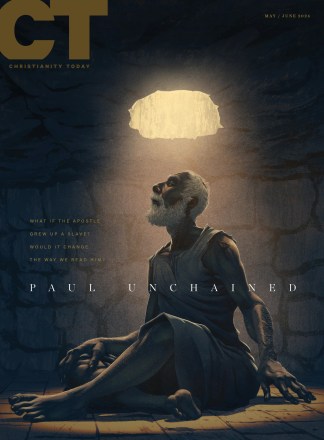
In this May/June issue, CT writers and editors offer ways you, our readers, can engage with people both visible and hidden in plain sight. In the pages that follow, Ericka Andersen brings a feature on the state of women and alcoholism in the church. There are probably women in your own community who have drinking struggles but don’t know how to ask for help and likely feel shame at the prospect of doing so. And we hope this cover story from Jordan Monson and Mark Fairchild gives you a new angle from which to see the apostle Paul and read his letters—whether individually or in community.

We also hope you’re encouraged by these stories and others in the following pages—such as one woman’s account of navigating church conflict and a report that helps us think about how to engage Christians with ADHD in our own faith communities.

God’s plan for the world (A; there is no B) is to be accomplished through the church of Jesus Christ. We pray our work here through these stories can be used by him to continue building it.

Whether you’ve been in the same physical location or church community for decades or God has you in a new place (literally or figuratively), we hope our work invigorates you to go deeper—in the Scriptures and in your own spheres of community.

Joy Allmond is executive editor at CT.

News
Wire Story

Died: Mandisa, ‘Overcomer’ Singer and American Idol Star

The Grammy-winning artist was found dead at her home in Nashville at age 47.

Mandisa

Mandisa

Christianity Today April 19, 2024
Paras Griffin / Getty Images for AFFIRM Films A Sony Company

Grammy Award-winning contemporary Christian singer Mandisa Lynn Hundley, a former Lifeway Christian Resources employee and top-10 American Idol finisher, was found dead Thursday at her Nashville home, her publicist announced on social media.

No cause of death was given.

“We can confirm that yesterday Mandisa was found in her home deceased. At this time we do not know the cause of death or any further details,” according to an official notice posted April 19 on the official X account of the performer known simply as Mandisa.

“We ask for your prayers for her family and closeknit circle of friends during this incredibly difficult time.”

Before finishing in the ninth spot on American Idol’s fifth season in 2005, Mandisa worked for Lifeway as a telephone customer service representative from 2000 to 2003, Lifeway told Baptist Press.

She partnered with the Lifeway women’s ministry team, performing and leading worship at some events, and later performed at Living Proof Live events.

https://twitter.com/BethMooreLPM/status/1781369128428745087

“Our team at Lifeway is heartbroken to hear of the passing of our friend and former co-worker,” Lifeway CEO Ben Mandrell told Baptist Press. “Her teammates recall the joy and kindness she brought to work every day. Our heartfelt prayers are with her family.”

Lakisha Mitchell, the late wife of Southern Baptist pastor Breonus Mitchell, inspired Mandisa’s hit “Overcomer,” the title song of the album that garnered a 2014 Grammy Award for Best Contemporary Christian Music Album. Breonus Mitchell, senior pastor of Mount Gilead Baptist Church in Hermitage, Tennessee, remarried in 2018.

“Obviously we are saddened by her transitioning,” he told Baptist Press. “Mandisa was just a bright light, a bright witness. She was true to her faith, even though she dealt with the depression and the issues with Kisha’s transitioning, she’d just rebound. And I think that song ‘Overcomer’ and her work just epitomize her life, how she’s just been this big overcomer of so many issues.”

Lakisha’s death from breast cancer in 2014 after the album’s success caused Mandisa to spiral into a deep and lengthy depression, which she overcame. But she continued to struggle with her mental health, sharing her issues publicly and in her 2022 book, Out of the Dark: My Journey Through the Shadows to Find God’s Joy.

“She’s just been a tremendous overcomer,” Mitchell said of Mandisa. “The Scriptures say we sorrow not as those who have no hope, and this is the hope we have, that even in the midst of death there is life. We’re saddened, but at the same time celebrate another young life, but a life well-lived.”

Overcomer also snagged Pop/Contemporary Album of the Year at the 2014 Gospel Music Association Dove Awards. Its lead single was certified as a platinum hit by the Recording Industry Association of America and was the title song of the Kendrick Brothers’ 2019 movie by the same title.

The Fisk University graduate sang with the Fisk Jubilee Singers while earning her baccalaureate.

Her 2007 debut album True Beauty gained her first Grammy Award nomination, leading the Top Christian Album chart and rising to No. 43 on the Billboard 200 Album chart.

Many lamented her death.

“Mandisa loved Jesus, and she used her unusually extensive platform to talk about Him at every turn,” K-Love chief media officer David Pierce posted on X. “Her kindness was epic, her smile electric, her voice massive, but it was no match for the size of her heart.

“Mandisa struggled, and she was vulnerable enough to share that with us, which helped us talk about our own struggles. Mandisa’s struggles are over, she is with the God she sang about now.”

News

Kenyan Pastors Are Praying for Haiti. They’re Also Shaping the Police Mission to Save It.

President William Ruto commissioned church leaders to meet with Haitian law enforcement, military representatives, and a gang leader to discuss Kenya’s security mission.

Kenya's first lady, Rachel Ruto, center, participates in a national prayer gathering for Haiti and other countries in downtown Nairobi on April 15.

Kenya's first lady, Rachel Ruto, center, participates in a national prayer gathering for Haiti and other countries in downtown Nairobi on April 15.

Christianity Today April 19, 2024
Courtesy Office of the First Lady of Kenya

Kenya’s leaders aren’t saying much publicly about the security force they plan to send to gang-embattled Haiti. But they’re talking a whole lot with God.

Last month, as armed groups escalated their insurgency in Port-au-Prince and plunged Haiti deeper into a historic humanitarian crisis, pastors advising Kenya’s government met for three days at a hotel in Nairobi to pray.

In a sky-blue conference room at the Weston Hotel, three Kenyan pastors joined Haitian and American ministry leaders and Kenya’s first lady, Rachel Ruto, to plead for divine assistance for the beleaguered Caribbean country. They prayed for the 2,500-person multinational police force Kenya has volunteered to lead to help Haitian law enforcement. At one point, meeting participants told CT, group members wept.

After two days of prayer, the first lady dropped in on an album release party in another part of the Weston, which President William Ruto owns, and announced her office had formed a prayer committee for Haiti. “We cannot allow our police to go to Haiti without prayer,” Rachel Ruto told fans of the Kenyan gospel group 1005 Songs & More.

Kenya agreed last October to spearhead a UN-authorized international security mission to Haiti, but the deployment has faced various delays, including legal challenges and questions about funding.

The prayer marathon was part of a broader effort by the Ruto administration to strategize “a spiritual solution for our police and people of Haiti,” according to the first lady. The initiative, coordinated by the administration’s “faith diplomacy” office, has so far included a national prayer gathering, a 40-day prayer guide for Haiti, and an official fact-finding trip to the United States.

For a government that has been largely tight-lipped about the police mission, the church outreach programs represent one of the most visible ways the administration has engaged the public about the plan. The Rutos, who are outspoken about their evangelical faith, took office in 2022 thanks to what many of the country’s Christians say was divine protection during a disputed election.

“Let us thank the Lord who gave our president such a burden to think about Haiti,” Julius Suubi, a pastor and spiritual advisor to the Rutos, told a crowd of roughly 1,000 pastors at an April 15 prayer service in downtown Nairobi. “Which president in Africa ever thinks about a country outside Africa?”

Earlier this month, the same group of pastors and the first lady’s staff traveled to the United States to meet with church and business leaders, US and Haitian officials, and representatives from law enforcement and the military. They also participated in a Zoom meeting with gang coalition leader Jimmy “Barbeque” Chérizier, according to Serge Musasilwa, a member of the delegation.

Musasilwa, the country director for a ministry in central Kenya called Segera Mission, said the group wanted to hear from people across all sectors of Haitian society, to better understand the challenges Kenya’s police would face. President Ruto commissioned the team to provide context to inform law enforcement and to increase the security mission’s odds of success, he said. The pastors wanted to know what civil society groups and churches say the problems are; they asked about solutions; they inquired about how well trained the gangs are and what motivates them.

The group is scheduled to present its findings to the president this month, in advance of a presidential trip to the United States in May that will include the first state visit by an African president to the White House in 16 years. Ruto, who says his country has a moral obligation to help Haiti, has insisted the security mission is moving forward—despite delays in funding the Biden administration has pledged to underwrite it ($40 million are currently being held up by Republicans in the US Congress).

Musasilwa is optimistic. “It’s going to be a new beginning for the country,” he told CT. But he says the president is eager to avoid mistakes that have plagued previous interventions in Haiti. “If you are guided only by the emotion, or by desperation, the risk is very high that you’ll find yourself on the list of those who failed.”

Part of the fact-finding trip was simply about identifying who is functioning as Haiti’s government. Haiti does not have a single elected official currently in office; the country has named a transitional council that is supposed to appoint a prime minister and prepare for eventual elections, but the council has not yet been sworn in.

For instance, Musasilwa said, he met for six hours with Haiti’s ambassador to Qatar, Francois Guillaume, trying to understand Haiti’s government structure.

“Assume that our forces are in Port-au-Prince today and they arrest one of the gangs,” Musasilwa said. “They would take him where? There is no judiciary.”

The multinational security mission, which many observers had hoped would deploy months ago, has been delayed in part by uncertainty over who exactly Kenyans would be working with. Haiti’s outgoing prime minister, Ariel Henry, signed partnership agreements with Kenya on March 1, shortly before gang attacks closed Haiti’s main international airport and stranded him outside the country.

“As much as we want our troops to come tomorrow, first of all, there’s no government in Haiti, so no order,” said Davis Kisotu, a pastor at an independent Pentecostal church who is close to the Rutos.

Kisotu, like the other Kenyan ministry leaders who traveled in the delegation, serves on the National Prayer Altar, a team in the first lady’s office that oversees church services at the presidential residence and works with pastors across Kenya to pray for government. They are not the only government team making preparations for the mission; Haitian officials have visited Nairobi, and Kenyan law enforcement have met with their Haitian counterparts in Port-au-Prince.

But while bureaucrats in New York and Washington iron out the operational details for the police mission, one of the Prayer Altar team’s jobs is also “to mobilize prayer and the men of God—Haitian pastors, US pastors and Kenya pastors and prayer warriors across the nations.”

To that end, pastors from across the country gathered Monday at the Kenyatta International Convention Centre, a facility nestled beside Kenya’s parliament and supreme court in the heart of Nairobi. The first lady addressed an energetic and supportive crowd as it waved flags and prayed for Kenya, for Israel, and for Haiti.

Other speakers, veering at times into tones fit for a campaign rally, prayed for peace in Haiti and praised President Ruto for his commitment to use Kenyan power as a force for international peace. Asunta Juma, host of Tracing the Mantles, a popular evangelical talk show, declared that Ruto has found favor with many world leaders because God’s favor is upon him. “We elected a leader who is going to provide leadership to the nations of the world,” she said.

The national gathering came at a time when other international church groups are in the midst of their own pushes for concerted prayer for Haiti. Across the United States, mission groups have been emailing and texting supporters with regular prayer requests. Baptist Haiti Mission, whose leadership has consulted with the Ruto administration, wants to draw a million prayer partners into its prayer campaign, which includes weekly livestreams.

In Kenya, the first lady’s faith diplomacy office has so far recruited at least 200 pastors to lead their churches through 40 days of prayer for Haiti, using a prayer guide produced by the National Altar. A copy of the 132-page guide, provided to CT, includes sweeping prayers for healing from the trauma of slavery, for deliverance from the “generational bondage and powers” of witchcraft, for the healing of deforested land, and for God to “flush out gangs and insurgents from their hiding places and deliver them into the hands of the police.”

“There’s something about Haiti that has captured the men and women of God in Kenya,” Suubi, the National Altar member who also leads Highway of Holiness Ministries, told CT.

Not every Christian leader is enamored.

Many Kenyans, including mainline Christians and some evangelicals, oppose their country’s involvement in Haiti. Lawmakers sued to stop it, leading to an injunction by Kenya’s highest court that the administration has tried to work around.

While Kenya’s last two presidents were Roman Catholics, Ruto rose to power with significant help from the country’s charismatic and Pentecostal church communities, many of whom view any criticism of Ruto as spiritual attack.

Sammy Wainaina, former provost of All Saints Cathedral in Nairobi and one of Kenya’s most prominent Anglicans, says the Kenya police are not equipped to deal with the political situation in Haiti.

“Kenya is currently facing a big shortage of police force,” Wainaina said. “Countries like the US should address the problems they have created in Haiti.”

Enoch Opuka, a lecturer on development studies at Africa International University who also happens to have taught Ruto in high school, thinks Haiti’s grinding poverty must be addressed before any other solution can work. Deploy massive amounts of aid, cancel all of Haiti’s debts, and facilitate dialogue between armed groups and government, he said; don’t deploy police.

“You don’t remove hunger by sending soldiers,” Opuka said.

Musasilwa is aware of the criticisms, which is why he says the fact-finding team has focused on listening to people across Haitian society and studying the failures of previous interventions in Haiti.

Among the recommendations in his report, for instance, will be that Kenya help Haiti facilitate a peace and reconciliation conference to bring as many Haitians as possible into conversations about its future—including gangs.

“We are not there to resolve their problems,” Musasilwa said. “We are there to support them in the solutions that fit for them.”

He said he has learned something for certain in his many conversations and his research into what has not worked in Haiti:

“If Kenya wants to succeed in this mission, there is only one key: It’s not to be perceived in one way or another that they are implementing US politics,” Musasilwa said. “That is something to pray for.”

With reporting from Moses Wasamu in Nairobi.

Andy Olsen is senior editor at CT.

addApple PodcastsDown ArrowDown ArrowDown Arrowarrow_left_altLeft ArrowLeft ArrowRight ArrowRight ArrowRight Arrowarrow_up_altUp ArrowUp ArrowAvailable at Amazoncaret-downCloseCloseellipseEmailEmailExpandExpandExternalExternalFacebookfacebook-squarefolderGiftGiftGooglegoogleGoogle KeephamburgerInstagraminstagram-squareLinkLinklinkedin-squareListenListenListenChristianity TodayCT Creative Studio Logologo_orgMegaphoneMenuMenupausePinterestPlayPlayPocketPodcastprintremoveRSSRSSSaveSavesaveSearchSearchsearchSpotifyStitcherTelegramTable of ContentsTable of Contentstwitter-squareWhatsAppXYouTubeYouTube