Ideas

The Case Against VIP Tickets at Christian Conferences

Exclusive perks may be well-intended business decisions, but Christian gatherings shouldn’t reinforce economic hierarchy.

A big group of people separated from a small group of people.
Christianity Today December 15, 2025
Illustration by Elizabeth Kaye / Source Images: Unsplash

When I was younger, my family would take trips to Jacksonville to visit my great-grandma Alice, or Mama. I remember the small profile of Mama’s swollen ankles against the lilac hem of her duster. She was happy to see us. Her sweet, senescent cheekbone touched against the chubbiness of mine as we hugged. The house smelled like my mother’s cooking but somehow better. Mama was always cooking before anyone called, cutting her sweet potatoes as if the stillness of day meant that somebody, somewhere, might be hungry.

The reason Mama knew how to love this way so well was the same reason she prepared a table in an empty house. Mama fed people before she knew who was coming. I didn’t know then that what she was doing was discipleship: she was showing me hospitality without hierarchy.

Mama went on to be with Jesus some time ago, but what she embodied never departed from me. As I grew older, this picture of access made me wrestle with parts of my life where my faith intersected with market realities. As an adult, I have spent a massive amount of my time writing, performing, and traveling as a spoken-word artist. I’ve been in different spaces that magnify God’s presence: youth conferences, Christian poetry events, workshops, and festivals. I’ve also earned my income there.

To gather Christians in large numbers for art, inspiration, and spiritual enrichment, we create events that require a financial structure (i.e., tickets, tiers, passes, and exclusive access) and make the gathering viable. It’s a system shaped partly by calling, partly by creativity, and partly by raw economics. We consider ticket sales, budgeting, travel costs, artist and speaker fees, and overall production value. The gatherings are indeed ministries, but financial imperatives remain at play. How else, after all, would I be able to cover my school’s tuition, groceries, and gas?

At the same time, I have grown to feel uneasy about some things, namely VIP passes and more expensive tickets offering a small number of attendees backstage access, meet and greets, and a host of benefits other attendees don’t get to experience. Christian musicians have received some criticisms for offering a VIP experience. But these tickets are also sold at conferences and other non-musical events, which are my wheelhouse and primary concern here.

While it’s true high-access experiences can subsidize costs for attendees across the board, our quest to generate revenue through these measures is reinforcing existing economic hierarchies and deserves critical thought.

Conferences and sporadic Christian events are not the local church, and I’m not suggesting they should be treated as so. They don’t carry the same covenantal weight, elders, pastoral responsibility, or scriptural mandate of a gathered body. They are not mandatory for Chrisitan formation, nor are they meant to replace the means of grace that shape the everyday lives of believers.

But even while conferences are not church, they are important. Gatherings shape the Christian imagination and our discipleship. And when the spaces that shape us become financially stratified, they risk discipling us into a hierarchy Jesus never modeled (James 2:1-9). My concern is not that conferences cost money; it’s what happens when the cost subtly separates us from each other and determines who can afford to be in some rooms and who can’t (and I know some can’t because they have told me so).

For a couple of years in my life, I traveled with the Poets in Autumn (PIA), a group of Christian poets who toured city to city for more than two months.

People came to see us do something creative and faithful. We performed poetry mostly in churches, where people gathered not just to hear poetry but to be inspired, challenged, entertained, and in some ways discipled—even if they weren’t aware of it yet. I saw firsthand the beauty of those spaces. Attendees who wouldn’t normally be among one another were worshiping together while communities formed in church foyers.

Our tour schedule included a long list of cities where we sold tickets for regular admissions as well as VIP passes. But when the tour reached my hometown of Philadelphia, my senior pastor at the time did something special – he volunteered to cover the entire show. Every seat we had to offer that day would be free. He only had one caveat: Let everybody come in and experience the same thing.

People came out in droves, not just from Philly but from New York City, Delaware, Virginia, even Florida. That night, the building was full. Many were added to the church and found community and a language for what they had been carrying up until this point. It wasn’t perfect, nor was it meant to be a permanent model. But it’s a wonderful glimpse of what took place in Philly for one night, all a result of one person’s generosity.

Some churches might be able to partner with conferences and replicate these types of experiences. However, I’m aware that will be a rare occurrence, so here’s a more sustainable option: “VIP” access doesn’t need to disappear; it just needs to be reframed.

Instead of offering proximity to speakers, teachers, poets and the like, these higher-priced tickets can provide a service. One idea is to honor patrons who chose to spend more, instead of simply rewarding wealth. When Christian gatherings advertise higher-priced VIP tickets, they can tell people those tickets will subsidize costs for other attendees or simply help sustain the ministry. People who purchase VIP tickets wouldn’t get any exclusive access or benefits, but as with charity donations, they can receive thank-you cards expressing gratitude.

There are tradeoffs, of course. Some people pay more only if they know they will get something extra in return. But on the other hand, if attendees who pay a (subsidized) ticket are informed that VIP ticket holders are lowering the cost of admission or sustaining the ministry out of pure liberality, it would spur more appreciation and perhaps a sense of community in the overall attendance.

If tiered tickets remain, let them serve as Mama would, with those who buy them knowing the fullest plate feeds others well. The highest tier will invest the most financially in the body. This type of new model would expand the work of the conferences and ministries instead of the distance between attendees. In other words, the VIP label exists for a good reason—it’s more generous.

Jazer Willis is a poet, writer, and creative theologian studying at Emory University’s Candler School of Theology. His work explores spirituality, memory, and culture.

Ideas

Turn Toward Each Other and Away from the Screen

Contributor

Perhaps technology has changed everything. But God is still here, still wiring humans for connection and presence.

Two students sitting at desks facing each other.
Christianity Today December 12, 2025
Illustration by Elizabeth Kaye / Source Images: WikiMedia Commons

Over the past few Sunday mornings, I was part of a soul-care cohort at our church. Repeatedly, the pastor leading the class would ask, “How is your soul?”

At the start, he gave us a self-assessment to take that left many of us feeling frantic, frazzled by our own answers and our sense of urgency around improvement. Pastor Steve, sensing the frenetic energy in the room, gently called us back to the present, reminding us to slow down, pay attention, and ask God what he wants us to see and how we can invite him here. 

Don’t jump too quickly to trying to solve everything at once, he’d say.

When I write about technology in schools, I often need to give myself the same reminder. This is a conversation that can’t be simplified. We can’t go back to the edtech of the 1990s, to Oregon Trail and typing class (which, ironically, seems to be missing in much of education today) and computers limited as a tool to use then set aside to go play outside. 

As one secondary teacher told me, it’s important that we teach students how to use technological tools—managing projects, checking due dates, and professionally communicating via email—to ensure they are prepared for college and career. Indeed, we all need to learn how to use digital technology responsibly. But it’s become so ubiquitous in primary education that responsibility feels out of reach. 

It’s tempting to either give up and stop resisting or veer into full-blown panic about the academic outcomes we’re seeing in many American schools. How are we supposed to prepare our children for a tech-infused future we can’t comprehend? Do we resign ourselves to a post-literate, post-numerate future where machines do all our thinking?

I’ve spent nearly a decade dealing with school tech as a mother and half a decade considering it on the national scale as a journalist. If those years have taught me anything, it’s that we need to slow down. 

We implemented tech-forward education with little thought for the consequences, dreaming about what could be possible instead of carefully discerning what would be wise. Now we solve each tech problem with a new tech solution, layering program on program and screen on screen and disregarding how poorly many of these solutions play out in real life, at real schools, for real children.

It’s also tempting to point fingers. Responsibility for our school tech woes isn’t evenly distributed, but it’s not the bad behavior of just one group that got us here. Educational technology, or edtech, companies use lobbyists to sell their products to states and schools. Districts buy iPads for kindergartners because, well, everyone else is doing it and it’s one way to manage a too-large class of 26 kids. Teachers use virtual quizzes to save time and assign virtual textbooks because that’s what the school district purchased for them. Students cheat and take shortcuts to get through rote work in glitchy programs on their school-issued devices. And parents are often left in the dark, unaware of or ambivalent about how much time at school is spent on screens—perhaps because we have similar habits ourselves.

Slow down, pay attention, and ask God what he wants us to see and how we can invite him here.

I’m writing this article in an old church turned coffee shop in Battle Ground, Washington. I’m spending a few days out here with my elderly grandfather, caring for him after he took a fall. He is 96 and doesn’t have internet or good cell service at the house, so I used Google to find the closest coffee shop with Wi-Fi. (The glories of technology!) 

I didn’t expect to walk into an old church. But here I am, and on the first Sunday of Advent. Christmas carols are playing from the speaker mounted in the loft where the choir used to sing. It’s a little sad, but as I listen to the girls behind me discuss what passage from 1 John they want to study in their Bible class, I think, God is still here, even if this place looks nothing like what its old parishioners knew. 

Tech has transformed—and in some ways, ruined—my children’s education. Similar to the old church, their schooling looks nothing like what I expected. Sometimes, when I think about it too long, I spin myself into a tizzy, worried and anxious about many things (Luke 10:41). But God is still here too.

The girls behind me settle on 1 John 4: “The one who is in you is greater than the one who is the world,” one reads, sitting on a couch where the pulpit used to be (v. 4). She goes over the whole chapter aloud. 

In sending his only Son Jesus, God “showed his love among us,” it says in verse 9. In Advent, we anticipate that coming: the Word made flesh. Embodied. Incarnational. Not God in a spiritual or digital form, but God who sits at the table and laughs with you. God at a coffee shop, if you will. 

And maybe that is the invitation, the answer to all our worries about tech. People are still hungry for real, human connection. I see that need all around me, and even many who work with technology and love it more than I do see the need too. 

Recently I spoke to Ginger Schantz, who operates a tech education center, Venture Robotics, in Midland, Texas, with her husband, Dann. “The students we have worked with value the relationship more than the technology lessons,” she told me. “The students always want to be around Dann. Yes, they like our gadgets, but the shine wears off after a while and they just like talking to him and the other kids that are there.” 

This is what 1 John 4:7 requires of us: to love one another. In our time, that must include—as often as possible—turning away from the machines and back to the moment. Back to the living and breathing, complicated and curious person sitting across the table from us—or across the classroom.

Last week, I stopped by my daughter’s high school and noticed a series of colorful, student-made research posters hanging in a hallway, a scene more common on an elementary campus than a campus like this. Each delved into the history, geography, and culture of a different country. 

I spent a few minutes chatting with the principal, and when I remarked on how good it was to see that work, the principal told me it was there by popular demand: Last year’s student surveys revealed a weariness with online work, so with her encouragement, teachers were doing more offline again. I imagined the scene in the classroom where those posters were made: students talking as they worked, sharing markers and ideas and jokes. 

Just down the hall was an English room, where my daughter’s class was reading Romeo and Juliet aloud. A few doors past that, in the intro to engineering class, the students were building bridges and testing them for strength, competing among themselves with the good-natured intensity only 15-year-old boys can muster. 

Perhaps technology has changed everything. But walking through the halls that afternoon reminded me that it hasn’t changed what it means to be human. God is still here, still wiring humans for connection and presence. Maybe we’ve gone too fast and too far in the wrong direction, but it isn’t too late to slow down and pay attention, turning toward one another instead of toward machines.

Carrie McKean is a West Texas–based writer whose work has appeared in The New York TimesThe Atlantic, and Texas Monthly magazine. Find her at carriemckean.com.

History

The Call to Art, Africa, and Politics

In 1964, CT urged Christians to “be what they really are—new men and women in Christ.”

An image from the Congo in 1964.
Christianity Today December 12, 2025
Illustration by Christianity Today / Source Images: Getty

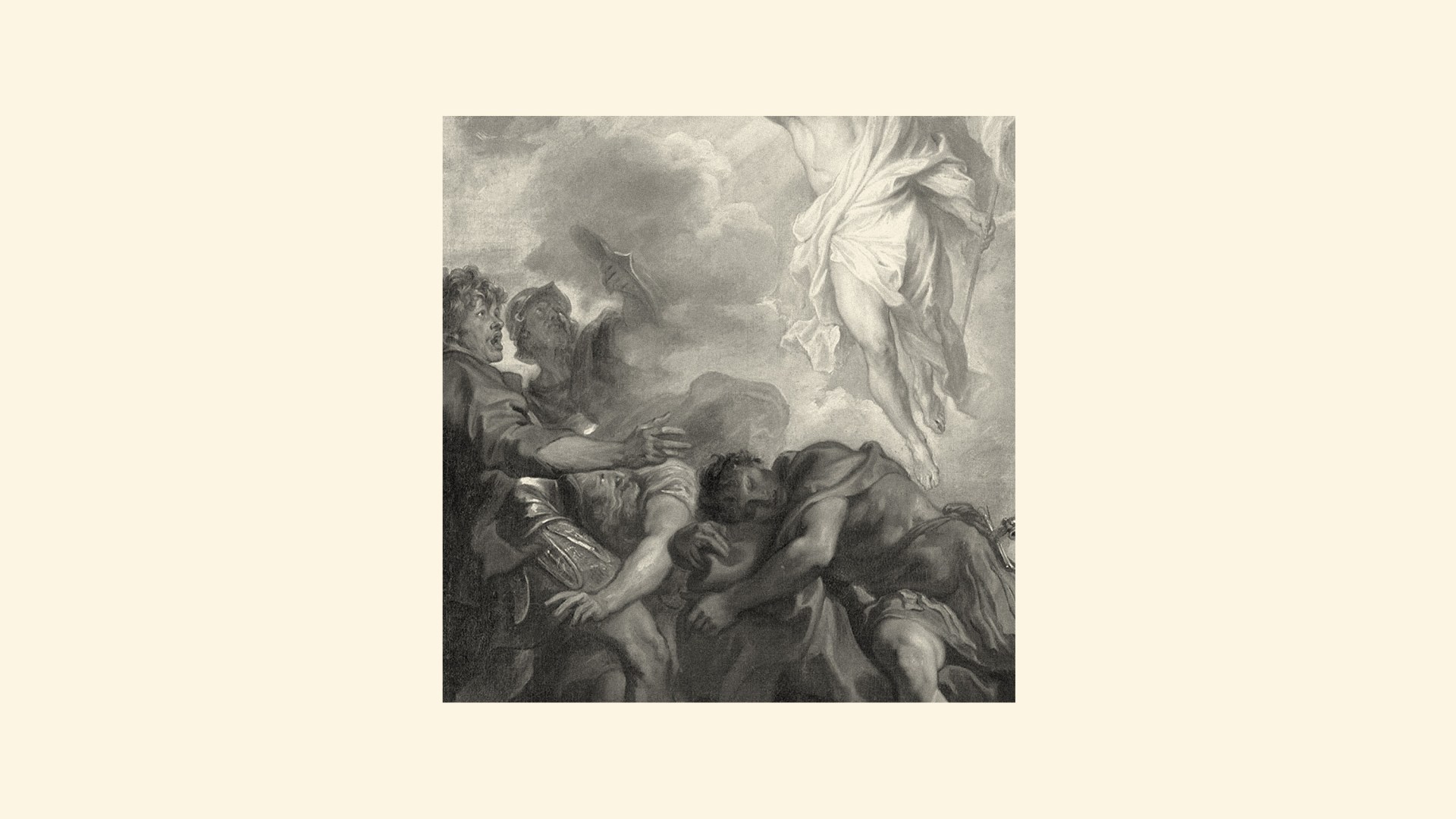
The same day in 1963 that John F. Kennedy died violently in Dallas, the Christian writer C. S. Lewis died quietly at his home in Oxford. The following year, CT published an appreciation of Lewis’s life and work

The death of Clive Staples Lewis on November 22 removed from the world one of its most lucid, winsome, and powerful writers on Christianity. We have reason to thank God that such a man was raised up in our time. … 

Certain themes run all through Lewis’s books, whether expository or fictional. One is that every living being is destined for everlasting life and that every moment of life is a preparation for that condition. …  But perhaps the most persistent theme in Lewis is that of man’s longing for Joy. He calls this longing “the inconsolable secret” that inhabits the soul of every man, a desire that no natural happiness can ever satisfy. It is lifelong pointer toward heaven, a nostalgia to cross empty spaces and be joined to the true reality from which we now feel cut off. …

He was a Christian of no uncertain stamp. He managed the difficult feat of successfully integrating his scholarship and his religion. If we add to these things the gifts of a lively imagination, a vigorous and witty mind, and a brilliance of language, we can discover why his books have sold widely and why his readers are steadily on the increase.

Perhaps inspired by Lewis, CT published a slate of articles on Christians and art in 1964, encouraging readers to pick up Shakespeare and the poet Heinrich Heine and to wrestle with the work of Vladimir Nabokov and Tennessee Williams. A reporter noted that Billy Graham “laced his messages with heavy doses” of writers Ernest Hemingway, John Steinbeck, and Eugene O’Neill. And CT asked evangelical painter Grant Reynard to write “Christians and Art: A Painter’s View.” 

Christians should be encouraged to go to art museums to study great pictures on biblical themes. … This process of attaining a measure of good taste in the Christian use of art will take time, but God will assuredly be pleased at any use of our leisure devoted to bringing inspiration, dignity, and reverence to the worship of our Saviour Jesus Christ through a better quality of art. … 

Christians will do well to spend more time in raising their level of art appreciation. Art, whether that of the great masters or the humbler efforts of lesser talents, belongs to those things God has given us to enjoy. And in its truest integrity it exists for the glory of God. We need architecture that fittingly houses places of worship, music that worthily praises God the Father and brings men closer to God the Son, pictures on the walls of our homes that, while not necessarily religious, are examples of good art. We need Christian artists of dedicated talent who will extend their horizons in humility and devotion to the true praise of the Giver of talent, who is best honored by the faithful use of his good gifts.

Evangelicals looked for other ways to engage culture as well. CT reported that InterVarsity Christian Fellowship, Campus Crusade for Christ, and other evangelical campus ministers were sending young believers to spring break hot spots

These groups are using what might be called guerrilla tactics to penetrate alien, and often hostile, territory. This year at Fort Lauderdale, radio antennas on cars were stacked high with beer cans; at Daytona Beach, sweatshirts bore such slogans as “Help Stamp Out Virginity.” On Balboa Island, on the West Coast, Campus Crusade hung out its sign at headquarters, while across the street someone hung out another sign bearing the legend, “Booze is the Answer.”

But the unorthodox methods have proved themselves, according to their proponents. … 

At Newport Beach–Balboa Island, Campus Crusade teams of two strolled up and down the beaches with their questionnaires for a “religious opinion survey.” More than 1,000 forms were completed, and more than 400 young people accepted Christ as Saviour, according to Josh McDowell, a crusade director.

“No, we don’t convince everyone we talk to,” said McDowell, “but we give everyone a chance to hear the message.” Members talked to some 1,300 vacationers on the beaches, on the streets, and at twist parties.

CT published a special issue on Christianity in post-colonial Africa, looking at local churches and missions in the northern, western, central, eastern, and southern regions. A Canadian missionary to Canada explained the need for a “Reassessment in Africa.” 

Before 1950 there were only four independent states in Africa: Ethiopia, Egypt, Liberia, and South Africa. By the end of 1964 there will be thirty-five. One-third of the U. N. General Assembly’s seats are filled today with Africans once represented by half a dozen European powers. … Africa is so vast (the United States, Europe, and India could be tucked into it with much room to spare) that inland villages continue traditional patterns of living while coastal areas are rocked by the impact of rapid change. The evolution of civilization in Europe, molded by trial and error over half a millennium, has been telescoped into a few decades in Africa. …

Some seed planted by the gospel husbandmen withered, some was bad, some took root and flourished. The depth of the roots is being tested in 1964 by the scorching heat of persecution and the violent winds of change. The majority of people remain outside the Church. … On the other hand, every leader in Africa has at some time had contact with a mission school. Dispensaries and hospitals carry on a Christian witness across the continent. Churches are well filled.

Before the year was over, violence broke out in what was then called the Republic of the Congo. CT reported that the Communist-backed rebels targeted Christians, killing Protestant and Catholic ministers.  

In a show of savagery that shocked the intelligent world, bearded Congolese rebels last month turned back the clock and reverted to a barbarian age. …

The youngest American victim was Miss Phyllis Rine, 25, a teacher from Cincinnati who signed up for service in Congo in 1960, the year the country assumed independence amidst considerable turmoil. Miss Rine was then a student at Cincinnati Bible Seminary. After graduation she taught at church and public schools in the Cincinnati area. She told the mission board that “during this time I came to know and love the Negro people. I’ve been challenged by the great need for workers in the Congo.” 

She went to Congo in 1962 under the African Christian Mission, a small independent board of autonomous Churches of Christ. An associate recalls that a few days before the rebels arrived Miss Rine “was all enthused about her plan to ride her bicycle into the Stanleyville suburbs and teach and preach on the street corners.”

Miss Rine was killed by machine-gun fire in a square in Stanleyville, near the monument that stands in memory of the late Patrice Lumumba, the leftist who was Congo’s first premier.

Back in the United States, President Lyndon Johnson, sworn in after Kennedy’s assassination, passed a landmark civil rights bill. CT published a roundup of commentary for and against the legislation and an editorial reflecting on Christians’ moral responsibility at this pivotal moment. 

The period ahead may well be domestically the most crucial in our history since the Civil War. Complex problems of compliance and enforcement will not quickly be solved. Long-established traditions will not easily be changed. In their response to the new law, our people face a searching test of civic maturity and responsibility. If some of the provisions of the civil rights act prove incapable of enforcement, superfluous, or unconstitutional, these flaws are bound to be revealed and, it is to be hoped, corrected by democratic processes. In the meantime great restraint in demonstrations and avoidance of inflammatory actions are essential.

But what, it may be asked, can Christians do in the present situation? The answer to that question must be given with humility. Surely now is the time to speak words of healing, repentance, love, and forgiveness according to the Word of God. …

In a new and critical situation when the stability of our democracy is being tested, let Christians be what they really are—new men and women in Christ. Let them obey the God-ordained authority of their government, while manifesting love for their neighbors. And let them also proclaim the Gospel. Short of this there can be no real fulfillment of Christian responsibility.

Republicans nominated conservative Barry Goldwater to run against Johnson in the November election.

The 55-year-old Goldwater, despite a decisive first-ballot victory at the party convention in San Francisco, is one of the most controversial presidential nominees in American history.

The conservative political views of the one-time Episcopal altar boy set him at odds with many American religious leaders whose social philosophy promotes a centralization of government, which Goldwater opposes. 

On the other hand, rank-and-file fundamentalists might line up behind Goldwater in appreciable numbers. … Although not a particularly regular church-goer, Senator Goldwater still is an Episcopal communicant in good standing. He has said that next to his mother the two people to whom he owed the most were [Episcopal priest William] Scarlett and Bishop Walter Mitchell. Ironically, both Scarlett and Mitchell, now retired, take sharp issue with Goldwater’s political views.

CT noted that no Protestant newspaper or magazine endorsed Goldwater and that most editors preferred Johnson—although they couldn’t muster much enthusiasm for the choice. 

[A] Christianity Today poll embraced the entire memberships of the Associated Church Press (173 publications) and the Evangelical Press Association (161 publications). Nearly all Protestant periodicals in the United States belong to one or the other of these organizations. …

Of those who responded (180 U. S. editors), 98 indicated a personal preference for Johnson and 60 for Goldwater, while 22 expressed no preference. … The questionnaire did not ask responders to identify themselves and asked for no comments. A number of editors, however, replied in terms of a “sterile choice,” “the lesser of two evils,” and so forth.

That the decision was difficult for some editors was reflected in such ambivalent statements as … “I personally do not favor Goldwater but plan to vote for him.”

“When it comes to the Democrats, I’m not happy about the party, and when it comes to the Republicans I’m not happy about the man,” wrote another editor. He had circled President Johnson’s name.

Goldwater won majorities in his home state of Arizona and five Southern states where Johnson’s support for civil rights was wildly unpopular. The Democratic candidate won everywhere else, taking 486 of the 538 electoral college votes. CT called it a “thumping victory.” The magazine also reported that evangelicals hoping to influence Johnson’s administration should look to “59-year-old Dr. Clyde W. Taylor,” who was “the closest thing to an evangelical lobby in Washington.” 

Taylor’s dedication and multi-faceted Christian service have earned him the respect of many as God’s handyman in Washington. His coming in 1944 gave [the National Association of Evangelicals] the distinction of being the first Protestant interdenominational organization to open an office in the capital city. Since then the operation has performed a myriad of services for U. S. evangelicals ranging from visa aid to tax counsel and chaplain placement.

Taylor seldom fraternizes with Washington’s elite, but he holds the confidence of a host of knowledgeable contacts in echelons where most decisions are made. … He seizes every opportunity to brief the rank and file on the status of evangelical advance. In the heat of delivery he is sometimes given to overstatement, but those who know him best say it is almost inevitable in one who is such a vivid thinker. His latest thoughts are on NAE’s future: “We plan to re-examine our whole purpose and policy to see how we can have a more dynamic testimony in society.”

Books

The Debate over Government Overreach Started in 1776

Three books to read this month on politics and public life.

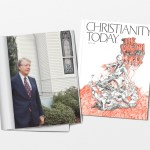
Images of the three books from the piece.
Christianity Today December 12, 2025
Illustration by Christianity Today

This piece was adapted from CT’s books newsletter. Subscribe here.

The Pursuit of Liberty, How Hamilton vs. Jefferson Ignited the Lasting Battle Over Power in America, Jeffrey Rosen (Simon & Schuster, 2025)

In his latest book, Jeffrey Rosen, president of the National Constitution Center, wastes no time plunging readers into an American history primer. From page 1, he zeroes in on the central disagreement of two Founding Fathers which, he holds, still animates our current national debate about liberty and governmental power.

Always fearful of tyrants and demagogues, Thomas Jefferson supported crafting a small and weak federal government to keep states’ rights and individual liberties robust. Fearful of mob rule, Alexander Hamilton saw the advantages of a strong central government helmed by a powerful executive.

The tension between the two views has often, though not always, “kept American politics from descending into violence,” Rosen writes.

The debate between the two is a familiar one all the way back to classrooms, but Rosen’s offering focuses on tracing the “competing threads” of Hamilton’s and Jefferson’s ideas from the nucleus of America to present-day politics. He notes how both views have found champions throughout the “tapestry” of American history, from the Civil War to the New Deal, and continue to find expression in modern debates around the administrative state and the size of government.

His thesis—that the founders’ debate explains “nearly everything” about American political history—runs the risk of oversimplification, but history nerds and political junkies alike will find much to enjoy in Rosen’s history tour.

Listening to the Law: Reflections on the Court and Constitution, Amy Coney Barrett (Penguin Random House, 2025)

Even for folks who are not constitutional law nerds, Listening to the Law provides a fascinating glimpse into the life of one of the most powerful women in America. Supreme Court Justice Amy Coney Barrett’s book is part autobiography, part civics primer on the inner workings of the high court, and part constitutional treatise.

The personal details she includes about her family, school-age children, and life before her appointment are sparse yet humanizing. Occasionally, her anecdotes are humorous, such as the time she snuck out of Mass through a side door and scaled a fence in high heels to avoid camera crews.

Coney Barrett also explains how the Supreme Court works—why and how the justices accept or reject certain cases, how she personally prepares for oral arguments, and how she and her colleagues jockey each other into siding with their interpretation of the right ruling.

A devout Catholic, she defends the ability of people of faith to faithfully follow the law rather than their own moral views.

“Whatever the source of the conviction, it cannot affect the outcome of the case,” she argues, after discussing a case where she voted in favor of upholding the death penalty despite her own moral repugnance to capital punishment.

While there are plenty of high-profile cases relating to the current administration that she doesn’t address, she does discuss the most controversial ruling the Supreme Court has made in recent years, Dobbs v. Jackson Women’s Health Organization. As she had not written a separate concurrence with the decision overturning the national right to abortion, her argument (no spoilers!) is worth perusing.

Party of the People: Inside the Multiracial Populist Coalition Remaking the GOP, Patrick Ruffini (Simon & Schuster, 2023)

In the wake of the last presidential election, Patrick Ruffini received renewed attention for writing the book that “predicted the 2024 election.” It was well-deserved. Many of Ruffini’s insights in his 2023 book, Party of the People: Inside the Multiracial Populist Coalition Remaking the GOP, hold up, even on a revisit two years later.

Ruffini, a Republican pollster and cofounder of the polling firm Echelon Insights, draws from a deep well of experience in mapping the sentiments of American voters to explain the gains Republicans made among racial and ethnic minorities.

Partisan affinity is increasingly determined by whether a voter has a college diploma, he argues, rather than race, ethnicity, or income. Democratic candidate Kamala Harris dominated among voters with a college degree in the last election, winning them by 16 percentage points. But only 40 percent of all voters have a college degree, and Donald Trump captured voters without one by a double-digit margin at 14 percentage points.

This multiracial working-class coalition is particularly sympathetic, Ruffini holds, to a party focused on kitchen table issues over cultural issues vis-a-vis race and gender. Ruffini notes historic GOP gains among Hispanic voters and other immigrant communities. The 2024 election continued that trend, as Trump captured nearly half of Hispanic voters and made gains among immigrants, Asian voters and Black men.

It’s still an open question, especially in the wake of the recent midterm election, whether the right will be able to make convincing economic arguments, steer clear of culture war dumpster fires, and hold onto those gains. But Ruffini’s core argument—that demography is decidedly not destiny—should keep both parties vigilant.

Harvest Prude is national political correspondent for Christianity Today.

Church Life

The Chinese Christian Behind 2,000 Hymns

Lü Xiaomin never received formal music training. But her worship songs have made her a household name in China’s churches.

An image of Lu Xiaomin.
Christianity Today December 11, 2025
Illustration by Christianity Today / Source Images: Lu Xiaomin‌, WikiMedia Commons

At 5 a.m. every day, Lü Xiaomin kneels on the floor in a dimly lit room of an apartment in northern China. She sings a hymn aloud, reads a passage of Scripture, and prays to God. Sometimes, she meets other believers online or in person to read God’s Word together. After breakfast and a short walk, her schedule fills with ministry work, like sharing her life testimony with people or preparing Bible studies.

Lü’s lifestyle embodies the signature worship song she composed in the early 1990s, “Five O’clock in the Morning in China.” In a lilting melody, the song declares,

At five o’clock in the morning in China,
You hear the sound of people praying.
Prayers bring revival and peace.
It brings unity and victory …
Soaring over lakes and mountains,
Melting the coldest of hearts.

Lü’s vocation as a hymn writer might seem surprising, as she never received any formal music training and learned how to write Chinese characters from a dictionary while shepherding sheep in a field. But her songs have made her a household name—“Sister Xiaomin”—among Chinese Christians worldwide.

“I don’t really understand music theory, but I know the Spirit gives the song, and I just write it down when I receive it,” Lü said. “I am a grassroot, a grassroot filled with the Holy Spirit.”

Lü was born in 1970 to a non-Christian Hui-minority family in Fangcheng, a county in northern China. Her parents planned to give her away to another family when she was 10 days old, but a big flood occurred on the day this was going to happen. “It was God’s blessing to our family,” her mother said in the 2000 documentary The Cross: Jesus in China.

In junior high, Lü had a chronic sinus infection and constantly felt dizzy and nauseous. She decided to drop out of school and began working as a farmer. As she grappled with her poor health, her aunt encouraged her to come to church and told her that God would heal her.

“Often, I sat down and looked at the sky, the birds, the flowers, the trees, the grass, and the fields,” Lü said in the documentary. “In my heart, I knew all these were the works of a creator, but I didn’t know who he was and what his name was.”

After the conversation with her aunt, Lü realized that God was the creator she had been searching for. She rushed to her aunt’s home, interrupted her dinner, and asked her to bring her to church immediately. The 19-year-old accepted Christ that very night.

The following year, Lü joined the Fangcheng Fellowship—one of the largest house church networks in China—and became a lay evangelist. One night, after encountering the Holy Spirit during a rural house church revival meeting, she felt restless and could not sleep. Suddenly, the melody and lyrics of a song came to her in the middle of the night, and she burst into spontaneous worship.

This tune became the first hymn she wrote: “Bring Your Joy,” which exhorts believers to lay down their burdens and live out the gospel together. This song also sparked the stirrings of a movement known as Canaan Hymns: a collection of more than 2,200 songs with catchy, colloquial lyrics set to emotionally stirring melodies in the style of a Chinese folk song.

Lü’s initial hymn-writing endeavors were born out of the revival of Christianity in China between 1989 and 1998. This was a golden period where the faith spread outward from rural areas as believers shared a fervent commitment to telling people about the gospel, even amid suffering.

Hundreds of believers from around the country would travel to Lü’s town to worship together in the small house and courtyard of a host family. These meetings were often vibrant, overflowing with the power of the Holy Spirit, Lü recalled.

When the meetings ended, believers would take home recordings of Lü’s hymns on cassette tapes to share them with their communities. Itinerant preachers also brought her songs to other parts of China, like Yunnan and Xinjiang. Many of these preachers had little or no financial support. Whenever they met each other, they would often sing the hymn “Lord, May You Hold Our Hands” with tears streaming down their faces as they petitioned God loudly for strength and tenacity.

In the early aughts, Lü’s hymns moved from lyrics that pleaded for divine intervention and mercy to ones that professed God’s unconditional love as the church grew into maturity. For instance, the song “There Really Is a God Who Loves You” affirms that God bestows breath on us and forgives us each day. In 2002, Chinese Canadian composer An-lun Huang created formal musical scores for these hymns, helping them to gain wider recognition in churches across China and the Chinese diaspora.

From 2009, Chinese churches gradually shifted from rural house churches to more urban dwellings. Lü recognized widening divisions in believers’ demographic profiles and denominations. Her conviction to compose hymns to unite people with a common vision of their mission grew.

During this time, the Chinese church rekindled the Back to Jerusalem movement, encouraging believers to share the Good News from the east to the west as a means of fulfilling the Great Commission. Lü’s hymn “Mission of China: Preach the Gospel” captured this sentiment well: “The wheels roll, the road is long, and the Chinese church must preach the gospel. … The Holy [Spirit’s] flame has been passed down to this day, miraculously guided by the Lord.”

As Lü’s fame spread, she experienced many trials and was often the subject of nasty rumors. Once, she heard gossip that her son had a foreign father because of her trips for overseas ministry. Other times, she faced pressure to curb her efforts to share the Christian faith. Some people she shared her faith with, however, ended up watching The Cross documentary about her life and unexpectedly decided to pray to God.

Lü also came to realize she had often overwhelmed her husband with her expectations of ministry life by pressuring him to read Scripture, pray, and attend gatherings. Yet he faithfully supported her ministry and did everything with patience and dedication. She resolved to embrace gratitude and humility and view life and service from the Lord’s perspective.

Some believers find Lü’s hymns too China-centric. The lyrics of one hymn say, “China, facing the baptism of life and death / You must be in awe. Only then will China be most beautiful.” Another hymn declares God’s power and sovereignty over the entire country.

Lü is dismissive of this criticism. “China carries a double debt—not only to Jesus but also to the missionaries who once shed their blood on Chinese soil,” she said. “Why did God love China so much as to send so many missionaries here?”

Other believers feel that Lü’s hymns sound too old-fashioned. But Lü reckons that hymn writing is not about honing an artistic product to perfection in a bid to please listeners. Instead, the hymns she writes should be a channel of confession, intercession, evangelism, and mission in and through the church.

“When songs become too polished, they lose their earthiness and originality, and brothers and sisters struggle to follow [the lyrics],” she said.

Wu, a pastor in his 40s from the eastern part of China, grew up listening to Canaan Hymns. He continues to cling to these songs, as they remind him to have steadfast faith in God. The first 200 hymns Lü composed are especially moving to him, and the congregations he planted regularly sing these songs in their gatherings.

Some younger Chinese believers are committed to making Lü’s hymns sound more contemporary. In July, Christian worship group Deep Spring Band released a music video featuring Lü’s hymn “We Are Dear Brothers.” The group performed the song while beating large drums on the banks of the Yellow River, singing, “We are brothers, forever inseparable, / One Lord, one faith, one baptism, sealed with the Holy Spirit.”

Two years ago, the band recorded a music video for another of Lü’s songs, “Blessings to You, the Campus in my Heart,” which described God pouring out his love over schools in the country.

“We love Canaan Hymns because they touch our souls deeply, regardless of age,” said Yao, one of the band members. “We want [her songs] to reach out to the young generation of the digital age with this music video, as many are lost in isolation and depression.”

Lü’s hymns continue to be popular in Chinese diasporic churches in the US and elsewhere. Congregants at a Chinese church in Australia frequently sing these songs as they resonate with the lived experiences of their brothers and sisters in Christ from Mainland China, said Tin, their 60-year-old lead pastor.

In the last five years, Lü’s hymns have adopted a more prophetic tone, often urging believers to live with a sense of eschatological urgency amid worldwide crises. As the COVID-19 pandemic spread across China, she wrote “Wuhan, Wuhan, You Are Not Alone” to encourage people in the city to persevere. Another song, “You Are the Ark in the Great Flood,” proclaims God as a refuge in disaster, a beacon of light, and a home for prodigals.

More than three decades after she penned her first song, Lü continues to get up at 5 a.m. daily to pray, read the Bible, and write hymns for the Chinese church. Her greatest longing is to lead people to know Jesus more intimately.

“I must keep learning—Scripture, worship, service—not to please anyone but to obey the Spirit’s prompting,” she said.

Culture

The Surprising Joys of a Gift-Free Christmas

Amid peak consumerism season, I prayed for ways to teach my children about selfless giving.

Empty Christmas gifts.
Christianity Today December 11, 2025
Illustration by Elizabeth Kaye

Three years ago, I declared to my five children, “There will be no gifts for Christmas this year.”

“But why, Mom? I already promised my friends I’d join the Secret Santa!” my eldest daughter, then a fifth grader, protested immediately.

I felt my face flush. I wanted to tell her that gift giving has nothing to do with Jesus’ birth and that we should feel sorrowful and maybe even guilty about indulging in excessive consumerism when people in Ukraine, Israel, and Palestine were undergoing immense suffering.

“There are terrible things happening in the world right now,” I replied. “Many children are having a hard time. Some have lost their parents. Some don’t have enough food. Getting gifts for ourselves at a time like this isn’t the right thing to do.”

“Okay, I guess that makes sense,” said my usually quiet second son, then a second grader—though not very enthusiastically.

“But how will we celebrate Christmas then, Mommy?” my kindergartner daughter asked, a deep frown forming between her eyes.

Her question caught me off-guard. As I searched for an adequate answer, my two toddler boys ran off with their Paw Patrol toys, blissfully unaware of what my earlier declaration meant for the holiday season. I resorted to a tried-and-true response: “We will pray, and Jesus will give us wisdom.”

Don’t get me wrong; I am not against giving and receiving Christmas presents. But our giftless Christmas became a kind of Sabbath for our family, a quiet pause during the holiday busyness. By choosing to give gifts to people in need instead, we practiced selfless generosity to remember the God who gave his own Son—his saving presence, Immanuel—as humanity’s greatest gift (John 3:16; Matt.1:21–23).

I did not know what Christmas really meant as a child growing up in the southwestern province of Jeollabukdo, Korea, in the 1990s. December 25 was a rather unremarkable day for most Koreans at the time. Traditional Korean holidays like Seollal, the Lunar New Year, and Chuseok, the mid-autumn festival, were far more significant, as people would travel to their hometowns to see their extended families and feast for several days.

Christmas was only a one-day holiday, so my family did not travel to see our extended family in Seoul. On Christmas Eve, I would act in a Nativity play or sing carols at church, but I always felt out of place as the only kid with a Seoul accent. On Christmas Day, I usually had nothing else to do but to stay home and watch American Christmas movies on TV with my two younger sisters. I quietly envied how the children in these films often discovered lavish gifts under the Christmas tree, whether from Santa Claus or their parents.

At the time, I never asked my parents for a gift. We also never had a Christmas tree—real or fake—in our tiny rental apartment. Deep inside, I longed to have one even though I knew my parents had far too many worries to care about these foreign traditions. They simply could not afford to do much, as my father’s business was on the verge of collapse.

One Christmas after I turned 14, however, my family received an unexpected present from someone who taught me what real gift giving is about.  

As I returned home from school a few days before the holiday, I met our pastor at our apartment door, looking like a real-life Santa Claus with a large sack on his shoulder. “Don’t tell anyone I was here,” Pastor Chae whispered to me.

By the time my mother ran out to thank him, he was gone. All that remained was a hundred-pound bag of rice—enough to feed our family for a month. “Oh, pastor … how did he know? We’ve just finished our last cup of rice,” my mother said in a trembling voice.

Pastor Chae’s gift to my family may have seemed mundane, but it met our most urgent need. My mother had never shared our dire financial situation with him, but he knew what we needed because he had been watching us with an aching, prayerful heart.

In all the gifts our pastor gave, he expected nothing in return—not even a word of thanks. My mother later told me that this was not the only secret gift he had given us. Once, at church, my younger sisters prayed to have bicycles they could ride. A few weeks later, there they were in front of our apartment door.

My intention in declaring a no-gift Christmas was to teach our children what it felt like to be in need. But banning gifts at Christmas without finding another way to celebrate could make the holiday feel barren, as if we were stripping away its joy.

As I prayed for ideas to make our gift-free Christmas meaningful and fulfilling, the Holy Spirit reminded me of a Bible verse: “Anyone who has two shirts should share with the one who has none, and anyone who has food should do the same” (Luke 3:11). Christ taught us that we must love our neighbors in tangible, heartfelt ways—just as Pastor Chae did for our family. As an act of obedience to Christ, perhaps we could turn away from overindulging our desires and turn toward helping people whose needs were greater than our own.

That Christmas Eve, we gathered in our living room and watched a few carefully selected clips from the wars in Ukraine and Israel-Palestine. Although these videos did not display many violent scenes, we all felt the weight of the people’s suffering there. Tears welled up in my daughters’ eyes. My oldest son covered his mouth with his hands, while my two toddlers’ faces grew serious as their eyes stayed fixed on the screen.

Then, we read the Christmas story from Matthew 1 together. We talked about what Jesus’s birth truly meant: that he came to give his very life to save all of humanity, including people living through the horrors of war. My husband and I prayed. The three older children followed. I guided the two toddler boys to repeat a simple prayer after me: “Dear God, thank you for showing me these children. Jesus, be with them. Jesus, help them. In Jesus’s name, amen.”

With the resources we saved by foregoing gifts for each other, we looked for ways to provide tangible help to someone around my children’s age. Through a Christian humanitarian aid organization’s website, we came across Darvin from El Salvador. Darvin shared the same birthday as our oldest son, although he was two years younger. He lived on a small farm with his grandmother and some chickens. He loved playing soccer and dreamed of one day traveling to Africa.

Together, we decided to send Darvin a monthly gift of $43 for as long as he needed support. This amount would help Darvin attend school and receive health care. Despite our seemingly modest giving, I hoped he might experience the same God-given wonder my mother and I felt when our pastor surprised us with a bag of rice all those Christmases ago.

For the next two years, we reverted to the usual Christmas customs. We held a small-scale gift exchange with my sister’s family and let the children join Secret Santa exchanges at school. But this year, I’m thinking of bringing back our gift-free tradition.

“Do you want to do a no-gifts Christmas again this year so we can send something special to Darvin? Could we even start helping another child?” I asked my children recently. To my surprise, all of themincluding my youngest sons, now six and fournodded eagerly.

The next day, one of my daughters shared with her third-grade classmates that our family would not be exchanging gifts this year. “Why not?” her teacher asked in surprise.

“Because there are children who don’t have any gifts,” she replied. “And we can share ours with them instead.”

Ahrum Yoo is a PhD student in Old Testament at Dallas Theological Seminary.

Ideas

Death by a Thousand Error Messages

Contributor

Classroom tech was supposed to solve besetting education problems. The reality is frustrating for students and costly for taxpayers.

A school desk and an error icon.
Christianity Today December 11, 2025
Illustration by Elizabeth Kaye / Source Images: WikiMedia Commons

Technology flooded schools during the COVID-19 pandemic. In many public school districts—particularly in states with stricter social distancing rules—there seemed to be no other realistic, affordable, and legal option to get kids back to class. But once we opened that floodgate, our children were swept away. 

I live in deep-red West Texas, where pandemic strictures were relatively few and brief; we were among the first to get our kids back to in-person school, a decision that put us on the cutting edge of putting children first during those hard years. Yet we have not escaped the misadventures in education technology that have become common across America in the pandemic’s aftermath. 

In 2023, our school district, like others across the country, made the move to become a one-to-one technology district, giving a device to each of its 28,000 students

I don’t recall anyone pausing to ask if this was a good idea. I know I didn’t. It just was: the future, inevitable, expected. Like the grown-ups who installed a computer lab in my childhood school, we wanted to prepare our children for the future. 

Looking back, the move was worth discussing from a finance perspective alone. I asked the district what this initial investment cost, but I received no response by the time of our publication deadline. However, the district website lists the replacement cost for a Google Chromebook at $312—almost $8.8 million if we were buying 28,000 of them in one go (without a bulk discount) today. 

That’s a lot of money—yet $312 doesn’t buy a particularly reliable machine. The Chromebooks my kids and their friends must use are banged-up and almost universally glitchy and slow, a constant source of low-grade tech frustration. The F key keeps popping off. The program never syncs. The whole thing crashes mid-upload. You know this kind of frustration, the sort that can make even adults with fully formed brains want to smash something.

It’s not all the machine’s fault: The kids aren’t easy on them either, knocking them off desks and dropping them out of backpacks. My niece in New Mexico said her planned school service project at the end of the year is to gather up all the broken bits and pieces of technology she finds around campus to collect for recycling.

Of course, we don’t buy a complete new set of laptops every year. But even staying the course costs money. Devices must be replaced, subscriptions renewed. Staying ahead of the technological curve means a constant flow of tax dollars to tech companies. Educational technology, or edtech, is a $163 billion industry (though some estimates place it much higher) that has enjoyed rapid growth over the last five years, mostly with dubious results.

Our district has 71 different approved devices, apps, and platforms available for campus use. Nearly half the subscriptions are paid at the district level, and the rest are covered by individual schools. It’s hard to nail down total costs, as the platforms’ websites rarely publish prices, instead requiring districts to request a quote. (Our district doesn’t release itemized expenditures, nor did it respond to my question about costs for all things technology-related in time for publication. The topline budget information that is made public, however, suggests an annual edtech budget in the seven or eight figures, likely spread across a number of budget categories.) 

In my observation, even textbooks are increasingly going digital. Sure, online “books” can’t be lost or destroyed the way paper ones can, and they can be accessed from anywhere. But they’re often maddening to use. 

A few weeks ago, for example, my eldest managed to check out one of the last remaining hard copies of the AP Human Geography textbook that her teacher had available. It’s been a saving grace on the days when the online textbook wouldn’t load for some reason or another—but assignments are still due. “Why can’t they just buy us regular textbooks?” she’s asked me more than once this year.

And it’s not just public schools like ours that have gone all-in on technology. Unless a private school has a stated goal to be low-tech—and, naturally, the sort of exclusive private schools many Silicon Valley executives choose for their own children have exactly that—it will likely follow the one-to-one device pattern of its public peers. There may be a few more time and age constraints and fancier, more functional devices, but the overall effect is similar. 

Even many homeschool curricula have moved online. I once walked into a room to find a young friend homeschooling with his phone propped up beside the computer. While the muted history video droned on and the schooling platform tracked his “engagement” time for a parent to check later, he watched YouTube on his phone. He’d figured out a way to game the assessment at the end of the lecture to achieve a passing grade, but I suspect he never did learn much history.



This is another problem with tech-based education: Cheating and short-cuts are rampant. Of course, it’s tempting to judge the adults involved: Where are the parents and teachers? Why aren’t they watching him closely? Why haven’t they taught her about integrity and honesty? It’s not the tech; it’s how you use it.

Sure, but judgments like those are oblivious to or in denial about reality. All of us struggle to manage our screen time and choose the more arduous path, including adults with greater capacity for self-regulation and deferred gratification than 7-year-olds. 

Moreover, even attentive adults aren’t omniscient, and many students understand these devices better than their parents and teachers. They know every workaround—like sharing documents in Google Classroom on the school network to maintain their school-day group chats after cellphones were banned on campus.

Seriously, ask any parent: With teens and technology, we’re always playing catch-up. In one school classroom with 25 kids, 25 devices (or 50 devices, if you’re in a district where phones aren’t yet banned), and one adult, monitoring is impossible. Students will find loopholes to avoid learning programs that they are not wrong to find dull.

But never to fear: There’s an app for that! And tax dollars to pay for it, naturally. Trying to stay one step ahead of the kids, districts like ours pay for programs like GoGuardian, the leading internet safety monitoring software that’s used by half the schools in America at an estimated cost of $4 to 6 dollars per device per year. 

Although Midland’s school district didn’t respond to a request for comment on exactly what this costs, based on known estimates, it probably works out to around $140,000 to license just this one of the 71 approved programs, for one year, for all student devices in Midland. 

Among other more controversial features, GoGuardian blocks “entertainment” sites, which sounds prudent. Of course, it’s not so straightforward in practice. According to some older students I know, coolmathgames.com easily sneaks past the program though it’s more arcade than algebra. 

Meanwhile, these students tell me, GoGuardian blocks TED Talks they’ve been assigned to watch for English class (flagged: possible entertainment) and articles their health teacher assigned them to read (flagged: sensitive content). As one student told me, and demonstrated with a screen recording, “They can’t seem to block slime videos, but they block videos about trade relations with China.”

Because teachers’ devices often have different GoGuardian settings, they’re unlikely to realize they’ve assigned blocked resources until students begin to complain, and the process to override blocks is convoluted and annoying. In many cases, the students say, the teacher just gives up and rescinds the assignment—or the students give up and resort to Google, which isn’t blocked and now offers up an AI-generated answer to the assignment’s questions at the top of the search results.

One student told me, and demonstrated with a video, that the dual-credit nursing program she’s doing through our local community college requires the use of Office 365, the online version of programs like Outlook and Microsoft Word. But her district-issued Chromebook, which she’s also required to use, limits the functions of Office 365 through safety programs like GoGuardian.

“I have plenty of crash-outs in class!” she said. It’s vicious cycle of tech frustrations, death by a thousand error messages.

Although much of edtech is sold as teacher-oriented solutions to save time and increase efficiency, it doesn’t play out that way for many teachers. Chronic tech problems can become the dull background noise of education, functionally adding the role of IT helpdesk to a teacher’s already crowded plate of job responsibilities. Sensing teacher frustrations, some students stay silent. 

With less than three weeks before the semester’s end, the nursing student finally talked to her teacher about her ongoing frustrations. The teacher was able to override the setting, resolving the conflict on her device. But the default setting remains, which means that other students in the class who haven’t sought help likely still have the same problem.

“In the end,” said another student, a sophomore doing honors-level work, “the entertainment restrictions are pretty much just hurting those of us who are serious students because we can’t get to research. They don’t affect the students spending their days on games or watching movies because there are so many ways around it.”

Carrie McKean is a West Texas–based writer whose work has appeared in The New York TimesThe Atlantic, and Texas Monthly magazine. Find her at carriemckean.com.

Theology

The Antichrist Hides in Plain Sight at Christmas

Columnist

First-century Bethlehem is not an escape from all the political chaos; it’s the epicenter.

An illustration of the beast from Revelation.
Christianity Today December 10, 2025
Illustration by Christianity Today / Source Images: WikiMedia Commons

This piece was adapted from Russell Moore’s newsletter. Subscribe here.

The manger scene on your living room table might be keeping you from understanding Christmas. Those Nativity sets are, after all, how most of us want this time of year to be—safe and warm and cheery, with lowing cattle and humming angels in the background. But the actual birth of Jesus shook up the snow globe of all our expectations. In the backdrop were not little drummer boys but Roman soldiers and a bloodthirsty dictator who could not afford to lose. The Antichrist is in the Nativity too.

“I am hoping that Christmas will be a distraction this year, that I can just escape back into Bethlehem for a while and forget all the, you know, news,” a friend said to me. I get it, and you probably do too. Today’s Bethlehem is in a war zone—and it would be hard to find a place on the globe that’s not either a tinderbox or fuel for the flames. Authoritarianism is on the rise. Many, even professing Christians, now speak as if “winning” were itself a moral category. The problem for my friend—and for me—is that first-century Bethlehem is not an escape from all that. It’s the epicenter.

In the coming weeks, many of our churches will read the familiar words from Luke 2 and Matthew 2 on the birth of Christ. Many more will also read John’s words about the Word that became flesh and dwelt among us. Few, however, will remember that the Book of Revelation is a Christmas story too.

In Revelation 12, Jesus unveiled for John a picture of the entire sweep of history: a woman who cried out in labor pains and gave birth to a baby who would rule the nations, a dragon who sought to devour that child and chased both mother and baby into the wilderness. Immediately afterward, Jesus revealed the dark and mysterious vision of a “beast rising out of the sea” (13:1, ESV throughout), described in terms of a political power that seeks domination over all else. With it was “another beast rising out of the earth,” which was the religious authority giving justification for that domination (v. 11).

This is not a case of the story line shifting genres from Hallmark Channel Christmas movies in the Nativity accounts to Stephen King’s It: Welcome to Derry horror at the end. This is the same story all the way through.

The Beast rising from the sea, the imperial Roman power, is everywhere in the backdrop of the birth of Jesus. The words we will sing about and hear recited—Bethlehemno room for them in the inn—all of it is due to a decree from Caesar Augustus to count the bodies of his subjects (Luke 2:1). This was the power move of a surveillance state, counting those subject to the empire to tax them and maintain order by force.

The carved wise men in our Nativity sets ought to remind us that those same men stood before Herod, who was enraged that the stars they saw predicted the coming of a king of Israel. That’s not only because Herod wanted to maintain his own power base as a client king of Rome but also because he knew he was a fraud.

Jewish sources from the time told the story of Herod’s descendant reading aloud from Deuteronomy 17 each year about the duties and limits of kings, as that text required the king to do (v. 19). Some of these sources said the king would weep when he came to the line “You may indeed set a king over you … from among your brothers” (v. 15). Herod was not from the offspring of David. He knew the promises. He was not one of the brothers.

Herod’s descendant might have wept, but Herod did not step down. Instead, he did what tyrants do when repentance is too costly: He turned with rage against those vulnerable to his power. And he found religious scholars who knew the Scriptures well enough to collaborate with his criminality by pinpointing the geographic location of the threat but not well enough to resist the violence that every one of those prophecies would tell them is evil.

When the apostle John described the Antichrist in his letters to the first-century churches, he did not fix his attention on deciphering 666 or weird occult practices but wrote instead that the spirit of the Antichrist is at work whenever someone denies that “Jesus Christ has come in the flesh” (1 John 4:2).

That flesh is important. Flesh and blood in Scripture is depicted as the ability to die, to be killed, to be vulnerable (Isa. 40:6–8). Nothing is more hurtable than an infant, utterly dependent on others for safety and food.

Our world right now seems especially fragile. Silicon Valley tech oligarchs are giving lectures on the Antichrist even while creating systems that promise to make us gods while surveilling us like slaves, all with a gumption perhaps not seen since O. J. Simpson vowed to find “the real killer.”

Many, knowing we are on the edge of unimaginable changes and perhaps inconceivable chaos, quote poet William Butler Yeats’s World War I poem “The Second Coming,” which laments, “Things fall apart; the centre cannot hold” and concludes with those haunting words “And what rough beast, its hour come round at last, / Slouches towards Bethlehem to be born.”

But every generation thinks it is the first to face the Beast. The unsettling truth is that the Beast has been slouching toward Bethlehem since, well, Bethlehem. And the Beast always looks unstoppable. Power and domination cause even people who claim the name of Christ to conclude that only by being beasts ourselves can we stop this.

Christmas carols should remind us otherwise. The beast of human power keeps getting humiliated by a baby—even when it seems to be winning. Caesar gets his census. Herod gets his massacre. But even so, the angel screams, “Fear not, for behold, I bring you good news of great joy that will be for all the people. For unto you is born this day in the city of David a Savior, who is Christ the Lord” (Luke 2:10–11).

Nothing could seem more ridiculous in a world where Caesar could crucify dissenters and Herod could chase them out of the country. The world still looks like that: Survival looks like victory, safety looks like salvation, and control looks like faith.

We should remind ourselves of this. The Christmas story reeks of blood. That’s because the Incarnation is not about crowning the warmth of humanity but about tearing down the house of the Devil (Heb. 2:14–15). The good tidings of great joy are not that darkness isn’t real but rather that “the light shines in the darkness, and the darkness has not overcome it” (John 1:5).

Evil is in the backdrop of your Nativity set. But set your attention elsewhere. Look instead at the feeding trough, at what seems utterly unimpressive and fragile. The hope and fears of all the years are met in that box in Bethlehem. It’s beast versus baby. Only one of them will conquer.

Choose wisely.

Russell Moore is editor at-large and columnist at Christianity Today and leads its Public Theology Project.

Books

Why I Need Jane Eyre

The heroine reminds me what it means to be beloved as I raise three children who were abandoned like her.

Pieces of illustrations from Jane Eyre.
Christianity Today December 10, 2025
Illustration by Elizabeth Kaye / Source Images: WikiMedia Commons

I did not know at that first meeting that Jane Eyre would be my friend for life.

It was in the teen section of the public library that I saw Charlotte Brontë’s 1847 novel on a recommended reading list. Classic fiction, suggested the flyer, could improve my vocabulary and help me score high on the verbal SAT. I found the book and checked it out.

At home, I got out a dictionary and steno notebook for new words and turned to the opening chapter. By the end of the first page, I had made two discoveries. One was that moreen wasn’t in my blue paperback American Heritage Dictionary. The second was that Jane and I were alike: undersized bookworms beset by rain.

Jane is self-conscious about her plain looks and small size, which she calls “physical inferiority.” I was a small kid myself, always outhit in tetherball and blocked in basketball and overcome in any one-to-one contest on the soccer field. My distinctly Japanese features, though unmentioned for the most part, seemed a barrier to easy social interactions with my classmates.

I lived in Oregon, and though I longed to ride the bus to school, it had been my lot always to walk, often alone and in the rain. I occupied myself by watching my sneakers slowly get soaked. Jane’s comings and goings, gains and losses, cares and questions, were strewn about with rain in the same way mine were.

Wet socks were only part of the problem. Constant rain, I felt, laid bare one’s native loneliness. I intuitively understood Jane’s love of books—her pastime was as existential as it was recreational. I had been searching pages for answers my whole life, treading those damp roads, when Jane met me and invited me in.


Jane Eyre is an orphan. Her parents die just after their first wedding anniversary. Uncle Reed, her mom’s wealthy brother, takes baby Jane into his home. He dies too. Aunt Reed reluctantly cares for her niece, often excluding her from family life. This domestic arrangement might be called kinship adoption. But since Jane’s situation has no legal permanency, it might more technically be kinship placement.

When kids lose their parents, other relatives are often the first to look after them. Both of my paternal grandparents had kinship placements as children. Eighteen months after my grandmother was born, right before the First World War, her mother died. Her dad took her to Japan and left her with his dead wife’s family. When my grandfather was 12, he crossed the Pacific from southern Japan unaccompanied. He disembarked in Seattle, where his aunt and uncle met him and raised him as their own.

Sometimes, no relatives are available, as was the case for my children when they first entered foster care. Kinship placement had failed. Social workers had no choice but to place them outside the family, first in one home, then a second, then a third. My husband and I were their fourth placement before we became their adoptive parents.

Ten years later, in the book, Mrs. Reed sends Jane to a boarding school. This means that by age 10, Jane has had three distinct external placements: her uncle, her aunt, and the charity school. (I suppose it’s debatable whether the uncle and the aunt qualify as different placements. Given the tenderness of one and the indifference of the other, I think it counts.)

Jane adapts to the school’s meager conditions, becoming a capable student and then a teacher. At 18, she takes a new job as a governess to a young girl and moves to Thornfield Hall, a country house owned by the wealthy Mr. Rochester. She’s the same age that foster kids are, if they haven’t been adopted, when they “age out of the system.”


Good fiction embodies virtue in two ways, writes literature professor Karen Swallow Prior: by offering “images of virtue in action,” and by providing “vicarious practice in exercising virtue.” For over 30 years, Jane Eyre has given me both.

When Jane refuses to become Mr. Rochester’s mistress, she models civic duty and personal integrity. By her gentle, faithful kindness to the lonely residents of Thornfield, she displays the fruit of the Spirit. When she forgives her Aunt Reed for maliciously preventing her from being adopted by another uncle, she shows the costly beauty of Christlikeness. As she patiently endures her loneliness and longing for family, she exemplifies perseverance and hope.

Jane’s example is noble, but it doesn’t quite explain her hold over me. I have read more edifying books than Jane Eyre for which I have no lasting love. What is so special about her?

I think it’s that Jane manages to befriend her reader. She goes from a heart-hungry, desperate little creature to a self-respecting young woman who knows what it is to be loved. Somehow her reader partakes in the process. That’s what friendship is all about, writes priest Henri Nouwen: “giving to each other the gift of our Belovedness.”

I realize that belovedness is a squishy term. But no other word so effectively describes the conviction that comes from being cherished by the king of the universe. Belovedness, writes Nouwen, is our “chosenness in God,” the personal quality of being seen by him “as precious, as of infinite beauty, as of eternal value.” In Jane Eyre, belovedness is “an inward treasure,” an “indestructible gem” that is as “pure as when it left the Creator to inspire the creature.”

Jane’s belovedness is apparent not in increasing self-regard but in confident self-giving. She spends her affection on her dying school friend Helen, her orphaned pupil Adele, her old nurse Bessie, the lonely housekeeper Mrs. Fairfax, and her cousins Diana and Mary. She loves even and especially people who don’t deserve it, including Mr. Rochester, Mrs. Reed, and her cousins. Each does her significant wrong; each receives Jane’s “full and free forgiveness.”

Yet Jane firmly resists being treated like a means to an end. Mr. Rochester wants her to run away with him; one cousin insists she marry him against her better judgment. Her repudiation of both echoes Jesus’ rebuke to Peter: “Get behind me, Satan!” (Mark 8:33). She listens to God’s voice over other influences. “Do as I do,” Jane tells Mr. Rochester. “Trust in God and yourself.”

Jane may not be much to look at, but her belovedness is irresistible. Hardly anyone is untouched by its healing power. Mr. Rochester is rich and capable, yet he is bowled over by the treasure that is Jane Eyre. Her presence, he says, is “warm and steady”; she would be “grave and quiet [even] at the mouth of hell.” He admires her open-hearted listening. And he delights in her empathy, which he calls “the suffering mother of love,” whose “anguish is the very natal pang of the divine passion.”

Belovedness brings healing. Belovedness is the source of virtue. I think of Jane not as a Christ figure but as a little Christ, someone who has become like him, offers her transformed self to others, and gives her readers vicarious practice in knowing their own belovedness.


Given her history, Jane’s ability to love others and to feel loved herself is extraordinary. The orphans I know, the ones I’m descended from and the ones I’ve raised, have much more trouble with what are vernacularly known as abandonment issues. The clinical term is disordered attachment.

I’ve never liked the word attachment. It seems much too sterile for the intricate way we come to know our preciousness and thereby affirm it in others. Attachment arises from our first and irreplaceable bond with our mother. Any injury to that bond endangers all subsequent relationships.

For my children, poor attachment has been catastrophic. Their belovedness struggles are like lifelong disabilities with no easy remedies. This is heartbreaking but not surprising. Foster kids, even when they have been adopted, remain very vulnerable. They are physically and mentally ill, have low-quality friendships, quit school, commit crimes, and become homeless at much higher rates than other children.

Absent belovedness, children internalize patterns of disconnection that stay with them their whole lives, passed down to their offspring through family dynamics and even DNA. Medical research shows that children feel the attachment stress of their ancestors, even “to the third and fourth generation” (Num. 14:18). I am no orphan, yet disordered attachment within my family meant that I inherited a chronic unease about whether I belong and how lovable I am. Getting a good SAT score was one way to make up the difference.

Jane has every right to feel shame over her broken beginnings and familial rejection, her essential homelessness. She has good reason to think she is unlovable after being duped by a lonely nobleman and coveted as a useful tool by an ambitious, thwarted scholar adventurer. But she does not. Somewhere along the line, Jane has been transformed by the pure love of God.

My three young adult children are very close in age. Between them, they are 18 on average, the same as Jane. I wish Jane could step out of the pages and tell me just how she achieved such secure attachment. But she offers no formula—only her story and her friendship.


On the first Sunday in Advent several years ago, I was late to church. Our children were seriously mentally ill, and we were all in turmoil. Our house wasn’t clean, we weren’t having nice family dinners, and we had no Christmas plans. We also weren’t getting places on time.

I sent the others ahead and walked the long way around, inhaling the damp air and lifting my hood against specks of rain. I was full of dark shame over what seemed like so much weakness and family failure. I wasn’t sure I was up for church at all—the sweetness of Christmas was meant for other people, not for my children with all their losses and certainly not for me.

I slipped between the outer wooden doors into the church vestibule, which was warmer than outside but unlit and dim. I brushed my hood back and stepped forward to pull open the door to the back of the sanctuary.

A tiny bright gleam shot out at me from the Advent candle that had just been lit at the front. Far away it seemed, yet sharp. The single point of light traveled true, as through a long shadow, direct to my heart.

Jane spoke to me then, not in words but in my mind’s eye. She was there, drenched and lost and near death on a rainy night, suddenly seeing a tiny light flicker in the distance and seized by an uncertain hope: “It may be a candle in a house,” she thinks, and struggles on.

The proliferation of orphan narratives in Victorian fiction, writes scholar Roger Lundin, was a way authors like Charlotte Brontë explored the meaning of loneliness, both personal and corporate. Fictional orphans respond to the possibility that we have been abandoned by a God who is “silent, distant, or dead.”

Jane attests that there is no abandonment. The tiny flame leads her not only to shelter but also to belonging. The house is that of relatives she didn’t know existed. She finds that she is personally precious to the one who sets the forsaken in families (Ps. 68:6). In her most desperate moments, God offers loving guidance:

I had risen to my knees to pray for Mr. Rochester. Looking up, I, with tear-dimmed eyes, saw the mighty milky-way. Remembering what it was—what countless systems there swept space like a soft trace of light—I felt the might and strength of God. Sure was I of His efficiency to save what He had made; convinced I grew that neither earth should perish, nor one of the souls it treasured. I turned my prayer to thanksgiving; the Source of Life was also the Saviour of spirits. Mr. Rochester was safe; he was God’s, and by God would he be guarded.

Since our first meeting those many years ago, my story has resembled Jane’s in this: I am not abandoned. The Lord is near, leading me home to his household. Somewhere along the line, I have come into belovedness. It is all I have to offer my children, who seem so very lost. I have no formula. I must entrust them to the Saviour of spirits. By him they will be guarded.

I moved down the aisle toward the candle and, finding the pew with my family, sat down among the worshipers.

Wendy Kiyomi is an adoptive parent, scientist, and writer in Tacoma, Washington, whose work on faith, adoption, and friendship has also appeared in Plough QuarterlyImageMockingbird, and The Englewood Review of Books. She is a 2023 winner of the Zenger Prize.

Ideas

The School Tech Situation Is Worse than You Think

Contributor

There are still good teachers doing good work. But they can only do so much when state directives and district resources push them online.

A school desk and laptop.
Christianity Today December 10, 2025
Illustration by Elizabeth Kaye / Source Images: Unsplash, WikiMedia Commons

Over the course of one summer at my little public elementary school in White Deer, Texas, a dusty, catchall storage room under the gym bleachers was transformed into what we children came to know as a magical portal to a new world. 

It was 1989. Our community was mostly farmers and ranchers, and personal computers weren’t yet commonplace. The new computer lab, we were told, would equip us for the future.

I remember those early computer classes as both a novelty and the highlight of my week. I was cracking 50 words per minute on the typing test and dodging dysentery on the Oregon Trail—basically a technological savant! Sometimes, when we’d saved the day’s assignment to our floppy disks, our teacher would even let us play the snake game.

Even that teacher, I suspect, had no idea how technology would transform education over the next 30 years, upending decades of norms and best practices as schools chose to believe software companies’ offers of instant solutions to their trickiest problems. Too many kids in a classroom? Don’t worry—this program will help you meet children where they are! Kids bored with repetitive practice of foundational skills? We’ve turned it into a game so learning is fun!

And the transition to tech-based primary education has only accelerated since the COVID-19 pandemic. If my computer lab in 1989 is still what comes to mind when you envision computers in schools, I’ve got some bad news.

My own children are in seventh and ninth grade now, and they’ve never experienced a single day of school without working on a screen. Yes, even in kindergarten. Yes, even before they could read. In fact, I’ve never been able to determine exactly how much time my children spend on screens during the school day. They’ve never gone to a school where computers were relegated to a lab. This is the new normal in most American schools. 

This is especially prevalent in large public schools. Walk into a public elementary classroom today, and there’s a good chance you’ll see most of the children wearing headphones and working alone on devices. While screens direct the larger group, the teacher will pull small groups for one-on-one practice and instruction. 

It’s not hard to understand why this happens: Teachers with overcrowded classrooms can at least try to individuate instruction for students with different skills and needs. And it certainly gives teachers all sorts of data, immediately grading quizzes, plotting progress, and grouping kids by mastery. Under the hand of a skilled teacher, this can unlock new opportunities to customize instruction.

But what else does it do? Let’s set aside, for a moment, bigger questions about what all this technology is doing to children’s brains and whether most children can effectively learn on screens. How does it shape an average day in an average school in an average student’s life? Those days add up. They form a childhood. Here are some of the effects of tech-centric education I’ve observed over the years.

When my youngest was in early elementary and just learning to read, she’d rarely come home with books. Instead, I’d find her clicking randomly on words in a reading practice game. 

Once, I asked what she was doing. “Oh,” she said, “after you click the wrong word three times, it tells you the answer and then lets you play the game!” 

Math was the same. Both of my girls spent considerable time on Prodigy, a game with reviews such as “Mediocre game with random math problems jammed in. Spammy.” “All this app will do is provide screen time.” “Distraction from actual learning.” 

At home, I attempted to extoll the virtues of using paper flashcards to learn multiplication. Of course, the screen always won. Flashcards don’t offer dopamine hits. 

Now that they’re older, the platforms my daughters are assigned have changed, but my questions remain. Some years, schoolwork was so heavily online that even a failed math test couldn’t easily be reviewed. After all, “show your work” isn’t possible when the work is done on scratch paper that’s tossed or lost after answers are entered online. 

Parents were told the tests had to be online, though, to prepare students for mandatory, state-standardized testing—also all online. (Here in Texas, those scores have significant ramifications for school ratings and teacher pay.)

In middle school, my eldest daughter’s advanced English/language arts classes involved just one complete book in a span of two years. All her reading assignments were digital excerpts followed by multiple choice questions asked and answered on a screen. This was part of a new curriculum that promised to improve academic outcomes. 

Until then, reading had always been one of her favorite subjects, but suddenly she found it dreary and dull. And no wonder: There was no plot to follow, no difficult texts to wrestle with, no tensions to be resolved, no complicated characters to debate. Most days, she was presented with a series of disjointed paragraphs and the inevitable choice of A, B, C, or D. 

How can classes structured like this foster capacity for critical thinking or sustained attention? The way we’ve failed our children is becoming obvious nationwide. 

It’s not just my kids. An older student in our district told me that in her advanced classes, more than half of her work happens online. For her friends in regular classes, she said, it’s a much higher percentage. 

And sometimes there’s no true teacher in the room. Long-term substitutes who in some cases aren’t qualified to teach do crowd control as students (theoretically) complete online assignments generated by a computer program or a teacher they’ve never met. Only the most driven students and those with diligent, supportive, stable families will learn anything under these circumstances.

This is bleak—but it’s not all bleak. This year, for instance, both of my children seem to be less online. I don’t know if that’s due to the teachers they were assigned or different campus cultures at the schools they attend this year. (Although we haven’t changed districts, my eldest has aged into a new school, and our youngest goes to a different middle school than her sister attended.) I hope it may be the result of some growing recognition that the tech-obsessed model of the past few years hasn’t been working. 

Whatever the cause, both girls have already read more books in the first semester of this academic year—actual paper books!—than my eldest did throughout middle school. They’re doing math with paper and pencil, and the algebra teacher sometimes bans calculators.

I’m glad for this reprieve. But I worry that my first explanation—of individual teacher preferences or a strong campus culture—is the likeliest of the lot, and I know that there’s only so much that individual educators can do when all the resources and directives from their states, districts, and administrators push them toward a digital-first approach. One or two good campuses are a blessing, but our whole nation is engaged in real-time experimentation on our children’s minds, and the results aren’t looking good.

Maybe the rapid shift to tech-based education during COVID-19 was like the move to shelf-stable, processed foods during World War II: a decision of necessity. As staples like flour and sugar were rationed, alternatives like condensed milk and spam were introduced to provide a facsimile of normalcy. Food companies developed ad campaigns extolling the superior health and virtue of these foods, and it’s hard to blame them for that choice. 

But then the war ended, and we were still eating Wonder Bread with margarine and imagining it would build strong bodies. But then the pandemic ended, and we’ve still got our kids doing “math” online.

Carrie McKean is a West Texas–based writer whose work has appeared in The New York TimesThe Atlantic, and Texas Monthly magazine. Find her at carriemckean.com.

Apple PodcastsDown ArrowDown ArrowDown Arrowarrow_left_altLeft ArrowLeft ArrowRight ArrowRight ArrowRight Arrowarrow_up_altUp ArrowUp ArrowAvailable at Amazoncaret-downCloseCloseEmailEmailExpandExpandExternalExternalFacebookfacebook-squareGiftGiftGooglegoogleGoogle KeephamburgerInstagraminstagram-squareLinkLinklinkedin-squareListenListenListenChristianity TodayCT Creative Studio Logologo_orgMegaphoneMenuMenupausePinterestPlayPlayPocketPodcastRSSRSSSaveSaveSaveSearchSearchsearchSpotifyStitcherTelegramTable of ContentsTable of Contentstwitter-squareWhatsAppXYouTubeYouTube