News
Wire Story

United Methodist Pastors Less Healthy, More Depressed Than a Decade Ago

A new survey finds clergy well-being has become a more serious problem as the denomination splits.

Christianity Today August 14, 2023
Mike DuBose / UMNS via Religion News Service

United Methodist clergy have been through the wringer in recent years, with a worldwide pandemic, a church schism, and the ongoing decline of one of the nation’s largest Protestant denominations.

Those stresses have likely taken a toll on their health, a new report shows.

A survey of 1,200 United Methodist clergy found that half have trouble sleeping, a third feel depressed and isolated, half are obese, and three-quarters are worried about money.

Almost all of those measures have worsened in the past decade, according to the study from Wespath, which administers benefits for pastors and employees at United Methodist institutions.

Overall, United Methodist pastors feel worse and worry more than they did a decade ago.

“Even though we saw some areas of well-being improve in 2023 after very dismal results in 2021, the overall 10-year lookback tells us that clergy well-being, which was a problem a decade ago, is an even bigger problem today,” said Kelly Wittich, director of health and well-being at Wespath, in announcing the survey’s findings.

“We see that clergy struggle with well-being compared to their secular counterparts, in no small part due to the often unrealistic demands placed on clergy from multiple directions.”

The study found that 11 percent of pastors said they are in excellent health, down from 17 percent in 2013, while 1 in 10 (9%) said they are in fair health, double the number from a decade ago.

https://datawrapper.dwcdn.net/1bN7W

The report did not indicate whether clergy age might be a factor affecting health outcomes.

More than half said the pandemic negatively affected their emotional (54%) and social health (52%). Fewer said their spiritual (26%) or financial health (23%) got worse.

Pastors also said their sense of spiritual vitality has improved in the past two years—with many feeling they have a vital relationship with God (78%) and feel God’s presence when doing pastoral visits (73%). Fewer feel God’s presence at church-related events (68%).

The study found pastors have significant health challenges, including 14 percent with diabetes, another 14 percent with pre-diabetes, and half with obesity (49%). All three measures have gone up in the past decade.

One in 10 said they suffer from depression, while a third said they have symptoms of depression. A third feel isolated at work or feel overtaxed by their congregation. More than half (52%) said they experience church-related stress, up from 46 percent in 2013.

Full-time pastors did say their workloads have decreased, with 27 percent saying they work more than 51 hours a week, down from 42 percent in 2013.

Half of the pastors said they are not “confident they are on track for a comfortable retirement.”

https://datawrapper.dwcdn.net/G6NQF

Fatigue was one of the biggest challenges pastors reported, with 52 percent reporting they had trouble sleeping while 69 percent said they feel tired or have low energy. By contrast, only 40 percent said they had trouble sleeping in 2013, while 59 percent felt tired or had little energy.

According to the study, older pastors had more problems with their physical health, while younger pastors had more concerns about stress and depression. Men had more diabetes and lower spirituality than women. Women reported more asthma, autoimmune conditions, and stress than men. Black clergy had more hypertension and diabetes but lower levels of stress and depression.

Rural clergy had more physical ailments, while urban pastors reported lower spiritual health.

About a third of pastors said they dealt with conflict or difficulty due to the current schism in the United Methodist Church. Since 2019, more than 6,200 congregations have disaffiliated with the denomination as a result of a long-running dispute over church teaching about sexuality.

Books
Excerpt

Some of My Social Justice Allies Are Terrifying, and I Value Them for It

“Sensitive” types like me won’t always mesh with more intimidating activists. But we need each other to thrive.

Joe Yates / Unsplash

In almost every nonprofit or social enterprise job I’ve had, at least one coworker terrified me. There was the boss who gave unexpectedly negative feedback on my performance review. There was the director who had sudden, inexplicable outbursts of anger and frustration. There was the colleague who asked pointed questions, one after another, staring at me intensely and unrelentingly until I responded. There was the manager who frequently sent angry emails in ALL CAPS, punctuated with rows of exclamation marks.

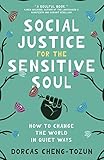
Social Justice for the Sensitive Soul: How to Change the World in Quiet Ways

Not surprisingly, I had a hard time working with these individuals. They caused me intense stress and anxiety. Yet in hindsight, I find that I deeply value those colleagues. I appreciate the ways in which they pushed me beyond what was comfortable and the ways I grew as a result.

In any discussion about sensitives and empaths like myself, it is easy to focus on the negative aspects of being around those who aren’t like us. And while it is vital to set boundaries with toxic people in your life—including in social justice work—it’s also healthy to create space for “nonsensitive” peers who genuinely care about you and the social good. They may come across as prickly or aggressive, but they also bring many gifts to the table.

My nonsensitive colleagues have wowed me time and again with their confidence, persistence, resilience, and risk-taking. They are willing to fight the battles that I can’t, taking on the adversaries I would sooner run away from. They aren’t afraid to say hard truths or challenge long-held assumptions. They see and pursue opportunities that intimidate me. They help me to see what’s possible, and their efforts amplify my own.

Social justice work is complex and dynamic. It demands people who bounce back more quickly, who eagerly jump into the fray. We need colleagues who will challenge our assumptions in private and readily come to our defense in public. Their strengths counterbalance our strengths.

I still struggle with criticism and strongly worded emails. But I’d like to think that I’m a healthier version of my highly sensitive self: willing to take action a little sooner and better at understanding what’s worth processing and what’s worth letting go.

In a sphere like social justice, conflict and resistance are inevitable. When the warrior activists take on the louder, messier fights, they create space for us priestly advisers to work in more subtle ways. When we can respect and appreciate our differences, creating space for one another’s skills and gifts, there’s so much more we can accomplish.

From Social Justice for the Sensitive Soul: How to Change the World in Quiet Ways by Dorcas Cheng-Tozun copyright © 2023 Broadleaf Books. Reproduced by permission.

Books

New & Noteworthy Books

Chosen by Matt Reynolds.

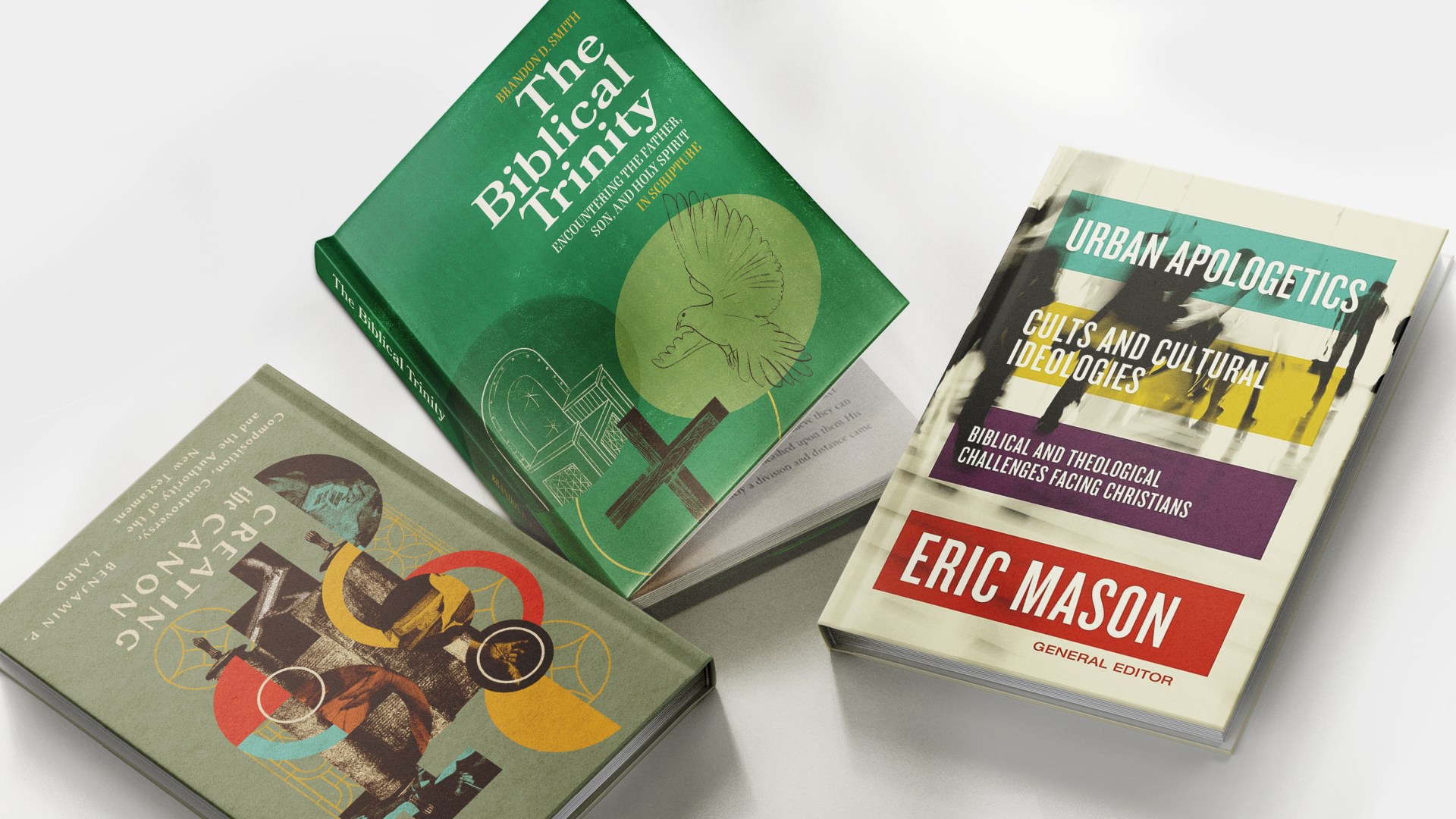
The Biblical Trinity: Encountering the Father, Son, and Holy Spirit in Scripture

Brandon D. Smith (Lexham Press)

God’s triune nature is a foundational Christian doctrine, yet the term Trinity appears nowhere in Scripture. Cedarville University theology professor Brandon Smith works to resolve this apparent tension in The Biblical Trinity, reflecting on a series of New Testament passages and showing how they build on the witness of the Old Testament to reveal a God who exists in three persons.

Urban Apologetics: Cults and Cultural Ideologies: Biblical and Theological Challenges Facing Christians

Edited by Eric Mason (Zondervan)

Urban Apologetics, a 2021 volume edited by Philadelphia pastor Eric Mason, took aim at various “Black conscious” movements that promote the distorted readings of history meant to portray Christianity as an ally of white supremacy. This follow-up book, as Mason explains in its introduction, tackles “cults, errant beliefs, and cultural ideologies that are pervasive in our world,” many of which “are brushing up against our faith commitments every day.” Some essays analyze contemporary conversations on critical race theory, Black liberation theology, white nationalism, and sexuality and gender, while others look to counter the sectarian influences of Jehovah’s Witnesses, Seventh-day Adventists, and prosperity preachers.

Creating the Canon: Composition, Controversy, and the Authority of the New Testament

Benjamin P. Laird (IVP Academic)

How did the New Testament come into being and cement its standing as sacred Scripture? Despite archaeological discoveries and other scholarly advances, much uncertainty remains. According to Benjamin Laird, author of Creating the Canon, “Greater clarity and insight is needed with respect to our understanding of the process that led to the composition and formation of the canonical writings.” Laird, a professor at Liberty University’s John W. Rawlings School of Divinity, gives an accessible overview of the questions and debates preoccupying scholars and curious laypeople today.

Books
Review

Repairing the Evangelical House Means Renewing the Evangelical Imagination

If our movement is ailing, argues Karen Swallow Prior, it’s because we’ve overlooked the importance of certain stories, symbols, and metaphors.

Illustration by Pola Maneli

In 1817, the Romantic poet and critic Samuel Taylor Coleridge famously defined the imagination as the imago Dei at work in every human mind, helping us first to perceive the world around us and then to creatively reimagine it. For Coleridge, himself a Christian, people think in images because we were first thought into an image of God by God himself.

The Evangelical Imagination: How Stories, Images, and Metaphors Created a Culture in Crisis

In The Evangelical Imagination: How Stories, Images, and Metaphors Created a Culture in Crisis, Karen Swallow Prior examines the history of the imagination alongside the history of evangelicalism, exploring how the two converge.

Prior warmly welcomes readers into this book as she would students into her classroom. She owns a long and distinguished career as a popular professor of literature and as a prolific writer on the intersection of faith, reading, and culture. Her chief area of academic interest lies with Britain’s Victorian period (Queen Victoria reigned from 1837 to 1901) and its influence on contemporary culture.

Victorian mores, ideals, and developments play major roles in The Evangelical Imagination. Yet Prior’s work ranges widely, arising from years of reading, teaching, writing, researching, worshiping, and studying. As she notes, “There is no limit to the things that fill the evangelical imagination. And there is, of course, no one evangelical imagination.”

As creatures made in God’s image, we are necessarily spiritual thinkers. When we fail to cultivate thoughtful faith and faithful thought, we ourselves wither, and we risk corroding others. Prior therefore urges us to examine how we think alongside what we think—and, ultimately, for whom we think.

All these questions point back to our imaginations, both in a personal sense and in a broader, more communal sense. This is where many of our deepest beliefs are rooted, often without any tangible awareness of the influences that helped them take root. “The problem,” she writes, “isn’t so much that a great deal of human experience and understanding depends on interpretation but that we don’t always recognize that it does.”

Prior thus positions her book as a wake-up call to thoughtful evangelicals. “Wrong interpretation is dangerous, and we must strive to avoid it,” she warns. “But lack of awareness that one is interpreting and that one interprets in community, within a tradition, is more dangerous.”

The Evangelical Imagination serves the work of thoughtful interpretation by considering the most powerful motifs feeding the current evangelical movement, many of which date back to the Victorian period or before. Prior describes the Victorian age as a heady one marked by “rapid change, optimism, prosperity, and progress.” It was also shaped by an increasingly influential evangelical faith inherited from the previous century.

From the vantage point of the Victorian period, we can see the reservoir of images inherited by the evangelical imagination and trace their influence down to the present day. As Prior argues, many defining characteristics of American evangelical culture might be less Christian than Victorian.

Over the course of her survey, Prior appeals to literature, visual art, philosophy, psychology, and even pop culture. Her illustrations, taken from both the Victorian age and more recent periods, are remarkably wide ranging. We see, for instance, the “everyman” allegory from John Bunyan’s Pilgrim’s Progress explored alongside Warner Sallman’s 1940 Head of Christ painting, an enduringly popular piece of devotional art. We see incisive analysis of such trends as the evangelical appropriation of self-help culture and the proliferation of end times literature like the Left Behind series.

Prior organizes her book around ten central metaphors, all of which have biblical roots, even if those roots have gotten entangled in cultural weeds: awakening, conversion, testimony, improvement, sentimentality, materiality, domesticity, empire, reformation, and rapture. As Prior argues, each of these metaphors underwent a specific cultural transition during the Victorian period. And each has flowed into the modern evangelical imagination, in ways both helpful and not so helpful.

In discussing the “awakening” metaphor, Prior considers how dreams lead to truth. This theme runs through Scripture and in turn through the larger Christian literary tradition, where visions often precede spiritual awakenings. In 18th-century America, the image of waking from spiritual sleep helped fuel a series of revivals fittingly known as the Great Awakenings. Closely related is the idea, as Prior puts it, that “the trap of an immoral lifestyle can awaken a spiritual hunger.” She examines 19th-century interest in this connection through William Holman Hunt’s 1853 painting The Awakening Conscience, which depicts stirrings of spiritual insight alongside personal responsibility.

Today, of course, one prominent echo of “awakening” to spiritual and moral truth is the language of being socially and politically “woke”—language that divides evangelicals as surely as it divides America at large. For Prior, one need not embrace a comprehensive progressive agenda to find value in the idea of “waking up” to a new reality, such as when we develop compassion and awareness by “looking at one’s self through the eyes of others,” in words she borrows from W. E. B. Du Bois. She worries that too many evangelicals, often “asleep” to injustice, are guilty of “weaponizing” wokeness as a slur. “To destroy a metaphor,” she observes, “is to destroy more than a word.”

Next, Prior takes on another metaphor central to the evangelical imagination: conversion. She cites Henri Nouwen’s characterization of true Christian conversion as “the individual equivalent of a revolution.” Yet despite the Bible’s command to make disciples of all nations, our emphasis on the language of being “born again” has overshadowed the importance of nurturing the life of faith. Put another way, there is so much fuss over the wedding that once the confetti is thrown and the champagne runs dry, we can’t be sure the newlyweds know how to live together in relationship. “Woe to us,” Prior warns, “if we fail to see what exactly we are asking people to convert to.”

Another chapter examines how the ideal of domesticity assumed its place in modern evangelical culture. As Prior explains, the kind of domestic vision encouraged by Victorian evangelicalism was bolstered by the Industrial Revolution. With the rise of the middle class came a dramatic shift from rural to urban living, which gave the notion of “home” a more self-contained feel, characterized by individual apartments and anonymous dwellings. Any man could now have his “castle,” with a wife to make it his refuge. And improvements in reducing child mortality birthed a cult of the child, driven by educational philosophies and literature geared toward their flourishing.

With a culture of domesticity came a culture of sentimentality, something Prior blames for the shallowness of much evangelical art. Sentimentalism aims at comfort rather than correction; it softens edges rather than clarifies them. Drawing on Flannery O’Connor’s memorable comparison, Prior likens sentimentality to pornography, both of which “sever the experience (emotional in the first case, sexual in the latter) from its meaning and purpose.” Echoing the poet John Keats, she concludes: “In reality, you can’t have beauty apart from truth. Beauty apart from truth and goodness is mere sentimentality.”

Prior’s chapter titles can appear whimsical, in that they rely on unlikely groupings. (Her conversion chapter, for instance, promises an analysis of “Language, Dr. Pepper, and Ebenezer Scrooge.”) At worst, they can seem intended for shock value. (Her chapter on sentimentality carries the subheading “Uncle Tom, Sweet Jesus, and Public Urination.”) But as you read each chapter, you come to appreciate a host of profound connections. A butterfly effect runs through the book: One seemingly disparate thing evokes and affects another.

Undergirding Prior’s consideration of individual metaphors is a comprehensive metaphor. “If evangelicalism is a house,” as she supposes, “then these unexamined assumptions are its floor joists, wall studs, beams, and rafters—holding everything together but unseen, covered over by tile, paint, paper, and ceilings. What we don’t see, we don’t think about. Until something goes wrong and something needs replacement. Or restoration.”

How do we go about repairing today’s evangelical house? How do we distinguish cultural Christianity from the genuine article? For Prior, this begins with a renewed commitment to taking every thought captive and making it obedient to Christ (2 Cor. 10:5).

She thereby challenges us to see things anew: to look with reopened eyes upon metaphors that are richly laden yet buried beneath the rubble of familiarity. But ultimately, she argues, we must ask God for the kind of deep healing that only arises from faith. And faith, essentially, is an imaginative act, wherein God opens our eyes and we truly see.

In Art and Faith: A Theology of Making, Makoto Fujimura explains the centuries-old Japanese art of kintsugi, which involves repairing beloved but broken pottery. Fractured areas are mended with a precious lacquer containing gold, silver, or platinum.

For Fujimura, kintsugi offers a metaphor for God’s redemptive work: Our brokenness is veined through by the blood of Christ. The result is not merely restoration but new creation, on both an individual and a cultural scale. Prior’s book helps us see that our own house can be salvaged. Beauty indeed comes from ashes.

Reading The Evangelical Imagination is akin to enjoying a lively conversation over a cheering yet bracing cup of tea. I can imagine gathering with Prior around our Father’s table, in our Father’s house—each with our cracked cups threaded through with gold and made more valuable for the repair.

Carolyn Weber is a professor at New College Franklin in Franklin, Tennessee. She is the author of the memoirs Surprised by Oxford and Sex and the City of God.

Books
Review

Since When Did Pleasing God Become an Unattainable Ideal?

His servants aren’t meant to feel like spiritual failures.

Illustration by Christianity Today / Source Images: Getty / Unsplash

How is it that I can wake up at four in the morning and still fail to accomplish even a quarter of the tasks on my list?” I commiserated to a friend at church. Both of us were depressed about how we can cram so much activity into a day and still come up short by bedtime.

Impossible Christianity: Why Following Jesus Does Not Mean You Have to Change the World, Be an Expert in Everything, Accept Spiritual Failure, and Feel Miserable Pretty Much All the Time

The problem, I said, waving my arms, is the new law of self-care, the mountain that “healthy” people feel the need to climb. The law includes activities like daily exercise, prayer, Bible study, weekly small group attendance, and proper sleep hygiene. It mandates keeping on top of the dishes and laundry, maintaining intentional in-person and online relationships, praying for the persecuted church, and asking my neighbor if she’s ever heard of Jesus. How can mere mortals manage all this in their nonworking hours?

All I do, I complained, is apologize for being a colossal failure. My friend patted my hand and recited her own litany—the same in spiritual substance, though differing in particulars. Then I went home and found relief by cracking open Kevin DeYoung’s Impossible Christianity: Why Following Jesus Does Not Mean You Have to Change the World, Be an Expert in Everything, Accept Spiritual Failure, and Feel Miserable Pretty Much All the Time.

This short, personable, practical book is intended for people like me who are not overly confused about the parameters of the Christian life. If you know that salvation is wrought by the justifying work of Christ on the cross rather than by your own works, if you know that you won’t be able to reach perfection in this life, and if you know that repentance leads to ever-increasing trust in Jesus, then this book will be just the thing you’re looking for. Because, if those characteristics apply, you might also be carrying around an intolerable burden of mental and emotional expectations that aren’t properly yours. It really is possible, DeYoung affirms, to be a good Christian.

“Salvation is all grace from start to finish,” DeYoung writes, “But reveling in God’s grace does not mean we should revel in being spiritual failures. … He does not mean for us to be constantly overwhelmed. He does not mean for us to feel guilty all the time.” In other words, “God does not mean for Christianity to be impossible.”

This, I confess, took me a little by surprise. I spent some time working backward through my life, trying to find the moment when words like failure and overwhelm became such ubiquitous features. DeYoung points to several factors behind a shift in how Christians think about their faith. In the battle against complacency, for example, “Christianity became impossible, in large part, because of our good intentions to emphasize a host of truths that, taken together, make it seem like devout piety requires an impossible Christianity.”

Like the person in a job interview who identifies her greatest weakness as “caring too much,” we are caught in a legalistic labyrinth, viewing ourselves as servants who really believe they are serving an impossible master. But is the obedience God demands really impossible? Does he call his servants to himself only to point out all the works they ought to have done and then send them off without the relief of forgiveness for sin and the joy of satisfaction in good labor?

DeYoung points to something called “the infinite extensibility of guilt,” the phenomenon arising from a “massively connected world—where we can fly anywhere, phone anywhere, get the news from anywhere, and see pictures from anywhere.” The result is crushing: “The circle of obligation feels limitless. Life feels like ten thousand victims on the side of the road, and we are told we must be the good Samaritan in every instance.”

Overlaid against the pressing cacophony of worldwide need is an ever-increasing number of ideological and social pressures. What about the unjust and corrupt systems in which we live and participate? What about the sins of the past? But DeYoung reminds us that God doesn’t want his disciples crushed under such burdens. “Living life in the present is hard enough,” he writes, and “we are not meant to live with a sense of corporate guilt for an ethnic, racial, or biological identity we did not choose and from which we cannot be free. Self-flagellation is not a requirement for spiritual maturity. It is one thing for us to love God and love our neighbors; it is quite another if the call of Christian discipleship means we must, on account of the failures of others, hate ourselves.”

In fact, the call to love can’t be built upon anything other than the fact that God, though our master and Lord, calls each believer into a relationship with himself. The Christian life shouldn’t be like enduring the painful dysfunction of a bad relationship. “One of the saddest things in a marriage,” DeYoung explains, “is when one or both spouses are impossible to please, when good-faith efforts are never enough, when past hurts are never forgotten, when imperfections are always put front and center. Happy marriages are different. They require work. They don’t happen by accident. But they are possible. That’s what our relationship with God is like as well.”

DeYoung offers practical instruction on the place of the conscience for believers. He points to the pleasure it is possible to experience, even now, in serving a kindly and merciful God. Indeed, this pleasure “is one of the main motivations of the Christian life.” Finishing off a to-do list is not the call. Rather, the sort of person you become as you try to obey God is what brings you joy and makes him happy.

This is a welcome corrective to the “change the world” Christianity so often preached by pastors and influencers to already beleaguered believers. Quiet, ordinary obedience was left lying by the road as we corporately piled up one spiritual concern after another. In so doing, many have forgotten that we are finite and weak and that God is the one ordering the universe and the events on our Facebook feeds.

Now that I’ve read Impossible Christianity, I’m going back to the drawing board of my life, hoping to resubmit myself to the gentle yoke of a Savior who only calls me to walk in the way he has already gone.

Anne Kennedy is the author of Nailed It: 365 Sarcastic Devotions for Angry or Worn-Out People. Her Substack is Demotivations With Anne.

Books

Western Theologians Need Non-Western Theologians—and Vice Versa

The particularities of people groups can aid the work of understanding and proclaiming the gospel.

Illustration by Christianity Today / Source Images: Unsplash

The worldwide growth of Christianity has brought about a flowering of theological perspectives. Yet many Western theologians have little familiarity with theologians working in non-Western contexts. Stephen T. Pardue, a professor at the Asia Graduate School of Theology, addresses this problem in a new book, Why Evangelical Theology Needs the Global Church. J. Nelson Jennings, editor of the journal Global Missiology, spoke with Pardue about the blessings of engaging with majority-world theologians.

Why Evangelical Theology Needs the Global Church

Why Evangelical Theology Needs the Global Church

208 pages

$13.14

Over the course of your life, you’ve spent significant time in both the United States and the Philippines, where you currently live and teach. How has that background shaped your thinking on theology and the global church?

Like most culturally hybrid people, I couldn’t possibly trace all the intricacies of how I’ve been shaped. One of my joys in writing the book was getting to reflect on these complex realities, which often get either ignored or oversimplified in theological books. In my own book, I try to move beyond these simplifications—for example, speaking of “Eastern” and “Western” theologies as if all theologians within these categories think the same way. I hope readers will feel invited to consider how the cultural plurality of God’s people helps us hear the Good News more fully.

Why, to invoke your book title, does evangelical theology need the global church?

We need the input of the whole church to thrive. This means not just celebrating the church’s growing diversity for vague reasons of politeness or political correctness, but developing a coherent framework for how culture can inform our theology without undermining its primary focus: the triune God revealed in Scripture.

One of my big themes is that the “younger” parts of the majority-world church are an underappreciated theological resource. At the same time, the goal should not be simply to reverse the imbalance by ignoring the contributions of North American or European churches.

We can deepen our theological perspective by attending to the exciting work happening in majority-world churches while also acknowledging that we need the whole body of Christ—east, west, north, and south. Importantly, this includes paying close attention not only to the full range of churches today, but also learning from Christians of previous generations.

You argue that theology always arises within a given cultural context. How do you reconcile this belief with the evangelical commitment to God’s eternal, unchanging nature?

Evangelicals are correct to ensure that doing theology involves hearing the voice of God—something outside of us that is speaking to us. The problem is that we’ve used this conviction as a license to downplay the influence of culture and language on theological reflection. We tend to bracket culture to one side and reserve it for the end of the theological process, so to speak—we’ve distilled various “timeless truths,” and now we need to express them in culturally relatable ways.

But this is not God’s strategy for communicating with us, which incorporates media, language, and practices adopted from ancient Near Eastern and Greco-Roman culture. We have a divine mandate to make the gospel at home in every culture, and that involves not just translating it well but also recognizing how culture can help (and potentially hurt) us in this process.

In current conversations about the relationship between evangelical theology and culture, you hear echoes of earlier conversations about evangelical theology and church tradition. How are these conversations following similar trajectories?

A few decades ago, most evangelicals weren’t thinking of church tradition as a theological resource. There were textbooks that barely referenced what Christians of previous generations had believed. But more recently, evangelical theologians have come to embrace tradition as a crucial resource for addressing theological questions we’re facing today.

I think we’re at the beginning of something similar with culture. For decades, some evangelicals denied that culture has any formative role to play in the theological process. But increasingly, theologians are conscious that culture matters. It’s inescapable. As with tradition, we should be more intentional about engaging it wisely.

The book mentions that God has “even [been] willing to risk confusion and syncretism,” having “first moved to accept the risks of deep cultural engagement.” What do you mean here?

To clarify: I don’t think these are risks from God’s sovereign perspective. But the work of enculturating the Christian faith does entail some risky processes.

Any missionary or Bible translator has encountered this dynamic. You ask questions like “How do we describe God?” You can try introducing an entirely new word—perhaps by importing something from Hebrew, Greek, or American English. But when early Christians were bringing the gospel into new places, they didn’t import from beyond. Instead, they took from within, recognizing the risk that people might confuse the Christian conception of God with concepts that already existed in their culture. They did this because they saw God do it first in Scripture.

Of course, we want to be wise in taking risks. We make every effort to point at the triune God of Scripture and not some other concept or deity. But we are obliged to jump into this messy process because God has done it first.

Why, in your view, has the doctrine of the church gone relatively overlooked in discussions of theology and global Christianity?

When we think about contextual theology, the doctrine that usually comes to mind is the Incarnation. And this is natural—it’s the clearest example of God, who is outside of culture and time, entering human reality in a specific place. In Jesus, God speaks with remarkable particularity: in a certain language, even a certain accent.

Yet I don’t think the Incarnation is a good model for understanding what theologians are doing when they proclaim the Good News in a new culture. The Incarnation is a unique event where a God outside of culture comes and dwells within it. But as theologians, our starting point is never outside of culture.

The church is essential here, because it is the vehicle God has designed to bring this crazy diversity of humanity into a single household. Especially in the Book of Acts, we see this process of blending different cultures is actually the divinely ordained space within which theology is supposed to emerge. And if that’s the case, then cultural diversity of the church must matter for the task of theology.

I’ve been greatly influenced by the work of Simon Chan, an Asian theologian. Chan is concerned about efforts at contextual theology that ignore the church. It’s an understandable temptation in the Asian context—where Christians, for the most part, are a tiny minority—to look outside the church for where God might be working. But Chan argues that this is something of a dead end in that it ignores how Christians in these places are already allowing their faith to make a deep acquaintance with their local cultures. If we look there, we can learn to see the church as a fertile ground for building a contextual theology.

What do you most hope readers will take away from your book?

I hope they will appreciate not only the theoretical arguments, but also the specific, on-the-ground detail. I hope they’ll focus on the case studies, which essentially say, Here’s the payoff; here’s what happens when we allow culture to have this formative influence in theology while keeping Scripture in the lead role. Come and enjoy what God is doing, and allow it to nourish your church wherever you are.

This interview has been amended, since its posting, to better reflect the timeline of when the book’s author, Stephen Pardue, lived in the United States and the Philippines.

Theology

New Atheism Is Dead. What’s the New New Atheism?

Far fewer British people agree with vitriolic assertions about religion. Still, disbelief in God is on the rise in both the UK and the US.

Illustration by Danielle Del Plato

“I think a case can be made that faith is one of the world’s great evils, comparable to the smallpox virus but harder to eradicate,” Richard Dawkins said in 1996 to the American Humanist Association. Ten years later, in 2006, a ComRes poll found that 42 percent of UK adults agreed with this vitriolic statement. That is, two in five were not just nonbelievers; they thought all belief in God should be deliberately snuffed out.

This was near the height of the New Atheism movement—an angry, bombastic form of anti-religion that arose in the early 2000s. New Atheist leaders garnered millions from best-selling books and gained an influential following. At the time, it seemed that this would become the permanent state of secularism—that a lack of belief in God was necessarily joined with a bitter, trollish contempt for religion.

But things began to change. By 2015, some had begun to announce the death of New Atheism, and in 2020, 15 years after the ComRes poll, a new survey showed that only 20 percent of adults in the UK agreed that religious faith could be compared to an evil and intractable plague on society.

Nick Spencer—senior fellow at Theos, a Christian thinktank in the UK, and one of the coauthors of the new report—said the New Atheism era spawned an unprecedented scale of animosity against religion in the general public. But he concluded in a 2022 Theos report on science and religion that “the angry hostility towards religion engineered by the New Atheist movement is over,” with the UK public expressing a more balanced view of religion than during the height of New Atheist influence. Among the streams of contemporary nonbelief, more nuanced forms are on the rise.

As the New Atheist movement seemed to implode from within—due in part to its odd merger with the Far Right in the American culture wars—many secularists in the public square began to consider its leaders “a real embarrassment” who give “atheism a bad name,” says John Dickson, a Wheaton professor and public apologist who engages with atheists.

“Basically, the world has moved on and has rather left the New Atheism behind,” said Oxford theologian and apologist Alister McGrath, author of The Dawkins Delusion? “But that’s no cause for rejoicing, because we have new problems to worry about.” That is, the decline of the New Atheists’ particular brand of hyperbolic antireligious fervor does not necessarily signify a rise in religious faith or belief in God.

There has been an increase in the proportion of non-believers in the UK—already one of the least religious countries in the world, according to Gallup International—and also in the US, where prominent New Atheists such as Sam Harris, Christopher Hitchens, and Daniel Dennett lived and worked.

“It doesn’t mean that religion is in a better place; it just means religion is in a different place,” McGrath said.

There are similarities and differences in how the nonreligious landscapes of the UK and the US have changed since the New Atheism era. Religion in both countries has declined over the past decade, and its recession looks poised to continue.

Although many “activist” atheists still publicly maintain staunch antireligious sentiments, a milder type of “temperate” atheist, who is more tolerant of religion overall, is on the rise. Another curious trend is the increase of “amicable” atheists, or secularists who become unlikely evangelists for the Christian worldview—including a number who eventually come to a full-fledged faith.

In England and Wales, the 2021 census showed that less than half the population identified as Christian, a sharp drop in the past decade—and over a third say they have “no religion,” making these “nones” the second-biggest religious group in the country. But Hannah Waite, a researcher at Theos, found that out of those who identify as nonreligious, only about half said they don’t believe in God.

A recent Theos report determined that these nonreligious respondents fall into three different groups. About a third of the UK nones are strongly atheistic and hostile to religion (“Campaigning Nones”), and these overlap with the activist atheists who span both countries. Another third of UK nones are generally atheistic yet accepting of religion (“Tolerant Nones”), and the remaining third are agnostic but spiritually open (“Spiritual Nones”).

In the US, the proportions are quite different. The US is more religious than the UK. Pew Research found in a 2021 report that self-identified Christians made up 63 percent of the population, down from 75 percent a decade prior. Just under a third of US adults (29%) were nones.

According to the 2021 General Social Survey (GSS), almost 7 percent of US adults selected “I don’t believe in God” from a list of phrases to describe their faith.

Working from GSS data, Ryan Burge, author of The Nones and political science professor at Eastern Illinois University, found that not all self-identified atheists would say they don’t believe in God.

Perceptions of religion in the two countries are also not parallel. The share of UK adults who believed “religions cause more conflict than peace” declined from 74 percent to 63 percent between 2008 and 2018, according to a British Social Attitudes study, indicating a slight warming trend. In the same survey, most UK adults said they had a positive view of Christianity and a positive or neutral view of other religious groups.

In the US, the public’s view of religion is more positive and more stable. A 2019 Pew report showed that a majority (55%) of Americans see religious organizations as a positive force in American society.

In both places, however, activist atheists view religion more negatively than other nones and the general public. In the UK, 24 percent of the population and 39 percent of all nones said they believed that “Religion has no place in the modern world,” compared to 89 percent of campaigning nones (78 percent of whom still agreed with Dawkins that religion is comparable to the smallpox virus).

In the US, a 2019 Public Religion Research Institute survey showed that 36 percent of the general public said they believed “Religion causes more problems in society than it solves”—compared to 88 percent of avowed atheists.

“There’s different factions of atheists, different groups,” Burge says. There are the “evangelical boogeyman” atheists who are old-school boomers associated with the Freedom From Religion Foundation—the ones who “read Nietzsche in college and became like a hardcore hippie liberal,” Burge describes.

Then there’s the American Atheists group, populated by a “younger, hipper, more socially active kind of atheist.” This group is known for posting billboards around Christmas time encouraging people to come out as atheists, and suing for the right to not be blocked from commenting on politicians’ social media accounts. And while the elder atheists are “a bunch of old, retired college professors” who are “happy to read their Dawkins and Hitchens books,” the younger ones are in some ways more radical, Burge says. “They don’t like each other.” Like the disunity among evangelicals, the divides between different atheist groups tend to run along generational lines.

Next-generation activist atheists are more present on social media and more likely to be politically engaged for far-left causes. They are also more outspoken in their attacks on evangelical Christians, Burge says. “They’re the ones really trying to push the agenda.”

These activist atheists think that religion (especially evangelicalism) is evil and immoral, Burge said. “That, for them, is like their reason to be. … They want less religion in society. They want their worldview to win out.”

Some of the most popular and well platformed among these younger activist atheists are exvangelicals, people who once considered themselves evangelical Christians but have since repudiated the movement.

According to Paul Djupe and Burge’s analysis of the General Social Study, former evangelicals may comprise up to 5.5 percent of the US population—a rate that has remained steady since the 1970s. Most exvangelicals aren’t atheists. Burge says that only about 6 percent of exvangelicals don’t believe in God.

But in recent years, this minority has had an amplified voice and outsized influence in the public square as a “nexus point” of interest for both evangelicals and atheists, Burge explains.

Some exvangelical influencers, like Abraham Piper, theologian John Piper’s son, do not identify as atheists but also say they do not believe in God. Tony Campolo’s son, Bart Campolo, identifies as a secular humanist. (Both have been profiled by The New York Times about their deconversions.) Others, such as the social media personality @Eve_wasframed, have built their platforms around being exvangelical atheists.

Burge believes American society is currently at “peak exvangelical” and that this backlash movement is likely to wane in the next five to ten years. “At some point you can’t be defined by what you’re not,” Burge said. “And also, as the number of Americans who were raised evangelical goes down, you’re talking to a smaller and smaller audience every time.”

Any rise in religious belief can prompt greater antagonism toward faith, Spencer explains. That’s because atheism is a “shadow movement,” as he puts it—meaning “the bigger the shadow cast by religion” and its faith figures, “the darker and bigger the shadows” are of those who oppose religion. Not only did this happen with the 9/11 terrorist attacks and Islamic extremism in the early 2000s, but the rise of religious nationalism has sustained the rhetoric of activist atheists, Burge says.

“Christian nationalism is being amplified by atheists … as ‘this evil thing we’re pushing back against’—and that gives them traction, online clicks, retweets, and likes, all the things they need to amplify their message,” Burge said. “Christian nationalists [have] become the perfect enemy.”

On the other hand, many past predictions of the death of God and religion have been followed by revivals of faith and belief in America. For instance, five years after the 1966 cover of Time magazine echoed Friedrich Nietzsche’s words with the question “Is God Dead?”, its 1971 cover story was “The Jesus Revolution”—and five years after that, Newsweek dubbed 1976 “the year of the evangelical.”

In any case, Burge says the growth of hardline atheism in the US has slowed and is not projected to expand much in the future—in part due to the homogeneity of the movement. Two-thirds of US self-identified atheists are men (68%), and three-quarters (78%) are white.

In contrast to activist atheists, a more temperate type of atheist thinker seems to have emerged over the past five years or so, explains Jim Stump. Stump is vice president of programs for Biologos, a Christian think tank in the US founded by Francis Collins, former director of the National Institutes of Health.

Instead of frontal attacks on religion as a “cancer” to society, he says, this “new wave” is more subtle. Whereas New Atheists say religion is dangerous “and we need to go out and combat it,” Stump said, some of these dispassionate atheists simply dismiss religion as “irrelevant.”

“There’s kind of a second wave of books that are coming out by people who are atheists and have no love of religion—but their approach is different,” Stump said. The 2011 bestseller Sapiens by Yuval Noah Harari, On The Origin of Time by Thomas Hertog, and many similar books offer naturalistic origin stories for humankind that account for the development of morality and religion.

While these temperate atheist authors may still be “anti-religion,” they are more likely to acknowledge reasons why so many people today hold to religious worldviews. Instead of relying solely on “hardcore scientism,” Stump says, this approach to atheism borrows from and blends with soft sciences like sociology, psychology, and natural history.

“They recognize that there are differences of values and that these are things that we’re not ultimately going to resolve through scientific arguments,” Stump said. Their works are popular, accessible, and engage in more charitable public discourse and modest claims about world religions.

The reason there’s an appetite for a more calm, cool, and collected brand of atheism—and the reason it is palatable to a wider audience than simply atheists—is because of the ever-deepening divides between ideological groups in our society.

“The tribal identity we have has become stronger and stronger,” Stump says. “And that, I think, contributes to this newer way of looking at these religions as though they are distinct people groups.”

This more circumspect atheist rhetoric has eclipsed the New Atheist dialogue in volume and popularity. Of course, the activist atheists are still out there, but their vitriol does not have as wide an audience as the New Atheists’ once did. This is partly because the internet can be so partitioned according to personal interest, Stump says.

The atheist content that’s likely to gain an audience among the general public today comes from those whose approach to religion seems fair-minded and polite, instead of unreasonable and vicious. It’s a “more nuanced and sophisticated understanding of different religions, rather than the New Atheist’s way of saying, ‘Look at all those religious people, aren’t they stupid?’” Stump said.

Illustration by Danielle Del Plato

One of the most famous and frequent accusations New Atheists have launched at Christian theism was that it is anti-science and therefore anti-intellectual.

Dickson says the New Atheists brought this debate back to the forefront and gave it a “fresh energy.” Even though he reckons “the general public could not remember a single argument they made,” their rhetoric left people with the “general feeling” that “science versus God is a live issue.”

In fact, much of the general public in the US and the UK today still perceives a tension between science and religion.

In the UK, Theos’s 2022 report found that the British public are more likely to think that science and religion are incompatible (57%) than compatible (30%).

Similarly, in the US, a 2014 Pew poll found that 59 percent of Americans believed there often is conflict between science and religion, compared to 38 percent who said the two are “mostly compatible.”

However, Theos concluded that this sense of incompatibility between science and religion “seems to be a conflict of image rather than substance,” since the percentages were much lower when the respondents answered questions about specific religions, sciences, or scientific arguments rather than about science and religion in general.

It’s the same in the US. A higher percentage of people (68%) said that science did not conflict with their own religious beliefs. This finding aligns with Theos’s conclusion that although many religious people have no personal issue with science, they still perceive there to be conflict in general.

That is not to say that some atheists don’t still look down on Christians because of their sense of a conflict. Stump noted that in certain scientific fields, there is what he called an “academic elite” who find it hard to believe that a serious scientist could be a committed Christian. “It doesn’t quite compute to them. They don’t quite understand how you can accept all of science, but yet still hold on to this,” he said.

Some groups of American evangelicals do find their faith to be in tension with scientific findings like evolution and climate change, as well as with policies they see as aligned with science, such as abortion or vaccines derived from fetal stem cell lines. In the UK, however, there has historically been less perceived tension on these issues, even among those with conservative Christian beliefs—such as an orthodox interpretation of Scripture, a pro-life stance, and a traditional sexual ethic.

Biologos is seeking to reconcile the truths that can be known by science with the truth of the Bible, theological principles, and church tradition. One of its primary goals is to encourage believers who have a high view of Scripture and an interest in science.

“Science has been put on one side of the culture wars, and religion on the other,” Stump said. “The ultimate real-world impact that we’d love to see is that kids growing up in the church or going through school don’t feel that they’re forced to choose between the insights of today’s scientists and genuine religious faith.”

Christian thought leaders are pointing out that science and religion are neither the same nor completely separate fields of inquiry. Spencer borrows from Stephen Jay Gould’s idea that, as in a Venn diagram, science and religion are distinct “magisteria.” But in contrast to Gould’s theory that these magisteria never overlap, Spencer sees significant overlap in their authority—especially around “the question of the human.” His book Magisteria describes science and faith as entangled, rather than competing.

In fact, there is a burgeoning “science-engaged theology” movement—encouraging theologians to explore scientific topics through the lens of faith, and Christians in scientific fields to lend their expertise. The goal is to show that not only can science and religion correspond, but they can do so in many creative and generative ways.

This includes the initiatives of newer organizations such as Biologos and of older organizations like the John Templeton Foundation—founded in the 1970s and ’80s by a social philanthropist who saw the need for scholarship and dialogue among scientists, philosophers, theologians, and the general public.

Theologian and coauthor of Science-Engaged Theology Joanna Leidenhag says one of the goals of such efforts is to go beyond the traditional apologetic arguments and historic battlegrounds between Christians and New Atheists. Its leaders want to do the work of “employing science within constructive theology,” she explained, but “more carefully, more deliberately, and more conscientiously” than has been done in the past.

The other primary battleground between Christians and New Atheists—whether religion is good or bad for society—is also as relevant as it ever was.

With the rise of Christian nationalism in the US, ongoing church and leadership abuse scandals, and greater awareness of Christianity’s historic participation in systemic marginalization, people of faith are having to combat as much criticism from the unbelieving world as ever.

The New Atheists left a lasting impact on the public consciousness, says Dickson, making it “respectable to be disrespectful” toward religion and shifting the burden of proof onto people of faith to show how religion could be good for society, rather than on secularists to prove why religion is bad for society.

Dickson, the author of Bullies and Saints: An Honest Look at the Good and Evil of Christian History, says that while believers should “concede that there’s such a thing as bad Christianity,” Christians can also highlight the beauty and goodness in how God has worked through the church and Christianity’s positive impact on human history.

In fact, some thinkers want to reclaim the term Christian humanism. They want to highlight the Christian values underpinning much of the humanitarian ideology that built Western civilization—concepts such as reason, dignity, and morality.

Spencer explains that “humanism is a Christian idea” because it involves a commitment to a concept of the human that is “utterly rooted in Christian thought and practice.” He says the term humanist “was absolutely in no way, shape, or form a non- or anti-religious label” until “it was increasingly appropriated by nonbelievers from the 1920s and ’30s onwards” and “relinquished by Christian believers in the postwar period.” After that, he explains, it became “a badge for atheists and freethinkers, or skeptics and secularists.”

“I talk to a lot of humanists, and I will irritate them enormously by saying, ‘Well, look, I’m a humanist too, I’m a Christian humanist.’ And they say, ‘Well, you can’t be, because humanism is atheism,’” McGrath said. “And I say, ‘Look … you are secular humanists, and you have hijacked the word humanist for your own aims.’”

As a historian, McGrath argues that figures like Isaac Newton and Erasmus of Rotterdam were actually Christian humanists. “Our dispute really is what we mean by humanism,” McGrath said. “Back in the Renaissance, a humanist was someone who, in effect, saw religions or God as” being key to “enriching and enabling authentic human existence.”

Some of the best apologists for Christian humanism today aren’t even Christian. That’s because, along with the decline of “angry” activist atheists and the rise of “temperate” atheists has come the advent of what we might call “amicable” atheists. Most of them do not believe in God, but, unlike the temperate atheists, they are publicly pro-religion and may even advocate for Christianity’s benefits for society.

For instance, Jonathan Haidt, author of the best-selling book The Righteous Mind, is a moral psychologist who considers himself an atheist but believes religion is good for humankind. In an interview for The Atlantic in 2020, Haidt said he “believes that religion is part of human nature, is generally a good part of human nature, and an essential part of who we are and how we became a civilized species.”

He also shares a critical commonality with Christians: believing there is a “God-shaped hole in everyone’s heart” that must be filled. Calling himself the “opposite” of the New Atheists, Haidt said he’s even gotten into some arguments with them for “defending religion against some of their charges.” He’s also spoken at various Christian organizations and universities, and was interviewed on The Russell Moore Show, a CT podcast.

Then there is Tom Holland, a historian and former liberal skeptic who wrote Dominion: How the Christian Revolution Remade the World. Growing up with an Anglican mother and an atheist father, Holland once considered himself an atheist but now describes himself as agnostic. He even attends church occasionally, once encountering something akin to a spiritual experience.

Holland realized the values of Christianity were the reason the Western world moved from celebrating brutal societies—where might makes right and the strong dominate the weak—to honoring civilized societies where a universal human dignity is the ideal. Holland now champions Christianity as a benefit to human society, becoming a kind of apologist for Christian humanism while not yet claiming any faith of his own.

“I think that ultimately the power of Christianity is expressed most potently through its stories,” Holland explained in an interview with author Glen Scrivener. “Those stories don’t have to be literally true … for the story itself, in my opinion, to be true. … Some stories have such a power that you can surrender to them.”

And while amicable atheists like Haidt and Holland—along with Jordan Peterson, Alain de Botton, Douglas Murray, and others—became more tolerant and spiritually open to Christianity, some of them have “adopted” Christianity—in a purely cultural sense, not as followers of Jesus.

For example, Murray, a politically controversial UK figure, wrote The War on the West and describes himself as a “cultural Christian” and a “Christian atheist.” Or as Holland wrote in The New Statesman, “In my morals and ethics, I have learned to accept that I am … thoroughly and proudly Christian.”

But perhaps most surprising is the growing number of atheists who have come to embrace a full-fledged faith in Jesus.

This group of adult atheist converts to Christianity—along with many of their conversion stories—is catalogued in two books released this year: Atheists Finding God: Unlikely Stories of Conversions to Christianity in the Contemporary West and Coming to Faith Through Dawkins. The former explores what brought 50 skeptics to faith, while the latter highlights 12 intellectuals who said New Atheists were actually instrumental in their journey toward Christian faith.

Some notable atheists-turned-Christians in recent years are Stephen Bullivant (author of Nonverts: The Making of Ex-Christian America); Josh Timonen (who was once Dawkins’s “right-hand man”); New York Times columnist David Brooks; and writers Martin Shaw, Paul Kingsnorth, A. N. Wilson, Leah Libresco, and Molly Worthen.

“Privately, I have had conversations with at least 15 men in the last year who are either now Christian or actively trying to be,” wrote the former director of Theos, Elizabeth Oldfield. “It’s possible that I’m seeing it now because of the backlash to the New Atheist movement. … Either way, I find it moving and hopeful.”

Justin Brierley, a public apologist in the UK and author of The Surprising Rebirth of Belief in God, says that there is a “growing meaning crisis in the West,” a crisis Burge says America is “on the leading edge of now.”

“Once you lose the Christian faith as the overarching narrative in the West, people just latch on to other quasi-religious things,” Brierley says. “In the absence of the Judeo-Christian story, culture was basically coming up with lots of little stories about identity and purpose and meaning.”

Brierley was the host of the Unbelievable? audio show, where believers and atheists frequently discuss questions of faith. And in the past five years or so, he says he’s begun to have much more “nuanced conversations around faith and meaning” with many secular thinkers on air—discussing questions like the purpose of humanity and whether we can live in the absence of God.

In the wake of disappointment that the scientism touted by the New Atheist movement didn’t “answer people’s questions” and “get to the bottom” of things, Brierley says many atheists today are on the “quest for meaning and purpose” and wondering where to go in the absence of Christianity and religion. They’re asking themselves, “What sort of story do we live by?”

And in order to reach those who are seeking a greater purpose and sense of identity in community, he says, the church needs to avoid retelling the same lesser narratives proposed by either side of the culture wars. Instead, Brierley says, Christians need to get back to “this big story that God is telling—in which we can all find a place.”

This trend of activist, temperate, and amicable atheism spreading in the UK and the US highlights important insights for the future of Christian apologetics in a post-Christian age, where New Atheism is no longer a dominating factor in conversations about the existence of God. That is, for all the people who are leaving Christianity today, a great many are open to returning. But these seeking souls are looking for a faith deeply rooted in history and tradition that can answer the question of what it really means to be human.

It turns out that the Christian faith, when properly centered on God’s story and kingdom, still has the same ancient power to captivate even the most cynical hearts.

Stefani McDade is an associate editor at CT.

Jesus Loves Opioid Addicts

And so do these Appalachian churches.

Illustration by Christianity Today / Source Images: Unsplash

Helplessness. Hopelessness. These were two of my predominant feelings as I read Barbara Kingsolver’s recent Pulitzer prize–winning novel Demon Copperhead. The story was full of laughter and delight, too. But the bleak realities surrounding the main character in this coming-of-age story carried a heavy and haunting sense of inevitability. Damon (called “Demon”) is born to a teen mom in rural poverty in Appalachia. The deck seems stacked against him as he experiences abuse, food insecurity, theft, family dissolution, homelessness, prejudice, and a slew of unfair circumstances. Underlying it all is the prevalence of opioid addiction in the region, touching nearly every life in the story and leaving destruction in its wake.

There’s a brief vignette in the novel—at a time when Demon is hungry, homeless, and penniless—in which he interacts with a preacher. This pastor helps him in a small but practical way. He gives Demon a ride, has an empathetic conversation with him, and gives him a dollar when he drops him off. But when the pastor drives away, leaving Demon alone on the roadside, I kept thinking, Couldn’t you do more?

S. J. Dahlman’s reporting details the real-life, pervasive impact of opioid addiction in Appalachia. The overwhelming scope of the crisis can cause Christians in the region to feel helpless or hopeless, leading some to be in denial about addiction’s reach even in their own congregations. For others, the seeming insurmountability of the problem can lead to a sense of inertia.

But in “With Eyes to See Addiction, Appalachian Churches Respond to Opioids Crisis,” Dahlman highlights the stories of Christians responding to the promptings of the Spirit to move beyond denial or helplessness into active, practical ministry. The type of ministry these churches provide varies, from developing long-term residential recovery programs to assisting the children of addicts with food and clothing to coordinating transportation for those recovering who are trying to rebuild their lives. Unlike the momentary help of the fictional preacher in Demon Copperhead, these Christians minister in substantial, ongoing ways. As one such pastor, Lisa Bryant, told Dahlman, “When we see somebody struggling with addiction, we see the image of God in them.”

Kelli B. Trujillo is CT’s print managing editor.

A Chorus of Replies about Church Worship

Responses to our May/June issue.

Photo by Abigail Erickson

How do financial incentives impact which songs we sing on Sunday mornings? CT worship music correspondent Kelsey Kramer McGinnis explored this question in our May/June cover story, “Corporate Worship.”

For many readers, the article put facts and figures to their own “longstanding concerns” about the Christian music industry, from stadium tours and celebrity musicians to lucrative licensing agreements, back catalogs, and the profit margins of secular investors. Who should get the proceeds from worship music: Musicians? Labels? Ministries? “Is worship music meant to be another genre in the mainstream music industry, or should we treat it as something else entirely?” asked one Instagram commenter. “What does ‘redeeming the culture’ yet ‘staying set apart’ look like?” responded another.

Other readers advocated for the needs of local churches, championing the work of small-scale, independent musicians who can be responsive to the needs of a particular community in a way that conglomerates can’t. “I often minister in very small churches in our rural area,” wrote Judy Hewitt of Griffith, Ontario. “If I want to choose a song not in the hymn book, this is not allowed because they haven’t paid for the license. I find it sad that everything is for sale.”

For another commenter, this particular limitation wasn’t a problem. “The vast majority of the best worship music is already in the public domain,” he wrote. “Sing hymns.”

Kate Lucky senior editor, audience engagement

After retiring from a half century of planning and leading corporate worship, my wife and I continue to have a passion for the subject. Imagine our delight when we received the latest issue of CT with a cover story on corporate worship. Imagine our disappointment after reading it. It was a well-written, substantively researched, informative and interesting article, albeit somewhat disconcerting in its content. It was not, however, a treatise on corporate worship. Indeed, it had very little to do with worship. Rather, it was an unmasking of the business side of much of today’s Christian worship music, and the article would have been more aptly titled as such. An unintended consequence of the story leaves one with the erroneous assumption that corporate worship is basically music. Music in corporate worship is important. But, there is a breadth of elements in the corporate worship of God that extends beyond music.

Dan Wickman Buffalo, MN

“Corporate Worship” highlighted some concerns I’ve had about the Christian music industry. It also called to mind a more humble response by the late Rich Mullins. As his songs peaked in popularity, he limited his take to that of the average American household and gave the rest to charity. With the numbers reported in today’s Christian music scene, one can only imagine what impact a Mullins-like stewardship might have on the culture.

Jim Sprague Grand Rapids, MI

The Danger of Forcing Forgiveness

Leaders could help by teaching that offenders do not ask for forgiveness. Forgiveness is a free gift that only the victim can give. It may take years for the victim to come to that place to offer forgiveness. Regardless, the offender does not ask for forgiveness. If this was preached and taught, more people would understand that forgiveness is a wonderful gift to be accepted with humility. It also should not be given unless there is repentance and godly sorrow for doing wrong. Other people should not ask the victim to forgive the offender either.

Shary Hauber Campbell, NY

Behind the Scenes ‘I Am Jesus Christ’ Invites Gamers to Play God

When news editor Daniel Silliman was researching the possibility of an article about the new video game I Am Jesus Christ, he made an unusual find: an ad for an independent Atari game called Red Sea Crossing. It ran one time, only in CT, on page 51 in the October 7, 1983, issue.

The ad for "Red Sea Crossing" in a CT magazine from 1983.
The ad for “Red Sea Crossing” in a CT magazine from 1983.

That detail made it into Adam MacInnis’s article, which also overviewed the history of Christian video games. When CT promoted the story online, Silliman tweeted a picture of the ad to his own feed.

Later that day, a woman named Christa Stamper replied to Silliman on Twitter with an unexpected addition to the tale: “Fun fact: That is me, my brother, and a friend in that CT ad for Red Sea Crossing, and it was the first time we had seen an Atari. I remember being very excited about getting an Atari and being upset that my mom made me wear a dress.”

Stamper then called her dad up to see what he could remember about the photoshoot. She writes, “My dad, Michael Nason, produced Robert Schuller’s Hour of Power program, and he was hired for this ad campaign. Thank you for the memory and the laughs! What a surprise to open Twitter and stumble upon myself 40 years ago!”

Our social media team also wanted to get in on the video game hype. Content manager Mia Staub and designer Abigail Erickson—known as the “Dynamic Duo” among CT employees—filmed a TikTok of themselves playing the I Am Jesus Christ game demo. It was a hit on the video-centric app and also appeared as an Instagram reel.

Short-form video is a fun new world. Join us on Instagram @CT_mag or on TikTok @ctmagazine for informative and entertaining quick takes about the global, multigenerational church.

Alexandra Mellen Conversations editor

Correction: A section in “The Inspiring, Frustrating Elisabeth Elliot” mistakenly described Elisabeth Elliot and her family as members of the Plymouth Brethren church, when this was only true of Jim Elliot and his family.

A Righteous Cry

Why we tell stories of suffering.

Illustration by Rick Szuecs / Source images: Wikimedia Commons

Recently I attended a meeting with Black church leaders in Chicago. The host was an Orthodox Jewish rabbi. At one point, as the pastors spoke of the injustices their congregants had endured, the rabbi exclaimed, “Sometimes it’s a mitzvah to shout!”

A mitzvah is an act of righteousness in accordance with biblical law. The rabbi pointed to Exodus 22:22–24. If you mistreat the widow or the orphan, God says, and “they cry out to me, I will certainly hear their cry.” God hears the cries of those the world neglects—and rather than leave punishment to the courts, as in other verses, God himself takes responsibility for punishment.

God makes a similar promise a few verses later to those who suffer economic injustice. “When they cry out to me,” God says, “I will hear, for I am compassionate” (v. 27). To paraphrase the rabbi, sometimes it’s righteous to cry out to God. And if it’s righteous to cry out when you are oppressed or mistreated, then it’s righteous to cry out on behalf of the oppressed and mistreated.

At CT, we are delighted to tell stories of good overcoming evil. Sometimes we get to carry shouts of joy to the world. But we’re often asked why we tell the harder stories—stories of evil, oppression, or abuse. Do we delight in bad news? Of course not. But we carry the cries of others. And if God cares for the person who shouts for joy, he cares just as much for the person who cries out in pain.

Many men and women within the pages of this magazine are raising a cry to God. CT’s global storyteller Sophia Lee reports on a Russian pastor who, prompted by a dream, fled his homeland. Jayson Casper, our Middle East correspondent, describes the challenges that confront Christian couples in countries like Jordan who would adopt children in need of families. S. J. Dahlman describes the plight of churches in Appalachia struggling against the overwhelming might of the opioids crisis. Hannah McClellan relates the struggles of Indigenous Christians to understand their theology and their culture together. And Cedric Kanana, a Rwandan who survived his country’s civil war, tells how he came to faith in Christ in the midst of great suffering.

The church certainly needs good news. It needs the encouragement of seeing the mighty things God accomplishes through his people in the farthest corners of the planet every day. But the church also needs to hear the cries of the mistreated. It needs to express God’s heart of compassion. Sometimes it’s a mitzvah to shout.

Timothy Dalrymple is CT’s president and CEO.

Apple PodcastsDown ArrowDown ArrowDown Arrowarrow_left_altLeft ArrowLeft ArrowRight ArrowRight ArrowRight Arrowarrow_up_altUp ArrowUp ArrowAvailable at Amazoncaret-downCloseCloseEmailEmailExpandExpandExternalExternalFacebookfacebook-squareGiftGiftGooglegoogleGoogle KeephamburgerInstagraminstagram-squareLinkLinklinkedin-squareListenListenListenChristianity TodayCT Creative Studio Logologo_orgMegaphoneMenuMenupausePinterestPlayPlayPocketPodcastRSSRSSSaveSaveSaveSearchSearchsearchSpotifyStitcherTelegramTable of ContentsTable of Contentstwitter-squareWhatsAppXYouTubeYouTube