Ideas

The Black Church Models a Different Conversation About ‘Gender Roles’

How women’s roles have changed in the Black church.

Illustration by Monica Garwood

Debates about women’s roles in the church are back in the headlines, but a lot of them leave out a large and important group of American Christians: the Black church.

Here, discussions about the place of women in Christianity don’t happen on white evangelicals’ terms. Black churches don’t use the same language or framework as white evangelicals, particularly concerning gender roles; the terminology of “egalitarian versus complementarian” is rarely used. Focusing only on how this discussion happens in predominantly white denominations misses the insights that the Black church can bring to conversations about women in the church.

When I speak of the Black church, I mean the faith body of African American Protestant congregations across multiple denominations. We call ourselves the Black church not just because of the color of our skin but because of the institution’s unique historical and cultural significance within the African American community. “In the centuries since its birth in the time of slavery, the Black Church has stood as the foundation of Black religious, political, economic, and social life,” wrote Henry Louis Gates Jr.

Black women have always been vital to the Black church, making up 60 percent of the average congregation, according to the Pew Research Center. And though the Black church has historically sought equality for Black people in society at large, Black women have often been marginalized within the institution and kept out of leadership roles.

In recent decades, however, the roles of women in the Black church have started changing, even as denominational differences persist. I reached out to leaders in Baptist, African Methodist Episcopal (AME), and Church of God in Christ (COGIC) congregations to get a sense of where they land in the ongoing discussion around Black women’s leadership in the church.

Black Baptist churches are a broad group, affiliated with the National Baptist Convention, American Baptist Churches, or the Progressive National Baptist Convention. These congregations are autonomous. They’re typically led by a senior pastor, and traditionally those pastors (along with deacons, trustees, and other ministers) have been men. Meanwhile, the roles of missionary, deaconess, pastor’s aide, and pastor’s wife—often referred to as “first lady”—were considered “women’s work.”

In some denominations, that’s changing—or has already changed. “We had women who were licensed to preach, a woman who was ordained; we had women deacons,” said Donna Owusu-Ansah, pastor of First Baptist Church of Englewood, New Jersey, about the church she attended growing up. Because of that, “when I answered my call to ministry, [pastoring] didn’t feel wrong for me,” Owusu-Ansah said. “It wasn’t until I went to seminary and connected with other Baptist women that I realized that my story wasn’t everyone’s story.”

Some Black Baptist churches still decline to ordain women, Owusu-Ansah noted, and she believes others include women in their pastoral search processes to appear progressive but would never actually consider hiring a woman. Just recently, one historic Black Baptist church in Harlem allegedly removed all women applicants from its pool of candidates in its search for a successor after its pastor of 30 years passed away. “We’re moving,” Owusu-Ansah said, “but we’ve got a long way to go.”

The AME Church, by contrast, has long been at the forefront of including ordained women in ministry, licensing them to various preaching and pastoral roles since the late 1800s. The AME was the denominational home of Jarena Lee, the first Black woman preacher in America, who spoke to racially mixed audiences in the early 1800s. The denomination elected its first female bishop, Vashti Murphy McKenzie, in 2000.

“I joined an AME church in the Boston area many years ago, and that was the first time I saw a fully ordained woman,” said Elaine Flake, senior pastor of the Greater Allen AME Cathedral, a prominent New York church known for its commitment to social justice and community development initiatives.

“I grew up Baptist, and I didn’t know ordained women was a thing,” Flake recalled. “They might have let the first lady speak for Women’s Day or something, but I had never seen it.” For Flake, meeting ordained women was “a culture shock.” Since Flake’s time in seminary, however, the culture has shifted further. “When I went through the ordination process, there were probably equal if not more men,” she said. “But now I’m seeing ordination classes that are largely women or all women.”

Yet in practice, she added, women’s roles vary by district and by bishop. Lauren Harris, an itinerant elder in the AME Church in Maryland, agreed. “We can be elected and consecrated as bishops, we can be officers on a denominational level, we can be ordained as elders and deacons, and we can be pastors,” she told me. “It depends on the district you serve, where some churches do still prefer men.”

In the Church of God in Christ, one of the largest and most influential Black Pentecostal denominations, every district is still led by men. The denomination’s presiding bishop, its general board, and its board of bishops are also exclusively male.

From COGIC’s inception, “women were not allowed to be ordained,” said Keon Gerow, senior pastor of Catalyst Church in Philadelphia. But “women were given opportunities without titles,” he continued, “that they were able to harness for their benefit and garner major power.”

Every COGIC woman is part of the denomination’s International Department of Women (IDW), the supportive arm of the church that caters to women’s spiritual growth. The IDW has its own governance, and beyond formal appointed roles, COGIC churches honor the position of “church mother,” which Anthea Butler describes in Women in the Church of God in Christ: Making a Sanctified World.

“The title of ‘church mother’ or ‘mother,’ given to older women within many black churches, is the seed of leadership and eldership” within the IDW, Butler explains. The designation, a reference to Titus 2, is usually bestowed upon longtime members of the church and provides “the link between the ordained men” and the women in their pastoral care.

With or without the role recognition, though, Black women are the backbone of the COGIC church. Two-thirds of the denomination’s membership is female, Gerow reported, which means women disproportionately affect its “giving, finances, decision-making, influence outside the pulpit, systematic organizing, and coalition building.” In the COGIC church, women’s influence doesn’t come from official positions, he said, but that “did not keep women from being self-determined and having agency” in their faith.

Black women have been pivotal in shaping the Black church’s history and continue to play a vital role in its development and influence on broader church and societal issues. Despite facing many challenges, Black women have been at the forefront of advocating for themselves within these institutions.

From religious and spiritual leadership to social activism and community building, Black women have created a blueprint for how women in other denominations and churches can lead from within their own faith communities. In conversations about gender roles in the church, our history is worth remembering.

Khristi Lauren Adams is dean of spiritual life and equity and an instructor of religious studies at the Hill School. She is the author of several books including Parable of the Brown Girl and Unbossed: How Black Girls Are Leading the Way. Speaking Out is Christianity Today’s guest opinion column.

Paul’s View on Death Changed Mine

The Corinthian church needed the reminder of the power of God. So do we.

Illustration by Duncan Robertson

In this Close Reading series, biblical scholars reflect on a passage in their area of expertise that has been formational in their own discipleship and continues to speak to them today.

There’s a Latin phrase that has become a part of the Book of Common Prayer: “Media vita in morte sumus.” In the midst of life we are in death.

As I age, one of the unexpected new realities in my life is the increasing amount of those “bad news” phone calls or emails that begin with “I am sad to say…” And as I age, more and more funerals occupy formerly empty spaces on my calendar. This should not come as a surprise. We are all aging. And aging, always, without exception, leads to death—morte sumus.

I have been consciously running from this reality. Or perhaps I have been subconsciously running from it by making myself overly busy in thinking, reading, speaking, writing, caring for family, and so on. Perhaps as an example of the lies we tell ourselves in order to keep moving, I have been the most optimistic man in the world, telling myself that death does not apply to me—or at least living as if it did not.

Of course, death has not been a stranger in my small circle. I have had whiffs, even if briefly, of that horrible thing. Its odor is so peculiar that you never forget it. When I was a teenager, a dear friend committed suicide with her father’s shotgun, only to be found later by her brother. It was at her funeral, under the unrelenting sun of a Caribbean island, that I first sensed—or felt—the smell of death. The evil and the power of it stopped me in my tracks.

A few years later, one of my closest cousins—a brother, really—overdosed on morphine and was also found dead by his brother. That smell came again, even through the phone, but it was most real at the funeral: the odor of death, its power, and our powerlessness before it. Since then, all my grandparents have died, and the smell of death has passed by, again and again.

But it’s only now, as I pass midlife and feel moments of fear while awaiting test results for my body, not others’ bodies, that I have come to realize that unless the Lord returns soon, I am going to die. In particular, 1 Corinthians 15 has shown me that even as my life is in a period of flourishing—media vita—the reality is that death is coming for me.

The apostle Paul knew death much closer (and sooner) than I. For one thing, he lived in a world with no antibiotics or vaccines or modern medicine. A simple infection may have been the beginning of the end.

As an apostle, he gave us several lists of his sufferings—called peristasis catalogs by ancient philosophers. One of these appears in 2 Corinthians:

We are hard pressed on every side, but not crushed; perplexed, but not in despair; persecuted, but not abandoned; struck down, but not destroyed. We always carry around in our body the death of Jesus, so that the life of Jesus may also be revealed in our body. For we who are alive are always being given over to death for Jesus’ sake, so that his life may also be revealed in our mortal body. So then, death is at work in us, but life is at work in you. (4:8–12)

Paul also experienced many brushes with death during his ministry (2 Cor. 11:23–30). In Jerusalem, he was almost killed by a dangerous mob (Acts 21:27–36). Later, on his way to trial at Rome, he almost drowned on an ill-advised trip in the Mediterranean Sea (Acts 27).

And Paul was not only an apostle but also a pastor. This meant he likely often sat and prayed with those who were about to die (Phil. 2:25–27). He would have gone through the funeral rites of many brothers and sisters in the Lord. According to Acts 20:9–10, Paul brought back to life a young man who had succumbed to sleep as his sermon went long. The young man fell from a window and likely died on impact. Paul, like a prophet of old, placed his body on the young man, bringing him back to life.

Paul’s view of his own death shows up in Philippians, where he went so far as to write, “For to me, to live is Christ and to die is gain. If I am to go on living in the body, this will mean fruitful labor for me. Yet what shall I choose? I do not know!” (1:21–22).

While Paul had smelled the stench of death, both in the deaths of others and in his own near-death experiences, it is fair to say that the death that most occupied Paul’s reflections was that of Jesus. Paul was obsessed with the death of Christ.

Reading Paul’s letters allows us to see someone who, with the aid of the Holy Spirit, was trying to make sense of Christ’s death on the cross: Why did Jesus have to die if he was truly the Messiah? Why did he have to die, of all places, on a cursed cross? What did this ignominious death have to say about Jesus’ identity? What did his death tell us about Jesus’ relationship with God? What did it have to do with Israel, the world, and Paul himself?

Differences in church polity and doctrine continue to make major U.S. Protestant denominations distinguishable from one another. But these days, most of them look the same with respect to one reality: financial trouble.At its August Churchwide Assembly, the Evangelical Lutheran Church in America announced that income was down 0,000 compared to the first six months of last year. The ELCA reduced its operating budget by a million dollars to .9 million.The United Methodist Church’s chief finance agency announced in July that contributions for the first half of 1993 had dropped by .2 million compared to last year. Similar financial woes have plagued the Episcopal Church of late, the Presbyterian Church (USA) (PCUSA), and the Southern Baptist Convention (SBC).In 1991, the PCUSA’s highest governing body passed a measure calling for a balanced budget by 1995. But by 1992, it was clear that the church, short of drastic action, would run out of reserves by the end of this year. Drastic action came a few months ago in the form of a million budget slash (to about 3 million), resulting in staff reductions of 25 percent at the denomination’s Louisville headquarters.The SBC, during the first 10 months of its 1992–93 fiscal year, experienced a decline of .8 million, or about 1.5 percent, in giving to its Cooperative Program, a common pool that finances SBC major missions, education, and administrative efforts. Last year’s Lottie Moon Christian offering, the major source of support for SBC foreign missions, was down from the previous year, only the second time that has happened since the Great Depression.Although the 1.5 million-member American Baptist Churches in the U.S.A. (ABC) has been able to avoid major cutbacks in staff and programs, spokesperson Richard Schramm states, “These are financially challenging times.”Why the church?Specific causes for the shortfalls vary from denomination to denomination, although observers point to some common factors. Spokespersons, by and large, tend to blame the sluggish economy, while critics point to a lack of communication and trust between bureaucracies and grassroots.“United Methodists are not holding back their money,” says Steve Beard, executive editor of Good News magazine. “They’re just holding it back from the denomination.” Beard says United Methodists are increasingly supporting the unofficial Mission Society for United Methodists rather than the missions efforts of, for example, the UMC’s General Board of Global Missions.A lack of trust in denominational structures clearly appears to be at the heart of the crisis facing the PCUSA. According to Jerry Van Marter of the Presbyterian News Service, per-capita giving in the denomination has increased in recent years. But a growing number of churches and presbyteries are registering their concern by designating contributions for programs they support, as opposed to giving to the denomination in general. In fact, Van Marter says, the million reduction came totally out of the church’s general operating budget, reducing it to million.Virtually every year at the PCUSA general assembly, someone tries to persuade the church to save millions of dollars by cutting back the meetings to every other year. But that, according to Van Marter, will not happen. “If the problem is a lack of trust between the leadership and people in the pews, that problem is exacerbated if you cut back on the yearly general assembly. This would simply turn more responsibility over to denominational leaders.”Baby boom effect?According to Marv Knox, managing editor of the Western Recorder, the newspaper of the Kentucky (Southern) Baptist Convention, the SBC shortfall is due in part to churches channeling finances through alternative Southern Baptist organizations that oppose the conservative direction of the SBC in recent years.Knox also cites what he believes is a trend among baby boomers who, as a generation, tend to want to have more knowledge about and control over how their money is spent. This, he says, translates into more money staying at the local level.Sylvia Ronsvalle, executive vice-president of the Christian research organization empty tomb, inc., predicts the virtual extinction of support for denominational structures by the middle of the next century as younger folk take an increasingly “consumerist” approach to church giving.The SBC is in the process of responding to this trend. According to Art Toalston of Baptist Press, both the SBC Home and Foreign Mission Boards are exploring strategies intended to “provide Southern Baptists with more of a sense of personal involvement in the programs they support.”By Randy Frame.

Paul was a theologian of the Cross. He constantly proclaimed the death of Christ on the cross. In Roman culture, such proclamation was foolishness, but for Paul and the early Christians, it was good news. Why? Because the crucifixion of Jesus was followed by his glorious resurrection, where death was once for all defeated.

The New Testament is filled with expressions of the resurrection of Jesus. At times the teaching of it is embedded in a parable; at other times it is symbolized by apocalyptic images. However, the most detailed, analytic explication of the Resurrection is found in 1 Corinthians 15.

After spending about a year and a half in Corinth planting and building up its churches, Paul moved on to continue his missionary work elsewhere. It is clear that Paul’s departure severely weakened the once-vibrant churches. Shortly after he left, they were consumed with a way of seeing the world that was far from what Paul had taught them. Their behavior was actually not very different from that of unbelievers. They were full of division, pride, sinful expressions of sexuality, selfishness, and misuse of spiritual gifts. All this showed that the Corinthians lacked the essence of believers in Christ—love as it had been expressed on the cross.

In writing to the Corinthians, Paul had to go back to basics: the gospel itself. Therefore, he began chapter 15 by reminding the Corinthian church of the content of the gospel and its trustworthiness. “By this gospel you are saved,” he said, “if you hold firmly to the word I preached to you. Otherwise, you have believed in vain” (v. 2).

Then he spelled out the gospel: “that Christ died for our sins according to the Scriptures, that he was buried, that he was raised on the third day according to the Scriptures” (vv. 3–4). The Corinthians had developed problematic thinking about this gospel, which they had previously received as a word of salvation. In chapters 1–4, Paul corrected their view of the crucifixion of Jesus. And in chapter 15, he corrected their view of his resurrection.

It appears that their problem with the Resurrection was twofold. First, some were making the claim that resurrection was not possible (15:12–19). Paul contradicted this claim by reminding them that Christ himself had been raised from the dead! This was what the Scriptures had promised and what the apostles (Paul included) and many others had witnessed. Since Christ had been raised from the dead, it was simply false to claim that resurrection was impossible.

It is of fundamental importance that we pay attention to how Paul argued for the reality of the Resurrection. In particular, we should note that Paul did not use metaphysical arguments. He did not argue, as some philosophers of religion might have, that resurrection is part of the nature of reality, that after death there is always new birth.

To be sure, Paul made use of the natural world as an aid to explain how resurrection happens. But this is not the foundation of his argument. Instead, we should view his application of nature as “secular parables of the truth,” to quote Karl Barth.

Paul did not believe in proving the resurrection from observing the seasons of the year, for example. Just because the death of winter is always followed by the life of spring does not mean that this movement from death to life is stamped into the very fabric of reality and that resurrection therefore exists. In this case, the resurrection of Jesus would simply be a small part of a greater reality.

Instead, Paul argued from the specific to the general. Resurrection exists because Jesus was raised from the dead, not the other way around. For Paul, reality was Christocentric. For the believer, joy always comes after suffering and Friday is always followed by Sunday because this is how it was with Jesus.

The second problem the Corinthians had with resurrection appears to be how it happened. How is it possible that after the decomposition of these frail bodies we will receive glorious, incorruptible bodies? How is it possible that we will be raised immortal—not in some vague spiritual way but materially? This is indeed a difficult (even impossible!) question, and Paul did not answer it as such.

I will be the first to admit that it is difficult for me to believe in something when I do not understand how it works. But that does not mean that it does not work. I do not understand how a huge airplane can take off and land and travel through the skies the way it does. But it does!

To help the Corinthians overcome their unbelief, Paul gave them an analogy: When a seed goes into the ground, it looks like one thing. Then, after going through putrefaction, it comes out looking different. It is a different body. In a similar way, Paul said, the human body goes through corruption and putrefaction but then—by the power of God—is raised in a new material, glorious body of a nature we do not understand.

If we were to summarize 1 Corinthians 15, then, we could do so with one question: Do you believe in the power of God? Because Paul believed in the power of God, the God who raises the dead, he concluded the chapter triumphantly:

For the perishable must clothe itself with the imperishable, and the mortal with immortality. When the perishable has been clothed with the imperishable, and the mortal with immortality, then the saying that is written will come true: “Death has been swallowed up in victory.”

“Where, O death, is your victory?

Where, O death, is your sting?”

The sting of death is sin, and the power of sin is the law. But thanks be to God! He gives us the victory through our Lord Jesus Christ. (vv. 53–57)

This is impossible to understand, but Paul believed it. He believed it because he believed in the power of God as it was manifested in the resurrection of Jesus. Augustine observed about this passage, “People are amazed that God, who made all things from nothing, makes a heavenly body from human flesh. … Is he who was able to make you when you did not exist not able to make over what you once were?”

Death is real. Our bodies are breaking down, decomposing. However hard we try, the highway of natural life moves in only one direction: from life to death. And sometimes, even in the midst of physical flourishing, death makes its appearance in accidents, unexpected diagnoses, and the violent taking of life. Media vita in morte sumus.

My hope is that this body, which each day diminishes in strength, will be raised immortal with a body like that of Jesus. He has gone ahead of me as the firstfruits. I will follow him, because his love, communicated in the gift of resurrection, is stronger than even death.

We can live in the knowledge that there is a greater reality than death itself contained in the resurrection of Jesus Christ. United with him by faith, we know—even while we doubt and suffer—that this perishable will be clothed with the imperishable.

Osvaldo Padilla is professor of divinity at Beeson Divinity School of Samford University.

Ideas

Our Divided Age Needs More Talk of Enemies

Columnist; Contributor

This sounds counterintuitive. But there are biblical and cultural reasons for believing it.

Illustration by Abigail Erickson / Source Images: Wikimedia Commons

We talk about enemies less than we used to.

It may not feel that way. The amount of infighting, mudslinging, name-calling, and downright nastiness in public discourse today, including within the church, is both tragic and self-defeating. Slander and snark have been normalized in many circles. So thinking and talking about enemies in these fractious and divided times might sound like the last thing we need.

Yet the opposite is true for two reasons. The first is biblical: The Scriptures talk about enemies with robust clarity and remarkable frequency, including in ways we are explicitly urged to imitate. The second reason is cultural: Confusion about who exactly God’s enemies are, and how the church should respond to them, makes Christians more likely to attack one another, not less.

Take the biblical argument first. There are around 400 references to an “enemy” or “enemies” in Scripture. (By way of comparison, that’s about twice as often as the words gracious and grace appear.) Admittedly, plenty of these examples relate to political or military opponents of Israel that no longer exist. But some refer to those who love the world, hate the Cross, and hate the church (James 4:4; Phil. 3:18; Rev. 11:5, 12).

Many references concern the work of the Messiah himself, who will “possess the gate of his enemies” (Gen. 22:17, ESV), and who—in the biblical text that’s quoted most frequently by Jesus and in the whole New Testament—will sit at God’s right hand until his enemies are made into a “footstool” (Ps. 110:1). Apparently, crushing the head of his enemies is a central feature of what Christ came to do. It is the subject of the first prophecy about him, way back in the Garden (Gen. 3:15), and it is prefigured in numerous head-crushing stories in the Hebrew Bible, from Sisera and Abimelek to Dagon and Goliath.

More pointedly, the apostles urge the church to pray and sing the Psalms (Eph. 5:19), which are chock-full of prayers for deliverance from—and the destruction of—our enemies. Unless we are prepared to cut these passages out with scissors, in the manner of Thomas Jefferson’s edited Bible, we will need to find meaningful ways of understanding and praying them. After all, even Psalm 23, the most peaceful, pastoral, and popular psalm, features a table being spread “in the presence of my enemies” (v. 5).

We need to ask: What does it look like to pray, “Break the teeth of the wicked” while continuing to love our enemies (Ps. 3:7; Matt. 5:44)? Are we asking God to overthrow groups like ISIS or tyrants like Vladimir Putin? Crush the Devil and all his works? Vindicate Jesus? Destroy our own sin? Remove all evil on the Day of Judgment? All of the above? (I have found Trevor Laurence’s Cursing with God hugely helpful on these questions.)

Our current cultural context makes a biblical view of enmity more important. And a curious paradox is at work here. As modern Westerners have become less convinced that the Devil exists, we have grown more inclined to see one another as diabolical. (As historians like Tom Holland and Alec Ryrie have pointed out, we now invoke Hitler, Nazis, or the Holocaust instead of Satan, demons, or hell, but the effect is much the same.)

These trends are connected. We know in our boots that radical evil exists, so if we don’t know precisely who our enemies are, we tend to see them everywhere. Most of us avoid terms like enemies or the wicked, preferring a combination of slurs, expletives, spiteful epithets, and slanderous generalizations. But even when the language of enmity disappears, the experience of it does not, as anyone who has ever rejoiced at someone’s fall (or lamented at someone’s success) knows well.

One solution to the enmity doom loop is having greater clarity on who our true enemies are. Sin, death, the world, the flesh, the Devil: These are the foes Christ came to crush. And they are at work in us, just as they are at work in the people we dislike. We love the rich young ruler by hating Mammon. We love the Ephesians—and the Londoners and New Yorkers—by hating idolatry. For our struggle is against the spiritual forces of evil, not flesh and blood (Eph. 6:12).

“Every group has a devil,” I remember a wise pastor saying several years ago. “In which case, ours might as well be the Devil.”

Andrew Wilson is teaching pastor at King’s Church London and the author of Remaking the World.

Testimony

I Was a Disenchanted Deadhead Who Found Christ on a Greyhound Bus

When I fled the hippie scene, I never imagined how God’s Word would speak to me on board.

Alan Nakkash

I was born outside the church—very far outside. Neither of my parents were Christians when I was a kid. We were a military family, my dad a Marine, and we bounced around several military bases, mostly in North Carolina. My dad was made of stone, a chiseled, highly decorated Marine who had served in the Vietnam War era. And while he was an excellent Marine, he was better at holding weapons and dodging bullets than he was at engaging with his family.

When I was 12 years old, my dad decided that domestic life was not for him. He abruptly left our family, never to return. Frankly, it is hard to describe the emotional trauma our family experienced when the strongest, most respectable man any of us had known simply walked away. With four kids to feed, my mom worked her tail off, and my siblings and I spent most of our time running the streets.

The same year my dad left, I started doing drugs and drinking alcohol. By age 18, I had been selling and using all kinds of drugs for years. During my senior year of high school, my friends and I showed up drunk to a basketball game against a local rival. I threw up on the other school’s principal, which promptly got me suspended. The days I missed pushed me over the limit for allowable absences, forcing me to repeat senior year.

By the time I finally graduated, I had joined wannabe gangs, gotten shot at twice, and been arrested. My senior class had voted me “most likely to live in a VW van.” I had grown dreadlocks, which made my marijuana-centered lifestyle a poorly kept secret. On graduation day, my principal awkwardly withheld my diploma and summoned me to his office. He and I were never on very good terms, but he felt duty bound to tell me I was following a destructive path.

After high school, I moved to the beach. But I grew bored of being a nowhere man, so I began pursuing a two-year community college degree in therapeutic recreation. It sounded fun, but I was hardly prepared. After a year of classes, I dropped out, sold everything I had (it wasn’t much), and left with my little brother to follow the Grateful Dead around the country.

We meandered for about a year, winding up in Northern California. Life resembled a counter-culture version of the movie Groundhog Day: Wake up, follow the music, find people to party with, pass out, go to bed—and then do it all over again.

After a cold, wet New Year’s Eve show, I couldn’t take it anymore. I was tired of the Grateful Dead, tired of hippies and the smell of patchouli, tired of waking up who-knows-where beside who-knows-whom. Perhaps more than anything, I was tired of not knowing where I was headed. Was partying, carousing, and floating around with hippies all there was to life? I told my brother I was heading to North Carolina, where I was planning to go back to school.

Then something unexpected happened. My oldest sister, who lived in California, was taking me to the bus station to say goodbye. We had never been a churchgoing family, but she was exploring Christianity at the time. She offered me her Bible, which I politely turned down. But she insisted, and I realized I was about to be stuck on a bus for a week with nothing but a guitar, a backpack, and a little weed. So I took her Bible.

A few days into this bus trip, my fingers were getting tired from constantly playing the guitar. Bored, with nothing to do but people watch, I took out the Bible somewhat disdainfully. Since I’d grown up in the South, the people I perceived as churchgoers were often people I also perceived as racists. It would be hard to overstate how little interest I had in going to church.

But I had never read the Bible, never considered Jesus apart from the people I associated with him. So there, in the back of a Greyhound bus, I opened God’s Word for the first time.

Many people get offended by being told they are sinners. I was not. As I read the gospel story, it was painfully obvious that I had mastered nearly every form of sin under the sun. I was deeply convicted.

In some ways, I felt more lost than ever. All my earthly idols—drugs, sex, the Grateful Dead—were leaving me empty and dissatisfied. And here I sat coming to grips with my real problem in life, which had nothing to do with finding a high I couldn’t come down from: I had offended the God of the universe—the maker of heaven and earth. The weight of my sins crushed me.

But the same Bible that showed me how great my sin was also showed me how much greater the Savior Jesus is. The gospel was beautiful to me. That Jesus had done for me what I could never do for myself—perfectly obey God’s law yet die to satisfy the wages of my sin—was the most liberating news I had ever heard. I was startled when I realized I was crying, overcome by the thought that such a well-practiced sinner could be washed clean, made whole, and given purpose in life.

I had climbed aboard that bus a long-haired, stinking Deadhead (bathing was not a high priority back then). I got off a week later with longer hair, smelling even worse, but saved. I had been washed in the blood of the Lamb and saved by the grace of God.

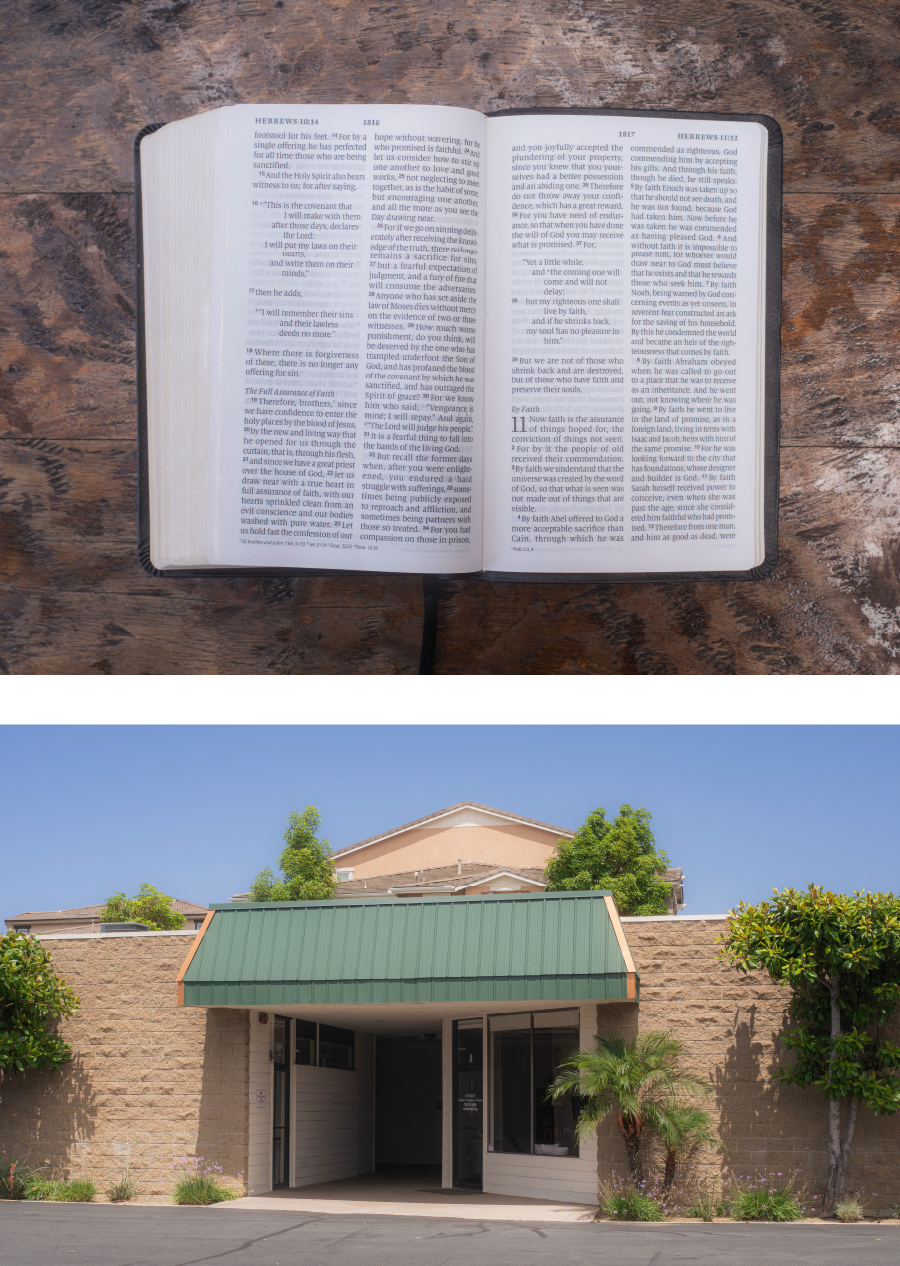
Top: Eric Watkins’s personal Bible. Bottom: Watkins’s church in San Marcos, California.Alan Nakkash
Top: Eric Watkins’s personal Bible. Bottom: Watkins’s church in San Marcos, California.

Just as captivating as the core gospel message was the promise that God is a Father to those who come to him by faith. A good, loving Father—one who would never walk out on you. Before my bus trip was over, I decided to take a detour and go see my dad. We had not spoken in years. But the anger I felt toward him had just been bested by the grace of God. In fact, I felt compassion for him. He was the first person I wanted to know that I had become a Christian. Even so, I had no idea if he would be willing to talk.

He welcomed me. It turned out that my dad had become a Christian that same year and was praying for a way to reconcile with our family. One of the most precious moments of my life was the day, a few years later, when my dad drove down to our family reunion. I watched in amazement as this man of stone—a man of few words—got down on his knees before his adult kids and grandkids and begged through tears for forgiveness. He then sang a Christian song called “Watch the Lamb.” It was his way of saying, “Don’t look to me; look to Christ.”

In God’s providence, I went on to finish that recreation degree. From there, I completed four theological degrees. I have been a full-time pastor and church planter for 22 years while teaching at numerous seminaries. But above all that stuff that looks cool on paper, I am a husband and father of four. God not only saved me from the path of destruction I was on; he also used the pain I’d experienced as a young man to shape me into the kind of husband and father I want to be.

God’s grace is relentless. He saves all kinds of people. He takes broken stories and broken vessels and makes them beautiful. What else would you expect from a God who raises the dead? He even takes former Deadheads and turns them into pastors.

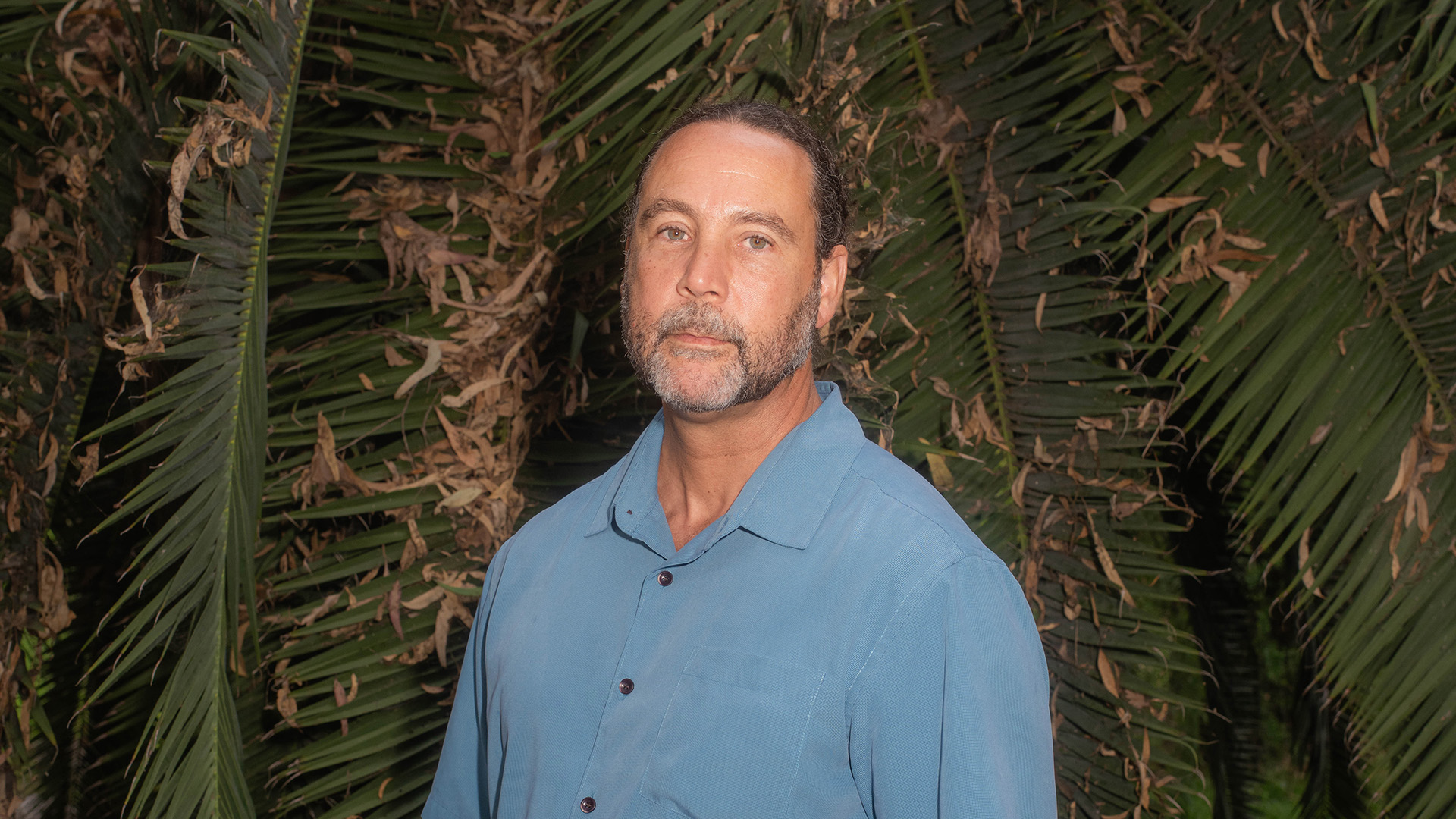
Eric Watkins is the pastor of Harvest Orthodox Presbyterian Church in San Marcos, California. He is also the director for the Center for Missions and Evangelism at Mid-America Reformed Seminary.

Books
Review

The Law Can’t Always ‘Love’ You

Compassionate enforcement has its place. But the state’s role is to bear the sword.

Illustration by Jack Richardson

On May 25, 2020, George Floyd was murdered by a police officer during an arrest in Minneapolis. The incident exploded into the largest nationwide protest in more than 50 years. Some groups demanded the abolition of the police, often with renewed accusations that the American criminal justice system is inherently racist.

Rethinking the Police: An Officer's Confession and the Pathway to Reform

Rethinking the Police: An Officer's Confession and the Pathway to Reform

IVP

224 pages

In some circles, calls rang out to “Defund the Police.” In others, exhortations went forth to “Back the Blue.” Amid a whirlwind of competing claims about bias and brutality, most people simply wondered how to find the facts, what reform ought to look like, and whether systemic justice might ever be achieved.

Although passions have subsided in recent months, the conversation remains as important as ever. And we now have the blessing of two books written by criminal justice insiders, both of whom seek to bear faithful Christian witness.

Daniel Reinhardt, a seminary professor who worked in policing for 24 years, is the author of Rethinking the Police: An Officer’s Confession and the Pathway to Reform. And Matthew T. Martens, an attorney specializing in criminal law, has written Reforming Criminal Justice: A Christian Proposal. Both are intentional in seeking to apply biblical wisdom to their callings.

Rethinking the Police argues that police culture itself leads to abuse on the streets. Reinhardt is generous toward both his former colleagues and current criticisms of the police, from movements like Black Lives Matter to books like The New Jim Crow and Driving While Black. He is an effective witness to police culture in both its shortcomings and its potential.

At its most successful, the book’s argument simply connects the dots between the history and hierarchical structure of police departments, the “toxic leadership” bred into the system, and the biased enforcement patterns that result. Reinhardt encourages police officers and departments to “reflect on how they have influenced” communities—particularly minority communities—negatively.

Reinhardt advocates for a “servant-shepherd” leadership model defined by four core principles: Leaders are followers first; police leaders are one with the community of officers they command; authority and power should be used judiciously and benevolently; and the primary objective of all involved is securing justice and peace.

Reinhardt applies these principles to both the internal culture of police departments and the conduct of officers at work in their communities. Within leadership ranks, he sees patterns of “social distance, dehumanization, and abuse of power.” Among the consequences, he argues, are estrangement between cops and their communities, distrust toward people the police are sworn to protect, and mistreatment of criminal suspects.

The book highlights various fault lines between police and the public, noting a range of day-to-day realities that contribute to a dysfunctional culture. For example, Reinhardt says dangerous aspects of the work, such as high-pressure SWAT team operations, tend to erode compassion in officers.

In addition, he describes departmental practices that are antithetical to treating image-bearers with respect, such as zero tolerance approaches to street level offenses. In all of this, Reinhardt never bemoans the difficulties of the job or a lack of understanding from communities. His critique looks inward without blaming others.

I’m not persuaded, however, that a servant-shepherd model should govern the work of policing in every respect. Law enforcement actions are supposed to be impersonal and unbiased, even if policing is an unavoidably social task. Reinhardt struggles to navigate this tension, in part because he sees both “social distance” and “impersonal enforcement” in and of themselves as causes of dehumanization, racial bias, and abuse. But even though objectivity is certainly no guarantee of equal justice, objective enforcement of laws need not lead to the outcomes Reinhardt deplores.

In criticizing the utilitarian nature of police culture, Reinhardt demonstrates how officers circumvent rules about protecting suspects because they “handicap” enforcement actions. Yet he errs in blaming the noble ends themselves for incentivizing the rule-breaking. He faults an “ethic of enforcement” for undercutting community-oriented policing and furthering systemic racism. Which leaves us to wonder: What is the primary role of policing, if not the enforcement of laws?

Similarly, Reinhardt recalls working in a high school overrun by violence and executing a zero tolerance arrest policy that ultimately harmed the futures of many Black students. He blames an “unquestioned belief in the ethics of enforcement” that police culture had instilled.

It is clear from his example, however, that the school’s biggest problem was its zero tolerance arrest policy, with its blindness to context and other mitigating factors, rather than an unexamined “ethic of enforcement” on the part of police. In an environment where, as Reinhardt states, “teachers were attacked” and “fights in the cafeteria” were breaking out daily, committed enforcement was what the school needed most.

Reinhardt’s lack of confidence in the central mission of civil authority undercuts his approach to reform. Throughout the book, the ideals of peacekeeping, crime prevention, and providing for communities replace the duties of enforcement and punishment. Under the servant-shepherd model, as Reinhardt outlines it, police officers more closely resemble pastors.

On the surface, this might seem unobjectionable. But the tendency of Christians to advance “loving” solutions without considering God-ordained contexts for love—like role-specific callings and duties—can actually be harmful. At the very least, reconceiving police as “providers” could enable a dangerous overstep of state authority. As Reinhardt himself states, “There are virtually no limits to this function.”

Like Reinhardt, Martens brings a wealth of biblical insight to a domain he knows well. In Reforming Criminal Justice, he argues that God demonstrates his love for the community—including victims, suspects, and perpetrators—through enforcement of the law, which sometimes entails bearing the “sword” that Paul invokes (Rom. 13:4).

Martens begins by laying out the theological foundations of criminal justice, including the question of enforcement, its relationship to justice and love, and the duties of those who use violence on behalf of the state. He proposes “a Christian ethic of criminal justice by which we can measure our, or any other, criminal justice system.” And he grounds his work in both ancient and contemporary sources on justice and punishment, from Augustine and Aquinas to Nicholas Wolterstorff and Oliver O’Donovan.

Next, Martens considers how the criminal justice system has operated throughout American history. His account, starting with the Declaration of Independence and the enshrinement of fundamental rights, highlights the role of slavery in denying Black people the blessings of American citizenship. He describes the impossibility for Black people to get a fair trial, citing their exclusion from juries and other methods of disenfranchisement. And he covers the “weaponization of criminal justice against Blacks” after the Civil War, as manifested through Jim Crow laws, unprosecuted lynchings, and other abuses.

Surveying the contemporary criminal-law landscape, Martens does not shy away from the implications of long-standing systemic injustices, and he addresses their disproportionate cost to poor and nonwhite Americans. He acknowledges feeling compelled to write because of the “series of deaths of Black children and men, often at the hands of police.” Elsewhere, he states that Reforming Criminal Justice is “not a book about race, but race cannot be avoided in an honest conversation about criminal justice in America.”

Martens’s evaluation is refreshingly nonpartisan, with no agenda apart from seeking avenues of reform in light of current events and ancient wisdom. He argues that a criminal justice system best reflects God’s love and justice when it prioritizes “impartiality, accuracy, due process, accountability, and proportionality in punishment.”

The book deals squarely with many truths that are often too complex for today’s sound-bite world. It is not easy to communicate, for instance, that retribution for crimes—even violent retribution delivered by human beings empowered to bear the sword—can be rooted in God’s love for wrongdoers and victims alike. But Martens does so ably, carefully considering the context and meaning of Romans 13. He also recognizes that civil government is “not the only institution God has ordained to restrain wrongdoing,” noting that families, churches, employers, and institutions have their own divinely sanctioned roles to play.

Despite its philosophical strengths, Martens’s book is not short on practical suggestions. He calls for accountability for officials who overstep their God-given authority. His chapter on the practice of plea bargaining meticulously details the coercive weight prosecutors can bring to bear against even innocent defendants. Other sections analyze flaws in the jury selection process, bias among judges, and the “epidemic of concealment” in government handling of exculpatory evidence.

Throughout, Martens places our call to do justice (Mic. 6:8) at the heart of the gospel. He answers those who say, “Just preach the gospel” with an exhortation to actually do the gospel. And he cautions those who have utopian aspirations to end injustice, saying that perfect justice will only be secured when Christ returns to make all things new.

Human beings are created to bear witness, letting our light shine before others in our discipleship, our evangelism, and our work in the world. Witnesses testify. They show and tell what they have seen and what they know. Reinhardt and Martens should both be commended for testifying through their lives and experiences, speaking hard-won Christian wisdom into some of the most perplexing and divisive topics of the day.

Mike Schutt is director of the Christian Legal Society’s Law School Fellows program and executive director of Worldview Academy. He is a former attorney and law professor and the author of Redeeming Law: Christian Calling and the Legal Profession.

Theology

I Stumbled in the Steps of the Good Samaritan

When we picture ourselves as heroes, we often forget our humanity.

Illustration by Hokyoung Kim

It seems to me that many of us read the parable of the Good Samaritan with an unstated understanding that its basic message is “For crying out loud, just don’t be a jerk.”

The Sunday school storyboard unfolds in our mind’s eye. A poor, innocent guy has been brutally beaten, and any reasonably moral person would be horrified. The priest and the Levite see him and pass by on the other side of the road. We are astonished by their callous behavior. Surely this is not what any decent human being would do! How can they bear to leave the poor man lying on the side of the road? We unimaginatively insert ourselves into the story in the role of the Good Samaritan, certain that if this event were ever to present itself in our daily lives, we would obviously do the right thing.

In my own experience, living this out went quite differently.

I am driving back to my home in the rural interior of the East African country of Burundi, where I live and work as a missionary physician. The past few days have been a marathon of high-stress cross-cultural and multilingual meetings regarding an international accreditation for our medical school. Preparing for my three-hour trip home, I am utterly spent. I want nothing more than to see my family and share the takeout food that is currently sitting on my passenger seat’s floorboard.

My car winds up the narrow mountain roads lined with banana and palm nut trees. This dangerous journey, with its steep drop-offs and limited visibility, was a terror for the first few years that I lived here, but now it is more or less commonplace. As I drive, I pray that the hours of the trip lighten a bit of the load that I’m feeling.

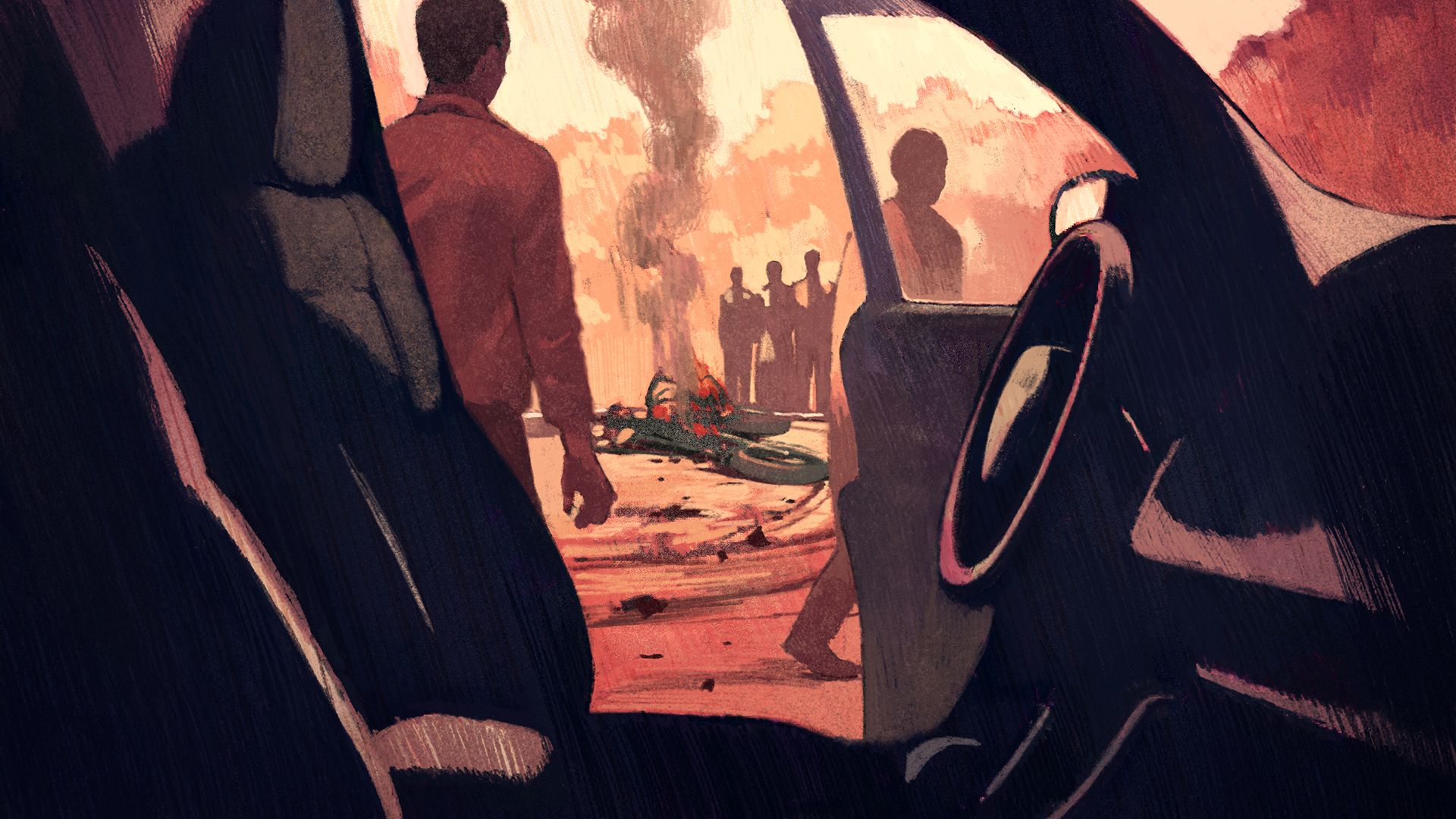
As the road turns yet again, I see a commotion in front of me: shattered glass, a smashed motorcycle, and a chaotic movement of people on the roadside. Two young men are dragging a body away from the motorcycle on the tarmac, one holding a leg and the other an arm, to the narrow gravel shoulder of the road overlooking a steep ravine.

I realize that this accident has happened just moments ago. I am a sudden storm of conviction and indecision. So much in me wants to keep driving. After all, no one at the scene will know the obligation I feel to help. The stakes are high for me too. I need to get home before nightfall makes driving unsafe. Getting involved could mean getting extorted or even blamed for the wreck. The only thing that makes me stop is the oath I took when I became a doctor, and driving by now would all but render that meaningless. I know intimately the lack of emergency services in this area and that there is no other help.

I pull over and get out. “I’m a doctor,” I say in halting Kirundi. I kneel by the unconscious man, who has a large head wound with thick blood forming a trail back to where he was lying in the road. I notice that he’s breathing, his pupils react to light, and his pulse is good. He could be all right if he gets to a hospital.

“Does anyone here speak French?” I ask the young men next to me. A few seconds later, a different man emerges from the crowd and greets me in French. “Is anyone else hurt?” I ask.

As he points to a small crowd 20 meters away, I marvel that I haven’t yet noticed the loud wailing coming from that direction. I go over to look. A young woman screams as I inspect her big open tibia fracture. The leg injury is serious, but she’s obviously conscious and breathing well.

I’ve done all that I can at the roadside. “What are you going to do?” I ask the young French speaker. His face has the too-familiar look of helplessness—of having no transportation, no money, and no one to turn to because everyone around you is in the same boat.

I realize again that they are not waiting on any kind of emergency service. They are maybe hoping that a taxi will take someone somewhere in the next six hours, but that could easily be too late, especially for the unconscious man.

“Look, I have room to take one of them to the hospital up the road a ways,” I offer.

“Take the girl!” the man by me immediately replies.

“The guy is sicker,” I counter.

“He’s already dead.”

This is so obviously untrue that I’m starting to get angry. “He’s breathing!” My voice rises.

The man looks down the road at the abandoned body, as if considering him for the first time. My suspicion is that the motorcycle driver is a John Doe to the bystanders and the injured (but less critical) woman is a friend, maybe even a family member.

I sigh. “Look, let me try and get the seats all flat in my car. Maybe I can take both of them.” I wrestle with my bags and the seats in my RAV4. There is just enough room for the two injured people to lie down and for a male relative to crouch next to the injured woman. The four of us are ready to go.

By this point, the local police have arrived on the scene. I try to explain the urgency of getting the injured people to the hospital. But the officers want me to remain at the scene to give some kind of statement and pass on my contact information. I definitely have no desire to get entangled in a local police affair. Finally, I persuade them to let me go, and I hurry on my way with my car full of bodies.

The French speaker stops me. “Don’t go up the road to that nearby hospital. Please. Please take them back down to the city to a better hospital.” Backtracking all the way back to the city means that I won’t be able to get home before sundown as planned. But I know he’s right. I’ve been to that nearby hospital, and it won’t be able to help. He tells me which hospital to take them to. I know the place, and I agree.

It’s on the drive down that I start to realize we’re acting out the parable of the Good Samaritan. There were injured folks on the side of the road, and I faced a decision to either pass by like everyone else or take them to medical care. The similarities are striking, so why didn’t I notice them before?

For one thing, it doesn’t feel at all like I thought it would. I’m so angry and scared and tired. The woman in the back keeps screaming, “I’m dying!” in Kirundi, and I want to scream back at her that her yelling isn’t helping anything.

Why today? I was already so worn out. In my mind, the Good Samaritan was always some kind of blank slate, with no preexisting burdens of his own and no urgent need to get about his own business, judging by the way he put all of that aside. I saw his generosity but assumed it had come from a margin that I don’t have. If I had that kind of margin, I would react as graciously as he had. But when is any real person really in that situation?

Maybe following the Good Samaritan means recognizing that our own burdens, our own fatigue, and even our own needs accompany us right into the story.

Illustration by Hokyoung Kim

The drive down the mountain is harrowing. I have critically injured strangers in my back seat for whom time is running out. I also have a treacherously winding road with narrow shoulders, numerous potholes, crowds of pedestrians and bicycles sharing the lanes, and trucks puttering down the mountain at ten kilometers per hour. Trying to rush this road takes a normally risky drive to a level of crazy that I have to consciously back myself down from. At one point, I slam on my brakes, and the hood of my car stops slightly underneath the overhanging back end of a semi-truck. I take a deep breath and start praying aloud in English to drown out the yelling from the woman in the back.

I think about risk. Driving off with these people in my car could still mean getting embroiled with the local police, which I’ve done before and really would like to avoid. Going quickly down the mountain could mean putting my own life in jeopardy. One of my friends here told me about driving to the airport at night and seeing a body lying on the side of the road. As he wondered whether to stop, he remembered stories in which such a body was a ruse to get people to stop so that they could be attacked and robbed. He drove on. I totally understand.

Any of these implications finds a ready place in the parable. Did the Samaritan fear a scam? It wouldn’t have been unreasonable. Was he going to get entangled with local law enforcement by trying to help? I always assumed that the inn was farther down the same road, but maybe the Samaritan had to backtrack like me and thus expose himself to the not-insignificant dangers of travel at night.

My life here in Burundi gives me ample information to assess the situation. What might happen to me or others if I get involved? What is the likely benefit if I plunge my hands in? Assessment is wise, but risk itself cannot mean that we are not called to enter into the story. Maybe following the Good Samaritan also means accepting that some risk—not just cost or inconvenience—will inevitably follow.

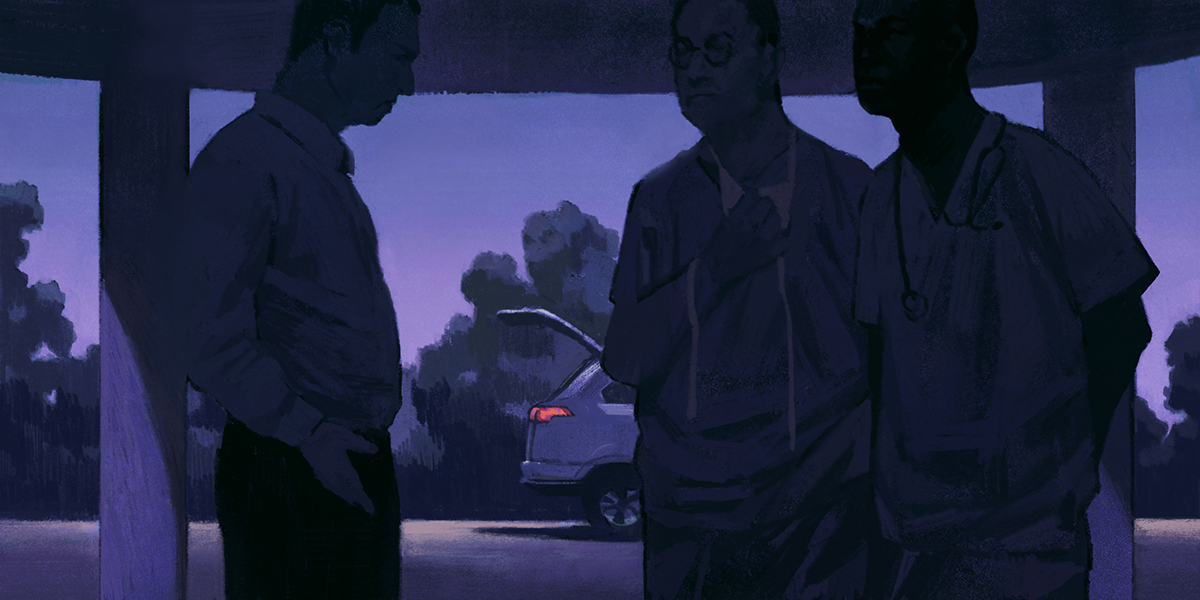
With relief, I arrive in the city and head to the hospital. I drive onto the property through a gate and eventually find the emergency area. I park the car and jump out, stopping the first guy I see in scrubs.

“I have two trauma patients in my car. An unconscious man with a head wound and a woman with an open tibia fracture.”

He stares back at me. I try again, to no avail. After a couple of minutes, the doctor who seems to be in charge comes out. I lead him quickly to the car and open the back hatch. The guy is still unconscious. The woman is calmer for a moment, leaning against her relative who is crouched next to her. I’m looking around for a stretcher or a wheelchair. I can’t understand why, after I risked my life rushing down the mountain, no one is acting.

The doctor starts chatting calmly with the conscious people in my car. I can understand that he is asking about money. He clucks his tongue regretfully and turns to me. “Ah, you see, there is a problem. They have no money. So we cannot care for them.”

This is essentially a private hospital, and I understand that a hospital can’t remain solvent without some income to cover its services. Whether a payment is expected or not, I never imagined a physician would lack motivation to care in an emergency situation such as this. I realize now why no one has gotten the injured people out of my car. The hospital wants to ensure that I will take them away again.

I try to pull rank. I explain my role in medical leadership in the area and ask if he’s okay with me calling his superior and recounting his words. He looks back at me with the overly calm stare of someone who has this conversation every day. “Absolutely,” he says.

“Well, where can I take them?”

“I don’t know.”

“Can I take them to the other hospital just down the road?”

“I don’t know.”

I slam the trunk, get into my car, and drive out the gate without another word.

This is not what I signed up for. My job was to get these people to the hospital, where my generosity would be appreciated and someone else would take it from there. But in for an inch, in for a mile—not because I have any choice; I’m stuck.

Could this have happened to the Good Samaritan? I always pictured the innkeeper with a smile, but who wants a half-dead John Doe in their establishment, even if his expenses are covered? Was that inn the first one the Good Samaritan tried, or did he have to shop around and beg for a while? What if he tried other inns and found they didn’t want a bloody, unconscious man who might scare off their better clientele (like priests and Levites)? What if no one but the Samaritan cared if the injured man lived or died?

As the complexities of living out the parable unfold, I realize more and more that following the Good Samaritan may mean getting in deeper and being more alone than I imagined.

Down the road, I pull into the other hospital. I can’t even find the emergency room without significant help. It’s a small building behind the rest of the campus, like a 30-years-later afterthought. I pull in, wondering what my reception will be. I wander into the ER, asking for a nurse to come out to my car. I explain the situation as a small crowd gathers. The nurse looks in the back of the car and disappears into the ER without another word. I’m not sure what’s going on.

At least 10 minutes later, a stretcher appears, and the injured woman climbs on. She disappears inside the hospital with the family member who rode down with her. The only one left is the still-unconscious man. He is still breathing, and I’m glad to see that he’s starting to groan a bit. Embarrassingly, I keep thinking about how close I am to having my car free again.

A lady standing nearby asks, “How do you know these people?”

“I don’t. I was just driving by, and they needed to get to a hospital.”

“God bless you.”

I just want to cry.

After the stretcher returns and the man is loaded on, I ask to see the family member who rode down with me. I want to give him a bit of money discreetly to cover some initial expenses, but I’m afraid he’ll use it all for his relative and neglect the man.

I decide to trade discretion for accountability and avoid a long discussion about how much money he needs. First I get in the driver’s seat to secure my getaway, and then I roll down the window. I hold up the money for the family member and the omnipresent surrounding crowd to see. “Half of this is for your family, but the other half is for the other guy.” A random person from the crowd pipes up that he understands and that everyone here sees that this man needs to spend half of the money on the motorcyclist. I give a brief nod, hand the relative the money, and drive off.

I think about how the Good Samaritan promised to return and cover all additional expenses. I live three hours away and have my own hospital of patients. I guess the Good Samaritan may have also had such a level of responsibility. Regardless, I have no intention of coming back.

Illustration by Hokyoung Kim

The drive home is stressful as night falls but thankfully uneventful. As I drive past the accident site, I try to shield my face. I think the crowd (which is still there) may have recognized me, but I drive on.

Late at night, I arrive at my house, collapsing onto the couch, wanting to find tears but feeling too overwhelmed. What just happened? I’m not really sure. My medical assessment is that the lives of a couple of people might have been transformed, but trying to follow the Good Samaritan was utterly different than what I imagined.

“Who is my neighbor?” the man asked Jesus to spark the whole story. Go and be a neighbor, Jesus concluded (Luke 10:25–37).

This story hurt me. My emotional well was near empty when the whole affair started, and I ended up scraping the dry bottom repeatedly. I would decide to engage up to a certain point, and whenever I reached that point, I was asked to go further, again and again.

But as Martin Luther King Jr. stated in his “I’ve Been to the Mountaintop” speech, the priest and the Levite ask, “If I stop to help this man, what will happen to me?” The Samaritan asks, “If I do not stop to help this man, what will happen to him?” The parable calls us out of ourselves into a work of sacrifice for another. To love is to sacrifice, and sacrifice hurts.

There were no heroics. Instead, it was a mess. A jumble of my own burdens and the unexpected burdens of others. Irreducible risk that came with entering a violent and needy situation. A lonely experience that took far more from me than I signed up for.

Yet this seems to be what the parable actually looks like. Before this experience, if you had asked me to respond to the call of the Good Samaritan parable, I think I would have assented, even if hesitatingly.

But I now see my previous assumptions. I assumed such an opportunity for sacrifice would come at a time that was, if not perfect for me, maybe optimal or at least not so inconvenient. I assumed that the innkeeper would greet me with a smile and that others would rally to collaborate. I assumed the cost would be more financial than emotional. I assumed stepping out in obedience, even if difficult, would end with a feeling of satisfaction, like the heavy breathing and sweat that come at the end of a good workout.

But it’s not like that. I can say as a medical educator in one of the world’s poorest nations that emotional costs are high whether you’re trying to help one or two individual people on the side of the road or addressing systemic problems that lead to people lying injured on the side of the road. Striving for such upstream system changes is wise but also messy.

Crises come when we pray they wouldn’t, and the risks and the costs may mount well beyond what we expect as we get pulled deeper and deeper into the fray.

I am reminded of these costs often, as I see the dried blood I couldn’t quite get out of the upholstery of our RAV4. But this mess and heartache is how the parable actually plays out.

If I could go back and do it again, I would remind myself of some other words of Jesus that never occurred to me that day. Jesus tells us in Matthew 25:40 that serving people in their need is serving him. He was present in my trunk, unconscious. He was present in the woman screaming.

My sacrifice was in fact an opportunity to carry my Lord around town until a suitable place could be found.

Let’s not wait for some imaginary moment when circumstances and moods convene. Let us receive the inevitable injuries of our fallen world as the painful yet blessed opportunities that they are.

Let us evaluate the risks of Christian love together and support each other in our pain. Let us remember that our Lord is present in those who are in need—and in us, despite our own inadequacy.

Eric McLaughlin is a missionary doctor in Burundi and the author of Promises in the Dark: Walking with Those in Need Without Losing Heart.

News

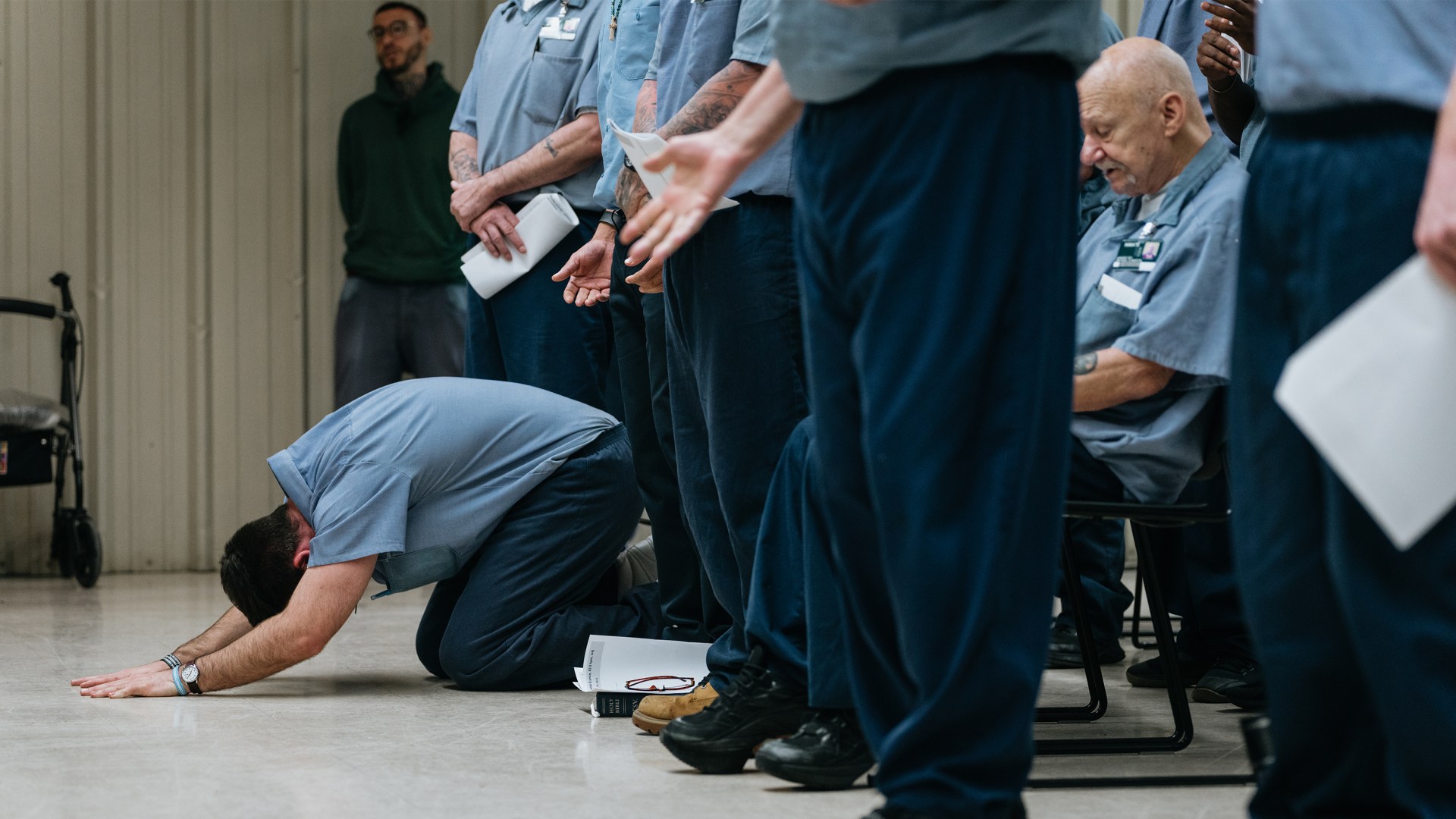
Why Prison Ministries Are Growing

Adaptations for COVID-19 are helping Christians reach incarcerated people, with eager cooperation from government officials.

Rock City Prison Ministry holding a worship service at Chillicothe Correctional Institution in Ohio.

Rock City Prison Ministry holding a worship service at Chillicothe Correctional Institution in Ohio.

Courtesy of Rock City Church

To reach the chapel at the Chillicothe Correctional Institution in rural southeast Ohio, volunteers from the worship team at Rock City Church navigate a maze of checkpoints.

First, they sign in and show identification. One state prison official stamps their hands with invisible ink before another inspects the marks with a black light. Then they lug their instrument cases, amps, and coils of thick black cables behind an escort through a series of huge iron doors that beep like a game show buzzer before letting them in.

Rock City, a nondenominational megachurch based in Columbus, Ohio, started hosting worship nights at Chillicothe during the pandemic. Unable to come inside, they’d set up their equipment outside the prison fence and sing from the grass.

Prison officials eventually contacted Rock City pastor Chad Fisher—not to complain, but to ask for more. They noticed the music was having a positive impact on those incarcerated.

Rock City has run a prison ministry for years but had struggled to win over hesitant officials in several state facilities. That changed with the pandemic.

“We started getting calls left and right from prisons,” Fisher remembers of early 2020. “They were saying … ‘If you’re willing to give us your weekend service, worship, and message, we will show it to our entire population within the walls.’ ”

Rock City now sends footage of its Sunday service to 17 state and federal prisons around Ohio, along with a regular team of volunteers who worship alongside the incarcerated people. Most weeks, Fisher begins his sermon by welcoming those watching online, including “those watching from a prison cell.”

It’s not every day the government requests more church involvement, but prison ministry is a growing exception. As the rates of violent incidents, deaths, suicides, and drug overdoses inside prisons continue to rise, overwhelmed corrections departments are desperate for help. Volunteers from churches and prison ministries across the country, as well as government officials and prison chaplains, say Christian ministries are changing prisons for the better.

Part of this is an odd result of the pandemic. Before 2020, mostly larger and wealthier churches were investing in the technology to record or stream their services. But the lockdowns led to a livestream explosion.

That led to a correlating uptick in the number of churches wanting to partner with God Behind Bars, a Nevada-based ministry that recruits churches all over the country to plant campuses inside nearby prisons by sending weekly footage of their services along with volunteer teams.

When a church signs up and government officials agree, God Behind Bars buys whatever equipment the prison needs—TVs, speakers, network upgrades, every extension cord within a 100-mile radius—and donates it all to the prison. God Behind Bars president and CEO Jake Bodine said this usually costs around $150,000.

God Behind Bars also bankrolls special events, including “family reunification” parties, in which the children of those in prison are invited to spend a few hours with their parents—some of whom they haven’t seen for years—enjoying food, music, and games.

Some prisons require prisoners to show good behavior before they’re allowed to attend. Raeanne Hance, the global director of corrections and community organization for God Behind Bars, said prison ministries’ impact on behavior is well known.

“Anybody who’s in the department of corrections at all knows that the more programs inmates are in, the more peaceful the compound will be,” Hance said. “Officers have told us, ‘Come in, do more and more events, because my compound is quiet and safe for the next two weeks after you leave.’”

However, Hance and other Christians going into prisons point to a deeper transformation. Prison culture improves, they say, because the gospel changes hearts.

Valorie Bradley spent six years in a Tennessee prison for embezzlement before her release a little over a year ago. While serving time, Bradley began going to the prison gym every Thursday night to watch the weekly services from Cross Point Church, a God Behind Bars partner in Nashville. Bradley said the church, especially the volunteers who came week after week to watch the services and pray with her, changed her life.

“It’s like walking out of a fire into a safe haven. … That’s what we got on Thursday nights,” she said. The “fire,” according to Bradley, was a world of drugs, anger, and fighting that constantly smoldered inside the prison.

“It’s a struggle to live like Christ in there,” Bradley said.

Many ministries emphasize the practical benefits alongside the spiritual. Prison Fellowship, the largest and most influential evangelical prison ministry, said its Academy, a yearlong program that teaches life skills, has been shown to reduce recidivism rates, making it an attractive program to state officials.

“Independent research showed one Prison Fellowship Academy site had a 9.65 percent recidivism rate, whereas the national recidivism rate is 68 percent,” said Heather Rice-Minus, an executive vice president at Prison Fellowship.

But recidivism isn’t the only problem state corrections officials face. Statistics suggest kids with incarcerated parents are six times as likely as the broader US population to one day be incarcerated themselves. That’s what motivated Bodine and God Behind Bars to launch their family reunification events.

“Our goal is not to just focus on this current population, but really the entire generational legacy, with leading their mom or dad to Christ while incarcerated … and allowing Mom or Dad to be that Christian influence in their kids’ lives before they’re released,” he said.

When Bradley went into prison, she left behind six grandchildren. Aside from her relationship with Jesus, she said, the biggest impact God Behind Bars made in her life was helping restore those family relationships.

At a recent event in a women’s prison in South Carolina, God Behind Bars staff member Isaac Holt said he watched as one mother reunited with her son for the first time in many years. When she was incarcerated, he was just four. Now he was a strapping 15-year-old.

“It was the craziest thing,” Holt said. “She ran up and jumped into his arms, and he caught her. … She was crying the entire time,” he said.

Family reunification party hosted by God Behind Bars in South Carolina.

Sometimes the extended time apart and the emotional baggage of incarceration make these reunions tense. Meeting face-to-face can’t always solve the hurt that has accumulated over the years. Holt has also seen people devastated when their family members don’t show up despite having RSVPed. It’s hard for some prisoners without visiting family to watch others hugging and laughing with theirs.

Sometimes parents don’t know what to talk about with children they barely know. God Behind Bars tries to help break the ice in whatever ways they can.

That night in South Carolina, volunteers set up an ice cream sundae bar, with an array of flavors and toppings. As Holt watched moms spoon the ice cream into their children’s bowls, he noticed something fascinating.

“You’ll hear a mom be like, ‘Do you want M&M’s?’ And the kid will say, ‘I don’t like M&M’s,’” he said. “They’re finding stuff out about their kids. And that’s actually really exciting for them.”

None of the chaplains or volunteers interviewed for this story had any personal connection to prison. None had been incarcerated or have family who were. Each said the same thing when asked why they minister to prisoners: I don’t know. God just told me to.

Prison officials may see the tangible outcomes of ministry outreach in the behavior and attitudes in their facilities. The churches see eternal implications.

Recently, Fisher received a letter from a man on death row in Ohio, complimenting his sermon and recalling Jesus’ love for Mary Magdalene.

“I wanted you to know I’m not the only guy on the row that watches,” he wrote. “Our crimes are some of the worst there are, but thankfully I can take joy in knowing the Lord forgives me even if people never will.”

Maria Baer is a contributing writer to CT based in Columbus, Ohio.

Ideas

Why I’m a ‘Bible Thumping Fundamentalist’

Columnist

If the label means I hold to essential gospel beliefs, I’ll wear it proudly.

Illustration by Abigail Erickson / Source Images: Getty

“So you’re basically—what do they call it?—a Bible-thumping fundamentalist, right?”

That’s what a student on a secular university campus where I’d been teaching a course asked me. He was agnostic, though he likely wouldn’t have described himself that way; he’d grown up in such a thoroughly secular environment that he wouldn’t have given religion enough thought to even consider himself a nonbeliever. The student had asked me a series of questions and found that, yes, I believe the miracles and the Resurrection were literal truths in space and time, that the Bible is wholly inspired and inerrant, that heaven and hell are real, that explicit faith in Christ is the only way to find the one and escape the other, that marriage is a one-flesh covenant, and that sex outside of it is wrong.

The student stopped and said, “Wait, are those words offensive?”

“Are you kidding?” I said. “After years of being called a cultural Marxist for believing character matters and racial injustice is wrong, I have never felt more seen. A Bible-thumping fundamentalist—that’s exactly what I am.”

This context is one of the few in which I would use the word fundamentalist for myself. By it I mean someone who believes in the “fundamentals” of the faith—the historicity of the biblical accounts, the Virgin Birth, the substitutionary atonement, the bodily resurrection, a visible and physical Second Coming, and so on. By this definition, Billy Graham (the founder of Christianity Today) and all those involved with the postwar evangelical movement were fundamentalists—and so am I.

In the old days of what was once seen as a two-party system in the American church—fundamentalists and modernists—the term fundamentalist was broad enough to include hypercreedal Presbyterians such as J. Gresham Machen, fiery revivalists such as D. L. Moody, and experiential Baptists such as E. Y. Mullins, along with tongues-speaking Pentecostals and Keswick movement “higher life” enthusiasts.

The problem with fundamentalism is that it eventually came to not be about the fundamentals at all. Instead, fundamentalism began to describe not a set of beliefs and practices but an ever-narrowing list of secondary and tertiary issues, such as the timing of the Rapture, the sole use of the King James Version, and hair lengths and clothes choices. It became a “vibe”—an attitude in which “contending for the faith” came to mean “If you’re not in a fight, you’re a liberal.”

Mean-spirited but theatrical figures came to lead a movement in which issues were decided on the basis of what we might call “negative partisanship” today. Because the social gospel of the time held that the Bible called us to care for the poor and seek justice for the oppressed, talking about those things was viewed as a mark of evangelism-denying liberalism (despite the inerrant words of the Prophets, the apostles, and Jesus himself calling us to such things).

The renewal movement that came to be known as evangelicalism struck off on a different path—back toward respecting what the creeds and confessions defined as essential convictions: the authority of the Bible, the necessity of New Birth, the reality of the supernatural and of sin, the dual destinies of heaven and hell. When we know what is truly fundamental, we are then able to work across differences on matters that, while important, are not the essence of what it means to be a gospel Christian.

Today’s ever-narrowing negative polarization—on both the far left and the far right—amounts to the same problem that plagued the old “fighting fundamentalism.” Defined as they are around the controversies of the day or by outrage against the right enemies, some people are too focused on what they perceive to be the fundamentals but not focused enough on what’s truly essential. Theology gives way to politics. Mission gives way to tribalization. Trollishness replaces Trinitarianism. Culture wars replace Christology. Morality becomes being legalistic about the sins of others while being libertarian about the sins of people like us.

Most of us will never reclaim the word fundamentalist. But we can recommit ourselves to what we have received “as of first importance” (1 Cor. 15:3)—the Bible, the gospel, the kingdom. By recommitting to the fundamentals, we can stop thumping our smartphones and get back to the Bible, where we should have been all along.

Russell Moore is CT’s editor in chief.

The Border Is a Complex Place. Jesus Is There.

How can we seek the values of the kingdom amid today’s immigration crisis?

Paul Ratje

One of my first reporting assignments right out of college was a ride-along with a Border Patrol rescue unit in California’s Imperial Valley, right next to the southern border. I spent a long, hot day off-roading with agents armed with jugs of water and first aid supplies as they searched for migrants stranded in the desert—a region that regularly reached 120 degrees in the summer. Coyotes (smugglers) would frequently abandon migrants, including children, in these perilous and often deadly conditions.

The rescue unit’s mission was twofold: to save human lives and to protect the border by enforcing immigration law. I often think of the tension in that unit’s mandate when I consider the complexities of today’s ongoing immigration crisis. It’s not a simple matter, and politicized, polarizing sound bites don’t even come close to doing it justice.

One Christian’s Quest to Change the Way We See Immigration” concludes a pair of immigration-focused pieces from Sophia Lee, CT’s global staff writer. In last month’s story, “Colombian Christians Preached Social Justice. Practicing It Is Harder,” Lee highlighted the work of Colombian churches ministering to the countless migrants who journey through their region as they trek north. In this issue, Lee profiles a ministry at the US-Mexico border called Abara that helps Christians enter into immigration’s tensions by inviting them into the story of a specific place.

Although “Christian educational border trips that aim to help people see the border through a biblical lens are nothing new,” Lee told me, “I was intrigued by Sami DiPasquale’s vision for Abara because of its location—right at the river that acts as a natural dividing line between two countries. A place where, for centuries, people have crossed a natural ford. A place where, to this day—despite the concrete-throttled river and 18-foot fences and surveillance towers—people continue to ‘cross over.’” By telling stories of past and present, and by presenting different perspectives, Lee says that DiPasquale has “a pretty ambitious, perhaps idealistic, vision for the future: Abara can be where heaven meets earth, where justice and peace prevail.”

It’s a fitting vision for those called, first and foremost, to live as citizens of God’s heavenly kingdom. The border, in all its complexity, “reveals our common humanity: our fears and insecurities, our desires and dreams, our shared longings,” Lee said. “Perhaps we can recognize that common humanity through storytelling—that ancient, biblical art of connecting people to one another.”

Kelli B. Trujillo is CT’s print managing editor.

A Person by Any Other Pronoun

Responses to our September issue.

Abigail Erickson

Editor Kara Bettis Carvalho’s September cover story “Should I Offer My Pronouns?” asked how pastors and other Christian writers and leaders are approaching personal pronouns and how they balance loving their LGBTQ neighbors with holding a biblical sexual ethic.

Reader responses were many and varied. Some appreciated a “fantastic article on an increasingly important topic,” as a social media commenter user put it. “I’m thankful that Christian leaders are grappling with this issue in a respectful manner,” wrote Fran Geissler of Saratoga Springs, New York.

Some wondered why certain viewpoints were included as viable Christian approaches at all. “Using pronouns is to de facto use the semantics of a point of view that is untrue and unbiblical,” one Instagram user said. “We should respond by saying, ‘No,’ politely but firmly,” a reader added on X (Twitter). Others asked where people with intersex DNA or characteristics fit into the conversation.

A few readers shared their decisions to become accommodating with pronouns. Abigail Welborn from Jacksonville, Florida, said, “I realized it would make other people feel more comfortable in knowing how to address me, because people are worried about misgendering me.” And a Facebook user commented, “My two children are both transgender. When they came out, they insisted my husband and I use their new names and pronouns if we wished to continue having a relationship with them. We chose relationship.”

Despite the different views expressed, it was clear that everyone agreed about one thing: Words have power. And God calls us to use that power wisely.

Alexandra Mellen
Conversations editor

I appreciated the depth and directness with which Kara Bettis Carvalho examined the debates among Christians about pronouns. I do feel that the feature had one serious flaw, in that it did not answer practical questions, particularly for those who do not believe in accommodating requests for pronouns. Is the need to refer to people without using their names taken into serious consideration? Are those against pronoun accommodation in favor of abolishing pronouns entirely? When they don’t know someone’s biological sex, do they simply guess? Do they recommend people ask friends and strangers to state their biological sex? I would love to know what sources recommend that people with gender-neutral names do when they decline to offer a pronoun and are referred to incorrectly.

Mitchell Atencio Alexandria, VA

When I was a kid, all the forms and such had a space that asked you whether you were “Mr./Mrs./Miss/Ms.” (circle one). This isn’t that much different. Some people complained about the existence of Ms. back then, too.

@willowashmaple (Instagram)

In some languages, pronouns don’t clearly specify gender. In Chinese, [the word] ta sounds the exact same whether meaning he, she, or it. Other languages have arbitrarily gendered nonliving objects and animals. Gender reference in world languages is sometimes a confusing mess, so I appreciate that the point of this article is let’s take a deep breath and not jump too quickly.

@sharonlamsy (Instagram)

A Washington Church Grows Great Commission Wheat

I loved this story, and it prompted me to make you aware of a trust here in New Zealand that has accomplished something similar. Waidale Trust in Southland started in 1966 after a missionary shared that the church lacked the funds to send them to Papua New Guinea (PNG). Two farmers got to talking and came up with the idea of raising “extra stock” on their farms. The proceeds would be given to the missionaries when this extra stock went to the freezing works. Other farmers came on board, and Andrew and Margaret Dunn went to PNG. This was all in a season where farmers struggled to make ends meet. Waidale grew in its ability to support more and more ministry work. In 55 years, they’ve raised over $6.5 million for missions and have passed the vision down through three generations. The trust now owns farms and continues with the extra-stock model. It’s a great testimony of what God can do when one is willing to do what they can.

Rob Reynolds Auckland, New Zealand

At Indigenous Seminary, Students Learn the Power of Faith Embedded in Identity

NAIITS has a partnership with the seminary at [my] alma mater, and I know they are fully aligned with Scripture and provide a healing place for a lot of Indigenous people. Western/European culture has been intermingled with the way we worship God in so many ways that we may not even be conscious of it—like Christmas trees and Easter eggs. To assume that those traditions are good but any Indigenous traditions are bad is wrong.

@itsmarinahanna (Instagram)

Reclaiming MLK Jr.’s ‘Dream’ 60 Years Later

There is a question that keeps bothering me as a white American and that is where do we white American Christians of wealth and power find ourselves in the pages of the Bible? I’ve read that Black Christians have been able to find themselves in practically the whole Bible, from slavery in Egypt through the Prophets and the New Testament redemption story. This is the assurance that backed up Martin Luther King Jr. I’m looking for myself in that same Word. Those with wealth and power always seem to be the oppressors, and I don’t want to be an oppressor.

John H. Scott Batavia, IL

addApple PodcastsDown ArrowDown ArrowDown Arrowarrow_left_altLeft ArrowLeft ArrowRight ArrowRight ArrowRight Arrowarrow_up_altUp ArrowUp ArrowAvailable at Amazoncaret-downCloseCloseellipseEmailEmailExpandExpandExternalExternalFacebookfacebook-squarefolderGiftGiftGooglegoogleGoogle KeephamburgerInstagraminstagram-squareLinkLinklinkedin-squareListenListenListenChristianity TodayCT Creative Studio Logologo_orgMegaphoneMenuMenupausePinterestPlayPlayPocketPodcastprintremoveRSSRSSSaveSavesaveSearchSearchsearchSpotifyStitcherTelegramTable of ContentsTable of Contentstwitter-squareWhatsAppXYouTubeYouTube