News

Feds Dismiss $37.7M Fine Against Largest Christian College

The Department of Education’s reprieve for Grand Canyon University comes after Trump launched a task force to root out anti-Christian bias in the federal government.

Grand Canyon University

Grand Canyon University

Christianity Today Updated May 17, 2025
GrandCanyonU / Creative Commons

Key Updates

May 17, 2025

After 18 months of disputing a record-setting fine issued under the Biden administration, Grand Canyon University announced Friday that the Department of Education dropped the $37.7 million penalty against the Christian school.

Trump administration officials heard about Grand Canyon’s case last month at the first meeting of the president’s anti-Christian bias task force.

The 2023 fine resulted from the federal government’s assertion that Grand Canyon had misrepresented its grad program costs, which the university denied. Grand Canyon blamed federal officials for government overreach and unfairly targeting the school. Now under Trump, the Department of Education’s appeals office dismissed the case with “no findings, fines, liabilities or penalties of any kind,” according to a release from the university.

In April, the US attorney general and fellow cabinet members heard from Christians “who were unfairly targeted by the Biden administration,” with a Liberty University official attending the meeting and discussing the high fines levied against Liberty and Grand Canyon, the two largest Christian schools in the country.

The Department of Education fined Liberty $14.4 million over campus safety violations around sexual violence, and Grand Canyon’s $37.7 million fine was the largest levied by the department.

Grand Canyon fought the fine as well as other federal penalties, saying the government unjustly targeted the school “for political or ideological reasons we don’t understand.”

The Phoenix-based university transitioned from for-profit to nonprofit status in 2018 and grew to become the largest Christian school in the US, with around 25,000 students on campus and another 100,000 enrolled online last year.

November 2, 2023

Grand Canyon University (GCU), the largest Christian college in the US, has been fined a record $37.7 million for allegedly misrepresenting the cost of its doctoral programs. Grand Canyon denies the claims and says it’s been “unjustly targeted” by government agencies.

The US Department of Education’s office of Federal Student Aid announced the fine Tuesday, saying Grand Canyon falsely advertised the cost of its doctoral programs and quoted students a lower price than what 98 percent of the programs’ graduates ended up paying.

“GCU lied about the cost of its doctoral programs to attract students to enroll,” said Richard Cordray, of the office of Federal Student Aid. “GCU’s lies harmed students, broke their trust, and led to unexpectedly high levels of student debt. Today, we are holding GCU accountable for its actions, protecting students and taxpayers, and upholding the integrity of the federal student aid programs.”

The Phoenix-based private university—with 25,300 on-campus students and 86,000 more in evening and online courses—represents the biggest recipient of federal student aid over the past four years.

The Department of Education said that since most GCU doctoral students required “continuation courses” to complete their dissertation, 78 percent of them paid at least $10,000 more than the $40,000–$49,000 quoted online. It alleges that the inaccurate tuition quotes go back to at least 2017.

Grand Canyon has denied all allegations. It said it hasn’t misrepresented the time or the cost of the programs and offers a prominent disclosure on the webpage with its program cost calculator.

“In fact, we believe our disclosures related to continuation courses are more extensive than other universities, yet only GCU is being targeted by the Department,” the university wrote in a press release Tuesday in response to the fine.

School officials see the fine as the latest example of undue government scrutiny.

Nearly 20 years ago, GCU made history by becoming the first for-profit Christian college in the country, then transitioned back to a nonprofit in 2018, in part to move away from the “stigma” of collapsed for-profit higher ed outlets. But while it’s recognized by the Internal Revenue Service and other entities, the Department of Education has repeatedly denied GCU’s nonprofit status. The department believes its earnings continue to benefit its former owners, a for-profit company that contracted with the school to provide support services.

GCU has sued over the denial, and last month, it accused the Department of Education, Federal Trade Commission, and Department of Veterans Affairs of retaliating against the university with additional scrutiny as it continues its legal fight for nonprofit recognition.

“Since GCU filed its lawsuit, these agencies have swamped the university and its education partner with broad requests for voluminous amounts of information and records about our operations—the scope of which made it clear these requests were part of a broad fishing expedition to find issue with the university,” Grand Canyon said in a press release.

The university said that “these agenda-driven actions are unprecedented against a 501(c)(3) designated nonprofit university” and that the claims “lack merit and illustrate extreme government overreach in what we believe is an attempt to harm a university to which individuals in these agencies are ideologically opposed.”

An editorial in The Wall Street Journal questioned the “regulatory assault” toward a college that’s growing and keeping tuition costs steady. In addition to the lawsuit issue, the article suggested that “progressive regulators may also dislike that enrollment at the conservative Christian college has been growing while some liberal private colleges struggle.”

The school has made a similar argument. In addition to its growing student body, Grand Canyon says it has invested $1.7 billion in academic platforms since 2009 and has added sports arenas, 30 on-campus housing sites, and a new science building.

“All of the metrics that would typically say to the department we have a troubled university, we have to look into, our metrics are stellar in all of those areas. So, why these little minor investigations,” president Brian Mueller told reporters last month.

The Federal Trade Commission was investigating calls with prospective students, and the Arizona state agency that handles education programs through Veterans Affairs also spoke out against Grand Canyon earlier this year. The agency said GCU’s advertisements that touted the demand for cybersecurity experts were “erroneous, deceptive, or misleading.” It hasn’t taken further action.

As a result of the education department findings, GCU is being asked to amend materials to include the average tuition and fees for its doctoral programs; submit to oversight and disclose its investigations with accreditors or other agencies; and send a notice to students and staff informing them of how to submit a complaint or violations to the department.

Theology

Campus Antisemitism and the Lessons of a Nazi-Occupied Church

We do not love our “side” if we let it slide into movements that history and our consciences show lead to atrocities.

New York University students held a rally to support Palestine.

New York University students held a rally to support Palestine.

Christianity Today November 2, 2023
Anadolu Agency / Getty Images

This piece was adapted from Russell Moore’s newsletter. Subscribe here.

Last week a Jewish woman, an activist in progressive causes, told me her daughter and her friends were terrified that fellow students at their elite university would find out they were Jewish. This is hardly paranoia, given the way that report after report confirms such actions, from the ripping down of signs of Hamas-kidnapped Israeli children to the chanting of baldly antisemitic slogans in protests.

This week law enforcement identified the source of alleged threats against Jewish students at Cornell University to be not an outsider but a student. At Emory University, students marched alongside their Jewish classmates in solidarity in response to the chants they heard of “From the River to the Sea” (a call for the eradication of Israel itself).

Those of us on the center-right who have seen our movement go awry should expect our friends and pro-democracy allies on the Left to learn from what’s happened with us in recent times. Many of us laughed away charges of incipient racism, nativism, and authoritarianism. After all, most of those critiques came from political rivals and was thought to be exaggerated.

But few of us could have imagined that political leaders at the state and national level would meet with or speak alongside a Holocaust-denying, self-proclaimed Hitler admirer such as Nick Fuentes. Few could have imagined the torch-lit mob at Charlottesville.

Many would have said it is “nut-picking”—letting only the most extreme examples speak on behalf of the whole—to suggest any such dark realities. Now, however, it seems that rarely a week goes by where we don’t find out that some “based” young Right activist or other had a secret, anonymous account spewing unfiltered and undisguised racism.

To suggest that, You know, kids will be kids; everyone has to explore and experience Nazism for themselves, would have sounded absurd just a few years ago—as it should today.

Thankfully, as of now, the figures with actual responsibility on the center-left have indeed repudiated the sort of leftist antisemitism we see in street protests, on university campuses, or online. Whatever one might think of President Biden, he has not yielded one bit when it comes to support both of Israel’s right to exist and of supporting the American Jewish community.

If polling data is to be believed, though, the demographic picture on the Left is not good. Though there are some who hold more nuanced views, TikTok—often found to be the primary source of news for teenage and college-age Americans—is rife with antisemitic dog-whistles and explicit expressions of hatred, all claiming to be under the banner of “pro-Palestinian” progressivism.

Some polling shows that only 48 percent of millennial and Gen Z respondents say that the United States should support Israel in the war with Hamas (compared to 86 percent of the Silent/Greatest generation, 83 percent of baby boomers, and 63 percent of Gen Xers).

Now is the time for leaders on the Left to do what many more on the Right should have done long ago—to identify extremism and bigotry for what it is, and to do so well before the extreme Left ends up where it has been before: excusing atrocities and embracing authoritarian strongmen.

A cliché of our time is what’s called “Godwin’s Law,” the rule that says any internet argument, given enough length, will eventually end up in a comparison of someone with Adolf Hitler and the Nazis. The overuse and inappropriate analogies to Hitlerism usually causes reasonable scholars, leaders, and journalists to avoid such comparisons at all—even with all the caveats of where the historical similarities end.

That reluctance is commendable, and yet I wonder how effective a taboo on Nazi comparisons become when we encounter those who parrot the exact same rhetoric, when it comes to the Jews, as early post-Weimar Germany.

And—just like the extremist Right—the extremist Left can reassure themselves of their moral integrity by pointing to how the dangers of the other side mean all the usual rules are gone.

Joseph Stalin helped defeat fascism—some American and European leftists once said—so we should remain silent in the face of his totalitarian dictatorship and his bloodthirsty program of mass murder. Such arguments are identical to those used just a bit earlier by others as to why we should support Hitler who, the country was told, is not perfect but is keeping Communism at bay.

Some brave figures on the Left, like some brave figures on the Right, refused to embrace that way. We are blessed to have a country that, in the perilous years of World War II and the Cold War, was led by such figures as Franklin Roosevelt, Harry Truman, Dwight Eisenhower, and Ronald Reagan rather than by such figures as Charles Lindbergh, Charles Coughlin, Henry Wallace, or Noam Chomsky.

As Christians—on the political Right, Left, or center—we have a special responsibility to recognize what happens when it becomes a point of actual debate on whether Jews are a “problem” to be solved.

We remember the Confessing Church of Nazi-era Germany. Those Christians withstood the loss of their reputations, their ministries, and, in some cases, even their own lives to repudiate a “German Christian” movement that exalted national Volk identity and history over the very Word of God.

We remember many of those anti-Nazi Christian heroes—Dietrich Bonhoeffer, Karl Barth, Corrie ten Boom—who stood in solidarity with the Jewish people in such moments of threat and refused to look away.

But we should, just as tenaciously, remember the German Christian movement. We should remember what can happen when evil ideologues count on weak and cowardly people, churches, and institutions for what should have been obvious at the time to be worse than neo-paganism—an outright Satanism.

In her magisterial work, Twisted Cross: The German Christian Movement in the Third Reich, Doris Bergen describes just how so-called “German Christianity” took hold. Some of it sounds uncomfortably familiar. These leaders called for a kind of masculinity that contrasted a warrior Christ with such “feminine,” “bourgeois,” or “pietistic” views of Jesus that were seen as weak. Ultimately, that came to include a gradual erasure of such biblical titles as “Lamb of God” and of the emphasis on weak-sounding phrases such as “turn the other cheek.”

German Christianity, its advocates said, would restore the fighting spirit to a church too long at the mercy of its culture. They derided the Confessing Church as, in Bergen’s description, “a holdout of womanly, weak piety.” The detractors were pictured as self-righteous, as “divisive,” as upsetting the “unity of the church,” and as aiding the enemies of the church—those who wished to advocate Communism, sexual anarchy, and family breakdown.

People responded, they said, to appeals to nationalism and race-love for the fatherland—natural affections that they assured were created by God. Passages such as Galatians 3:28 were explained away. The antisemitism led first to a de-emphasis on the Old Testament and ultimately to an almost total rejection of it altogether.

In constructing what they said was necessary to protect the freedom of the church, they surrendered the lordship of Christ and placed themselves in submission to the Führer. As Bergen puts it, “they created a cult based on blood membership and dressed it in the ritual clothing of their Christian tradition.”

“They had replaced belief with ritual, ethnicity, state sponsorship, and war as the core of their spiritual community,” she writes. “In the process they perpetuated a church with neither authority nor integrity.”

Those of us who are Christians should learn this lesson, and those who are not should as well. Those who are conservatives should stand up whenever anything on their “side” leads in that direction. Those who are progressives should stand up whenever anything on their “side” does too.

We should criticize each other, of course, but there is a special responsibility to speak up for what is happening in one’s own sphere of influence. We do not love our “side,” or the ideas represented there, if we let it slide into movements that history and our consciences show lead to atrocities. In fact, such movements lead to death camps.

That means running the risk of being labeled as “hysterical” or “deranged” when pointing to small currents within one’s movement. But this is the way it works: What is excused grows. Suddenly, seemingly, the currents are overwhelming.

Left or Right, religious or secularist, we have an obligation to learn the lessons of an awful history. That doesn’t just mean vigilance from the politicians, but also the campus administrators, the faculties, the college students, the non-college young men and women, and, most importantly to me, the church of Jesus Christ.

When we see a generation that knows not Bonhoeffer, we should pay attention. And when we’re asked to start seeing the existence of Jews as the source of a problem, we should know what to say: Nein.

Russell Moore is the editor in chief at Christianity Today and leads its Public Theology project.

Theology

From the Chicago Suburbs to Penang, We Sought to Love Our Neighbors

Whether hospitality means house parties or intimate gatherings, God’s charge is the same.

Christianity Today November 2, 2023

It’s so nice to finally meet my neighbors. I haven’t met any neighbors in the past 10 years I’ve been living here.”

I vividly remember the radiant smile on my middle-aged neighbor’s face as she told me this. It was at our third neighborhood house party, and she was excited. Twenty neighbors filled our house snacking on finger foods, chatting, and listening to me play Rachmaninoff on the piano.

We had moved to the quiet suburb of Park Ridge seven months earlier, away from the bustling streets of downtown Chicago that we were used to. Initially the idea of hosting big parties never crossed my mind, but in the mostly white, affluent neighborhood we found something missing: community.

Thus began a six-year journey of knocking on doors, meeting neighbors, and entering into their lives. Yet just as we were building strong friendships, COVID-19 hit and we ended up moving more than 9,000 miles away to Penang, Malaysia. With lockdowns, tighter security in our apartment, and a smaller living space, we had to change the way we interacted with our neighbors. Instead of big parties, we ministered to the individuals who entered our home. Instead of a largely homogenous demographic, we broke bread with people of all different religions, ethnicities, and socioeconomic levels.

God taught us through this journey that we can be missional no matter where we live in the world, whether it’s on a short-term mission trip to Haiti, in a Chicago suburb, or on a Malaysian island. As mission strategist Alan Hirsch writes in The Forgotten Ways: Reactivating Apostolic Movements, “as God sent the Son into the world, so we are at core a sent or simply a missionary people.”

Getting to know the neighbors

One year into our marriage, my husband Tony and I moved to Park Ridge to be closer to Trinity Evangelical Divinity School, where he pursued a PhD, while I still commuted downtown to teach at Moody Bible Institute. With its high ratings for education, amenities, and safety, Park Ridge seemed like a great place to start a family.

Through my research, I knew Park Ridge was 96 percent white, but I didn’t truly realize how out of place we’d feel as a young, childless Asian couple until we moved there. When we went to the neighborhood parks or grocery stores, we stood out.

Despite the differences, Tony and I wanted to get to know our new neighbors. It was more than just wanting to make new friends: We wanted to be missional wherever we went. In Hirsch’s words, “We must actually become the gospel to the people around us—an expression of the real Jesus through the quality of our lives.”

For the first few months, Tony and I dedicated a few hours every week to knocking on doors and saying hello to our neighbors. Most of them looked surprised. Some people didn’t want to talk to us. Before we could say a word, one person said, “I’m not interested in whatever you have.” There were several who wouldn’t answer the door, although we could see them sitting in their living room.

But to our surprise, many of them were happy to meet us. When we knocked on a 90-year-old woman’s house, she said, “In my 40 years of living in this neighborhood, you are the first ones to knock on my door as new neighbors.” She quickly welcomed us into her home, gave us cookies and soda, and we talked for an hour. As a recent widow living alone in her house, she shared that she felt sad and lonely at times.

Tony and Esther hosting a party for their neighbors.Courtesy of Esther Shin Chuang / Edits by CT
Tony and Esther hosting a party for their neighbors.

Some interactions were brief, but other encounters blossomed into meaningful conversations. When a middle-aged neighbor learned Tony was a preacher, he started sharing about his spiritual journey. We then talked for an hour about our faiths and different religions.

Then there was a man in his 60s, who was in tears when he answered the door. He told us that his mother recently passed away and started sharing about his heartache. That was the beginning of our friendship: He later became one of our closest friends in the neighborhood.

Over the next few years, we knocked on 122 houses (thanks to my Excel-obsessed husband, we have the exact numbers). Of those, 80 houses opened their doors and we visited 58 of those families more than once. Of those, we spoke in-depth with 16 households and became close friends with six of them.

After knocking on doors for two months, Tony and I decided to host a neighborhood party. We heard from neighbors that there used to be an annual neighborhood party until the host passed away, and people missed those gatherings. It also fit with our larger mission to bring the neighborhood together and to build a community.

Inviting neighbors into our home

Since I’m a concert pianist, I invited my neighbors to a free performance at our home. We printed out invitation cards and as we dropped them off at every door on the streets near our home, we prayed that they would hear the gospel one day. By then, we knew that most of our neighbors were not Christians.

I still remember how anxious I was before our first house party. Most of our guests were still strangers to us. What if someone crazy comes to our home? What if someone comes in and harms us? The funny thing is, I found out later that our neighbors had similar thoughts: “Who are these people inviting us to their home? Are they part of a cult?”

Everyone took a small leap of faith, and much to our astonishment, about 20 neighbors showed up to our first party. At our second house party two months later, we had 55 neighbors. We started asking guests to bring food to share so that they felt ownership of the event and so that we could keep the parties financially sustainable.

The neighborhood Christmas party.Courtesy of Esther Shin Chuang / Edits by CT
The neighborhood Christmas party.

When Christmas came, we held a white elephant gift exchange. Neighbors began looking forward to the next neighborhood house party, which took place several times a year. We started asking our Christian friends to join the parties, and they not only served our neighbors but began spiritual conversations, prayed for them, and even met with some of them afterward.

We also got more and more bold in our house parties. Tony shared that we are Christians and that we are here for them. “If you need help with moving the trash can or picking up mail while you’re traveling, we would be happy to do that,” Tony said. “If you would like us to pray for you, we would love to do that too.” They began taking us up on our offers.

As time passed, our neighbors who were once strangers became our friends. We got to know them over spaghetti dinners and BBQs. We attended classical music concerts and comedy shows. My next-door neighbor became one of my closest friends, as we both enjoyed making pottery together. When I was pregnant, my neighbors threw me a baby shower. I saw that they had become a big blessing to us.

As we did life alongside our neighbors, hardships inevitably came. When one woman was going through multiple miscarriages, Tony and I visited her with flowers, cried with her, and prayed for her. When another neighbor grappled with the loss of her father, we listened to her and prayed with her. In moments of vulnerability, we shared about the one who can give them true peace and comfort.

While most neighbors rejected our invitations to visit our church, two neighbors ended up coming. The aforementioned man in his 60s started regularly attending our church and is now part of a faith community. Although many of our neighbors are still non-Christians, one told me, “You both are the first Christian friends I have. I can tell that you really have this love in you and that you’re true Christians.”

A transition to a new neighborhood

Our neighborhood house parties stopped abruptly when COVID-19 hit. During the pandemic, we decided to move to Malaysia, as Tony received an offer to oversee a manufacturing business in Penang. We sensed God was calling us to move there, so we said our sad goodbyes to our beloved neighbors outdoors and six feet apart.

When we first arrived in Penang, I expected to get to know my neighborhood the same way I did in Park Ridge. But there were two problems: First, we moved during the pandemic when Penang was under a strict lockdown that left most people stuck at home.

Second, we lived in an apartment building with an around-the-clock security guard and elevator fobs that only gave us access to our floor. Due to the security measures, there was no way for me to roam around our building and visit our neighbors.

I struggled with this. How can I love my neighbor as myself when I can’t even meet them?

As the COVID-19 restrictions lifted, I started making new friends who lived nearby and invited them to my home. I hired Indonesian housekeepers to clean my home once a week. Musicians and dancers crammed into our apartment for concert rehearsals.

I then began to see how different my new “neighbors” were from my neighbors in Park Ridge. In Penang, my neighbors weren’t the people living in the same building as me, but rather those who stepped through the threshold of my home. My new neighbors come from different religious, ethnic, and financial backgrounds. Whereas Park Ridge was fairly monocultural (affluent and white), Penang was multiethnic and multireligious.

Only about four percent of the population in Penang are Christians, trailing behind Muslims, Buddhists, and Hindus. Reflective of Penang’s multiculturalism, my new neighbors included Indian Hindus, Indonesian Muslims, Chinese-Malaysian Buddhists, and more.

In the two years we’ve lived here, we haven’t hosted a big house party like we did in Park Ridge because of the limited space in our apartment. But Tony and I hosted smaller gatherings. I cooked Korean food for the wives of rich businessmen who are now my friends. With my part-time cleaner, I’d invite her to share a meal with me or pack some food for her to take home. At times, I used my translation app to tell her, “I’m a Christian and I care about you because I know God loves you.”

Our babysitter, a single Indian Hindu woman in her 60s, told me about her health problems and her family struggles, and, to my surprise, she let me pray for her. Most of these people who come to my home are not Christians. But as we become friends, the gospel is naturally brought up in our conversations.

My neighbors in Park Ridge and Penang couldn’t be more different. But I realized that God’s heart for them is the same. Whether affluent or impoverished, well-educated or uneducated, American or Malaysian, they are all people God loves and cares about. God doesn’t show partiality toward them, and they are all people we are called to love. That is why, regardless of the environment, Tony and I consistently invite our neighbors to our home and into our lives. When we open up our living room and our hearts to them, many of them do so in return.

The question I ponder today is not “Who is my neighbor?” but “How can I love my neighbor?” Be it through my cooking, house parties, piano playing, or a listening ear, I am striving to love my neighbors as myself. I hope to embrace the neighbors God brings into my life with love, kindness, and care, for God has also embraced me with his hesed, his faithful and steadfast love.

Esther Shin Chuang, who holds a doctorate in worship studies, is an award-winning concert pianist, worship leader, and faculty at six seminaries throughout Southeast Asia. She and her husband are pastors at Georgetown Baptist Church in Penang, Malaysia.

News

As Campus Threats Rise, College Ministries Look for Ways to Help

The fallout of the Israel-Hamas war at US universities, including antisemitic attacks, is roiling the Ivy Leagues especially.

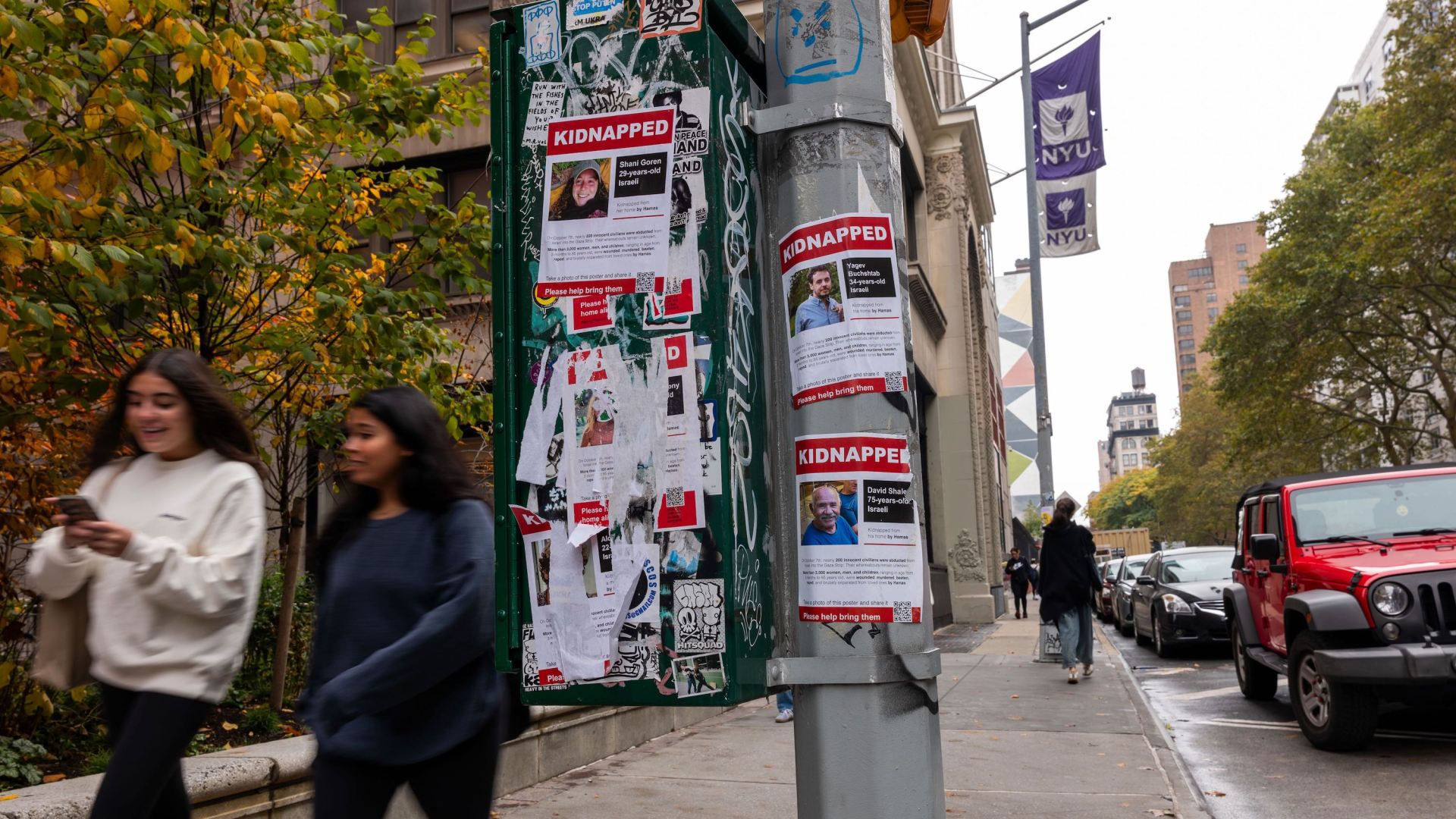
Flyers of those kidnapped by Hamas are displayed at New York University on Oct. 30, 2023.

Flyers of those kidnapped by Hamas are displayed at New York University on Oct. 30, 2023.

Christianity Today November 1, 2023
Spencer Platt / Getty Images

Across the country, college campus tensions over the Israel-Hamas war are high, and students connected to the war’s fallout—especially Jewish students facing more threats on campus now—report struggling with sadness, fear, and anger. Campus ministry leaders say they are trying to find small ways to be friends to those students who are suffering or afraid.

Like at many Ivy League schools in recent weeks, the Jewish group Hillel at the University of Pennsylvania has upped security. It now has an armed guard inside and outside, and a police squad car sits in front of the building, according to one of Hillel’s leaders.

Penn Hillel was already on edge before the October 7 terror attacks in Israel. In late September, a rabbi was arriving for morning services at Hillel’s building before security had arrived, and an individual pushed in and began throwing chairs and overturning trash cans and yelling antisemitic slurs, according to officials.

Since the attacks in Israel, Jewish students have had “troublesome things” shouted at them, Rachel Saifer Goldman, the director of operations for Penn Hillel, told CT. She said people have ripped down flyers for the Israeli hostages on campus, and there have been instances of antisemitic graffiti. Penn has a relatively large Jewish population, making up about 16 percent of its students.

Cory Lotspeich, a campus minister with Christian Union Martus at Penn, reached out to Hillel after the October 7 attacks and offered condolences. He and Saifer Goldman talked, and she invited him to bring his students over for a dinner on a Thursday evening.

“Just to be with our students and hang out,” Saifer Goldman said. “We’re incredibly grateful. … This is the best and the worst, the students are coming together and supporting each other in really wonderful ways.”

Lotspeich wrote his students on October 13, telling them, “Many on our campus are hurting and are in need of our care and love.” After mentioning antisemitic incidents at Penn, and the devastation of the Hamas terror attacks in Israel, he urged students to have “no partiality … God is not a God of partiality, and we will not be a people of partiality, as every person is created in God’s image and is inherently worthy of respect.”

He noted that the Jewish population at Penn was in “deep grief due to these attacks, and their lives and nation will never be the same.” He added, “We also must remember the Palestinians in Gaza who are also suffering due to the actions of Hamas … their lives will never be the same. So, as we see and interact with Jewish students and Palestinian students on our campus, we need to be impartial in offering the same love and care for all.”

Lotspeich also reached out to the Muslim Student Association, which has represented Palestinians on campus, but hasn’t heard a response. He said he doesn’t attribute any motives to that.

Nationally the threats on campuses have largely been against Jews. This week the Biden administration directed additional law enforcement resources to college campuses largely in response to antisemitic attacks and threats.

This week Cornell University in Ithaca, New York, beefed up the police presence on campus after a series of threats to kill and rape Jewish students at the school appeared online at the beginning of this week. Some Jewish students barricaded themselves in a classroom because they were afraid, and others wondered about putting hats on to cover their kippahs, according to interviews with NBC. Late Tuesday night, law enforcement arrested a junior at Cornell and charged him in federal court with making the violent threats.

At Columbia University, an Israeli student was assaulted, and afterward the school closed its campus to the public to manage protests for both sides. A Columbia professor had also called Hamas’s terror attacks on October 7 “awesome” and a “major achievement.” Yale professor Zareena Grewal wrote on X (formerly Twitter) in response to the attacks, “Settlers are not civilians.” A Cornell professor called the Hamas terror attack “exhilarating.”

“Every day there is something new in the national press,” said Matt Bennett, the CEO of Christian Union, which has campus ministries at the eight Ivy League schools and Stanford University.

Bennett surveyed the ministers in his organization and said the general sense is that students are “dismayed and aghast at the terrorist attacks against Israel, and at the same time sympathetic about what could happen in Gaza. … There are no easy answers.” Christian students in their ministries have not had much interest in the “eschatological implications,” he added, which he is glad about. “Our view is, it’s hard to know the times and dates.”

Among campus ministers, Bennett says he notices pure exhaustion after dealing with regular campus upheaval over current events since COVID-19. He advises them: “Focus on the Lord. And offer encouragement and support and understanding.” He’s encouraged other Christian Union leaders to consider reaching out to students organizations like the Christian Union chapter at Penn did.

Christian college students can also be paralyzed or apathetic about the Israel-Hamas war, several campus ministers reported.

“So many students are busy with their own lives,” said Bennett.

“A lot of it is probably, I don’t know what to do, so I’m not going to do anything,” said Lotspeich.

John Turner, a religious historian at George Mason University who has written a book on campus ministries, said in an email that, though evangelicals are concerned about Israel, most American Christian students don’t see it as a “top-level concern.”

“For Hillel and Chabad at my university, as for some Muslim groups on campus, the last two weeks have been a time of existential concern/anxiety/fear,” he wrote. “For most American Christians, it’s yet another conflict in the Middle East, and it’s far away, and unless they’re engaged politically on the issues, it’s pretty easy to go on with life as usual.”

But campus ministers are finding some of their students willing to try to engage.

At California Polytechnic State University, InterVarsity Christian Fellowship’s small groups study the Bible each week and then discuss a practical application. At a recent meeting, the students decided their practical application would be to reach out to Jewish and Muslim students.

Paul Cha, InterVarsity’s area director for several counties in Southern California and who ministers at Cal Poly, already had connections. InterVarsity has long been meeting with other religious groups on campus through the Interfaith Campus Council, which includes Jewish and Muslim student groups.

Last week, InterVarsity students met in two small groups. One group met with two Jewish students, and another small group met with a Muslim student and an Orthodox Arab. Cha was at the meeting with the Jewish students, and another InterVarsity staffer was at the Muslim meeting. The Christian students were there to listen, not to talk.

“Jewish students are afraid of hate crimes rising,” said Cha. “One said, ‘I never thought the Holocaust could happen again, but I’ve thought about that more than I ever have.’”

In the other small group, the Muslim and Arab students expressed fear too, but also that they wanted to hear acknowledgment for “the sheer number of deaths” in Gaza, Cha said. He said their position summed up was, “Why are we okay with so many people dying?”

Divided between their school work and personal connections to the war, with maybe professors who are not empathetic and strident social media, “the sense of isolation is increasing for both groups,” Cha said.

Cha recommends that if other campus ministries want to do events with Muslim or Jewish students, they should ask those groups what would be helpful and then have a clear objective. If Christian groups want to pray for Jewish or Muslim students, ask them if they are open to that prior to an event, he said.

“It’s helpful when students have opportunities to engage in a way that feels productive and helpful, like, Oh, my faith actually matters in relevant topics and current events,” Cha said. “It’s learning how to be a good neighbor, how to be a good friend, and engage with people who are hurting.”

Beth Greco

Beth Greco

Testimony

I Was Facing a Lifetime in Mental Institutions When God Threw Me a Lifeline

How he purged the voices in my head telling me I was worthless.

Christianity Today November 1, 2023
Courtesy of Beth Greco / Edits by CT

I grew up in a loving middle-class family in Lubbock, Texas, a farming and ranching community famous for raising cotton, corn, peanuts, and cattle.

As a five-year-old, I experienced a severe trauma while walking to school with a classmate after eating lunch together in my home. Stopping by my friend’s house to say hello to her mom, we were shocked at her mother lying motionless on her bed. She was dead. Several years later, my best friend in fourth grade died of cancer. Because of these tragic events, I carried an unhealthy fear of death into my young adulthood.

At some point between ages nine and ten, I began experimenting with pot and alcohol. Serious Texas-style partying followed in high school. On weekends teenagers hopped into pickup trucks and drove along back roads to homes, barns, and fields away from town. We drank and laughed, danced to country music, and got high on cocaine.

Schoolwork was a breeze. Even with partying, I earned high grades and honors. I ran cross country and was active in the chess, math, and science clubs. Yet I was insecure, standing at just over five feet tall and weighing no more than 100 pounds. Alcohol and drugs made me feel powerful and fearless.

Big dreams filled my 17-year-old mind as I stepped into my dorm room at Angelo State University (ASU) in San Angelo, Texas, where I was enrolled on a pre-med scholarship. I imagined a bright future helping people as a caring ob-gyn physician. It never happened.

Vanishing hopes

During my first ASU semester, I joined the uncontrolled world of sororities and fraternities. I drank hard liquor daily and did ecstasy and LSD. The new freedom away from home and the cool social life excited me.

For a few hours at a time, ecstasy provided feelings of euphoria, high energy, intense happiness, and peace. Any constraining inhibitions melted away. Many times, I would pass out and wake up in different places the next morning, not remembering what had happened the previous night.

At a frat house Halloween party, I almost overdosed after a bad hit of ecstasy. In and out of consciousness, I hallucinated and woke up hearing evil voices saying, “Kill yourself, life is not worth living, you are worthless.” Over the next few months, the voices in my head trapped me in cycles of hopelessness.

Meanwhile, I stopped attending classes. While I was home for Christmas break, my parents received a letter listing my failing grades and revealing that I was officially on academic probation. They were livid.

Even though I had grown up in the Bible Belt—and made a public show of getting saved and resaved, baptized and rebaptized—whatever personal faith I had was dwindling close to zero. I still believed in God, but I was miles and miles away from him.

With no money and no permanent place to live, I quit college the following January. Any hopes I had for my future had vanished. The next three years turned into a nightmare.

After pawning all my jewelry, I still needed more money to live and to pay for drugs. I found temp work—secretarial and receptionist jobs and waitressing. However, I would often get fired after staying out all night and not showing up the next morning. Or after drinking alcohol at my desk and falling asleep.

For a time, I refused all offers of help to get sober. My family tried intervening, but I pushed them away. Their nagging bugged me.

Meanwhile, I moved around to different apartments. When, inevitably, eviction notices came, I would cajole people into letting me bunk on their couches. Sometimes I slept on the back seat of my car. Former friends disappeared.

Between jobs, I resorted to crime. I stole petty cash from employers, shoplifted, and cashed stolen checks, a more serious bank-fraud offense. Sometimes I returned shoplifted items to the stores I had stolen them from, exchanging them for cash or gift cards.

In 1992 I tried to kill myself for the third time, mixing ecstasy and cocaine with huge amounts of alcohol. I tried rehab programs that did not help and spent time in locked-down psyche units. There, I was medicated into a trance-like state where I drew pictures with different colors to calm me. I knew I was crazy just like the other patients. Most of us just sat around for hours staring at the ceiling.

Life felt hopeless.

Standing on the brink

During my final admission to a state mental hospital for a failed suicide attempt, my grandmother asked the youth pastor from my old church to visit me. He told me there was hope, and he provided phone numbers for two faith-based drug and substance abuse rehab programs: Adult & Teen Challenge in Dallas and the Hoving Home in Garrison, New York.

Teen Challenge in Dallas was full. In desperation, I placed a collect call to the Hoving Home, which had an opening. My former church provided a one-way plane ticket to New York. I took a calming medication to make it through the flight and wore my favorite Texas cowgirl boots to boost my confidence.

But deep down, I felt totally alone, scared, and unsure of ever recovering from addiction and mental illness. At the age of 21, I stood on the brink of being institutionalized for life.

Hoving staff members met me at Newark Airport in New Jersey. The van ride to Garrison, New York, an upscale community, took a little over an hour. I was numb from the plane ride and my mind was clouded. I heard voices again in my head whispering, “You will never make it. Death is the final solution.”

As we pulled into the Hoving Home driveway, passing through the massive stone entrance posts, my eyes focused on a sign nailed to a tree: Speed Limit 15, We Love Girls . A tiny spark of hope appeared. For a moment I thought this time might be different. And it was.

Founded in 1967 by John and Elsie Benton, the Hoving Home is located on a 39-acre former estate overlooking the Hudson River. It is named after Walter Hoving, the former chairman of Tiffany & Co., who helped arrange the financing for the original purchase of the property. Five additional campuses now operate in New York, New Jersey, California, Nevada, North Carolina, and Massachusetts, ministering to 140 women.

Adjusting during my first month was rough. The home assigned me a Big Sister to help me cope with the new Christian environment. I was a difficult student and cried often. I had trouble sleeping from nightmares and hated getting out of bed at 6 a.m. every morning to attend classes and do chores like mowing grass, raking leaves, and shoveling the snow in the winter.

At first, I was no fan of memorizing Scripture. Nevertheless, I started leaning on Luke 1:37—“For nothing will be impossible with God” (ESV)—as my go-to lifeline. And slowly, the Lord started changing my heart. The Hoving staff demonstrated kindness, patience, and a willingness to love me at my worst. Finally, I repented of my sins and rebellion and surrendered to Jesus.

God delivered me from the crazy voices in my head when the staff encircled me, praying and reading Scripture over me. Yet I continued carrying a lot of baggage. I had a strong-willed, independent spirit—a prideful inclination to go my own way rather than yielding to God’s control. And I was still grieving over the wasted years.

At one point about three weeks into the program, I broke down, thinking I couldn’t handle it anymore. I was ready to give up and run away. I poured out my soul to Debbie Jonnes, the program director, in her office. She looked me straight in the eyes and said, “You may not believe me now, but I want you to hold on to my faith because I believe that Jesus can change your life.”

Her confident faith and mercy caused me to stay another day. Then more and more days, until I completed the program in June 1993. It had taken 18 months, 6 months longer than usual.

Deliverance stories

I learned, however, that deliverance from bondage takes time. The Holy Spirit provided the power to overcome the next phase of my journey, a prison term for a bank fraud conviction.

I spent the next eight months in the women’s high security unit at the Federal Correctional Institution in Lexington, Kentucky, now a men’s facility. Fortunately, the judge shortened my sentence, which could have been much longer.

Prison life was lonely, but I stayed away from trouble by reading the Bible in our pod, spending time in the prison library, and attending chapel services.

During my prison term, I received a letter from John Benton, the Hoving Home founder and president. He invited me to join the Hoving staff as an entry level associate. I accepted and left prison with a one-way bus ticket to New York.

For the first year and a half, I worked in the home’s outreach crisis center in Times Square in Manhattan. I shared my testimony with broken women hanging out on the streets and in parks and invited them to the program. Afterward, back in Garrison, I did clerical and administrative work and was appointed business manager in 1995. God blessed me over the years through a series of promotions, and in 2016 I was chosen to lead the organization.

I never tire of telling my story to our residents. When I see women struggling, I try to encourage them and pray with them as I walk through the facility. I recall meeting a recovering addict plagued by voices in her head. I told her how God had touched my life and delivered me. She completed the program and now leads a homeless ministry in her church.

These and many other deliverance stories have left me in awe of God’s redeeming power. The only reason I do what I do is because Jesus saved me and enables me every day. I trust Romans 8: There is no condemnation for me in Christ Jesus. And only through him I am more than a conqueror.

Beth Greco is president and CEO of Hoving Home. Peter K. Johnson is a freelance writer living in Saranac Lake, New York.

Ideas

The Opposite of Abuse Is Care

Contributor

In an age of spiritual abuse scandals, the early church offers a positive model of pastoral authority.

Christianity Today November 1, 2023
Illustration by Christianity Today / Source Images: WikiMedia Commons

Americans buy millions of self-help books each year, but we, the children of (post)modernity, are not the first to appreciate this genre. It was popular already in the ancient world. Military manuals have existed since at least the fourth century BCE, ready to advise on how to select the best warhorse and conduct an effective siege—or, conversely, survive under siege. The ancients dispensed advice on other topics, too, from cooking to dream interpretation, farming, oratory, friendship, and how to live well in one’s old age.

But there’s one topic on which pagans didn’t write: caring for others. I first noticed this absence while researching popular attitudes toward women—especially mothers—in antiquity and today. That research is, in turn, part of a book project in progress examining the similarities between the pre-Christian pagan approaches to issues of life and the modern post-Christian attitudes to these same topics.

This absence speaks volumes, as does the rise of the new sub-genre of writing on pastoral and practical care in the first few centuries of the church. Historians rightly study what is present in the documentary record, but considering absences can be no less illuminating, as it is in this case. Until early Christian leaders began writing letters, treatises, and manuals about care for single women, the poor, and the sick, and other vulnerable people, such writing did not exist.

In these documents, we find pastoral care that is wide-ranging, including not only the kind of spiritual and relational care that the term most often encompasses today, but also attention to practical needs. These texts bear witness, then, to the role of ministries of compassion—and to how the early church saw those ministries as foundational to healthy use of pastoral power.

Words of mercy about works of mercy encouraged the creation of more robust networks of care. This history is worth revisiting in an era when high-profile scandals of pastoral authority abuse have undermined many Christians’ trust in church leadership.

Emphasis on counter-cultural care for others abounds in the New Testament, so it’s no surprise this kind of writing would spread as the church grew. In Acts 2:44–46, for example, we hear of believers eliminating poverty and need within the fledgling Jerusalem church.

Still, the rise of more formal treatises about pastoral care, beginning in the third century CE, is particularly striking, as this was arguably the worst time for Christians to live in the Roman Empire. The assassination of emperor Severus Alexander in 235 CE unleashed the period historians dub the “third-century crisis.” From that point to Diocletian’s rise to power in 284 CE, emperors rose in the military ranks, took power, then got assassinated in quick succession.

Meanwhile, more than 200 years of debasement of the currency finally culminated in out-of-control inflation. A mysterious pandemic arrived around 250 CE and circulated for two decades, leaving a horrifying death toll in its wake. While empire-wide numbers are impossible to calculate, the plague carried off an estimated 62 percent of the population of the city of Alexandria, suggests historian Kyle Harper. And the first empire-wide persecution of Christians began in 251 CE.

Amid all these crises, pastors in the third century were ministering to people living through an age of upheaval that sounds remarkably similar to our own. How did they cope?

Tellingly, sermons, treatises, and letters from the time don’t show much interest in Christian accumulation of conventional power. They don’t consider how Christians might influence politics or government or the economy, and they don’t push back against religious persecution—something ordinary people had little chance to affect, anyway. Rather, these early pastors emphasized Christians’ obligation to love our neighbors in word, deed, and cash.

One particularly well-documented example is the ministry of Cyprian of Carthage from around 248 CE to his martyrdom in 258 CE. Early in his ministry, Cyprian wrote On Works and Alms, a treatise in which he went so far as to fence off the Communion table from those who failed to do such acts of love. Their hearts, he argued, were visibly unconverted.

In another treatise, On Mortality, which may have started out as a sermon, Cyprian rebuked those who refused to care for the sick and the dying during the plague. His description of the pandemic’s symptoms suggests his knowledge of it came from firsthand observation in caring for the infected.

Cyprian’s letters from this time are also filled with exhortations for pastoral care. Once, he responded to another pastor’s plea for advice in dealing with a new convert, whose job as an actor and acting instructor was considered scandalous by the local congregation. (This was one of the most dishonorable professions in the Roman world, and because of its association with pagan worship, it was especially dishonorable for a Christian.)

Cyprian’s reply advises not discipline but care: Does the convert have any other means of support? The church should care for him if not, he says—even offering to financially support the convert himself if needed.

Words like these were not only faithful. Historical evidence suggests they were also attractive. Christianity in the Roman Empire grew from less than one percent of the population in 200 CE to nearly ten percent a century later.

This growth is particularly remarkable and, frankly, surprising given the rising persecution in that same time. Why, when they knew conversion could mean death, did more people than ever come into the church? Sociologist Rodney Stark has argued that it was the church’s work of care, both practical and pastoral, that attracted converts and led to this explosive growth. The witness of good words and works bore rich fruit.

Can the same be said of us? If I were a historian living centuries in the future, studying documentary evidence about churches in the United States in the early 21st century, I would likely have the impression that Christians in our period were mainly doing two things: suffering abuses of spiritual authority and dealing with the aftermath of those abuses.

These are, after all, the topics of so many books, articles, and reports. Shining light on abuse and working to prevent it in the future is important, not least because justice matters to a just God. And yet, what are we missing if these conversations swallow up many others? What is the salient absence in the contemporary church’s documentary record? I would argue it is the absence of robust conversations on healthy use of pastoral power to care for our communities.

The example of the early church reminds us that if we talk only about what the church must root out—what we should not be or do as Christians—we can miss out on conversations about who and what we are called to be. And that means we miss out on opportunities to transform church culture for the better.

Healthy pastoral authority and care today should be an essential part of our conversations and endeavors, just as it was in the earliest days of Christianity. We cannot overlook the significance of our words—what pastors and other church leaders talk and write about—in bringing about change in local churches and their wider communities.

So on the one hand, yes, we should condemn the “bully pulpit” and the calls for the church to seek political power in a time of crisis. At the same time, yet more calls to unmask abuse and fight it are insufficient. We also need encouragement from the pulpit and in writing from Christian leaders on matters that were always part of the church’s countercultural witness in a cruel world: practical and spiritual care for the poor, the sick, widows, single mothers, orphans, and immigrants (James 1:27).

I witnessed the effect of this kind of encouragement in the Presbyterian Church of America congregation where my husband and I were members for seven years before our recent cross-country move. Right around the time we joined, the pastor had decided to emphasize adoption and foster care as essential ministries for our church. At that point, there were very few foster homes in the county, and the need far exceeded availability.

The pastor’s outspokenness in making such care for the local community a deliberate priority had significant effects within the congregation. The number of adoptive and foster families in the church grew. A new ministry created year-round meal trains and other support structures to help foster families. The church’s awareness of related needs in the local community increased, too, leading to additional ministry opportunities. The whole character of our church changed because of our pastor’s focus on pastoral and practical care.

The record of Cyprian’s ministry likewise reminds us that words and works of care have power to bring about change in local churches. Christians of the early church were not any less sinful than we are, any less prone to spiritual weakness and fatigue. But with leaders who pointed the flock to Jesus by speaking, writing, and modeling care, they transformed their entire culture. The same can be no less true today.

Nadya Williams is the author of Cultural Christians in the Early Church (forthcoming November 2023). Her next book, Priceless, is under contract with IVP Academic. She is book review editor for Current, where she also edits The Arena blog.

Theology

The History of Chinese Bible Translation Is Full of Cooperation

Western missionaries collaborated with Chinese Christian scholars to translate the Word of God, leading to the achievement of the Union Version.

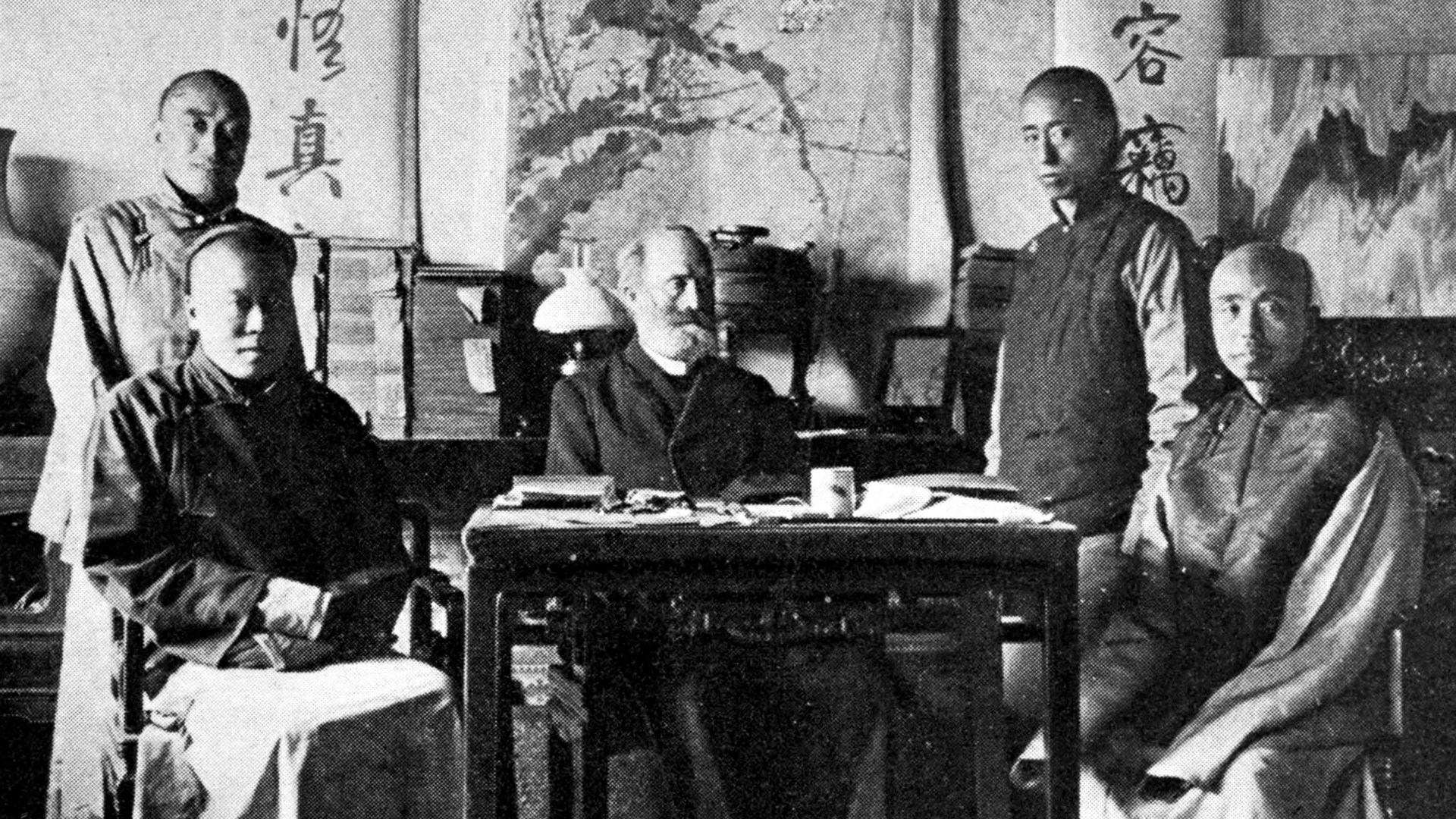
W. A. P. Martin (center) who helped with the Mandarin translation of the Bible

W. A. P. Martin (center) who helped with the Mandarin translation of the Bible

Christianity Today November 1, 2023
WikiMedia Commons

One author once said that in the hearts of many Christians, the Chinese Union Version (CUV) Bible is “the only Chinese Bible; everyone calls it the ‘Chinese Bible’ and not the CUV.”

Another praised the CUV as “a collection of the essence of a hundred years of Bible translation,” a “culmination of the efforts of countless Chinese and Western scholars, with many terms derived from [Robert] Morrison’s translation.”

Although there have been several high-quality Chinese translations in recent years and the CUV has undergone revisions, the early history of Protestant Chinese Bible translation clearly testifies to Chinese-Western cooperation and global collaboration, laying the foundation for different Chinese translations in the future.

The Bassett Version and the first translations

When Robert Morrison arrived in Guangzhou in 1807, China operated under the Canton System, restricting foreigners’ activities to the port of Guangzhou and imposing limitations on their interactions with the Chinese.

During his studies and translation work, Morrison heavily relied on a copy of the New Testament known as the British Museum Manuscript, which he acquired from his Chinese teacher, Yong Sam-tak, in London. This manuscript was later identified as a translation of the New Testament done by French missionary Jean Bassett and Chinese believer Johan Su (or Xu) in Sichuan. However, Bassett’s translation reached only the first chapter of Hebrews before his death in 1707, leaving the task unfinished.

This copy significantly influenced Morrison’s translation efforts and created a competitive environment with another group of Protestants attempting to translate the Bible into Chinese in Serampore, a Danish-controlled port in northeastern India.

The mission center in Serampore, founded by Baptist missionary William Carey, made significant contributions to India. Alongside their missionary work, they engaged in poverty alleviation, education, and the translation and printing of the Bible in multiple Indian languages. Through an unexpected encounter, they met a Chinese-speaking Armenian named Joannes Lassar (original name Hovhannes Ghazarian), which led to the expansion of their ministry in Chinese Bible translation.

Lassar can be considered a member of the Canton System Era. His father was a businessman who had brought his family to China for trade. However, at that time the Thirteen Factories area in Guangzhou allowed only foreign merchants and business personnel (such as translators, which was a position Morrison also had to take on to stay in China) to reside there, so Lassar’s father had to leave him in Macau and hire a Chinese teacher for him to learn the language. Later on, Lassar faced some business failures and ended up living in India. Through a series of events, he was invited by believers in Serampore to teach Chinese and began collaborating with Baptist missionary Joshua Marshman in translating the Chinese Bible.

While Morrison was still in the early stages of his translation work, Lassar and Marshman had already published their translations of the Gospel of Matthew and the Gospel of Mark in 1810–1811. Under intense competition, Morrison sought to expedite his progress and heavily relied on Bassett’s manuscript, eventually completing the translation of the entire New Testament in 1813. Upon learning of the existence of the Bassett version, the Baptist translators in Serampore used it to revise and complete their own translation. Consequently, both translations (collectively referred to as the Two Ma Versions, namely the Morrison and Milne version and the Marshman and Lassar version) were influenced by the Bassett version, resulting in significant similarities in terminology.

Robert MorrisonWikiMedia Commons
Robert Morrison

Since Bassett’s version covered only up to the first chapter of Hebrews, Morrison, Marshman, and others had to translate the remaining portions of the New Testament and the entire Old Testament by themselves. However, many key terms from the Bassett version have continued to be used to this day, testifying to its enduring influence. These terms include gospel, apostle, righteousness, grace, salvation, kingdom of heaven, prayer, and the profoundly influential term God.

Experience of missionary work in Southeast Asia and localization of the Bible

Due to the primary translation programs of the Two Ma Versions taking place in the relatively closed foreign quarters of Guangzhou and Serampore, there were limited opportunities for Chinese readers to participate and provide feedback. However, this situation began to change before the completion of the Two Ma Versions. William Milne, who was also part of the London Missionary Society, established a mission base in Malacca, Malaysia, in 1815, following Morrison’s suggestion. He gradually discovered that several Chinese communities in Southeast Asia were significant fields that could greatly contribute to the development of local and Chinese evangelistic work.

Other missionaries who arrived in Southeast Asia to carry out their work included Walter Medhurst from Britain and Karl Gützlaff from Germany. These missionaries had more opportunities to engage with the local Chinese population in Southeast Asia. They even used various written media to introduce people to the Christian faith, including novels, magazines, and gospel pamphlets. To reach a wider readership, these reading materials were often written in a simpler and more accessible style known as Easy Wenli, the vernacular language of Ming and Qing dynasty novels.

As translators, the missionaries realized that the language used in the original translations of the Bible was too literal and not smooth for Chinese readers. Although Morrison’s translation of the Old and New Testaments, Shen Tian Sheng Shu (The Holy Book of God and Heaven), was a joint effort with Milne, Milne joined in only during the translation of the Old Testament, making it difficult to make significant changes to the language and style of the version.

Karl GutzlaffWikiMedia Commons
Karl Gutzlaff

After Morrison died, Medhurst and Gützlaff had the opportunity to retranslate the Bible by using a more localized language and vocabulary. The completed New Testament version was commonly known as the Four Men’s Translation—a collaborative effort by Medhurst, Gützlaff, Elijah Coleman Bridgman (the first American Protestant missionary to China), and Morrison’s son, John Robert Morrison (who was born in Macau).

Leading the team, Medhurst not only utilized a more colloquial style of vernacular language but also attempted to replace some of the more phonetically translated terms in the Shen Tian Sheng Shu with more authentic and meaningful expressions. For example, [口撒]咟日 (Sabbath) was changed to 安息日; 吧[口所][口瓦]日 (Passover) was changed to 逾越節; and 啦吡 (Master or Teacher) was changed to 夫子. Another significant change was replacing the word 言 with 道 in chapter 1 of the Gospel of John, introducing the concept of 道 (the Way) that already existed in Chinese philosophy into Christianity. It is believed that this more authentic translation and writing method was related to the missionaries’ experiences and interactions with Chinese people in Southeast Asia.

The Four Men’s Translation ultimately did not receive support from the British and Foreign Bible Society, but Gützlaff completed the translation of the entire Old Testament in the same style on his own. This combined Old and New Testament version was later selected by Hong Xiuquan and became the basis for the Bible of the Taiping Heavenly Kingdom.

Collaboration of East and West: Classical Chinese translations

In the mid-19th century, due to various unequal treaties, China gradually opened multiple ports and inland regions to foreigners. As a result of this significant political change, the translation work of the Protestant Bible in China moved toward two new but different directions.

First, with the increasing number of missionaries in different regions, there was a growing call for a unified translation that could be accepted by everyone. Yet this noble idea was easier said than done. In 1843 a missionary conference was held in Hong Kong, where it was decided to appoint delegates from different regions to jointly translate a united Delegates’ Version (委辦譯本) of the Bible.

However, disputes arose among the translators, including the more dominant representatives from the London Missionary Society, such as Medhurst, leading to disagreements that extended even to among nations. The areas of dispute included the translation of certain terms, with the most serious issue being the choice between 上帝 (Shangdi, “God”) and 神 (Shen, “God”)—a controversy that would continue for many years and become the catalyst for the ongoing issue of how to translate the divine names.

Walter MedhurstWikiMedia Commons
Walter Medhurst

Another point of contention was the written language used in the translation. Medhurst believed that a unified translation using classical Chinese (later known as High Wenli) would earn the respect and attention of Chinese intellectuals. However, American missionaries, led by Elijah Coleman Bridgman, preferred a more colloquial and easily understandable novelistic style (later known as Easy Wenli).

Due to the unresolved dispute, only the New Testament portion of the Delegates’ Version was completed. Subsequently, the British missionaries withdrew from the committee and translated the Old Testament by themselves. Meanwhile, American missionaries Bridgman and Michael Culbertson embarked on their own translation of the Bible, using what they deemed appropriate translated names and written language. This Bridgman-Culbertson version did not gain much popularity in China, but it caught the attention of American missionaries in Japan and even influenced the subsequent translation of the Japanese Bible.

Regarding the Delegates’ Version, the British missionaries faced challenges in using the hard-to-understand classical Chinese to produce a translation that Chinese intellectuals would accept. Fortunately, Medhurst’s team received assistance from the Confucian scholars Wang Changgui (王昌桂) and his son Wang Tao (王韜), which enabled them to successfully complete the translation of the Delegates’ Version. Medhurst praised Wang Changgui for his extensive knowledge, which earned him the reputation of a “living dictionary.” He described Wang Tao as less knowledgeable than his father but possessing a keen and skillful application of language, with elegant style and sound judgments.

Renowned historian and educator Luo Xianglin later described the text of the Delegates’ Version as having “elegant expressions, rich literary qualities.” The success of Medhurst’s classical Chinese translation owed much to the contributions of Wang Changgui and Wang Tao, the two Chinese translators.

The emergence of colloquial translations

Another development in the translation of the Chinese Bible can be seen as a shift in the opposite direction from classical Chinese translations. As missionaries were able to travel to various parts of China, they began to understand the diversity of the Chinese language and the low literacy rates among the people. Many of the target audiences, such as women, could not understand classical Chinese, and even if the Bible was read to them, they could not comprehend it. Missionaries began to explore the possibility of translating the Bible into colloquial (vernacular) language, hoping that when it was read, the people would have a better understanding.

They also discovered significant differences in the languages spoken in various regions of China, necessitating the use of different vernacular versions to cater to local needs. For example, Mandarin was needed in the northern regions, while the Suzhou and Shanghai dialects were needed in the Jiangnan area, and Hokkien and Cantonese versions were needed in the southern coastal regions.

These versions were all translated using Chinese characters. Additionally, some versions were translated using Romanized phonetics, including the early German Lutheran missionaries Wilhelm Louis and Ernst Faber’s Romanized Cantonese version of the Gospel of Luke in local vernacular colloquial, as well as the Hakka Bible translated by the Swiss Basel Mission (now known as the Tsung Tsin Mission). These versions were mainly produced to facilitate missionaries’ reading.

The first and most famous Mandarin translation was the Beijing Version of the New Testament, which was jointly translated by several missionaries working and preaching in Beijing, including William A. P. Martin, the head of the Tongwen Guan (Imperial College), and the Jewish American missionary Samuel I. J. Schereschewsky.

Since Schereschewsky came from a Lithuanian Jewish family and had studied in rabbinical schools from a young age, he had a deep understanding of Hebrew. After the release of the Beijing Version, he translated the Old Testament using both Mandarin and Easy Wenli. His Mandarin version of the Old Testament and the Beijing Version had a significant influence on the later Mandarin Union Version. Many of the beautiful and accurate translations in the Union Version, such as Psalm 23, bear Schereschewsky’s translation traces.

Calvin MateerWikiMedia Commons
Calvin Mateer

Embracing differences in a collective translation

In 1890, during another missionary conference in China, missionaries from various countries and the Bible Societies of England, America, and Scotland jointly decided to establish three translation committees to work on a new collaborative version. This translation was characterized by its diversity, with one translation but multiple versions that aimed to address major controversies in the translation of the Chinese Bible over the years.

For example, they accepted the usage of both Shangdi and Shen to overcome the issue of translating God’s name, and they allowed both baptism and washing to be used to eliminate translation differences between the Baptists and other denominations. In addition, they used classical Chinese (High Wenli), novelistic style (Easy Wenli), and vernacular (Mandarin) simultaneously in translation to resolve disagreements regarding the choice of written language.

The Union Version gained widespread support within the church shortly after its release, largely due to the underlying spirit of seeking unity despite differences and the willingness to compromise. Additionally, although the majority of members in the translation committees for classical Chinese, Easy Wenli, and Mandarin were missionaries from the United States and England, Chinese members also played an important role.

Evidence of Chinese translators can be seen in photos of various Union Version translation committees, and Wang Xuanchen (王宣忱, also known as Wang Yuande 王元德), a colleague of Calvin Wilson Mateer, was an especially significant participant. Not only did Mateer regard him as a “good teacher,” but after the completion of the Union Version, Wang Xuanchen also independently retranslated the New Testament to improve the text’s fluidity and published his own complete New Testament in 1933. Although this translation had limited circulation, Wang Xuanchen witnessed the unique features of the collaborative Chinese Bible translation work between the East and the West over the years. The Union Version that we still use today is undoubtedly a collaborative achievement of missionaries and translators from multiple countries.

Clement Tsz Ming Tong is a lecturer of biblical studies and biblical languages at Trinity Western University of Canada and a lecturer of Chinese and East Asian history at UBC and Kwantlen Polytechnic University of Canada.

This article is part of a series commemorating the bicentennial anniversary of the publishment of the Morrison-Milne Holy Bible in Chinese translation jointly organized by the British & Foreign Bible Society and CT.

News

1 in 3 Latino Protestants Report Interacting with the Dead

Catholicism, Protestantism, and indigenous culture shape the interpretation of these experiences and how people relate to those who have passed away.

A Día de los Muertos ofrenda display to honor the lives of loved ones of staff at the White House.

A Día de los Muertos ofrenda display to honor the lives of loved ones of staff at the White House.

Christianity Today October 31, 2023
Alex Wong / Staff / Getty

When Octavio Esqueda was one, his little sister died.

Over the next nine years, his mother suffered five miscarriages. He remained an only child.

His parents had another daughter when he was nine, only for her to die several years later in a pool accident.

“My parents had extremely different experiences with both deaths,” said Esqueda, who grew up in Mexico and now lives in Southern California. “The first one brought a lot of despair to my parents.”

Between the deaths of their two daughters, Esqueda’s parents had left Catholicism and embraced evangelicalism.

“The second [death] was obviously hard, but the difference was they knew they had hope in the Resurrection and hope in Christ,” said Esqueda, a professor of Christian higher education at Talbot School of Theology.

“For people who don’t have hope in the Resurrection, or if you’re a Roman Catholic and there’s some uncertainty in the question of where your relatives are, you hope for the best but you don’t really know. These tendencies to find connections with dreams or other forms are very important for people to keep that relationship alive.”

Latin American and US Latino perspectives on death are diverse and have been shaped historically by indigenous and Roman Catholic teachings and theology, resulting in syncretistic holidays like Día de los Muertos (Day of the Dead) and Día de los Fieles Difuntos (All Souls’ Day).

With the more recent arrival of Protestantism in Latin America in the 1870s, and as many in the region immigrate to the US, many Latin American evangelicals have embraced perspectives on death that they consider to be more faithful to the Word of God while also trying to understand where their heritage should fit in.

“Theologically, the majority of Christian Latino evangelicals believe James 2:26, ‘The body apart from the spirit is dead,’” said Tomas Sanabria, who currently leads an Evangelical Covenant Church (ECC) congregation of 12 different Latin American nationalities in Chicago.

“They do not celebrate the Day of the Dead. It is a Mexican tradition. Culturally, there are many Mexican believers who practice a popular syncretistic religiosity … by celebrating their departed loved ones. It is not so amongst the Protestant faithful. It is more done by many having a Roman Catholic background.”

Earlier this year, CT reported on Pew Research Center’s recent survey of Americans’ experiences with dead people, noting that “the survey didn’t clarify how people processed these interactions—whether they thought they were mystical or believed they could have had natural causes.” For example, those who responded that loved ones visited them in a dream included those who may believe their loved ones were trying to send messages to them as well as those who might have simply dreamt about a favorite memory with their family member.

https://datawrapper.dwcdn.net/aL7Jb

Among all US Hispanic Protestants, 27 percent say they have felt the presence of a dead family member, 20 percent have talked to dead family members about events in their life, and 12 percent say they have had deceased loved ones communicate with them. (Pew provided these breakouts to CT.)

One third (34%) of all Hispanic Protestants say that at least one of these things is true about them. In contrast, 47 percent of all US Hispanic adults and 54 percent of all US Hispanic Catholics say the same.

Just over half of Hispanic adults (53%) said they have been visited by a dead relative in a dream. Among Christians, 41 percent of Hispanic Protestants reported this, compared to 62 percent of Catholics.

Just over a third (42%) of self-identified evangelicals of all ethnicities said they had been visited by a loved one who had passed away.

For Latin American and US Latino believers, seeing or talking with a beloved family member in a dream can be insightful or healing. Such experiences may provide a certain degree of comfort and assurance after losing a loved one or help develop a more nuanced response to death.

Esqueda, who moved to the US as an adult, believes that his Mexican heritage offers valuable wisdom in addressing loss and grief.

“American Christians, or white evangelicals, tend to be optimistic. They don’t like to live with pain and suffering and they like to move on. Memorial services are like celebrations, instead of the mourning of the lost,” he said.

https://datawrapper.dwcdn.net/rji94

Latino evangelicals, meanwhile, do not gloss over or suppress the depth and experience of grief surrounding the death of a loved one, says Esqueda.

“We never move on. Death is always painful. Death is always the vandalism of shalom. Yes, Christ conquered death, but death is always bad. For Hispanics, Asians, or African Americans, we realize that pain and suffering is part of life, so we cope better,” he said.

In other cases, a visit from a dearly departed loved one may even offer insights into a person’s current reality.

During a season where Sanabria, who has Puerto Rican heritage, was regularly working in his community, a woman named Anita came to him with a question. For the past few nights, her mother, who had died, had been appearing to her in her dreams and saying the words shakkul remah. Could they mean anything?

As a recent seminary graduate, Sanabria agreed to look up the phrase in his Greek and Hebrew lexicon and found that, in Hebrew, it could be translated as a “time of bereavement over the loss of a young child cast down.”

When he revealed this to his congregant, she broke down sobbing.

“She explained that when she had been in high school, she had had an abortion and that no one in her family knew, not even her mother,” said Sanabria. This encounter prompted the woman, now in her thirties, to seek out therapy.

Sanabria, who was raised Catholic before embracing Pentecostalism and later moving to the ECC, doesn’t believe that the dead remain in a “conscious state” or “know what’s happening here on earth.”

“The Bible says we go into deep sleep and there’s going to be a second coming when people are going to be resurrected from the dead,” he said. “Only Jesus Christ can call up the dead from the dead.”

But dreaming of a loved one who has passed away does not mean the person exists in our current reality, he says.

“[A] demon or the devil cannot read your mind. So how can a dead person be inside of your mind or in your brain or in your spirit? A dream is a dream.”

Some Latino evangelicals don’t have an interest in embracing their forefathers’ Catholicism, but are curious about learning more about their ancestors’ indigenous understandings of the world.

In the Mexican context, “death is not something that is feared. It’s not seen as an end, it’s more of a transition,” said Roslyn Hernández, who works at Fuller Youth Institute and is also a spiritual director.

In the Nahuatl tradition, for instance, “it was believed that people pass from this world, and we’re going into another and we keep going on a journey,” said Hernández. “It wasn’t as if, when a family member passed away, they were never thought of again or remembered.”

Hernández has been speaking with family members who have studied their genealogy and doing her own side research.

“I’ve been piecing together more about the spiritual traditions of my ancestors, [like plant medicine], and trying to integrate that into my own identity and spirituality,” she said.

Growing up, Evelyn Perez remembers her Guatemalan family members emphasizing the revelatory importance of dreams to her. However, few relatives participated in any cultural practices related to the dead.

But when Protestantism arrived in her family’s hometown, “Many of the [indigenous] customs were taken away because [they were regarded as] evil,” said Perez, who works with ECC church leaders on the West Coast.

During the Protestant Reformation, “the world of enchantment was highly scrutinized” to the point where now, “Western theologies tend to mostly view any spiritual thing outside of Christianity as suspicious or evil,” says Noemi Vega Quiñones, who is earning a PhD in ethics at Southern Methodist University.

“The Bible itself acknowledges different spiritual realms and different spirits, and some African theologians and indigenous theologians will also acknowledge that we live in a spiritual realm … but Protestant theologies tend to favor objective reasoning, [asking,] What’s palpable? What’s factual?” she said.

Nevertheless, Vega Quiñones remembers growing up in a home that acknowledged and “normalized” the spiritual realm.

“I grew up hearing ghost stories from friends and family. Feeling the spiritual aspect of a place, like a room, was not unusual for me, " said Vega Quiñones. “I did not pray to the dead or speak to the dead but remembered my dead relatives regularly, like my grandmother, to continue to motivate me and cheer me on.”

As a child, she frequently suffered nightmares and “a lot of seeing evil [spirits] around me.”

“My mom would say, ‘Focus on Jesus, pray to Jesus. Jesus has more power over these other things. The blood of Jesus will protect you,’ referencing Hebrews 9,” Vega Quiñones said. “She never said, ‘Oh, those evil things don’t exist. She never ever made me feel bad for having nightmares or dreaming about scary things.”

Christians need to develop a theology of the dead that’s biblically informed, Vega Quiñones argues. After all, the Bible has unique and varied accounts of interactions with the dead, she says, citing Jesus’ mention of Hades, Deuteronomy’s instructions not to consult with the dead, Saul and the medium of Endor, and Hebrews’ great cloud of witnesses.

“At the end of the day, Jesus did come to bring healing and truth and goodness to the world. God is the Creator of life, and God is also God over other spiritual realms, including the dead.

“I would hope that we would be okay with the mystery—with not knowing—and just be respectful of the biblical wisdom and the collective wisdom that we have as people. … If a Christian wants to have a sound theology of the dead, we’ve got to look at the whole biblical narrative of this and not just pick and choose aspects of it.”

News

Give Me Yesus: Indonesia Replaces Arabic Name for Christ

Beginning next year, the largest Muslim country in the world will use the Bahasa name for Christian holidays.

The statue of Jesus Christ Blessing at the Peak of Buntu Burake in Indonesia.

The statue of Jesus Christ Blessing at the Peak of Buntu Burake in Indonesia.

Christianity Today October 31, 2023
Anadolu Agency / Getty

The Indonesian government announced last month that it will stop using the Arabic term for Jesus Christ—Isa al Masih—when referring to Christian holidays and will instead use the Bahasa term Yesus Kristus beginning in 2024.

The change will alter the names of three national holidays: the Death of Isa al Masih (Good Friday), the Ascension of Isa al Masih, and the Birth of Isa al Masih (Christmas).

Many Christians are excited about the change as they have long used Yesus Kristus in their worship and everyday lives. They see the move as indicating that the Muslim-majority country is recognizing their terms and respecting Christians, who make up 10 percent of the population with 29 million believers.

Saiful Rahmat, deputy minister for religious affairs, noted that Indonesian Christians requested the name change.

“All of the Christians in Indonesia are supporting this [change] to show that our reference to Isa al Masih in the calendar year actually refers to Jesus Christ,” said Budi Santoso, director of Kartidaya (Wycliffe Indonesia). He and other Christian leaders noted the importance of the name change, as it would differentiate the Jesus Christians worship from the description of Isa in the Quran, where he is seen as merely a prophet.

Yet some believers fear the change could be the beginning of increased legislation over the terms Christians are allowed to use in Indonesia, leading to problems like Malaysia’s former ban preventing non-Muslims from referring to God as Allah (the ban was later struck down after a protracted legal battle).

They worry that if Indonesia goes on to ban the term Isa al Masih, this could hurt contextualized ministry to Muslims, as the connection between Isa in the Quran and the Bible is often a gateway into deeper conversation.

Religious harmony in Indonesia

While Muslims make up 87 percent of the Indonesian population, Islam is not the country’s official religion. Instead, Indonesia highly values religious harmony, encapsulated in a state philosophy known as Pancasila, and its Constitution guarantees freedom of religion.

For both Muslim and Christian Indonesians, Allah has been used as the word for God for centuries. The Arabic word first spread to Southeast Asia in the 1100s as Muslim sultanates were established, and then was incorporated into the Malay language family, which includes Malaysian and Indonesian.

Many other Arabic words have been absorbed into Bahasa Indonesian and are commonly used by Christians, such as Alkitab for “Bible,” Injil for “Gospels,” and jemaat for “congregation.” A local ministry leader, who asked not to be named for security reasons, noted that “everyone uses the same term but applies different meanings to it.”

The term Isa al Masih however, is much less commonly used. Historically, some of the earlier Bible translations into Malay (the lingua franca of the former Dutch East Indies), such as William Girdlestone Shellabear’s 1910 translation of the New Testament, used the term, according to Daud Soesilo of United Bible Societies.

Yet after Indonesia’s independence in 1945, Bahasa-language translations mostly used Jesus Kristus or Yesus Kristus. One exception was a 2000 publication of a New Testament adapted from Shellabear’s translation for the purpose of reaching those more familiar with Arabic names and terms, Soesilo said.

Outside of mission workers building bridges with Muslims, Isa al Masih is rarely used by Indonesian Christians, said Bedjo Lie, co-founder of the apologetic ministry Apologetika Indonesia.

He cheered the government’s decision to change how they refer to Christian holidays. “The decision signals the government’s respectful attitude toward Christians as the second-largest religious population in the country … and their religious vocabulary for their holidays.”

He noted that President Joko Widodo and the current minister of religious affairs are well-known for their effort to “protect and promote religious pluralism” in the country. Early this year, Widodo called on heads of provinces and districts to guarantee equal religious rights to people of all faiths after some Christians had been blocked from worshipping.

Some noted the move may have been made ahead of the February election as an effort to promote goodwill among Christians. Widodo’s second and final term is ending, causing a swell of uncertainty for Christians as to how committed the new president and legislature will be to protecting their rights. According to a recent Pew Research Center report, 64 percent of Muslims say sharia should be used as the law of the land.

Lie believes the name change also signals an “increasing theological literacy among Indonesian Christians and Muslims.” He pointed to the proliferation of online resources in the Indonesian language that has helped people have a “deeper understanding and appreciation of the theological differences between the Islamic Isa and the biblical Jesus.”

The Muslim understanding of Isa al Masih rejects the central tenets of the gospel—the divinity, death, and resurrection of Jesus, Lie said. “While the Quran and Islamic traditions … speak favorably about Isa, the Islamic narrative puts him under the shadows of Muhammad as the last and universal prophet.”

Fears of further legislation

While Indonesia is a secular state with six formal religions, in Malaysia, Islam is the official religion. With Muslims making up 63 percent of the population, the country practices a dual legal system of civil and sharia courts. (Sharia law only pertains to Muslims and covers family and personal law.)

In 1986 the Malaysian government banned the term Allah for non-Muslims to avoid confusion that may lead Muslims to convert to other religions. Two court cases were fought against the law for more than a decade, with the high court finally overturning the policy in 2021, calling it “illegal and unconstitutional.”

Some Christians fear that Indonesia’s move to change the name of Jesus could lead to a similar situation.

“The issue regarding the name of Jesus in Indonesia concerns us vigilantly: We would not want it to take the turn it took in Malaysia, that is, to turn into a ban aimed at Indonesian Christians to use the term Isa al Masih,” Catholic bishop Vitus Rubianto Solichin, who is based in Sumatra, told Fides news agency. “The important thing is to maintain and ensure freedom for all also in language.”

A number of senior evangelical leaders are also concerned the name change could be the first step toward the Indonesian government further legislating the words Christians can and can’t use, according to a missionary who has taught in Indonesian Bible schools for many years (he asked not to be named due to the sensitivity of the topic).

The leaders noted that removing the term Isa al Masih breaks off Indonesian Christians’ solidarity with other Christian communities living in Muslim-majority areas in North Africa and the Middle East who also use the same term. Indonesia is one of the few countries where Muslims and Christians live together with mostly equal rights, which is frequently held up as a model for other nations.

If the government were to completely ban the term Isa al Masih, this would have an immediate impact on denominations (known as “synods” in Indonesia) that use the Arabic name of Jesus in its name, such as Gereja Isa al Masih, the Church of Jesus Christ. It would also impact traditional Bible translations, including the aforementioned Shellabear translation. Several new translations currently in progress also seek to preserve this title, according to the missionary, which maintains the connection between the historical figure of Isa mentioned in the Quran and Jesus in the Bible.

“Breaking that tie undermines interfaith dialogue and the perception of the public that we are talking about the same person,” he said.

He noted that many Muslim leaders are concerned about the effectiveness of contextualized evangelism in converting Muslims to Christianity. Banning the use of Arabic terms like Isa al Masih is thus seen as a way to protect their faith. Yet Christians fear this would undermine Pancasila, push back some of the positive steps the government has taken on religious liberties, and lead to potential human rights abuses.

Lie has also heard of some of these concerns from Christian missiologists and missionaries. Yet he doesn’t envision the current change leading to more draconic measures and thinks that believers from Muslim backgrounds will be able to continue using Isa in their “contextual Bible, liturgy, and conversation.”

“The government only changes the names of Christian holidays, and so far, I do not foresee any further policy planned,” Lie said.

Theology

Qi Gong: A Form of Exercise or a Doorway into the Spiritual World?

Christian leaders from mainland China, Hong Kong, Malaysia, and Singapore weigh in on the ancient Chinese practice—which includes tai chi—and its physical and divine connotations.

The practice of Qi Gong

The practice of Qi Gong

Christianity Today October 31, 2023
Francois Guillot / Staff / Getty

In the 1980s the practice of Qi Gong became widespread in China, with more than 60 million practitioners at one point, according to Pew Research Center’s study on religion in the country.

Today Qi Gong practitioners can be found all around the world, from the US and Canada to Europe and South Korea.

Qi Gong incorporates a mix of meditation and breathing exercises accompanied by a series of languid movements or static postures. The Chinese character for qi (气) refers to energy or life force, while gong (功) refers to cultivating a skill.

The practice was touted by Chinese officials and scientists for its health benefits and was not regarded as a religion or a superstition but as a “precious scientific heritage,” Pew researchers said.

However, Qi Gong is not free of religious meaning and is imbued with Buddhist and Daoist (Taoist) influences, argues Hsiao Guang (a pseudonym), a former Qi Gong master from China who converted to Christianity and wrote a book, first published in simplified Chinese in 1998, that examined the practice’s cultural, social, and spiritual roots.

Buddhist Qi Gong practitioners, for instance, are able to reach a point where they desire nothing, while Daoist Qi Gong practitioners aim to achieve the highest state of enlightenment so that they will never die, he wrote.

Qi Gong is also commonly considered a form of traditional Chinese medicine since it is used to promote healing. And it serves as the foundation for tai chi and other types of martial arts, where practitioners are often trained to concentrate on building qi (or chi) in particular muscles to increase strength and resistance.

Yet for all the popularity Qi Gong has enjoyed through the years, it has not escaped controversy. The Falun Gong movement, which the Chinese government banned in 1999, grew out of its founder Li Hongzhi’s experience in Qi Gong. The movement is also regarded as a cult by many Chinese Christians, with claims that Li brands himself as a deity superior to Jesus and Buddha. (Editor’s note: The Falun Dafa Information Center says there is no evidence of the claim in the faith’s formal teachings.)

CT interviewed a Christian pastor, an author, and scholars from mainland China, Hong Kong, Malaysia, and Singapore about whether believers can practice Qi Gong, any prevailing misconceptions about Qi Gong that need to be addressed, and what the Bible has to say about this practice. Responses are arranged from “no” to “yes.”

Hsiao Guang, author of Breaking Through the Barriers of Darkness: Recognizing the Cult of Qi-gong for What It Is, from Yi-li, China

No, absolutely not. It is a supernatural demonic power, and evil spirits work through Qi Gong to gradually control and damage the practitioner’s mind and soul.

I gave up the practice completely right after I became a Christian. But it took me many years to get rid of the evil spirits’ control and influence over me during the decade I had practiced Qi Gong. It was a curse and a nightmare that affected me physically, psychologically, and spiritually.

I had very serious rheumatism because I was sitting still for hours outdoors in winter to meditate. I became an easily angered person and later experienced depression and suicidal ideation. And I was frequently disturbed at night by unknown invisible demonic forces, so I could not sleep in peace. I sensed a heaviness and coldness in my soul and heart often.

Some people think that Qi Gong is a way to exercise physically and mentally for the benefit of their health, like practicing yoga. That is a misunderstanding because it ignores the dark spiritual dimension behind the scenes. The spiritual world is very complex, and not every power and force will do you good; they may mislead or even harm you on purpose. Although not everyone who practices Qi Gong will experience this, I still see it as spiritual adultery from a Christian perspective.

God condemns this practice in Deuteronomy 18:9–13. He warns against people who engage in human sacrifice, divination, sorcery, witchcraft, serve as a medium, spiritist, or someone who consults the dead, and says that such a person is “detestable to the Lord.”

As far as I know, many Chinese churches in China and other parts of the world have learned through my book that practicing Qi Gong is dangerous and offensive to the Christian faith. After the first edition of my book in simplified Chinese was published by an underground publisher from a house church movement in Beijing, the traditional Chinese version was reprinted six times between 1999 and 2003. Many people who practiced Qi Gong have given it up and warn other believers against doing so.

Jason Lim, principal of Malaysia Bible Seminary in Kuang, Malaysia

As a Chinese Christian leader, I wouldn’t recommend Qi Gong, which is based on old Chinese pagan religions. Some people do practice it purely as an exercise, but the risk comes from the symbolism behind each movement, which signify the ritual of absorbing qi from the universe and allowing this energy to inhabit you. This is not something we Christians believe or encourage as this could unwittingly open doors to dark spiritual realms.

Two misconceptions about Qi Gong need to be addressed. Firstly, it is not some new, harmless fad. Its popularity in recent years might have made it pop up on Christians’ radars, but it is an ancient Chinese practice dating back to 600 A.D. that has evolved with the pagan practices of its time. Secondly, it is not just a wellness program for the body and mind. Most people ignore the third component: the spirit. Ignoring the practice’s spiritual connotations does not make them disappear but only keeps them out of sight.

I don’t practice Qi Gong as the risks far outweigh the benefits. I’ve met people who encountered demonic spirits while meditating, faced money troubles, or experienced mental health struggles. These testimonies are enough to put me off Qi Gong.

Qi Gong is largely avoided within my community because of these risks. Instead, we exercise to Chinese praise and worship songs, which is a safer alternative to Qi Gong. The few Chinese Christians who still practice Qi Gong usually use the secularized version, to the caution of their denominational leaders.

Whether Christians can practice Qi Gong is a matter of individual conscience. Sifting out the non-religious aspects of Qi Gong to practice it safely requires lots of faith, not just confidence. We need to give priority to the adherence of godly teaching over earthly values and practices. As 1 Timothy 4:8 says, “For physical training is of some value, but godliness has value for all things, holding promise for both the present life and the life to come.” 1 Corinthians 10:23 (BLB) also says, “All things are lawful, but not all things are profitable. All things are lawful, but not all things edify.” If practicing Qi Gong becomes a stumbling block to other Christians, we should avoid it at all costs!

Jacob Chengwei Feng, Oxford Interfaith Forum fellow from Tai’an, China, now based in Princeton, New Jersey, US

In my opinion, Christians can practice Qi Gong as long as they do not empty their minds in their practice.

The earliest Christians who brought the gospel to China are the missionaries of the church of the East. They interacted with the Chinese concept of qi when they endeavored to convey the Christian concept of the Holy Spirit, which they described as a kind of qi.

Some kinds of qi are harmful to people and may cause physical and physiological damage. Likewise, not all spirits are kind, and evil spirits seek opportunities to enter into people. Matthew 12:43–45 reveals that an unclean spirit was looking for a resting place until it found a person like a house unoccupied. Therefore, Christians should be cautious of such evil spirits while they practice Qi Gong. Practices that require people to empty their minds are particularly dangerous as an evil spirit might enter them.

In China, most Christians would not necessarily be aware of the potential danger that lies behind certain practices of Qi Gong. Most would think that it is a physical exercise that helps promote health.

I have not practiced Qi Gong, but when I was an atheist teenager in China, a “Qi Gong fever” swept the country. I became curious and got hold of a book that teaches people to practice it. One of its initial instructions was to empty the mind. In a short while, I experienced some unusual diarrhea, which interrupted my reading of the book. Now, looking back, I realize that God sovereignly protected me from evil spirits.

The most common misconception people have about Qi Gong is that it promotes physical health, and they do not realize that certain mind-emptying practices pose as a spiritual danger. For those who grapple with questions like these, I would suggest reading Bible verses such as Romans 10:9–13, which reveals how Christ desires to fill his people with the Holy Spirit through calling on the name of the Lord.

Pak-Wah Lai, principal of the Biblical Graduate School of Theology in Singapore

Broadly speaking, there are four categories of Qi Gong in my view. The first involves exercises, where one’s physical movement, breathing, and attention are aligned. This is usually practiced in Chinese martial arts and variations like a flow sequence titled “Eight Silk Brocades” or in tai chi boxing.

The second comprises stationary standing stances that improve blood circulation and overall physique. In martial arts, it allows a person to build a strong base and core. In these stances, you adopt a semi-sitting position with slightly bent knees and arms held out at chest level, like what Jackie Chan sometimes shows in his movies.

The third includes more meditative stances which seek to quiet one’s mind and focus on breathing. The fourth entails meditative stances that enable practitioners to engage with the spiritual realm. I have used the first and second categories of Qi Gong to improve my fitness and develop suppleness in my muscles. The third category has parallels with Christian monastic practices, such as lectio divina or the Jesus Prayer. The fourth category is unacceptable because some can enter into a deep meditative state, where they can perceive and communicate with the spirits.

The healing exercises in the first to third categories of Qi Gong are neither discussed nor prescribed in Scripture. But they have parallels with Greco-Roman Hippocratic medicine, where doctors would prescribe baths, massages, and exercises in addition to drugs. Christians who are more Western-educated will often see all these categories as negative spiritual exercises that believers should not engage in. Others reject Qi Gong exercises because of their association to Daoism, as Chinese terms like yin yang, qi, and xu shi (“substantial” and “insubstantial”) are often used. This is unfair, since these metaphorical concepts are used generally in Chinese culture, whether in weiqi (a board game), calligraphy, or even in military strategies.

How we can approach the question of practicing Qi Gong, then, is to discern whether a particular practice is simply a form of physical exercise or involves spiritual elements like summoning spirits or spiritual forces. If it is only physical exercise, we should be able to establish its benefits through empirical science. For example, a 2021 Harvard Medical School study found that tai chi offers the same health benefits as aerobic and strength training, such as a reduction in body weight and cholesterol levels.

Seth Kim, lead pastor of Harvest Mission Community Church in Hong Kong

If a person is engaging in various forms of exercise or meditation related to Qi Gong, but their focus is on Christ and their meditation and prayers are directed to Christ, I think it is okay.

I do not practice Qi Gong, but I do take time to slow down, breathe, and meditate on Scripture during my practice of the Sabbath. My church came up with a 4-6-8 breathing technique based on Philippians 4:6–8, which talks about not being anxious about anything but letting the peace of God guard our hearts and our minds while also meditating on God’s truths, promises, and character traits.

To practice this, simply breathe in slowly for four seconds, hold that breath for six seconds, then slowly exhale for eight seconds. We recommend doing it at least three times. As we inhale, we take in God’s promises or ponder an aspect of who God is. As we exhale, we release our cares and anxieties to him in repentance and humble submission. This has been life-changing for some people, because they can practice this breathing technique when they are having an anxiety attack.

Hong Kong Christians tend to view certain practices like Qi Gong as secular or worldly, so such practices are not received well. I wonder if Qi Gong can be “redeemed,” where we recognize its health benefits for us physically and mentally while also understanding its association with various Chinese philosophies and allowing the Bible to guide us.

I don’t know if this is a Romans 14 issue, where the apostle Paul says that doing something or not is a matter of conscience, but we need to have a more holistic view of Christianity. We cannot just focus on the spiritual aspects without recognizing that our bodies and our minds do affect each other.

addApple PodcastsDown ArrowDown ArrowDown Arrowarrow_left_altLeft ArrowLeft ArrowRight ArrowRight ArrowRight Arrowarrow_up_altUp ArrowUp ArrowAvailable at Amazoncaret-downCloseCloseellipseEmailEmailExpandExpandExternalExternalFacebookfacebook-squarefolderGiftGiftGooglegoogleGoogle KeephamburgerInstagraminstagram-squareLinkLinklinkedin-squareListenListenListenChristianity TodayCT Creative Studio Logologo_orgMegaphoneMenuMenupausePinterestPlayPlayPocketPodcastprintremoveRSSRSSSaveSavesaveSearchSearchsearchSpotifyStitcherTelegramTable of ContentsTable of Contentstwitter-squareWhatsAppXYouTubeYouTube