Ideas

Lament Is More Than a Country Song

Columnist

Why the world needs the church to sing about sorrow.

Illustration by Abigail Erickson / Source Images: Getty Images

I remember the trumpets, June Carter’s background vocals, and the expressive warble in Johnny Cash’s ocean-deep voice: “I fell into a burning ring of fire …” That song, “Ring of Fire,” was frequently played in our home back in the ’80s. I recognized it as a love song, but there was more than a hint of danger in that refrain.

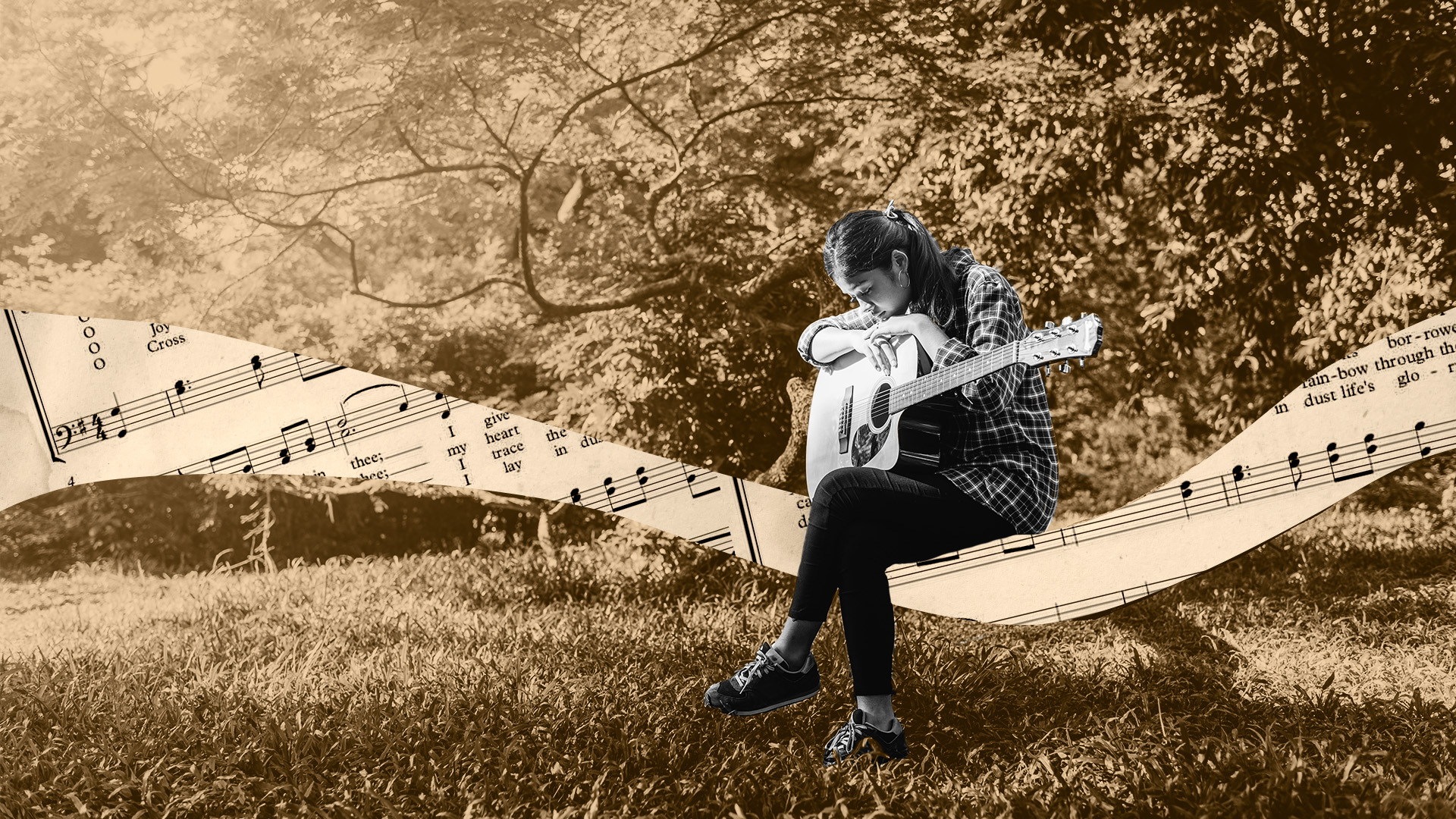
I recognize that same danger when I open up my hymnal. George Matheson wrote the poetry of “O Love That Wilt Not Let Me Go” with keen awareness that his joy was wrestling with sorrow:

O Joy that seekest me through pain,
I cannot close my heart to thee.
I trace the rainbow through the rain,
and feel the promise is not vain,
that morn shall tearless be.

We are wired for love songs. But sooner or later in life, we’ll find we need songs of lament at least as much. The more we hope for things to be as they should be, the more we are confronted by our disappointments.

In moments when it would be easy to throw in the towel, to assume that the end of the story will be tragic because of what we’ve seen, lament helps us push back against hopelessness. For victims of the war in Ukraine, for those awaiting a transplant or a treatment or an adoption, or for those who just need to hear some good news, lament is a practice of hope in the waiting. It joins us to a great cloud of witnesses—from persecuted believers to sibling-betrayed Joseph—who have called on the name of the Lord and found him trustworthy in the valley of the shadow.

A number of articles and books have been written in recent years rediscovering the value of lament. Still, we don’t always understand it well. Lament is not a country song or a sentimental mood. And as Johnny Cash’s songs taught me, lament is not always a slow song. Lament is, in its simplest form, pouring out our hearts to God (Ps. 62:8). In doing so, we sensitize and strengthen our hearts.

It is not intuitive to lean into pain. But by acknowledging the brokenness around us and with us, we become more like our heavenly Father. As we ask God to mend, heal, and restore, we watch him work and learn to love what he loves and to see what he sees.

In lament, we learn that it is okay to lay out our questions before our compassionate Father, who holds all things. We learn to look also to Jesus, our brother, the Man of Sorrows, who weeps with us (Isa. 53:4). We discover that the Holy Spirit comforts us and gives us godly wisdom in real time.

Lament songs are often missing in our churches, at a time when we desperately need to relearn how to deal with sorrow. Our culture craves vulnerability, but it’s drawn to songs like Billie Eilish’s ballads, which depict a sadness that seems to want to stay inside itself. In worldly sorrow, there is no one to help. If pain is all there is, then we might as well revel in it.

But the gospel offers us something better. Jesus has carried our sorrows, he has taken them upon himself and gives us healing in exchange. Lament is not some new work for us to do. It is his work. Jesus resurrects us out of the prison of self-pity and into the freedom of his generative love. His love abounds to us and through us.

Lament draws us closer to him (Ps. 34:18) and draws us closer to one another. Through lament, God’s Spirit makes us more compassionate, more childlike, and more teachable.

As we make space and time to pray and sing songs of lament, it can diffuse the buildup of hurt and anger that we might be needlessly carrying (or throwing back toward one another). In God’s presence, we can become more clear on who we are (Rom. 8:17) and what it is we want (Mark 10:51–52).

Heartbreak may sell country music, but Biblical lament is more than self-expression. God is close to the brokenhearted, and he has nothing to sell. Jesus Christ has accounted for every loss, even those we have yet to experience. And he walks with us in the valley of the shadow. Although we lament, we see now the darkness is passing and the true light is already breaking in (1 John 2:8).

Sandra McCracken is a singer-songwriter in Nashville and the author of Send Out Your Light: The Illuminating Power of Scripture and Song.


In a Sea of National Tragedies, Look to Buffalo’s Christians

Those who lived through the racially motivated attacks are focusing on the local to see progress.

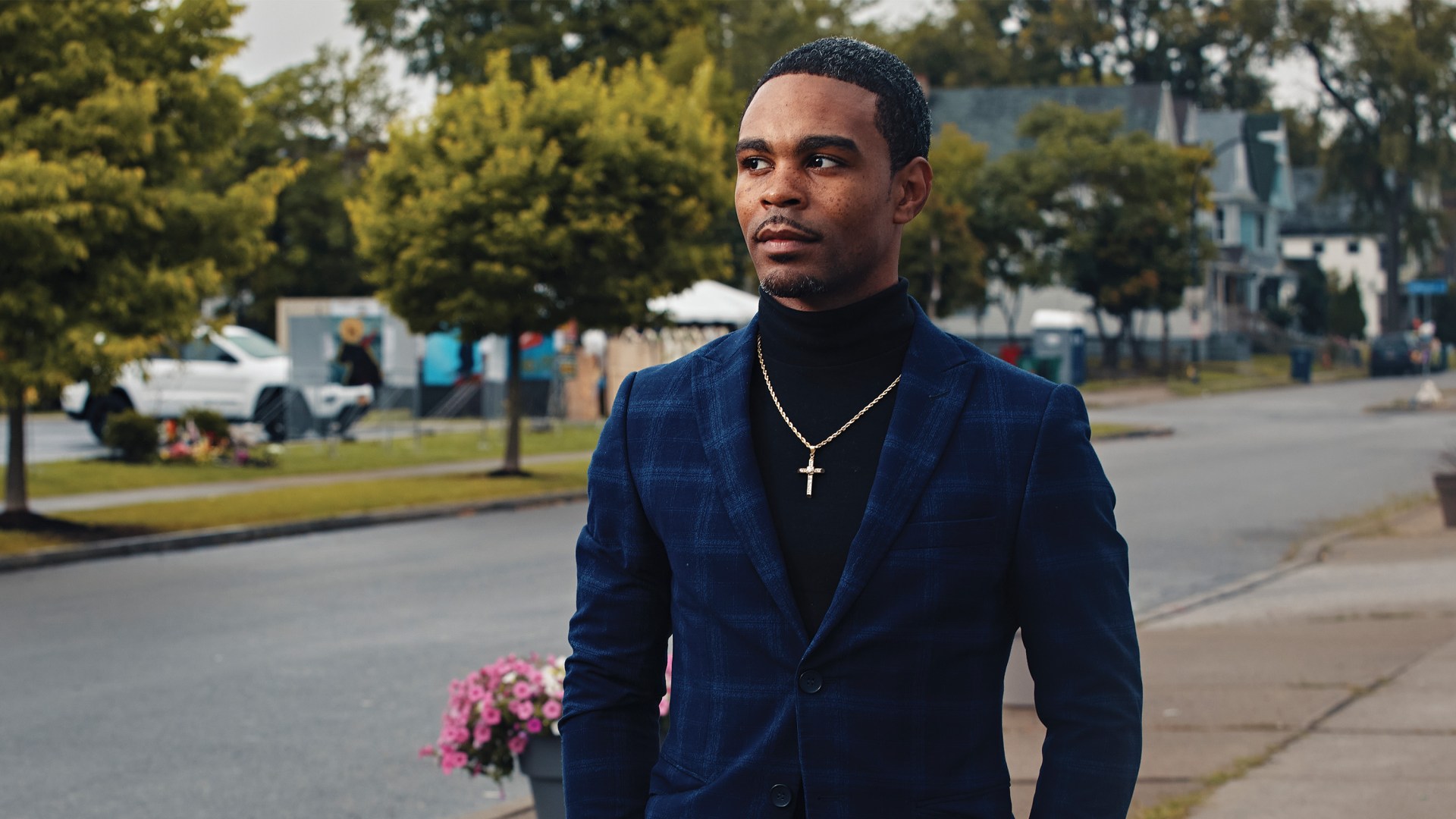
Kyria Stephens in Buffalo NY

Kyria Stephens in Buffalo NY

Photography by Brandon Watson for Christianity Today

Driving to the East Side of Buffalo, to the Tops grocery store, you take “the 33,” a highway built in the 1950s and 1960s that wiped out a Frederick Law Olmsted–designed green space and cut through a Black neighborhood.

Before construction of the 33—also known as the Kensington Expressway—a schoolteacher whose house was a few blocks from where the Tops would eventually open wrote to the local newspaper, mourning what the highway would do to the neighborhood and the Olmsted park land.

“Only a complete materialist could ride the mile-and-a-half of this street without being thrilled by its beauty,” Cornelia Metz said.

But much more was lost than scenery. The highway isolated the East Side of Buffalo economically and racially, segregating Black families. Today the East Side has zip codes with poverty rates almost double that of the region and a low Black homeownership rate compared with white homeownership in the region.

The racial isolation was evident on May 14, 2022: Authorities said the white supremacist shooter who went to Tops that day chose the store because he was looking for a place with a high concentration of Black residents. He killed 10 and wounded three. After the shooting, the economic isolation was evident when Tops closed and the neighborhood was left without a grocery store.

Six months later, it would be easy for a violence-weary nation to forget about what happened at Tops. There have been at least a dozen mass shootings in America since. The problem can seem as large and intractable as a concrete freeway, a new reality simply to be endured.

But in Buffalo, some Christians do not see it that way. A handful of Black leaders on Buffalo’s East Side have decided they do not have to sit at a distance and feel hopeless. Instead they want to model how, by drawing near a wound, they can help heal it. As one leader told me, “Until those people become your people, and you have skin in the game, there’s no real call to action.”

Christian community-development practitioners have long argued that a community’s healing, whether from violence or poverty, begins locally. It begins with the community’s own assets and continues with assistance from nonprofits and government programs.

East Buffalo may not have other grocery stores, but it has assets. The Buffalo News counted at least 15 houses of worship within six blocks of Tops. One churchgoer, Quintella “Queenie” Cottrell, told the News that her church will “forgive that guy [the shooter], as painful and as hard as that is.” She added: “We are not going to let him and others like him destroy our community and neighborhood.”

In fact, young Black Christians who grew up in the neighborhood were already working to change their city before May 14. When a gunman took the lives of close friends, it spurred them on to more love and good works.

“That community is still standing there not because of all the help that came in—though that is helpful—but because the bones of that community were really strong,” said Brek Cockrell, pastor of Renovation Church in Buffalo, who has a lot of relationships in the East Side. “What they bear is crazy.”

Left: The 33 in Buffalo, Right: Kelly Diane GallowayPhotography by Brandon Watson for Christianity Today
Left: The 33 in Buffalo, Right: Kelly Diane Galloway

On the day it all happened, Kelly Diane Galloway, 36, had planned a lovely afternoon for the girls in the East Side neighborhood where she grew up. Forty girls, from second grade to high school, piled into limos wearing dresses and fascinators.

Galloway runs a local anti-human trafficking organization, Project Mona’s House, and she noticed over the years that the women her organization helped were getting younger and younger. She now leads an “academy” to teach Black girls from her neighborhood about their value and dignity. May 14 was their graduation.

When Galloway and the girls returned from the celebration and turned on their phones, they saw the news about the shooting. At that point, no one knew who had been killed—was it an uncle, an aunt, a friend who worked at the grocery store? Some of the girls went home, changed out of their dresses, and biked over to Tops in the rain. They saw the bodies on the ground outside the store.

Galloway also went to Tops, still in her fascinator and makeup, and told the girls to go home to their parents. She was calling everyone she could think of to make sure they were alive.

The East Side is close knit and full of Galloway’s extended family. Her relatives own a coffee shop, Golden Cup, right next to Tops. She remembered the day Tops opened, and she remembered her grandma sending her and her cousins down to the store when they were old enough to walk by themselves. Her grandpa would give them a little money to get ice cream, money her grandma didn’t know about.

Now she has new memories there. Her friend’s son Zaire Goodman was one of the wounded—she went to his birthday party the week after the shooting. She knew the murdered security guard, Aaron Salter.

Galloway has energy. She wakes up at 5:30 a.m. to work out, and last year she led a group walking 900 miles of a route of the Underground Railroad ending in Buffalo, to raise awareness about modern trafficking.

The day after the attack, Galloway and others got to work: They fed 300 people (she also chairs the board of a local food bank) and led a worship service by the grocery store.

The Monday after the shooting, they fed people again, and Tuesday was the first large vigil and worship service (led by Galloway and another young Black leader from the East Side, Jamil Crews). All her days after that were full: She organized a solidarity bike ride, therapy sessions for the community, and plans to get local food trucks to the grocery store.

She also helped bring a truck from New York City called the Peacemobile that provides spa services. At one point, Galloway allowed herself to sit in the Peacemobile, and they put headphones on her playing relaxing bird sounds while putting lavender on her hands. That was the first time she’d had quiet since the shooting, and when she closed her eyes she saw the bodies on the ground again. She started crying and couldn’t catch her breath.

“People are tired of being afraid. We’re just tired,” she said. “We don’t have no way to feel right now. Being numb is very dangerous. Because God created our feelings for a reason. We want to be able to feel happy moments.”

For a while, Galloway couldn’t post the pictures of the girls’ graduation from that night because it didn’t feel right. She tried to keep the girls in her program from seeing the video of the shooting online; but some of them happened upon it anyway.

After the shooting, some of the girls began acting out in school, and Galloway did “healing circles” all summer to talk about their feelings and give them coping mechanisms.

Ten days after the shooting, between funerals for the victims, Galloway was sitting in her Project Mona’s House office planning summer programs and coordinating a food distribution for that evening near Tops. One wall of her office was a whiteboard covered with to-dos. The writing extended in erasable ink to the office’s glass doors. Her phone kept ringing.

At that moment in May, Galloway hoped for big things for six months after the shooting: for America as a nation to have more empathy. But she also hoped for smaller, more measurable things: that Tops would reopen, that there would at least be plans for two more grocery stores on the East Side.

“Six months from now, I would hope the Black community doesn’t have to be as strong,” she said. “The reason being that our white brothers and sisters are helping to carry the load.”

Christian Community Development Association founder John Perkins, now 92, mourned his brother’s death by a white police officer and experienced racial violence as a leader in the civil rights movement when police beat and tortured him for hours one night.

Though he experienced unjust systems, and accounts for them in his body of work, he focused on the local church as an agent of transformation. If the local church is not committing resources in its immediate local community, “it cannot be prophetic,” Perkins said in a 1982 interview with CT.

In his 2018 book, One Blood, which he has described as his last manifesto, Perkins emphasized that the problem of racial reconciliation in the country is “too big” for anything other than God working through local churches.

Perkins has a framework for development and racial reconciliation in poor neighborhoods. He describes a local neighborhood thriving through the “relocators,” people who moved to the neighborhood to build it up; the “returners,” people who were born and raised, left for a better life, but came back; and the “remainers,” those who stayed in the neighborhood despite hardships. Buffalo’s East Side has all of those—relocators, returners, and remainers—working through local churches. And the returners and remainers were working to improve the community long before any mass shooting.

Top: Kyria Stephens, Bottom: Buffalo NYPhotography by Brandon Watson for Christianity Today
Top: Kyria Stephens, Bottom: Buffalo NY

Kyria Stephens grew up with Galloway on the East Side. He worked as a pastor and had a professional rap career. Now married, he has three children and is the director of inclusion and community initiatives at the Buffalo Niagara Medical Campus.

Stephens, Galloway, and other Christian friends protested after the murder of George Floyd in the spring of 2020. They were at the protest where Buffalo police officers pushed an elderly man to the ground, inflicting a brain injury (charges against the officers were later dismissed).

Stephens said he learned during that protest that work had to be multigenerational, so he hopes Buffalo’s future changes would come from the young and the old.

During those protests Stephens, wrote a song, “A.L.T.P.” In it, he raps, “Somebody tell the church they need to do more than pray. … Y’all be playing with my life like it’s just a game.” At the end of the song, he recites all of Psalm 13: “How long, O Lord? Will you forget me forever? How long will you hide your face from me? How must I take counsel in my soul and have sorrow in my heart all the day?” (vv. 1–2, ESV).

After the Tops shooting, Stephens organized a collaborative group of 25 leaders to make plans for the future of the East Side, a group that included Galloway. As recovery money pours into Buffalo from the government and corporate donations, the group wants to have a seat at the table to help figure out the best way to use it. A $5 million survivor fund that was established, for instance, opened complex conversations about who counts as a survivor.

Stephens wanted big changes in his city, but he wept when he talked about smaller moments, like a conversation with his 13-year-old about the shooting. He hated seeing her “questioning her place” in society and whether her white friends secretly harbored hatred toward her. He told her to share with her closest white friend how she felt, one small way of fighting isolation between communities.

“George Floyd woke people up to injustice,” Stephens said. “But just like anything, when something happens, if it happens to somebody that isn’t close to them, it’s like, ‘Aw, that’s terrible, I hate that.’ But when it happens in your own community it hits you in a different way.”

Stephens wants Christians from different backgrounds in the city to go to each others’ birthday parties and weddings. In August, a group of Buffalo churches, suburban and urban, continued a nearly 20-year tradition called Breakout, where they hold block parties together in different neighborhoods for a week. They have food, music, face painting, games, and worship. This year, one of the block parties was in front of Tops. Stephens, who has a rental company on the side, provided bounce houses for the week. Hundreds of people came out, and the churches filled a big tub to baptize people.

Cockrell, a white pastor who leads a mostly Black and Latino church in Buffalo, knows Galloway and Stephens. He’s watched them and other young Black Christian leaders go unrecognized for years.

“They understand what time it is and the hurt and the struggle, but they’re not fatalistic,” Cockrell said. “They’re creating things.”

Viewed through John Perkins’s lens, Cockrell is a “relocater,” a white pastor who moved to Buffalo 20 years ago and has built a web of relationships on the East Side. His church has been involved in holistic ministries providing everything from housing to medical needs.

Galloway takes women in her antitrafficking program to churches around the city they might want to attend, and she remembered visiting Cockrell’s church when it was packed with “Black people, white people, Hispanic people, wealthy people, poor people.”

“The first time I heard that man preach, I wept. Because I had never seen a white man speak so boldly against racism,” she remembered. She went up to him after and said, “Listen, Imma rock with you.”

Cockrell will call white Christians and tell them about Galloway’s organization and say, “You need to know who she is.” Those little conversations, relationships, and moments are how locals sense some change.

How does a nation change, heal, and grow after a white supremacist attack?

Months after the Buffalo shooting, local churches hosted panel discussions on race. Galloway and Stephens watched and spoke on some of those panels, but they didn’t see much come from them.

Jennifer Berry Hawes, a longtime reporter for The Post and Courier in Charleston, South Carolina, wrote a book on the 2015 Emanuel AME church shooting, Grace Will Lead Us Home. In her years covering the aftermath of the attack, in which a white supremacist killed nine Black elders at a Bible study, she didn’t see much result from the high-level conversations on race. She remembered a unity march across one of Charleston’s big bridges a few days after the shooting and people wondering whether that was enough to move on.

But some people in Charleston didn’t move on, in her view.

“The changes that were made were very local,” she told CT. “They were made by local people with the connections they made here.”

The shooter killed Myra Thompson, the wife of Anthony Thompson, pastor of Holy Trinity Reformed Episcopal Church in Charleston. Thompson made it a priority to see changes in the city and to preach the power of forgiveness anywhere people would listen to him. He had spoken at the shooter’s bond hearing, telling him, “I forgive you. … But we would like you to take this opportunity to repent. Repent. Confess. Give your life to the one who matters most: Christ. So that he can change it.”

After the attack, four predominantly white churches in the city asked Thompson to have pulpit exchanges and meals together. Thompson agreed because, as he said to CT, “The church has … to take the lead to tell people what they need to do for healing.”

A pastor of one of the white churches invited Thomas to a church gathering at his house but warned him that not everyone was happy about him coming. Thompson went and saw what he meant, although some in the congregation came up to him with welcoming faces and conversation.

“I … went over to people who didn’t want me to be there. They were not paying me no attention, not saying ‘hi’ or nothing, eating off little plates,” Thompson. “I would say, ‘Excuse me!’ I stood right up there in front of them.”

Over the years of pulpit exchanges and church suppers together, “some of them came around,” he said. One 90-year-old woman came up to him one day after he spoke and said loudly, so others could hear, that after getting to know him, “I learned I was a racist.”

When people said things like that to him, he would say, “I forgave all of y’all a long time ago.”

Thompson got to know Charleston’s mayor, John Tecklenburg, who seemed genuinely grieved by what happened. Tecklenburg, who took office in 2016, spearheaded the removal of a 120-foot statue to slavery and states’ rights defender John C. Calhoun from a downtown square in 2020. The city also passed a resolution in 2018 apologizing for its role in “regulating, supporting, and fostering slavery and the resulting atrocities,” which had never been done before. It promised to rebury and memorialize the remains of a number of African Americans, likely slaves, that had been recently discovered throughout the city.

Thompson, who grew up in Charleston, was surprised.

“Never in my lifetime did I expect anything like that,” he said. “This was a great surprising and shocking change.”

In August, Thompson was planning a march to landmarks of racism around Charleston, where they would discuss their history and “[pray] to the Lord to remove this attitude from the hearts of people so they will not perpetuate acts.”

All of those activities are a lot to expect from victims’ families. Thompson said he is feeling the “wear and tear … I really, really need a break.” He knows Buffalo’s hurt. “I am one of them. I know it’s going to take a lot for some of them to find peace and the comfort they need right now.”

On July 15, the Tops on Jefferson Avenue reopened.

Stephens was at the reopening. People from the community gathered and broke out into the song “Total Praise” before touring the renovated building. Stephens felt tears coming down his face as he went in the store.

And maybe some of Galloway’s dreams, of Tops reopening and more grocery stores coming to the community, will come true. Bishop Michael Chapman, head of St. John Baptist Church, which also has a large community development footprint in Buffalo’s Fruit Belt neighborhood, said his church’s community development arm pushed for a grocery years ago but couldn’t get it approved. After the shooting, city officials greenlit the project, which will go up in Fruit Belt neighborhood, about eight blocks from Tops.

“The power of God is moving and in the midst of all of this tragedy,” Chapman said.

And the Kensington Expressway? The state now has a plan to cover the highway and return it to a green space, reconnecting a neighborhood divided.

Healing, forgiveness, and recovery don’t run in straight lines upward. Tops employees who were in the store during the shooting had a hard time returning during renovations and hearing a jackhammer, according to The Buffalo News. Stephens’s wife works at a bank, and when someone recently dropped something on the floor with a big bang, everyone panicked.

And Galloway was frustrated about limited buy-in from white Christians in her sphere. While she was working with the girls in her program to not be resentful toward white people, she didn’t hear much from white Christians she knew in the city, even just asking how she was doing.

Cockrell, the longtime pastor of Renovation, along with two other white pastors from Vanguard Church, stayed in touch and visited. Some predominantly white churches sent more volunteers to her organization, but not money. Maybe they are supporting some other East Side project, she thought.

“I can’t make white people love us,” Galloway said. “All I can do is help my community to be better. I can help hold elected officials accountable. I’m done trying to convince people I’m a child of God too.”

In his 1982 interview with CT, Perkins shared a harsh criticism of the Moral Majority: “They will leave it to the blacks totally to deliver themselves.” If the Moral Majority were serious, he said, it would help a Black community in Atlanta or Chicago start a Black Bible college. Local change, in Perkins’s mind, was indicative of national change.

Galloway looks at the example of Nehemiah, who walked around Jerusalem when it needed to be rebuilt and took inventory.

“Nehemiah addressed all the elders of the city and told them, basically, We’re going to rebuild the city, but build the part in front of your house,” Galloway said. “As long as we’re all building, it will get better.”

Emily Belz is a news writer for CT.

News

Environmental Train Wreck: Houston’s Black Churches Fight Pollutants

Leaders and activists petition to hold a railway company to account for decades of carcinogen use.

Illustration by Abigail Erickson / Source Images: Getty Images

Long before two cancer clusters were discovered in their Houston neighborhood, residents and fledgling activists met in churches and community centers across the Greater Fifth Ward, slowly building what would become a groundswell of environmental justice work in one of the city’s historically Black communities.

“It was all God’s doing,” said James Joseph, a minister at Lyons Unity Missionary Baptist Church and the founder of the Fifth Ward’s Neighborhood Enrichment Xchange. “He planted me here.”

The northeast corner of Houston is home to communities like Fifth Ward, Kashmere Gardens, and Trinity–Houston Gardens—African American neighborhoods with churches dotting most street corners. For decades, residents have been calling attention to the area’s compounding environmental issues, from drainage problems and air pollution to poor water quality.

For Christians like Joseph, exposing the health risks and fighting for change is a way to “walk in the light” and “serve God and his people.” Their faith has given them the patience to wait for media and politicians to pay attention to their calls for change and, hopefully, reform policies to better protect their neighbors and the place they call home.

More than a decade ago, people meeting at Joseph’s church began addressing concerns like stopped trains blocking traffic or horns blasting throughout the night. And then they heard about the creosote. From there, Joseph said it felt like they were “connecting the dots” between the different environmental issues plaguing the neighborhood.

On a 33-acre site between Fifth Ward and Kashmere Gardens, Southern Pacific Railroad operated a wood-preserving facility from 1911 to 1984, treating railroad ties with creosote, a black, inky substance distilled from tar. According to the Environmental Protection Agency, creosote is a possible carcinogen. Union Pacific (UP), which took over the site 25 years ago, maintains “there is not a complete [creosote] exposure pathway” from the facility to area residents. But residents, activists, and officials say otherwise.

EPA Administrator Michael S. Regan meets with officials and leaders in Houston's Fifth Ward, including Mayor Sylvester Turner and professor Robert Bullard.Courtesy of COCO
EPA Administrator Michael S. Regan meets with officials and leaders in Houston’s Fifth Ward, including Mayor Sylvester Turner and professor Robert Bullard.

A 2019 state health department report found the number of lung, esophagus, and throat cancer cases “were statistically significantly greater than expected” in Fifth Ward and surrounding areas, including parts of Kashmere Gardens, Trinity Gardens, and Denver Harbor.

And the following year, Texas released a second report, expanding the analysis to look at childhood cancer within a two-mile radius. The state agency discovered that the rate of acute lymphoblastic leukemia, the most common type of childhood cancer, was “significantly greater than expected,” particularly in an area close to the railyard.

That was just the start. A report by the Houston Chronicle indicated hazardous waste mixed with creosote at the rail site is thought to be responsible for even more health problems. And Houston’s health department discovered another highly toxic pollutant—dioxin—in soil near the facility.

Sandra Edwards grew up steps away from the facility and remembers her dad walking barefoot in that soil. When he died of bone cancer, the Fifth Ward native quickly drew her own conclusions. She knew the smell that came from the railroad, some days so bad that “you could not breathe.”

After Edwards’s father died, she began talking to her neighbors, many of whom had their own stories.

“They told me to come talk to the people at the church,” Edwards said. “They were talking about the railroad.”

Eventually, Edwards took the lead at what would become Impact Fifth Ward, a community organization for residents affected by the creosote contamination.

A few months ago, Harris County, the City of Houston, and the nonprofit Bayou City Initiative joined Fifth Ward and Kashmere Garden residents in the fight, threatening to sue the railroad “for the imminent and substantial endangerment from environmental contamination from UP’s facilities.” The multipronged effort came about thanks in part to the efforts of Fifth Ward’s faithful like Joseph.

“We definitely took names, did petitions, all leading up to now. Thank God,” Joseph said.

“Everyone might not be the one to finish the work, like Moses, but there’s a Joshua somewhere.”

The company has entered remediation discussions for the former wood-tie-preserving facility. More than 2,000 Fifth Ward residents, including Edwards and Joseph, are seeking compensation for damages. Ultimately, Edwards said, she’d like to see UP “pay for our wrongs and make it right … make us whole again.”

The lawsuits represent a major step, but the fight to protect their community continues as they grapple with air and water quality, illegal dumping, housing, and infrastructure issues, with Black churches naming the “environmental racism” in their neighborhoods and working to address it.

All of these problems “are connected,” according to James Caldwell, a Fifth Ward native and a minister who leads the Coalition of Community Organizations (COCO). The organization is petitioning for safer, cleaner drinking water and better air quality.

“This is not a sprint, and it ain’t a 26.2-mile marathon. This may be 262 miles,” Caldwell said. “In other words, are you prepared to be patient and fight that good fight of faith? That’s what it’s going to take.”

At Texas Southern University, a historically Black college in Houston, researcher Robert Bullard found the same pattern of contamination in other communities of color.

“Even when you discover that this is an environmental and health problem, communities have to wait longer to get a response from government and a response from the companies,” said Bullard, a professor of urban planning and environmental policy and the author of Dumping in Dixie.

In many of the affected communities, the Black church has taken the lead in shining a spotlight on pollution and environmental injustice.

Volunteers work at the Northeast Houston Redevelopment Council's (NEHRC) community garden in Houston's Trinity Gardens neighborhood.Courtesy of Huey German-Wilson
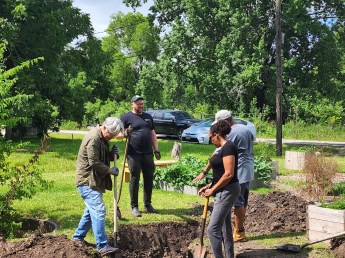
Volunteers work at the Northeast Houston Redevelopment Council’s (NEHRC) community garden in Houston’s Trinity Gardens neighborhood.

“The church has to preach the gospel, but it also has to somehow take care of its flock, its congregation,” Bullard said. “The same theology of the Black church also gave impetus to the environmental-justice framework, in that we were fighting another evil system of oppression in the form of environmental racism.”

In July, the Department of Justice announced an investigation into the City of Houston regarding illegal dumping in Huey German-Wilson’s neighborhood of Trinity–Houston Gardens—initiated thanks to her longtime efforts.

“It is the church’s responsibility,” said German-Wilson, who is a member of Trinity Gardens Church of Christ. “When you sit in these neighborhoods and you don’t offer the things the neighborhood needs, you’re doing a disservice to your church.”

At her church, members have tackled food insecurity by starting a community pantry and donating land for a community garden. Around 2018, Caldwell invited German-Wilson and her team to come alongside Impact Fifth Ward to help uncover the community-wide consequences of creosote seeping into soil and water.

Especially in 2022, churches across the Fifth Ward have lost aging pastors and installed new ones. German-Wilson emphasizes the church’s role in calling out the environmental degregation.

“In terms of the theology of it all, I know that God gave me a purpose, and I’ve tried to walk and work in that purpose,” German-Wilson said. “My church tells me repeatedly, ‘Whatever it is you’re working on, we will support you in that.’”

Phoebe Suy Gibson is a freelance writer based in Houston.

Myanmar’s Christians Fight for Peace

A former beauty queen is a part of the widespread resistance taking a stand against the brutal military regime.

Hannah Yoon

Angel Lamung had been in the public spotlight since she was a teenager. In Myanmar, she won beauty pageants, appeared in commercials, acted in movies, and sang pop songs.

But last year, when news anchors read her name on the nightly broadcast and the state-run paper printed her photo alongside other popular celebrities’, the coverage was different.

The government had put her on a wanted list.

After the military overthrew the democratically elected leadership in Myanmar (also called Burma) in a coup in February 2021, the then-23-year-old Christian was among the crowd who took to the streets and social media in protest. It changed her career forever.

The new regime responded swiftly with escalating violence to quell demonstrators and harsh criminal penalties for those who voiced opposition, especially public figures. Lamung was among 20 celebrities charged under a new law outlawing dissenters. By the United Nations’ count, 1,500 people were killed in demonstrations and more than 10,000 were “unlawfully detained” in the first year after the coup.

Lamung managed to escape last spring, fleeing to the United States as a refugee. From the safety of a spare bedroom in a family friend’s house on the East Coast, she fundraises for humanitarian aid and speaks out in support of the largest civil disobedience movement in Myanmar’s history.

“I would rather leave everything that I love than give in to the dictatorship,” Lamung remarked in a clip on her YouTube channel.

Back in Myanmar, the government froze Lamung’s bank accounts and she faces arrest if she returns. Her friends and fellow activists send dispatches from the Thai and Indian borders, where they’re waiting to flee to safety, or from Yangon, the nation’s largest city, where police stop to check their social media accounts for signs that they support the resistance, such as displaying red or black on their pages. Many activists carry burner phones or censor their profiles.

Protests became too dangerous once the police switched from rubber bullets to real ones, but civil disobedience continues. Civil servants like health care staff and teachers refuse to work under the regime; by the military’s own estimates, nearly 30 percent of public employees have participated. Some are boycotting the state-owned power company or telecommunications company (internet connectivity has worsened and tripled in price since the coup).

Lamung still repeats the pleas she made to the Lord each night when she got home from the vigils and protests right after the coup—for him to bring safety and peace to Myanmar. “I can’t yet see the result of our prayers,” she said, “but God also gave us hands, feet, and a mouth to speak out for justice.”

https://www.instagram.com/p/CLj3N6zgbC5/

Lamung was born and raised Baptist, the largest Protestant group in a country that’s over 90 percent Buddhist. Her family is Kachin, one of Myanmar’s majority-Christian ethnic groups. In provinces on the country’s perimeter, the Kachin, Chin, Karen, and Kayah have suffered persecution by the army for years and fought against it in favor of democracy.

These Christian groups, unsurprisingly, took a stand against the 2021 takeover in official statements and in their involvement in demonstrations, rallies, and other forms of civil disobedience. What was more remarkable, scholars pointed out in The Review of Faith & International Affairs, was how all types of citizens in Myanmar were evoking their religious beliefs in the aftermath of the coup.

There had been uprisings in the past—the country has a decades-long history of military rule—but never before were Buddhists, Catholics, and Protestants so publicly involved at once, bringing faith and prayer into their protest. Evangelicals in Myanmar share Lamung’s passion for the resistance, calling on a God who takes the side of the oppressed and against evil.

They quote the Exodus narrative and the story of Daniel’s captivity. Churches rally money and supplies for the civil disobedience movement. They refer to the military, known as the Tatmadaw, as “terrorists.” Even when it comes to armed resistance, pastors pray for the thousands of young people who have left the cities to train with rebel militias in the provinces, asking that their missions would be successful.

“Theologically, I don’t think it’s wrong. Our God is a fighter,” one pastor in Yangon told CT, asking that his name not be used for safety reasons. “It’s not my choice because I’m a shepherd and a pastor, but I understand.”

Lauren Decicca / Getty

The military junta has targeted civilians in ways that humanitarian groups deem “war crimes” and “crimes against humanity,” including planting landmines in homes, farmlands, and church property.

Mana Tun, director of the Peace Studies Center at the Myanmar Institute of Theology, wishes there were better alternatives for those who feel called to join the armed conflict. He doesn’t find it incompatible with a Christian understanding of peace, though, when fighting to free a country from rulers who continue to bomb, execute, and torture their own people. Tun teaches students to see peacemaking as engaged, active, and responsive; forced silence and compliance is not peace.

“Peace is possible anywhere. It can be protest. It can be a struggle. People being resilient in such oppressive times is a form of peace,” said Tun, who arrived in the US in August for his doctorate studies. “You can still love your enemies by protesting, resisting, and even fighting. Love is always standing up for good.”

But these responses also carry real consequences in Myanmar. People and organizations who oppose the regime can lose access to their bank accounts, since the system is government-run. Police raid, search, and make arbitrary arrests without due process. Prisons torture detainees, and four revolutionaries were executed by the military government in July.

Even in the early weeks, Lamung knew the risks that came with speaking out as a public figure, but her convictions would not let her stay silent.

After being named Miss Intercontinental Myanmar at 17, Lamung saw her influence as a gift to steward. When the pandemic hit in 2020, she wrote a song called “Ar Tin Nay Bar” (“Stay Strong”) to encourage fans facing hard times.

Hannah Yoon

When she prayed about joining the resistance after the coup, she said God gave her peace about the decision. She quoted Proverbs 4:14: “Do not set foot on the path of the wicked or walk in the way of evildoers.”

“I have many fans and influence,” said Lamung, who cofounded the organization Passion for Hope to help those displaced by government violence. “I want to stand for what I believe in; I want people to know what the military is doing; I want people to stand for justice.”

Half the population of Myanmar is under 30, like Lamung and her followers. Young people—Buddhist and evangelical alike—feel “angry” and “depressed and useless,” a 19-year-old Christian in Yangon said in an interview with CT. Under the civil disobedience movement, they don’t go to school and it’s tough to find jobs, so many are eager to join the fight.

Young Christians, at least, have the church. “In the past I took everything for granted,” the teen said. “I’m more grateful for Christian community.”

Passion for Hope started as a vehicle for Lamung and her friends to do something tangible for those suffering under the military regime. It’s become her way to continue to serve the people and place she loves.

Passion for Hope collects donations for first aid supplies and basic resources. After the coup, while hospitals were understaffed and pharmacies were closed, Passion for Hope helped provide life-saving oxygen for COVID-19 patients. It distributed meals and snacks to villages ransacked by military attacks. It supplied 200 first-aid kits to frontline medical teams. And for kids, it partnered with missionaries to give away 300 copies of The Jesus Storybook Bible in Burmese.

https://www.instagram.com/p/Cc8AIpLr8BI/

Finances are tight in Myanmar as costs rise and some citizens are forgoing their paychecks from civil servant jobs, so the civil disobedience movement has gotten an influx of support from the Burmese diaspora, including churches in Asia, Australia, and the US. Lamung targets international donors as well as humanitarian organizations looking for a way to help.

Lamung had lined up plans to produce a version of Michael Jackson’s “Heal the World” with fellow celebrities singing in local languages, but the project stalled as artists feared the government could punish them for participating. For now, she’s focused on a new campaign to provide supplies to kids whose schooling has been disrupted by civil disobedience or violence, and she’s looking for new collaborators.

An estimated five million children in Myanmar have been displaced by airstrikes, some of them runaways separated from family. The more Lamung processes her own trauma from the safety of the US, the more she dreams of funding better social, emotional, and spiritual care for the youngest generation back home.

Lamung says she can’t be in crowds without feeling panic; that’s why she hasn’t committed to attending a church in the States. She misses “the old her” and asks God if she’ll ever feel like herself again.

Hannah Yoon

But she believes her depression and her faith can coexist. She’s shared about it with followers on social media, where she continues to post occasional outfit photos and day-in-the-life video clips alongside updates on the political situation in Myanmar.

Praying to God when she’s feeling down gives her strength. Thinking of her work gives her perspective.

“I have a room. I have American water,” Lamung said. “There are children running under airstrikes.”

Citizens in Myanmar have gone through one nightmare scenario after another over the past year and a half: police violence against unarmed citizens, coronavirus outbreaks without stable health care, economic downfall, attacks in villages, unjust arrests, deaths.

“I was seeing all this violence and desperation. … I kept asking, ‘Where could I find hope?’ ” said Tun, the director of the seminary’s peace center. “I couldn’t find hope at all. I focused on God’s presence. It was that faith that sustained my life.”

As he talked to families who lost people to sickness or violence, he relied on the theology of a suffering God, telling them that God died with their loved one and that God is risen with them.

A pastor in Yangon said his worship leader, also a local musician, was arrested for organizing a resistance group. The pastor now visits the worship leader in prison, where he has suffered so much torture—the pastor likened it to the Nazis or North Korea—that he no longer knows who he is. The pastor believes that even in this context, the gospel goes forth; he prays for the soldiers and witnesses to the prison guards.

Before he left, Tun helped organize spaces where Christian leaders could process what they were going through. Even without a lot of previous engagement in the realm of mental health and self-care, churches are starting to see the “urgent need.”

“Living in a context like Myanmar, you don’t need a reason to fear,” he said. “What was I afraid of? I don’t know. But every day, I woke up afraid.”

The state of fear has spiritual implications too. A Christian theologian from Myanmar, who asked not to be named to protect his family’s safety, said, “Christians feel helpless. They ask, ‘Why has God allowed the military regime to oppress the people?’ They question the presence of God and the power of God.”

He pointed to God’s deliverance of Israel from Egyptian oppression. “Eventually,” he said, “we will enter the promised land.”

Lamung doesn’t know what the pathway to peace could look like back home or when she’ll get to return.

In the span of a year, she saw her life transform entirely. She lost her savings and stepped away from her career as a model and actress. When she’s not working on Passion for Hope, she makes a paycheck as a server at a Chinese-American fusion restaurant.

Her days are quiet. Lamung misses the noise of her mom making breakfast and shouting for her to wake up. Anxious over parties filled with new people, she wishes for a carefree night out with her friends back home.

She told CT that this is not what she ever dreamed of—but she senses God’s hand and call just the same.

“Believing God isn’t like all the problems will go away. It’s giving you a way,” she said. “I thank God for that.”

Kate Shellnutt is Christianity Today’s editorial director of news and online journalism.

Ideas

Jeffrey Dahmer and Killing Our True Crime Obsession

When serial killer stories rank among the country’s top shows, we’re guilty of fueling a dark trend.

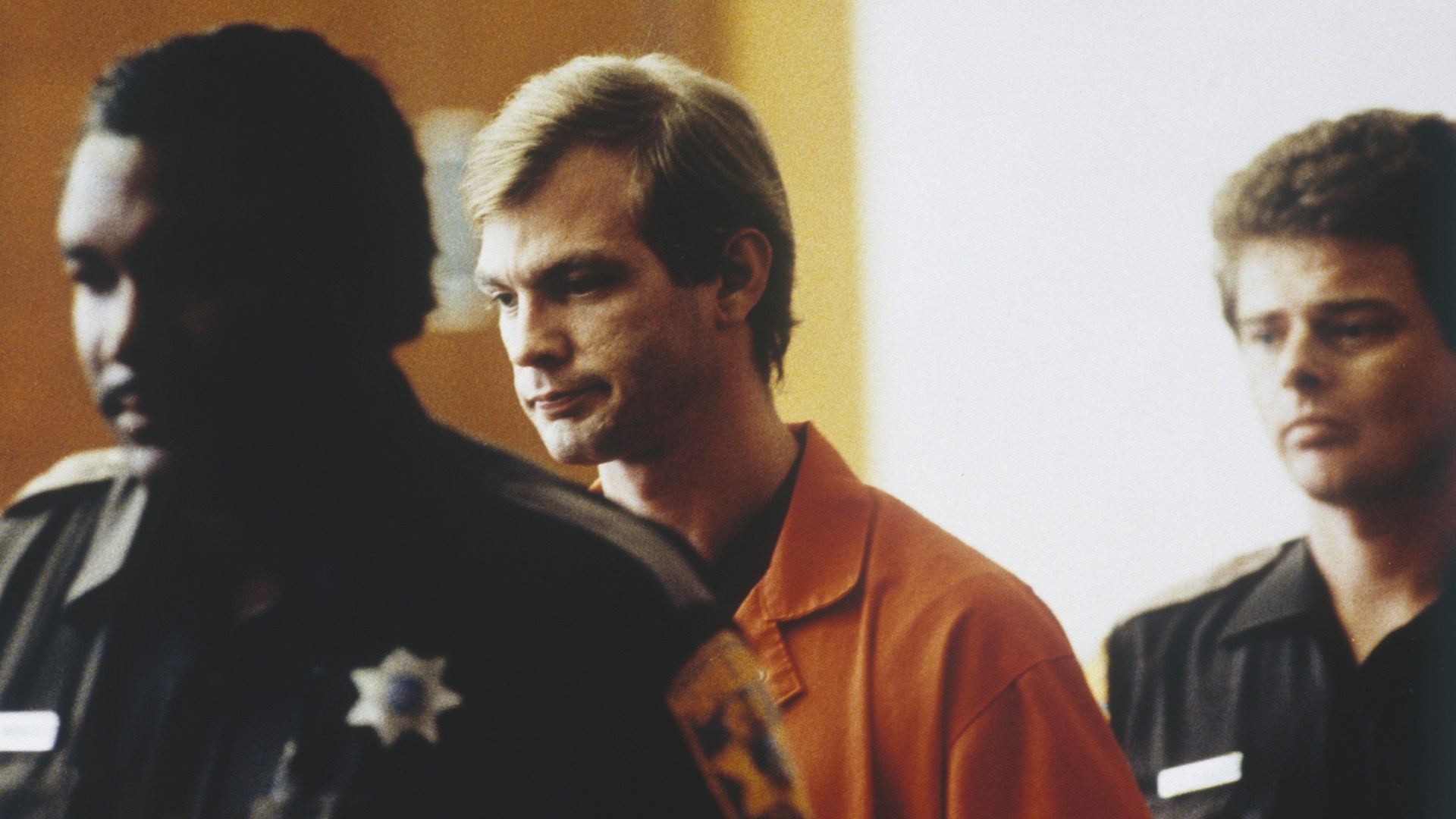
American serial killer and sex offender Jeffrey Dahmer indicted on 17 murder charges between 1978 and 1991.

American serial killer and sex offender Jeffrey Dahmer indicted on 17 murder charges between 1978 and 1991.

Christianity Today October 17, 2022
Marny Malin / Getty

There are thousands of things to watch on Netflix—but right now, two of the top ten shows on the platform are about serial killer Jeffrey Dahmer.

Dahmer – Monster: The Jeffrey Dahmer Story, a drama series produced by Ryan Murphy, broke Netflix records in its opening week last month, according to the Los Angeles Times, and remains the platform’s most popular English language series. Conversations With a Killer: The Jeffrey Dahmer Tapes, a docuseries, debuted a week ago. Both portray one of the most gruesome serial killers in American history.

The popularity of these series is no surprise given the growth of true crime as an entertainment genre—everything from podcasts to narrative journalism to television series and films entrance audiences with storytelling, suspense, and a collective longing for justice.

But the popularity of these programs, especially those that reiterate the horrifying acts of serial killers, reveals a rotten reality about our society. Seeing Monster at the top of Netflix’s trending list should prick our consciences and drive us to consider how such shows affect us and the real-life people whose stories are flattened for our screens. The dark rise of serial killer true crime has moral weight for those who aim to reflect a God of light and life.

Monster dramatizes the horrific crimes of a man who brutally slaughtered and in some cases cannibalized 17 young men, many of whom were Black and gay, in Milwaukee between 1978 and 1991. Families of victims have spoken out against the show, confronting Netflix for not consulting them and challenging viewers to consider the real people still impacted by Dahmer’s despicable crimes. TV critics have needled the show’s failure to handle difficult issues.

“[Director Ryan] Murphy and his collaborators are obviously aware of how exploitative it can be when the stories of serial killers are sold to a murder-obsessed public and how hurtful it is when victims are diminished,” Jen Chaney writes for Vulture, “but the show never figures out a way to avoid committing the same crime.”

Eric Perry, a relative of victim Errol Lindsey, told the LA Times, “We’re all one traumatic event away from the worst day of your life being reduced to your neighbor’s favorite binge show.”

True crime entertainment has exploded in the years since Serial, the record-breaking 2014 podcast that investigated a murder case in Baltimore. Now, shows such as Crime Junkie, My Favorite Murder, and Morbid rank among the top 10 podcasts in the country. Streaming networks have launched dozens of docuseries, including the previous Netflix hit Making a Murderer.

The effects haven’t been all bad: Cold cases have been solved, and wrongful convictions have been overturned (Adnan Syed, the person at the heart of Serial, was recently cleared of all charges). Many true crime fans tune in to examine the flaws of the justice system and celebrate these victories.

But it’s much harder to defend the value of scripted productions like Monster, which harness the lurid details of killers’ crimes to turn reality into drama (Monster is classified as a thriller).

“By focusing on the larger-than-life media images of socially constructed ‘celebrity monsters,’ the public becomes captivated by the stylized presentation of the criminals rather than the reality of their crimes,” writes criminologist Scott Bonn in his book Why We Love Serial Killers.

Bonn lists three reasons why people are fascinated by these criminals:

  • Fear and a need to understand the killer in order to reduce that fear
  • Empathy or a drive to relate (which is connected to that need to understand)
  • Visceral appeal—i.e., the adrenaline jolt that comes with being scared

But rather than driving understanding (and at some level, serial killers just aren’t understandable), our Netflix queue or podcast feed often makes it easier to lose sight of the fact that these are not just stories. Dahmer wasn’t just a character in a horror novel. He was a real person. And his victims were real people who endured the terrifying torture that sends shivers up our spines. Their surviving families face that trauma all over again when their real-life worst nightmare is usurped for our entertainment.

How can we participate in God’s kingdom of restoration that “binds up the brokenhearted” (Ps. 147:3) if our habits tear those bandages away? We’re called to “mourn with those who mourn” (Rom. 12:15), not to continue reopening wounds.

While we can cast blame on producers, writers, and directors, audiences demand this content. People want to watch movies and shows and documentaries and dramatizations of serial killers. (In the case of Monster, consumption was over 700 million hours in a week.)

The decision to engage with true crime may be a matter of discernment and Christian freedom. After all, different people possess different sensitivities. If I were to watch Monster, I’m sure I’d have nightmares for weeks—just researching the show for this piece turned my stomach—while another person wouldn’t even look over their shoulder on a dark street. As Jesus explained, we’re not defiled by what goes into us, but by what comes out of us (Mark 7:18–23). But we should still think carefully about why we’re drawn to this media and how specific shows impact ourselves and others.

The voyeuristic pleasure that comes with another serial killer story, or another version of a familiar killer’s story, is evidence of a gross fixation. If anything, the industry that produces such depictions of violence and profits from it enables the expression of what is already true: We’re fascinated with evil.

Human thrall with the gruesome has a long history. The Roman Colosseum drew crowds to cheer on gladiators fighting to the death. Hangings, beheadings, and other executions historically were a public affair that entire communities gathered to watch. Less than 100 years ago, white Americans assembled in town squares for lynchings of innocent Black men.

We look back and cringe at how others cheered death, their cruelty and heartlessness so stark in hindsight, but is the popularity of serial killer shows all that different?

To be people of light in the dark kingdom of this age, we need to take seriously Paul’s direction to think on what’s true, honest, just, pure, lovely, and admirable (Phil. 4:8) and join the psalmist in his commitment to “not look with approval on anything that is vile” (Ps. 101:3).

I’m not saying we should turn our faces away from the difficult realities of life, to ignore a world plagued with theft, kidnappings, abuse, and murder. After all, the Christian walk is one that steps into suffering for the good of others.

But relishing another morbid account of another person possessed by the worst of urges is not how we love God and our neighbors well. And worse, by pressing play, we’re helping others profit off strangers’ pain and encouraging the production of more.

Meredith Sell is a freelance writer and editor in Colorado.

Speaking Out is Christianity Today’s guest opinion column and (unlike an editorial) does not necessarily represent the opinion of the publication.

Cover Story

Canada Euthanized 10,000 People in 2021. Has Death Lost Its Sting?

Here’s what I’ve learned as a Christian doctor receiving requests for physician-assisted dying.

Illustration by Hokyoung Kim

When the hospital staff called me to my patient’s bedside, I could see her distress was severe. She was agitated and breathless, her face etched with discomfort and frustration. “I can’t take this anymore,” she cried.

She had suffered for years with chronic illness and had been admitted to my intensive care unit with acute complications. She was debilitated and exhausted, and her grief and frustration had come to a head. “I just want to die,” she wept.

Her friend was standing next to me at the bedside, and he was clearly upset by her distress. “Just ask for MAID,” he told her, using the popular acronym for medical assistance in dying, often referred to as physician-assisted death. “Then you can end it all now.”

I was startled by his statement. Though physician-assisted death is available in Canada, where I live, I had not expected the conversation to move in that direction. Yet I saw that he was feeling desperate and helpless at the sight of her distress.

After some gentle exploration, we quickly realized that the patient didn’t really want to die; rather, she needed relief from her pain and anxiety and to understand her acute illness and what it meant for her future. She still wanted time with her loved ones. We worked to address her symptoms and concerns, and she soon felt calmer and more comfortable. Watching her rest and converse with family made it hard to believe she was the same person who only hours earlier had cried out to have her life ended.

What is more unbelievable is that the ability to have one’s life ended on short notice is an increasingly acceptable option for Canadian patients—with implications that will reverberate around the globe.

When I was young, I dreamed of being a doctor. The profession of medicine seemed a noble calling, at once intellectually demanding and profoundly humanistic. I devoted myself to the long journey required to become a fully qualified physician.

In the early days, my idealism about medicine’s power to dignify the suffering of fellow human beings prevented me from appreciating its susceptibility to broader cultural and social changes—or appreciating the ways in which medicine has, throughout history, served to undercut rather than protect that dignity.

In 2014, not long after I had finished my training as a specialist in intensive care medicine, serious conversations began in the Canadian medical profession and the wider culture about the possibility of legalizing physician-assisted death.

A high-profile legal case involving two women with degenerative diseases seeking to end their lives garnered a wave of public support for the practice. Death was increasingly regarded as an act of compassion rather than an existential threat. Many of my fellow physicians joined in advocating for this shifting moral consensus. Society wanted the option of physician-assisted death, they argued, so medical professionals had a responsibility to provide it as a matter of compassion and respect for patients.

Illustration by Hokyoung Kim

I distinctly recall the day when it dawned on me that those of us who refused to participate in assisted death would be regarded as physicians of questionable ethics. We might be seen as more concerned for our own personal moral hang-ups than for the welfare of the patient. Where causing death was once a vice, it was soon to be a virtue.

In the name of moral “progress,” the profession was taking on a new role and assuming a new power unto itself: the power not only to save life but also to take it. The ground was shifting beneath our feet. What did this mean for those who refused to shift with it?

Sue Rodriguez was a 42-year-old woman from British Columbia with a dreaded disease: amyotrophic lateral sclerosis (ALS, also known as Lou Gehrig’s disease). Faced with progressive disability, in 1993 she appealed to the Supreme Court of Canada to overturn the Criminal Code’s prohibition on assisted suicide so she could seek one herself. The court denied her appeal and upheld the prohibition, stating that “this state policy is part of our fundamental conception of the sanctity of life.” The court also cited “concerns about abuse and the great difficulty in creating appropriate safeguards.”

Twenty years later, a very similar case was brought before the court. This time, things were different. Years of observing liberal assisted-suicide regimes in Belgium and the Netherlands seemed to show that safeguards could protect the vulnerable from being euthanized against their will.

Canadian social values had shifted as well, according to leading Canadian bioethicists. An influential report prepared by members of the Royal Society of Canada in 2011 claimed that the “attempts at linking appeals to dignity and the sanctity of human life have been widely criticized by philosophers” and that “the value of individual autonomy or self-determination … should be seen as paramount” among the “values over which there is broad [Canadian] societal consensus.”

The report concluded that

there is a moral right, grounded in autonomy, for competent and informed individuals who have decided after careful consideration of the relevant facts, that their continuing life is not worth living, to non-interference with requests for assistance with suicide or voluntary euthanasia.

Legal permissibility soon followed moral permissibility in short order. Gloria Taylor, who also suffered with ALS, brought her case to the Supreme Court of Canada. She sought the possibility of assisted death, saying, “I live in apprehension that my death will be slow, difficult, unpleasant, painful, undignified and inconsistent with the values and principles I have tried to live by.”

Other witnesses in the court’s proceedings testified that “they suffer from the knowledge that they lack the ability to bring a peaceful end to their lives at a time and in a manner of their own choosing.”

In a landmark decision issued in 2015, the Supreme Court held that the criminal prohibition on physician-assisted suicide and euthanasia violated the Canadian Charter of Rights and Freedoms, specifically the right to life, liberty, and security of person.

Grounding the freedom to be killed in the right to life might seem counterintuitive, but the court reasoned that the criminal prohibition on physician-assisted death could force “some individuals to take their own lives prematurely, for fear that they would be incapable of doing so when they reached the point where suffering was intolerable.” Moreover, the court deemed the prohibition on physician-assisted death as an interference with individual decisions about bodily integrity and medical care—rights of liberty and security.

One year later, the Canadian government followed the court’s instruction and legalized medically assisted death. Initially the law stipulated that assisted suicide was restricted to those with “grievous and irremediable suffering” for whom “death was reasonably foreseeable.” However, as the practice has grown in frequency and social acceptance, the restrictions intended to safeguard vulnerable populations have been progressively eliminated.

In 2021, the “reasonably foreseeable death” requirement was removed, and otherwise healthy people with physical disabilities became eligible for assisted suicide. In the course of parliamentary deliberations on that change in law, I testified before the Canadian Senate alongside two women with visible and severe physical disabilities. They shared eloquently about the adverse impact the change in law would have on the disability community in Canada.

I found it gut-wrenching that Canada would declare them eligible to have their lives ended, while someone like me without any recognizable physical disability was barred from medically assisted death. What did this say about our society’s valuation of the disability community?

In the past five years, the number of patients dying with physician assistance in Canada has grown tenfold, from around 1,000 in 2016 to more than 10,000 in 2021—3.3 percent of all deaths in Canada that year, according to official government reporting.

The available data suggest that patients are not being coerced against their will into physician-assisted death, and yet the “culture of death” (a term I initially resisted as needlessly provocative) has taken hold in insidious and surprising ways. Assisted death is no longer seen as a desperate option of last resort but rather as one “therapeutic option” among many, a reasonable and effective means of definitively resolving suffering offered not only to the dying but also to those whose lives are not regarded as worth living.

Some patients with disabilities or mental illness reported that assisted death was proposed to them without their instigation. Patients have sought and obtained euthanasia because they were unable to access affordable housing. There are even reports that patients have received physician-assisted death based on misdiagnosis, discovered at autopsy. Next year, Canada will expand the law to allow patients to obtain euthanasia for mental illness reasons. Some are even pushing to allow it in certain cases for children and youth.

Once death is deemed a form of health care, health care “providers” will be expected to offer it.

The logic of assisted death has proven inexorable: If death is therapy that addresses psychological wounds of suffering and the feeling that life is pointless, then who shouldn’t be considered eligible?

It was clear this moral evolution has placed immense pressure on doctors who refuse to participate in assisted death. The pressure on medical professionals is not so much to perform the act of ending the life as it is to knowingly refer a patient to someone who will. But a referral is no light thing; we are culpable if we knowingly send our patients to a doctor who will treat them in a manner deemed unethical.

The famous Austrian physician Hans Asperger recently fell into disgrace for his involvement in the euthanasia of children during the Nazi occupation of Austria. Though he didn’t directly kill them, he referred children with intellectual disabilities to a Third Reich clinic that did and became complicit in their deaths.

A number of Canadian doctors have partnered with colleagues around the world to advocate for freedom of conscience in the practice of medicine, but the pressures are immense. Several jurisdictions in Canada became the first in the world to require effective referrals with the threat of potential disciplinary action, and California will shortly join them. Once death is deemed a form of health care, health care “providers” will be expected to offer it.

Medical assistance in dying is legal in ten US states and the District of Columbia, where thousands have lawfully been prescribed life-ending medications in the past decade and a half. It is also practiced in seven countries.

Christians should pay special attention to the evolution of ethical and cultural acceptance in Canada, because the US may not be far behind. California, where euthanasia has been legal for six years, significantly eased restrictions on assisted death this past January.

The story of how euthanasia came to Canada runs much deeper than the deliberations of academics or the machinations of courts. It is in part a story of the triumph of aesthetics over ethics.

The case for assisted death was grounded not so much in rational moral deliberation but rather in the appeal of taking control over death. Alasdair MacIntyre observed that emotivism is now the dominant moral paradigm. For emotivists, something is good simply because it feels good. And assisted death, some have argued, just feels right.

It is also the story of how secularism can function in a surprisingly religious manner. There was a time when the fear of death prevented us from using death to escape earthly suffering. Contemplating suicide, Shakespeare’s Hamlet was dissuaded by “the dread of something after death / The undiscovered country, from whose bourn / No traveler returns.” Conscience, he concluded, “doth make cowards of us all.”

If suffering is absurd, it can seem natural, even rational, to choose death.

But if God is dead, conscience no longer calls for caution. We assume we know what death brings. One Canadian provider, sounding more like a priest than a physician, confidently described assisted death as “a peaceful transition into the afterlife,” a claim that can never be tested in clinical trials.

(This hasn’t prevented “innovative” techniques: Last year, a Swiss euthanasia activist announced plans to test a 3D-printed “suicide pod” for a “stylish and elegant” assisted suicide experience). This practice expresses blind faith in a godless but no less religious concept of reality.

Most of all, this is a story of individuals struggling to find meaning in life and purpose in suffering. Quoting Friedrich Nietzsche, Jewish psychiatrist and Auschwitz survivor Viktor Frankl observed: “He who has a why to live can bear almost any how.” As “liberated” individuals, we insist on finding our own personal meaning, yet such invented meaning proves hollow when we are confronted with irremediable suffering.

How can suffering possibly be meaningful? What would make life with suffering worthwhile? If suffering is absurd, it can seem natural, even rational, to choose death. As the French author and playwright Albert Camus put it, “Dying voluntarily implies that you have recognized, even instinctively … the uselessness of suffering.”

How then can we as Christians respond to the matter of physician-assisted death? First, we can call upon reason and the light of nature to affirm absolutely the value of life. Assisted death and suicide is said to be a matter of respect.

But to value a person is to value their existence. A willingness to deliberately end someone’s existence therefore necessarily devalues the person. If people matter, we must not intentionally end them.

Second, our churches can be communities where assisted death is inconceivable because the weak, the aged, the disabled, and the dying are regarded as priceless members of the community. We can be a place where those who suffer enjoy the devoted companionship, love, and support that reminds them of their value and bears them up through pain. This is, after all, what all of us long for.

Third, we can advocate for access to the very best medical and palliative care for those who are suffering or dying. The palliative care movement was started by a Christian physician, Dame Cicely Saunders, and has transformed medical care at the end of life. Yet access to good palliative care in the US, Canada, and the rest of the world is still far too limited.

We can also advocate for the right to freedom of conscience for doctors and nurses who care for the sick and dying, so that they are not forced to participate in assisted death.

Finally, the message of the cross of Christ we bear for the world empowers faith, hope, and love in the face of suffering and death. We have faith in God’s purposes for ultimate good, we have hope in God’s power to redeem, and we have the love of God poured into our hearts.

Suffering cannot rob us of our true meaning—to know and commune with the one who gave himself for us. Indeed, by God’s grace it serves to deepen that communion. To depart and be with Christ is far better, but with patience and faith, we will wait for the master’s call.

Ewan C. Goligher is assistant professor of medicine and physiology at the University of Toronto. If you or someone you know needs help, call the Suicide & Crisis Lifeline at 988 or text a crisis counselor at the Crisis Text Line at 741741. In Canada, call Talk Suicide Canada at 1-833-456-4566.

Books
Excerpt

Don’t Let Missions Fall Prey to ‘Genericide’

By broadening the concept of “missional” activity, are we diluting our focus on the core of the Great Commission?

Illustration by Abigail Erickson / Source Images: Getty Images

You might think that the more a brand name is known, the better, but that’s not always the case. We now commonly use brand names like Kleenex, Jacuzzi, and Frisbee to refer broadly to their most popular products. Such generalization is a serious problem for companies whose products dominate the market. If their product name enters mainstream vocabulary as an item rather than a brand, they can legally lose their trademark rights. It’s called genericide.

Is the Commission Still Great?: 8 Myths about Missions and What They Mean for the Church

The words missions and missionary are in danger of genericide. When my parents first went to the field, missionaries were ministers of the gospel in a long-term, full-time, cross-cultural capacity, usually overseas. During my lifetime, Christians have started using the terms missions and missionaries in a less specific way. Some Christians now define missions broadly enough to include virtually any activity of the church, including ministering within local congregations, serving the poor, and fighting injustice.

A coworker told me about a missions class in which the teacher presented a list of Christian activities and asked people to raise their hands if they considered each one to be missions. The early examples involved cross-cultural ministry among unreached peoples, and everyone raised their hands. Further down he listed ministries closer to home, and some dropped out.

The last option was, “I take soup to my Christian next-door neighbor.” A few students still raised their hands. The teacher improvised, “What if I’m having devotions in my room by myself?” One man responded, “It depends. You might be reading the Book of Acts.” No one denies that taking soup to a believing neighbor is kind, but does this fit within the scope of discipling the peoples of the earth? Is being involved in missions really as simple as reading the Book of Acts?

Some churches now talk about being on mission or missional or use the term mission rather than missions. Does the vocabulary matter? It depends. If a word is archaic and no longer communicates the intended meaning, then it’s not worth preserving strictly for the sake of tradition.

The relevant question is whether broadening the term missions leads to increased engagement in the task of taking the gospel to every people group on earth. Does calling every Christian a missionary motivate us to pursue the Great Commission more diligently? Or does it dilute our focus? As language evolves, sometimes it’s worth fighting to preserve an ancient concept.

Taken from Is the Commission Still Great?: 8 Myths about Missions and What They Mean for the Church by Steve Richardson (©2022). Published by Moody Publishers. Used with permission.

Books

New & Noteworthy Books

Compiled by Matt Reynolds.

Imperfect Reflections: The Art of Christian Journaling

Kirsten Birkett (Christian Focus)

Before there were blogs, Substacks, or social media pages, people recorded their thoughts by hand, in journals. Lots still do, of course, and Kirsten Birkett, a writer and former lecturer at Oak Hill College in London, is among their number. In Imperfect Reflections, Birkett draws on the Puritan tradition to recommend journaling as a tool of spiritual growth. “I had … always been a little ashamed of my compulsive journaling,” she writes. “Having been awakened to the Puritan practice, however, I started to take [it] more seriously” and think “about the way in which it contributes to my growth in the Lord.”

The Gates of Hell: An Untold Story of Faith and Perseverance in the Early Soviet Union

Matthew Heise (Lexham Press)

The cover of Matthew Heise’s book features a grainy black-and-white photo commemorating the ordination of a Lutheran pastor in the summer after the Bolsheviks came to power in Russia. Heise, director of the Lutheran Heritage Foundation, notes that “within twelve years of this gathering,” both this pastor and his father, also a pastor, “would die in Soviet labor camps,” while “three of the other pastors in the photo … would walk the path to Golgotha that so many believers in Russia would travel.” The Gates of Hell recounts the faithfulness and fortitude of embattled Lutheran communities amid the terrors of Soviet persecution.

Necessary Christianity: What Jesus Shows We Must Be and Do

Claude R. Alexander Jr. (InterVarsity Press)

In the Gospels, Jesus tells us who, and what, he is: the Bread of Life, for instance, or the Light of the World. Statements like these capture the essence of the Good News. As Claude Alexander argues in Necessary Christianity, however, we’re apt to neglect the must statements that Scripture applies to Jesus or that Jesus applies to himself and, by extension, to his disciples. “The life to which the Christian is called is a life of necessity,” writes Alexander, senior pastor of The Park Church in Charlotte, North Carolina (and CT board member), whose chapters cover themes like focus, progress, direction, and diligence. “God calls the Christian to live with a sense of the necessary, the obliged, and the required.”

Books
Review

Christian Orthodoxy Is Your Ticket to a Land of Adventure

Playing in the fields of heresy and ambiguity might offer short-term kicks, but only sound doctrine can supply a lifetime of thrills.

Illustration by Paige Vickers

Over a century ago, G. K. Chesterton wrote his famous book Orthodoxy, a defense of plain, historic Christianity as the only compelling way to make sense of the world and its mysteries.

The Thrill of Orthodoxy: Rediscovering the Adventure of Christian Faith

The Thrill of Orthodoxy: Rediscovering the Adventure of Christian Faith

IVP

240 pages

Trevin Wax stands firmly in Chesterton’s tradition with his new book, The Thrill of Orthodoxy: Rediscovering the Adventure of Christian Faith. Wax, a Southern Baptist whose wife hails from Romania, is a far cry from Chesterton’s Anglo-Catholicism. In his own way, however, he is attempting to emulate Chesterton’s defense of the truth and goodness of Christian orthodoxy for our own age.

Earlier this year, Wax came out with his own annotated edition of Chesterton’s classic, meant to introduce it to beginners while bringing fresh insights to longtime admirers. It makes sense, then, for Wax to plot his own path, showing why historical Christianity—what C. S. Lewis called “mere Christianity” and Thomas Oden called “consensual Christianity”—is the farthest thing from a relic of the past.

Digging down, not digging in

The book’s foreword, written by theologian Kevin Vanhoozer, is an elegant reminder that Christian orthodoxy is about realism—what is real and what is true. It is there to help believers stay true to their Lord Jesus Christ. Wax builds on this insight in his first chapter, arguing that defending the orthodox faith matters urgently today because we live in an age of fads, fabrications, and fragmentation.

Orthodoxy is what keeps us rooted in the faith, ensuring that we do not forget our first love. The spiritual malaise of our age needs to be cured, Wax says, with “confidence in the truth and goodness of the Christian faith.” By anchoring ourselves in the historical creeds and confessions of the church—which themselves are summaries of Scripture—we can stay true to the triune God. Such a faith, far from being dry and rigidly dogmatic, represents a kind of drama, to use language popularized by Vanhoozer. As Wax writes, committing to orthodoxy doesn’t mean “digging in,” but instead “digging down to the bedrock of our faith, so we can stand.”

The objection often comes, of course, that orthodoxy is a suffocating box—that it inhibits our ability to think and reflect for ourselves. As Wax argues, however, it is more like having a map to a land of adventure that one is free to explore. (To use a Doctor Who analogy, orthodoxy is like the Doctor’s TARDIS, in that it is much bigger on the inside than it appears on the outside.)

On the surface, maps and blueprints might not sound like the stuff of excitement, but their value comes in showing you how to get around, indicating what paths to take and what hazards to avoid. Playing around in the fields of ambiguity might feel like fun for a while, but eventually you want to reach your destination. You want to find that buried treasure.

Although certainty about the truth can puff up into arrogance, orthodox assurance does not require abandoning humility. As Wax comments, “The adventure of orthodoxy requires us to embark on the journey with humility, seeing religion not as something we construct, but as divine revelation we receive.”

He takes pains to illustrate that heresy, not orthodoxy, is ultimately narrow. Orthodoxy recognizes that truth is multifaceted and multidimensional, whereas heresies trade in either-or equations. Think of Arianism or Docetism, for instance, both of which question whether Jesus can be fully human and fully divine.

Christians are not religious pluralists, of course. We don’t regard Jesus as merely one of many paths up the mountain. But we do believe in the exclusive claims of an inclusive Savior—one who calls himself “the way, the truth, and the life” (John 14:6, CSB) but freely extends the gift of salvation to all who call upon his name.

If one complaint about Christian orthodoxy is that it shackles the intellect, another is that it overemphasizes what you believe relative to how you live. Wax warns against this unhelpful dichotomy between deeds and creeds, explaining that our beliefs and our actions go hand in hand. He points out that the bridge between doctrine and application is the person of Jesus. What one believes about him shapes how one lives for him.

This connection is part of what makes orthodoxy exhilarating rather than stifling. “Religion,” as Wax defines this general category, is about “a reward for achieving spiritual growth and excellence.” In contrast, “The Christian story is not about humanity ascending, but about God descending. The Son of God comes down the mountain to save us, for we cannot save ourselves.” Wax notes that orthodoxy stretches beyond beliefs to include habits, behaviors, pieties, and ethics. We can’t separate it from keeping Jesus’ commands—which we can do only with God’s enablement. As Wax writes, “Grace changes. Grace empowers. Graces makes us new. This is the challenge of orthodoxy.”

Wax provides several examples of how people can find themselves drifting away from God, perhaps without realizing it. Sometimes this results from just going through the motions. On other occasions, believers are anxious about being on the wrong side of the culture. Often enough, the culprit is nothing more than simple apathy. This is understandable, given that so many doctrinal disputes can seem arcane and irrelevant. Even so, we distinguish between orthodoxy and heresy because the dangers of heresy are real! There are positions that need to be affirmed and positions that need to be rejected.

Whatever the reasons for drift, Wax says, we need to develop habits of swimming against the currents of culture (at least some of the time) and embracing a more lasting passion for the gospel. Orthodoxy means being moored to something tested, tried, and true, rather than drifting downstream with whatever currents wash over us.

Furthermore, it means resisting the twin temptations of accommodation and retreat. The first option seeks to make Christian truth palatable to the spirit of the age. The problem, as one popular saying has it, is that if you marry the spirit of one age, you’ll be a widow in the next. The second option, huddling inside a fortress of the holy, is equally objectionable, because it chooses purity over unity and preservation over mission. Christianity might declare itself against certain things, but always for the sake of the world it seeks to reach with the Good News.

By far the most stimulating part of the book is chapter 9, where Wax explains how orthodoxy is unchanging yet flexible. Orthodoxy is not an end in itself, and it’s possible for doctrine, however essential, to become an idol. Addressing our post-Christian age, Wax warns against adopting a righteous-remnant mentality, where we cast ourselves as the faithful few. Even as we hold to “the faith that was once for all delivered to the saints” (Jude 1:3, ESV), we live in the modern world, which calls for a posture of semper reformanda, or “always reforming.”

One theme Wax highlights here—one that more Americans could stand to heed—is the importance of seeing ourselves as connected to the global church. “The beating heart of orthodoxy,” he writes, in a passage worth the price of the book itself, “is not a personal adventure of self-discovery, a patching together of our preferred versions of the Christian faith. It is the connection to saints in various cultures and climates, with different languages, and traditions, all united by a common confession in Jesus Christ, the king.”

A final chapter concerns the future of orthodoxy. The churches that will survive and thrive in the future, Wax argues, are those that actively connect our doctrine with our sense of wonder. Heresy might offer some short-time kicks, but only orthodoxy can promise a lifetime of thrills.

Streams of renewal

Wax’s book is a timely word of encouragement in an age when, all too often, social media and news programs do more to form Christians than the church’s historic teaching or even the Bible. The temptation is to abandon religion as dull and dogmatic or to exploit Christianity as capital for one’s political beliefs. Wax calls us to put aside the godless seductions and idolatries of this age. He writes, “The future of the church belongs to those who want to scale the mountain, who yearn to become more like Christ, who rely on the Spirit for salvation and sanctification, as we were made anew into the image of the one who saved us. The future of the church depends on the thrill of orthodoxy.”

As an Australian theologian viewing American evangelicalism from the outside, I can only think of a few books I would view as must-reads for American churches, but The Thrill of Orthdoxy is definitely one of them. Wax presents a great case for orthodoxy over politics, orthodoxy against heresy, orthodoxy for our spiritual nourishment, orthodoxy for the benefit of the world, and orthodoxy for the glory of God.

In our time, deconstructing faith is a big, sexy trend, and Christian nationalism is making a comeback. As an antidote to those temptations, I hope Wax’s celebration of historic orthodoxy gets a wide hearing. What we need most is not continuing culture wars over vaccines, critical race theory, and the like. It isn’t pastors using their pulpits to audition for Fox News pundit gigs, or exvangelical celebrities complaining on TikTok about Christians who unapologetically treat Christinaity as superior to other faiths. No, what we need most is returning to authentic worship of Jesus Christ. American churches will find streams of spiritual renewal only through recovering the gospel and its embodiment in the orthodox faith of the one holy, catholic, and apostolic church.

Michael F. Bird is academic dean and lecturer in New Testament at Ridley College in Melbourne. He is the author of Religious Freedom in a Secular Age: A Christian Case for Liberty, Equality, and Secular Government.

Books
Review

The World’s Logic Says Diversity Begets Division. Gospel Logic Says Otherwise.

Why the pursuit of unity isn’t as hopeless as it sometimes seems.

Illustration by Rick Szuecs / Source Image: Angelina Bambina / Getty

For what has felt like forever, division has been a common experience for our families, neighborhoods, churches, and nation. This insight is so familiar that we might be tempted to retire it as a cliché.

Uncommon Unity: Wisdom for the Church in an Age of Division

Uncommon Unity: Wisdom for the Church in an Age of Division

Lexham Press

288 pages

Except we can’t, because we’ve been through too many painful ruptures to ignore: friends ghosting us without warning, church members leaving for every reason and no reason at all, news of wars far away, and whispers of civil wars near to home.

The deep differences of our cultural moment stir questions in our hearts: Is division the inevitable result of difference and diversity? And if the church is divided, what hope is there for unity in the world?

Theologian Richard Lints tackles such questions in his new volume, Uncommon Unity: Wisdom for the Church in an Age of Division. His book is a cord with three strands. Part 1 (chapters 1–4) narrates the stories of our diverse and divided culture. Part 2 (chapters 5–8) offers resources for pursuing unity with Christian faithfulness. And part 3 (chapters 9–10) helps form a contextualized wisdom for the present and the future.

Lints begins by surveying the different stories we tell about our culture and its history. He describes, for example, how the seeds of both inclusion and exclusion have been planted in the soil of American democracy. I found this helpful for navigating a culture divided between telling the American story as a 1619 exclusion narrative (rooted in the enslavement and subjugation of African Americans) or a 1776 inclusion narrative (rooted in the universalism of the Declaration of Independence). The church’s possession of a gospel that both includes and excludes frees us from picking a team. It allows us to believe and tell the whole truth about our culture.

Lints rightly shows that, in our current moment, the “cultural cover” of Christendom is crumbling. Rather than trying to rebuild this cover or retreating from cultural engagement, we must recover the grace and hospitality of the gospel’s narrative of inclusion.

For those like me, who are still dizzied by evangelicals warmly embracing Christian nationalism over the past half decade, Lints reassures us that we are not crazy. Advocating a new Christian nationalism or Christendom misunderstands both the story of our culture and the story of the Bible.

Instead, the church might find that its diverse, pluralist context provides promise for the pursuit of unity. While illogical to the world, this opportunity makes sense in light of what 20th-century missiologist Lesslie Newbigin calls “the logic of the gospel”—a gospel in which God welcomes estranged others as forgiven friends. Lints stands ably on Newbigin’s shoulders, continuing his pursuit of a mission-shaped church and a church-shaped mission suited to the cultural realities of the post-Christian West.

The church needs resources for this mission, and Lints points toward biblical teaching in two critical places. First, he highlights Scripture’s understanding of humanity, which allows us to wrestle with how race, ethnicity, gender, and sexuality shape our personal identities without defining them to the core. As Lints explains, we can’t treat complex human beings purely as members of identity groups or as atomized individuals. The Bible, instead, treats us as individual persons formed by God in relationship with him and others. Remove individual identity or relational identity, and you corrupt the biblical doctrine of the image of God.

Second, Lints points to biblical teaching on God himself—specifically his Trinitarian nature. This is an idea with clear implications for pursuing unity amid diversity. I do, however, have some reservations with how Lints handles it. He wisely warns against projecting created reality and human relationships onto the utterly unique God who is Father, Son, and Holy Spirit. That said, his discussion on the Trinity’s relationship to created unity and diversity seems to approvingly cite theologians like Stanley Grenz and Miroslav Volf, who advance a relational model of the Trinity. Relational Trinitarianism revises the classic understanding, viewing the three divine persons as individuals who relate to one another in a divine community. This move can risk compromising the doctrine of God’s singular being.

This difference aside, Lints rightly points us away from superficial unity and counsels us to walk in the tension of wisdom. We can’t whip up such wisdom in a microwave. We must inhabit the world of the Word in a slow simmer, so that we can better interpret the world by the gospel’s logic. Such logic must live and move and have its being in union and communion with the one true and living God, made man in the person of Jesus Christ.

Lints admits that “a work both defending and describing the unity of the church may seem a hopeless task.” Yet he reminds us that the gospel offers the church both unshakeable conviction and contextual flexibility. In other words, it gives us a backbone, helping us stand tall on core truths while allowing us to bend on nonessentials. In this gospel, God welcomes strangers and forgives enemies. As the church receives God’s welcome and forgiveness, it offers those to the fragmented world around it.

Here, I want to connect Lints’s discussion to the concept of the church’s pluriformity, a term used by Abraham Kuyper to describe how various traditions and denominations can coexist within the universal church. I think this concept can help us understand how the local church, in its unity and diversity, might witness to a diverse world in a credible way.

Ultimately, Lints’s book affirms that church unity is both a present reality and a future hope. On God’s eschatological timeline, unity fits into the category of “already but not yet.” The church is already one in union with Christ. Yet the church will not fully be one until Christ returns—when, seeing him as he is, we will be fully like him.

In the meantime, we can walk in wisdom, pursuing unity amid difference and division. In fact, our longings for unity may themselves represent essential first steps. As Lints writes, “It is important to remember that we were created for the experience of unity-in-difference, and that our yearnings for it are themselves pointers in the right direction.” Uncommon Unity helps us walk further down the path that God has appointed.

Danny Slavich is pastor of Cross United Church in South Florida. He is an adjunct professor at Trinity International University-Florida.

addApple PodcastsDown ArrowDown ArrowDown Arrowarrow_left_altLeft ArrowLeft ArrowRight ArrowRight ArrowRight Arrowarrow_up_altUp ArrowUp ArrowAvailable at Amazoncaret-downCloseCloseellipseEmailEmailExpandExpandExternalExternalFacebookfacebook-squarefolderGiftGiftGooglegoogleGoogle KeephamburgerInstagraminstagram-squareLinkLinklinkedin-squareListenListenListenChristianity TodayCT Creative Studio Logologo_orgMegaphoneMenuMenupausePinterestPlayPlayPocketPodcastprintremoveRSSRSSSaveSavesaveSearchSearchsearchSpotifyStitcherTelegramTable of ContentsTable of Contentstwitter-squareWhatsAppXYouTubeYouTube